
If you are searching for how much does it cost to bridge a tooth, you are probably dealing with a missing tooth or preparing for a restorative dental procedure. The quick answer is that there is no single fixed price because every patient has different needs. In most cases, the total cost depends on the type of bridge, the number of teeth involved, the materials selected, the condition of the supporting teeth, and whether additional treatments are required before the bridge can be placed. Understanding how much does it cost to bridge a tooth is not only about comparing prices. It is also about understanding which treatment option offers the best balance of function, appearance, durability, and long-term value for your specific situation.
A dental bridge is a fixed restoration designed to replace one or more missing teeth. The bridge fills the gap left by a missing tooth and is usually supported by neighboring teeth or dental implants. Many patients choose this treatment because it restores chewing ability, improves appearance, and helps prevent surrounding teeth from shifting into the empty space. When people ask how much does it cost to bridge a tooth, they often discover that treatment planning is more personalized than expected. Two patients with the same missing tooth may receive completely different recommendations based on their oral health conditions.
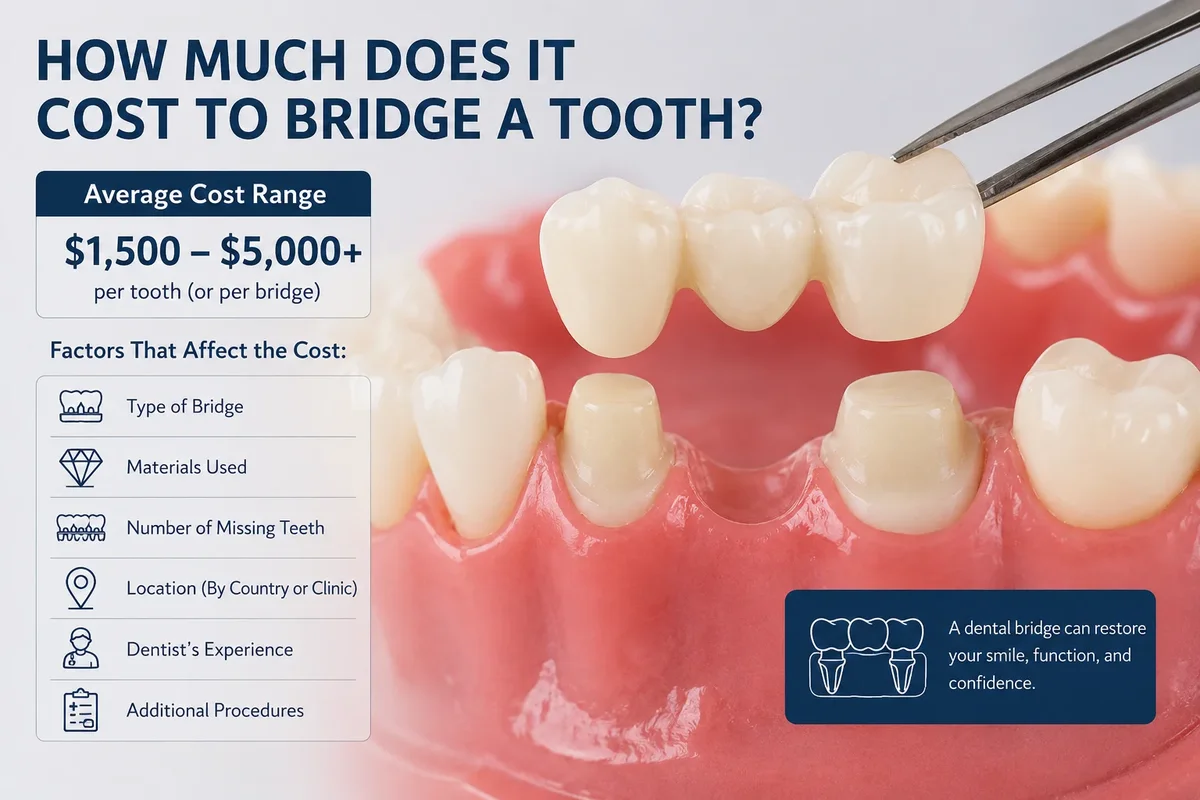
One reason the answer to how much does it cost to bridge a tooth varies so much is the wide range of bridge designs available today. Traditional bridges remain one of the most common solutions and typically involve placing crowns on the teeth next to the missing tooth. Maryland bridges may be suitable in certain situations where minimal tooth preparation is preferred. Implant-supported bridges are another option and may provide additional stability in some cases. Because these treatments involve different materials, procedures, and laboratory work, the overall cost can differ significantly from one patient to another.
It is also important to understand what may be included in the treatment process. When researching how much does it cost to bridge a tooth, many people focus only on the final restoration. However, some patients may need preparatory treatment first. This could include professional cleaning, treatment of gum disease, root canal therapy, tooth extraction, or other procedures that help create a healthy foundation for the bridge. These additional factors can influence the final treatment plan and should be discussed during a professional consultation.
Beyond cost, patients should think about what a missing tooth may mean for their future oral health. Delaying treatment for a missing tooth can sometimes lead to shifting teeth, bite changes, uneven chewing forces, and increased stress on surrounding teeth. For this reason, understanding how much does it cost to bridge a tooth should be part of a larger conversation about protecting your oral health over the long term. In some situations, addressing the issue sooner may help prevent more complex treatment needs later.
Many patients also compare bridges with dental implants and removable partial dentures. While cost is often a major factor, suitability matters just as much. A bridge may be an excellent option for someone with strong supporting teeth and healthy gums. Another patient may benefit more from an implant-based solution depending on bone support and treatment goals. When considering how much does it cost to bridge a tooth, it is helpful to evaluate not only the initial investment but also maintenance requirements, expected longevity, comfort, and overall function.
Insurance coverage can also play a role. Some dental insurance plans may contribute toward restorative treatment, while others may have limitations, waiting periods, or annual maximums. As a result, the amount an individual ultimately pays can vary considerably. This is another reason why online estimates should be viewed as general information rather than guaranteed pricing. The true answer to how much does it cost to bridge a tooth can only be determined after a dentist evaluates your specific needs and develops a personalized treatment plan.
Educational resources from the American Dental Association can help patients understand restorative treatment options and the importance of replacing missing teeth. However, online information should be used as a starting point rather than a substitute for professional advice. Every mouth is different, and treatment decisions should be based on clinical findings rather than averages found on the internet.
At Redent Klinik, patients frequently ask how much does it cost to bridge a tooth because they want a practical solution that restores both appearance and function. A comprehensive examination allows the dental team to assess the condition of the missing tooth area, neighboring teeth, gum health, and bite alignment before recommending treatment options. This approach helps ensure that the recommendation fits the patient rather than forcing the patient to fit a generic treatment model.
If you are currently evaluating your options, the next step is simple. Instead of focusing only on a price range, schedule a professional assessment and ask which treatment is most appropriate for your situation. Request information about expected longevity, maintenance requirements, alternative solutions, and any preparatory procedures that may be necessary. You can learn more or request an appointment through the Redent Klinik Contact Page. A personalized consultation can provide a realistic estimate, clarify your options, and help you make an informed decision based on your oral health goals rather than assumptions.
السلام عليكم، أنا Rasim من تركيا. أساعد شركات الخليج في التوريد من المصانع والموردين في تركيا حسب الطلب. راجعت Altair Facility Management في الدوحة، وبما أن لديكم خدمات facility management، فالخيارات العملية كبداية هي: 1) بولو/تيشيرت للفرق التشغيلية مع شعار، كتالوج: https://www.safakpenye.com.tr/polo-shirt/ السعر التقريبي للمنتج 19.6-31.4 QAR للقطعة. 2) فيست سلامة عاكس لفرق الصيانة والتنظيف، كتالوج: https://tigertextile.com.tr/high-visibility-workwear-supplier-turkey/ السعر التقريبي 7.0-11.7 QAR للقطعة. 3) مستلزمات تنظيف للمرافق، كتالوج عينة: https://lamtc.com/wp-content/uploads/2020/11/Janitorial-Cleaning-Supplies-11.4.2020.pdf السعر التقريبي 21.2-192 QAR للكرتون حسب الصنف. هذه أسعار تقريبية للمنتج فقط قبل تأكيد المورد النهائي، والشحن يحسب بشكل منفصل بعد معرفة حجم ووزن التغليف. إذا كان أحد الخيارات مناسباً، أرسلوا الكمية التقريبية ومدينة/دولة التسليم وأي شعار أو مواصفة أو صورة، وبعدها أراجع السعر النهائي من المورد والشحن بوضوح.
Who Is a Good Candidate for a Dental Bridge?
Many people researching how much does it cost to bridge a tooth focus primarily on pricing, but cost is only one part of the decision. Before comparing treatment estimates, it is important to determine whether a dental bridge is actually the right solution for your situation. A bridge can be an effective way to replace missing teeth, restore chewing function, and improve appearance, but not every patient is an ideal candidate. Understanding who benefits most from this treatment can help you make a more informed decision and avoid unnecessary procedures.
When evaluating how much does it cost to bridge a tooth, dentists typically begin by assessing oral health, supporting teeth, gum condition, bite alignment, and long-term treatment goals. These factors often influence not only the suitability of a bridge but also the complexity of treatment and the overall investment required.
Patients Missing One or More Teeth
The most obvious candidates for bridge treatment are individuals who have lost one or more teeth and want a fixed replacement option. Missing teeth can affect appearance, speech, chewing efficiency, and self-confidence. In many cases, a bridge can fill the gap effectively and restore normal daily function.
People frequently search how much does it cost to bridge a tooth shortly after losing a tooth because they want to prevent future complications. Replacing a missing tooth may help reduce the risk of neighboring teeth shifting into the empty space, which can sometimes affect bite alignment and make oral hygiene more difficult.
However, simply having a missing tooth does not automatically mean a bridge is the best solution. Other options such as dental implants or removable partial dentures may also be considered depending on the individual situation.
The Importance of Healthy Supporting Teeth
Strong Adjacent Teeth
Traditional dental bridges rely on neighboring teeth for support. Because of this, the condition of these teeth plays a major role in treatment planning. Healthy supporting teeth with adequate structure often provide a more predictable foundation for a bridge.
When discussing how much does it cost to bridge a tooth, patients sometimes overlook the fact that supporting teeth may require preparation before treatment begins. Existing restorations, decay, cracks, or structural weaknesses can affect the recommended approach.
Existing Crowns May Influence Decisions
If adjacent teeth already have crowns, a bridge may sometimes fit naturally into an overall treatment plan. In certain situations, replacing existing restorations as part of a bridge may be more practical than preserving separate restorations.
A professional examination is necessary to determine whether supporting teeth are suitable candidates for bridge support.
Healthy Gums Are Essential
Gum health is one of the most important factors in determining whether a bridge is appropriate. Even when patients focus on how much does it cost to bridge a tooth, dentists often evaluate the gums first because healthy gum tissue helps support long-term success.
Active gum disease can weaken the structures surrounding teeth and may compromise bridge stability. If gum inflammation, infection, or periodontal disease is present, treatment may be recommended before bridge placement.
Addressing gum health first often creates a stronger foundation and may help improve the longevity of any future restoration.
Patients Seeking a Fixed Solution
Some individuals prefer a restoration that remains permanently in place rather than one that can be removed daily. A dental bridge can offer that fixed solution.
When comparing options and asking how much does it cost to bridge a tooth, many patients appreciate the convenience of a restoration that feels more like a natural part of the mouth. Fixed bridges generally do not require removal for cleaning, although special hygiene techniques may be necessary around and beneath the bridge.
Patients who prioritize convenience and stability often find bridges appealing, provided their oral health conditions support this treatment approach.
When a Bridge May Not Be the Best Choice
Insufficient Support
A bridge may not always be ideal if there are not enough healthy supporting teeth available. In such cases, alternative treatments may provide better long-term support.
Extensive Bone Loss
Significant bone loss in the missing tooth area may influence treatment planning. While bridges do not require the same bone support as implants, overall oral health still plays an important role in achieving predictable results.
Complex Bite Issues
Patients with severe bite problems, grinding habits, or certain jaw conditions may require additional evaluation before moving forward with bridge treatment. These factors can influence both restoration design and long-term performance.
This is why a dentist should evaluate more than just the missing tooth when determining suitability.
Comparing Bridges With Dental Implants
Some patients researching how much does it cost to bridge a tooth eventually discover that they may also qualify for a dental implant. Both options can be effective, but they differ in procedure, maintenance, healing requirements, and overall treatment planning.
A bridge may be attractive because treatment can often be completed without implant surgery. On the other hand, some patients prefer implants because they function independently without relying on neighboring teeth for support.
There is no universally correct choice. The best option depends on oral health, personal preferences, budget considerations, treatment timelines, and long-term goals.
Why a Professional Evaluation Matters
Online research can help answer general questions, including how much does it cost to bridge a tooth, but it cannot determine whether you are an ideal candidate. Every patient’s oral anatomy, dental history, and treatment objectives are different.
At Redent Klinik, treatment recommendations are based on a comprehensive assessment rather than assumptions. Dentists evaluate the missing tooth area, supporting teeth, gum health, bite function, and aesthetic goals before recommending a specific solution.
Choosing a bridge without understanding these factors may lead to unrealistic expectations or selecting a treatment that is not ideally suited to your needs.
What should you check next? If you are considering a dental bridge, examine whether you have healthy adjacent teeth, stable gum health, and a desire for a fixed replacement option. Request professional advice if you have multiple missing teeth, gum disease, damaged supporting teeth, bite problems, or if you are deciding between a bridge and a dental implant. A personalized consultation can clarify whether a bridge is the most appropriate solution for your long-term oral health goals.
How Much Does It Cost to Bridge a Tooth Compared to Other Options?
When patients begin researching how much does it cost to bridge a tooth, they often assume that a dental bridge is the only way to replace a missing tooth. In reality, modern dentistry offers several treatment options, each with its own advantages, limitations, maintenance requirements, and cost considerations. Understanding how a bridge compares to alternatives can help you choose a solution that fits your oral health needs, budget, and long-term goals.
Although many people start by asking how much does it cost to bridge a tooth, a better question may be: which treatment provides the most appropriate balance of function, durability, appearance, and value for my specific situation? The answer depends on several individual factors, including the condition of neighboring teeth, gum health, available bone support, lifestyle preferences, and treatment expectations.
Dental Bridges: A Popular Fixed Solution
A dental bridge remains one of the most common ways to replace a missing tooth. Traditional bridges typically use adjacent teeth as support, creating a fixed restoration that fills the gap left by the missing tooth.
Many patients researching how much does it cost to bridge a tooth appreciate that bridges can often restore chewing ability, improve aesthetics, and provide a stable replacement without requiring removable appliances. Because bridges are fixed in place, many people find them comfortable and convenient in daily life.
However, a bridge may require preparation of neighboring teeth, which is an important consideration during treatment planning. Whether this is an advantage or disadvantage depends on the condition of those supporting teeth and the patient’s overall oral health.
Potential Advantages of a Bridge
- Fixed, non-removable solution
- Natural-looking appearance when properly designed
- Can restore chewing efficiency
- May be suitable when neighboring teeth already require crowns
- Often completed without implant surgery
Potential Considerations
- Requires healthy supporting teeth
- Special cleaning techniques may be necessary
- Not suitable for every missing tooth situation
- Long-term success depends on oral hygiene and supporting structures
Dental Implants as an Alternative
Patients comparing options after asking how much does it cost to bridge a tooth frequently encounter dental implants as another replacement solution. An implant consists of a titanium post placed in the jawbone, which supports a crown or bridge above the gumline.
Unlike traditional bridges, implants do not rely on adjacent teeth for support. This independent support structure is one reason implants are often considered when healthy neighboring teeth are present and preservation of natural tooth structure is a priority.
However, implant treatment typically involves surgical placement and may require a longer treatment timeline. Healing periods, bone quality, and overall health can influence suitability.
Potential Advantages of Implants
- Do not depend on neighboring teeth for support
- Can help maintain bone stimulation in the treated area
- Function independently
- Natural appearance and feel for many patients
Potential Considerations
- Surgical procedure required
- Longer overall treatment timeline in some cases
- May not be suitable for every patient
- Additional procedures may occasionally be required
For some individuals, the comparison is not simply how much does it cost to bridge a tooth versus implant costs. Instead, it becomes a decision about treatment goals, oral health preservation, and long-term maintenance.
Removable Partial Dentures
Another alternative frequently discussed alongside how much does it cost to bridge a tooth is a removable partial denture. Unlike bridges and implants, these restorations can be removed by the patient for cleaning and maintenance.
Partial dentures may be recommended when multiple teeth are missing or when fixed solutions are not appropriate. They can restore appearance and function while offering a different approach to tooth replacement.
Some patients appreciate the flexibility of removable appliances, while others prefer the convenience of fixed restorations. Personal preference often plays an important role in this decision.
Potential Advantages of Partial Dentures
- Can replace multiple missing teeth
- Typically less invasive than implant treatment
- May be appropriate when fixed options are limited
Potential Considerations
- Must be removed for cleaning
- May require adjustment periods
- Different feel compared with fixed restorations
Which Option Offers the Best Value?
When researching how much does it cost to bridge a tooth, many patients naturally focus on immediate expenses. However, value involves more than the initial treatment estimate.
Factors that contribute to long-term value include:
- Expected longevity
- Maintenance requirements
- Comfort during daily use
- Aesthetic appearance
- Impact on surrounding teeth and oral structures
- Future treatment needs
A solution with a lower upfront cost may require more maintenance over time. Conversely, a higher initial investment may offer benefits that some patients consider worthwhile. The best value depends on individual priorities rather than a universal formula.
How Dentists Help You Choose
Professional treatment planning goes beyond answering how much does it cost to bridge a tooth. Dentists evaluate several clinical factors before recommending a replacement option.
These factors may include:
- Location of the missing tooth
- Condition of neighboring teeth
- Bone availability
- Gum health
- Bite forces
- Aesthetic expectations
- Medical history
- Long-term treatment objectives
Because each patient’s circumstances are unique, the most suitable solution can vary significantly from one individual to another.
Making the Right Decision for Your Situation
At Redent Klinik, patients often arrive asking only how much does it cost to bridge a tooth. During consultation, they frequently discover that the more important discussion involves choosing the treatment that best matches their oral health needs and future goals.
A bridge may be ideal for one patient, while another may benefit more from an implant or removable restoration. No online article can determine which option is best without a professional examination.
What should you check next? If you are comparing a bridge with implants or partial dentures, request a consultation and ask about suitability, maintenance requirements, expected longevity, and the condition of your supporting teeth and gums. Professional advice is especially important if you have multiple missing teeth, existing crowns, gum disease, bone loss, or uncertainty about which replacement option offers the most appropriate long-term solution for your situation.
What Happens During the Dental Bridge Procedure?
Many patients begin their research by asking how much does it cost to bridge a tooth, but cost is only one part of the decision-making process. Understanding the actual treatment procedure is equally important because it helps set realistic expectations about appointments, preparation, recovery, and long-term care. Knowing what happens during the process can also help you determine whether a dental bridge is the right solution for your situation.
While the exact treatment sequence varies from patient to patient, most bridge procedures follow a similar series of steps. Dentists evaluate the missing tooth area, assess supporting structures, prepare the necessary teeth, take impressions, and eventually place the final restoration. The complexity of each stage can influence both treatment planning and the answer to the common question, how much does it cost to bridge a tooth.
Step 1: The Initial Consultation and Examination
The first stage of bridge treatment is a comprehensive dental examination. Before recommending any restoration, the dentist evaluates your overall oral health, gum condition, bite alignment, and the status of the teeth surrounding the missing space.
Many patients searching for how much does it cost to bridge a tooth expect to receive a simple price estimate immediately. However, an accurate treatment recommendation usually requires a detailed assessment first. A bridge that works well for one patient may not be suitable for another due to differences in oral health and structural support.
What the Dentist Evaluates
- The location of the missing tooth
- The health of neighboring teeth
- Gum condition and periodontal health
- Bite function and chewing forces
- Existing restorations or crowns
- Potential alternative treatment options
These findings help determine whether a bridge is appropriate and whether any preparatory treatment is necessary before proceeding.
Step 2: Treatment Planning
After the examination, the dentist develops a treatment plan tailored to your specific needs. This stage often includes discussing available restoration types, expected timelines, maintenance requirements, and possible alternatives.
Patients asking how much does it cost to bridge a tooth often discover that the treatment plan affects the overall estimate. The type of bridge selected, the number of teeth involved, and the condition of supporting structures all influence the final recommendation.
At this point, patients can compare bridges with alternatives such as implants or removable partial dentures before making a decision.
Step 3: Preparing the Supporting Teeth
Why Tooth Preparation May Be Necessary
For many traditional bridges, the neighboring teeth must be prepared to support the restoration. This process involves reshaping the supporting teeth so that crowns can fit securely over them.
The amount of preparation required varies depending on the treatment design and the condition of the teeth. If existing crowns are already present, the approach may differ from someone who has never had restorative treatment before.
Preparation is one reason why the answer to how much does it cost to bridge a tooth can vary between patients. Different levels of complexity require different treatment approaches.
Temporary Restorations
After tooth preparation, temporary restorations are often placed to protect the treated teeth while the permanent bridge is being fabricated. These temporary restorations help maintain appearance and function during the interim period.
Patients should follow their dentist’s instructions carefully during this phase to reduce the risk of damage or dislodgement.
Step 4: Impressions and Laboratory Fabrication
Once preparation is complete, impressions or digital scans are taken. These records allow the dental laboratory to create a bridge customized to the patient’s anatomy.
The laboratory process is an important part of treatment because it influences fit, aesthetics, comfort, and function. Modern digital technologies can enhance precision, but traditional impression techniques are still used successfully in many practices.
When researching how much does it cost to bridge a tooth, patients may not realize how much craftsmanship goes into designing and fabricating a restoration that looks natural and functions correctly.
Step 5: Placement of the Final Bridge
Once the final bridge is completed, the patient returns for placement. The dentist carefully evaluates fit, appearance, bite alignment, and overall comfort before securing the restoration.
Minor adjustments are sometimes necessary to ensure proper function. The goal is to create a restoration that integrates comfortably with the rest of the mouth while restoring normal chewing and appearance.
Most patients are able to resume normal daily activities shortly after placement, although a brief adjustment period may occur as the mouth adapts to the new restoration.
What Happens After Treatment?
Daily Maintenance
A bridge requires regular care and maintenance. Proper brushing and cleaning around the restoration are essential for protecting supporting teeth and surrounding gum tissue.
Special flossing tools or interdental cleaning devices may be recommended depending on the bridge design.
Routine Dental Visits
Professional examinations and cleanings remain important after treatment. Regular monitoring allows dentists to evaluate the condition of the bridge and supporting structures over time.
Long-term success often depends on consistent oral hygiene and preventive care.
Does the Procedure Hurt?
One concern frequently raised alongside how much does it cost to bridge a tooth is whether the procedure is uncomfortable. Modern dental techniques and local anesthesia generally help patients remain comfortable during treatment. Individual experiences vary, and some temporary sensitivity may occur following tooth preparation.
Any concerns about comfort, recovery expectations, or treatment stages should be discussed openly with your dental provider before beginning treatment.
How Long Does the Entire Process Take?
The timeline varies depending on the patient’s situation, laboratory requirements, and whether additional treatment is needed beforehand. Some cases may progress relatively quickly, while others require preparatory procedures before bridge placement can begin.
Because every patient is different, the most accurate timeline can only be determined after a clinical examination and personalized treatment plan.
At Redent Klinik, patients are guided through each phase of treatment so they understand what to expect before, during, and after bridge placement. Clear communication helps patients make informed decisions rather than focusing exclusively on how much does it cost to bridge a tooth.
What should you check next? If you are considering a dental bridge, ask your dentist about the expected treatment timeline, the condition of your supporting teeth, whether temporary restorations will be needed, and what maintenance will be required after placement. Professional advice is particularly important if you have gum disease, damaged adjacent teeth, multiple missing teeth, or are deciding between a bridge and alternative restorative options.
What Risks and Long-Term Considerations Should You Know?
When researching how much does it cost to bridge a tooth, most people focus on the initial treatment cost and the appearance of the final restoration. While those factors are important, understanding the potential risks and long-term considerations is equally valuable. A dental bridge can be an effective solution for replacing missing teeth, but like any dental treatment, it comes with responsibilities, maintenance requirements, and factors that should be evaluated before making a final decision.
Knowing the long-term implications of treatment helps patients make informed choices rather than focusing solely on the answer to how much does it cost to bridge a tooth. A bridge is not simply a product that is placed and forgotten. Its long-term success depends on oral hygiene, regular dental care, the condition of supporting teeth, and overall oral health.
The Health of Supporting Teeth Matters
One of the most important considerations when evaluating how much does it cost to bridge a tooth is the role of the supporting teeth. Traditional bridges depend on neighboring teeth to carry the forces generated during chewing and biting.
If these supporting teeth remain healthy and well-maintained, they can provide stable support for many years. However, if decay, fractures, gum disease, or structural problems develop, the bridge may eventually require repair, modification, or replacement.
Why Supporting Teeth Require Extra Attention
- They carry additional functional load.
- They are critical to bridge stability.
- Damage to supporting teeth may affect the entire restoration.
- Regular monitoring helps identify problems early.
This is one reason dentists evaluate supporting teeth carefully before recommending treatment.
Oral Hygiene Becomes More Important
Patients often ask how much does it cost to bridge a tooth without realizing that maintenance plays a major role in long-term success. Unlike a natural tooth, a bridge creates areas beneath the restoration that require special cleaning techniques.
Food particles and plaque can accumulate around the bridge if proper cleaning is neglected. Over time, this may increase the risk of gum inflammation, decay around supporting teeth, or other oral health issues.
Recommended Cleaning Habits
- Brush thoroughly twice daily.
- Use cleaning aids recommended by your dentist.
- Clean beneath the bridge where appropriate.
- Attend regular professional cleanings.
- Report unusual symptoms promptly.
Patients who maintain consistent oral hygiene often place themselves in a stronger position for long-term success than those who focus only on how much does it cost to bridge a tooth at the beginning of treatment.
Gum Health Can Influence Outcomes
Healthy gums provide support and protection for both natural teeth and restorations. Even if a bridge is well-designed, untreated gum disease may compromise the structures that support it.
This is why dentists frequently evaluate periodontal health before treatment begins. If gum disease is present, treatment may be recommended before bridge placement.
Maintaining healthy gums after treatment remains equally important. Routine dental examinations help identify changes early and allow appropriate intervention if needed.
Wear and Tear Over Time
Many people searching how much does it cost to bridge a tooth assume the restoration will remain unchanged forever. In reality, all dental restorations experience some degree of wear over time.
Normal chewing forces, dietary habits, grinding, clenching, and age-related changes can influence the condition of a bridge. This does not mean problems will necessarily occur, but patients should understand that maintenance and occasional adjustments may become necessary throughout the life of the restoration.
Factors That May Influence Longevity
- Oral hygiene habits
- Smoking and tobacco use
- Grinding or clenching
- Dietary habits
- Frequency of dental visits
- Overall oral health
These factors often have a greater impact on long-term outcomes than many patients initially realize.
Bite Changes and Functional Considerations
A bridge is designed to restore chewing efficiency and maintain balance within the mouth. However, changes in bite patterns may occur over time due to tooth wear, tooth movement, or other dental conditions.
For this reason, dentists periodically evaluate bite alignment during routine examinations. Early detection of bite-related issues can help prevent excessive stress on restorations and supporting teeth.
When evaluating how much does it cost to bridge a tooth, patients should remember that maintaining proper function is just as important as restoring appearance.
Potential Repair or Replacement Needs
Like many dental restorations, bridges may occasionally require repairs or replacement in the future. The likelihood depends on factors such as material selection, oral hygiene, bite forces, and the health of surrounding structures.
Some patients eventually require replacement because of changes in supporting teeth, while others may simply need minor adjustments. Regular dental visits help identify concerns before they become larger problems.
This long-term perspective is important when considering how much does it cost to bridge a tooth. The initial treatment estimate represents only one part of the overall commitment to maintaining oral health.
How Bridges Compare With Other Long-Term Options
Some patients evaluating how much does it cost to bridge a tooth also compare bridges with implants and removable partial dentures. Each treatment has its own maintenance requirements and long-term considerations.
For example, implants do not rely on neighboring teeth for support, while bridges often do. Removable appliances require daily removal and cleaning. Understanding these differences can help patients choose the option that best aligns with their preferences and expectations.
The most suitable solution depends on individual circumstances rather than a universal rule.
Making a Long-Term Decision
At Redent Klinik, treatment discussions often extend beyond how much does it cost to bridge a tooth and focus on long-term oral health planning. Patients benefit from understanding not only the procedure itself but also the ongoing responsibilities associated with maintaining their restoration.
Choosing a bridge should involve consideration of future maintenance, oral hygiene commitment, supporting tooth health, and overall treatment goals. Patients who understand these factors tend to make more confident and realistic decisions.
What should you check next? Before deciding on a dental bridge, ask your dentist about the condition of your supporting teeth, your current gum health, long-term maintenance requirements, and whether any habits such as grinding or clenching could affect treatment outcomes. Professional advice is especially important if you have a history of gum disease, frequent dental problems, bite issues, or uncertainty about how a bridge compares with other replacement options over the long term.
Can Insurance Help Reduce How Much Does It Cost to Bridge a Tooth?
For many patients, one of the first questions after learning they need a tooth replacement is how much does it cost to bridge a tooth. Shortly afterward, a second question usually follows: will insurance help pay for it? Understanding how dental insurance works can make a significant difference when planning treatment and budgeting for restorative care.
Although insurance may reduce out-of-pocket expenses in some situations, coverage varies widely between providers, policies, annual limits, and individual circumstances. This means that the answer to how much does it cost to bridge a tooth may differ substantially from one patient to another, even when the same treatment is recommended.
Rather than assuming insurance will cover a specific amount, it is important to understand how benefits are typically structured and what factors may affect reimbursement.
Why Insurance Coverage Varies
When patients search online for how much does it cost to bridge a tooth, they often find conflicting information about insurance benefits. The reason is simple: dental insurance plans are not standardized.
Different plans may have different rules regarding:
- Covered procedures
- Annual benefit maximums
- Deductibles
- Waiting periods
- Replacement limitations
- Network restrictions
- Pre-authorization requirements
Because of these differences, two patients receiving similar bridge treatment may receive very different insurance reimbursements.
How Dental Insurance Typically Views Bridges
In many cases, dental bridges are considered restorative procedures rather than preventive treatments. Restorative procedures are often covered differently than routine cleanings, examinations, or diagnostic services.
Patients investigating how much does it cost to bridge a tooth should understand that restorative coverage may involve cost-sharing between the insurance provider and the patient. The exact percentage varies according to the policy.
It is also common for insurance companies to review whether the treatment is considered clinically appropriate according to plan guidelines before approving benefits.
Common Insurance Considerations
- Whether the missing tooth qualifies for replacement benefits
- How recently previous restorative work was completed
- Whether alternative treatments are available
- Whether the procedure falls within policy limitations
Reviewing these details before treatment can help avoid unexpected surprises.
Annual Maximum Benefits
One factor that frequently affects how much does it cost to bridge a tooth is the annual maximum benefit provided by a dental insurance plan.
Many plans include a yearly spending cap. Once that limit is reached, additional treatment costs may become the responsibility of the patient. This can be particularly relevant for larger restorative procedures because they may consume a substantial portion of the available annual benefit.
Patients planning bridge treatment near the end of a benefit year sometimes discuss timing strategies with their dental provider to better understand available coverage periods. However, every situation should be evaluated individually.
Waiting Periods Can Affect Eligibility
Another important consideration when researching how much does it cost to bridge a tooth is the possibility of waiting periods.
Some insurance policies require members to maintain coverage for a certain amount of time before major restorative procedures become eligible for reimbursement. These waiting periods vary depending on the insurer and policy type.
Patients who recently enrolled in a dental plan should review their policy documents carefully before assuming bridge treatment will be covered immediately.
Questions to Ask Your Insurance Provider
- Does my plan cover dental bridges?
- Is there a waiting period?
- What percentage of the procedure is covered?
- Are there annual limits?
- Do I need pre-authorization?
- Are there network restrictions?
Obtaining clear answers beforehand can help you estimate potential expenses more accurately.
Network vs. Out-of-Network Providers
Insurance coverage may also be influenced by whether treatment is provided by an in-network or out-of-network dental clinic.
When evaluating how much does it cost to bridge a tooth, patients should verify whether their preferred provider participates in their insurance network. Network participation can affect reimbursement rates, claim processing, and patient financial responsibility.
However, choosing a provider should involve more than insurance considerations alone. Experience, treatment planning philosophy, communication, and overall quality of care remain important factors.
What Insurance Does Not Always Cover
Even when bridge treatment qualifies for insurance benefits, some associated costs may not be fully reimbursed.
Depending on the policy, limitations may apply to:
- Certain materials
- Cosmetic upgrades
- Additional procedures required before treatment
- Alternative restoration options
- Replacement of existing restorations
This is why obtaining a detailed treatment plan before starting care is so valuable. A written estimate helps patients understand both covered and non-covered components.
Should Insurance Determine Your Treatment Choice?
Many people researching how much does it cost to bridge a tooth naturally want to maximize insurance benefits. While this is understandable, treatment decisions should not be based solely on insurance coverage.
The most appropriate restoration should be selected according to clinical needs, long-term oral health goals, and overall suitability. A treatment option that receives greater insurance reimbursement is not necessarily the best choice for every patient.
For example, a bridge, implant, or removable partial denture may each have different coverage levels. However, the most suitable recommendation depends on factors such as gum health, bone support, supporting teeth, and patient preferences.
Working With Your Dental Team
At Redent Klinik, patients frequently ask how much does it cost to bridge a tooth and whether insurance will reduce the overall expense. A thorough consultation allows the dental team to explain treatment options, discuss available documentation, and help patients better understand the financial aspects of care.
Transparent communication is often the best way to avoid confusion and ensure patients can make informed decisions about their treatment plans.
What should you check next? Before moving forward with bridge treatment, contact your insurance provider and request details regarding bridge coverage, annual maximums, waiting periods, and network requirements. Professional advice is especially important if you are comparing multiple treatment options, have recently changed insurance plans, or are uncertain about which procedures may qualify for reimbursement under your specific policy.
Payment Plans and Financing Options for Dental Bridges
For many patients, discovering how much does it cost to bridge a tooth is only the first step in the decision-making process. The next concern is often how to pay for treatment in a way that fits comfortably within their budget. While replacing a missing tooth can provide important functional and aesthetic benefits, the financial aspect of treatment can sometimes feel overwhelming. Fortunately, many patients have access to payment solutions that can help make bridge treatment more manageable.
Understanding available financing options allows patients to focus not only on how much does it cost to bridge a tooth but also on choosing the most suitable treatment for their long-term oral health. Rather than delaying necessary care because of financial uncertainty, it may be helpful to explore payment plans, insurance benefits, staged treatment approaches, and other available resources.
Why Financing Matters
When patients search for how much does it cost to bridge a tooth, they often discover that treatment costs can vary significantly based on individual circumstances. Factors such as bridge type, materials, supporting teeth, and additional procedures can influence the overall treatment plan.
Even when a bridge is considered the most appropriate solution, some patients prefer to spread treatment expenses over time rather than paying the entire amount at once. Financing options can help make treatment more accessible without requiring patients to postpone important dental care unnecessarily.
It is important to remember that financial decisions should support—not replace—sound clinical decision-making. The most affordable option is not always the most suitable one for long-term oral health.
Monthly Payment Plans
One of the most common solutions for patients concerned about how much does it cost to bridge a tooth is a monthly payment arrangement. Some dental clinics offer structured payment programs that allow treatment expenses to be divided into smaller installments.
Monthly payment plans may help patients manage treatment costs while receiving care within an appropriate timeframe. The availability, terms, and eligibility requirements vary depending on the clinic and local regulations.
Potential Benefits of Payment Plans
- Spreads treatment costs over time.
- May reduce immediate financial pressure.
- Allows patients to move forward with treatment sooner.
- Can improve budgeting flexibility.
Patients should carefully review any payment agreement and ask questions about terms, timelines, and responsibilities before proceeding.
Third-Party Financing Programs
In some regions, patients researching how much does it cost to bridge a tooth may have access to independent financing providers that specialize in healthcare expenses.
These companies may offer financing programs that can be used for dental treatment, including restorative procedures such as bridges. Approval requirements, repayment schedules, and financing terms vary by provider and country.
Patients considering third-party financing should carefully evaluate:
- Repayment schedules
- Application requirements
- Interest rates if applicable
- Total repayment obligations
- Potential fees
Understanding the complete financial commitment is just as important as understanding the treatment itself.
Using Dental Insurance Alongside Financing
Many patients who ask how much does it cost to bridge a tooth assume financing and insurance are separate topics. In reality, they often work together.
If insurance contributes toward part of the treatment cost, financing may help manage any remaining balance. Combining these resources can sometimes make treatment more accessible while allowing patients to proceed with a clinically appropriate solution.
Before making assumptions, patients should verify their coverage details, annual limits, waiting periods, and reimbursement policies directly with their insurance provider.
Questions Worth Asking
- What portion of treatment may be covered?
- Are there annual benefit limits?
- Will pre-authorization be required?
- Can financing be used for the remaining balance?
Obtaining answers to these questions often creates a clearer financial picture.
Phased Treatment Approaches
In some situations, treatment may be completed in stages. While this does not necessarily reduce how much does it cost to bridge a tooth, it may allow expenses to be distributed across a longer period.
Whether a phased approach is clinically appropriate depends on factors such as oral health status, urgency of treatment, and the specific restoration being planned.
It is important not to delay essential treatment solely for financial reasons without discussing the potential consequences with a dentist. Postponing care may sometimes result in additional complications that affect future treatment options.
Comparing Cost With Long-Term Value
Many patients become focused exclusively on how much does it cost to bridge a tooth, but financial planning should also include consideration of long-term value.
When comparing treatment options, it may be useful to evaluate:
- Expected longevity
- Maintenance requirements
- Potential future treatment needs
- Comfort and convenience
- Aesthetic goals
- Overall oral health impact
Sometimes the option with the lowest initial expense may not provide the greatest long-term value. Likewise, a higher upfront investment may not always be necessary depending on the patient’s needs.
The goal is to find a balance between affordability and suitability rather than focusing exclusively on price.
Creating a Personal Treatment Budget
If you are evaluating how much does it cost to bridge a tooth, creating a realistic treatment budget can be extremely helpful. This budget should account not only for the bridge itself but also for any associated care, maintenance, follow-up visits, and oral hygiene requirements.
A personalized treatment plan often provides the most accurate basis for financial planning because it reflects your specific clinical needs rather than generalized online estimates.
Patients who understand both the clinical and financial aspects of treatment are often better positioned to make confident decisions.
Working With Your Dental Team
At Redent Klinik, discussions about how much does it cost to bridge a tooth often include both treatment recommendations and practical financial considerations. Patients benefit from understanding available options, expected timelines, and any factors that could influence the overall treatment plan.
Open communication can help ensure that financial concerns are addressed while still prioritizing appropriate dental care and long-term oral health outcomes.
What should you check next? Before committing to treatment, ask about available payment plans, financing options, insurance coordination, and any potential additional procedures that could affect costs. Professional advice is especially important if you are comparing multiple treatment options, working within a specific budget, or trying to determine whether delaying treatment could affect your oral health or future treatment possibilities.
Frequently Asked Questions About How Much Does It Cost to Bridge a Tooth
When patients begin researching how much does it cost to bridge a tooth, they often discover that the answer depends on multiple factors rather than a single universal price. Because bridge treatment involves individual clinical needs, many questions arise about suitability, longevity, insurance, maintenance, alternatives, and treatment planning. This FAQ section addresses some of the most common concerns to help you make a more informed decision.
Although online information can provide useful guidance, the most accurate answers always come from a professional evaluation of your specific situation. Understanding the broader context behind how much does it cost to bridge a tooth can help you focus on long-term value and oral health rather than price alone.
Is There a Standard Answer to How Much Does It Cost to Bridge a Tooth?
No. One of the most important things patients should understand is that there is no single price that applies to every case. The answer to how much does it cost to bridge a tooth depends on factors such as the type of bridge, materials used, number of missing teeth, condition of supporting teeth, geographic location, and whether additional dental treatment is required.
Because every patient’s oral health situation is unique, dentists typically provide personalized treatment recommendations and cost estimates following an examination.
Can a Bridge Replace More Than One Missing Tooth?
Yes, in many situations a bridge can replace more than one missing tooth. However, larger restorations often involve additional planning and different support requirements.
Patients asking how much does it cost to bridge a tooth sometimes assume that replacing multiple teeth is simply an extension of replacing one tooth. In reality, the design, support structure, and long-term considerations may differ considerably.
The most appropriate solution depends on the number of missing teeth and the condition of surrounding structures.
How Long Does a Dental Bridge Last?
Longevity is one of the most common questions after how much does it cost to bridge a tooth. While there is no guaranteed lifespan, many bridges function successfully for years when properly maintained.
Factors influencing longevity include:
- Oral hygiene habits
- Gum health
- Supporting tooth condition
- Bite forces
- Regular dental visits
- Lifestyle factors such as smoking
Routine maintenance often plays a major role in long-term success.
Is a Dental Bridge Better Than an Implant?
There is no universal answer because suitability varies from patient to patient. Some individuals are excellent candidates for a bridge, while others may benefit more from implant treatment.
Bridges May Be Preferred When:
- Supporting teeth are appropriate for restoration.
- A fixed solution is desired.
- Certain treatment timelines are preferred.
Implants May Be Considered When:
- Preserving neighboring teeth is a priority.
- Adequate bone support is available.
- The patient is suitable for implant treatment.
When evaluating how much does it cost to bridge a tooth, comparing long-term suitability can be more valuable than comparing prices alone.
Does Insurance Usually Cover a Dental Bridge?
Coverage varies significantly depending on the insurance provider and policy. Some plans contribute toward restorative treatment, while others may include limitations, waiting periods, annual maximums, or exclusions.
Patients researching how much does it cost to bridge a tooth should contact their insurance provider directly to verify benefits before beginning treatment.
Assuming coverage without confirmation can sometimes lead to unexpected expenses.
Will a Bridge Feel Like a Natural Tooth?
Many patients adapt well to a properly fitted bridge. Initially, there may be a short adjustment period as the tongue, bite, and surrounding tissues become accustomed to the restoration.
Comfort levels vary from person to person, but modern restorative dentistry aims to create restorations that function naturally and blend with surrounding teeth.
This is one reason why professional treatment planning is just as important as understanding how much does it cost to bridge a tooth.
Can I Eat Normally With a Dental Bridge?
In many cases, a bridge helps restore chewing ability and improves overall function. However, patients should follow their dentist’s recommendations regarding dietary habits and oral hygiene.
Immediately after placement, temporary adjustments may be necessary while adapting to the restoration. Long-term eating habits should also support good oral health and maintenance.
If concerns arise regarding comfort or function, follow-up appointments may help identify and address the issue.
What Happens If I Do Not Replace a Missing Tooth?
Some patients researching how much does it cost to bridge a tooth consider postponing treatment indefinitely. While every situation is different, missing teeth can sometimes contribute to:
- Shifting neighboring teeth
- Bite changes
- Chewing difficulties
- Aesthetic concerns
- Increased stress on remaining teeth
The degree of impact varies according to the location of the missing tooth and overall oral health. A consultation can help determine whether prompt replacement is advisable.
How Do I Know Whether a Bridge Is Right for Me?
The only reliable way to determine suitability is through a professional examination. Online articles can explain concepts and answer general questions, but they cannot assess your specific oral health condition.
When patients ask how much does it cost to bridge a tooth, dentists also evaluate supporting teeth, gum health, bite alignment, existing restorations, and treatment objectives.
A personalized treatment plan allows recommendations to be based on clinical findings rather than assumptions.
Should Cost Be My Main Decision Factor?
Cost is important, but it should not be the only consideration. The most appropriate treatment balances affordability with functionality, longevity, oral health preservation, comfort, and appearance.
Patients who focus exclusively on how much does it cost to bridge a tooth may overlook factors that influence long-term satisfaction and future treatment needs.
At Redent Klinik, treatment discussions often focus on helping patients understand all available options rather than simply selecting the lowest-cost solution. The goal is to support informed decisions based on individual circumstances.
What should you check next? If you still have questions about how much does it cost to bridge a tooth, prepare a list of concerns before your consultation. Ask about suitability, maintenance requirements, alternative treatments, expected longevity, insurance benefits, and any procedures that may be required beforehand. Professional advice is particularly important if you have multiple missing teeth, existing restorations, gum disease, or uncertainty about which treatment option best matches your oral health goals.
What Should Be Your Next Step Before Choosing a Dental Bridge?
After researching how much does it cost to bridge a tooth, understanding the treatment process, comparing alternatives, reviewing insurance options, and learning about long-term maintenance, you may still be wondering what to do next. This is a common situation. Many patients gather a large amount of information online but remain uncertain about how to apply that information to their own oral health needs.
The final decision should not be based solely on the answer to how much does it cost to bridge a tooth. Instead, it should involve a careful evaluation of your oral health, treatment goals, lifestyle preferences, financial considerations, and long-term expectations. Taking a structured approach can help you move forward with greater confidence and avoid making a decision based only on generalized information.
Start by Identifying Your Main Goal
Before comparing treatment plans, ask yourself what you hope to achieve by replacing the missing tooth. Different patients prioritize different outcomes.
Common Patient Goals Include:
- Improving appearance and smile confidence
- Restoring chewing ability
- Preventing neighboring teeth from shifting
- Replacing multiple missing teeth
- Finding a fixed solution
- Maintaining long-term oral health
Understanding your primary goal can help guide discussions with your dentist and ensure that treatment recommendations align with your priorities.
While learning how much does it cost to bridge a tooth is important, treatment goals often play a larger role in determining which option is ultimately the most suitable.
Evaluate the Health of Your Remaining Teeth
A dental bridge depends heavily on the condition of surrounding structures. Supporting teeth, gum health, and bite function all influence whether a bridge is appropriate.
Patients often focus on how much does it cost to bridge a tooth without realizing that the condition of nearby teeth may affect treatment planning significantly.
Important Factors to Assess
- Presence of tooth decay
- Existing crowns or restorations
- Signs of gum disease
- Tooth mobility
- Bite alignment
- Bone support
These factors help determine whether a bridge, implant, or another solution may be more appropriate.
Compare Bridges With Alternative Treatments
By this stage, you likely understand that the answer to how much does it cost to bridge a tooth is only one piece of the decision. You should also compare the advantages and limitations of other treatment options.
For example, dental implants may offer certain benefits in some situations, while removable partial dentures may be appropriate in others. Every option involves different considerations related to maintenance, longevity, comfort, treatment timelines, and financial planning.
Rather than asking which treatment is generally best, ask which treatment is best for your specific circumstances.
Consider Long-Term Maintenance Requirements
Many patients underestimate the importance of maintenance when evaluating how much does it cost to bridge a tooth. A bridge is not simply placed and forgotten. Ongoing oral hygiene and routine professional care remain essential.
Questions Worth Asking Yourself
- Am I willing to maintain excellent oral hygiene?
- Will I attend regular dental examinations?
- Do I understand how to clean around a bridge?
- Can I commit to long-term maintenance?
Successful outcomes are often influenced as much by patient care habits as by the treatment itself.
Understand the Full Treatment Plan
When discussing how much does it cost to bridge a tooth, make sure you understand every part of the proposed treatment plan.
Ask your dentist whether additional procedures may be necessary before the bridge can be placed. Preparatory treatments can influence both treatment timelines and overall planning.
Questions to Ask During Consultation
- Why is a bridge being recommended?
- Are alternative options available?
- Will supporting teeth require preparation?
- Are additional treatments needed first?
- What maintenance will be required?
- What follow-up appointments are expected?
Patients who understand their treatment plans thoroughly often feel more comfortable and confident moving forward.
Think Beyond Initial Cost
Although many people begin their research with the question how much does it cost to bridge a tooth, long-term value should also be considered.
Evaluating only the initial expense may overlook important factors such as:
- Expected longevity
- Future maintenance needs
- Potential repairs
- Comfort and convenience
- Aesthetic outcomes
- Overall oral health preservation
A treatment option that appears less expensive initially may not always provide the best long-term value. Likewise, a more extensive treatment may not necessarily be required for every patient.
The goal is to find the solution that balances clinical appropriateness, affordability, and personal preferences.
When Should You Seek Professional Advice?
Professional consultation becomes particularly important when:
- You have multiple missing teeth.
- You are unsure whether a bridge or implant is better.
- You have gum disease.
- You have damaged supporting teeth.
- You experience bite problems.
- You have complex restorative needs.
Online research can provide valuable background information, but it cannot replace a personalized clinical assessment.
The most accurate answer to how much does it cost to bridge a tooth can only be provided after a dentist evaluates your specific oral health condition and develops a tailored treatment plan.
Making a Confident Decision
At Redent Klinik, patients often arrive with extensive online research and a long list of questions about how much does it cost to bridge a tooth. The consultation process focuses on transforming that information into a personalized recommendation based on clinical findings rather than assumptions.
A thoughtful decision involves more than selecting a restoration. It involves understanding how the treatment fits into your long-term oral health goals, lifestyle, maintenance preferences, and financial planning.
Replacing a missing tooth is an important decision, and taking the time to evaluate all relevant factors can help ensure that the chosen solution supports both current needs and future oral health.
What should you check next? Schedule a professional consultation and request a comprehensive evaluation of your missing tooth area, supporting teeth, gum health, and available treatment options. Ask for a detailed explanation of the recommended treatment plan, maintenance requirements, possible alternatives, and any factors that could influence long-term success. Professional guidance is especially important if you are comparing multiple treatment options or trying to determine whether a dental bridge is the most suitable solution for your situation.