
Many people who lose a tooth begin their research with the same question: how much does one dental implant tooth cost? The answer is not always straightforward because every patient has different oral health needs, treatment goals, and clinical conditions. However, understanding the factors that influence cost can help you make a more informed decision and determine whether a dental implant is the right option for you.
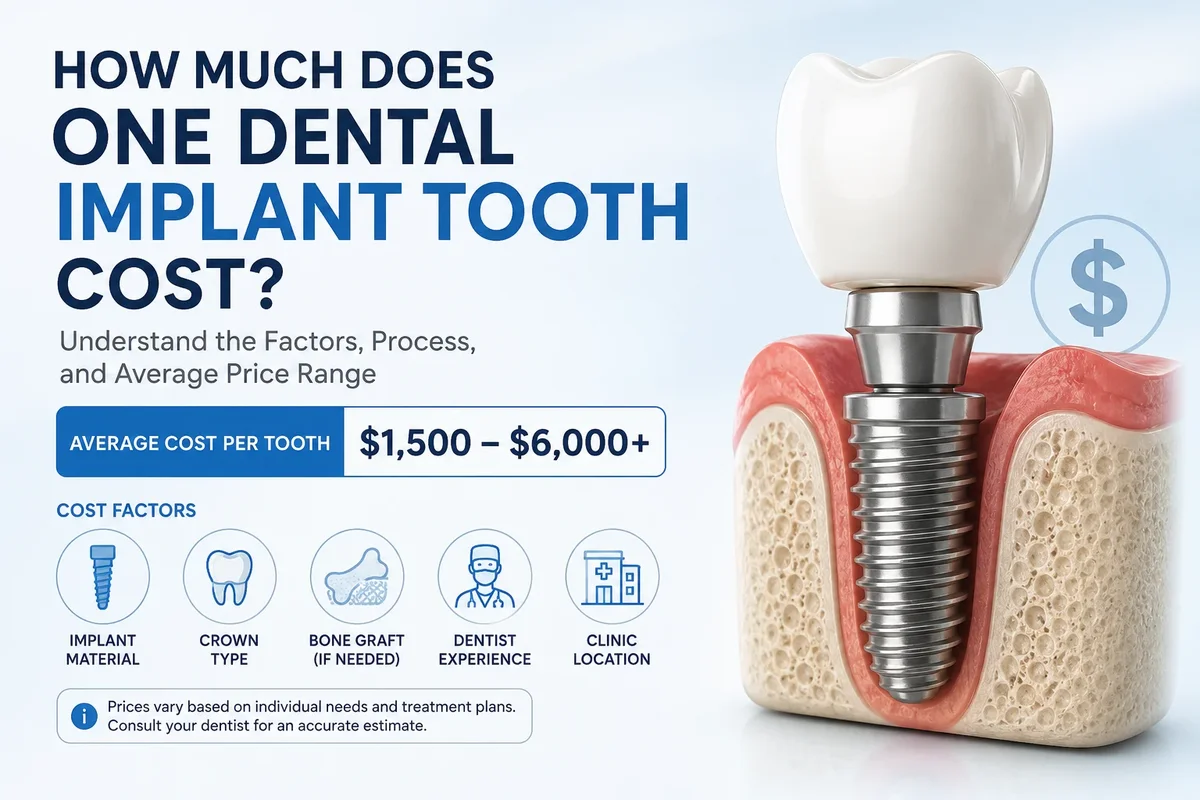
When asking how much does one dental implant tooth cost, it is important to understand that a dental implant treatment is usually made up of several components rather than a single procedure. In most cases, treatment includes the titanium implant placed into the jawbone, an abutment that connects the implant to the restoration, and the final dental crown that replaces the visible part of the missing tooth. Depending on the patient’s needs, additional procedures such as bone grafting, sinus lifting, or advanced imaging may also be required.
Because of these variables, online searches for how much does one dental implant tooth cost often produce a wide range of estimated prices. While general estimates can provide a starting point, they should not be viewed as a guaranteed quote. A clinic can only provide a personalized cost estimate after evaluating your oral health, bone structure, gum condition, and treatment objectives.
For some patients, the real question is not simply how much does one dental implant tooth cost, but whether the investment offers long-term value. Dental implants are designed to replace both the missing tooth and its root. This can help maintain jawbone stimulation and support the surrounding oral structures. Unlike some removable options, implants are fixed in place and are intended to function similarly to natural teeth.
If you recently lost a tooth, understanding how much does one dental implant tooth cost can help you compare treatment options. However, delaying treatment solely because of uncertainty about pricing may not always be beneficial. Over time, the bone in the area of a missing tooth can begin to shrink, which may increase treatment complexity in the future. This does not mean everyone requires immediate treatment, but it highlights the importance of obtaining professional guidance before making a decision.
Another important consideration when evaluating how much does one dental implant tooth cost is the quality and scope of treatment. Some advertised prices may only include part of the procedure. For example, a quoted fee may cover the implant itself but not the final crown, diagnostic imaging, or preparatory procedures. Asking exactly what is included in a treatment plan can help prevent misunderstandings and allow for more accurate comparisons between clinics.
Your suitability for implant treatment also influences how much does one dental implant tooth cost. Patients with healthy gums and adequate bone volume may qualify for a more straightforward procedure. Others may require additional treatment before implant placement. Smoking habits, certain medical conditions, oral hygiene practices, and previous dental history can also influence treatment recommendations and planning.
Educational resources provided by organizations such as the American Dental Association can help patients learn more about implant dentistry and oral health. These resources are valuable for understanding treatment concepts, but they cannot replace an individual clinical assessment.
When deciding whether a dental implant is right for you, consider how the missing tooth affects your daily life. Are you having difficulty chewing certain foods? Has your smile changed in a way that affects your confidence? Do you notice neighboring teeth shifting or changes in your bite? These practical concerns are often just as important as the question of how much does one dental implant tooth cost.
At Redent Klinik, treatment recommendations are based on a detailed evaluation of each patient’s needs. A consultation typically includes an examination, imaging when appropriate, and a discussion of available treatment options. This process helps patients understand not only the likely costs but also the expected benefits, limitations, and treatment timeline. If you would like to explore your options further, you can visit the Redent Klinik Contact Page to request additional information.
Ultimately, the answer to how much does one dental implant tooth cost depends on several individual factors. No responsible dental professional can provide an exact price without first assessing your oral health. What matters most is finding a treatment plan that addresses your specific needs while providing clear information about expected procedures and associated costs.
Practical Next Step: If you are considering replacing a missing tooth, schedule a professional consultation and ask for a detailed treatment breakdown. Bring any previous dental records or X-rays if available. Ask which services are included, whether additional procedures might be necessary, and what alternatives exist. Taking these steps will help you better understand your options and make a confident decision about your oral health.
What Determines How Much Does One Dental Implant Tooth Cost?
If you are researching how much does one dental implant tooth cost, one of the most important things to understand is that there is no universal price that applies to every patient. The final cost of treatment is influenced by several clinical, technical, and geographic factors. While online estimates can provide a general idea, a personalized treatment plan is the only reliable way to understand what your own procedure may involve.
Many patients assume that the answer to how much does one dental implant tooth cost depends only on the implant itself. In reality, the implant is just one component of a comprehensive treatment process. The overall cost may include diagnostics, planning, surgery, restorative work, follow-up appointments, and any additional procedures required to create a stable foundation for the replacement tooth.
The Number and Type of Components Included
One reason why prices vary when searching for how much does one dental implant tooth cost is that treatment often consists of multiple parts. A complete implant restoration generally includes:
- The implant fixture placed in the jawbone
- The abutment that connects the implant to the crown
- The custom-made dental crown
- Clinical examinations and treatment planning
- Follow-up visits during healing
Some clinics advertise a starting price that may only include one part of the treatment. Before comparing costs, always ask what is included in the proposed treatment plan.
Bone Quality and Jaw Health
A major factor affecting how much does one dental implant tooth cost is the condition of the jawbone. Dental implants require adequate bone support to achieve stability. If a patient has experienced bone loss after losing a tooth, additional procedures may be recommended before implant placement.
For example, bone grafting may be necessary when there is insufficient bone volume. Although this can increase treatment costs, it may improve the long-term predictability of the implant procedure. Patients who seek treatment soon after tooth loss sometimes require fewer preparatory procedures than those who wait many years.
Why Timing Can Affect Cost
When a tooth is missing for an extended period, the surrounding bone may gradually shrink. This means that delaying treatment can occasionally result in more complex treatment planning. If you are wondering how much does one dental implant tooth cost, timing is often an overlooked factor that can influence the final treatment approach.
Implant Brand and Material Selection
Different manufacturers produce dental implant systems with varying designs, materials, and research histories. Some implant systems have extensive long-term clinical documentation and are widely used internationally. Others may be newer or designed for specific situations.
Because of these differences, implant brand selection can affect how much does one dental implant tooth cost. Higher costs do not automatically mean a better outcome, but quality components and proper treatment planning are important considerations when evaluating your options.
Diagnostic Technology and Treatment Planning
Modern implant dentistry often relies on advanced diagnostic tools. Three-dimensional imaging can help dentists evaluate bone structure, nerve locations, sinus anatomy, and implant positioning before surgery begins.
When comparing clinics, some patients focus exclusively on how much does one dental implant tooth cost without considering the planning process. However, comprehensive diagnostics can contribute significantly to treatment accuracy and safety. A lower upfront fee may not always include the same level of imaging or planning.
Location of the Dental Clinic
Geographic location can also influence how much does one dental implant tooth cost. Costs may differ between cities, countries, and even neighborhoods. Operating expenses, laboratory fees, staffing costs, and local economic conditions can all affect pricing structures.
This is one reason why patients researching treatment internationally often encounter substantial variations in quoted prices. While affordability matters, it is equally important to evaluate the clinic’s experience, communication process, and treatment standards.
Experience of the Dental Team
The qualifications and experience of the professionals involved may influence treatment costs. Implant dentistry requires careful planning, surgical precision, and restorative expertise. Choosing a clinic based solely on the lowest advertised price may not provide a complete picture of the treatment being offered.
When evaluating how much does one dental implant tooth cost, consider asking about the dentist’s experience, treatment process, available technology, and follow-up care. These factors may contribute to the overall value of treatment.
How to Make the Right Decision
Rather than focusing only on the lowest price, compare treatment plans carefully. Ask:
- What services are included?
- Will additional procedures likely be required?
- Is the final crown included in the quote?
- Are diagnostic scans included?
- What follow-up appointments are planned?
- What alternatives are available?
A detailed consultation often provides far more useful information than a simple price estimate. Clinics such as Redent Klinik typically assess each patient’s bone condition, oral health status, and treatment goals before discussing personalized recommendations.
The key takeaway is that how much does one dental implant tooth cost depends on much more than the implant itself. Bone health, treatment complexity, diagnostic requirements, implant components, clinic location, and professional expertise all contribute to the final treatment plan. Understanding these factors can help you compare options more effectively and avoid making decisions based solely on advertised prices.
What to Check Next: Before choosing a treatment provider, request a detailed breakdown of all included services and ask whether any additional procedures may be recommended after examination. If you have missing teeth, bone loss concerns, gum disease, or previous dental complications, a professional implant consultation is advisable before making a final decision.
Who Is a Good Candidate for One Dental Implant Tooth?
When researching how much does one dental implant tooth cost, many people focus entirely on pricing and overlook an equally important question: are they actually a suitable candidate for implant treatment? Understanding candidacy is essential because the success of an implant depends not only on the procedure itself but also on the patient’s oral health, bone condition, and long-term maintenance habits.
Before comparing treatment plans or asking how much does one dental implant tooth cost, it is helpful to know whether your situation matches the characteristics of a typical implant candidate. A professional examination is always required for a definitive answer, but several general factors can help you understand whether implant treatment may be appropriate for your needs.
The Ideal Candidate for a Single Dental Implant
In general, a good candidate for a dental implant is someone who has lost one tooth and wants a fixed replacement that functions similarly to a natural tooth. Many patients who search for how much does one dental implant tooth cost are looking for a long-term solution that avoids removable appliances or treatment that affects neighboring teeth.
Ideal candidates often have:
- One missing tooth or a tooth that requires extraction
- Healthy gums or manageable gum conditions
- Adequate jawbone volume
- Good oral hygiene habits
- Reasonable expectations regarding treatment and recovery
- A commitment to regular dental checkups
If these characteristics apply to you, an implant consultation may be worth considering as part of your treatment evaluation process.
Why Bone Health Matters
One of the biggest factors influencing both eligibility and how much does one dental implant tooth cost is bone quality. Dental implants require sufficient bone support because the implant is placed directly into the jawbone.
After a tooth is lost, the surrounding bone can gradually decrease in volume over time. The longer a tooth has been missing, the more likely it is that some degree of bone loss has occurred. This does not automatically prevent implant treatment, but additional procedures may sometimes be recommended before placement.
Can Bone Loss Disqualify You?
Not necessarily. Many patients who initially believe they are not candidates can still qualify for treatment after additional evaluation. Bone grafting or other preparatory procedures may be considered depending on the clinical findings. Because these procedures can affect treatment complexity, they may also influence how much does one dental implant tooth cost.
This is one reason why personalized assessment is far more valuable than relying solely on online estimates.
The Role of Gum Health
Healthy gums play a critical role in implant success. Patients researching how much does one dental implant tooth cost sometimes focus on replacing the missing tooth without considering the health of the surrounding tissues.
Active gum disease can increase treatment challenges and may require management before implant placement. During an implant consultation, the dental team will typically evaluate gum condition, pocket depths, and signs of inflammation.
If gum disease is detected, addressing it first may improve the overall treatment outlook and create a healthier environment for the implant.
Age and Dental Implant Eligibility
Many people wonder whether age affects candidacy. In most cases, age alone is not the deciding factor. Younger patients must generally have completed jaw development before implant placement is considered. Older adults, meanwhile, may still be suitable candidates if their overall oral and general health supports treatment.
Therefore, when asking how much does one dental implant tooth cost, remember that age is often less important than factors such as bone quality, gum health, and medical history.
Medical Conditions and Lifestyle Factors
Certain medical conditions and lifestyle habits may influence treatment planning. Conditions affecting healing, immune function, or bone metabolism may require additional evaluation before proceeding.
Similarly, smoking can affect oral tissues and healing processes. This does not automatically exclude a patient from treatment, but it is an important topic that should be discussed during consultation.
Patients frequently search how much does one dental implant tooth cost before discussing these factors with a dentist. However, candidacy assessments often provide more valuable information than price comparisons alone because they determine which treatment options are realistically available.
When an Implant May Not Be the Best Choice
Although implants are a popular solution, they are not automatically the best option for every situation. Some patients may benefit from alternative treatments depending on:
- Budget considerations
- Bone limitations
- Medical history
- Treatment preferences
- Time constraints
Alternative options such as dental bridges or removable prosthetics may sometimes be discussed as part of a comprehensive treatment plan. Understanding these alternatives can help you evaluate not only how much does one dental implant tooth cost but also whether an implant aligns with your priorities and expectations.
Questions to Ask During a Consultation
A consultation provides an opportunity to gather information beyond pricing. Consider asking:
- Am I a suitable candidate for an implant?
- Do I have sufficient bone support?
- Are additional procedures likely to be required?
- What alternatives should I consider?
- What is the expected treatment timeline?
- How should I maintain the implant after treatment?
Clinics such as Redent Klinik often use examinations and diagnostic imaging to answer these questions before recommending a personalized treatment plan. This approach helps patients understand both candidacy and the factors that may influence how much does one dental implant tooth cost.
The most important takeaway is that determining candidacy should come before focusing exclusively on price. While understanding how much does one dental implant tooth cost is certainly valuable, knowing whether an implant is appropriate for your oral health situation is the first step toward making a confident treatment decision.
What to Check Next: If you have a missing tooth, schedule an evaluation if you notice chewing difficulties, shifting teeth, jawbone changes, or concerns about appearance. Professional advice is especially important if the tooth has been missing for several years, you have a history of gum disease, or you are unsure whether sufficient bone remains for implant placement.
The Dental Implant Procedure Step by Step
Many patients researching how much does one dental implant tooth cost are also trying to understand exactly what happens during treatment. Knowing the steps involved can help you evaluate treatment plans more confidently, understand why costs vary, and determine whether a dental implant is the right choice for your situation.
A dental implant procedure is not usually completed in a single appointment. Instead, it is a structured process that includes diagnosis, planning, surgical placement, healing, and restoration. While individual treatment plans differ, understanding the general workflow can help answer not only how much does one dental implant tooth cost but also what is included in the overall treatment journey.
Step 1: Initial Consultation and Examination
The first stage begins with a comprehensive dental examination. Before a dentist can estimate how much does one dental implant tooth cost, they need to evaluate the condition of your teeth, gums, jawbone, and overall oral health.
During this appointment, the dental team may:
- Review your medical and dental history
- Perform a clinical examination
- Take digital X-rays or 3D scans
- Assess bone volume and density
- Evaluate gum health
- Discuss treatment goals and expectations
This planning stage is important because it helps identify any factors that could influence treatment complexity or cost.
Step 2: Treatment Planning
After gathering diagnostic information, the dentist develops a personalized treatment plan. This stage is often overlooked when patients focus solely on how much does one dental implant tooth cost, yet it is one of the most important parts of successful implant treatment.
The treatment plan typically outlines:
- The recommended implant position
- Whether additional procedures are needed
- The estimated timeline
- The expected treatment stages
- The restoration type that will be used
At this point, patients usually receive a detailed explanation of the proposed procedure and the factors affecting cost.
Step 3: Preparatory Procedures if Needed
Not every patient requires preparatory treatment, but some do. The condition of the jawbone often plays a significant role in determining how much does one dental implant tooth cost.
Examples of additional procedures may include:
- Bone grafting
- Tooth extraction
- Gum treatment
- Sinus augmentation in certain upper jaw cases
These procedures are performed only when clinically indicated. Their purpose is to create a healthier environment for implant placement and long-term support.
Does Everyone Need Bone Grafting?
No. Some patients have sufficient bone volume and can proceed directly to implant placement. Others may require additional preparation. This is one reason why online searches for how much does one dental implant tooth cost often produce such different answers.
Step 4: Implant Placement Surgery
The surgical phase is often what people imagine when they first research how much does one dental implant tooth cost. During this stage, the implant fixture is carefully placed into the jawbone.
The procedure is generally performed using local anesthesia, although sedation options may be available depending on the clinic and patient preferences.
The exact surgical technique depends on factors such as:
- Bone quality
- Implant location
- Existing oral anatomy
- Whether extraction is performed simultaneously
Following placement, the implant becomes the foundation for the future replacement tooth.
Step 5: Healing and Integration Period
After implant placement, the body begins a natural healing process. During this stage, the implant gradually integrates with the surrounding bone through a process known as osseointegration.
Patients researching how much does one dental implant tooth cost are sometimes surprised to learn that the final crown is not always attached immediately. In many situations, a healing period is necessary before the implant is restored.
The exact timeline varies depending on:
- Bone quality
- Healing response
- Implant location
- Overall oral health
Your dentist will monitor healing and determine when the implant is ready for restoration.
Step 6: Abutment Placement and Crown Fabrication
Once healing has progressed appropriately, the next stage involves attaching an abutment to the implant. The abutment serves as the connection between the implant and the final crown.
Impressions or digital scans are then used to create a custom crown that matches the appearance of the surrounding teeth. This stage is another reason why how much does one dental implant tooth cost varies between patients and clinics, as laboratory techniques and crown materials can differ significantly.
Step 7: Final Crown Placement
The final step is attaching the completed crown. At this stage, the implant-supported tooth is designed to blend with the patient’s natural smile and restore chewing function.
Although treatment is largely complete, ongoing maintenance remains important. Proper oral hygiene and regular dental examinations help support the long-term health of both the implant and surrounding tissues.
Making the Right Decision About Treatment
Understanding the treatment process can help you evaluate more than just how much does one dental implant tooth cost. It allows you to compare clinics based on planning quality, communication, technology, and follow-up care rather than focusing exclusively on price.
Clinics such as Redent Klinik typically provide detailed consultations that explain each treatment stage before any procedures begin. This approach helps patients understand their options and make informed decisions based on their individual needs.
The key takeaway is that dental implant treatment is a multi-stage process rather than a single appointment. Every stage—from examination to final crown placement—contributes to the overall treatment experience and can influence how much does one dental implant tooth cost. Understanding these steps can help you approach treatment planning with realistic expectations and greater confidence.
What to Check Next: If you are considering implant treatment, ask your dentist which stage you are currently in and whether additional procedures may be recommended. Professional advice is particularly important if you have experienced bone loss, recently lost a tooth, require extraction, or have questions about treatment timing and healing expectations.
Risks and Considerations Before Choosing an Implant
When evaluating how much does one dental implant tooth cost, many patients naturally focus on the financial aspect of treatment. However, making the right decision requires looking beyond cost alone. Every dental procedure has benefits, limitations, and considerations that should be understood before treatment begins. Dental implants have become a widely used tooth replacement option, but they are not automatically the ideal solution for every patient or every clinical situation.
Understanding potential risks does not mean expecting problems. Instead, it helps patients make informed decisions and develop realistic expectations. If you are researching how much does one dental implant tooth cost, taking time to understand possible challenges can help you compare treatment options more effectively and determine whether implant therapy aligns with your goals.
Why Risk Assessment Matters
One reason patients search for how much does one dental implant tooth cost is to compare treatment value. Value should include not only the procedure itself but also an understanding of potential limitations and ongoing responsibilities.
Before recommending an implant, a dentist typically evaluates:
- Bone volume and density
- Gum health
- Medical history
- Bite forces and tooth position
- Oral hygiene habits
- Lifestyle factors such as smoking
These evaluations help determine whether implant treatment is suitable and whether additional precautions may be needed.
Bone-Related Considerations
Bone support is one of the most important factors influencing both implant eligibility and how much does one dental implant tooth cost. An implant requires sufficient bone to achieve stability and support the future restoration.
If significant bone loss has occurred after tooth loss, treatment planning may become more complex. Additional procedures such as bone grafting may be discussed to improve the available support structure.
This does not necessarily mean treatment cannot proceed. However, it highlights why a personalized examination is essential before making decisions based solely on online cost estimates.
How Delayed Treatment May Affect Planning
When a missing tooth remains untreated for many years, the surrounding bone may gradually change. Adjacent teeth can shift, bite relationships may alter, and available bone volume may decrease. These factors can influence treatment recommendations and may affect how much does one dental implant tooth cost if additional procedures become necessary.
Healing and Recovery Factors
Every patient heals differently. While many implant procedures progress without significant complications, healing outcomes depend on numerous individual factors.
Several considerations can influence recovery:
- Overall health status
- Bone quality
- Gum condition
- Smoking habits
- Oral hygiene practices
- Compliance with post-treatment instructions
Patients researching how much does one dental implant tooth cost should also ask about expected healing timelines and follow-up requirements. Recovery is an important part of the treatment process and should not be overlooked when comparing options.
Gum Health and Long-Term Maintenance
An implant may replace a missing tooth, but it still requires ongoing care. Some patients focus entirely on how much does one dental implant tooth cost without considering the importance of maintenance after treatment.
Healthy gums help support the tissues surrounding the implant. Regular professional cleanings, routine examinations, and consistent oral hygiene habits are important components of long-term implant care.
Patients who struggle with gum disease may require treatment before implant placement. Addressing these concerns early can help create a healthier foundation for future treatment.
Lifestyle Habits That May Affect Treatment
Certain habits can influence treatment planning and long-term outcomes. Smoking is one of the most commonly discussed factors because it may affect healing and tissue health.
Other considerations may include:
- Teeth grinding or clenching
- Poor oral hygiene
- Irregular dental visits
- Unmanaged oral health conditions
When discussing how much does one dental implant tooth cost with a dentist, be open about lifestyle habits and medical history. Accurate information helps create a more appropriate treatment plan.
Financial Considerations Beyond the Initial Procedure
Another important factor is understanding the full scope of treatment expenses. Patients often search for how much does one dental implant tooth cost expecting a single number, but treatment plans may include several stages and services.
Questions worth asking include:
- Are diagnostic scans included?
- Is the crown included in the quoted fee?
- Will follow-up visits involve additional charges?
- Are temporary restorations necessary?
- Could preparatory procedures be recommended?
A detailed consultation can provide greater clarity and help prevent misunderstandings later in the treatment process.
When an Alternative May Be Worth Considering
Although implants are a popular solution, they are not the only option available. Depending on clinical findings, budget considerations, or personal preferences, alternative treatments may sometimes be discussed.
Possible alternatives include:
- Traditional dental bridges
- Removable partial dentures
- Leaving the space untreated in selected situations
Comparing alternatives allows patients to evaluate not only how much does one dental implant tooth cost but also whether implant treatment best matches their priorities regarding function, appearance, maintenance, and treatment duration.
Making a Balanced Decision
The goal of a consultation is not simply to answer how much does one dental implant tooth cost. It is to determine whether implant treatment is appropriate, identify potential risks, discuss alternatives, and create a plan tailored to the patient’s needs.
Clinics such as Redent Klinik typically perform comprehensive evaluations before recommending treatment. This allows patients to understand the potential benefits and considerations associated with implant therapy rather than making decisions based solely on advertised prices.
The most informed decisions are usually made when cost, clinical suitability, long-term maintenance, and treatment goals are considered together. Understanding risks and considerations helps ensure that expectations remain realistic and that treatment choices are based on complete information rather than cost alone.
What to Check Next: If you have a history of gum disease, smoking, bone loss, teeth grinding, or previous dental complications, request a professional implant evaluation before committing to treatment. You should also seek professional advice if you are unsure whether an implant or an alternative tooth replacement option better fits your oral health needs and long-term goals.
Alternatives If One Dental Implant Is Not the Right Option
While many people researching how much does one dental implant tooth cost are specifically interested in implant treatment, it is important to remember that dental implants are not the only solution for replacing a missing tooth. Depending on your oral health, budget, treatment goals, and personal preferences, alternative options may provide a more suitable path forward.
Understanding available alternatives can help you make a more informed decision rather than focusing exclusively on how much does one dental implant tooth cost. A good treatment choice should balance function, appearance, maintenance requirements, treatment timeline, and overall suitability for your specific situation.
Before selecting any tooth replacement method, it is helpful to understand how each option works, what advantages it offers, and what limitations should be considered.
Why Alternatives Matter
Patients often begin by asking how much does one dental implant tooth cost, but cost alone should not determine the final decision. Some patients may have medical considerations, insufficient bone volume, financial limitations, or personal preferences that make alternative treatments worth exploring.
A comprehensive consultation typically evaluates all reasonable options rather than assuming an implant is automatically the best choice.
Dental Bridges as an Alternative
One of the most common alternatives to an implant is a fixed dental bridge. A bridge replaces a missing tooth by using neighboring teeth as support for the replacement restoration.
Potential Advantages of a Bridge
- Typically shorter treatment timeline
- No implant surgery required
- Can restore appearance and function
- May be appropriate in selected situations where implants are not preferred
For patients comparing treatment options, a bridge may initially seem appealing when researching how much does one dental implant tooth cost. However, it is important to understand that bridges and implants address tooth loss differently.
Factors to Consider Before Choosing a Bridge
A traditional bridge often requires modification of adjacent teeth to support the restoration. Whether this is appropriate depends on the condition of the surrounding teeth and the patient’s long-term treatment goals.
If the neighboring teeth already require crowns, a bridge may be a reasonable option. If adjacent teeth are healthy and untouched, some patients may prefer an implant because it does not necessarily rely on neighboring teeth for support.
Removable Partial Dentures
Another alternative that may be discussed is a removable partial denture. This option is designed to replace one or more missing teeth using a removable appliance.
Patients exploring how much does one dental implant tooth cost sometimes discover that removable solutions may involve lower initial costs compared with implant treatment. However, treatment decisions should not be based solely on initial expense.
Benefits of Partial Dentures
- Generally less invasive
- Often lower initial treatment costs
- Can replace multiple missing teeth
- Usually does not require implant surgery
Considerations Before Choosing a Partial Denture
- Removable rather than fixed
- May require periodic adjustments
- Adaptation period may be necessary
- Different maintenance requirements compared with implants
For some patients, these trade-offs are acceptable. Others may prefer a fixed solution even if the treatment process is longer.
Leaving the Space Untreated
In certain situations, patients ask whether treatment is necessary at all. While this decision depends on the location of the missing tooth and individual circumstances, it is generally worth discussing potential consequences with a dental professional.
People researching how much does one dental implant tooth cost sometimes postpone treatment indefinitely without understanding how a missing tooth may affect surrounding structures over time.
Potential concerns can include:
- Shifting of neighboring teeth
- Changes in bite alignment
- Chewing difficulties
- Changes in appearance
- Jawbone changes in the missing tooth area
Not every missing tooth creates the same challenges, which is why professional evaluation remains important.
How to Compare Implant Treatment With Alternatives
Instead of focusing only on how much does one dental implant tooth cost, consider comparing treatment options using several practical questions:
- How long is the treatment process?
- Will neighboring teeth be affected?
- What maintenance is required?
- How important is a fixed restoration?
- What are the expected long-term considerations?
- Does the option fit your budget and priorities?
The best treatment choice is often the one that balances clinical suitability with personal goals rather than simply offering the lowest price.
When an Implant May Still Be Worth Considering
Even when alternatives are available, some patients ultimately decide that implant treatment aligns more closely with their long-term objectives. For example, patients who want a fixed solution, wish to avoid relying on neighboring teeth, or are concerned about bone support may prefer to continue exploring implant options.
This is why discussions about how much does one dental implant tooth cost should always occur alongside conversations about function, appearance, maintenance, and future oral health considerations.
The Importance of a Personalized Recommendation
No article can determine which treatment option is best for a specific individual. Factors such as bone condition, gum health, medical history, bite relationships, and patient expectations all influence treatment recommendations.
At clinics such as Redent Klinik, consultations generally focus on presenting appropriate options and explaining the advantages and limitations of each approach. This helps patients understand not only how much does one dental implant tooth cost but also how implant treatment compares with available alternatives.
The most effective decision-making process involves comparing all reasonable options before committing to treatment. An implant may be ideal for one patient, while a bridge or removable solution may be more appropriate for another. Understanding the strengths and limitations of each option allows you to choose based on your individual needs rather than assumptions or advertisements.
What to Check Next: If you are unsure whether an implant, bridge, or removable prosthesis is most appropriate, request a consultation that includes a discussion of multiple treatment options. Professional advice is especially important if you have bone loss, several missing teeth, budget concerns, or uncertainty about the long-term maintenance requirements of each solution.
Can You Finance the Cost of One Dental Implant Tooth?
For many patients, the question is not only how much does one dental implant tooth cost but also how they can realistically fit treatment into their budget. Dental implant therapy is often viewed as a significant investment in oral health, and understanding financing options can help patients make informed decisions without feeling pressured to delay necessary care solely because of immediate financial concerns.
When researching how much does one dental implant tooth cost, it is important to remember that treatment planning should involve both clinical considerations and financial planning. A well-structured treatment approach can help you evaluate affordability while still focusing on the quality and suitability of care.
Why Financing Is an Important Part of Treatment Planning
Many patients begin by searching how much does one dental implant tooth cost because they want to understand whether treatment is financially achievable. While online estimates may provide general information, they rarely explain the payment options that may be available through individual clinics or healthcare financing providers.
Financing can help spread treatment expenses over time, making it easier for some patients to proceed with care while maintaining their monthly budget. However, financing should always be evaluated carefully, including interest rates, repayment schedules, and contractual obligations.
The right financial decision is not necessarily the fastest one. Instead, it should align with your personal financial situation and treatment goals.
Common Ways Patients Pay for Implant Treatment
When considering how much does one dental implant tooth cost, patients generally explore several payment methods:
- Direct payment in full
- Installment plans offered by clinics
- Third-party healthcare financing
- Dental insurance contributions where applicable
- Health savings or medical savings accounts in eligible regions
- Combination payment strategies
The availability of these options varies depending on local regulations, healthcare systems, and individual clinic policies.
Should You Delay Treatment to Save Money?
This is a common concern among people researching how much does one dental implant tooth cost. While every situation is unique, delaying treatment should be discussed with a dental professional because postponement can sometimes affect future treatment complexity.
In some cases, a missing tooth may lead to:
- Movement of neighboring teeth
- Changes in bite alignment
- Reduced chewing efficiency
- Bone volume changes over time
This does not mean that every delay will create problems, but understanding potential consequences can help you make a more informed decision about timing.
Balancing Financial Readiness and Oral Health
The best approach often involves balancing clinical needs with financial planning. Instead of focusing only on how much does one dental implant tooth cost, consider discussing treatment timing and available payment options during your consultation.
A dentist may be able to explain whether treatment should be prioritized immediately or whether waiting is a reasonable option in your specific case.
Questions to Ask About Financing
If you are comparing treatment providers, do not hesitate to ask detailed financial questions. Patients researching how much does one dental implant tooth cost sometimes receive a quote without fully understanding what is included.
Useful questions include:
- Does the quote include the implant, abutment, and crown?
- Are diagnostic scans included?
- Will follow-up visits involve additional fees?
- Are installment plans available?
- What happens if additional procedures become necessary?
- Are financing partners used by the clinic?
Clear answers can help prevent misunderstandings and make cost comparisons more meaningful.
Looking Beyond the Initial Price
When comparing treatment options, many people focus entirely on the lowest advertised figure. However, understanding how much does one dental implant tooth cost requires looking at the complete treatment package rather than a single number.
Factors worth evaluating include:
- Professional experience
- Diagnostic technology
- Treatment planning quality
- Follow-up care
- Communication and patient support
- Restorative materials used
A lower upfront fee may not always represent the best overall value if important services are excluded from the treatment plan.
Insurance and Dental Implant Coverage
Some patients ask whether insurance can reduce how much does one dental implant tooth cost. Coverage varies significantly depending on the provider, policy details, and local healthcare regulations.
Certain plans may contribute toward portions of treatment, while others may provide little or no implant-related coverage. Because policies differ widely, it is important to verify benefits directly with the insurance provider rather than relying on assumptions.
Your dental clinic may also help identify which parts of treatment could potentially qualify for reimbursement, depending on the policy structure.
Creating a Practical Treatment Budget
One of the most effective ways to approach how much does one dental implant tooth cost is to create a realistic treatment budget. Rather than focusing solely on the final number, consider how the investment fits within your broader financial plans.
Ask yourself:
- Can I comfortably manage monthly payments if financing is used?
- Do I have savings allocated for healthcare expenses?
- Are there alternative treatment options worth comparing?
- Will delaying treatment potentially change future costs?
Answering these questions can help you approach treatment decisions with greater confidence and less financial uncertainty.
Making an Informed Decision
Understanding how much does one dental implant tooth cost involves more than receiving a quote. It also means understanding how treatment can be financed, what services are included, and how the proposed plan aligns with your personal budget and oral health priorities.
Clinics such as Redent Klinik often discuss both treatment recommendations and financial considerations during consultations so patients can evaluate available options in a structured and transparent manner.
Ultimately, financing should support a well-informed treatment decision rather than drive it. The goal is to find a solution that balances affordability, oral health needs, and long-term treatment objectives without creating unnecessary financial strain.
What to Check Next: Before committing to treatment, request a written cost breakdown and ask whether financing, installment plans, or insurance contributions may apply. Professional advice is particularly valuable if you are comparing multiple treatment options, considering delaying care, or trying to determine which payment strategy best fits your circumstances.
Frequently Asked Questions About Dental Implant Costs
People researching how much does one dental implant tooth cost often discover that the answer is more complex than a single number. Dental implant treatment is highly personalized, which means costs, timelines, and treatment recommendations can vary significantly between patients. As a result, many common questions arise during the decision-making process.
This section addresses some of the most frequently asked questions related to how much does one dental implant tooth cost and provides practical guidance to help you evaluate your options more effectively.
Is There a Standard Price for One Dental Implant?
One of the most common misconceptions is that there is a universal answer to how much does one dental implant tooth cost. In reality, there is no standard price that applies to every patient.
The final cost depends on several factors, including:
- Bone condition
- Gum health
- Implant system used
- Type of crown selected
- Diagnostic imaging requirements
- Need for additional procedures
- Geographic location of the clinic
Because these variables differ from person to person, a professional evaluation is required before an accurate estimate can be provided.
Why Do Online Prices Vary So Much?
Patients frequently wonder why internet searches for how much does one dental implant tooth cost produce such different results. The main reason is that clinics often include different services within their pricing structures.
For example, one advertised fee may include:
- The implant fixture
- The abutment
- The final crown
- Follow-up appointments
Another advertised fee may cover only the implant placement itself. This is why comparing treatment plans is usually more useful than comparing headline prices.
What Should Be Included in a Quote?
When discussing how much does one dental implant tooth cost, ask for a detailed breakdown of all included services. This can help you understand exactly what is covered and whether additional expenses may arise later.
Can the Cost Increase After the Initial Consultation?
In some situations, additional findings during diagnostics may influence treatment planning. Patients asking how much does one dental implant tooth cost should understand that treatment recommendations are based on clinical findings rather than assumptions.
For example, imaging may reveal:
- Bone deficiencies
- Gum-related concerns
- Tooth conditions requiring extraction
- Bite-related issues
These findings can affect the recommended treatment approach. This is one reason why responsible clinics avoid guaranteeing prices before completing an examination.
Are Dental Implants Worth the Cost?
This is one of the most personal questions patients ask when considering how much does one dental implant tooth cost. The answer depends on individual priorities.
Some patients value:
- A fixed replacement option
- Restoration of chewing function
- A natural-looking appearance
- Preservation of neighboring teeth
- Long-term treatment planning
Others may prioritize lower initial costs or shorter treatment timelines. Determining value requires considering both financial and clinical factors.
Does Insurance Cover Dental Implants?
Insurance coverage is another frequent topic when discussing how much does one dental implant tooth cost. Coverage varies widely depending on the provider, policy structure, and region.
Some plans may contribute toward certain treatment stages, while others may exclude implant-related procedures entirely. Patients should verify coverage details directly with their insurance provider whenever possible.
Relying on assumptions can lead to misunderstandings regarding expected out-of-pocket expenses.
How Long Does Treatment Usually Take?
Many patients who search for how much does one dental implant tooth cost are also interested in treatment duration. The timeline depends on several factors, including healing requirements and whether additional procedures are necessary.
Treatment may involve:
- Initial consultation
- Diagnostic imaging
- Implant placement
- Healing and integration period
- Final crown placement
Your dentist can provide a more accurate timeline after assessing your specific situation.
Can Treatment Be Completed Immediately?
Some patients qualify for accelerated treatment protocols, while others benefit from a more traditional staged approach. Treatment timing should always be based on clinical suitability rather than marketing claims.
If immediate treatment options are discussed, ask your dentist how those recommendations apply to your individual circumstances.
Should I Choose the Lowest Price?
Many people researching how much does one dental implant tooth cost naturally compare providers based on price. However, choosing solely on cost may not provide a complete picture of treatment quality.
Factors worth evaluating include:
- Clinical experience
- Diagnostic technology
- Treatment planning process
- Communication and transparency
- Follow-up care
- Materials and laboratory support
A detailed consultation often provides far more useful information than a simple price comparison.
What Questions Should I Ask During a Consultation?
Patients who want a better understanding of how much does one dental implant tooth cost should prepare questions in advance.
Examples include:
- What services are included in the estimate?
- Are additional procedures likely?
- What alternatives should I consider?
- What maintenance is required?
- How long is the treatment timeline?
- What factors could influence the final treatment plan?
These questions help ensure that decisions are based on complete information rather than assumptions.
Making Sense of Cost Information
Ultimately, understanding how much does one dental implant tooth cost requires looking beyond advertisements and generalized estimates. Cost is only one part of the decision-making process. Clinical suitability, treatment quality, long-term maintenance, and personal goals are equally important considerations.
Clinics such as Redent Klinik typically evaluate each patient individually before discussing treatment recommendations and estimated costs. This approach helps patients understand both their options and the factors influencing treatment planning.
The most informed decisions usually come from combining professional guidance with a clear understanding of your own priorities. Rather than focusing exclusively on finding the lowest number, focus on finding a treatment solution that aligns with your oral health needs and expectations.
What to Check Next: If you are comparing treatment providers, request a detailed written treatment plan and cost breakdown. Seek professional advice if you have questions about bone health, insurance coverage, treatment alternatives, or whether implant therapy is appropriate for your situation. A consultation can often answer questions that online research cannot fully address.
How to Compare Clinics and Treatment Plans
Many patients begin their search by asking how much does one dental implant tooth cost, but comparing treatment providers involves much more than finding the lowest advertised price. A dental implant is a medical and restorative procedure that requires careful planning, professional expertise, and long-term follow-up. Understanding how to compare clinics and treatment plans can help you make a more informed decision and avoid choosing based solely on cost.
When researching how much does one dental implant tooth cost, it is common to receive different quotes from different providers. These variations can be confusing at first, but they often reflect differences in diagnostics, materials, treatment complexity, included services, and overall treatment philosophy. Learning how to evaluate these differences can help you identify the option that best fits your needs.
Why the Lowest Price Is Not Always the Best Comparison
One of the biggest mistakes patients make when investigating how much does one dental implant tooth cost is comparing only the final number. Two clinics may advertise very different prices while offering significantly different treatment packages.
For example, one treatment plan may include:
- Comprehensive consultation
- 3D imaging and diagnostics
- Implant placement
- Abutment
- Custom crown
- Follow-up visits
Another quote may include only the surgical placement of the implant. Without understanding what is included, direct price comparisons can be misleading.
Ask for a Written Breakdown
Whenever possible, request a detailed treatment plan. If you are asking how much does one dental implant tooth cost, a written breakdown often provides more useful information than a verbal estimate.
The document should clearly explain:
- Services included
- Potential additional procedures
- Estimated treatment stages
- Expected timeline
- Follow-up care arrangements
Evaluate the Diagnostic Process
A thorough diagnostic process is often a sign of careful treatment planning. Patients searching for how much does one dental implant tooth cost sometimes focus exclusively on the surgical procedure while overlooking the importance of diagnostics.
A comprehensive evaluation may include:
- Clinical examination
- Digital X-rays
- 3D cone beam imaging
- Gum health assessment
- Bite analysis
- Medical history review
These steps help identify potential challenges before treatment begins and support more accurate planning.
Consider Experience and Expertise
Professional experience is another important factor when comparing providers. While experience alone does not guarantee outcomes, it can influence treatment planning, communication, and problem-solving during complex cases.
When evaluating how much does one dental implant tooth cost, consider asking:
- How frequently are implant procedures performed?
- Who performs the surgical and restorative phases?
- What technologies are used for planning?
- How are complex cases managed?
These questions often provide valuable insight into the clinic’s overall approach to care.
Review the Proposed Treatment Timeline
Not all implant treatment plans follow the same timeline. Some patients researching how much does one dental implant tooth cost are surprised to learn that treatment recommendations can vary between providers.
A longer treatment timeline is not necessarily a disadvantage. In some situations, additional healing time may be clinically appropriate. Understanding why a clinic recommends a specific schedule can help you evaluate whether the plan is tailored to your needs.
Questions About Timing
- How long is the expected healing period?
- Will temporary restorations be provided?
- Are additional procedures anticipated?
- What factors could affect the schedule?
These discussions often reveal important differences between treatment approaches.
Look Beyond Marketing Claims
Online advertising can be useful for learning about available services, but marketing should not replace professional evaluation. Patients frequently search how much does one dental implant tooth cost and encounter advertisements promising quick solutions or unusually low prices.
Rather than focusing on promotional messages, pay attention to:
- Clarity of treatment explanations
- Transparency regarding costs
- Quality of patient communication
- Availability of consultations
- Willingness to discuss alternatives
Reliable providers generally focus on education and individualized planning rather than making broad promises.
Compare Alternative Treatment Discussions
A thorough consultation should include discussion of reasonable alternatives. Patients exploring how much does one dental implant tooth cost benefit from understanding how implants compare with bridges, removable prosthetics, and other potential solutions.
A clinic that openly discusses alternatives often demonstrates a patient-centered approach. This allows you to evaluate options based on function, maintenance requirements, treatment duration, and budget considerations.
Evaluate Communication and Support
Communication quality is often overlooked during the decision-making process. Yet clear communication can significantly affect your treatment experience.
When comparing providers, consider:
- Were your questions answered clearly?
- Did you receive detailed explanations?
- Was treatment planning personalized?
- Did the clinic explain both benefits and limitations?
Patients researching how much does one dental implant tooth cost often find that communication quality becomes one of the most important factors after treatment begins.
Making a Balanced Decision
The goal is not simply to determine how much does one dental implant tooth cost. The goal is to identify a treatment provider who offers an appropriate balance of expertise, planning, transparency, communication, and value.
Clinics such as Redent Klinik typically emphasize individualized treatment planning because no two patients have exactly the same needs. What works well for one patient may not be the ideal solution for another.
By comparing treatment plans carefully rather than focusing only on advertised prices, you can gain a clearer understanding of what each provider is offering and why recommendations may differ. This approach often leads to more confident decisions and a better overall treatment experience.
What to Check Next: Before selecting a clinic, request a detailed written treatment plan, ask what services are included, and compare diagnostic processes rather than price alone. Seek professional advice if multiple clinics provide significantly different recommendations, if additional procedures are suggested, or if you are uncertain about which treatment option best aligns with your oral health goals.
Final Step: When to Schedule a Professional Consultation
After researching treatment options, comparing providers, and learning about the factors that influence how much does one dental implant tooth cost, many patients reach the same conclusion: online research can provide useful information, but it cannot replace a professional dental evaluation. The final and most important step in the decision-making process is determining when it is time to schedule a consultation.
Understanding how much does one dental implant tooth cost is valuable, but the true purpose of a consultation is not simply to obtain a price estimate. A consultation helps determine whether an implant is appropriate for your situation, identifies any factors that could influence treatment planning, and provides personalized recommendations based on your oral health needs.
Why Online Research Has Limits
The internet can help answer general questions about how much does one dental implant tooth cost, treatment timelines, and available options. However, every patient presents a unique clinical situation.
Online resources cannot evaluate:
- Your bone quality and volume
- The condition of your gums
- Your bite relationship
- The position of neighboring teeth
- Your medical history
- The long-term suitability of specific treatment options
Because these factors significantly influence treatment recommendations, professional assessment remains essential.
Signs You Should Schedule a Consultation Soon
Some patients postpone consultations because they are still comparing information about how much does one dental implant tooth cost. While there is nothing wrong with gathering information, there are situations where professional guidance should not be delayed unnecessarily.
You may benefit from scheduling a consultation if:
- You recently lost a tooth
- You have a tooth that may require extraction
- You are experiencing difficulty chewing
- You notice shifting teeth
- You are concerned about appearance or confidence when smiling
- You have questions about treatment options and costs
A consultation does not obligate you to proceed with treatment. Instead, it provides the information needed to make an informed decision.
Early Evaluation Can Improve Planning
When patients seek advice soon after tooth loss, dentists may have more options available for treatment planning. While every case is different, earlier evaluation can sometimes simplify the decision-making process.
This does not mean immediate treatment is always required, but it does allow you to better understand your available choices before conditions potentially change over time.
What Happens During a Dental Implant Consultation?
Many people researching how much does one dental implant tooth cost are unsure what to expect from the first appointment. In most cases, the consultation focuses on assessment, education, and treatment planning rather than treatment itself.
The appointment may include:
- A review of your medical history
- A clinical examination
- Digital imaging or X-rays
- Discussion of treatment goals
- Evaluation of bone and gum health
- Review of possible treatment options
This information helps create a personalized treatment recommendation that reflects your individual needs.
Questions You Should Bring to the Appointment
A consultation is also an opportunity to gather information beyond simply asking how much does one dental implant tooth cost. Preparing questions in advance can help you gain a clearer understanding of your options.
Consider asking:
- Am I a suitable implant candidate?
- Are additional procedures likely to be recommended?
- What alternatives should I consider?
- What is the expected treatment timeline?
- What maintenance will be required after treatment?
- What services are included in the proposed treatment plan?
These discussions often provide more valuable insight than cost information alone.
Understanding Personalized Cost Estimates
One of the most important reasons to schedule a consultation is to obtain a treatment estimate based on your actual clinical findings. Online searches for how much does one dental implant tooth cost can only provide general information.
A professional assessment helps determine:
- Whether an implant is appropriate
- Whether bone grafting may be needed
- What restorative options are available
- How complex the procedure may be
- What factors influence the final treatment plan
This personalized approach allows for a more meaningful discussion of treatment expectations and costs.
Comparing Recommendations From Multiple Clinics
Some patients choose to consult more than one provider before making a decision. This can be a reasonable approach when researching how much does one dental implant tooth cost, particularly if treatment recommendations differ significantly.
Rather than focusing exclusively on pricing, compare:
- Diagnostic methods
- Treatment explanations
- Proposed timelines
- Included services
- Alternative options presented
Understanding why recommendations differ can often be more valuable than comparing numbers alone.
Making the Final Decision
The best treatment decisions are typically based on a combination of clinical information, financial considerations, personal priorities, and professional guidance. Understanding how much does one dental implant tooth cost is an important part of the process, but it should not be the only factor influencing your choice.
At clinics such as Redent Klinik, consultations are designed to help patients understand their individual circumstances, available options, and treatment considerations before making any commitment. This allows patients to make decisions based on accurate information rather than assumptions or generalized online estimates.
Ultimately, the purpose of a consultation is not simply to discuss price. It is to determine whether implant treatment aligns with your oral health goals and to provide a clear understanding of the available pathways forward.
What to Check Next: If you have a missing tooth, concerns about chewing function, changes in your smile, or questions about how much does one dental implant tooth cost, consider scheduling a professional consultation. Seek professional advice promptly if you have recently lost a tooth, suspect bone loss, have ongoing gum problems, or are comparing multiple treatment options and need individualized guidance before making a final decision.
Disclosure: this page may contain affiliate links. We may earn a commission if you use them, at no extra cost to you.