
Losing a single tooth can affect more than just your smile. It may impact chewing ability, speech clarity, jawbone health, and even self-confidence. Because of these factors, many patients begin researching the same question: how much is a dental implant for 1 tooth? Dental implants have become one of the most trusted and advanced solutions for replacing missing teeth, offering durability, natural aesthetics, and long-term oral health benefits.
If you are wondering how much is a dental implant for 1 tooth, the answer can vary depending on several factors such as the country, clinic expertise, materials used, and whether additional procedures are required. However, understanding the typical cost range and what influences it can help patients make informed decisions about their oral health.
A dental implant replaces the root of a missing tooth using a titanium post placed into the jawbone. Once the implant integrates with the bone through a biological process called osseointegration, a custom crown is attached to restore the appearance and function of the missing tooth. Because the treatment closely mimics natural tooth structure, many dentists consider implants the gold standard for tooth replacement.
Patients frequently search online for how much is a dental implant for 1 tooth because the treatment involves multiple components and stages. Unlike simple dental procedures, implants require surgical placement, healing time, and a custom restoration. The final price therefore includes several elements rather than just a single service.
Globally, the average price range for a single dental implant varies widely. In countries like the United States or the United Kingdom, the cost of replacing a single tooth with an implant can be significantly higher than in dental tourism destinations such as Turkey or Eastern Europe. Still, the question remains the same for most patients: how much is a dental implant for 1 tooth and what exactly does that price include?
Below is a general estimate of typical dental implant costs for replacing one missing tooth. These values can vary depending on clinical complexity and geographic location.
- United States: $3,000 – $6,000 per implant
- United Kingdom: $2,500 – $5,000 per implant
- Western Europe: $2,000 – $4,500 per implant
- Turkey: $600 – $1,500 per implant
- Mexico: $900 – $2,000 per implant
These estimates usually include the implant post, abutment, and crown, though some clinics may charge for each component separately. When researching how much is a dental implant for 1 tooth, patients should always verify whether the quoted price includes imaging, surgical placement, and the final restoration.
According to the American Dental Association, dental implants are considered one of the most predictable and successful dental procedures, with long-term success rates exceeding 95% in healthy patients. This high success rate explains why more people are willing to invest in implants despite the higher initial cost.
Another reason patients search for how much is a dental implant for 1 tooth is the long-term value of the treatment. Unlike bridges or dentures that may require replacement after several years, dental implants can last decades when properly maintained. With good oral hygiene and regular dental checkups, many implants remain functional for 20 years or longer.
Beyond durability, implants help preserve the jawbone. When a tooth is lost, the surrounding bone begins to deteriorate because it no longer receives stimulation from the tooth root. A dental implant restores that stimulation, preventing bone loss and helping maintain facial structure. This health benefit often makes implants more cost-effective in the long term.
Patients who are considering implant treatment often contact specialized clinics to receive personalized treatment plans. If you would like to learn more about treatment options or receive a detailed cost estimate tailored to your needs, you can visit the Redent Klinik Contact Page. Experienced implant specialists can evaluate your oral condition and explain exactly how much is a dental implant for 1 tooth in your specific case.
While researching how much is a dental implant for 1 tooth, it is also helpful to remember that implant dentistry is a highly personalized treatment. The final cost depends on bone quality, gum health, implant brand, and whether additional procedures such as bone grafting or sinus lifting are required.
In general, replacing a single missing tooth with a dental implant is considered one of the best investments in oral health. Patients regain full chewing ability, natural aesthetics, and long-term stability. When evaluating the question how much is a dental implant for 1 tooth, it is important to look beyond the initial price and consider the lasting benefits that implants provide.
Understanding the overall treatment process, the materials involved, and the expertise required helps patients appreciate why dental implants represent a premium yet valuable solution for tooth replacement. In the following sections, we will explore in detail the factors that influence how much is a dental implant for 1 tooth, including materials, procedures, location, and financing options.
Average Cost of a Dental Implant for One Tooth
When patients begin researching tooth replacement options, one of the first questions they ask is how much is a dental implant for 1 tooth. Understanding the average price range helps people plan their treatment and compare different dental clinics. While the exact cost varies depending on location, clinic expertise, and treatment complexity, there are some general global averages that provide a useful starting point.
Dental implants are considered one of the most advanced and reliable methods for replacing a missing tooth. Unlike removable dentures or traditional bridges, implants are surgically placed into the jawbone, providing a stable foundation that functions similarly to a natural tooth root. Because of this sophisticated process, the price associated with the question how much is a dental implant for 1 tooth reflects multiple stages of treatment rather than a single dental procedure.
Typical Global Price Range for a Single Tooth Implant
Across the world, the average cost of replacing one missing tooth with a dental implant can vary significantly. Patients who search for how much is a dental implant for 1 tooth often find different price ranges depending on the country and clinic. High-income countries usually have higher operating costs, while dental tourism destinations often offer more competitive pricing with equally advanced technology.
Below is a general overview of typical average costs for a single dental implant:
- United States: $3,000 – $6,000
- Canada: $2,500 – $5,000
- United Kingdom: $2,500 – $4,500
- Germany: $2,000 – $4,000
- Turkey: $600 – $1,500
- Mexico: $900 – $2,000
These price estimates usually include the implant post, abutment, and crown, although some clinics itemize each stage separately. When evaluating how much is a dental implant for 1 tooth, it is important to confirm whether the quote includes diagnostic imaging, consultation, and follow-up visits.
What Is Included in the Implant Price?
Another important factor when considering how much is a dental implant for 1 tooth is understanding what services are included in the treatment package. Many patients assume the cost only refers to the implant screw itself, but the full treatment usually consists of several steps and components.
Typical implant treatment includes the following stages:
- Initial dental consultation and examination
- 3D imaging or panoramic X-ray
- Surgical placement of the implant
- Healing period for osseointegration
- Placement of the abutment
- Custom dental crown fabrication
- Final crown attachment
Each of these steps contributes to the overall cost. Therefore, when someone asks how much is a dental implant for 1 tooth, the answer must account for the entire restorative process rather than a single procedure.
Implant Post Cost
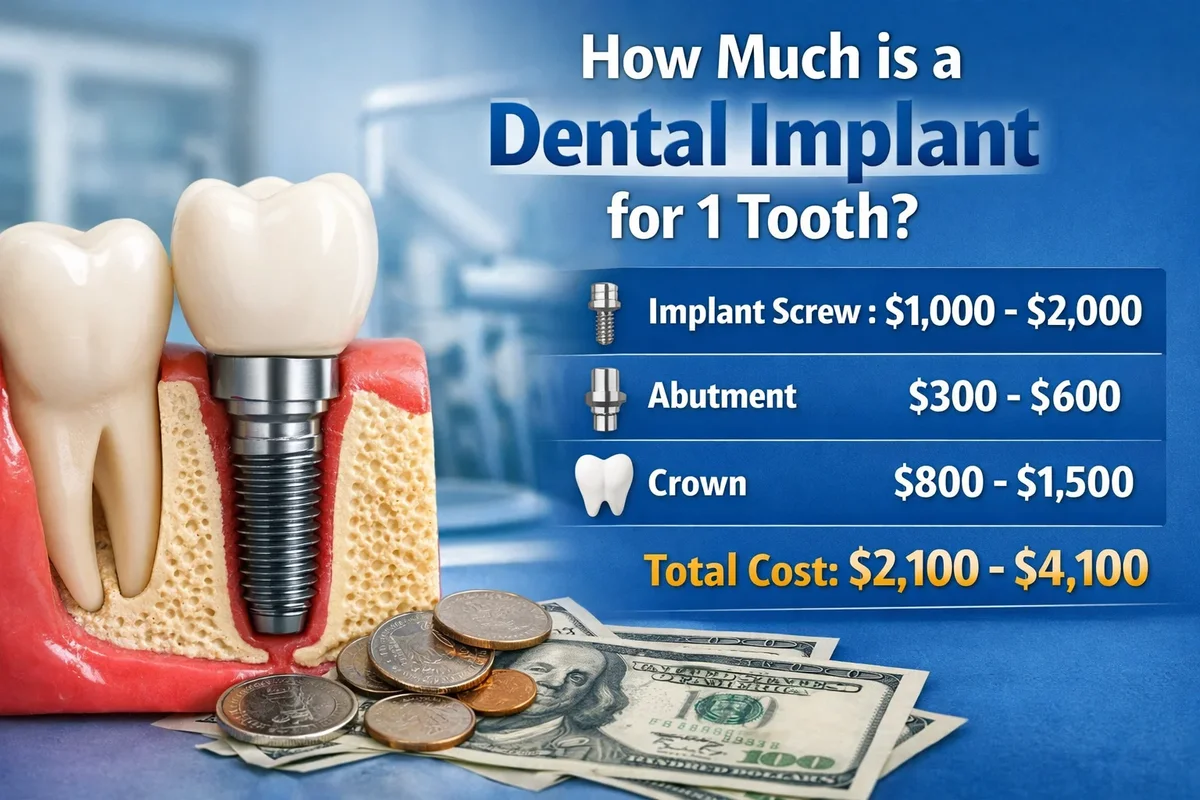
The implant post is typically made from medical-grade titanium, which integrates with the jawbone and provides long-term stability. The implant itself can cost between $1,000 and $3,000 depending on the brand and manufacturer. Premium implant systems may cost more because they offer extensive clinical research and higher long-term success rates.
Abutment and Crown Cost
After the implant integrates with the bone, an abutment is attached to connect the implant to the visible tooth restoration. The crown is then custom designed to match the shape, color, and alignment of the surrounding teeth. These two components together can cost between $800 and $2,500 depending on materials such as porcelain, zirconia, or ceramic.
For patients researching how much is a dental implant for 1 tooth, these restorative components represent a significant portion of the total treatment cost.
Why Dental Implant Prices Vary Between Clinics
It is common for patients to notice large differences when comparing implant quotes from different dental clinics. When evaluating how much is a dental implant for 1 tooth, several factors may explain these variations:
- Dentist or surgeon experience
- Implant brand and materials used
- Technology and diagnostic equipment
- Clinic location and operating costs
- Need for additional procedures
Highly specialized implant surgeons often charge higher fees because of their advanced training and extensive experience. However, this expertise may also increase treatment success rates and reduce potential complications.
According to the American Dental Association, dental implants have become one of the most reliable and long-lasting solutions for missing teeth. Their predictable outcomes contribute to the growing popularity of implant treatments worldwide.
Dental Tourism and Implant Costs
Many international patients researching how much is a dental implant for 1 tooth consider traveling abroad for treatment. Dental tourism destinations such as Turkey, Hungary, and Mexico have become popular because they offer high-quality care at significantly lower prices.
These lower costs are often due to differences in operating expenses rather than lower treatment standards. In fact, many internationally accredited clinics use the same implant systems and digital technologies as clinics in the United States or Europe.
For example, patients looking for detailed treatment information or personalized implant consultations can visit the Redent Klinik Contact Page to discuss their needs with experienced dental professionals.
Long-Term Value of Dental Implants
While patients often focus on the initial question how much is a dental implant for 1 tooth, it is equally important to consider the long-term value of the treatment. Dental implants are designed to last many years, and with proper oral hygiene they can remain functional for decades.
Unlike bridges or dentures, implants do not rely on adjacent teeth for support. This helps preserve the natural tooth structure and prevents additional dental complications. Over time, this durability can make implants a cost-effective investment in oral health.
Ultimately, when evaluating how much is a dental implant for 1 tooth, patients should look beyond the initial price and focus on the long-term benefits. Improved chewing ability, natural aesthetics, jawbone preservation, and increased confidence all contribute to the overall value of dental implant treatment.
In the next section, we will explore the key factors that influence how much is a dental implant for 1 tooth, including bone health, implant materials, surgical complexity, and other variables that affect the final treatment cost.
What Factors Affect How Much a Dental Implant for 1 Tooth Costs?
Many patients researching tooth replacement options often start with the question how much is a dental implant for 1 tooth. However, the answer is not always straightforward because the final price depends on several clinical, geographic, and technological factors. Dental implants are personalized treatments, meaning each patient’s oral health condition can influence the total cost. Understanding these factors helps patients better evaluate treatment quotes and determine why prices may vary from one clinic to another.
When evaluating how much is a dental implant for 1 tooth, dentists consider aspects such as bone quality, implant materials, additional procedures, diagnostic technology, and the expertise of the dental surgeon. These elements combine to determine the overall treatment plan and ultimately the final cost.
Bone Health and Jawbone Density
One of the most important factors affecting how much is a dental implant for 1 tooth is the condition of the jawbone. Dental implants rely on strong bone support to remain stable and function like natural teeth. If a patient has experienced bone loss due to gum disease, trauma, or long-term tooth loss, additional procedures may be necessary before placing the implant.
In many cases, dentists may recommend bone grafting to rebuild the lost bone structure. Bone graft procedures help strengthen the jaw and provide a solid foundation for the implant. This additional treatment can increase the total price when calculating how much is a dental implant for 1 tooth.
Bone Grafting Costs
Bone grafting costs vary depending on the extent of bone loss and the materials used. Typical price ranges may include:
- Minor bone graft: $200 – $800
- Moderate bone graft: $800 – $2,000
- Advanced grafting procedures: $2,000 – $3,500+
Patients who require bone grafting should expect this procedure to influence the overall estimate when asking how much is a dental implant for 1 tooth.
Implant Brand and Material Quality
Another key factor affecting how much is a dental implant for 1 tooth is the brand and quality of the implant system used. Dental implants are typically made from medical-grade titanium or zirconia, both of which offer excellent biocompatibility with the human body.
Premium implant brands invest heavily in clinical research, advanced manufacturing, and long-term testing. As a result, these systems may cost more but often provide higher success rates and better durability. Some widely recognized implant systems used globally include well-established manufacturers known for their reliability and long-term performance.
Because of these differences in manufacturing quality and clinical evidence, the implant brand selected by the dentist can significantly influence how much is a dental implant for 1 tooth.
Diagnostic Technology and Treatment Planning
Modern dental implant procedures rely on advanced imaging technology to ensure safe and precise placement. Clinics that use digital planning tools often provide more predictable outcomes, but these technologies can also affect the total cost when calculating how much is a dental implant for 1 tooth.
Common diagnostic tools used during implant planning include:
- 3D Cone Beam CT scans
- Digital intraoral scanners
- Computer-guided implant surgery systems
- Digital treatment planning software
These technologies allow dentists to visualize the patient’s jawbone structure, nerve positions, and sinus cavities before surgery. By using these tools, clinicians can place implants with greater accuracy and reduce surgical risks.
When patients research how much is a dental implant for 1 tooth, clinics that utilize advanced imaging may have slightly higher treatment costs, but they also offer improved safety and precision.
Dentist Experience and Surgical Expertise
The experience and training of the implant specialist also play a significant role in determining how much is a dental implant for 1 tooth. Implant dentistry requires specialized surgical skills, extensive knowledge of oral anatomy, and experience with restorative techniques.
Highly trained implant surgeons often complete additional education in implantology and oral surgery. Their expertise can contribute to higher treatment fees, but it also increases the likelihood of successful outcomes and long-lasting results.
Patients should remember that when evaluating how much is a dental implant for 1 tooth, the dentist’s experience is an investment in treatment quality and safety.
Geographic Location of the Clinic
Location plays a major role in determining how much is a dental implant for 1 tooth. Dental clinics in large metropolitan areas or high-cost countries typically charge higher fees due to increased operating expenses such as rent, staff salaries, and equipment costs.
This is why many patients consider international treatment options when researching how much is a dental implant for 1 tooth. Countries known for dental tourism often provide high-quality treatments at significantly lower prices because their operating costs are lower.
For example, clinics in Turkey have become popular destinations for implant dentistry. Patients seeking personalized treatment plans and professional consultation can visit the Redent Klinik Contact Page to discuss their options with experienced implant specialists.
Additionally, organizations such as the American Dental Association emphasize the importance of choosing qualified dental professionals and accredited clinics when undergoing implant procedures.
Additional Procedures That May Affect Cost
Several additional treatments may influence how much is a dental implant for 1 tooth. These procedures are not always required, but they can become necessary depending on the patient’s oral health condition.
- Tooth extraction before implant placement
- Sinus lift surgery for upper jaw implants
- Gum disease treatment
- Temporary crowns during healing
Each of these procedures adds complexity to the treatment plan and can increase the final cost. Therefore, when patients ask how much is a dental implant for 1 tooth, dentists must evaluate the entire oral condition before providing an accurate estimate.
Long-Term Value Compared to Initial Cost
While the initial price may seem high when researching how much is a dental implant for 1 tooth, it is important to consider the long-term benefits. Dental implants are designed to last decades with proper oral hygiene and regular dental visits.
Unlike bridges or dentures, implants preserve the surrounding teeth and help prevent jawbone loss. These long-term health benefits make dental implants one of the most reliable and durable solutions for replacing a missing tooth.
Ultimately, understanding the factors that influence how much is a dental implant for 1 tooth allows patients to make informed decisions about their treatment options. By considering bone health, materials, technology, surgeon expertise, and clinic location, patients can better evaluate the true value of implant therapy.
In the next section, we will examine the individual components involved in implant treatment and how each part contributes to how much is a dental implant for 1 tooth.
Dental Implant Components and Their Individual Costs
When patients research how much is a dental implant for 1 tooth, they often assume the treatment involves only one single device. In reality, a dental implant restoration consists of several carefully engineered components that work together to replace both the root and the visible portion of a missing tooth. Each part contributes to the final price, which is why understanding the structure of an implant system is essential when evaluating how much is a dental implant for 1 tooth.
A complete single-tooth dental implant usually includes three main elements: the implant post, the abutment, and the dental crown. In addition, there may also be diagnostic procedures, surgical materials, and laboratory costs that influence the final treatment price. By examining each component individually, patients can better understand why dentists provide different estimates when discussing how much is a dental implant for 1 tooth.
The Implant Post: The Artificial Tooth Root
The implant post is the foundation of the entire dental implant system. It is a small screw-shaped structure that is surgically placed into the jawbone, functioning as an artificial root for the replacement tooth. Because this component must integrate with the bone and remain stable for many years, it is typically manufactured from high-quality titanium or zirconia.
Titanium implants are the most widely used option because they are extremely durable and biocompatible. Over time, the implant integrates with the jawbone through a process known as osseointegration. This biological bonding ensures the implant becomes securely anchored in the bone structure.
When patients ask how much is a dental implant for 1 tooth, the implant post itself usually represents a significant portion of the cost. Depending on the brand and manufacturing technology, the implant fixture may range between:
- $800 – $1,500 for standard implant systems
- $1,500 – $2,500 for premium implant brands
- $2,500 – $3,000+ for specialized implant systems
Because the implant post must remain in the jawbone for decades, dentists often recommend using reliable implant brands with extensive clinical research. Choosing a trusted system can improve long-term success rates and reduce complications, which ultimately affects the overall value when considering how much is a dental implant for 1 tooth.
Why Implant Brand Matters
Different implant manufacturers produce systems with varying designs, surface technologies, and research histories. Premium brands often invest heavily in clinical studies and precision manufacturing, which contributes to higher success rates. As a result, the brand of implant used can influence the total price when calculating how much is a dental implant for 1 tooth.
The Abutment: Connecting the Implant to the Crown
The abutment is a small connector piece that attaches to the top of the implant post. Its purpose is to link the implant fixture inside the bone to the visible dental crown above the gumline. Although this component is relatively small, it plays an important role in the stability and appearance of the final restoration.
Abutments can be manufactured from titanium, zirconia, or custom-milled ceramic materials. The material selection often depends on aesthetic requirements, particularly for implants placed in the front of the mouth where appearance is more critical.
Patients researching how much is a dental implant for 1 tooth should understand that abutments can cost between $300 and $800 depending on the material and whether a custom design is required. Custom abutments are sometimes recommended to achieve a more natural gum contour and improved aesthetic results.
Standard vs Custom Abutments
Standard abutments are prefabricated components that work well for many implant restorations. However, in cases where precise alignment or aesthetic improvements are necessary, dentists may recommend custom abutments. These are designed specifically for the patient’s dental anatomy and may increase the overall cost associated with how much is a dental implant for 1 tooth.
The Dental Crown: The Visible Tooth Replacement
The dental crown is the part of the implant that resembles a natural tooth and restores the patient’s smile. Crowns are typically fabricated from durable ceramic or porcelain materials designed to mimic the translucency and color of natural teeth.
The crown is custom-made in a dental laboratory using impressions or digital scans of the patient’s mouth. Skilled dental technicians shape and shade the crown so that it blends seamlessly with surrounding teeth.
When evaluating how much is a dental implant for 1 tooth, the crown often accounts for a significant part of the treatment cost. Typical price ranges include:
- $800 – $1,200 for porcelain-fused-to-metal crowns
- $1,000 – $1,800 for all-ceramic crowns
- $1,500 – $2,500 for premium zirconia crowns
High-quality crown materials provide superior aesthetics and durability. Many patients prefer zirconia or ceramic crowns because they closely resemble natural teeth and resist staining over time.
Additional Clinical and Laboratory Costs
Beyond the implant components themselves, there are several additional services that contribute to the final answer when patients ask how much is a dental implant for 1 tooth. These include diagnostic imaging, surgical planning, sterilization procedures, and dental laboratory fees.
For example, dentists frequently use 3D cone-beam CT scans to analyze bone structure and determine the safest implant placement. These advanced imaging technologies improve treatment precision but may add $150 to $500 to the total cost.
Laboratory fees also influence the final price. Skilled dental technicians must design and fabricate the crown to ensure proper fit, function, and aesthetics. These specialized services are essential for achieving long-lasting results when replacing a missing tooth.
Total Estimated Cost Breakdown
Combining all of the components involved in implant treatment helps clarify the overall price structure. When patients ask how much is a dental implant for 1 tooth, a simplified cost breakdown may look like this:
- Implant post: $800 – $3,000
- Abutment: $300 – $800
- Dental crown: $800 – $2,500
- Imaging and diagnostics: $150 – $500
- Surgical placement and clinical fees: $500 – $2,000
Altogether, the total cost for replacing a single tooth with a dental implant typically ranges from $2,500 to $6,000 in many Western countries. However, this price can vary significantly depending on the clinic, location, and complexity of the case.
Patients interested in learning more about implant treatment or receiving a personalized estimate can contact a professional dental team through the Redent Klinik Contact Page. A qualified dentist can evaluate your oral condition and provide a precise treatment plan explaining how much is a dental implant for 1 tooth in your specific situation.
According to the American Dental Association, dental implants remain one of the most reliable long-term solutions for replacing missing teeth. By understanding the individual components and costs involved, patients can make more informed decisions when considering how much is a dental implant for 1 tooth and the value of this advanced dental treatment.
How Location Influences the Cost of a Single Tooth Implant
When researching how much is a dental implant for 1 tooth, many patients quickly discover that the price can vary dramatically depending on geographic location. The same dental implant procedure may cost several thousand dollars in one country and significantly less in another. This difference often surprises patients, but it is primarily influenced by regional economic factors, healthcare systems, and the operational costs of dental clinics.
Understanding how location affects how much is a dental implant for 1 tooth is important for patients comparing treatment options. While the clinical procedure is similar worldwide, the environment in which the treatment is delivered can greatly impact the final price.
Healthcare Costs and Local Economic Factors
One of the biggest reasons why prices differ when asking how much is a dental implant for 1 tooth is the overall cost of healthcare in a specific country. Countries with higher living costs generally have more expensive dental treatments. This includes expenses related to rent, staff salaries, insurance, medical equipment, and regulatory compliance.
For example, dental clinics in cities such as New York, London, or Sydney operate in environments where business costs are significantly higher than in smaller cities or developing countries. These expenses are reflected in the treatment price, which increases the total amount patients pay when determining how much is a dental implant for 1 tooth.
Additionally, strict healthcare regulations and professional licensing requirements may increase the cost of dental services in some regions. While these regulations improve patient safety and treatment quality, they also contribute to higher operational costs for dental practices.
Average Implant Costs by Region
Patients researching how much is a dental implant for 1 tooth often compare global price ranges before choosing a clinic. Below is a simplified comparison of typical dental implant costs across different regions.
- United States: $3,000 – $6,000
- United Kingdom: $2,500 – $4,500
- Western Europe: $2,000 – $4,000
- Australia: $3,000 – $5,500
- Turkey: $600 – $1,500
- Mexico: $900 – $2,000
- Hungary: $800 – $1,800
These figures illustrate how dramatically the cost can change depending on location. Even though the treatment method remains similar, the local economy and healthcare infrastructure significantly affect how much is a dental implant for 1 tooth.
Dental Tourism and International Implant Treatment
Because of the price differences around the world, dental tourism has become increasingly popular. Many patients travel abroad to receive high-quality dental care at a more affordable price. When researching how much is a dental implant for 1 tooth, international treatment options often appear as attractive alternatives.
Countries such as Turkey, Hungary, and Mexico have become major destinations for dental tourism. These countries offer modern dental clinics equipped with advanced technology while maintaining lower treatment costs due to reduced operational expenses.
For example, many international patients choose clinics in Turkey because the cost of replacing a single tooth with an implant can be significantly lower than in Western Europe or North America. Despite the lower cost, many clinics maintain international treatment standards and use the same implant systems used worldwide.
Patients interested in exploring implant treatment abroad can consult with specialists through the Redent Klinik Contact Page to receive personalized guidance about treatment options and accurate pricing information related to how much is a dental implant for 1 tooth.
Advantages of Choosing Treatment Abroad
Patients considering international dental care often evaluate several advantages when researching how much is a dental implant for 1 tooth in different countries. Some of the most common benefits include:
- Lower overall treatment costs
- Access to experienced implant specialists
- Modern dental technology and digital planning
- Shorter waiting times for treatment
- Opportunity to combine treatment with travel
However, patients should always research clinics carefully and ensure that the dental team has appropriate qualifications and experience in implant dentistry.
Urban vs Rural Clinic Pricing
Even within the same country, location can still influence how much is a dental implant for 1 tooth. Dental clinics located in major cities often charge higher prices than clinics in smaller towns or suburban areas. This is largely due to higher rent, staff wages, and business operating costs in urban environments.
For example, a dental implant procedure performed in a large metropolitan area may cost several hundred or even thousands of dollars more than the same treatment provided in a smaller regional clinic.
Nevertheless, large city clinics may also offer advantages such as specialized implant surgeons, advanced imaging equipment, and multidisciplinary dental teams. These factors can contribute to higher treatment success rates and more comprehensive care.
Quality vs Price: What Patients Should Consider
While location strongly affects how much is a dental implant for 1 tooth, price should not be the only factor patients consider. Quality of care, dentist experience, sterilization protocols, and implant materials are equally important.
Choosing the cheapest option without evaluating clinical standards may lead to complications or implant failure. Patients should prioritize experienced implant specialists and clinics that follow internationally recognized dental guidelines.
Organizations such as the American Dental Association recommend that patients carefully evaluate the credentials of dental professionals and confirm that proper treatment planning and diagnostics are performed before implant surgery.
The True Value of Implant Treatment
Ultimately, when evaluating how much is a dental implant for 1 tooth, patients should consider both the immediate cost and the long-term value of the treatment. Dental implants are designed to function like natural teeth and can last decades when properly maintained.
Because implants preserve jawbone health and restore full chewing function, many dentists consider them the most reliable long-term solution for replacing a missing tooth. The initial cost may be higher than alternative treatments such as bridges or dentures, but the durability and stability of implants often make them a more cost-effective investment over time.
Understanding how geographic location influences treatment pricing allows patients to make informed decisions when exploring options for replacing a missing tooth. By comparing global treatment standards and consulting experienced professionals, patients can better evaluate how much is a dental implant for 1 tooth and select the best clinic for their dental health needs.
Dental Insurance and Financing Options for a Single Tooth Implant
Many patients researching how much is a dental implant for 1 tooth quickly realize that the treatment can represent a significant financial investment. Because dental implants involve surgical placement, high-quality materials, and custom restorations, the price may initially seem high compared to other dental procedures. However, understanding insurance coverage, financing programs, and payment plans can make implant treatment much more accessible.
When patients ask how much is a dental implant for 1 tooth, dentists often explain that the total cost depends not only on clinical factors but also on the type of financial support available. Insurance coverage, dental discount plans, and flexible payment options can significantly reduce the financial burden of implant therapy.
Does Dental Insurance Cover Single Tooth Implants?
One of the most common questions patients ask while researching how much is a dental implant for 1 tooth is whether dental insurance will cover the procedure. The answer varies depending on the specific insurance provider and policy details.
Traditionally, many insurance plans classified dental implants as cosmetic procedures and therefore did not provide coverage. However, modern dental insurance policies increasingly recognize implants as a medically necessary treatment for replacing missing teeth. As a result, some insurance providers now partially cover certain stages of implant therapy.
Insurance coverage may apply to the following components of treatment:
- Initial consultation and diagnostic imaging
- Tooth extraction before implant placement
- Bone graft procedures
- Portions of the implant surgery
- The final dental crown
Although insurance rarely covers the entire procedure, partial reimbursement can reduce the total amount patients pay when calculating how much is a dental implant for 1 tooth.
Typical Insurance Contribution
Many dental insurance policies cover approximately 10% to 50% of certain restorative procedures, depending on the treatment category. For example:
- Diagnostic imaging coverage: 50–80%
- Extraction coverage: 50–80%
- Crown coverage: 30–50%
- Implant placement: sometimes partially covered
Patients should review their policy carefully or speak directly with their insurance provider to determine how much support they may receive when estimating how much is a dental implant for 1 tooth.
Flexible Payment Plans Offered by Dental Clinics
Many modern dental clinics understand that patients often hesitate when considering how much is a dental implant for 1 tooth. For this reason, many practices offer flexible payment plans that allow patients to spread the cost over several months or years.
Payment plans typically divide the treatment cost into manageable monthly installments. This approach allows patients to receive necessary dental care without paying the full amount upfront.
Common payment plan structures include:
- Interest-free monthly payments for 6–12 months
- Low-interest financing plans for 24–48 months
- Installment payments aligned with treatment stages
By breaking the total cost into smaller payments, these programs make it easier for patients to move forward with treatment after learning how much is a dental implant for 1 tooth.
Medical Credit and Healthcare Financing
In addition to clinic-based payment plans, many patients use specialized healthcare financing services. These programs are designed specifically for medical and dental procedures, including implant treatments.
Healthcare credit companies allow patients to finance their dental treatment through monthly payments, similar to a personal loan. This option is particularly helpful for individuals who want to begin treatment immediately but prefer to pay gradually over time.
Patients comparing financing options while researching how much is a dental implant for 1 tooth should review interest rates, repayment terms, and approval requirements before selecting a financing provider.
Benefits of Healthcare Financing
Healthcare financing programs offer several advantages for patients seeking dental implant treatment:
- Immediate access to treatment
- Flexible monthly payment options
- Potential interest-free promotional periods
- No need to delay necessary dental care
These programs can make the answer to how much is a dental implant for 1 tooth more manageable by distributing the cost across a longer time frame.
Health Savings Accounts (HSA) and Flexible Spending Accounts (FSA)
Another financial option that can help patients manage how much is a dental implant for 1 tooth is the use of tax-advantaged healthcare savings accounts. In some countries, patients can pay for dental procedures using funds from Health Savings Accounts (HSA) or Flexible Spending Accounts (FSA).
These accounts allow individuals to use pre-tax income for eligible healthcare expenses, including many dental procedures. Because the money is deducted before taxes, patients may effectively reduce the overall cost of treatment.
Using these accounts can make a significant difference when calculating how much is a dental implant for 1 tooth, especially for individuals planning larger dental treatments.
Why Investing in an Implant Can Be Cost-Effective
Although patients often focus on the immediate question how much is a dental implant for 1 tooth, it is equally important to consider the long-term value of the treatment. Dental implants are designed to last many years and often outperform alternative tooth replacement solutions such as bridges or removable dentures.
Unlike bridges, implants do not require grinding down adjacent teeth. They also help prevent jawbone loss by stimulating the bone structure, which preserves facial shape and oral health.
According to the American Dental Association, dental implants are among the most predictable and successful procedures in modern dentistry. With proper oral hygiene and regular dental checkups, implants can remain functional for decades.
Patients who want to explore treatment options and receive a personalized estimate for how much is a dental implant for 1 tooth can consult experienced dental professionals through the Redent Klinik Contact Page. A professional evaluation can help determine eligibility for implant treatment and identify suitable financing solutions.
Planning Your Dental Implant Investment
Ultimately, the best approach to managing how much is a dental implant for 1 tooth is to combine careful financial planning with professional dental consultation. By reviewing insurance coverage, financing options, and long-term treatment benefits, patients can make informed decisions about restoring their smile.
Dental implants represent a durable and natural-looking solution for replacing missing teeth. When supported by the right financial strategy, implant treatment can become both achievable and worthwhile for patients seeking long-term oral health and confidence.
Comparing Dental Implant Costs to Other Tooth Replacement Options
When people begin researching how much is a dental implant for 1 tooth, they often compare the cost of implants with other tooth replacement solutions such as dental bridges or removable dentures. While implants may initially appear more expensive, it is important to evaluate the long-term value, durability, and oral health benefits that each treatment option provides. Understanding these comparisons can help patients make more informed decisions when considering how much is a dental implant for 1 tooth and whether it is the right solution for their needs.
Modern dentistry offers several ways to replace a missing tooth. However, each option has different costs, longevity, and functional outcomes. By comparing dental implants with traditional restorations, patients can better understand why many dental professionals recommend implants as the most advanced and reliable option when evaluating how much is a dental implant for 1 tooth.
Dental Implants vs Dental Bridges
One of the most common alternatives to dental implants is a dental bridge. A bridge replaces a missing tooth by attaching an artificial tooth to the adjacent natural teeth. While bridges have been used for decades and can provide satisfactory results, they differ significantly from implants in terms of structure and long-term impact.
Cost Comparison
Patients comparing treatment options often ask whether a bridge is cheaper than the answer to how much is a dental implant for 1 tooth. In most cases, a dental bridge does have a lower initial cost. Typical price ranges include:
- Dental bridge: $1,500 – $3,000
- Single dental implant: $2,500 – $6,000
At first glance, this difference may make bridges appear more affordable. However, bridges typically last around 7 to 10 years before requiring replacement, whereas implants can last decades with proper care. When considering the long-term expenses, the total cost difference between a bridge and how much is a dental implant for 1 tooth may become much smaller.
Impact on Adjacent Teeth
Another important factor when comparing bridges to how much is a dental implant for 1 tooth is the effect on surrounding teeth. To place a bridge, dentists must file down the neighboring teeth to support the restoration. This process permanently alters healthy teeth and may increase the risk of future dental problems.
In contrast, implants do not rely on adjacent teeth for support. The implant post is anchored directly into the jawbone, preserving the natural structure of surrounding teeth.
Dental Implants vs Removable Dentures
Another alternative patients consider when researching how much is a dental implant for 1 tooth is a removable partial denture. Dentures are designed to replace missing teeth using a removable appliance that rests on the gums.
Although dentures can be an affordable solution, they have several limitations compared to dental implants.
Cost Differences
Removable dentures usually have the lowest initial cost among tooth replacement options. Typical prices include:
- Removable partial denture: $500 – $1,500
- Single dental implant: $2,500 – $6,000
While dentures are significantly cheaper than the typical price range for how much is a dental implant for 1 tooth, they often require periodic adjustments, relining, or replacement every few years.
Comfort and Function
Dentures rest on the gum tissue rather than being anchored in the bone. As a result, they may shift during eating or speaking, which can cause discomfort or embarrassment for some patients.
Dental implants provide a more stable solution. Because the implant is integrated with the jawbone, it functions much like a natural tooth. Patients researching how much is a dental implant for 1 tooth often discover that implants offer superior chewing strength and long-term comfort.
Long-Term Cost Considerations
When evaluating tooth replacement options, it is important to consider not only the initial price but also the long-term maintenance costs. Many patients focus on how much is a dental implant for 1 tooth at the beginning of their research, but over time the total expense of alternative treatments may exceed the cost of an implant.
For example:
- Dental bridges may require replacement every 7–10 years.
- Dentures may need frequent adjustments and relining.
- Implants can often last 20 years or longer with proper care.
Because of this durability, dental implants may represent the most cost-effective solution over a patient’s lifetime.
Jawbone Health and Facial Structure
Another major advantage of dental implants when comparing options related to how much is a dental implant for 1 tooth is their ability to preserve jawbone health. When a tooth is lost, the surrounding bone begins to shrink due to lack of stimulation. Over time, this bone loss can change facial structure and cause premature aging.
Dental implants prevent this problem by stimulating the jawbone in the same way natural tooth roots do. Bridges and dentures cannot provide this stimulation, which means bone loss may continue even after the missing tooth is replaced.
Maintaining healthy jawbone structure is one of the reasons dental professionals often recommend implants despite the higher initial cost associated with how much is a dental implant for 1 tooth.
Success Rates and Longevity
Clinical research consistently shows that dental implants have very high success rates. According to the American Dental Association, modern implant procedures have success rates above 95% when performed by experienced dental professionals.
This reliability contributes to the growing popularity of implants among patients researching how much is a dental implant for 1 tooth. With proper oral hygiene and regular dental visits, implants can function reliably for decades.
Choosing the Right Treatment Option
Ultimately, the best tooth replacement solution depends on the patient’s individual oral health condition, budget, and long-term expectations. While the initial cost associated with how much is a dental implant for 1 tooth may appear higher than other treatments, implants provide unmatched stability, durability, and natural aesthetics.
Patients who want to explore personalized treatment options or receive professional guidance about how much is a dental implant for 1 tooth can consult experienced dental specialists through the Redent Klinik Contact Page. A comprehensive dental evaluation can help determine the most appropriate solution for restoring a healthy and confident smile.
By comparing dental implants with bridges and dentures, patients gain a clearer understanding of the long-term benefits and value of implant treatment. Although the upfront investment may be greater, dental implants remain one of the most reliable and advanced solutions available in modern dentistry.
The Procedure Timeline for Getting a Single Tooth Implant
Patients who research how much is a dental implant for 1 tooth are often equally curious about the timeline of the procedure. Unlike simple dental restorations that can be completed in a single appointment, dental implants involve a carefully planned process that allows the implant to integrate with the jawbone and create a stable, long-lasting foundation for the new tooth. Understanding the full treatment timeline helps patients set realistic expectations when evaluating how much is a dental implant for 1 tooth and planning their dental care.
The process for placing a single tooth implant typically occurs over several months. Each stage of the procedure is designed to ensure optimal healing, stability, and long-term success. Although the timeline may vary depending on individual oral health conditions, most implant treatments follow a similar sequence of steps.
Initial Consultation and Treatment Planning
The first step in determining how much is a dental implant for 1 tooth is a comprehensive dental evaluation. During this visit, the dentist examines the patient’s oral health, reviews medical history, and evaluates the condition of the jawbone and surrounding teeth.
Diagnostic imaging plays a critical role during this stage. Dentists often use digital X-rays or cone-beam CT scans to obtain detailed images of the jawbone. These images help determine whether there is sufficient bone density to support an implant and allow the dentist to plan the exact placement position.
During this consultation, the dental team also explains the expected cost, timeline, and possible additional procedures related to how much is a dental implant for 1 tooth. Patients may also receive a personalized treatment plan that outlines each stage of the implant procedure.
Typical Duration of the Consultation Phase
The initial consultation and treatment planning stage usually takes one appointment lasting approximately 30 to 60 minutes. However, additional diagnostic imaging or specialist referrals may extend this stage slightly.
Tooth Extraction and Site Preparation
If the damaged or missing tooth has not yet been removed, the next step in the process of determining how much is a dental implant for 1 tooth may involve tooth extraction. The dentist carefully removes the compromised tooth while preserving as much surrounding bone as possible.
In some cases, the implant can be placed immediately after extraction. However, many patients require a healing period before implant placement. This healing time allows the gum tissue and bone to stabilize.
Patients with insufficient bone volume may also require bone grafting during this stage. Bone grafts strengthen the implant site and improve the chances of long-term implant success. Because bone grafting adds additional procedures, it may influence the final answer to how much is a dental implant for 1 tooth.
Implant Placement Surgery
Once the implant site is ready, the dentist performs the implant placement procedure. This minor surgical procedure involves inserting a titanium implant post into the jawbone where the missing tooth once existed.
The procedure is typically performed under local anesthesia, and most patients report minimal discomfort. In fact, many people find the implant placement process easier than expected when learning about how much is a dental implant for 1 tooth and the overall treatment experience.
During surgery, the dentist carefully creates a small opening in the gum and bone before placing the implant fixture. Once the implant is securely positioned, the gum tissue is closed to allow healing.
Surgical Appointment Duration
The implant placement procedure usually takes between 30 and 90 minutes depending on the complexity of the case. After surgery, patients can typically resume normal daily activities within a short time.
Osseointegration and Healing Period
After the implant is placed, the most important stage of the timeline begins: osseointegration. This biological process allows the implant to fuse with the surrounding jawbone, creating a stable foundation for the artificial tooth.
During osseointegration, bone cells grow around the implant surface and permanently anchor it within the jaw. This process is essential for ensuring long-term success and stability when evaluating how much is a dental implant for 1 tooth.
The healing period typically lasts between three and six months. During this time, the patient may wear a temporary restoration or simply allow the implant site to heal naturally.
Maintaining excellent oral hygiene and attending follow-up appointments during this phase are critical to achieving successful implant integration.
Abutment Placement
Once the implant has fully integrated with the bone, the dentist attaches a small connector known as an abutment. The abutment serves as the link between the implant post and the final dental crown.
This step requires a minor procedure in which the dentist reopens the gum tissue to access the implant and secure the abutment. Afterward, the gum tissue is allowed to heal around the abutment for a short period.
Although this stage is relatively simple, it still contributes to the overall treatment plan and influences the final calculation of how much is a dental implant for 1 tooth.
Custom Crown Fabrication and Placement
The final stage of the implant process involves designing and attaching the custom dental crown. The dentist takes impressions or digital scans of the patient’s teeth to create a crown that matches the shape, color, and size of the surrounding natural teeth.
Dental laboratories carefully fabricate the crown using durable materials such as porcelain or zirconia. Once the crown is completed, the dentist securely attaches it to the abutment.
At this point, the dental implant fully restores the appearance and function of the missing tooth. Patients can chew, speak, and smile with confidence while benefiting from the stability of a permanent restoration.
Total Timeline Overview
The entire process for replacing a missing tooth with an implant typically takes between three and six months, although some cases may be completed more quickly depending on individual healing and treatment requirements.
While researching how much is a dental implant for 1 tooth, it is helpful to remember that this timeline ensures the implant integrates properly and provides long-lasting results.
According to the American Dental Association, dental implants remain one of the most predictable and effective treatments for replacing missing teeth when performed by experienced dental professionals.
Patients interested in learning more about implant procedures or receiving a personalized consultation regarding how much is a dental implant for 1 tooth can contact experienced specialists through the Redent Klinik Contact Page. A professional evaluation helps ensure the treatment plan is tailored to each patient’s unique oral health needs.
Understanding the procedure timeline allows patients to prepare for each stage of treatment and appreciate the precision involved in implant dentistry. Although the process requires patience, the long-term benefits of a dental implant make it one of the most reliable solutions for restoring a healthy smile.
Are Dental Implants Worth the Cost for One Missing Tooth?
When patients begin researching how much is a dental implant for 1 tooth, the next natural question is whether the treatment is truly worth the investment. Dental implants are widely considered the most advanced solution for replacing a missing tooth, but the cost can initially seem higher compared to alternatives such as bridges or removable dentures. However, evaluating the long-term benefits, durability, oral health advantages, and quality-of-life improvements often helps patients understand why many dentists recommend implants despite the upfront expense.
Understanding the value behind how much is a dental implant for 1 tooth requires looking beyond the initial treatment price. Dental implants are designed to function like natural teeth, providing stability, comfort, and long-term reliability that other tooth replacement methods may not achieve.
Long-Term Durability and Lifespan
One of the most important factors influencing whether how much is a dental implant for 1 tooth is worth the cost is longevity. Dental implants are known for their exceptional durability. With proper oral hygiene and regular dental checkups, many implants can last 20 years or even a lifetime.
By comparison, other restorative options often have shorter lifespans:
- Dental bridges typically last 7–10 years before replacement.
- Partial dentures may require adjustment or replacement every 5–8 years.
- Dental implants can remain functional for decades with proper care.
Because implants last significantly longer than many alternatives, the long-term cost difference may actually be smaller than expected when evaluating how much is a dental implant for 1 tooth. Many patients find that implants provide greater value over time due to reduced maintenance and replacement costs.
Why Implant Longevity Matters
The long lifespan of implants means patients may avoid repeated dental procedures in the future. Instead of replacing restorations every few years, an implant can provide a stable solution that supports oral health for decades. This long-term reliability is a key reason why dentists emphasize the value behind how much is a dental implant for 1 tooth.
Natural Appearance and Confidence
Another important reason patients consider implants despite researching how much is a dental implant for 1 tooth is the natural appearance they provide. Modern implant crowns are designed to match the color, shape, and translucency of surrounding teeth, making them virtually indistinguishable from natural teeth.
This aesthetic advantage can significantly improve a patient’s confidence and comfort when smiling, speaking, or eating in public. Because the implant is anchored securely in the jawbone, the crown does not move or shift, allowing patients to enjoy daily activities without worry.
Many people who choose implants report that they eventually forget the artificial tooth entirely because it feels and functions just like a natural tooth.
Improved Chewing Function
Replacing a missing tooth is not only about aesthetics but also about restoring proper chewing function. Patients researching how much is a dental implant for 1 tooth are often surprised to learn that implants can restore nearly full biting strength.
Because the implant is anchored into the jawbone, it provides stability comparable to natural tooth roots. This allows patients to comfortably eat foods that might be difficult with dentures or other temporary restorations.
Improved chewing ability contributes to better digestion and overall health, making implants a valuable investment in long-term well-being.
Preservation of Jawbone Health
One of the most important medical benefits associated with how much is a dental implant for 1 tooth is the ability of implants to prevent bone loss. When a tooth is lost, the jawbone in that area begins to shrink because it no longer receives stimulation from the tooth root.
Dental implants replicate the function of natural roots by stimulating the surrounding bone during chewing. This stimulation helps maintain bone density and prevents the gradual deterioration that often occurs after tooth loss.
Other tooth replacement options, such as bridges or dentures, do not provide this benefit. As a result, patients who choose these alternatives may experience progressive bone loss over time.
Impact on Facial Structure
Bone loss can eventually alter facial appearance by causing the lower portion of the face to collapse slightly. Dental implants help preserve facial structure by maintaining bone volume. This long-term benefit further strengthens the value of treatment when considering how much is a dental implant for 1 tooth.
High Success Rates in Modern Dentistry
Clinical research consistently shows that dental implants are among the most successful procedures in modern dentistry. According to the American Dental Association, dental implant procedures typically achieve success rates above 95% when performed by experienced professionals.
This high success rate provides reassurance for patients evaluating how much is a dental implant for 1 tooth. With proper planning and skilled surgical placement, implants offer reliable and predictable outcomes.
Quality of Life Improvements
Beyond the clinical advantages, dental implants can significantly improve a patient’s quality of life. Patients who restore missing teeth often experience improvements in self-confidence, speech clarity, and comfort when eating.
When people initially research how much is a dental implant for 1 tooth, they may focus primarily on the financial aspect. However, many patients later realize that the emotional and functional benefits of implants provide value far beyond the cost.
The ability to smile freely, eat comfortably, and maintain oral health can make dental implant treatment one of the most rewarding investments in personal well-being.
Professional Evaluation and Personalized Treatment
Every patient’s oral health condition is unique, which means the final answer to how much is a dental implant for 1 tooth may vary depending on factors such as bone density, gum health, and treatment complexity.
Patients who are considering dental implants should schedule a professional consultation with an experienced dental team. A detailed examination allows the dentist to determine whether implants are suitable and to provide an accurate treatment plan.
Individuals interested in receiving personalized guidance about implant treatment can contact dental professionals through the Redent Klinik Contact Page. A consultation can help patients better understand the full treatment process and the expected cost of replacing a missing tooth.
Ultimately, when evaluating how much is a dental implant for 1 tooth, patients should consider both the financial investment and the long-term benefits. Dental implants provide exceptional durability, natural aesthetics, improved oral health, and lasting confidence—making them one of the most effective solutions for restoring a missing tooth.
How to Choose the Right Clinic for a Single Tooth Implant
After researching how much is a dental implant for 1 tooth, the next critical step for many patients is choosing the right dental clinic. The success, longevity, and safety of an implant procedure depend heavily on the experience of the dental team, the technology used, and the overall quality of care provided by the clinic. While cost is an important factor, selecting a qualified and reputable clinic is equally essential when evaluating how much is a dental implant for 1 tooth.
Dental implants involve precise surgical placement and long-term restorative work. Because of this complexity, patients should carefully evaluate several key factors before making a decision about where to receive treatment. Understanding what to look for in a dental clinic helps ensure that the answer to how much is a dental implant for 1 tooth results in a successful and long-lasting restoration.
Qualifications and Experience of the Implant Dentist
One of the most important factors when choosing a clinic is the experience and training of the dentist performing the implant procedure. Implant dentistry requires specialized knowledge of oral surgery, bone anatomy, prosthetic design, and digital treatment planning.
Patients researching how much is a dental implant for 1 tooth should verify that the dentist has completed advanced education in implantology or oral surgery. Dentists who regularly perform implant procedures are more likely to achieve predictable results and minimize potential complications.
When evaluating a clinic, patients may consider asking questions such as:
- How many implant procedures does the dentist perform each year?
- Does the dentist have specialized implant training?
- What is the clinic’s implant success rate?
A highly experienced dental professional may charge slightly more, but the improved safety and reliability often justify the cost when determining how much is a dental implant for 1 tooth.
Importance of Specialized Training
Implant dentistry combines surgical and restorative expertise. Dentists who complete continuing education programs and advanced implant courses often stay updated on the latest technologies and treatment methods. This expertise can significantly improve the quality of care patients receive.
Technology and Diagnostic Equipment
Modern dental implant procedures rely on advanced imaging and digital planning technology. Clinics equipped with state-of-the-art diagnostic tools can plan implant placement with greater accuracy and safety.
Patients exploring how much is a dental implant for 1 tooth should look for clinics that use technologies such as:
- 3D cone-beam CT imaging
- Digital intraoral scanners
- Computer-guided implant surgery
- Digital smile design software
These technologies allow dentists to analyze bone density, identify nerve positions, and determine the ideal implant placement location before surgery. Although clinics using advanced technology may charge slightly higher fees, the improved precision and reduced risk can enhance the overall value associated with how much is a dental implant for 1 tooth.
Implant Brand and Materials Used
Another important factor to consider when choosing a clinic is the implant system being used. High-quality dental implants are manufactured using medical-grade titanium and supported by extensive clinical research.
Patients researching how much is a dental implant for 1 tooth should ask which implant brands the clinic uses and whether those systems have long-term success data. Well-established implant manufacturers typically offer strong warranties and have decades of research supporting their products.
Using reliable implant systems improves the likelihood of successful osseointegration and long-term stability, which ultimately increases the value of the treatment investment.
Patient Reviews and Testimonials
Online reviews and patient testimonials can provide valuable insight when evaluating dental clinics. Many patients share their experiences regarding treatment outcomes, clinic professionalism, and overall satisfaction.
When researching how much is a dental implant for 1 tooth, reading authentic patient feedback can help identify clinics with consistent positive results. However, it is important to review multiple sources and consider both positive and negative feedback when forming an opinion.
Reliable clinics often showcase before-and-after treatment photos, patient testimonials, and documented case studies that demonstrate their expertise in implant dentistry.
Questions to Ask During a Consultation
During the consultation appointment, patients should feel comfortable asking questions about the implant procedure. Some useful questions include:
- What is the estimated timeline for treatment?
- What complications might occur during implant placement?
- What aftercare instructions should be followed?
- Does the clinic provide guarantees or warranties?
A reputable dental clinic will provide clear and transparent answers, helping patients understand the full scope of treatment and the expected cost when calculating how much is a dental implant for 1 tooth.
Clinic Hygiene and Safety Standards
Another critical consideration when choosing a dental clinic is hygiene and sterilization protocols. Implant procedures require surgical precision, which means strict infection control standards must be followed.
Clinics should maintain modern sterilization systems, disposable surgical materials, and properly trained clinical staff. Patients should feel confident that the clinic prioritizes patient safety throughout every stage of treatment.
Professional organizations such as the American Dental Association emphasize the importance of infection control, ethical dental practice, and evidence-based treatment planning.
Consultation and Personalized Treatment Planning
A thorough consultation is essential for determining how much is a dental implant for 1 tooth in each patient’s case. During this appointment, the dentist evaluates the patient’s oral health, discusses treatment options, and provides a customized treatment plan.
Every patient’s situation is unique, so the final cost may vary depending on bone density, gum condition, and whether additional procedures such as bone grafting are necessary.
Patients interested in receiving professional guidance about dental implant treatment can contact experienced specialists through the Redent Klinik Contact Page. A consultation allows dental professionals to assess individual needs and provide accurate information regarding how much is a dental implant for 1 tooth.
Balancing Cost with Quality
While many patients focus primarily on the price when researching how much is a dental implant for 1 tooth, it is important to balance cost with quality. Choosing a clinic solely based on the lowest price may increase the risk of complications, implant failure, or unsatisfactory results.
Instead, patients should consider the dentist’s experience, technology, treatment planning process, and overall reputation of the clinic. Investing in high-quality dental care often leads to better long-term outcomes and greater patient satisfaction.
By carefully evaluating these factors, patients can confidently choose a dental clinic that offers both professional expertise and transparent pricing. Ultimately, selecting the right clinic ensures that the investment in how much is a dental implant for 1 tooth results in a healthy, functional, and beautiful smile that lasts for many years.