
Understanding how much is a full dental implant cost is one of the most important steps for anyone considering a long-term solution for missing teeth. Full dental implants have become a global gold standard for restoring oral function, confidence, and long-term dental health. However, many patients are confused about pricing because costs vary widely depending on the country, clinic, material quality, bone condition, and the implant method used. This comprehensive guide is designed to clarify every detail, helping you make an informed decision while feeling confident about your investment. 🦷✨
In 2025, the conversation around how much is a full dental implant cost continues to grow as more patients seek permanent, natural-looking smile restoration. Unlike removable dentures, full dental implants offer unmatched durability, stability, and aesthetic quality. But because the treatment includes surgical placement, advanced technology, and high-quality prosthetics, the pricing tends to be higher than other tooth replacement options. Still, the value and longevity far outweigh the initial cost for most patients. In fact, implant dentistry experts worldwide — including those referenced by the
American Dental Association — consistently emphasize implants as one of the most successful and predictable dental treatments available today.
When people ask how much is a full dental implant cost, they are usually referring to full-mouth restoration — meaning both the upper and lower teeth are replaced with implant-supported prosthetics. This can be done using individual implants, hybrid bridges, or popular systems like All-on-4 or All-on-6. Each method has unique benefits and cost structures, which is why prices can range significantly. It’s also why researching all components helps you understand not just the cost, but what you’re actually receiving at each price point.
To give you a realistic framework before exploring deeper sections, here is a research-based general cost range collected from updated market data across Europe and the United States:
AVERAGE FULL MOUTH DENTAL IMPLANT PRICE RANGE IN 2025
------------------------------------------------------
🇺🇸 United States: $35,000 – $70,000
🇬🇧 United Kingdom: £20,000 – £35,000
🇪🇺 Western Europe: €18,000 – €30,000
🇹🇷 Turkey: $6,000 – $15,000
These prices include implant placement, abutments, temporary teeth, permanent prosthetic teeth, and clinical fees. However, they may increase if bone grafting, sinus lifting, or premium materials are required. This is why “how much is a full dental implant cost” can only be answered accurately when a dentist evaluates your individual oral condition.
One of the most important parts of evaluating how much is a full dental implant cost is understanding the value behind the treatment. Full-mouth implants don’t just replace teeth — they protect jawbone structure, improve chewing strength, enhance facial aesthetics, and dramatically boost long-term oral health. While removable dentures may seem cheaper at first, they require frequent replacement, offer limited stability, and often lead to bone loss over time. Implants, by comparison, are designed to last decades, making them a high-value medical investment rather than a cosmetic expense.
Patients who are actively researching how much is a full dental implant cost often compare multiple clinics, obtain X-rays or 3D scans, and request personalized treatment plans. This is the best approach. Every case is unique, and even two patients with similar oral health profiles may require different implant systems. Factors like bone density, gum health, desired aesthetic outcome, and implant material selection all influence pricing. Additionally, clinics in different countries have different labor and laboratory costs, which explains why international dental tourism — especially in Turkey — has grown significantly.
If you need professional guidance or wish to receive a personalized cost estimate tailored to your oral structure and expectations, you can directly contact the clinic through the
Redent Klinik Contact Page. Getting an expert evaluation is the most precise way to determine your total cost.
To strengthen the depth of this guide, we also integrate semantically related concepts such as “full mouth implant pricing” and “complete implant restoration cost,” which help broaden the informational value and search relevance for users seeking details about how much is a full dental implant cost. These variations help clarify that the overall price is influenced by numerous clinical and material-based factors, all of which will be explained in later sections.
In summary, knowing how much is a full dental implant cost is not just about understanding the price — it’s about understanding the procedure, the value, the technology, and the long-term benefits. The next sections will break down each component in detail, helping you compare methods, understand cost-influencing factors, evaluate international price differences, and choose the safest and most cost-effective path toward restoring your smile. 😄💙
Average Full Dental Implant Cost Overview in 2025
Understanding the average price ranges is essential for anyone researching how much is a full dental implant cost in 2025. Global dental implant technology has advanced significantly over the past decade, offering more precision, better aesthetics, and longer-lasting materials. As a result, patients now have access to several implant systems with different price tiers — and this makes cost transparency more important than ever. In this section, we break down the typical market prices, explain why they differ, and provide a clear comparison to help you determine what you should expect to pay depending on your location and treatment type. 🦷💡
Global Pricing Trends for Full Dental Implants in 2025
The question of how much is a full dental implant cost varies widely from one country to another. Economic factors, implant brands, clinical expertise, and laboratory costs all influence final pricing. As of 2025, research-based market data shows the following average cost range for full-mouth implant restoration:
FULL MOUTH DENTAL IMPLANT AVERAGE COSTS (2025)
-----------------------------------------------
🇺🇸 United States: $35,000 – $70,000
🇨🇦 Canada: $30,000 – $55,000
🇬🇧 United Kingdom: £20,000 – £35,000
🇪🇺 Western Europe: €18,000 – €30,000
🇦🇺 Australia: $25,000 – $50,000
🇹🇷 Turkey: $6,000 – $15,000
These prices typically include the implants, abutments, surgical placement, temporary prosthesis, permanent teeth, and routine follow-up visits. However, the exact amount patients pay depends heavily on diagnostic needs, bone health, implant brand selection, and whether additional procedures are required. Therefore, when asking how much is a full dental implant cost, it’s critical to understand the specific components influencing these numbers.
Why Costs Vary Significantly Between Countries
One of the most common reasons for price differences across regions is the cost of labor and clinical operations. For example, in the U.S. or U.K., dentists must cover high insurance fees, advanced clinical infrastructure, and expensive laboratory fees. Conversely, countries like Turkey offer internationally accredited clinics with lower operational costs, enabling patients to receive premium-quality treatment at far more affordable rates. This is why dental tourism has become a rapidly growing trend.
Another factor involves implant brands. Premium systems such as Straumann, Nobel Biocare, Neodent, and Osstem vary in cost due to quality, research investment, and global reputation. Clinics using top-tier implants generally charge more. When evaluating how much is a full dental implant cost, always ask which implant brand is included in your treatment plan.
Average Cost of Different Full Implant Methods
There are several implant treatment approaches, each with different cost structures. Here are the most common ones:
1. All-on-4 Full Mouth Implant System
This method uses four strategically placed implants per jaw. It is one of the most popular and budget-friendly full-mouth solutions. Prices generally include surgery, temporary teeth, and permanent hybrid prosthetics. Patients often choose this solution for its cost-effectiveness and short healing time.
2. All-on-6 Full Mouth Implant System
The All-on-6 method uses six implants per jaw for greater stability and long-term structural support. It is preferred for patients with strong bone density who want maximum durability. Because more implants and materials are used, costs are slightly higher than the All-on-4 method.
3. Individual Implant Placement
Replacing each missing tooth with a separate implant and crown offers the most natural feel and aesthetics. However, this method is typically the most expensive because it involves more implants, more crowns, and more surgical time. For some patients, it can exceed $80,000 in higher-cost countries.
Each of these approaches affects how much is a full dental implant cost, which is why a detailed clinical examination is always required before giving a precise estimate.
What’s Included in the Average Cost?
To understand the average price you see online, it’s helpful to know what is typically included:
- 3D panoramic X-ray or CBCT scan
- Surgical placement of implants
- Abutments (connectors between implants and teeth)
- Temporary teeth for healing
- Final full-arch bridge or zirconia prosthesis
- Post-operative medications
- Follow-up visits
Premium clinics may also include digital smile design, PRF therapy (Platelet-Rich Fibrin), advanced anesthesia options, or extended warranties. These additional services may raise the final cost but significantly improve comfort and long-term results.
Why Understanding the Average Cost Matters
Many patients entering the research process want a clear and realistic understanding of how much is a full dental implant cost before choosing a clinic. While averages provide valuable guidance, personal needs ultimately determine the final amount. For example, a patient with minimal bone resorption may receive implants more easily, whereas a patient needing sinus lifting or bone grafting will face a higher total treatment cost.
If you want a personalized estimate based on your X-rays and oral health, you can contact a specialist clinic through the
Redent Klinik Contact Page. This ensures you receive an accurate plan tailored to your needs rather than relying solely on general price ranges.
As dental professionals and organizations like the
American Dental Association emphasize, investing in dental implants is not only about cost — it is about long-term health and functionality. Understanding global averages is the first step in making an informed, confident decision about your smile restoration journey.
Key Factors That Influence How Much a Full Dental Implant Costs
When patients begin researching how much is a full dental implant cost, they quickly discover that pricing varies dramatically from one person to another. This is because full-mouth implants are highly individualized treatments, influenced by a range of clinical, technical, and material-based factors. Understanding these factors in detail will help you evaluate treatment plans with confidence, compare clinics accurately, and make decisions based on long-term value rather than just the initial price. This section breaks down every element that contributes to the final cost so you can fully understand what you’re paying for. 🦷💬
1. Implant Material Quality and Brand Selection
One of the most important factors determining how much is a full dental implant cost is the implant brand and the material used. Most premium implants are made from titanium or zirconia — both highly biocompatible and designed for maximum osseointegration (bone bonding). However, the quality and engineering behind different brands vary significantly.
Premium Implant Brands
- Straumann (Switzerland)
- Nobel Biocare
- Neodent
- Dentium
- Osstem
Premium systems typically come with decades of research, higher success rates, and advanced surface technology that improves healing. These benefits naturally increase the price. On the other hand, mid-range implant systems are more affordable but may not offer the same longevity or advanced surface engineering. When considering how much is a full dental implant cost, always ask which brand is included in your treatment plan and whether upgrading to a premium system would benefit your long-term results.
2. Dentist Expertise and Clinic Reputation
The experience and qualifications of the dentist performing the procedure have a major impact on cost. Implant dentistry is one of the most delicate and specialized branches of dental medicine. Clinics with internationally trained surgeons, advanced equipment, and high success rates generally charge more — and for good reason. A highly skilled surgeon can:
- Ensure correct implant placement
- Reduce surgery time
- Enhance long-term stability
- Minimize complications
Reputable clinics also invest in modern technologies such as CBCT 3D scanning, digital measurements, and surgical guides, which add precision but also influence total cost. The American Dental Association emphasizes that implant success is closely tied to the practitioner’s expertise — a factor worth considering when assessing how much is a full dental implant cost.
3. Bone Density and Additional Preparatory Procedures
Not every patient has the same bone structure or gum condition. Your oral anatomy significantly affects how much is a full dental implant cost because additional preparatory procedures may be needed. These include:
Bone Grafting
If the jawbone has deteriorated due to tooth loss, trauma, or gum disease, a bone graft may be required. This procedure rebuilds the bone structure to support implants and adds to the overall cost.
Sinus Lift
For upper jaw implants, the sinus cavity may need lifting if bone height is insufficient. This is a specialized surgical procedure performed by implant experts.
Gum Disease Treatment
Patients with periodontal issues must undergo gum therapy before implant placement. Untreated gum disease can lead to implant failure, which is why clinics insist on resolving it first.
Each of these treatments increases the total cost, and they also help answer the question of how much is a full dental implant cost for each individual case.
4. Type of Full Implant System (All-on-4, All-on-6, or Individual Implants)
Your chosen implant solution dramatically affects the price. Here’s how they compare:
All-on-4
Uses 4 implants per arch and is generally the most cost-efficient option. Ideal for patients who want fast results and do not need extensive bone grafting.
All-on-6
Provides more stability and is ideal for patients with sufficient bone volume. Costs more due to extra implants and additional surgical time.
Individual Implants
The most premium and natural-feeling approach. Each missing tooth is replaced individually, leading to the highest cost but exceptional long-term aesthetics.
Your choice directly shapes how much is a full dental implant cost and which system best suits your anatomy and goals.
5. Country and Clinic Location
One of the biggest pricing differences comes from geographic location. For example:
- USA, UK, and Western Europe have the highest prices due to overhead costs.
- Turkey offers internationally recognized implant treatments at significantly lower prices.
Patients traveling for dental tourism often discover that even with travel expenses, they still pay less than local treatment costs. For this reason, location remains a major factor when calculating how much is a full dental implant cost.
6. Prosthetic Material Used for Final Teeth
The prosthetic teeth attached to the implants can be made from acrylic, composite, porcelain, or premium monolithic zirconia. Zirconia teeth are the most durable and natural-looking but also the most expensive. Prosthetic quality significantly affects total cost and long-term satisfaction.
7. Follow-Up Care and Warranty
Some clinics include extended warranties, lifetime implant guarantees, and long-term follow-up visits. These add value and confidence but can also increase cost. Still, they help ensure the long-term success of your investment.
For a precise, personalized analysis of your total treatment cost, you can directly contact specialists through the
Redent Klinik Contact Page. An expert evaluation is the best way to understand your total price based on your anatomy, expectations, and implant method.
Understanding all these factors will help you accurately interpret how much is a full dental implant cost and make an informed decision that supports your long-term oral health, confidence, and quality of life.
Full Mouth Dental Implant Cost Breakdown: What You’re Really Paying For
Many patients searching for how much is a full dental implant cost want to understand not just the total amount, but exactly how that cost is structured. Full-mouth dental implant treatment is a multi-stage medical procedure involving surgical expertise, advanced technology, laboratory craftsmanship, high-quality materials, and personalized follow-up care. When broken down clearly, the full cost becomes easier to understand — and patients can confidently evaluate whether a treatment plan offers genuine value.
To give you a complete and transparent overview, this section explains every component included in the pricing. From diagnostics to the final prosthesis, you’ll learn what each stage costs, why it matters, and how it influences the overall treatment outcome. This is essential when determining how much is a full dental implant cost for your unique needs.
1. Diagnostic Imaging and Initial Evaluation
Before implants can be safely placed, dentists must perform a detailed oral assessment. This is the foundation of the entire treatment and includes:
- Panoramic X-rays
- CBCT 3D imaging (cone-beam computed tomography)
- Digital impressions or intraoral scanning
- Full oral examination
High-resolution imaging is crucial because it helps the surgeon evaluate bone density, measure jaw dimensions, locate nerves and sinuses, and design a precise surgical plan. In the U.S. or U.K., diagnostics alone can cost anywhere from $250 to $800. In countries like Turkey, the same diagnostics are often included for free or offered at significantly lower prices, which directly affects how much is a full dental implant cost overall.
2. Implant Surgery and Surgical Materials
The largest portion of the cost comes from the surgical placement of implants. This involves:
- Local or general anesthesia
- Surgical planning and design
- Implant placement using advanced digital guides
- High-precision surgical tools and sterile equipment
Each implant is made from medical-grade titanium or zirconia — materials designed for lifelong durability and biocompatibility. Premium implant brands such as Straumann or Nobel Biocare generally cost more, while mid-range brands may offer more budget-friendly options. The chosen implant brand can significantly influence how much is a full dental implant cost, especially for full-mouth restoration, where multiple implants are placed at once.
All-on-4 Surgery Costs
Since only four implants per jaw are used, this method tends to be the most affordable full-mouth option. Surgical time is shorter, and fewer materials are required.
All-on-6 Surgery Costs
Using six implants per jaw increases stability and long-term performance but also increases the cost of surgery, materials, and surgical labor.
Individual Implant Placement Costs
This is the most expensive approach since each missing tooth receives its own implant and crown. For patients needing 12–14 implants per jaw, this dramatically changes how much is a full dental implant cost.
3. Abutments and Connective Components
Once implants integrate with the bone, abutments are attached. These components connect the implants to the final prosthetic teeth. Abutments vary in price based on:
- Material (titanium vs. zirconia)
- Custom vs. standard design
- Brand and manufacturer
Custom zirconia abutments offer superior aesthetics — especially for the upper jaw — but cost more. Since full-mouth restorations require multiple abutments, this portion plays a measurable role in how much is a full dental implant cost.
4. Temporary Prosthesis for the Healing Phase
After your implants are placed, you don’t walk around without teeth. A temporary prosthetic set is provided to maintain your smile and chewing function while your implants heal. This phase may include:
- Immediate acrylic teeth fixed to implants
- Healing dentures
- Functional temporary bridges
The quality of temporary teeth influences comfort, speech, and confidence during healing. Higher-end clinics design natural-looking temporary teeth, while budget clinics may offer simpler acrylic versions. This difference subtly affects how much is a full dental implant cost.
5. Final Prosthetic Teeth (The Most Influential Cost Component)
The final prosthetic teeth — the ones you will use every day — are typically the most expensive part of the entire treatment. Options include:
Acrylic Prosthetic Teeth
Affordable, lightweight, but less durable over time.
Porcelain-Fused-to-Metal (PFM)
Stronger and more aesthetic than acrylic, but not as durable as full zirconia.
Monolithic Zirconia (Premium Option)
The gold standard for full-mouth restorations. Zirconia is incredibly strong, stain-resistant, biocompatible, and extremely natural in appearance. It significantly increases total cost but offers the best long-term value.
Since zirconia restorations can cost thousands per arch depending on craftsmanship, they majorly influence how much is a full dental implant cost in any country.
6. Additional Surgical Procedures (If Needed)
- Bone grafting
- Sinus lifting
- Soft tissue grafting
- PRF therapy for healing
These add-ons vary widely in cost and depend entirely on your oral anatomy. Many patients do not need them, while others may require extensive preparation.
7. Follow-Up Visits and Aftercare
Follow-up appointments ensure proper healing and successful implant integration. High-quality clinics may include 1–5 years of ongoing checkups, which also influences total pricing.
To get a personalized breakdown of your treatment plan and understand your exact cost based on your X-rays and oral condition, you can reach out via the
Redent Klinik Contact Page.
Reliable clinics provide transparent price structures so patients fully understand how much is a full dental implant cost.
All-on-4 and All-on-6 Implant Costs Compared
When patients begin researching how much is a full dental implant cost, two of the most frequently compared treatment options are the All-on-4 and All-on-6 implant systems. Both are advanced, reliable, and widely recommended solutions for full-mouth restoration, but their costs and clinical benefits differ in important ways. Understanding these differences helps patients choose the treatment that provides the best balance of stability, longevity, aesthetics, and budget. In this section, we explore both methods in detail, break down their costs, and explain which system may be better suited for specific oral conditions. 🦷📊
All-on-4 and All-on-6 are full-arch rehabilitation techniques designed for those who have lost most or all of their teeth. Instead of placing 12–14 individual implants per jaw, they allow dentists to restore an entire arch using only 4 or 6 strategically angled implants. This approach dramatically reduces treatment time and cost. However, the number of implants directly affects the level of support, stability, and long-term durability — which naturally impacts how much is a full dental implant cost for each patient.
1. Understanding the All-on-4 Implant System
The All-on-4 method uses four implants per arch — two placed vertically at the front and two angled at the back to maximize bone contact. This technique is ideal for patients with bone loss, since the angled implants often eliminate the need for bone grafting.
Advantages of All-on-4
- Usually does not require bone grafting
- Lower cost compared to All-on-6
- Shorter surgery duration
- Faster healing for many patients
- High success rate with modern implant systems
Because fewer implants are used, this system typically offers the most cost-effective full-mouth restoration. However, fewer implants mean less surface area for support, making it slightly less stable for patients with strong bite forces or patients who desire maximum long-term security.
Average All-on-4 Costs (2025)
United States: $20,000 – $35,000 per arch
United Kingdom: £12,000 – £18,000 per arch
Western Europe: €10,000 – €15,000 per arch
Turkey: $3,000 – $6,000 per arch
These cost differences play a key role in determining how much is a full dental implant cost when using the All-on-4 method. Countries with lower clinical expenses offer far more affordable full-mouth solutions while maintaining global treatment standards.
2. Understanding the All-on-6 Implant System
The All-on-6 method follows the same principles as All-on-4 but uses six implants per arch, providing additional anchorage and stability. This system is often recommended for patients with strong chewing forces or those who want the most robust long-term option.
Advantages of All-on-6
- Greater long-term stability
- Better load distribution during chewing
- Higher success rates with zirconia prosthetics
- Ideal for patients with good bone density
- More natural bite strength
Using six implants increases material costs, surgical time, and laboratory work. As a result, the All-on-6 system tends to be more expensive than All-on-4 — another major factor when assessing how much is a full dental implant cost based on the implant system selected.
Average All-on-6 Costs (2025)
United States: $28,000 – $45,000 per arch
United Kingdom: £15,000 – £22,000 per arch
Western Europe: €12,000 – €20,000 per arch
Turkey: $4,500 – $8,500 per arch
Though more expensive, All-on-6 usually offers superior stability and long-term performance, especially for patients with adequate jawbone volume. This is why many patients compare both systems carefully before deciding.
3. Stability and Longevity Comparison
One of the main differences between All-on-4 and All-on-6 is long-term durability. The All-on-6 system provides a broader foundation because the chewing load is distributed across six implants, not four. This often results in:
- Better shock absorption
- Lower risk of implant overload
- Improved long-term bone health
- Higher resilience for hard foods
Patients with strong bite forces or those who want maximum structural reinforcement may prefer the All-on-6 system. This directly influences how much is a full dental implant cost, as the superior stability comes with a higher overall price.
4. Bone Density Requirements for Each System
Bone density plays a major role in choosing between All-on-4 and All-on-6.
Ideal Candidates for All-on-4
- Moderate bone loss
- Desire to avoid bone grafting
- Need quicker overall treatment
- Looking for a more affordable option
Ideal Candidates for All-on-6
- Sufficient bone density
- Desire for maximum stability
- High chewing force
- Preference for a premium, long-lasting option
These anatomical and functional differences significantly impact how much is a full dental implant cost for each patient, as additional surgeries like bone grafting may be required if bone volume is insufficient.
5. Prosthetic Options for Both Systems
Once implants are placed, the final teeth can be made from acrylic, composite, or monolithic zirconia. Zirconia prosthetics are the most durable and aesthetic but also the most expensive. The type of prosthesis chosen directly affects the total cost of both systems.
6. Which System Offers Better Value?
Both systems are excellent options. All-on-4 provides a more budget-friendly solution without compromising functional results. All-on-6 offers superior long-term stability and performance but at a higher cost.
Ultimately, the best choice depends on:
- Your bone density
- Your chewing strength
- Your long-term expectations
- Your total budget
To get a personalized recommendation tailored to your bone structure, bite strength, and oral health condition, you can contact specialists through the
Redent Klinik Contact Page.
A proper evaluation will ensure you fully understand how much is a full dental implant cost for both systems and which option aligns best with your long-term oral health goals.
Additional Procedures That Affect Full Dental Implant Cost
When evaluating how much is a full dental implant cost, one of the most important considerations is whether additional procedures are needed before the implants can be placed. Many patients require one or more preparatory treatments to ensure long-term implant success, proper integration with the jawbone, and optimal aesthetic results. These additional procedures are essential for creating a strong foundation, but they also increase the total cost. Understanding what these procedures are — and why they may be necessary — helps patients make informed decisions and avoid unexpected expenses during their implant journey. 🦷💬
This section examines the most common supplemental procedures, their purpose, and how they influence total treatment pricing. Since full-mouth implants are a highly personalized treatment, these factors are directly tied to the final calculation of how much is a full dental implant cost for each patient.
1. Bone Grafting: Rebuilding the Jaw Structure
Bone grafting is one of the most frequently needed additional procedures before dental implant placement. When teeth are missing for long periods, the jawbone naturally begins to deteriorate due to lack of stimulation. Dental implants require healthy, dense bone to integrate successfully. If the bone is too thin, too soft, or insufficient in height, grafting becomes necessary.
Why Bone Grafting Is Required
- To strengthen weakened jawbone structure
- To increase bone height or width
- To ensure implant stability and prevent long-term complications
- To restore facial contour and prevent a sunken appearance
Bone grafting materials may come from synthetic sources, bovine (animal-based) sources, or your own bone. The type of graft used can affect cost. In the U.S. or Europe, bone grafting can range from $500 to $3,000 per area. In countries like Turkey, the cost is much lower. The need for bone grafting dramatically influences how much is a full dental implant cost because it increases both surgical time and material requirements.
2. Sinus Lift Surgery (Sinus Augmentation)
A sinus lift is a specialized surgical procedure required when the upper jawbone lacks sufficient height to support implants. This is common in patients who have missing molars in the upper arch, where the sinus cavity naturally expands downward after tooth loss.
Purpose of a Sinus Lift
- To create new bone height beneath the sinus floor
- To safely place implants in the upper posterior region
- To prevent implant penetration into the sinus cavity
- To improve long-term implant stability
Sinus augmentation requires advanced surgical skills and advanced CBCT imaging for planning. The cost can range from $1,500 to $4,000 per side in the U.S., and significantly less in Turkey. Naturally, this plays a major role in calculating how much is a full dental implant cost, especially for full-mouth restorations requiring multiple implants in the upper jaw.
3. Tooth Extractions Before Implant Placement
Full-mouth rehabilitation often requires extracting damaged, decayed, or loose teeth before implants can be placed. Even if the patient assumes these teeth are “already bad,” professional extraction is still necessary to ensure the jaw is clean, stable, and infection-free before surgery.
Factors Affecting Extraction Costs
- Number of teeth needing removal
- Simple vs. surgical extractions
- Presence of infection or abscesses
- Complexity of root structure
Extraction costs typically range from $80 to $400 per tooth in the U.S., depending on complexity. In countries with lower clinical overhead, the cost may be much lower. Because full-mouth implant patients often require several extractions, this contributes significantly to determining how much is a full dental implant cost.
4. Gum Disease Treatment (Periodontal Therapy)
Healthy gums are essential for long-lasting implants. Patients with active gum disease must undergo periodontal treatment before implant placement to prevent infection, bone loss, and implant failure.
Common Periodontal Treatments
- Deep cleaning (scaling and root planing)
- Laser gum therapy
- Antibiotic gum treatment
- Pocket reduction surgery (advanced cases)
Depending on severity, periodontal therapy can cost hundreds or even thousands of dollars. While this can add to the total cost, it is non-negotiable for long-term implant health. This is a critical component of how much is a full dental implant cost, as untreated gum disease significantly increases the risk of implant failure.
5. PRF / PRP Therapy (Advanced Healing Support)
Platelet-Rich Fibrin (PRF) and Platelet-Rich Plasma (PRP) are advanced regenerative techniques that use the patient’s own blood to accelerate healing and improve bone integration. These therapies reduce swelling, speed up recovery, and improve implant success rates.
- PRF membranes placed over extraction or graft areas
- PRP injections to stimulate bone and tissue regeneration
Though optional, these treatments are increasingly popular in premium clinics. They enhance comfort and healing quality but increase the total cost, affecting how much is a full dental implant cost.
6. Temporary Teeth During Healing Phase
Full-mouth implant patients always receive temporary teeth while the implants integrate with the bone. The cost varies depending on:
- Material (acrylic vs. composite)
- Fixed immediate teeth vs. removable dentures
- Quality of esthetics and durability
Well-made temporaries improve comfort, speech, and confidence for months during the healing phase. They are essential for a smooth treatment journey.
7. Nerve Repositioning or Advanced Surgical Modifications
Complex cases may require repositioning oral nerves to safely place implants. This is rare but adds significantly to cost due to the complexity and expertise required.
Combining all these factors gives patients a much clearer understanding of how much is a full dental implant cost and why the treatment price differs from person to person. These additional procedures ensure that implants are placed safely, securely, and successfully — protecting the long-term value of the investment.
If you want an accurate analysis of which additional procedures you personally need, you can request an expert evaluation through the
Redent Klinik Contact Page. An experienced implant team will examine your scans and give you a precise, transparent treatment plan designed around your oral health condition.
How Much Is a Full Dental Implant Cost in Different Countries?
A major part of understanding how much is a full dental implant cost is recognizing that prices vary widely depending on where you receive treatment. Full-mouth dental implants are a complex medical procedure that involves cutting-edge technology, precision surgery, prosthetic craftsmanship, and high-level clinical expertise. These factors carry different financial weights around the world. For this reason, patients frequently compare prices across multiple countries to find the best combination of quality, safety, and affordability.
In this section, we provide a detailed, country-by-country cost comparison, explain why these price differences exist, and highlight important considerations if you’re exploring dental tourism. This gives you a global perspective, helping you evaluate where you can receive the highest quality care at the most reasonable price.
1. United States
The U.S. is known for its advanced dental technology and highly trained implant specialists. However, it is also one of the most expensive countries for dental care. Factors such as high labor costs, insurance requirements, and operating overhead contribute significantly to pricing.
Average U.S. Costs in 2025
All-on-4 (per arch): $20,000 – $35,000
All-on-6 (per arch): $28,000 – $45,000
Full mouth (upper + lower): $40,000 – $70,000+
Patients who ask how much is a full dental implant cost in the United States often discover that these prices are not feasible for uninsured individuals. For this reason, many Americans explore international treatment options that offer equal quality at a fraction of the price.
2. United Kingdom
The UK has world-class dental professionals, but like the U.S., treatment costs are relatively high due to clinic overhead, laboratory fees, and the nationwide cost of living.
Average UK Costs
All-on-4 (per arch): £12,000 – £18,000
All-on-6 (per arch): £15,000 – £22,000
Full mouth: £24,000 – £40,000
Because pricing is high, many UK residents look abroad for more affordable options. This trend has led to a significant increase in medical travel to Europe and Turkey for full-mouth implants.
3. Western Europe (Germany, France, Spain, Netherlands)
Western Europe strikes a balance between high-quality care and moderate pricing. Cost differences depend on each country’s economic structure, local laboratory fees, and clinical demand.
Average Western Europe Costs
All-on-4 (per arch): €10,000 – €15,000
All-on-6 (per arch): €12,000 – €20,000
Full mouth: €20,000 – €30,000
These prices are still considerably higher than those in dental-tourism destinations, which significantly affects how patients perceive how much is a full dental implant cost worldwide.
4. Australia
Australia offers excellent dental care with highly trained implant professionals, but costs are similar to the U.S. and UK due to high operational expenses and advanced clinical standards.
Average Australia Costs
All-on-4 (per arch): $18,000 – $30,000
All-on-6 (per arch): $22,000 – $35,000
Full mouth: $35,000 – $55,000
Australian patients commonly travel abroad for more affordable implant solutions due to these high costs.
5. Canada
Canada’s prices tend to sit between U.S. and UK averages, though still comparatively high compared to cost-effective destinations.
Average Canada Costs
All-on-4 (per arch): $18,000 – $28,000
All-on-6 (per arch): $25,000 – $38,000
Full mouth: $30,000 – $55,000
Canadian residents often ask how much is a full dental implant cost in other countries before deciding, as international clinics offer appealing financial alternatives.
6. Turkey – The Global Leader in Affordable Dental Implants
Turkey has emerged as one of the world’s top destinations for high-quality, affordable full-mouth dental implant treatment. The country offers internationally accredited clinics, globally recognized implant brands, European-standard hospitals, and highly skilled surgeons — but at significantly lower prices due to reduced operational and laboratory costs.
Average Turkey Costs (2025)
All-on-4 (per arch): $3,000 – $6,000
All-on-6 (per arch): $4,500 – $8,500
Full mouth: $6,000 – $15,000
These cost differences result in major savings without compromising quality — making Turkey the top choice for international patients seeking full-mouth implant solutions. This is why individuals from the U.S., UK, Canada, and Europe often research how much is a full dental implant cost specifically in Turkey.
7. Why Prices Differ Between Countries
A variety of economic and clinical factors influence the total price of implant treatments worldwide:
- Clinic rental and operational expenses
- Dental professional salaries
- Implant brand and laboratory fees
- Local cost of living
- Government regulations
- Medical insurance requirements
Countries with lower clinical overhead — such as Turkey — offer significantly lower total costs while still maintaining international quality standards. This is why many patients choose to travel abroad for treatment.
8. Treatment Quality Considerations (Not Just Price)
Although price is important, patients should also consider:
- Surgeon experience
- Implant brand used (Straumann, Nobel, etc.)
- Clinic sterilization standards
- 3D imaging and digital planning technology
- Quality of zirconia or ceramic prosthetics
These factors determine not only how much is a full dental implant cost but also how long the implants will last.
If you’re comparing global options and want a personalized cost estimate based on your scans, jawbone condition, and treatment expectations, you can contact experts through the
Redent Klinik Contact Page. Their team will provide a transparent, customized treatment plan tailored to your needs, ensuring you understand the value behind the pricing in each country.
Insurance, Payment Plans, and Financing Options Explained
When researching how much is a full dental implant cost, many patients also want to understand what financial assistance, insurance coverage, installment options, or clinic-based payment plans might be available. Full-mouth dental implants are a life-changing investment, often restoring not only oral health but also confidence, speech, chewing ability, and long-term quality of life. However, the cost can be significant, and understanding the financial side of treatment helps patients plan accordingly, avoid unexpected expenses, and make empowered decisions.
While every country and clinic has its own policies, this section provides a deep and comprehensive explanation of insurance coverage, financing options, medical credit lines, installment plans, health savings accounts, and international treatment cost strategies that can dramatically reduce the financial burden for patients. These factors frequently influence how patients perceive how much is a full dental implant cost and how they choose to manage it.
1. Dental Insurance Coverage for Full-Mouth Implants
Dental insurance is one of the most common questions patients ask about, especially in the United States, Canada, and Europe. Unfortunately, many standard dental insurance plans classify dental implants as a “cosmetic” procedure, meaning coverage is often limited. However, the good news is that implant coverage has improved significantly in the past decade.
Types of Coverage You May Encounter
- Partial coverage: Insurance may cover a portion of the cost, such as exams, extractions, or crowns.
- Annual dental allowance: Some plans allow up to $1,500–$2,500 per year, which can be applied to implant-related procedures.
- Medical insurance crossover: In some cases, medical insurance covers bone grafting, congenital tooth loss, trauma-related loss, or medically necessary implant placement.
- Supplemental implant insurance: Some companies now offer specific implant add-on coverage.
Because dental implant treatment is medically complex, insurance companies may cover certain stages of the process but not the entire cost. This influences how much is a full dental implant cost after insurance benefits are applied.
Situations Where Insurance Is More Likely to Help
- Loss of teeth due to accident or trauma
- Congenital absence of teeth
- Severe bone loss requiring reconstruction
- Full-mouth rehabilitation due to medical conditions
It’s important to contact your insurer and request an itemized pre-treatment estimate. This helps you understand how much assistance you may receive.
2. Health Savings Accounts (HSA) and Flexible Spending Accounts (FSA)
In countries such as the United States, patients with HSA or FSA accounts can often use these funds to cover implant treatment costs. This strategy allows patients to pay for implants using pre-tax income, reducing the actual financial burden.
Benefits of Using HSA or FSA Funds
- Tax savings on medical expenses
- Can be used for diagnostics, surgery, prosthetics, and medications
- Ideal for high-cost medical procedures like full implants
Utilizing these accounts can effectively reduce how much is a full dental implant cost by lowering taxable income and spreading expenses across the year.
3. Clinic-Based Payment Plans and Installment Options
Many modern clinics offer their own financing plans or monthly installment programs designed to help patients manage costs comfortably. These plans vary based on clinic policies, country regulations, and the total treatment cost.
Common Types of Clinic Payment Plans
- 0% interest installments: Offered by some clinics for 6–24 months.
- Extended installment plans: Longer plans with small interest fees.
- Staged treatment payments: Patients pay separately for each treatment stage.
This approach allows patients to undergo full-mouth implant treatment without needing the full amount upfront. By spreading payments out, patients can better manage how much is a full dental implant cost in a practical, manageable way.
4. Medical Financing Companies and Dental Credit Lines
In many countries, especially the U.S., dental financing companies offer medical credit lines specifically designed for healthcare treatments. These companies help bridge the financial gap and offer flexible monthly payment options.
Popular Medical Financing Providers
- CareCredit
- Sunbit
- LendingClub Patient Solutions
- Proceed Finance
These providers typically offer:
- Low- or no-interest promotional periods
- Flexible monthly payments
- High credit limits for full-mouth restorations
This type of financing may reduce the immediate burden of how much is a full dental implant cost by dividing the expense over months or years.
5. International Dental Tourism Savings
Many patients travel to countries like Turkey, Hungary, or Mexico to receive high-quality implants at significantly lower prices. While not a traditional “financing” option, international treatment can reduce the total cost by 50–70%.
Typical Price Comparisons
U.S. Full Mouth: $40,000 – $70,000
Turkey Full Mouth: $6,000 – $15,000
Savings: 60% – 80%
Even after flights, accommodation, and travel insurance, patients often save thousands of dollars. This is a major consideration for anyone researching how much is a full dental implant cost on a global scale.
6. Special Discounts, Seasonal Campaigns, and Bundle Offers
Some clinics offer promotional packages that include:
- Free hotel stays
- Airport transfers
- Free 3D imaging
- Discounts on zirconia prosthetics
These can significantly reduce the overall cost and make treatment more accessible.
7. Why Transparent Financing Information Matters
Understanding your payment options not only helps you manage how much is a full dental implant cost, but also allows you to choose a clinic that prioritizes honesty, flexibility, and patient satisfaction. Many reputable clinics offer clear, upfront pricing with no hidden fees — a crucial factor when undergoing major dental treatment.
If you want a personalized treatment quote or financial planning assistance, you can contact specialists through the
Redent Klinik Contact Page. Their team can help you evaluate your options, understand potential insurance coverage, and choose a payment strategy that fits your needs.
Full Mouth Implants vs. Dentures: Cost, Longevity, and Value
Many patients researching how much is a full dental implant cost also want to compare the long-term value of implants versus traditional dentures. While both solutions aim to replace missing teeth, they differ dramatically in durability, comfort, chewing strength, appearance, and lifetime cost. Full mouth implants are widely considered the gold standard for modern tooth replacement, while dentures offer a more affordable—but significantly less functional—alternative. Understanding these differences will help you decide which option best matches your long-term oral health goals, lifestyle needs, and budget.
Below is a comprehensive comparison that covers cost, functionality, maintenance, treatment process, and lifetime value. This level of detail is essential for anyone weighing their options and trying to understand how much is a full dental implant cost compared to dentures.
1. Initial Cost Comparison
Cost is often the first factor patients compare. While dentures are initially much cheaper, they may require frequent replacement and adjustments, increasing long-term expenses.
Cost of Dentures
- Standard dentures (upper or lower): $800 – $2,500 per arch
- Premium dentures with better aesthetics: $3,000 – $5,000 per arch
- Full-mouth dentures: $1,600 – $10,000 total
Dentures appear affordable at first, but they often require relining, rebasing, or full replacement every 3–7 years due to jawbone shrinkage. This creates a continuous cost cycle throughout a patient’s life.
Cost of Full Mouth Implants
- All-on-4 (per arch): $20,000–$35,000 in the U.S., $3,000–$6,000 in Turkey
- All-on-6 (per arch): $28,000–$45,000 in the U.S., $4,500–$8,500 in Turkey
- Full-mouth zirconia restoration: $40,000–$70,000+ in high-cost regions
These numbers play a central role in understanding how much is a full dental implant cost compared to dentures. Implants are more expensive upfront, but their long-term durability and functional benefits far outweigh the initial investment.
2. Longevity and Durability
One of the biggest differences between dentures and implants is how long they last.
Denture Longevity
- Typically last 3–7 years
- Require frequent adjustments due to bone loss
- Prone to wear, stains, and breakage
Dentures sit on the gums, not in the bone. Because they do not stimulate the jawbone, bone resorption accelerates over time, causing facial collapse, loose dentures, and decreased comfort.
Implant Longevity
- Dental implants can last 20 years to a lifetime
- Zirconia prosthetics are extremely durable and long-lasting
- Implants stimulate the bone, preventing bone loss
Because implants integrate with the jawbone, they recreate the function of natural tooth roots, maintaining bone health for decades. This connection to long-term health significantly influences the overall value behind how much is a full dental implant cost.
3. Functionality and Chewing Strength
Chewing strength is a major quality-of-life factor. Many patients with dentures experience embarrassment or discomfort when eating certain foods.
Denture Function
- Chewing efficiency: 20–30% of natural teeth
- Difficulty with harder foods such as steak, apples, nuts
- May move or slip during meals
- Often require adhesive for stability
Because dentures sit on soft tissue, they cannot provide full bite force. This limits dietary choices for many wearers.
Implant Function
- Chewing efficiency: 80–95% of natural teeth
- Comfortably eat nearly all foods
- Stable and fixed — no slipping or adhesives
- Feels more natural in daily use
The difference in function is a major reason people choose implants despite the higher cost. When evaluating how much is a full dental implant cost, the superior lifestyle benefits must be considered.
4. Comfort and Daily Experience
Comfort with Dentures
- Can cause gum irritation or pressure sores
- May feel bulky or unnatural
- Can shift during talking or laughing
Dentures cover the palate (upper denture), affecting speech, taste, and comfort. Lower dentures are especially prone to movement.
Comfort with Implants
- Feel like natural teeth
- Do not cover the palate
- No slipping or discomfort
- Better confidence in social situations
Implants provide a stable, natural-feeling solution that dramatically improves daily comfort.
5. Aesthetic Differences
Aesthetics play a large role in self-confidence.
Denture Aesthetics
- Acrylic materials may look less natural
- Wear over time can affect appearance
- Movement can be visible during speech or smiling
Implant Aesthetics
- Zirconia provides lifelike color and translucency
- Stable positioning enhances smile symmetry
- No acrylic base covering gums
Implants offer consistently superior aesthetics, contributing to their high perceived value.
6. Long-Term Cost Comparison (Total Investment Over Time)
Many patients only consider upfront price, but lifetime value tells a different story.
Lifetime Cost of Dentures
- Replacements every 3–7 years: $6,000–$30,000 over decades
- Adhesives, cleaners, ongoing adjustments
- Higher long-term maintenance cost
Lifetime Cost of Full Mouth Implants
- Typically a one-time investment
- Zirconia teeth may require minimal adjustments
- Implants last decades with proper care
This is why many dental professionals emphasize the importance of evaluating long-term costs when asking how much is a full dental implant cost. Over a lifetime, implants may actually be less expensive than dentures.
7. Impact on Bone Health and Facial Appearance
Bone loss affects appearance as well as oral function.
Dentures and Bone Loss
- Accelerate jawbone shrinkage
- Cause sunken cheeks and aged appearance
- Lead to unstable denture fit over time
Implants and Bone Preservation
- Stimulate the jawbone like natural teeth
- Maintain facial structure and youthfulness
- Prevent long-term bone deterioration
Implants are the only tooth replacement method that prevents bone loss, making them highly valuable for long-term oral and facial health.
If you’re deciding between dentures and full mouth implants and want expert guidance or a customized cost plan, you can reach out via the
Redent Klinik Contact Page. Comparing all these factors will help you accurately understand how much is a full dental implant cost and which solution provides the best long-term value for your needs.
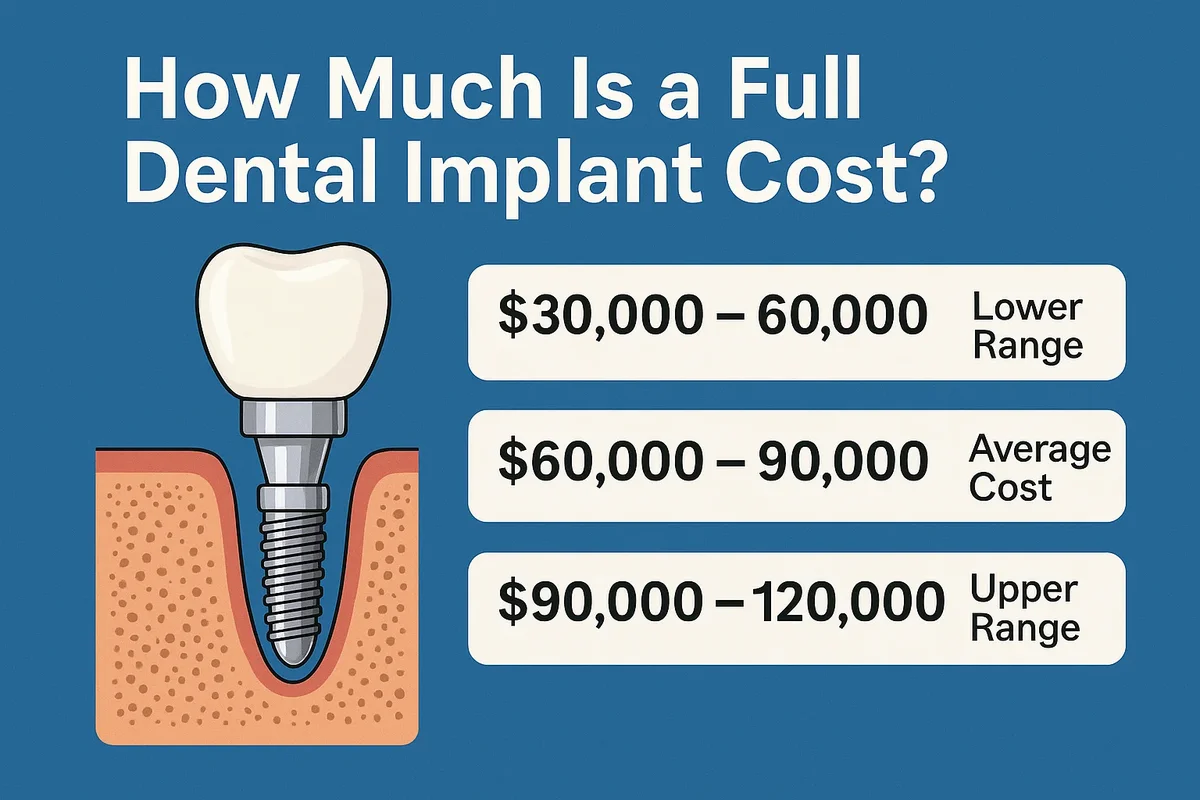
How to Reduce Your Total Full Dental Implant Cost Safely
Many patients searching for how much is a full dental implant cost are eager to discover safe and practical ways to reduce their total expenses without compromising quality, aesthetics, or long-term durability. While full-mouth implants are a major investment, there are several smart strategies that can substantially lower your overall cost while still ensuring you receive world-class treatment. In this section, you will learn how to safely reduce implant costs by choosing the right clinic, selecting appropriate implant systems, optimizing treatment timing, exploring international options, and leveraging financial tools responsibly.
Most importantly, these cost-saving methods must never involve cutting corners on clinical safety or implant quality. Improperly performed implant surgeries can lead to infection, bone loss, implant failure, or costly revision procedures. That’s why the goal is to reduce expenses safely, strategically, and intelligently — not by sacrificing the reliability of your results.
1. Compare Treatment Plans and Request Detailed Breakdowns
One of the most effective ways to reduce the total cost is to compare multiple treatment plans from reputable clinics. Many patients receive an initial quote without knowing everything that is included. To accurately evaluate how much is a full dental implant cost, ask every clinic for an itemized breakdown that includes:
- Diagnostic imaging (X-rays or CBCT scans)
- Surgical fees
- Implant brand and materials
- Temporary teeth
- Final prosthetic material (acrylic, composite, zirconia)
- Any additional procedures (bone grafting, sinus lift, gum therapy)
- Follow-up visits and warranty information
This comparison helps you identify inflated prices, unnecessary add-ons, or treatment steps that vary widely between clinics. Transparent clinics welcome such comparisons and can often match or improve upon competitor pricing — saving you money safely.
2. Choose Cost-Effective Countries Without Sacrificing Quality
One of the most significant ways to reduce total implant cost is by exploring international treatment options. Countries like Turkey attract thousands of dental tourists each year due to their world-class dental surgeons, advanced technology, and significantly lower treatment prices.
Why International Treatment Saves Money
- Lower clinic operating costs
- Reduced labor and laboratory expenses
- Government incentives for medical tourism
- High patient volume resulting in lower per-case costs
These factors directly affect how much is a full dental implant cost and allow patients to save 60–80% compared to the U.S., Canada, and the UK — all while receiving premium treatment, especially when undergoing procedures like All-on-4 or All-on-6.
3. Select the Right Implant System for Your Needs
Implant cost varies depending on whether you choose:
- All-on-4
- All-on-6
- Individual implants
For patients with limited budgets, All-on-4 often provides exceptional function and aesthetics at a significantly reduced cost. This method uses fewer implants per arch, requires less surgical time, and minimizes the need for bone grafting. Choosing the right system ensures you receive high-value treatment tailored to your anatomy, reducing unnecessary expenses.
4. Avoid Unnecessary Bone Grafting When Possible
While some patients require bone grafting because of severe jawbone loss, many modern clinics can avoid grafting by using angled implant placement or specialized techniques such as:
- Angled posterior implants
- Zygomatic implants
- Short implants
Avoiding grafting where safely possible can reduce both treatment time and cost. However, grafting should never be skipped when clinically necessary. A reputable surgeon will design the safest approach based on your bone condition.
5. Choose Acrylic Temporaries Instead of Extra-Premium Options
Temporary teeth are essential during the healing period, but they do not need to be overly expensive. Acrylic temporary teeth are highly functional and significantly cheaper than composite or premium temporary prostheses. Choosing more cost-effective temporaries can reduce how much is a full dental implant cost without affecting final results, since the permanent teeth will be made from zirconia or porcelain.
6. Ask About Bundle Packages and Seasonal Discounts
Many international clinics offer package deals that include:
- Hotel accommodations
- Airport transfers
- Full diagnostic imaging
- Transportation assistance
These packages can reduce your total trip costs by hundreds or even thousands of dollars. Clinics may also offer seasonal or limited-time promotions for implant procedures, full-mouth restorations, or zirconia upgrades.
7. Use Health Savings Accounts, Medical Loans, or Payment Plans
If you are researching how much is a full dental implant cost in the U.S. or Europe, you may be able to significantly reduce out-of-pocket expenses through:
- HSA (Health Savings Account) funds
- FSA (Flexible Spending Account) funds
- Medical credit lines (CareCredit, Sunbit, LendingClub)
- Clinic-based no-interest installment plans
These tools help you spread payments over time, making high-quality treatment financially accessible.
8. Ensure the Clinic Provides a Long-Term Warranty
Clinics that offer extended warranties provide additional value and reduce future risk. A strong warranty ensures that if any implant or prosthetic issue occurs, you are protected from costly repair procedures. A good warranty directly affects the long-term value of your investment.
9. Maintain Excellent Oral Hygiene to Prevent Complications
Preventing implant failure is one of the most effective ways to protect your financial investment. Excellent oral hygiene dramatically reduces the risk of:
- Implant infection
- Peri-implantitis
- Implant loosening
- Bone loss
This ensures your implants last decades, maximizing the value behind how much is a full dental implant cost.
For personalized cost-saving advice and a full evaluation of your treatment plan, you may contact specialists directly through the
Redent Klinik Contact Page. With expert guidance, you can minimize expenses while ensuring the highest standard of safety and long-term success.