
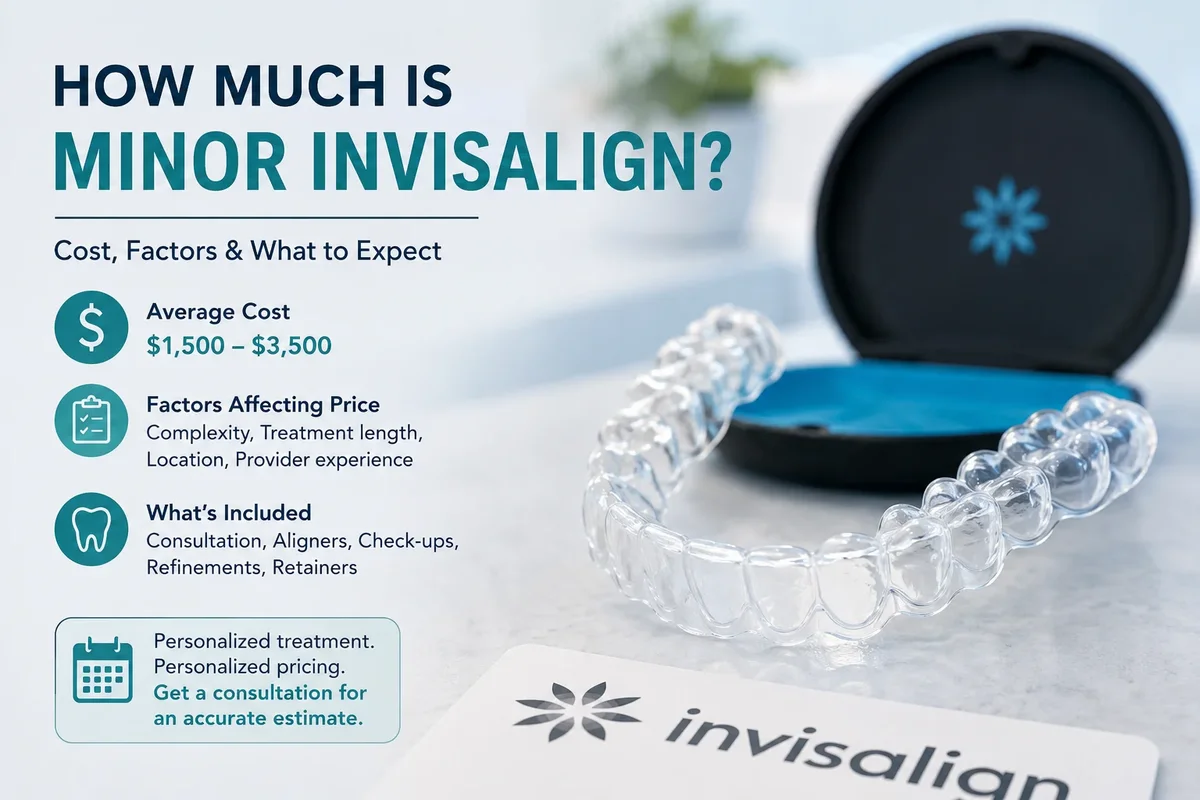
If you are searching for how much is minor Invisalign, you are probably looking for a simple answer before deciding whether clear aligners are worth exploring. The short answer is that minor Invisalign treatment is generally less expensive than full Invisalign treatment because it is designed to correct mild orthodontic issues using fewer aligners and a shorter treatment period. However, there is no universal price because every patient has different alignment needs, treatment goals, and clinical requirements.
Understanding how much is minor Invisalign involves more than finding a number online. The actual cost depends on factors such as the complexity of tooth movement, the number of aligners required, whether attachments are needed, the experience of the provider, and whether retainers or refinements are included in the treatment plan. Two patients with seemingly similar smiles may receive different treatment recommendations because their underlying dental conditions are not identical.
For many adults and teenagers, minor Invisalign is considered when there is mild crowding, small gaps between teeth, slight rotations, or orthodontic relapse after previous braces treatment. These situations often require less movement than comprehensive orthodontic treatment. Because of this, patients researching how much is minor Invisalign are frequently interested in a faster and potentially more affordable way to improve their smile.
It is important to remember that not every mild-looking case automatically qualifies for a minor Invisalign package. Sometimes a smile that appears only slightly crooked from the front may include bite issues that require a broader treatment approach. This is one reason why online estimates can only provide general guidance. A professional examination remains the most reliable way to determine whether a limited aligner plan is appropriate.
When people ask how much is minor Invisalign, they are often comparing Invisalign with traditional braces or other clear aligner systems. While cost is naturally an important factor, it should not be the only consideration. Treatment quality, predictability, provider experience, follow-up care, and long-term retention can have a significant influence on overall value. Choosing the lowest advertised fee may not always produce the best long-term outcome if important services are excluded.
Another reason patients investigate how much is minor Invisalign is convenience. Clear aligners are removable, which can make eating, brushing, and flossing easier compared to fixed braces. Many working professionals prefer aligners because they are discreet and often fit more comfortably into daily routines. For some patients, these lifestyle benefits become just as important as the financial considerations.
The treatment timeline is also relevant. Minor Invisalign cases are often completed in fewer months than comprehensive orthodontic plans, although the exact duration depends on how teeth respond to treatment and how consistently the aligners are worn. Patients who do not wear aligners as instructed may experience slower progress, regardless of whether the case is classified as minor or comprehensive.
If you are evaluating how much is minor Invisalign, it can be helpful to think beyond the initial treatment phase. After aligner treatment is completed, retainers are commonly recommended to help maintain the results. Long-term stability is an important part of orthodontic success, and this should be considered when comparing treatment options and pricing structures.
Many dental providers use digital scanning technology to assess eligibility for Invisalign treatment. These scans allow the dentist to analyze tooth position, bite relationships, and movement requirements before recommending a treatment category. What appears minor to a patient may occasionally require more comprehensive correction, while some concerns that seem significant may actually be suitable for a limited aligner plan.
Patients often feel uncertain about whether they are suitable candidates. In general, a consultation may be particularly valuable if you notice:
- Mild crowding in the front teeth.
- Small spaces between teeth.
- Teeth that shifted after previous braces treatment.
- Minor cosmetic alignment concerns.
- A desire for a discreet orthodontic solution.
Professional organizations such as the American Dental Association emphasize the importance of individualized dental evaluation before beginning orthodontic treatment. This helps ensure that recommendations are based on oral health needs rather than assumptions.
At Redent Klinik, treatment planning focuses on determining whether a patient’s goals can realistically be achieved with a limited aligner approach. Rather than automatically placing every patient into the same category, a detailed assessment helps identify the most appropriate solution based on clinical findings and personal expectations. Patients who would like an individualized review can learn more through the Redent Klinik Contact Page.
So, what does the answer to how much is minor Invisalign mean for your own situation? It means that while minor Invisalign is often associated with lower overall treatment costs and shorter treatment times than comprehensive plans, the right choice depends on your specific dental condition. The most useful next step is not simply searching for a price range but determining whether your alignment concerns genuinely fit the criteria for minor treatment.
Practical next step: If your teeth have mild crowding, small gaps, or minor post-braces relapse, consider scheduling a professional Invisalign assessment. A digital examination can help determine whether minor Invisalign is suitable for your case and provide a personalized treatment recommendation based on your individual goals and oral health needs.
What Factors Influence How Much Minor Invisalign Costs?
After getting a general answer to the question how much is minor Invisalign, the next step is understanding why costs can vary from one patient to another. Many people expect a fixed price, but orthodontic treatment is highly individualized. Even when two patients are told they may qualify for a minor Invisalign plan, the treatment details can differ enough to affect the overall investment.
If you are comparing clinics or researching how much is minor Invisalign, it is important to focus not only on the quoted fee but also on what that fee includes. A lower price may appear attractive initially, but the overall value of treatment often depends on planning quality, follow-up care, refinement policies, and post-treatment retention.
Why There Is No Universal Answer to How Much Is Minor Invisalign
One of the biggest misconceptions surrounding how much is minor Invisalign is that every minor case requires the same treatment. In reality, orthodontic correction is influenced by several biological and clinical factors.
For example, one patient may only need slight alignment improvements in the upper front teeth, while another patient may have mild crowding combined with bite adjustments. Although both situations might be considered minor compared to comprehensive orthodontic treatment, the amount of planning and tooth movement can be significantly different.
This is why dental professionals typically evaluate each patient individually rather than applying a standard treatment fee.
Complexity of Tooth Movement
The complexity of the required tooth movement is one of the most important factors affecting how much is minor Invisalign. Some teeth respond predictably to aligners, while others may require additional control techniques.
Minor spacing issues are often simpler to address than cases involving rotated teeth. A tooth that needs rotational correction may require more precise movements and additional attachments. While the case may still fall within a minor treatment category, the planning requirements can become more involved.
Patients should understand that the apparent appearance of the smile does not always reflect the complexity of the treatment. A smile that looks only slightly misaligned can sometimes involve movement challenges that influence treatment planning.
Number of Aligners Required
The number of aligners used during treatment can also influence how much is minor Invisalign. Minor Invisalign treatment generally uses fewer aligners than comprehensive treatment, but the exact number depends on the patient’s clinical situation.
Some patients may require only a limited series of aligners, while others may need additional stages to achieve the desired outcome. More aligners typically mean more treatment planning and potentially more review appointments.
When comparing treatment proposals, asking how many aligners are expected can provide useful context for understanding the overall recommendation.
Why Fewer Aligners Do Not Always Mean Better Treatment
Many patients assume that fewer aligners automatically represent a better or more efficient treatment plan. However, the primary goal should always be achieving a healthy and stable result rather than simply minimizing aligner numbers.
Teeth need time to move safely. Attempting to accelerate treatment beyond what is clinically appropriate can compromise predictability and long-term stability.
Provider Experience and Treatment Planning
Another major factor affecting how much is minor Invisalign is the provider’s experience and treatment planning process. Experienced Invisalign providers often spend considerable time analyzing digital scans, bite relationships, tooth positions, and expected treatment outcomes.
Comprehensive planning can help reduce surprises during treatment and improve predictability. While experience alone does not determine treatment success, careful planning is often a significant contributor to patient satisfaction.
Patients should consider asking providers about:
- Digital scanning technology.
- Treatment monitoring protocols.
- Expected appointment frequency.
- Refinement policies.
- Retainer recommendations.
Are Refinements Included?
When researching how much is minor Invisalign, one frequently overlooked detail is refinements. Refinements refer to additional aligners that may be needed after the initial treatment phase if small adjustments remain necessary.
Not every patient requires refinements, but they are common enough that patients should understand the policy before beginning treatment. Some treatment packages include refinements, while others may involve additional fees.
This is one reason why comparing treatment plans based solely on the advertised starting price can be misleading.
Retainers and Long-Term Stability
A successful Invisalign result does not end when the final aligner is removed. Retainers are often recommended to help maintain the new tooth positions.
When evaluating how much is minor Invisalign, patients should determine whether retainers are included in the quoted treatment package. Long-term maintenance plays a major role in preserving treatment results and should be considered part of the overall orthodontic journey.
Geographic Location and Practice Differences
Location can also influence how much is minor Invisalign. Treatment fees may vary between regions, cities, and countries. Differences in operating costs, technology investments, staff requirements, and clinical expertise can all contribute to pricing variations.
For this reason, comparing online estimates from different areas may not provide an accurate reflection of local treatment costs.
How Should You Compare Different Invisalign Quotes?
Instead of asking only about price, patients should evaluate what each treatment proposal includes. Questions worth asking include:
- Does the treatment include digital scans?
- How many review visits are included?
- Are refinements included if necessary?
- Are retainers included after treatment?
- What level of monitoring will occur throughout treatment?
These details often provide a clearer picture of value than a simple cost comparison.
Making the Right Decision
The question how much is minor Invisalign is important, but it should be considered alongside suitability, treatment quality, and long-term expectations. A treatment plan that appears more expensive initially may include services that help reduce unexpected costs later. Conversely, a lower quote may exclude important elements that become necessary during treatment.
If you are comparing options, focus on understanding exactly what is included and whether the proposed treatment realistically addresses your goals. A personalized consultation is often the most reliable way to determine both suitability and expected costs.
What to check next: If you are considering minor Invisalign treatment, request a professional evaluation if you have mild crowding, small gaps, rotated teeth, or post-braces relapse. Ask for a detailed breakdown of what is included in the treatment plan, including aligners, refinements, retainers, and follow-up appointments before making a decision.
Who Is a Good Candidate for Minor Invisalign?
Understanding how much is minor Invisalign is important, but cost should never be the only factor guiding your decision. Before comparing treatment fees or looking at aligner packages, it is essential to determine whether you are actually a suitable candidate for minor Invisalign. Many patients assume that because their teeth look only slightly crooked, they automatically qualify for a limited treatment plan. In reality, eligibility depends on several clinical factors that can only be properly assessed through a professional examination.
If you are researching how much is minor Invisalign, you are likely trying to solve a specific smile concern. The key question is not simply how much treatment costs, but whether a minor Invisalign plan can realistically achieve your desired outcome. Choosing the right treatment category from the beginning can help avoid disappointment, unexpected refinements, and unnecessary delays.
What Is Minor Invisalign Designed to Treat?
Minor Invisalign treatment is generally intended for patients with relatively simple orthodontic concerns. The goal is to address limited tooth movement needs without the broader corrections often required in comprehensive orthodontic treatment.
Patients investigating how much is minor Invisalign are often dealing with cosmetic concerns rather than severe bite problems. While every case is unique, common situations that may be appropriate for minor Invisalign include:
- Mild crowding in the front teeth.
- Small spaces between teeth.
- Minor tooth rotations.
- Slight alignment irregularities.
- Orthodontic relapse after previous braces treatment.
- Small cosmetic corrections before restorative dental work.
These concerns can sometimes be addressed with a shorter aligner sequence compared to full orthodontic treatment.
Patients With Previous Braces Often Ask About Minor Invisalign
One of the most common groups researching how much is minor Invisalign includes adults who previously wore braces during childhood or adolescence. Over time, teeth can gradually shift, especially if retainers are no longer worn consistently.
In these situations, patients may notice that one or two teeth have moved slightly out of position. Because the original orthodontic work already corrected most alignment issues, a limited aligner plan may sometimes be enough to restore the smile.
However, even former braces patients should not assume that minor treatment will always be appropriate. Bite changes, tooth wear, or other dental factors may influence the recommended treatment approach.
When Minor Invisalign May Not Be Enough
While many patients focus on how much is minor Invisalign, it is equally important to understand when a limited aligner plan may not provide the desired result.
Some orthodontic concerns require more extensive movement than patients initially realize. Examples may include:
- Significant crowding.
- Large spaces between teeth.
- Crossbites.
- Overbites requiring correction.
- Underbites.
- Complex rotational movements.
- Jaw relationship issues.
In these situations, a comprehensive Invisalign plan or an alternative orthodontic solution may be more appropriate.
Appearance Does Not Always Reflect Complexity
Many people judge their orthodontic needs based on photographs or what they see in the mirror. Unfortunately, tooth alignment is only one part of the overall picture.
A smile that appears nearly straight can still involve bite issues that affect chewing function, tooth wear, or long-term stability. This is why a professional evaluation remains essential before making assumptions about treatment suitability.
Age and Minor Invisalign Eligibility
Patients frequently wonder whether age affects how much is minor Invisalign or their ability to receive treatment. In most cases, healthy adults of various ages may be candidates for Invisalign if their oral health supports orthodontic movement.
Rather than age itself, providers typically focus on factors such as:
- Gum health.
- Bone support.
- Existing restorations.
- Tooth mobility.
- Overall oral hygiene.
Adults often choose minor Invisalign because of its discreet appearance and flexibility. Since aligners can be removed during meals and oral hygiene routines, many patients find them easier to integrate into professional and social lifestyles.
The Importance of Commitment
Another factor that influences whether minor Invisalign is a good option is patient compliance. People researching how much is minor Invisalign sometimes focus entirely on treatment duration without considering the responsibilities involved.
Successful aligner treatment generally requires wearing aligners for the recommended number of hours each day. Inconsistent wear may slow progress and affect treatment predictability.
Patients who frequently remove aligners or struggle to follow instructions may not achieve the expected outcome within the anticipated timeframe.
Digital Scans Help Determine Suitability
Modern Invisalign assessments often involve digital scanning technology. These scans provide a detailed view of tooth position and bite relationships, helping clinicians determine whether a minor treatment plan is realistic.
For patients wondering how much is minor Invisalign, digital scans can provide valuable information before any financial decisions are made. They allow providers to evaluate treatment complexity more accurately than visual inspection alone.
In many cases, the scan results help patients understand why a case qualifies for minor treatment—or why a more comprehensive plan may be recommended.
How to Decide If Minor Invisalign Is Worth Exploring
If your concerns involve only slight crowding, small spaces, or minor relapse after braces, a consultation may be worthwhile. Minor Invisalign can be appealing because it often focuses on targeted corrections rather than extensive orthodontic changes.
However, the best candidates are usually those who have realistic expectations about what limited aligner treatment can accomplish. The goal should be improving alignment in a predictable and healthy way rather than seeking the shortest possible treatment regardless of clinical needs.
Patients considering treatment at Redent Klinik often begin with a digital assessment to determine whether minor Invisalign is appropriate. This process helps align treatment expectations with clinical findings and reduces uncertainty before treatment begins.
Making the Right Decision for Your Smile
The question how much is minor Invisalign becomes much more meaningful once you know whether you are an appropriate candidate. Cost matters, but suitability ultimately determines whether treatment can achieve the desired result.
Choosing a treatment plan based solely on price can sometimes lead patients toward options that do not fully address their orthodontic concerns. A personalized evaluation provides a clearer understanding of both treatment expectations and potential outcomes.
What to check next: If you notice mild crowding, small gaps, or minor shifting after previous braces treatment, consider requesting a professional Invisalign consultation. Seek professional advice if you are unsure whether your alignment issue is purely cosmetic or may involve bite-related concerns that require a more comprehensive assessment.
What Is the Minor Invisalign Process From Consultation to Results?
Many people researching how much is minor Invisalign focus primarily on cost, but understanding the treatment process is equally important. Knowing what happens before, during, and after treatment can help you decide whether Invisalign fits your goals, expectations, and lifestyle. In many cases, patients feel more confident moving forward when they understand exactly what the treatment journey involves.
While every case is different, minor Invisalign treatment generally follows a structured process that begins with an assessment and ends with long-term retention. Understanding each stage can help you evaluate whether the investment associated with how much is minor Invisalign makes sense for your personal situation.
The Initial Consultation
The first step in determining how much is minor Invisalign is a professional consultation. During this appointment, a dentist or orthodontic provider evaluates your teeth, bite, oral health, and treatment goals.
Many patients arrive believing they need only minor correction. Sometimes this assumption is accurate, while in other situations the examination reveals issues that may require a more comprehensive approach. The purpose of the consultation is not simply to discuss pricing but to determine whether a limited Invisalign plan can realistically achieve the desired outcome.
During this stage, the provider may discuss:
- Your primary smile concerns.
- Previous orthodontic treatment history.
- Current oral health status.
- Expected treatment objectives.
- Potential treatment limitations.
This evaluation provides the foundation for the entire treatment plan.
Digital Scanning and Treatment Planning
Modern Invisalign treatment often uses advanced digital scanning technology. These scans create a detailed three-dimensional model of the teeth and bite.
For patients researching how much is minor Invisalign, this stage is particularly important because it helps determine the complexity of the case. Digital scans frequently reveal details that are not obvious during a visual examination alone.
The scan allows the provider to assess:
- Tooth alignment.
- Crowding severity.
- Spacing concerns.
- Bite relationships.
- Required tooth movements.
Based on this information, the provider develops a personalized treatment strategy.
Why Digital Planning Matters
Some patients are tempted to compare treatments solely based on the answer to how much is minor Invisalign. However, accurate planning often plays a major role in treatment success.
Digital planning helps identify realistic movement goals and reduces uncertainty during treatment. A carefully planned approach can improve predictability and help patients understand what results may be achievable within a minor treatment framework.
Receiving Your Aligners
Once the treatment plan is finalized, the aligners are manufactured based on the digital design. Each aligner is intended to guide the teeth through a series of controlled movements.
Patients often ask whether receiving fewer aligners affects how much is minor Invisalign. In many situations, minor Invisalign plans involve fewer aligners than comprehensive treatment, which is one reason limited treatment is often associated with lower overall costs.
At the aligner delivery appointment, patients usually receive instructions regarding:
- How to insert and remove aligners.
- Recommended wear time.
- Cleaning procedures.
- Eating and drinking guidelines.
- Appointment schedules.
Following these instructions consistently is essential for predictable treatment progress.
Daily Life During Treatment
One reason many adults investigate how much is minor Invisalign is the convenience of removable aligners. Unlike traditional braces, aligners can be removed during meals and oral hygiene routines.
However, successful treatment generally requires a commitment to wearing aligners for the recommended number of hours each day. Patients who frequently leave aligners out may experience slower progress or less predictable outcomes.
Many people find that aligners become part of their daily routine after the first few weeks. Temporary pressure or mild discomfort may occur when switching to a new aligner set, but this often reflects active tooth movement rather than a treatment problem.
Progress Monitoring Appointments
Throughout treatment, review appointments help ensure that teeth are moving as expected. These visits allow the provider to monitor progress and address any concerns that may arise.
When evaluating how much is minor Invisalign, patients should understand whether these appointments are included in the treatment package. Monitoring is an important component of orthodontic care and helps identify potential issues before they become larger concerns.
During these visits, providers may evaluate:
- Aligner fit.
- Tooth movement progress.
- Oral health condition.
- Patient compliance.
- Need for refinements.
Possible Refinements
Even with careful planning, some patients require additional aligners to fine-tune results. These additional aligners are commonly known as refinements.
Patients asking how much is minor Invisalign should understand that refinements are a normal part of orthodontic treatment for many individuals. The need for refinements does not necessarily indicate a problem. Teeth can respond differently from one patient to another, and minor adjustments may help improve the final outcome.
It is worthwhile to ask whether refinements are included in the proposed treatment plan before beginning treatment.
The Retention Phase
Once active treatment is complete, retainers are often recommended to help maintain the new tooth positions. Retention is one of the most important yet frequently overlooked parts of orthodontic care.
Patients focused only on how much is minor Invisalign sometimes overlook the importance of long-term maintenance. Without proper retention, teeth may gradually shift over time.
Retainers help protect the investment made in orthodontic treatment and support long-term stability.
How Long Does the Entire Process Take?
The duration of minor Invisalign treatment varies according to individual circumstances. Some cases may be completed relatively quickly, while others require additional time depending on tooth movement, compliance, and treatment goals.
Rather than focusing solely on speed, patients should prioritize safe and predictable treatment progression. A realistic timeline developed during consultation is often more valuable than generalized estimates found online.
Making the Right Decision Before Starting
Understanding the full process can help put the question how much is minor Invisalign into perspective. Cost is only one aspect of treatment. Planning quality, patient commitment, monitoring, refinements, and retention all contribute to the overall experience and long-term outcome.
At clinics such as Redent Klinik, the goal of the consultation process is to determine whether minor Invisalign is the appropriate solution and to help patients understand what the treatment journey may involve before making a commitment.
What to check next: Before beginning treatment, ask whether digital scans, monitoring appointments, refinements, and retainers are included in your treatment plan. Request professional advice if you are uncertain whether your alignment concerns can be addressed through a minor Invisalign approach or if you have questions about the expected treatment timeline.
What Are the Benefits and Limitations of Minor Invisalign?
When researching how much is minor Invisalign, many patients focus on treatment cost before fully understanding what the treatment can and cannot accomplish. While affordability is an important consideration, the value of any orthodontic treatment depends on whether it is capable of achieving your specific goals. Minor Invisalign can be an effective solution for selected patients, but it is not designed to solve every orthodontic problem.
Before deciding whether treatment is worthwhile, it is helpful to evaluate both the advantages and the limitations of minor Invisalign. Understanding these factors can help you make a more informed decision and determine whether a limited aligner plan matches your expectations.
The Main Advantages of Minor Invisalign
One reason patients frequently search for how much is minor Invisalign is that minor treatment is often associated with lower overall costs compared to comprehensive orthodontic treatment. However, affordability is only one potential benefit.
Minor Invisalign is designed to address relatively simple alignment concerns, which may allow for a more focused treatment approach. For appropriate candidates, this can provide several practical advantages.
Discreet Appearance
One of the most widely recognized benefits of Invisalign is the appearance of the aligners themselves. Many adults are reluctant to wear traditional braces because they are concerned about the visibility of metal brackets and wires.
Patients asking how much is minor Invisalign are often professionals, business owners, students, or individuals who prefer a more discreet orthodontic solution. Clear aligners are generally less noticeable during everyday interactions, making them attractive to people who want orthodontic treatment without drawing attention to their smile.
Removability
Unlike fixed braces, Invisalign aligners can be removed for meals and oral hygiene routines. This flexibility is one of the most significant reasons patients choose aligners.
Being able to remove aligners allows patients to:
- Eat a wider variety of foods.
- Brush and floss more easily.
- Maintain familiar oral hygiene habits.
- Reduce food restrictions associated with braces.
For many individuals comparing options beyond how much is minor Invisalign, this convenience can be a major deciding factor.
Potentially Shorter Treatment Duration
Because minor Invisalign focuses on limited tooth movements, treatment may sometimes be completed in a shorter timeframe than comprehensive orthodontic treatment.
However, patients should remember that treatment timelines vary. The goal is not simply to finish quickly but to move teeth safely and predictably. Individual biological responses, treatment complexity, and aligner compliance all influence progress.
Improved Smile Confidence
Many patients researching how much is minor Invisalign are motivated by cosmetic concerns. Even small alignment improvements can positively affect how people feel about their smiles.
Mild crowding, slight spacing, or small rotational issues may create self-consciousness during conversations, photographs, or professional interactions. Correcting these concerns can improve confidence for some patients.
It is important, however, to maintain realistic expectations. Minor Invisalign is designed to address specific alignment concerns rather than create dramatic orthodontic transformations in every case.
The Limitations of Minor Invisalign
While there are clear advantages, understanding the limitations of minor Invisalign is equally important. Not every patient who asks how much is minor Invisalign is an ideal candidate for limited treatment.
Choosing a treatment plan that is too conservative for the actual orthodontic problem may result in incomplete correction or dissatisfaction with the final outcome.
Limited Treatment Scope
The biggest limitation of minor Invisalign is that it is designed for relatively simple orthodontic corrections.
Patients with significant crowding, complex bite problems, severe rotations, or extensive spacing issues may require a more comprehensive treatment approach. Attempting to solve a complex problem with a limited treatment plan may not deliver the desired result.
This is why professional assessment remains essential before making assumptions based on online research alone.
Patient Compliance Matters
Some patients assume that Invisalign is easier simply because the aligners are removable. In reality, removability creates responsibility.
Patients researching how much is minor Invisalign should understand that treatment success depends heavily on wearing aligners as instructed. If aligners are removed too frequently or worn inconsistently, treatment progress may be slower and outcomes less predictable.
Individuals who struggle with daily routine adherence may find fixed orthodontic appliances easier to manage.
Possible Need for Refinements
Many people assume that minor Invisalign treatment always follows a perfectly straightforward path. In reality, additional refinement aligners may occasionally be needed.
The possibility of refinements is one reason why comparing providers solely on how much is minor Invisalign can be misleading. A treatment package that appears less expensive initially may not include refinement aligners if they become necessary.
Asking about refinement policies before starting treatment can help set realistic expectations.
Minor Invisalign Versus Comprehensive Invisalign
Patients often wonder whether they should choose minor Invisalign simply because it may cost less. The answer depends entirely on the clinical situation.
If a patient truly requires only limited correction, a minor treatment plan may be entirely appropriate. However, if the underlying orthodontic concerns are more complex, comprehensive treatment may ultimately provide a more complete solution.
The most effective choice is not necessarily the least expensive option but the option that adequately addresses the patient’s needs.
When Alternatives May Be Worth Considering
While researching how much is minor Invisalign, patients should also be aware of alternative treatment possibilities.
Depending on the case, alternatives may include:
- Comprehensive Invisalign treatment.
- Traditional braces.
- Other clear aligner systems.
- Limited orthodontic treatment combined with restorative dentistry.
- Monitoring without immediate treatment if changes are minimal.
The best option depends on individual goals, oral health, and treatment priorities.
Making a Balanced Decision
The question how much is minor Invisalign becomes more meaningful when considered alongside treatment benefits and limitations. A lower-cost treatment that cannot fully address your concerns may not provide the value you are seeking. Likewise, pursuing comprehensive treatment when only minor correction is needed may not always be necessary.
At Redent Klinik, treatment recommendations are based on clinical findings, patient expectations, and realistic treatment goals rather than assumptions about which package appears most attractive. This individualized approach helps patients understand whether minor Invisalign can achieve the improvements they want.
What to check next: Before deciding on treatment, evaluate whether your concerns involve mild cosmetic alignment issues or more significant bite-related problems. Request professional advice if you are unsure whether a limited aligner plan can realistically achieve your goals or if you want a detailed comparison between minor Invisalign and alternative orthodontic options.
What Risks and Challenges Should You Consider Before Choosing Minor Invisalign?
When researching how much is minor Invisalign, many patients naturally focus on benefits such as convenience, appearance, and potential affordability. However, making an informed treatment decision also requires understanding the potential risks, limitations, and challenges associated with orthodontic treatment. While Invisalign has become a popular option for mild alignment concerns, every treatment involves considerations that should be evaluated carefully before committing.
Understanding the possible challenges does not mean treatment is unsafe or ineffective. Instead, it helps patients develop realistic expectations and make decisions based on a complete picture rather than marketing claims or social media success stories. The more you understand before treatment begins, the more confident you can feel about your decision.
Minor Invisalign Is Not Risk-Free Simply Because It Is “Minor”
One common misconception among patients researching how much is minor Invisalign is that limited treatment automatically means zero complications or concerns. While minor Invisalign generally involves less extensive tooth movement than comprehensive orthodontic treatment, the biological process of moving teeth remains the same.
Orthodontic treatment requires controlled movement of teeth through supporting bone and surrounding tissues. Because every patient responds differently, outcomes and treatment experiences can vary.
This does not mean problems are expected. It simply means that realistic expectations are important when considering any form of orthodontic care.
The Risk of Choosing the Wrong Treatment Category
Perhaps the most significant challenge related to how much is minor Invisalign is choosing a treatment plan that is too limited for the actual orthodontic problem.
Many patients prefer the idea of a smaller treatment plan because it may involve fewer aligners and potentially lower costs. However, if underlying bite issues or more significant alignment concerns exist, a minor treatment approach may not fully address the problem.
In some situations, patients who initially seek minor treatment eventually discover that a more comprehensive plan would have been more appropriate from the beginning.
Why Online Self-Diagnosis Can Be Misleading
People often judge their alignment needs by looking in a mirror or reviewing photographs. Unfortunately, orthodontic complexity is not always visible from the front view.
A patient searching how much is minor Invisalign may believe they have only slight crowding, while digital scans reveal bite discrepancies, rotational issues, or spacing concerns that require more extensive correction.
This is one reason professional assessment remains so important before selecting a treatment category.
Compliance Challenges During Treatment
Unlike traditional braces, Invisalign aligners are removable. This flexibility offers advantages, but it also creates responsibility.
Patients researching how much is minor Invisalign sometimes underestimate how important consistent wear is to treatment success. Aligners must generally be worn according to professional recommendations to maintain treatment progress.
Challenges may arise if patients:
- Remove aligners too frequently.
- Forget to reinsert aligners after meals.
- Fail to wear aligners for the recommended daily duration.
- Delay transitions to new aligner sets.
Inconsistent use can affect treatment predictability and potentially extend treatment timelines.
Temporary Discomfort During Tooth Movement
Another consideration for patients asking how much is minor Invisalign is the possibility of temporary discomfort. Many individuals experience mild pressure sensations when beginning treatment or switching to a new aligner stage.
This pressure often reflects active tooth movement rather than a treatment problem. The intensity and duration vary among patients, and some individuals notice very little discomfort while others are more sensitive.
Most patients adapt quickly as they become accustomed to wearing aligners.
Speech Adaptation Period
Although Invisalign aligners are designed to fit closely over the teeth, some patients experience a short adjustment period when speaking.
Certain sounds may feel slightly different during the first days or weeks of treatment. For most patients, speech patterns normalize as they adapt to the aligners.
Individuals who rely heavily on public speaking, teaching, broadcasting, or customer-facing communication may want to discuss this possibility during consultation.
The Possibility of Refinements
When evaluating how much is minor Invisalign, patients often assume that treatment follows a perfectly predictable path from start to finish. While digital planning has improved treatment accuracy, refinements may still be needed in some cases.
Refinements involve additional aligners used to fine-tune the final result. They are not necessarily signs of treatment failure. Rather, they reflect the reality that biological tooth movement can vary between individuals.
Before beginning treatment, patients should understand:
- Whether refinements are included.
- How refinement decisions are made.
- What additional monitoring may be required.
Retention Responsibilities After Treatment
Many people researching how much is minor Invisalign focus entirely on active treatment and forget about long-term maintenance.
After teeth are aligned, retainers are commonly recommended to help maintain the new positions. Failure to follow retainer recommendations may increase the likelihood of future tooth movement.
Retention is often one of the most important factors influencing long-term treatment stability.
The Cost of Ignoring Retention
Patients sometimes invest considerable time and money into orthodontic treatment but underestimate the importance of maintenance afterward.
Without appropriate retention, some degree of relapse may occur over time. This can create frustration and potentially require additional treatment in the future.
Understanding retention responsibilities should be part of evaluating the overall value of treatment.
Unrealistic Expectations Can Create Dissatisfaction
Another challenge associated with how much is minor Invisalign involves expectations. Some patients expect dramatic smile transformations from a treatment plan intended only for limited corrections.
Minor Invisalign can provide meaningful improvements when used appropriately, but its objectives are generally more focused than comprehensive orthodontic treatment.
Clear communication between patient and provider helps ensure that treatment goals align with what the selected treatment plan can realistically achieve.
How to Reduce Potential Risks
The good news is that many treatment challenges can be minimized through careful planning and communication. Patients can often improve their experience by:
- Obtaining a professional assessment.
- Following aligner wear instructions.
- Attending scheduled review appointments.
- Asking questions about refinements.
- Understanding retainer requirements.
- Maintaining realistic expectations.
These steps help create a stronger foundation for successful treatment outcomes.
Making an Informed Decision
The question how much is minor Invisalign should never be separated from discussions about risks, limitations, and long-term responsibilities. Cost matters, but understanding the complete treatment experience often leads to better decision-making.
At Redent Klinik, treatment planning includes evaluating whether a patient is truly suited for a limited aligner approach and discussing both benefits and potential challenges before treatment begins. This allows patients to make informed choices based on clinical findings rather than assumptions.
What to check next: Before choosing minor Invisalign, ask whether your alignment concerns can realistically be addressed through limited treatment. Request professional advice if you have bite issues, previous orthodontic relapse, significant crowding, or questions about refinements, retention, or expected treatment outcomes.
How Does Minor Invisalign Compare With Braces and Other Alternatives?
Many people begin their research by asking how much is minor Invisalign, but cost alone rarely determines the best treatment option. Before making a decision, it is important to understand how minor Invisalign compares with other orthodontic solutions. Different treatments are designed for different situations, and what works well for one patient may not be the ideal choice for another.
If your primary goal is to improve mild crowding, small gaps, or minor tooth movement, several treatment approaches may be available. Understanding the strengths and limitations of each option can help you choose a solution that aligns with your oral health needs, lifestyle preferences, and long-term expectations.
Why Comparing Treatment Options Matters
Patients often focus on how much is minor Invisalign because they want an affordable and discreet way to improve their smile. However, the most appropriate treatment is not always the least expensive option. In some situations, a slightly different treatment approach may offer greater predictability, efficiency, or long-term stability.
Comparing alternatives allows patients to evaluate:
- Treatment visibility.
- Comfort and convenience.
- Treatment duration.
- Maintenance requirements.
- Expected outcomes.
- Overall value rather than price alone.
A balanced comparison helps patients make decisions based on clinical suitability rather than marketing claims.
Minor Invisalign Versus Traditional Braces
One of the most common comparisons involves traditional braces. Patients researching how much is minor Invisalign often want to know whether clear aligners offer advantages over fixed orthodontic appliances.
Appearance Differences
The most obvious distinction is visibility. Invisalign aligners are made from clear plastic and are generally less noticeable than metal braces.
For adults who frequently attend meetings, work with clients, or participate in public-facing roles, this cosmetic advantage may be an important consideration. Many patients choose Invisalign specifically because they prefer a more discreet orthodontic solution.
Removability and Convenience
Unlike braces, Invisalign aligners can be removed when eating, drinking certain beverages, brushing, and flossing.
This flexibility often makes oral hygiene easier and allows patients to continue eating foods that may be restricted with braces. However, the convenience comes with responsibility. Patients must consistently wear their aligners according to professional recommendations.
Braces, on the other hand, remain attached to the teeth and do not depend on patient compliance in the same way.
Treatment Suitability
When considering how much is minor Invisalign, it is important to remember that not every orthodontic problem is equally suited to aligner therapy.
While Invisalign can address many mild and moderate concerns, some complex cases may be more efficiently treated with traditional braces. The choice depends on the type and extent of movement required rather than personal preference alone.
Minor Invisalign Versus Comprehensive Invisalign
Patients often assume that minor Invisalign is simply a cheaper version of comprehensive Invisalign. While there is some truth to this perception, the difference goes beyond cost.
The primary distinction is treatment scope. Minor Invisalign is intended for limited corrections, whereas comprehensive Invisalign is designed for broader orthodontic goals.
People researching how much is minor Invisalign sometimes hope that a smaller treatment plan can solve larger alignment concerns. Unfortunately, this is not always realistic. Selecting a treatment category should be based on clinical needs rather than budget preferences alone.
When Comprehensive Treatment May Be Better
A more comprehensive approach may be recommended when patients have:
- Significant crowding.
- Pronounced spacing.
- Complex bite issues.
- Multiple rotated teeth.
- Functional orthodontic concerns.
Although comprehensive treatment may involve a greater investment, it may also provide a more complete correction when clinically indicated.
Minor Invisalign Versus Other Clear Aligner Systems
Many patients researching how much is minor Invisalign also encounter advertisements for alternative clear aligner brands. These systems may appear similar at first glance, but there can be meaningful differences in planning, monitoring, and clinical oversight.
When comparing providers and systems, patients should ask:
- Who supervises the treatment?
- How are treatment plans developed?
- What happens if refinements are needed?
- How often are progress reviews performed?
- What support is available during treatment?
Rather than focusing solely on brand names, patients should evaluate the quality of professional guidance throughout the treatment process.
Could Cosmetic Dentistry Be an Alternative?
In some situations, patients researching how much is minor Invisalign are primarily concerned with the appearance of a small area of their smile. Depending on the specific situation, cosmetic dental procedures may occasionally be discussed as alternatives.
Examples can include:
- Composite bonding.
- Porcelain veneers.
- Smile enhancement procedures.
However, these treatments do not move teeth. They change appearance rather than alignment. For patients whose main concern involves tooth position, orthodontic treatment may remain the more conservative option.
Alignment Versus Camouflage
One important distinction is that orthodontics changes tooth position, while many cosmetic procedures modify the visible appearance of teeth.
Patients should understand this difference when evaluating alternatives. A cosmetic solution may improve appearance without addressing the underlying alignment issue.
When No Immediate Treatment May Be Appropriate
Not every patient who asks how much is minor Invisalign necessarily requires immediate treatment. In some situations, minor alignment concerns may be stable and not causing functional problems.
This does not mean treatment is unnecessary, but it may allow patients time to evaluate options carefully. A professional assessment can help determine whether immediate intervention offers meaningful benefits or whether monitoring is a reasonable approach.
How to Choose the Right Option
The best orthodontic solution depends on several factors:
- The complexity of the alignment issue.
- Your treatment goals.
- Your willingness to wear aligners consistently.
- Your budget considerations.
- Your preference regarding treatment visibility.
- Your desired level of professional monitoring.
Rather than choosing based solely on the answer to how much is minor Invisalign, patients often benefit from evaluating which treatment can most effectively achieve their goals.
Making a Confident Decision
At Redent Klinik, treatment recommendations are based on clinical findings rather than assumptions about which option a patient may initially prefer. This helps ensure that the selected treatment aligns with both oral health needs and cosmetic objectives.
The question how much is minor Invisalign remains important, but it should be viewed within the broader context of treatment effectiveness, convenience, long-term stability, and suitability. The right choice is often the treatment that addresses your concerns most appropriately rather than the one with the lowest initial cost.
What to check next: Before choosing any orthodontic option, ask whether your concern involves true tooth movement, cosmetic appearance, or bite correction. Request professional advice if you are comparing Invisalign, braces, cosmetic dentistry, or alternative aligner systems and want guidance tailored to your specific dental condition.
Can Insurance, Financing, or Payment Plans Help With Minor Invisalign Costs?
For many patients, the question how much is minor Invisalign is closely connected to affordability. Even when treatment is considered relatively limited compared to comprehensive orthodontics, people often want to know whether insurance coverage, financing arrangements, or payment plans can help make treatment more manageable. Understanding these financial considerations can help you evaluate your options realistically and make a decision that fits both your dental needs and your budget.
While treatment costs are an important factor, patients should remember that financial arrangements vary significantly depending on the country, insurance provider, clinic policies, and individual treatment plan. Rather than focusing only on the initial quoted fee, it is often helpful to understand the full range of payment possibilities that may be available.
Why Cost Is Often a Major Concern
People searching for how much is minor Invisalign are frequently comparing multiple treatment options at the same time. They may be evaluating whether Invisalign fits within their budget, whether treatment can be delayed, or whether alternative orthodontic approaches might be more affordable.
Financial planning is a practical part of healthcare decision-making. However, selecting treatment based entirely on cost can sometimes lead patients to overlook factors such as treatment suitability, provider experience, and long-term value.
The goal is not simply to find the lowest price but to understand how treatment can be managed responsibly while still addressing the underlying dental concern.
Does Dental Insurance Cover Minor Invisalign?
One of the first questions patients ask after researching how much is minor Invisalign is whether dental insurance contributes toward treatment expenses.
The answer varies considerably between insurance plans. Some policies include orthodontic benefits, while others do not. Certain plans may provide partial coverage for eligible orthodontic treatment, whereas some policies exclude clear aligners entirely.
Coverage may depend on factors such as:
- The specific insurance provider.
- The type of policy purchased.
- The patient’s age.
- Whether orthodontic benefits are included.
- The clinical purpose of treatment.
Because coverage details differ widely, patients should contact their insurance provider directly for the most accurate information regarding eligibility and benefits.
Questions to Ask Your Insurance Provider
If you are evaluating how much is minor Invisalign and hope to use insurance benefits, consider asking:
- Does my policy include orthodontic coverage?
- Are clear aligners covered?
- Are there annual or lifetime orthodontic limits?
- Does coverage apply to adults as well as children?
- What documentation is required for claims?
These questions can help clarify potential reimbursement opportunities before treatment begins.
How Payment Plans Can Affect Affordability
Even when insurance benefits are limited or unavailable, many patients researching how much is minor Invisalign discover that payment plans may help spread treatment costs over time.
Payment plans are commonly offered in healthcare settings because they can reduce the need for a large upfront payment. Instead of paying the entire treatment cost immediately, patients may have the option to divide costs into smaller installments.
Available payment arrangements vary between clinics and regions, so it is important to ask about specific terms during consultation.
Key details worth discussing include:
- Required initial payment.
- Monthly payment structure.
- Payment duration.
- Administrative fees.
- Available financing partners.
Understanding these factors can help patients compare options more effectively.
Third-Party Financing Options
Patients researching how much is minor Invisalign may also encounter independent financing providers that specialize in healthcare-related expenses.
Depending on local regulations and available services, financing companies may offer structured repayment programs that allow treatment costs to be distributed over an extended period.
Before entering any financing agreement, patients should carefully review:
- Interest rates.
- Repayment schedules.
- Eligibility requirements.
- Potential penalties.
- Total repayment amounts.
A lower monthly payment does not necessarily mean a lower overall financial commitment, so reviewing the complete agreement is important.
Comparing Cost and Value
When considering how much is minor Invisalign, patients sometimes focus entirely on the lowest advertised fee. While cost is understandably important, treatment value should also be part of the decision.
A treatment package may include services such as:
- Digital scanning.
- Treatment planning.
- Progress monitoring.
- Refinement aligners.
- Retainers.
- Follow-up appointments.
Two treatment proposals may appear similar at first glance but differ significantly in terms of included services. Understanding exactly what is included can help patients make more meaningful comparisons.
Why the Cheapest Option Is Not Always the Best Value
Patients evaluating how much is minor Invisalign should be cautious about focusing exclusively on the initial number presented in advertisements.
A lower fee may not include certain components that become important later. Conversely, a treatment plan with a higher initial cost may include additional services that reduce future expenses or improve treatment support.
Value often comes from the combination of clinical planning, monitoring, communication, and long-term maintenance rather than from price alone.
Should You Delay Treatment to Save Money?
Some patients researching how much is minor Invisalign wonder whether postponing treatment is financially beneficial.
The answer depends on the specific situation. Certain mild alignment concerns may remain relatively stable for extended periods, while others may gradually worsen over time. There is no universal rule that applies to every patient.
A consultation can help determine whether delaying treatment is likely to affect complexity, suitability, or future treatment options.
Budget Planning Before Starting Treatment
Financial preparation can make orthodontic decisions less stressful. Before beginning treatment, many patients benefit from creating a realistic budget that accounts for:
- Initial consultation costs.
- Treatment fees.
- Retainers.
- Potential refinements.
- Maintenance appointments.
Having a clear understanding of anticipated expenses can help avoid surprises and support informed decision-making.
How Financial Discussions Fit Into Treatment Planning
At Redent Klinik, treatment planning discussions often include practical conversations about affordability alongside clinical suitability. Understanding both the dental and financial aspects of treatment allows patients to evaluate options more confidently.
The question how much is minor Invisalign becomes easier to answer when patients understand available payment approaches, insurance possibilities, and the services included within a treatment plan.
Making an Informed Financial Decision
Ultimately, affordability is about more than the initial fee. Insurance benefits, financing opportunities, payment plans, and included treatment services all contribute to the overall financial picture.
Patients who take the time to compare options carefully are often better positioned to make decisions that support both their oral health goals and their financial comfort level.
What to check next: Before starting treatment, contact your insurance provider to verify orthodontic benefits and ask your clinic for a detailed breakdown of included services. Request professional advice if you need help comparing treatment plans, financing arrangements, or determining whether delaying treatment could affect your orthodontic options.
Frequently Asked Questions About Minor Invisalign Costs and Treatment
After researching how much is minor Invisalign, many patients still have practical questions that influence their decision. While consultations provide personalized recommendations, understanding common concerns in advance can help you feel more prepared when discussing treatment options with a dental professional.
The answers below address some of the most frequently asked questions from patients who are trying to determine whether minor Invisalign is the right solution for their smile goals, budget, and lifestyle.
Is Minor Invisalign Really Different From Full Invisalign?
One of the most common questions connected to how much is minor Invisalign is whether minor treatment is simply a shorter version of comprehensive Invisalign.
In general, the primary difference is treatment scope. Minor Invisalign is designed for limited orthodontic corrections such as mild crowding, small gaps, minor rotations, or slight post-braces relapse. Comprehensive Invisalign is intended for more extensive tooth movement and more complex bite corrections.
Although both approaches use clear aligners, they are designed to solve different levels of orthodontic concerns.
The most appropriate option depends on the complexity of the individual case rather than patient preference alone.
Can I Tell by Looking in the Mirror if I Need Minor Invisalign?
Many patients searching how much is minor Invisalign assume they can accurately judge their orthodontic needs based on appearance alone.
While obvious crowding or spacing may be visible, orthodontic evaluations involve more than cosmetic appearance. Bite relationships, tooth positioning, rotational movements, and long-term stability considerations are often impossible to evaluate accurately without professional assessment.
Digital scans and clinical examinations frequently reveal details that are not apparent in photographs or mirror reflections.
Why Professional Evaluation Matters
Two patients with similar-looking smiles may require very different treatment approaches. What appears to be a simple cosmetic concern may involve underlying bite-related factors that influence treatment planning.
This is one reason why a consultation is often necessary before determining whether minor Invisalign is truly suitable.
How Long Does Minor Invisalign Usually Take?
Another common question related to how much is minor Invisalign involves treatment duration.
Minor Invisalign cases are often associated with shorter treatment timelines than comprehensive orthodontic plans because fewer tooth movements are typically required. However, treatment duration varies depending on several factors, including:
- The complexity of the case.
- The patient’s biological response.
- Aligner wear consistency.
- The need for refinements.
- The overall treatment objectives.
Rather than focusing on generalized timelines found online, patients should request individualized estimates during consultation.
Does Minor Invisalign Hurt?
Patients evaluating how much is minor Invisalign frequently ask about comfort.
Most people experience some degree of pressure when beginning treatment or transitioning to a new aligner set. This pressure is commonly associated with active tooth movement.
The experience varies from person to person. Some individuals notice only mild sensations, while others experience temporary discomfort during adjustment periods.
In most cases, patients adapt as treatment progresses.
What Happens If I Do Not Wear the Aligners Properly?
Compliance plays a major role in treatment success. Patients researching how much is minor Invisalign sometimes focus on treatment costs without fully appreciating the importance of consistent aligner wear.
Failure to follow wear recommendations may:
- Delay treatment progress.
- Reduce predictability.
- Increase the likelihood of refinements.
- Extend treatment duration.
Minor Invisalign can be highly effective when used as directed, but patient participation remains a critical part of the process.
Will I Need Retainers After Treatment?
One frequently overlooked question about how much is minor Invisalign involves post-treatment retention.
After active treatment is completed, retainers are commonly recommended to help maintain tooth positions. Teeth naturally tend to shift over time, and retention helps preserve the results achieved during treatment.
Patients should ask whether retainers are included in the proposed treatment plan and what retention schedule is recommended.
Why Retention Is So Important
Orthodontic treatment does not end when the final aligner is removed. Long-term maintenance plays a significant role in protecting treatment outcomes.
Ignoring retainer recommendations may increase the possibility of future tooth movement, which could potentially require additional correction later.
Can Minor Invisalign Fix Bite Problems?
Patients often wonder whether a limited aligner plan can address bite concerns.
The answer depends on the nature and severity of the bite issue. Some minor bite adjustments may be possible, while more significant bite discrepancies often require comprehensive treatment planning.
Individuals asking how much is minor Invisalign should avoid assuming that every bite concern can be addressed through a limited treatment approach.
A professional assessment is necessary to determine what level of correction is realistic.
Is Minor Invisalign Worth It for Small Cosmetic Changes?
For many patients, the answer depends on personal priorities.
Some individuals feel that even small improvements in alignment significantly enhance their confidence. Others may decide that minor cosmetic concerns do not currently justify treatment.
When considering how much is minor Invisalign, it can be helpful to evaluate:
- How much the concern affects confidence.
- Whether alignment is worsening over time.
- Whether treatment goals are realistic.
- How important smile aesthetics are personally.
The value of treatment often extends beyond appearance and includes confidence, convenience, and long-term oral health considerations.
Can Adults Benefit From Minor Invisalign?
Absolutely. Many adults investigate how much is minor Invisalign because they want a discreet orthodontic solution without returning to traditional braces.
Age alone does not necessarily prevent orthodontic treatment. What matters more is the health of the teeth, gums, and supporting structures.
Many adult patients seek treatment to address mild crowding, spacing, or relapse that occurred years after previous orthodontic care.
How Should You Decide Whether Treatment Is Right for You?
The most effective way to evaluate how much is minor Invisalign is to consider cost alongside suitability, expectations, treatment goals, and long-term maintenance requirements.
At Redent Klinik, patients are encouraged to focus not only on treatment expenses but also on whether the proposed treatment can realistically achieve the improvements they desire. An individualized assessment provides significantly more useful information than generalized online estimates.
Ultimately, the best decision is one that balances clinical appropriateness, personal priorities, and realistic expectations.
What to check next: Before committing to treatment, make a list of your primary questions regarding cost, treatment duration, retainers, refinements, and expected outcomes. Request professional advice if you remain uncertain whether your alignment concerns qualify for minor Invisalign or if you need help comparing treatment alternatives.
What Should You Do Next If You Are Considering Minor Invisalign?
After researching how much is minor Invisalign, comparing treatment options, understanding the process, reviewing risks, and evaluating financing possibilities, the final question becomes practical rather than theoretical: what should you do next? Many patients spend weeks or months gathering information online, yet still feel uncertain about whether treatment is appropriate for their specific situation. The reality is that online research can provide valuable guidance, but it cannot replace an individualized clinical assessment.
If you have reached this stage of your research, you likely fall into one of three categories. You may already believe you are a good candidate and simply want confirmation. You may still be uncertain whether your alignment concerns qualify for minor treatment. Or you may be comparing multiple solutions and trying to determine which option offers the most appropriate balance of cost, convenience, and results.
Regardless of where you are in the decision-making process, a structured approach can help you move forward with greater confidence.
Start by Defining Your Primary Goal
Before focusing further on how much is minor Invisalign, it is helpful to clarify what you actually want to achieve.
Some patients are primarily concerned about appearance. Others are worried about teeth that have shifted after previous braces treatment. Some individuals want to improve smile confidence before a major life event, while others are interested in preventing future orthodontic complications.
Understanding your primary objective makes it easier to evaluate whether a limited aligner plan is likely to meet your expectations.
Consider asking yourself:
- What specific tooth or teeth concern me?
- Am I seeking cosmetic improvement, functional improvement, or both?
- Have my teeth changed recently?
- How important is treatment visibility to me?
- Am I willing to wear aligners consistently?
The answers can provide useful context during a professional consultation.
Understand That Online Estimates Have Limits
Many patients begin their journey by searching how much is minor Invisalign and comparing prices across websites. While this can provide a general understanding of treatment categories, online information has limitations.
No website can accurately determine:
- Your exact treatment complexity.
- Your bite relationship.
- Your tooth movement requirements.
- Your need for refinements.
- Your retention requirements.
As a result, online estimates should be viewed as educational tools rather than personalized treatment recommendations.
Why Two Similar Smiles Can Require Different Plans
One patient may require only a few aligners to achieve their desired outcome, while another patient with a similar-looking smile may need a more comprehensive approach. Clinical details that are not visible in photographs often influence treatment planning.
This is one reason why professional assessment remains the most reliable method for determining suitability and expected treatment requirements.
Prepare for a Consultation Effectively
If you are seriously considering treatment after researching how much is minor Invisalign, preparing for a consultation can help you gain the maximum benefit from the appointment.
Rather than focusing only on price, consider discussing:
- Your treatment goals.
- Your timeline expectations.
- Your previous orthodontic history.
- Your concerns about treatment visibility.
- Your questions regarding retainers and refinements.
These discussions often provide more valuable information than cost estimates alone.
Questions Worth Asking During Your Evaluation
Many patients leave consultations wishing they had asked more detailed questions. If you are evaluating how much is minor Invisalign, consider asking:
- Am I truly a candidate for minor Invisalign?
- What alternatives should I consider?
- How many aligners might be required?
- Are refinements included?
- What retention plan is recommended?
- What factors could affect treatment duration?
Clear answers to these questions can help create realistic expectations before treatment begins.
Consider Long-Term Value Instead of Short-Term Cost
While it is understandable to focus on how much is minor Invisalign, long-term value often matters more than the initial treatment fee.
Value may include:
- Quality of treatment planning.
- Professional supervision.
- Access to refinements if necessary.
- Post-treatment support.
- Retention guidance.
- Long-term treatment stability.
Patients who evaluate treatment from a long-term perspective are often better equipped to make confident decisions.
Why Cheapest Does Not Always Mean Best
A lower fee may appear attractive initially, but it may not always include all treatment components. Conversely, a treatment plan with a higher starting price may include services that improve predictability and reduce future costs.
The goal is not necessarily to find the cheapest treatment but to understand what is included and whether the plan is appropriate for your needs.
Know When Treatment May Not Be Necessary
Not every person researching how much is minor Invisalign automatically requires treatment. Some mild alignment concerns may remain stable and cause little functional impact.
This does not mean treatment lacks value, but it highlights the importance of individualized recommendations. In some situations, monitoring may be a reasonable approach. In others, earlier intervention may provide meaningful benefits.
A consultation helps clarify which situation applies to your case.
How Redent Klinik Approaches Minor Invisalign Evaluations
At Redent Klinik, treatment planning begins with understanding the patient’s concerns and evaluating clinical findings rather than immediately focusing on treatment categories. The goal is to determine whether minor Invisalign can realistically achieve the desired outcome while maintaining healthy and predictable tooth movement.
Patients are encouraged to ask questions, discuss concerns, and understand all available options before making a decision. This collaborative approach helps create treatment plans that align with both oral health needs and personal expectations.
The Most Practical Next Step
The answer to how much is minor Invisalign becomes truly meaningful only after suitability has been established. Cost estimates are useful, but they should follow a clear understanding of what treatment is actually required.
If your concerns involve mild crowding, small gaps, minor rotations, or relapse after previous braces treatment, a professional assessment may help determine whether minor Invisalign is appropriate. If your concerns involve more complex bite issues, a broader orthodontic evaluation may be beneficial.
Ultimately, informed decisions are based on both clinical information and personal priorities. Taking the time to obtain a professional opinion can help transform uncertainty into a clear treatment pathway.
What to check next: Review your smile goals, prepare a list of treatment questions, and request professional advice if you are unsure whether your alignment concerns qualify for minor Invisalign. A consultation is particularly worthwhile if you are comparing multiple treatment options or trying to determine whether a limited aligner plan can realistically meet your expectations.
Disclosure: this page may contain affiliate links. We may earn a commission if you use them, at no extra cost to you.