
Many people who want straighter teeth begin their research with the same question: how much roughly does Invisalign cost? It is a reasonable question because treatment costs are often one of the biggest factors in deciding whether to move forward with orthodontic care. While there is no single price that applies to every patient, understanding the typical factors that influence Invisalign costs can help you make a more informed decision and determine whether the treatment may fit your goals and budget.
When asking how much roughly does Invisalign cost, it is important to understand that Invisalign is not a one-size-fits-all product. Every treatment plan is customized based on the condition of the patient’s teeth, bite, and smile objectives. Some patients require only minor cosmetic improvements, while others need more comprehensive tooth movement. Because of these differences, the final cost can vary significantly from one individual to another.
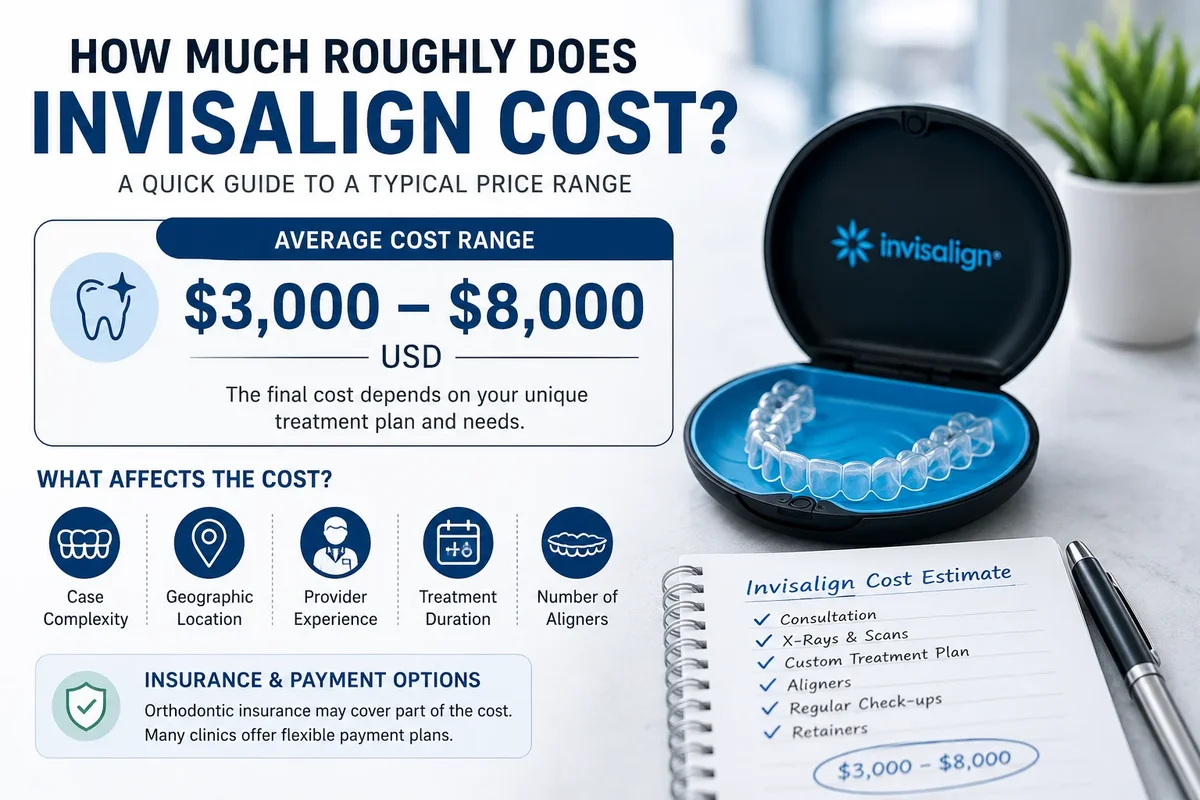
In general, Invisalign treatment is often priced according to complexity. Mild cases that involve small corrections may require fewer aligners and a shorter treatment period. More advanced cases involving crowding, spacing, overbites, underbites, crossbites, or multiple alignment issues may require additional aligners, longer treatment times, and more monitoring appointments. As a result, two people searching for how much roughly does Invisalign cost may receive completely different treatment recommendations after a professional evaluation.
Many adults choose Invisalign because the aligners are clear and discreet. Unlike traditional braces, Invisalign aligners can be removed for meals and oral hygiene routines. This flexibility makes them attractive to working professionals, university students, and individuals who prefer a less noticeable orthodontic solution. When evaluating how much roughly does Invisalign cost, many patients consider these lifestyle advantages alongside the financial investment.
Another important factor is what is included in the treatment package. Invisalign treatment may involve digital scans, clinical examinations, treatment planning, progress reviews, refinement aligners, and retainers after active treatment is completed. The overall value of treatment is not determined solely by the initial fee. Instead, patients should consider the complete level of care they receive throughout the process.
Insurance coverage can also influence out-of-pocket expenses. Some dental insurance plans include orthodontic benefits that may contribute toward Invisalign treatment costs. Other plans may provide limited coverage or none at all. Before beginning treatment, it is helpful to contact your insurance provider and ask whether orthodontic benefits apply to clear aligner therapy. This step can provide a more realistic understanding of your financial commitment.
Patients often search online for exact pricing information, hoping to discover a definitive answer to how much roughly does Invisalign cost. However, online estimates should be viewed only as general references. Without examining your teeth and bite, no clinic can accurately determine the complexity of your treatment. Digital scans and clinical assessments are typically necessary before a personalized estimate can be provided.
Suitability is equally important. Invisalign is an excellent option for many patients, but not every orthodontic case is identical. Some individuals are ideal candidates for clear aligners, while others may require alternative approaches depending on their dental needs. This is why a consultation is often more valuable than comparing random price figures found online. Understanding whether Invisalign is appropriate for your specific case can help prevent unrealistic expectations regarding both treatment outcomes and costs.
Educational resources can also help patients make better decisions. Organizations such as the American Dental Association provide information about oral health, orthodontics, and treatment planning. Reviewing trusted sources can help you better understand the factors that affect Invisalign treatment before meeting with a provider.
At Redent Klinik, discussions about Invisalign typically focus on both treatment suitability and cost transparency. Rather than concentrating only on the question of how much roughly does Invisalign cost, patients are encouraged to understand the full treatment journey. Factors such as oral health status, treatment objectives, expected treatment duration, and retention requirements are all considered when creating a personalized plan.
If you are comparing treatment options, remember that the cheapest quote is not always the best value. A comprehensive treatment plan, careful monitoring, and professional guidance can be just as important as the initial price. Looking at the complete picture may help you make a more confident decision about your orthodontic care.
For patients who are serious about improving their smile, the next practical step is to schedule a professional assessment. A consultation allows a dental professional to evaluate your teeth, explain possible treatment options, discuss potential timelines, and provide a personalized estimate. You can request additional information through the Redent Klinik Contact Page.
Ultimately, the answer to how much roughly does Invisalign cost depends on your individual needs. While general estimates can provide a starting point, only a personalized examination can determine what treatment may involve in your specific situation. By combining cost considerations with treatment suitability, expected outcomes, and long-term oral health goals, you can make a more informed decision about whether Invisalign is the right choice for your smile.
What Factors Influence How Much Roughly Does Invisalign Cost?
After learning the general answer to how much roughly does Invisalign cost, the next step is understanding why treatment costs can vary so much between patients. Many people are surprised to discover that Invisalign is not priced like a standard product. Instead, it is a customized orthodontic treatment designed around each person’s dental condition, treatment goals, and expected tooth movements.
When researching how much roughly does Invisalign cost, it is important to focus on value as well as price. A treatment plan that appears less expensive at first may not necessarily include the same level of monitoring, refinements, or follow-up care as another option. Understanding the factors behind the cost can help you make a more informed decision and avoid comparing treatment plans based only on a single number.
Case Complexity Is One of the Biggest Cost Factors
The complexity of your orthodontic condition is often the most significant factor affecting how much roughly does Invisalign cost. Patients with mild crowding or small gaps may require fewer aligners and a shorter treatment period. In contrast, individuals with more complex bite problems, significant crowding, or extensive tooth movement usually need a longer and more detailed treatment plan.
For example, a patient who wants to straighten a few front teeth may require a different Invisalign package than someone needing correction of an overbite or crossbite. Because the amount of planning and tooth movement varies, the final cost can vary as well.
Treatment Duration Can Affect Overall Cost
Another important factor when considering how much roughly does Invisalign cost is treatment length. Some Invisalign cases may be completed relatively quickly, while others require many months or longer. Longer treatment plans often involve additional monitoring appointments, progress evaluations, and sometimes refinement aligners.
Patients should remember that faster treatment is not always better. The goal is to move teeth safely and predictably while maintaining oral health. A treatment plan that takes more time may be necessary to achieve stable and healthy results.
Number of Aligners Required
Why More Aligners May Increase Costs
Each Invisalign treatment plan includes a series of custom-made aligners designed to move teeth gradually. The number of aligners required depends on the complexity of the case. Cases involving greater tooth movement generally require more aligners and additional treatment planning.
This is another reason why searching online for how much roughly does Invisalign cost can provide only a rough estimate. Without understanding how many aligners may be required, it is difficult to predict the actual cost of treatment.
Provider Experience and Clinical Expertise
The experience of the dental professional providing treatment may also influence how much roughly does Invisalign cost. Providers who regularly treat Invisalign cases often invest significant time in training, digital treatment planning, and patient monitoring.
While choosing treatment based solely on the lowest price can be tempting, patients should also evaluate the provider’s experience, communication, and ability to explain treatment goals clearly. A comprehensive treatment plan may provide better long-term value than a lower-cost option that offers limited supervision.
Geographic Location and Local Market Conditions
Location can also play a role in determining how much roughly does Invisalign cost. Treatment fees may vary depending on regional operating costs, local demand, and the overall dental market in a particular area. Costs in major metropolitan regions may differ from those in smaller communities.
However, patients should not choose a clinic solely because it advertises a lower fee. Travel requirements, follow-up visits, convenience, and continuity of care should also be considered when evaluating treatment options.
Additional Procedures Before Invisalign
Some patients require dental treatment before beginning Invisalign. Professional cleaning, treatment of cavities, gum health management, or other procedures may be recommended before orthodontic treatment starts. These services are separate from Invisalign itself but can influence the overall investment required to achieve a healthy outcome.
This is why a consultation is so valuable. It allows the provider to identify any oral health concerns that should be addressed before active tooth movement begins.
Insurance and Payment Plans
Insurance benefits may affect the amount you personally pay. Some dental insurance plans provide orthodontic benefits that can contribute toward Invisalign treatment costs. Others may offer limited assistance or no orthodontic coverage.
Many clinics also provide financing options that allow patients to divide costs into manageable monthly payments. When evaluating how much roughly does Invisalign cost, it is worth asking not only about total treatment fees but also about available payment arrangements.
Why Personalized Evaluation Matters More Than Online Estimates
Although online articles can provide useful information, they cannot replace a professional assessment. Every smile is unique, and every Invisalign treatment plan is individualized. The most accurate answer to how much roughly does Invisalign cost can only be determined after a detailed examination, digital scans, and treatment planning.
At Redent Klinik, consultations focus on understanding both the patient’s goals and clinical needs. Rather than relying on generalized online estimates, patients receive information based on their own dental condition and treatment objectives.
Making the Right Decision
When deciding whether Invisalign is right for you, focus on more than price alone. Consider treatment quality, expected outcomes, provider experience, convenience, and long-term oral health benefits. A lower advertised fee may not always represent the best overall value.
If you are comparing treatment options, make a checklist that includes your smile goals, insurance benefits, budget preferences, and treatment expectations. This information can help guide productive conversations during a consultation.
Before making a decision, check whether your dental insurance includes orthodontic benefits, ask what services are included in the treatment fee, and request professional advice if you have crowding, spacing, bite concerns, or questions about Invisalign suitability. A personalized consultation is the most reliable way to determine what factors may influence your treatment plan and potential costs.
Is Invisalign Right for You and Is the Cost Worth It?
After learning the general answer to how much roughly does Invisalign cost and understanding the factors that influence pricing, the next important question is whether Invisalign is actually the right treatment for your situation. Cost matters, but value matters just as much. A treatment that fits your goals, lifestyle, and oral health needs may provide greater long-term satisfaction than choosing an option based only on price.
Many people begin their research by asking how much roughly does Invisalign cost, but they soon realize that cost alone cannot determine whether Invisalign is the best choice. Before investing in any orthodontic treatment, it is important to understand who may benefit most from Invisalign, what limitations exist, and how to evaluate whether the treatment aligns with your expectations.
Who Is Typically a Good Candidate for Invisalign?
Invisalign is designed to treat a wide range of orthodontic concerns. Many patients who ask how much roughly does Invisalign cost are dealing with mild to moderate crowding, spacing between teeth, or cosmetic alignment concerns. Invisalign can often be an effective option for these situations while providing a discreet appearance that many adults prefer.
Patients who are motivated, responsible, and willing to wear aligners consistently are often among the best candidates. Since aligners are removable, treatment success depends heavily on patient compliance. Unlike traditional braces that remain attached to the teeth, Invisalign requires commitment and daily cooperation.
If you frequently remove aligners for long periods or do not follow wear instructions, treatment may take longer than expected. Therefore, suitability depends not only on dental conditions but also on personal habits and lifestyle.
When Invisalign May Be Especially Attractive
Aesthetic Advantages
Many adults choose Invisalign because they want a less noticeable orthodontic solution. Clear aligners are often difficult to detect during conversations, meetings, photographs, and social events. This benefit alone can influence how patients evaluate how much roughly does Invisalign cost.
For professionals who regularly interact with clients or patients, appearance during treatment may be an important consideration. In these situations, Invisalign may offer practical advantages that some individuals consider worth the additional investment.
Convenience During Daily Life
Another reason people explore how much roughly does Invisalign cost is the convenience factor. Invisalign aligners can be removed before meals, allowing patients to continue eating foods they enjoy without many of the restrictions commonly associated with traditional braces.
Patients can also brush and floss normally after removing aligners, which may simplify oral hygiene routines compared to fixed orthodontic appliances.
Situations That May Require Careful Evaluation
Although Invisalign can successfully treat many orthodontic concerns, not every case is identical. Some complex bite problems or advanced tooth movement requirements may require additional planning or alternative treatment methods.
This does not necessarily mean Invisalign is unsuitable, but it highlights why online searches for how much roughly does Invisalign cost cannot replace a professional assessment. Digital scans, bite analysis, and clinical examination are often necessary to determine the most appropriate treatment approach.
In some cases, patients may discover that Invisalign remains a suitable option despite significant alignment issues. In other situations, alternative orthodontic solutions may be recommended. A personalized evaluation helps ensure that treatment decisions are based on clinical needs rather than assumptions.
Comparing Invisalign With Traditional Braces
When evaluating how much roughly does Invisalign cost, many patients compare Invisalign with conventional braces. Both options aim to improve tooth alignment and bite function, but they offer different experiences.
Traditional braces remain attached to the teeth throughout treatment, while Invisalign aligners can be removed. Braces may be more familiar to some patients and may be recommended in certain complex situations. Invisalign, however, often appeals to individuals seeking greater flexibility and a more discreet appearance.
The best choice depends on your goals, lifestyle, and clinical needs rather than on cost alone.
Understanding Value Beyond the Initial Price
One common mistake patients make when researching how much roughly does Invisalign cost is focusing only on the treatment fee. While price is important, the overall value of treatment includes several additional considerations.
- Quality of diagnosis and treatment planning
- Provider experience and monitoring
- Digital technology and scanning methods
- Availability of refinement aligners
- Post-treatment retention planning
- Communication and patient support
Looking at these factors together provides a more realistic picture of what you are receiving in exchange for your investment.
Questions to Ask During a Consultation
If you are seriously considering Invisalign, prepare questions before your consultation. This can help you understand both treatment suitability and financial expectations.
Helpful questions may include:
- Am I a good candidate for Invisalign?
- What orthodontic issues need correction?
- How long might treatment take?
- What services are included in the quoted fee?
- Are refinement aligners included if needed?
- Are financing options available?
- How often will progress appointments be scheduled?
These questions often provide more useful information than focusing exclusively on how much roughly does Invisalign cost.
Making a Decision That Fits Your Goals
At Redent Klinik, treatment planning focuses on individual needs rather than generalized estimates. The goal is not simply to answer the question of how much roughly does Invisalign cost, but to determine whether Invisalign aligns with the patient’s smile goals, oral health status, lifestyle, and expectations.
For some patients, Invisalign may offer a comfortable balance between aesthetics, convenience, and orthodontic effectiveness. For others, alternative approaches may deserve consideration. The key is making a decision based on personalized information rather than marketing claims or online averages.
Before choosing Invisalign, check whether you can realistically wear aligners as instructed, review your insurance benefits, and schedule a professional assessment if you have crowding, spacing, bite concerns, or questions about treatment suitability. Professional advice is especially important if you are comparing Invisalign with braces or trying to determine whether the investment aligns with your long-term oral health goals.
What Is the Invisalign Treatment Process From Consultation to Final Results?
Many people begin by asking how much roughly does Invisalign cost, but once they decide to seriously consider treatment, another important question follows: what actually happens during the Invisalign process? Understanding each stage of treatment can help you determine whether Invisalign fits your expectations, lifestyle, timeline, and budget.
The Invisalign journey involves more than simply receiving a set of clear aligners. It includes consultation, diagnosis, digital treatment planning, active tooth movement, progress monitoring, and long-term retention. Knowing how the process works can also help explain why answers to how much roughly does Invisalign cost vary from one patient to another.
Step 1: Initial Consultation and Assessment
The first stage of Invisalign treatment is a professional consultation. During this appointment, a dentist or orthodontic provider evaluates your teeth, bite, oral health, and smile goals.
Many patients researching how much roughly does Invisalign cost hope to receive an exact figure immediately. However, treatment costs are usually determined only after a thorough examination because every patient’s orthodontic needs are different.
During the consultation, the provider may assess:
- Tooth alignment
- Crowding and spacing
- Bite relationships
- Jaw function
- Gum health
- Overall oral condition
This information helps determine whether Invisalign is an appropriate treatment option.
Step 2: Digital Scans and Treatment Planning
Creating a Personalized Roadmap
If Invisalign is considered suitable, digital scans or impressions are typically taken. Modern digital scanning technology allows providers to create highly detailed three-dimensional models of the teeth.
This stage plays an important role in determining how much roughly does Invisalign cost because treatment complexity becomes clearer once digital planning begins. The provider can estimate how many aligners may be required, how much tooth movement is necessary, and how long treatment may take.
Digital treatment planning allows both the provider and patient to visualize expected tooth movement before treatment starts. This can help establish realistic expectations and improve treatment understanding.
Step 3: Manufacturing the Aligners
After treatment planning is completed, custom aligners are manufactured specifically for the patient. Each aligner is designed to move teeth gradually toward their planned positions.
The aligners are typically worn in sequence, with each set producing small and controlled tooth movements. Because every aligner is customized, treatment is highly individualized.
This customization is another reason why online searches for how much roughly does Invisalign cost cannot provide exact answers. Treatment plans vary significantly depending on the number of aligners required and the complexity of movement.
Step 4: Active Treatment Begins
Once the aligners are delivered, active treatment starts. Patients wear aligners for most of the day and remove them only when eating, drinking certain beverages, brushing, and flossing.
Consistency is essential. Patients who follow wear instructions closely often experience smoother progress than those who wear aligners inconsistently.
Many individuals who initially focus on how much roughly does Invisalign cost later realize that treatment success depends just as much on personal commitment as it does on the aligners themselves.
Adjusting to Invisalign
Some patients notice mild pressure or temporary discomfort when switching to a new aligner. This is generally associated with the aligners applying controlled force to guide tooth movement.
Most people adapt quickly and continue their normal daily activities without significant disruption.
Step 5: Progress Monitoring Appointments
Throughout treatment, patients attend periodic review appointments. These visits allow the provider to evaluate progress and determine whether teeth are moving according to the treatment plan.
Monitoring appointments are important because they help identify any issues early. In some cases, modifications or refinements may be recommended to improve treatment efficiency.
These professional evaluations contribute to the overall treatment experience and may influence the answer to how much roughly does Invisalign cost, depending on the services included in the treatment package.
Step 6: Refinement Aligners if Necessary
Not every patient finishes treatment exactly as predicted by the original plan. Teeth can respond differently between individuals, and small adjustments may occasionally be needed.
Refinement aligners are additional aligners created to improve final positioning. Whether refinements are included in treatment fees varies by provider and treatment package.
This is one reason patients should ask detailed questions rather than focusing solely on how much roughly does Invisalign cost. Understanding what is included can help avoid misunderstandings later.
Step 7: Retainers and Long-Term Maintenance
Protecting Your Results
After active treatment is completed, retainers are generally recommended to help maintain the new tooth positions. Teeth naturally have a tendency to shift over time, which is why retention is considered an important part of orthodontic care.
Patients often underestimate the importance of retention when researching how much roughly does Invisalign cost. However, maintaining results can be just as important as achieving them.
Following retainer recommendations may help support long-term treatment stability and protect the investment made during orthodontic care.
Why Understanding the Process Matters
The Invisalign process involves several stages, each contributing to treatment success. From consultation and digital planning to aligner wear and retention, every step plays a role in achieving the desired outcome.
At Redent Klinik, patients are encouraged to understand the complete treatment journey rather than focusing only on the initial question of how much roughly does Invisalign cost. A well-planned treatment process often provides greater clarity regarding expectations, timelines, and potential costs.
By understanding the full process, patients can make more confident decisions and evaluate whether Invisalign aligns with their goals, lifestyle, and oral health needs.
Before starting treatment, check how often follow-up appointments will be needed, ask whether refinement aligners and retainers are included in your treatment plan, and request professional advice if you have questions about treatment duration, compliance requirements, or expected outcomes. A consultation is especially valuable if you are comparing Invisalign with other orthodontic options or want a personalized assessment of your case.
What Are the Potential Risks, Limitations, and Challenges of Invisalign?
Many people researching how much roughly does Invisalign cost focus primarily on treatment fees, appearance, and convenience. While these are important considerations, making a well-informed decision also requires understanding the potential limitations, risks, and challenges associated with Invisalign treatment. Every orthodontic option has advantages and disadvantages, and evaluating both sides can help you determine whether Invisalign is the right investment for your individual situation.
When patients ask how much roughly does Invisalign cost, they are often comparing Invisalign with traditional braces or other orthodontic solutions. However, cost alone should never be the only deciding factor. Understanding possible challenges can help you avoid unrealistic expectations and improve your overall treatment experience.
Success Depends Heavily on Patient Compliance
One of the most important differences between Invisalign and traditional braces is that Invisalign aligners are removable. While this flexibility is one of the treatment’s biggest advantages, it can also create challenges for some patients.
Individuals searching for how much roughly does Invisalign cost often appreciate the convenience of removable aligners. However, treatment effectiveness depends on wearing the aligners consistently according to professional instructions. Patients who frequently remove aligners or forget to wear them may experience slower progress or less predictable results.
For responsible and motivated patients, this may not be a concern. However, individuals who struggle with consistency should carefully consider whether Invisalign fits their lifestyle.
Not Every Orthodontic Case Is Identical
Complex Cases May Require Additional Evaluation
Although Invisalign can successfully address many orthodontic concerns, there are situations where treatment planning becomes more complex. Severe bite discrepancies, significant tooth rotations, advanced crowding, or certain jaw-related issues may require additional orthodontic strategies.
This does not automatically mean Invisalign is unsuitable. However, it reinforces why online estimates and general answers to how much roughly does Invisalign cost cannot replace a professional examination. Only a detailed assessment can determine whether Invisalign is likely to meet the patient’s treatment goals.
In some situations, alternative treatments or combined approaches may be recommended to achieve the desired outcome.
Temporary Discomfort During Tooth Movement
Orthodontic treatment works by applying controlled forces to move teeth. Because of this, some degree of pressure or temporary discomfort is common when switching to a new aligner set.
Most patients adapt quickly, and discomfort often decreases within a short period. However, understanding this possibility before starting treatment can help set realistic expectations.
When evaluating how much roughly does Invisalign cost, patients should consider not only financial investment but also the commitment involved in the treatment process.
Speech Adjustments During Early Treatment
Some individuals notice minor speech changes when they first begin wearing Invisalign aligners. Certain sounds may feel different during the adjustment period as the tongue adapts to the presence of the aligners.
For most patients, these changes improve as they become accustomed to wearing the aligners. However, individuals whose professions involve extensive public speaking may wish to discuss this aspect during their consultation.
This practical consideration is often overlooked by people focusing exclusively on how much roughly does Invisalign cost.
Oral Hygiene Requires Consistency
Maintaining Healthy Teeth During Treatment
Because aligners fit closely around the teeth, good oral hygiene remains essential throughout treatment. Food particles and plaque should be removed before aligners are reinserted.
Patients who regularly brush, floss, and clean their aligners typically adapt well to these requirements. However, individuals with inconsistent oral hygiene habits may need to improve their routines before beginning treatment.
Good oral health habits can contribute significantly to a positive Invisalign experience.
Treatment May Require Refinements
Many people researching how much roughly does Invisalign cost assume treatment follows a perfectly predictable timeline. In reality, teeth can respond differently between patients, and minor adjustments may occasionally be necessary.
Refinement aligners are additional aligners that help improve final tooth positioning. Whether refinements are included within the treatment fee varies among providers and treatment packages.
For this reason, patients should ask detailed questions about treatment inclusions rather than focusing solely on initial pricing.
Retention Is Necessary After Treatment
Completing active Invisalign treatment does not mean orthodontic care is finished forever. Teeth naturally have a tendency to shift over time, which is why retainers are commonly recommended after treatment.
Patients who search for how much roughly does Invisalign cost sometimes overlook retention when considering overall value. Long-term maintenance is an important part of protecting the results achieved during treatment.
Understanding this responsibility in advance helps create realistic expectations about post-treatment care.
Comparing Risks With Traditional Braces
Every orthodontic system presents different advantages and limitations. Traditional braces eliminate the need for patient compliance regarding appliance wear because they remain fixed to the teeth. Invisalign, on the other hand, provides flexibility and discretion but requires greater patient cooperation.
The right choice depends on personal preferences, orthodontic needs, lifestyle considerations, and treatment goals. Therefore, the answer to how much roughly does Invisalign cost should always be evaluated alongside suitability and practicality.
Making an Informed Decision
At Redent Klinik, treatment discussions typically include both benefits and potential challenges. Patients deserve a complete understanding of the treatment process before making a decision. While Invisalign offers many advantages, understanding limitations helps patients approach treatment with realistic expectations.
Rather than viewing treatment solely through the lens of how much roughly does Invisalign cost, patients should evaluate how Invisalign fits their daily routine, commitment level, smile objectives, and long-term oral health goals.
Careful planning and professional guidance can help patients determine whether Invisalign represents an appropriate choice for their individual circumstances.
Before starting Invisalign treatment, check whether you can consistently wear aligners as instructed, ask about potential refinements and retention requirements, and request professional advice if you have complex bite concerns, severe crowding, gum health issues, or questions about treatment suitability. A comprehensive consultation can help identify potential challenges before treatment begins and support a more confident decision-making process.
What Alternatives Should You Consider Before Choosing Invisalign?
When researching how much roughly does Invisalign cost, many patients automatically assume Invisalign will be the best solution for their orthodontic needs. However, making a confident treatment decision requires understanding the alternatives that may also be available. Every patient has unique goals, priorities, and dental conditions, so comparing different treatment options can help determine whether Invisalign truly represents the best balance of cost, convenience, effectiveness, and long-term value.
While Invisalign is one of the most recognized clear aligner systems in the world, it is not the only orthodontic treatment available. Before making a financial commitment, patients should understand how Invisalign compares with traditional braces, other aligner systems, limited orthodontic treatments, and cosmetic alternatives. Looking beyond the question of how much roughly does Invisalign cost can often lead to a more informed and personalized decision.
Traditional Metal Braces
Traditional braces remain one of the most common alternatives to Invisalign. They have been used successfully for decades and continue to be an effective treatment option for many orthodontic concerns.
Patients who search for how much roughly does Invisalign cost frequently compare Invisalign with braces because both treatments aim to improve tooth alignment and bite function. However, the treatment experience differs significantly.
Advantages of Traditional Braces
- No need to remember to wear them
- Suitable for many orthodontic situations
- Continuously active because they remain attached
- Can be effective for complex tooth movement
Potential Considerations
- More noticeable appearance
- Food restrictions may apply
- Cleaning can require additional effort
- Some patients experience irritation from brackets and wires
For some individuals, these factors may influence whether Invisalign or braces represent the better overall value.
Ceramic Braces
Ceramic braces function similarly to traditional braces but use tooth-colored or clear brackets to create a less noticeable appearance.
Patients evaluating how much roughly does Invisalign cost sometimes consider ceramic braces because they provide a balance between aesthetics and fixed orthodontic treatment. While still visible, ceramic brackets are often less noticeable than metal braces.
For patients who want a more discreet appearance but prefer fixed appliances, ceramic braces may deserve consideration during the consultation process.
Other Clear Aligner Systems
Not All Clear Aligners Are Identical
Many patients assume Invisalign is the only clear aligner option available. In reality, multiple aligner systems exist in the orthodontic market.
When researching how much roughly does Invisalign cost, patients may encounter alternative brands that advertise lower fees. While lower pricing can seem attractive, it is important to compare more than cost alone.
Questions worth asking include:
- What technology supports treatment planning?
- How experienced is the provider?
- How frequently is treatment monitored?
- Are refinement aligners included?
- What happens if treatment adjustments are needed?
Evaluating these factors can help patients compare value rather than simply comparing prices.
Limited Orthodontic Treatment Options
Some patients seek treatment only for cosmetic concerns involving the front teeth. In certain situations, limited orthodontic treatment may be considered.
Individuals asking how much roughly does Invisalign cost may discover that they do not require comprehensive orthodontic correction. If only minor adjustments are needed, a more limited treatment approach could potentially be discussed during a consultation.
However, cosmetic appearance alone should not determine treatment recommendations. Bite function and long-term oral health considerations remain important.
Cosmetic Dentistry Alternatives
When Alignment Is Not the Primary Concern
Some patients explore Invisalign because they are unhappy with the appearance of their smile. However, the source of dissatisfaction is not always related to tooth alignment.
In certain cases, cosmetic dentistry procedures such as whitening, bonding, or veneers may be discussed as alternative options depending on the patient’s goals. These treatments address appearance differently than orthodontics and may not correct alignment or bite issues.
This highlights why a professional assessment is often more valuable than simply researching how much roughly does Invisalign cost online. The right solution depends on the underlying problem that the patient wants to address.
Why Choosing Based Only on Price Can Be Risky
One common mistake patients make is focusing exclusively on cost. While understanding how much roughly does Invisalign cost is important, selecting treatment solely because it appears cheaper may not always produce the most appropriate outcome.
A treatment option should be evaluated based on:
- Suitability for the clinical condition
- Expected treatment goals
- Provider experience
- Convenience and lifestyle compatibility
- Monitoring and support
- Long-term oral health considerations
These factors often provide a clearer picture of overall value than price alone.
How to Compare Options Effectively
Before making a decision, patients should gather information about each treatment option and prepare questions for their consultation. Understanding the advantages and limitations of Invisalign, braces, and alternative approaches allows for a more objective comparison.
At Redent Klinik, treatment recommendations are based on individual clinical findings rather than assumptions or generalized estimates. The goal is to help patients understand available options and choose the approach that best supports their needs and expectations.
For many people, the answer to how much roughly does Invisalign cost becomes only one part of a much larger decision-making process. The most successful treatment choice is often the one that balances cost, practicality, comfort, aesthetics, and long-term oral health objectives.
Making the Right Next Step
Comparing alternatives does not necessarily mean Invisalign is unsuitable. Instead, it helps ensure that the final decision is based on a complete understanding of available options. Some patients ultimately choose Invisalign because of its appearance and convenience, while others may prefer fixed orthodontic appliances or alternative solutions.
Before selecting any orthodontic treatment, check whether your primary concern is appearance, alignment, bite function, or overall oral health. Request professional advice if you are unsure which option fits your situation, if you have significant crowding or bite concerns, or if you are comparing Invisalign with braces and want a personalized recommendation based on your clinical needs.
Can Insurance or Financing Help Reduce Invisalign Costs?
For many patients, the question is not only how much roughly does Invisalign cost, but also how they can make treatment more affordable. Orthodontic treatment represents a meaningful financial commitment, and understanding available payment options can help patients plan more confidently. Whether through dental insurance, financing programs, health savings accounts, or flexible payment arrangements, there may be ways to reduce the immediate financial burden associated with Invisalign treatment.
When researching how much roughly does Invisalign cost, many people focus exclusively on total treatment fees. However, the actual out-of-pocket amount may differ depending on insurance coverage, payment plans, employer benefits, and clinic-specific financing options. Learning about these possibilities before beginning treatment can help patients create a realistic budget and avoid unexpected financial surprises.
Understanding Dental Insurance Coverage
One of the first steps in evaluating how much roughly does Invisalign cost is reviewing your dental insurance policy. Some insurance plans include orthodontic benefits that may contribute toward Invisalign treatment expenses. Others may provide coverage only for certain orthodontic procedures, while some plans may not include orthodontic benefits at all.
Coverage details vary significantly between insurance providers and policy types. For this reason, patients should avoid assuming that orthodontic treatment is automatically covered. Instead, it is wise to contact the insurance company directly and request clarification regarding benefits.
Questions to Ask Your Insurance Provider
- Does my plan include orthodontic coverage?
- Are clear aligners eligible for benefits?
- Is there a lifetime orthodontic maximum?
- What percentage of treatment costs may be covered?
- Are there age restrictions for orthodontic benefits?
- Is pre-authorization required?
These questions can provide a clearer picture of your potential financial responsibility before treatment begins.
Employer-Sponsored Benefits
Some patients researching how much roughly does Invisalign cost may have access to benefits through their employer. Certain workplace benefit programs include dental plans that provide orthodontic assistance. Depending on the structure of the plan, this support may reduce overall treatment expenses.
Employees should carefully review benefit documentation and speak with their human resources department if they are unsure about available orthodontic coverage.
Health Savings Accounts and Flexible Spending Accounts
Using Tax-Advantaged Funds
In some regions, health savings accounts (HSAs) or flexible spending accounts (FSAs) may be available for qualified healthcare expenses. Depending on local regulations and eligibility requirements, orthodontic treatment may qualify for these programs.
Patients who are evaluating how much roughly does Invisalign cost should investigate whether these accounts can be used to help manage treatment expenses. Using pre-tax funds may improve affordability for eligible individuals.
Because regulations differ by country and plan type, patients should verify eligibility requirements directly with their account administrator or financial advisor.
Monthly Financing Options
One of the most common ways patients manage orthodontic expenses is through financing arrangements. Many dental clinics offer structured payment plans that divide treatment costs into smaller monthly installments.
For individuals concerned about paying the full treatment fee at once, financing can make Invisalign more accessible. Instead of focusing exclusively on how much roughly does Invisalign cost as a single figure, patients can evaluate whether the monthly payment structure fits comfortably within their budget.
Financing terms vary depending on the clinic and financial provider. Therefore, it is important to review all payment details carefully before making a commitment.
Why the Lowest Monthly Payment Is Not Always the Best Choice
While lower monthly payments may seem attractive, patients should consider the overall treatment package rather than focusing solely on financing arrangements.
When comparing treatment options, it is helpful to evaluate:
- What services are included
- Whether refinement aligners are covered
- The number of follow-up appointments
- Retainer policies after treatment
- Monitoring and support provided throughout treatment
Understanding these details can help patients compare overall value rather than concentrating only on monthly costs.
Planning Your Orthodontic Budget
Patients often ask how much roughly does Invisalign cost because they want to determine whether treatment fits their financial situation. Creating a treatment budget can be a useful exercise before scheduling consultations.
Consider:
- Available savings
- Insurance benefits
- Monthly payment preferences
- Potential employer-sponsored benefits
- Long-term treatment goals
By evaluating these factors together, patients can make more informed decisions regarding treatment timing and affordability.
Why Personalized Cost Discussions Matter
Online estimates can provide general information, but they cannot determine what your treatment may actually involve. Because every Invisalign case is different, the answer to how much roughly does Invisalign cost becomes much more meaningful when discussed in the context of a personalized treatment plan.
During a consultation, providers can evaluate your orthodontic needs, estimate treatment complexity, and explain available payment options. This individualized approach allows patients to understand both clinical and financial considerations before making a decision.
Balancing Affordability and Quality
At Redent Klinik, discussions about Invisalign typically involve more than simply presenting a treatment fee. Patients are encouraged to understand treatment goals, expected timelines, financing possibilities, and long-term maintenance requirements. This broader perspective helps patients evaluate whether Invisalign aligns with both their oral health goals and financial expectations.
While affordability is important, treatment quality, provider experience, and ongoing support should also be part of the decision-making process. A comprehensive evaluation often provides greater value than selecting treatment based solely on the lowest advertised cost.
For many individuals, the question of how much roughly does Invisalign cost becomes easier to answer once insurance benefits, financing options, and personalized treatment recommendations are taken into account.
Before starting Invisalign treatment, check your dental insurance policy, ask whether orthodontic benefits apply to clear aligners, review financing options carefully, and request professional advice if you are uncertain about budgeting for treatment. A consultation can help clarify both clinical needs and payment possibilities so you can make a decision based on accurate and personalized information.
Frequently Asked Questions About How Much Roughly Does Invisalign Cost
As patients research orthodontic treatment, many discover that the same concerns appear repeatedly. Questions about pricing, treatment duration, insurance coverage, suitability, and expected outcomes often arise long before a consultation is scheduled. This FAQ section addresses some of the most common concerns people have when searching for how much roughly does Invisalign cost and helps explain how those answers may influence treatment decisions.
While online information can provide useful guidance, it is important to remember that every smile is different. Therefore, the answer to how much roughly does Invisalign cost may vary depending on treatment complexity, provider recommendations, geographic location, and individual oral health needs.
Is Invisalign More Expensive Than Traditional Braces?
One of the most common questions patients ask after searching how much roughly does Invisalign cost is whether Invisalign costs more than traditional braces.
The answer depends on the individual case and treatment requirements. In some situations, Invisalign and braces may fall within a similar range, while in other situations one option may involve a higher overall investment. The complexity of tooth movement, treatment duration, and provider experience often influence pricing more than the appliance itself.
Rather than focusing exclusively on which treatment is cheaper, patients should evaluate which option best fits their goals, lifestyle, and orthodontic needs.
Can Invisalign Fix Severe Orthodontic Problems?
Many individuals researching how much roughly does Invisalign cost wonder whether Invisalign is appropriate for significant alignment concerns.
Modern Invisalign treatment can address many orthodontic issues, including crowding, spacing, and certain bite concerns. However, not every case is identical. Some situations require more advanced planning or alternative treatment approaches.
The best way to determine suitability is through a professional assessment that includes examination, imaging, and digital treatment planning.
How Long Does Invisalign Treatment Usually Take?
Treatment Length Depends on Individual Needs
Another frequently asked question associated with how much roughly does Invisalign cost relates to treatment duration.
The length of treatment varies according to the complexity of tooth movement required. Some patients complete treatment relatively quickly, while others require longer treatment periods involving additional aligners and monitoring appointments.
It is important not to compare your treatment timeline directly with someone else’s experience because orthodontic needs differ from person to person.
Will Insurance Help Pay for Invisalign?
Insurance coverage is a major concern for patients researching how much roughly does Invisalign cost. Some dental insurance plans include orthodontic benefits that may contribute toward Invisalign treatment. Others may have limitations or exclusions.
Because policies vary significantly, patients should contact their insurance provider directly to understand available benefits and eligibility requirements.
Understanding insurance details before treatment begins can help avoid misunderstandings later in the process.
Does Invisalign Hurt?
Patients often worry that orthodontic treatment will be painful. Invisalign works by gradually applying controlled pressure to move teeth into new positions. Because of this, some patients experience temporary pressure or mild discomfort, particularly when changing to a new aligner set.
Most individuals adapt quickly, and many find Invisalign comfortable enough to integrate into their daily routines. However, individual experiences vary.
When evaluating how much roughly does Invisalign cost, it is helpful to remember that comfort, convenience, and aesthetics are often among the reasons patients choose Invisalign over other treatment options.
Can Invisalign Affect Speech?
Temporary Adjustments Are Possible
Some patients notice minor speech changes when they first begin wearing aligners. This adjustment period is often temporary as the tongue adapts to the presence of the aligners.
People who frequently speak in professional settings may wish to discuss this possibility during their consultation. Understanding potential lifestyle adjustments can help patients make informed decisions beyond simply asking how much roughly does Invisalign cost.
Are Retainers Required After Invisalign?
One common misconception is that orthodontic treatment ends immediately after the final aligner is worn. In reality, retention is an important part of maintaining results.
Teeth naturally tend to shift over time. Retainers are often recommended to help preserve treatment outcomes and support long-term stability.
Patients comparing options should ask about retention policies when discussing how much roughly does Invisalign cost because post-treatment maintenance may influence overall value.
Can Adults Get Invisalign?
Absolutely. Invisalign is commonly used by adults who want a more discreet orthodontic solution. Many working professionals choose Invisalign because the aligners are less noticeable than traditional braces and can be removed for meals and oral hygiene.
Age alone does not determine suitability. Oral health status, treatment goals, and orthodontic needs are generally more important factors during evaluation.
How Accurate Are Online Cost Estimates?
This question goes directly to the heart of the search query how much roughly does Invisalign cost. Online articles and cost guides can provide useful general information, but they cannot replace a personalized treatment assessment.
Without evaluating your teeth, bite, and treatment goals, no website can determine exactly what treatment may involve. Online estimates should be viewed as educational references rather than personalized treatment quotes.
What Should You Ask During Your Consultation?
Many patients arrive at consultations with a long list of questions, which is a positive approach. Consider asking:
- Am I a suitable Invisalign candidate?
- What treatment options are available?
- How long might treatment take?
- What services are included in the fee?
- Are retainers included?
- Will refinements be covered if needed?
- What payment options are available?
These questions often provide more practical value than focusing solely on how much roughly does Invisalign cost.
Final FAQ Guidance
At Redent Klinik, patient consultations are designed to address both clinical and financial questions in a personalized manner. Understanding treatment suitability, expected timelines, maintenance requirements, and financing options can help patients feel more confident about their decision.
Ultimately, while many people start with the question how much roughly does Invisalign cost, the most useful answers often come from understanding how treatment applies to their unique smile and oral health goals.
Before scheduling treatment, check your insurance benefits, prepare a list of personal questions, review your orthodontic goals, and request professional advice if you are uncertain about suitability, treatment complexity, or expected costs. A consultation can provide individualized information that no online estimate can fully replace.
How Can You Compare Invisalign Quotes and Choose the Right Provider?
After researching how much roughly does Invisalign cost, many patients reach a stage where they begin contacting clinics and requesting consultations. This is often where decision-making becomes more challenging. Different providers may present different treatment plans, timelines, payment options, and pricing structures. Understanding how to compare Invisalign quotes properly can help you avoid confusion and make a more informed choice.
While it is natural to focus on the financial aspect of treatment, choosing a provider based solely on the lowest price may not always be the best long-term decision. The answer to how much roughly does Invisalign cost should be evaluated alongside treatment quality, provider experience, included services, and the overall patient experience.
Why Invisalign Quotes Can Vary Between Providers
Patients are often surprised when they receive different estimates from different clinics. One reason this occurs is that Invisalign treatment is highly individualized. Providers may recommend different treatment approaches based on their clinical assessment, experience, and interpretation of your orthodontic needs.
When comparing answers to how much roughly does Invisalign cost, remember that the quoted amount may reflect more than just the aligners themselves. It may also include consultation services, digital scanning, treatment planning, follow-up appointments, refinement aligners, retainers, and long-term support.
Two treatment plans may appear similar at first glance while including very different levels of service.
Look Beyond the Initial Price
Value Often Matters More Than Cost Alone
Many patients begin by searching how much roughly does Invisalign cost because they want to find the most affordable option. While budgeting is important, evaluating overall value is often more useful than focusing exclusively on price.
Consider questions such as:
- How experienced is the provider with Invisalign treatment?
- How detailed is the treatment planning process?
- Are follow-up appointments included?
- Will refinements be available if necessary?
- Are retainers included after treatment?
- What level of support is available during treatment?
These factors can significantly influence the overall treatment experience.
Ask About Provider Experience
Experience can play an important role in orthodontic treatment planning. While every licensed provider has professional training, some clinicians manage Invisalign cases more frequently than others.
Patients researching how much roughly does Invisalign cost may benefit from asking how often the provider performs Invisalign treatment and what types of cases they commonly manage.
A provider who routinely handles Invisalign cases may be able to explain treatment expectations clearly and address concerns more effectively throughout the process.
Understand What Is Included in the Fee
Not Every Quote Covers the Same Services
One of the most important steps when comparing Invisalign estimates is understanding exactly what is included.
For example, when asking how much roughly does Invisalign cost, patients should clarify whether the quoted amount includes:
- Initial consultation
- Digital scans or impressions
- Treatment planning
- Progress reviews
- Refinement aligners
- Retainers
- Emergency appointments if needed
Without this information, comparing quotes can be misleading because two providers may be offering different treatment packages.
Evaluate Communication and Transparency
Price is important, but communication is equally valuable. Patients should feel comfortable asking questions and discussing concerns during consultations.
A provider who explains treatment clearly, discusses alternatives, and answers questions honestly can make the decision-making process much easier.
When comparing options, pay attention to how thoroughly the clinic explains the factors influencing how much roughly does Invisalign cost. Transparent communication often reflects a patient-focused approach.
Review Financing Options Carefully
Some clinics offer payment plans that spread treatment costs across several months or longer. Financing can make treatment more manageable, but patients should review payment details carefully.
When discussing how much roughly does Invisalign cost, ask about:
- Monthly payment options
- Deposit requirements
- Payment schedules
- Any applicable administrative fees
- What happens if treatment changes are required
Understanding these details can help you compare financial arrangements more accurately.
Consider Convenience and Accessibility
The closest provider is not always the best choice, but convenience can be an important factor. Invisalign treatment usually involves periodic review appointments, so travel time and scheduling flexibility may influence your overall experience.
Patients comparing how much roughly does Invisalign cost should also consider practical factors such as appointment availability, clinic location, and accessibility.
Choosing a provider that fits comfortably into your schedule may improve treatment compliance and reduce unnecessary stress.
Red Flags to Watch For
When evaluating providers, it may be wise to proceed carefully if:
- Treatment details are unclear
- Questions are avoided or dismissed
- Costs are presented without explanation
- Pressure is applied to make immediate decisions
- Services included in the fee are not clearly defined
Patients deserve enough information to make thoughtful and informed decisions regarding orthodontic care.
Making a Confident Provider Choice
At Redent Klinik, consultations are designed to help patients understand both clinical recommendations and financial considerations. Rather than focusing only on how much roughly does Invisalign cost, discussions typically include treatment goals, expected timelines, maintenance requirements, and available payment options.
The best provider is not necessarily the one offering the lowest number. Instead, the ideal choice is often the provider who combines appropriate clinical planning, clear communication, transparent pricing, and ongoing support throughout treatment.
By comparing quotes carefully and asking detailed questions, patients can make decisions based on value, suitability, and confidence rather than price alone.
Before selecting an Invisalign provider, check exactly what services are included in the treatment fee, compare financing options, evaluate provider experience, and request professional advice if you receive significantly different treatment recommendations from different clinics. A detailed consultation can help clarify whether the proposed treatment plan truly matches your orthodontic needs and expectations.
What Is the Best Next Step If You Are Considering Invisalign?
After researching treatment options, comparing alternatives, reviewing risks, exploring financing possibilities, and asking how much roughly does Invisalign cost, many patients reach an important point in their decision-making journey: determining what to do next. While online research provides valuable information, there comes a stage where gathering more general estimates becomes less useful than obtaining personalized information about your own smile.
The reality is that no article, calculator, or online discussion can fully answer how much roughly does Invisalign cost for your specific situation. Invisalign treatment is customized around individual needs, and the most reliable information comes from a professional evaluation. Understanding the right next step can help you move from general research toward a confident and informed decision.
Why Online Research Has Limits
Many patients spend weeks or even months researching how much roughly does Invisalign cost. During this process, they often compare websites, watch videos, read reviews, and browse treatment discussions.
While this research can be helpful, online estimates have limitations. They cannot evaluate your bite, identify treatment complexity, determine the number of aligners required, or assess your overall oral health condition.
As a result, two people reading the same article about how much roughly does Invisalign cost may ultimately receive very different treatment recommendations once they attend a consultation.
The Importance of a Personalized Assessment
Your Smile Is Unique
Every patient has a different orthodontic starting point. Some individuals need only minor alignment improvements, while others require more extensive tooth movement and bite correction.
This is why a professional evaluation remains one of the most valuable steps in the treatment process. A consultation allows a provider to gather information that cannot be obtained through online research alone.
When patients ask how much roughly does Invisalign cost, providers generally need to evaluate several factors before offering meaningful guidance:
- Tooth alignment
- Crowding or spacing severity
- Bite relationships
- Oral health condition
- Treatment objectives
- Expected treatment duration
These details help create a treatment plan that reflects the patient’s actual needs rather than generalized averages.
Prepare Before Your Consultation
One of the most effective ways to maximize the value of a consultation is to prepare beforehand. Patients who organize their questions and goals often leave consultations with a clearer understanding of their options.
If you have been researching how much roughly does Invisalign cost, consider preparing questions such as:
- Am I a suitable candidate for Invisalign?
- Are alternative treatments worth considering?
- How long might treatment take?
- What is included in the quoted fee?
- Will retainers be required afterward?
- Are financing options available?
- How often will follow-up visits be scheduled?
These questions can provide information that goes far beyond simple pricing estimates.
Think About Your Long-Term Goals
Patients often focus on immediate concerns when researching how much roughly does Invisalign cost. However, orthodontic treatment is ultimately a long-term investment in oral health and smile confidence.
Before making a decision, think carefully about your priorities:
- Do you primarily want cosmetic improvement?
- Are you hoping to improve bite function?
- Is comfort a major priority?
- Do you want the most discreet treatment option?
- Are flexible payment arrangements important?
Clarifying these goals can make treatment discussions much more productive.
Compare Treatment Value, Not Just Cost
Avoid Making Decisions Based Solely on Price
Although understanding how much roughly does Invisalign cost is important, selecting treatment based solely on the lowest number can sometimes lead to disappointment.
Patients should also evaluate:
- Provider experience
- Treatment planning quality
- Communication and transparency
- Included services
- Monitoring throughout treatment
- Post-treatment retention planning
These factors often contribute significantly to the overall treatment experience and long-term satisfaction.
Understand That Treatment Is a Partnership
One important aspect of Invisalign that patients sometimes overlook is the role they play in treatment success. Aligners must be worn consistently and oral hygiene should be maintained throughout treatment.
When evaluating how much roughly does Invisalign cost, remember that the financial investment is only one part of the process. Personal commitment, compliance, and communication with the provider are equally important components of successful treatment.
When Should You Schedule a Consultation?
If you are seriously considering Invisalign and have already researched the basics, this is often the ideal time to schedule a professional evaluation. Continuing to search endlessly for online estimates may not provide additional clarity.
A consultation can answer questions that online resources simply cannot address. It can help determine treatment suitability, identify potential challenges, explain available alternatives, and provide personalized cost information.
Taking the Final Step Toward an Informed Decision
At Redent Klinik, consultations are designed to help patients move beyond generalized questions such as how much roughly does Invisalign cost and toward a clearer understanding of their own treatment possibilities. The objective is not simply to discuss pricing, but to evaluate oral health, smile goals, treatment options, and long-term expectations.
For many individuals, the most valuable outcome of a consultation is confidence. Knowing why a treatment plan has been recommended, understanding potential timelines, and reviewing available payment options often makes decision-making much easier.
Ultimately, while online research is an excellent starting point, personalized professional guidance remains the most reliable way to determine whether Invisalign is appropriate for your needs and what treatment may involve.
Before moving forward, check your orthodontic goals, review any insurance benefits you may have, prepare a list of questions, and request professional advice if you are unsure about treatment suitability, costs, alternatives, or expected outcomes. A personalized consultation is usually the most effective next step for turning general information into a treatment plan tailored to your specific situation.
Disclosure: this page may contain affiliate links. We may earn a commission if you use them, at no extra cost to you.