
One of the most common questions patients ask before starting implant treatment is: how quickly can dental implants be done? This is a completely valid concern. Tooth loss affects not only appearance but also chewing ability, speech, confidence, and overall oral health. Many people want a solution that is both reliable and fast. The good news is that modern dentistry offers flexible timelines, and in many cases, dental implants can be completed faster than most people expect 😊.
To truly understand how quickly can dental implants be done, it is important to look at the entire treatment process rather than focusing on a single appointment. Dental implant treatment is not just about placing a titanium post into the jawbone. It is a carefully planned medical procedure that involves diagnosis, healing, and restoration. The speed of the process depends on your oral health, bone condition, and the treatment approach chosen by your dentist.
In its simplest form, dental implant treatment consists of three main stages: evaluation and planning, implant placement, and final crown attachment. For some patients, these stages can be compressed into a much shorter timeframe. For others, additional healing steps are necessary to ensure long-term success. This is why the answer to how quickly can dental implants be done is not one-size-fits-all.
The first step is the consultation and assessment phase. During this visit, your dentist evaluates your gums, jawbone density, and overall oral health using X-rays or 3D imaging. This stage can often be completed in a single appointment. If you are healthy and have sufficient bone, your dentist may immediately move forward with a fast-track plan. In such cases, patients often discover that how quickly can dental implants be done is much sooner than they originally assumed.
The second stage is implant placement. This is a surgical procedure, but it is typically minimally invasive and performed under local anesthesia. The actual placement of the implant often takes less than an hour for a single tooth. Yes, the surgery itself is fast. However, what truly determines how quickly can dental implants be done is what happens after the implant is placed. The jawbone must fuse with the implant in a process called osseointegration. This biological healing phase usually takes several weeks to a few months.
For patients who qualify, immediate or same-day implants are an option. In these cases, a temporary crown may be placed on the same day as the implant surgery. This dramatically changes the answer to how quickly can dental implants be done, because you leave the clinic with a functional and aesthetic tooth almost immediately. However, not everyone is a candidate for this accelerated approach. Bone quality, bite force, and gum health play critical roles.
Another factor that affects how quickly can dental implants be done is whether additional procedures are needed. If you require bone grafting or sinus lifting, the overall timeline will be longer. These preparatory treatments ensure that the implant has a stable foundation. While they add time, they also significantly increase the long-term success rate of dental implants, which is always more important than speed alone.
Patients often worry that faster treatment means lower quality, but this is not necessarily true. With modern technology, careful planning, and experienced clinicians, fast implant treatment can still be safe and predictable. Leading organizations such as the American Dental Association emphasize that treatment speed should always be balanced with biological healing and patient safety.
It is also important to consider the emotional side of treatment. Knowing how quickly can dental implants be done can reduce anxiety and help patients commit to care sooner. Many people delay treatment simply because they assume it will take years. In reality, the visible transformation often begins within days or weeks, especially when temporary restorations are used.
If you are considering dental implants and want a clear, personalized timeline, speaking directly with a qualified dental team is the best next step. You can reach out through the Redent Klinik Contact Page to receive a detailed evaluation and realistic expectations tailored to your needs.
In summary, how quickly can dental implants be done depends on individual anatomy, overall health, and treatment strategy. For some patients, implants can be placed and restored in a single day. For others, the process may take several months to ensure proper healing. What matters most is choosing a plan that delivers both speed and long-term success, so you can enjoy a confident, healthy smile for years to come 😁.
Understanding the Dental Implant Timeline From Start to Finish
To clearly answer the question how quickly can dental implants be done, it is essential to understand the full dental implant timeline from beginning to end. Many patients assume implants are a single procedure, but in reality, implant treatment is a structured process designed to maximize safety, durability, and long-term success. Knowing each stage helps set realistic expectations and reduces unnecessary anxiety 😊.
The overall timeline for dental implants can range from a few weeks to several months. This variation exists because every patient’s oral health, bone structure, and healing capacity are different. When people ask how quickly can dental implants be done, they are often thinking about visible results. However, dentists must consider biological healing, which cannot be rushed without risking implant failure.
Initial Consultation and Diagnostic Planning
The first stage of the dental implant timeline is the consultation and diagnostic phase. This step is usually completed in one visit and includes a clinical examination, digital X-rays, and often 3D cone beam imaging. During this stage, the dentist evaluates gum health, jawbone density, bite alignment, and overall oral condition.
This phase plays a major role in determining how quickly can dental implants be done. Patients with healthy gums and adequate bone volume often move forward immediately. In contrast, patients with bone loss or gum disease may need preliminary treatment. While this adds time, it significantly improves implant success rates and prevents complications later.
Treatment Planning and Customization
Once diagnostics are complete, a personalized treatment plan is created. This plan outlines the number of implants, placement positions, and whether additional procedures such as bone grafting are needed. Advanced digital planning allows dentists to place implants with extreme precision, which can shorten surgery time and speed up recovery.
At this stage, many patients get a clearer answer to how quickly can dental implants be done. Some are candidates for immediate implant placement, while others are advised to follow a staged approach. Either way, this planning phase ensures predictability and minimizes unexpected delays.
Fast-Track vs Conventional Implant Planning
Fast-track implant plans focus on reducing total treatment time by combining steps whenever safely possible. Conventional plans prioritize gradual healing and may take longer. Neither approach is inherently better; the right choice depends on the patient’s anatomy and risk factors. Understanding this distinction helps patients better interpret claims about how quickly can dental implants be done.
Implant Placement Surgery
The surgical placement of the dental implant is often quicker than most patients expect. For a single implant, the procedure typically takes 30 to 60 minutes. Local anesthesia ensures comfort, and many patients report minimal discomfort afterward. From a surgical perspective, this step is fast, but surgery alone does not determine how quickly can dental implants be done.
What matters more is what happens after surgery. Once the implant is placed, the body begins the process of osseointegration, where bone cells grow and fuse with the implant surface. This process provides the stability needed for long-term function.
Healing and Osseointegration Phase
The healing phase is the most time-dependent part of implant treatment. Osseointegration typically takes between 6 and 12 weeks, though it can be longer in some cases. This biological process cannot be rushed safely. Patients often underestimate its importance when asking how quickly can dental implants be done.
During this time, patients may receive a temporary crown or denture, especially in visible areas. This means that although the implant is still healing, daily function and appearance are maintained.
Factors That Influence Healing Speed
Healing speed varies based on age, bone density, smoking habits, and overall health. Conditions such as diabetes or osteoporosis may slow healing, extending the timeline. This is why honest medical history disclosure is essential when evaluating how quickly can dental implants be done.
Final Restoration and Crown Placement
Once osseointegration is complete, the final crown, bridge, or denture is attached to the implant. This step is relatively quick and usually requires one or two visits. The final restoration is custom-made to match natural teeth in color, shape, and function.
At this point, the implant process is complete. From consultation to final crown, the total time varies, but patients often realize that how quickly can dental implants be done depends more on biology than on surgery.
In summary, understanding the dental implant timeline reveals why treatment speed varies so widely. While some patients complete treatment in a few weeks, others may need several months to achieve the best outcome. The key is balancing speed with long-term success. When done correctly, dental implants offer a permanent, natural-feeling solution that is well worth the time invested 😌.
Factors That Affect How Quickly Dental Implants Can Be Done
When people search for how quickly can dental implants be done, they are usually looking for a clear and realistic explanation of what speeds up or slows down the treatment process. The truth is that dental implant timing is influenced by several interrelated factors, and understanding these factors helps patients make informed decisions and avoid unrealistic expectations.
The reason dentists cannot give the same timeline to every patient is simple: dental implants depend on biology as much as technology. While modern dentistry has made it possible to shorten treatment times, the human body still needs time to heal and adapt. This means that how quickly can dental implants be done is always determined on a case-by-case basis.
Jawbone Density and Bone Volume
Jawbone quality is one of the most decisive factors affecting how quickly can dental implants be done. Dental implants must be anchored into strong, healthy bone to remain stable. Patients with sufficient bone density often qualify for immediate implant placement, which can significantly reduce the overall timeline.
On the other hand, patients who have experienced bone loss due to missing teeth, gum disease, or aging may require bone grafting. Bone grafting is a preparatory procedure that rebuilds the jawbone and creates a stable foundation for the implant. While this adds several months to the process, it is essential for long-term success and cannot be skipped safely.
Bone Quality vs Speed
Attempting to place implants too quickly in weak bone increases the risk of implant failure. For this reason, experienced dentists always prioritize bone health over speed. Even though patients want to know how quickly can dental implants be done, proper bone preparation ensures the implant will last for decades.
Gum Health and Periodontal Condition
Healthy gums play a crucial role in determining how quickly can dental implants be done. Gum disease causes inflammation and bone destruction, both of which interfere with healing. Patients with untreated periodontal issues usually need gum therapy before implants can be placed.
Once gum health is restored, the implant process can proceed more smoothly. Patients who maintain excellent oral hygiene before and after surgery often experience faster healing and fewer complications, which directly impacts the treatment timeline.
Overall Health and Healing Capacity
A patient’s general health has a direct influence on how quickly can dental implants be done. Conditions such as uncontrolled diabetes, autoimmune disorders, or compromised immune systems can slow healing and increase the risk of complications.
This does not mean implants are impossible for these patients, but treatment plans may require longer healing periods and closer monitoring. When overall health is stable and well-managed, the implant process tends to move forward more efficiently.
Lifestyle Habits and Recovery Speed
Lifestyle choices significantly affect healing time. Smoking is one of the biggest risk factors for delayed healing and implant failure. Smokers often experience longer treatment timelines, which directly affects how quickly can dental implants be done.
In contrast, patients who follow post-operative instructions, eat a balanced diet, stay hydrated, and avoid harmful habits usually heal faster. These small daily choices can make a noticeable difference in recovery speed.
Type of Implant Technique Used
The implant technique chosen also influences how quickly can dental implants be done. Traditional implant protocols involve waiting several months between implant placement and final crown attachment to allow full osseointegration.
Modern techniques such as immediate-load or same-day implants allow temporary teeth to be placed on the same day as surgery. This approach provides faster visible results, but it is only suitable for patients with excellent bone quality and controlled bite forces.
Number of Implants and Treatment Complexity
The scope of treatment matters greatly when considering how quickly can dental implants be done. Replacing a single missing tooth is generally much faster than restoring an entire arch or full mouth.
Full-mouth implant cases require multiple implants, careful bite alignment, and staged restorations. As complexity increases, so does the total treatment time, even when advanced techniques are used.
Experience and Planning by the Dental Team
The expertise of the dental team is an often-overlooked factor affecting how quickly can dental implants be done. Skilled implant dentists use advanced imaging, digital planning, and guided surgery to place implants accurately and efficiently.
Proper planning reduces surgical time, minimizes complications, and supports faster healing. In many cases, the difference between a long and a smooth implant journey comes down to professional experience and attention to detail.
In conclusion, multiple factors work together to determine how quickly can dental implants be done. Bone quality, gum health, overall health, lifestyle habits, treatment technique, and provider expertise all influence the timeline. While speed is important, the ultimate goal is a stable, long-lasting implant that supports oral health and confidence for years to come.
Same-Day Dental Implants: How Fast Is Immediate Implant Treatment?
When patients ask how quickly can dental implants be done, they are often referring to same-day or immediate dental implants. This modern treatment approach has gained popularity because it dramatically shortens the visible treatment time. Instead of waiting months without teeth, eligible patients can receive implants and temporary restorations in a single day, which can feel almost life-changing 😃.
However, while same-day implants sound simple, they are not suitable for everyone. To truly understand how quickly can dental implants be done with immediate implant treatment, it is important to know how this technique works, who qualifies for it, and what limitations still exist.
What Are Same-Day Dental Implants?
Same-day dental implants, also known as immediate-load implants, involve placing a dental implant and attaching a temporary tooth during the same appointment. This means that patients walk into the clinic with a missing tooth and leave with a fixed, natural-looking replacement.
From a patient’s perspective, this completely changes the perception of how quickly can dental implants be done. Instead of months of waiting, the visible result is immediate. However, behind the scenes, careful planning and strict criteria are required to make this possible.
How Same-Day Implants Reduce Treatment Time
Traditional implant treatment requires waiting for the implant to fully integrate with the bone before placing the crown. Same-day implants shorten this timeline by placing a temporary restoration immediately, while the implant continues to heal underneath.
This approach does not eliminate healing time, but it allows patients to function and smile during the healing phase. As a result, the answer to how quickly can dental implants be done becomes much more encouraging for patients who qualify.
Temporary vs Final Restorations
It is important to understand that same-day implants usually involve a temporary crown, not the final one. The temporary tooth is designed to be lighter and placed out of heavy bite pressure to protect the implant during healing.
The final crown is placed after osseointegration is complete. Even so, the patient experience feels fast, which strongly influences how people perceive how quickly can dental implants be done.
Who Is a Good Candidate for Same-Day Implants?
Not everyone is a candidate for immediate implant treatment. Bone quality is the most critical factor. Patients with dense, healthy jawbone are more likely to achieve sufficient primary stability, which is required for same-day loading.
Healthy gums, good oral hygiene, and controlled bite forces are also essential. Patients who grind their teeth heavily or have active gum disease may not qualify. This is why a professional evaluation is always necessary before promising how quickly can dental implants be done.
Medical and Lifestyle Considerations
Smoking, uncontrolled diabetes, and certain medical conditions reduce healing capacity and increase risk. In these cases, dentists often recommend a more conservative approach. While this may lengthen the timeline, it greatly improves long-term outcomes.
Patients who follow medical advice and maintain healthy habits are more likely to benefit from faster implant protocols.
Same-Day Implants After Tooth Extraction
In some cases, same-day implants can be placed immediately after a tooth is extracted. This further shortens the treatment timeline and preserves bone and gum tissue.
This approach significantly impacts how quickly can dental implants be done, but it requires that the extraction site be free of infection and that sufficient bone remains for implant stability. Careful case selection is critical.
Risks and Limitations of Immediate Implants
While same-day implants offer speed and convenience, they also carry higher technical demands. If an implant is overloaded too early, it may fail to integrate properly. For this reason, dentists carefully control bite forces and may restrict chewing during the early healing phase.
Understanding these limitations helps patients make informed decisions rather than focusing only on how quickly can dental implants be done.
Is Same-Day Implant Treatment Worth It?
For the right candidate, same-day dental implants offer an excellent balance of speed, comfort, and aesthetics. They reduce emotional stress, eliminate the need for removable temporary dentures, and provide immediate confidence.
However, speed should never come at the expense of long-term success. A slightly longer timeline with a higher success rate is often a better investment in oral health.
In conclusion, same-day dental implants offer one of the fastest answers to how quickly can dental implants be done, but they are not a universal solution. When carefully planned and properly executed, they can deliver outstanding results. The key is choosing the right approach based on individual anatomy, health, and long-term goals, ensuring both speed and durability for a healthy, confident smile 😁.
How Bone Quality and Healing Speed Influence Implant Timing
One of the most underestimated factors when patients ask how quickly can dental implants be done is bone quality and the body’s natural healing speed. While technology and surgical skill are important, the success and timing of dental implants ultimately depend on how well the jawbone can support and integrate with the implant.
Dental implants are not simply placed into the mouth like a filling or crown. They must fuse with the jawbone through a biological process called osseointegration. Because of this, bone health plays a central role in determining how quickly can dental implants be done and how predictable the results will be.
What Is Bone Quality in Dental Implant Treatment?
Bone quality refers to both the density and volume of the jawbone at the implant site. Dense bone provides strong initial stability, allowing the implant to remain firmly in place during healing. Patients with good bone quality often experience shorter treatment timelines and may even qualify for immediate or early loading protocols.
In contrast, low-density or insufficient bone requires additional preparation. This does not mean implants cannot be placed, but it does affect how quickly can dental implants be done. Bone preparation ensures that the implant has a strong foundation and reduces the risk of failure.
Bone Density vs Bone Volume
Bone density describes how strong and compact the bone is, while bone volume refers to how much bone is present. Both factors matter. A patient may have adequate bone height but low density, which can still slow the process. Understanding this distinction helps explain why implant timelines vary so widely.
How Bone Loss Develops Over Time
Bone loss often begins soon after a tooth is lost. Without stimulation from chewing, the jawbone gradually shrinks. This process accelerates in patients with long-term tooth loss, gum disease, or ill-fitting dentures.
As bone loss progresses, the answer to how quickly can dental implants be done changes. Patients who wait many years before replacing missing teeth often require additional procedures to rebuild lost bone.
Bone Grafting and Its Impact on Implant Speed
Bone grafting is a common procedure used to restore lost bone and create a stable base for implants. While highly effective, it adds time to the overall treatment process. After grafting, the bone must heal and integrate before implants can be placed.
This healing period typically lasts several months. Although this delays the final result, it greatly improves implant stability and longevity. In these cases, the safest answer to how quickly can dental implants be done includes patience and proper healing.
Why Skipping Bone Grafting Is Risky
Some patients seek faster treatment by avoiding bone grafting, but this often leads to implant failure. Poor bone support increases the risk of loosening, infection, or complete implant loss. Experienced dentists never sacrifice bone preparation for speed.
Healing Speed and Individual Biology
Healing speed varies from person to person. Younger patients and those with good overall health often heal faster. Proper blood circulation, balanced nutrition, and a strong immune system all support efficient osseointegration.
Conditions such as smoking, uncontrolled diabetes, or vitamin deficiencies can slow healing and directly affect how quickly can dental implants be done. This is why dentists carefully review medical history before finalizing treatment timelines.
Can Bone Quality Allow Faster Implant Protocols?
Yes, excellent bone quality can significantly shorten implant timelines. In ideal cases, strong bone allows for immediate placement and even same-day temporary restorations. These cases represent the fastest scenarios when discussing how quickly can dental implants be done.
However, these situations require precise planning and careful bite control to protect the implant during healing.
Long-Term Success vs Speed
While bone quality can speed up treatment, long-term success always remains the primary goal. A slightly longer healing period often results in stronger integration and fewer complications.
In conclusion, bone quality and healing speed are among the most influential factors in determining how quickly can dental implants be done. Strong bone and healthy biology allow for faster protocols, while weaker bone requires careful preparation and patience. By respecting these biological principles, dental implants can achieve both durability and optimal function for many years to come.
Single Tooth vs Full Mouth Implants: Time Differences Explained
When patients research how quickly can dental implants be done, they often overlook one critical factor: the number of teeth being replaced. The timeline for a single dental implant is very different from that of full-mouth or full-arch implant treatment. Understanding these differences is essential for setting realistic expectations and choosing the right treatment approach.
Both single-tooth implants and full-mouth implants are highly effective solutions, but their complexity, planning requirements, and healing timelines vary significantly. As a result, the answer to how quickly can dental implants be done depends heavily on whether one tooth or an entire set of teeth is being replaced.
Timeline for a Single Tooth Dental Implant
A single tooth implant is generally the fastest and most straightforward implant procedure. In many cases, the entire process can be completed in a relatively short timeframe, especially if the patient has good bone quality and healthy gums.
For ideal candidates, the implant may be placed immediately after tooth extraction or within a few weeks. In such cases, patients often discover that how quickly can dental implants be done can mean implant placement in one appointment, followed by healing and final crown placement within a few months.
Immediate vs Delayed Single-Tooth Implants
If conditions are favorable, an immediate implant may be placed on the same day the tooth is removed. This reduces the total number of appointments and helps preserve bone and gum tissue. When this approach is possible, it represents one of the fastest answers to how quickly can dental implants be done.
In delayed cases, the extraction site is allowed to heal before implant placement. While this adds time, it may be necessary if infection or bone damage is present.
Healing and Restoration for Single Implants
After implant placement, a healing period of several weeks to a few months is required for osseointegration. During this time, a temporary crown may be used for aesthetic purposes. The final crown is placed once the implant is fully stable.
Overall, single-tooth implants often represent the shortest and simplest path when asking how quickly can dental implants be done.
Timeline for Full Mouth Dental Implants
Full-mouth dental implants involve replacing an entire upper or lower arch, or both. This treatment is far more complex than a single implant and requires advanced planning, multiple implants, and careful bite alignment.
Because of this complexity, the timeline is longer. However, modern techniques such as full-arch immediate-load implants have significantly changed how patients perceive how quickly can dental implants be done for full-mouth cases.
All-on-4 and Full-Arch Implant Solutions
Techniques like All-on-4 allow a full arch of teeth to be supported by a limited number of implants. In many cases, temporary fixed teeth can be placed on the same day as surgery.
This means that even though full-mouth treatment is complex, patients may still leave the clinic with functional teeth on day one. Visually and functionally, this greatly improves the experience and changes expectations around how quickly can dental implants be done.
Healing Phases in Full Mouth Implant Treatment
Despite same-day teeth, full-mouth implants still require a healing phase beneath the surface. The implants must integrate with the jawbone over several months before the final prosthesis is placed.
Because multiple implants are involved, healing must be carefully monitored. This extended healing period explains why full-mouth cases generally take longer, even when immediate restorations are used.
Why Full Mouth Implants Take Longer Overall
Several factors contribute to longer timelines in full-mouth implant cases: increased surgical complexity, higher bite forces, greater bone demands, and the need for precise occlusion. Each of these elements must be carefully managed to ensure long-term success.
For this reason, the safest answer to how quickly can dental implants be done in full-mouth cases balances speed with structural stability and durability.
Choosing Between Speed and Stability
Patients replacing a single tooth often prioritize speed and simplicity, while full-mouth patients prioritize function, comfort, and long-term reliability. Both goals are valid, but they lead to different timelines.
In conclusion, the difference between single-tooth and full-mouth implants plays a major role in determining how quickly can dental implants be done. Single implants are typically faster and less complex, while full-mouth implants require more planning and healing time. With modern techniques, however, even extensive cases can achieve fast, life-changing results when planned correctly and executed by experienced professionals.
How Quickly Can Dental Implants Be Done After Tooth Extraction?
A very common and important question patients ask is how quickly can dental implants be done after a tooth extraction. Tooth loss often happens suddenly due to decay, infection, or trauma, and many people want to replace the tooth as soon as possible. The timing between extraction and implant placement plays a major role in both treatment speed and long-term success.
The short answer is that dental implants can sometimes be placed immediately after extraction, but in other cases, waiting is necessary. To truly understand how quickly can dental implants be done after a tooth is removed, it is essential to look at the condition of the extraction site, bone health, and infection risk.
Immediate Implant Placement After Extraction
Immediate implant placement means inserting the dental implant into the jawbone during the same appointment as the tooth extraction. This is the fastest possible scenario and represents one of the most efficient answers to how quickly can dental implants be done.
This approach offers several advantages. It reduces the number of surgical appointments, helps preserve bone and gum tissue, and shortens the overall treatment timeline. From the patient’s perspective, it feels like a seamless transition from a damaged tooth to an implant-supported solution.
When Immediate Implants Are Possible
Immediate implant placement is only recommended when specific conditions are met. The extraction site must be free of active infection, and the surrounding bone must be strong enough to stabilize the implant. Additionally, the tooth should be removed carefully to avoid damaging the bone.
When these criteria are satisfied, the dentist may place the implant immediately and, in some cases, even attach a temporary crown. In such situations, patients see firsthand how quickly can dental implants be done with modern techniques.
Early Implant Placement After Short Healing
If immediate placement is not ideal, early implant placement may be recommended. This typically involves waiting 4 to 8 weeks after extraction to allow the gums to heal while minimizing bone loss.
This approach balances speed and safety. The short healing period reduces infection risk while still allowing relatively fast treatment. For many patients, this is a practical compromise when asking how quickly can dental implants be done after extraction.
Delayed Implant Placement and Full Healing
In some cases, delayed implant placement is the safest option. This means waiting several months after extraction to allow complete bone and tissue healing. This approach is often necessary when there is significant infection, bone loss, or trauma at the extraction site.
Although this extends the timeline, it creates a healthier foundation for the implant. Patients sometimes feel discouraged by waiting, but delayed placement often results in stronger, more predictable outcomes. In these cases, the responsible answer to how quickly can dental implants be done includes patience and proper healing.
Bone Loss After Extraction
One reason dentists carefully time implant placement is bone resorption. After a tooth is removed, the jawbone naturally begins to shrink. Immediate or early implant placement helps preserve bone, while delayed placement may require bone grafting to restore lost volume.
This biological process explains why extraction timing has such a strong influence on how quickly can dental implants be done.
Role of Infection and Inflammation
Infection is one of the biggest factors that delay implant placement. If a tooth is removed due to severe infection, placing an implant immediately may increase the risk of failure.
In these cases, dentists often prescribe antibiotics and allow the area to heal before moving forward. While this adds time, it protects the implant and improves long-term success, even if it changes expectations around how quickly can dental implants be done.
Temporary Solutions During the Waiting Period
When implant placement must be delayed, temporary solutions such as removable partial dentures or temporary bridges are often used. These maintain appearance and function while the extraction site heals.
Although these solutions are temporary, they help patients stay comfortable and confident during the waiting period, making the overall process feel more manageable.
Choosing the Right Timing Strategy
The best timing strategy depends on individual anatomy, oral health, and risk factors. Some patients benefit from immediate implants, while others achieve better results with delayed placement.
In conclusion, how quickly can dental implants be done after tooth extraction depends on bone quality, infection status, and healing capacity. Immediate placement offers the fastest results, early placement balances speed and safety, and delayed placement prioritizes long-term success. By choosing the right approach, patients can achieve a strong, healthy implant that lasts for many years while still minimizing unnecessary delays 😌.
Healing Periods and When Implants Can Be Placed Safely
One of the most misunderstood aspects of implant treatment is the healing period. When patients ask how quickly can dental implants be done, they often focus on surgery day and overlook the biological healing process that follows. In reality, healing time is not a delay caused by dentistry—it is a requirement set by the human body to ensure implant stability and long-term success.
Dental implants rely on a natural process called osseointegration, where bone cells grow and bond directly to the implant surface. This process cannot be rushed without increasing the risk of failure. Understanding healing periods is essential to accurately answer how quickly can dental implants be done in a safe and predictable way.
What Happens During the Healing Period?
After an implant is placed into the jawbone, the body immediately begins repairing and adapting around it. Blood supply increases in the area, new bone cells form, and microscopic connections develop between the bone and the implant surface.
This phase is critical. Even though the implant may feel stable early on, full biological integration takes time. This is why dentists emphasize healing when discussing how quickly can dental implants be done.
Osseointegration Explained Simply
Osseointegration is not just healing—it is fusion. The bone does not merely surround the implant; it becomes structurally connected to it. This is what allows implants to function like natural tooth roots and withstand chewing forces for decades.
Interrupting this process by placing stress on the implant too early can lead to failure, regardless of how fast the procedure initially seemed.
Typical Healing Timeframes
In most healthy patients, osseointegration takes between 6 and 12 weeks. Some cases may require up to 4–6 months, particularly if bone density is low or additional procedures were performed.
This means that while surgery itself may be quick, the biological timeline plays a major role in determining how quickly can dental implants be done from start to final restoration.
Healing After Bone Grafting
If bone grafting is required before implant placement, healing time increases. Bone grafts must integrate with existing bone before they can support an implant. This healing phase often lasts 3 to 6 months.
Although this extends the overall timeline, it significantly improves implant success. In these cases, the safest and most honest answer to how quickly can dental implants be done includes allowing enough time for bone regeneration.
Why Rushing After Bone Grafting Is Risky
Placing implants too soon after grafting can result in poor stability and graft failure. Dentists use imaging and clinical evaluation to confirm readiness before moving forward.
This careful timing protects the patient from complications that could ultimately make treatment longer and more costly.
Healing With Immediate or Temporary Teeth
In some cases, patients receive temporary teeth during the healing period. These restorations are designed to avoid heavy bite forces while maintaining appearance and function.
This approach changes how patients experience healing. Even though osseointegration is still taking place, daily life feels normal. As a result, patients often feel that how quickly can dental implants be done is faster than expected.
Signs That Healing Is Progressing Safely
Dentists monitor healing closely through follow-up visits. Healthy healing signs include reduced swelling, stable gum tissue, absence of pain, and lack of implant mobility.
If healing progresses as expected, the dentist can move confidently toward final restoration. If healing is delayed, additional time may be recommended to protect the implant.
Factors That Can Slow Healing
Smoking, uncontrolled diabetes, poor oral hygiene, and systemic health conditions can slow healing. These factors reduce blood flow and interfere with bone regeneration.
Patients with these risk factors may still receive implants, but timelines are adjusted accordingly. This is another reason why how quickly can dental implants be done varies so widely between individuals.
When Is It Safe to Place the Final Crown?
The final crown is placed only after the implant has fully integrated with the bone. Dentists confirm stability through clinical testing and imaging.
Once this milestone is reached, the implant can safely support normal chewing forces. At this point, treatment is considered complete, and the full answer to how quickly can dental implants be done becomes clear.
Why Healing Time Protects Long-Term Success
Although waiting can be frustrating, healing time is an investment in durability. Implants that are allowed to heal properly have significantly higher success rates and longer lifespans.
In conclusion, healing periods are not obstacles but essential stages in implant treatment. Understanding when implants can be placed safely provides a realistic and responsible answer to how quickly can dental implants be done. When healing is respected, dental implants offer unmatched stability, comfort, and long-term oral health benefits 😊.
Is Faster Always Better? Balancing Speed and Long-Term Success
As dental technology advances, many patients focus heavily on how quickly can dental implants be done. Speed is attractive, especially for those who want to restore their smile and chewing ability as soon as possible. However, an important question must be asked: is faster treatment always the best option? The honest answer is that speed must be carefully balanced with long-term success, stability, and oral health.
While modern implant techniques can dramatically reduce treatment time, the ultimate goal of dental implants is not speed alone. The real objective is a solution that lasts for decades without complications. Understanding this balance helps patients make smarter decisions when evaluating how quickly can dental implants be done.
The Difference Between Fast Results and Lasting Results
Fast results often refer to immediate or same-day implants, where patients leave the clinic with teeth on the same day as surgery. While this is appealing, it does not mean the treatment is complete. Healing and osseointegration still take place over time, even if the visible result is immediate.
Lasting results depend on proper bone integration, controlled bite forces, and healthy surrounding tissue. Rushing these biological processes can compromise outcomes. This is why experienced clinicians carefully evaluate whether faster protocols truly benefit the patient when discussing how quickly can dental implants be done.
Short-Term Convenience vs Long-Term Stability
Short-term convenience should never outweigh long-term stability. An implant that fails due to rushed treatment ultimately results in more time, cost, and discomfort for the patient. Sometimes, waiting a few extra weeks or months leads to a far better outcome.
This perspective helps patients reframe the question from simply how quickly can dental implants be done to how successfully they can be done.
Risks of Overly Aggressive Implant Timelines
When implant timelines are pushed too aggressively, several risks increase. These include poor osseointegration, implant mobility, infection, and even complete implant failure. These complications often require removal of the implant and additional bone grafting, which significantly extends treatment time.
Ironically, trying to shorten the process too much can make the journey much longer. This is a critical point often overlooked by patients focused only on how quickly can dental implants be done.
Why Dentists Sometimes Recommend Slower Treatment
Dentists may recommend a slower approach even when faster options exist. This decision is usually based on bone quality, gum condition, bite forces, or medical history. A slower timeline allows tissues to heal properly and reduces stress on the implant.
Although patients may initially feel disappointed, this recommendation is made to protect the implant and ensure long-term success. A responsible dentist prioritizes outcomes over speed when answering how quickly can dental implants be done.
Patient Factors That Justify a Slower Approach
Certain patient-related factors make a slower implant timeline the better choice. These include smoking, uncontrolled diabetes, compromised immune systems, and poor oral hygiene. In such cases, extending healing time significantly improves success rates.
Patients who address these factors before or during treatment often experience smoother healing and more predictable results, even if the process takes longer.
The Role of Patient Compliance
Following post-operative instructions, attending follow-up visits, and maintaining excellent oral hygiene all contribute to successful outcomes. Patients who comply fully often heal faster and experience fewer setbacks.
This highlights that how quickly can dental implants be done is not determined by the dentist alone but also by patient behavior and commitment.
When Faster Implant Treatment Makes Sense
Faster implant protocols are highly effective in carefully selected cases. Patients with excellent bone quality, healthy gums, and controlled bite forces often benefit from immediate or early loading techniques.
In these cases, speed and success align. The key is proper diagnosis and planning rather than applying fast techniques universally.
Setting Realistic Expectations
One of the most important parts of implant treatment is setting realistic expectations. Patients should understand that visible teeth do not always mean complete healing. Clear communication helps patients feel confident and informed throughout the process.
When expectations are aligned with biological reality, satisfaction increases regardless of how quickly can dental implants be done.
The Best Outcome Is a Balanced One
The best implant outcomes come from a balanced approach that respects biology while using modern technology efficiently. Speed should be optimized, not maximized.
In conclusion, faster is not always better when it comes to dental implants. The safest and most successful answer to how quickly can dental implants be done is one that balances treatment speed with long-term stability, health, and durability. When this balance is achieved, dental implants provide a reliable, comfortable, and life-changing solution that truly stands the test of time 😄.
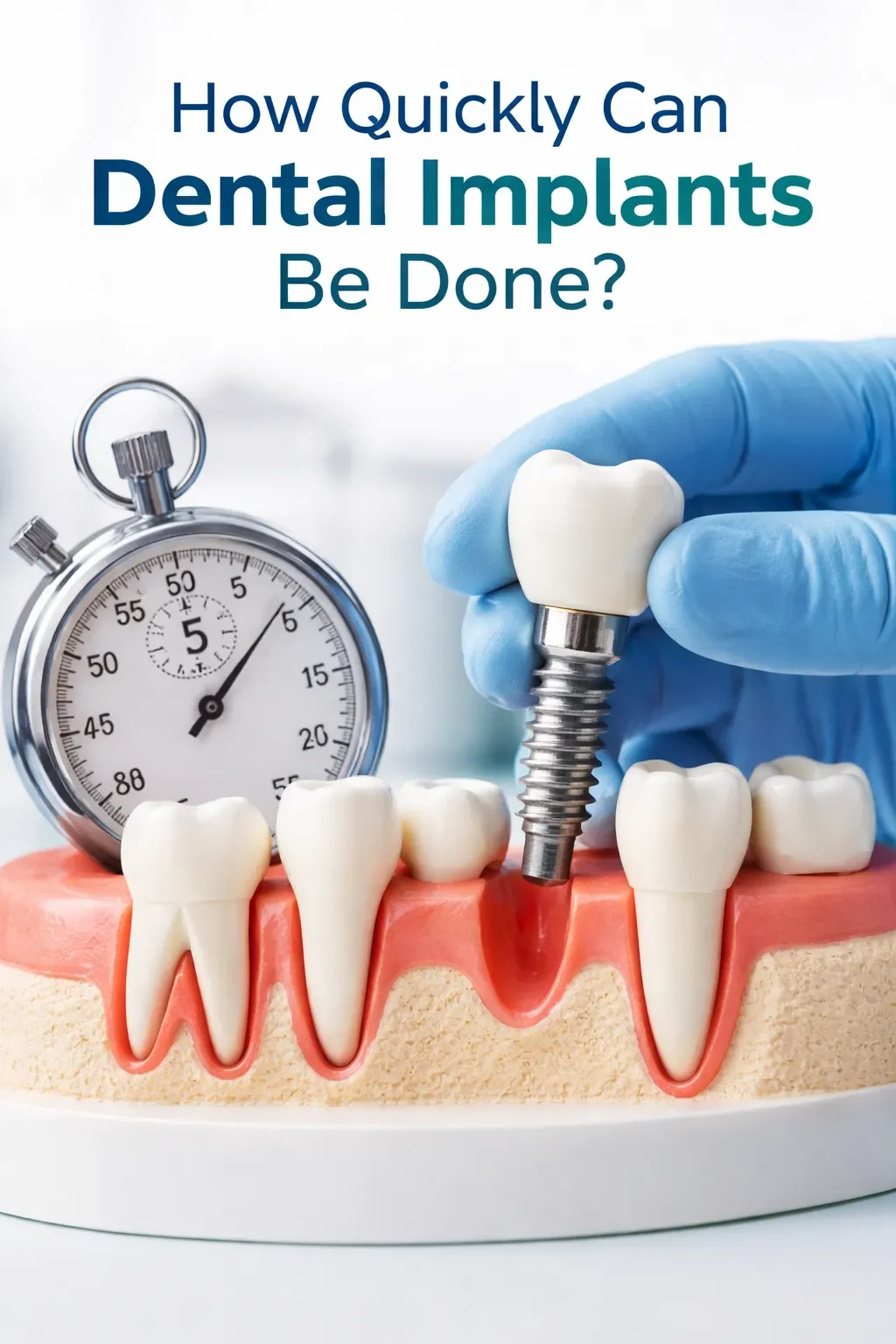
How to Get the Fastest Possible Implant Timeline Safely
After exploring timelines, techniques, and healing biology, many patients arrive at the same practical question: how quickly can dental implants be done for me, specifically? While biology sets limits, there are clear, evidence-based steps patients and providers can take to achieve the fastest possible timeline without compromising safety or long-term success.
This section focuses on actionable strategies—before, during, and after treatment—that directly influence how quickly can dental implants be done. When these elements align, patients often experience smoother healing, fewer delays, and faster completion overall 🙂.
Start With a Comprehensive Digital Evaluation
Speed begins with accuracy. A thorough evaluation using digital X-rays and 3D imaging allows clinicians to plan implant placement precisely. This reduces guesswork, minimizes surgical trauma, and shortens recovery time.
Patients who complete a full diagnostic workup early often receive clearer answers about how quickly can dental implants be done, because treatment plans can be tailored from day one.
Why Early Diagnosis Prevents Delays
Undiagnosed issues—such as hidden infections, low bone density, or bite problems—often cause delays later. Identifying and addressing them upfront prevents interruptions during treatment.
In many cases, what slows treatment is not the implant itself, but unexpected problems discovered too late.
Optimize Oral Health Before Implant Surgery
Healthy gums and clean oral tissues heal faster. Patients who address gum disease, decay, and inflammation before surgery typically experience smoother recoveries.
This preparation directly impacts how quickly can dental implants be done, as fewer complications mean fewer pauses in the treatment timeline.
Follow Pre-Surgical Instructions Carefully
Pre-surgical instructions are designed to optimize healing conditions. These may include stopping smoking, adjusting medications, or improving oral hygiene routines.
Patients who follow these guidelines closely often qualify for faster implant protocols and experience fewer post-operative issues.
The Impact of Smoking Cessation
Smoking significantly slows healing and increases implant failure risk. Even temporary cessation before and after surgery can dramatically improve outcomes.
For many patients, stopping smoking is the single most effective way to improve how quickly can dental implants be done.
Choose the Right Implant Technique for Your Case
Not every fast technique is right for every patient. Immediate-load, early-load, and conventional protocols each have specific indications.
Choosing the correct approach based on bone quality, bite forces, and health status ensures that speed does not compromise stability. This tailored decision-making leads to the best real-world answer to how quickly can dental implants be done.
Protect the Implant During Healing
After surgery, protecting the implant is essential. Avoiding hard foods, following dietary recommendations, and limiting pressure on the implant allow osseointegration to proceed without interruption.
Patients who overload implants too early often experience setbacks that significantly extend timelines.
Why Temporary Restorations Matter
Temporary crowns and bridges are designed to look good while minimizing stress on the implant. Respecting their limitations is key to staying on schedule.
When used correctly, temporary restorations help patients feel functional while preserving the fastest safe path forward.
Attend Follow-Up Visits Without Delay
Regular follow-up appointments allow dentists to monitor healing and address small issues before they become major problems.
Skipping or delaying these visits can lead to complications that slow progress. Consistent monitoring supports the most efficient answer to how quickly can dental implants be done.
Maintain Excellent Daily Oral Hygiene
Daily care matters. Gentle brushing, proper flossing, and antiseptic rinses reduce inflammation and support tissue health around the implant.
Patients who maintain excellent hygiene typically heal faster and reach final restoration sooner.
Communicate Openly With Your Dental Team
Clear communication helps the dental team adjust timelines proactively. Reporting discomfort, changes, or concerns early prevents small issues from causing major delays.
When patients and providers work as a team, the path toward completion becomes more predictable and efficient.
Realistic Expectations Create Better Experiences
Understanding that visible teeth do not always mean complete healing helps patients stay patient and compliant. Realistic expectations reduce frustration and improve satisfaction.
Ultimately, the most accurate answer to how quickly can dental implants be done is the fastest timeline that respects biology, protects healing, and ensures long-term success.
In conclusion, achieving the fastest possible implant timeline safely requires preparation, cooperation, and smart planning. By optimizing health, choosing the right techniques, and following professional guidance, patients can significantly influence how quickly can dental implants be done—without sacrificing the durability and comfort that make dental implants such a powerful solution 😁.