
Searching for how to get help paying for dental implants usually starts with one simple problem: dental implants are life-changing, but they can also feel financially overwhelming 😟. If you are missing teeth, struggling with dentures, or facing long-term oral health issues, implants may be the best solution—but the cost often becomes the biggest barrier. The good news is that there are many realistic, legal, and effective ways to reduce or manage these costs when you know where to look.
Understanding how to get help paying for dental implants is not about finding one magic solution. Instead, it is about combining multiple strategies such as insurance benefits, financing options, grants, and alternative care pathways. This guide is designed to help you make informed decisions, avoid common traps, and take control of your dental health without unnecessary financial stress 💡.
Dental implants are considered a long-term medical and functional investment. Unlike dentures or bridges, implants integrate with the jawbone, prevent bone loss, and restore full chewing ability. Because they involve surgery, advanced materials, and multiple treatment stages, many insurance companies classify them as “elective,” which limits coverage. This is exactly why learning how to get help paying for dental implants is so important for patients.
Before exploring assistance options, it helps to understand the typical cost structure. While prices vary by location and case complexity, dental implant treatment usually includes:
- Initial consultation and imaging (X-rays or 3D scans)
- Surgical placement of the implant
- Healing and osseointegration period
- Abutment and final crown placement
Estimated implant cost range (per tooth):
- Implant post: $1,000 – $3,000
- Abutment and crown: $1,000 – $2,500
- Total average cost: $2,500 – $5,500+
These numbers explain why so many patients actively search for how to get help paying for dental implants. Without guidance, it can feel impossible. But in reality, very few patients pay the full amount out of pocket. Most use some form of assistance, cost-sharing, or structured payment solution.
Another key point is timing. Many patients assume they must pay everything upfront, which is rarely true. Clinics often offer phased payments aligned with treatment stages. This alone can dramatically reduce financial pressure. Learning how to get help paying for dental implants means understanding that flexibility exists—even if it is not advertised openly.
It is also important to separate myths from facts. Dental implants are not only for wealthy patients. Seniors, working families, and even uninsured individuals regularly receive implant treatment by using the right combination of programs and providers. The challenge is awareness, not eligibility. Once you understand how to get help paying for dental implants, your options expand quickly.
At this stage, your first actionable step should always be a professional consultation. A dentist can determine whether you need additional procedures like bone grafting and explain which parts of your treatment may qualify for insurance or medical coverage. If you need guidance or a second opinion, you can reach out directly through the Redent Klinik Contact Page for personalized support and treatment planning 📞.
In addition, educating yourself through authoritative sources is essential. Organizations such as the American Dental Association provide reliable information on dental procedures, patient rights, and financial considerations. Trusted education empowers smarter decisions and protects you from misleading offers.
Ultimately, learning how to get help paying for dental implants is about strategy, not shortcuts. By understanding costs, rejecting misinformation, and exploring every legitimate support option, you can protect both your smile and your finances. In the next sections, we will break down each assistance path step by step, so you can confidently move forward with treatment—without fear or financial regret 😊.
Why Dental Implants Are Expensive and Why Help Matters
One of the first questions patients ask when researching how to get help paying for dental implants is simple: why are dental implants so expensive? Understanding the reasons behind the cost is not just educational—it is essential. When you clearly see where the money goes, it becomes much easier to identify which parts of the process may qualify for financial help, insurance support, or alternative solutions.
Dental implants are not a single product or one-time procedure. They are a complex medical treatment that combines advanced technology, surgical expertise, and long-term materials designed to last decades. This complexity explains both the cost and why learning how to get help paying for dental implants can make a major difference for patients.
The Medical and Surgical Complexity Behind Implant Treatment
Unlike fillings or crowns, dental implants involve oral surgery. The implant post is surgically placed into the jawbone, where it must fuse naturally through a process called osseointegration. This requires precision, sterile conditions, and advanced training. Oral surgeons and implant specialists spend years mastering these techniques, which directly impacts treatment costs.
When patients explore how to get help paying for dental implants, they often discover that certain surgical components may qualify as medically necessary rather than purely cosmetic. This distinction is important because it can open the door to partial insurance coverage or medical billing options.
High-Quality Materials Designed to Last a Lifetime
Another major cost factor is the material itself. Dental implants are typically made from medical-grade titanium or zirconia. These materials are biocompatible, meaning the body accepts them without rejection. They are also extremely durable, often lasting 20–30 years or more with proper care.
This long lifespan is one reason implants are considered a long-term investment rather than a temporary fix. Understanding this helps reframe the cost and reinforces why so many patients search for how to get help paying for dental implants instead of choosing cheaper, short-term alternatives that may fail over time.
Advanced Imaging and Diagnostic Technology
Modern implant dentistry relies heavily on advanced diagnostic tools. 3D CBCT scans, digital impressions, and computer-guided surgery planning all contribute to higher success rates—but they also add to the overall expense. These technologies allow dentists to avoid complications, protect nerves, and ensure optimal implant placement.
While these tools increase upfront costs, they significantly reduce the risk of implant failure. When learning how to get help paying for dental implants, patients should see these technologies as value-driven expenses rather than unnecessary add-ons.
Multiple Appointments and Extended Treatment Time
Dental implant treatment does not happen in a single visit. It usually unfolds over several months and includes multiple appointments. Each phase—consultation, surgery, healing, and restoration—requires professional time and resources. This extended timeline is another reason costs accumulate.
The good news is that this staged approach often allows for flexible payment scheduling. One of the most practical insights into how to get help paying for dental implants is realizing that you may not need to pay the full amount at once. Many clinics structure payments around treatment milestones.
Why Financial Help Matters for Patients
The high cost of dental implants often causes patients to delay or avoid treatment altogether. Unfortunately, postponing care can lead to worsening oral health issues such as bone loss, shifting teeth, and bite problems. Over time, these complications can increase both medical risk and total expenses.
This is why understanding how to get help paying for dental implants is not just about saving money—it is about protecting long-term health. Early treatment, supported by financial assistance, is almost always more affordable than corrective procedures later on.
Financial help also improves access to care. Patients with limited income, seniors on fixed budgets, and individuals without comprehensive insurance often assume implants are out of reach. In reality, many successfully move forward once they understand how assistance programs, financing options, and alternative care models work together.
The Psychological Impact of Cost and the Value of Clarity
Cost anxiety is real 😔. Many patients feel overwhelmed before they even speak to a dentist. Clear, transparent information reduces fear and empowers decision-making. When patients learn how to get help paying for dental implants, they gain confidence and control over their treatment journey.
Clinics that openly discuss costs, payment options, and financial assistance tend to achieve higher patient satisfaction and better treatment outcomes. This is why asking detailed financial questions during consultations is not only acceptable—it is encouraged.
In summary, dental implants are expensive for valid medical and technological reasons. However, expense does not mean impossibility. By understanding why costs are high and why support options exist, patients take the first real step toward affordability. In the next section, we will explore how dental insurance works with implants and where its limitations—and opportunities—truly lie 😊.
Dental Insurance Coverage: What Is Included and What Is Not
When people start researching how to get help paying for dental implants, dental insurance is usually the first place they look. This makes sense—insurance is designed to reduce healthcare costs. However, dental insurance works very differently from medical insurance, and misunderstanding these differences often leads to frustration 😕. To truly understand how to get help paying for dental implants, you need a clear picture of what dental insurance does, what it does not cover, and where hidden opportunities may exist.
Why Most Dental Insurance Plans Limit Implant Coverage
Traditional dental insurance was originally designed for preventive care, not advanced restorative procedures. Cleanings, exams, fillings, and basic crowns are usually covered at higher percentages. Dental implants, however, are often categorized as “major” or even “cosmetic” procedures, despite their functional and medical benefits.
This classification is one of the biggest obstacles patients face when learning how to get help paying for dental implants. Many plans either exclude implants entirely or cover only a small portion of the total cost. Typical annual maximums—often between $1,000 and $2,000—are quickly exceeded by implant treatment.
That said, limited coverage does not mean no help at all. Understanding the fine print of your policy is a critical step in mastering how to get help paying for dental implants.
What Parts of Implant Treatment Insurance May Cover
Even when an insurance plan claims it does not “cover implants,” some components of the treatment may still be eligible for reimbursement. This is where many patients leave money on the table simply because they do not ask the right questions.
- Initial consultations and diagnostic X-rays
- Tooth extractions related to implant placement
- Bone grafting when medically necessary
- The implant crown (in some plans, treated like a standard crown)
By breaking treatment into components, dentists can often submit insurance claims strategically. This approach is one of the most practical answers to how to get help paying for dental implants using existing insurance benefits.
Medical Insurance vs. Dental Insurance
Another overlooked strategy is exploring medical insurance coverage. In certain cases—such as tooth loss caused by trauma, infection, tumors, or congenital conditions—medical insurance may cover parts of implant treatment. Surgeries performed in hospital settings or procedures tied to systemic health issues are sometimes considered medical rather than dental.
This crossover is complex, but it can be powerful. Patients who successfully coordinate dental and medical claims often reduce costs significantly. Learning how to get help paying for dental implants sometimes means looking beyond dental insurance alone.
Waiting Periods, Annual Maximums, and Plan Limitations
Insurance plans commonly include waiting periods for major procedures. This means you may need to be enrolled for 6–12 months before implant-related benefits become available. Annual maximums also limit how much the insurer will pay within a year, regardless of treatment cost.
These limitations can feel discouraging, but they also create planning opportunities. For example, staging treatment across two calendar years can allow patients to use two annual maximums instead of one. This strategy is another important piece of how to get help paying for dental implants in a smart, legal way.
Employer-Sponsored vs. Private Dental Plans
Employer-sponsored dental insurance often offers better benefits than individual plans, but this is not always guaranteed. Some private or premium plans now include partial implant coverage to stay competitive. If you are considering changing plans, reviewing implant-related clauses before enrollment is essential.
Patients serious about learning how to get help paying for dental implants should request a written pre-treatment estimate from their dentist and submit it to the insurance provider. This process, called a pre-authorization, clarifies exactly what will and will not be covered before treatment begins.
The Role of the Dental Office in Maximizing Insurance Benefits
A knowledgeable dental office plays a major role in helping patients navigate insurance. Experienced clinics understand coding, documentation, and claim strategies that maximize reimbursement while staying compliant. This expertise can make a meaningful difference in out-of-pocket costs.
If you feel unsure about your coverage or need help reviewing your options, professional guidance matters. You can always reach out through the Redent Klinik Contact Page to discuss insurance coordination and treatment planning with clarity and transparency 📋.
In summary, dental insurance alone rarely pays for implants in full—but it is still a valuable tool. When used strategically, it becomes an important part of how to get help paying for dental implants. In the next section, we will explore government programs and public assistance options that many patients overlook entirely.
Government Programs and Public Assistance Options
When private insurance falls short, many patients continue searching for how to get help paying for dental implants through government programs and public assistance. While it is true that government-funded dental care is limited, it is a mistake to assume that no support exists. In reality, certain programs, eligibility categories, and special circumstances can make implant-related care more affordable—or at least partially covered.
Understanding how to get help paying for dental implants through public resources requires patience and realistic expectations. These programs rarely advertise implant coverage directly, but when approached strategically, they can significantly reduce overall treatment costs.
Medicaid Dental Coverage: What Is Possible and What Is Not
Medicaid is the most commonly discussed public assistance program for dental care. However, dental benefits under Medicaid vary dramatically by state. Federal law does not require adult dental coverage, which means implant benefits depend entirely on state-level decisions.
In most states, Medicaid covers only emergency dental services for adults, such as extractions due to infection or pain. Dental implants are typically excluded. However, some states allow implants under specific conditions, such as:
- Severe trauma or facial injury
- Congenital defects affecting oral function
- Medical necessity tied to systemic health issues
This is why learning how to get help paying for dental implants through Medicaid often involves medical documentation rather than dental claims alone. When a procedure is deemed medically necessary, partial coverage becomes more realistic.
Children and Special Needs Coverage Under Medicaid
For children and adolescents under 21, Medicaid’s Early and Periodic Screening, Diagnostic, and Treatment (EPSDT) benefit is much broader. If a dental implant is required to restore function or support development, coverage may be approved.
Families caring for children with special healthcare needs should explore this pathway carefully. It is one of the less-known but legitimate answers to how to get help paying for dental implants.
Medicare: Indirect but Sometimes Helpful
Traditional Medicare does not cover routine dental care, including implants. However, this does not mean Medicare is completely irrelevant when researching how to get help paying for dental implants.
If implant surgery is performed in a hospital setting or is connected to a covered medical procedure—such as jaw reconstruction after cancer—Medicare Part A or Part B may cover associated costs like anesthesia, hospital fees, or diagnostic imaging.
Medicare Advantage (Part C) plans are another area worth exploring. Some plans include limited dental benefits that may contribute to crowns, extractions, or preparatory procedures. While implant posts themselves are usually excluded, these contributions still reduce total expenses.
Veterans Affairs (VA) Dental Benefits
Veterans may have access to dental care through the U.S. Department of Veterans Affairs, depending on eligibility category. While most veterans do not qualify for full dental benefits, those with service-connected dental disabilities or certain medical conditions may receive implant-related treatment.
For eligible veterans, VA dental benefits can be one of the most powerful solutions for how to get help paying for dental implants. The key lies in eligibility verification and proper referral through VA healthcare providers.
State and Local Public Health Dental Programs
Beyond federal programs, many states and counties operate public health dental clinics. These clinics typically focus on preventive and basic restorative care, but some partner with specialists or teaching institutions to provide advanced treatments at reduced cost.
While implants are not standard offerings, patients who understand how to get help paying for dental implants often use public clinics for:
- Low-cost extractions
- Diagnostic imaging
- Pre-implant oral health preparation
Reducing these preliminary costs can make private implant treatment far more affordable.
Disability, Low-Income, and Special Circumstance Programs
Individuals receiving Supplemental Security Income (SSI) or disability benefits may qualify for expanded healthcare assistance, including dental services. In some cases, implants are approved when tooth loss significantly impacts nutrition, speech, or overall health.
This is another area where documentation is critical. Learning how to get help paying for dental implants often depends on proving functional necessity rather than cosmetic preference.
Why Public Assistance Still Matters Even When Implants Are Excluded
Even when government programs do not directly pay for implants, they still play an important role. By covering diagnostics, emergency care, or related medical treatments, they lower the total financial burden.
Patients who combine public assistance with private financing, charitable grants, or clinic-based payment plans often succeed where single-option approaches fail. This layered strategy is at the heart of how to get help paying for dental implants.
In summary, government programs are not a guaranteed solution—but they are a valuable piece of the puzzle. When used correctly and combined with other options, public assistance can bring implant treatment within reach. In the next section, we will explore dental schools and teaching clinics as another powerful, often overlooked affordability strategy 😊.
Dental Schools and Teaching Clinics as Affordable Alternatives
For many patients researching how to get help paying for dental implants, dental schools and teaching clinics represent one of the most overlooked yet powerful cost-saving options. These institutions provide high-quality care at significantly reduced prices while maintaining strict clinical standards. Understanding how these programs work can completely change what is financially possible for implant treatment 😊.
Dental schools are not “experimental” clinics. They are accredited educational institutions where future dentists and specialists are trained under the close supervision of experienced, licensed professionals. This structure allows patients to receive comprehensive care while paying substantially less, which is why dental schools are often recommended to patients learning how to get help paying for dental implants.
How Dental School Implant Programs Work
In a dental school setting, implant procedures are typically performed by advanced students, residents, or specialty trainees. Every step—from diagnosis to surgery to final restoration—is supervised and approved by senior faculty members who are experts in implant dentistry.
The reduced cost comes from the educational mission of the school, not from lower-quality materials or rushed treatment. In fact, dental schools often use the same implant systems and technologies found in private practices. This makes them a legitimate and safe solution for patients exploring how to get help paying for dental implants.
Why Costs Are Lower at Teaching Clinics
Dental schools operate differently from private clinics. Their primary goal is education, not profit. As a result, fees are often 30–60% lower than those charged by private practices. Patients may pay only for materials and basic administrative costs.
This pricing structure is especially beneficial for individuals without insurance or those whose plans exclude implants. For many, dental schools become the most realistic answer to how to get help paying for dental implants when other options fail.
What Services Are Typically Included
Most dental school implant programs offer comprehensive care, including:
- Initial consultations and diagnostic imaging
- Treatment planning and case review
- Surgical implant placement
- Follow-up care and monitoring
- Final crown or restoration
Because treatment is educational, appointments may take longer and scheduling can be less flexible. However, for patients focused on affordability and quality, this trade-off is often worth it when considering how to get help paying for dental implants.
Who Is a Good Candidate for Dental School Implant Care
Dental school clinics are best suited for patients who:
- Are flexible with appointment times
- Do not require immediate, emergency implant placement
- Are comfortable with supervised student involvement
- Want to minimize out-of-pocket expenses
Patients with very complex medical histories or urgent surgical needs may still be referred to hospital-based care. Even in those cases, dental schools often assist with diagnostics and referrals, supporting the broader goal of how to get help paying for dental implants.
Waitlists and Planning Ahead
One important consideration is availability. Dental school clinics often have waitlists, especially for implant cases. Acceptance depends on educational needs, case complexity, and faculty availability.
This is why planning ahead is crucial. Patients who start early and remain patient are often rewarded with substantial savings. Strategic timing is a recurring theme when learning how to get help paying for dental implants, and dental schools fit perfectly into this approach.
Teaching Hospitals and Residency Programs
In addition to dental schools, teaching hospitals with oral surgery or prosthodontics residency programs also offer reduced-cost implant care. These programs are led by licensed dentists pursuing advanced specialization, providing another high-quality and affordable option.
These settings often handle more complex cases and may be ideal for patients needing bone grafts or full-arch implant solutions. For many, they represent an advanced yet accessible answer to how to get help paying for dental implants.
Combining Dental School Care with Other Assistance Options
Dental school treatment can often be combined with other affordability strategies. Some patients use insurance benefits for diagnostics, public programs for extractions, and dental school clinics for implant placement. This layered approach significantly reduces total cost.
Patients unsure where to start or how to coordinate care can benefit from professional guidance. Reaching out through the Redent Klinik Contact Page can help clarify whether teaching clinics or alternative care models are suitable for your specific needs.
In summary, dental schools and teaching clinics are one of the most reliable, ethical, and effective paths for patients seeking how to get help paying for dental implants. With proper expectations and planning, they offer a rare balance of affordability, safety, and long-term success. In the next section, we will explore charitable organizations and nonprofit dental grants that can further reduce implant costs 🌱.
Charitable Organizations and Nonprofit Dental Grants
For patients who have exhausted insurance, government programs, and affordable clinics, charitable organizations can play a crucial role in how to get help paying for dental implants. Nonprofit dental grants and charitable care programs exist specifically to help individuals who cannot afford essential dental treatment on their own. While these programs are competitive and often misunderstood, they can dramatically reduce or even eliminate certain costs when approached correctly ❤️.
Understanding how to get help paying for dental implants through charitable sources requires persistence, documentation, and realistic expectations. These programs are not quick fixes, but for many patients, they become the turning point that makes implant treatment achievable.
How Dental Grant and Charity Programs Work
Dental charities typically operate by partnering with dentists, clinics, and specialists who volunteer their time or offer services at reduced rates. The organization itself may not give cash directly to patients. Instead, it coordinates care and covers part or all of the treatment cost through its professional network.
This structure ensures that funds are used specifically for patient care, which is why eligibility screening is strict. Patients researching how to get help paying for dental implants should be prepared to demonstrate both financial need and medical necessity.
Common Eligibility Requirements
While each nonprofit has its own criteria, most dental charities require some combination of the following:
- Proof of financial hardship or limited income
- Lack of adequate dental insurance
- Medical or functional need for dental implants
- Willingness to comply with treatment timelines
Meeting these requirements does not guarantee approval, but it significantly improves your chances. This is why preparation is a key part of how to get help paying for dental implants through charitable programs.
Types of Charitable Dental Assistance Programs
Charitable dental support generally falls into several categories:
- National nonprofit dental grant programs
- Local or regional charity clinics
- Faith-based or community-sponsored dental initiatives
- One-time dental mission or outreach events
Some programs focus on veterans, seniors, people with disabilities, or survivors of domestic violence. Others are open to the general public but prioritize severe cases. Knowing which category fits your situation is an important step in how to get help paying for dental implants.
The Application Process: What to Expect
Applying for dental grants often involves detailed paperwork. Patients may need to submit financial records, personal statements, and dental evaluations. Some organizations require a dentist’s referral or treatment plan before considering an application.
This process can feel overwhelming, but it exists to ensure fairness and appropriate use of limited resources. Patients who succeed usually approach the application as seriously as a medical or financial aid request. Persistence and accuracy are essential components of how to get help paying for dental implants in this context.
Why Approval Can Take Time
Most nonprofit organizations operate with limited funding and rely on donations or volunteer providers. As a result, application review and treatment scheduling can take weeks or months. While this delay can be frustrating, the potential savings often justify the wait.
Patients who plan ahead and apply early are far more successful. Timing and patience consistently emerge as critical factors in how to get help paying for dental implants through charities.
Partial Grants and Cost-Sharing Models
Not all grants cover 100% of implant costs. Many programs offer partial assistance, covering surgical fees, materials, or specific stages of treatment. Patients may still be responsible for a portion of the cost, but the reduction can be substantial.
Partial grants work best when combined with other options such as payment plans, dental school care, or financing. This layered approach reflects the real-world strategy behind how to get help paying for dental implants.
Avoiding Scams and Unrealistic Promises
Unfortunately, the demand for dental assistance has led to misleading offers online. Legitimate nonprofit organizations do not charge large upfront “application fees” or promise guaranteed approval. Patients should be cautious of any program that seems too good to be true.
Verifying credibility through established dental associations or professional clinics is essential. Trusted providers and clinics can often help patients identify reputable programs and avoid scams while navigating how to get help paying for dental implants.
Getting Professional Guidance with Applications
Many patients increase their chances of success by working with a dental clinic experienced in grant coordination. Clinics can help prepare documentation, clarify medical necessity, and communicate with nonprofit organizations effectively.
If you are unsure where to begin or how to present your case, professional support can make a significant difference. You may contact the team through the Redent Klinik Contact Page to discuss eligibility, documentation, and realistic pathways forward 🤝.
In summary, charitable organizations and nonprofit dental grants are not instant solutions—but they are powerful ones. For patients willing to invest time and effort, they represent a meaningful answer to how to get help paying for dental implants. In the next section, we will explore flexible payment plans and in-house financing options offered directly by dental clinics.
Flexible Payment Plans and In-House Financing at Dental Clinics
One of the most practical and immediately accessible answers to how to get help paying for dental implants is flexible payment plans offered directly by dental clinics. For many patients, the challenge is not the total cost itself, but the ability to pay it all at once. In-house financing solutions are designed specifically to solve this problem and make implant treatment achievable without overwhelming financial pressure 😌.
Understanding how to get help paying for dental implants through clinic-based financing starts with a mindset shift. You are not expected to pay everything upfront in a single transaction. Modern dental practices recognize the realities patients face and increasingly offer structured, patient-friendly payment solutions.
What Are In-House Dental Payment Plans?
In-house payment plans are financing arrangements managed directly by the dental clinic rather than a third-party lender. These plans allow patients to spread the cost of implant treatment over a defined period, often aligned with treatment stages.
Unlike traditional loans, in-house plans may involve little or no interest, minimal credit checks, and flexible terms. This makes them especially appealing for patients researching how to get help paying for dental implants without relying on banks or credit cards.
Common Features of In-House Financing
- Low or zero interest rates
- Monthly payment schedules
- No impact on credit score (in many cases)
- Customized plans based on treatment phases
These features are designed to reduce stress and improve access to care, not to create long-term debt.
Why Dental Clinics Offer Flexible Financing
From a clinic’s perspective, flexible payment plans improve patient outcomes and treatment acceptance. When cost barriers are lowered, patients are more likely to proceed with recommended care rather than delay treatment.
This patient-centered approach aligns perfectly with the broader goal of how to get help paying for dental implants. Clinics that offer financing understand that untreated tooth loss leads to bigger health problems—and higher costs—over time.
Staged Payments Aligned with Treatment Phases
Dental implant treatment typically occurs in stages over several months. Many clinics structure payments to match this timeline. For example:
- Initial consultation and diagnostics: paid first
- Surgical implant placement: paid at surgery stage
- Final crown placement: paid later
This phased approach is one of the simplest and most effective strategies for how to get help paying for dental implants, as it spreads financial responsibility over time rather than concentrating it at the beginning.
Who Qualifies for In-House Payment Plans
Qualification requirements vary by clinic, but in-house financing is generally more accessible than third-party credit. Many clinics approve patients based on:
- Stable income
- Commitment to treatment
- Ability to make consistent monthly payments
Patients with limited credit history or past financial challenges often find in-house plans to be the most realistic option when exploring how to get help paying for dental implants.
Comparing In-House Plans vs. Third-Party Financing
While third-party healthcare financing companies are discussed separately, it is important to understand how in-house plans differ. In-house financing is typically more flexible and personal. Terms can be adjusted, payments rescheduled, and concerns addressed directly with the clinic.
This human-centered flexibility is often missing from external financing companies and is a key reason in-house plans remain a cornerstone of how to get help paying for dental implants.
Questions to Ask Before Agreeing to a Plan
Before committing, patients should ask clear, direct questions:
- Is there interest or a service fee?
- What happens if a payment is late?
- Are there penalties for early payoff?
- Is the plan tied to treatment completion?
Transparent answers protect patients and ensure the plan truly supports affordability.
Combining Payment Plans with Other Cost-Saving Options
Flexible payment plans work best when combined with other assistance strategies. Patients often use insurance benefits for diagnostics, charitable grants for partial costs, and in-house financing for the remaining balance.
This combination approach reflects the real-world reality of how to get help paying for dental implants: success usually comes from layering solutions, not relying on just one.
Why Communication with the Clinic Is Essential
Many patients assume financing options are fixed or non-negotiable. In reality, clinics are often willing to adjust terms based on individual circumstances. Open communication builds trust and leads to better outcomes.
If you are considering implant treatment and want clarity on payment flexibility, speaking directly with a professional team can make all the difference. You can explore personalized financing options through the Redent Klinik Contact Page and receive clear guidance tailored to your situation 📅.
In summary, flexible payment plans and in-house financing are among the most reliable, low-stress solutions for patients learning how to get help paying for dental implants. They transform a seemingly unaffordable treatment into a manageable, step-by-step investment in your long-term health. In the next section, we will examine medical credit cards and healthcare financing companies in detail.
Medical Credit Cards and Healthcare Financing Companies
For patients who need immediate treatment and cannot delay care, medical credit cards and healthcare financing companies are often central to how to get help paying for dental implants. These financing tools are widely accepted by dental clinics and are specifically designed to cover medical and dental expenses. When used correctly, they can provide short-term relief and flexible repayment options—but they also require careful understanding to avoid long-term financial strain ⚠️.
Learning how to get help paying for dental implants through third-party financing starts with knowing how these products work, who they are best suited for, and what risks they carry alongside their benefits.
What Are Medical Credit Cards?
Medical credit cards are lines of credit designed exclusively for healthcare expenses, including dental implants. Unlike regular credit cards, they are typically accepted only at participating medical or dental providers.
These cards are popular because they offer promotional financing periods—often advertised as “0% interest if paid in full within X months.” For many patients exploring how to get help paying for dental implants, this can be an attractive short-term solution.
How Promotional Financing Really Works
Promotional periods usually range from 6 to 24 months. If the balance is paid off completely within this time, no interest is charged. However, if even a small balance remains after the promotional period ends, interest may be applied retroactively to the entire amount.
This structure makes budgeting and discipline critical. Patients who understand this risk are far more successful in using medical credit cards as part of how to get help paying for dental implants rather than falling into high-interest debt.
Healthcare Financing Companies: Loans for Dental Care
In addition to medical credit cards, many healthcare financing companies offer fixed-term loans for dental procedures. These loans may come with predictable monthly payments, fixed interest rates, and longer repayment terms.
For patients with stable income and good credit, installment loans can provide clarity and structure. This predictability is why they are often included in discussions about how to get help paying for dental implants.
Approval Criteria and Credit Considerations
Approval for third-party financing usually depends on credit score, income, and debt-to-income ratio. Some lenders approve patients with average or limited credit, but interest rates may be higher.
Patients should never assume automatic approval. Understanding your credit profile before applying is a smart step in how to get help paying for dental implants, as multiple applications can temporarily affect your credit score.
Advantages of Third-Party Dental Financing
- Immediate access to treatment
- Wide acceptance at dental clinics
- Structured monthly payments
- Promotional interest-free periods
These benefits make healthcare financing appealing, especially when treatment cannot be postponed due to pain, infection, or functional problems.
Potential Risks and Common Pitfalls
Despite their advantages, medical credit cards and loans are not risk-free. High interest rates after promotional periods, deferred interest clauses, and strict repayment terms can significantly increase total costs.
This is why education is essential. Patients who use these tools without fully understanding the terms often regret it. In contrast, those who integrate them thoughtfully into a broader plan for how to get help paying for dental implants tend to have better outcomes.
Questions to Ask Before Applying
- What is the interest rate after the promotional period?
- Is interest deferred or waived?
- Are there late payment penalties?
- Can payments be adjusted if circumstances change?
Clear answers help prevent surprises and support responsible financial decisions.
When Medical Financing Makes Sense—and When It Does Not
Third-party financing works best for patients who are confident they can meet repayment deadlines. It is less suitable for those with unstable income or uncertainty about future expenses.
Many patients find success by combining financing with other strategies—such as insurance reimbursements, partial grants, or clinic-based payment plans. This hybrid approach is often the smartest interpretation of how to get help paying for dental implants.
Getting Guidance Before Committing
Because financing decisions can have long-term financial consequences, professional guidance is valuable. Dental clinics experienced in implant financing can help patients compare options, estimate total costs, and choose the most appropriate solution.
If you need clarity before applying for medical credit or healthcare loans, personalized advice can make a meaningful difference. You can discuss financing options and treatment planning through the Redent Klinik Contact Page and move forward with confidence 📊.
In summary, medical credit cards and healthcare financing companies can be effective tools for patients learning how to get help paying for dental implants—but only when used strategically and responsibly. In the next section, we will explore dental tourism and international implant solutions as a cost-saving alternative for some patients.
Dental Tourism and International Implant Solutions
For many patients facing high domestic treatment costs, dental tourism has become a realistic and increasingly popular answer to how to get help paying for dental implants. Dental tourism refers to traveling to another country to receive dental care at significantly lower prices while maintaining high standards of quality and safety. When approached carefully, it can reduce implant costs by 50–70% without compromising results 🌍.
Understanding how to get help paying for dental implants through international solutions requires research, planning, and choosing the right clinic. This option is not about “cheap dentistry,” but about accessing global healthcare systems where costs are structurally lower.
Why Dental Implants Cost Less Abroad
The main reason dental implants are more affordable in certain countries is not lower quality—it is lower operating costs. Factors such as reduced labor expenses, lower clinic overhead, government-supported healthcare infrastructure, and favorable exchange rates all contribute to dramatically lower prices.
For example, countries with strong dental tourism sectors often provide the same implant brands and technologies used in the United States or Western Europe. This is why international care has become a legitimate part of how to get help paying for dental implants for thousands of patients each year.
Typical Cost Comparison (Per Implant)
- United States / Western Europe: $2,500 – $5,500+
- Dental tourism destinations: $700 – $1,500
Even after factoring in travel and accommodation, the total cost is often substantially lower.
Popular Dental Tourism Destinations
Several countries have established strong reputations for implant dentistry, attracting international patients due to quality, affordability, and modern facilities. These destinations invest heavily in training, technology, and patient experience.
Patients exploring how to get help paying for dental implants often choose destinations that offer:
- Internationally trained dentists
- English-speaking medical staff
- Modern clinics with advanced imaging
- Transparent treatment packages
What Is Usually Included in Dental Tourism Packages
Many international clinics offer all-inclusive or semi-inclusive packages designed specifically for traveling patients. These packages are a key reason dental tourism works so well as part of how to get help paying for dental implants.
- Consultation and diagnostics
- Implant surgery
- Temporary or final restorations
- Airport transfers and local transportation
- Hotel accommodation (in some cases)
This bundled approach simplifies planning and helps patients avoid unexpected costs.
Safety, Standards, and Accreditation
One of the biggest concerns patients have is safety. Reputable international clinics follow strict sterilization protocols, use globally recognized implant systems, and comply with international healthcare standards.
Patients serious about how to get help paying for dental implants should always verify:
- Dentist credentials and experience
- Clinic certifications and hygiene standards
- Implant brands used
- Before-and-after case documentation
Transparency is a strong indicator of quality.
Treatment Timeline and Travel Planning
Dental implant treatment often requires more than one visit. Typically, the implant is placed during the first trip, followed by a healing period of several months before the final crown is attached.
Some clinics offer solutions such as immediate-load implants or coordinate treatment phases to minimize travel. Understanding the timeline is essential when evaluating international care as part of how to get help paying for dental implants.
Aftercare and Long-Term Follow-Up
A common question is what happens after you return home. Reputable clinics provide detailed aftercare instructions, warranties on implants, and remote follow-up support.
Many patients also coordinate follow-up care with a local dentist. Clear documentation and implant system compatibility make this transition smooth and safe.
Who Is a Good Candidate for Dental Tourism
Dental tourism is best suited for patients who:
- Are medically stable
- Can plan travel in advance
- Want to significantly reduce costs
- Are comfortable with international care
Patients with complex medical conditions may require additional evaluation before traveling.
Professional Guidance Makes a Difference
Choosing the right clinic abroad is the most important step. Patients who work with experienced providers and coordinators dramatically reduce risks and improve outcomes.
If you are considering international implant treatment and want clarity on whether it is right for you, professional guidance is essential. You can discuss safe, structured international options through the Redent Klinik Contact Page and receive personalized recommendations ✈️.
In summary, dental tourism is a powerful and legitimate solution for patients seeking how to get help paying for dental implants. When done correctly, it combines affordability, quality, and life-changing results. In the final section, we will explain how to combine multiple strategies into one smart, cost-effective plan.
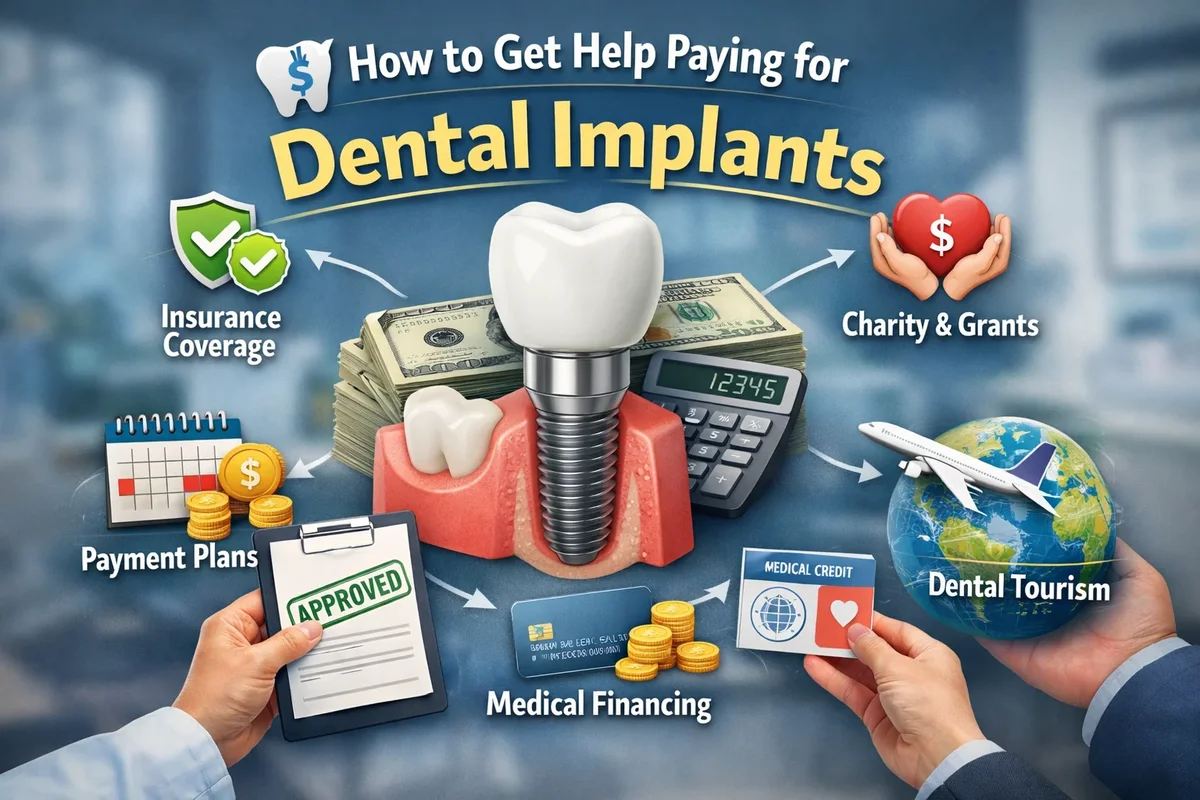
How to Combine Multiple Options to Lower Implant Costs
The most effective and realistic answer to how to get help paying for dental implants is rarely found in a single solution. In real life, most patients succeed by combining several financial strategies into one well-planned approach. This layered method allows you to reduce out-of-pocket costs, spread payments over time, and avoid unnecessary financial stress while still receiving high-quality care 🧩.
Understanding how to get help paying for dental implants at this level means thinking strategically rather than emotionally. Instead of asking, “What will pay for everything?”, the better question becomes, “How can different options work together to make this affordable?”
Why a Combination Strategy Works Best
Dental implant treatment includes multiple stages and cost components. Because each component may qualify for a different type of assistance, combining options allows you to maximize every available benefit.
Patients who master how to get help paying for dental implants rarely rely on just insurance, just financing, or just discounts. They blend resources intentionally, often reducing total costs by thousands of dollars.
Step 1: Use Insurance and Public Benefits First
The first layer should always be any available insurance or public assistance. Even limited dental insurance can reduce costs for diagnostics, extractions, imaging, or crowns. Government programs may cover emergency care, medical-related procedures, or preparatory treatments.
Applying these benefits first lowers the base cost that must be financed or paid privately. This foundational step is a core principle of how to get help paying for dental implants.
Step 2: Reduce Core Treatment Costs Strategically
Next, focus on lowering the actual implant price. This may include:
- Choosing a dental school or teaching clinic
- Applying for charitable or nonprofit dental grants
- Considering international implant treatment
Each of these options can significantly reduce the core surgical and restoration costs. When combined with insurance-covered diagnostics, the savings multiply—demonstrating the real power behind how to get help paying for dental implants.
Step 3: Cover the Remaining Balance with Smart Financing
After reducing the total cost, the remaining balance becomes far more manageable. This is where in-house payment plans or carefully chosen healthcare financing options come into play.
Instead of financing the full amount, patients only finance what remains after discounts, grants, and insurance contributions. This reduces interest exposure and shortens repayment periods—another practical application of how to get help paying for dental implants.
Example of a Combined Cost Strategy
- Total implant treatment cost: $4,500
- Insurance-covered diagnostics and crown: –$1,200
- Dental school or discounted provider: –$1,000
- Remaining balance: $2,300
- In-house payment plan over 12 months
This layered approach transforms an overwhelming expense into a manageable monthly investment.
Step 4: Time Your Treatment Intelligently
Timing is an often-overlooked factor in how to get help paying for dental implants. Scheduling treatment across calendar years can allow you to use multiple insurance annual maximums. Applying for grants early increases approval chances. Planning travel for international care during off-peak seasons can reduce costs further.
Smart timing does not delay care—it optimizes it.
Step 5: Work with a Clinic That Understands Cost Coordination
Not all dental clinics are equally skilled at coordinating multiple financial options. Clinics experienced in implant financing understand how to structure treatment plans, submit claims strategically, and align payments with patient budgets.
This expertise is often the difference between confusion and clarity when navigating how to get help paying for dental implants. Asking the right questions and working with a transparent clinic protects both your health and finances.
Common Mistakes to Avoid
Patients often make avoidable errors, such as:
- Financing the full cost without exploring reductions
- Ignoring insurance benefits because coverage seems limited
- Applying to grants without proper documentation
- Choosing the fastest option instead of the smartest one
A calm, step-by-step strategy is far more effective than rushing into a single solution.
Personalized Planning Makes the Difference
Every patient’s situation is unique. Income, health status, location, and urgency all influence which combination works best. Personalized guidance can help you avoid trial-and-error and move forward with confidence.
If you want help building a realistic, customized plan that brings all these strategies together, professional support is invaluable. You can discuss your situation, costs, and options through the Redent Klinik Contact Page and receive clear, honest guidance tailored to your needs 🤝.
In conclusion, the true answer to how to get help paying for dental implants is not one program, one card, or one clinic—it is a thoughtful combination of smart choices. By layering benefits, reducing costs, financing responsibly, and planning ahead, dental implants become not just possible, but sustainable. This approach protects your smile, your health, and your financial future at the same time 😊.