
Learning how to pick insurance can feel overwhelming, especially with the sheer number of plans, providers, and options available today. From health and dental policies to life and travel coverage, insurance is a financial tool designed to protect you from unexpected costs and risks. Yet many people struggle to make the right choice because policies often contain confusing terminology, hidden clauses, and different levels of coverage. This guide aims to provide a complete breakdown of what to look for when choosing insurance, ensuring you can make informed, confident, and cost-effective decisions for yourself and your loved ones. 🛡️
At its core, insurance is about risk management. By paying a premium to an insurer, you transfer the financial risk of potential accidents, illnesses, or losses to that company. The challenge lies in selecting the best policy that balances affordability with comprehensive protection. Whether you are evaluating a health plan for your family, considering dental coverage for preventative care, or reviewing life insurance for long-term security, understanding how to pick insurance correctly can save you thousands of dollars and countless headaches.
One of the first steps in learning how to pick insurance is defining your priorities. Ask yourself: What do I need coverage for most? For example, if you have a chronic condition, health insurance with strong prescription and specialist coverage should be prioritized. If you travel often, travel insurance with robust emergency medical and cancellation protection may be the most valuable. By aligning your insurance decisions with your lifestyle and health needs, you reduce the chances of buying a policy that looks attractive on paper but fails to deliver when you need it most.
Another critical factor in understanding how to pick insurance is financial literacy around insurance costs. Premiums, deductibles, copayments, and coinsurance can significantly affect the affordability of a plan. While a low-premium policy may seem appealing, it often comes with higher deductibles or limited coverage. Conversely, a higher-premium plan might save you money in the long run if you expect regular medical visits, dental checkups, or other recurring expenses. It is essential to do the math and estimate your annual healthcare usage to decide which plan structure offers the best balance.
Consumers must also pay close attention to provider networks. A common mistake in figuring out how to pick insurance is ignoring whether your preferred doctors, clinics, or hospitals are included in the network. Out-of-network care is usually more expensive, and in some cases, not covered at all. Before committing to a plan, verify that your primary care physician, specialists, and any preferred medical facilities are part of the insurer’s network. This simple step ensures continuity of care and prevents surprise bills.
Equally important is reading the fine print for exclusions and limitations. While insurance companies highlight their best features, they often bury restrictions in lengthy policy documents. For instance, dental plans might exclude cosmetic treatments, while health insurance might not cover certain experimental procedures. A solid grasp of how to pick insurance means carefully reviewing these details so you are not caught off guard during a medical emergency or when filing a claim.
It’s also wise to consider long-term needs. Many people only focus on their immediate situation without asking how their needs might change in five or ten years. A comprehensive approach to how to pick insurance includes factoring in family planning, aging, or potential health conditions that may arise. Seniors, for instance, often need policies tailored toward prescription drugs and preventive screenings. Families with children may prioritize pediatric care and dental coverage. By future-proofing your choices, you avoid costly adjustments later.
Technology has made it easier to research insurance options. Comparison websites, consumer reviews, and government portals allow you to quickly evaluate policies side by side. Still, learning how to pick insurance requires more than just comparing prices—it involves evaluating customer service, claim settlement history, and the insurer’s reputation. After all, a policy is only as good as the company’s willingness to honor its promises. Reliable insurers with positive customer experiences are worth paying slightly more for, as peace of mind is priceless when emergencies arise.
Additionally, you should not hesitate to consult experts when unsure. Licensed insurance brokers and financial advisors can explain complex details, highlight hidden fees, and even negotiate better deals. Remember, your decision can impact your financial security for years, so seeking professional help is often a smart step in mastering how to pick insurance.
Finally, keep in mind that your insurance journey does not end once you buy a policy. Reviewing your coverage annually ensures it continues to meet your needs as circumstances change. Life events such as marriage, childbirth, job changes, or relocation can all alter the adequacy of your insurance. Making a habit of reviewing policies regularly ensures that you remain protected and never overpay for coverage you don’t use.
In summary, understanding how to pick insurance is about aligning your personal needs with the right balance of coverage, affordability, and long-term security. By defining your priorities, analyzing costs, verifying provider networks, and consulting experts, you can make choices that provide real value and protection. This proactive approach transforms insurance from a confusing necessity into a powerful financial safeguard that works for you and your family’s future. ✅
Understanding the Basics of Insurance Plans
Before diving into the specifics of how to pick insurance, it is essential to have a clear grasp of the fundamentals. Insurance is not just a monthly bill—it’s a safety net that protects you from unexpected financial hardships. To make smart choices, you need to understand the types of plans available, how coverage works, and what the common terms mean. Without this foundation, even the most diligent comparison can lead to costly mistakes. Let’s break down the building blocks of insurance so you can move forward with confidence. 📘
What Is Insurance and Why Do You Need It?
At its core, insurance is a contract between you and an insurance company. You pay regular premiums, and in return, the insurer promises to cover specific costs if certain events occur, such as illness, accidents, or property damage. Knowing how to pick insurance begins with understanding that it’s not just about protection—it’s about managing risk. Without insurance, a single hospital visit or emergency could cost thousands of dollars. With the right policy, however, you protect your financial stability while ensuring timely access to healthcare and other essential services.
Common Types of Insurance Plans
There are many forms of insurance, each serving a unique purpose. When figuring out how to pick insurance, it helps to know the most common types you’ll encounter:
- Health Insurance: Covers doctor visits, hospital stays, prescription drugs, and preventive care. Essential for both individuals and families.
- Dental Insurance: Focuses on oral health, including cleanings, fillings, and sometimes orthodontics. Especially important for families with children.
- Life Insurance: Provides financial support to your beneficiaries in the event of your death. Critical for those with dependents.
- Disability Insurance: Offers income replacement if you cannot work due to illness or injury.
- Travel Insurance: Covers emergencies, cancellations, and accidents while abroad.
Each of these plans comes with its own rules, benefits, and limitations. A key part of knowing how to pick insurance is determining which type aligns most closely with your lifestyle and goals.
Key Terms You Must Understand
Insurance documents often contain terms that can confuse beginners. Here are the most important ones to master before choosing a plan:
- Premium: The monthly or yearly cost you pay to maintain coverage.
- Deductible: The amount you pay out-of-pocket before the insurance starts covering costs.
- Copay: A fixed fee you pay for services, such as a doctor’s visit.
- Coinsurance: The percentage of costs you pay after meeting your deductible.
- Exclusions: Conditions or treatments that are not covered by the plan.
Understanding these terms is vital because they determine how much you’ll actually pay. A large part of mastering how to pick insurance comes from decoding these financial details.
Why Policy Limits Matter
Every plan has limits—maximum amounts the insurer will pay. Once you exceed these limits, you are responsible for the remaining costs. A fundamental part of learning how to pick insurance is making sure the policy limits align with realistic needs. For example, a low-limit dental plan might not be enough if you anticipate orthodontic care for your children.
How Insurance Providers Structure Their Networks
Many insurance companies work with a network of doctors, hospitals, and clinics. Staying in-network usually means lower costs, while out-of-network services can lead to high bills—or no coverage at all. Anyone wanting to know how to pick insurance should investigate provider networks early on. If your current healthcare providers are not included, you may face tough choices about switching doctors or paying extra fees.
Evaluating Coverage Versus Cost
When people first try to figure out how to pick insurance, they often focus only on the monthly premium. While affordability matters, a cheaper plan may cost more in the long run if it has high deductibles or limited coverage. A balanced plan provides comprehensive protection at a cost you can manage, both now and in the future. To achieve this, create a list of anticipated expenses and compare how different plans would cover them.
Example: Premium vs. Deductible Trade-Off
Imagine Plan A has a premium of $200 per month but a deductible of $5,000, while Plan B has a premium of $400 per month but a deductible of only $1,000. If you rarely need medical care, Plan A might be more affordable. But if you require frequent doctor visits or treatments, Plan B could save you thousands annually. Knowing how to pick insurance means calculating these trade-offs before committing.
Why Reviewing Policy Documents Is Crucial
Insurance contracts are lengthy, but skipping the details is one of the biggest mistakes consumers make. Clauses about exclusions, waiting periods, and reimbursement rates can drastically alter the value of your policy. Taking the time to carefully read these documents ensures you fully understand what you’re signing up for. If you’re unsure, consult an insurance advisor or even a lawyer for clarification. This careful review is a cornerstone of how to pick insurance wisely.
The Role of Government and Industry Standards
In many countries, government regulations require insurers to meet minimum standards. For example, in the United States, the Affordable Care Act sets baseline requirements for health coverage. Similarly, professional organizations such as the American Dental Association help set guidelines for dental coverage. When researching how to pick insurance, check for compliance with these standards to ensure that your policy is reliable and fair.
Ultimately, understanding the basics is the first and most important step in mastering how to pick insurance. By learning the types of plans available, clarifying key terms, reviewing networks, and balancing coverage with cost, you set yourself up for informed decisions. With this knowledge, you can confidently evaluate options and avoid the financial pitfalls that trap so many policyholders. Once you’ve built this foundation, moving on to comparing specific types of insurance becomes much easier. ✅
Comparing Health Insurance vs. Dental Insurance
When people search for how to pick insurance, one of the most common areas of confusion is the difference between health insurance and dental insurance. While both aim to reduce the cost burden of medical care, they operate differently, cover distinct services, and often require separate policies. Understanding the contrasts between them is crucial to making the right decision for yourself and your family. In this section, we’ll dive deep into how these two types of insurance work, what they cover, and how to evaluate which one is more valuable based on your unique needs. 🏥🦷
Health Insurance: Comprehensive Medical Protection
Health insurance is designed to provide broad coverage for a wide range of medical services, from preventive care to emergency treatment. For many people, mastering how to pick insurance starts with reviewing health plans because unexpected medical bills can be financially devastating. Standard health insurance often includes:
- Primary Care: Routine checkups, screenings, and preventive care.
- Specialist Visits: Care from doctors in fields like cardiology, dermatology, or orthopedics.
- Hospitalization: Inpatient stays, surgeries, and critical care.
- Prescription Drugs: Coverage for generic and brand-name medications.
- Emergency Services: ER visits and urgent care treatment.
Health plans are typically more expensive than dental coverage but provide more comprehensive protection. Anyone asking how to pick insurance should consider health coverage as a top priority because it safeguards against high medical costs in serious situations.
Dental Insurance: Specialized Oral Care
Unlike health insurance, dental insurance focuses exclusively on oral health. Dental care is often underestimated, but poor oral health can lead to serious systemic problems such as heart disease or diabetes complications. Knowing how to pick insurance wisely means factoring in dental coverage for preventive and restorative treatments. Typical dental insurance includes:
- Preventive Care: Cleanings, exams, and X-rays (often fully covered).
- Basic Procedures: Fillings, simple extractions, and periodontal care.
- Major Procedures: Crowns, bridges, dentures, and root canals.
- Orthodontics: Sometimes covered, often with waiting periods or additional riders.
Dental plans usually operate on a 100/80/50 model: 100% coverage for preventive services, 80% for basic care, and 50% for major procedures. This structure encourages preventive maintenance, which reduces overall costs in the long term. Anyone who is serious about how to pick insurance should see dental coverage as an investment in both health and financial well-being.
Cost Differences Between Health and Dental Insurance
One of the biggest distinctions lies in cost. Health insurance premiums in the United States often range from $400–$600 per month for individuals, depending on coverage and location. Deductibles can be thousands of dollars annually. Dental insurance, by contrast, typically costs between $20–$50 per month with deductibles averaging around $50–$100. Here’s a quick breakdown:
Health Insurance Average (per individual):
– Premium: $400–$600/month
– Deductible: $1,500–$5,000/yearDental Insurance Average (per individual):
– Premium: $20–$50/month
– Deductible: $50–$100/year
Clearly, the financial structure is very different. Those researching how to pick insurance should balance the high costs of health insurance with the affordability and long-term benefits of dental plans. Both play important roles in your financial safety net.
Coverage Gaps to Be Aware Of
Health and dental insurance rarely overlap. For example, most health insurance policies do not cover routine dental cleanings, fillings, or orthodontics. Similarly, dental policies will not cover surgeries unrelated to oral health. A crucial step in how to pick insurance is identifying these gaps and ensuring you are not left without protection. In some cases, supplemental plans can be purchased to fill in the missing coverage areas.
Example: Oral Surgery
If you need jaw surgery due to an accident, health insurance might cover the hospital stay and surgery itself. However, any dental follow-ups or restorative procedures like implants may fall under dental insurance. Without both, you could be paying thousands out of pocket. This scenario shows why mastering how to pick insurance requires a holistic view of your health needs.
Choosing Between Health and Dental Insurance
For most people, the decision isn’t about choosing one over the other but understanding how they complement each other. However, if you are on a tight budget, you may need to prioritize. In such cases, health insurance generally takes precedence because of the catastrophic costs associated with medical emergencies. Still, dental insurance remains highly valuable because untreated dental issues often escalate into more serious—and more expensive—health problems. Knowing how to pick insurance wisely means evaluating both and deciding what fits best within your financial limits.
Bundled Options and Employer Coverage
Some employers offer bundled health and dental plans at discounted rates. If you’re fortunate enough to have access to these packages, they can significantly reduce costs. For freelancers or self-employed individuals, shopping for separate plans may be necessary. In either case, understanding the basics of how to pick insurance will help you evaluate whether bundled or separate policies offer better overall value.
Expert Tip: Preventive Care Saves Money
One of the most overlooked strategies in how to pick insurance is focusing on preventive care. Both health and dental plans encourage preventive visits because they reduce long-term costs. Annual physicals, blood tests, dental cleanings, and X-rays are not just routine—they’re proactive measures that catch problems early, when they are easier and cheaper to treat. This principle is one of the best ways to maximize the value of any insurance policy.
In conclusion, comparing health insurance vs. dental insurance is an essential step in mastering how to pick insurance. Each serves a unique purpose, each has different costs, and both can be vital to long-term health and financial stability. By understanding their roles, evaluating your personal health needs, and considering your budget, you can make decisions that provide lasting protection for yourself and your family. ✅
Key Factors to Consider Before Choosing a Policy
Mastering how to pick insurance requires more than just comparing premiums. To truly make an informed decision, you need to evaluate several factors that influence both the quality of coverage and your overall financial security. Insurance is a long-term commitment, and choosing the wrong policy can lead to frustration, unexpected expenses, and even denied claims. In this section, we will outline the most critical considerations you should examine before signing any contract. 🧐
Evaluating Your Personal and Family Needs
The starting point in learning how to pick insurance is a self-assessment. Everyone’s needs are different, and a plan that works well for one person may be completely unsuitable for another. Ask yourself:
- Do you have chronic medical conditions that require ongoing treatment?
- Are you planning for family growth, such as childbirth or adoption?
- Do you travel frequently and need international coverage?
- Are dental and vision benefits important for your situation?
By clarifying these needs, you establish the foundation for identifying a policy that matches your lifestyle. Families, singles, and seniors all have different priorities, and recognizing them is essential to mastering how to pick insurance.
Analyzing the Premiums vs. Out-of-Pocket Costs
One of the biggest mistakes people make in figuring out how to pick insurance is focusing solely on the premium. While a lower monthly bill looks appealing, it might come with higher deductibles, copays, or coinsurance. This means that when you actually need care, you could end up paying much more out-of-pocket. A careful cost analysis includes:
- Premium: Regular payments to keep your coverage active.
- Deductible: The amount you must pay before coverage begins.
- Copay: A fixed amount for specific services, such as $30 for a doctor visit.
- Coinsurance: The percentage you pay after meeting the deductible.
- Out-of-Pocket Maximum: The cap on what you’ll spend annually before the insurer covers 100%.
Understanding these numbers ensures that you’re not just buying the cheapest plan, but the one that makes financial sense over the course of a year. This is one of the most vital steps in how to pick insurance effectively.
Example: Annual Cost Scenario
Imagine two health plans:
- Plan A: Premium $250/month ($3,000 annually), Deductible $4,000
- Plan B: Premium $400/month ($4,800 annually), Deductible $1,000
If you rarely visit the doctor, Plan A may be cheaper. But if you have frequent appointments or an emergency, Plan B could save you thousands. Calculating these outcomes is central to mastering how to pick insurance.
Checking the Provider Network
Insurance networks dictate which doctors and hospitals you can use affordably. Out-of-network care can cost dramatically more, or in some cases, not be covered at all. A smart strategy in how to pick insurance is verifying that your preferred physicians, dentists, or clinics are in-network. If they’re not, weigh whether you’re willing to switch providers or pay extra for out-of-network benefits.
Coverage Limits and Exclusions
All policies have limitations—understanding them is non-negotiable when learning how to pick insurance. Common exclusions include cosmetic procedures, experimental treatments, or alternative therapies. For dental plans, orthodontics may not be included unless you purchase additional coverage. Reading the fine print allows you to avoid nasty surprises when filing claims.
Why Exclusions Can Be Costly
Suppose you choose a dental plan without orthodontic coverage, and later your child needs braces. Average orthodontic treatment can cost between $3,000–$7,000. Without coverage, that’s entirely out-of-pocket. Recognizing exclusions early is part of the smart approach to how to pick insurance.
Company Reputation and Claim Process
A policy is only as good as the insurer’s willingness to honor claims. Researching the company’s reputation should be a key step in how to pick insurance. Look into:
- Claim approval rates
- Customer service responsiveness
- Reviews from current policyholders
- Financial stability ratings (from agencies like A.M. Best or Moody’s)
A cheaper plan from a company that denies claims frequently is ultimately more expensive than a slightly pricier plan from a trustworthy provider.
Flexibility and Future-Proofing
Life changes—marriage, childbirth, job transitions, and aging all affect your insurance needs. When evaluating how to pick insurance, look for policies that allow for adjustments without major penalties. For example, some plans allow you to add dependents easily or switch tiers as your income changes. This flexibility ensures long-term protection.
The Importance of Preventive Care
Policies that emphasize preventive services—like annual checkups, screenings, or dental cleanings—save you money and protect your health. Insurance that covers preventive care at no extra cost provides long-term value. Understanding this connection is key in how to pick insurance for both financial and health security.
Using Expert Guidance
If you’re struggling to navigate the details, professional help can be invaluable. Licensed insurance agents or brokers can walk you through the fine print, compare policies across multiple providers, and recommend options tailored to your needs. Consulting an expert is often a smart move in mastering how to pick insurance, especially for first-time buyers.
In conclusion, the key factors to consider before choosing a policy include your personal health needs, cost structures, provider networks, exclusions, company reputation, and the flexibility of the plan. By carefully weighing these aspects, you ensure that your decision about how to pick insurance is informed, practical, and sustainable for the future. ✅
How Premiums, Deductibles, and Copays Affect Costs
One of the most important lessons in mastering how to pick insurance is understanding how premiums, deductibles, and copays interact to affect the true cost of your policy. Many first-time buyers focus solely on the premium because it is the most visible monthly expense. However, the real financial impact comes from the combination of all three factors—premium, deductible, and copay—along with coinsurance and out-of-pocket maximums. This section will break down each cost component in detail, so you can avoid common pitfalls and make smarter, long-term choices. 💰
Premiums: The Fixed Monthly Expense
A premium is the price you pay every month (or annually) to keep your insurance active. For health insurance, this can range anywhere from $200 to over $600 per month for individuals in the U.S., while dental premiums are usually much lower, averaging $20–$50 per month. People who are learning how to pick insurance often make the mistake of assuming that the lowest premium equals the best deal. In reality, low premiums often come with high deductibles and limited benefits. The right balance depends on your expected usage.
Example of Premium-Driven Choices
Consider two plans:
- Plan A: Premium $200/month, high deductible $5,000
- Plan B: Premium $400/month, lower deductible $1,000
If you rarely use healthcare, Plan A saves you money. But if you need frequent care, Plan B could prevent thousands in out-of-pocket expenses. This trade-off is at the heart of how to pick insurance effectively.
Deductibles: The Threshold Before Coverage Starts
A deductible is the amount you pay out-of-pocket before your insurance begins to cover expenses. For example, if your deductible is $2,000, you must pay that amount before the insurer contributes to most services (except preventive care, which is often covered immediately). When learning how to pick insurance, you must consider whether you can comfortably meet the deductible in an emergency. Higher deductibles lower your premium, but they increase your financial risk if you require care.
Low vs. High Deductible Plans
There are generally two types of deductible structures:
- High Deductible Health Plans (HDHPs): Lower premiums, higher deductibles. Often paired with Health Savings Accounts (HSAs).
- Low Deductible Plans: Higher premiums, lower deductibles. Better for those who anticipate frequent doctor visits.
Knowing how to pick insurance means choosing a deductible level that matches your budget and expected medical needs. If you are healthy and rarely go to the doctor, a high-deductible plan might be suitable. If you manage chronic conditions, a low-deductible plan may save you more in the long run.
Copays: The Small But Frequent Costs
Copays are fixed amounts you pay for specific services, such as $30 for a primary care visit or $15 for a prescription. While they may seem small, they add up quickly if you visit doctors often. Understanding copays is central to how to pick insurance, because even with coverage, you’ll continue to share these costs every time you use services.
Specialist vs. Primary Care Copays
Many insurance plans have different copay levels depending on the provider:
- Primary Care Copay: $20–$40 on average
- Specialist Copay: $40–$80 on average
- Emergency Room Copay: $100–$300 or higher
For families or individuals with ongoing medical needs, frequent copays can significantly influence the overall cost of healthcare. When evaluating how to pick insurance, look closely at the copay amounts for the services you use most.
Coinsurance and Out-of-Pocket Maximums
In addition to premiums, deductibles, and copays, two more elements impact your total spending: coinsurance and the out-of-pocket maximum. Coinsurance is the percentage you pay after meeting your deductible. For example, a plan may require you to pay 20% of all costs until you reach the maximum. The out-of-pocket maximum is the ceiling on what you will spend in a year; once you hit it, your insurance covers 100% of covered services.
Why the Out-of-Pocket Maximum Is Crucial
Suppose you have a major surgery costing $100,000. If your plan has an out-of-pocket maximum of $7,000, that is the most you will personally spend, even though the total bill is much higher. This protection is one of the most vital aspects of how to pick insurance, since it shields you from catastrophic financial loss.
Balancing Costs for Different Life Situations
Deciding on the right combination of premiums, deductibles, and copays depends on your personal situation. Here are some examples:
- Young and Healthy Adults: Can often save money with higher deductibles and lower premiums since they use fewer medical services.
- Families with Children: Should consider lower deductibles and reasonable copays, since children require frequent visits.
- Seniors or Those with Chronic Conditions: Benefit from higher premiums but lower out-of-pocket costs to better manage ongoing care.
Tailoring your plan to your lifestyle is at the heart of how to pick insurance correctly.
Using Tools to Compare Costs
Online insurance comparison platforms allow you to input estimated usage and receive cost breakdowns for different plans. They simulate how much you would spend annually in premiums, deductibles, copays, and coinsurance. Leveraging these tools is one of the smartest ways to optimize how to pick insurance decisions. For additional support, you can consult financial advisors or licensed insurance brokers.
In conclusion, the interplay between premiums, deductibles, and copays is the foundation of understanding how to pick insurance. By calculating total yearly costs, evaluating your health needs, and factoring in coinsurance and maximums, you can choose a plan that provides both affordability and comprehensive protection. A thoughtful approach ensures that you are not caught off guard by hidden expenses and that your insurance policy truly supports your health and financial well-being. ✅
Reading the Fine Print: Coverage Limits & Exclusions
A critical step in mastering how to pick insurance is carefully reading the fine print. Insurance policies are lengthy documents filled with legal and financial language, and while the promotional brochures highlight benefits, the exclusions and limits are often buried in the details. These hidden clauses can dramatically affect your coverage when it matters most. By taking the time to understand coverage limits, waiting periods, exclusions, and special conditions, you ensure that your chosen policy truly protects you rather than leaving you exposed to unexpected costs. 🧐
Why the Fine Print Matters
Many people sign up for insurance without thoroughly reviewing the policy. Later, when they file a claim, they’re shocked to discover that their expenses are not covered. This happens because exclusions or limits were overlooked. One of the smartest lessons in how to pick insurance is that the devil is in the details. Reading the fine print prevents surprises and ensures you know exactly what your insurer will and will not cover.
Common Coverage Limits
Coverage limits define how much the insurer will pay for specific services. These limits vary by plan and type of insurance. Some examples include:
- Annual Maximums: The total amount the insurer will pay in one year, common in dental insurance. For example, $1,500/year cap.
- Lifetime Maximums: A cap on what the insurer will ever pay over your lifetime for certain services (e.g., fertility treatments or transplants).
- Service-Specific Limits: Restrictions on certain procedures, such as covering only one dental cleaning every six months.
Understanding these limits is essential to how to pick insurance. For example, if you need orthodontic care and the plan caps payments at $2,000, but braces cost $5,000, you’ll be responsible for the difference.
Example: Dental Annual Maximums
Suppose your dental plan has an annual maximum of $1,500. If you require a root canal and crown costing $2,200, you must pay the remaining $700. Recognizing these limitations before purchasing a policy helps you anticipate actual expenses. This analysis is central to how to pick insurance wisely.
Exclusions You Should Watch For
Exclusions are services that the policy does not cover under any circumstances. While every plan is different, common exclusions include:
- Cosmetic Procedures: Teeth whitening, plastic surgery, or other elective enhancements.
- Experimental Treatments: New or unapproved medical procedures not recognized by standard medical guidelines.
- Alternative Therapies: Acupuncture, naturopathy, or herbal remedies (unless specifically added as riders).
- Pre-existing Conditions: Some policies exclude or limit coverage for conditions you already had before enrolling.
Failing to notice exclusions is a common mistake for people trying to master how to pick insurance. Always check whether essential services are included before committing to a policy.
Waiting Periods and Eligibility Rules
Some policies enforce waiting periods, meaning coverage for certain services does not begin immediately. For example:
- Dental Plans: Orthodontics may have a 12-month waiting period.
- Health Plans: Some elective surgeries may not be covered until you’ve been enrolled for six months.
These rules are often overlooked, leading to denied claims when coverage has not yet taken effect. When evaluating how to pick insurance, verify waiting periods and make sure they align with your needs and timeline.
Case Example: Maternity Coverage
Some health plans include maternity benefits but require a waiting period of up to 12 months. If you plan to start or expand your family soon, enrolling too late could mean paying all expenses out-of-pocket. This scenario illustrates why examining eligibility rules is vital in how to pick insurance.
Hidden Clauses in the Policy
Beyond exclusions and waiting periods, policies sometimes include hidden clauses that restrict claims. Examples include:
- Network Restrictions: Coverage only applies if you use in-network providers.
- Geographic Limits: Policies may not cover care outside your home country or state.
- Coordination of Benefits: If you have multiple plans, insurers may reduce payments based on what another plan covers.
Carefully reading these clauses is a must for anyone learning how to pick insurance. These fine-print details often determine whether you receive full coverage or face surprise expenses.
Tips for Reviewing Policy Documents
To avoid missing important details:
- Read the full summary of benefits (SBC) provided by insurers.
- Highlight exclusions, waiting periods, and limits that apply to your situation.
- Call customer service for clarification before enrolling.
- Seek guidance from licensed insurance brokers or financial advisors.
Taking a proactive approach ensures you fully understand the policy. This diligence is at the heart of how to pick insurance responsibly.
Trusted Resources for Verification
Relying on reputable organizations for information helps verify what policies truly cover. For dental coverage, resources such as the American Dental Association provide guidelines on standard practices and what typical policies should include. Cross-checking details helps you avoid plans with unfair restrictions and ensures your insurance is aligned with industry standards.
In conclusion, understanding coverage limits, exclusions, waiting periods, and hidden clauses is fundamental to how to pick insurance. While premiums and deductibles grab the most attention, it’s the fine print that often determines how much protection you actually receive. By carefully analyzing these details, you can confidently choose a policy that safeguards your health and finances without unwelcome surprises. ✅
Tips for Picking the Right Insurance for Families
When it comes to how to pick insurance, families face unique challenges compared to individuals. Parents not only need to secure coverage for themselves but also for children, spouses, and sometimes even extended relatives. Family insurance must strike a balance between affordability and comprehensive benefits, since multiple members may require very different types of care. In this section, we’ll explore practical strategies, financial considerations, and expert tips to ensure that your family’s insurance plan provides lasting security and peace of mind. 👨👩👧👦
Assessing Family Healthcare Needs
The foundation of how to pick insurance for families is understanding the distinct healthcare requirements of each member. For example:
- Children: Often require frequent pediatric visits, immunizations, and possibly orthodontics.
- Parents: May need coverage for routine screenings, preventive care, and chronic conditions.
- Seniors in the household: Often require medication coverage, specialist visits, and long-term care options.
By evaluating the likely usage of healthcare services, families can choose plans that cover the essentials without overspending. A thoughtful assessment is at the core of how to pick insurance that works for everyone.
Choosing Between Individual and Family Plans
When securing coverage, families must decide whether to purchase a group family policy or multiple individual policies. Family plans usually offer cost savings because premiums are bundled. However, individual plans can sometimes provide more flexibility if certain members have very specific medical needs. Understanding how to pick insurance for families means comparing both structures carefully.
Example: Family Plan vs. Individual Plans
Suppose a family of four considers these options:
- Family Plan: Premium $1,200/month, deductible $3,000, with all members covered under the same terms.
- Individual Plans: Two adult policies ($400/month each) and two child policies ($200/month each), totaling $1,200/month, but with varied deductibles and coverage terms.
While the monthly cost is the same, differences in coverage could affect out-of-pocket expenses. Knowing how to pick insurance wisely requires running these comparisons before deciding.
Balancing Premiums and Out-of-Pocket Costs
Families must consider how much they can reasonably afford in premiums versus out-of-pocket expenses. A plan with lower premiums might look attractive, but if deductibles and copays are too high, frequent medical visits could strain the budget. A major principle in how to pick insurance is striking a balance that protects your family financially while ensuring adequate care.
Dental and Vision Coverage for Families
Oral and eye care are especially important for children, yet many health plans exclude them. A comprehensive family strategy for how to pick insurance often includes adding dental and vision policies. For instance, preventive dental care can prevent costly issues later, while vision coverage ensures children receive glasses or contacts if needed for learning and development.
Example: Dental Coverage Importance
Without dental insurance, a family may pay $100–$200 per cleaning per child, plus thousands for braces. A family dental plan averaging $50–$100/month may reduce these costs significantly. This illustrates how understanding how to pick insurance includes factoring in specialty coverage.
Provider Networks for Families
Families often prefer continuity of care with the same doctors or clinics. When evaluating how to pick insurance, verify that pediatricians, family doctors, dentists, and specialists are in-network. Out-of-network care can quickly lead to large bills, especially if multiple family members require ongoing services.
Considering Maternity and Newborn Care
For growing families, maternity and newborn benefits are critical. Policies differ significantly in how they cover prenatal care, hospital stays, and infant checkups. A strategic approach to how to pick insurance includes reviewing whether maternity care has waiting periods, coverage caps, or specific restrictions that could affect future expenses.
Case Study: Hospital Birth Costs
In the U.S., the average hospital birth can cost between $5,000–$11,000 without complications, and more with C-sections or extended stays. Choosing a plan that covers a large portion of these costs is essential. This is a powerful example of why reading benefits carefully is key in how to pick insurance for families planning to expand.
Emergency and Specialist Care
Accidents and emergencies are more likely when children are involved. Families must ensure policies include affordable emergency room visits, urgent care access, and pediatric specialists. For parents managing chronic conditions, specialist coverage is equally important. Thoroughly examining these provisions is one of the cornerstones of how to pick insurance successfully.
Budgeting and Long-Term Planning
Insurance for families should not only meet today’s needs but also anticipate future requirements. Long-term planning involves considering orthodontics, potential chronic illnesses, or even elderly parent care if they live in the household. A proactive family strategy for how to pick insurance ensures financial stability and minimizes surprises.
Leveraging Employer and Government Options
Some families may access insurance through employers, which often provide group rates and subsidies. Others may qualify for government-assisted programs or subsidies based on income. Investigating these options can significantly reduce overall costs. Understanding these opportunities is an advanced tactic in how to pick insurance for families on a budget.
In summary, selecting the right family insurance plan requires assessing individual needs, comparing family versus individual policies, balancing costs, ensuring dental and vision care, and planning for emergencies and long-term requirements. By following these guidelines, families can confidently navigate how to pick insurance and secure coverage that safeguards their health and financial future. ✅
How to Pick Insurance for Seniors and Retirees
When exploring how to pick insurance as a senior or retiree, the decision-making process becomes more complex. At this stage of life, healthcare needs often increase, incomes may become fixed, and the importance of comprehensive coverage grows significantly. Unlike younger adults, seniors must consider chronic conditions, prescription drug costs, and long-term care options. This section provides a detailed guide on navigating the insurance landscape for retirees and older adults, ensuring that health, financial security, and peace of mind remain intact during the golden years. 🌟
Unique Insurance Needs of Seniors
Older adults face challenges that make their insurance needs very different from younger people. Key considerations include:
- Chronic Conditions: Seniors are more likely to require ongoing care for conditions like diabetes, heart disease, or arthritis.
- Prescription Drugs: Medication costs often increase with age, making drug coverage vital.
- Preventive Screenings: Coverage for cancer screenings, bone density scans, and cardiovascular exams becomes essential.
- Long-Term Care: Nursing home or assisted living expenses are rarely covered by standard health insurance.
Recognizing these needs is the first step in mastering how to pick insurance for seniors and retirees. Policies that don’t address these realities may lead to gaps in care and financial strain.
Medicare and Supplemental Insurance
In the United States, Medicare provides foundational coverage for seniors over 65. However, Medicare does not cover everything. This is where supplemental plans (Medigap) or Medicare Advantage plans come into play. Understanding how to pick insurance in retirement involves evaluating whether traditional Medicare with a Medigap policy or an all-in-one Medicare Advantage plan is the best option.
Medigap vs. Medicare Advantage
Medigap: Helps cover out-of-pocket expenses not included in traditional Medicare, such as coinsurance and deductibles. These plans often offer flexibility in choosing doctors and hospitals.
Medicare Advantage: An alternative that bundles hospital, medical, and often prescription drug coverage into one plan, sometimes with added benefits like dental and vision. However, networks may be more restricted.
Deciding between these requires analyzing healthcare habits and financial resources, which is central to how to pick insurance effectively for retirees.
Prescription Drug Coverage
Medications are one of the highest recurring expenses for seniors. Medicare Part D and some Medicare Advantage plans cover prescription drugs, but formularies (lists of covered drugs) vary widely. A vital part of how to pick insurance for seniors is checking whether their specific medications are included and at what cost tier. Missing this detail could mean thousands of dollars in unexpected expenses annually.
Dental, Vision, and Hearing Benefits
Many seniors mistakenly assume Medicare covers dental, vision, and hearing services. In reality, these are often excluded. Since these needs become more common with age, retirees should consider supplemental dental and vision policies. When understanding how to pick insurance, it’s crucial to look beyond just hospital and doctor visits and include these quality-of-life benefits.
Example: Hearing Aids
The average cost of a pair of hearing aids ranges from $3,000–$6,000, and most Medicare plans don’t cover them. Choosing a supplemental policy that does can save retirees significant expenses. This illustrates why details matter in how to pick insurance for older adults.
Long-Term Care Coverage
Standard health insurance and Medicare generally do not cover long-term care, such as assisted living or nursing home stays. Considering long-term care insurance or hybrid life insurance policies with long-term care riders is a key strategy in how to pick insurance for retirees. Without this protection, costs can quickly deplete retirement savings.
Financial Planning and Budgeting
Retirees often live on fixed incomes from pensions, savings, or Social Security. Therefore, affordability is just as important as coverage. Balancing premiums, deductibles, and out-of-pocket expenses is critical. A sound approach to how to pick insurance involves projecting annual healthcare costs and ensuring that the policy chosen aligns with financial capacity without sacrificing needed benefits.
Case Study: Balancing Costs
Mr. and Mrs. Smith, both retired, must choose between:
- Plan A: Lower premium ($250/month each) but higher out-of-pocket costs.
- Plan B: Higher premium ($400/month each) but reduced copays and drug coverage.
Because they both take multiple prescriptions and visit doctors regularly, Plan B ultimately saves them more over the year. This scenario highlights why calculating annual costs is crucial in how to pick insurance.
Provider Networks for Seniors
Seniors often require access to specialists, rehabilitation centers, and long-term care facilities. Ensuring that these providers are in-network is a vital part of how to pick insurance. Out-of-network charges can be financially devastating, especially for retirees living on limited budgets.
Resources and Expert Support
For seniors navigating the complex world of insurance, professional guidance can be invaluable. State Health Insurance Assistance Programs (SHIPs) offer free counseling, and financial planners can help align insurance choices with retirement budgets. Consulting these resources helps seniors master how to pick insurance with confidence.
In summary, choosing insurance in retirement is about more than premiums. It involves Medicare decisions, supplemental policies, prescription drug coverage, dental and vision care, long-term care, and budgeting on a fixed income. By understanding these factors, retirees can make informed decisions about how to pick insurance that protects both their health and financial stability in the years ahead. ✅
Online Tools and Resources for Insurance Comparison
In today’s digital age, one of the smartest ways to master how to pick insurance is by taking advantage of online tools and resources. These platforms allow consumers to compare multiple plans side by side, estimate costs based on usage, and read reviews from other policyholders. Instead of relying solely on sales representatives or thick policy booklets, you can now access clear, organized information at your fingertips. By understanding which tools are most reliable and how to use them effectively, you can make well-informed decisions that save both time and money. 💻
The Benefits of Using Online Comparison Tools
Online comparison platforms simplify a process that once took hours of manual research. They allow you to input personal details such as age, location, and expected healthcare needs, then generate customized results. This feature is central to how to pick insurance intelligently because it ensures that you are not overwhelmed with irrelevant policies. Other benefits include:
- Transparency: Policies are displayed with clear details on premiums, deductibles, and copays.
- Efficiency: Instead of calling multiple insurers, you can compare dozens of options instantly.
- Customization: Results can be filtered by coverage type, budget, or provider networks.
- Accessibility: Most platforms are free and available 24/7.
These advantages make online comparison a cornerstone of modern approaches to how to pick insurance.
Popular Insurance Comparison Websites
Several reputable websites exist for comparing health, dental, and life insurance. While availability varies by country, common platforms include:
- Healthcare.gov (U.S.): Official government marketplace for health plans under the Affordable Care Act.
- Policygenius: Offers comparisons for life, health, renters, and auto insurance with unbiased guides.
- eHealthInsurance: Known for providing side-by-side health insurance comparisons for individuals and families.
- NerdWallet & Investopedia: Provide educational resources and ratings on insurance providers.
Exploring these resources helps users streamline their search and avoid common mistakes when learning how to pick insurance.
Why Trusted Sources Matter
Not all comparison websites are created equal. Some prioritize insurers that pay higher commissions rather than showing the most consumer-friendly options. To ensure accuracy, always confirm details on official insurer websites or government portals. Verifying information is an essential part of how to pick insurance without bias.
Using Calculators and Estimators
Many platforms now include calculators that estimate annual costs based on projected healthcare usage. These tools allow you to input how often you visit doctors, take prescriptions, or require preventive care. A thoughtful use of calculators is one of the most effective strategies in how to pick insurance because it provides a realistic picture of your total expenses rather than focusing only on premiums.
Example: Cost Estimator Tool
Imagine you expect four doctor visits per year, one prescription refill per month, and no major hospital stays. A cost estimator can show how much each plan will cost annually when factoring in premiums, copays, and coinsurance. This practical approach helps you avoid being misled by a low premium plan that ends up costing more in the long run. Such foresight is key in mastering how to pick insurance.
Leveraging Customer Reviews and Ratings
Numbers only tell part of the story. Customer reviews and insurer ratings add context by highlighting real-world experiences with claims, customer service, and billing practices. Many platforms aggregate these reviews to provide overall satisfaction scores. This feedback loop is highly valuable for consumers who want to understand how to pick insurance from both a financial and service perspective.
Mobile Apps and On-the-Go Tools
Insurance research no longer requires sitting at a desktop. Mobile apps provided by insurers and third-party platforms allow you to compare policies, file claims, and even chat with advisors from your phone. These tools enhance convenience and accessibility, making how to pick insurance easier for busy professionals, parents, and retirees alike.
Government and Industry Resources
In addition to commercial websites, government and professional organizations provide trustworthy resources. For example:
- Centers for Medicare & Medicaid Services (CMS): Offers detailed guides on Medicare choices for seniors.
- State Insurance Departments: Provide local regulations, approved insurer lists, and consumer complaint records.
- Professional Associations: Groups like the American Dental Association publish guidance on what coverage to expect for dental plans.
Using these resources ensures accuracy and compliance, two critical elements in how to pick insurance responsibly.
Combining Online Research with Expert Advice
While online tools are invaluable, they should complement—not replace—professional advice. Licensed brokers and financial advisors can interpret the fine print, highlight hidden costs, and tailor recommendations. A hybrid approach of digital research plus expert guidance represents the most comprehensive way to learn how to pick insurance.
In conclusion, online tools and resources have revolutionized the way people approach how to pick insurance. From calculators and comparison websites to mobile apps and government portals, these platforms make the process more transparent, efficient, and consumer-friendly. By combining digital resources with professional advice, you ensure that your final choice is informed, cost-effective, and perfectly suited to your personal needs. ✅
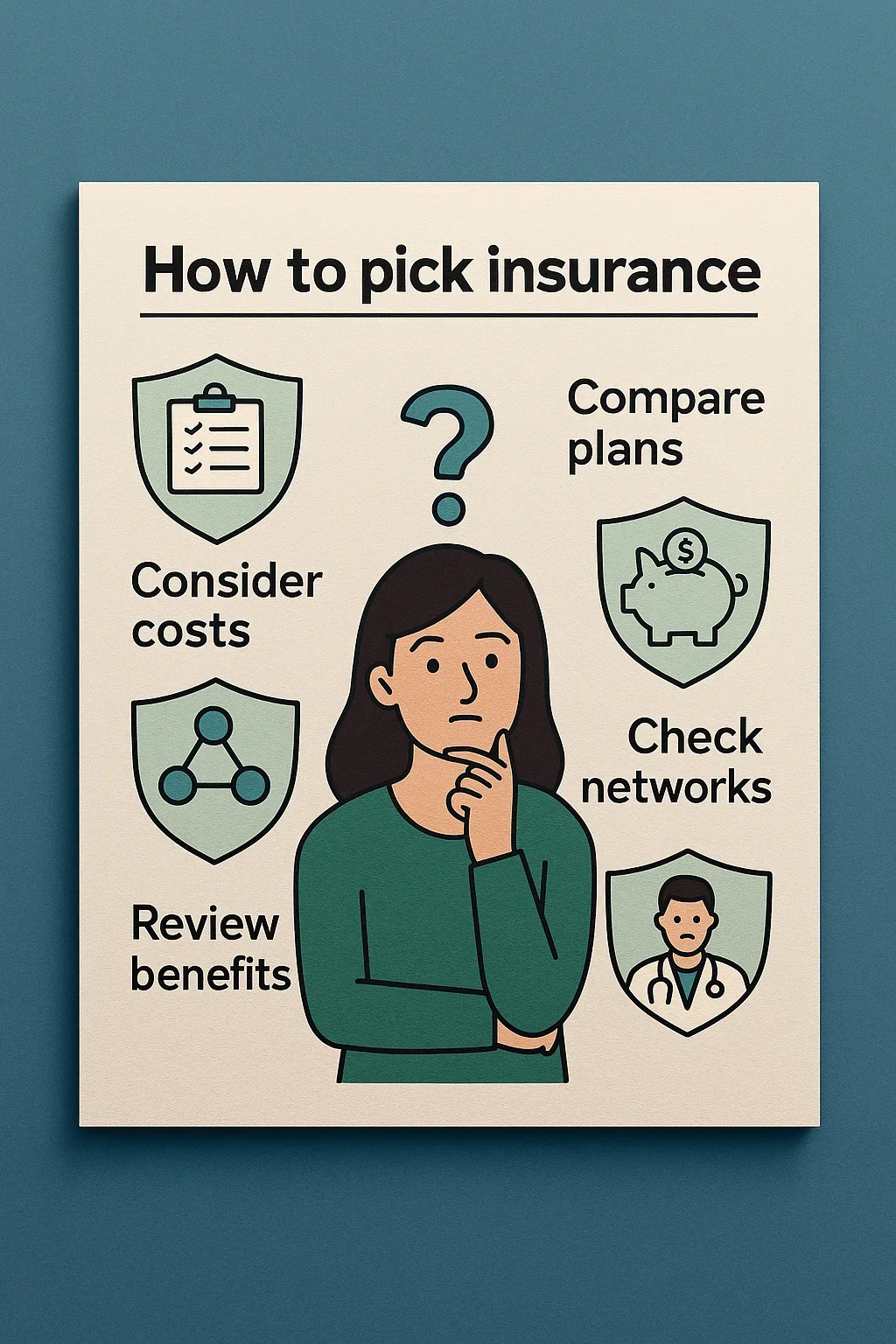
Avoiding Common Mistakes When Picking Insurance
One of the most overlooked parts of mastering how to pick insurance is learning what not to do. Too often, individuals and families rush into policies that look attractive at first glance, only to face unpleasant surprises later. Common mistakes include ignoring exclusions, focusing only on premiums, failing to compare multiple options, and neglecting to factor in future needs. By identifying and avoiding these pitfalls, you can approach the decision-making process with confidence and ensure your coverage truly matches your health and financial requirements. 🚫
Focusing Only on Premiums
Perhaps the most widespread mistake in how to pick insurance is judging a policy solely by its monthly premium. While a low premium might seem appealing, it often comes with higher deductibles, copays, or limited coverage. This can result in much higher out-of-pocket costs if you or a family member requires frequent medical care. The key is to consider the total annual cost rather than just the monthly expense.
Example: Hidden Costs in Low-Premium Plans
A plan with a $200 monthly premium might look affordable compared to one costing $350. However, if the cheaper plan carries a $7,000 deductible and 40% coinsurance, a single hospital visit could wipe out any savings. Evaluating the overall financial picture is a cornerstone of how to pick insurance correctly.
Neglecting Coverage Details and Exclusions
Another mistake is failing to read the fine print. Many policyholders assume that once they have insurance, all services are covered. In reality, exclusions such as cosmetic procedures, dental implants, or certain therapies can leave you paying out-of-pocket. An essential lesson in how to pick insurance is always confirming whether your most likely medical needs are included.
Not Comparing Multiple Options
Too many people settle for the first policy offered by their employer or insurer. Without comparison, you may miss better coverage at a lower cost. Online platforms and professional brokers can simplify this process. A proactive approach to how to pick insurance always involves side-by-side analysis before committing.
Overlooking Network Restrictions
Many policies restrict coverage to in-network providers. Choosing a plan without verifying whether your preferred doctors or hospitals are included is a costly error. This mistake undermines the entire purpose of how to pick insurance—ensuring access to affordable, quality care.
Case Study: Out-of-Network Surprise
Imagine signing up for a plan that excludes your child’s pediatrician from its network. Every visit then becomes out-of-network, costing two to three times more. Verifying provider networks is non-negotiable in how to pick insurance wisely.
Ignoring Long-Term Needs
Insurance should not just cover today—it must anticipate tomorrow. Many people make the mistake of choosing a plan based only on current health status, overlooking potential long-term needs such as maternity coverage, chronic illness care, or aging-related concerns. Forward-thinking is a critical element in how to pick insurance strategically.
Failing to Use Available Resources
Some individuals ignore helpful resources like government marketplaces, employer comparison charts, or professional organizations. For example, groups such as the American Dental Association provide clear insights into standard dental coverage. Similarly, reaching out to licensed brokers or consulting official guides can prevent costly errors. Leveraging these resources strengthens your understanding of how to pick insurance.
Forgetting to Reassess Annually
Life circumstances change—marriage, children, job shifts, or health conditions can all alter your insurance needs. A major mistake is keeping the same policy year after year without reassessment. To master how to pick insurance, review your plan annually during open enrollment periods and adjust based on new needs.
Failing to Budget Properly
Many consumers overlook how premiums, deductibles, and copays fit into their overall financial plan. Without budgeting, insurance can become a strain, especially during emergencies. Smart budgeting ensures that you can manage costs throughout the year, not just when things are going well. This financial awareness is central to how to pick insurance effectively.
Tip: Use an Annual Cost Calculator
Enter expected doctor visits, prescriptions, and potential emergencies into a cost calculator to estimate the real yearly expense of a plan. This prevents budget surprises and reinforces strategic decision-making in how to pick insurance.
Ignoring Additional Coverage Options
Finally, many people assume basic health insurance is enough. In reality, supplemental policies for dental, vision, disability, or life insurance may provide critical protection. Failing to consider these add-ons can leave major gaps. Comprehensive planning is the hallmark of how to pick insurance successfully.
In conclusion, avoiding mistakes is just as important as choosing the right benefits. By looking beyond premiums, reading the fine print, comparing options, checking networks, and reassessing regularly, you can avoid pitfalls that cost time, money, and health security. A disciplined approach ensures you not only learn how to pick insurance but also how to pick the best one for your long-term well-being. ✅