
When people search for Invisalign before and after, they’re usually looking for one thing — real, visible proof that this modern orthodontic treatment truly works. The difference between a misaligned, uneven smile and a straight, radiant one can be life-changing, both aesthetically and emotionally. Invisalign has become one of the most popular alternatives to traditional braces because it offers an almost invisible, comfortable, and highly effective solution for correcting dental misalignments without the brackets and wires. But what does the process look like, and what kind of results can you realistically expect? Let’s explore everything you need to know about the Invisalign before and after journey in full detail. 🦷
Before starting Invisalign, most patients experience a range of dental issues such as crowding, spacing, overbites, underbites, or crossbites. The “before” stage usually includes an initial consultation with a certified Invisalign provider, like those at Redent Klinik Contact Page. During this visit, advanced 3D digital scans of your teeth are taken to create a personalized treatment plan. These scans allow both you and your orthodontist to visualize what your smile will look like after treatment — giving you a virtual preview of your Invisalign before and after results even before you start!
Once your aligners are custom-made, the journey begins. You’ll receive a series of clear trays, each slightly adjusted to guide your teeth closer to their ideal alignment. Each tray is worn for about one to two weeks, for 20–22 hours a day. One of the biggest advantages patients notice is that Invisalign aligners are removable. This means you can continue eating your favorite foods, brushing, and flossing without restriction — something that traditional braces can’t offer. Over the weeks and months, your teeth gradually shift, and the change becomes increasingly visible. The transition from crooked or crowded teeth to a beautifully aligned smile often surprises even the most skeptical patients. ✨
By the time you reach the “after” stage, the results can be stunning. The improvement in alignment, bite, and facial symmetry creates a more confident and natural-looking smile. The Invisalign before and after transformation isn’t just cosmetic — it can also improve oral health. Straighter teeth are easier to clean, reducing the risk of gum disease, cavities, and enamel wear. Patients often report better self-esteem, clearer speech, and even relief from jaw discomfort or headaches caused by misalignment.
Another important part of understanding Invisalign before and after transformations is setting realistic expectations. Every case is different, and while some people see noticeable results in as little as three months, others might need 12–18 months for full correction. Your treatment length depends on the complexity of your misalignment, how consistently you wear your aligners, and whether you follow your dentist’s instructions. Regular check-ins (usually every 6–8 weeks) ensure your teeth are moving according to plan and allow for adjustments if needed.
To give you a clear idea, here’s what most patients experience during their Invisalign journey:
- Week 1–2: Getting used to the aligners; slight pressure or tightness is common.
- Month 1–3: Visible tooth movement begins; early before and after differences appear.
- Month 4–6: Teeth alignment becomes noticeable in photos and mirrors.
- Month 7–12: Major correction occurs; bite alignment improves significantly.
- Month 12–18: Final adjustments and refinements; a fully transformed smile emerges.
Many patients share their Invisalign before and after stories online, often accompanied by photographs showing dramatic transformations. These real-life examples help others see what’s achievable and inspire confidence to start their own journey. You can find countless success stories supported by dental professionals and associations such as the American Dental Association, which promotes safe and effective orthodontic treatments. Seeing real results reinforces how Invisalign technology continues to revolutionize modern orthodontics.
One of the best parts of the Invisalign before and after process is the emotional change. Patients often report feeling more outgoing and self-assured after treatment. Smiling becomes effortless again, which can improve social interactions, career confidence, and even personal relationships. This emotional transformation is just as valuable as the physical one, making Invisalign an investment not only in your smile but also in your overall well-being. 😃
In summary, the Invisalign before and after journey is about more than straightening teeth — it’s about achieving balance, confidence, and health. With advanced 3D scanning, custom-made aligners, and expert supervision, patients can achieve remarkable transformations that look and feel natural. Whether your goal is aesthetic improvement, better oral health, or increased confidence, Invisalign offers a proven, comfortable path to success. Every smile has a story, and with Invisalign, your “after” can be just as beautiful as you’ve imagined. 🌟
What to Expect from Invisalign Before and After Results
The phrase Invisalign before and after represents more than just a visual difference — it’s a complete journey toward a healthier, more confident smile. Patients who begin Invisalign treatment often have many questions about what they can expect, how much their teeth will change, and how long the process will take. This guide explores every step of the Invisalign transformation so you can fully understand what happens before, during, and after treatment. 🦷
Understanding the “Before” Stage: Assessment and Planning
The “before” phase of Invisalign before and after begins with a detailed consultation with your orthodontist or cosmetic dentist. During this stage, the specialist performs a digital scan of your teeth using advanced 3D imaging technology. These scans are far more accurate than traditional molds and allow the dentist to map out the exact tooth movements needed for perfect alignment. You’ll even get to preview your smile in a virtual simulation — an incredible motivator before you start your journey!
At this stage, it’s crucial to discuss your dental goals. Whether you want to fix crowding, spacing, overbites, or underbites, your dentist will develop a plan tailored to your specific case. Each treatment plan varies depending on the complexity of your dental alignment. For mild adjustments, Invisalign may take around six months, while more complex cases could take up to 18 months. Setting realistic expectations ensures you appreciate your progress as you move from the before to the after stage.
The “During” Phase: Your Step-by-Step Invisalign Journey
Once your aligners are custom-made, you’ll begin wearing them for 20–22 hours per day. Each set of aligners is designed to apply gentle pressure to specific teeth, gradually moving them into the correct position. You’ll typically change your trays every one to two weeks, depending on your treatment plan. Throughout this time, small yet noticeable changes will occur — and that’s when the excitement begins!
During your Invisalign treatment, consistency is everything. The most successful Invisalign before and after transformations come from patients who wear their aligners as instructed. If you skip days or forget to wear them, progress slows down. Luckily, since Invisalign trays are removable, you can easily take them out when eating, brushing, or for special occasions — a convenience that makes them much easier to live with than traditional braces.
Adapting to Life with Invisalign
It’s normal to experience slight pressure or tightness when you start a new set of trays. This means your aligners are doing their job! Within a few days, your mouth adjusts, and speaking or wearing the trays becomes second nature. Unlike braces, there are no metal brackets or wires to cause mouth sores. Plus, since they’re clear, most people won’t even notice you’re wearing them — a huge advantage for adults and teens who want to maintain confidence during treatment.
As weeks pass, you’ll begin noticing subtle yet exciting changes in your smile. Friends and family might comment that your teeth look straighter, or your bite feels more balanced. Taking regular photos is an excellent way to track your own Invisalign before and after progress — many patients are amazed at how quickly transformation becomes visible! 📸
The “After” Phase: Seeing the Final Transformation
Reaching the “after” stage of Invisalign before and after is incredibly rewarding. When your final aligner comes off, your teeth will appear straighter, your bite more aligned, and your smile noticeably brighter. The results are not only aesthetic but also functional. Straight teeth are easier to clean and maintain, reducing the risk of gum disease, plaque buildup, and tooth decay. The boost in confidence is another major benefit — patients often describe feeling happier and more self-assured in both personal and professional settings. 😁
After completing your treatment, your orthodontist may provide a set of retainers to maintain your new alignment. Wearing retainers at night helps prevent your teeth from shifting back to their old positions. Think of this as the “maintenance phase” of your Invisalign journey — just like any long-term investment, your beautiful new smile deserves ongoing care.
Emotional and Health Benefits of Invisalign Transformation
The emotional difference between the “before” and “after” stages can be profound. Many people who once felt self-conscious about their teeth find themselves smiling freely, laughing more often, and even enjoying social situations they once avoided. These emotional benefits go hand in hand with physical improvements — better alignment often means improved chewing efficiency and reduced strain on jaw muscles.
From a health perspective, your post-treatment smile is not only more attractive but also more hygienic. Straight teeth are easier to brush and floss effectively, minimizing plaque buildup and preventing gum inflammation. It’s a transformation that enhances both your oral health and overall quality of life.
Professional Guidance for the Best Results
To ensure a successful Invisalign before and after transformation, it’s essential to work with experienced dental professionals. Clinics like Redent Klinik specialize in customized Invisalign treatments and offer professional supervision throughout the process. They use cutting-edge technology and proven techniques to achieve predictable, long-lasting results for every patient.
Additionally, reputable organizations such as the American Dental Association endorse Invisalign as a safe and effective orthodontic option for both teens and adults. The combination of scientific validation and real-world success stories makes Invisalign one of the most trusted names in modern dentistry.
Final Thoughts: The True Value of the Invisalign Journey
When we talk about Invisalign before and after, it’s not just a matter of aesthetics — it’s about transformation in every sense. From improved self-confidence to better oral hygiene, this treatment offers long-term value that extends beyond looks. Patients gain the freedom to smile, speak, and live without the restrictions associated with traditional braces. The aligners’ comfort, invisibility, and proven effectiveness make them a clear winner for anyone seeking a confident new smile.
Ultimately, your Invisalign journey is an investment in yourself — one that pays off every time you look in the mirror. Whether you’re just beginning or already mid-way through, remember that each tray brings you closer to your dream smile. The results truly speak for themselves, and every stunning “after” photo begins with a brave first step toward change. 🌟
Common Dental Issues Fixed by Invisalign Before and After
The magic of Invisalign before and after transformations lies in how effectively these clear aligners can correct a wide range of dental problems. Whether you’re dealing with crowded teeth, spacing issues, or bite misalignment, Invisalign offers a modern and comfortable alternative to traditional braces. What’s most remarkable is the precision with which Invisalign aligners guide your teeth into ideal positions, often achieving stunning aesthetic and functional results. Let’s explore in detail the most common dental problems Invisalign can fix — and what those transformations look like before and after treatment. 🦷
1. Crowded Teeth: Creating Space for a Balanced Smile
One of the most frequent reasons people seek Invisalign before and after results is dental crowding. When teeth overlap or twist because there isn’t enough space in the jaw, it not only affects the look of your smile but also your oral health. Crowded teeth can trap food particles, leading to plaque buildup, gum inflammation, and cavities.
Invisalign works by gradually widening the dental arch and repositioning each tooth into its proper place. Over the course of treatment, you’ll see dramatic improvements — teeth that were once overlapping or crooked will line up beautifully, giving your smile a more symmetrical and healthy appearance. The “after” stage often surprises patients with how natural the alignment looks. Plus, straighter teeth are easier to clean, reducing the risk of long-term dental problems. 🌟
Typical Treatment Duration:
For mild to moderate crowding, Invisalign treatment usually lasts between 9 and 15 months. Complex cases may take up to 18 months, but results are often visible within the first few weeks.
2. Gapped Teeth: Closing Spaces for a Confident Smile
Another common Invisalign before and after success story involves closing gaps between teeth. Gaps, or “diastemas,” can occur for several reasons — genetic factors, tooth size discrepancies, or gum issues. While small gaps might not always be harmful, larger ones can cause food impaction, gum irritation, and even affect speech.
Invisalign aligners use gentle pressure to move teeth closer together, closing spaces gradually while maintaining overall alignment and symmetry. The “after” stage typically shows a smoother, more continuous smile line. Many patients report feeling more confident speaking, laughing, and smiling after gap correction. The transformation is subtle yet powerful — a smile that feels complete and harmonious. 😁
Pro Tip:
For lasting results, post-treatment retainers are crucial. They keep your teeth in position and prevent small gaps from reopening after treatment.
3. Overbite and Deep Bite: Restoring Bite Harmony
An overbite occurs when the upper front teeth overlap too far over the lower teeth. A deep bite, on the other hand, can cause the lower teeth to almost disappear behind the upper teeth when you close your mouth. Both conditions can lead to excessive tooth wear, jaw strain, and gum damage over time. The Invisalign before and after difference in these cases can be truly life-changing.
Through gradual and controlled tooth movement, Invisalign corrects the vertical overlap, bringing the upper and lower jaws into proper alignment. The “after” photos of these cases often show a more balanced facial profile and improved functionality. Patients also experience relief from tension headaches or jaw discomfort associated with bite misalignment. Invisalign’s precise digital mapping ensures even complex bite issues can be treated effectively without metal braces.
Clinical Insight:
Most overbite or deep bite corrections take between 12 and 24 months, depending on the severity. The use of attachments — small tooth-colored dots applied to specific teeth — helps achieve the necessary movements more efficiently.
4. Underbite: Improving Function and Facial Balance
In an underbite, the lower teeth extend beyond the upper front teeth, often resulting in difficulty chewing and an unbalanced facial appearance. Traditional braces used to be the only solution for this, but now, Invisalign before and after results show impressive outcomes for many underbite cases as well.
Using targeted aligner design, Invisalign gradually shifts the lower teeth backward and the upper teeth forward, improving the bite relationship. The transformation improves both function and appearance, giving the face a more harmonious look. This correction not only enhances aesthetics but also helps prevent uneven tooth wear and TMJ-related pain.
Bonus Benefit:
Correcting an underbite often leads to clearer speech and easier pronunciation of certain words, adding another layer of benefit beyond the cosmetic.
5. Crossbite: Aligning Jaw Function and Smile Symmetry
A crossbite happens when some upper teeth sit inside the lower teeth when biting down. This misalignment can cause uneven tooth wear, gum recession, and even facial asymmetry. Many people don’t realize how much this can affect their long-term oral health until they see the dramatic Invisalign before and after improvements.
By applying calculated pressure in the right direction, Invisalign aligners guide the misaligned teeth into their correct positions. The “after” result is a more balanced bite and even wear pattern across all teeth. The aesthetic transformation is equally impressive, often resulting in a more uniform smile with smoother arch lines.
Treatment Tip:
Early detection of crossbite (especially in teens) can shorten treatment time significantly. The sooner Invisalign intervention begins, the easier and faster the correction process will be.
6. Open Bite: Closing the Gap for Natural Function
An open bite occurs when the upper and lower teeth do not meet properly when the mouth is closed. This can make it hard to bite or chew food and may also affect speech clarity. In the Invisalign before and after stage, closing an open bite creates not only aesthetic improvement but also restores full mouth function.
Through a series of precise aligner adjustments, Invisalign can gradually close the vertical gap between the upper and lower teeth. The result is a natural bite that allows better chewing efficiency and an overall more pleasing smile. The “after” phase typically shows enhanced lip support and facial proportion, which adds to the overall harmony of the face.
Final Thoughts: Real Transformations, Real Confidence
As you can see, the Invisalign before and after transformation extends far beyond cosmetic improvement. It corrects the foundation of oral health by addressing crowding, spacing, and bite issues that affect function and confidence. Each case is unique, but with the help of advanced 3D planning and professional expertise, results are predictable and life-changing.
If you’re wondering whether Invisalign can fix your specific dental issue, consult with a certified provider like Redent Klinik. Their expert orthodontists will analyze your case and provide a tailored treatment plan that ensures optimal results. For trusted information and clinical guidance, visit the American Dental Association, which supports Invisalign as an effective orthodontic solution for both adults and teens.
In conclusion, the power of Invisalign before and after lies in its ability to address multiple dental conditions simultaneously while maintaining comfort, discretion, and predictable outcomes. Whether you’re fixing crowding, closing gaps, or realigning your bite, Invisalign gives you more than a straight smile — it gives you confidence that lasts a lifetime. 😍
Real Patient Transformations: Invisalign Before and After Photos
Seeing real Invisalign before and after photos is one of the most powerful motivators for anyone considering this treatment. These transformations show what words alone cannot — the visible proof of how much Invisalign can change not just your smile, but your overall facial appearance and confidence. Real patient results demonstrate that Invisalign is far more than an aesthetic solution; it’s a life-changing journey that brings measurable improvements in health, symmetry, and self-esteem. Let’s take a deep look at how these transformations happen, what the results reveal, and why thousands of patients are sharing their Invisalign before and after stories worldwide. 📸
Before Invisalign: Understanding the Starting Point
Before the Invisalign journey begins, most patients struggle with dental issues that affect both appearance and function. Common “before” images often reveal crooked, overlapping, or gapped teeth, creating an uneven smile line. In some cases, bite misalignment — such as overbites or underbites — causes strain on the jaw and facial asymmetry. These conditions not only affect confidence but can also lead to long-term oral health problems like gum disease, enamel erosion, and TMJ discomfort.
What makes the Invisalign before and after process so impressive is that patients often underestimate how much their entire face will change after alignment correction. For instance, straighter teeth can improve lip support, giving the face a more youthful and balanced appearance. Even subtle changes in tooth angle can soften the jawline and create a more symmetrical profile. 🦷
Initial Consultation and Digital Preview
Before treatment begins, patients undergo a digital 3D scan using advanced intraoral imaging technology. This scan not only captures every angle of your teeth but also generates a virtual “before and after” preview. It shows you how your smile will evolve over time — long before you even start wearing aligners. Seeing this visual representation helps patients set realistic expectations and builds excitement for their transformation.
Clinics like Redent Klinik specialize in this type of digital visualization. Their specialists use precise AI-driven mapping tools to design your aligner plan and predict how each tooth will move. This ensures that the actual Invisalign before and after results match the projected outcome with remarkable accuracy.
During Treatment: The Transition Phase
Most patients begin noticing visible differences after the first 4–6 weeks of wearing aligners. In this “in-progress” stage, photos often show early alignment changes — such as previously crooked teeth starting to line up and spacing between teeth closing gradually. These mid-treatment photos are important because they highlight the steady progress Invisalign provides.
Unlike traditional braces, where improvement isn’t always visible until near the end, Invisalign allows patients to see incremental changes throughout the process. The Invisalign before and after difference becomes increasingly noticeable as each new set of trays moves teeth closer to perfection. The aligners are transparent, so even in progress photos, the improvement is visible without the distraction of metal brackets or wires. ✨
Photographic Tracking and Motivation
Many orthodontists encourage patients to take monthly photos to document their Invisalign before and after progress. These side-by-side images serve as a visual diary of transformation, helping patients stay motivated during treatment. It’s rewarding to see how minor adjustments add up to major results over time.
In addition to photographic tracking, regular dental check-ins ensure your teeth are moving according to plan. Advanced clinics use digital comparison tools to overlay new scans with previous ones, allowing precise tracking of movement — millimeter by millimeter. This scientific accuracy is what makes Invisalign one of the most predictable orthodontic treatments in modern dentistry.
After Invisalign: The Stunning Final Results
The “after” stage is where the magic truly shines. Real patient Invisalign before and after photos show dramatic transformations — from crowded, misaligned smiles to perfectly straight and radiant teeth. The difference isn’t only in alignment; the facial structure often looks more balanced, lips appear fuller, and the overall expression becomes brighter and more confident. Patients frequently describe the experience as “life-changing,” and for good reason.
Here’s what most people notice in their “after” photos:
- Straighter teeth: Uniform spacing and smooth arch form give a naturally attractive smile.
- Improved bite: Balanced jaw alignment enhances comfort and chewing efficiency.
- Brighter appearance: With better cleaning access, teeth often appear whiter and healthier.
- Younger facial profile: Correct alignment subtly enhances the lower face, giving a rejuvenated look.
- Boosted confidence: The willingness to smile freely increases dramatically after treatment.
Many clinics proudly showcase their patient galleries featuring Invisalign before and after results. These galleries highlight the diversity of transformations — from teens seeking confidence at school to adults reclaiming their smiles after years of hesitation. Each story is unique, but the outcome is the same: renewed confidence and a healthier, happier life.
Scientific Validation and Expert Insight
According to the American Dental Association, orthodontic correction with clear aligners like Invisalign can lead to measurable health improvements, including reduced gum inflammation and better occlusion. This professional endorsement reassures patients that their investment in Invisalign is not just cosmetic but medically beneficial as well. Clinically, Invisalign is proven to achieve outcomes comparable to — and often more comfortable than — traditional metal braces.
Case Examples of Real Transformations
Consider a few typical examples of Invisalign before and after journeys:
- Case 1 – Mild Crowding: A 24-year-old patient achieved full alignment in 8 months, transforming a crooked lower arch into a perfectly even line of teeth. The difference was immediately visible in photos and enhanced overall facial harmony.
- Case 2 – Gap Closure: A 30-year-old patient closed a 3mm gap between the front teeth in under 10 months. The final “after” image revealed a seamless smile line and improved speech clarity.
- Case 3 – Bite Correction: A 40-year-old professional treated an overbite that caused jaw tension. After 15 months of Invisalign, the “after” image showed balanced facial symmetry and reduced jaw discomfort.
Each of these examples underscores the predictability and precision of Invisalign technology. When done under expert supervision, results are not only aesthetically pleasing but also structurally sound and long-lasting.
Conclusion: Why Real Results Matter
Real Invisalign before and after photos aren’t just marketing tools — they are living proof of transformation through science and artistry. They represent personal victories for patients who once hesitated to smile, speak, or even take pictures. With every aligner change, patients move one step closer to confidence, health, and happiness. These images capture more than straight teeth; they capture renewed self-assurance and the emotional satisfaction of achieving the smile you’ve always wanted. 😍
If you’re ready to begin your own transformation, reach out to a certified Invisalign provider at Redent Klinik. Their team of dental professionals can guide you from your “before” to your dream “after” with personalized care and precision. The difference you’ll see — and feel — will be worth every moment of the journey. 🌟
Comparing Invisalign vs Braces Before and After Results
The debate between Invisalign before and after results and traditional braces has been ongoing since clear aligners first entered the orthodontic scene. Both methods aim to achieve the same outcome — a straight, healthy, and beautiful smile — but the process, experience, and even the final aesthetic can differ significantly. In this section, we’ll explore how Invisalign compares to metal braces in terms of effectiveness, comfort, duration, cost, and visual results, supported by real-world insights and expert data. 😁
The Core Difference Between Invisalign and Braces
Traditional braces use metal brackets and wires that apply continuous pressure to move teeth into position. They are effective, but often come with drawbacks like discomfort, food restrictions, and visibility concerns. Invisalign, on the other hand, uses a series of clear, custom-made aligners that fit snugly over the teeth. Each aligner slightly adjusts the position of the teeth over time, offering a discreet and comfortable treatment experience.
When comparing Invisalign before and after photos to braces results, one thing becomes immediately clear: Invisalign offers a more natural aesthetic both during and after treatment. Patients can smile confidently throughout the process without the metallic look of braces, which is particularly appealing to adults and professionals who value subtlety.
How Each System Works in Practice
Braces: Metal brackets are glued to the teeth and connected by a wire that is periodically tightened by the orthodontist. Elastic bands may be used to correct bite issues. Braces are fixed in place 24/7, ensuring consistent movement but making oral hygiene more challenging.
Invisalign: Clear aligners are removable and replaced every one to two weeks. The patient wears them for 20–22 hours daily. Each aligner set moves the teeth slightly closer to the desired position. Digital scans ensure high precision, and patients can remove the aligners for eating, brushing, or special occasions.
Visual Comparison: Invisalign Before and After vs Braces Before and After
When analyzing Invisalign before and after results side by side with traditional braces outcomes, both treatments can achieve equally impressive alignment and bite correction. However, Invisalign often produces smoother and more polished results because there are no residual marks or discoloration caused by brackets. The final teeth alignment also tends to look more natural and uniform, since Invisalign follows a digitally mapped path for each tooth’s movement.
On the other hand, braces are still very effective for complex orthodontic cases that require major tooth rotation or vertical movements. For example, severe overbites or underbites might respond faster to braces due to the higher mechanical force applied. That said, technological advancements in Invisalign — including SmartForce® attachments and precision wings — have made it possible to treat even advanced malocclusions with remarkable accuracy.
Before and After Case Comparison
- Case 1 – Moderate Crowding: A 22-year-old patient treated with Invisalign achieved full correction in 12 months. The “after” smile showed even spacing and improved bite function. A similar case treated with braces took 18 months and left minor enamel discoloration where brackets were attached.
- Case 2 – Gap Closure: Invisalign closed 2mm gaps in 8 months with minimal discomfort. Braces achieved the same in 10 months but required additional polishing due to plaque accumulation around brackets.
- Case 3 – Overbite Correction: Invisalign with SmartForce® attachments corrected an overbite in 15 months. Traditional braces took 20 months with more discomfort reported during wire adjustments.
Comfort and Lifestyle Differences
Invisalign aligners are smooth and comfortable, eliminating the irritation caused by wires and brackets. There’s no risk of mouth sores or emergency visits for broken wires. This comfort plays a big role in the overall Invisalign before and after satisfaction reported by patients. Eating is also much easier, since aligners can be removed, allowing you to enjoy your favorite foods without restriction. 🍎
In contrast, braces come with food limitations — sticky, hard, or crunchy foods can damage the brackets. Oral hygiene is also more complicated with braces, as flossing and brushing around wires require special tools. Invisalign simplifies this by allowing you to maintain your normal dental care routine effortlessly, which contributes to healthier gums and cleaner teeth by the end of treatment.
Speech and Social Confidence
Many adults and teens prefer Invisalign because it’s nearly invisible. Throughout the treatment, patients can attend meetings, school events, or photoshoots without feeling self-conscious. Braces, while effective, are more noticeable and can sometimes affect speech during the adjustment period. The difference in confidence between the before and after stages is often greater with Invisalign users because they feel good about their appearance from day one.
Treatment Time and Efficiency
One of the most common questions patients ask is whether Invisalign works as quickly as braces. On average, Invisalign treatment time ranges from 6 to 18 months, depending on case complexity, while braces typically require 18 to 24 months. However, Invisalign results often appear sooner because aligners begin aligning visible teeth right from the start. Many patients notice visible Invisalign before and after differences within the first six weeks.
Another key benefit is that Invisalign appointments are shorter and less frequent. With digital monitoring, many clinics can track progress remotely, reducing in-office visits — a major convenience for busy individuals. Traditional braces require more frequent tightening sessions and maintenance appointments.
Cost Comparison and Long-Term Value
While Invisalign is sometimes slightly more expensive upfront, the investment often pays off in convenience, comfort, and long-term oral health. Braces may appear more affordable initially, but maintenance costs, repairs, and whitening treatments to fix post-braces stains can add up. Clinics like Redent Klinik provide transparent cost structures and flexible financing to make Invisalign accessible to more patients.
Long-Term Results and Retention
After completing treatment, both Invisalign and braces require retainers to maintain results. However, the Invisalign before and after results tend to age better because aligners encourage patients to adopt good oral habits from the start. Since the aligners are removable, patients learn consistent hygiene practices early on, which contributes to the long-term stability and cleanliness of the final smile.
With braces, post-treatment retainers are equally essential, but some patients experience minor relapse due to inconsistent retainer use. Invisalign’s follow-up system, including Vivera® retainers, helps minimize this issue through custom digital tracking and long-term monitoring.
Final Verdict: Which One Wins?
When comparing Invisalign before and after results with braces, it’s clear that both can deliver outstanding alignment and bite correction. However, Invisalign offers significant advantages in aesthetics, comfort, convenience, and oral hygiene. For most mild to moderate cases, Invisalign is equally effective — and often preferred — for achieving a perfect smile discreetly.
That said, patients with severe or complex alignment problems should consult a certified orthodontist to determine whether traditional braces might be more efficient. The best approach always depends on individual needs and dental anatomy.
Ultimately, Invisalign provides the modern, flexible, and confidence-boosting experience that today’s patients demand. Its combination of clear technology, predictable outcomes, and emotional satisfaction makes it the top choice for anyone ready to see their own stunning Invisalign before and after transformation. 🌟 For expert guidance, contact the specialists at Redent Klinik — and begin your journey toward a radiant, perfectly aligned smile.
For verified orthodontic insights and treatment safety standards, always refer to trusted sources like the American Dental Association, which endorses Invisalign as a proven, evidence-based orthodontic solution for teens and adults alike.
How Long Does It Take to See Invisalign Before and After Results?
One of the most common questions patients ask is: “How long will it take to see my Invisalign before and after results?” The truth is, Invisalign works gradually — but effectively — with noticeable improvements often appearing sooner than expected. The overall duration depends on several factors including the severity of misalignment, patient compliance, and biological response. While every smile is unique, understanding the general timeline helps set clear expectations and keeps patients motivated throughout the process. ⏱️
Understanding the Invisalign Treatment Timeline
Before diving into how long it takes to achieve your desired results, it’s essential to understand that Invisalign treatment follows a structured, customized process. Each step is designed to move your teeth incrementally toward ideal alignment using advanced 3D mapping technology.
Typical Treatment Stages
- Stage 1 – Initial Consultation (Week 0): This is where your journey begins. The dentist takes 3D scans and digital impressions to create a personalized aligner plan. You’ll even get to preview a virtual simulation of your Invisalign before and after transformation before starting treatment.
- Stage 2 – First Aligner Fitting (Week 2): Once your aligners are ready, you’ll start wearing the first set. You may experience mild pressure or tightness — a sign that your teeth are beginning to move.
- Stage 3 – Active Movement Phase (Months 1–6): During this time, teeth begin to shift visibly. For most patients, early changes can be seen within 4 to 6 weeks, often noticeable in photos or while brushing.
- Stage 4 – Mid-Treatment Adjustments (Months 6–12): Your orthodontist monitors progress and may adjust your aligner plan for optimal results. This is where dramatic improvements in alignment and bite become visible.
- Stage 5 – Refinement and Completion (Months 12–18): The final phase perfects alignment details and ensures long-term stability. Once complete, you’ll receive retainers to maintain your beautiful new smile.
Average Invisalign Treatment Duration
The total time required for Invisalign varies depending on the complexity of the case. On average, mild corrections can take as little as 6 to 9 months, while moderate cases may require 12 to 18 months. More complex bite corrections can extend beyond 20 months, though this is less common. What’s encouraging is that noticeable Invisalign before and after improvements are often visible far earlier — many patients report seeing clear differences within just 8 weeks. ✨
Comparison by Case Type:
- Mild crowding or spacing: 6–9 months
- Moderate misalignment: 12–15 months
- Severe bite issues (overbite, crossbite, etc.): 18–24 months
However, the biggest factor that determines treatment speed is patient compliance. Invisalign aligners must be worn for 20–22 hours per day for optimal effectiveness. Skipping days or wearing aligners inconsistently can significantly delay your Invisalign before and after progress.
Early Changes: When Do You Start Noticing Results?
Many patients are pleasantly surprised to see changes within the first month. The front teeth — which are most visible when you smile — often move first. By week six, alignment becomes more apparent, and subtle improvements can already be captured in selfies or progress photos. These small wins are extremely motivating and help patients stay consistent with wearing their aligners.
Between months 3 and 6, most patients experience the most dramatic transformation phase. This is when the majority of teeth move into their new positions, and the difference between the “before” and “after” appearance becomes clear. By the final stages, the adjustments become smaller but crucial for achieving the perfect alignment and bite fit.
Professional Monitoring for Predictable Progress
One of the main reasons Invisalign achieves such consistent results is professional supervision. Clinics like Redent Klinik use advanced digital tracking to ensure your teeth move exactly as planned. Orthodontists may use tools like digital progress scans and refinement aligners to keep treatment on schedule. This precision ensures that your Invisalign before and after results match your original simulation — often with stunning accuracy.
Factors That Affect Treatment Duration
While Invisalign’s average timeline is predictable, several individual factors can influence how quickly you reach your “after” stage:
- Case Complexity: More severe misalignments naturally require longer treatment periods.
- Patient Compliance: Wearing aligners consistently for 22 hours daily is critical. Removing them too often delays progress.
- Bone Density and Age: Younger patients may see faster tooth movement since bone structures are more adaptable.
- Attachment Use: Small tooth-colored attachments may be added to accelerate complex movements.
- Refinement Trays: Some patients need extra aligners to perfect final alignment, extending treatment slightly.
Staying diligent and following your orthodontist’s instructions ensures the smoothest and fastest Invisalign before and after transformation possible. 🦷
Real-World Case Examples and Results
To illustrate how duration varies, here are real-world examples based on average clinical outcomes:
- Case 1: A 26-year-old with mild crowding completed treatment in 7 months. The “after” photos showed perfect alignment and balanced bite — visible transformation began at week 5.
- Case 2: A 32-year-old with a moderate overbite achieved full correction in 14 months using attachments. Noticeable changes started around month 3, with progressive improvement throughout.
- Case 3: A 19-year-old with spacing issues completed treatment in 9 months, closing all gaps and achieving a bright, even smile.
These real-life timelines demonstrate that although Invisalign works progressively, visible results appear sooner than most expect. Consistency and collaboration with your dentist are key to achieving beautiful, timely outcomes.
Maintaining Motivation During the Process
Patience is vital during orthodontic treatment, and tracking your own Invisalign before and after progress can help maintain motivation. Many patients take bi-weekly photos to compare subtle shifts in alignment. This practice keeps you inspired and allows your orthodontist to track progress more accurately during appointments.
Even though results may vary slightly from person to person, the steady progress toward a straighter smile can be deeply satisfying. Every aligner you complete brings you one step closer to your dream result — a confident, radiant smile that lasts a lifetime. 🌟
Conclusion: A Journey Worth Every Week
On average, most patients complete their Invisalign journey within one year, though many see visible changes in the first few months. The precision and predictability of the system ensure consistent outcomes when patients adhere to treatment guidelines. Your Invisalign before and after photos will not only reflect cosmetic transformation but also improved oral health, easier cleaning, and greater confidence.
For professional guidance and a personalized timeline, contact Redent Klinik. Their experts specialize in creating tailored treatment plans using cutting-edge technology. For more details about Invisalign’s clinical safety and effectiveness, visit the American Dental Association — a trusted authority in modern orthodontic care. ⏳
Tips for the Best Invisalign Before and After Experience
Every patient dreams of achieving the perfect Invisalign before and after transformation — that stunning moment when they see their new, straight smile in the mirror for the first time. While Invisalign technology is highly advanced, the success of your results also depends on your daily habits, discipline, and oral care routine. To get the most out of your Invisalign treatment, it’s important to understand what you can do to maximize your results, minimize discomfort, and ensure a smooth journey from start to finish. 😁
Follow Your Dentist’s Instructions Consistently
The foundation of every successful Invisalign before and after story is patient compliance. Your orthodontist or dentist designs a customized treatment plan tailored to your exact needs, and every aligner change or adjustment is carefully timed. Failing to wear your aligners as directed can delay progress or even alter your final outcome.
Experts recommend wearing your aligners for 20–22 hours per day, removing them only for meals, brushing, and flossing. The more consistent you are, the faster your teeth move into alignment. Even skipping one or two days can set you back a week or more. Remember — Invisalign aligners work best when worn diligently. 🕒
Pro Tip:
Set daily reminders or use an Invisalign app to track your wear time. Staying consistent not only accelerates your results but also helps you stay accountable during your treatment.
Maintain Excellent Oral Hygiene Throughout Treatment
Cleanliness is crucial during Invisalign treatment. Because aligners are snug-fitting, any leftover food particles or plaque trapped beneath them can quickly lead to discoloration, bad breath, or cavities. Keeping your mouth clean ensures your Invisalign before and after photos show a bright, healthy smile — not just straighter teeth.
Daily Cleaning Routine:
- Brush your teeth thoroughly after every meal before reinserting your aligners.
- Use a soft-bristle toothbrush and fluoride toothpaste to prevent enamel wear.
- Rinse aligners with lukewarm water (never hot water!) to avoid warping them.
- Clean aligners with Invisalign Cleaning Crystals or mild antibacterial soap once daily.
Maintaining a meticulous routine also prevents staining of the aligners themselves, ensuring they remain invisible throughout your treatment. 🪥
Stay Hydrated and Avoid Certain Foods and Drinks
Staying hydrated supports overall oral health and helps maintain clear, fresh aligners. However, drinking sugary or colored beverages while wearing aligners can lead to staining or decay. Coffee, tea, red wine, and soda are especially risky because they can tint the trays and your teeth. Water should always be your go-to drink during treatment.
Food and Beverage Guidelines:
- Remove aligners before eating or drinking anything other than water.
- Avoid chewing gum while wearing aligners — it can stick and distort the shape.
- Brush before reinserting your trays after meals to prevent bacteria buildup.
Following these habits ensures your Invisalign before and after transformation includes not only straighter teeth but also whiter, healthier enamel. 🌟
Track Your Progress with Photos
One of the most motivating parts of Invisalign treatment is watching your progress unfold. Taking regular progress photos helps you visualize how far you’ve come. Even small movements can make a big difference when viewed over time. Many clinics, such as Redent Klinik, recommend taking photos every two weeks — one from the front, one from the side, and one close-up of your teeth.
By comparing your images, you can clearly see your Invisalign before and after evolution. This visual evidence reinforces your commitment and boosts confidence throughout the journey.
Use Your Aligners Properly
Handling your aligners correctly prevents damage and ensures a perfect fit. When inserting or removing them, always use gentle pressure — never force them. Store aligners in their protective case whenever not in use to prevent loss or contamination. Replacing lost aligners without consulting your dentist can disrupt the treatment plan and delay your progress.
Handling Guidelines:
- Insert aligners starting from the front teeth, then gently press down toward the molars.
- Remove aligners by lifting from the back teeth first to avoid bending.
- Never wrap aligners in napkins — they can easily be thrown away accidentally!
Proper care ensures each aligner remains functional and clean throughout its lifespan. Each set plays a crucial role in achieving your ultimate Invisalign before and after results.
Manage Discomfort and Stay Motivated
While Invisalign is known for comfort, it’s normal to feel mild pressure for the first few days of each new aligner. This sensation is a sign your treatment is working — your teeth are moving! If soreness occurs, try switching to new trays before bedtime so your mouth adjusts while you sleep.
Cold compresses or over-the-counter pain relief can help if needed, but discomfort usually subsides within 48 hours. Remember: every bit of pressure means progress! 🦷
Motivation Tips:
- Celebrate milestones — like your first noticeable change or halfway point.
- Keep a digital journal or blog to track your Invisalign before and after journey.
- Share your success on social media to inspire others considering Invisalign.
Regular Checkups Are Key
Attending scheduled checkups ensures that your teeth are moving according to the planned timeline. At Redent Klinik, dentists use digital monitoring to compare scans and make adjustments if necessary. Missing appointments or delaying follow-ups may prolong treatment or affect accuracy. The regular oversight ensures your Invisalign before and after progress stays perfectly on track.
These visits also allow professionals to provide refinements — additional sets of aligners — to fine-tune your results and achieve the perfect bite alignment.
Don’t Forget the Retainers After Treatment
Once your Invisalign journey is complete, it’s essential to wear retainers to preserve your new alignment. Without them, your teeth may gradually shift back toward their original positions. Retainers should be worn full-time for the first few months, then nightly for long-term maintenance. The retention phase is what solidifies your Invisalign before and after success into a lifelong result.
Most clinics provide custom retainers such as Vivera®, made from the same durable, clear material as Invisalign aligners, ensuring comfort and aesthetics even after treatment. 💤
Conclusion: Turning Effort into a Lifetime Smile
Achieving the best Invisalign before and after results depends on your dedication as much as it does on technology. By wearing your aligners consistently, maintaining hygiene, attending regular appointments, and caring for your retainers afterward, you ensure a truly flawless transformation. Invisalign is not just about straightening teeth — it’s about building healthier habits and gaining confidence that lasts a lifetime.
To start your personalized Invisalign journey and receive expert guidance, contact Redent Klinik. Their experienced dental team provides tailored treatment plans and ongoing support to help you achieve your best smile. For additional clinical information and orthodontic safety standards, visit the American Dental Association. 🌟
Invisalign Cost and Financing Options 💰
Understanding the cost of treatment is an essential part of planning your Invisalign before and after journey. While Invisalign delivers remarkable aesthetic and functional results, patients often want to know exactly what they’re paying for and how to make the treatment more affordable. The price of Invisalign varies depending on your case complexity, treatment duration, and dental clinic, but the investment is not just in your smile — it’s in your confidence, health, and long-term well-being. Let’s explore the average costs, what affects the price, and how you can make your Invisalign transformation more budget-friendly without compromising quality. 💎
Average Invisalign Cost by Case Type
The overall price of Invisalign treatment can range widely. On average, patients in Europe and the U.S. can expect to pay between $3,000 and $7,000 (or €2,500–€6,000). However, some complex cases may exceed these averages due to longer treatment plans or additional refinements. Below is a general breakdown to help you estimate the typical costs involved in your Invisalign before and after process:
| Treatment Type | Average Duration | Estimated Cost (USD) |
|---|---|---|
| Minor Corrections (Invisalign Express) | 6–8 months | $2,000 – $3,500 |
| Moderate Adjustments (Invisalign Lite) | 9–12 months | $3,500 – $5,000 |
| Comprehensive Cases (Invisalign Full) | 12–18 months | $5,000 – $7,000 |
| Complex Bite Corrections (Extended Cases) | 18–24 months | $7,000 – $9,000+ |
It’s important to remember that Invisalign’s cost includes more than just the aligners themselves — it covers 3D scanning, treatment planning, progress monitoring, and post-treatment retainers. When evaluating your Invisalign before and after investment, consider the value of professional oversight and the precision of results you’ll achieve. 🦷
Key Factors That Influence Invisalign Pricing
Several variables affect the total price of Invisalign treatment. Understanding these factors helps patients plan realistically and avoid unexpected expenses:
- Complexity of the case: The more movement your teeth require, the more aligners you’ll need — increasing overall cost.
- Treatment duration: Shorter cases cost less, while long-term cases (over 18 months) involve higher production and monitoring costs.
- Geographical location: Invisalign prices can vary between countries and even cities due to local cost-of-living differences.
- Experience of the provider: Certified Invisalign Platinum or Diamond providers, such as Redent Klinik, may charge slightly more but offer superior precision and predictability.
- Additional refinements: Some patients require extra aligners toward the end of treatment for fine-tuning.
Pro Tip:
Always request a comprehensive cost breakdown during your consultation. Reputable clinics will include all fees upfront — from initial scans to post-treatment retainers — ensuring your Invisalign before and after experience is transparent and stress-free.
Comparing Invisalign Costs to Traditional Braces
While traditional metal braces may initially appear cheaper (averaging $2,500–$6,000), Invisalign’s advantages often justify its slightly higher cost. Patients pay not just for alignment but also for comfort, discretion, and convenience. Invisalign aligners are nearly invisible, removable, and easier to maintain, significantly enhancing your quality of life during treatment.
Additionally, since Invisalign requires fewer dental visits and emergency repairs compared to braces, the long-term maintenance cost is often lower. Over the entire Invisalign before and after journey, the balance between aesthetics, hygiene, and efficiency often makes Invisalign a more valuable investment.
Cost Efficiency Example:
For instance, if braces require multiple wire adjustments and replacement brackets, the cumulative cost may equal or exceed that of Invisalign, especially when factoring in time and comfort. With Invisalign, digital planning eliminates many unforeseen adjustments, reducing hidden costs in the long run.
Insurance Coverage and Tax Benefits
In many countries, dental insurance policies partially cover orthodontic treatments, including Invisalign. Coverage typically ranges from 20% to 50% of total costs, depending on your plan and provider. Before starting your Invisalign before and after journey, check with your insurance company for details about orthodontic coverage, deductibles, and maximum lifetime benefits.
In some regions, you may also claim Invisalign as a medical expense deduction for tax purposes. Consult your insurance provider or tax advisor to maximize your benefits and reduce out-of-pocket costs. 💼
Flexible Financing Options and Payment Plans
For patients who prefer to spread the cost over time, many clinics — including Redent Klinik — offer interest-free or low-interest financing options. These plans make Invisalign accessible without financial strain. Payment structures may include:
- Monthly Installments: Divide the total cost into manageable payments over 12–24 months.
- Down Payment Options: Pay an initial deposit, followed by smaller recurring payments.
- Credit Programs: Use healthcare-specific financing like CareCredit or similar services offered by your local clinic.
Flexible financing ensures that achieving a beautiful Invisalign before and after smile is affordable for patients of all backgrounds. 💳
Why Invisalign Is a Worthwhile Investment
Although Invisalign may seem expensive upfront, the benefits extend far beyond straight teeth. Proper alignment improves oral hygiene, reduces the risk of tooth wear, and promotes long-term gum health. It also enhances self-confidence — an invaluable outcome that impacts personal and professional life. Every time you smile, you’re reminded that your investment wasn’t just financial — it was transformational. 🌟
Emotional and Practical Value:
The emotional boost from a successful Invisalign before and after result is often priceless. Patients report greater confidence, better first impressions, and improved overall well-being. Moreover, because Invisalign aligners are designed for convenience and comfort, the day-to-day experience is far superior to traditional orthodontic methods.
Conclusion: Making Your Invisalign Journey Affordable and Rewarding
While the exact cost of Invisalign varies, the value of your smile transformation is undeniable. With flexible payment options, partial insurance coverage, and lasting benefits, Invisalign remains one of the most rewarding investments you can make for your health and confidence. The process doesn’t just deliver a straighter smile — it provides a lasting improvement in how you look and feel.
To receive an accurate cost estimate and customized treatment plan, book a consultation at Redent Klinik. Their team provides transparent pricing and detailed guidance to help you achieve your dream Invisalign before and after transformation with confidence and clarity. For additional guidance and treatment standards, refer to the American Dental Association — a trusted resource for modern orthodontic care.
Common Mistakes to Avoid During Your Invisalign Before and After Journey
While Invisalign offers one of the most advanced and comfortable orthodontic treatments available today, success still depends largely on how well you follow the process. Even though every patient’s Invisalign before and after transformation looks impressive, the road to those results can be affected by seemingly small mistakes that delay progress or reduce effectiveness. Understanding and avoiding these common pitfalls ensures your treatment stays on track, efficient, and fully effective. 🦷
Not Wearing the Aligners Enough Hours per Day
Perhaps the most frequent and costly mistake is not wearing your aligners for the recommended 20–22 hours daily. Invisalign relies on constant, gentle pressure to gradually move teeth into alignment. If aligners are left out for long periods — even a few hours a day — it disrupts tooth movement, leading to extended treatment time or even misalignment. Over time, this can alter the final Invisalign before and after results and require costly refinements.
Pro Tip:
Always put your aligners back in immediately after eating or brushing. Set reminders on your phone if needed. The consistency of wear determines how fast and accurately your teeth shift into place.
Failing to Keep Aligners Clean
Another common issue that affects the overall Invisalign before and after appearance is poor hygiene. Aligners that aren’t cleaned properly can accumulate bacteria, plaque, or discoloration. This not only makes them visible and unattractive but also risks oral health problems such as gum inflammation and bad breath.
How to Clean Aligners Properly:
- Rinse aligners every time you remove them to prevent saliva buildup.
- Brush gently with a soft toothbrush and clear antibacterial soap daily.
- Use Invisalign Cleaning Crystals once a week to keep trays clear and odor-free.
- Avoid hot water — it can warp the aligners and affect their fit.
Keeping aligners clean helps maintain your confidence and ensures your Invisalign before and after photos truly shine. ✨
Skipping Dental Checkups and Progress Appointments
Regular visits to your orthodontist are essential to ensure treatment stays on track. These appointments allow your provider to monitor progress, make necessary adjustments, and ensure your aligners fit correctly. Missing checkups can lead to unnoticed issues like improper tooth tracking, which may extend the overall treatment duration and affect your final Invisalign before and after outcome.
Clinics like Redent Klinik use advanced digital tracking systems to verify tooth movement and progress at every stage, ensuring precision and minimizing the risk of deviation.
Eating or Drinking with Aligners On
Invisalign aligners are removable for a reason — they are not designed to withstand chewing pressure or contact with staining liquids. Eating while wearing them can crack or distort the trays, and drinking coffee, tea, or soda can stain both the aligners and your teeth. Over time, this can compromise your comfort and the aesthetic of your Invisalign before and after smile. ☕
Best Practice:
Always remove aligners before meals and beverages other than water. Rinse your mouth and aligners before reinserting them to keep them spotless and fresh. This small habit protects your investment and ensures a bright, stain-free smile by the end of your treatment.
Neglecting to Brush and Floss Regularly
Since Invisalign trays fit tightly over your teeth, trapped food particles can quickly lead to plaque buildup and cavities. Neglecting oral hygiene during treatment risks not only the appearance of your Invisalign before and after results but also your long-term dental health.
Oral Care Routine During Invisalign:
- Brush at least twice a day and floss once daily.
- Always clean teeth before putting aligners back in after meals.
- Use fluoride mouthwash to strengthen enamel and prevent decay.
Good hygiene ensures that when you finish your treatment, your new smile is as healthy as it is straight.
Forgetting to Switch Aligners on Schedule
Each set of aligners is designed to be worn for 1–2 weeks before progressing to the next stage. Delaying this schedule without your dentist’s approval can slow your results or cause uneven movement. This disrupts the precise sequence that makes Invisalign so effective. Conversely, switching too early can also be counterproductive, as teeth need time to adapt before moving to the next phase.
Pro Tip:
Follow your orthodontist’s timeline strictly. Many clinics send reminders through mobile apps or email, helping patients keep their Invisalign before and after plan on track effortlessly.
Improper Storage of Aligners
Many patients accidentally lose or damage their aligners by wrapping them in napkins or leaving them exposed. Without proper protection, aligners can become contaminated, warped, or misplaced. This disrupts the sequence of treatment and may require ordering replacements — which costs both time and money.
Safe Storage Habits:
- Always store aligners in their protective case when not in use.
- Keep a spare case at work, in your bag, or in your car.
- Avoid placing aligners near heat sources or in direct sunlight.
Protecting your trays ensures the best continuity in your Invisalign before and after progress, maintaining treatment efficiency and hygiene. 🌟
Ignoring Pain or Fit Issues
Mild discomfort is normal when switching to a new aligner, but persistent pain, gaps, or poor fit indicate an issue that needs attention. Ignoring these signs can lead to improper tooth movement, bite imbalances, or extended treatment. Always contact your dentist if aligners feel loose, too tight, or cause irritation. Early intervention ensures your Invisalign before and after results stay perfectly aligned with the treatment plan.
Not Wearing Retainers After Treatment
One of the most overlooked steps after completing Invisalign is retainer use. Teeth naturally have a tendency to shift back into their previous positions, especially in the first few months post-treatment. Failing to wear retainers regularly can undo months of progress and affect your final Invisalign before and after appearance.
High-quality retainers, like Invisalign’s Vivera®, are designed to maintain your results comfortably and discreetly. They’re durable, clear, and easy to wear while sleeping — ensuring your new smile stays perfectly aligned for life.
Conclusion: Consistency Is the Secret to Success
Achieving the best possible Invisalign before and after results isn’t just about the technology — it’s about your commitment. Avoiding common mistakes such as inconsistent wear, poor hygiene, and skipping checkups can dramatically improve both your treatment time and final outcome. Invisalign offers predictable, life-changing results, but only when patients follow through with care and consistency. 💪
For expert guidance, personalized treatment plans, and professional monitoring, visit Redent Klinik. Their experienced team ensures every patient achieves optimal results safely and efficiently. To learn more about best practices in orthodontic care, visit the American Dental Association — a trusted authority for dental excellence and innovation. 🦷
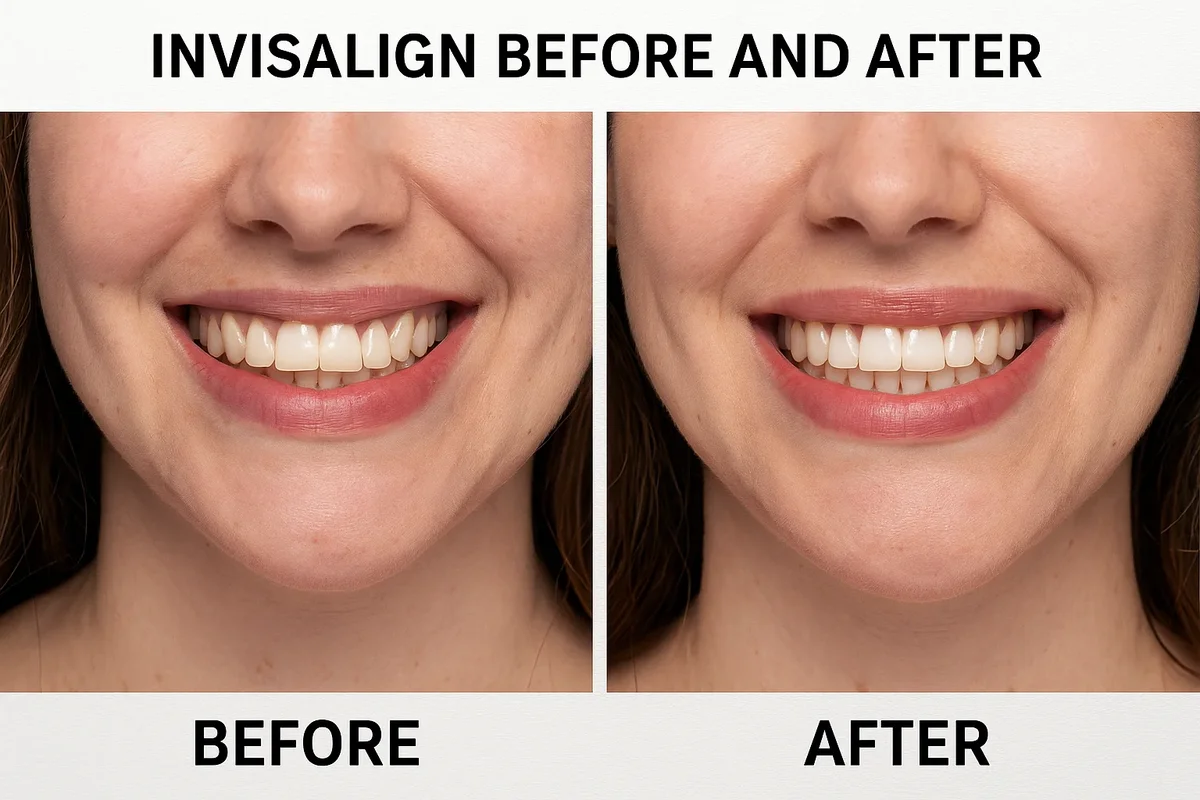
Invisalign Before and After: Real Patient Transformations and Final Thoughts
The true power of Invisalign before and after results is best demonstrated through real patient experiences. Seeing genuine success stories helps potential patients understand not only how effective Invisalign is, but also how transformative the journey can be — both physically and emotionally. From minor adjustments to complete smile overhauls, Invisalign has consistently proven to deliver stunning, predictable results that enhance confidence and oral health. In this section, we’ll explore real-world cases, clinical outcomes, and the key lessons learned from successful treatments to give you a clear picture of what to expect. 🌟
Why Real Invisalign Before and After Results Matter
Before starting any orthodontic treatment, patients often ask: “Does Invisalign really work?” The answer lies in the data — and the smiles. Thousands of patients worldwide have shared authentic Invisalign before and after transformations showing straight, balanced, and radiant smiles. These real-life examples offer reassurance that Invisalign’s advanced technology is not just theoretical — it’s clinically proven to deliver measurable, long-lasting improvements.
Unlike traditional braces, Invisalign uses 3D imaging and computer-guided precision to map tooth movement from the very beginning. Patients can see a digital preview of their expected outcome before treatment even begins. This visualization provides motivation and clarity — you can literally watch your future smile evolve step by step. 📈
The Emotional Impact of Transformation
Beyond physical improvements, Invisalign transforms self-esteem. Many patients report that their “after” photos represent not just straighter teeth, but a new level of confidence. Whether for social events, professional settings, or personal relationships, the Invisalign before and after journey often marks a turning point in how individuals perceive themselves. This emotional satisfaction reinforces why Invisalign is more than cosmetic — it’s life-changing.
Real Patient Case Studies: From Start to Smile
Let’s examine some inspiring case studies that illustrate the versatility and effectiveness of Invisalign treatment. These stories show how patients with different dental challenges achieved remarkable results with consistency, professional guidance, and modern orthodontic technology.
Case 1 – Mild Crowding and Gaps
Patient: 25-year-old female with overlapping lower front teeth and minor spacing on the upper arch.
Treatment Duration: 8 months.
Outcome: Teeth were aligned with perfect symmetry. Gum health improved due to easier cleaning, and overall facial aesthetics were enhanced. The Invisalign before and after comparison revealed smoother contours and a radiant, confident smile.
Case 2 – Moderate Overbite Correction
Patient: 31-year-old male with a noticeable overbite and slight jaw misalignment.
Treatment Duration: 14 months.
Outcome: Using SmartForce® attachments and elastics, Invisalign successfully corrected the bite alignment and straightened the front teeth. The patient reported improved chewing comfort and reduced jaw tension. The Invisalign before and after results showed a visibly more balanced facial profile.
Case 3 – Severe Spacing Issues
Patient: 19-year-old student with wide gaps between several upper teeth.
Treatment Duration: 12 months.
Outcome: Gaps were completely closed using sequential aligner adjustments. The smile transformation was remarkable, and the patient’s confidence increased significantly. The Invisalign before and after results highlighted even spacing and a natural, harmonious smile line. 😁
Case 4 – Adult Smile Makeover
Patient: 42-year-old businesswoman seeking discreet orthodontic correction without traditional braces.
Treatment Duration: 16 months.
Outcome: Invisalign aligned her teeth and corrected slight crossbite without affecting her professional appearance. The final Invisalign before and after photos showed youthful facial balance and improved jaw definition, reinforcing that age is no barrier to a stunning smile.
Common Themes from Successful Invisalign Patients
Across all cases, the patients who achieved the most dramatic Invisalign before and after results shared several key behaviors that contributed to success:
- They wore aligners for at least 22 hours daily.
- They maintained excellent oral hygiene and cleaned their aligners regularly.
- They attended all scheduled checkups and followed dentist recommendations.
- They remained patient and consistent — even when progress seemed slow.
These shared habits emphasize that the best outcomes are a partnership between advanced technology and patient discipline. The aligners do the work — but your commitment ensures the reward. 💪
Long-Term Stability: The “After” Phase
After treatment completion, maintaining your results is crucial. Wearing retainers as prescribed keeps teeth from gradually shifting back into their previous positions. Most clinics, including Redent Klinik, recommend Vivera® retainers — made from the same high-quality material as Invisalign aligners — for optimal comfort and durability.
The long-term stability of Invisalign before and after results depends on this post-treatment discipline. Regular dental checkups and daily care routines ensure your smile stays as perfect as the day you finished treatment. 🦷
How Retainers Preserve Your Smile
- Initial Phase: Wear retainers full-time for the first 3–6 months.
- Maintenance Phase: Transition to nighttime-only use after alignment stabilizes.
- Long-Term Care: Replace retainers every 1–2 years to maintain optimal fit and hygiene.
This ongoing commitment guarantees that your investment in a stunning Invisalign before and after transformation remains permanent.
What Sets Invisalign Apart from Other Treatments
Unlike metal braces, Invisalign offers a modern orthodontic solution focused on aesthetics, comfort, and flexibility. The transparent aligners make it possible to achieve major smile transformations without disrupting your lifestyle. Digital precision, minimal pain, and predictable outcomes are the hallmarks of Invisalign’s success.
Moreover, with Invisalign’s SmartTrack® material and AI-driven planning, even complex cases can now achieve excellent results that were once only possible with braces. This technology-driven approach ensures that each Invisalign before and after journey is not only effective but also tailored to your exact anatomy and smile goals.
Final Thoughts: The Journey to Your Dream Smile
Your Invisalign before and after transformation is more than an orthodontic procedure — it’s a personal evolution. From the moment you place your first aligner to the day you complete your treatment, every step represents progress toward a healthier, more confident version of yourself. Invisalign combines science, artistry, and discipline to deliver a smile that lasts a lifetime. 🌈
If you’re ready to begin your own transformation, contact the experts at Redent Klinik for a personalized consultation. Their specialists use state-of-the-art 3D scanning and digital monitoring to ensure every patient achieves an exceptional result. For further information on dental safety standards and orthodontic innovations, refer to the American Dental Association. Your journey to a confident, radiant smile starts today — and the next “before and after” story could be yours. 💫