
If you are searching for whether invisalign best option is the right solution for your smile, the short answer is that it can be an excellent treatment for many people, but it is not automatically the best choice for everyone. The answer depends on your current dental condition, the complexity of your bite, your lifestyle, your expectations, and your willingness to wear aligners as instructed. Understanding whether invisalign best option applies to your own situation requires more than comparing before-and-after photos or reading general reviews. A professional examination allows your dentist to evaluate your teeth, jaw relationship, oral health, and treatment goals before recommending the most suitable orthodontic solution.
Many adults and teenagers choose Invisalign because the aligners are nearly invisible, removable during meals, and generally easier to clean than traditional braces. However, deciding whether invisalign best option fits your needs should also include practical considerations such as treatment time, expected compliance, possible refinements, and overall oral health. If you have healthy gums, mild to moderate crowding, spacing, or certain bite problems, Invisalign may provide predictable results when the treatment plan is followed carefully. On the other hand, some complex orthodontic cases may require traditional braces, a combination of treatments, or additional dental procedures before aligner therapy begins.
One of the biggest reasons people ask whether invisalign best option is suitable is appearance. Since the aligners are made from clear plastic, they are much less noticeable than metal brackets. Professionals who regularly meet clients, students who prefer a discreet appearance, and adults returning to orthodontic treatment often appreciate this advantage. Nevertheless, appearance should not be the only deciding factor. Long-term oral health, bite function, and treatment predictability remain equally important when evaluating whether invisalign best option is appropriate for your circumstances.
Daily habits also play an important role. Invisalign aligners are removable, but they should generally be worn for most of the day to help teeth move according to the treatment plan. Patients who frequently forget to wear their aligners or remove them for extended periods may experience slower progress or require additional treatment. If you are disciplined and comfortable following instructions consistently, invisalign best option may become a practical solution that fits naturally into your daily routine.
Comfort is another factor that influences many treatment decisions. Compared with traditional braces, Invisalign typically has smooth plastic edges instead of metal brackets and wires. While temporary pressure is expected whenever you change to a new set of aligners, many patients find the overall experience comfortable and easy to adapt to after the first few days. Even so, every patient experiences treatment differently, and temporary discomfort does not necessarily indicate that something is wrong.
Cost is another common concern when evaluating whether invisalign best option makes sense. Treatment fees vary significantly depending on the complexity of tooth movement, the estimated number of aligners, geographic location, additional procedures, and the experience of the treating dentist or orthodontist. No responsible clinic can provide an exact fee without first examining your teeth and creating an individualized treatment plan. Instead of focusing only on the initial cost, many patients also compare treatment efficiency, convenience, maintenance requirements, and long-term oral health benefits when making their decision.
It is equally important to understand that Invisalign is not simply a cosmetic product. It is a comprehensive orthodontic treatment designed to improve tooth alignment and, in many cases, bite function. Better alignment may also make brushing and flossing easier, potentially supporting better long-term oral hygiene. However, these outcomes depend on your individual diagnosis, treatment planning, and ongoing oral care. This is one reason why a comprehensive consultation is recommended before deciding whether invisalign best option applies to your case.
If you have missing teeth, untreated gum disease, extensive tooth decay, or significant jaw discrepancies, your dentist may recommend addressing these issues before beginning Invisalign treatment. Sometimes another orthodontic option may be more suitable, or Invisalign may be combined with other procedures to achieve the desired result. Receiving personalized guidance helps avoid unrealistic expectations and allows you to understand both the benefits and limitations of your available treatment options.
Reliable information should always come from qualified dental professionals and trusted organizations. Resources provided by the American Dental Association can help patients better understand oral health and orthodontic care, while an in-person examination remains the most accurate way to determine whether invisalign best option matches your specific needs. If you would like an individualized assessment, you may also arrange a consultation through the Redent Klinik Contact Page, where your oral condition, treatment objectives, and available options can be discussed without assuming that Invisalign is automatically the correct choice.
Next step: Before committing to any orthodontic treatment, prepare a list of your priorities, including appearance, comfort, expected treatment time, budget, and daily lifestyle. During your consultation, ask whether Invisalign can realistically achieve your goals, whether alternative treatments should also be considered, and what level of commitment your case requires. A personalized clinical evaluation is the most reliable way to determine whether invisalign best option is truly the right solution for your smile.
Is Invisalign the Best Option? A Quick Answer for Most Patients
Many people begin researching orthodontic treatment by asking a simple question: is invisalign best option for straightening teeth? The honest answer is that invisalign best option depends on your individual dental condition rather than on popularity or marketing. For patients with mild to moderate crowding, spacing, or certain bite concerns, Invisalign may provide an effective and discreet solution. However, if your orthodontic issues are more complex, another treatment approach may produce more predictable results. Understanding when invisalign best option truly applies can help you make a confident decision instead of choosing treatment based only on appearance.
Why Many Adults Consider Invisalign the Best Option
Adults often prefer Invisalign because the aligners are clear, removable, and designed to fit comfortably over the teeth. Unlike traditional braces, there are no visible metal brackets or wires, making treatment less noticeable during work, meetings, or social activities. For professionals, university students, and people who frequently speak in public, these cosmetic advantages make many wonder whether invisalign best option fits their lifestyle.
Another practical advantage is flexibility. Since aligners are removed before eating and drinking anything other than water, there are usually fewer dietary restrictions compared with fixed braces. Brushing and flossing are also generally easier because the aligners can be removed temporarily. These everyday conveniences often contribute to why patients believe invisalign best option may suit their personal routine.
When Invisalign May Be a Suitable Choice
Although every case requires professional evaluation, Invisalign is commonly recommended for patients who have:
- Mild to moderate crowding.
- Small gaps between teeth.
- Certain overbites, underbites, or crossbites.
- Relapse after previous orthodontic treatment.
- Healthy gums and generally good oral hygiene.
Patients who consistently wear their aligners according to professional instructions usually experience more predictable tooth movement. Since compliance plays a major role, invisalign best option is often recommended for motivated individuals who understand the importance of wearing their aligners for most of the day.
Commitment Is Just as Important as the Aligners
Choosing Invisalign is not simply purchasing clear trays. Success depends on following the treatment plan, changing aligners as instructed, attending review appointments, and maintaining excellent oral hygiene. Someone who frequently forgets to wear aligners may not achieve the expected progress, even if invisalign best option seemed appropriate initially.
Situations Where Another Treatment May Be Better
There are circumstances where another orthodontic solution may provide greater efficiency or control. Some examples include:
- Severe tooth rotations.
- Major jaw discrepancies.
- Complex bite corrections.
- Patients who are unlikely to wear removable aligners consistently.
- Untreated gum disease or active dental decay requiring attention first.
These situations do not automatically eliminate Invisalign as a possibility. Instead, they highlight why a professional examination is essential before deciding whether invisalign best option applies to your case. In some situations, Invisalign may still be used alongside additional procedures or after preliminary dental treatment.
Cost Should Be Considered Together with Value
Many patients focus immediately on price, but treatment value involves much more than the initial fee. The total investment may vary depending on factors such as treatment complexity, the number of aligners required, additional attachments, refinement stages, retention, and regional pricing differences. Because every treatment plan is customized, no responsible clinic can provide an exact fee without first evaluating your teeth.
Instead of asking only whether invisalign best option is cheaper or more expensive than braces, it is often more useful to compare:
- Expected treatment duration.
- Daily convenience.
- Appearance during treatment.
- Maintenance requirements.
- Likelihood of achieving your treatment goals.
Questions You Should Ask Before Choosing Invisalign
Making an informed decision becomes much easier when you prepare questions before your consultation. Consider asking:
- Is my orthodontic problem suitable for clear aligners?
- Will Invisalign address both cosmetic and functional concerns?
- How long might treatment take in my specific case?
- Will additional dental procedures be recommended?
- What happens if refinements become necessary?
- How important is wearing the aligners consistently?
These discussions help determine whether invisalign best option matches your expectations rather than simply following current trends.
Personalized Evaluation Makes the Difference
Every smile is different. Two patients with similar-looking teeth may require very different treatment plans because bite function, jaw position, gum health, and tooth movement vary considerably. Digital scans, photographs, X-rays when appropriate, and a clinical examination allow your dentist to determine whether invisalign best option is likely to meet your goals safely and predictably.
For patients considering treatment abroad or comparing providers, requesting a comprehensive consultation can help clarify available options. If you would like an individualized assessment, you can contact the team through the Redent Klinik Contact Page. Additional evidence-based oral health information is also available from the American Dental Association.
What You Should Check Before Moving Forward
Before deciding whether invisalign best option is right for you, review your own priorities carefully. Consider whether you are willing to wear aligners consistently, whether your oral health is stable, whether your expectations are realistic, and whether your dentist believes Invisalign is appropriate for your level of orthodontic complexity. If you experience significant bite problems, jaw discomfort, loose teeth, untreated cavities, gum disease, or you are unsure which treatment fits your needs, request a comprehensive professional dental consultation before making your final decision.
Who Is the Best Candidate for Invisalign Treatment?
One of the most important questions people ask before starting orthodontic treatment is whether they are personally suited for Invisalign. While many online articles suggest that invisalign best option works for almost everyone, the reality is more individualized. Your dentist or orthodontist evaluates much more than crooked teeth alone. The position of your bite, the health of your gums, the condition of your jaw joints, your oral hygiene habits, and your willingness to follow treatment instructions all influence whether invisalign best option is an appropriate recommendation. Instead of asking whether Invisalign is popular, it is more helpful to ask whether it matches your specific clinical needs and lifestyle.
Why Every Smile Needs an Individual Assessment
No two orthodontic cases are exactly alike. Two people with similar-looking front teeth may have completely different bite relationships, jaw alignment, or tooth movement requirements. Because of these differences, determining whether invisalign best option fits your situation requires a comprehensive examination rather than a visual comparison with online photographs.
During a consultation, your dental professional may evaluate digital scans, photographs, bite relationships, medical history, previous dental work, and, when appropriate, diagnostic imaging. These records help determine how teeth are expected to move throughout treatment and whether clear aligners can achieve the desired result efficiently and safely.
Patients Who Are Often Good Candidates
Although every diagnosis is unique, Invisalign is frequently considered for patients who have mild to moderate orthodontic concerns. These may include:
- Minor or moderate crowding.
- Spaces between teeth.
- Relapse after previous braces.
- Certain overbite, crossbite, or underbite situations.
- Patients seeking a discreet orthodontic solution.
- Adults who prefer removable appliances for work or social reasons.
For many individuals in these categories, invisalign best option provides an attractive balance between appearance, comfort, and daily convenience. Nevertheless, suitability always depends on the detailed findings of the clinical examination rather than on these general characteristics alone.
Healthy Gums Are an Important Starting Point
Successful orthodontic treatment depends on healthy supporting tissues. If active gum disease or significant inflammation is present, your dentist may recommend treating those conditions before beginning aligner therapy. Healthy gums provide a more stable environment for tooth movement and may reduce the likelihood of complications during treatment. Therefore, even when invisalign best option appears suitable from an orthodontic perspective, periodontal health remains an essential consideration.
Lifestyle Can Influence Treatment Success
One reason many dentists recommend Invisalign is the flexibility of removable aligners. However, this flexibility also creates responsibility. Aligners generally need to be worn for most of the day, except during meals, drinking beverages other than water, and routine oral hygiene. Patients who frequently remove their aligners for extended periods may experience slower progress or require additional treatment refinements.
If you travel frequently, attend many business meetings, or simply appreciate the ability to remove your orthodontic appliance temporarily, invisalign best option may fit naturally into your daily schedule. Conversely, if you believe consistent wear will be difficult, discussing alternative orthodontic solutions with your dentist may be worthwhile.
Age Is Usually Less Important Than Commitment
Many people assume Invisalign is designed only for adults, but teenagers and older adults may also be suitable candidates depending on their dental development and treatment needs. The deciding factor is often not age itself but cooperation. Individuals who understand the importance of following instructions carefully are generally more likely to complete treatment successfully.
This is why invisalign best option often depends more on patient commitment than on the number of birthdays they have celebrated. Regular aligner wear, scheduled follow-up appointments, and good oral hygiene all contribute to successful treatment progression.
Situations That May Require Additional Planning
Some dental conditions require more comprehensive planning before Invisalign begins. These may include:
- Severe crowding requiring extensive tooth movement.
- Significant jaw discrepancies.
- Missing teeth affecting bite stability.
- Dental implants or complex restorative work.
- Active tooth decay requiring treatment first.
- Advanced periodontal disease.
Having one of these conditions does not necessarily mean Invisalign is impossible. Instead, it means the treatment plan may need modification, staged care, or consideration of alternative orthodontic approaches. A thorough consultation helps clarify whether invisalign best option remains appropriate or whether another option may better achieve your treatment goals.
Balancing Appearance, Function, and Long-Term Results
Choosing orthodontic treatment should never be based only on cosmetic appearance. Straight teeth should also contribute to a healthy bite, effective chewing, and easier oral hygiene. Your dentist considers all of these factors before recommending treatment. Although many patients appreciate the nearly invisible appearance of aligners, long-term stability and oral health remain equally important when determining whether invisalign best option truly matches your needs.
If you are comparing treatment providers, ask how your diagnosis was made, which treatment alternatives were considered, and why Invisalign is being recommended. Understanding the reasoning behind your treatment plan can help you make a more informed decision.
Professional Evaluation Before You Decide
Reliable treatment decisions are based on evidence rather than assumptions. Trusted organizations such as the American Dental Association provide educational information about oral health, while a comprehensive clinical examination remains the most accurate way to determine whether invisalign best option fits your individual circumstances. If you would like a personalized assessment, you can arrange a consultation through the Redent Klinik Contact Page, where your oral health, treatment goals, and available orthodontic options can be discussed in detail.
What You Should Check Before Choosing Invisalign
Before deciding whether invisalign best option is the right path for your smile, review several important factors. Confirm that your gums and teeth are healthy enough for orthodontic treatment, consider whether you can wear aligners consistently every day, think about your lifestyle and treatment expectations, and ask whether alternative treatments could achieve similar or better results. If you have severe bite problems, ongoing dental pain, loose teeth, gum bleeding, or uncertainty about your diagnosis, schedule a professional dental consultation before making your final treatment decision.
Invisalign Best Option Cost Factors: What Influences the Final Price?
When researching orthodontic treatment, many people immediately want to know the cost before deciding whether invisalign best option is suitable for them. While understanding the financial aspect is important, it is equally important to recognize that Invisalign treatment is individually planned. The final fee depends on multiple clinical and practical factors rather than a single standard price. Instead of searching for one universal number, patients benefit more from understanding what influences the total investment and how those factors relate to their own treatment goals. A professional examination remains the only reliable way to estimate costs because every smile requires a personalized treatment plan.
Why There Is No Standard Invisalign Price
Unlike products sold at a fixed retail price, orthodontic treatment is customized for each patient. Two individuals requesting Invisalign may receive completely different treatment plans depending on the complexity of tooth movement, bite correction requirements, and overall oral health. This is one of the main reasons why determining whether invisalign best option fits your budget cannot be done accurately without a consultation.
Some patients require relatively small corrections involving only minor spacing or crowding, while others need comprehensive orthodontic treatment involving multiple stages of tooth movement. Naturally, these differences influence the overall treatment process, the number of aligners produced, and the amount of professional supervision required.
Main Factors That Influence Treatment Cost
Several variables contribute to the overall cost of Invisalign treatment. These commonly include:
- The complexity of tooth movement.
- The estimated treatment duration.
- The total number of aligners required.
- Whether refinement aligners become necessary.
- The need for attachments or other auxiliary procedures.
- The provider’s experience and treatment planning process.
- Regional economic differences and local operating costs.
Each of these elements contributes differently depending on your diagnosis. This is why patients with seemingly similar smiles may receive different treatment recommendations and different cost estimates. Evaluating whether invisalign best option fits your circumstances involves understanding these variables instead of comparing treatment solely by advertised prices.
Complex Cases Often Require Additional Planning
If your orthodontic concerns involve significant crowding, bite discrepancies, or previous dental restorations, additional planning may be necessary before treatment begins. In some situations, your dentist may recommend treating cavities, improving gum health, or coordinating orthodontic care with other dental procedures. These individualized requirements can influence the overall treatment process, making personalized assessment essential when deciding whether invisalign best option aligns with both your clinical needs and financial expectations.
Value Should Be Considered Alongside Price
Although cost is naturally an important consideration, focusing only on the lowest available price rarely provides the complete picture. Orthodontic treatment affects your smile, bite, and long-term oral health. Therefore, evaluating overall value often provides a better basis for decision-making than comparing fees alone.
When assessing treatment value, consider questions such as:
- Does the treatment address both cosmetic and functional concerns?
- How experienced is the treating dentist or orthodontist?
- How detailed is the diagnostic and treatment planning process?
- Will follow-up appointments and progress monitoring be included?
- What happens if treatment refinements become necessary?
These practical considerations often influence patient satisfaction more than the initial quoted fee. For many people, invisalign best option is determined by the balance between treatment quality, convenience, expected outcomes, and financial planning rather than by selecting the lowest available price.
Hidden Costs Patients Should Ask About
Before beginning treatment, it is wise to discuss exactly what your treatment plan includes. Depending on the provider and your individual case, there may be additional services that affect the overall investment. Asking clear questions helps you compare treatment plans more effectively.
You may wish to ask whether your treatment estimate includes:
- Digital scans and diagnostic records.
- Routine review appointments.
- Refinement aligners if required.
- Retention after treatment.
- Replacement aligners if they are lost.
Having a transparent discussion about these topics allows you to evaluate whether invisalign best option remains financially appropriate for your individual situation without relying on assumptions.
Insurance and Payment Planning
Some dental insurance policies may contribute toward orthodontic treatment, while others may not provide benefits for adult orthodontics. Coverage varies significantly depending on your insurance provider, policy terms, and country of residence. Before starting treatment, review your policy carefully and discuss any available benefits with both your insurer and your dental provider.
Some clinics may also offer structured payment arrangements to help patients manage treatment costs over time. Availability, eligibility, and terms differ between providers, so these options should be discussed during your consultation rather than assumed in advance.
Comparing Invisalign with Other Orthodontic Options
Financial comparisons should always include clinical suitability. Traditional braces, ceramic braces, or other orthodontic approaches may involve different costs, treatment times, and maintenance requirements. The most economical option is not always the most appropriate for your oral health. Likewise, the highest-priced option is not automatically the best solution.
A thorough consultation helps determine whether invisalign best option provides the most appropriate balance between effectiveness, convenience, appearance, and overall investment based on your personal treatment objectives.
Professional Evaluation Before Making a Financial Decision
Reliable oral health information is available through organizations such as the American Dental Association, but treatment recommendations and cost estimates should always be based on a personalized examination. If you would like an individualized assessment of your orthodontic needs, you may arrange a consultation through the Redent Klinik Contact Page. During the consultation, your dentist can evaluate your oral health, explain the available treatment options, and discuss the factors that influence your customized treatment plan.
What You Should Check Before Making Your Decision
Before deciding whether invisalign best option fits both your smile and your budget, review exactly what your treatment plan includes, ask whether additional procedures may be recommended, verify any available insurance benefits, and compare treatment options based on long-term value rather than price alone. If you are unsure why a particular treatment has been recommended or if you receive significantly different opinions from different providers, requesting a comprehensive professional consultation can help you make a more informed and confident decision.
What to Expect During the Invisalign Treatment Process
Understanding each stage of treatment helps patients decide whether invisalign best option fits their expectations and daily routine. While Invisalign is designed to be convenient and discreet, successful treatment involves more than simply wearing clear aligners. Every patient follows a personalized treatment plan based on the position of their teeth, bite relationship, oral health, and treatment objectives. Knowing what happens from the initial consultation to the retention phase allows you to prepare realistically and determine whether invisalign best option is appropriate for your situation.
Step 1: Initial Consultation and Smile Evaluation
The first stage begins with a comprehensive dental examination rather than immediately receiving aligners. During this appointment, the dentist or orthodontist evaluates your teeth, gums, bite, existing restorations, and overall oral health. Digital scans, photographs, and, when clinically appropriate, diagnostic imaging help create an accurate picture of your orthodontic needs.
This evaluation is essential because not every patient requires the same type of tooth movement. The consultation helps determine whether invisalign best option is suitable for your level of orthodontic complexity or whether another treatment option should also be considered.
Questions You Should Ask During the Consultation
The consultation is also an opportunity to discuss your goals and expectations. Consider asking questions such as:
- Is Invisalign appropriate for my bite?
- What improvements are realistically achievable?
- Approximately how long could treatment take?
- Will attachments or additional procedures be needed?
- What happens if treatment takes longer than expected?
Receiving clear answers allows you to decide whether invisalign best option aligns with both your clinical needs and personal priorities.
Step 2: Digital Treatment Planning
Once Invisalign is recommended, your provider creates a customized digital treatment plan. Advanced software maps the planned tooth movements throughout each stage of treatment. This planning process helps estimate how your teeth are expected to move and determines the sequence of aligners required.
Although digital simulations provide a useful visual guide, they remain treatment plans rather than guarantees. Biological responses differ between patients, and adjustments or refinements may sometimes be recommended. Understanding this helps maintain realistic expectations when choosing invisalign best option.
Step 3: Receiving Your Aligners
After the treatment plan is finalized, your custom aligners are manufactured. Each aligner is designed to apply gentle pressure that gradually moves the teeth according to the planned sequence.
Some patients also receive small tooth-colored attachments bonded temporarily to selected teeth. These attachments improve aligner grip and help achieve specific tooth movements more effectively. Their placement depends entirely on the clinical requirements of your individual case.
Step 4: Wearing the Aligners Consistently
One of the most important responsibilities during treatment is wearing the aligners consistently. They are generally removed only while eating, drinking beverages other than water, brushing, and flossing. Consistent wear allows teeth to move according to the planned schedule.
Patients frequently ask whether invisalign best option works faster than braces. The answer depends largely on treatment complexity and patient compliance rather than on the appliance itself. Wearing aligners as instructed contributes significantly to treatment efficiency.
Daily Habits That Support Successful Treatment
- Brush your teeth before reinserting aligners whenever possible.
- Clean the aligners regularly using recommended methods.
- Store aligners safely when removed.
- Attend scheduled review appointments.
- Report damaged or lost aligners promptly.
Developing these habits early helps many patients adapt comfortably to treatment while supporting the objectives of invisalign best option.
Step 5: Progress Appointments
Regular review appointments allow your provider to monitor tooth movement, evaluate aligner fit, and determine whether treatment is progressing as expected. These appointments are an important part of orthodontic care because they provide opportunities to identify potential issues early.
Occasionally, additional aligners or refinements may be recommended if tooth movement differs from the original projection. This possibility is normal in orthodontics and should not automatically be viewed as a complication. Instead, it reflects the individualized nature of tooth movement.
Step 6: Completing Treatment and Wearing Retainers
After the planned tooth movements have been achieved, treatment does not end immediately. Retainers are commonly recommended to help maintain the new tooth positions. Teeth naturally tend to shift over time, and retention plays an important role in preserving treatment results.
Patients who carefully follow retainer instructions are generally more likely to maintain their orthodontic improvements over the long term. This final stage is one reason why deciding whether invisalign best option should include consideration of long-term commitment rather than treatment alone.
Managing Expectations Throughout Treatment
Every orthodontic journey is unique. Some patients notice visible improvements relatively early, while others experience gradual changes over a longer period. Treatment duration varies according to the complexity of tooth movement, biological response, and patient cooperation.
Maintaining realistic expectations helps reduce unnecessary frustration. Rather than focusing only on how quickly changes appear, concentrate on following your treatment plan consistently and communicating openly with your dental provider whenever questions arise.
Professional Support Throughout Your Invisalign Journey
Reliable oral health information is available through organizations such as the American Dental Association, while personalized treatment recommendations require a clinical examination. If you are considering whether invisalign best option is suitable for your smile, you may arrange an individualized consultation through the Redent Klinik Contact Page. A personalized assessment allows your dentist to explain each treatment stage, discuss expected timelines, and recommend the most appropriate orthodontic approach for your needs.
What You Should Check Before Starting Treatment
Before deciding whether invisalign best option is right for you, make sure you understand every stage of the treatment process, including diagnosis, digital planning, aligner wear, progress reviews, possible refinements, and long-term retainer use. Ask your dentist how your treatment plan has been customized, what level of commitment is expected, and what alternative orthodontic options may also be appropriate. If you have unanswered questions about treatment duration, oral health, or expected outcomes, request professional advice before beginning orthodontic treatment.
Advantages, Limitations, and Potential Risks of Choosing Invisalign
When deciding whether invisalign best option is the right orthodontic treatment, it is important to look beyond the cosmetic appeal of clear aligners. Every treatment has strengths, limitations, and potential risks that should be understood before making a decision. Invisalign has become a popular choice because it combines aesthetics with modern digital treatment planning, but it is not automatically the ideal solution for every patient. By evaluating both the benefits and the possible challenges, you can make a more informed decision about whether invisalign best option fits your dental needs, lifestyle, and long-term expectations.
Advantages of Choosing Invisalign
Many patients begin considering Invisalign because they want a more discreet alternative to traditional braces. The transparent aligners are designed to fit closely over the teeth, making them much less noticeable during everyday activities. For adults who work in professional environments or anyone who prefers a less visible orthodontic appliance, this feature is often one of the strongest reasons to explore whether invisalign best option suits their circumstances.
In addition to appearance, Invisalign offers several practical advantages that many patients appreciate throughout treatment.
- Clear aligners are generally less noticeable than metal braces.
- They can be removed for meals and oral hygiene.
- There are usually fewer dietary restrictions.
- Cleaning teeth is often easier because brushing and flossing remain similar to normal routines.
- Smooth plastic surfaces may reduce irritation associated with brackets and wires.
These benefits explain why many adults investigate whether invisalign best option matches their daily routine and personal preferences.
Comfort Can Improve the Treatment Experience
Although patients commonly experience temporary pressure when changing to a new aligner, many describe the overall treatment as comfortable after the initial adjustment period. Since there are no tightening appointments involving wires, some patients find the transition between aligners easier to manage. However, comfort varies between individuals, and mild pressure is a normal part of planned tooth movement.
Limitations You Should Understand
Despite its advantages, Invisalign also has important limitations. The removable nature of aligners provides flexibility, but it also places greater responsibility on the patient. Treatment success depends heavily on consistent wear and cooperation.
Situations where Invisalign may be less suitable include:
- Severe orthodontic problems requiring complex tooth movement.
- Patients who frequently forget to wear removable aligners.
- Advanced bite discrepancies requiring extensive correction.
- Certain jaw relationship problems.
- Untreated gum disease or active tooth decay.
These limitations do not automatically exclude Invisalign. Instead, they highlight why determining whether invisalign best option requires a professional diagnosis rather than relying solely on general information.
Potential Risks During Treatment
Every orthodontic treatment carries potential risks, and Invisalign is no exception. Most risks can be minimized through careful planning, regular professional monitoring, and good patient compliance.
Possible considerations include:
- Temporary discomfort after changing aligners.
- Delayed progress if aligners are not worn consistently.
- Difficulty tracking tooth movement in some cases, requiring refinements.
- Minor speech adjustments during the early adaptation period.
- Potential oral hygiene problems if teeth and aligners are not cleaned properly.
It is important to understand that these possibilities do not occur in every patient. They simply illustrate why professional supervision remains essential throughout treatment, even when invisalign best option appears highly suitable initially.
Attachments Are Normal for Many Patients
Some patients are surprised to learn that small tooth-colored attachments may be bonded temporarily to certain teeth. These attachments improve aligner grip and help produce specific tooth movements. They are a routine part of many treatment plans and should not automatically be viewed as a complication. Whether attachments are required depends entirely on the clinical objectives of your case.
Long-Term Commitment Matters
Choosing Invisalign involves more than completing active treatment. Retainers are commonly recommended after orthodontic treatment to help maintain tooth position over time. Without appropriate retention, teeth may gradually shift regardless of whether treatment was completed using Invisalign or traditional braces.
Patients evaluating whether invisalign best option fits their goals should therefore consider both the active treatment phase and the ongoing responsibility of protecting their results.
Balancing Convenience with Responsibility
The removable design of Invisalign is both one of its greatest strengths and one of its biggest challenges. Patients enjoy the convenience of removing aligners for meals and oral hygiene, but forgetting to replace them can reduce treatment efficiency. This balance between flexibility and responsibility is one of the most important considerations when deciding whether invisalign best option matches your lifestyle.
If you prefer a treatment that requires minimal daily decision-making, discussing fixed orthodontic appliances with your dentist may also be worthwhile. Conversely, if you value flexibility and are confident in following instructions carefully, Invisalign may offer significant practical advantages.
Making an Informed Decision
Reliable oral health education from organizations such as the American Dental Association can help patients understand orthodontic treatment, but only a personalized examination can determine whether invisalign best option is appropriate for your specific diagnosis. If you are comparing orthodontic options, you may request an individualized consultation through the Redent Klinik Contact Page. During the assessment, your dentist can explain the expected benefits, possible limitations, and whether Invisalign aligns with your treatment objectives.
What You Should Check Before Making Your Final Choice
Before deciding whether invisalign best option is right for you, evaluate both the advantages and the limitations objectively. Ask whether your orthodontic condition is suitable for clear aligners, whether you can commit to wearing them consistently, whether attachments or refinements may be required, and what long-term retention plan will help maintain your results. If you have complex bite concerns, untreated dental disease, persistent jaw discomfort, or uncertainty about your treatment options, seek professional dental advice before making your final orthodontic decision.
Invisalign vs Other Orthodontic Options: Which Is the Better Choice?
Many patients researching orthodontic treatment eventually compare Invisalign with braces, ceramic braces, lingual braces, or other clear aligner systems. While online comparisons often try to identify a single winner, the reality is that there is no universal solution that works equally well for every patient. Whether invisalign best option is the right choice depends on your diagnosis, treatment goals, lifestyle, oral health, and the complexity of the tooth movements required. Instead of asking which treatment is objectively superior, it is more helpful to determine which option offers the most appropriate balance between effectiveness, convenience, appearance, and long-term oral health for your individual case.
Comparing Invisalign and Traditional Metal Braces
Traditional metal braces have been used successfully for many years and remain an effective treatment for a wide variety of orthodontic conditions. Because brackets are fixed to the teeth, they work continuously without relying on patient compliance for daily wear. This characteristic makes braces particularly valuable in cases involving more complex tooth movement or when consistent aligner wear may be difficult.
In contrast, Invisalign offers removable clear aligners that are designed to provide greater flexibility during daily life. Patients who value a discreet appearance frequently explore whether invisalign best option aligns with their personal and professional lifestyle. However, removable aligners require commitment, and treatment success depends heavily on following professional instructions.
Key Differences Between Metal Braces and Invisalign
- Metal braces remain attached throughout treatment, while Invisalign aligners are removable.
- Invisalign is generally less noticeable during everyday activities.
- Braces usually eliminate concerns about forgetting to wear the appliance.
- Invisalign typically allows easier brushing and flossing because the aligners can be removed.
- Both treatments require regular professional follow-up appointments.
Invisalign vs Ceramic Braces
Ceramic braces function similarly to traditional braces but use tooth-colored or translucent brackets to create a less visible appearance. Patients who require fixed orthodontic treatment while preferring a more discreet look sometimes consider ceramic braces as an alternative.
When evaluating whether invisalign best option is preferable to ceramic braces, convenience becomes an important consideration. Invisalign aligners are removable during meals and oral hygiene, whereas ceramic braces remain fixed throughout treatment. On the other hand, ceramic braces may provide greater control for certain complex orthodontic movements.
Invisalign vs Lingual Braces
Lingual braces are attached to the inner surfaces of the teeth, making them largely hidden from view. Although they provide excellent cosmetic concealment, they may require a longer adaptation period because they are positioned closer to the tongue.
Patients comparing lingual braces with Invisalign often consider comfort, speech adaptation, cleaning requirements, and treatment objectives. Determining whether invisalign best option fits your needs requires balancing these practical factors alongside the complexity of your orthodontic condition.
Invisalign vs Other Clear Aligner Systems
Several clear aligner systems are available today, each offering different treatment protocols, technologies, and levels of professional supervision. While many systems share the same basic concept of sequential clear aligners, treatment planning methods, material characteristics, monitoring processes, and provider experience may differ.
Rather than focusing exclusively on brand recognition, ask your dental provider why a specific aligner system has been recommended for your diagnosis. Understanding the clinical reasoning helps determine whether invisalign best option is appropriate compared with other professionally supervised aligner therapies.
Questions Worth Asking During Your Consultation
- Why is this treatment recommended instead of another orthodontic option?
- Will the proposed treatment address both cosmetic and functional concerns?
- Are refinements commonly required for my type of case?
- How will progress be monitored throughout treatment?
- What retention plan will be recommended after treatment?
How Lifestyle Can Influence the Best Choice
Your daily routine plays an important role when choosing orthodontic treatment. Individuals who regularly attend meetings, speak publicly, or simply prefer a more discreet appliance often appreciate the cosmetic advantages of clear aligners. Others may prefer fixed braces because they eliminate the responsibility of remembering to insert aligners after meals.
For motivated patients who can consistently follow instructions, invisalign best option may provide an excellent balance between aesthetics and functionality. Conversely, patients who anticipate difficulty wearing removable aligners consistently should discuss whether fixed appliances may better support successful treatment.
Clinical Complexity Matters More Than Appearance
While appearance is often the first feature patients notice, orthodontists typically prioritize clinical effectiveness. Complex rotations, significant jaw discrepancies, severe bite problems, or advanced tooth movement requirements may influence the treatment recommendation regardless of cosmetic preferences.
This is why selecting treatment based solely on visibility may not produce the most predictable outcome. A comprehensive diagnosis allows your dentist to determine whether invisalign best option can realistically achieve your treatment objectives or whether another orthodontic approach offers greater control.
Balancing Cost, Convenience, and Long-Term Results
Comparing orthodontic treatments should involve more than appearance and initial fees. Consider factors such as expected treatment duration, maintenance requirements, follow-up appointments, comfort, oral hygiene, and long-term stability. The lowest-cost treatment is not automatically the most suitable, and the highest-cost option does not necessarily produce better results for every patient.
Discussing these topics openly with your dental provider helps ensure that your treatment recommendation reflects your oral health needs rather than assumptions based on advertisements or online comparisons.
Making a Personalized Decision
Educational resources provided by the American Dental Association offer valuable information about orthodontic care, but choosing between Invisalign and other treatment options always requires a personalized clinical examination. If you would like an individualized assessment of your smile, you can arrange a consultation through the Redent Klinik Contact Page. A detailed evaluation helps determine whether invisalign best option is appropriate for your diagnosis or whether another orthodontic solution should also be considered.
What You Should Check Before Choosing Between Treatment Options
Before making your final decision, compare orthodontic options based on clinical suitability, expected treatment complexity, daily lifestyle, oral hygiene requirements, long-term maintenance, and your ability to follow treatment instructions consistently. Ask your dentist why one treatment has been recommended over another, what limitations each option may have for your specific case, and whether additional procedures could influence the overall treatment plan. If you remain uncertain after comparing alternatives, request professional advice and a comprehensive orthodontic evaluation before beginning treatment.
Payment, Financing, and Insurance Considerations for Invisalign
Financial planning is an important part of deciding whether invisalign best option is right for your smile. While clinical suitability should always come first, understanding payment methods, financing opportunities, and possible insurance benefits helps many patients begin treatment with greater confidence. Because Invisalign treatment is individually planned, there is no universal fee that applies to every patient. Instead, the overall investment depends on the complexity of your orthodontic needs, the length of treatment, and the customized care required throughout the process. Before making a decision, it is helpful to understand how financial planning works and which questions you should ask during your consultation.
Why Treatment Costs Differ Between Patients
Every Invisalign treatment plan is created specifically for one individual. Two patients who appear to have similar smiles may require different aligner sequences, different treatment durations, or additional procedures before orthodontic treatment begins. As a result, determining whether invisalign best option fits your budget requires an examination rather than relying on average prices found online.
Factors that commonly influence the total treatment investment include:
- The complexity of tooth movement.
- The estimated treatment duration.
- The number of aligners required.
- Whether refinement aligners become necessary.
- Any additional dental treatment recommended before orthodontic care.
- The provider’s treatment planning process and follow-up schedule.
Because every treatment plan is unique, responsible dental providers avoid promising exact fees until diagnostic records have been reviewed. This individualized approach helps determine whether invisalign best option is both clinically appropriate and financially realistic for your situation.
Understanding Dental Insurance Coverage
Insurance benefits vary significantly depending on your provider, policy type, country, and age eligibility. Some dental insurance plans include orthodontic benefits, while others provide limited coverage or no orthodontic reimbursement at all. Adult orthodontic treatment may have different benefit conditions compared with treatment for children or teenagers.
Before beginning treatment, it is advisable to contact your insurance provider and confirm:
- Whether orthodontic treatment is included.
- Whether clear aligners are covered.
- Any lifetime orthodontic benefit limits.
- Annual maximum reimbursement amounts.
- Waiting periods or eligibility requirements.
These discussions help you understand your personal financial responsibility before deciding whether invisalign best option aligns with your treatment plans.
Documentation May Be Required
Some insurance providers request diagnostic records, treatment plans, or supporting documentation before processing orthodontic claims. Your dental clinic can often explain which documents are commonly prepared during treatment planning, although individual insurance requirements vary between companies.
Financing Options May Improve Accessibility
Many patients prefer to spread treatment costs over time rather than paying the full amount at once. Depending on the clinic and local financial regulations, structured payment arrangements or third-party financing services may be available. Availability, eligibility criteria, repayment terms, and approval processes differ between providers and should always be discussed directly during your consultation.
When evaluating financing opportunities, ask questions such as:
- How are payments scheduled?
- Are installment options available?
- When is the initial payment expected?
- Which services are included in the treatment plan?
- How are additional refinements handled if required?
Having a clear understanding of these practical details helps determine whether invisalign best option fits comfortably within your financial planning.
Looking Beyond the Initial Fee
Choosing orthodontic treatment based only on the lowest advertised price may not provide the best overall value. Instead, compare the complete treatment experience, including diagnostics, professional supervision, review appointments, retention planning, and ongoing support.
Some treatment plans may include:
- Digital smile scans.
- Customized treatment planning.
- Routine progress evaluations.
- Retention guidance after treatment.
- Professional monitoring throughout the orthodontic process.
Understanding what is included allows you to compare treatment options more accurately. In many situations, determining whether invisalign best option involves evaluating long-term value rather than focusing solely on the initial cost estimate.
Budgeting for Long-Term Orthodontic Care
Orthodontic treatment should also include planning for the period after active tooth movement has been completed. Retainers are commonly recommended to help maintain tooth position, and follow-up evaluations may be advised according to your provider’s recommendations.
Thinking about long-term maintenance before treatment begins helps prevent unexpected questions later. Patients who understand the complete orthodontic journey often feel better prepared when deciding whether invisalign best option matches both their clinical needs and financial expectations.
Questions to Discuss During Your Financial Consultation
Preparing a list of financial questions before your appointment can make treatment planning much easier. Consider asking:
- Which services are included in the proposed treatment fee?
- Will retainers be discussed separately?
- How are refinements managed if they become clinically necessary?
- Can treatment be coordinated with available insurance benefits?
- Are payment arrangements available if appropriate?
Open communication with your provider reduces uncertainty and helps you compare treatment plans objectively.
Professional Guidance Supports Better Financial Decisions
Educational resources from the American Dental Association provide helpful information about oral health and orthodontic treatment, while individualized financial planning requires a consultation with your dental provider. If you would like to discuss your orthodontic goals, treatment options, and planning process, you can request an appointment through the Redent Klinik Contact Page. A personalized consultation allows your dentist to explain your treatment plan and the factors that may influence the overall investment without guaranteeing pricing before an examination.
What You Should Check Before Making a Financial Commitment
Before deciding whether invisalign best option fits your budget, review your insurance benefits carefully, ask which services are included in the proposed treatment plan, discuss available payment arrangements if appropriate, and understand any long-term maintenance recommendations such as retainers and follow-up care. If you receive different treatment estimates from multiple providers or remain uncertain about the financial aspects of your orthodontic care, request a comprehensive professional consultation before making your final decision.
Frequently Asked Questions About Choosing Invisalign
Patients researching orthodontic treatment often have many practical questions before deciding whether invisalign best option is the right solution for their smile. While online resources provide general guidance, the answers to many questions depend on your individual oral health, treatment goals, and clinical diagnosis. This section addresses some of the most common concerns people have before beginning treatment while emphasizing the importance of personalized professional advice. Understanding these frequently asked questions can help you feel more confident when discussing treatment options with your dentist.
Is Invisalign the Best Option for Everyone?
No. Although many patients benefit from Invisalign, there is no orthodontic treatment that is universally appropriate for every case. Whether invisalign best option applies to your situation depends on factors such as tooth alignment, bite relationship, jaw position, oral health, previous dental treatment, and your ability to wear aligners consistently.
Patients with mild to moderate orthodontic concerns are often suitable candidates, while some complex cases may benefit from different treatment approaches. A clinical examination is the most reliable way to determine which option is appropriate.
Does Invisalign Work Faster Than Braces?
Treatment time varies considerably from one patient to another. Some orthodontic cases may progress efficiently with Invisalign, while others may require a similar or longer treatment period compared with fixed braces. The complexity of tooth movement, patient compliance, and biological response all influence treatment duration.
Instead of asking whether one appliance is always faster, it is usually more helpful to ask whether invisalign best option can achieve your individual treatment goals effectively and predictably.
Can Missed Wear Time Affect Results?
Yes. Since Invisalign aligners are removable, consistent wear is an important part of treatment. Removing aligners for extended periods may reduce treatment efficiency and could require adjustments to the treatment plan. Following your provider’s instructions helps support planned tooth movement throughout the orthodontic process.
Will Invisalign Affect Everyday Life?
Many patients adapt to Invisalign relatively quickly. Because aligners are removable, eating and oral hygiene are generally more convenient than with fixed braces. Some people notice temporary speech changes during the first few days of treatment, but many adapt as they become accustomed to wearing the aligners.
Patients with busy professional or social schedules often investigate whether invisalign best option suits their lifestyle because the clear aligners are less noticeable during everyday interactions.
Can Invisalign Correct Complex Orthodontic Problems?
Modern aligner technology continues to evolve, and many orthodontic concerns can now be managed with Invisalign under professional supervision. However, not every complex case is ideally suited for clear aligners alone. Significant jaw discrepancies, severe bite problems, or extensive tooth movement may require different treatment strategies or a combination of orthodontic techniques.
This is why determining whether invisalign best option always requires a comprehensive diagnosis rather than relying solely on general information found online.
Will I Need Attachments?
Possibly. Many treatment plans include small tooth-colored attachments that temporarily improve aligner grip and help achieve specific tooth movements. Their use depends entirely on your individual treatment objectives and should not automatically be viewed as a complication.
Your dentist can explain whether attachments are likely to be recommended during your consultation and how they contribute to successful treatment outcomes.
Are Attachments Permanent?
No. Attachments are typically removed after orthodontic treatment has been completed. The timing depends on your personalized treatment plan and clinical progress.
Will I Need to Wear a Retainer Afterwards?
Retention is commonly recommended after orthodontic treatment, regardless of whether treatment was completed with Invisalign or traditional braces. Teeth naturally have a tendency to shift over time, and retainers help maintain the achieved tooth positions.
Patients deciding whether invisalign best option fits their expectations should remember that orthodontic treatment includes both the active tooth movement phase and the long-term maintenance phase.
Can Adults Start Invisalign at Any Age?
Many adults successfully undergo orthodontic treatment later in life. Age alone does not automatically prevent Invisalign treatment. More important considerations include gum health, bone support, existing restorations, and the overall condition of the teeth. A healthy mouth provides a better foundation for planned orthodontic movement.
If you have previous crowns, bridges, implants, or periodontal treatment, your dentist will evaluate how these factors influence your treatment plan before determining whether invisalign best option is suitable.
How Should I Prepare for My Consultation?
Preparing questions in advance allows you to make the most of your appointment. Consider discussing:
- Whether Invisalign is clinically suitable for your diagnosis.
- Possible alternative orthodontic treatments.
- Estimated treatment stages.
- Expected responsibilities during treatment.
- Retention after active treatment.
- Financial planning and insurance considerations.
These conversations help ensure that your treatment decision is based on a complete understanding of your available options rather than assumptions.
Where Can You Find Reliable Information?
General oral health education is available through trusted organizations such as the American Dental Association. However, online information cannot replace a personalized examination. If you would like an individualized evaluation of your smile, you can request a consultation through the Redent Klinik Contact Page. During the appointment, your dentist can explain whether invisalign best option is appropriate for your specific diagnosis and discuss any alternative treatment options that may also be suitable.
What You Should Check Before Requesting Professional Advice
Before attending your consultation, think about your treatment priorities, daily routine, budget, cosmetic expectations, and willingness to wear aligners consistently. Prepare a list of questions regarding treatment duration, maintenance, retainers, alternative orthodontic options, and possible limitations. If you experience jaw discomfort, significant bite problems, gum disease, loose teeth, or uncertainty about whether invisalign best option applies to your case, request a comprehensive professional dental evaluation before making your final treatment decision.
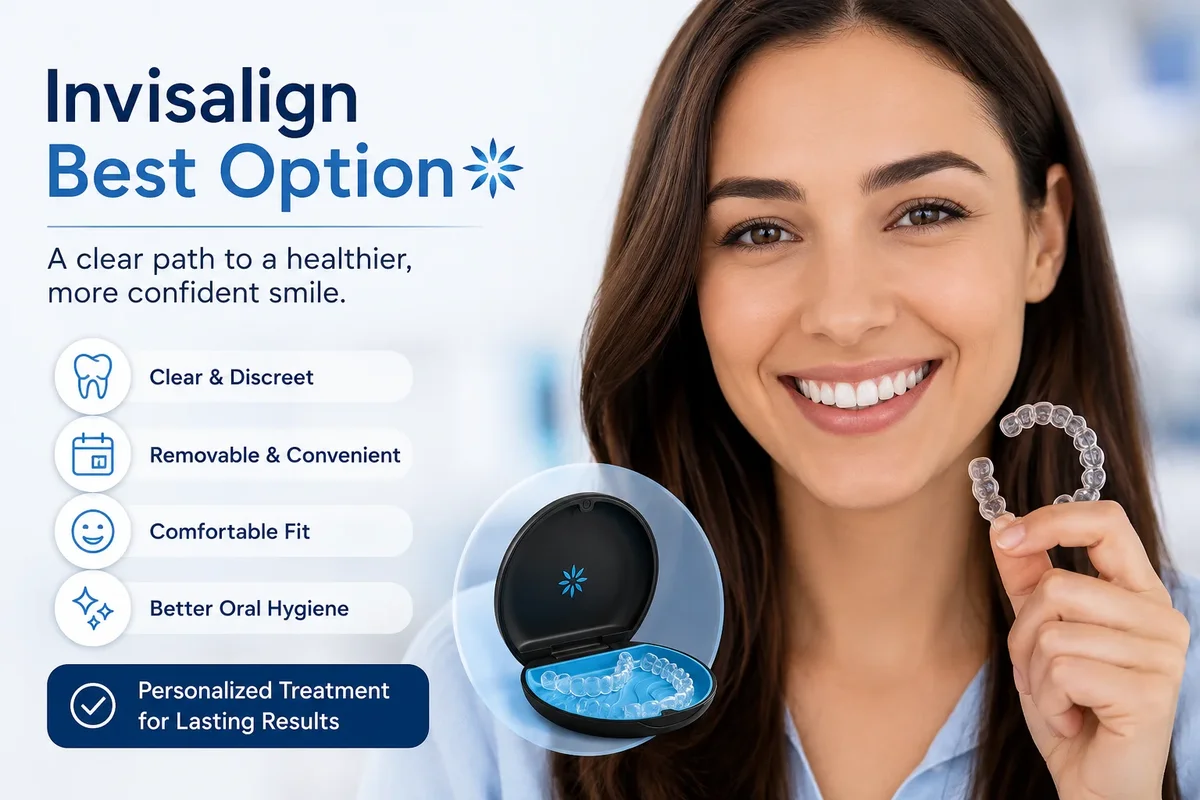
Your Next Step: How to Decide Whether Invisalign Is the Best Option for You
After learning about treatment suitability, costs, procedures, risks, financing, and alternative orthodontic options, many patients still ask the same final question: is invisalign best option for me? The answer is rarely determined by a single factor. Instead, it comes from combining clinical findings with your personal priorities, daily habits, long-term expectations, and overall oral health. A confident treatment decision should be based on professional evaluation rather than assumptions or marketing claims. By carefully reviewing the factors discussed throughout this guide, you can approach your consultation with realistic expectations and a clear understanding of what you hope to achieve.
Begin by Defining Your Treatment Goals
Before selecting any orthodontic treatment, spend a few moments identifying what matters most to you. Every patient has different priorities, and understanding your own goals will make conversations with your dentist more productive.
Ask yourself questions such as:
- Am I mainly concerned about appearance?
- Is improving my bite equally important?
- Do I want removable aligners for convenience?
- Can I commit to wearing aligners consistently every day?
- Am I looking for the shortest possible treatment, or the treatment that is most appropriate for my diagnosis?
Your answers help determine whether invisalign best option aligns with your personal expectations as well as your clinical needs.
Understand What Your Clinical Examination Reveals
The consultation is one of the most valuable parts of the decision-making process. During this appointment, your dentist evaluates factors that cannot be accurately judged through photographs or online questionnaires. Tooth alignment, bite function, gum health, jaw position, existing restorations, and previous dental treatment all contribute to the final recommendation.
Even if Invisalign appears attractive from a cosmetic perspective, your dentist may recommend another treatment if it is expected to manage your condition more effectively. Likewise, many patients discover that invisalign best option is appropriate because their orthodontic concerns respond well to professionally supervised clear aligner therapy.
Remember That Every Smile Is Different
Comparing your smile with someone else’s treatment journey rarely provides an accurate prediction of your own results. Orthodontic planning is individualized because every patient’s tooth movement, bone support, bite relationship, and biological response differ. Personalized treatment planning is therefore far more valuable than relying on generalized online comparisons.
Balance Appearance with Long-Term Function
Many people initially choose Invisalign because they appreciate the discreet appearance of clear aligners. While aesthetics are certainly important, orthodontic treatment should also improve function whenever possible. Proper tooth alignment may contribute to easier oral hygiene, improved chewing efficiency, and better long-term maintenance of oral health.
When deciding whether invisalign best option is right for you, ask your dentist how the recommended treatment addresses both cosmetic improvements and functional outcomes rather than focusing on appearance alone.
Evaluate Your Daily Commitment Honestly
Successful Invisalign treatment depends not only on technology but also on patient cooperation. Since aligners are removable, they generally need to be worn consistently according to professional instructions. Patients who regularly remove aligners for long periods may experience slower treatment progression or require refinements.
If you are confident that you can follow the treatment plan carefully, invisalign best option may fit naturally into your lifestyle. If you believe consistent wear will be challenging, discussing fixed orthodontic alternatives with your provider may also be worthwhile.
Think Beyond Active Treatment
Orthodontic care does not finish when the final aligner is removed. Retainers are commonly recommended to help maintain the new tooth positions over time. Long-term follow-up, regular dental examinations, and continued oral hygiene all contribute to maintaining treatment results.
Patients who understand the importance of retention often make more informed decisions because they recognize that successful orthodontic treatment involves ongoing care rather than a single procedure. This broader perspective helps determine whether invisalign best option matches your expectations for long-term oral health.
Prepare Questions Before Your Appointment
Writing down your questions before the consultation helps ensure that important topics are discussed. Consider asking:
- Why is Invisalign recommended for my diagnosis?
- What alternative treatments should I also consider?
- How will treatment progress be monitored?
- Will retainers be required afterwards?
- What responsibilities will I have throughout treatment?
- How does my oral health influence the treatment plan?
These questions encourage informed decision-making and help clarify whether invisalign best option truly aligns with your individual goals.
Choosing a Qualified Provider
Regardless of the orthodontic system selected, professional diagnosis and careful treatment planning remain essential. Choosing a provider who performs a thorough clinical examination, explains available options clearly, and discusses both benefits and limitations helps patients make confident decisions based on evidence rather than assumptions.
If you are considering treatment and would like a personalized evaluation, you may arrange a consultation through the Redent Klinik Contact Page. During the consultation, your oral health, orthodontic objectives, and available treatment options can be reviewed individually. For additional educational information about oral health and orthodontics, you may also visit the American Dental Association.
Final Decision Checklist Before Starting Invisalign
Before deciding whether invisalign best option is right for your smile, review your treatment goals, confirm that your oral health is suitable for orthodontic care, understand your expected responsibilities, compare all appropriate treatment alternatives, and make sure you have discussed financial planning and long-term retention with your provider. If you remain uncertain about your diagnosis, have complex bite concerns, experience persistent jaw discomfort, or receive differing treatment recommendations, request a comprehensive professional dental consultation before beginning orthodontic treatment. A personalized clinical evaluation provides the strongest foundation for selecting the orthodontic solution that best supports your long-term oral health and personal goals.
Disclosure: this page may contain affiliate links. We may earn a commission if you use them, at no extra cost to you.