
Keeping clear aligners clean is one of the most important parts of successful orthodontic treatment. Many Invisalign users focus on wearing their aligners for the recommended number of hours each day but overlook proper maintenance. This is where invisalign cleaning crystals play a crucial role. These specially designed cleaning agents help remove bacteria, plaque, stains, and unpleasant odors that can build up on aligners over time. If you want your aligners to remain clear, fresh, and comfortable throughout treatment, understanding how invisalign cleaning crystals work is essential. ✨
Invisalign cleaning crystals are cleaning packets specifically formulated for Invisalign aligners and retainers. When dissolved in water, they create a cleaning solution that helps break down deposits that regular brushing may not fully remove. Unlike standard toothpaste, which can sometimes scratch aligner surfaces, invisalign cleaning crystals are designed to clean effectively while preserving the transparency of the aligners.
One of the biggest advantages of using invisalign cleaning crystals is their ability to reach tiny grooves and surfaces that toothbrush bristles may miss. Throughout the day, aligners are exposed to saliva, bacteria, food particles, and plaque. Even if aligners appear clean, microscopic buildup can develop and contribute to discoloration and bad breath. Regular use of invisalign cleaning crystals helps minimize these issues and supports better oral hygiene.
Many patients wonder whether simply rinsing aligners with water is enough. While rinsing can remove loose debris, it does not effectively eliminate bacterial biofilm. This is why dental professionals often recommend combining gentle brushing with dedicated aligner cleaning products such as invisalign cleaning crystals. By incorporating this routine into daily care, patients can maintain a fresher and healthier aligner environment.
Another reason why invisalign cleaning crystals are popular is their convenience. The cleaning process is straightforward and typically takes only a short amount of time. Users dissolve the crystals in lukewarm water, soak the aligners, and then rinse them thoroughly before wearing them again. This simple routine can significantly improve the appearance and cleanliness of aligners.
From an oral health perspective, maintaining clean aligners is extremely important. Dirty aligners may harbor bacteria that can contribute to plaque accumulation on teeth. Over time, this can increase the risk of cavities, gum irritation, and unpleasant odors. Using invisalign cleaning crystals regularly helps reduce bacterial buildup and promotes a healthier treatment experience. 🦷
Many people also appreciate that invisalign cleaning crystals help preserve the nearly invisible appearance that makes Invisalign treatment so attractive. Clear aligners can become cloudy or stained when not cleaned properly. Coffee, tea, red wine, and certain foods may contribute to discoloration. Routine cleaning can help maintain the transparent look patients expect from their aligners.
It is important to remember that invisalign cleaning crystals are intended specifically for cleaning aligners and retainers. They should always be used according to the manufacturer’s instructions. Hot water should generally be avoided because excessive heat may warp aligners and affect their fit. A properly fitting aligner is critical for achieving the desired orthodontic results.
In addition to using invisalign cleaning crystals, patients should practice good oral hygiene habits. Brushing and flossing before reinserting aligners helps prevent food particles and bacteria from becoming trapped against the teeth. Combining excellent oral care with regular aligner cleaning creates the best conditions for a successful Invisalign journey.
Some users compare invisalign cleaning crystals with other aligner cleaning solutions, denture cleaners, or homemade methods. While alternative approaches may offer some cleaning benefits, products specifically developed for Invisalign are generally formulated to work safely with aligner materials. This targeted approach helps balance cleaning effectiveness with material protection.
If you ever notice persistent staining, damage, or unusual odors despite regular cleaning, it is wise to consult your dental professional. They can evaluate whether your cleaning routine is effective and recommend additional care measures if necessary. For personalized guidance regarding aligner maintenance or Invisalign treatment options, you can visit the Redent Klinik Contact Page.
Maintaining excellent oral health during orthodontic treatment is strongly supported by professional organizations such as the American Dental Association. Following recommended cleaning practices and using products such as invisalign cleaning crystals can help patients enjoy cleaner aligners, fresher breath, and greater confidence throughout treatment. 😊
In summary, invisalign cleaning crystals are an effective and convenient solution for maintaining clear aligners. They help remove plaque, reduce odor, support oral hygiene, and preserve the transparent appearance of aligners. Whether you are new to Invisalign or already progressing through treatment, establishing a consistent cleaning routine with invisalign cleaning crystals can contribute significantly to both comfort and treatment success.
What Are Invisalign Cleaning Crystals and How Do They Work?
For anyone undergoing clear aligner treatment, maintaining proper hygiene is just as important as wearing the aligners for the recommended number of hours each day. One product that frequently appears in discussions about aligner care is invisalign cleaning crystals. While many patients have heard of them, not everyone understands exactly what they are, how they function, and why they are considered an important part of aligner maintenance. Understanding the science and purpose behind invisalign cleaning crystals can help patients make informed decisions about their oral care routine and keep their aligners looking clear and fresh throughout treatment. ✨
Understanding Invisalign Cleaning Crystals
Invisalign cleaning crystals are specially formulated cleaning packets designed specifically for Invisalign aligners and retainers. The crystals dissolve in water to create a cleaning solution that helps remove plaque, bacteria, saliva residue, stains, and odor-causing buildup from aligner surfaces.
Unlike ordinary toothpaste or household cleaning products, invisalign cleaning crystals are developed to clean aligners without damaging the transparent plastic material. This is particularly important because Invisalign aligners are made from specialized thermoplastic materials that require gentle but effective cleaning methods.
Many Invisalign users initially assume that brushing aligners with toothpaste is sufficient. However, some toothpaste products contain abrasive particles that can create microscopic scratches on aligner surfaces. Over time, these scratches may cause aligners to appear cloudy rather than crystal clear. This is one reason why many dental professionals recommend invisalign cleaning crystals as part of a comprehensive cleaning routine.
Why Aligners Need Specialized Cleaning
Clear aligners spend most of the day inside the mouth. During this time, they are exposed to:
- Saliva proteins
- Bacteria
- Plaque deposits
- Food particles
- Acidic compounds
- Odor-causing microorganisms
Even if aligners look clean at first glance, microscopic biofilm can develop on their surfaces. Biofilm is a thin layer of bacteria that naturally forms in moist environments. If not removed regularly, it can contribute to unpleasant smells, discoloration, and reduced aligner clarity.
This is where invisalign cleaning crystals become valuable. Their cleaning formula is designed to help break down these deposits while preserving the integrity of the aligner material.
Common Signs Your Aligners Need Better Cleaning
- Cloudy appearance
- Yellowish discoloration
- Persistent odor
- Visible plaque buildup
- Unpleasant taste when wearing aligners
- Difficulty keeping aligners transparent
When these issues begin to appear, incorporating invisalign cleaning crystals into a regular cleaning schedule may help restore freshness and improve overall aligner hygiene.
How Invisalign Cleaning Crystals Work
The effectiveness of invisalign cleaning crystals comes from their ability to create a cleansing solution when mixed with water. Once dissolved, the solution begins interacting with deposits on the aligner surface.
The cleaning process generally involves several actions occurring simultaneously:
- Loosening plaque and debris.
- Breaking down protein buildup.
- Reducing odor-causing bacteria.
- Helping remove surface stains.
- Refreshing aligner surfaces.
After soaking, aligners are usually rinsed thoroughly under lukewarm water and gently brushed if necessary. This combination of soaking and rinsing helps maintain a cleaner and more comfortable aligner experience.
The Importance of Soaking
Soaking allows the cleaning solution to reach areas that are difficult to access with brushing alone. Tiny grooves, edges, and attachment areas may collect deposits that manual cleaning cannot completely remove. Regular soaking with invisalign cleaning crystals can help address these hard-to-reach areas more effectively.
Benefits Beyond Appearance
Many people use invisalign cleaning crystals primarily because they want their aligners to remain invisible. While cosmetic appearance is certainly important, the benefits extend far beyond aesthetics.
Proper aligner cleaning can support:
- Improved oral hygiene
- Fresher breath
- Reduced bacterial accumulation
- Greater treatment comfort
- Enhanced confidence during social interactions
- Better long-term aligner maintenance
Since aligners are worn directly against the teeth for approximately 20–22 hours each day, maintaining cleanliness is essential for creating a healthier oral environment.
How Invisalign Cleaning Crystals Differ from Other Products
Several cleaning methods are commonly used by aligner wearers, including denture tablets, antibacterial rinses, mild soap solutions, and specialized aligner cleaners. However, invisalign cleaning crystals are specifically designed for Invisalign materials.
This targeted formulation provides several advantages:
- Compatibility with aligner plastic
- Reduced risk of scratching
- Convenient single-use packets
- Effective odor control
- Designed specifically for Invisalign systems
Because of these benefits, many orthodontists and dentists recommend invisalign cleaning crystals as part of a routine maintenance strategy.
Who Should Use Invisalign Cleaning Crystals?
Virtually anyone using Invisalign aligners or Invisalign retainers can benefit from incorporating invisalign cleaning crystals into their cleaning routine. They are particularly useful for individuals who:
- Drink coffee regularly ☕
- Consume tea frequently
- Experience aligner odors
- Want maximum aligner clarity
- Wear aligners for extended periods daily
- Need additional support beyond brushing alone
Patients who prioritize oral hygiene often find that combining daily brushing, flossing, rinsing, and routine use of invisalign cleaning crystals provides the most consistent results.
Final Thoughts
Simply put, invisalign cleaning crystals are specialized cleaning agents designed to help maintain clear, fresh, and hygienic aligners throughout Invisalign treatment. Their unique formulation helps remove plaque, reduce odors, loosen deposits, and preserve aligner transparency without damaging the material. As aligners spend most of the day inside the mouth, proper cleaning should never be viewed as optional. Instead, it should be considered a fundamental part of successful Invisalign care. By understanding how invisalign cleaning crystals work and incorporating them into a regular oral hygiene routine, patients can enjoy cleaner aligners, fresher breath, and a more comfortable treatment experience from start to finish. 🦷
Benefits of Using Invisalign Cleaning Crystals Daily
Maintaining excellent oral hygiene during Invisalign treatment requires more than simply brushing your teeth. Because aligners remain in the mouth for most of the day, they are constantly exposed to saliva, bacteria, plaque, and food particles. Over time, this buildup can affect both the appearance and cleanliness of your aligners. This is one reason why many dental professionals recommend incorporating invisalign cleaning crystals into a daily care routine. Regular use of invisalign cleaning crystals offers several benefits that go beyond keeping aligners looking clean. From improving oral hygiene to helping maintain aligner transparency, these specialized cleaning agents can contribute significantly to a more comfortable and successful Invisalign experience. ✨
Helps Maintain Crystal-Clear Aligner Appearance
One of the main reasons people choose Invisalign treatment is its nearly invisible appearance. Unlike traditional braces, clear aligners are designed to be discreet and aesthetically pleasing. However, without proper maintenance, aligners can become cloudy, stained, or yellowish over time.
Daily use of invisalign cleaning crystals helps remove surface buildup that may affect aligner clarity. By dissolving plaque and residue before they accumulate significantly, invisalign cleaning crystals support the transparent appearance that patients expect from Invisalign treatment.
Common Sources of Aligner Discoloration
- Coffee consumption ☕
- Tea drinking
- Colored beverages
- Poor cleaning habits
- Saliva protein buildup
- Bacterial deposits
Regular cleaning with invisalign cleaning crystals helps reduce the impact of these common staining factors.
Supports Better Oral Hygiene
Aligners fit closely around the teeth and gums. If they are not cleaned properly, bacteria and plaque may remain trapped against tooth surfaces for extended periods. This can create an environment that encourages oral health problems.
Using invisalign cleaning crystals daily helps reduce bacterial accumulation on aligners. Cleaner aligners mean fewer microorganisms are reintroduced into the mouth each time the trays are worn. As part of a comprehensive oral hygiene routine, invisalign cleaning crystals can contribute to maintaining healthier teeth and gums throughout treatment.
Potential Oral Health Benefits
- Reduced bacterial buildup
- Cleaner aligner surfaces
- Improved oral freshness
- Better plaque control
- Enhanced overall hygiene habits
Although invisalign cleaning crystals are not a substitute for brushing and flossing, they complement these essential practices very effectively.
Helps Eliminate Unpleasant Odors
One of the most common complaints among aligner wearers is the development of unpleasant odors. Bacteria, food particles, and saliva residue can contribute to smells that become noticeable when aligners are removed.
Regular use of invisalign cleaning crystals helps break down odor-causing deposits. By targeting the sources of unpleasant smells, invisalign cleaning crystals help keep aligners fresher and more comfortable to wear.
Patients who use dedicated aligner-cleaning products often report a cleaner feeling and fresher breath compared to relying solely on water rinsing or brushing.
Provides Deep Cleaning Beyond Brushing Alone
Brushing aligners can remove visible debris, but it may not always reach every surface effectively. Tiny grooves, edges, and internal contours can trap residue that toothbrush bristles cannot easily access.
The soaking process associated with invisalign cleaning crystals allows the cleaning solution to contact all surfaces of the aligners. This deeper cleaning action helps loosen deposits that may otherwise remain attached.
Areas That Benefit from Soaking
- Attachment indentations
- Inner aligner surfaces
- Edge contours
- Microgrooves in the material
- Hard-to-reach crevices
Because of this comprehensive coverage, invisalign cleaning crystals provide benefits that brushing alone may not achieve.
Promotes Greater Wearing Comfort
Clean aligners generally feel more comfortable than aligners covered with residue or buildup. Accumulated deposits can sometimes create a rough texture or unpleasant sensation when aligners are worn.
By keeping aligners fresh and clean, invisalign cleaning crystals help improve daily comfort. Many users report that freshly cleaned aligners feel smoother and more pleasant in the mouth.
This enhanced comfort may encourage better compliance with prescribed wear schedules, which is critical for achieving optimal treatment results.
May Extend the Fresh Appearance of Each Aligner Set
Most Invisalign patients switch to a new aligner set every one to two weeks. During this period, aligners are subjected to constant use. Without proper care, they may quickly lose their clear appearance.
Daily cleaning with invisalign cleaning crystals helps maintain a cleaner and more polished look throughout the lifespan of each aligner tray. This is particularly valuable for individuals who frequently attend professional meetings, social events, or public presentations.
Convenient and Easy to Use
Another major benefit of invisalign cleaning crystals is convenience. The cleaning process requires very little effort and can easily become part of a daily oral care routine.
Most users simply:
- Dissolve the crystals in lukewarm water.
- Place the aligners into the solution.
- Allow them to soak.
- Rinse thoroughly before reinsertion.
This straightforward process makes invisalign cleaning crystals accessible even for individuals with busy schedules.
Supports Confidence Throughout Treatment
Confidence is one of the key reasons many adults and teenagers choose Invisalign. However, stained or odorous aligners can negatively impact that confidence.
Regular use of invisalign cleaning crystals helps patients feel more comfortable speaking, smiling, and interacting socially. Knowing that aligners are clean and fresh can reduce self-consciousness and improve the overall treatment experience. 😊
Works Well Alongside Other Oral Care Habits
While invisalign cleaning crystals provide numerous benefits, they are most effective when combined with other healthy habits. Patients should continue to:
- Brush teeth after meals
- Floss daily
- Rinse aligners regularly
- Avoid drinking sugary beverages while wearing aligners
- Attend scheduled dental appointments
Together, these practices create a comprehensive approach to oral health and aligner maintenance.
Final Thoughts
The benefits of using invisalign cleaning crystals daily extend far beyond simple cleaning. They help maintain aligner clarity, support oral hygiene, reduce odors, improve comfort, and contribute to a more pleasant Invisalign experience overall. Because aligners are worn for most of the day, keeping them clean should be considered a fundamental part of treatment success. By incorporating invisalign cleaning crystals into a consistent daily routine, patients can enjoy fresher aligners, healthier oral conditions, and greater confidence throughout their orthodontic journey. 🦷✨
Step-by-Step Guide to Cleaning Aligners with Invisalign Cleaning Crystals
Proper aligner maintenance is essential for achieving the best possible Invisalign treatment experience. While wearing aligners consistently helps move teeth into their desired positions, maintaining cleanliness is equally important. Over time, saliva, bacteria, plaque, and food residue can accumulate on aligners, affecting their appearance and hygiene. Fortunately, using invisalign cleaning crystals is a simple and effective way to keep aligners fresh, clear, and comfortable to wear. Understanding the correct cleaning process can help maximize the benefits of invisalign cleaning crystals while protecting the integrity of your aligners throughout treatment. 🦷✨
Why Proper Cleaning Matters
Before discussing the cleaning procedure itself, it is important to understand why aligner cleaning should never be neglected. Invisalign aligners are worn approximately 20 to 22 hours per day. During this time, they are constantly exposed to oral bacteria, saliva proteins, and microscopic food particles.
Without regular cleaning, these substances can accumulate and lead to:
- Cloudy aligners
- Unpleasant odors
- Bacterial buildup
- Visible stains
- Reduced wearer confidence
- Poor oral hygiene conditions
This is why many orthodontists recommend routine use of invisalign cleaning crystals as part of daily aligner maintenance.
Gather Your Cleaning Supplies
Before beginning the cleaning process, gather everything you need. Having all materials ready makes the procedure quick and convenient.
Items Required
- One packet of invisalign cleaning crystals
- A clean container or soaking cup
- Lukewarm water
- A soft-bristled toothbrush
- Clean hands
- A clean towel or tissue
It is important to avoid hot water because excessive heat may distort aligner shape and affect treatment effectiveness.
Step 1: Remove Your Aligners Carefully
Begin by removing your aligners gently from your teeth. Avoid using excessive force that could damage or crack the plastic material.
Once removed, briefly rinse the aligners under lukewarm running water. This initial rinse helps remove loose saliva and debris before the deeper cleaning process begins.
Many users find that combining this simple rinse with regular use of invisalign cleaning crystals helps maintain superior cleanliness throughout treatment.
Step 2: Prepare the Cleaning Solution
The next step involves preparing the cleaning bath.
- Fill a clean container with lukewarm water.
- Open one packet of invisalign cleaning crystals.
- Pour the contents into the water.
- Allow the crystals to dissolve completely.
- Stir gently if necessary.
Once dissolved, the solution becomes ready for aligner soaking. The active ingredients in invisalign cleaning crystals begin working immediately to help loosen plaque, break down deposits, and reduce odor-causing buildup.
Water Temperature Tips
- Use lukewarm water only.
- Avoid boiling water.
- Avoid extremely hot tap water.
- Do not microwave the solution.
- Do not expose aligners to heat sources.
Protecting aligner shape is essential for maintaining proper orthodontic force during treatment.
Step 3: Soak the Aligners
Place your aligners completely into the prepared cleaning solution.
Ensure both aligners are fully submerged beneath the water. During soaking, the solution created by invisalign cleaning crystals works to penetrate hard-to-reach areas and loosen deposits that ordinary brushing may not effectively remove.
The soaking period allows cleaning agents to reach:
- Internal aligner surfaces
- Attachment indentations
- Edge contours
- Microscopic grooves
- Areas around pressure points
This deep-cleaning capability is one reason many Invisalign patients prefer invisalign cleaning crystals over simple brushing alone.
Step 4: Gently Brush the Aligners
After soaking, remove the aligners from the solution.
Using a soft-bristled toothbrush, gently brush all aligner surfaces. Avoid aggressive scrubbing because excessive force may scratch the material.
Best Brushing Practices
- Use light pressure.
- Brush inner and outer surfaces.
- Pay attention to edges.
- Avoid abrasive toothpaste.
- Use gentle circular motions.
Following a soak with invisalign cleaning crystals, brushing becomes easier because deposits have already been loosened by the cleaning solution.
Step 5: Rinse Thoroughly
After brushing, rinse the aligners thoroughly under lukewarm running water.
This step helps remove any remaining cleaning solution and loosened debris. Proper rinsing ensures that aligners feel fresh and comfortable when reinserted.
Many users report that aligners cleaned with invisalign cleaning crystals feel noticeably fresher after thorough rinsing.
Step 6: Reinsert Your Aligners
Before placing the aligners back into your mouth, make sure your teeth are clean.
Ideally, you should:
- Brush your teeth.
- Floss thoroughly.
- Rinse your mouth.
- Inspect aligners for cleanliness.
Reinserting aligners after proper oral hygiene helps maximize the effectiveness of invisalign cleaning crystals and supports healthier treatment conditions.
How Often Should You Perform This Process?
Most dental professionals recommend cleaning aligners daily. Consistent use of invisalign cleaning crystals can help prevent buildup before it becomes difficult to remove.
Daily cleaning is particularly important for individuals who:
- Drink coffee frequently ☕
- Consume tea regularly
- Have naturally heavy plaque accumulation
- Wear aligners for extended periods
- Want maximum aligner clarity
Developing a daily routine often produces the best long-term results.
Common Mistakes to Avoid
Avoid These Cleaning Errors
- Using hot water
- Skipping daily cleaning
- Using abrasive toothpaste
- Using harsh household cleaners
- Leaving aligners exposed to heat
- Failing to rinse after soaking
Even high-quality products like invisalign cleaning crystals cannot compensate for improper cleaning techniques. Following manufacturer recommendations remains essential.
Signs Your Cleaning Routine Is Working
A consistent routine using invisalign cleaning crystals often produces noticeable benefits, including:
- Clearer aligners
- Reduced staining
- Fresher breath
- Less odor
- Improved comfort
- Greater confidence while wearing aligners
Patients who clean aligners regularly typically enjoy a more pleasant Invisalign experience overall.
Final Thoughts
Following a structured cleaning routine with invisalign cleaning crystals is one of the simplest yet most effective ways to maintain aligner hygiene. The process involves rinsing, preparing the cleaning solution, soaking, gentle brushing, thorough rinsing, and reinsertion after proper oral care. By performing these steps consistently, patients can help preserve aligner transparency, reduce bacterial buildup, eliminate odors, and support overall oral health. Whether you are new to Invisalign treatment or have been wearing aligners for months, incorporating invisalign cleaning crystals into your daily routine can play an important role in achieving cleaner aligners and a more comfortable orthodontic journey. 😊
How Often Should You Use Invisalign Cleaning Crystals?
One of the most common questions Invisalign patients ask is how frequently they should clean their aligners using invisalign cleaning crystals. While wearing aligners correctly is essential for achieving desired orthodontic results, maintaining proper aligner hygiene is equally important. Clean aligners not only look better but also contribute to a fresher mouth, improved comfort, and better overall oral health. Understanding the ideal frequency for using invisalign cleaning crystals can help ensure that aligners remain clear, odor-free, and comfortable throughout treatment. 🦷✨
Why Cleaning Frequency Matters
Invisalign aligners are worn for approximately 20 to 22 hours per day. During this time, they are constantly exposed to saliva, bacteria, plaque, and microscopic food particles. Even if you brush your teeth regularly, aligners naturally accumulate deposits that may not be visible immediately.
If these deposits are allowed to build up, they can cause:
- Cloudy aligners
- Yellow discoloration
- Unpleasant odors
- Bacterial accumulation
- Reduced comfort
- Less attractive appearance
Regular use of invisalign cleaning crystals helps prevent these problems before they become significant.
Daily Use Is Generally Recommended
For most Invisalign patients, daily use of invisalign cleaning crystals is considered the ideal approach. Daily cleaning helps remove plaque and residue before substantial buildup occurs.
By incorporating invisalign cleaning crystals into a daily oral care routine, patients can maintain aligners in optimal condition throughout each aligner stage.
Benefits of Daily Cleaning
- Improved aligner transparency
- Reduced plaque accumulation
- Better odor control
- Enhanced oral hygiene
- Greater wearing comfort
- More professional appearance
Because Invisalign aligners are designed to be nearly invisible, preserving their clear appearance is a major priority for many users.
Morning Cleaning Routine
Many orthodontists recommend using invisalign cleaning crystals during the morning. Overnight, saliva proteins and bacteria may accumulate on aligner surfaces while the trays remain in the mouth.
A typical morning routine may include:
- Removing aligners after waking up.
- Preparing a solution with invisalign cleaning crystals.
- Soaking aligners while brushing and flossing.
- Rinsing aligners thoroughly.
- Reinserting clean aligners.
This approach allows patients to begin the day with fresh and clean aligners.
When More Frequent Cleaning May Be Beneficial
Although daily cleaning is sufficient for most individuals, some patients may benefit from more frequent use of invisalign cleaning crystals.
Factors That May Increase Cleaning Needs
- Heavy coffee consumption ☕
- Frequent tea drinking
- Smoking habits
- Higher plaque production
- Persistent aligner odors
- History of rapid staining
Individuals with these factors may notice that aligners become cloudy or stained more quickly. In such cases, additional cleaning sessions may help maintain optimal appearance and freshness.
Can You Use Invisalign Cleaning Crystals Too Often?
A common concern among patients is whether excessive use of invisalign cleaning crystals could damage aligners.
When used according to manufacturer instructions, invisalign cleaning crystals are specifically designed for Invisalign materials. They are formulated to clean aligners while preserving the integrity of the plastic.
However, patients should always:
- Follow package instructions.
- Use recommended soaking times.
- Avoid mixing with other chemicals.
- Rinse aligners thoroughly after soaking.
- Avoid using excessively hot water.
Proper usage helps ensure safe and effective cleaning.
Weekly Versus Daily Cleaning
Some patients wonder whether weekly cleaning is sufficient. While weekly use of invisalign cleaning crystals may provide some benefit, daily cleaning generally produces superior results.
Weekly cleaning allows plaque and bacteria more time to accumulate. Over several days, buildup can become increasingly difficult to remove.
Daily use offers several advantages compared to weekly cleaning:
| Daily Cleaning | Weekly Cleaning |
|---|---|
| Consistent freshness | Less consistent freshness |
| Reduced buildup | Greater buildup risk |
| Better transparency | Higher stain potential |
| Improved odor control | Possible odor accumulation |
For these reasons, many Invisalign providers encourage daily use of invisalign cleaning crystals whenever possible.
Special Situations That Require Extra Cleaning
Certain situations may make additional cleaning particularly beneficial.
Examples Include:
- After illness 🤒
- Following consumption of staining beverages
- After long travel periods
- Following periods of poor oral hygiene
- When aligners develop noticeable odors
- After accidentally dropping aligners
In these circumstances, using invisalign cleaning crystals can help restore cleanliness and freshness more effectively.
Combining Cleaning Crystals with Other Hygiene Habits
Even though invisalign cleaning crystals are highly effective, they should not replace good oral hygiene practices.
Patients should continue to:
- Brush after meals
- Floss daily
- Rinse aligners regularly
- Store aligners properly
- Attend routine dental checkups
Combining these habits with consistent use of invisalign cleaning crystals provides the most comprehensive approach to aligner care.
Signs You May Need More Frequent Cleaning
Your aligners can provide clues regarding whether your current cleaning schedule is adequate.
Warning Signs Include:
- Persistent cloudiness
- Visible staining
- Unpleasant smells
- Sticky aligner surfaces
- Reduced transparency
- Noticeable plaque deposits
If these issues occur regularly, increasing the frequency of invisalign cleaning crystals use may be beneficial.
Final Thoughts
For most Invisalign users, daily use of invisalign cleaning crystals represents the best balance between convenience and effectiveness. Because aligners remain in the mouth for the majority of each day, maintaining consistent hygiene is essential for preserving transparency, reducing bacterial buildup, and promoting a fresher oral environment. While individual needs may vary based on lifestyle habits and plaque accumulation tendencies, regular use of invisalign cleaning crystals helps support cleaner aligners, better oral hygiene, and a more comfortable treatment experience. Establishing a daily cleaning routine can significantly contribute to keeping aligners looking and feeling their best from the beginning of treatment to the final aligner tray. 😊
Common Mistakes to Avoid When Cleaning Invisalign Aligners
Keeping Invisalign aligners clean is essential for maintaining oral hygiene, preserving aligner transparency, and ensuring a comfortable treatment experience. While many patients understand the importance of cleaning their aligners, they often make mistakes that can reduce cleaning effectiveness or even damage the aligners themselves. Even individuals who regularly use invisalign cleaning crystals may unknowingly follow habits that compromise aligner hygiene. Understanding these common errors can help patients maximize the benefits of invisalign cleaning crystals while protecting their investment in orthodontic treatment. 🦷✨
Using Hot Water to Clean Aligners
One of the most common and potentially damaging mistakes is using hot water during the cleaning process. Some patients assume that hotter water provides better sanitation. However, Invisalign aligners are made from a specialized thermoplastic material that can become distorted when exposed to high temperatures.
Why Hot Water Is Dangerous
- Can warp aligner shape
- May affect treatment accuracy
- Can reduce aligner comfort
- May compromise tooth movement
- Can permanently damage trays
When using invisalign cleaning crystals, always prepare the solution with lukewarm water according to manufacturer recommendations. This allows the cleaning agents to work effectively without risking aligner damage.
Brushing with Abrasive Toothpaste
Another widespread mistake involves cleaning aligners using regular toothpaste. Although toothpaste is excellent for cleaning teeth, many formulas contain abrasive particles that can scratch aligner surfaces.
Microscopic scratches may not be immediately visible, but over time they can:
- Create a cloudy appearance
- Reduce aligner transparency
- Trap additional bacteria
- Increase stain retention
- Make aligners look older than they are
Many orthodontists recommend combining gentle brushing with invisalign cleaning crystals rather than relying solely on toothpaste-based cleaning.
Better Alternatives
- Soft-bristled toothbrushes
- Gentle non-abrasive cleaners
- Dedicated aligner cleaning systems
- Routine use of invisalign cleaning crystals
Skipping Daily Cleaning
Some patients assume that rinsing aligners with water is enough. While rinsing removes loose debris, it does not effectively eliminate bacterial biofilm, plaque deposits, or odor-causing microorganisms.
Skipping daily cleaning often leads to:
- Unpleasant odors
- Increased plaque buildup
- Visible discoloration
- Reduced aligner clarity
- Poor oral hygiene conditions
Using invisalign cleaning crystals regularly helps prevent these problems before they become significant.
Eating While Wearing Aligners
One of the easiest ways to create cleaning challenges is eating while wearing aligners. Invisalign trays should generally be removed before meals unless specifically instructed otherwise by a dental professional.
Problems Caused by Eating with Aligners
- Food becomes trapped inside trays
- Increased bacterial growth
- Greater staining risk
- Potential aligner damage
- Difficulty cleaning aligners thoroughly
Even if patients use invisalign cleaning crystals, avoiding food exposure whenever possible helps maintain better aligner hygiene.
Failing to Clean Teeth Before Reinsertion
Many people focus heavily on cleaning their aligners but forget to clean their teeth before putting the trays back in place.
When food particles remain on teeth, aligners can trap them against tooth surfaces for hours. This creates an environment that may encourage plaque accumulation and increase cavity risk.
For optimal results, patients should:
- Brush after meals
- Floss daily
- Rinse before reinsertion
- Use invisalign cleaning crystals as part of aligner maintenance
Using Harsh Household Cleaners
Some individuals mistakenly believe that household disinfectants or cleaning agents can be used to sanitize aligners. This practice should be avoided completely.
Products That Should Never Be Used
- Bleach
- Alcohol-based cleaners
- Household detergents
- Disinfectant sprays
- Industrial cleaning solutions
These products may damage aligner material and leave behind residues that should never be placed in the mouth. Products such as invisalign cleaning crystals are specifically designed for safe aligner cleaning.
Leaving Aligners Exposed to Air
Another common mistake is leaving aligners on countertops, napkins, or other exposed surfaces when not in use.
This can result in:
- Bacterial contamination
- Accidental damage
- Loss of aligners
- Exposure to pets
- Collection of dust and debris
Whenever aligners are removed, they should be stored properly and cleaned regularly using invisalign cleaning crystals when appropriate.
Ignoring Early Signs of Buildup
Many patients wait until aligners become visibly dirty before improving their cleaning routine. Unfortunately, bacterial accumulation often begins long before discoloration becomes noticeable.
Early Warning Signs
- Slight cloudiness
- Minor odor development
- Sticky texture
- Reduced transparency
- Visible film formation
Addressing these signs early with invisalign cleaning crystals can help prevent more significant cleaning challenges later.
Using Cleaning Crystals Incorrectly
Even patients who purchase invisalign cleaning crystals sometimes fail to use them correctly.
Common mistakes include:
- Using incorrect water temperature
- Shortening soaking times excessively
- Failing to rinse afterward
- Mixing with other cleaning agents
- Reusing old cleaning solution
Following manufacturer instructions ensures that invisalign cleaning crystals provide maximum effectiveness while maintaining aligner safety.
Neglecting Long-Term Hygiene Habits
Aligner care is not a one-time task. Successful Invisalign treatment requires consistent hygiene habits over many months.
Patients who achieve the best results typically combine:
- Daily brushing
- Routine flossing
- Proper aligner storage
- Regular dental visits
- Consistent use of invisalign cleaning crystals
These habits work together to create a healthier oral environment throughout treatment.
Final Thoughts
Even the most effective cleaning products cannot fully compensate for poor aligner care habits. Avoiding common mistakes such as using hot water, brushing with abrasive toothpaste, skipping daily cleaning, eating while wearing aligners, or using inappropriate cleaning products can significantly improve treatment success. When combined with proper oral hygiene practices, invisalign cleaning crystals provide an excellent tool for maintaining clean, fresh, and transparent aligners. By recognizing and avoiding these common errors, patients can enjoy a healthier, more comfortable, and more confident Invisalign experience from beginning to end. 😊
Invisalign Cleaning Crystals vs Alternative Aligner Cleaning Methods
Maintaining clean aligners is essential for oral hygiene, aligner transparency, and overall treatment success. While many Invisalign users choose invisalign cleaning crystals as their primary cleaning solution, others explore alternative cleaning methods in an attempt to save money, simplify their routine, or use products they already have at home. However, not all cleaning methods provide the same results. Understanding how invisalign cleaning crystals compare with alternative aligner cleaning options can help patients select the safest and most effective approach for maintaining their clear aligners throughout treatment. 🦷✨
Why Choosing the Right Cleaning Method Matters
Invisalign aligners are designed to remain clear, comfortable, and nearly invisible. Because they are worn for 20 to 22 hours daily, they continuously collect saliva proteins, plaque, bacteria, and microscopic debris.
Without proper cleaning, aligners may develop:
- Cloudiness
- Staining
- Odors
- Bacterial buildup
- Reduced transparency
- Lower overall comfort
Regular use of invisalign cleaning crystals is one solution, but patients often wonder whether other methods can achieve similar results.
Invisalign Cleaning Crystals
Invisalign cleaning crystals are specifically formulated for Invisalign aligners and retainers. They are designed to remove plaque, reduce odor-causing buildup, and help maintain aligner clarity without damaging the aligner material.
Main Advantages
- Designed specifically for Invisalign products
- Helps preserve aligner transparency
- Supports odor control
- Easy-to-use single packets
- Compatible with aligner materials
- Provides deep soaking action
Because invisalign cleaning crystals were developed specifically for Invisalign systems, they remain one of the most trusted cleaning options among Invisalign providers.
Cleaning Aligners with Toothpaste
Many people naturally assume toothpaste is the best cleaning solution because it works well on teeth. However, aligners and teeth are very different materials.
Potential Drawbacks of Toothpaste
- May contain abrasive particles
- Can create microscopic scratches
- May increase cloudiness over time
- Can reduce aligner transparency
- Not specifically designed for aligners
Although gentle brushing remains useful, many orthodontists recommend combining brushing with invisalign cleaning crystals rather than relying exclusively on toothpaste.
Denture Cleaning Tablets
Denture cleaning tablets are another popular alternative. These products are widely available and often used by aligner wearers.
Like invisalign cleaning crystals, denture cleaners typically dissolve in water and create a soaking solution. However, denture products are developed for denture materials rather than Invisalign plastics.
Pros
- Convenient soaking method
- Can reduce odors
- Readily available
- Simple to use
Cons
- Not designed specifically for Invisalign
- May leave residual taste
- Cleaning effectiveness varies by brand
- Material compatibility may differ
While denture tablets may provide acceptable results, many patients prefer invisalign cleaning crystals because they are tailored to Invisalign aligners.
Using Mild Soap and Water
Some Invisalign users choose to clean aligners with mild liquid soap and water.
This method can remove surface debris and oils, but it may not provide the deep cleaning benefits associated with invisalign cleaning crystals.
Advantages
- Affordable
- Easy to access
- Simple cleaning process
- Gentle when using mild products
Limitations
- May not remove biofilm effectively
- Limited stain removal
- Less odor control
- Minimal deep-cleaning action
For patients seeking comprehensive aligner maintenance, invisalign cleaning crystals generally offer more specialized cleaning capabilities.
Hydrogen Peroxide Solutions
Some online sources recommend diluted hydrogen peroxide solutions for aligner cleaning. While hydrogen peroxide has antimicrobial properties, its routine use should be approached cautiously.
Potential Benefits
- Can reduce certain bacteria
- May assist with odor control
- Readily available
Potential Concerns
- Not specifically formulated for aligners
- Improper dilution may cause issues
- Can leave unpleasant taste
- Long-term effects on aligner materials may vary
Compared with homemade solutions, invisalign cleaning crystals provide a more standardized and manufacturer-supported approach.
Vinegar-Based Cleaning Methods
White vinegar is another commonly suggested home remedy. Its acidic properties can help dissolve certain deposits.
Possible Benefits
- Inexpensive
- Easy to obtain
- Can remove some mineral deposits
Potential Drawbacks
- Strong odor
- Unpleasant taste
- Limited stain-removal effectiveness
- Not designed for Invisalign materials
Most Invisalign users find that invisalign cleaning crystals offer a more pleasant and predictable cleaning experience.
Ultrasonic Cleaners
Ultrasonic cleaning devices have become increasingly popular among aligner wearers. These devices use sound waves to help loosen debris from aligner surfaces.
Advantages
- Deep cleaning action
- Convenient automated process
- Can reach difficult areas
- Useful for retainers and aligners
Limitations
- Higher initial cost
- Requires equipment purchase
- May still benefit from cleaning solutions
Many patients actually combine ultrasonic cleaning with invisalign cleaning crystals to maximize cleaning effectiveness.
Cost Comparison
Patients frequently compare cleaning methods based on cost.
| Cleaning Method | Approximate Cost Range |
|---|---|
| Invisalign Cleaning Crystals | Moderate |
| Toothpaste | Low |
| Mild Soap | Low |
| Denture Tablets | Low to Moderate |
| Ultrasonic Cleaner | Higher Initial Cost |
Although some alternatives may appear less expensive, many users feel that invisalign cleaning crystals provide value through their specialized design and convenience.
Which Method Is Best?
The ideal cleaning method depends on personal preferences, budget, lifestyle, and dental recommendations. However, products specifically developed for Invisalign systems often provide the greatest confidence regarding safety and compatibility.
For patients who prioritize:
- Aligner transparency
- Convenience
- Odor control
- Material safety
- Professional recommendations
Invisalign cleaning crystals remain one of the most popular and widely recommended options.
Final Thoughts
There are numerous ways to clean Invisalign aligners, ranging from toothpaste and soap to ultrasonic devices and homemade solutions. Each method offers certain advantages and limitations. However, invisalign cleaning crystals stand out because they are specifically formulated for Invisalign materials and designed to support aligner clarity, cleanliness, and freshness. While alternative methods may provide acceptable results in some situations, many Invisalign users find that regular use of invisalign cleaning crystals offers the best balance of effectiveness, convenience, and aligner protection. By understanding the strengths and weaknesses of each cleaning approach, patients can make informed decisions and maintain healthier, cleaner aligners throughout their treatment journey. 😊
Can Invisalign Cleaning Crystals Remove Stains and Odors?
One of the primary reasons Invisalign users seek specialized cleaning products is to address stains and unpleasant odors that can develop over time. Although Invisalign aligners are designed to be nearly invisible, they are continuously exposed to saliva, bacteria, plaque, beverages, and environmental factors that may affect their appearance and freshness. Many patients wonder whether invisalign cleaning crystals are truly capable of removing stains and eliminating odors effectively. Understanding how invisalign cleaning crystals interact with aligner buildup can help patients maintain cleaner, clearer, and fresher aligners throughout treatment. ✨🦷
Why Do Invisalign Aligners Develop Stains?
Even when patients follow their orthodontist’s instructions carefully, aligners may gradually develop discoloration. This occurs because aligners spend most of the day inside the mouth and are exposed to numerous substances that can leave deposits behind.
Common Causes of Aligner Staining
- Coffee consumption ☕
- Tea drinking
- Colored sports drinks
- Red wine
- Poor cleaning habits
- Smoking or tobacco use
- Plaque accumulation
- Saliva protein buildup
These substances can create a film on aligner surfaces that gradually affects transparency. Regular use of invisalign cleaning crystals helps address many of these stain-producing factors before significant discoloration develops.
How Invisalign Cleaning Crystals Help Remove Stains
Invisalign cleaning crystals work by creating a cleaning solution when dissolved in water. This solution helps loosen and break down deposits that accumulate on aligner surfaces.
Unlike simple rinsing with water, invisalign cleaning crystals are designed to target residue that may cling to the aligner material. During the soaking process, the cleaning agents help dissolve plaque, protein films, and other substances that contribute to staining.
Types of Stains That May Improve with Cleaning
- Surface discoloration
- Protein-based films
- Early-stage staining
- Beverage-related deposits
- Daily residue accumulation
Patients who use invisalign cleaning crystals consistently often notice that their aligners maintain a clearer appearance throughout each treatment stage.
Can Invisalign Cleaning Crystals Remove Deep Stains?
While invisalign cleaning crystals are highly effective for routine maintenance and surface cleaning, it is important to understand their limitations.
Deep stains that have accumulated over long periods may be more difficult to remove completely. Factors such as smoking, heavy coffee consumption, and inadequate cleaning habits can cause discoloration that becomes increasingly resistant over time.
In these situations, invisalign cleaning crystals may significantly improve aligner appearance, but they may not always restore severely stained aligners to a perfectly transparent condition.
Factors Influencing Stain Removal Success
- Age of the stain
- Frequency of cleaning
- Type of staining substance
- Oral hygiene habits
- Consistency of aligner maintenance
Early intervention generally provides the best results when using invisalign cleaning crystals.
Why Do Aligners Develop Odors?
Odors often originate from bacterial activity. As bacteria metabolize food particles and proteins trapped on aligner surfaces, unpleasant smells may develop.
Aligners create a warm, moist environment that can encourage bacterial growth if cleaning is neglected.
Common Sources of Odor
- Bacterial biofilm
- Food debris
- Plaque deposits
- Poor oral hygiene
- Infrequent aligner cleaning
- Smoking habits
Even aligners that appear visually clean can develop odors if bacterial buildup is present.
How Invisalign Cleaning Crystals Help Eliminate Odors
One of the most appreciated benefits of invisalign cleaning crystals is their ability to help reduce odor-causing buildup.
During soaking, the cleaning solution helps loosen and remove deposits that contribute to unpleasant smells. By targeting the source of odor rather than simply masking it, invisalign cleaning crystals help maintain a fresher aligner environment.
Benefits for Freshness
- Cleaner aligner surfaces
- Reduced bacterial accumulation
- Improved breath freshness
- More comfortable aligner wear
- Greater confidence during social interactions
Many users report noticeable improvements in freshness after adopting a routine that includes invisalign cleaning crystals.
When Odors Persist Despite Cleaning
Occasionally, patients continue experiencing odors even while using invisalign cleaning crystals. In these situations, additional factors may be involved.
Possible Reasons
- Inadequate brushing and flossing
- Insufficient soaking time
- Failure to clean aligners daily
- Underlying dental problems
- Gum inflammation
- Poor storage practices
If odors persist despite proper use of invisalign cleaning crystals, consultation with a dental professional may be advisable.
Preventing Future Stains and Odors
Although invisalign cleaning crystals are highly effective, prevention remains easier than correction.
Best Preventive Practices
- Brush after meals
- Floss daily
- Remove aligners before eating
- Limit exposure to staining beverages
- Rinse aligners frequently
- Use invisalign cleaning crystals consistently
These habits work together to minimize both discoloration and odor development.
Comparing Stain Removal and Odor Control
| Issue | Effectiveness of Invisalign Cleaning Crystals |
|---|---|
| Surface Stains | High |
| Protein Buildup | High |
| Mild Discoloration | High |
| Deep Long-Term Stains | Moderate |
| Odor Control | High |
| Freshness Maintenance | High |
This comparison demonstrates why many Invisalign patients choose invisalign cleaning crystals as part of their daily aligner care routine.
Supporting Long-Term Aligner Clarity
Aligners are typically replaced every one to two weeks during active treatment. Even though each set is temporary, maintaining clarity remains important for comfort and appearance.
Routine use of invisalign cleaning crystals helps preserve the transparent appearance that makes Invisalign attractive to both adults and teenagers. Keeping aligners clean not only improves aesthetics but also encourages better hygiene habits throughout treatment.
Final Thoughts
In most cases, invisalign cleaning crystals are highly effective at reducing stains and controlling odors associated with clear aligners. Their specialized formula helps remove plaque, protein deposits, and bacterial buildup that contribute to discoloration and unpleasant smells. While extremely deep or long-standing stains may not always disappear completely, regular use of invisalign cleaning crystals can significantly improve aligner appearance and freshness. Combined with proper brushing, flossing, and aligner care habits, these cleaning crystals help patients maintain cleaner, clearer, and more comfortable aligners throughout their Invisalign journey. 😊
Safety Tips for Using Invisalign Cleaning Crystals Effectively
Maintaining clear aligners involves more than simply cleaning them regularly. Proper cleaning techniques and safe handling practices are essential for protecting both the aligners and your oral health. While invisalign cleaning crystals are specifically designed for Invisalign aligners and retainers, using them correctly helps maximize their effectiveness and minimizes the risk of accidental damage. Understanding the most important safety recommendations can help patients get the best possible results from invisalign cleaning crystals while preserving aligner quality throughout treatment. 🦷✨
Why Safety Matters During Aligner Cleaning
Many Invisalign users focus primarily on achieving cleaner aligners. However, improper cleaning techniques can potentially affect aligner fit, transparency, and performance. Since aligners are custom-made to move teeth gradually and precisely, maintaining their shape and condition is critical.
Safe use of invisalign cleaning crystals helps ensure:
- Optimal aligner performance
- Consistent treatment progress
- Reduced risk of aligner damage
- Better oral hygiene outcomes
- Long-lasting aligner clarity
By following proper guidelines, patients can safely incorporate invisalign cleaning crystals into their daily routine.
Always Use Lukewarm Water
One of the most important safety recommendations when using invisalign cleaning crystals is choosing the correct water temperature.
Why Hot Water Should Be Avoided
- Can warp aligners
- May alter aligner fit
- Can interfere with tooth movement
- May permanently damage plastic material
- Can compromise treatment effectiveness
Always prepare the cleaning solution using lukewarm water. Excessive heat should never be used, even if the goal is deeper cleaning or faster stain removal.
Follow Manufacturer Instructions Carefully
Every cleaning product is designed with specific usage guidelines. Following the directions supplied with invisalign cleaning crystals helps ensure that the cleaning solution works as intended.
Patients should pay close attention to:
- Recommended soaking times
- Proper water volume
- Usage frequency
- Storage instructions
- Rinsing recommendations
Ignoring these guidelines may reduce the effectiveness of invisalign cleaning crystals and could potentially affect aligner maintenance results.
Do Not Mix with Other Cleaning Products
Some individuals attempt to enhance cleaning power by combining multiple products. However, mixing invisalign cleaning crystals with household cleaners, disinfectants, or other chemicals is not recommended.
Products to Avoid Mixing
- Bleach
- Alcohol-based solutions
- Hydrogen peroxide mixtures
- Household detergents
- Disinfectant sprays
- Industrial cleaners
Using products together may create unpredictable reactions and can potentially damage aligners.
Rinse Aligners Thoroughly After Cleaning
After soaking aligners in a solution containing invisalign cleaning crystals, rinsing is an essential step.
Thorough rinsing helps:
- Remove cleaning solution residue
- Improve comfort during wear
- Enhance freshness
- Prepare aligners for reinsertion
Patients should always rinse aligners under clean, lukewarm running water before placing them back into their mouths.
Store Cleaning Crystals Safely
Like many oral care products, invisalign cleaning crystals should be stored appropriately.
Storage Recommendations
- Keep in original packaging
- Store in a dry location
- Avoid excessive humidity
- Protect from direct sunlight
- Keep out of reach of children
- Avoid exposure to extreme temperatures
Proper storage helps maintain the effectiveness of invisalign cleaning crystals until they are ready for use.
Avoid Swallowing Cleaning Solution
Although invisalign cleaning crystals are intended for products that are worn inside the mouth, the cleaning solution itself is not intended for consumption.
Patients should always:
- Use the solution only as directed
- Dispose of used cleaning solution properly
- Avoid drinking the solution
- Wash hands after handling if desired
Using invisalign cleaning crystals appropriately helps maintain safety throughout the cleaning process.
Inspect Aligners Before and After Cleaning
Regular inspection of aligners is an important but often overlooked habit.
What to Look For
- Cracks
- Warping
- Discoloration
- Sharp edges
- Persistent buildup
- Changes in fit
Using invisalign cleaning crystals gives patients a convenient opportunity to inspect aligners during daily maintenance.
If any unusual damage is noticed, contacting a dental professional is advisable.
Use a Clean Soaking Container
The container used during cleaning can also influence hygiene outcomes.
Before preparing a solution with invisalign cleaning crystals, ensure that the soaking container is clean and free from contaminants.
Ideal Container Characteristics
- Clean interior surfaces
- Adequate size for full immersion
- Easy to rinse
- Reserved primarily for aligner cleaning
A clean container helps maximize the benefits of invisalign cleaning crystals.
Maintain Good Oral Hygiene Alongside Cleaning
Even the most effective cleaning products cannot replace proper oral hygiene habits.
Patients should continue to:
- Brush after meals
- Floss daily
- Attend dental checkups
- Rinse aligners when removed
- Store aligners properly
Combining these habits with regular use of invisalign cleaning crystals creates the strongest foundation for successful aligner care.
Know When to Seek Professional Advice
In some situations, professional guidance may be necessary.
Consult Your Dental Professional If:
- Aligners become severely stained
- Persistent odors continue
- Aligners appear warped
- Cracks develop
- Fit changes unexpectedly
- Cleaning concerns remain unresolved
While invisalign cleaning crystals are highly effective for routine maintenance, professional assessment may occasionally be needed.
Travel Safety Tips
Patients who travel frequently should also consider safe transport of aligners and cleaning products.
- Carry aligners in protective cases
- Pack extra aligner trays if instructed
- Bring enough invisalign cleaning crystals for the trip
- Avoid leaving aligners in hot vehicles
- Keep cleaning supplies accessible
These simple precautions can help maintain treatment consistency while away from home.
Final Thoughts
Using invisalign cleaning crystals safely and correctly is essential for maintaining aligner cleanliness, transparency, and effectiveness. Following basic precautions such as using lukewarm water, avoiding harsh chemicals, rinsing thoroughly, storing products properly, and maintaining excellent oral hygiene can significantly improve the overall Invisalign experience. While invisalign cleaning crystals are specifically designed to support aligner care, their effectiveness depends on proper usage. By following these safety recommendations consistently, patients can enjoy cleaner aligners, greater comfort, and better confidence throughout every stage of Invisalign treatment. 😊
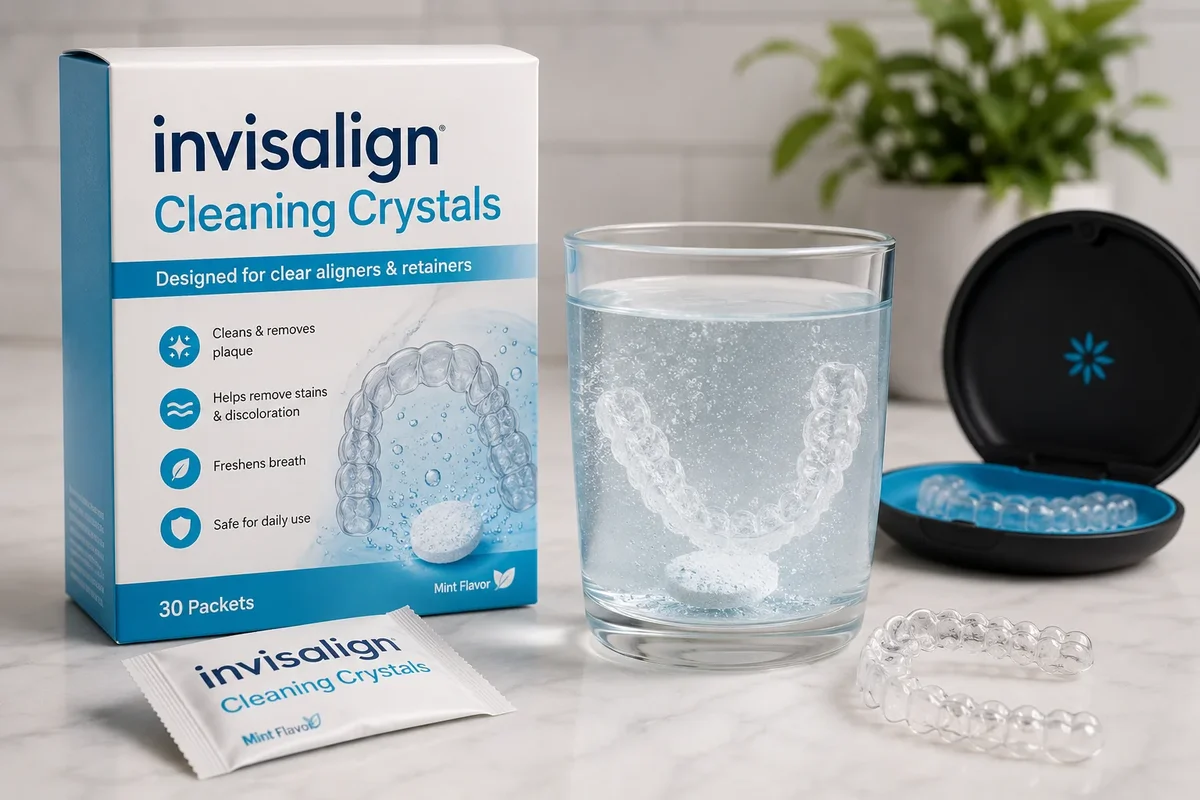
Frequently Asked Questions About Invisalign Cleaning Crystals
Many Invisalign patients have questions about maintaining their aligners properly and getting the best results from their cleaning routine. Because aligners are worn for most of the day, keeping them clean is essential for preserving their transparency, comfort, and hygiene. While invisalign cleaning crystals are widely recommended for aligner maintenance, users often wonder how they should be used, how effective they are, and whether alternatives exist. This FAQ section addresses the most common questions about invisalign cleaning crystals to help patients make informed decisions throughout their Invisalign treatment journey. 🦷✨
What Are Invisalign Cleaning Crystals?
Invisalign cleaning crystals are specialized cleaning packets formulated specifically for Invisalign aligners and retainers. When dissolved in water, they create a cleaning solution designed to help remove plaque, bacteria, saliva residue, and odor-causing buildup.
Unlike many general cleaning products, invisalign cleaning crystals are developed to work safely with Invisalign materials while helping maintain aligner clarity.
How Often Should I Use Invisalign Cleaning Crystals?
Most dental professionals recommend daily use of invisalign cleaning crystals as part of a regular aligner hygiene routine.
Daily cleaning helps:
- Reduce bacterial accumulation
- Maintain transparency
- Control odors
- Prevent plaque buildup
- Improve overall freshness
Some individuals may require more frequent cleaning depending on their oral hygiene habits, dietary choices, and tendency to develop plaque or stains.
Can Invisalign Cleaning Crystals Remove Yellow Stains?
Invisalign cleaning crystals are effective at removing many types of surface discoloration and early-stage staining. They can help improve aligner appearance by reducing deposits caused by:
- Coffee ☕
- Tea
- Plaque accumulation
- Protein buildup
- Daily wear
However, severe or long-standing stains may not disappear completely. Consistent use of invisalign cleaning crystals generally produces the best results.
Do Invisalign Cleaning Crystals Eliminate Odors?
Yes. One of the primary benefits of invisalign cleaning crystals is helping reduce odor-causing buildup.
Unpleasant smells often result from bacterial growth, plaque accumulation, and trapped debris. By helping remove these deposits, invisalign cleaning crystals contribute to fresher aligners and improved breath confidence.
Additional Ways to Prevent Odors
- Brush after meals
- Floss daily
- Rinse aligners regularly
- Store aligners properly
- Clean aligners consistently
Can I Use Toothpaste Instead of Invisalign Cleaning Crystals?
While toothpaste can remove visible debris, many formulas contain abrasive ingredients that may scratch aligner surfaces.
Microscopic scratches can:
- Reduce transparency
- Increase stain retention
- Create a cloudy appearance
- Trap additional bacteria
For this reason, many orthodontists prefer dedicated products such as invisalign cleaning crystals rather than relying exclusively on toothpaste.
Are Invisalign Cleaning Crystals Safe for Daily Use?
When used according to manufacturer instructions, invisalign cleaning crystals are designed for regular aligner maintenance.
Safe usage includes:
- Using lukewarm water
- Following soaking recommendations
- Rinsing aligners afterward
- Storing products appropriately
- Avoiding unauthorized product mixtures
Proper use helps maximize cleaning effectiveness while protecting aligner materials.
Can Invisalign Cleaning Crystals Damage Aligners?
When used correctly, invisalign cleaning crystals are specifically formulated to clean aligners without damaging them.
Damage is more likely to occur from:
- Hot water exposure
- Harsh household cleaners
- Abrasive brushing techniques
- Physical bending or mishandling
Following recommended instructions helps maintain aligner safety.
Can I Use Invisalign Cleaning Crystals for Retainers?
Yes. Many Invisalign retainers can also be cleaned using invisalign cleaning crystals.
Because retainers are worn for extended periods, they face many of the same hygiene challenges as aligners, including:
- Plaque buildup
- Bacterial accumulation
- Odor development
- Surface discoloration
Regular cleaning can help preserve retainer appearance and hygiene.
What Should I Do If My Aligners Still Smell After Cleaning?
If odors persist despite routine use of invisalign cleaning crystals, other factors may be involved.
Possible Causes
- Inadequate brushing
- Poor flossing habits
- Gum inflammation
- Persistent plaque accumulation
- Insufficient cleaning frequency
- Improper aligner storage
In these situations, improving oral hygiene habits or consulting a dental professional may be beneficial.
Can Invisalign Cleaning Crystals Replace Brushing and Flossing?
No. Invisalign cleaning crystals are designed to clean aligners, not teeth and gums.
Patients should continue to:
- Brush twice daily or more
- Floss every day
- Attend routine dental visits
- Maintain proper oral hygiene habits
Aligner cleaning and oral hygiene should always work together.
Are There Alternatives to Invisalign Cleaning Crystals?
Several alternative cleaning methods exist, including:
- Denture cleaning tablets
- Mild soap solutions
- Ultrasonic cleaners
- Certain aligner-cleaning products
However, many patients prefer invisalign cleaning crystals because they are designed specifically for Invisalign systems and aligner materials.
How Long Does It Take to Clean Aligners with Invisalign Cleaning Crystals?
The cleaning process is relatively simple and generally requires only a short soaking period followed by rinsing.
A typical routine involves:
- Preparing the cleaning solution.
- Adding the aligners.
- Allowing them to soak.
- Rinsing thoroughly.
- Reinserting clean aligners.
This convenience is one reason many Invisalign users consistently choose invisalign cleaning crystals as part of their daily care routine.
Do Invisalign Cleaning Crystals Improve Treatment Results?
While invisalign cleaning crystals do not directly move teeth, they contribute to a healthier and more comfortable treatment experience.
Cleaner aligners can help:
- Improve wearer confidence
- Reduce odors
- Maintain aligner transparency
- Support oral hygiene
- Enhance overall treatment satisfaction
These factors can encourage consistent aligner wear, which is essential for successful treatment outcomes.
Final Thoughts
Invisalign cleaning crystals remain one of the most popular solutions for maintaining clear aligners and retainers. They help address common concerns such as stains, odors, bacterial buildup, and loss of transparency while supporting overall aligner hygiene. By understanding how invisalign cleaning crystals work and incorporating them into a consistent cleaning routine, patients can enjoy fresher aligners, greater comfort, and a more confident Invisalign experience. Combined with excellent oral hygiene habits and regular dental care, invisalign cleaning crystals can play an important role in keeping aligners clean, clear, and comfortable throughout every stage of treatment. 😊🦷✨
Disclosure: this page may contain affiliate links. We may earn a commission if you use them, at no extra cost to you.