
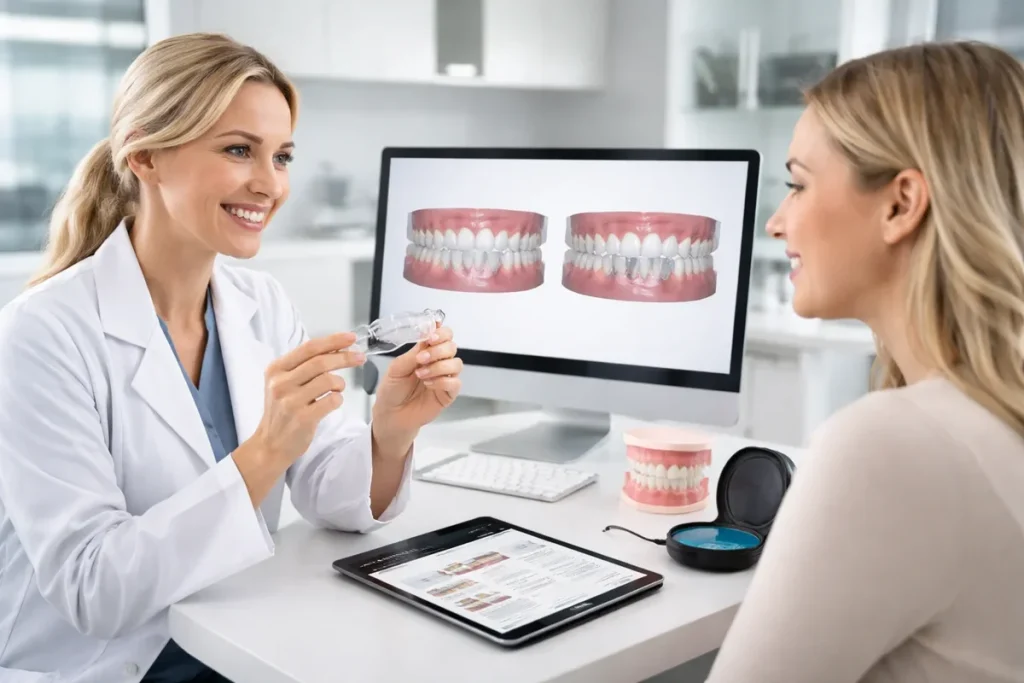
Invisalign consulting is the very first and most critical step for anyone considering clear aligner treatment to improve their smile. Many people mistakenly believe that Invisalign is a simple, one-size-fits-all solution, but in reality, successful results depend heavily on professional planning and expert evaluation. Invisalign consulting bridges the gap between your expectations and a medically sound, personalized orthodontic plan. 😁
At its core, invisalign consulting is a comprehensive professional assessment carried out by a qualified dental expert who evaluates your oral health, alignment issues, bite structure, and aesthetic goals. This process ensures that Invisalign is not only suitable for you but also optimized to deliver predictable and safe results. Without proper invisalign consulting, patients risk poor outcomes, prolonged treatment times, or even dental complications.
During invisalign consulting, your dentist or orthodontist examines your teeth, gums, jaw alignment, and overall oral condition. Cavities, gum disease, or bite problems must be identified early because they can directly impact whether Invisalign treatment will be effective. Invisalign consulting is not just about straightening teeth; it is about ensuring long-term oral health and functional harmony.
One of the most valuable aspects of invisalign consulting is the personalized treatment approach. Every smile is unique, and invisalign consulting allows dental professionals to tailor the aligner plan specifically to your needs. Whether you have crowding, spacing issues, mild bite irregularities, or relapse from previous orthodontic treatment, invisalign consulting helps define realistic outcomes and timelines.
Another essential component of invisalign consulting is patient education. Many patients arrive with misconceptions, assuming Invisalign works faster or requires less commitment than traditional braces. A proper invisalign consulting session explains how aligners work, how many hours per day they must be worn, and how compliance directly affects success. This transparency builds trust and helps patients make informed decisions about their treatment journey.
Invisalign consulting also plays a key role in setting expectations. Using clinical experience and digital tools, dentists can explain what Invisalign can and cannot correct. Severe bite problems, advanced jaw discrepancies, or untreated periodontal issues may require alternative treatments or combined approaches. Honest invisalign consulting ensures that patients are not promised unrealistic results, which protects both patient satisfaction and clinical integrity.
Modern invisalign consulting often includes digital smile analysis and simulation. Through advanced scanning technology, dentists can create a virtual model of your teeth and demonstrate how they will move throughout the treatment. This visual preview is one of the reasons invisalign consulting has become so popular—it allows patients to see potential results before committing. ✨
From a safety standpoint, invisalign consulting is indispensable. The American Dental Association (American Dental Association) emphasizes that orthodontic treatments should always be supervised by licensed dental professionals. Invisalign consulting ensures that tooth movement occurs within biological limits, reducing the risk of root damage, bone loss, or bite instability.
Cost transparency is another benefit of invisalign consulting. While exact fees can vary based on case complexity, region, and treatment duration, a detailed invisalign consulting session usually includes a clear financial overview. In many regions, Invisalign treatment ranges between $3,000 and $7,000, depending on the number of aligners and treatment length. Invisalign consulting allows patients to understand what they are paying for, what is included, and whether payment plans are available.
Invisalign consulting also helps patients compare options. Clear aligner therapy is just one orthodontic solution, and during invisalign consulting, dentists may briefly discuss alternatives such as traditional braces or other aligner systems. This comparison empowers patients to choose the solution that best fits their lifestyle, aesthetic preferences, and oral health needs.
For patients seeking professional guidance, booking a consultation with a trusted clinic is a smart first move. If you are considering starting your journey, you can reach out directly through the Redent Klinik Contact Page to schedule a personalized invisalign consulting session with experienced dental professionals.
In summary, invisalign consulting is far more than a simple introduction to aligners—it is the foundation of successful treatment. From clinical evaluation and digital planning to patient education and expectation management, invisalign consulting ensures that your smile transformation is safe, effective, and tailored specifically to you. When done correctly, invisalign consulting turns uncertainty into clarity and helps patients move forward with confidence and peace of mind. 😊
What Is Invisalign Consulting and Why It Matters
Invisalign consulting is a structured professional evaluation designed to determine whether clear aligner therapy is suitable, safe, and effective for a specific patient. While many people associate Invisalign with convenience and aesthetics, the reality is that invisalign consulting is the backbone of successful treatment. Without a proper consultation process, aligners become guesswork rather than a medically guided solution. 🦷
At its simplest level, invisalign consulting answers three critical questions: Is Invisalign appropriate for your dental condition? What results can realistically be achieved? And how should the treatment be planned to protect long-term oral health? These questions cannot be answered accurately without clinical expertise, which is why invisalign consulting should always be performed by a qualified dental professional.
The Clinical Purpose of Invisalign Consulting
The primary goal of invisalign consulting is diagnosis. Teeth do not exist in isolation—they are supported by bone, surrounded by gums, and guided by jaw movement. During invisalign consulting, dentists assess tooth alignment, spacing, bite relationships, jaw function, and gum health. This ensures that tooth movement will be biologically safe and functionally correct.
Another key function of invisalign consulting is risk identification. Problems such as untreated cavities, periodontal disease, bruxism, or jaw joint disorders can compromise Invisalign results. Invisalign consulting allows these issues to be identified early, corrected if necessary, and factored into the treatment plan. Skipping this step increases the risk of complications and unsatisfactory outcomes.
Why Invisalign Consulting Is Not Optional
Some patients are tempted by online aligner services that bypass in-person invisalign consulting. While these options may appear convenient, they often ignore essential diagnostic steps. Invisalign consulting ensures that aligners are prescribed based on clinical data, not just photos or impressions. This distinction is crucial for patient safety and treatment success.
Invisalign consulting also establishes accountability. A dental professional overseeing your case monitors progress, adjusts the plan when needed, and intervenes if complications arise. Without professional invisalign consulting, patients are left without expert support if something goes wrong.
Medical Accuracy and Ethical Responsibility
From an ethical standpoint, invisalign consulting protects patients from inappropriate treatment. Not every orthodontic problem can be corrected with aligners alone. Severe bite discrepancies, skeletal issues, or advanced gum disease may require alternative or combined treatments. Invisalign consulting ensures patients are guided toward the most appropriate solution, not just the most popular one.
Patient Education as a Core Part of Invisalign Consulting
Education is a cornerstone of effective invisalign consulting. Many patients underestimate the level of commitment required for aligner therapy. Invisalign consulting clarifies that aligners must typically be worn 20–22 hours per day to achieve predictable results. This discussion helps patients decide whether Invisalign fits their lifestyle and habits.
During invisalign consulting, patients also learn about attachment placement, aligner changes, oral hygiene routines, and possible discomfort during tooth movement. Understanding these details in advance reduces anxiety and increases compliance, which directly impacts treatment success.
How Invisalign Consulting Shapes Treatment Outcomes
Successful orthodontic treatment is not defined only by straight teeth, but by functional bite balance and long-term stability. Invisalign consulting allows dentists to plan tooth movement sequences that respect bone biology and occlusion. This planning minimizes relapse risk after treatment ends.
Invisalign consulting also helps establish realistic timelines. Some cases may take six months, while others require 18–24 months depending on complexity. Clear communication during invisalign consulting prevents frustration and aligns patient expectations with clinical reality.
The Role of Customized Treatment Planning
No two Invisalign cases are identical. Invisalign consulting enables a customized approach that considers facial aesthetics, smile line, and patient goals. This personalization transforms Invisalign from a cosmetic product into a medical treatment plan designed for long-term success.
Why Invisalign Consulting Matters for Long-Term Oral Health
Beyond aesthetics, invisalign consulting plays a vital role in protecting oral health. Properly aligned teeth are easier to clean, reducing the risk of cavities and gum disease. A balanced bite minimizes uneven tooth wear and jaw strain. Invisalign consulting ensures these functional benefits are built into the treatment plan.
In conclusion, invisalign consulting matters because it transforms clear aligner therapy from a generic solution into a precise, patient-centered treatment. It combines diagnosis, education, safety, and personalization into a single process that protects both your smile and your health. Invisalign consulting is not just the first step—it is the foundation that determines whether your Invisalign journey will succeed or fail. 🌟
The Step-by-Step Process of Professional Invisalign Consulting
The step-by-step process of professional invisalign consulting is designed to remove uncertainty and replace it with clarity, precision, and confidence. Many patients imagine invisalign consulting as a quick chat followed by immediate treatment, but in reality, it is a structured, multi-stage clinical process. Each step builds upon the previous one to ensure that Invisalign treatment is safe, effective, and tailored to the individual patient. 🦷
Understanding this process helps patients appreciate why invisalign consulting is essential and why it should never be rushed. From the first conversation to the final treatment plan, invisalign consulting combines medical evaluation, digital technology, and patient-centered communication.
Initial Assessment and Patient Interview
The first step of invisalign consulting begins with a detailed patient interview. During this phase, the dental professional listens carefully to the patient’s concerns, expectations, and motivations. Some patients want cosmetic improvements, while others seek functional corrections such as bite alignment or reduced crowding. Invisalign consulting ensures that these goals are clearly defined from the start.
This stage also includes a review of medical and dental history. Conditions such as gum disease, previous orthodontic treatment, jaw pain, or teeth grinding can influence Invisalign suitability. Invisalign consulting allows the dentist to identify any red flags that may affect treatment safety or outcomes.
Comprehensive Oral Examination
After the interview, invisalign consulting moves into a hands-on clinical examination. The dentist evaluates tooth alignment, spacing, rotations, bite relationships, and jaw function. Gum health is assessed carefully, as healthy gums are critical for safe tooth movement.
This step of invisalign consulting ensures that underlying issues—such as cavities, inflammation, or bone loss—are addressed before aligner treatment begins. Treating these problems first protects the patient and improves the predictability of Invisalign results.
Why This Step Cannot Be Skipped
Skipping a comprehensive examination during invisalign consulting can lead to serious complications. Tooth movement in unhealthy gums or compromised bone can worsen oral health. Professional invisalign consulting ensures treatment is built on a stable foundation.
Digital Scanning and Diagnostic Records
Modern invisalign consulting typically includes advanced digital scanning technology. Instead of traditional impressions, many clinics use intraoral scanners to create precise 3D models of the teeth. These scans are more comfortable for patients and significantly more accurate.
During invisalign consulting, these digital records are used to analyze tooth position, bite alignment, and available space. In some cases, additional diagnostic tools such as X-rays or photographs may be taken to gain a complete clinical picture.
Treatment Simulation and Planning
One of the most exciting stages of invisalign consulting is treatment simulation. Using specialized software, dentists can map out how teeth will move over time. This allows both the clinician and the patient to visualize the expected outcome before treatment begins.
Invisalign consulting uses this simulation to fine-tune the treatment plan. Adjustments can be made to improve aesthetics, optimize bite function, or shorten treatment duration. This level of customization is one of the greatest advantages of professional invisalign consulting.
Setting Realistic Expectations
Not all smiles can be transformed overnight. Invisalign consulting includes an honest discussion about limitations, timelines, and potential refinements. Patients learn what Invisalign can realistically achieve and whether additional procedures may be needed.
Financial Discussion and Timeframe Overview
A transparent financial discussion is another essential step in invisalign consulting. The dentist explains what is included in the treatment cost, such as aligners, check-ups, refinements, and retainers. While fees vary by case complexity and region, invisalign consulting ensures there are no hidden surprises.
Patients also receive a clear timeline estimate during invisalign consulting. Knowing how long treatment may take helps patients plan their schedules and maintain realistic expectations.
Final Approval and Treatment Readiness
The final step of invisalign consulting is patient approval. Once all questions are answered and the treatment plan is finalized, the patient can confidently decide whether to proceed. Invisalign consulting empowers patients to make informed choices rather than feeling pressured.
If the patient is ready, aligners are ordered based on the approved digital plan. If not, invisalign consulting still provides value by offering clarity, education, and professional guidance.
Why the Step-by-Step Invisalign Consulting Process Matters
Each step in invisalign consulting serves a specific purpose. Together, they reduce risk, improve accuracy, and increase patient satisfaction. By following a structured approach, invisalign consulting transforms Invisalign from a cosmetic trend into a medically sound orthodontic solution.
In conclusion, the step-by-step process of professional invisalign consulting ensures that treatment is personalized, predictable, and safe. Patients who understand and respect this process are far more likely to achieve lasting, healthy, and confident smiles. 😊
Who Is a Good Candidate for Invisalign Consulting?
One of the most common questions patients ask is whether they are suitable for Invisalign treatment. This is exactly where invisalign consulting becomes essential. Invisalign is a powerful orthodontic solution, but it is not universally appropriate for every dental condition. Invisalign consulting helps determine candidacy through clinical evaluation, lifestyle assessment, and realistic goal setting. 🦷
A good candidate for Invisalign consulting is not defined only by crooked teeth. Instead, invisalign consulting evaluates the entire oral ecosystem, including tooth position, bite function, gum health, bone support, and patient compliance potential. This holistic approach ensures that Invisalign treatment delivers both aesthetic and functional benefits.
Dental Conditions Commonly Approved Through Invisalign Consulting
Invisalign consulting often identifies patients with mild to moderate orthodontic issues as ideal candidates. These may include crowding, spacing between teeth, minor rotations, and certain bite irregularities such as mild overbite or underbite. Invisalign consulting confirms whether these conditions can be safely corrected with aligners.
Patients who previously wore braces and experienced relapse are also frequent candidates discovered through invisalign consulting. In such cases, aligners can be an effective way to realign teeth without returning to traditional braces.
Mild to Moderate Alignment Issues
Teeth that are slightly crowded or spaced are often well-suited for Invisalign. Invisalign consulting ensures that there is adequate bone support and that tooth movement will not compromise gum health or stability.
Oral Health Requirements for Invisalign Consulting
Healthy gums and teeth are fundamental requirements identified during invisalign consulting. Active gum disease, untreated cavities, or infections must be addressed before aligner treatment begins. Invisalign consulting prioritizes oral health because moving teeth in unhealthy conditions can worsen existing problems.
Bone density and periodontal stability are also evaluated during invisalign consulting. Teeth rely on surrounding bone for support, and insufficient bone levels may limit or contraindicate aligner-based movement.
Lifestyle and Compliance Factors Considered in Invisalign Consulting
Unlike fixed braces, Invisalign requires a high level of patient responsibility. Invisalign consulting carefully evaluates whether a patient can commit to wearing aligners for 20–22 hours per day. Patients who frequently remove aligners or forget to wear them may not achieve optimal results.
During invisalign consulting, dentists discuss daily routines, work schedules, eating habits, and travel frequency. This conversation helps determine whether Invisalign fits the patient’s lifestyle or whether alternative treatments may be more appropriate.
Motivation and Realistic Expectations
Motivation plays a significant role in Invisalign success. Invisalign consulting ensures that patients understand the treatment process, limitations, and timelines. Patients seeking instant results or unwilling to follow instructions may not be ideal candidates.
Age Considerations in Invisalign Consulting
Invisalign consulting is suitable for both adults and teenagers, but age-specific factors are carefully evaluated. Adults often seek Invisalign for cosmetic reasons and tend to be highly compliant, making them excellent candidates identified through invisalign consulting.
Teen patients can also benefit from Invisalign, but invisalign consulting assesses growth patterns, eruption of permanent teeth, and maturity level. Special features such as compliance indicators may be recommended for younger patients.
Who May Not Be an Ideal Candidate According to Invisalign Consulting
Not all orthodontic cases can be effectively managed with aligners alone. Invisalign consulting may determine that patients with severe bite discrepancies, complex jaw alignment issues, or advanced skeletal problems require alternative treatments such as braces or combined orthodontic–surgical approaches.
Patients with severe bruxism (teeth grinding) or temporomandibular joint disorders may also require special consideration during invisalign consulting. In some cases, Invisalign can still be used with modifications, but only after thorough evaluation.
The Importance of Honest Professional Guidance
One of the most valuable aspects of invisalign consulting is honest guidance. Ethical dental professionals prioritize patient well-being over selling a specific treatment. Invisalign consulting protects patients from unsuitable solutions and guides them toward the most effective path.
Why Invisalign Consulting Determines Success
Ultimately, being a good candidate is not about wanting Invisalign—it is about being clinically suitable for it. Invisalign consulting ensures that the treatment aligns with biological limits, functional needs, and patient expectations.
In conclusion, a good candidate for invisalign consulting is someone with healthy oral structures, manageable alignment issues, realistic goals, and the commitment to follow treatment guidelines. Invisalign consulting transforms uncertainty into confidence by identifying who will truly benefit from clear aligner therapy and who may need alternative solutions. 🌟
Invisalign Consulting vs Traditional Orthodontic Consultations
When patients explore orthodontic treatment options, they often wonder how invisalign consulting differs from traditional orthodontic consultations. While both aim to improve dental alignment and oral function, the approach, tools, and patient experience can be significantly different. Invisalign consulting is designed around digital precision, customization, and lifestyle flexibility, whereas traditional consultations often focus on fixed appliance solutions. 🦷
Understanding these differences is essential for patients who want to make informed decisions. Invisalign consulting is not simply a modern version of an orthodontic visit; it represents a shift in how diagnosis, planning, and patient involvement are handled throughout treatment.
Diagnostic Approach: Digital vs Conventional Methods
One of the most notable differences lies in diagnostics. Invisalign consulting relies heavily on digital technology such as intraoral scanners and 3D modeling. These tools allow dentists to visualize tooth movement with exceptional accuracy. Patients can see a digital simulation of their future smile during invisalign consulting, which improves understanding and confidence.
Traditional orthodontic consultations often use physical impressions, manual measurements, and visual assessments. While effective, these methods may not provide the same level of predictive visualization that invisalign consulting offers. Digital planning enables precise adjustments before treatment even begins.
Accuracy and Predictability
Invisalign consulting excels in predictability. By planning each stage digitally, clinicians can anticipate challenges and optimize outcomes. Traditional consultations rely more on incremental adjustments made during treatment, which can extend timelines or require additional corrections.
Patient Experience and Comfort
Comfort is another key area where invisalign consulting differs. Digital scans used in invisalign consulting eliminate the discomfort associated with traditional impression trays. This makes the consultation experience smoother, especially for patients with gag reflex sensitivity.
In traditional orthodontic consultations, patients may need to adapt to the idea of metal brackets and wires. Invisalign consulting focuses on removable, nearly invisible aligners, which often appeal to adults and professionals seeking discreet treatment.
Treatment Philosophy and Customization
Invisalign consulting emphasizes personalization. Each aligner is custom-made based on the patient’s anatomy and treatment goals. Invisalign consulting considers facial aesthetics, smile symmetry, and functional bite alignment simultaneously.
Traditional consultations often follow standardized bracket systems, with customization occurring gradually. While highly effective for complex cases, this approach may feel less tailored compared to the upfront customization of invisalign consulting.
Flexibility and Lifestyle Compatibility
During invisalign consulting, lifestyle factors such as eating habits, work environment, and social preferences are carefully discussed. Removable aligners offer flexibility that fixed braces cannot. Traditional orthodontic consultations typically focus less on lifestyle integration.
Monitoring and Follow-Up Differences
Invisalign consulting often includes digital monitoring and fewer in-office visits. Patients may receive multiple sets of aligners and check in periodically. This model appeals to busy individuals who value efficiency.
Traditional orthodontic consultations usually involve more frequent adjustments and in-person visits. While this allows hands-on control, it may require more time commitment from patients.
Cost Transparency and Planning
Cost discussions also differ. Invisalign consulting typically provides a clear, all-inclusive treatment plan upfront, covering aligners, refinements, and retainers. Patients know what to expect financially.
Traditional orthodontic consultations may involve variable costs depending on adjustments, repairs, or extended treatment time. Invisalign consulting offers predictability that many patients appreciate.
Which Consultation Is Right for You?
The choice between invisalign consulting and traditional orthodontic consultations depends on individual needs. Invisalign consulting is ideal for patients seeking discreet treatment, digital planning, and lifestyle flexibility. Traditional consultations may be better suited for complex orthodontic or skeletal cases.
In conclusion, invisalign consulting represents a modern, patient-centered approach to orthodontics. While traditional consultations remain highly effective, invisalign consulting stands out for its precision, comfort, and customization. Understanding these differences empowers patients to choose the consultation style that aligns with their goals, expectations, and oral health needs. 🌟
Digital Scanning and Smile Design in Invisalign Consulting
One of the most transformative elements of modern invisalign consulting is the use of digital scanning and advanced smile design technology. These tools have fundamentally changed how orthodontic treatment is planned, visualized, and delivered. Instead of relying on assumptions or rough estimates, invisalign consulting now uses precise digital data to create highly accurate and personalized treatment plans. 😁
Digital scanning and smile design are not cosmetic add-ons; they are core clinical components of professional invisalign consulting. They improve diagnostic accuracy, enhance patient understanding, and significantly increase the predictability of treatment outcomes.
What Digital Scanning Means in Invisalign Consulting
Digital scanning in invisalign consulting involves the use of an intraoral scanner to capture a detailed three-dimensional model of the teeth, gums, and bite. This scanner replaces traditional putty impressions, which were often uncomfortable and less precise.
During invisalign consulting, the scanner records thousands of data points per second, creating a highly accurate digital replica of the patient’s mouth. This data forms the foundation of the entire Invisalign treatment plan. Even the smallest rotations, spacing issues, or bite discrepancies are detected during this stage of invisalign consulting.
Accuracy That Improves Treatment Safety
The precision of digital scanning reduces the risk of errors in aligner fabrication. Invisalign consulting benefits from this accuracy by ensuring that aligners fit properly, apply the correct force, and move teeth within safe biological limits.
The Role of Smile Design in Invisalign Consulting
Smile design is where invisalign consulting becomes both scientific and visual. Using specialized software, dentists can design a digital smile that aligns with the patient’s facial structure, lip movement, and aesthetic preferences.
Invisalign consulting integrates smile design to ensure that the final result looks natural—not artificial or overcorrected. Tooth shape, smile arc, and midline alignment are carefully evaluated. This process ensures that Invisalign improves not only alignment but also overall facial harmony.
Visualizing Results Before Treatment Begins
One of the most powerful advantages of digital smile design in invisalign consulting is the ability to preview results. Patients can see a simulation of how their teeth are expected to move over time and what the final smile may look like.
This visualization transforms invisalign consulting into a collaborative process. Patients can ask questions, express preferences, and understand the reasoning behind clinical decisions. Seeing projected outcomes increases motivation and trust in the treatment plan.
Setting Realistic Expectations Through Simulation
Digital simulations used in invisalign consulting also help manage expectations. Dentists can clearly explain which changes are achievable and which are limited by anatomy or biology. This honesty prevents disappointment and reinforces informed consent.
How Digital Data Improves Custom Aligner Design
Every aligner used in Invisalign treatment is manufactured based on digital data collected during invisalign consulting. The scanner data and smile design plan are sent to create a sequence of aligners that move teeth incrementally.
Invisalign consulting uses this digital workflow to control the direction, timing, and magnitude of tooth movement. This level of customization is difficult to achieve with traditional methods and is one of the reasons Invisalign outcomes are so predictable when planned correctly.
Efficiency and Comfort Benefits for Patients
From a patient perspective, digital scanning improves comfort and efficiency. The scanning process usually takes only a few minutes and eliminates the discomfort of impression trays. Invisalign consulting becomes a smoother, more patient-friendly experience.
Additionally, digital records allow dentists to store and review data easily. If refinements are needed later, invisalign consulting can quickly reference the original scans and adjust the treatment plan without starting from scratch.
Digital Monitoring and Future Adjustments
Digital technology does not end after the initial invisalign consulting session. Many clinics use digital records to monitor progress throughout treatment. If teeth are not moving as expected, the treatment plan can be modified using updated scans.
This adaptability is a major advantage of invisalign consulting. It ensures that treatment remains responsive to biological variation rather than rigidly following a pre-set plan.
Why Digital Scanning Defines Modern Invisalign Consulting
Digital scanning and smile design elevate invisalign consulting from a basic consultation to a precision-driven medical process. They reduce uncertainty, enhance communication, and improve outcomes for both patients and clinicians.
In conclusion, digital scanning and smile design are essential pillars of professional invisalign consulting. By combining advanced technology with clinical expertise, invisalign consulting delivers personalized, predictable, and aesthetically pleasing results. This digital foundation is what allows Invisalign treatment to meet modern patient expectations for accuracy, comfort, and confidence. ✨
Common Questions Patients Ask During Invisalign Consulting
One of the most valuable aspects of invisalign consulting is the opportunity for patients to ask detailed, personalized questions before committing to treatment. Clear aligner therapy can feel unfamiliar at first, and invisalign consulting is designed to remove doubt by providing transparent, medically accurate answers. Understanding what patients commonly ask during invisalign consulting helps future patients prepare and feel more confident. 😊
These questions typically focus on effectiveness, comfort, timelines, daily life impact, and long-term results. A professional invisalign consulting session encourages open dialogue and ensures that patients are fully informed before making decisions.
“Will Invisalign Really Work for My Teeth?”
This is often the first and most important question asked during invisalign consulting. Patients want reassurance that Invisalign can correct their specific alignment or bite issue. During invisalign consulting, dentists evaluate the complexity of the case and explain whether aligners alone are sufficient.
Using clinical examination and digital simulations, invisalign consulting allows dentists to demonstrate how teeth will move and what outcomes are realistic. This evidence-based explanation builds trust and prevents unrealistic expectations.
“How Long Will Treatment Take?”
Treatment duration is another major concern addressed during invisalign consulting. Patients want to know how Invisalign fits into their personal and professional timelines. Invisalign consulting provides an estimated treatment length based on case complexity, compliance, and biological factors.
While some cases may be completed in six months, others may require 12 to 24 months. Invisalign consulting emphasizes that wearing aligners as prescribed is critical to staying on schedule.
Factors That Influence Treatment Time
During invisalign consulting, dentists explain that factors such as tooth movement response, missed wear time, and the need for refinements can affect timelines. This transparency helps patients understand their role in treatment success.
“Is Invisalign Painful?”
Comfort is a frequent topic in invisalign consulting. Patients often worry about pain or discomfort. Invisalign consulting clarifies that while aligners may cause mild pressure during the first few days of each new set, severe pain is uncommon.
Dentists explain that this pressure is a sign that teeth are moving as planned. Invisalign consulting also provides tips for managing discomfort, such as switching aligners at night and using over-the-counter pain relief if needed.
“How Will Invisalign Affect My Daily Life?”
Invisalign consulting includes a detailed discussion about daily routines. Patients ask how aligners affect eating, speaking, work, and social interactions. Invisalign consulting explains that aligners are removable, allowing patients to eat normally and maintain oral hygiene.
Speech adjustments are usually minimal and temporary. Invisalign consulting reassures patients that most people adapt quickly, often within a few days.
Work, Travel, and Social Considerations
Patients with busy lifestyles often ask how Invisalign fits into travel or demanding schedules. Invisalign consulting explains how to manage aligners on the go, store them properly, and maintain consistency even during routine disruptions.
“How Often Will I Need Dental Visits?”
Frequency of visits is another common question in invisalign consulting. Patients appreciate that Invisalign typically requires fewer in-office appointments than traditional braces. Invisalign consulting outlines the follow-up schedule, which may involve visits every six to eight weeks.
This flexibility makes Invisalign appealing to professionals and students alike. Invisalign consulting ensures patients know when visits are necessary and what each appointment involves.
“What Happens After Treatment Is Finished?”
Patients often focus on treatment but forget about retention. Invisalign consulting explains the importance of retainers after aligner treatment is complete. Without proper retention, teeth can gradually shift back.
During invisalign consulting, dentists explain retainer options, wear schedules, and long-term maintenance. This discussion highlights that Invisalign consulting is about lasting results, not just short-term alignment.
“Is Invisalign Safe for My Teeth and Gums?”
Safety concerns are natural, and invisalign consulting addresses them directly. Dentists explain how controlled tooth movement protects roots, bone, and gum tissue. Invisalign consulting emphasizes that treatment is supervised and adjusted as needed.
This reassurance is especially important for patients with previous dental work or mild periodontal concerns.
Why Asking Questions Is a Key Part of Invisalign Consulting
Invisalign consulting is not a one-sided presentation—it is a collaborative conversation. Asking questions allows patients to understand the process, evaluate commitment, and build trust with their provider.
In conclusion, the most common questions asked during invisalign consulting reflect patients’ desire for clarity, comfort, and confidence. A thorough invisalign consulting session welcomes these questions and provides honest, detailed answers. This open communication is what transforms Invisalign from a product into a personalized, well-managed orthodontic journey. 🌟
Invisalign Consulting for Teens vs Adults
Invisalign consulting plays a crucial role for both teens and adults, but the evaluation process, priorities, and treatment considerations can differ significantly between these age groups. While the aligner technology is similar, invisalign consulting must be adapted to biological, behavioral, and lifestyle differences to ensure successful outcomes. Understanding these distinctions helps patients and parents make informed decisions. 🦷
Whether for a teenager still experiencing growth or an adult seeking discreet orthodontic care, invisalign consulting ensures that treatment is age-appropriate, safe, and effective.
Biological Differences Considered in Invisalign Consulting
One of the first factors evaluated during invisalign consulting is biological development. Teenagers are often still growing, which affects jaw position, tooth eruption, and bite relationships. Invisalign consulting for teens includes careful assessment of growth patterns and the presence of all permanent teeth.
For adults, growth has already stabilized. Invisalign consulting focuses more on bone density, previous dental work, and long-term bite stability. Adults may also have restorations such as crowns or implants, which must be considered during treatment planning.
Growth Monitoring in Teen Invisalign Consulting
In teen cases, invisalign consulting may include growth monitoring to ensure aligners do not interfere with natural development. This makes professional oversight especially important for younger patients.
Compliance and Responsibility Factors
Compliance is a major focus of invisalign consulting, especially for teens. Invisalign requires consistent wear for 20–22 hours per day. Invisalign consulting evaluates whether a teen is mature enough to manage aligners responsibly.
Adults, on the other hand, are often highly motivated and disciplined. Invisalign consulting for adults typically involves fewer concerns about wear compliance but may address lifestyle challenges such as work schedules or travel.
Lifestyle and Social Considerations
Invisalign consulting recognizes that teens and adults have different social environments. Teens may be involved in school activities, sports, and social settings where peer perception matters. Invisalign consulting highlights the discreet nature of aligners, which can boost confidence during formative years.
Adults often seek Invisalign for professional or aesthetic reasons. Invisalign consulting for adults emphasizes subtlety, convenience, and minimal disruption to daily life.
Speech and Adaptation Concerns
Both teens and adults may worry about speech changes. Invisalign consulting explains that minor speech adjustments are usually temporary. Adults may adapt faster, while teens may need brief reassurance and encouragement.
Customized Features in Teen Invisalign Consulting
Invisalign consulting for teens may include special features such as compliance indicators, which fade with wear time. These tools help dentists and parents monitor aligner usage and ensure treatment stays on track.
Teen-specific aligners are designed to accommodate erupting teeth and growth changes. Invisalign consulting ensures these features are used appropriately and adjusted as needed.
Oral Health Priorities for Adults
Adult invisalign consulting often focuses on oral health history. Adults may have gum recession, bone loss, or previous orthodontic treatment. Invisalign consulting ensures that aligner therapy supports long-term oral health rather than compromising it.
Adults may also be more concerned about relapse prevention. Invisalign consulting includes detailed discussions about retainers and long-term maintenance.
Emotional and Motivational Aspects
Invisalign consulting for teens often involves parental participation. Dentists explain treatment goals, timelines, and responsibilities to both teens and parents. This shared understanding supports motivation and accountability.
For adults, invisalign consulting is typically more autonomous. Adults value detailed explanations, efficiency, and transparency. Invisalign consulting respects these preferences by focusing on data-driven planning and clear communication.
Which Age Group Benefits More from Invisalign Consulting?
Both teens and adults benefit greatly from invisalign consulting, but for different reasons. Teens benefit from growth-aware planning and compliance support, while adults benefit from precision, discretion, and customization.
In conclusion, invisalign consulting is not a one-size-fits-all process. By tailoring evaluations and treatment plans to age-specific needs, invisalign consulting ensures that both teens and adults achieve safe, effective, and satisfying orthodontic results. This personalized approach is what makes Invisalign a versatile and reliable solution across generations. 🌟
Expected Results and Long-Term Benefits of Invisalign Consulting
When patients begin their orthodontic journey, they often focus on the immediate goal of straighter teeth. However, the true value of invisalign consulting extends far beyond short-term cosmetic improvement. Invisalign consulting is designed to deliver predictable results while protecting long-term oral health, bite function, and smile stability. Understanding what outcomes to expect helps patients appreciate why professional planning matters so much. 😊
Invisalign consulting sets the foundation for results that are not only visually pleasing but also biologically sound. By combining diagnosis, digital planning, and patient education, invisalign consulting ensures that improvements last long after the final aligner is worn.
Short-Term Results Guided by Invisalign Consulting
The first noticeable results of Invisalign treatment often appear within the first few months. Invisalign consulting helps define which changes will occur early and which require more time. Patients may see reduced crowding, improved spacing, and better alignment relatively quickly when the plan is properly designed.
Because invisalign consulting carefully sequences tooth movement, early changes are controlled and intentional. This prevents unnecessary discomfort and minimizes risks such as uneven forces or unstable bite changes.
Visible Progress Without Disruption
Invisalign consulting emphasizes gradual improvement. Aligners apply gentle, continuous pressure, allowing patients to see progress without the dramatic adjustments often associated with traditional braces.
Functional Improvements Beyond Aesthetics
One of the most overlooked benefits of invisalign consulting is functional enhancement. Straighter teeth are easier to clean, reducing plaque buildup and lowering the risk of cavities and gum disease. Invisalign consulting ensures that alignment improvements support daily oral hygiene.
Bite correction is another critical outcome. Invisalign consulting evaluates how upper and lower teeth meet, helping to reduce uneven wear, jaw strain, and discomfort. A balanced bite contributes to long-term dental stability and comfort.
Long-Term Stability and Retention Planning
Long-term success depends on more than just completing aligner treatment. Invisalign consulting includes detailed retention planning to prevent relapse. Teeth naturally tend to shift over time, and without proper retention, even the best alignment can be lost.
During invisalign consulting, dentists explain retainer options, wear schedules, and maintenance strategies. This proactive approach ensures that results achieved through Invisalign are preserved for years to come.
Why Retainers Are Part of Invisalign Consulting
Retention is not an afterthought—it is a core component of invisalign consulting. Patients who understand and commit to retainer use are far more likely to maintain their results long-term.
Psychological and Confidence Benefits
The impact of Invisalign often extends beyond physical changes. Invisalign consulting prepares patients for the confidence boost that comes with an improved smile. Many patients report increased self-esteem, improved social interactions, and greater comfort in professional settings.
Because invisalign consulting sets realistic expectations, patients experience satisfaction rather than disappointment. Knowing what changes to expect helps patients recognize progress and appreciate their transformation.
Oral Health Benefits That Last a Lifetime
Properly aligned teeth contribute to lifelong oral health. Invisalign consulting ensures that treatment supports gum health, reduces areas where food can become trapped, and promotes even distribution of biting forces.
These benefits can reduce the likelihood of future dental problems such as fractures, excessive wear, or periodontal issues. Invisalign consulting transforms orthodontic treatment into a preventive health investment.
Why Professional Invisalign Consulting Makes Results Predictable
Predictability is one of the greatest advantages of invisalign consulting. Digital planning, continuous monitoring, and professional oversight allow dentists to anticipate challenges and make adjustments as needed.
Without invisalign consulting, aligner treatment becomes unpredictable. With it, patients benefit from a structured process that prioritizes safety, efficiency, and long-term success.
Measuring Success After Invisalign Consulting
Success is measured not only by straight teeth but by stability, comfort, and patient satisfaction. Invisalign consulting defines success criteria early, ensuring that both clinician and patient share the same goals.
Follow-up evaluations after treatment completion allow dentists to confirm that results meet clinical standards. Invisalign consulting does not end when aligners are removed—it continues through retention and long-term monitoring.
The Lasting Value of Invisalign Consulting
In conclusion, invisalign consulting delivers results that extend far beyond aesthetics. It supports oral health, functional balance, emotional well-being, and long-term stability. Patients who undergo thorough invisalign consulting are more likely to enjoy lasting benefits and fewer complications.
By investing in professional invisalign consulting, patients are not just straightening their teeth—they are investing in a healthier, more confident future. This comprehensive approach is what transforms Invisalign from a cosmetic option into a long-term solution built to last. 🌟
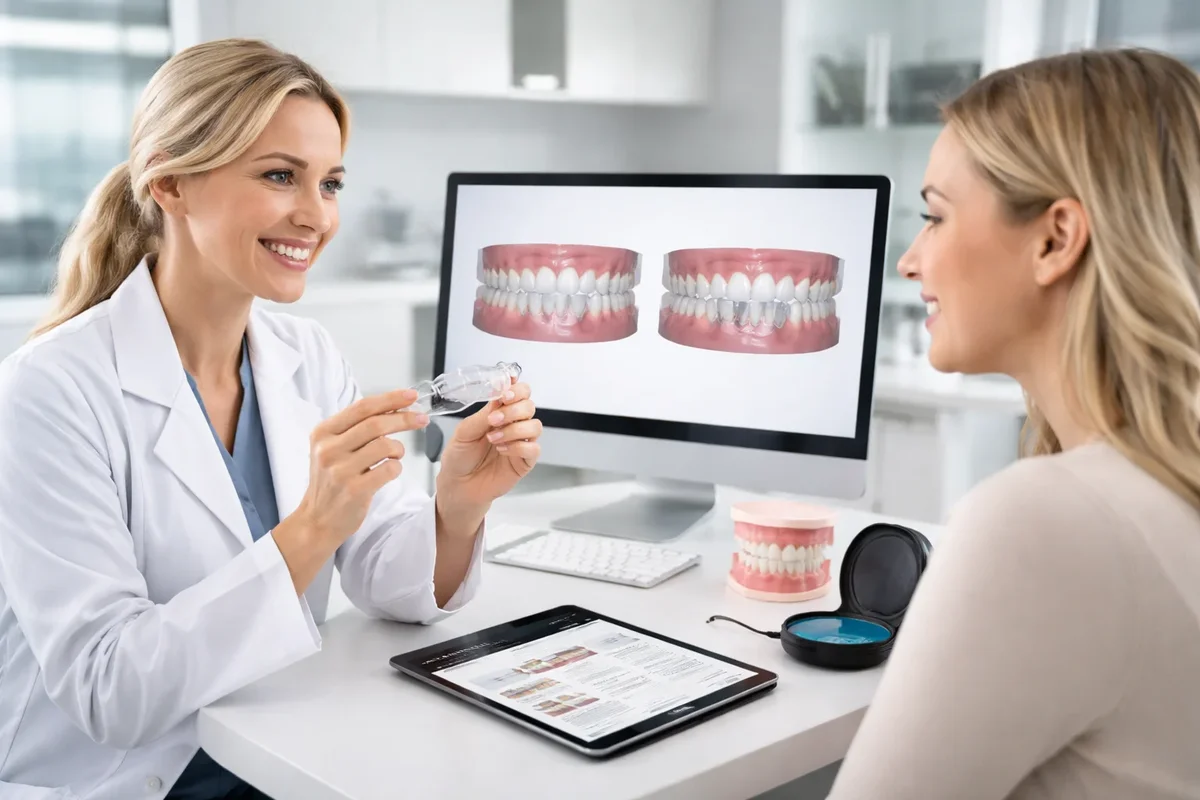
How to Choose the Right Clinic for Invisalign Consulting
Choosing the right clinic for invisalign consulting is one of the most important decisions a patient can make on their orthodontic journey. While Invisalign aligners themselves follow standardized manufacturing protocols, the quality of results depends heavily on the expertise, technology, and approach of the clinic providing the invisalign consulting. A well-chosen clinic ensures safety, predictability, and long-term satisfaction, while a poor choice can lead to delays, discomfort, or disappointing outcomes. 🦷
Invisalign consulting is not just a preliminary appointment—it is a comprehensive planning process. Selecting the right clinic means selecting the right clinical philosophy, experience level, and patient care standards.
Clinical Experience and Professional Credentials
The first factor to evaluate when choosing a clinic for invisalign consulting is professional expertise. Invisalign consulting should be performed by licensed dentists or orthodontists with specific training in clear aligner therapy. Experience matters because tooth movement requires biological understanding, not just software skills.
During invisalign consulting, experienced clinicians can identify subtle issues such as bite imbalance, root positioning, or gum health risks. These details are often overlooked by less experienced providers. Asking about training, years of experience, and the number of Invisalign cases handled is entirely appropriate during invisalign consulting.
Why Specialized Invisalign Experience Matters
Not all orthodontic knowledge translates equally to aligner treatment. Invisalign consulting requires familiarity with digital planning, attachment placement, and refinement strategies. Clinics with dedicated Invisalign experience are better equipped to manage complex cases and unexpected challenges.
Technology and Diagnostic Capabilities
Modern invisalign consulting relies heavily on digital tools. Clinics that use advanced intraoral scanners, digital smile design software, and 3D treatment simulations offer a higher level of precision. These technologies improve diagnosis, planning accuracy, and patient communication.
When choosing a clinic, patients should ask what technology is used during invisalign consulting. Clinics that still rely solely on traditional impressions may not provide the same level of accuracy or comfort.
Transparency and Communication Style
Clear communication is a hallmark of high-quality invisalign consulting. The right clinic explains the process in understandable terms, answers questions patiently, and discusses limitations honestly. Invisalign consulting should never feel rushed or sales-driven.
Patients should feel comfortable discussing concerns, expectations, and lifestyle factors. A trustworthy invisalign consulting session focuses on education rather than pressure.
Red Flags to Watch For
Be cautious if a clinic guarantees perfect results, unusually fast timelines, or avoids discussing potential limitations. Ethical invisalign consulting prioritizes realistic outcomes and patient safety over promises.
Customized Treatment Planning Approach
Every patient is different, and invisalign consulting should reflect that. The right clinic develops individualized treatment plans rather than using generic templates. Invisalign consulting should consider facial aesthetics, bite function, oral health history, and personal goals.
Customization is especially important for patients with previous orthodontic treatment, restorations, or mild periodontal concerns. Invisalign consulting tailored to these factors leads to better long-term results.
Follow-Up Care and Ongoing Support
Invisalign consulting does not end once aligners are ordered. Choosing a clinic that provides consistent follow-up care is essential. Regular monitoring ensures teeth are moving as planned and allows for timely adjustments.
Ask how often follow-up visits occur and how refinements are handled. A clinic committed to comprehensive invisalign consulting remains involved throughout the entire treatment process.
Patient Reviews and Reputation
Patient feedback provides valuable insight into the quality of invisalign consulting offered by a clinic. Reviews often reflect communication quality, professionalism, and overall satisfaction. While no clinic is perfect, consistent positive feedback is a strong indicator of reliable care.
Reputation within the dental community also matters. Clinics respected by peers are more likely to follow ethical and evidence-based practices during invisalign consulting.
Accessibility and Patient Convenience
Practical considerations also influence the choice of clinic. Invisalign consulting should be accessible, with reasonable appointment availability and clear communication channels. Convenience supports compliance and reduces stress during treatment.
Some clinics offer flexible scheduling or digital check-ins, which can be beneficial for busy patients. Invisalign consulting that adapts to patient needs enhances the overall experience.
Why the Right Clinic Defines Invisalign Success
Invisalign aligners are only as effective as the plan behind them. Invisalign consulting transforms aligners into a controlled medical treatment. Choosing the right clinic ensures that this planning is thorough, ethical, and patient-centered.
In conclusion, selecting the right clinic for invisalign consulting requires careful evaluation of expertise, technology, communication, and long-term support. Patients who invest time in choosing the right provider are far more likely to achieve stable, healthy, and satisfying results. Invisalign consulting is not just about starting treatment—it is about choosing the team that will guide your smile transformation safely and successfully. 🌟
Disclosure: this page may contain affiliate links. We may earn a commission if you use them, at no extra cost to you.