
Choosing among invisalign financing options is often one of the biggest concerns for people considering clear aligners. The short answer is that many dental clinics offer flexible ways to spread the cost of treatment over time rather than requiring the full amount upfront. Depending on the clinic, your location, your credit profile when applicable, and the complexity of your orthodontic plan, invisalign financing options may include monthly payment plans, third-party healthcare financing, in-house installment programs, health savings accounts where available, or insurance benefits that reduce part of the total treatment cost. The exact solution varies from one patient to another, which is why a professional consultation remains the most reliable way to understand both your clinical needs and your financial choices.
Many people delay orthodontic treatment because they assume it is financially out of reach. In reality, invisalign financing options have become increasingly common as clinics recognize that flexible payment arrangements make treatment more accessible. Instead of asking only, “How much does Invisalign cost?” it is often more helpful to ask, “Which payment approach best fits my monthly budget without creating unnecessary financial pressure?” This shift in thinking helps you evaluate treatment more realistically and choose a payment structure that matches your personal circumstances.
Before comparing different invisalign financing options, it is important to understand that Invisalign treatment itself is customized. Some patients require only minor tooth movement over several months, while others need comprehensive orthodontic correction that may continue for well over a year. Because every treatment plan is unique, the total investment and the available financing arrangements can differ significantly. No reputable clinic can provide an exact final cost without first examining your teeth, bite, oral health, and treatment objectives.
When researching invisalign financing options, you should also consider what is included in the quoted treatment fee. Some providers include digital scans, treatment planning, aligners, routine progress appointments, refinements when clinically appropriate, and retainers, while others may separate these services. Understanding what is included allows you to compare offers fairly instead of focusing only on the advertised monthly payment.
Insurance may also influence your available invisalign financing options. Certain dental insurance plans provide orthodontic benefits that may contribute toward treatment costs if your policy includes eligible coverage. The amount of support varies according to your individual policy, waiting periods, annual limits, lifetime orthodontic maximums, and other plan conditions. Reviewing your insurance details before committing to treatment can help you estimate your expected out-of-pocket expenses more accurately.
For some patients, the ideal invisalign financing options involve combining several payment methods. For example, insurance benefits may reduce part of the treatment fee while the remaining balance is divided into manageable monthly installments. Others may prefer an in-house payment plan offered directly by the clinic, while some choose specialized healthcare financing providers that allow longer repayment periods. Each approach has advantages and potential limitations, making it worthwhile to compare terms carefully before making a decision.
Financial planning should never outweigh clinical suitability. Even if attractive invisalign financing options are available, the first priority should always be determining whether Invisalign is appropriate for your orthodontic needs. Mild to moderate crowding, spacing, and certain bite problems are commonly treated with clear aligners, but every case requires professional assessment. A dentist or orthodontist will evaluate your oral health, take digital scans or impressions when necessary, and determine whether Invisalign is likely to achieve your treatment goals.
A consultation also provides an opportunity to discuss practical questions that online articles cannot answer with certainty. These may include estimated treatment duration, expected appointment frequency, oral hygiene recommendations, the importance of wearing aligners for the recommended number of hours each day, and whether additional procedures may be needed before treatment begins. These clinical factors can influence both treatment planning and the most appropriate invisalign financing options available to you.
If you are comparing clinics internationally, remember that financing programs, payment schedules, insurance acceptance, and consumer regulations differ between countries. Rather than choosing a provider based solely on the lowest advertised monthly payment, consider the overall quality of care, professional experience, communication, transparency regarding fees, and long-term follow-up. These factors often have a greater impact on your overall experience than the payment plan alone.
For individuals exploring treatment abroad, discussing both the clinical plan and available invisalign financing options during an initial consultation can help create realistic expectations before making travel or financial commitments. Clinics such as Redent Klinik Contact Page may provide personalized consultations that explain treatment recommendations alongside available payment approaches based on the patient’s individual circumstances.
Reliable educational resources can also help you understand orthodontic care before your consultation. The American Dental Association provides general information about oral health, dental treatments, and the importance of receiving care from qualified dental professionals.
Practical next step: If you are seriously considering Invisalign, schedule a professional consultation before comparing payment plans alone. Bring any insurance information you have, prepare questions about treatment duration and included services, and ask for a written explanation of the available invisalign financing options. Comparing complete treatment plans—not just monthly payments—will help you make a confident and informed decision that fits both your oral health needs and your budget.
Quick Answer: What Are Invisalign Financing Options and How Do They Work?
The simplest explanation is that invisalign financing options allow patients to divide the cost of Invisalign treatment into more manageable payments instead of paying the full treatment fee at the beginning. While every clinic structures its payment plans differently, most invisalign financing options are designed to make orthodontic treatment easier to budget without changing the clinical treatment plan itself. Whether you choose an in-house payment plan, a third-party healthcare financing provider, insurance benefits, or another approved payment method, the goal is to make treatment financially more accessible while ensuring that your dental care remains personalized.
It is important to remember that invisalign financing options are financial arrangements rather than different versions of Invisalign treatment. The aligners, digital treatment planning, monitoring appointments, and expected clinical outcomes are determined by your individual orthodontic needs—not by the payment method you choose. Therefore, selecting the right financing plan should come only after confirming that Invisalign is an appropriate solution for your oral health goals.
Understanding How Invisalign Financing Options Typically Work
Most patients begin with a consultation during which the dentist or orthodontist evaluates tooth alignment, bite relationships, gum health, and overall oral condition. Digital scans or impressions are often taken to create a customized treatment plan. Once the clinical assessment is complete, the practice usually explains the estimated treatment investment together with the available invisalign financing options.
Depending on the provider, you may be offered several payment structures. Some clinics provide flexible monthly installment plans directly through the practice, while others partner with healthcare financing companies that offer repayment schedules extending over several months or even longer. In some countries, patients may also combine insurance benefits with monthly payments, reducing the remaining balance that must be financed.
Common Payment Structures
- One-time full payment before treatment begins.
- An initial deposit followed by scheduled monthly payments.
- Clinic-managed installment plans.
- Third-party healthcare financing programs.
- Insurance contributions where eligible.
- Health savings or flexible spending accounts where permitted by local regulations.
Not every provider offers every option, which is why comparing several clinics can help you identify the invisalign financing options that best fit your financial circumstances.
Why Comparing Monthly Payments Alone Can Be Misleading
A low monthly payment may appear attractive at first, but it does not always represent the best overall value. Before choosing between different invisalign financing options, ask what the quoted treatment fee actually includes. For example, some treatment packages may include:
- Digital scanning and treatment planning.
- Complete aligner series.
- Routine monitoring appointments.
- Necessary treatment refinements when clinically appropriate.
- Retainers after treatment.
- Follow-up reviews.
Another provider may advertise a lower monthly payment while charging separately for several of these services. Looking beyond the installment amount helps you make a more informed financial decision.
Who Usually Benefits Most from Invisalign Financing Options?
Invisalign financing options can be helpful for many different types of patients. Young professionals may prefer predictable monthly budgeting instead of paying a larger amount upfront. Families managing multiple healthcare expenses may find installment plans easier to incorporate into household finances. Adults who have postponed orthodontic treatment because of financial concerns may also find that flexible payment arrangements make treatment more realistic.
However, financing is not automatically the right choice for everyone. Some patients may prefer paying in full if discounts are available or if they wish to avoid a longer repayment schedule. The most appropriate decision depends on your overall financial situation rather than simply choosing the lowest monthly payment.
Questions You Should Ask Before Choosing Invisalign Financing Options
Before accepting any financing arrangement, it is worth discussing several practical questions with the dental clinic:
- What services are included in the quoted treatment cost?
- Is a deposit required?
- How long is the repayment period?
- Are there administrative fees or financing charges?
- Can payments be made early without penalties if permitted?
- How are unexpected treatment adjustments handled financially?
- Does insurance reduce any portion of the treatment fee?
These questions often provide a much clearer picture than comparing advertisements alone.
Why a Professional Consultation Still Matters
Even the best invisalign financing options cannot determine whether Invisalign is clinically suitable for your teeth. A professional examination remains essential because successful orthodontic treatment depends on accurate diagnosis, careful treatment planning, and ongoing monitoring throughout the aligner process.
During a consultation, your dentist can explain whether Invisalign is appropriate for your specific case, estimate the likely complexity of treatment, discuss realistic expectations, and recommend payment approaches that align with your treatment plan. Clinics experienced in treating international patients, including Redent Klinik Contact Page, can also explain available payment arrangements while tailoring recommendations to each individual’s clinical needs instead of offering a one-size-fits-all solution.
If you are researching treatment independently, educational resources provided by the American Dental Association can also help you understand general orthodontic care before meeting with a dental professional.
Making the Right Decision
The best invisalign financing options are not necessarily the ones with the lowest advertised monthly payment. Instead, they are the plans that combine transparent pricing, clearly explained treatment services, realistic repayment terms, and high-quality professional care. Taking time to compare both the financial and clinical aspects of treatment helps reduce unexpected costs and improves confidence in your decision.
What to check next: Before committing to treatment, request a detailed written treatment estimate, ask exactly what is included in the quoted fee, review the available invisalign financing options, verify whether insurance benefits apply, and schedule a professional consultation if you have questions about your suitability, expected treatment duration, or long-term oral health needs.
What Affects the Cost of Invisalign Financing Options?
Understanding what influences the cost of invisalign financing options is essential before comparing payment plans or choosing a dental provider. Many people focus only on the advertised monthly payment, but that figure rarely tells the whole story. The overall treatment investment depends on several clinical and financial factors, including the complexity of tooth movement, the expected duration of treatment, the services included in the treatment package, insurance benefits, and the type of financing selected. Looking at all of these elements together will help you choose invisalign financing options that support both your oral health goals and your personal budget.
One of the most important things to remember is that Invisalign treatment is highly individualized. Two patients may both receive clear aligners, yet their treatment plans, appointment schedules, and overall costs may differ significantly. Because of this, no clinic can responsibly provide an exact treatment price or recommend the most suitable invisalign financing options without first performing a professional examination and creating a personalized treatment plan.
Clinical Complexity Is One of the Biggest Cost Factors
The amount of orthodontic correction required has a direct influence on the total treatment investment. Patients with mild spacing or small alignment issues generally require fewer aligners than patients with more complex bite problems or significant crowding. As treatment becomes more comprehensive, additional planning, monitoring, and aligners may be necessary.
This does not automatically mean treatment becomes unaffordable. Instead, more extensive treatment may simply require different invisalign financing options that spread payments over a longer period. The most appropriate payment plan depends on the final treatment recommendation rather than on a general advertisement.
Examples of Factors That May Influence Treatment Complexity
- Mild versus severe crowding.
- Spacing between teeth.
- Overbite, underbite, or crossbite correction.
- Previous orthodontic treatment.
- Need for refinements during treatment.
- Overall oral health before aligners begin.
These clinical considerations affect treatment planning first, while invisalign financing options are then adapted to match the resulting treatment investment.
What Is Included in the Treatment Package?
Not every Invisalign provider includes the same services within the quoted treatment fee. When evaluating invisalign financing options, ask exactly what the payment covers. A slightly higher monthly payment may actually provide greater value if additional services are included.
Many comprehensive treatment packages may include:
- Initial consultation.
- Digital scanning or impressions.
- Customized treatment planning.
- Complete aligner series.
- Routine monitoring appointments.
- Clinical refinements when appropriate.
- Final retainers.
- Post-treatment reviews.
Other clinics may separate some of these services into additional fees. Carefully reviewing the complete treatment proposal helps ensure that you are comparing equivalent services rather than only comparing monthly installment amounts.
How Financing Structure Can Influence Overall Cost
Different invisalign financing options may have different financial terms. Some clinics offer interest-free installment plans for qualified patients during a limited repayment period, while others work with third-party financing companies whose repayment schedules, eligibility requirements, and financing charges vary. Longer repayment periods may reduce monthly payments but could increase the overall amount paid depending on the financing agreement.
Instead of asking only, “What is the monthly payment?” consider asking additional questions such as:
- Is there an initial deposit?
- How many months does repayment last?
- Are administrative fees included?
- Can payments be completed early if desired?
- What happens if treatment lasts longer than expected?
Understanding these details makes it much easier to compare different invisalign financing options objectively.
The Role of Dental Insurance
Insurance can sometimes reduce the amount that must be financed, although coverage varies considerably between policies. Some dental insurance plans include orthodontic benefits that contribute toward Invisalign treatment, while others exclude adult orthodontics or impose waiting periods and lifetime benefit limits.
Before choosing among available invisalign financing options, contact your insurance provider or ask your dental clinic to help verify your benefits. Knowing exactly what your policy contributes allows you to estimate your remaining balance more accurately.
Even when insurance contributes only part of the treatment fee, combining those benefits with flexible payment arrangements may create a more manageable financial plan.
Choosing Value Instead of the Lowest Price
One of the most common mistakes patients make is selecting treatment based only on the lowest advertised monthly payment. While affordable payments are important, quality of care should remain the primary consideration. Experienced clinicians, accurate digital treatment planning, regular progress monitoring, and effective communication all contribute to a smoother orthodontic experience.
When comparing providers, consider:
- The dentist’s experience with Invisalign.
- The technology used for diagnosis and planning.
- The number of follow-up visits included.
- Whether refinements are part of the treatment package.
- Transparency regarding fees and payment schedules.
- Availability of personalized invisalign financing options.
A provider that explains every stage of treatment clearly often provides greater long-term value than one advertising only the lowest initial payment.
Why a Personalized Consultation Matters
Because every patient has unique orthodontic needs, only a professional consultation can determine the expected complexity of treatment and identify the most appropriate invisalign financing options. During this visit, the dentist evaluates your teeth, bite, gum health, and treatment objectives before discussing realistic payment arrangements based on your personalized treatment plan.
Clinics experienced in comprehensive Invisalign care, such as Redent Klinik Contact Page, typically explain both the clinical aspects of treatment and the available financing choices so patients can make informed decisions without unnecessary pressure.
If you would like additional background information about oral health and orthodontic care before your appointment, the American Dental Association offers educational resources that explain many common dental topics.
Making a Well-Informed Financial Decision
The best invisalign financing options are those that balance affordability with comprehensive dental care. Rather than focusing on a single advertised figure, review the complete treatment proposal, understand what services are included, compare repayment structures, verify insurance benefits, and choose a provider that communicates openly about both clinical care and financial planning.
What to check next: Before deciding on any treatment plan, request a detailed written estimate, ask which services are included, confirm whether refinements and retainers are covered, review all available invisalign financing options, and schedule a professional consultation if you need personalized advice about treatment suitability, expected duration, or financial planning.
Who Is a Good Candidate for Invisalign Financing Options?
Choosing between different invisalign financing options begins with an important question that many people overlook: are you a suitable candidate for Invisalign treatment in the first place? Financing can make treatment more manageable financially, but it cannot determine whether clear aligners are the right clinical solution for your smile. The ideal approach is to evaluate your oral health, treatment goals, lifestyle, and budget together. Once a dentist confirms that Invisalign is appropriate, you can then compare invisalign financing options that fit your financial circumstances without compromising the quality of your care.
Many adults assume they are either too old for orthodontic treatment or that Invisalign only works for very minor alignment problems. In reality, Invisalign is used to treat a wide range of orthodontic concerns in appropriately selected patients. However, every case is different. A professional assessment remains essential because the complexity of tooth movement, bite correction, and overall oral health all influence both the treatment plan and the most suitable invisalign financing options.
Patients Who May Benefit from Invisalign Treatment
Many individuals considering orthodontic treatment are looking for a discreet alternative to traditional braces. Invisalign may be appropriate for adults and teenagers whose dental conditions can be managed effectively with customized clear aligners. After confirming clinical suitability, flexible invisalign financing options may help make treatment more accessible by allowing payments to be spread over time.
Common Situations Where Invisalign May Be Considered
- Mild to moderate crowding.
- Small gaps between teeth.
- Certain bite irregularities such as overbite or underbite.
- Relapse after previous orthodontic treatment.
- Patients seeking a removable orthodontic solution.
- Adults who prefer a less noticeable treatment option.
These examples do not automatically mean Invisalign is the right choice. Only a clinical examination can determine whether your individual condition can be treated successfully with clear aligners.
Lifestyle Factors That Influence Suitability
Unlike fixed braces, Invisalign aligners are removable. This provides flexibility for eating, brushing, and flossing, but it also places greater responsibility on the patient. Successful treatment generally depends on wearing the aligners for the recommended number of hours each day as instructed by the treating dentist.
Before selecting among available invisalign financing options, ask yourself whether you are prepared to follow the treatment instructions consistently. Patients who frequently remove their aligners or forget to wear them may experience slower progress or less predictable tooth movement. In these situations, another orthodontic approach may sometimes be more appropriate.
Your daily routine should also be considered. Individuals with structured work schedules often find Invisalign easy to incorporate into their lifestyle, while those who travel frequently or have irregular routines may need additional planning to ensure consistent aligner wear.
Oral Health Before Starting Treatment
Good oral health is an important foundation for successful orthodontic care. Before beginning Invisalign treatment, your dentist will typically evaluate:
- Gum health.
- Presence of tooth decay.
- Existing dental restorations.
- Bone support around the teeth.
- Overall oral hygiene.
If untreated cavities or active gum disease are present, these conditions usually need attention before orthodontic treatment begins. Addressing these issues first helps create a healthier environment for tooth movement and allows your dentist to recommend the most appropriate invisalign financing options based on a complete treatment plan.
Financial Readiness Is Also Part of the Decision
While clinical suitability is the priority, financial planning is another important aspect of treatment. Many patients postpone orthodontic care because they believe they must pay the entire amount immediately. Fortunately, various invisalign financing options can make treatment easier to budget.
Instead of asking whether Invisalign is “cheap” or “expensive,” consider asking whether the available payment plan fits comfortably within your monthly financial commitments. Responsible budgeting can reduce stress throughout treatment and make it easier to complete every stage of your orthodontic plan.
When reviewing invisalign financing options, pay attention not only to the monthly payment but also to:
- The total repayment period.
- Services included in the treatment package.
- Possible insurance contributions.
- Any administrative or financing fees.
- Whether retainers and refinements are included.
A transparent financial discussion allows you to compare providers fairly and avoid unexpected costs later.
When Invisalign May Not Be the Best Option
Although Invisalign successfully treats many orthodontic cases, it is not the ideal solution for everyone. Some patients with highly complex tooth movement, significant skeletal bite discrepancies, or certain dental conditions may benefit from alternative orthodontic approaches. Your dentist or orthodontist will explain whether another treatment method is likely to achieve more predictable results.
This is another reason not to choose a provider based solely on attractive invisalign financing options. The quality of diagnosis and treatment planning is far more important than the financing arrangement itself. A comprehensive examination ensures that financial decisions are based on an appropriate clinical recommendation rather than marketing claims.
The Value of a Personalized Consultation
A consultation provides much more than a treatment quote. It allows your dentist to assess your smile, explain realistic treatment expectations, estimate the likely treatment timeline, and discuss payment arrangements that suit your individual circumstances. Clinics experienced in Invisalign treatment, including Redent Klinik Contact Page, often provide individualized treatment planning together with clear explanations of available invisalign financing options, enabling patients to make informed decisions without unnecessary pressure.
Patients who wish to learn more about general oral health, orthodontics, and preventive dental care can also explore educational information published by the American Dental Association. These resources complement—but do not replace—a professional dental examination.
Making the Right Decision for Your Situation
The best candidate for Invisalign is not determined solely by age or appearance. Instead, suitability depends on your oral health, orthodontic needs, willingness to follow treatment instructions, and financial planning. Once your dentist confirms that Invisalign is appropriate, comparing available invisalign financing options becomes much more meaningful because you are evaluating payment solutions for a treatment that is specifically designed for your smile.
What to check next: Before committing to treatment, schedule a comprehensive consultation to confirm that Invisalign is appropriate for your orthodontic needs. Ask your dentist to explain the expected treatment duration, what services are included in the proposed plan, whether any dental work should be completed first, and which invisalign financing options best match your budget and long-term treatment goals.
How the Invisalign Treatment and Financing Process Works Step by Step
Understanding the complete journey from your first consultation to your final retainer can make choosing among different invisalign financing options much easier. Many people focus only on the monthly payment, but the treatment process itself should guide your financial decision. Knowing what happens at each stage allows you to prepare both clinically and financially while avoiding unnecessary surprises. The most suitable invisalign financing options are usually those that match the timing of your treatment, your personal budget, and the services included in your treatment plan.
Although every dental clinic has its own workflow, Invisalign treatment generally follows a structured sequence. Your dentist first determines whether clear aligners are appropriate for your orthodontic needs before discussing available invisalign financing options. Only after a personalized examination can an accurate treatment plan and financial estimate be prepared.
Step 1: Schedule a Comprehensive Consultation
The first appointment focuses on evaluating your oral health rather than discussing payment alone. During this visit, your dentist examines your teeth, gums, bite, and jaw relationships to determine whether Invisalign is likely to achieve your treatment goals.
The consultation may include:
- A complete oral examination.
- Digital photographs.
- Digital intraoral scanning or impressions.
- X-rays when clinically necessary.
- Bite analysis.
- Discussion of your smile goals.
Only after this assessment can your dentist explain realistic treatment expectations and recommend suitable invisalign financing options. Receiving financing information before completing the examination may result in unrealistic expectations because treatment complexity varies from patient to patient.
Step 2: Receive Your Personalized Treatment Plan
Once the diagnostic records have been reviewed, your dentist develops a customized Invisalign treatment plan. This includes estimating how teeth are expected to move over time, approximately how many aligners may be required, and how frequently review appointments should occur.
This stage is also when the clinic typically provides a written treatment estimate together with available invisalign financing options. Instead of comparing advertisements online, you are now comparing payment choices based on your own clinical needs.
Questions Worth Asking at This Stage
- What services are included in the quoted fee?
- Are digital scans included?
- Are refinements covered if clinically necessary?
- Will retainers be included after treatment?
- How often will review appointments take place?
- Which invisalign financing options are available for this treatment plan?
Having written answers to these questions makes it much easier to compare providers objectively.
Step 3: Review Your Financing Choices Carefully
After the treatment plan has been finalized, you can evaluate the available invisalign financing options. Every clinic structures payment plans differently, so understanding the details is essential before making a commitment.
Depending on the provider, financing may include:
- Full payment before treatment.
- An initial deposit followed by monthly installments.
- Clinic-managed payment plans.
- Third-party healthcare financing.
- Insurance contributions where applicable.
- Health savings or flexible spending accounts in eligible regions.
Rather than selecting the lowest monthly payment immediately, compare the overall value of each option. A payment plan with a slightly higher monthly installment may include additional clinical services that reduce future expenses.
Step 4: Begin Invisalign Treatment
Once the financial arrangements have been completed and your aligners have been manufactured, treatment begins. Your dentist explains how to insert, remove, clean, and store the aligners properly. Patients are also instructed about the recommended daily wear time and when aligners should be changed.
Although the payment plan has already been established, successful treatment still depends primarily on patient cooperation. Even the most flexible invisalign financing options cannot replace consistent aligner wear or regular follow-up appointments.
Step 5: Attend Regular Progress Reviews
Throughout treatment, your dentist monitors tooth movement and confirms that everything is progressing as expected. These appointments allow adjustments to be made if necessary and provide an opportunity to answer any questions about aligner care or treatment progress.
When comparing invisalign financing options, ask whether these routine review appointments are included in the treatment package. Some clinics include all scheduled monitoring visits, while others may charge separately for additional appointments under specific circumstances.
Step 6: Complete Treatment and Wear Retainers
Once the planned tooth movements have been achieved, retainers help maintain your new smile. Wearing retainers according to your dentist’s recommendations is an important part of protecting your orthodontic investment.
Before selecting among different invisalign financing options, ask whether retainers are included in the overall treatment fee. This simple question may significantly affect the long-term value of the proposed treatment plan.
Why Comparing Complete Treatment Plans Matters
Patients sometimes compare only the monthly installment without considering everything included in treatment. A comprehensive plan may include digital scans, treatment planning, aligners, refinements, retainers, and follow-up care, while another provider may advertise a lower payment but charge separately for several of these services.
Clinics experienced in comprehensive Invisalign care, including Redent Klinik Contact Page, generally explain both the clinical process and available invisalign financing options so patients understand exactly what they are paying for before treatment begins.
If you would like additional educational information about orthodontic care and maintaining good oral health, the American Dental Association provides reliable resources that can help you prepare for your consultation.
Making a Confident Decision
The treatment process and the payment process should always be considered together. Understanding each stage—from diagnosis through retainers—helps you evaluate invisalign financing options based on real clinical value rather than marketing claims alone. A transparent treatment plan, clearly explained payment schedule, and experienced dental team often provide greater confidence than focusing solely on the lowest monthly payment.
What to check next: Before starting treatment, request a written treatment plan, confirm which services are included, ask whether retainers and refinements are covered, review every available invisalign financing options plan in detail, and seek professional advice if you are unsure whether Invisalign is the most appropriate solution for your specific orthodontic needs.
Potential Risks, Financial Considerations, and What to Know Before You Commit
Before selecting among different invisalign financing options, it is important to understand that both orthodontic treatment and the financial agreement require careful consideration. While flexible payment plans can make Invisalign more accessible, committing to treatment involves more than choosing a monthly installment. You should understand the clinical responsibilities of wearing clear aligners, the financial obligations of your payment plan, and the questions you should ask before signing any agreement. Making an informed decision reduces the likelihood of unexpected challenges and helps ensure that your treatment fits both your oral health needs and your personal budget.
Many patients are understandably excited about improving their smile, but it is equally important to approach treatment with realistic expectations. Invisalign financing options can help distribute the financial investment over time, yet they do not change the clinical requirements of treatment. Your results still depend on appropriate case selection, careful treatment planning, regular monitoring, and following your dentist’s instructions throughout the orthodontic process.
Understanding the Clinical Responsibilities
Unlike fixed braces, Invisalign aligners are removable. This flexibility offers many advantages, but it also places more responsibility on the patient. Consistent wear is essential because teeth move gradually according to the customized treatment plan created by your dentist.
Even if you choose the most convenient invisalign financing options, treatment may not progress as expected if aligners are not worn as instructed. Skipping wear time, frequently removing the aligners, or delaying scheduled aligner changes may affect treatment efficiency and could extend the overall treatment timeline.
Patient Responsibilities During Treatment
- Wear aligners for the recommended number of hours each day.
- Attend scheduled review appointments.
- Maintain excellent oral hygiene.
- Clean aligners regularly.
- Store aligners properly when removed.
- Follow instructions for changing aligners on schedule.
Understanding these responsibilities before selecting invisalign financing options helps ensure that you are prepared for both the clinical and financial aspects of treatment.
Financial Considerations Beyond Monthly Payments
One of the most common mistakes patients make is focusing exclusively on the advertised monthly payment. While affordability is important, the lowest payment does not necessarily represent the best value. Different invisalign financing options may include different repayment periods, administrative fees, financing charges where applicable, or varying treatment inclusions.
Before making a decision, ask for a detailed written breakdown of the proposed treatment. Understanding exactly what you are paying for allows you to compare providers more accurately.
Important Financial Questions to Ask
- Is an initial deposit required?
- What services are included in the quoted treatment fee?
- Are routine review appointments covered?
- Will clinically necessary refinements be included?
- Are retainers part of the treatment package?
- Are there financing or administrative charges?
- Can insurance reduce part of the treatment cost?
Carefully reviewing these questions helps you evaluate invisalign financing options based on overall value instead of marketing headlines.
Why Treatment Timelines May Vary
Many patients ask exactly how long Invisalign treatment will take. While general estimates may be discussed during your consultation, the actual timeline depends on factors such as the complexity of tooth movement, patient compliance, and biological response to treatment.
Because treatment duration varies, avoid choosing invisalign financing options solely on the assumption that treatment will finish within a specific number of months. Instead, discuss realistic expectations with your dentist and ask how payment schedules relate to the expected treatment timeline.
Insurance and Financing Should Be Reviewed Together
If your dental insurance includes orthodontic benefits, these may reduce the amount that needs to be financed. However, coverage varies significantly between insurance providers and individual policies. Waiting periods, annual limits, lifetime orthodontic maximums, and exclusions may all influence your out-of-pocket expenses.
Before committing to any invisalign financing options, verify your insurance benefits carefully. Your dental clinic may also assist with estimating available benefits, although final coverage decisions are typically determined by your insurance provider.
Comparing Providers Responsibly
Choosing an Invisalign provider should involve more than comparing payment plans. The experience of the treating dentist, the quality of digital treatment planning, communication throughout treatment, and transparency regarding fees are all important considerations.
When evaluating providers, consider whether they:
- Provide a thorough clinical examination.
- Explain treatment limitations honestly.
- Offer detailed written treatment plans.
- Clearly describe available invisalign financing options.
- Answer financial questions without pressure.
- Offer ongoing follow-up throughout treatment.
A transparent provider helps patients make informed decisions rather than encouraging rushed financial commitments.
When Additional Dental Treatment May Be Needed First
Not every patient can begin Invisalign immediately. During your consultation, your dentist may identify oral health conditions that should be treated before orthodontic care begins. These may include untreated cavities, active gum disease, or other dental concerns that could affect treatment.
If preliminary treatment is recommended, ask how it may influence the overall treatment timeline and the available invisalign financing options. Planning for these possibilities in advance helps prevent unexpected financial or scheduling challenges later.
Seeking Reliable Professional Guidance
Clinics experienced in Invisalign treatment, including Redent Klinik Contact Page, typically provide individualized consultations that explain both clinical recommendations and available payment arrangements. This personalized approach allows patients to understand their treatment options before making a financial commitment.
For additional educational information about orthodontic treatment, oral health, and preventive dental care, the American Dental Association offers reliable resources that complement professional dental advice.
Making an Informed Long-Term Decision
The best decision is rarely based on price alone. Successful orthodontic treatment combines careful diagnosis, realistic expectations, responsible financial planning, and ongoing professional supervision. By evaluating both the clinical aspects of Invisalign and the available invisalign financing options, you are more likely to choose a treatment plan that supports your oral health while remaining comfortable within your personal budget.
What to check next: Before signing any treatment agreement, ask for a complete written treatment estimate, review all available invisalign financing options, verify your insurance benefits if applicable, confirm which services are included, and request professional advice whenever you are uncertain about your treatment suitability, expected timeline, or financial responsibilities.
Alternatives to Invisalign Financing Options: Comparing Other Payment and Treatment Choices
Although many patients begin by searching for invisalign financing options, it is equally important to consider the alternatives before making a final decision. The right choice depends not only on your budget but also on your orthodontic needs, lifestyle, treatment goals, and long-term expectations. Some people discover that Invisalign is the most suitable solution after comparing available alternatives, while others learn that another orthodontic treatment or a different payment approach better matches their situation. Taking time to compare these options carefully helps you make a well-informed decision instead of focusing solely on monthly payments.
It is also worth remembering that invisalign financing options refer to methods of paying for treatment rather than different versions of Invisalign itself. Therefore, when comparing alternatives, you should evaluate both the treatment method and the financial structure together. A lower monthly payment is not always the best choice if another treatment is more appropriate for your dental condition or if important services are excluded from the quoted fee.
Alternative Orthodontic Treatments
Invisalign has become a popular option because of its discreet appearance and removable design, but it is not the only orthodontic treatment available. Depending on your diagnosis, your dentist or orthodontist may recommend another approach that is more suitable for achieving predictable tooth movement.
Traditional Metal Braces
Metal braces remain one of the most widely used orthodontic treatments. Because they are fixed to the teeth, they do not rely on patient compliance to the same extent as removable aligners. For certain complex orthodontic cases, traditional braces may provide advantages that Invisalign cannot offer. If your dentist recommends braces instead of clear aligners, discussing the available payment plans—not just invisalign financing options—can help you compare the overall financial commitment.
Ceramic Braces
Ceramic braces function similarly to metal braces but are designed to blend more naturally with the color of the teeth. Some patients choose this option because they prefer a less noticeable orthodontic appliance while still benefiting from a fixed treatment system. As with Invisalign, treatment costs and available financing arrangements vary according to the complexity of the case and the provider.
Other Clear Aligner Systems
Several companies manufacture clear aligner systems besides Invisalign. While these alternatives may appear similar, they differ in treatment planning technology, provider experience, clinical indications, and monitoring protocols. Rather than comparing advertisements alone, ask your dentist to explain why a particular aligner system is recommended for your specific case. Understanding these differences helps place invisalign financing options into the broader context of overall treatment quality.
Alternative Ways to Pay for Treatment
Flexible monthly payments are not the only method of managing orthodontic expenses. Depending on your location and the clinic you choose, several financial approaches may be available. Comparing these alternatives allows you to determine whether standard invisalign financing options are the most practical solution for your circumstances.
Common Payment Alternatives
- Paying the full treatment fee upfront.
- Making an initial deposit followed by monthly installments.
- Clinic-managed payment plans.
- Third-party healthcare financing providers.
- Insurance contributions where available.
- Health savings or flexible spending accounts in eligible regions.
- Employer-sponsored healthcare benefit programs where applicable.
Each payment method has different advantages depending on your financial goals. Some patients value lower monthly obligations, while others prefer shorter repayment periods or minimizing financing costs.
Comparing Total Value Instead of Monthly Payments
When evaluating invisalign financing options, it is easy to focus on the monthly installment because it is the most visible number. However, the complete treatment package often matters far more than the payment amount itself.
Before making a decision, compare:
- Digital scanning technology.
- Customized treatment planning.
- Routine monitoring appointments.
- Number of aligners included.
- Availability of refinements when clinically appropriate.
- Retainers after treatment.
- Professional follow-up and long-term support.
A provider offering comprehensive care may represent better overall value even if the monthly payment is slightly higher than another clinic advertising lower-cost invisalign financing options.
How Lifestyle Influences Your Choice
Your daily routine plays an important role when selecting both treatment and financing. Patients who can consistently wear removable aligners according to professional instructions often appreciate the flexibility Invisalign provides. Others may find that a fixed orthodontic appliance better suits their habits or work schedule.
Financial planning should also reflect your lifestyle. Before choosing among available invisalign financing options, consider whether the monthly payment comfortably fits within your long-term household budget. Selecting a payment schedule that is realistic helps reduce financial stress throughout treatment.
Why Professional Diagnosis Comes Before Financial Decisions
One of the most important points to remember is that financing should never determine your treatment recommendation. A comprehensive dental examination must always come first. Once your dentist has evaluated your oral health, bite, and orthodontic needs, they can explain whether Invisalign or another treatment option is more appropriate.
Only after this clinical assessment should you compare invisalign financing options or alternative payment methods. This sequence ensures that financial considerations support appropriate clinical care rather than influencing the diagnosis itself.
Working with an Experienced Dental Team
Choosing an experienced provider gives you the opportunity to discuss both treatment alternatives and payment solutions in detail. Clinics with experience in clear aligner therapy, including Redent Klinik Contact Page, often provide individualized consultations that explain available orthodontic options together with personalized invisalign financing options. This allows patients to compare treatment methods objectively and make decisions based on both clinical suitability and financial practicality.
Patients seeking additional educational information about orthodontics and oral health can also consult the resources provided by the American Dental Association, which offer reliable general guidance before attending a professional consultation.
Choosing the Right Alternative for Your Needs
The best choice is rarely determined by price alone. Whether you select Invisalign, another clear aligner system, ceramic braces, or traditional braces, the treatment should match your orthodontic needs, lifestyle, and long-term oral health objectives. Comparing available invisalign financing options alongside alternative treatment methods allows you to evaluate the complete picture rather than focusing on a single financial figure.
What to check next: Before deciding on any orthodontic treatment, ask your dentist to explain why a particular treatment is recommended for your case, request a written breakdown of included services, compare all available invisalign financing options and alternative payment methods, verify any insurance benefits, and seek professional advice whenever you are unsure which treatment or financing approach best supports your oral health goals.
How to Choose the Best Invisalign Financing Options for Your Budget
Selecting the best invisalign financing options involves much more than finding the lowest monthly payment. A financing plan should support your long-term financial stability while also allowing you to receive high-quality orthodontic care. Every patient’s situation is different, which means the most appropriate payment arrangement depends on your treatment needs, personal budget, insurance benefits, repayment preferences, and the services included in the proposed treatment plan. By evaluating these factors together, you can choose invisalign financing options that are both practical and aligned with your oral health goals.
Many patients begin their search by comparing advertisements online. While promotional offers may provide useful starting points, they rarely include enough information to make a confident decision. The actual cost of treatment, repayment terms, and available invisalign financing options can only be determined after a professional examination and individualized treatment plan have been completed.
Start by Understanding Your Complete Treatment Plan
Before evaluating financing, ask your dentist to explain exactly what your treatment involves. The overall investment is based on the complexity of your orthodontic case, not simply on the type of aligners being used.
Your treatment plan may include:
- Initial consultation.
- Digital scans or impressions.
- Customized Invisalign treatment planning.
- Complete aligner series.
- Routine monitoring appointments.
- Refinements when clinically appropriate.
- Retainers after active treatment.
- Follow-up care.
Knowing which services are included allows you to compare invisalign financing options fairly instead of focusing only on installment amounts.
Create a Comfortable Monthly Budget
One of the most practical ways to evaluate invisalign financing options is to begin with your own financial situation rather than the payment plans offered by clinics. Consider how much you can comfortably allocate each month without affecting essential household expenses.
Choosing a payment amount that is realistic from the beginning can help reduce financial stress throughout treatment. Remember that orthodontic treatment often lasts several months or longer, so selecting a repayment schedule that remains manageable over time is generally more beneficial than choosing the shortest repayment period available.
Questions to Ask Yourself
- How much can I comfortably budget each month?
- Would a larger initial payment reduce future expenses?
- Am I expecting insurance benefits?
- Do I prefer shorter or longer repayment periods?
- Have I planned for other healthcare expenses during treatment?
Answering these questions before comparing providers makes it easier to identify invisalign financing options that genuinely fit your financial circumstances.
Review Every Part of the Financing Agreement
Monthly payment amounts should never be considered in isolation. Before selecting among different invisalign financing options, review the complete financial agreement carefully.
Important details include:
- Total treatment investment.
- Amount of any required deposit.
- Length of the repayment period.
- Administrative or financing charges where applicable.
- Conditions for early repayment if available.
- What happens if treatment requires additional clinical refinements.
Understanding these terms helps prevent misunderstandings and allows you to compare financing plans objectively.
Consider the Value of Insurance Benefits
If your dental insurance includes orthodontic coverage, it may reduce the amount that needs to be financed. Coverage varies widely depending on your policy, so it is helpful to verify your benefits before finalizing any invisalign financing options.
Your dental clinic may assist in estimating insurance contributions, although the final decision regarding coverage is typically made by the insurance provider. Even partial insurance benefits may significantly influence which financing arrangement becomes the most practical choice.
Look Beyond Price Alone
Affordable financing is important, but it should never be the only factor guiding your decision. The quality of diagnosis, digital treatment planning, clinical monitoring, communication, and professional experience all contribute to successful orthodontic treatment.
When comparing providers offering different invisalign financing options, consider:
- The dentist’s experience with Invisalign treatment.
- Technology used during diagnosis and planning.
- Transparency regarding fees.
- Availability of ongoing clinical support.
- Whether retainers and refinements are included.
- Patient communication throughout treatment.
A comprehensive treatment package often provides better long-term value than selecting the lowest advertised monthly payment.
Do Not Rush Your Decision
Orthodontic treatment is an important investment in your oral health. Taking time to compare several providers, ask detailed questions, and review different invisalign financing options allows you to make a decision with greater confidence.
If you feel pressured to make an immediate financial commitment without receiving a thorough clinical examination or written treatment plan, consider seeking an additional consultation. Reputable providers generally encourage patients to understand both the treatment process and the associated financial arrangements before proceeding.
The Importance of Personalized Professional Advice
Because every orthodontic case is unique, individualized guidance remains essential. Clinics experienced in Invisalign treatment, including Redent Klinik Contact Page, can explain your treatment recommendations, discuss realistic expectations, and present available invisalign financing options that correspond to your personalized treatment plan. This allows financial decisions to support appropriate clinical care rather than replacing it.
For additional educational information about orthodontic treatment and maintaining good oral health, patients can also review the resources published by the American Dental Association. These materials provide useful background information before attending a professional consultation.
Making a Financial Decision You Can Feel Comfortable With
The ideal invisalign financing options are those that balance affordability, transparency, and quality of care. Instead of concentrating on a single monthly payment, evaluate the complete treatment package, repayment structure, insurance benefits, and professional experience of the dental provider. A thoughtful comparison helps you select a financing arrangement that supports both your smile goals and your long-term financial well-being.
What to check next: Before choosing any payment plan, request a written treatment proposal, compare every available invisalign financing options arrangement, verify insurance coverage if applicable, confirm exactly which clinical services are included, and schedule a professional consultation if you need personalized guidance about treatment suitability, expected treatment duration, or financial planning.
Frequently Asked Questions About Invisalign Financing Options
Many people researching invisalign financing options have similar questions before beginning treatment. While online information can provide helpful general guidance, every patient’s financial situation and orthodontic needs are different. The answers below address some of the most common concerns about payment plans, insurance, treatment planning, and budgeting. Understanding these topics can help you prepare for your consultation and make informed decisions about both your oral health and your finances.
It is important to remember that invisalign financing options vary between clinics, countries, financing providers, and insurance policies. Because of these differences, the most reliable information about your own treatment will come from a personalized consultation after a professional examination.
Can Everyone Qualify for Invisalign Financing Options?
Eligibility for invisalign financing options depends on the payment method being offered. Some dental clinics provide flexible in-house installment plans, while others work with third-party financing providers that may have their own approval criteria. In addition, local regulations and financial policies differ from one country to another.
During your consultation, ask which financing methods are available and whether any documentation is required before treatment begins. Your dental team can explain the payment choices they offer and help you understand how each option works.
Will Insurance Cover Part of Invisalign Treatment?
Some dental insurance plans include orthodontic benefits that may contribute toward Invisalign treatment, while others do not. Coverage depends entirely on your individual policy and may include conditions such as waiting periods, annual benefit limits, or lifetime orthodontic maximums.
If insurance benefits are available, they may reduce the amount that needs to be financed through available invisalign financing options. Before making financial decisions, contact your insurance provider or ask your dental clinic to help estimate your expected coverage.
Can I Pay Off My Financing Early?
Some financing agreements allow early repayment, while others may have specific conditions that apply. This varies according to the financing provider and the terms of your agreement.
Before selecting among different invisalign financing options, ask whether early repayment is permitted and whether any fees or restrictions apply. Having this information in advance gives you greater flexibility if your financial circumstances change during treatment.
Do Monthly Payments Affect the Quality of Treatment?
No. The payment arrangement itself does not determine how your teeth move or the quality of your orthodontic care. Invisalign financing options simply provide different ways to pay for treatment.
Your clinical outcome depends on several factors, including:
- Accurate diagnosis.
- Personalized treatment planning.
- Regular monitoring appointments.
- Patient compliance with aligner wear.
- Overall oral health.
For this reason, it is generally more important to choose an experienced dental provider than to focus exclusively on the lowest monthly payment.
What Should Be Included in the Treatment Quote?
Before comparing invisalign financing options, request a detailed written treatment estimate. Depending on the provider, the quoted fee may include:
- Initial consultation.
- Digital scans or impressions.
- Customized treatment planning.
- Complete aligner series.
- Routine progress appointments.
- Refinements when clinically appropriate.
- Retainers after treatment.
Comparing complete treatment packages helps you evaluate value more accurately than comparing payment amounts alone.
What Happens If My Treatment Takes Longer Than Expected?
Every orthodontic case is unique. While your dentist can estimate the expected treatment duration, individual biological responses and patient compliance may influence the overall timeline.
Before accepting any invisalign financing options, ask how treatment extensions, additional aligners when clinically appropriate, or refinements are handled financially. Understanding these details helps you plan more confidently.
Is Invisalign Always the Best Orthodontic Option?
Not necessarily. Invisalign successfully treats many orthodontic concerns, but some patients may benefit more from traditional braces or another orthodontic solution depending on the complexity of their case.
A professional examination should always come before selecting invisalign financing options. Your dentist will evaluate your teeth, bite, gum health, and treatment goals before recommending the most appropriate orthodontic approach.
Should I Compare Several Dental Clinics?
Yes. Comparing providers allows you to evaluate not only available invisalign financing options but also treatment experience, technology, communication, and transparency.
Useful Questions to Ask Every Clinic
- What services are included in the quoted treatment fee?
- Are retainers included?
- Will refinements be covered if clinically necessary?
- How often are review appointments scheduled?
- Which financing plans are available?
- How is insurance handled?
These questions often provide a much clearer comparison than advertisements alone.
When Should I Schedule a Consultation?
If you are seriously considering Invisalign, scheduling a consultation early is usually the best approach. Waiting until you have researched every possible payment option online may actually delay receiving information that applies specifically to your case.
During the consultation, your dentist can explain whether Invisalign is suitable, estimate treatment complexity, discuss realistic expectations, and present available invisalign financing options based on your personalized treatment plan.
Clinics experienced in clear aligner treatment, including Redent Klinik Contact Page, can provide individualized guidance regarding both orthodontic care and financial planning. This allows patients to understand their options without relying solely on general information found online.
Patients who would like additional background information about oral health and orthodontic treatment can also review educational resources published by the American Dental Association. These resources offer reliable general information but should not replace a professional clinical evaluation.
Final Thoughts on Frequently Asked Questions
Most questions about invisalign financing options have personalized answers because every treatment plan, financial situation, and insurance policy is different. Taking the time to ask detailed questions before committing to treatment helps reduce uncertainty and allows you to compare providers more confidently. A transparent clinic should be willing to explain both the clinical and financial aspects of your treatment in clear, understandable language.
What to check next: Before making your final decision, request a comprehensive consultation, review all available invisalign financing options, verify your insurance benefits if applicable, ask for a written treatment estimate that clearly lists included services, and seek professional advice whenever you have questions about treatment suitability, expected costs, repayment arrangements, or long-term orthodontic care.
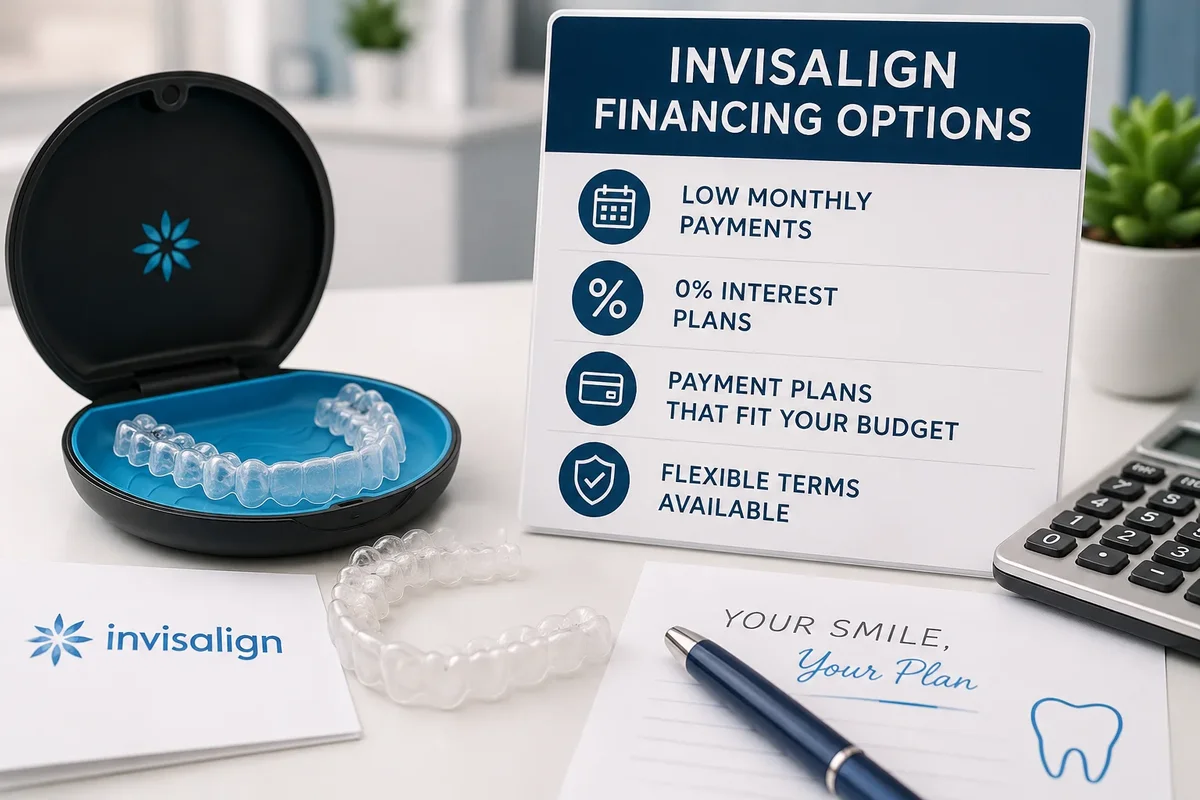
Your Next Step: When to Schedule a Professional Consultation
After learning about treatment costs, payment plans, eligibility, and the different invisalign financing options available, the final step is deciding when to schedule a professional consultation. Many people spend weeks or even months comparing prices online, reading reviews, and calculating monthly payments before speaking with a dentist. While research is valuable, there comes a point when personalized professional advice becomes far more useful than additional online information. A consultation transforms general knowledge into a treatment plan designed specifically for your smile, helping you understand both your clinical needs and the invisalign financing options that are actually available for your situation.
It is important to remember that no article, advertisement, or online calculator can determine the exact treatment approach that is right for you. Invisalign is customized for every patient, which means the number of aligners, treatment duration, appointment schedule, and overall investment depend on a professional clinical examination. Because of this, the most suitable invisalign financing options can only be discussed accurately after your dentist has evaluated your teeth, bite, gums, and orthodontic goals.
Signs That It Is Time to Book a Consultation
Many patients wonder whether they should continue researching or arrange an appointment. In general, if you have reached the point where you are seriously considering orthodontic treatment, scheduling a consultation is often the most productive next step.
You Should Consider Booking an Appointment If You:
- Are unhappy with crowded or spaced teeth.
- Notice bite issues that affect comfort or function.
- Previously had orthodontic treatment but your teeth have shifted.
- Want a discreet alternative to traditional braces.
- Need personalized information about invisalign financing options.
- Would like a written treatment estimate instead of relying on online averages.
Even if you ultimately decide not to begin treatment immediately, a consultation provides valuable information that helps you plan both clinically and financially.
What Happens During the Consultation?
A professional consultation is much more than receiving a price quote. It is a comprehensive assessment that allows your dentist to understand your oral health and develop an individualized treatment recommendation.
Depending on your needs, the appointment may include:
- A detailed oral examination.
- Assessment of tooth alignment and bite.
- Digital scans or impressions.
- Clinical photographs.
- Discussion of your treatment goals.
- Review of your medical and dental history.
- Explanation of suitable invisalign financing options.
This process enables your dentist to prepare a treatment plan that reflects your specific orthodontic requirements rather than relying on general estimates.
Questions Worth Asking During Your Visit
Preparing questions in advance helps you make the most of your consultation. Many patients focus only on treatment cost, but several additional topics are equally important.
Helpful Questions to Discuss
- Am I a suitable candidate for Invisalign?
- Approximately how long may treatment take?
- What services are included in the treatment plan?
- Are retainers included?
- How are refinements handled if clinically necessary?
- Which invisalign financing options are available?
- Will insurance contribute toward treatment?
- How often will review appointments be scheduled?
Receiving detailed answers to these questions allows you to compare providers with greater confidence and understand the full scope of your treatment.
Evaluating the Quality of the Dental Provider
Choosing the right clinic involves more than comparing financing arrangements. High-quality orthodontic care depends on careful diagnosis, personalized planning, modern technology, and ongoing professional support.
When evaluating providers, consider whether they:
- Perform a comprehensive examination before discussing treatment.
- Explain treatment limitations honestly.
- Provide written treatment plans.
- Clearly describe available invisalign financing options.
- Answer financial questions transparently.
- Offer ongoing support throughout treatment.
A provider who communicates openly about both clinical care and payment planning often creates a more comfortable treatment experience than one focusing primarily on promotional pricing.
Planning Your Budget Responsibly
Once you have received a personalized treatment plan, take time to review it carefully before making a final decision. Compare the proposed payment schedule with your monthly budget and ask for clarification if any financial terms are unclear.
The best invisalign financing options are those that allow you to receive appropriate orthodontic care without creating unnecessary financial pressure. Responsible planning can make treatment more manageable and help you complete every stage with confidence.
Remember that monthly payments represent only one part of the overall decision. The quality of care, professional experience, treatment monitoring, and included services are equally important when evaluating long-term value.
Where Personalized Guidance Can Make a Difference
If you are looking for individualized treatment planning together with transparent financial discussions, clinics experienced in Invisalign care, including Redent Klinik Contact Page, can explain your orthodontic options and discuss suitable invisalign financing options based on your specific clinical findings. This personalized approach allows financial decisions to be made within the context of a professionally developed treatment plan rather than general online estimates.
Patients who would like additional educational information before their appointment may also find the resources provided by the American Dental Association helpful. These materials explain general principles of oral health and orthodontic care while reinforcing the importance of professional evaluation.
Making a Confident Final Decision
Choosing Invisalign is not simply a financial decision—it is an investment in long-term oral health, function, and confidence. The right time to schedule a consultation is when you are ready to receive personalized answers rather than general information. By combining a thorough clinical examination with carefully reviewed invisalign financing options, you can make a decision that balances treatment quality, financial comfort, and realistic expectations.
Keep in mind that every patient’s journey is unique. Rather than comparing yourself with someone else’s treatment experience, focus on obtaining a recommendation tailored to your own needs. This individualized approach helps ensure that both your orthodontic plan and your chosen invisalign financing options support your long-term goals.
What to check next: Schedule a professional consultation if you are seriously considering Invisalign, ask for a detailed written treatment plan, review every available invisalign financing options arrangement, verify any insurance benefits before making financial commitments, and request professional advice whenever you need clarification about treatment suitability, expected treatment duration, included services, or payment planning. Taking these steps will help you make an informed and confident decision based on your individual clinical and financial circumstances.
Disclosure: this page may contain affiliate links. We may earn a commission if you use them, at no extra cost to you.