
When people hear the term Invisalign meaning, they often think of a modern, nearly invisible alternative to traditional metal braces. But the true invisalign meaning goes far beyond just aesthetics — it represents a revolution in orthodontic care that blends science, comfort, and design to create a seamless smile correction experience. Invisalign aligners are custom-made, transparent trays that gradually shift your teeth into proper alignment without the discomfort or visibility associated with metal brackets and wires. 😁
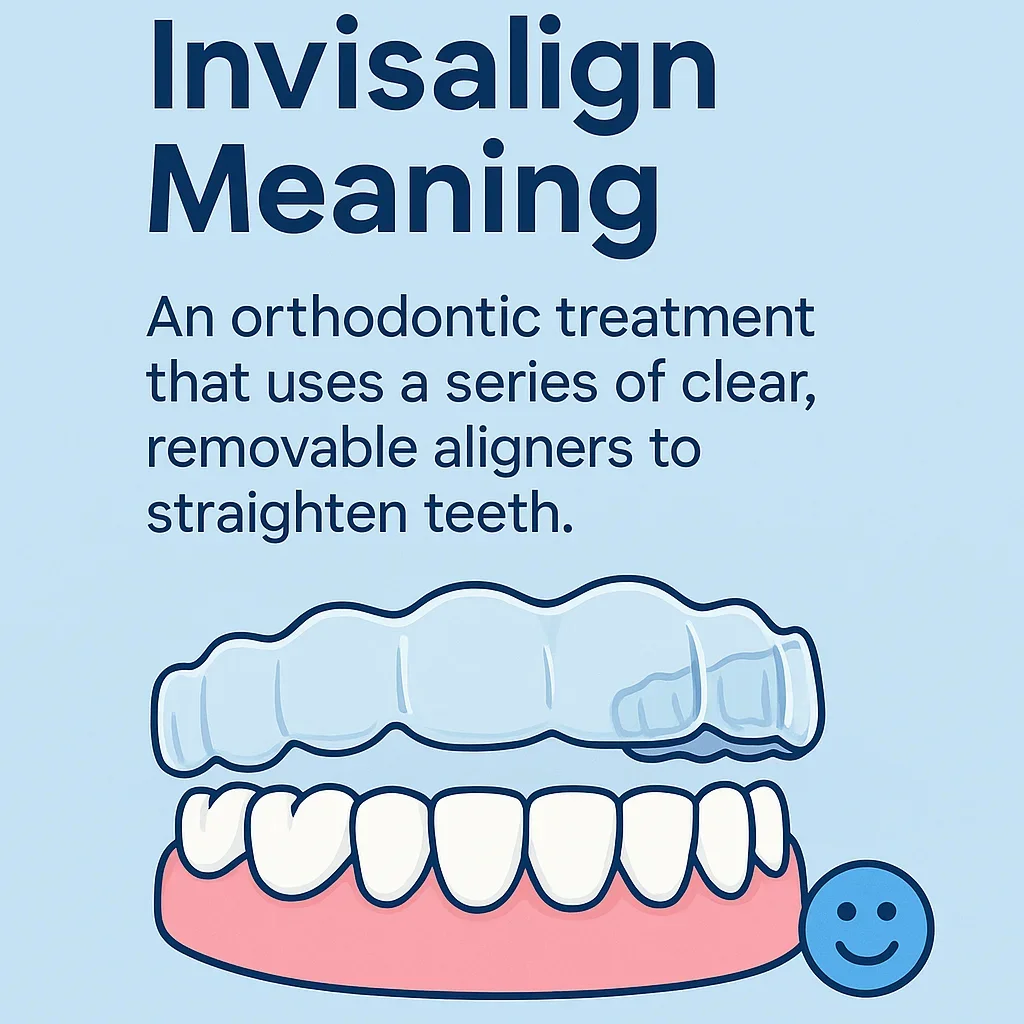
The invisalign meaning can best be described as “invisible alignment.” The name itself combines the words “invisible” and “align,” reflecting its core purpose — aligning teeth discreetly. This technology was first developed in the late 1990s and has since transformed how millions of people around the world achieve straighter smiles. Instead of using brackets and wires, Invisalign uses a series of clear, removable plastic trays, each slightly different, to move teeth incrementally over time. The process is comfortable, hygienic, and personalized to your dental anatomy.
Understanding the invisalign meaning also involves recognizing its foundation in 3D imaging and digital dentistry. Dentists use advanced scanning technology to create a digital map of your mouth, predicting every step of your tooth movement. Each aligner is precisely crafted based on this data, ensuring that every adjustment brings you closer to the desired alignment. This precise digital workflow reduces human error and enhances treatment predictability — one of the main reasons Invisalign is trusted by patients and orthodontists alike. 🦷
Unlike traditional braces, Invisalign trays are virtually invisible, making them perfect for adults and teens who prefer a discreet approach to orthodontic correction. The clear plastic aligners are made from a patented material called SmartTrack®, designed for both comfort and efficiency. This material ensures that the aligners apply just the right amount of pressure to guide teeth gently into place. Furthermore, the aligners can be easily removed before eating or brushing, which means you can continue enjoying your favorite foods and maintain optimal oral hygiene throughout treatment.
Another key aspect of the invisalign meaning lies in its adaptability. Whether you’re dealing with crowded teeth, gaps, overbites, underbites, or crossbites, Invisalign offers customized solutions for most orthodontic problems. Each patient receives a tailored plan that outlines how many aligners will be used, how often they need to be replaced (usually every 1–2 weeks), and how long the overall treatment will last. On average, treatments range from 6 to 18 months, depending on the complexity of your case. During this time, regular check-ups with your dentist ensure your progress is on track and adjustments can be made if necessary.
Beyond the technical definition, the invisalign meaning also symbolizes empowerment and confidence. Patients no longer have to feel self-conscious about their appearance while undergoing treatment. The aligners are so discreet that most people won’t even notice you’re wearing them. This subtlety, combined with the freedom to remove them when needed, makes Invisalign an ideal choice for professionals, students, and anyone seeking convenience and aesthetics in one package. ✨
It’s important to note that the success of Invisalign depends heavily on patient commitment. For optimal results, the aligners should be worn at least 20 to 22 hours per day. Removing them too frequently or for extended periods can delay treatment progress. However, when used correctly, Invisalign offers impressive and predictable outcomes. Many users report not only straighter teeth but also improved gum health and better oral hygiene due to the easier cleaning process compared to metal braces.
In addition, Invisalign is supported by trusted dental institutions and global organizations like the American Dental Association, which recognizes the importance of safe, evidence-based orthodontic treatments. Consulting a professional clinic such as Redent Klinik Contact Page can help you understand your eligibility for Invisalign and guide you through the process with personalized recommendations. Each clinic visit ensures your aligners fit perfectly and your treatment stays efficient and comfortable.
To summarize, the invisalign meaning encapsulates the evolution of modern orthodontics — from uncomfortable metal braces to elegant, invisible solutions that fit seamlessly into everyday life. It’s not just about aligning teeth; it’s about aligning confidence, convenience, and technology in perfect harmony. Whether you’re a teen starting your orthodontic journey or an adult looking to enhance your smile discreetly, Invisalign offers a scientifically proven, patient-friendly solution that redefines what it means to straighten your teeth. 🌟
In essence, the invisalign meaning reflects innovation, beauty, and practicality in dentistry — a clear reminder that a beautiful smile no longer needs to come with discomfort or embarrassment. With its advanced technology, ease of use, and remarkable results, Invisalign continues to be a leading choice for people seeking both function and aesthetics in their orthodontic care. 🪞
What Is Invisalign? Understanding the Basics of Clear Braces
When people first come across the term invisalign meaning, they often think of a transparent dental appliance that straightens teeth. However, the real significance of Invisalign lies in its innovative approach to orthodontics. Invisalign is a system of custom-made, clear aligners designed to move teeth gradually into their correct position — all without the need for traditional metal brackets or wires. These aligners are made of a patented thermoplastic material called SmartTrack®, specifically engineered for comfort, precision, and predictability in tooth movement. 🦷
The Origin and Concept Behind Invisalign
The invisalign meaning dates back to the late 1990s when Align Technology introduced the first clear aligner system. Before this, orthodontic treatments were limited to metal braces, which often caused discomfort, oral hygiene challenges, and aesthetic concerns. Invisalign transformed this experience by introducing a removable and nearly invisible solution. The core idea was simple: use digital 3D modeling and computer-aided design to map out the entire tooth movement plan from start to finish. Each aligner set corresponds to a specific stage in that plan, gently moving the teeth a fraction closer to their final position with every replacement.
How the Invisalign System Is Made
To understand the invisalign meaning fully, it’s essential to explore how each aligner is custom-manufactured. The process begins with a digital intraoral scan or a physical impression of the patient’s teeth. This data is used to create a 3D model that maps out tooth movement in precise increments. The orthodontist uses specialized software to simulate each phase of the treatment, ensuring that every movement is biologically sound and effective. Once approved, the aligners are fabricated using BPA-free SmartTrack® material, known for its flexibility and resilience. The result is a smooth, clear tray that fits snugly over your teeth and is virtually invisible when worn. 😁
Comfort and Fit of Invisalign Aligners
One of the reasons the invisalign meaning resonates so strongly with patients is the comfort factor. Traditional braces can cause irritation, soreness, and ulcers due to metal components rubbing against the soft tissues of the mouth. In contrast, Invisalign aligners are custom-fitted to your teeth with smooth edges, minimizing discomfort. Most patients experience only mild pressure when switching to a new set — a sign that the aligners are effectively guiding the teeth into position. Unlike braces, there are no emergency appointments for broken wires or detached brackets, which makes the treatment experience much smoother.
How Invisalign Aligners Work in Daily Life
The invisalign meaning is not just about alignment; it’s also about lifestyle flexibility. Patients wear each aligner set for about 20–22 hours per day, removing them only for eating, brushing, and flossing. This removability ensures that there are no food restrictions — something that traditional braces users often struggle with. Whether you’re enjoying a steak, crunchy apples, or popcorn, you can simply remove your aligners before eating and reinsert them afterward. This convenience also means better oral hygiene, as brushing and flossing remain easy and effective throughout the treatment period.
Regular Monitoring and Progress Tracking
Understanding the invisalign meaning also means appreciating the science of progress tracking. Every 1–2 weeks, patients switch to the next set of aligners, gradually advancing through the treatment stages. Orthodontists typically schedule check-ups every 6–8 weeks to ensure the teeth are moving according to plan. Thanks to digital planning, even complex cases like overbites, underbites, and crossbites can be effectively treated with Invisalign. Moreover, many clinics, such as Redent Klinik Contact Page, use 3D progress visualization tools to show patients exactly how their teeth will look after completion — a motivating glimpse into the future! 🌟
The Science Behind Invisalign Technology
At the heart of the invisalign meaning lies innovation. The system utilizes controlled force distribution, meaning each aligner targets specific teeth at specific times. Unlike braces that move all teeth simultaneously, Invisalign applies strategic pressure to achieve efficient results. The SmartForce® attachments — tiny, tooth-colored bumps temporarily bonded to certain teeth — enhance grip and control, allowing complex movements like rotations or extrusions. This combination of SmartTrack® material and SmartForce® design makes Invisalign one of the most advanced orthodontic solutions in the world.
Invisalign’s Role in Modern Dentistry
The invisalign meaning extends into a broader shift in dental philosophy: minimally invasive and patient-centered care. Dentists today aim for treatments that not only correct alignment but also preserve natural tooth structure and improve overall oral health. Invisalign fits perfectly into this trend by offering a non-invasive, digital-first approach. The aligners don’t rely on cemented brackets, so there’s no enamel damage, and they encourage patients to take ownership of their dental hygiene. Additionally, Invisalign aligners can sometimes serve as protective night guards, preventing teeth grinding during sleep — a bonus benefit for many users.
Why People Prefer Invisalign Over Braces
When comparing treatment options, the invisalign meaning stands out for its blend of aesthetics, convenience, and technology. Patients appreciate being able to attend social events, business meetings, and photoshoots without feeling self-conscious about their smile. The aligners are nearly invisible and designed to fit seamlessly into your daily routine. Moreover, shorter dental visits, predictable outcomes, and improved comfort make Invisalign the preferred choice for both teens and adults. 🌈
In summary, understanding the invisalign meaning means seeing it not just as a dental product but as a complete orthodontic system designed for the modern lifestyle. It combines advanced digital planning, biocompatible materials, and human-centered design to deliver results that are both functional and beautiful. Supported by leading institutions such as the American Dental Association, Invisalign continues to redefine the concept of orthodontic care, offering a perfect balance of precision, aesthetics, and freedom. 🪞
How Invisalign Works: Step-by-Step Treatment Process Explained
To fully understand the invisalign meaning, it’s essential to know exactly how this revolutionary orthodontic system works from start to finish. Invisalign doesn’t just straighten teeth — it uses a combination of digital technology, biomechanical design, and patient compliance to achieve precise, predictable results. Each aligner is engineered to move your teeth gradually over time, following a carefully customized plan. Let’s explore the process in detail and uncover how Invisalign aligners transform smiles with science and precision. 😁
Step 1: The Initial Consultation and Smile Assessment
The invisalign meaning begins with a professional consultation. During this first appointment, your dentist or orthodontist examines your teeth, bite, and jaw alignment to determine if Invisalign is suitable for your case. Digital photographs, X-rays, and sometimes a 3D intraoral scan are taken to create a complete picture of your oral structure. Using this data, the orthodontist discusses your goals — whether you want to fix crowding, close gaps, or improve your bite. Clinics like Redent Klinik Contact Page offer personalized consultations where patients can visualize how their teeth will shift throughout treatment using advanced software simulations. 🦷
Step 2: Digital Scanning and Treatment Planning
After your consultation, the next stage in understanding the invisalign meaning is digital treatment planning. Using advanced 3D scanners, your dentist creates an accurate digital impression of your mouth — no uncomfortable mold materials are required. This digital model is uploaded into the Invisalign software, which simulates every tooth movement needed to achieve the final result. Each movement is carefully planned, taking into account the biological response of your teeth and jawbone. The software produces a “ClinCheck” — a visual preview showing the progression from your current alignment to your perfect smile. This transparency allows patients to see exactly what to expect before the first aligner is even made. 🌟
The Importance of Precision in Digital Design
Every small adjustment in the 3D design contributes to the accuracy of the invisalign meaning. The orthodontist can fine-tune movements as small as 0.25 millimeters per aligner, ensuring the process is both efficient and biologically safe. Each tooth’s rotation, tilt, and translation are individually mapped, allowing for an incredibly controlled outcome. Unlike traditional braces, which rely on manual wire adjustments, Invisalign aligners offer precision guided by computer modeling and clinical data collected from millions of cases worldwide.
Step 3: Custom Fabrication of Invisalign Aligners
Once the plan is approved, Invisalign’s state-of-the-art manufacturing facility produces your custom aligners using medical-grade, BPA-free SmartTrack® material. This flexible yet durable material is what gives the aligners their comfort and invisibility. Each set is slightly different from the previous one, applying gentle pressure to move specific teeth in small increments. The production process is a perfect representation of the invisalign meaning — a blend of science, art, and innovation designed for precision and comfort.
Quality Control and Fit Testing
Before the aligners are delivered, each tray undergoes strict quality control checks to ensure perfect fit and transparency. When you receive your first set, your dentist verifies that the aligners fit snugly without discomfort. Small attachments — known as SmartForce® features — may be bonded to your teeth to provide extra grip. These are tooth-colored and almost invisible, ensuring your smile remains discreet throughout treatment. 🪞
Step 4: Wearing and Replacing Aligners
To achieve the results promised by the invisalign meaning, consistency is crucial. You’ll wear each aligner for approximately 20–22 hours per day, removing them only when eating, drinking (except water), or cleaning your teeth. Every 1–2 weeks, you’ll switch to a new set of aligners as directed by your dentist. Each new set continues the process of controlled movement, gradually guiding your teeth into alignment. The feeling of mild pressure when you change aligners is completely normal and indicates the treatment is working as intended. 💪
Monitoring Progress and Dental Checkups
Regular checkups every 6–8 weeks are part of the invisalign meaning experience. During these visits, your dentist ensures the aligners are tracking properly and your teeth are responding as expected. Some clinics now offer remote monitoring tools, where patients upload smile progress photos through an app — making Invisalign even more convenient and time-efficient for busy individuals.
Step 5: Completion and Retainer Phase
Once you’ve worn all your aligners and achieved the desired tooth alignment, your treatment doesn’t end there. To preserve your new smile, you’ll receive custom-made retainers — typically Vivera® retainers, also created by Align Technology. These retainers prevent your teeth from shifting back to their previous positions. Understanding this phase is vital to grasping the full invisalign meaning because orthodontic stability is just as important as the initial correction. Wearing retainers nightly for the first few months ensures your results remain permanent and beautiful. 🌈
Maintaining Your Smile for Life
The retention phase reflects the long-term promise behind the invisalign meaning: lasting alignment through modern dental care. Your orthodontist will recommend a maintenance schedule based on your case, typically transitioning from nightly wear to only a few nights per week. Retainers should be cleaned daily using mild soap or specialized cleaning crystals to maintain hygiene and transparency.
Why the Invisalign Process Works So Effectively
The success of Invisalign lies in biomechanics and patient compliance. Each aligner moves teeth through controlled force, using the periodontal ligament’s natural response to pressure. Because each tray targets specific teeth in sequence, the process is efficient and comfortable. The transparent design ensures aesthetics are never compromised, while digital monitoring guarantees accuracy. This harmony of science and usability truly defines the invisalign meaning — personalized orthodontics powered by innovation.
In conclusion, understanding how Invisalign works gives you a complete picture of what the invisalign meaning represents: a patient-centered, high-precision orthodontic system designed for convenience, beauty, and health. Supported by leading dental organizations like the American Dental Association, Invisalign is not just a cosmetic treatment — it’s a dental revolution that aligns teeth with comfort, confidence, and cutting-edge technology. 🦷✨
Invisalign vs Traditional Braces: Which Is Right for You?
One of the most common questions patients ask when they learn about the invisalign meaning is how it compares to traditional braces. Both methods aim to straighten teeth and correct bite issues, but their approaches, comfort levels, aesthetics, and overall experience differ significantly. Understanding these differences is essential before choosing the treatment that best suits your dental goals, lifestyle, and budget. Let’s explore the advantages and limitations of each, so you can make an informed decision about your smile transformation. 😁
Key Differences Between Invisalign and Traditional Braces
The invisalign meaning revolves around discreet and modern orthodontic correction. Invisalign aligners are made of clear, BPA-free SmartTrack® material that fits snugly over your teeth, making them nearly invisible. In contrast, traditional braces rely on metal brackets and wires to apply continuous pressure and gradually move teeth. While both are effective, Invisalign emphasizes aesthetics, flexibility, and comfort, whereas braces focus on mechanical precision and control.
One of the main differences lies in appearance. Invisalign aligners are transparent and removable, allowing you to maintain your natural smile during treatment. Braces, on the other hand, are permanently attached to the teeth and more noticeable — though ceramic or lingual (back-of-teeth) options can make them less visible. The choice often depends on whether you prioritize discretion or don’t mind a more traditional look during treatment.
Comfort and Convenience Comparison
The invisalign meaning highlights comfort as a top priority. Unlike metal braces, which can cause mouth sores, irritation, and discomfort due to wire adjustments, Invisalign’s smooth trays are designed to fit perfectly without sharp edges. They are also removable, meaning you can take them out while eating, brushing, or attending special events. This level of convenience gives patients control over their daily lives without compromising treatment effectiveness.
Traditional braces require frequent tightening appointments, which can lead to soreness for several days after each adjustment. Invisalign eliminates this need — patients simply switch to the next set of aligners every one to two weeks. Although mild pressure is normal when changing trays, it is significantly more comfortable than wire-based adjustments. 🦷
Effectiveness and Treatment Scope
Many people associate the invisalign meaning with mild cosmetic adjustments, but this is a misconception. Invisalign technology has evolved dramatically and can now handle complex orthodontic issues such as overbites, underbites, open bites, and crossbites. With SmartForce® attachments and precision mapping, Invisalign aligners can perform intricate movements similar to braces. However, in some severe cases, especially where significant jaw alignment or rotation is required, braces may still be the preferred option due to the mechanical control they offer.
Speed and Predictability of Results
When comparing speed, both Invisalign and braces typically take a similar amount of time to achieve results, depending on case complexity. However, the invisalign meaning includes digital predictability — each stage is pre-planned using 3D imaging. This ensures that patients can visualize their progress and know the estimated completion date from the very beginning. With braces, progress is monitored more traditionally and adjusted manually during visits. Invisalign’s precise digital tracking often results in fewer unplanned delays and better long-term control. 🌟
Oral Hygiene and Maintenance
The invisalign meaning also encompasses improved oral hygiene during treatment. Because aligners are removable, you can brush and floss your teeth normally, maintaining excellent gum and enamel health. With braces, cleaning becomes more challenging since food particles can easily get trapped around brackets and wires, leading to plaque buildup and staining. Invisalign aligners can be cleaned with special crystals or mild soap, ensuring both your teeth and aligners remain spotless and odor-free.
Dietary Freedom and Lifestyle Impact
Traditional braces restrict certain foods — sticky candies, popcorn, hard nuts, and crunchy snacks can damage wires or brackets. The invisalign meaning reflects total dietary freedom, as you can remove the aligners before eating anything. This means you can enjoy your favorite meals without concern. Furthermore, because Invisalign is virtually invisible, patients can attend social or professional gatherings with confidence, without worrying about metallic reflections or speech changes. ✨
Cost and Accessibility
The cost of Invisalign and braces varies depending on location, treatment duration, and the severity of dental issues. Generally, both treatments fall within a similar price range, though Invisalign may sometimes be slightly more expensive due to its technology and convenience. However, as more clinics adopt Invisalign, pricing has become increasingly competitive. For personalized treatment quotes or consultation, you can visit Redent Klinik Contact Page to receive a tailored assessment. Many dental offices also offer installment plans, making Invisalign accessible to a wider range of patients.
Long-Term Maintenance and Results
After both Invisalign and braces treatments, retainers are necessary to maintain results. The invisalign meaning extends beyond the active treatment phase — it includes long-term retention to prevent relapse. Invisalign provides Vivera® retainers, which are clear and comfortable, maintaining the discreet aesthetic patients love. Traditional braces patients also receive retainers, but often in the form of fixed metal wires or acrylic plates. Invisalign retainers offer a more modern and user-friendly maintenance experience.
Which Treatment Is Right for You?
The best choice depends on your dental condition, lifestyle, and personal preferences. If you prioritize aesthetics, comfort, and flexibility, Invisalign is ideal. However, if your case involves complex skeletal or bite issues, braces might be more suitable. Your orthodontist will evaluate your dental structure and recommend the best option based on diagnostic scans and your individual goals. Importantly, both methods can deliver stunning results when properly managed by experienced professionals and supported by patient compliance.
In summary, the invisalign meaning embodies innovation, discretion, and convenience — the evolution of orthodontics for the modern world. Traditional braces remain effective but less flexible in daily life. Invisalign offers a lifestyle-friendly alternative with comparable results, fewer appointments, and enhanced confidence. Supported by trusted institutions like the American Dental Association, Invisalign continues to redefine what it means to achieve a straight, healthy, and radiant smile in today’s digital age. 🌈
Benefits of Invisalign Treatment You Should Know
Understanding the invisalign meaning isn’t just about knowing what the treatment is — it’s about appreciating why millions of people choose it over traditional orthodontic options. Invisalign aligners offer a unique combination of aesthetics, comfort, and practicality that revolutionize the patient experience. From improved oral hygiene to psychological confidence, the benefits of Invisalign are comprehensive and life-changing. Let’s explore these advantages in detail to understand why Invisalign has become the world’s leading clear aligner system. 😁
1. Aesthetic Appeal: The Power of a Clear Smile
The most recognized aspect of the invisalign meaning is invisibility. The transparent aligners allow users to straighten their teeth discreetly, without the visual distraction of metal braces. Whether you’re a professional attending meetings, a student, or simply someone who values confidence in your appearance, Invisalign ensures your treatment remains your secret. The clear design seamlessly blends with your natural teeth, letting you smile freely in photos and conversations. This aesthetic advantage has been a major reason for Invisalign’s global popularity. ✨
Confidence Boost and Social Comfort
Wearing braces can sometimes lead to self-consciousness, especially in adults. The invisalign meaning represents freedom from such concerns. Because the aligners are nearly invisible, they eliminate the psychological barrier often associated with orthodontic treatment. Many patients report feeling more comfortable in social interactions and more confident during work or events. This boost in self-esteem contributes to emotional well-being throughout the treatment process.
2. Comfort and Convenience in Daily Life
Another key element of the invisalign meaning is comfort. Unlike metal brackets and wires that can irritate the cheeks and gums, Invisalign trays are made from smooth SmartTrack® material designed for gentle contact. They are custom-molded to your teeth, ensuring a perfect fit. Because there are no wires to tighten or sharp edges to cause sores, patients experience a much more comfortable treatment journey. Additionally, Invisalign’s removability means fewer restrictions and greater convenience in day-to-day life.
Minimal Disruption to Lifestyle
Traditional braces can complicate daily routines — especially eating and oral hygiene. The invisalign meaning includes flexibility: you can remove your aligners whenever you eat, brush, or floss. This ensures that your oral care remains simple and effective. Whether you’re enjoying a coffee, a family dinner, or a business lunch, you can temporarily take off your aligners without worry. This removable nature also makes dental cleanings and check-ups easier and faster. 🦷
3. Enhanced Oral Hygiene and Dental Health
One of the most important benefits of Invisalign is its positive impact on oral hygiene. Because the aligners are removable, you can maintain your normal brushing and flossing habits throughout treatment. This eliminates the food debris and plaque buildup often associated with traditional braces. As a result, patients are less likely to experience gum disease, cavities, or bad breath during treatment. The invisalign meaning here extends beyond straight teeth — it’s about maintaining a healthy mouth during the alignment process.
Reduced Risk of Gum Problems
When teeth are crowded or misaligned, it’s difficult to clean between them effectively. Invisalign gradually straightens your teeth, making oral hygiene easier and more effective. This reduces the risk of gingivitis and periodontal disease. The smoother surfaces of the aligners also prevent bacterial buildup, helping you maintain a fresher and healthier smile throughout treatment.
4. Predictable Results with Advanced Technology
The invisalign meaning also includes scientific precision. Invisalign treatment uses advanced 3D scanning and artificial intelligence to predict tooth movements accurately. The ClinCheck® software simulates every stage of your treatment, giving you a virtual preview of your final smile. This level of predictability ensures that both you and your dentist can track progress and make necessary adjustments in real-time. Few orthodontic treatments offer this kind of transparency and control. 🌟
SmartTrack® and SmartForce® Innovation
The innovation behind Invisalign lies in its materials and engineering. SmartTrack® aligners apply gentle, consistent pressure, making movements more predictable and comfortable. Meanwhile, SmartForce® attachments help guide complex tooth movements. This dynamic combination is part of what defines the invisalign meaning — technology-driven accuracy paired with a patient-centered approach. These innovations make Invisalign ideal for a wide range of dental cases, from simple gaps to more challenging bite corrections.
5. Shorter and Fewer Dental Visits
Traditional braces require frequent visits for wire adjustments and tightening, often every 3–4 weeks. Invisalign simplifies this with fewer appointments — typically every 6–8 weeks. Patients are given multiple aligner sets in advance, reducing clinic time while maintaining effective progress tracking. This efficiency perfectly embodies the invisalign meaning in modern dentistry: time-saving, tech-driven, and convenient for busy lifestyles. Many clinics, such as Redent Klinik Contact Page, even offer virtual check-ups to monitor progress remotely.
6. No Dietary Restrictions
Metal braces often limit what you can eat — no sticky caramel, popcorn, or crunchy apples. Invisalign, however, allows total food freedom. Since you remove the aligners before eating, there’s no risk of damaging wires or brackets. The invisalign meaning celebrates freedom and flexibility, letting you enjoy your meals without compromise. Just remember to brush your teeth before reinserting your aligners to keep them clean and clear. 🍎
7. Less Pain and Pressure
Invisalign aligners apply controlled, gentle forces to move teeth gradually. Patients report less pain compared to traditional braces, especially after adjustments. Because the movement is evenly distributed across multiple teeth, discomfort is minimized. This soft approach reflects the invisalign meaning — orthodontic care designed around comfort and science rather than force and tension. The SmartTrack® technology ensures that every shift feels natural rather than forced.
8. Suitable for a Wide Range of Cases
Initially, Invisalign was used for mild cases, but advancements in design now allow treatment for moderate to complex misalignments. From crowding and spacing issues to overbites, underbites, and even crossbites, Invisalign can handle a diverse array of orthodontic challenges. This versatility reinforces the invisalign meaning as an all-in-one modern solution that adapts to each patient’s unique dental anatomy. 🌈
9. Backed by Global Research and Professional Support
Lastly, the invisalign meaning is strengthened by its strong professional foundation. Supported by research and accredited by trusted institutions like the American Dental Association, Invisalign stands as a scientifically validated orthodontic method. With over 15 million successful cases worldwide, it has proven its reliability, safety, and effectiveness. Every aligner is produced under strict quality control, ensuring consistent performance and patient satisfaction. 🪞
In summary, the invisalign meaning encompasses much more than invisible aligners — it represents innovation, comfort, confidence, and long-term oral health. Invisalign treatment empowers individuals to achieve their dream smiles without compromising their lifestyle or aesthetics. Whether for teens, adults, or professionals, its benefits reach far beyond cosmetics — they redefine what modern orthodontics can achieve. 🌟
Who Is a Good Candidate for Invisalign Aligners?
Understanding the invisalign meaning goes hand in hand with knowing who can benefit most from this innovative orthodontic system. Invisalign is not just for people seeking cosmetic improvements; it’s a scientifically developed treatment designed to correct a wide range of dental misalignments. However, while it works effectively for most patients, certain cases are more suitable than others. Determining candidacy involves evaluating factors such as age, dental condition, oral hygiene habits, and personal commitment to wearing the aligners as prescribed. Let’s explore who qualifies as an ideal Invisalign patient and why. 🦷
1. Adults and Teens Seeking Discreet Orthodontic Treatment
One of the most prominent aspects of the invisalign meaning is discretion. Invisalign is perfect for adults and teens who prefer a subtle, nearly invisible approach to teeth straightening. Professionals, college students, and socially active individuals often choose Invisalign because it allows them to maintain confidence in their appearance during treatment. Unlike traditional braces that can draw attention, Invisalign aligners blend seamlessly with your teeth, making them almost undetectable. This is particularly beneficial for those who frequently attend meetings, presentations, or social gatherings. 😁
Confidence and Lifestyle Compatibility
The invisalign meaning extends to comfort and convenience, ensuring minimal disruption to everyday activities. Invisalign fits perfectly into busy lifestyles, allowing wearers to remove the aligners before eating, brushing, or during special events. For teens concerned about how braces might affect their self-image, Invisalign Teen aligners come with blue compliance indicators that help track wear time — ensuring effective treatment without stress or embarrassment. 🌈
2. Patients with Mild to Moderate Alignment Issues
The invisalign meaning represents flexibility — and this system works best for patients with mild to moderate orthodontic conditions. Common treatable cases include:
- Crowded teeth
- Spacing or gaps between teeth
- Mild overbites or underbites
- Open bites and crossbites
- Rotated or slightly misaligned teeth
Thanks to advanced SmartTrack® and SmartForce® technology, Invisalign can also handle more complex movements than ever before. However, in extremely severe skeletal or jaw-related issues, traditional braces or surgical orthodontics might still be required. That’s why professional evaluation by a certified Invisalign provider — such as those at Redent Klinik Contact Page — is essential for determining the best approach. 🦷
3. Patients Committed to Wearing Aligners Consistently
Commitment plays a major role in achieving results. The invisalign meaning includes patient responsibility — wearing aligners for 20–22 hours daily is crucial. Because Invisalign trays are removable, patients must be disciplined about keeping them in place for the recommended duration. Those who frequently forget to wear them or remove them too often may experience delayed results or compromised outcomes. For individuals who value independence and can adhere to consistent routines, Invisalign delivers impressive, predictable results. 💪
Compliance Tracking and Motivation Tools
Modern Invisalign systems often include digital monitoring tools that help track progress. Some clinics use apps that allow patients to upload smile photos and receive feedback remotely. This not only encourages compliance but also provides reassurance that the treatment is moving forward as planned. The invisalign meaning in this context emphasizes empowerment — putting control back into the hands of the patient with professional oversight.
4. Individuals with Good Oral Health
Before starting Invisalign, dentists ensure your mouth is healthy. The invisalign meaning is rooted in preventive care, meaning active dental issues like cavities, gum disease, or infections must be treated first. Invisalign aligners fit snugly around the teeth, so any pre-existing decay or inflammation can worsen if untreated. Patients with good oral hygiene and healthy gums are the best candidates, as their teeth and tissues can respond optimally to gradual movement. 🪞
Daily Oral Hygiene Habits
Invisalign aligners require responsibility not just in wearing but also in maintenance. Patients must brush after every meal and clean their aligners regularly using mild soap or Invisalign Cleaning Crystals. This prevents plaque buildup and discoloration. The invisalign meaning reflects a holistic approach to dental care — combining alignment with hygiene awareness to ensure long-lasting oral health benefits.
5. Patients Seeking a Comfortable and Modern Experience
Discomfort and frequent adjustments are often deterrents for people considering orthodontic treatment. The invisalign meaning provides a solution through comfort and technology. Invisalign aligners are designed to apply controlled, gentle forces, making tooth movement more comfortable than braces. The absence of metal components eliminates the risk of irritation or mouth sores. Moreover, since aligners are made using precise digital modeling, the fit is highly customized, reducing friction and improving the overall experience.
Technological Convenience for Modern Patients
Modern patients appreciate technology-driven healthcare, and Invisalign caters to that demand. Each treatment plan is developed with 3D imaging, and progress can be visualized before the treatment even begins. This predictive technology is one of the defining elements of the invisalign meaning — orthodontic care that’s efficient, informed, and entirely patient-centered.
6. People Who Want Predictable Results
Predictability is one of Invisalign’s greatest strengths. Unlike traditional braces, where outcomes depend heavily on manual adjustments, Invisalign’s digital planning allows for precise forecasting of each tooth’s movement. This transparency ensures patients know what to expect. The invisalign meaning here embodies control — patients can visualize their end results, track progress, and feel confident that each stage brings measurable improvement. 🌟
7. Non-Smokers and Responsible Users
Another factor influencing candidacy is lifestyle. The invisalign meaning implies commitment to maintaining aligner quality. Smoking can stain the trays and reduce their transparency, while excessive coffee or colored beverages may discolor them if not cleaned promptly. Therefore, ideal candidates are non-smokers or individuals willing to adjust habits during treatment. Invisalign requires responsibility, but the rewards — a straighter, healthier smile — make it well worth the effort. ✨
8. Patients Seeking Minimal Lifestyle Interruption
For those who value convenience, the invisalign meaning also represents freedom. Invisalign doesn’t interfere with your diet, sports, or musical instruments like braces sometimes do. You can remove the aligners when necessary and continue with your usual activities. This makes Invisalign particularly suitable for adults with active schedules and teens involved in athletics or performing arts. It’s orthodontic care designed to adapt to you, not the other way around. 🌟
9. Supported by Trusted Dental Professionals
Ultimately, the invisalign meaning reaches its fullest potential when guided by experienced professionals. Clinics like American Dental Association-affiliated providers ensure that patients receive accurate evaluations and scientifically based treatment plans. Choosing a reputable dental clinic ensures that your Invisalign journey remains safe, effective, and customized to your specific needs. 🦷
In conclusion, the invisalign meaning encompasses more than clear aligners — it’s a commitment to patient-centered orthodontics that prioritizes comfort, flexibility, and lasting results. Ideal candidates are those who are motivated, disciplined, and value modern, discreet dental care. With professional guidance and consistent wear, Invisalign can create not just a straighter smile, but a healthier, more confident version of you. 🌈
Invisalign Cost and Factors That Affect the Price
When people search for the invisalign meaning, one of the most common follow-up questions is about its cost. Invisalign is an advanced orthodontic system that offers comfort, aesthetics, and precision — but these benefits come with a price that varies depending on several factors. Understanding what determines Invisalign costs helps you make informed financial and treatment decisions. In this detailed guide, we’ll explore every element that influences Invisalign pricing, from treatment complexity to geographic location, and why it’s often worth the investment for long-term dental health. 💰
1. Average Cost of Invisalign Treatment
Globally, the average cost of Invisalign ranges between $3,000 and $8,000, though this can fluctuate depending on your specific case. The invisalign meaning encompasses advanced technology and customized design, which are key factors behind the price. In countries like Turkey, where dental tourism is popular, Invisalign treatment can be significantly more affordable without compromising quality. For example, clinics such as Redent Klinik Contact Page offer professional Invisalign treatments at competitive rates, attracting international patients seeking high-quality orthodontic care at reduced costs. 🌍
Cost Comparison: Invisalign vs Traditional Braces
When comparing Invisalign to traditional braces, costs are often similar — braces usually range from $2,500 to $7,500. However, Invisalign offers added value through its comfort, aesthetics, and shorter dental visits. The invisalign meaning goes beyond monetary cost; it includes lifestyle benefits, reduced discomfort, and time efficiency, which many patients consider priceless. Additionally, Invisalign’s removable design reduces expenses associated with broken brackets or emergency wire repairs, which are common with metal braces. 🦷
2. Factors That Influence Invisalign Price
The overall Invisalign cost depends on a combination of clinical and practical elements. The following are the most common factors influencing the total treatment price:
Treatment Complexity
The invisalign meaning involves gradual and customized tooth movement. If your case requires extensive realignment or jaw correction, more aligners and appointments will be needed, increasing the total cost. Simpler cases with minor crowding or spacing issues are typically on the lower end of the price range. Orthodontists determine complexity during your initial evaluation using 3D scans and digital simulations.
Duration of Treatment
Since Invisalign aligners are changed every one to two weeks, longer treatments require more aligner sets. A short six-month treatment may cost less than a complex two-year plan. The invisalign meaning in this context highlights that pricing directly correlates with treatment duration and progress. Predictive tools, like Invisalign’s ClinCheck® software, can estimate your timeline and aligner count before treatment begins, helping you understand the financial scope clearly. 🕒
Geographic Location
Invisalign prices can vary widely based on location. For instance, treatments in large metropolitan cities or Western Europe tend to be higher than those in countries like Turkey or Eastern Europe, where dental care costs are lower but standards remain high. The invisalign meaning often reflects accessibility — patients worldwide can now access quality orthodontic care at affordable rates through trusted clinics offering international services. 🌐
Orthodontist Expertise and Certification Level
Another factor affecting Invisalign pricing is your provider’s experience and Invisalign certification level. Invisalign designates providers into tiers (Silver, Gold, Platinum, Diamond) based on the number of successful treatments performed. A Diamond-level provider may charge slightly more, but they offer unparalleled precision and expertise. Choosing a highly skilled orthodontist ensures your treatment plan aligns with the authentic invisalign meaning — efficiency, safety, and accuracy.
3. Insurance Coverage and Payment Plans
Many patients wonder if dental insurance covers Invisalign. The answer depends on your specific plan, but increasingly, insurance providers recognize Invisalign as a legitimate orthodontic treatment. Depending on the policy, insurers may cover a portion of the cost — typically between $1,000 and $3,000. The invisalign meaning also extends to financial flexibility: most clinics offer installment payment options or in-house financing to make treatment accessible to everyone. 💳
Flexible Payment Options
Invisalign clinics often provide interest-free monthly payment plans, spreading the total cost over manageable installments. Some even partner with health financing institutions for longer repayment terms. These flexible plans make the invisalign meaning inclusive, ensuring that cost doesn’t become a barrier to achieving a confident smile. Clinics like Redent Klinik often create tailored payment schedules based on patient budgets and treatment length. 🪞
4. Additional Costs to Consider
Beyond the aligners themselves, several additional costs may apply. These include initial consultation fees, diagnostic imaging, retainers after treatment, and follow-up visits. The invisalign meaning includes comprehensive care, so these costs are part of ensuring long-term results. Many clinics bundle retainers into the final price, while others charge separately. Retainers are essential to prevent relapse, and investing in them ensures your new smile remains stable for years to come.
Refinements and Replacement Aligners
Sometimes, additional aligners (called refinements) are needed if minor adjustments remain after the main treatment phase. These refinements are usually included within the original treatment fee, but in some cases, they might add a small cost. Understanding these details during your initial consultation will help you interpret the invisalign meaning in full financial context. Transparency ensures no unexpected surprises later. 💬
5. Value Beyond Cost: Why Invisalign Is Worth the Investment
While Invisalign may seem more expensive than traditional braces, its value lies in the experience and results it delivers. The invisalign meaning represents an investment in comfort, aesthetics, and self-confidence. The aligners are removable, nearly invisible, and designed to fit your lifestyle seamlessly. Additionally, the digital precision of Invisalign’s 3D mapping ensures faster, more predictable outcomes — reducing treatment time and eliminating guesswork.
Long-Term Health and Aesthetic Benefits
Straight teeth don’t just look better — they also improve oral health. Proper alignment makes cleaning easier, reducing risks of decay, gum disease, and jaw strain. Over time, these benefits can save money on future dental procedures. Thus, the invisalign meaning expands from cosmetic improvement to long-term health investment. Patients often report improved speech, bite efficiency, and even reduced tension headaches once treatment is complete. 🌟
6. Consulting a Professional for an Accurate Quote
Since each Invisalign plan is unique, only a qualified orthodontist can provide an accurate estimate after assessing your case. The invisalign meaning emphasizes personalization — no two treatments are alike. During your consultation, your dentist will review your digital scans, discuss treatment duration, and outline payment options clearly. Professional guidance ensures that you understand both the financial and medical aspects of your treatment before committing.
For further guidance, you can reach out to certified professionals at American Dental Association or consult a trusted local provider for an individualized plan. Clinics such as Redent Klinik combine affordability with international standards, providing high-quality Invisalign treatments that align with both your budget and expectations. 🦷
In conclusion, the invisalign meaning goes far beyond price — it’s about value, confidence, and innovation. Although the initial investment may seem significant, the life-changing results, comfort, and convenience justify the cost. By understanding the factors that influence pricing and exploring flexible payment solutions, you can begin your Invisalign journey confidently and affordably. 🌈
How to Care for and Maintain Your Invisalign Trays
Understanding the invisalign meaning also means understanding how to properly care for and maintain your aligners. Invisalign trays are a crucial part of your orthodontic journey — and just like any dental appliance, their effectiveness depends on consistent and correct maintenance. Neglecting aligner hygiene or handling them incorrectly can lead to discoloration, bad odor, and even bacterial buildup that may affect oral health. In this guide, we’ll cover everything you need to know about caring for your aligners to ensure your treatment remains clean, comfortable, and effective. 🦷
1. The Importance of Proper Aligner Maintenance
The invisalign meaning is not only about achieving a beautiful smile but also maintaining oral hygiene throughout the process. Because aligners are worn for 20–22 hours daily, they constantly come into contact with your saliva and food residue. If not cleaned properly, this can create a breeding ground for bacteria and plaque. This buildup can cause bad breath, tooth decay, and gum inflammation. Consistent aligner care keeps both your trays and your mouth healthy, ensuring the best possible results. 🌟
Daily Cleaning Routine
To preserve the clarity and cleanliness of your aligners, you should clean them at least twice daily — ideally every time you brush your teeth. Rinse them under lukewarm water (never hot, as heat can warp the plastic) and gently brush with a soft toothbrush. Avoid using toothpaste, which can be abrasive and scratch the surface. Instead, use mild soap or Invisalign Cleaning Crystals. This simple yet effective routine is a cornerstone of the invisalign meaning — combining precision and care for a smooth, hygienic experience.
2. Best Practices for Cleaning Invisalign Aligners
Proper cleaning is vital to maintaining the invisibility and integrity of your trays. The invisalign meaning includes dedication to small daily habits that make a big difference in treatment success. Here are the most recommended steps for cleaning your aligners:
- Always rinse your aligners after removing them to wash away saliva and bacteria.
- Soak them daily in a specialized cleaning solution or use Invisalign Cleaning Crystals for at least 15 minutes.
- Use a soft toothbrush dedicated exclusively to your aligners (not the same one used for your teeth).
- Dry aligners completely before placing them back into your mouth to prevent moisture buildup and bacterial growth.
These steps prevent fogging, stains, and unpleasant odors — keeping your aligners crystal-clear. Maintaining clarity directly ties to the invisalign meaning, which emphasizes both aesthetics and hygiene during the orthodontic journey. ✨
Common Cleaning Mistakes to Avoid
Many new patients misunderstand the invisalign meaning when it comes to tray care and make simple but costly errors. Avoid the following practices:
- Never use boiling water, mouthwash, or colored soaps to clean your aligners — these can damage or discolor them.
- Do not eat or drink anything (except water) while wearing your aligners.
- Never leave aligners exposed to open air for extended periods — always store them in their protective case.
- Do not use harsh chemicals like bleach or alcohol-based solutions on your trays.
Following these guidelines ensures your aligners remain functional and transparent, preserving the true essence of the invisalign meaning — comfort, precision, and beauty in orthodontic care.
3. How to Store Your Aligners Safely
When not in use, aligners should always be stored in their designated Invisalign case. The invisalign meaning also represents responsibility — never wrap your aligners in napkins or tissues, as they can easily be thrown away accidentally. Exposure to air can dry them out, increasing the risk of cracks or deformation. A durable, ventilated case ensures your aligners remain clean and protected from dust and bacteria. 🪞
Travel and Hygiene Tips
If you travel frequently, carrying a portable dental hygiene kit with essentials like your aligner case, soft toothbrush, travel-sized mouth rinse, and mild soap is recommended. Always keep extra aligners and a copy of your treatment plan in case of loss or damage. The invisalign meaning extends to preparedness — maintaining consistency regardless of where you are ensures uninterrupted progress and optimal results.
4. Maintaining Oral Hygiene During Invisalign Treatment
Good oral hygiene complements aligner maintenance. Since aligners cover your teeth most of the day, it’s vital to brush and floss thoroughly before reinserting them. The invisalign meaning also implies synergy — your dental health and aligner hygiene work together. Failing to clean your teeth before wearing aligners traps bacteria and food particles, leading to decay or staining. Brushing after every meal, flossing at least once daily, and using fluoride mouthwash are highly recommended.
Choosing the Right Toothbrush and Toothpaste
For maximum effectiveness, use a soft-bristle toothbrush and a non-abrasive toothpaste to avoid enamel wear. Electric toothbrushes can enhance plaque removal between aligner changes. The invisalign meaning emphasizes consistency and precision — every tool you use should support the long-term health of your smile. 🪥
5. Handling Aligners During Meals and Snacks
Since Invisalign trays are removable, you should take them out every time you eat or drink anything other than water. This prevents staining and damage. The invisalign meaning here underscores flexibility — eat whatever you like, but follow the golden rule: remove, rinse, and clean before reinserting. Avoid sugary or acidic drinks while wearing aligners, as these can cause plaque buildup between your teeth and trays. 🍎
Post-Meal Cleaning Routine
After eating, rinse your mouth and aligners thoroughly before reinserting them. If you’re away from home, carry a small dental travel kit with a toothbrush, toothpaste, and cleaning solution. This daily discipline embodies the practical side of the invisalign meaning — small actions that maintain big results.
6. Managing Discoloration and Odor
Over time, aligners can develop a cloudy appearance or unpleasant odor if not cleaned properly. The invisalign meaning includes maintaining the aligners’ transparency and freshness. To prevent this, soak your trays in a cleaning solution every day and rinse them with lukewarm water. Avoid colored drinks such as coffee, tea, and red wine while wearing aligners, as they can stain the trays. Consistent cleaning ensures they stay invisible — just as Invisalign promises.
7. Replacing Lost or Damaged Aligners
Accidents can happen, but quick action prevents setbacks. If you lose or damage an aligner, contact your dentist immediately. The invisalign meaning values precision, so skipping or reusing aligners without guidance can disrupt your treatment plan. Most clinics, like Redent Klinik Contact Page, can order replacements promptly to keep you on track. Never attempt to repair cracked aligners, as this can affect fit and tooth movement accuracy. 🦷
8. Professional Check-Ups and Maintenance Support
Regular follow-ups are vital to ensure aligners are functioning as planned. During appointments, your orthodontist will check for wear, hygiene, and overall progress. The invisalign meaning also involves teamwork — you and your dentist working together for the best outcome. These visits allow early detection of potential issues like tray warping or improper tracking. Clinics following American Dental Association standards emphasize proper maintenance education as part of patient care. 🧴
9. Maintaining Aligners After Treatment Completion
Once your active treatment ends, retainers will replace aligners to maintain your new smile. These retainers require similar care: daily cleaning, safe storage, and regular checkups. The invisalign meaning continues even after alignment — it’s a lifelong commitment to oral health and maintenance. Retainers prevent teeth from shifting back and protect your investment in orthodontic care. 🌈
In summary, the invisalign meaning extends beyond straightening teeth — it’s about discipline, hygiene, and self-care. Proper cleaning, responsible handling, and regular professional oversight ensure your aligners remain clear, fresh, and effective throughout your treatment. Caring for your Invisalign trays is the key to achieving — and maintaining — a radiant, confident smile. ✨
Common Myths and Facts About Invisalign Meaning and Use
Despite its growing global popularity, many misconceptions still surround the invisalign meaning and how it actually works. Some people think Invisalign is purely cosmetic, while others assume it can’t treat complex dental issues. In reality, Invisalign is one of the most advanced orthodontic systems available, backed by extensive clinical research and technological innovation. To truly understand the invisalign meaning, it’s important to separate myths from facts. Below, we’ll debunk the most common misconceptions and reveal the truth about this transformative treatment. 🦷
1. Myth: Invisalign Is Only for Minor Tooth Adjustments
One of the most widespread misconceptions about the invisalign meaning is that it’s only suitable for mild alignment issues. While Invisalign did start as a cosmetic alternative for small corrections, its technology has evolved significantly. Today, Invisalign can treat complex orthodontic cases, including overbites, underbites, crossbites, and even open bites. Thanks to innovations like SmartForce® attachments and SmartTrack® material, Invisalign delivers precise, controlled movements once only possible with metal braces.
Fact: Invisalign Handles Complex Orthodontic Cases
Modern software and biomechanics have expanded the invisalign meaning to encompass full-spectrum orthodontic correction. The ClinCheck® 3D simulation maps every tooth movement, allowing orthodontists to plan detailed, step-by-step progress. In some cases, Invisalign can achieve the same — or even better — results than traditional braces. 🌟
2. Myth: Invisalign Treatment Takes Longer Than Braces
Many believe that the invisalign meaning involves a slower process compared to braces. In reality, Invisalign treatment can be equally fast or even faster, depending on the patient’s compliance and the complexity of the case. Invisalign’s digital planning allows for efficient force distribution, reducing unnecessary movements and shortening overall treatment time.
Fact: Invisalign Offers Predictable and Often Faster Results
Every aligner in your series is designed to move specific teeth at specific times. Because this is digitally pre-planned, the treatment tends to proceed smoothly, with fewer delays. Patients who wear their aligners for the recommended 20–22 hours per day often complete treatment faster than expected. The invisalign meaning here reflects efficiency — leveraging modern digital precision for quicker, predictable outcomes. ⏱️
3. Myth: Invisalign Is Painful Like Metal Braces
Another common misunderstanding of the invisalign meaning is the idea that aligners cause pain similar to braces. While all orthodontic treatments create some pressure to move teeth, Invisalign’s gentle and controlled forces make it far more comfortable. The smooth, flexible SmartTrack® material eliminates irritation caused by wires or brackets. Most patients describe Invisalign discomfort as mild pressure that fades within a day or two after switching to a new set of aligners.
Fact: Invisalign Prioritizes Comfort and Ease of Use
The invisalign meaning emphasizes comfort and convenience. Since aligners are removable, you can brush, floss, and eat without difficulty. There’s no need for emergency visits to fix broken wires or brackets. Comfort is one of the key reasons millions of people choose Invisalign over braces worldwide. 😁
4. Myth: Invisalign Aligners Stain Easily and Smell Bad
Some patients fear that wearing aligners will lead to discoloration or odor. The invisalign meaning actually incorporates hygiene-friendly design. Invisalign trays are made from clear, medical-grade thermoplastic that resists staining when properly maintained. Bad odor typically occurs only if aligners are not cleaned regularly.
Fact: Proper Cleaning Keeps Aligners Crystal Clear
By following recommended care routines — such as rinsing after meals, brushing gently with a soft toothbrush, and soaking aligners in Invisalign Cleaning Crystals — your trays will remain clear and odor-free. The invisalign meaning extends beyond aesthetics to cleanliness and oral health. 🌈
5. Myth: Invisalign Is Too Expensive
Many people assume the invisalign meaning implies high cost compared to braces. However, Invisalign’s price has become increasingly competitive, often matching traditional orthodontic options. Considering the comfort, convenience, and predictability Invisalign provides, its value is undeniable. Moreover, clinics such as Redent Klinik Contact Page offer flexible payment plans, making Invisalign more accessible than ever.
Fact: Invisalign Is an Investment in Long-Term Oral Health
Invisalign prevents gum issues, improves oral hygiene, and aligns the bite for better function. These long-term benefits save money by reducing future dental complications. Thus, the invisalign meaning represents both immediate aesthetic improvement and preventive dental care. 🪞
6. Myth: You Can Skip Wearing Invisalign Occasionally
A common mistake is thinking that removing aligners for extended periods won’t affect results. The invisalign meaning emphasizes consistent wear — aligners must be worn 20–22 hours daily to achieve results. Skipping or delaying usage can cause teeth to shift back, requiring additional aligners and prolonging treatment.
Fact: Discipline Equals Success
The success of Invisalign depends heavily on patient responsibility. The invisalign meaning aligns with self-discipline and awareness. Patients who follow the guidelines precisely experience faster, more accurate results, often exceeding expectations. 🌟
7. Myth: Invisalign Doesn’t Work for Older Adults
Some adults believe they’re too old for orthodontic correction. In truth, age is not a limiting factor in the invisalign meaning. As long as teeth and gums are healthy, Invisalign can effectively align smiles at any age. Many adults in their 40s, 50s, and even 60s choose Invisalign for its subtle appearance and convenience.
Fact: Invisalign Is Ideal for Adult Professionals
Because of its discreet design, Invisalign fits seamlessly into professional and social lifestyles. Adults often appreciate that aligners don’t interfere with daily activities, public speaking, or social confidence. The invisalign meaning here represents empowerment — achieving personal transformation without compromising image or comfort. 💼
8. Myth: Invisalign Results Don’t Last
Another myth claims that Invisalign results are temporary. In reality, the invisalign meaning includes long-term stability when patients follow post-treatment guidelines. Just like braces, Invisalign requires retainers to maintain results after treatment. These retainers, such as Vivera®, are clear, durable, and comfortable to wear nightly.
Fact: Proper Retention Ensures Permanent Results
When used as directed, retainers prevent relapse and keep your smile beautifully aligned. The invisalign meaning extends beyond active treatment — it’s about maintaining lifelong confidence and oral health. 🦷
9. Myth: Invisalign Is Purely Cosmetic
Perhaps the biggest misunderstanding about the invisalign meaning is that it only enhances appearance. In fact, Invisalign improves both function and health. Misaligned teeth can cause jaw pain, uneven wear, and gum disease. Invisalign corrects these issues, promoting proper bite alignment and balanced pressure across the jaw.
Fact: Invisalign Improves Function and Oral Wellness
The invisalign meaning combines beauty with functionality. Straighter teeth improve chewing efficiency, speech clarity, and overall confidence. Backed by trusted institutions like the American Dental Association, Invisalign represents a comprehensive approach to orthodontic health — not just aesthetics. 🌈
In conclusion, the invisalign meaning represents much more than clear aligners — it symbolizes innovation, accuracy, and empowerment through modern orthodontics. By separating myths from facts, patients can confidently begin their Invisalign journey knowing the truth: it’s a proven, comfortable, and effective way to achieve a healthy, radiant smile that lasts a lifetime. ✨
Long-Term Results and Benefits of Understanding Invisalign Meaning
The journey toward a perfect smile doesn’t end when your last set of aligners is complete — it extends into the long-term maintenance of your dental health and confidence. To fully grasp the invisalign meaning, one must also understand the lasting results it delivers beyond straightened teeth. Invisalign not only transforms smiles but also improves oral hygiene, bite functionality, and overall self-esteem. In this final section, we’ll explore how the benefits of Invisalign endure over time and why maintaining these results is essential to preserving the investment you’ve made in your smile. 🌟
1. The Longevity of Invisalign Results
When people consider the invisalign meaning, they often focus on the short-term goal — achieving straighter teeth. However, Invisalign’s true value lies in its long-lasting impact. After completing treatment, most patients enjoy permanently improved alignment, provided they follow their dentist’s recommendations. The retainers prescribed after treatment play a critical role in ensuring teeth remain stable in their new positions. Without proper retention, teeth may naturally shift back due to muscle memory and jaw pressure. 🦷
How Retainers Preserve Invisalign Results
Retainers are the unsung heroes of the invisalign meaning. Post-treatment retainers like Vivera® are made from the same high-quality material as Invisalign aligners but are designed for durability and overnight use. Wearing them as prescribed prevents relapse and maintains your ideal bite alignment. Consistent use ensures the long-term structural integrity of your results, allowing your investment to last a lifetime. 🌙
2. Long-Term Oral Health Benefits
One of the lesser-known aspects of the invisalign meaning is its contribution to long-term oral health. Properly aligned teeth are easier to clean, reducing the risk of cavities, gum disease, and enamel erosion. With crowded or crooked teeth, plaque often accumulates in hard-to-reach places. Invisalign corrects these irregularities, allowing toothbrushes and floss to reach all surfaces effectively. Over time, this translates to healthier gums, stronger teeth, and fewer dental interventions.
Improved Gum Health and Reduced Inflammation
After completing treatment, patients frequently notice reduced gum bleeding and inflammation — signs of improved periodontal health. The invisalign meaning extends far beyond aesthetics; it embodies a commitment to overall oral wellness. Straight teeth distribute bite forces evenly, minimizing stress on the gums and preventing long-term periodontal damage.
3. Enhanced Confidence and Psychological Benefits
One of the most profound outcomes of understanding the invisalign meaning is realizing its emotional and psychological benefits. A beautiful, symmetrical smile boosts self-confidence and enhances one’s overall quality of life. Studies have shown that individuals with aligned teeth tend to smile more, which positively affects social interactions and professional relationships. 😊
How Invisalign Changes Daily Life
From career opportunities to personal relationships, the impact of a confident smile is immeasurable. Patients who complete Invisalign treatment often describe feeling more comfortable speaking, laughing, and participating in public events. The invisalign meaning therefore symbolizes transformation — not only in dental structure but also in self-image and confidence. This emotional empowerment is one of Invisalign’s most lasting and life-changing effects. ✨
4. Functional and Structural Benefits
Another key aspect of the invisalign meaning lies in the functional improvement it provides. A well-aligned bite enhances chewing efficiency and reduces the risk of TMJ (temporomandibular joint) problems. Misaligned teeth often lead to uneven pressure distribution, causing enamel wear and jaw discomfort over time. Invisalign corrects these imbalances, allowing your teeth and jaw to function harmoniously. 🪞
Balanced Bite and Jaw Alignment
After treatment, many patients experience a reduction in jaw tension, headaches, and even neck strain. This balance in the bite promotes long-term comfort and prevents premature wear of the teeth. The invisalign meaning here reflects a holistic approach to dental care — combining cosmetic alignment with biomechanical precision for lifelong oral health.
5. Long-Term Financial Advantages
At first glance, Invisalign might seem like a significant investment, but when viewed through the lens of longevity, it offers outstanding value. The invisalign meaning includes not only aesthetic enhancement but also financial prudence. Properly aligned teeth are less prone to fractures, gum disease, and decay — conditions that often require expensive treatments in the future. By preventing these issues early, Invisalign saves both time and money in the long run. 💰
Cost vs. Lifetime Value
Patients who invest in Invisalign often spend less over their lifetime on corrective dental procedures. The reduced need for fillings, crowns, and periodontal treatments offsets the initial cost. Thus, the invisalign meaning embodies both health and economic wisdom, proving that preventive care is the most cost-effective form of dentistry. 🩵
6. Maintaining Results Through Lifestyle and Hygiene
The journey doesn’t stop at completing your aligners. The invisalign meaning continues with lifestyle habits that support your results. Regular dental visits, good oral hygiene, and mindful eating habits play a vital role in maintaining your new smile. Avoid excessive sugar, acidic drinks, or smoking, as they can harm your enamel and compromise results. Always wear your retainers as instructed and schedule follow-ups with your dental professional.
Daily Maintenance Checklist
- Brush and floss at least twice daily.
- Wear retainers nightly or as directed by your orthodontist.
- Use fluoride mouthwash to strengthen enamel.
- Visit your dentist every six months for cleaning and examination.
- Maintain a balanced diet for optimal oral health.
Adopting these habits preserves the invisalign meaning — a lifelong smile supported by healthy practices and consistent care. 🌿
7. Emotional Fulfillment and Quality of Life
Long-term satisfaction with Invisalign extends far beyond straight teeth. Patients report enhanced social confidence, better communication, and a renewed sense of self-worth. The invisalign meaning ultimately encapsulates transformation — physical, emotional, and psychological. Your smile becomes not just an aesthetic feature, but a reflection of health, happiness, and balance. 🌈
Testimonials and Real-Life Transformations
According to patient reviews worldwide, the lasting confidence gained from Invisalign motivates better self-care habits overall. Individuals feel inspired to maintain their oral health and appearance, leading to improved lifestyle satisfaction. These real-life stories prove that the invisalign meaning is about more than orthodontics — it’s about empowerment and sustained joy. 💫
8. Professional Support and Ongoing Monitoring
To ensure long-term stability, professional monitoring is crucial. Clinics like Redent Klinik Contact Page and dental organizations such as the American Dental Association emphasize follow-up appointments to track stability and detect any potential relapse early. These regular visits ensure your bite and jaw alignment remain optimal over time, protecting the longevity of your results.
Importance of Professional Oversight
The invisalign meaning represents a partnership between patient and professional. Continuous guidance guarantees not only aesthetic preservation but also long-term oral functionality. Through consistent evaluations, your dental provider helps you sustain the benefits of your treatment indefinitely. 🦷
In conclusion, the invisalign meaning encompasses far more than the visible transformation of a smile. It signifies a lifelong commitment to oral health, confidence, and well-being. From improved function and hygiene to emotional satisfaction and financial prudence, Invisalign delivers benefits that extend well beyond the treatment phase. When cared for properly and guided by professional expertise, the results of Invisalign truly last a lifetime — proving that the journey to a perfect smile is an investment in your entire future. ✨