
When you begin your Invisalign treatment, you may notice a series of numbers and codes printed on each aligner tray. Among these, the Invisalign number is one of the most essential identifiers in your entire orthodontic process. Whether you are tracking your progress, requesting a replacement aligner, or confirming product authenticity, understanding what your Invisalign number represents can make your treatment smoother and more organized. In this comprehensive guide, we’ll explain everything about the Invisalign number — what it means, how to find it, and why it plays such an important role in your smile transformation journey. 😁
The Invisalign number is essentially a unique identifier assigned to each aligner in your treatment plan. Every patient receives a customized set of clear aligners, and each aligner has its own unique number that indicates the stage of your progress. For instance, “U02” might refer to your second upper aligner, while “L02” refers to the corresponding lower one. These numbers help you and your orthodontist know exactly where you are in your sequence and ensure that you’re wearing the correct aligner at the correct time. Without the Invisalign number, tracking your progress or ordering replacements would be extremely confusing.
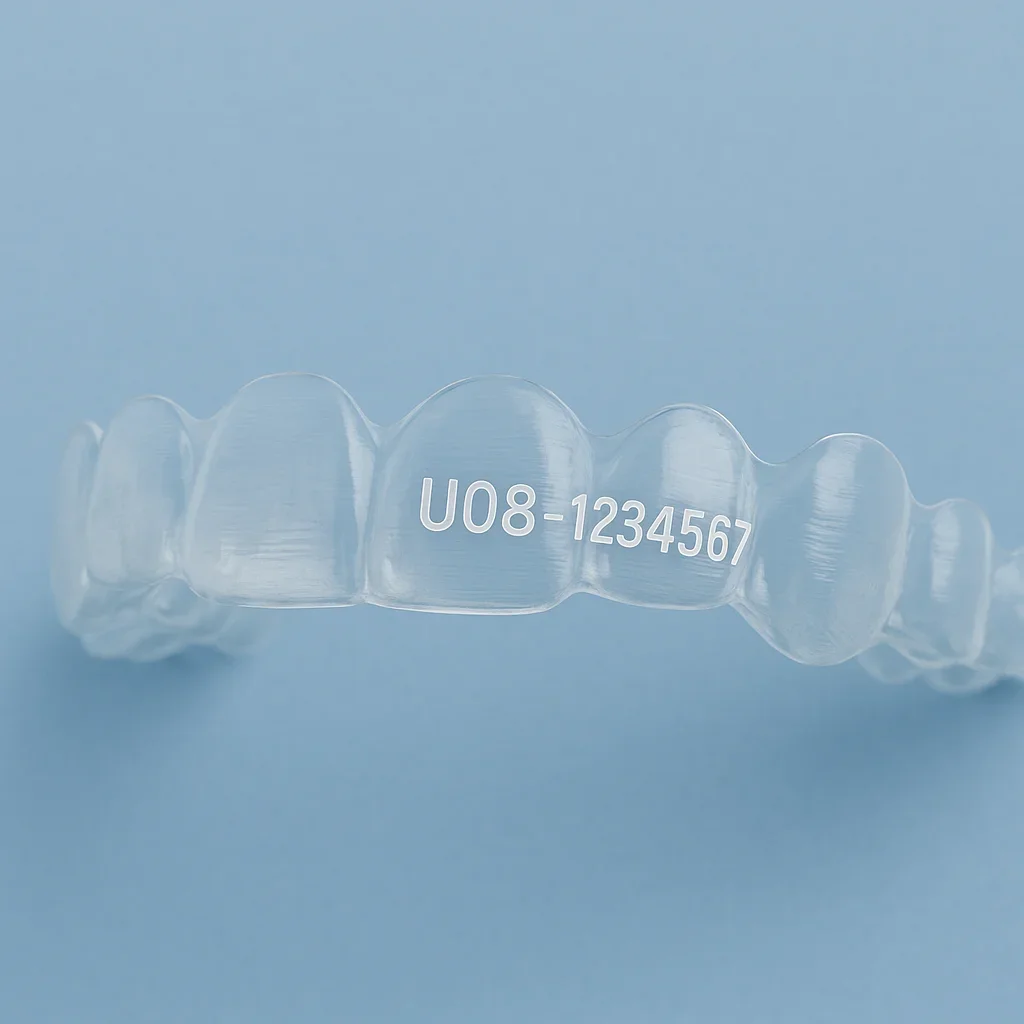
One of the most common questions patients ask is: “Where can I find my Invisalign number?” The answer is simple — it’s engraved or printed on the aligner itself, usually near the molar region. You might see a code like “U05-1234567,” which indicates that this is your fifth upper aligner, and the longer sequence represents your patient-specific Invisalign number. This helps dental professionals verify which aligner belongs to which patient and where it fits in the overall treatment plan.
Understanding your Invisalign number also helps prevent mistakes during treatment. Imagine accidentally swapping two aligners — that could delay your progress or even cause discomfort. By checking the Invisalign number before inserting each tray, you can easily confirm that you’re wearing the right aligner for that stage. Dentists and orthodontists rely on these numbers during appointments to assess how your teeth are responding to the aligners and to confirm that you’re on schedule.
In addition to organization, the Invisalign number has important implications for communication between patients and dental professionals. For example, if you lose or damage an aligner, you’ll need to contact your dentist and provide the Invisalign number so they can order the correct replacement. This ensures that your treatment continues without interruption. At Redent Klinik Contact Page, patients can quickly reach out with their Invisalign number to receive professional assistance or request additional aligners. This small piece of information can save you time, prevent treatment delays, and maintain the precision of your orthodontic journey.
Another key function of the Invisalign number lies in product verification. Unfortunately, counterfeit or imitation aligners have appeared in some markets, posing risks to patients. By confirming your Invisalign number with your provider or through official verification channels, you can ensure that your aligners are genuine. The American Dental Association strongly advises patients to work only with certified dental professionals and verified Invisalign products for safety and predictable results.
Invisalign’s numbering system is not random — it reflects an organized manufacturing and tracking method. Each aligner’s number corresponds to your digital treatment plan created with advanced 3D imaging software. This technology maps out every movement your teeth will make throughout the process. The Invisalign number ties your physical aligner to this digital plan, allowing both the patient and orthodontist to maintain perfect synchronization between digital predictions and real-world progress.
Moreover, understanding your Invisalign number enhances your motivation. Seeing your aligner count go from “U01” to “U20” gives you a sense of achievement and helps visualize how far you’ve come. Every time you change to the next aligner, you can proudly note the progress — one step closer to your ideal smile. This subtle psychological boost can make the often slow orthodontic journey more rewarding and easier to follow.
For those who travel or temporarily misplace their aligners, keeping a record of your Invisalign number is crucial. Write it down, take a photo, or store it in your dental app. It acts like a reference code that can quickly reconnect you to your treatment stage, even if you’re far from home. Your dentist can use that number to send replacements or verify where you left off in your plan.
In summary, the Invisalign number is more than just a code — it’s the foundation of your personalized orthodontic experience. It ensures accuracy, safety, and continuity throughout your treatment. Whether you’re a first-time Invisalign user or already halfway through your journey, taking a few moments to understand and record your Invisalign number will help you stay confident, organized, and in control of your smile transformation. 🌟
What Does an Invisalign Number Mean? 🦷
The term Invisalign number may seem simple, but it’s actually a key part of how your orthodontic treatment is organized and monitored. Every aligner in your series is identified by a unique number that reflects both its sequence and your personalized treatment plan. This system ensures your smile correction process stays structured, efficient, and error-free. Understanding what the Invisalign number means can empower you to track your progress more confidently and communicate effectively with your dentist or orthodontist.
Understanding the Structure of the Invisalign Number
The Invisalign number is not a random code; it follows a structured format. Typically, each aligner has a marking such as “U05–1234567” or “L05–1234567,” where:
- U or L indicates whether the aligner is for your upper (U) or lower (L) teeth.
- The number (e.g., 05) shows the sequence order of the aligner in your treatment plan.
- The longer numeric code represents your personal Invisalign number—a patient-specific identifier used by your orthodontist and Invisalign’s manufacturer to manage your digital treatment records.
In other words, the Invisalign number acts as your personal ID within the system. It connects your physical aligner tray to your digital treatment plan stored in Invisalign’s cloud-based software. This helps ensure precision, accountability, and traceability throughout your orthodontic journey.
Why the Invisalign Number Matters for Every Patient
For patients, the Invisalign number is essential for multiple reasons. First, it prevents mix-ups — especially important if you or your dental provider handle several aligner sets at once. Each aligner is designed to fit only one stage of your tooth movement plan, so wearing them out of sequence can affect your results. By checking your Invisalign number, you can make sure you’re always on the correct stage.
Additionally, when aligners are lost, damaged, or accidentally swapped, the Invisalign number allows your dental clinic to request the exact replacement tray from the manufacturer. Clinics like Redent Klinik rely on these numbers to provide efficient patient support without disrupting ongoing treatment.
Behind the Technology of Invisalign Number Assignment
The Invisalign system uses sophisticated 3D imaging technology to map your teeth movements before treatment even begins. During this digital planning stage, every step of your tooth alignment is simulated and assigned a corresponding Invisalign number. This ensures that when your trays are fabricated, each one is labeled and traceable within your treatment’s digital framework. The process also helps your orthodontist monitor how closely your real progress matches the virtual plan.
Example of an Invisalign Number in Action
Let’s say your orthodontist prescribes 20 upper and 20 lower aligners. Each upper aligner will have numbers U01 through U20, and each lower one will have L01 through L20. The unique Invisalign number tied to these trays remains the same for your patient file, ensuring your progress is synchronized across both upper and lower arches. This organization avoids confusion and allows for data-driven monitoring of your treatment.
How the Invisalign Number Supports Treatment Efficiency
The Invisalign number is crucial for quality control and clinical tracking. Orthodontic clinics use these identifiers to manage thousands of aligners in their inventory. When your dentist scans your teeth during check-ups, they can refer to your Invisalign number to verify alignment accuracy or to assess if an adjustment in the sequence is needed. This helps prevent delays and ensures your smile stays on track with minimal complications.
For example, if a patient experiences discomfort or poor fit with tray number 8, the orthodontist can compare the digital model for “Invisalign number 8” with the patient’s current scan. This allows for precise troubleshooting and ensures that corrections are made only where necessary, maintaining treatment predictability.
Common Misunderstandings About the Invisalign Number
Some patients confuse the Invisalign number with the serial code on the packaging. While they may look similar, the serial number is used for production and logistics, whereas the Invisalign number is specific to your treatment plan. Another common misconception is that both upper and lower aligners share the same number. In reality, they have parallel numbering systems (U for upper, L for lower), which progress together.
Invisalign Number and Data Privacy
Invisalign numbers also support secure record-keeping. Every patient’s unique number is stored digitally, linking their aligner progress to the original 3D model. This system is compliant with dental data privacy standards set by organizations like the American Dental Association. It ensures that your orthodontic records remain confidential while still accessible to your provider when needed.
How to Identify Your Invisalign Number at Home
To locate your Invisalign number, hold your aligner under bright light and check the molar or incisor region. You’ll usually find it embossed or laser-marked in tiny print. If it’s difficult to read, try using a magnifying glass or taking a close-up photo with your phone’s camera. Knowing how to identify your Invisalign number can help you track your trays more effectively and communicate with your orthodontist without confusion.
Practical Tip: Keep a Log of Your Invisalign Numbers
It’s a great idea to maintain a simple logbook or digital note where you record your Invisalign number for each aligner you use. This makes it easier to reference your progress and helps your clinic quickly replace lost trays if needed. Many patients find that keeping such a record also motivates them by showing how far they’ve progressed through their treatment.
In conclusion, the Invisalign number is much more than a printed code — it’s the backbone of an advanced, patient-centered orthodontic system. By understanding what it means, where to find it, and how it supports your treatment, you take a proactive step in achieving a confident, healthy smile with precision and peace of mind. 🦷✨
How to Find Your Invisalign Number on the Aligners
When you first receive your aligner trays, you’ll likely notice a set of tiny letters and numbers printed or engraved on them. Among these markings is your Invisalign number — a crucial identifier that helps both you and your dentist manage and track your treatment. Locating this number correctly ensures that you always know which aligner you’re wearing and how far you are in your orthodontic journey. In this section, we’ll explain exactly where to find your Invisalign number, how to interpret it, and why keeping track of it can prevent treatment mistakes. 🦷✨
Where the Invisalign Number Is Located
The Invisalign number can usually be found on the aligner itself, embossed in a small, transparent font. It’s often positioned near the molar region or along the inner edge of the aligner tray. Because the aligners are made of clear plastic, the number can be difficult to see under certain lighting. To locate it, hold the aligner under bright, direct light and tilt it slightly until you can read the fine engraving.
In most cases, you’ll find the Invisalign number in a format similar to “U05–1234567” or “L08–1234567”. The first part of this code indicates the arch (U for upper, L for lower) and the sequence number of the tray. The second part — a longer series of digits — is your patient-specific Invisalign number. This unique code ties your aligner to your digital treatment plan and ensures every tray fits perfectly according to your teeth’s progression.
Reading and Understanding the Code
The structure of the Invisalign number provides both identification and order information. Here’s what each component means:
- U or L: Refers to the upper or lower jaw.
- Two-digit number (e.g., 01, 02, 03…): Represents which stage of treatment the aligner corresponds to.
- Unique Identifier: A series of numbers that represent your personalized Invisalign number in the system.
This numbering system allows both the patient and the orthodontist to identify the exact tray in use and prevents confusion when switching between aligners.
Example of Invisalign Number Placement
Let’s say you are wearing tray “U06–9876543.” This means it’s your sixth upper aligner, and the code “9876543” is your Invisalign number. Meanwhile, your lower aligner might read “L06–9876543,” indicating that it’s part of the same treatment stage. The identical patient number ensures both trays correspond to the same step in your digital plan.
Why Knowing Your Invisalign Number Matters
Understanding where to find your Invisalign number has several benefits. First, it helps you avoid wearing the wrong aligner. If your aligners get mixed up, you can use the number to identify the correct one quickly. Secondly, in case an aligner is lost or damaged, your dentist can reorder a replacement simply by referencing your Invisalign number. This ensures you don’t lose valuable time in your treatment schedule.
For instance, if you accidentally throw away your aligner or your pet damages it (a surprisingly common occurrence!), you can report your Invisalign number to your clinic. Reputable dental centers such as Redent Klinik use these identifiers to place accurate replacement requests with Invisalign’s manufacturer, maintaining your progress seamlessly.
Tools and Techniques to Read Small Numbers
Because the Invisalign number is engraved in very fine print, some patients may find it challenging to read. Here are a few practical tips to make it easier:
- Use bright light: Hold the aligner under a desk lamp or flashlight to make the numbers more visible.
- Magnify with your phone camera: Zooming in on a photo can help you identify the exact sequence.
- Check the packaging: The aligner pouch often has the same Invisalign number printed clearly on the label.
If you still can’t read the number, don’t worry — your dental provider keeps a digital record of your entire aligner sequence, including your Invisalign numbers. They can help verify or identify the tray based on your treatment plan.
Digital Tracking Through the Invisalign App
Modern orthodontic technology has made managing your Invisalign number even easier. The official Invisalign App allows you to scan or manually log your tray’s number to keep track of progress. This feature helps ensure that you change aligners on time and follow your treatment plan accurately. It also allows your orthodontist to remotely monitor your updates, making adjustments if necessary. 📱
Syncing Invisalign Numbers with Digital Records
Each Invisalign number is digitally connected to your unique 3D treatment model. This means that when your orthodontist reviews your progress, they can match your current aligner’s number to your scanned dental data. The combination of physical numbering and digital tracking ensures maximum precision in tooth movement and minimizes human error.
Common Problems Patients Face When Finding the Invisalign Number
Some patients report that their Invisalign number wears off over time due to cleaning, brushing, or general wear. In such cases, always refer to your original aligner packaging or treatment documentation provided by your orthodontist. Never rely on guesswork; switching to the wrong aligner can slow or even reverse your progress. Keeping photos of your aligner numbers can serve as a quick backup reference if the engraving fades.
Verifying Authentic Invisalign Aligners
Since the Invisalign number is unique to each patient, it also serves as proof of authenticity. Genuine Invisalign products are registered in Invisalign’s official database. To protect yourself from counterfeit products, you can cross-check your Invisalign number with your clinic’s official records or contact certified dental organizations such as the American Dental Association for verification guidance.
Final Tip: Keep a Record of Your Invisalign Numbers
As a best practice, write down or digitally store every Invisalign number for each stage of your treatment. Doing so helps maintain accuracy, improves communication with your dentist, and ensures you never lose track of where you are in your aligner sequence. This small organizational habit can save you from treatment delays and give you complete confidence in your orthodontic journey. 🌟
In short, learning how to find and manage your Invisalign number is one of the most practical steps you can take toward a successful Invisalign experience. With this knowledge, you’ll be able to stay on schedule, avoid mistakes, and enjoy a smoother, more reliable path to your perfect smile. 😁
Why Your Invisalign Number Matters for Treatment Progress
During your clear aligner journey, every detail counts — and one of the most overlooked yet essential details is your Invisalign number. This number isn’t just a random code; it’s a tracking tool that ensures your orthodontic treatment stays perfectly aligned with your personalized digital plan. Understanding how your Invisalign number connects to your progress can make your treatment smoother, faster, and far more predictable. Let’s dive deeper into why this small detail holds such great importance in achieving your dream smile. 😁
How the Invisalign Number Reflects Your Stage of Progress
Each aligner you wear has a specific role in gradually repositioning your teeth. The Invisalign number indicates exactly where you are in that sequence — for instance, “U07” means you’re on your seventh upper aligner. This helps both you and your orthodontist identify how far along you are in your treatment plan. Typically, patients change aligners every 7 to 14 days, depending on their dentist’s recommendations. By tracking your Invisalign number, you can ensure you’re advancing at the correct pace and not skipping or repeating stages by accident.
The Invisalign numbering system also helps identify potential delays. If your dentist notices that your teeth are not moving as predicted for a specific Invisalign number, they can intervene early — adjusting your plan or prescribing “refinement aligners.” These refinements are essential to fine-tune your results and keep your smile transformation on schedule.
Monitoring Treatment Efficiency Using the Invisalign Number
The Invisalign number acts as a milestone marker for evaluating treatment efficiency. Many orthodontists schedule review appointments after every few aligners — for example, after aligner 5, 10, or 15 — to check if the physical movement matches the digital model. This ensures that your treatment remains predictable and efficient. If any discrepancies occur, your orthodontist can re-scan your teeth and create new aligners based on updated measurements, preventing long-term misalignment issues.
For patients, tracking the Invisalign number also brings psychological benefits. Each new aligner represents visible progress — a step closer to the final smile. Seeing your numbers increase from 1 to 20 can be extremely motivating, helping you stay consistent with daily wear times (typically 20–22 hours a day). Consistency is critical to achieving expected results, and the Invisalign numbering system makes it easy to stay accountable.
Communication Between You and Your Dentist
One of the main reasons the Invisalign number matters is communication clarity. During treatment, you may need to contact your orthodontist for advice, replacements, or check-ins. When you mention your current aligner number, such as “I’m on U12-L12,” your dentist immediately knows your position in the treatment plan. This shared language eliminates confusion and allows your provider to make accurate recommendations, such as whether to stay on the same tray for another week or advance to the next stage.
At clinics like Redent Klinik, patients are encouraged to record their Invisalign numbers and report them during virtual consultations. This approach saves time, avoids scheduling errors, and allows precise monitoring even from a distance — a feature especially beneficial for international patients receiving remote supervision.
Example of Progress Tracking
Suppose your treatment plan includes 24 aligners for the upper and lower teeth. By monitoring your Invisalign number, you and your orthodontist can calculate the percentage of completion — for example, aligner 12 means you’re halfway through. This data-driven approach helps maintain focus and allows for early adjustments if your progress slows down. In modern dental software, this tracking integrates seamlessly with your 3D digital scans, ensuring accuracy and consistency throughout the treatment.
Detecting and Preventing Delays
If you’re not wearing your aligners for the recommended duration, your Invisalign number can reveal discrepancies between planned and actual progress. For instance, if you’re on tray 10 but your teeth fit more comfortably into tray 8, your orthodontist will know there’s been a delay. This insight allows corrective action — such as extending wear time or re-scanning for new aligners — before misalignment worsens.
It’s also crucial to use your Invisalign number to track treatment compliance. The system relies on precision, and skipping or misplacing trays can disrupt the sequence. By regularly verifying your tray number, you ensure that every tooth movement occurs exactly as designed by the Invisalign algorithm.
Using Invisalign Numbers in the App and Cloud System
Invisalign’s digital ecosystem further enhances tracking accuracy. Every Invisalign number corresponds to a record in the cloud-based ClinCheck software, where your orthodontist monitors your progress. Through the Invisalign App, patients can log their aligner changes, note their Invisalign number, and set reminders to switch trays on time. This integration between physical and digital tracking minimizes human error and ensures consistency across all aligners.
Moreover, the Invisalign app uses your number to sync updates, photos, and check-in reports. When you submit a progress photo with your current tray, your dentist can compare it to the digital model of that exact Invisalign number. This level of precision helps maintain alignment between clinical expectations and actual tooth movement.
Data-Driven Adjustments for Perfect Results
Every time your orthodontist reviews your Invisalign number data, they can make fine-tuned adjustments if your progress isn’t exactly matching the simulation. For example, if the movement at aligner 14 is slower than expected, the system can generate new trays that resume progress smoothly from that point. This avoids restarting from scratch and maintains treatment efficiency.
Motivation and Psychological Benefits
Beyond clinical importance, your Invisalign number serves as a psychological motivator. Each number you progress through represents a measurable achievement. Patients often describe a sense of accomplishment each time they switch to a new aligner, similar to advancing levels in a fitness program. This tangible progress boosts commitment and makes it easier to stay disciplined with daily wear routines. 🦷💪
Ensuring Safety and Authenticity
Finally, tracking your Invisalign number ensures product authenticity. Each number links directly to your official treatment file, meaning you can verify that your aligners are genuine Invisalign products. This is particularly important given the rise of counterfeit aligners on the market. If you ever have doubts about the legitimacy of your trays, cross-check your Invisalign number with your provider or through reputable organizations like the American Dental Association.
In conclusion, your Invisalign number is far more than an identifier — it’s a compass guiding you through your orthodontic journey. It connects your aligners to your digital treatment plan, ensures effective communication with your dentist, motivates consistent progress, and safeguards authenticity. By paying attention to this small detail, you’ll gain better control, precision, and confidence throughout your smile transformation. 🌟
Invisalign Number vs Batch Code: What’s the Difference?
When examining your clear aligners, you might notice multiple markings that look similar — a long sequence of digits, a two-letter prefix, and sometimes a combination of letters and numbers that can be confusing at first glance. Many patients mistakenly believe that every code printed on the aligner is the same as their Invisalign number. In reality, that’s not true. The Invisalign number and the batch code serve very different purposes. Understanding the difference between these two identifiers helps you track your treatment accurately, verify authenticity, and communicate more effectively with your dental clinic. 🦷
What Is an Invisalign Number?
The Invisalign number is a unique identifier tied directly to your personal treatment plan. It is a part of the digital record created when your orthodontist designs your customized sequence of aligners. Each aligner in your set (both upper and lower) carries a version of this number, ensuring that every stage of your treatment can be tracked precisely. The number links your physical aligner to your 3D treatment simulation, allowing your dentist to monitor your progress step by step.
This number is also patient-specific — no two people share the same Invisalign number. It acts as your “treatment ID” within the Invisalign system, meaning it’s the core reference whenever your provider needs to order replacement trays, verify fit, or update your progress. It also ensures that every aligner you receive belongs to your treatment plan and no one else’s.
What Is a Batch Code?
On the other hand, the batch code (sometimes called a production code) is an internal manufacturing identifier used by Invisalign’s production facilities. Each batch of aligners produced at the same time receives a unique batch code for quality control, logistics, and production tracking. This number allows the company to trace back where and when your aligners were made — much like a lot number on pharmaceutical products.
While the Invisalign number is patient-specific, the batch code is not. Many different patients may have aligners produced within the same batch. The batch code ensures that all materials used meet safety and quality standards, allowing Invisalign to maintain consistency across millions of aligners produced worldwide.
Example of the Difference
Suppose your aligner tray shows two sets of codes:
- U05–1234567 → This is your Invisalign number (U for upper arch, 05 for stage 5, 1234567 for your unique treatment ID).
- Batch: 22A450 → This is your batch code, which indicates that the aligner was part of a manufacturing batch produced on a certain date.
In this example, the Invisalign number helps your orthodontist manage your personal progress, while the batch code helps the manufacturer ensure product traceability. The two numbers complement each other but serve completely different roles.
How Invisalign Uses Both Numbers Internally
Internally, Invisalign’s system connects both identifiers to ensure safety and precision. The Invisalign number ties to your digital treatment record, including your 3D scans and ClinCheck data. Meanwhile, the batch code allows the production facility to verify that your aligners were manufactured using the correct material formula and passed final inspection.
In rare cases, if a manufacturing issue or material inconsistency arises, the batch code is what allows Invisalign to identify affected aligners and address the issue promptly. This traceability system maintains Invisalign’s global reputation for safety and accuracy.
How to Locate Both the Invisalign Number and Batch Code
Most aligners display both numbers on the inside or near the edge of the tray. The Invisalign number will appear as a longer combination (like “U10–9876543”), while the batch code is typically shorter and may include letters and numbers (like “B23C1”). If you have difficulty reading them, check your aligner packaging — the pouch label includes both codes printed clearly. The Invisalign number will correspond to your treatment progress, and the batch code will identify the production lot.
Why It’s Important Not to Confuse Them
Confusing your Invisalign number with your batch code can lead to unnecessary delays or miscommunication. For instance, if you report the batch code instead of your Invisalign number when requesting a replacement, your orthodontist may not be able to identify which tray you’re referring to. Since the batch code doesn’t specify your treatment stage, it cannot be used to reorder a specific aligner or determine progress. Always double-check which code you’re giving your dental provider to ensure accurate communication.
Patient Tip: Keep a Simple Record
For optimal organization, write down or save a digital note with both your Invisalign number and batch code for each stage. This can be helpful if aligners are misplaced or damaged. Clinics like Redent Klinik recommend patients keep a simple treatment log to make replacements fast and traceable. You can also include the batch code for reference, though it’s rarely needed unless there’s a quality control issue.
Quality Assurance and Authenticity
Both the Invisalign number and batch code contribute to Invisalign’s rigorous quality control system. Each aligner undergoes multiple inspections before packaging, and both codes are stored in a secure global database. This makes it virtually impossible for counterfeit or low-quality copies to pass as genuine Invisalign products. If you ever have doubts, you can verify your aligners through your provider or reference the product’s authenticity with reputable organizations like the American Dental Association.
Practical Uses for Each Code
- Invisalign Number: Used for treatment tracking, progress identification, patient communication, and replacement ordering.
- Batch Code: Used for manufacturing traceability, quality assurance, and internal documentation.
Knowing when to use each of these identifiers helps streamline your communication with your orthodontist and prevents confusion if you ever need support during your treatment.
Final Thoughts: Complementary, Not Competing
While the Invisalign number and batch code serve different functions, they work together to create a seamless orthodontic experience. The Invisalign number ensures personalized precision, while the batch code guarantees global manufacturing quality. Both are essential to maintaining Invisalign’s status as a trusted, medically approved dental solution.
By learning to distinguish between these two codes, you empower yourself as a patient. The next time you check your aligner tray, take a moment to note both — your Invisalign number keeps you on track, and your batch code assures you of the product’s quality and authenticity. Together, they form the backbone of a reliable, transparent, and safe clear aligner system. 🌟
Common Issues Patients Face with Invisalign Number Confusion
Although Invisalign is known for its precision and convenience, many patients still encounter confusion when interpreting the small markings on their aligners. The Invisalign number, in particular, can be a source of misunderstanding if not properly explained by your orthodontist. Mixing up these numbers can lead to treatment delays, discomfort, or even misalignment if the trays are worn in the wrong order. In this section, we’ll break down the most frequent problems related to Invisalign number confusion and offer clear, practical solutions for each. 🦷
1. Mixing Up Upper and Lower Trays
One of the most common mistakes patients make is accidentally switching upper (U) and lower (L) aligners. Each tray is labeled clearly, but because the Invisalign number format looks similar for both arches — for example, “U04–1234567” and “L04–1234567” — it’s easy to confuse them when you’re in a rush. Wearing the wrong aligner can cause discomfort, poor fit, or even delay your tooth movement.
Solution: Always store your upper and lower trays separately and check the first letter before inserting them. Remember that “U” stands for upper and “L” for lower. You can also label your storage cases to prevent mistakes. Keeping a written record of your current Invisalign number helps you identify trays instantly in case of confusion.
2. Skipping or Reversing Aligner Numbers
Another frequent issue arises when patients skip an aligner or accidentally wear them out of sequence. Since the Invisalign number increments gradually with each stage — e.g., U01, U02, U03 — it’s essential to follow the correct order. Missing a step can lead to uneven tooth movement, discomfort, and a need for corrective refinements later.
Solution: Before switching to a new aligner, verify the Invisalign number printed on it and confirm it matches your treatment plan or app reminder. Clinics like Redent Klinik advise patients to store old trays in numerical order so they can easily double-check the sequence if confusion arises.
3. Difficulty Reading the Invisalign Number
Because the Invisalign number is printed in small, translucent font, some patients find it hard to read. The engraving can fade with time, especially if aligners are cleaned using hot water or abrasive tools. This can lead to guessing which tray comes next — a major cause of mistakes in long treatments.
Practical Tips to Make Reading Easier
- Use a bright LED flashlight or smartphone torch to make the numbers visible.
- Take a close-up photo with your camera and zoom in to view the Invisalign number.
- Check the aligner pouch — the number is usually printed there too.
- Store each pouch after use to maintain a backup record.
If the engraving is unreadable, your orthodontist can verify the correct number from your digital treatment plan. Always avoid guessing — using the wrong aligner can shift your teeth in unintended directions.
4. Confusing Batch Codes with Invisalign Numbers
Many patients also mistake the batch code for their Invisalign number. Batch codes are shorter and may include letters, such as “B25A1,” whereas the Invisalign number usually follows the format “U05–1234567.” Reporting a batch code instead of your Invisalign number can delay replacement requests or make it harder for your orthodontist to locate your case in the system.
Solution: Remember that the Invisalign number always includes the “U” or “L” designation followed by the sequence number and patient ID. If you’re unsure, take a photo of both codes and send them to your dental provider — they’ll instantly identify which one is relevant.
5. Misplacing or Losing Aligners Without Recording the Number
Forgetting to note your current Invisalign number before losing or damaging your aligner is another frequent issue. Without this number, your orthodontist might not know which stage you’re currently on, causing a delay while they verify your progress.
Solution: Make it a habit to log each Invisalign number when you start a new tray. You can do this digitally using the Invisalign App or in a notebook. This record ensures that if you misplace a tray, your clinic can quickly reorder the correct one without interrupting your treatment schedule.
6. Forgetting to Update the Invisalign Number in the App
Patients using the Invisalign mobile app sometimes forget to update the current Invisalign number after switching trays. As a result, the system sends incorrect reminders, or progress tracking becomes inaccurate.
Solution: Each time you switch aligners, open the app, log the new Invisalign number, and confirm your next change date. This ensures consistent synchronization between your physical aligners and the digital treatment plan.
7. Assuming Every Invisalign Number Is Sequential
Occasionally, orthodontists modify treatment plans mid-course, introducing new aligners with slightly adjusted numbering. This can cause confusion when patients notice missing or skipped numbers in the sequence. For example, after “U15,” the next tray might read “U15R” or “U16A.” These special codes indicate refinement or revision aligners, not missing trays.
Solution: If you encounter a nonstandard Invisalign number, consult your provider before proceeding. They can explain whether it’s a refinement set or part of an adjustment. These aligners are common in long treatments and are perfectly normal.
8. Mixing Aligners Between Family Members
In households where multiple family members use Invisalign, it’s surprisingly common for aligners to get mixed up. Since every patient’s trays look similar, identifying them without reading the Invisalign number can lead to mix-ups.
Solution: Always store aligners separately in clearly labeled containers. The Invisalign number can also confirm ownership — each patient’s ID sequence is unique. If confusion occurs, your orthodontist can verify which tray belongs to whom using their records.
9. Misunderstanding Refinement or Retainer Numbers
After completing the main aligner sequence, patients may receive refinement trays or retainers, each with its own numbering format. The Invisalign number on these aligners differs slightly but still identifies the correct patient and treatment phase. Some patients mistakenly think they’ve received the wrong set.
How to Identify Refinement Numbers
Refinement trays often include an “R” or “RF” in the code, such as “U01R–1234567.” This indicates that the tray is part of a refinement phase following the original sequence. Retainers, on the other hand, may not have sequential numbers but still include your patient-specific Invisalign number.
10. Overlooking the Importance of Verification
Whenever in doubt, verifying your Invisalign number with your orthodontist is the safest choice. Clinics and dental organizations such as the American Dental Association emphasize the value of proper identification and documentation in orthodontic treatments. Keeping your Invisalign numbers organized ensures that your care remains consistent, safe, and effective.
Final Thoughts: Confusion about your Invisalign number is entirely preventable with a few good habits — double-checking tray labels, logging your progress, and consulting your dentist when uncertain. By mastering these small details, you’ll keep your treatment on schedule and avoid unnecessary setbacks on your journey to a confident, healthy smile. 🌟
Tracking Invisalign Treatment Progress Using Your Number
One of the most powerful yet underrated features of Invisalign treatment is the ability to track your progress through the Invisalign number. Every tray you receive is assigned a specific number that reflects your current stage in the orthodontic process. By learning how to use this system, you can monitor your improvement, identify any issues early, and maintain your motivation throughout the journey toward a straighter smile. In this section, we’ll explore how your Invisalign number functions as a roadmap to success. 🦷✨
How the Invisalign Number Reflects Treatment Stages
Each aligner is a micro-step toward your ideal smile. The Invisalign number marks these steps clearly, showing where you are and where you’re headed next. For example, “U05–1234567” represents your fifth upper aligner, while “L05–1234567” is the lower counterpart. These numbers move sequentially, helping you keep track of which trays you’ve used and how many remain in your treatment plan. Since most Invisalign treatments include anywhere from 14 to 40 sets, this numbering system becomes an easy way to measure progress.
Your dentist or orthodontist uses this Invisalign number to synchronize your physical trays with the digital treatment model. When your provider checks your progress, they can quickly match your current aligner to the corresponding 3D model in your ClinCheck software — Invisalign’s proprietary system. This digital-to-physical coordination ensures every tooth movement happens as planned, without delay or confusion.
Visualizing Progress Through Sequential Numbers
Seeing your Invisalign numbers increase over time can be incredibly motivating. Each time you move from, say, tray 4 to tray 5, it’s a tangible sign that your teeth are shifting according to plan. This numerical progression acts as a visible tracker, similar to reaching milestones in a fitness program. Patients who stay consistent with their wear schedule — about 20 to 22 hours daily — often find that their treatment stays right on schedule.
Example of Milestone Mapping
Let’s say your treatment consists of 24 sets of aligners. By the time you reach Invisalign number 12, you’re halfway done. You can even calculate your completion percentage using a simple formula:
(Current aligner number ÷ Total aligners) × 100
Example: (12 ÷ 24) × 100 = 50%
This visualization helps you celebrate progress and stay committed. Many orthodontists recommend noting your Invisalign numbers in a journal or app so you can clearly see how far you’ve come.
How Dentists Use the Invisalign Number to Track Movement
For your dental professional, the Invisalign number serves as a diagnostic reference. During check-ups, your dentist compares your actual tooth movement with the expected position for that specific aligner number. If your teeth aren’t aligning as predicted, they can make quick adjustments, such as extending the wear time or ordering refinement trays. This precise tracking ensures that your teeth follow the intended trajectory without deviation.
Clinics like Redent Klinik utilize Invisalign numbers to create personalized reports during each progress review. This record helps both the dentist and the patient see measurable changes, ensuring accountability and motivation throughout the process.
Using the Invisalign App for Progress Tracking
Invisalign’s mobile app takes the tracking process to the next level. By logging your Invisalign number in the app, you can see your treatment timeline, get reminders to switch trays, and even visualize before-and-after simulations. The app syncs with your orthodontist’s records, so they can monitor your updates remotely and confirm that you’re staying on track.
Another benefit of using the app is progress photos. Many patients take weekly pictures and label them with their current Invisalign number (for example, “U10 Week 10”). Over time, these photos create a clear visual record of your transformation — an incredibly rewarding experience that boosts motivation.
How Digital Tracking Helps Avoid Mistakes
The Invisalign App also minimizes the risk of confusion or skipped trays. When you log your Invisalign number each time you switch, the app reminds you when your next change is due. If you accidentally skip an aligner, the app will flag it, helping you avoid treatment setbacks. This integration of technology and patient responsibility is what makes Invisalign one of the most efficient orthodontic systems available today.
Identifying Delays or Irregular Progress
Tracking your Invisalign number helps both patients and providers spot problems early. For instance, if you reach tray 8 but your teeth still fit better in tray 6, that signals that movement is lagging. Your orthodontist can then recommend wearing aligner 8 for a few extra days or creating a refinement plan. These small corrections ensure the final result remains accurate and beautiful.
Conversely, some patients move faster than expected. Your Invisalign number helps identify when it’s appropriate to advance ahead of schedule, though such changes should always be guided by your provider. Maintaining open communication with your dentist about your current number ensures safety and effectiveness.
How the Invisalign Number Improves Motivation
Tracking your progress through the Invisalign number gives you a sense of accomplishment at every stage. Seeing tangible progress keeps patients consistent, reducing the temptation to remove aligners too often or skip days. This psychological boost is one reason Invisalign has higher compliance rates than traditional braces. Each aligner you complete brings you visibly closer to your final smile — a measurable, rewarding journey. 🌟
Authenticity and Professional Oversight
Every Invisalign number is linked to your official digital record, making it easy to verify authenticity and ensure that your aligners are genuine. Trusted institutions like the American Dental Association emphasize the importance of professional oversight in orthodontic treatments. Only authorized Invisalign providers can access and track your numbered aligners through the official system, guaranteeing patient safety and treatment integrity.
Final Thoughts: Stay Connected to Your Progress
Your Invisalign number is more than just a code — it’s a mirror of your progress and commitment. By learning how to interpret and track it properly, you can stay engaged, confident, and informed throughout your treatment. Whether through digital tools, regular check-ups, or personal observation, keeping an eye on your Invisalign number ensures a smooth, predictable path to your dream smile. 🦷💫
How Dentists Use Your Invisalign Number for Monitoring
Behind every successful Invisalign treatment is a system of precision, and one of the most important elements of that system is your Invisalign number. This unique identifier not only helps you track your aligners but also enables your dentist or orthodontist to monitor, analyze, and optimize your treatment at every stage. Understanding how professionals use your Invisalign number will give you a deeper appreciation of how modern orthodontics combines digital technology with clinical expertise. 🦷
The Role of the Invisalign Number in Clinical Tracking
Each aligner in your series corresponds to a specific stage of your digital treatment plan, and your Invisalign number provides a precise reference point for your dentist. For example, aligner “U08–1234567” indicates that you’re on the eighth upper aligner of your personalized sequence. During regular check-ups, your orthodontist uses this information to verify that your teeth are aligning exactly as the digital model predicts.
Invisalign’s proprietary software, ClinCheck®, integrates each aligner number with 3D imaging data, allowing your provider to visualize both planned and actual movements of your teeth. This makes it possible to detect even subtle deviations from the expected path — long before they become visible to the naked eye.
Why Dentists Rely on the Invisalign Number
Tracking treatment using the Invisalign number allows for:
- Consistency: The number ensures that each aligner matches its exact position in your digital plan.
- Precision: Dentists can instantly identify which tray you’re wearing and compare it to the expected progress.
- Efficiency: It reduces the risk of mix-ups or skipped trays, which can delay treatment.
- Documentation: Each Invisalign number serves as a permanent reference in your clinical file.
This level of organization allows orthodontists to provide seamless care even in complex cases, such as crossbites, severe crowding, or overbites that require mid-treatment refinements.
In-Office Check-Ups and Progress Evaluation
During follow-up visits, your dentist will ask which Invisalign number you’re currently on. They’ll then examine your teeth to determine if the movement matches what’s expected at that stage. If your teeth lag behind, the dentist may extend wear time or adjust future aligners. If progress is ahead of schedule, they can approve moving to the next stage sooner. This kind of real-time adjustment ensures the treatment remains efficient and customized to your biology.
Example of a Clinical Evaluation
Imagine you’re at aligner “L10–9876543.” Your orthodontist compares your current bite and tooth alignment to the digital model for Invisalign number 10. If everything matches perfectly, you’ll proceed to aligner 11 as planned. If there’s minor misalignment, the provider might instruct you to wear aligner 10 for a few extra days. These micro-adjustments are what make Invisalign so precise compared to traditional braces.
Digital Tools for Dentist Monitoring
Modern dental software integrates directly with your Invisalign number. The ClinCheck® system, for example, allows providers to pull up detailed visualizations of each numbered aligner stage. They can overlay scans from your current visit on the original plan to measure progress in millimeters. This data-driven approach provides scientific accuracy and allows dentists to make informed clinical decisions quickly.
Furthermore, many dental clinics use cloud-based dashboards where Invisalign numbers are automatically logged and updated. This allows orthodontists to monitor multiple patients simultaneously while maintaining precise tracking for each one. It’s an innovative way to combine efficiency with personalization.
Remote Monitoring Through Digital Platforms
In today’s connected world, many orthodontists offer virtual consultations. Using your Invisalign number, they can remotely assess your progress through photo updates or app submissions. Patients upload photos labeled with their current aligner number, and the dentist compares these with the expected outcome from the digital plan. This saves time for both parties and maintains treatment continuity, even if you’re traveling or living abroad.
For example, if a patient on aligner “U15–1357924” sends progress images through the Invisalign App, the orthodontist can immediately verify whether the fit matches the ClinCheck model for that stage. If any discrepancy arises, the dentist can schedule an in-person appointment or recommend a refinement aligner. Clinics like Redent Klinik use such technology to monitor patients across different countries, ensuring global consistency in treatment outcomes.
How the Invisalign Number Affects Replacement and Refinement
Lost or damaged aligners are a common concern. When this happens, your dentist will ask for the Invisalign number of the missing tray to order an exact replacement. This system prevents any confusion and ensures the new aligner perfectly matches your ongoing treatment stage.
Refinement aligners — additional trays created when teeth need fine-tuning — also come with unique Invisalign numbers. These may include extra letters such as “R” or “RF” (for “refinement”). By documenting each Invisalign number, your orthodontist can track both original and refinement stages in your treatment history, keeping everything organized and traceable.
Ensuring Quality and Authenticity
Since your Invisalign number is directly linked to your digital prescription, it also serves as proof of authenticity. This prevents the use of counterfeit or third-party aligners, which may not meet the same safety and precision standards. According to the American Dental Association, verified Invisalign aligners undergo strict quality control before being shipped to clinics, and every Invisalign number can be traced to its origin.
Why Invisalign Numbers Are Essential for Long-Term Results
After completing your treatment, your dentist keeps a record of your Invisalign number history to guide future retainer creation. If relapse occurs (teeth shifting slightly back), your provider can refer to your previous aligner sequence and design corrective trays based on earlier Invisalign numbers. This continuity of care ensures stable, long-lasting results.
Final Thoughts: Collaboration Between Technology and Expertise
Your Invisalign number is more than a label — it’s a bridge connecting advanced digital technology with hands-on clinical expertise. It empowers dentists to monitor your treatment with scientific accuracy, ensures your aligners fit perfectly, and maintains traceability across every phase of your smile transformation. By understanding how your provider uses this system, you’ll feel more confident, informed, and engaged in your orthodontic journey. 🌟
How to Verify Authenticity and Security Using the Invisalign Number
When it comes to orthodontic treatments, authenticity and precision are essential. The Invisalign number plays a vital role not only in tracking your aligners but also in verifying that they are genuine, safe, and properly registered within Invisalign’s global treatment database. Each Invisalign number acts as a digital fingerprint, linking your aligners to your personalized treatment plan, your licensed provider, and Invisalign’s official manufacturing records. In this section, we’ll explore how dentists and patients can use this number to confirm authenticity, prevent counterfeiting, and ensure data security. 🔒🦷
Understanding the Security Role of the Invisalign Number
Every aligner set is marked with a unique Invisalign number that identifies not only the patient but also the specific stage of their treatment. These numbers are stored securely in Invisalign’s proprietary ClinCheck® system — a cloud-based digital platform used by licensed orthodontists worldwide. This ensures that every aligner you receive is traceable back to the original 3D treatment design created for you and verified by your orthodontist.
From a security standpoint, the Invisalign number acts as a built-in authenticity code. It guarantees that your aligners were manufactured by Invisalign and not by an unauthorized or third-party lab. This verification process protects you from low-quality replicas that could harm your teeth or gums and ensures that your treatment follows the exact movement plan designed for your unique dental structure.
Why Verification Is Crucial
As Invisalign’s popularity grows, the dental market has seen a rise in imitation products claiming to offer “Invisalign-like” results at cheaper prices. These unregulated alternatives often lack the clinical precision and safety oversight of the original system. Fortunately, your Invisalign number provides a simple and effective way to verify authenticity.
- ✅ It ensures your aligners are part of a registered treatment plan.
- ✅ It links your aligners to your orthodontist’s official ClinCheck prescription.
- ✅ It helps identify any discrepancies in production or delivery.
- ✅ It safeguards your progress data stored in Invisalign’s encrypted database.
By checking the Invisalign number, both patients and dental professionals can confirm that an aligner is legitimate and part of the intended treatment sequence.
How to Check Your Invisalign Number for Authenticity
1. Examine the Aligners
Hold your aligner up to the light and look for an embossed or laser-printed Invisalign number near the molar or incisor area. This number usually includes the arch identifier (“U” or “L”) followed by a stage number and a longer numeric code (e.g., U05–1234567). The presence of this structure confirms that the aligner was made by Invisalign.
2. Check the Packaging
Each aligner comes in a sealed pouch with matching details printed on the label. Compare the Invisalign number on your tray with the one on the pouch. If they don’t match, or if the packaging looks tampered with, contact your dentist immediately. Clinics like Redent Klinik always verify the integrity of each aligner before delivery to the patient.
3. Confirm With Your Provider
Your orthodontist has access to Invisalign’s secure system, where every aligner and Invisalign number is logged. By cross-referencing the numbers, your provider can instantly verify whether the aligners you received correspond to your official digital treatment plan. This step ensures complete authenticity and eliminates any risk of using an incorrect or counterfeit tray.
Data Security and Privacy in Invisalign’s System
Invisalign’s system adheres to strict privacy and security protocols. Your Invisalign number is not just a label; it’s part of a secure record that protects patient data under global medical privacy standards such as HIPAA and GDPR. The system encrypts all records, including aligner numbers, patient details, and treatment data. This means only authorized dental professionals can access your information, ensuring both privacy and integrity.
According to the American Dental Association, maintaining strict confidentiality and verifiable treatment records is essential in modern orthodontics. Invisalign’s digital ecosystem, centered on the Invisalign number, aligns with these best practices by making every step traceable and accountable.
Detecting Counterfeit or Unauthorized Aligners
Counterfeit dental products pose serious risks. Fake aligners can be made from substandard materials, lack sterilization, and apply incorrect pressure to your teeth — leading to damage rather than alignment. Here’s how the Invisalign number helps protect you:
- Unique identifiers: Each Invisalign number is unique and verified in the global Invisalign database.
- Cloud-based matching: Orthodontists can confirm the authenticity of your aligners instantly.
- Traceability: The Invisalign number reveals the date and location of manufacture, ensuring transparency.
If an aligner lacks a visible Invisalign number or has a code that doesn’t match your treatment records, it’s a red flag. You should immediately contact your dental provider to verify its authenticity.
How Invisalign Numbers Support Quality Control
Each time a batch of aligners is produced, Invisalign’s quality control department uses the Invisalign number to track materials, production lines, and patient assignments. This ensures no mislabeling occurs and that each tray meets rigorous safety and performance standards. If a manufacturing defect is detected, the number allows Invisalign to recall or replace only the affected aligners without disrupting other patients’ treatments.
Maintaining Transparency Between Patients and Providers
The Invisalign number also strengthens trust between patients and providers. During appointments, dentists can show you your 3D treatment plan and demonstrate how each aligner’s number corresponds to a specific movement. This transparency helps patients feel informed, confident, and in control of their orthodontic journey. In cases of lost or damaged trays, providing your Invisalign number allows your provider to request an identical replacement swiftly.
Final Thoughts: Invisalign Number as a Safety Shield
In the evolving world of digital orthodontics, the Invisalign number stands as both a security code and a trust symbol. It confirms the authenticity of your aligners, ensures data protection, and provides full transparency between patient, provider, and manufacturer. By understanding how to verify your Invisalign number, you can be confident that your smile transformation is built on genuine technology, expert oversight, and uncompromising quality. 🛡️
How to Contact Invisalign Support Using Your Invisalign Number
There may be times during your orthodontic journey when you need to reach out for professional help — whether you’ve lost an aligner, have questions about your treatment plan, or want to verify product details. In such situations, your Invisalign number becomes an essential piece of information. This unique identifier allows Invisalign’s customer service and your orthodontist to quickly access your digital file, confirm your treatment stage, and provide accurate, timely assistance. Let’s explore how to contact support effectively using your Invisalign number, what details to prepare, and how clinics like Redent Klinik can help streamline the process. 🦷💬
When and Why You Might Need to Contact Invisalign Support
Even though Invisalign treatment is highly predictable, occasional issues can arise. Understanding when to contact support — and how your Invisalign number helps in each case — ensures smooth and uninterrupted progress. Common reasons include:
- Lost or broken aligners: You’ll need to provide the Invisalign number so a replacement can be ordered precisely for your stage.
- Fit or comfort issues: Invisalign specialists may request your current number to verify that the tray matches your treatment phase.
- Delivery or tracking questions: The number allows Invisalign to trace production and shipping records for your aligners.
- Account or app login problems: Providing your treatment’s unique number helps confirm your identity securely.
- Verification of authenticity: The Invisalign number can be used to confirm that your aligners were officially manufactured and not counterfeit.
How the Invisalign Number Speeds Up Customer Support
Invisalign operates a global support network that connects directly to its internal database of registered treatments. When you contact them — by phone, email, or live chat — providing your Invisalign number immediately links your case to your digital record. This eliminates delays and ensures accurate answers. Without this number, representatives must manually locate your file, which can take significantly longer.
The Invisalign number essentially functions as your “treatment passport.” It tells support agents which stage you’re on, who your provider is, and which aligners have been delivered. It also helps them confirm whether you’re due for a refinement set or nearing the end of your plan.
Step-by-Step: How to Contact Invisalign Support
1. Gather Your Details
Before contacting support, collect key details to make communication faster and more efficient. You’ll need:
- Your Invisalign number (printed on the aligner and its pouch)
- Your provider’s name or clinic (for example, Redent Klinik)
- Your full name and date of birth
- The aligner stage you’re currently wearing (e.g., “U10/L10”)
- A brief description of your issue (such as “Aligner cracked” or “Tray not fitting properly”)
2. Contact Through the Official Invisalign Channels
Invisalign offers several methods to reach support:
- Website Help Form: Visit the official Invisalign website and use the support contact form. Enter your Invisalign number in the “Patient ID” or “Case Reference” field for immediate linking.
- Phone Support: Most regions have dedicated Invisalign helplines. When calling, have your Invisalign number ready to verify your case quickly.
- Email: Send a detailed message including your full name, contact info, clinic name, and Invisalign number for quick reference.
- Mobile App Support: The Invisalign App includes built-in support chat. Logging in with your case automatically provides your Invisalign number to the agent.
3. Follow Up With Your Dental Provider
While Invisalign Support handles product issues, your treating orthodontist should always be informed. Provide them with your Invisalign number and a summary of your issue. Clinics like Redent Klinik often coordinate directly with Invisalign to expedite solutions such as replacements or refinements.
How Invisalign Support Uses the Number to Troubleshoot
Once you provide your Invisalign number, the support team accesses your ClinCheck file — the 3D treatment plan designed specifically for your mouth. This allows them to check your aligner history, identify which trays have been manufactured, and determine whether the issue lies with production, shipment, or fit. If you’ve reported a damaged aligner, they’ll verify the batch associated with that number to see if any quality control alerts exist. This traceability ensures accountability and patient safety.
Data Security and Patient Verification
Your Invisalign number also ensures secure communication between you, your clinic, and Invisalign’s support team. Every inquiry linked to your number is authenticated within Invisalign’s encrypted network, protecting your personal and medical data. According to the American Dental Association, verifying patient identity through secure identifiers like the Invisalign number is a best practice in modern dental data management.
Common Questions When Contacting Invisalign Support
“Can I get a replacement aligner directly from Invisalign?”
No. Invisalign only works through certified providers. However, once you provide your Invisalign number to your clinic, they can order an exact replacement within minutes.
“What if my Invisalign number is unreadable?”
If the number has faded or is unclear, your dentist can locate it in your digital file. You can also check the original aligner pouch, which always displays the full Invisalign number.
“Can I track the shipping of my aligners using the number?”
Yes. The Invisalign support team can use your Invisalign number to check the production and shipment status of your trays. This is especially helpful if you’ve recently ordered replacements or refinements.
Best Practices for Effective Communication
When contacting Invisalign support, clarity and preparation are key. Always mention your Invisalign number early in the conversation, clearly state the problem, and provide photos if applicable. The more information you give, the faster your issue can be resolved. Keep a record of all communications, including reference numbers and response times, to ensure accountability.
Final Thoughts: Your Invisalign Number as Your Support Passport
Invisalign’s customer service system is designed for precision and efficiency — and your Invisalign number is the key to unlocking that support. It ensures you receive accurate assistance, secure verification, and timely solutions for any treatment concerns. Whether you’re contacting the Invisalign support team or coordinating through your orthodontist, always keep your number accessible. Think of it as your digital passport to a seamless, stress-free smile transformation. 💫