
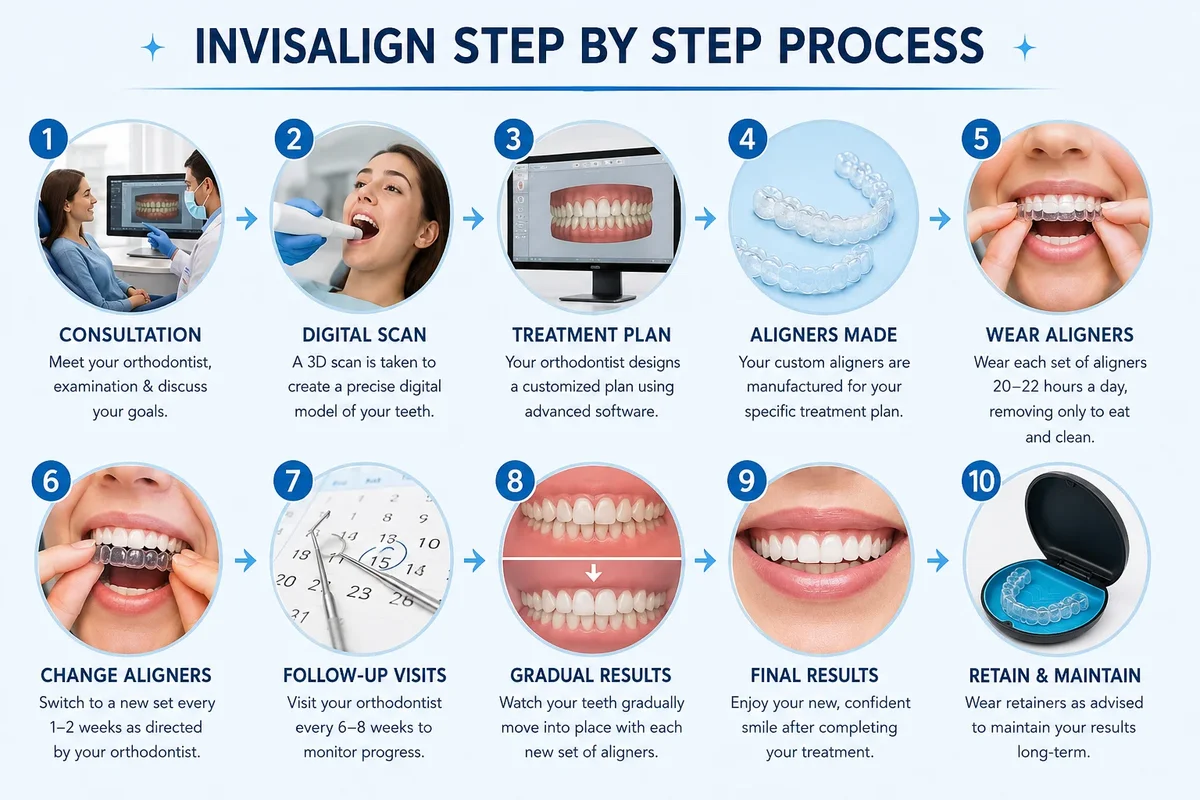
The invisalign step by step process is one of the most advanced and comfortable orthodontic treatment methods available today. Unlike traditional metal braces, Invisalign uses a series of clear aligners that gradually move teeth into their ideal position. Patients who want a straighter smile without visible brackets often choose the invisalign step by step process because it offers convenience, aesthetics, and predictable results. 😊
Understanding the invisalign step by step process is important before starting treatment because every stage has a specific purpose. From the first consultation to the final retainer phase, each step is carefully designed to improve both dental function and smile appearance. The invisalign step by step process is customized for every patient depending on tooth alignment, bite condition, and overall oral health.
At the beginning of the invisalign step by step process, patients visit a dental clinic for a comprehensive examination. During this appointment, the dentist evaluates crooked teeth, crowding, gaps, overbite, underbite, or crossbite problems. X-rays, photographs, and digital scans are often used to create a complete orthodontic analysis. Modern clinics use advanced 3D scanning systems instead of uncomfortable traditional impressions. This makes the invisalign step by step process easier and more comfortable for patients.
After the initial assessment, the dentist creates a personalized treatment plan. This is one of the most important parts of the invisalign step by step process because the digital software predicts how the teeth will move over time. Patients can even preview their future smile before treatment starts. This digital smile simulation helps patients understand the expected outcome of the invisalign step by step process and increases treatment confidence.
Once the treatment plan is approved, custom aligners are manufactured specifically for the patient. Each aligner is designed to apply gentle pressure to certain teeth. During the invisalign step by step process, patients usually wear each aligner for one to two weeks before switching to the next set. The aligners should be worn approximately 20 to 22 hours daily for effective tooth movement.
The success of the invisalign step by step process depends heavily on patient compliance. Aligners should only be removed while eating, drinking hot beverages, brushing, or flossing. Wearing aligners inconsistently can delay results and reduce treatment effectiveness. Many patients appreciate the removable nature of the invisalign step by step process because it allows them to continue enjoying their favorite foods without dietary restrictions.
Another major advantage of the invisalign step by step process is improved oral hygiene. Traditional braces can trap food particles around brackets and wires, making cleaning difficult. Clear aligners can be removed easily, allowing patients to brush and floss normally. This reduces the risk of plaque accumulation, gum inflammation, and tooth decay during orthodontic treatment. 😁
Regular dental checkups are also essential throughout the invisalign step by step process. Patients typically visit the clinic every six to eight weeks so the dentist can monitor tooth movement and ensure the treatment is progressing correctly. In some cases, small tooth-colored attachments may be bonded to teeth to improve aligner grip and enhance movement precision during the invisalign step by step process.
The duration of the invisalign step by step process varies depending on case complexity. Mild alignment cases may require only six months, while more advanced orthodontic problems can take 18 to 24 months. On average, many patients complete the invisalign step by step process within 12 to 18 months. The dentist determines the estimated timeline after evaluating the patient’s oral condition.
Many people considering the invisalign step by step process also want information about treatment costs. Invisalign prices vary according to the number of aligners required, clinic location, orthodontic complexity, and dentist experience. In the United States, the invisalign step by step process may generally range between $3,000 and $8,000. Some dental insurance plans partially cover clear aligner treatment. Patients should always request a personalized consultation for accurate pricing.
Estimated Invisalign Treatment Costs 💰
- Mild Cases: $3,000 – $4,500
- Moderate Cases: $4,500 – $6,000
- Complex Cases: $6,000 – $8,000+
One important phase of the invisalign step by step process occurs after active treatment is completed. Once the teeth reach their final position, retainers are usually recommended to maintain results. Without retainers, teeth may gradually shift back over time. Retention is considered the final protective stage of the invisalign step by step process and plays a critical role in preserving a beautiful smile.
Patients searching for discreet orthodontic treatment often compare Invisalign with traditional braces. Clear aligner therapy offers several benefits, including improved comfort, fewer emergency visits, enhanced appearance, and easier cleaning. However, not every orthodontic case is suitable for aligners. Severe jaw discrepancies or highly complex tooth movements may still require conventional braces. A professional consultation is necessary to determine whether the invisalign step by step process is the best option.
The growing popularity of the invisalign step by step process reflects the increasing demand for minimally visible orthodontic solutions. Adults, teenagers, and even professionals who frequently attend meetings or social events often prefer clear aligners because they are almost invisible when worn. This modern orthodontic approach provides confidence during treatment while gradually improving dental aesthetics.
For trusted oral health information, patients can also visit the American Dental Association. If you are considering orthodontic treatment and would like a personalized consultation, you may contact our clinic through the Redent Klinik Contact Page.
Overall, the invisalign step by step process combines advanced digital technology, customized aligners, and professional dental planning to create predictable smile transformations. By following every stage carefully and wearing aligners consistently, patients can achieve straighter teeth, improved bite function, and increased self-confidence with a modern and comfortable orthodontic solution. ✨
What Is the Invisalign Step by Step Process and How Does It Work?
The invisalign step by step process is a modern orthodontic treatment method designed to straighten teeth using transparent aligners instead of traditional metal braces. Millions of patients worldwide choose the invisalign step by step process because it offers comfort, aesthetics, and predictable results. Clear aligners are custom-made for each patient and gradually shift teeth into healthier and more attractive positions over time. 😊
Unlike conventional braces that use brackets and wires, the invisalign step by step process relies on removable trays made from smooth medical-grade plastic. These trays fit tightly over the teeth and apply gentle pressure to move them slowly according to a carefully planned treatment sequence. Patients often prefer the invisalign step by step process because the aligners are nearly invisible during daily life, work meetings, school activities, and social events.
Why the Invisalign Step by Step Process Is So Popular
The popularity of the invisalign step by step process continues to grow because modern patients want orthodontic treatment without the appearance and discomfort of metal braces. Adults especially appreciate the discreet appearance of clear aligners. Teenagers also benefit because the aligners are removable and more comfortable during sports or social activities.
Another reason patients choose the invisalign step by step process is convenience. Traditional braces may require emergency appointments due to broken wires or brackets, but aligners are smoother and less likely to cause irritation. The removable nature of the invisalign step by step process also allows patients to maintain better oral hygiene habits throughout treatment.
How the Invisalign Step by Step Process Begins
The first stage of the invisalign step by step process starts with a consultation at a dental clinic. During this appointment, the dentist examines the patient’s teeth, gums, jaw alignment, and bite condition. Orthodontic issues such as spacing, crowding, overbite, underbite, and crossbite are evaluated carefully.
Digital technology plays a major role during the invisalign step by step process. Most modern clinics use intraoral scanners instead of traditional dental impressions. These scanners create accurate 3D images of the patient’s teeth within minutes. The digital scan allows dentists to create a fully customized orthodontic treatment plan for the invisalign step by step process.
Digital Smile Preview Technology
One exciting feature of the invisalign step by step process is the ability to preview future smile results before treatment begins. Advanced software simulates how the teeth will gradually move into their final position. This digital visualization helps patients understand the expected results of the invisalign step by step process and improves treatment confidence.
How Invisalign Aligners Move Teeth
Each aligner used during the invisalign step by step process is carefully engineered to move specific teeth by small amounts. Patients wear every aligner for approximately one to two weeks before changing to the next set. Every new tray continues the tooth movement sequence planned by the dentist.
The aligners create controlled orthodontic pressure, similar to traditional braces but in a more comfortable form. Over time, the invisalign step by step process gradually improves tooth alignment, smile symmetry, and bite function. Because the movements are carefully programmed digitally, the treatment often provides highly predictable outcomes.
Daily Routine During the Invisalign Step by Step Process
Patients undergoing the invisalign step by step process are usually instructed to wear aligners for 20 to 22 hours each day. Aligners should only be removed while eating, brushing, flossing, or drinking hot beverages. Consistent wear is extremely important because irregular usage can delay the invisalign step by step process and reduce treatment efficiency.
One major advantage of the invisalign step by step process is the ability to eat freely. Traditional braces often require patients to avoid sticky or hard foods. With Invisalign, aligners are removed before meals, allowing patients to continue enjoying most foods without restrictions. 🍎
Oral Hygiene Benefits
Maintaining oral hygiene during the invisalign step by step process is usually easier than with metal braces. Since aligners are removable, patients can brush and floss normally. This reduces the risk of plaque accumulation, gum inflammation, and cavities during orthodontic treatment.
Dentists still recommend cleaning the aligners daily during the invisalign step by step process. Patients should rinse aligners regularly and use gentle cleaning products to prevent bacterial buildup and unpleasant odors.
Average Treatment Timeline
The length of the invisalign step by step process depends on the complexity of the orthodontic problem. Mild alignment issues may require only six months of treatment, while moderate or severe cases can take 12 to 24 months.
Estimated Invisalign Treatment Timeline ⏳
- Mild Cases: 6–9 Months
- Moderate Cases: 12–18 Months
- Complex Cases: 18–24 Months
During the invisalign step by step process, patients usually attend follow-up visits every six to eight weeks. These appointments allow the dentist to evaluate treatment progress and provide additional aligners if needed.
Who Is a Good Candidate for Invisalign?
The invisalign step by step process is suitable for many orthodontic conditions, including mild crowding, spacing problems, overbites, underbites, and crooked teeth. However, some highly complex orthodontic cases may still require traditional braces or additional dental procedures.
Adults and teenagers are commonly excellent candidates for the invisalign step by step process. Patients who are disciplined enough to wear aligners consistently usually achieve the best results. Because the aligners are removable, responsibility and compliance are essential for successful treatment.
Advantages Compared to Traditional Braces
The invisalign step by step process offers several important advantages over conventional braces. Patients often experience less irritation because there are no metal wires or sharp brackets. The aligners are smooth, transparent, and comfortable for daily use.
Another advantage of the invisalign step by step process is aesthetics. Many adults feel self-conscious about wearing visible braces, especially in professional environments. Clear aligners provide a discreet orthodontic solution while gradually improving the smile.
Patients interested in orthodontic care can also review trusted oral health recommendations from the American Dental Association. Those seeking personalized treatment guidance may contact our clinic through the Redent Klinik Contact Page.
Overall, the invisalign step by step process combines digital precision, customized aligners, and patient comfort to create one of the most advanced orthodontic systems available today. With proper planning, regular follow-up visits, and consistent aligner wear, patients can achieve healthier teeth, improved bite function, and a confident smile through the modern clear aligner journey. ✨
Initial Consultation and Smile Assessment Before Invisalign Treatment
The initial consultation is one of the most important stages of the invisalign step by step process. Before aligners are created, the dentist must carefully evaluate the patient’s oral health, bite structure, tooth alignment, and overall smile goals. This first appointment helps determine whether the patient is a good candidate for the invisalign step by step process and allows the dental team to design a customized orthodontic treatment strategy.
Many patients begin researching the invisalign step by step process because they want straighter teeth without traditional braces. During the consultation, patients can ask detailed questions about treatment duration, costs, aligner comfort, oral hygiene, and expected results. This stage is essential because it creates the foundation for successful orthodontic planning. 😊
Why the Consultation Stage Matters
The consultation phase of the invisalign step by step process is not simply a routine dental appointment. It is a detailed orthodontic assessment designed to identify alignment problems, jaw issues, and smile aesthetics. Dentists use this stage to understand the patient’s expectations and determine how Invisalign technology can improve both appearance and oral function.
Without a proper evaluation, the invisalign step by step process may not achieve optimal results. Every patient has unique dental anatomy, and personalized planning is necessary to ensure safe and effective tooth movement. During this appointment, the dentist examines several important factors including:
- Tooth crowding
- Spacing issues
- Overbite or underbite
- Crossbite conditions
- Jaw alignment
- Gum health
- Existing restorations
- Tooth wear patterns
Comprehensive Oral Examination
The first clinical step of the invisalign step by step process involves a comprehensive oral examination. The dentist evaluates both teeth and surrounding tissues to ensure the mouth is healthy enough for orthodontic treatment.
Checking for Gum Disease and Cavities
Before beginning the invisalign step by step process, any active dental problems should be treated first. Gum disease, untreated cavities, or severe infections can interfere with orthodontic treatment and compromise long-term oral health.
Patients with gingivitis or periodontal disease may require deep cleaning or gum therapy before moving forward with the invisalign step by step process. Healthy gums are extremely important because aligners apply controlled pressure to move teeth through the supporting bone structure.
Evaluating Bite Function
Bite analysis is another important component of the invisalign step by step process. Dentists evaluate how the upper and lower teeth fit together during chewing and speaking. Bite irregularities can lead to jaw discomfort, uneven tooth wear, headaches, and temporomandibular joint problems.
The invisalign step by step process is often capable of improving mild to moderate bite issues while simultaneously straightening teeth. Correcting functional problems can improve chewing efficiency and overall oral comfort.
Digital Imaging and Diagnostic Technology
Modern technology has transformed the diagnostic stage of the invisalign step by step process. Most advanced clinics now use digital scanners instead of traditional impression materials. These scanners capture highly accurate 3D images of the teeth and gums within minutes.
Digital scanning technology improves both comfort and precision during the invisalign step by step process. Patients no longer need to tolerate messy impression trays that can trigger gag reflexes. The scanner creates a digital model that becomes the basis for aligner fabrication.
Benefits of Digital Scanning Technology 🖥️
- More accurate treatment planning
- Improved patient comfort
- Faster image capture
- Detailed 3D visualization
- Better aligner precision
- Reduced appointment time
X-Rays and Photographic Records
Radiographic imaging is another critical part of the invisalign step by step process. Dentists typically take panoramic X-rays, bitewing X-rays, or cephalometric images to evaluate tooth roots, jawbone structure, and hidden dental conditions.
These diagnostic images help identify potential complications before the invisalign step by step process begins. X-rays allow the dentist to evaluate bone levels, impacted teeth, root positioning, and overall dental health.
Clinical photographs are also commonly taken during the invisalign step by step process. These photos document the patient’s smile before treatment and help track progress over time. Many patients enjoy comparing their before-and-after results after treatment completion. 📸
Smile Design and Aesthetic Goals
One of the most exciting parts of the invisalign step by step process is discussing smile goals with the dentist. Some patients want small cosmetic improvements, while others need significant orthodontic correction.
During the consultation, dentists explain what can realistically be achieved through the invisalign step by step process. Smile symmetry, tooth proportions, bite alignment, and facial harmony are all considered while developing the treatment plan.
Previewing Future Results
Advanced Invisalign software allows patients to preview simulated treatment outcomes before starting the invisalign step by step process. This digital preview demonstrates how teeth are expected to move gradually throughout treatment.
Many patients feel more motivated after viewing their projected smile transformation during the invisalign step by step process. Seeing potential results often increases excitement and treatment commitment.
Discussing Treatment Timeline and Costs
Patients also receive detailed information about treatment length during the consultation stage of the invisalign step by step process. Mild orthodontic cases may require fewer aligners and shorter timelines, while more complex cases require extended treatment.
Cost discussions are another important part of the invisalign step by step process. Invisalign treatment fees vary depending on case complexity, treatment duration, clinic location, and dentist experience.
Estimated Invisalign Consultation and Treatment Costs 💰
- Consultation Visit: $50 – $300
- Mild Cases: $3,000 – $4,500
- Moderate Cases: $4,500 – $6,500
- Complex Cases: $6,500 – $8,500+
Preparing for the Invisalign Journey
Once the consultation is complete, patients can move confidently into the next stage of the invisalign step by step process. The dentist develops a fully personalized treatment strategy based on the examination findings, digital scans, and smile goals.
Patients are also educated about aligner care, oral hygiene routines, dietary recommendations, and treatment expectations before officially beginning the invisalign step by step process. Proper preparation improves compliance and increases the likelihood of successful results.
For additional oral health guidance, patients can review educational resources from the American Dental Association. Individuals interested in personalized orthodontic care may also contact our clinic through the Redent Klinik Contact Page.
Overall, the consultation and smile assessment phase of the invisalign step by step process plays a critical role in treatment success. Careful diagnosis, advanced imaging, personalized planning, and open communication help create a strong foundation for achieving a healthier, straighter, and more confident smile through Invisalign treatment. ✨
Digital Scanning Technology Used During the Invisalign Step by Step Process
Digital scanning technology has completely transformed the invisalign step by step process by improving accuracy, comfort, and treatment predictability. In the past, orthodontic impressions required messy trays filled with thick dental material that many patients found uncomfortable. Today, advanced intraoral scanners allow dentists to capture highly detailed 3D images of the teeth within minutes. This innovation has become one of the most important parts of the modern invisalign step by step process. 😊
The use of digital imaging during the invisalign step by step process helps create more precise aligners while reducing human error. Accurate digital models ensure that every aligner fits properly and moves teeth according to the planned orthodontic sequence. Patients often appreciate this technology because it improves both the treatment experience and final smile results.
What Is an Intraoral Scanner?
An intraoral scanner is a handheld digital device used to capture detailed images of the teeth, gums, and bite structure during the invisalign step by step process. Instead of using traditional impression trays, the scanner takes thousands of photographs per second and combines them into a highly accurate 3D digital model.
During the scanning phase of the invisalign step by step process, the dentist slowly moves the scanner over the teeth while the software builds a real-time image on a computer screen. Patients can often watch their digital smile model appear instantly, making the experience interactive and educational.
How Long Does Digital Scanning Take?
Most scans performed during the invisalign step by step process take approximately 5 to 15 minutes depending on the complexity of the case. Because the scanner is fast and minimally invasive, patients usually experience significantly less discomfort compared to traditional dental impressions.
Why Digital Scanning Is Important for Invisalign
The success of the invisalign step by step process depends heavily on precision. Clear aligners must fit perfectly in order to apply controlled pressure to the teeth. Even small inaccuracies in measurements can affect aligner performance and slow orthodontic progress.
Digital scanning technology improves the invisalign step by step process by creating extremely detailed images that guide aligner manufacturing. These scans allow orthodontists to analyze tooth positions from multiple angles and develop highly customized treatment plans.
Another major advantage of digital scanning during the invisalign step by step process is predictability. Because the software simulates tooth movement digitally, dentists can estimate how teeth will shift throughout treatment and identify potential challenges before aligners are produced.
Benefits of Digital Technology for Patients
Patients undergoing the invisalign step by step process often prefer digital scanning because it offers several important advantages over traditional methods. One of the biggest benefits is comfort. Traditional impression materials sometimes trigger gag reflexes or create anxiety, especially in sensitive patients.
Digital scanning during the invisalign step by step process eliminates much of this discomfort. The scanner simply moves around the mouth without using thick impression materials. This makes the orthodontic experience smoother and more pleasant.
Main Advantages of Digital Scanning 🖥️
- Improved treatment accuracy
- Faster scanning process
- More comfortable for patients
- Reduced gag reflex issues
- Better aligner fit
- Enhanced treatment planning
- Immediate digital visualization
- Lower risk of impression errors
Digital Smile Simulation and Treatment Preview
One of the most exciting features of the invisalign step by step process is the ability to preview future smile results through digital simulation software. After the scan is completed, specialized Invisalign software creates a visual representation of how the teeth are expected to move during treatment.
This digital preview allows patients to see the expected outcome of the invisalign step by step process before treatment officially begins. Viewing projected results often increases patient confidence and motivation because they can visualize their future smile transformation.
How Smile Simulation Helps Treatment Planning
The digital simulation phase of the invisalign step by step process also helps dentists refine orthodontic strategies. Adjustments can be made digitally before aligners are manufactured, improving treatment efficiency and reducing the likelihood of complications later.
Patients often feel more engaged in the invisalign step by step process because they actively participate in reviewing treatment goals and projected outcomes with the dental team.
Accuracy and Precision in Aligner Fabrication
Clear aligners used during the invisalign step by step process are manufactured using advanced digital production systems. The detailed 3D scan becomes the blueprint for every aligner tray. Because the scans are highly precise, the aligners fit more securely and move teeth more effectively.
Traditional impressions occasionally contained bubbles, distortions, or inaccuracies that affected orthodontic appliances. Digital scanning reduces these risks and improves the overall quality of the invisalign step by step process.
Accurate aligners also improve patient comfort during the invisalign step by step process. Properly fitting trays reduce irritation and help patients adapt to treatment more easily.
Monitoring Progress Throughout Treatment
Digital technology is not only used at the beginning of the invisalign step by step process. Some clinics perform additional scans throughout treatment to monitor progress and ensure teeth are moving correctly.
If adjustments are necessary, new digital scans can quickly update the treatment plan during the invisalign step by step process. This flexibility improves orthodontic precision and helps achieve better long-term results.
When Refinement Aligners Are Needed
In some cases, patients may require refinement aligners near the end of the invisalign step by step process. Refinements are additional aligners created to perfect tooth positioning if minor corrections are still needed.
Digital scanning allows dentists to identify these small adjustments accurately and continue optimizing smile results during the invisalign step by step process.
Cost of Digital Scanning and Invisalign Technology
Advanced technology contributes to the overall cost of the invisalign step by step process. However, many patients believe the increased comfort, precision, and convenience justify the investment.
Estimated Costs Related to Digital Invisalign Technology 💰
- Digital Consultation and Scanning: $100 – $500
- Standard Invisalign Treatment: $3,000 – $7,000
- Complex Orthodontic Cases: $7,000 – $9,000+
- Refinement Aligners: Sometimes Included in Package
Patients considering the invisalign step by step process should ask their clinic about consultation fees, digital imaging costs, and financing options during their first appointment.
The Future of Orthodontics and Digital Dentistry
The integration of digital scanning into the invisalign step by step process represents the future of modern orthodontics. As dental technology continues to evolve, treatment planning is becoming more efficient, accurate, and patient-friendly.
Artificial intelligence, digital simulations, and advanced manufacturing systems are expected to further improve the invisalign step by step process in the coming years. These innovations may shorten treatment times and increase precision even more.
For additional information about oral health technologies and orthodontic care, patients may visit the American Dental Association. Individuals interested in personalized Invisalign treatment can also contact our clinic through the Redent Klinik Contact Page.
Overall, digital scanning technology has become an essential part of the invisalign step by step process. By combining advanced imaging systems with customized aligners and precise treatment planning, modern orthodontics now provides patients with a more comfortable, predictable, and efficient path toward achieving a straighter and healthier smile. ✨
Custom Treatment Planning and Aligner Production Explained
The custom treatment planning stage is one of the most advanced and important parts of the invisalign step by step process. After digital scans and smile assessments are completed, orthodontists begin designing a highly personalized treatment strategy for the patient. Every aligner used during the invisalign step by step process is created specifically for the patient’s unique dental anatomy, bite condition, and smile goals.
Unlike traditional braces that rely heavily on manual adjustments, the invisalign step by step process uses sophisticated digital software to map every tooth movement in advance. This allows orthodontists to predict how teeth will shift over time and create a precise sequence of aligners that gradually guide the teeth into ideal positions. 😊
Why Personalized Treatment Planning Matters
No two smiles are identical, which is why customization is essential during the invisalign step by step process. Every patient has different tooth positions, jaw structures, bite relationships, and orthodontic needs. A customized treatment plan helps ensure safe tooth movement while maximizing both aesthetics and oral function.
The personalized approach of the invisalign step by step process improves predictability and treatment efficiency. By digitally planning each stage before treatment begins, orthodontists can reduce complications and create smoother tooth movements throughout the aligner journey.
Individualized Orthodontic Goals
During treatment planning, orthodontists establish specific goals for the invisalign step by step process. These goals may include:
- Straightening crooked teeth
- Closing gaps between teeth
- Correcting overbites or underbites
- Improving smile symmetry
- Reducing crowding
- Enhancing chewing function
- Improving overall dental aesthetics
The orthodontist carefully evaluates how each movement will affect the surrounding teeth, gums, jaw alignment, and facial balance during the invisalign step by step process.
Digital Treatment Simulation
One of the most innovative features of the invisalign step by step process is digital treatment simulation software. Once the patient’s 3D scan is uploaded, specialized orthodontic software creates a complete virtual model of the mouth.
This software allows orthodontists to simulate every stage of the invisalign step by step process. Teeth movements are digitally programmed step by step to ensure gradual and controlled alignment changes. The system predicts how teeth should move from the beginning of treatment until the final smile result.
Previewing the Final Smile
Patients often become excited during this phase of the invisalign step by step process because they can preview their expected final smile before treatment even begins. The digital simulation shows how the teeth are likely to shift over time and what the completed smile may look like.
This visualization feature helps patients better understand the benefits of the invisalign step by step process and increases motivation to follow treatment instructions carefully.
Advantages of Digital Treatment Planning 🖥️
- More precise tooth movement
- Improved treatment predictability
- Better aligner accuracy
- Reduced orthodontic complications
- Customized smile design
- Enhanced patient understanding
- Faster treatment adjustments if needed
How Invisalign Aligners Are Manufactured
Once the treatment plan is finalized, the production stage of the invisalign step by step process begins. Invisalign aligners are manufactured using advanced computer-guided systems and medical-grade thermoplastic materials.
The digital models created during the invisalign step by step process are transferred to specialized production facilities where custom aligners are fabricated with high precision. Each aligner is designed to fit snugly over the patient’s teeth while applying controlled orthodontic pressure.
Medical-Grade Aligner Materials
The aligners used during the invisalign step by step process are made from transparent, BPA-free thermoplastic material. This smooth plastic is designed to be comfortable while maintaining enough strength to move teeth gradually.
Patients often find the aligners more comfortable than metal braces because the invisalign step by step process does not involve brackets or wires that can irritate the cheeks and gums.
Sequential Aligner Sets and Tooth Movement
Each aligner used during the invisalign step by step process represents one stage of tooth movement. Patients typically receive multiple aligner sets at once and switch to a new tray every one to two weeks according to the orthodontist’s instructions.
The sequential design of the invisalign step by step process allows teeth to move gradually and safely. Every new aligner continues the movement started by the previous tray until the final alignment goals are achieved.
How Many Aligners Are Usually Needed?
The number of aligners required during the invisalign step by step process varies depending on case complexity. Mild orthodontic corrections may require only 10 to 20 aligners, while more complex cases can require 40 aligners or more.
Estimated Invisalign Aligner Quantities 📦
- Mild Cases: 10–20 Aligners
- Moderate Cases: 20–35 Aligners
- Complex Cases: 35–50+ Aligners
Orthodontists monitor progress carefully throughout the invisalign step by step process to ensure each aligner is functioning properly and teeth are moving according to the digital treatment plan.
Attachments and Precision Features
Some patients undergoing the invisalign step by step process may require small tooth-colored attachments bonded temporarily to certain teeth. These attachments help the aligners grip teeth more effectively and improve specific movements.
Attachments are carefully positioned according to the digital treatment design of the invisalign step by step process. Although small and discreet, they play a major role in improving orthodontic precision and treatment effectiveness.
Interproximal Reduction (IPR)
In certain cases, the orthodontist may perform a minor procedure called interproximal reduction during the invisalign step by step process. This involves removing extremely small amounts of enamel between selected teeth to create additional space for alignment.
IPR is generally painless and helps improve treatment outcomes during the invisalign step by step process when crowding is present.
Refinement Aligners and Midcourse Corrections
Even with advanced planning, some patients may need refinement aligners near the end of the invisalign step by step process. Refinements are additional trays designed to make final adjustments and perfect tooth positioning.
Digital rescanning allows orthodontists to update the treatment plan if necessary during the invisalign step by step process. This flexibility helps improve long-term smile accuracy and patient satisfaction.
Costs Associated With Custom Invisalign Planning
The advanced technology involved in the invisalign step by step process contributes to treatment costs. However, many patients value the precision, comfort, and aesthetic advantages provided by modern digital orthodontics.
Estimated Invisalign Treatment Planning Costs 💰
- Digital Smile Simulation: Often Included
- Custom Aligner Fabrication: $2,500 – $7,000
- Complex Treatment Planning: $7,000 – $9,000+
- Refinement Aligners: May Be Included Depending on Package
Patients considering the invisalign step by step process should always discuss treatment fees, financing plans, and refinement policies during their consultation appointment.
For additional orthodontic information and oral health guidance, patients can visit the American Dental Association. Individuals interested in personalized Invisalign care may also contact our clinic through the Redent Klinik Contact Page.
Overall, custom treatment planning and aligner production form the technological core of the invisalign step by step process. Through advanced digital simulation, personalized orthodontic design, and precision-manufactured aligners, Invisalign provides patients with a highly customized path toward achieving straighter teeth, improved bite alignment, and a more confident smile. ✨
How to Wear Invisalign Aligners Correctly for the Best Results
Learning how to wear aligners properly is one of the most important parts of the invisalign step by step process. Even though Invisalign aligners are designed with advanced orthodontic technology, treatment success still depends heavily on patient cooperation and daily habits. Patients who follow instructions carefully during the invisalign step by step process often achieve faster, more predictable, and more stable smile results. 😊
The aligners used during the invisalign step by step process are custom-made to fit tightly over the teeth. Their purpose is to apply controlled pressure that gradually moves teeth into better alignment. Because tooth movement happens slowly and continuously, consistent aligner wear is essential throughout the entire invisalign step by step process.
How Many Hours Should Invisalign Be Worn?
Orthodontists generally recommend wearing aligners for 20 to 22 hours daily during the invisalign step by step process. This means the aligners should remain in the mouth almost all day except while eating, drinking certain beverages, brushing, or flossing.
Patients who frequently remove their aligners may delay the invisalign step by step process and reduce treatment effectiveness. Teeth can gradually shift back toward their original positions if aligners are not worn consistently.
Why Consistent Wear Matters
The aligners used during the invisalign step by step process are carefully calibrated to move teeth in small increments. If patients wear the aligners inconsistently, the planned orthodontic force becomes interrupted.
This interruption can cause several problems during the invisalign step by step process, including:
- Poor aligner fit
- Delayed tooth movement
- Extended treatment duration
- Need for additional refinement aligners
- Reduced treatment predictability
Consistent wear ensures that teeth continue moving according to the digital treatment plan created during the invisalign step by step process.
How to Insert Invisalign Aligners Properly
Correct aligner insertion is another essential skill during the invisalign step by step process. Patients should always insert aligners gently using clean hands to avoid contamination or damage.
Most orthodontists recommend placing the aligner over the front teeth first and then gently pressing the aligner into place over the back teeth. Patients should avoid biting aligners forcefully into position because excessive pressure may crack or deform the trays during the invisalign step by step process.
Using Chewies for Better Fit
Some patients receive small soft cylinders called “chewies” during the invisalign step by step process. These devices help seat the aligners more securely against the teeth by improving contact between the tray and tooth surfaces.
Using chewies consistently can improve aligner adaptation and support more effective tooth movement throughout the invisalign step by step process.
Tips for Proper Invisalign Wear 😁
- Wear aligners 20–22 hours daily
- Remove aligners only when necessary
- Clean aligners regularly
- Use chewies if recommended
- Store aligners safely when removed
- Switch trays according to schedule
- Attend all follow-up appointments
Removing Aligners Safely
Patients should also learn proper removal techniques during the invisalign step by step process. Aligners are usually removed by gently lifting from the back molar area first and then carefully pulling the tray away from the teeth.
Improper removal can damage aligners or attachments during the invisalign step by step process. Patients should avoid twisting or aggressively bending the trays while removing them.
Where to Store Aligners
Whenever aligners are removed during the invisalign step by step process, they should always be placed inside the protective storage case provided by the dental clinic.
Many aligners become lost or damaged when wrapped in napkins or left exposed on tables during the invisalign step by step process. Proper storage helps maintain hygiene and prevents accidental disposal.
Eating and Drinking With Invisalign
One major advantage of the invisalign step by step process is dietary freedom. Unlike traditional braces, Invisalign aligners are removable before meals, allowing patients to continue eating most foods without restrictions.
Patients should always remove aligners before eating during the invisalign step by step process. Chewing while wearing aligners may damage or stain the trays.
Which Drinks Are Safe?
Water is generally the safest beverage to consume while wearing aligners during the invisalign step by step process. Hot coffee, tea, soda, wine, and colored beverages should be avoided while aligners are in place because they may stain or warp the plastic.
Sugary drinks trapped under aligners during the invisalign step by step process can also increase the risk of cavities and plaque buildup.
Cleaning Aligners Properly
Maintaining clean aligners is extremely important during the invisalign step by step process. Dirty aligners may accumulate bacteria, plaque, and odors if not cleaned properly.
Patients should rinse aligners regularly and brush them gently using a soft toothbrush during the invisalign step by step process. Harsh toothpaste may scratch the plastic and reduce aligner transparency.
Best Cleaning Practices
Many orthodontists recommend specialized cleaning crystals or mild antibacterial soaps during the invisalign step by step process. Hot water should be avoided because excessive heat can deform the aligners.
Recommended Invisalign Cleaning Supplies 🪥
- Soft toothbrush
- Mild antibacterial soap
- Cleaning crystals
- Cold or lukewarm water
- Protective storage case
Managing Discomfort During Treatment
Mild pressure and temporary discomfort are common when starting a new aligner stage during the invisalign step by step process. This sensation usually indicates that the aligners are actively moving the teeth.
Most patients adapt quickly to the aligners during the invisalign step by step process, and discomfort often improves within a few days. Orthodontists may recommend switching to new aligners at night so patients can sleep through the initial adjustment period.
Speech Adaptation
Some patients notice temporary speech changes during the early stages of the invisalign step by step process. Slight lisps may occur initially as the tongue adapts to the aligners.
Speaking aloud and practicing conversation usually helps patients adjust quickly during the invisalign step by step process.
Importance of Follow-Up Appointments
Regular monitoring appointments remain essential throughout the invisalign step by step process. Orthodontists evaluate tooth movement, assess aligner fit, and determine whether treatment is progressing correctly.
These appointments also allow dentists to identify potential issues early during the invisalign step by step process, reducing the likelihood of treatment delays or complications.
Estimated Costs Related to Invisalign Wear and Maintenance
Common Invisalign Maintenance Costs 💰
- Replacement Aligner Trays: $100 – $300 Each
- Cleaning Crystals: $20 – $60
- Protective Storage Cases: $10 – $30
- Refinement Aligners: Often Included in Package
Patients should ask their orthodontist about replacement policies and maintenance recommendations before starting the invisalign step by step process.
For additional orthodontic care recommendations, patients may visit the American Dental Association. Individuals interested in customized clear aligner treatment can also contact our clinic through the Redent Klinik Contact Page.
Overall, learning how to wear aligners correctly is a critical component of the invisalign step by step process. Proper wear habits, aligner hygiene, consistent usage, and regular dental monitoring all contribute to achieving straighter teeth, improved oral health, and long-lasting smile transformation through Invisalign treatment. ✨
Weekly Aligner Changes and Tooth Movement Throughout Treatment
The weekly aligner change phase is one of the most active stages of the invisalign step by step process. During this period, patients gradually progress through a sequence of customized aligners designed to move teeth little by little into healthier and more attractive positions. Each aligner plays a specific role in the overall orthodontic strategy of the invisalign step by step process, helping teeth shift safely and predictably over time. 😊
Unlike traditional braces that rely on manual wire tightening, the invisalign step by step process uses pre-programmed aligners to create continuous and controlled orthodontic movement. Every tray is designed according to the patient’s digital treatment plan, allowing precise tooth repositioning at each stage of treatment.
How Weekly Aligner Changes Work
Patients undergoing the invisalign step by step process usually change aligners every one to two weeks depending on the orthodontist’s instructions. Each new tray is slightly different from the previous one and continues the gradual movement sequence established during treatment planning.
The aligners apply gentle pressure to targeted teeth throughout the invisalign step by step process. This pressure stimulates biological remodeling within the jawbone, allowing teeth to slowly move into their planned positions.
Why Gradual Tooth Movement Is Important
Teeth cannot move instantly during the invisalign step by step process. Safe orthodontic treatment requires gradual biological adaptation involving the surrounding bone, ligaments, and gum tissues.
Moving teeth too aggressively during the invisalign step by step process could damage tooth roots, gums, or supporting bone structures. The staged aligner system helps ensure that tooth movement remains controlled and healthy.
What Patients Feel When Switching Aligners
Many patients experience mild pressure or tightness when starting a new aligner stage during the invisalign step by step process. This sensation usually indicates that the aligners are actively applying force to move the teeth.
The discomfort associated with the invisalign step by step process is generally mild compared to traditional braces and often improves within a few days. Most patients adapt quickly after each aligner change.
Managing Temporary Pressure and Soreness
Orthodontists often recommend changing to new aligners at night during the invisalign step by step process. Sleeping through the first few hours of adjustment can make the transition more comfortable.
Cold water, soft foods, and over-the-counter pain relievers may also help reduce temporary discomfort during the invisalign step by step process. However, severe pain should always be reported to the dentist immediately.
Common Sensations During Aligner Changes 😁
- Mild pressure on teeth
- Tightness when inserting trays
- Slight chewing discomfort
- Temporary speech adjustment
- Minor gum sensitivity
Biological Process of Tooth Movement
The science behind the invisalign step by step process involves controlled biological changes within the jawbone. When aligners apply pressure to a tooth, specialized cells begin breaking down bone tissue on one side while rebuilding bone on the opposite side.
This remodeling process allows teeth to move gradually during the invisalign step by step process. Because the movement occurs slowly, surrounding tissues can adapt safely without excessive trauma.
Role of the Periodontal Ligament
The periodontal ligament plays a critical role in the invisalign step by step process. This soft connective tissue surrounds each tooth root and helps absorb orthodontic pressure during treatment.
As the aligners apply force during the invisalign step by step process, the periodontal ligament helps coordinate controlled tooth movement and bone remodeling.
Tracking Progress Throughout Treatment
Regular follow-up visits are essential during the invisalign step by step process. Orthodontists monitor how teeth are responding to each aligner stage and evaluate whether treatment is progressing according to the digital plan.
Patients usually attend appointments every six to eight weeks during the invisalign step by step process. During these visits, the dentist checks aligner fit, examines tooth movement, and provides additional aligners if necessary.
Signs That Treatment Is Progressing Correctly
Several indicators suggest that the invisalign step by step process is progressing successfully, including:
- Aligners fitting tightly
- Gradual tooth alignment improvement
- Reduced crowding or spacing
- Improved bite positioning
- Comfortable tray transitions
If aligners stop fitting properly during the invisalign step by step process, patients should contact their orthodontist promptly.
What Happens If Aligners Are Not Worn Correctly?
Consistent aligner wear is extremely important throughout the invisalign step by step process. Patients who fail to wear aligners for the recommended 20 to 22 hours daily may experience treatment delays or poor aligner tracking.
Teeth can begin shifting back toward their original positions if aligners are removed too frequently during the invisalign step by step process. This can result in ill-fitting trays and extended treatment timelines.
Potential Consequences of Noncompliance
Poor compliance during the invisalign step by step process may lead to:
- Longer treatment duration
- Need for additional aligners
- Reduced treatment accuracy
- Extra orthodontic appointments
- Higher overall treatment costs
Orthodontists emphasize that patient cooperation is one of the biggest success factors in the invisalign step by step process.
Refinement Stages and Midcourse Corrections
Some patients require refinement aligners near the end of the invisalign step by step process. Refinements are additional trays designed to make small final adjustments if certain teeth need further movement.
Digital rescanning allows orthodontists to update treatment plans when necessary during the invisalign step by step process. Refinements help maximize smile symmetry and bite accuracy.
Why Refinements Are Sometimes Necessary
Every patient responds differently to orthodontic force during the invisalign step by step process. Factors such as bone density, tooth anatomy, and aligner compliance can influence tooth movement.
Refinement aligners help optimize final outcomes and ensure the invisalign step by step process achieves the best possible smile results.
Estimated Invisalign Timeline and Follow-Up Costs 💰
- Follow-Up Visits: Often Included
- Refinement Aligners: $0 – $1,000 Depending on Package
- Additional Replacement Trays: $100 – $300 Each
- Average Treatment Length: 12–24 Months
Importance of Patience During Treatment
Orthodontic treatment requires patience because tooth movement occurs gradually during the invisalign step by step process. Although some patients notice early improvements within weeks, complete smile transformation often takes many months.
The gradual nature of the invisalign step by step process helps preserve oral health while creating stable long-term orthodontic results. Patients who remain consistent and patient throughout treatment usually achieve excellent smile outcomes.
For additional information about orthodontic treatment and oral health, patients may visit the American Dental Association. Individuals interested in personalized Invisalign treatment can also contact our clinic through the Redent Klinik Contact Page.
Overall, weekly aligner changes represent one of the most important active phases of the invisalign step by step process. Through gradual biological tooth movement, consistent aligner wear, and careful orthodontic monitoring, Invisalign treatment helps patients achieve straighter teeth, healthier bite alignment, and a confident smile with modern clear aligner technology. ✨
Eating, Drinking, and Oral Hygiene During the Invisalign Step by Step Process
Maintaining proper eating habits and oral hygiene is extremely important throughout the invisalign step by step process. One of the biggest advantages of Invisalign compared to traditional braces is the ability to remove the aligners before meals. However, patients still need to follow specific care routines to protect their teeth, aligners, and overall treatment progress during the invisalign step by step process. 😊
Because clear aligners cover the teeth closely, food particles, sugary liquids, and bacteria can become trapped between the aligners and tooth surfaces if oral hygiene is neglected during the invisalign step by step process. This can increase the risk of cavities, plaque buildup, gum inflammation, and bad breath. Proper cleaning and healthy habits are essential for successful orthodontic treatment.
Can You Eat While Wearing Invisalign Aligners?
Patients should always remove aligners before eating during the invisalign step by step process. Invisalign trays are not designed to handle chewing pressure, and eating while wearing them may damage or crack the plastic.
Another reason aligners should be removed during the invisalign step by step process is staining. Foods and beverages can discolor the clear plastic, making the aligners more visible and less hygienic.
Foods That Can Damage Aligners
Certain foods may cause serious problems if eaten while wearing aligners during the invisalign step by step process. Hard foods can crack the trays, while sticky foods may deform the aligners or cause bacterial buildup.
- Hard candies
- Chewing gum
- Ice cubes
- Sticky caramel
- Nuts and hard snacks
- Crunchy chips
Removing aligners before meals protects the appliances and supports smoother progress during the invisalign step by step process.
Best Eating Habits During Invisalign Treatment
Patients often appreciate the dietary flexibility of the invisalign step by step process because there are fewer food restrictions compared to traditional braces. Since aligners are removable, patients can continue enjoying many foods they normally eat.
However, healthy eating habits remain important during the invisalign step by step process. Excessive sugar consumption increases the risk of cavities, especially if oral hygiene routines are inconsistent.
Why Meal Timing Matters
Because aligners must be worn 20 to 22 hours daily during the invisalign step by step process, patients should avoid unnecessary snacking throughout the day. Frequent aligner removal may reduce treatment effectiveness and increase the risk of losing the trays.
Many orthodontists recommend structured meal schedules during the invisalign step by step process to minimize unnecessary interruptions in aligner wear.
Healthy Invisalign Eating Tips 🍎
- Remove aligners before eating
- Brush teeth after meals
- Limit sugary snacks
- Drink plenty of water
- Avoid excessive snacking
- Store aligners safely during meals
What Can You Drink During Invisalign Treatment?
Water is generally considered the safest beverage during the invisalign step by step process. Patients can usually drink plain cool water while wearing aligners without causing damage or staining.
Other beverages should typically be consumed only after removing the aligners during the invisalign step by step process. Coffee, tea, soda, energy drinks, wine, and fruit juices may stain the aligners or increase the risk of tooth decay.
Hot Beverages and Invisalign
Hot drinks can be especially harmful during the invisalign step by step process. High temperatures may warp or distort the plastic aligners, affecting their fit and orthodontic performance.
Patients should always remove aligners before consuming hot coffee or tea during the invisalign step by step process. Even slight tray distortion can reduce treatment accuracy.
Importance of Brushing and Flossing
Good oral hygiene is one of the most critical responsibilities during the invisalign step by step process. Since aligners fit closely against the teeth, trapped food particles and bacteria can create an environment that promotes plaque accumulation and tooth decay.
Patients should brush and floss thoroughly after meals before reinserting aligners during the invisalign step by step process. Reinserting trays without cleaning the teeth may trap bacteria against the enamel for extended periods.
Recommended Brushing Routine
Orthodontists generally recommend brushing at least twice daily during the invisalign step by step process, although brushing after every meal is ideal whenever possible.
Soft-bristled toothbrushes and fluoride toothpaste help protect enamel while maintaining oral hygiene during the invisalign step by step process. Daily flossing is also essential to remove plaque between teeth.
How to Clean Invisalign Aligners Properly
Aligner hygiene is equally important during the invisalign step by step process. Dirty aligners may develop unpleasant odors, discoloration, or bacterial buildup if not cleaned regularly.
Patients should rinse aligners with lukewarm water whenever they are removed during the invisalign step by step process. Gentle brushing with a soft toothbrush can help remove plaque from the trays.
Cleaning Products to Avoid
Some cleaning methods may damage aligners during the invisalign step by step process. Hot water, abrasive toothpaste, and harsh chemicals can scratch or deform the plastic.
Patients should avoid:
- Boiling water
- Bleach products
- Alcohol-based mouthwash
- Abrasive whitening toothpaste
- Harsh household cleaners
Specialized aligner cleaning crystals are often recommended during the invisalign step by step process for safer maintenance.
Recommended Invisalign Hygiene Supplies 🪥
- Soft toothbrush
- Fluoride toothpaste
- Dental floss
- Cleaning crystals
- Interdental brushes
- Alcohol-free mouthwash
Preventing Bad Breath During Treatment
Bad breath can sometimes develop during the invisalign step by step process if aligners and teeth are not cleaned properly. Bacteria trapped between the aligners and teeth may produce unpleasant odors.
Consistent oral hygiene, tongue cleaning, hydration, and regular aligner cleaning can help prevent bad breath during the invisalign step by step process.
Importance of Hydration
Drinking enough water helps support saliva production during the invisalign step by step process. Saliva naturally helps clean the mouth and reduce bacterial accumulation.
Dry mouth may increase cavity risk and oral discomfort during the invisalign step by step process, making hydration especially important.
Travel and Social Situations With Invisalign
Patients should carry aligner cases, toothbrushes, and floss when traveling or attending social events during the invisalign step by step process. Portable hygiene kits help maintain consistent oral care routines outside the home.
Many adults appreciate the discreet appearance of the invisalign step by step process in professional environments because the aligners are almost invisible during conversations and meetings.
Estimated Oral Hygiene and Maintenance Costs
Estimated Invisalign Hygiene Costs 💰
- Cleaning Crystals: $20 – $60
- Electric Toothbrush: $50 – $250
- Water Flosser: $40 – $150
- Replacement Aligner Cases: $10 – $30
- Professional Dental Cleanings: $100 – $300
Maintaining oral health during the invisalign step by step process may require additional hygiene products, but these investments help reduce the risk of dental complications.
For additional oral hygiene recommendations and orthodontic care information, patients may visit the American Dental Association. Individuals interested in customized Invisalign treatment can also contact our clinic through the Redent Klinik Contact Page.
Overall, eating habits, beverage choices, and oral hygiene routines play a major role in the success of the invisalign step by step process. By maintaining clean aligners, practicing consistent brushing and flossing, and following proper dietary habits, patients can protect their oral health while achieving straighter teeth and long-lasting orthodontic results through Invisalign treatment. ✨
Average Invisalign Costs, Treatment Duration, and Follow-Up Visits
Understanding the financial and time commitment involved in the invisalign step by step process is extremely important before beginning treatment. Many patients are interested not only in how Invisalign works, but also in how long the treatment takes, how much it costs, and how frequently follow-up visits are required. The invisalign step by step process is highly personalized, which means treatment duration and pricing can vary significantly depending on individual orthodontic needs. 😊
Several factors influence the overall cost and timeline of the invisalign step by step process, including case complexity, aligner quantity, geographic location, orthodontist experience, and the need for refinement aligners. Patients should understand these variables clearly before starting treatment so they can plan their budget and schedule effectively.
What Determines Invisalign Treatment Costs?
The cost of the invisalign step by step process depends primarily on the complexity of tooth movement required. Mild alignment issues generally require fewer aligners and shorter treatment durations, while severe orthodontic problems may involve more advanced planning and additional aligner sets.
Orthodontists customize every stage of the invisalign step by step process, which is one reason pricing varies between patients. The use of advanced digital technology, customized aligners, and continuous monitoring also contributes to overall treatment expenses.
Main Factors That Affect Invisalign Pricing
- Severity of tooth misalignment
- Number of aligners required
- Length of treatment
- Orthodontist experience
- Clinic location
- Need for refinement trays
- Additional orthodontic procedures
- Retention and follow-up care
Because every smile is different, patients should schedule a professional consultation before receiving a precise estimate for the invisalign step by step process.
Average Invisalign Treatment Costs
In the United States, the average cost of the invisalign step by step process typically ranges between $3,000 and $8,000. Some highly complex cases may exceed this range depending on the amount of orthodontic correction needed.
Mild orthodontic corrections usually cost less because the invisalign step by step process requires fewer aligners and shorter treatment times. More advanced bite problems often involve longer treatment plans and increased monitoring.
Estimated Invisalign Costs by Case Type 💰
- Mild Cases: $3,000 – $4,500
- Moderate Cases: $4,500 – $6,500
- Complex Cases: $6,500 – $9,000+
- Refinement Aligners: Sometimes Included
Some clinics also offer financing plans for the invisalign step by step process, allowing patients to pay monthly instead of covering the full amount upfront.
Does Dental Insurance Cover Invisalign?
Insurance coverage for the invisalign step by step process depends on the patient’s dental insurance plan. Some orthodontic insurance policies partially cover Invisalign treatment similarly to traditional braces.
However, insurance limitations and age restrictions may apply during the invisalign step by step process. Certain plans cover orthodontics only for children or teenagers, while others provide partial adult orthodontic benefits.
Questions to Ask Your Insurance Provider
Before starting the invisalign step by step process, patients should ask their insurance provider several important questions:
- Does the plan include orthodontic benefits?
- Is Invisalign specifically covered?
- What percentage of treatment is reimbursed?
- Are there age restrictions?
- Is there a lifetime orthodontic maximum?
Understanding insurance details early can help patients prepare financially for the invisalign step by step process.
How Long Does Invisalign Treatment Usually Take?
The duration of the invisalign step by step process varies significantly depending on orthodontic complexity and patient compliance. Mild alignment problems may require only six months of treatment, while severe bite corrections can take up to two years or longer.
One advantage of the invisalign step by step process is that treatment timelines are digitally estimated before aligners are manufactured. Orthodontists can usually provide patients with a projected timeline during the consultation stage.
Typical Invisalign Treatment Timelines
Average Invisalign Treatment Duration ⏳
- Mild Cases: 6–9 Months
- Moderate Cases: 12–18 Months
- Complex Cases: 18–24+ Months
Patient cooperation has a major influence on the invisalign step by step process. Individuals who wear aligners consistently for 20 to 22 hours daily often achieve results faster than patients who frequently remove them.
Importance of Follow-Up Visits
Regular orthodontic monitoring is an essential part of the invisalign step by step process. Patients typically visit their orthodontist every six to eight weeks so the dentist can evaluate tooth movement and ensure aligners are functioning correctly.
During follow-up appointments in the invisalign step by step process, orthodontists may:
- Check aligner fit
- Monitor tooth movement
- Provide new aligner trays
- Evaluate bite improvements
- Adjust attachments if necessary
- Address patient concerns
These visits help ensure that the invisalign step by step process continues progressing according to the original digital treatment plan.
What Happens If Follow-Up Visits Are Missed?
Missing appointments during the invisalign step by step process can lead to treatment delays and reduced orthodontic accuracy. Without regular monitoring, problems such as poor aligner tracking or improper tooth movement may go unnoticed.
Patients should prioritize all scheduled visits during the invisalign step by step process to maintain treatment efficiency and avoid unnecessary complications.
Additional Costs That Patients Should Expect
While the primary treatment fee covers most stages of the invisalign step by step process, additional costs may occasionally arise depending on patient circumstances.
Possible Extra Expenses
- Replacement aligners for lost trays
- Professional teeth whitening
- Retainers after treatment
- Additional refinement aligners
- Emergency orthodontic visits
- Dental cleanings and cavity treatment
Orthodontists usually explain these possibilities before beginning the invisalign step by step process so patients can prepare financially.
Estimated Additional Invisalign Expenses 📋
- Replacement Aligners: $100 – $300 Each
- Retainers: $300 – $800
- Professional Whitening: $200 – $600
- Extra Refinement Trays: $500 – $1,500
Can Invisalign Be Faster Than Braces?
In some cases, the invisalign step by step process may produce results faster than traditional braces, especially for mild to moderate orthodontic corrections. Digital planning and highly controlled aligner sequences improve treatment efficiency.
However, severe orthodontic cases may still require similar timelines regardless of whether the patient chooses braces or the invisalign step by step process. Orthodontic biology ultimately determines how quickly teeth can move safely.
Long-Term Value of Invisalign Treatment
Although the invisalign step by step process may seem expensive initially, many patients consider it a valuable long-term investment in oral health and self-confidence. Straighter teeth are often easier to clean, reducing the risk of gum disease and tooth decay.
Improved bite alignment achieved through the invisalign step by step process may also help reduce jaw discomfort, uneven tooth wear, and chewing problems over time.
For additional orthodontic information and oral health recommendations, patients may visit the American Dental Association. Individuals interested in personalized Invisalign treatment can also contact our clinic through the Redent Klinik Contact Page.
Overall, the invisalign step by step process involves a combination of financial investment, treatment time, and regular orthodontic monitoring. By understanding treatment costs, expected timelines, and the importance of follow-up visits, patients can approach Invisalign therapy with realistic expectations and greater confidence while working toward a healthier and more attractive smile. ✨
Final Results, Retainers, and Long-Term Smile Maintenance After Invisalign
Completing active orthodontic treatment is one of the most rewarding stages of the invisalign step by step process. After months of aligner wear, gradual tooth movement, and regular orthodontic monitoring, patients finally achieve their improved smile results. However, many people do not realize that long-term maintenance is a critical final stage of the invisalign step by step process. Without proper retention and post-treatment care, teeth may slowly shift back toward their original positions over time. 😊
The retention phase of the invisalign step by step process is designed to preserve the orthodontic improvements achieved during active treatment. Orthodontists use retainers, follow-up evaluations, and long-term oral care strategies to maintain smile stability and bite alignment for years after Invisalign therapy ends.
What Happens After Invisalign Treatment Ends?
Once patients finish their final aligner stage during the invisalign step by step process, the orthodontist evaluates the completed tooth alignment and bite position carefully. Digital scans, photographs, and bite assessments may be repeated to confirm treatment success.
If the teeth have reached the desired position, patients transition into the retention stage of the invisalign step by step process. Retention is necessary because the surrounding gums, bone, and connective tissues require time to stabilize around the newly aligned teeth.
Why Teeth Naturally Shift
Teeth have a natural tendency to drift slightly throughout life, even after orthodontic treatment. Without retainers, the results achieved during the invisalign step by step process may gradually relapse.
Several factors contribute to post-treatment shifting, including:
- Natural aging changes
- Bone remodeling
- Jaw growth patterns
- Grinding or clenching habits
- Incomplete retainer use
- Periodontal problems
Because of these risks, orthodontists emphasize that retention is an essential long-term part of the invisalign step by step process.
Types of Retainers Used After Invisalign
Retainers are custom-made appliances designed to maintain tooth positions after the invisalign step by step process is completed. Several retainer options are available depending on the patient’s orthodontic needs and lifestyle preferences.
Clear Removable Retainers
Many patients receive clear removable retainers after the invisalign step by step process. These retainers look similar to Invisalign aligners and are designed to fit snugly over the teeth.
Clear retainers are popular because they are discreet, comfortable, and easy to remove during meals and oral hygiene routines. Patients often prefer these retainers because they maintain the aesthetic advantages associated with the invisalign step by step process.
Permanent Bonded Retainers
Some orthodontists recommend fixed bonded retainers after the invisalign step by step process, especially for patients with a high risk of relapse. These retainers consist of thin wires attached behind the teeth to help maintain alignment continuously.
Bonded retainers are not visible during smiling and provide constant retention after the invisalign step by step process. However, they require careful cleaning to prevent plaque accumulation around the wire.
Common Retainer Types 😁
- Clear removable retainers
- Fixed bonded retainers
- Hawley retainers
- Nighttime retainers
How Long Must Retainers Be Worn?
Retainer schedules vary depending on the orthodontic case, but most patients must wear retainers consistently after the invisalign step by step process. Many orthodontists initially recommend full-time retainer wear for several months before transitioning to nighttime-only use.
Long-term retainer wear is often necessary because teeth can continue shifting years after the invisalign step by step process. Some orthodontists recommend lifelong nighttime retainer use to preserve smile results permanently.
Consequences of Not Wearing Retainers
Failure to wear retainers properly after the invisalign step by step process can lead to orthodontic relapse. Teeth may gradually move back toward their original positions, potentially requiring additional orthodontic treatment in the future.
Patients who neglect retention after the invisalign step by step process sometimes require refinement aligners or repeat treatment to restore alignment.
Long-Term Oral Hygiene After Invisalign
Maintaining excellent oral hygiene remains important even after completing the invisalign step by step process. Straight teeth are generally easier to clean, but patients should continue practicing consistent brushing, flossing, and routine dental visits.
Healthy gums and stable bone support help preserve the orthodontic improvements achieved during the invisalign step by step process. Orthodontists often recommend professional dental cleanings every six months.
Cleaning Retainers Properly
Retainers must also be cleaned regularly after the invisalign step by step process. Dirty retainers may accumulate bacteria, plaque, and odors if not maintained properly.
Patients should clean removable retainers daily using gentle cleaning methods and avoid exposing them to hot water, which may deform the appliance after the invisalign step by step process.
Whitening and Cosmetic Improvements After Invisalign
Many patients choose additional cosmetic procedures after completing the invisalign step by step process. Teeth whitening is especially popular because straighter teeth often enhance whitening results significantly.
Orthodontists may recommend waiting until the invisalign step by step process is fully completed before beginning whitening procedures. This helps ensure even coloration across all tooth surfaces.
Smile Enhancement Options
Additional cosmetic improvements sometimes chosen after the invisalign step by step process include:
- Professional teeth whitening
- Dental bonding
- Porcelain veneers
- Gum contouring
- Smile reshaping procedures
These treatments can further improve smile aesthetics after orthodontic correction.
Psychological and Lifestyle Benefits
Many patients experience increased self-confidence after completing the invisalign step by step process. Straighter teeth often improve smile appearance, facial aesthetics, and overall confidence in professional and social settings.
Patients frequently report feeling more comfortable smiling in photographs, speaking publicly, and participating in social interactions after the invisalign step by step process. Improved smile aesthetics can positively influence both emotional well-being and self-esteem.
Functional Oral Health Improvements
Beyond cosmetic benefits, the invisalign step by step process may also improve:
- Chewing efficiency
- Bite balance
- Speech clarity
- Jaw comfort
- Oral hygiene access
These functional improvements contribute to better long-term oral health after orthodontic treatment.
Estimated Retainer and Maintenance Costs 💰
- Clear Retainers: $300 – $800
- Bonded Retainers: $250 – $600
- Replacement Retainers: $150 – $500
- Professional Whitening: $200 – $700
- Routine Dental Cleanings: $100 – $300
Importance of Long-Term Orthodontic Monitoring
Even after active treatment ends, occasional orthodontic evaluations may still be recommended following the invisalign step by step process. These appointments help confirm that the retainers are functioning properly and the teeth remain stable.
Patients who continue monitoring their smile after the invisalign step by step process are more likely to maintain successful long-term orthodontic outcomes.
For additional oral health guidance and orthodontic recommendations, patients may visit the American Dental Association. Individuals interested in personalized Invisalign treatment can also contact our clinic through the Redent Klinik Contact Page.
Overall, the retention and maintenance phase is the final protective stage of the invisalign step by step process. Through proper retainer use, excellent oral hygiene, regular dental monitoring, and long-term smile care, patients can preserve their orthodontic improvements and enjoy a straighter, healthier, and more confident smile for many years after Invisalign treatment is completed. ✨
Disclosure: this page may contain affiliate links. We may earn a commission if you use them, at no extra cost to you.