
Many people begin orthodontic treatment because they want a healthier and more attractive smile, but some patients also need a replacement for a missing tooth during the process. This is where an invisalign temporary tooth becomes extremely important. An invisalign temporary tooth is designed to help patients maintain confidence, function, and appearance while aligners gradually straighten the teeth. Whether someone has lost a tooth because of trauma, decay, gum disease, or extraction, using an invisalign temporary tooth can make the entire orthodontic experience much more comfortable and aesthetically pleasing. 😊
The main purpose of an invisalign temporary tooth is to fill the visible gap created by a missing tooth while the Invisalign aligners continue shifting the surrounding teeth into proper alignment. In many modern dental clinics, dentists carefully customize each invisalign temporary tooth to match the patient’s natural teeth in size, shape, and color. This helps patients smile confidently during meetings, social events, school, or work without feeling embarrassed about missing teeth.
One of the biggest advantages of an invisalign temporary tooth is convenience. Traditional braces may require separate removable appliances or temporary bridges, but Invisalign trays can often incorporate a replacement tooth directly into the aligner system. This makes the treatment smoother and more discreet. Patients often appreciate how an invisalign temporary tooth blends naturally into the aligner tray, making it difficult for others to notice the missing tooth.
Another reason people choose an invisalign temporary tooth is because it supports emotional confidence during treatment. Missing teeth can affect self-esteem and social comfort. Many adults avoid smiling in photographs or speaking openly because they feel insecure about tooth loss. By using an invisalign temporary tooth, patients can continue their daily lives more comfortably while waiting for permanent restorative procedures such as implants, bridges, or crowns.
Patients commonly wonder whether an invisalign temporary tooth is safe and functional. In most situations, the answer is yes. Dentists carefully evaluate bite pressure, aligner fit, and oral health before designing the temporary solution. While an invisalign temporary tooth is not intended to fully replace the strength of a permanent restoration, it usually allows normal speaking, smiling, and light chewing activities. However, patients should avoid biting extremely hard foods directly on the temporary area to prevent damage.
The process of receiving an invisalign temporary tooth often begins with a digital scan of the mouth. Advanced 3D imaging technology helps dentists create customized aligners and accurately position the temporary tooth within the trays. This modern approach allows orthodontists to predict tooth movement while maintaining an attractive smile throughout treatment. Digital dentistry has significantly improved the quality and realism of every invisalign temporary tooth used today.
Many patients also ask whether an invisalign temporary tooth can work alongside dental implants. In fact, this combination is very common. Some patients require orthodontic movement before implant placement because the surrounding teeth must first be positioned correctly. During this period, an invisalign temporary tooth keeps the smile looking complete until the implant surgery is ready. This transitional phase can last several months depending on bone healing and orthodontic progress.
There are different types of invisalign temporary tooth solutions available depending on the patient’s dental needs. Some involve pontics attached inside Invisalign aligners, while others may use removable temporary prosthetics or bonded cosmetic teeth. Dentists select the most appropriate option based on comfort, bite alignment, oral hygiene, and treatment goals. Cosmetic appearance remains a top priority during every invisalign temporary tooth treatment plan.
Proper care is extremely important when wearing an invisalign temporary tooth. Patients should clean their aligners daily using gentle cleaning products recommended by their dentist. Food particles and bacteria can accumulate around the temporary tooth area if oral hygiene is neglected. Regular brushing, flossing, and rinsing help maintain healthy gums and fresh breath during treatment. Many orthodontists also recommend removing aligners before consuming staining beverages such as coffee, tea, or red wine.
In terms of cost, the price of an invisalign temporary tooth varies depending on complexity, materials, and treatment duration. In the United States, temporary cosmetic tooth additions may range between $300 and $1,500 as part of an Invisalign treatment plan. More advanced restorations or customized cosmetic solutions may increase the overall expense. Patients should discuss all financial details during consultation appointments to fully understand treatment expectations.
Estimated Invisalign Temporary Tooth Costs in 2026
| Treatment Type | Estimated Cost |
|---|---|
| Basic Invisalign Temporary Tooth | $300 – $700 |
| Customized Cosmetic Temporary Tooth | $700 – $1,500 |
| Full Invisalign Treatment With Temporary Tooth | $3,000 – $8,000 |
According to the American Dental Association, maintaining oral health during orthodontic treatment is essential for long-term success. Patients using an invisalign temporary tooth should continue attending regular dental checkups to ensure healthy gums, stable tooth movement, and proper aligner fit. Preventive care greatly reduces the risk of complications during treatment.
Choosing an experienced dental clinic is also critical for successful invisalign temporary tooth treatment. Skilled orthodontists understand how to balance aesthetics, tooth movement, and patient comfort simultaneously. If you would like professional guidance regarding Invisalign, temporary tooth replacement, or cosmetic dentistry solutions, you can visit the Redent Klinik Contact Page for more information and personalized consultation options.
Overall, an invisalign temporary tooth offers patients an effective way to maintain a beautiful smile during orthodontic treatment. It combines cosmetic improvement, emotional confidence, and practical functionality into one convenient solution. Modern aligner technology continues evolving rapidly, making every invisalign temporary tooth more realistic, comfortable, and efficient than ever before. For patients dealing with missing teeth while straightening their smile, this treatment option can make the journey significantly easier and more enjoyable. 😁
What Is an Invisalign Temporary Tooth and Why Is It Needed?
An invisalign temporary tooth is a cosmetic and functional dental solution designed for patients who are missing one or more teeth while undergoing Invisalign treatment. This temporary replacement tooth is carefully integrated into the aligner system to help maintain a natural smile appearance during orthodontic correction. Many patients feel anxious about visible gaps in their teeth, especially during professional meetings, social interactions, or photographs. An invisalign temporary tooth helps solve this issue by providing a discreet and comfortable temporary replacement while the aligners gradually move the teeth into better alignment. 😊
The concept behind an invisalign temporary tooth is simple but highly effective. Invisalign aligners are clear trays customized to move teeth step by step. If a patient has a missing tooth, dentists can place a realistic-looking artificial tooth, often called a pontic tooth, into the aligner tray. This allows the patient to continue orthodontic treatment without leaving an obvious empty space in the smile.
Why Patients Need an Invisalign Temporary Tooth
There are many reasons why someone may require an invisalign temporary tooth during treatment. Tooth loss can occur because of accidents, severe tooth decay, gum disease, infections, congenital missing teeth, or planned tooth extraction before orthodontic correction. Regardless of the cause, patients often want to maintain a complete smile while waiting for permanent restorations such as dental implants or bridges.
An invisalign temporary tooth becomes especially valuable for adults working in public-facing careers. Teachers, sales professionals, healthcare workers, and business executives often prefer not to show visible gaps while speaking. By using an invisalign temporary tooth, they can maintain self-confidence and continue daily life more comfortably.
Psychological Benefits of an Invisalign Temporary Tooth
Many people underestimate the emotional impact of missing teeth. Patients may avoid smiling, laughing, or participating in social events because they feel embarrassed. An invisalign temporary tooth helps restore confidence throughout orthodontic treatment. Since the temporary tooth is usually color-matched to surrounding teeth, most people cannot easily notice it.
Patients frequently report feeling more relaxed and socially confident after receiving an invisalign temporary tooth. This emotional comfort can positively influence overall treatment satisfaction and encourage patients to remain consistent with aligner wear.
How an Invisalign Temporary Tooth Is Made
The creation process for an invisalign temporary tooth usually starts with digital dental scans or impressions. Modern dental clinics use advanced 3D imaging technology to map the teeth and jaw structure with incredible precision. Orthodontists then plan tooth movements digitally while determining how the temporary tooth will fit into the aligners.
The artificial tooth inside the aligner is generally made from lightweight composite resin or acrylic materials. These materials are chosen because they are durable, aesthetic, and compatible with Invisalign trays. Dentists customize each invisalign temporary tooth to blend naturally with surrounding teeth in color, shape, and size.
Temporary Tooth Integration Into Invisalign Aligners
One of the most innovative aspects of an invisalign temporary tooth is how seamlessly it integrates into the aligner system. Unlike removable dentures or bulky appliances, the temporary tooth stays inside the clear aligner tray itself. This design helps maintain a discreet appearance and minimizes inconvenience.
Because Invisalign aligners are removable, patients can still clean their teeth and maintain excellent oral hygiene. Dentists often consider this a major advantage of using an invisalign temporary tooth compared to traditional orthodontic appliances.
Can an Invisalign Temporary Tooth Replace a Real Tooth?
Although an invisalign temporary tooth looks natural, it is important to understand that it is not a permanent replacement. The temporary tooth mainly serves cosmetic and light functional purposes during orthodontic treatment. It is not designed to withstand excessive biting pressure like a dental implant or permanent crown.
Patients can usually eat soft foods comfortably while wearing an invisalign temporary tooth, but dentists may recommend avoiding very hard or sticky foods. Proper care helps prevent accidental damage to the aligners or temporary tooth component.
Common Foods to Avoid
- Hard candies 🍬
- Ice cubes
- Sticky caramel
- Very crunchy nuts
- Chewing gum
- Hard crust bread
Following these recommendations helps extend the durability of the invisalign temporary tooth throughout treatment.
Who Is a Good Candidate for an Invisalign Temporary Tooth?
Not every orthodontic patient requires an invisalign temporary tooth, but many people are excellent candidates. Patients with one or more missing front teeth are among the most common candidates because visible gaps strongly affect smile aesthetics. Invisalign patients preparing for future implant placement may also benefit greatly from temporary cosmetic tooth replacement.
Good candidates for an invisalign temporary tooth typically include:
- Patients missing a front tooth
- Adults undergoing Invisalign before implant placement
- Patients with congenital missing teeth
- Individuals seeking discreet orthodontic treatment
- People wanting cosmetic improvement during alignment
Oral Hygiene During Invisalign Temporary Tooth Treatment
Maintaining excellent oral hygiene is essential when using an invisalign temporary tooth. Food particles and plaque can collect around the temporary tooth area if patients neglect cleaning routines. Dentists usually recommend brushing after every meal and rinsing aligners thoroughly before reinsertion.
Using antibacterial mouthwash and gentle flossing techniques also supports healthier gums during treatment. According to the American Dental Association, proper oral hygiene significantly reduces the risk of cavities and gum inflammation during orthodontic care.
If patients notice looseness, discoloration, discomfort, or damage involving the invisalign temporary tooth, they should immediately contact their dental provider. Early professional adjustments help prevent treatment delays and improve comfort.
Patients interested in professional Invisalign care and cosmetic temporary tooth solutions can also visit the Redent Klinik Contact Page for detailed consultation and personalized treatment planning.
Overall, an invisalign temporary tooth provides an excellent balance between aesthetics, comfort, and orthodontic functionality. Modern dentistry continues improving these solutions, allowing patients to maintain beautiful smiles while progressing toward long-term dental health and permanent tooth restoration. 😁
How Invisalign Temporary Tooth Options Work During Treatment
Understanding how an invisalign temporary tooth functions during orthodontic treatment is very important for patients considering Invisalign while managing one or more missing teeth. Modern orthodontics has made it possible to combine clear aligner therapy with cosmetic tooth replacement solutions, allowing patients to maintain both aesthetics and functionality throughout treatment. An invisalign temporary tooth works as a transitional replacement tooth that fits directly into the Invisalign aligner system while the surrounding teeth gradually move into their ideal positions. 😊
Many patients feel concerned about visible gaps during orthodontic correction, especially when missing front teeth. Fortunately, an invisalign temporary tooth helps solve this issue by creating the appearance of a complete smile while Invisalign aligners continue straightening the teeth. The temporary tooth is carefully positioned inside the aligner tray so it blends naturally with the surrounding teeth.
The Basic Structure of an Invisalign Temporary Tooth
An invisalign temporary tooth is usually a lightweight artificial tooth made from acrylic resin or composite material. The dentist or orthodontist designs the tooth to resemble the patient’s natural teeth as closely as possible. Color, shape, contour, and size are all customized to ensure the most natural appearance.
The artificial tooth itself is commonly known as a pontic. In Invisalign treatment, the pontic is inserted into the clear aligner tray rather than permanently attached to the gums or neighboring teeth. This approach makes the invisalign temporary tooth discreet, removable, and easy to maintain.
Why Clear Aligners Support Temporary Teeth So Well
Traditional braces sometimes create challenges for temporary tooth replacement because metal brackets and wires limit flexibility. Invisalign aligners, however, offer a much smoother solution. Since the trays are digitally customized, orthodontists can integrate the invisalign temporary tooth directly into the treatment plan from the beginning.
This allows the aligners to continue moving the teeth while maintaining cosmetic coverage over the missing area. Many patients appreciate how invisible and comfortable an invisalign temporary tooth feels during everyday activities.
Step-by-Step Process of Invisalign Temporary Tooth Treatment
The process of receiving an invisalign temporary tooth generally begins with a consultation and digital scanning appointment. The orthodontist evaluates tooth alignment, bite conditions, gum health, and the missing tooth area before creating the treatment plan.
Step 1: Digital Impressions and Smile Analysis
Advanced 3D scanners capture detailed images of the patient’s teeth and gums. These scans help orthodontists simulate future tooth movements and determine how the invisalign temporary tooth will fit inside the aligners.
The digital planning stage is extremely important because every movement must be carefully coordinated. If a patient plans to receive a future dental implant, the orthodontist also ensures enough space will remain for proper implant placement after Invisalign treatment.
Step 2: Aligners and Temporary Tooth Fabrication
Once treatment planning is completed, the aligners are manufactured. The invisalign temporary tooth is then designed and attached inside specific aligners. Dentists often adjust shading and texture to mimic natural enamel as realistically as possible.
In many cases, patients are surprised by how realistic the invisalign temporary tooth looks. Friends, coworkers, and family members may not even realize that the tooth is temporary.
Step 3: Active Orthodontic Movement
During treatment, Invisalign trays gradually shift the surrounding teeth into healthier alignment. Meanwhile, the invisalign temporary tooth continues covering the missing space cosmetically. The orthodontist periodically updates aligners as teeth move.
Patients must wear aligners consistently, usually 20 to 22 hours daily, to achieve successful results. Proper compliance ensures the invisalign temporary tooth remains stable and aligned throughout treatment progression.
Can You Eat With an Invisalign Temporary Tooth?
One common question patients ask is whether eating is possible while using an invisalign temporary tooth. Since Invisalign aligners are removable, patients usually remove the trays before meals. This helps protect both the aligners and the temporary tooth component from excessive pressure or damage.
After eating, patients should brush their teeth and rinse the aligners thoroughly before reinserting them. Good hygiene habits are essential when wearing an invisalign temporary tooth because bacteria and food particles can collect around the missing tooth area.
Foods Patients Should Be Careful With
- Sticky candy 🍬
- Hard nuts
- Popcorn kernels
- Chewy caramel
- Very crunchy chips
- Ice cubes
Avoiding these foods helps reduce the risk of cracking or loosening the invisalign temporary tooth.
Speech and Comfort During Treatment
Most patients adjust quickly to wearing an invisalign temporary tooth. During the first few days, slight speech changes may occur while the tongue adapts to the aligners. However, these changes are usually temporary and improve rapidly with regular use.
The smooth plastic design of Invisalign aligners makes the invisalign temporary tooth much more comfortable compared to some traditional removable appliances. Patients generally report less irritation and easier daily adaptation.
Temporary Tooth vs Permanent Tooth Replacement
It is important to understand that an invisalign temporary tooth is not intended as a permanent restoration. Instead, it acts as a cosmetic and functional placeholder until the patient receives a long-term solution such as:
- Dental implants
- Fixed dental bridges
- Implant-supported crowns
- Permanent prosthetic restorations
The orthodontist and restorative dentist often work together closely to coordinate treatment timing and ensure optimal final results.
How Long Is an Invisalign Temporary Tooth Worn?
The duration varies depending on treatment complexity. Some patients wear an invisalign temporary tooth for several months, while others may require it throughout a multi-year Invisalign treatment plan. Implant healing time may also affect how long the temporary tooth remains necessary.
Maintaining Oral Health During Treatment
Proper oral hygiene is critical during orthodontic treatment involving an invisalign temporary tooth. Dentists usually recommend:
- Brushing after every meal 🪥
- Cleaning aligners daily
- Using non-abrasive toothpaste
- Flossing carefully around neighboring teeth
- Using antibacterial mouthwash
According to the American Dental Association, maintaining healthy gums and clean aligners helps reduce complications during orthodontic treatment.
If patients experience looseness, discomfort, cracking, or staining involving the invisalign temporary tooth, they should contact their orthodontist immediately. Professional adjustments help maintain comfort and treatment efficiency.
Patients interested in personalized orthodontic care and temporary cosmetic tooth replacement solutions can also visit the Redent Klinik Contact Page for more information and consultation support.
Overall, an invisalign temporary tooth provides a highly effective combination of aesthetics, comfort, and orthodontic flexibility. Modern Invisalign systems allow patients to maintain confidence and smile naturally while progressing toward long-term dental health and permanent tooth restoration. 😁
Best Materials Used for an Invisalign Temporary Tooth
Choosing the right material for an invisalign temporary tooth is one of the most important parts of successful orthodontic and cosmetic dental treatment. The material directly affects comfort, appearance, durability, speech, and overall patient satisfaction during Invisalign therapy. Modern dentistry offers several advanced materials for creating an invisalign temporary tooth, allowing dentists to customize each solution according to the patient’s oral condition, smile goals, and treatment duration. 😊
Because Invisalign aligners are transparent and highly aesthetic, the temporary tooth placed inside them must also look realistic and natural. Dentists carefully select materials that imitate the color, translucency, and texture of natural enamel. At the same time, the material must remain lightweight enough to fit comfortably within the clear aligner system.
Why Material Selection Matters for an Invisalign Temporary Tooth
The quality of the material used in an invisalign temporary tooth can greatly influence the overall treatment experience. Weak or poorly designed materials may crack, stain, or become uncomfortable over time. On the other hand, high-quality materials provide a more natural appearance and improved durability throughout treatment.
Orthodontists evaluate multiple factors before selecting the best material for an invisalign temporary tooth, including:
- Treatment duration
- Location of the missing tooth
- Bite pressure
- Patient lifestyle
- Cosmetic expectations
- Oral hygiene habits
Each patient’s smile is unique, so dentists customize the material choice carefully to achieve optimal results.
Composite Resin for Invisalign Temporary Tooth Solutions
One of the most commonly used materials for an invisalign temporary tooth is composite resin. Composite resin is popular because it offers a highly aesthetic appearance while remaining lightweight and easy to customize. Dentists can shape and polish composite resin to closely match neighboring natural teeth.
Advantages of Composite Resin
- Natural tooth-like appearance 😁
- Easy color matching
- Lightweight and comfortable
- Affordable compared to advanced ceramics
- Simple repair process if damaged
Composite resin is especially useful for front-tooth cosmetic cases where appearance is extremely important. Since the invisalign temporary tooth remains visible during smiling and speaking, many patients prefer the realistic appearance of high-quality composite materials.
Disadvantages of Composite Resin
Although composite resin is highly aesthetic, it can sometimes stain over time if patients consume excessive coffee, tea, red wine, or tobacco products. Additionally, very strong biting forces may occasionally damage the material if proper care instructions are ignored.
Even so, composite resin remains one of the most reliable choices for an invisalign temporary tooth during Invisalign treatment.
Acrylic Materials in Invisalign Temporary Tooth Design
Acrylic is another frequently used material for an invisalign temporary tooth. Acrylic temporary teeth have been used in dentistry for many years because they are lightweight, economical, and relatively easy to fabricate.
Many orthodontists use acrylic-based temporary teeth during shorter Invisalign treatments or transitional phases before implant placement.
Benefits of Acrylic Temporary Teeth
- Affordable treatment option 💰
- Quick fabrication process
- Comfortable lightweight design
- Suitable for temporary cosmetic use
Acrylic materials can provide good cosmetic improvement, although they may not appear quite as realistic as premium composite or ceramic options.
Limitations of Acrylic Materials
The main disadvantage of acrylic-based invisalign temporary tooth solutions is lower durability. Acrylic can wear down more quickly and may become discolored over time. Patients who place heavy biting pressure on the temporary tooth area may require adjustments or replacements sooner.
For this reason, orthodontists often recommend careful eating habits while using acrylic temporary teeth.
Advanced Ceramic Options for Invisalign Temporary Tooth Cases
In some premium cosmetic cases, dentists may use ceramic materials for an invisalign temporary tooth. Ceramic temporary teeth provide excellent aesthetics because they closely mimic natural enamel translucency and light reflection.
Why Ceramic Looks So Natural
Ceramic materials reflect light similarly to real teeth, making them extremely attractive for visible smile zones. Patients seeking maximum cosmetic realism may prefer ceramic-based invisalign temporary tooth options despite the higher cost.
These advanced materials are especially popular among:
- Public speakers
- Actors and performers 🎭
- Corporate professionals
- Social media influencers
- Patients with high aesthetic expectations
Potential Drawbacks of Ceramic Materials
Although ceramic temporary teeth offer beautiful aesthetics, they are usually more expensive and slightly heavier than acrylic or composite options. Additionally, ceramics can sometimes fracture if exposed to excessive force.
As a result, ceramic-based invisalign temporary tooth solutions are generally reserved for highly aesthetic cases rather than routine orthodontic treatment.
3D-Printed Materials in Modern Invisalign Temporary Tooth Technology
Digital dentistry has introduced advanced 3D-printing technologies into orthodontics. Some clinics now create highly customized invisalign temporary tooth solutions using specialized 3D-printable dental materials.
Benefits of 3D Printing
3D printing allows dentists to create precise temporary teeth that fit perfectly inside Invisalign aligners. Digital technology also speeds up the production process and improves customization.
Advantages include:
- Highly accurate fit
- Fast manufacturing ⏱️
- Excellent customization
- Consistent quality control
- Improved patient comfort
As dental technology continues advancing, 3D-printed invisalign temporary tooth solutions are becoming increasingly common in modern orthodontic clinics.
How Dentists Choose the Best Material
Selecting the best material for an invisalign temporary tooth depends on many clinical and personal factors. Orthodontists consider:
- The location of the missing tooth
- The patient’s bite force
- The estimated treatment duration
- The patient’s cosmetic expectations
- Budget considerations
- Future implant or restoration plans
Patients with missing front teeth often prioritize aesthetics, while patients missing back teeth may focus more on strength and durability.
Importance of Professional Consultation
Every smile is different, which is why professional evaluation is essential before choosing an invisalign temporary tooth material. A skilled orthodontist can explain the advantages and limitations of each option while helping patients make informed decisions.
Patients interested in customized Invisalign and cosmetic tooth replacement solutions can visit the Redent Klinik Contact Page for personalized treatment guidance and professional consultation.
Maintaining Your Invisalign Temporary Tooth Material
Regardless of the material chosen, proper maintenance is essential for preserving the appearance and durability of an invisalign temporary tooth. Dentists generally recommend:
- Daily aligner cleaning 🪥
- Avoiding tobacco products
- Limiting staining beverages
- Removing aligners before meals
- Attending regular dental checkups
According to the American Dental Association, maintaining excellent oral hygiene during orthodontic treatment helps support healthier gums, fresher breath, and long-term dental stability.
Overall, the materials used for an invisalign temporary tooth play a critical role in treatment comfort, appearance, and durability. Modern dental technology allows orthodontists to offer highly customized solutions that help patients maintain beautiful smiles throughout Invisalign treatment while preparing for permanent tooth restoration. 😁
Can You Eat Normally With an Invisalign Temporary Tooth?
One of the most common questions patients ask before starting treatment is whether they can eat comfortably while wearing an invisalign temporary tooth. Eating habits are an important part of daily life, and many people worry that orthodontic treatment combined with a missing tooth may limit their food choices. Fortunately, modern Invisalign systems are designed to provide flexibility, comfort, and convenience, even when an invisalign temporary tooth is part of the treatment plan. 😊
In most cases, patients can continue enjoying many of their favorite foods during treatment. However, understanding how to properly manage eating routines with an invisalign temporary tooth is essential for maintaining comfort, protecting the aligners, and avoiding unnecessary complications.
How Eating Works With an Invisalign Temporary Tooth
Unlike traditional braces that remain attached to the teeth at all times, Invisalign aligners are removable. This means patients typically remove their aligners and the attached invisalign temporary tooth before eating meals or snacks. This removable design is one of the biggest advantages of Invisalign treatment.
Removing the aligners before meals helps prevent damage to the trays and protects the invisalign temporary tooth from excessive chewing pressure. It also allows patients to enjoy foods more comfortably without worrying about food particles becoming trapped around brackets or wires.
Why Removing Aligners Before Meals Is Important
Eating while wearing Invisalign trays is generally not recommended because hard or sticky foods may crack the aligners or loosen the invisalign temporary tooth. Hot foods and beverages can also warp the clear plastic material, affecting the fit and efficiency of treatment.
Removing the aligners before eating offers several benefits:
- Protects the aligners from damage
- Prevents staining of the trays
- Maintains the appearance of the invisalign temporary tooth
- Improves oral hygiene
- Allows more comfortable chewing 🍽️
After meals, patients should clean their teeth thoroughly before placing the aligners back into the mouth.
Can an Invisalign Temporary Tooth Handle Chewing Pressure?
An invisalign temporary tooth is primarily designed for cosmetic appearance and light functional support rather than heavy chewing force. While it may tolerate normal speaking and minor biting pressure, it is not intended to replace the full strength of a permanent dental implant or crown.
For this reason, dentists often recommend avoiding direct pressure on the invisalign temporary tooth area whenever possible. Patients should chew carefully and follow professional dietary recommendations throughout treatment.
Foods That Are Generally Safe
Most patients can comfortably eat soft and moderate-texture foods during treatment, especially after removing the aligners.
- Pasta 🍝
- Rice dishes
- Soft vegetables
- Fish
- Eggs
- Yogurt
- Soup
- Soft fruits
These foods place minimal stress on the mouth and help protect both the aligners and the invisalign temporary tooth.
Foods Patients Should Avoid
Certain foods may increase the risk of damaging the invisalign temporary tooth or the aligner trays. Hard, crunchy, or sticky foods are especially risky.
- Hard candies 🍬
- Popcorn kernels
- Chewing gum
- Caramel
- Ice cubes
- Very crunchy chips
- Hard nuts
- Sticky toffee
Avoiding these foods helps maintain the integrity of the temporary tooth and reduces the chance of unexpected orthodontic complications.
Eating at Restaurants and Social Events
Many patients worry about managing an invisalign temporary tooth in social settings such as restaurants, weddings, or business dinners. Fortunately, Invisalign aligners are discreet and easy to remove temporarily before meals.
Patients often carry a protective aligner case to safely store their trays during meals. This simple habit prevents accidental damage or loss. Dentists also recommend rinsing the mouth with water after eating if brushing immediately is not possible.
Tips for Dining Out With Invisalign
- Always carry your aligner case
- Remove aligners carefully before meals
- Avoid placing aligners in napkins
- Rinse your mouth after eating 💧
- Brush teeth before reinserting trays when possible
These habits help keep the invisalign temporary tooth clean and comfortable throughout treatment.
Does an Invisalign Temporary Tooth Affect Taste?
Most patients adapt quickly to wearing an invisalign temporary tooth, and taste is generally not affected. Since the aligners are removable, patients can fully enjoy meals without permanent appliances interfering with flavor or chewing sensations.
Some individuals may notice slight changes during the first few days as they adjust to the aligners. However, this adaptation period is usually very short.
Hydration and Beverage Recommendations
Drinking water while wearing Invisalign trays is usually safe and encouraged. Staying hydrated helps maintain saliva production, oral comfort, and fresher breath during treatment involving an invisalign temporary tooth.
Beverages That May Cause Problems
Certain beverages may stain the aligners or affect the appearance of the temporary tooth.
- Coffee ☕
- Red wine
- Tea
- Dark sodas
- Energy drinks
Patients should ideally remove aligners before consuming these beverages to protect the transparency of the trays and the appearance of the invisalign temporary tooth.
Oral Hygiene After Eating
Maintaining excellent oral hygiene is especially important when using an invisalign temporary tooth. Food particles trapped between the aligners and teeth may increase the risk of plaque buildup, cavities, and gum inflammation.
Recommended Daily Hygiene Routine
- Brush after every meal 🪥
- Floss carefully once daily
- Clean aligners using approved solutions
- Rinse thoroughly before reinserting trays
- Attend regular dental checkups
According to the American Dental Association, proper oral hygiene during orthodontic treatment helps reduce dental complications and supports healthier long-term outcomes.
Can Patients Live Normally With an Invisalign Temporary Tooth?
Most patients are pleasantly surprised by how easy daily life becomes with an invisalign temporary tooth. Invisalign systems are specifically designed for comfort and convenience, allowing patients to maintain professional, social, and personal confidence during treatment.
Whether attending work meetings, traveling, eating with family, or participating in social events, patients can continue enjoying their routines with minimal disruption. Many individuals report that their invisalign temporary tooth quickly becomes a natural part of daily life.
If patients experience discomfort, cracking, looseness, or fit problems involving the invisalign temporary tooth, they should contact their orthodontist promptly for evaluation and adjustments.
Patients interested in Invisalign treatment and customized temporary tooth solutions can also visit the Redent Klinik Contact Page for personalized consultation and professional orthodontic care.
Overall, eating with an invisalign temporary tooth is manageable and comfortable when patients follow professional guidance. With proper hygiene, smart food choices, and regular dental care, patients can maintain both oral health and smile confidence throughout Invisalign treatment. 😁
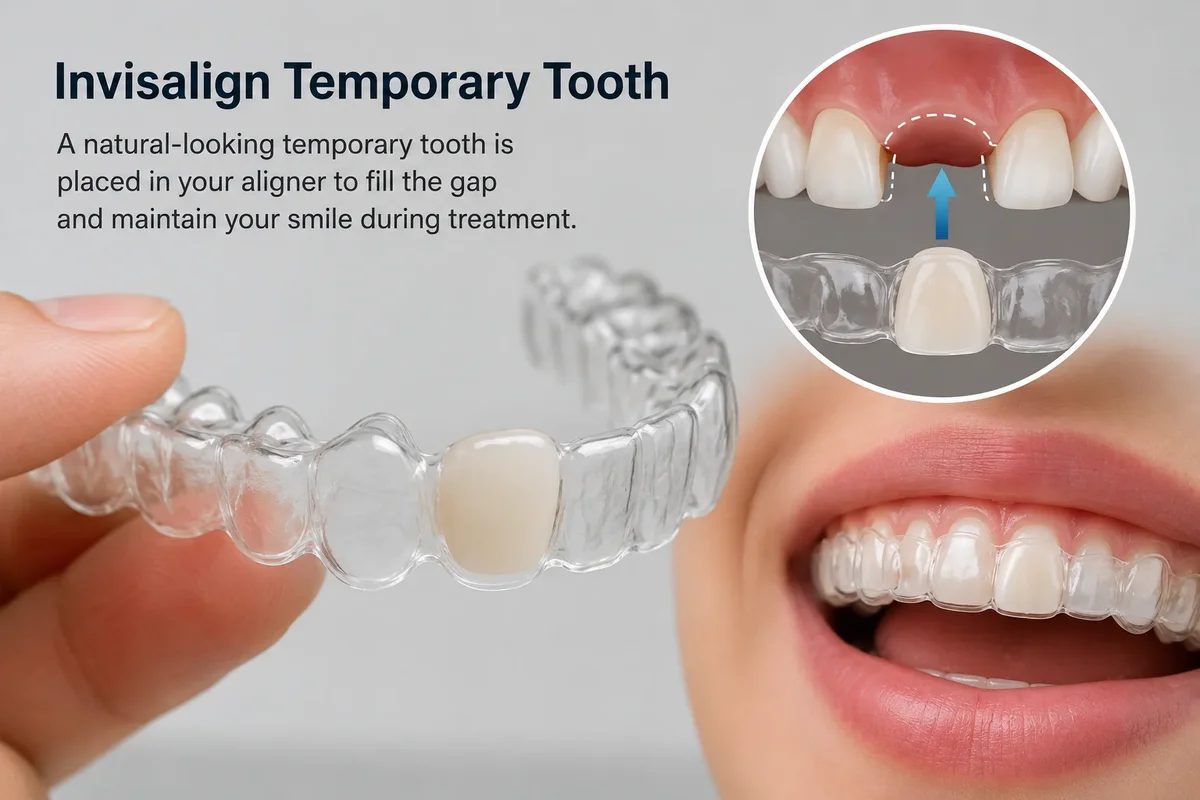
Benefits of Combining Invisalign With a Temporary Tooth
Combining Invisalign treatment with an invisalign temporary tooth offers patients a highly effective solution for improving both dental alignment and smile aesthetics at the same time. Many individuals who begin orthodontic treatment are not only concerned about crooked teeth but also about missing teeth that affect confidence, appearance, and oral function. An invisalign temporary tooth allows patients to continue orthodontic correction while maintaining a more natural-looking smile throughout the treatment process. 😊
Modern orthodontics has significantly improved the experience for patients with missing teeth. In the past, people often had to wait until orthodontic treatment was completed before receiving cosmetic replacement solutions. Today, an invisalign temporary tooth provides an immediate cosmetic improvement while Invisalign aligners gradually move the teeth into healthier positions.
Improved Smile Appearance During Treatment
One of the biggest advantages of an invisalign temporary tooth is the ability to maintain a complete-looking smile during orthodontic care. Missing teeth, especially in visible front areas, can strongly affect self-confidence. Many patients feel uncomfortable speaking, smiling, or taking photographs because of visible gaps.
By integrating an invisalign temporary tooth into the aligner trays, orthodontists can create a much more natural appearance. The temporary tooth is carefully customized to match surrounding teeth in shape, color, and contour. Most people cannot easily distinguish the temporary tooth from natural teeth during normal conversation.
Confidence in Professional and Social Situations
Patients who work in public-facing careers often appreciate the cosmetic advantages of an invisalign temporary tooth. Teachers, healthcare workers, business professionals, and sales representatives may interact with people all day long. A visible missing tooth can negatively affect confidence in these environments.
Using an invisalign temporary tooth allows patients to smile naturally during:
- Business meetings 💼
- Job interviews
- Social gatherings
- Family photographs
- Public speaking events
- Video calls and online meetings
This emotional benefit alone often makes treatment significantly more comfortable and satisfying.
Simultaneous Orthodontic and Cosmetic Treatment
Another major benefit of an invisalign temporary tooth is that patients can improve tooth alignment and smile appearance simultaneously. Invisalign aligners continue moving the teeth gradually while the temporary tooth covers the gap cosmetically.
This combined approach saves time and allows patients to progress toward permanent restorations more efficiently. Orthodontists can coordinate future implant placement or restorative procedures while preserving aesthetics throughout treatment.
Preparation for Dental Implants
Many patients receiving an invisalign temporary tooth eventually plan to receive a dental implant. In these cases, Invisalign treatment often helps create ideal spacing and bite alignment before implant surgery takes place.
The temporary tooth acts as a placeholder while:
- Teeth move into ideal positions
- Bite alignment improves
- Bone healing occurs
- Implant planning is completed
This coordinated treatment strategy can improve the final long-term result significantly.
Enhanced Comfort Compared to Traditional Options
Traditional orthodontic systems sometimes require bulky removable appliances or temporary partial dentures for patients with missing teeth. Many of these appliances can feel uncomfortable or highly noticeable.
In contrast, an invisalign temporary tooth integrates directly into the clear aligner system. Because Invisalign trays are smooth and lightweight, many patients experience less irritation and easier adaptation.
Advantages of Clear Aligner Comfort
- No metal brackets or wires
- Smooth plastic surface 😁
- Minimal gum irritation
- Easy removal for cleaning
- More natural speech adaptation
Patients often report that an invisalign temporary tooth feels much less invasive than traditional orthodontic alternatives.
Better Oral Hygiene During Treatment
Maintaining oral hygiene can be easier with an invisalign temporary tooth compared to fixed orthodontic appliances. Since Invisalign aligners are removable, patients can continue brushing and flossing normally.
This flexibility helps reduce the risk of:
- Plaque buildup
- Gum inflammation
- Bad breath
- Tooth discoloration
- Orthodontic hygiene complications
Importance of Proper Cleaning Habits
Even though Invisalign systems are removable, patients must still maintain excellent oral hygiene while using an invisalign temporary tooth. Dentists commonly recommend:
- Brushing after every meal 🪥
- Cleaning aligners daily
- Using antibacterial mouthwash
- Rinsing aligners before reinsertion
- Avoiding sugary residue buildup
Good oral hygiene supports healthier gums and improves overall treatment outcomes.
Psychological Benefits of Invisalign Temporary Tooth Treatment
The emotional impact of missing teeth is often underestimated. Many individuals feel embarrassed or anxious about visible gaps, especially during long orthodontic treatment periods. An invisalign temporary tooth can dramatically improve emotional comfort by helping patients maintain a normal smile appearance.
Patients frequently experience:
- Improved self-esteem
- Greater social confidence 😊
- Reduced anxiety during conversations
- More willingness to smile
- Higher treatment satisfaction
These psychological advantages can make the orthodontic journey much more positive overall.
Flexibility and Convenience
Another important benefit of an invisalign temporary tooth is treatment flexibility. Invisalign aligners are removable, allowing patients to eat, brush, floss, and attend special occasions more comfortably compared to fixed braces.
Daily Convenience Advantages
Patients using an invisalign temporary tooth often appreciate:
- Easier meal routines 🍽️
- Simple aligner removal
- Minimal lifestyle disruption
- Discreet orthodontic appearance
- Improved comfort during travel
Because the aligners are nearly invisible, many patients feel more comfortable undergoing orthodontic treatment as adults.
Long-Term Treatment Planning Benefits
An invisalign temporary tooth also helps orthodontists create more organized long-term treatment plans. Digital Invisalign technology allows precise coordination between orthodontic movement and restorative dentistry.
Using advanced 3D imaging, dentists can predict how the teeth will move while simultaneously planning implant placement or cosmetic restorations. This level of planning improves efficiency and helps achieve more balanced final smile results.
According to the American Dental Association, interdisciplinary treatment planning between orthodontics and restorative dentistry can significantly improve patient outcomes and oral health stability.
If patients experience discomfort, loosening, cracking, or cosmetic concerns involving the invisalign temporary tooth, they should contact their orthodontist promptly for adjustments and professional evaluation.
Patients interested in Invisalign treatment and cosmetic temporary tooth replacement options can also visit the Redent Klinik Contact Page for personalized consultation and advanced orthodontic care.
Overall, combining Invisalign with an invisalign temporary tooth offers numerous advantages including improved appearance, greater confidence, easier hygiene, enhanced comfort, and coordinated long-term treatment planning. Modern dentistry continues making orthodontic care more aesthetic, comfortable, and effective for patients with missing teeth. 😁
Common Problems Patients Face With Invisalign Temporary Tooth Treatment
Although an invisalign temporary tooth offers many cosmetic and functional advantages during orthodontic treatment, patients may occasionally experience certain challenges throughout the process. Understanding these potential problems helps patients prepare properly and respond quickly if issues occur. Most complications involving an invisalign temporary tooth are manageable with professional guidance, proper oral hygiene, and consistent aligner care. 😊
Modern Invisalign systems are highly advanced and generally very comfortable, but every orthodontic treatment plan involves adaptation. Patients who understand the most common concerns related to an invisalign temporary tooth are often more confident and successful during treatment.
Initial Discomfort and Pressure Sensations
One of the most common issues patients experience during the first days of treatment is mild discomfort or pressure. Invisalign aligners work by gradually shifting teeth into improved positions, so some tightness is completely normal. When an invisalign temporary tooth is included, patients may initially feel additional pressure around the missing tooth area.
Why Temporary Pressure Happens
The aligners must fit securely around the teeth to guide movement effectively. Since the invisalign temporary tooth is integrated into the tray system, slight pressure may occur as the mouth adapts.
Most patients describe the feeling as:
- Mild tightness
- Temporary sensitivity
- Light pressure during insertion
- Slight soreness for several days 😬
These symptoms usually improve within a short adjustment period.
How to Reduce Discomfort
Orthodontists commonly recommend:
- Wearing aligners consistently
- Using cold water rinses
- Eating soft foods initially
- Taking dentist-approved pain relief if necessary
- Changing to new aligners before bedtime
Following these recommendations often helps patients adapt more comfortably to their invisalign temporary tooth.
Temporary Tooth Loosening or Movement
Another issue that occasionally occurs is loosening of the invisalign temporary tooth inside the aligner tray. Since the temporary tooth is not permanently attached like a dental implant, repeated tray removal and insertion may gradually affect stability.
Common Causes of Loosening
- Frequent aligner removal
- Chewing hard foods 🍽️
- Poor aligner fit
- Accidental dropping of trays
- Normal orthodontic tooth movement
If the invisalign temporary tooth feels unstable or detached, patients should contact their orthodontist promptly. Small adjustments can usually solve the issue quickly without disrupting treatment progress.
Speech Difficulties During Early Treatment
Some patients notice temporary speech changes after receiving an invisalign temporary tooth. The tongue requires time to adapt to the aligners and the temporary tooth inside the tray system.
Common Speech Symptoms
- Slight lisping
- Difficulty pronouncing “s” sounds
- Minor tongue irritation
- Temporary pronunciation changes
Fortunately, these symptoms usually improve within several days as the mouth adjusts to the aligners.
Tips for Faster Speech Adaptation
Patients can improve adaptation by:
- Reading aloud daily 📖
- Speaking slowly at first
- Wearing aligners consistently
- Practicing difficult words repeatedly
Most patients eventually speak normally while wearing their invisalign temporary tooth.
Staining and Discoloration Problems
Another common concern involves discoloration of the aligners or the invisalign temporary tooth. Certain foods and beverages can stain both the clear trays and the artificial tooth material over time.
Foods and Drinks That Cause Staining
- Coffee ☕
- Tea
- Red wine
- Dark-colored soda
- Tobacco products
- Curry-based foods
Patients should ideally remove aligners before consuming these items to protect the appearance of the invisalign temporary tooth.
How to Prevent Stains
Orthodontists usually recommend:
- Cleaning aligners daily
- Brushing after meals
- Using clear antibacterial rinses
- Avoiding smoking 🚭
- Rinsing with water after beverages
Good hygiene habits significantly reduce discoloration risks during treatment.
Difficulty Cleaning Around the Temporary Tooth
Because an invisalign temporary tooth covers a missing tooth area, some patients may initially find cleaning routines more challenging. Food particles and bacteria can collect around the aligners if oral hygiene is neglected.
Potential Oral Health Risks
- Bad breath
- Plaque buildup
- Gum irritation
- Inflammation around neighboring teeth
- Increased cavity risk
Maintaining excellent oral hygiene is essential throughout invisalign temporary tooth treatment.
Recommended Hygiene Routine
- Brush after every meal 🪥
- Clean aligners thoroughly
- Use floss daily
- Rinse with antibacterial mouthwash
- Attend regular dental visits
Consistent hygiene helps maintain healthier gums and reduces treatment complications.
Fit Problems During Tooth Movement
As Invisalign treatment progresses, teeth gradually shift positions. In some situations, the invisalign temporary tooth may require modifications to maintain proper alignment and appearance.
Signs of Poor Fit
- Aligners not seating fully
- Visible gaps between trays and teeth
- Increased pressure in one area
- Difficulty inserting trays
- Movement of the temporary tooth
If these symptoms appear, orthodontists can usually adjust or replace the invisalign temporary tooth to restore comfort and proper fit.
Emotional Frustration During Treatment
Orthodontic treatment requires patience, and some patients become frustrated with the time commitment involved. Even though an invisalign temporary tooth greatly improves appearance during treatment, certain individuals may still feel anxious about waiting for permanent restorations.
How Dentists Help Reduce Anxiety
Experienced orthodontists often support patients by:
- Providing regular progress updates 😊
- Using digital smile simulations
- Explaining treatment stages clearly
- Offering realistic timelines
- Addressing cosmetic concerns promptly
Good communication between patient and orthodontist helps maintain treatment motivation and confidence.
Cost-Related Concerns
Some patients worry about the additional expense associated with an invisalign temporary tooth. Depending on materials and treatment complexity, temporary cosmetic tooth replacement may increase the overall cost of Invisalign treatment.
Typical Additional Costs
- Temporary pontic fabrication
- Replacement trays
- Adjustments or repairs
- Additional cosmetic customization
However, many patients feel the improved appearance and confidence are well worth the investment.
According to the American Dental Association, maintaining regular communication with dental professionals during orthodontic care can help reduce complications and improve treatment success.
If patients experience discomfort, cracking, looseness, staining, or hygiene concerns involving their invisalign temporary tooth, they should seek professional evaluation promptly. Early adjustments usually prevent larger treatment issues later.
Patients interested in Invisalign treatment and customized temporary tooth solutions can also visit the Redent Klinik Contact Page for professional guidance and personalized orthodontic care.
Overall, while some challenges may occur during invisalign temporary tooth treatment, most problems are temporary and manageable with proper care and orthodontic supervision. Modern Invisalign systems continue providing highly effective, aesthetic, and comfortable treatment solutions for patients with missing teeth. 😁
How Much Does an Invisalign Temporary Tooth Cost in 2026?
The cost of an invisalign temporary tooth in 2026 is one of the most important concerns for patients considering Invisalign treatment while replacing a missing tooth. Since every dental case is unique, the total cost can vary significantly depending on multiple factors such as treatment complexity, the type of temporary tooth used, geographic location, dentist experience, and the length of orthodontic treatment. Understanding these pricing factors helps patients make informed financial decisions before starting an invisalign temporary tooth treatment plan. 😊
In most situations, an invisalign temporary tooth is considered an additional cosmetic component integrated into the Invisalign system. While Invisalign itself already involves customized aligner fabrication and orthodontic planning, the temporary tooth requires extra design, materials, adjustments, and monitoring during treatment.
Average Invisalign Temporary Tooth Costs in 2026
On average, the price of an invisalign temporary tooth may range between a few hundred dollars and several thousand dollars depending on the treatment plan. Basic temporary cosmetic tooth additions are generally less expensive than fully customized aesthetic restorations designed for highly visible smile areas.
Estimated Price Ranges
| Treatment Type | Estimated Cost in 2026 |
|---|---|
| Basic Invisalign Temporary Tooth | $300 – $700 |
| Customized Composite Invisalign Temporary Tooth | $700 – $1,500 |
| Premium Ceramic Cosmetic Temporary Tooth | $1,500 – $3,000 |
| Complete Invisalign Treatment With Temporary Tooth | $3,500 – $9,000 |
These figures are approximate and may vary depending on the dental clinic, city, and treatment complexity.
What Factors Affect Invisalign Temporary Tooth Costs?
Several important factors influence the total cost of an invisalign temporary tooth. Orthodontists evaluate each patient individually to determine the most suitable treatment plan and associated expenses.
1. Material Quality
The material used for the invisalign temporary tooth plays a major role in pricing. Basic acrylic options are usually more affordable, while premium ceramic or highly aesthetic composite materials increase the cost.
Patients seeking maximum cosmetic realism often choose higher-end materials because they better imitate natural tooth enamel.
2. Number of Missing Teeth
The overall price increases if multiple temporary teeth are required. A patient missing several teeth may need multiple invisalign temporary tooth components integrated into the aligners.
3. Invisalign Treatment Complexity
Patients with severe crowding, bite issues, or complicated orthodontic movements may require longer treatment plans and additional aligners. This can increase the total cost associated with the invisalign temporary tooth.
4. Geographic Location
Dental treatment costs vary widely depending on the country and city. Clinics located in major metropolitan areas often charge more for Invisalign and cosmetic temporary tooth procedures.
Does Insurance Cover Invisalign Temporary Tooth Treatment?
Dental insurance coverage for an invisalign temporary tooth depends on the insurance provider and the specific treatment purpose. Some insurance plans may partially cover orthodontic treatment or temporary cosmetic restorations, while others classify them as elective procedures.
Situations Where Insurance May Help
- Tooth loss caused by accidents 🚑
- Medical necessity after extraction
- Orthodontic treatment for bite correction
- Partial restorative treatment coverage
Patients should carefully review their insurance policies and discuss financial details with both their orthodontist and insurance provider before beginning treatment.
Is an Invisalign Temporary Tooth Worth the Cost?
Many patients wonder whether the additional expense of an invisalign temporary tooth is truly worthwhile. For most individuals, the cosmetic and emotional benefits make the investment extremely valuable.
Main Advantages That Justify the Cost
- Improved smile appearance 😁
- Higher self-confidence
- More comfortable social interactions
- Better preparation for future implants
- Discreet orthodontic treatment
- Natural-looking temporary smile restoration
Patients often report that maintaining a complete smile during orthodontic treatment significantly improves their quality of life.
Additional Costs Patients Should Expect
Besides the base cost of the invisalign temporary tooth, patients should also understand potential additional expenses that may arise during treatment.
Possible Extra Expenses
- Replacement aligners
- Temporary tooth repairs
- Additional dental scans
- Retainers after treatment
- Future implant surgery 🦷
- Professional cleaning appointments
Discussing all possible costs during consultation appointments helps patients avoid unexpected financial surprises later.
Cost Comparison: Invisalign Temporary Tooth vs Traditional Alternatives
Some patients compare an invisalign temporary tooth to traditional removable partial dentures or orthodontic appliances. While older solutions may appear less expensive initially, they often provide lower comfort, reduced aesthetics, and less flexibility.
Advantages Over Traditional Alternatives
- More natural appearance
- Better comfort
- Clear aligner aesthetics
- Easier oral hygiene
- Less visible during speaking
- Improved treatment convenience
For many adults, the discreet appearance of an invisalign temporary tooth is one of the biggest reasons they choose Invisalign over traditional braces or removable appliances.
Financing and Payment Options
Many dental clinics now offer flexible financing plans for patients receiving an invisalign temporary tooth. Monthly payment options can make treatment significantly more affordable.
Common Payment Solutions
- Monthly installment plans 💳
- Healthcare financing programs
- Interest-free promotional periods
- Flexible orthodontic payment schedules
Patients should ask their orthodontist about available payment plans before starting treatment.
How to Choose the Right Clinic
Selecting an experienced orthodontic provider is extremely important when investing in an invisalign temporary tooth. Skilled dentists understand how to balance aesthetics, aligner function, bite correction, and long-term restorative planning.
Questions Patients Should Ask During Consultation
- What materials will be used?
- How long will treatment take?
- Will future implants be needed?
- How often are adjustments required?
- What costs are included?
Professional communication and transparent pricing help patients feel more comfortable and confident during treatment planning.
According to the American Dental Association, patients should always discuss treatment goals, oral health needs, and financial expectations clearly before beginning orthodontic procedures.
Patients interested in customized Invisalign and temporary tooth solutions can also visit the Redent Klinik Contact Page for personalized consultation and professional treatment guidance.
Overall, the cost of an invisalign temporary tooth in 2026 depends on many clinical and cosmetic factors, but many patients find the investment worthwhile because of the improved smile appearance, confidence, and comfort provided throughout orthodontic treatment. Modern Invisalign systems continue offering highly aesthetic and convenient solutions for patients with missing teeth. 😁
Tips for Caring for Your Invisalign Temporary Tooth Every Day
Proper daily care is extremely important for maintaining the appearance, comfort, and durability of an invisalign temporary tooth. Although Invisalign systems are designed to be convenient and user-friendly, patients must follow consistent hygiene and maintenance routines to avoid staining, odor, damage, or treatment complications. A well-maintained invisalign temporary tooth not only looks better but also supports healthier gums, fresher breath, and more successful orthodontic outcomes. 😊
Many patients are surprised by how simple daily care becomes once they establish good habits. Because Invisalign aligners are removable, maintaining oral hygiene with an invisalign temporary tooth is often easier compared to traditional braces. However, consistency remains essential throughout the treatment process.
Why Daily Care Matters for an Invisalign Temporary Tooth
An invisalign temporary tooth sits inside the aligner system and remains close to the gums and neighboring teeth for many hours each day. If aligners are not cleaned properly, bacteria and plaque can accumulate quickly. Poor hygiene may increase the risk of:
- Bad breath 😷
- Tooth decay
- Gum inflammation
- Staining of aligners
- Discoloration of the temporary tooth
- Oral infections
Good daily care helps preserve the cosmetic appearance of the invisalign temporary tooth while supporting long-term oral health.
Brush Your Teeth After Every Meal
One of the most important habits during treatment is brushing after eating. Since Invisalign aligners are worn for approximately 20 to 22 hours daily, food particles trapped between the teeth and aligners can quickly lead to plaque buildup.
Recommended Brushing Routine
- Brush for at least two minutes 🪥
- Use a soft-bristled toothbrush
- Clean all tooth surfaces carefully
- Pay extra attention around the missing tooth area
- Brush before reinserting aligners
Patients wearing an invisalign temporary tooth should avoid rushing the brushing process, especially after sugary or acidic meals.
Clean Your Aligners Daily
Keeping the aligners clean is just as important as brushing the teeth. Dirty aligners can make the invisalign temporary tooth appear cloudy, stained, or unpleasant-smelling.
Safe Ways to Clean Invisalign Aligners
- Rinse with lukewarm water 💧
- Use Invisalign-approved cleaning crystals
- Brush aligners gently with a soft toothbrush
- Use clear antibacterial soap if recommended
Patients should avoid using hot water because excessive heat can warp the aligners and affect the fit of the invisalign temporary tooth.
Cleaning Mistakes to Avoid
- Using boiling water
- Cleaning with bleach
- Using abrasive toothpaste
- Scrubbing too aggressively
- Leaving aligners dirty overnight
These mistakes may damage both the aligners and the invisalign temporary tooth.
Remove Aligners Before Eating
One of the easiest ways to protect an invisalign temporary tooth is by removing aligners before meals and snacks. Eating while wearing aligners increases the risk of cracking, staining, and bacterial buildup.
Benefits of Removing Aligners During Meals
- Protects the temporary tooth 🍽️
- Prevents food trapping
- Reduces staining risks
- Improves chewing comfort
- Maintains aligner transparency
After meals, patients should rinse their mouth thoroughly and ideally brush before reinserting the aligners.
Avoid Staining Foods and Drinks
Certain foods and beverages can stain both Invisalign trays and the invisalign temporary tooth. Since clear aligners are designed to remain nearly invisible, discoloration can affect aesthetics significantly.
Common Staining Substances
- Coffee ☕
- Tea
- Red wine
- Dark-colored sodas
- Tobacco products
- Strong curry spices
Patients should ideally remove aligners before consuming these items whenever possible.
Store Aligners Properly
Many patients accidentally damage or lose their aligners because of poor storage habits. Since the invisalign temporary tooth is attached to the aligner system, protecting the trays is extremely important.
Best Storage Practices
- Use a protective aligner case
- Keep trays away from pets 🐶
- Avoid wrapping aligners in napkins
- Do not leave trays in hot cars
- Store aligners in a clean, dry place
Simple storage habits can prevent costly replacements and treatment interruptions.
Protect Your Invisalign Temporary Tooth From Damage
An invisalign temporary tooth is durable but still considered a temporary cosmetic solution. Excessive pressure can damage the temporary tooth or loosen it from the aligner tray.
Foods to Avoid
- Ice cubes
- Hard candies 🍬
- Sticky caramel
- Very crunchy snacks
- Chewing gum
- Hard nuts
These foods may increase the risk of cracking or damaging the invisalign temporary tooth.
Attend Regular Dental Checkups
Routine dental appointments are essential throughout treatment involving an invisalign temporary tooth. Orthodontists monitor tooth movement, aligner fit, oral hygiene, and the condition of the temporary tooth itself.
Why Professional Monitoring Matters
- Early detection of problems 🔍
- Adjustment of aligners if needed
- Monitoring gum health
- Preventing orthodontic complications
- Maintaining treatment progress
If the invisalign temporary tooth becomes loose, stained, cracked, or uncomfortable, orthodontists can usually make adjustments quickly.
Watch for Signs of Potential Problems
Patients should monitor their invisalign temporary tooth daily for any unusual changes.
Symptoms That Require Dental Attention
- Pain or swelling
- Persistent bad odor
- Cracking of the temporary tooth
- Loose aligners
- Difficulty inserting trays
- Gum irritation
Seeking professional evaluation early often prevents more serious complications later.
Maintain Healthy Daily Habits
Overall oral health strongly affects the success of invisalign temporary tooth treatment. Healthy lifestyle habits can improve both comfort and long-term treatment results.
Helpful Lifestyle Recommendations
- Drink plenty of water 💦
- Avoid smoking
- Maintain balanced nutrition
- Reduce excessive sugar intake
- Wear aligners consistently
These habits support healthier gums and more predictable orthodontic movement.
According to the American Dental Association, proper oral hygiene and preventive care remain critical for maintaining healthy teeth and gums during orthodontic treatment.
Patients interested in professional Invisalign care and customized temporary tooth solutions can also visit the Redent Klinik Contact Page for personalized consultation and advanced orthodontic guidance.
Overall, caring for an invisalign temporary tooth every day is relatively simple when patients follow consistent hygiene routines and professional recommendations. With proper maintenance, patients can enjoy a cleaner, healthier, and more confident smile throughout Invisalign treatment. 😁
When to Contact Your Dentist During Invisalign Temporary Tooth Treatment
Knowing when to contact your dentist during invisalign temporary tooth treatment is extremely important for maintaining both oral health and orthodontic progress. Although Invisalign systems are designed to be comfortable, discreet, and convenient, certain situations may require professional attention. Patients who recognize warning signs early can often prevent more serious complications involving their invisalign temporary tooth, aligners, gums, or surrounding teeth. 😊
Many patients complete Invisalign treatment smoothly with minimal problems, but because every mouth responds differently to orthodontic movement, occasional adjustments or evaluations may become necessary. Staying in close communication with your orthodontist helps ensure your invisalign temporary tooth continues functioning properly throughout treatment.
Pain That Does Not Improve
Mild pressure and temporary discomfort are common when starting Invisalign or switching to a new aligner tray. However, severe pain or discomfort that lasts longer than expected may indicate a problem involving the invisalign temporary tooth or the aligners themselves.
Normal vs Abnormal Discomfort
Normal Invisalign pressure usually feels like:
- Mild tightness
- Light soreness for a few days
- Temporary tooth sensitivity 😬
Abnormal symptoms that require dental evaluation may include:
- Sharp pain
- Swelling
- Bleeding gums
- Severe jaw discomfort
- Persistent throbbing pain
If these symptoms appear, patients should contact their orthodontist promptly to evaluate the invisalign temporary tooth and surrounding oral structures.
Loose or Detached Invisalign Temporary Tooth
One of the most common reasons to contact a dentist during treatment is movement or loosening of the invisalign temporary tooth. Since the temporary tooth is integrated into the aligner system rather than permanently attached like an implant, it may occasionally shift or loosen over time.
Common Causes of Loosening
- Frequent aligner removal
- Chewing hard foods 🍽️
- Accidental dropping of aligners
- Normal orthodontic tooth movement
- Excessive pressure on the trays
A loose invisalign temporary tooth can affect appearance, comfort, and treatment efficiency. Orthodontists can usually repair or replace the temporary tooth quickly if addressed early.
Cracked or Damaged Aligners
Invisalign trays are durable but not indestructible. Cracked aligners may no longer fit properly and can interfere with both tooth movement and temporary tooth stability.
Signs of Damaged Aligners
- Visible cracks
- Warped tray edges
- Poor tray fit
- Difficulty inserting aligners
- Movement of the invisalign temporary tooth
If aligners become damaged, patients should avoid forcing them into place and contact their dentist for guidance.
Difficulty Wearing Aligners Properly
As orthodontic treatment progresses, the teeth gradually shift positions. Sometimes patients notice that aligners no longer fit comfortably or completely. This issue may affect the stability of the invisalign temporary tooth and should not be ignored.
Possible Causes of Poor Fit
- Missed aligner wear time ⏰
- Rapid tooth movement
- Tray damage
- Incorrect tray insertion
- Changes in bite alignment
Orthodontists may need to adjust the aligners or evaluate whether additional refinements are necessary.
Persistent Bad Breath or Unpleasant Taste
Bad breath can sometimes occur during invisalign temporary tooth treatment if oral hygiene is not maintained properly. However, persistent odor or unpleasant taste may also signal bacterial buildup or infection.
Potential Causes of Odor Problems
- Poor aligner cleaning
- Plaque accumulation
- Food trapped under aligners
- Gum inflammation
- Bacterial growth around the temporary tooth
If brushing and cleaning do not improve the issue, patients should contact their dentist for evaluation.
Swollen or Bleeding Gums
Healthy gums are essential during orthodontic treatment involving an invisalign temporary tooth. Gum irritation may occasionally occur during adjustment periods, but persistent swelling or bleeding should never be ignored.
Possible Reasons for Gum Problems
- Poor oral hygiene 🪥
- Excessive plaque buildup
- Improper aligner fit
- Gingivitis
- Excessive pressure from trays
Early treatment of gum inflammation helps prevent more serious periodontal complications.
Changes in Speech or Bite Alignment
Minor speech changes are common during the first days of wearing Invisalign aligners. However, sudden or worsening speech difficulties may indicate fit problems involving the invisalign temporary tooth.
When Speech Changes Become Concerning
- Persistent lisping
- Difficulty closing the bite
- Jaw shifting sensations
- Trouble chewing normally
- Pressure imbalance between teeth
Orthodontists can evaluate whether aligner modifications or bite adjustments are needed.
Staining or Discoloration Problems
Patients sometimes contact their dentist because the invisalign temporary tooth or aligners become noticeably stained or cloudy.
Common Causes of Discoloration
- Coffee ☕
- Tea
- Smoking
- Red wine
- Poor aligner cleaning habits
Professional cleaning or replacement of the temporary tooth may be recommended if cosmetic appearance declines significantly.
Accidental Loss of Aligners
Since Invisalign aligners are removable, patients occasionally lose them while eating or traveling. Because the invisalign temporary tooth is often attached directly to the aligner tray, losing the trays may temporarily affect smile appearance as well.
What Patients Should Do Immediately
- Contact the orthodontist quickly 📞
- Store previous aligners if instructed
- Avoid skipping treatment entirely
- Follow emergency guidance from the clinic
Prompt action helps minimize disruptions to orthodontic progress.
Signs of Infection or Serious Oral Problems
Although rare, infections or more serious oral health complications can occasionally develop during invisalign temporary tooth treatment.
Symptoms Requiring Immediate Attention
- Fever
- Pus near the gums
- Severe swelling
- Difficulty swallowing
- Persistent bleeding
- Severe facial pain
These symptoms require immediate professional evaluation and should never be ignored.
The Importance of Routine Dental Appointments
Even when no major problems occur, routine orthodontic appointments remain essential throughout invisalign temporary tooth treatment. Regular monitoring allows orthodontists to:
- Track tooth movement
- Check aligner fit
- Evaluate gum health 😁
- Monitor temporary tooth stability
- Adjust treatment if needed
Consistent follow-up care greatly improves treatment success and patient comfort.
According to the American Dental Association, maintaining communication with dental professionals during orthodontic treatment helps reduce complications and supports healthier long-term oral outcomes.
Patients interested in professional Invisalign care and temporary tooth solutions can also visit the Redent Klinik Contact Page for personalized consultation and advanced orthodontic support.
Overall, understanding when to contact your dentist during invisalign temporary tooth treatment is essential for protecting your smile, oral health, and orthodontic progress. Early professional attention can prevent small problems from becoming more serious while helping patients maintain comfort and confidence throughout treatment. 😁