
When patients consider straightening their teeth with Invisalign, one of the first questions they ask is about the Invisalign time frame ⏳ — how long will it take to achieve that perfect smile? The duration of Invisalign treatment varies for every individual, but understanding the factors that affect it can help you set realistic expectations. On average, most patients complete treatment between 6 and 18 months. However, several factors, including the complexity of tooth movement, your age, and how consistently you wear your aligners, can significantly influence your personal Invisalign time frame.
Invisalign is a revolutionary orthodontic system designed to correct dental misalignments discreetly using a series of clear, removable aligners. Unlike traditional braces, Invisalign aligners are nearly invisible and can be taken out for eating and brushing. This flexibility makes them a popular choice among adults and teens alike. Still, the Invisalign time frame can differ dramatically from patient to patient depending on commitment, treatment goals, and oral health conditions. 🦷
Before starting treatment, your dentist or orthodontist will evaluate your smile using digital scans or X-rays to create a custom treatment plan. This personalized plan outlines each step of the process, including how many sets of aligners you’ll need and an estimated total Invisalign time frame. For minor alignment issues such as small gaps or slightly crooked teeth, treatment can be completed in as little as 4 to 6 months. In contrast, more complex cases involving bite correction or severe crowding may require up to 24 months of consistent aligner wear.
It’s important to understand that while the aligners themselves are highly effective, the real key to success lies in patient compliance. Invisalign aligners must be worn for 20 to 22 hours per day. Removing them too frequently or forgetting to wear them overnight can extend your total Invisalign treatment duration. Patients who follow their dentist’s instructions carefully usually experience faster, more predictable results — and often finish within their estimated Invisalign time frame. 🚀
Another important factor influencing your timeline is the frequency of aligner changes. Typically, each set of aligners is worn for one to two weeks before moving on to the next one. The exact schedule is determined by your provider based on how quickly your teeth respond. Some advanced systems even include “accelerated orthodontic devices” designed to stimulate bone remodeling, potentially shortening the Invisalign time frame by several weeks.
To get a clearer picture of your progress, most dentists schedule regular check-ups every 6 to 8 weeks. These visits allow them to monitor how your teeth are shifting and make adjustments if necessary. Missing appointments or skipping follow-ups can delay your treatment and extend the overall Invisalign time frame. That’s why consistent professional supervision plays such a crucial role in ensuring that your results stay on track.
In some cases, additional aligners — known as refinements — may be needed toward the end of treatment. Refinements are quite common and are used to make small adjustments to fine-tune your smile. While these additional steps might slightly increase your overall Invisalign time frame, they’re essential for achieving optimal results that last a lifetime. Think of refinements as the “final polish” on your new, confident smile. ✨
Patients who maintain excellent oral hygiene, wear their aligners consistently, and attend all scheduled appointments are most likely to complete their Invisalign time frame within the expected window. It’s also worth noting that age can influence treatment speed — younger patients often see quicker tooth movement due to higher bone flexibility, while adults may require a bit more time.
To summarize, your unique Invisalign time frame depends on multiple variables: treatment complexity, aligner wear time, your biological response, and the quality of dental follow-up care. A consultation with a qualified dental expert is the best way to receive an accurate estimate tailored to your smile. If you’re considering starting your Invisalign journey or want professional guidance on how long your treatment might take, you can reach out to the Redent Klinik Contact Page to speak directly with an experienced team of dental professionals. They can provide a detailed assessment and timeline designed around your specific needs.
For trusted scientific guidance on orthodontic care standards and tooth movement principles, you can also refer to the American Dental Association. Their research supports the use of clear aligners like Invisalign as a safe, effective method for improving dental alignment when monitored by certified professionals.
By understanding how the Invisalign time frame is determined and what influences it, you’ll be empowered to make the most of your treatment journey. Remember — consistency, patience, and communication with your dental provider are key to achieving a beautiful smile within your target timeframe. 🌟
What Is the Typical Invisalign Time Frame for Most Patients?
One of the most common questions people ask before beginning orthodontic treatment is: How long does Invisalign take? Understanding the Invisalign time frame helps set realistic expectations and ensures you can plan your journey toward a confident, aligned smile. While Invisalign treatment is often faster than traditional braces, it’s not a one-size-fits-all process. On average, the typical Invisalign time frame ranges from 6 to 18 months, depending on the complexity of your dental alignment and your commitment to following the dentist’s instructions. 🦷
The Average Invisalign Time Frame Explained
The Invisalign time frame generally begins once your custom aligners are delivered and you start wearing your first set. Each aligner is worn for about one to two weeks, gradually shifting your teeth into the desired position. This incremental movement is carefully mapped out using advanced 3D imaging technology, ensuring precision and efficiency at every step. Patients with mild crowding or spacing often complete treatment in less than a year, while those requiring bite correction (like overbite or crossbite) may need up to two years to achieve optimal results.
For example, if your treatment plan includes 30 sets of aligners and you switch to a new one every 10 days, your total Invisalign time frame would be roughly 300 days — just under 10 months. However, if you need refinements (extra aligners for fine adjustments), the timeline may extend slightly. The great advantage of Invisalign is that your progress can be tracked digitally, and your dentist can modify your plan without restarting from scratch. 📅
What Determines Your Invisalign Time Frame?
Several factors affect how long Invisalign will take. Some of the most influential include:
1. The Complexity of Tooth Movement
Minor aesthetic corrections, such as closing small gaps or aligning one or two front teeth, can be completed in as little as 3 to 6 months. However, complex movements — such as rotating teeth, correcting deep bites, or aligning multiple arches — naturally require more time. Each additional degree of movement adds to your Invisalign time frame.
2. Consistency in Wearing Aligners
The single biggest variable affecting your results is how consistently you wear your aligners. They should be worn for at least 20–22 hours per day. Even small lapses — like leaving them out during meals for too long — can delay your Invisalign time frame by weeks. Patients who stay disciplined often see noticeably quicker progress and achieve their desired alignment within the estimated schedule. 💪
3. Age and Bone Density
Teenagers and young adults generally experience faster tooth movement because their jawbones are more responsive. Older adults can also achieve outstanding results, but their Invisalign time frame might be slightly longer due to denser bone structure and slower biological response. Still, consistent use and professional monitoring keep progress steady at any age.
4. Dental Hygiene and Lifestyle
Maintaining excellent oral hygiene supports a smoother Invisalign experience. Clean teeth and healthy gums enable optimal movement of teeth within the jawbone. Conversely, gum inflammation or dental decay can slow progress and prolong your Invisalign time frame. Also, habits like smoking or frequent snacking can interfere with treatment since aligners need to be removed more often.
Realistic Expectations: Every Smile Is Unique
No two Invisalign journeys are identical. Some patients notice visible improvement within just a few weeks, while others progress more subtly over several months. The key is to remember that orthodontic movement is a biological process — it takes time for your bone and tissue to adapt. A realistic Invisalign time frame should therefore always be determined by a licensed orthodontist or dentist based on your unique anatomy and alignment goals.
To help patients stay motivated, many providers offer digital progress trackers through the Invisalign app. These tools allow you to see a visual timeline of your smile transformation and receive reminders to switch aligners on time. This not only keeps your Invisalign time frame on schedule but also enhances patient satisfaction by showcasing steady, measurable progress. 📱
Comparing Average Invisalign Time Frames by Case Type
- Mild Alignment Cases: 4–8 months
- Moderate Alignment Cases: 9–14 months
- Severe or Complex Cases: 15–24 months
These are average ranges, and your provider can give you a personalized estimate after assessing your bite and smile using digital scans. During your consultation, clinics like Redent Klinik Contact Page can provide a realistic breakdown of your expected Invisalign time frame and milestones along the way.
Why the Invisalign Time Frame Is Often Shorter Than Braces
Invisalign aligners use a controlled, targeted approach to move specific teeth with precision, minimizing unnecessary adjustments. Traditional braces, on the other hand, require manual tightening and periodic wire changes, which can sometimes extend treatment time. For many adults and teens, Invisalign offers a shorter and more comfortable journey, without the discomfort or visual distraction of metal brackets. Moreover, since Invisalign treatment is digitally planned from start to finish, each aligner is engineered to perform a precise function within the overall Invisalign time frame.
Expert Insights and Studies
According to research published by the American Dental Association, clear aligner treatments like Invisalign are clinically effective for correcting mild to moderate malocclusions when patients adhere to recommended wear times. The study also found that patients using aligners reported fewer disruptions to daily life and higher satisfaction compared to those using fixed braces. The takeaway? The more consistent you are with your aligner wear, the closer you’ll stay to your expected Invisalign time frame.
Final Thoughts
In summary, the typical Invisalign time frame is highly individualized, averaging about 12 months for most patients. Factors like complexity, age, and compliance determine whether your treatment is on the shorter or longer side of that spectrum. To ensure your journey remains smooth and efficient, follow your dentist’s guidance, keep your aligners clean, and wear them as directed. With patience and persistence, you can enjoy the transformation of your smile within your target Invisalign time frame and maintain results for life. 😁
Key Factors That Affect the Invisalign Treatment Duration
While most patients can expect their Invisalign time frame to last between 6 and 18 months, the actual duration of your treatment depends on several important factors. These elements can either accelerate your progress or slow it down, depending on how your body responds and how well you follow your dentist’s guidance. Understanding these variables allows you to actively participate in your own success and keep your smile transformation on schedule. 🦷
1. The Complexity of Your Dental Alignment
One of the most significant factors influencing the Invisalign time frame is the degree of correction required. Invisalign can effectively treat a wide range of orthodontic conditions — from mild spacing to severe bite misalignments — but complex cases naturally require more time and precision. For example, small cosmetic improvements like minor crowding or gaps can be corrected in 3 to 6 months. On the other hand, bite-related problems such as overbites, underbites, or crossbites may extend your Invisalign time frame to 18–24 months because of the extensive movement and coordination required among multiple teeth.
How Tooth Movement Works
Each Invisalign aligner applies gentle pressure on specific teeth to gradually shift them into position. The movement rate is limited by your bone biology — typically about 1 mm per month — which ensures stability and long-term results. Attempting to speed up tooth movement beyond this rate can risk root resorption or gum recession. Therefore, your Invisalign time frame is carefully planned by your orthodontist to achieve safe, sustainable alignment.
2. Age and Bone Density
Age plays a key role in determining how long Invisalign treatment takes. Younger patients, particularly teenagers, tend to experience faster results due to more active bone remodeling. In adults, bone tissue is denser and less flexible, leading to a slightly longer Invisalign time frame. However, with proper care and compliance, adult patients can achieve equally stunning results. Studies show that consistent wear of aligners (20–22 hours per day) minimizes these age-related differences, making biological factors less significant over time.
Why Adults May Experience a Longer Timeline
Adults often have pre-existing dental restorations like crowns, fillings, or implants, which can affect how quickly teeth move. Additionally, conditions such as gum recession or bone loss might require gentler, slower tooth adjustments. These clinical considerations extend the Invisalign time frame slightly but ensure a safer and more predictable outcome.
3. Consistency and Wear Time
Without a doubt, compliance is the single biggest factor that determines whether you’ll complete your Invisalign time frame on schedule. Invisalign aligners are designed to be worn 20–22 hours daily, allowing your teeth to receive constant, gentle pressure. If aligners are removed too often or forgotten overnight, progress stalls, and treatment length increases. Patients who follow this rule meticulously usually complete treatment within their original timeline — or even ahead of schedule. ⏱️
How to Stay Consistent
To help you stay on track, consider setting phone reminders or using the official Invisalign mobile app to alert you when to switch trays. Carry a small aligner case to store them during meals to prevent misplacement. Consistency in aligner wear is directly linked to the accuracy of your predicted Invisalign time frame and final results.
4. Type and Material of Aligners Used
Not all Invisalign treatments are the same. Invisalign offers different product types depending on your condition — such as Invisalign Express for minor corrections or Invisalign Full for comprehensive treatment. Shorter systems use fewer aligners, reducing the Invisalign time frame. Additionally, Invisalign aligners are made from SmartTrack material, a patented thermoplastic that delivers constant yet gentle force, enhancing tooth movement efficiency. This advanced technology has been shown to improve control and shorten treatment duration compared to older aligner systems.
5. Attachments and Elastics
Attachments — small, tooth-colored bumps placed on the teeth — are used in more complex Invisalign cases to improve grip and control. While these attachments enhance precision, they may also slightly increase the Invisalign time frame since the teeth require more intricate adjustments. Some patients also need elastics to correct bite alignment, which must be worn consistently to ensure the treatment remains on track.
6. Refinements and Adjustments
It’s common for patients to need refinements near the end of treatment. Refinements are additional sets of aligners designed to perfect any remaining small misalignments. These extra steps may add a few weeks or months to your Invisalign time frame, but they’re an essential part of achieving precise, long-lasting results. Think of refinements as the finishing touches that transform a great result into an exceptional one. 🌟
7. Dental Hygiene and Oral Health
Healthy gums and teeth are essential for efficient tooth movement. If you develop gum inflammation or cavities during treatment, your dentist may pause your aligner use until the issue is resolved. This interruption can extend your Invisalign time frame. Maintaining excellent oral hygiene — brushing and flossing after meals and cleaning aligners daily — helps prevent these setbacks and ensures steady progress.
8. Diet and Lifestyle Habits
Your eating and drinking habits can also influence your results. Frequent snacking means more time removing and reinserting aligners, which can reduce total wear time. Similarly, drinking hot beverages while wearing aligners can distort their shape, reducing effectiveness and lengthening your Invisalign time frame. Sticking to a consistent meal schedule and avoiding sugary drinks helps keep both your aligners and your teeth in optimal condition throughout the process.
9. Regular Dental Checkups and Communication
Consistent communication with your dentist or orthodontist is key. Most patients attend follow-up appointments every 6–8 weeks to ensure progress is on track. Missing these checkups can delay treatment adjustments and prolong the Invisalign time frame. Clinics such as Redent Klinik Contact Page offer personalized monitoring programs, ensuring every stage of your smile journey is optimized for speed and precision.
10. Professional Oversight and Technology
Advanced digital tools — including AI-driven monitoring and 3D scanning — allow dentists to fine-tune your aligner sequence for faster results. According to studies referenced by the American Dental Association, technology-enhanced planning improves predictability by up to 30%, helping patients stay within their estimated Invisalign time frame more consistently.
In conclusion, your personal Invisalign time frame is influenced by a blend of biological, behavioral, and technological factors. While some of these are beyond your control, such as age or bone density, most — like aligner compliance and dental hygiene — are entirely up to you. By following professional advice, maintaining discipline, and keeping up with regular visits, you can ensure your Invisalign journey stays on schedule and leads to a radiant, confident smile. 😁
Comparing Invisalign Time Frame vs Traditional Braces
When considering orthodontic treatment, one of the main concerns for patients is how long it will take to achieve straight, beautiful teeth. Comparing the Invisalign time frame to traditional braces provides valuable insight into which method may suit your lifestyle, comfort level, and aesthetic goals best. While both systems are effective, Invisalign often offers a shorter and more flexible treatment duration — especially for mild to moderate dental misalignments. However, the total time required varies depending on the complexity of your case and your dedication to following treatment guidelines. 🦷
Average Duration: Invisalign vs Braces
On average, the Invisalign time frame ranges from 6 to 18 months, while traditional braces typically take 18 to 36 months to produce comparable results. This significant difference is largely due to Invisalign’s advanced digital planning and customized aligner system, which uses precision mapping to guide every stage of tooth movement. Each aligner is crafted to move your teeth slightly closer to their ideal position, allowing for predictable and efficient progress. Braces, by contrast, rely on manual wire adjustments and periodic tightening sessions, which can extend overall treatment time.
Case Example Comparison
For example, a patient with minor crowding might complete Invisalign in 7 months, while the same case with braces could take up to 14 months. A more complex case requiring bite correction could take 18 months with Invisalign versus 24 months or more with metal braces. The difference in timelines highlights how Invisalign’s personalized digital precision can streamline treatment for many patients — although results depend heavily on compliance and case complexity.
Why Invisalign Often Works Faster
The shorter Invisalign time frame is due to several technical and biological advantages. Invisalign uses a continuous, gentle force applied through SmartTrack material, enabling teeth to move efficiently and predictably. Since aligners are replaced every one to two weeks, tooth movement occurs in controlled, incremental stages. Braces require manual adjustments by an orthodontist, typically every 4–6 weeks, which can slow progress slightly. Furthermore, Invisalign allows simultaneous multi-tooth movement in several directions, reducing unnecessary waiting periods between phases of correction. 🚀
Digital Precision and Planning
Invisalign’s 3D digital treatment planning (ClinCheck software) maps the entire journey from start to finish before treatment even begins. This simulation ensures each aligner serves a precise role in moving teeth effectively within the projected Invisalign time frame. Braces, while accurate, depend more on the orthodontist’s manual adjustments, which can lead to slightly less predictable progress between visits. The integration of digital scanning and AI-based prediction gives Invisalign a distinct time advantage for many patients.
Comfort and Compliance Differences
Comfort plays a surprisingly large role in how long treatment takes. Invisalign aligners are smooth, custom-fit trays that reduce friction and discomfort. Because they are removable, patients can maintain better oral hygiene, reducing the likelihood of complications such as gum inflammation or tooth decay — both of which can delay progress. In contrast, braces can make brushing and flossing more difficult, increasing the risk of plaque buildup and potential setbacks in treatment. Patients who stay consistent with aligner wear (20–22 hours per day) almost always finish within their expected Invisalign time frame. 😁
Discipline and Lifestyle Impact
While Invisalign offers more flexibility, that freedom comes with responsibility. Forgetting to wear aligners or removing them too frequently can extend your Invisalign time frame. Braces, on the other hand, are fixed, which means they are always working — even if compliance isn’t perfect. However, for patients who can follow directions diligently, Invisalign often results in faster and more comfortable outcomes.
Maintenance and Adjustment Visits
Invisalign requires fewer office visits compared to braces. Patients typically check in every 6 to 8 weeks to receive new aligners and ensure progress is on schedule. In contrast, braces often require appointments every 4 weeks for wire adjustments. Fewer visits not only save time but also contribute to maintaining a predictable Invisalign time frame. Additionally, the absence of broken brackets or poking wires means fewer emergency visits — a common issue with metal braces.
Aesthetic and Social Considerations
Another aspect influencing treatment satisfaction is aesthetics. Invisalign aligners are nearly invisible, allowing patients to smile confidently throughout the process. For working professionals or teens who are conscious about appearance, this can make a big psychological difference. A positive attitude and consistency directly contribute to staying within the planned Invisalign time frame. Traditional braces, while effective, can sometimes lead to self-consciousness, particularly in social or professional settings.
Comparative Cost and Efficiency
Although the upfront cost of Invisalign is often slightly higher than traditional braces, many patients find the value worthwhile due to the shorter treatment period and increased comfort. The efficiency of Invisalign often translates into fewer overall visits and less time spent in the dental chair, offsetting the initial expense. Some clinics, such as Redent Klinik Contact Page, offer personalized consultations to compare both systems and estimate your unique Invisalign time frame based on your dental structure and lifestyle habits.
Scientific Support and Professional Consensus
Studies published by the American Dental Association confirm that clear aligners like Invisalign are equally effective as traditional braces for many types of malocclusions, provided the patient adheres to prescribed wear times. The research also highlights that patients using Invisalign tend to experience shorter overall treatment durations and report higher comfort levels — directly impacting adherence and keeping their Invisalign time frame consistent with initial projections.
Who Should Choose Which?
If your main goal is a fast, discreet, and comfortable treatment experience, Invisalign is generally the better option. However, for patients with severe skeletal bite discrepancies or cases requiring complex movements, traditional braces may still be necessary. Your orthodontist will help determine the most efficient method for your situation and provide a realistic estimate of your Invisalign time frame or braces timeline based on your diagnostic scans.
In conclusion, while both Invisalign and traditional braces can successfully transform your smile, Invisalign’s digital precision, comfort, and flexibility often result in a shorter, smoother treatment journey. With disciplined aligner wear, regular dental monitoring, and attention to hygiene, most patients can complete their transformation comfortably within their expected Invisalign time frame — emerging with a confident, radiant smile that lasts a lifetime. 🌟
How to Speed Up Your Invisalign Results Naturally
While patience is a key part of any orthodontic journey, there are practical and science-backed ways to shorten your Invisalign time frame without compromising the quality or stability of your results. 🦷 Many patients ask if they can accelerate their treatment, and the answer is yes — provided it’s done safely, under professional supervision. Small, consistent habits can make a major difference in how quickly your teeth respond to aligner pressure and how closely you stick to your projected treatment timeline.
1. Wear Your Aligners Consistently and Correctly
The most important factor in achieving results faster is wearing your aligners as prescribed. Invisalign aligners are designed to be worn for 20 to 22 hours per day. Every hour they’re out of your mouth slows down tooth movement and can extend your Invisalign time frame. Make sure you only remove them when eating, drinking anything other than water, or brushing and flossing. Forgetting to reinsert them after meals or leaving them out during social events are common mistakes that delay progress.
Tip for Staying on Track
Use your smartphone to set reminders, or rely on the official Invisalign app, which tracks wear time and sends notifications. Having a consistent daily rhythm — for example, inserting your aligners right after finishing a meal — ensures that your teeth receive continuous, gentle pressure. That constant pressure is the foundation of predictable movement within the expected Invisalign time frame. ⏱️
2. Keep Aligners Clean and Free from Debris
Clean aligners function more efficiently. Buildup from food particles, tartar, or bacteria can reduce the precision of the aligner fit, which in turn affects the rate of tooth movement. Rinse aligners in lukewarm water after meals and brush them gently using a soft-bristled toothbrush. Avoid hot water, as it can warp the thermoplastic material. A tight, clean fit ensures that each tray works as intended within the planned Invisalign time frame.
3. Use “Chewies” to Improve Aligner Fit
Chewies — small cylindrical rubber tools designed for Invisalign users — help seat the aligners firmly against the teeth. When you bite on them for 5–10 minutes daily, they eliminate air gaps between your aligners and teeth, ensuring proper contact. Better aligner seating enhances the predictability of tooth movement and can subtly reduce your Invisalign time frame by keeping treatment on schedule. Think of this as micro-optimization — tiny improvements that make a big difference over months. 😁
4. Maintain Excellent Oral Hygiene
Healthy gums and bone structures allow teeth to move more freely and predictably. Poor oral hygiene, on the other hand, can lead to inflammation, which interferes with tooth mobility and delays results. Brush after every meal, floss once a day, and rinse with an antimicrobial mouthwash. Regular cleaning keeps your tissue healthy, supporting faster bone remodeling — one of the biological processes that determine your Invisalign time frame.
Professional Cleaning Advantage
Visiting your dentist for professional cleanings every 4 to 6 months during treatment also helps maintain optimal oral conditions. A clean and inflammation-free mouth promotes efficient movement, preventing unnecessary extensions to your Invisalign time frame.
5. Stay Hydrated and Avoid Hot Beverages
Drinking enough water throughout the day helps keep your mouth lubricated and your aligners fresh. Dehydration can cause your aligners to feel tighter and less comfortable, making you less likely to wear them as directed. Conversely, sipping hot drinks like coffee or tea while wearing aligners can warp them, compromising fit and prolonging your Invisalign time frame. Always remove aligners before consuming anything other than cold or room-temperature water. 💧
6. Use Accelerated Orthodontic Devices (When Approved)
Some dental professionals offer high-frequency vibration tools designed to stimulate bone movement and reduce treatment time. Devices like AcceleDent or Propel deliver gentle micro-pulses that enhance the biological response to aligner pressure. Clinical studies have shown that consistent use can shorten the Invisalign time frame by up to 20–30% in suitable cases. Always consult your orthodontist before using such devices to ensure they are appropriate for your dental condition.
7. Stick to the Recommended Aligner Change Schedule
Aligners are typically changed every one to two weeks. Some patients are tempted to switch early in hopes of speeding up their Invisalign time frame, but doing so without professional approval can lead to tracking issues — when teeth don’t move according to plan. Follow your dentist’s schedule precisely. In some cases, if your progress is excellent and aligners fit perfectly, your provider may safely shorten wear time per tray to 7 days. This must be evaluated case-by-case. ⚖️
8. Exercise and Good Nutrition
Believe it or not, a healthy lifestyle can help support faster tooth movement. Regular exercise promotes better blood circulation, which benefits the bone and tissue remodeling that drives orthodontic changes. Likewise, a diet rich in calcium, vitamin D, and magnesium strengthens bone and gum health, supporting steady progress within the expected Invisalign time frame. Avoid excessive sugary foods or carbonated beverages that may weaken enamel and complicate treatment.
9. Regular Dental Visits and Communication
Keeping consistent appointments ensures your dentist can monitor progress and catch small issues before they affect your Invisalign time frame. Missed or delayed visits can lead to misalignment between projected and actual progress. Many clinics, such as Redent Klinik Contact Page, provide digital monitoring programs, allowing patients to upload smile photos remotely. This helps ensure that your aligners are tracking correctly and adjustments can be made without delay.
10. Psychological Consistency and Motivation
Maintaining motivation is crucial for staying consistent. The Invisalign journey requires daily commitment and patience, but small motivational techniques — such as tracking your weekly smile changes or celebrating milestones — can keep you engaged. Patients who remain enthusiastic and compliant are statistically more likely to finish within their projected Invisalign time frame. Celebrate each new aligner set as progress toward your final goal. 🌟
Bonus: Rely on Professional Support
Your dentist is your best partner for ensuring success. They can offer customized strategies for maintaining compliance, recommend refinements at the right time, and even suggest minor schedule adjustments to optimize efficiency. For scientific backing and professional standards, refer to the American Dental Association, which emphasizes the importance of supervised aligner therapy in achieving predictable, timely results.
In conclusion, shortening your Invisalign time frame isn’t about rushing the process but optimizing it. By wearing your aligners consistently, maintaining impeccable oral hygiene, staying hydrated, and leveraging professional monitoring tools, you can enhance your treatment efficiency and achieve a beautifully aligned smile faster — safely, naturally, and with long-lasting results. 😃
What Happens If You Don’t Wear Aligners as Prescribed?
Invisalign treatment relies heavily on patient discipline and consistency. Unlike traditional braces that are fixed to your teeth, Invisalign aligners are removable — offering freedom and flexibility, but also placing more responsibility on the patient. Failing to wear aligners for the recommended duration can have serious consequences for your progress, comfort, and overall Invisalign time frame. Understanding exactly what happens when aligner wear time is reduced will help you stay motivated and maintain your path toward a perfect smile. 🦷
1. The Science Behind Aligner Effectiveness
Invisalign aligners apply gentle, continuous pressure to specific teeth, guiding them into proper alignment. This movement is part of a biological process known as bone remodeling, where bone tissue around the tooth adapts to pressure. For this process to occur efficiently, the pressure must be consistent for at least 20–22 hours each day. If you frequently remove your aligners or forget to wear them overnight, the teeth begin to “rebound” toward their original positions, disrupting progress and extending the Invisalign time frame.
How Long Is Too Long Without Aligners?
Even a few hours per day of missed wear can slow down movement. Removing aligners for more than 3–4 hours daily can cause noticeable setbacks within a week. Teeth are not static — they constantly respond to pressure, so inconsistency confuses the biological signals that guide tooth movement. Over time, this inconsistency adds weeks or even months to your overall Invisalign time frame. ⏱️
2. Shifting and Misalignment Problems
When aligners aren’t worn as directed, your teeth may not move according to the original treatment plan. This causes tracking problems — when the aligners no longer fit snugly. Once this happens, your future trays won’t fit properly either, because each new set is based on the expected position of your teeth. As a result, you may need to backtrack to previous aligners or even restart the process, significantly increasing your Invisalign time frame.
Signs of Tracking Loss
- Aligners no longer fit tightly around your teeth.
- Visible gaps between the aligner and tooth surface.
- Difficulty inserting the next aligner tray.
- Discomfort or pain when switching aligners prematurely.
If you notice these symptoms, contact your orthodontist immediately. In many cases, they can adjust your plan or issue refinement aligners to restore progress. However, this process inevitably adds to your Invisalign time frame.
3. Increased Discomfort During Next Tray Change
When aligners are worn inconsistently, the teeth are not where they’re expected to be when it’s time to switch trays. This can make the next set feel tighter and more uncomfortable, as it tries to force movement that should have already occurred gradually. This sudden pressure not only causes discomfort but may lead to tooth sensitivity or gum irritation. Regular wear ensures smoother transitions and keeps your Invisalign time frame predictable and pain-free. 😬
4. Risk of Needing Refinements
Refinements are additional aligners issued to correct small discrepancies at the end of treatment. They’re common in orthodontics, but frequent missed wear increases the need for multiple refinements. Each refinement series adds new aligners — which means more time. This can turn a 12-month plan into 16 or even 18 months, dramatically altering your expected Invisalign time frame. Maintaining full-time wear is the best way to minimize the need for such adjustments and keep your smile transformation efficient.
5. Psychological Impact and Motivation Loss
Falling behind in your Invisalign schedule can be discouraging. When progress slows or aligners stop fitting correctly, patients may feel frustrated or lose motivation. This psychological effect can create a cycle — where decreased motivation leads to more inconsistent wear, further delaying the Invisalign time frame. Staying motivated with small milestones, photos, or regular encouragement from your dental provider helps prevent this cycle and keeps your goals within reach. 🌟
6. Financial and Logistical Consequences
Extending your Invisalign time frame doesn’t just cost time — it can also increase your financial investment. Each refinement series or additional consultation adds to the overall expense. Moreover, prolonging treatment means delaying the moment when you can enjoy your final, confident smile. Keeping up with aligner wear protects both your timeline and your wallet.
7. Oral Health Issues from Neglecting Aligners
Leaving aligners out for extended periods exposes your teeth to shifting forces and bacterial buildup. Misaligned teeth can create areas where food particles accumulate, increasing the risk of cavities and gum inflammation. Moreover, missing aligner wear can cause teeth to move unpredictably, creating new alignment issues that didn’t exist before — ultimately extending the Invisalign time frame further. Maintaining consistent use prevents these setbacks and keeps your gums and bone tissue healthy throughout treatment.
8. How to Recover If You’ve Missed Wear Time
If you’ve forgotten to wear your aligners for a day or more, don’t panic — but act quickly. Put them back in immediately and monitor the fit. If they still fit snugly, wear them extra diligently over the next few days to make up for lost time. If they no longer fit properly, contact your orthodontist for guidance. Never skip ahead to the next set prematurely, as this could cause tracking loss and lengthen your Invisalign time frame.
Proactive Steps to Get Back on Track
- Wear your current aligner full-time until your dentist approves switching.
- Use “chewies” to reseat the aligner tightly against your teeth.
- Avoid skipping appointments; professional evaluation is key to restoring progress.
9. The Importance of Dental Supervision
Your dentist monitors your progress to ensure you stay within your planned Invisalign time frame. If compliance drops, they may modify your treatment or provide refinements. Clinics like Redent Klinik Contact Page offer personalized tracking systems and digital monitoring, helping patients stay accountable and minimize treatment delays. Regular feedback from professionals keeps your smile journey efficient, safe, and results-oriented. 📅
10. The Role of Professional Guidance and Trusted Resources
For reliable information on orthodontic best practices, the American Dental Association emphasizes patient compliance as one of the most critical factors in clear aligner success. Their guidelines confirm that consistent wear ensures predictable tooth movement, reduces complications, and keeps patients within their expected Invisalign time frame. By combining professional monitoring with your daily discipline, you can avoid unnecessary setbacks and achieve a smile that truly lasts.
In summary, not wearing your aligners as prescribed can lead to misalignment, discomfort, extra costs, and significantly extended treatment time. Invisalign’s power lies in its precision and consistency — but only when aligners are worn correctly. By following your dentist’s guidance and keeping up with the recommended wear schedule, you can maintain your expected Invisalign time frame and enjoy a faster, smoother, and more rewarding path to a confident, radiant smile. 😁
Invisalign Time Frame for Minor vs Complex Dental Issues
Not all smiles are created equal — and that means the Invisalign time frame can vary greatly from one patient to another depending on the complexity of the dental problem being treated. Invisalign’s advanced technology allows it to handle a wide spectrum of orthodontic cases, from small aesthetic corrections to comprehensive bite adjustments. Understanding how case complexity influences treatment duration will help you set realistic expectations and appreciate the personalized nature of your Invisalign plan. 🦷
1. Minor Dental Issues: Fast and Predictable Results
Patients with minor orthodontic issues often experience the shortest Invisalign time frame. These cases typically involve mild crowding, slight spacing, or minimal rotations of one or two teeth. Because only a few teeth need to move small distances, treatment can be completed in as little as 3 to 6 months. Invisalign Express and Lite systems are specifically designed for such short-term corrections, using fewer aligners and a simplified plan while maintaining high precision and comfort. ⏱️
Examples of Minor Cases
- Small gaps between front teeth (diastema).
- Mild crowding of the lower incisors.
- Minimal rotation of one or two teeth.
- Slight relapse after previous orthodontic treatment.
For these mild cases, the biological response of the bone and gums is faster since less movement is required. This allows patients to complete treatment within a compact Invisalign time frame while maintaining stability and lasting results.
Benefits of Minor Case Treatments
Aside from being faster, shorter treatments also tend to be more affordable and require fewer office visits. Many patients notice visible improvements within the first month, which helps build motivation. Additionally, shorter treatment plans have a lower risk of mid-course refinements, meaning the estimated Invisalign time frame is usually accurate and easy to follow.
2. Moderate Dental Issues: Balanced Treatment Duration
Moderate cases fall in the middle range of complexity. These include more noticeable crowding, spacing, or mild bite discrepancies. For such cases, the typical Invisalign time frame is around 9 to 15 months. Treatment usually involves a full set of aligners, possibly combined with attachments (small tooth-colored buttons that improve aligner grip) or elastics to enhance movement control. This level of complexity demands more aligner sets but still offers a comfortable and predictable path to results.
Common Moderate Case Examples
- Moderate crowding in upper and lower arches.
- Open bite (slightly separated front teeth when biting down).
- Mild crossbite or overjet correction.
Moderate cases require more time because several teeth move simultaneously across multiple planes — forward, backward, and rotationally. Although this increases the overall Invisalign time frame, the advanced SmartTrack aligner material ensures efficient, steady movement with consistent pressure. Digital progress tracking allows dentists to monitor changes precisely and make adjustments if needed, keeping the process as streamlined as possible.
3. Complex Dental Issues: Patience and Precision Required
For patients with complex orthodontic problems, such as significant crowding, deep overbites, underbites, or severe spacing, the Invisalign time frame can extend from 18 to 30 months. These cases involve larger tooth movements, jaw alignment, and sometimes skeletal discrepancies that require careful staging. In such instances, Invisalign is still an effective alternative to braces, but treatment demands high compliance, regular monitoring, and possibly refinements along the way. 🩺
Examples of Complex Cases
- Severe crowding or overlapping teeth.
- Deep bite (upper front teeth excessively covering lowers).
- Crossbite involving both front and back teeth.
- Underbite correction requiring mandibular advancement.
In these cases, attachments, elastics, and sometimes interproximal reduction (IPR — tiny enamel adjustments between teeth) are essential to create space and guide proper alignment. These steps, though time-consuming, are critical for stable, long-term success. The added months in your Invisalign time frame reflect the complexity of the transformation rather than inefficiency.
4. Refinements and Adjustments: Extending the Timeline
Even with precise digital planning, refinements are common. These are extra sets of aligners created after the initial series to perfect the final positioning. Patients with complex cases often require one or two rounds of refinements, each lasting a few additional months. While this may extend the Invisalign time frame, refinements are part of achieving the most accurate and aesthetically pleasing results possible. 🌟
Why Refinements Are Important
Minor irregularities or small rotations can remain after your main treatment. Refinement aligners correct these fine details, ensuring that the final outcome matches your projected digital simulation. The goal is precision, not speed — because long-lasting stability matters more than rushing through the Invisalign time frame.
5. How Compliance Affects Case Complexity
Regardless of whether your case is mild or complex, your discipline plays a major role in determining how long the treatment lasts. Even a mild case can take longer than expected if you don’t wear aligners for 20–22 hours daily. Conversely, highly compliant patients with complex cases may finish earlier than anticipated. In short, your actions can either shorten or prolong the Invisalign time frame.
6. Professional Monitoring and Predictability
Frequent dental checkups — every 6 to 8 weeks — are crucial to ensure that your teeth are tracking properly according to your plan. Skipping appointments can delay critical adjustments and add weeks to your Invisalign time frame. Clinics like Redent Klinik Contact Page provide tailored progress evaluations, sometimes using AI-assisted digital scans, to maintain precise alignment progress.
7. Expert Insight and Scientific Guidance
The American Dental Association notes that case complexity is one of the most influential factors in orthodontic duration, regardless of the system used. However, Invisalign’s technology — particularly its customized aligners and predictive 3D modeling — helps keep even complex treatments efficient. The ADA recommends clear aligner systems like Invisalign as a proven, safe, and effective choice for both mild and complex malocclusions, provided patients comply with wear-time protocols.
In conclusion, the Invisalign time frame is not fixed but adaptable to each individual’s needs. Mild cases may take only a few months, while complex issues may require a couple of years. What remains constant, however, is the importance of compliance, regular monitoring, and professional care. With patience and dedication, every patient — regardless of complexity — can achieve a beautiful, aligned smile through Invisalign’s precision-based technology. 😁
Monitoring Your Progress During the Invisalign Journey
Tracking your progress throughout your Invisalign treatment is one of the most motivating and essential parts of the process. Knowing whether your teeth are moving as planned helps you stay on schedule and ensures that your Invisalign time frame remains accurate and predictable. Modern dentistry has made it easier than ever to monitor this progress with digital tools, clinical evaluations, and self-assessment techniques that keep you informed and confident every step of the way. 🦷
1. Why Monitoring Is Crucial
The Invisalign system is highly precise, but it depends on continuous evaluation. Every aligner set is designed to move your teeth slightly closer to their ideal position, and these shifts must be verified at regular intervals. Monitoring progress prevents deviations from your treatment plan and ensures that each stage stays within the projected Invisalign time frame. Without regular checkups or self-monitoring, small alignment issues can go unnoticed and gradually extend your overall treatment duration.
The Goal of Regular Assessments
Routine assessments allow your dentist to confirm that your teeth are tracking properly with each aligner. If progress stalls, refinements or additional aligners can be introduced promptly — before your Invisalign time frame drifts off schedule. The earlier issues are detected, the easier they are to correct. This proactive approach helps you achieve the best results in the shortest possible time.
2. Scheduled Dentist Checkups
Most Invisalign patients visit their dentist or orthodontist every 6 to 8 weeks. These appointments serve as official checkpoints to evaluate your treatment progress. During these visits, your provider checks for proper aligner fit, tooth movement, and gum health. They may take digital scans or photos to compare your current alignment to your original treatment plan. Any necessary adjustments — such as changes to aligner schedules or refinements — are made to keep your Invisalign time frame on track. 📅
Digital Tracking Tools
Many clinics now use 3D imaging and artificial intelligence–based tracking systems to monitor progress remotely. For instance, some clinics, including Redent Klinik Contact Page, provide digital progress monitoring tools that allow patients to send photo updates through secure portals. These innovations enable dentists to evaluate your progress even between appointments, reducing the risk of delays and keeping the Invisalign time frame tightly aligned with your plan.
3. Using the Invisalign App for Self-Monitoring
The official Invisalign app is an excellent tool for patients who want to track their own progress. It allows you to set reminders for when to change aligners, view treatment milestones, and document your smile transformation with weekly photos. Consistent tracking helps you visualize improvements over time and notice subtle shifts that confirm steady progress within your Invisalign time frame. The motivational aspect of seeing your transformation unfold can also encourage better compliance with wear-time guidelines.
4. Physical Indicators of Progress
In addition to digital tracking, you can observe several physical signs that indicate your treatment is moving in the right direction. Teeth may feel slightly loose or tender when switching to a new aligner set — this is normal and a good sign that movement is occurring. Aligners fitting more comfortably toward the end of a two-week cycle also means your teeth have adapted to their new position, keeping your Invisalign time frame on target. 😁
Warning Signs of a Delay
- Aligners consistently feel too tight after several days of wear.
- Visible gaps between the aligner and your teeth.
- Persistent discomfort or soreness not linked to normal adjustment.
- Difficulty inserting the next aligner tray.
If you experience any of these symptoms, it’s crucial to contact your orthodontist. They may provide instructions to continue wearing your current aligner longer or make small adjustments to restore alignment. Quick action can prevent larger issues and keep your Invisalign time frame stable.
5. The Role of Refinements in Progress Tracking
Even with excellent compliance, some patients may require refinements near the end of treatment. Refinements are extra aligners designed to fine-tune tooth position and achieve perfect results. They’re not a sign of failure but part of the process for precise alignment. Each refinement adds a few weeks to your Invisalign time frame, but it ensures your results match the digital projection and remain stable for years to come. 🌟
6. Oral Hygiene and Its Impact on Tracking
Good oral hygiene plays an indirect but powerful role in maintaining your schedule. Plaque buildup or gum inflammation can slow down tooth movement, making it harder to stay within your Invisalign time frame. Brushing after every meal, cleaning your aligners properly, and avoiding sugary drinks prevent complications that could stall progress. A healthy mouth equals predictable movement — and predictable movement means on-time results.
7. Communication and Transparency With Your Dentist
Open communication ensures that small issues are addressed before they cause delays. If you notice discomfort, improper fit, or any unexpected changes, share this with your dentist immediately. Timely intervention helps realign your progress. Consistent collaboration with your provider, such as the professionals at Redent Klinik Contact Page, ensures that your Invisalign time frame stays realistic and efficient throughout your journey.
8. Data and Professional Guidelines
According to research published by the American Dental Association, consistent progress monitoring significantly improves treatment outcomes in clear aligner therapy. The ADA recommends structured follow-ups and digital assessments as the most effective way to prevent complications and keep patients within their projected Invisalign time frame. Studies show that patients who actively participate in tracking their progress are more likely to complete treatment successfully and on schedule.
9. The Psychological Advantage of Tracking Progress
Watching your smile transform week by week builds motivation and accountability. Patients who track progress visually tend to wear their aligners more consistently and complete treatment faster. The feeling of seeing real improvement reinforces adherence to daily routines, keeping the Invisalign time frame efficient and rewarding. Celebrate milestones such as completing half your aligner sets — every small victory keeps you focused on the final goal: a confident, radiant smile. 🌈
10. Conclusion: Staying Aligned With Success
Effective monitoring is not just about data — it’s about empowerment. Regular evaluations, clear communication, and self-awareness give you control over your journey. With today’s combination of professional expertise and digital tracking technology, maintaining your Invisalign time frame has never been easier. Stay consistent, stay connected with your provider, and enjoy watching your smile evolve beautifully and right on schedule. 😃
Expert Tips to Stay on Track With Your Invisalign Time Frame
Consistency and discipline are the most important factors in completing your Invisalign treatment successfully and on time. Even though Invisalign offers more flexibility and comfort than traditional braces, it still demands daily responsibility. The difference between finishing your treatment in 10 months versus 15 often comes down to small, everyday habits. In this section, you’ll discover expert-backed strategies to stay on schedule and ensure your Invisalign time frame stays within the expected range — without compromising your comfort or results. 🦷
1. Maintain the 22-Hour Wear Rule
Orthodontists around the world agree that wearing your aligners for 20–22 hours a day is the golden rule for success. Taking them out for too long — even occasionally — can slow tooth movement, cause tracking issues, and extend your Invisalign time frame. You should only remove them for eating, brushing, or special occasions. Developing a habit of reinserting them immediately after meals is key to staying on track. ⏱️
Practical Strategies to Follow This Rule
- Set phone alarms to remind you to reinsert aligners after meals.
- Carry your aligner case at all times — never wrap them in tissue paper (a common cause of loss).
- Use the Invisalign app to log wear hours and receive progress alerts.
Consistent wear maintains the continuous pressure needed for movement and ensures your Invisalign time frame doesn’t drift beyond your plan.
2. Keep Your Aligners Clean and Tight-Fitting
Dirty or poorly fitting aligners reduce efficiency. Rinse aligners with lukewarm water after every meal and brush them gently using a soft toothbrush. Avoid hot water, which can deform them. Warped aligners lose precision and delay results, ultimately prolonging your Invisalign time frame. Clean aligners fit snugly, allowing your teeth to move exactly as planned.
Pro Tip
Use orthodontic cleaning crystals once a week to remove bacteria and stains. This ensures clarity and hygiene without compromising the material’s elasticity. A clean, tight-fitting aligner equals faster progress.
3. Stay Organized With Aligner Changes
Each aligner tray is designed for a specific phase of your treatment. Forgetting to change aligners on time can disrupt progress. Most patients switch every 7 to 14 days, depending on their provider’s instructions. Mark aligner change dates on your calendar or set reminders on your smartphone. Timely transitions between trays help your Invisalign time frame remain consistent and predictable.
Track Your Progress Visually
Take a photo of your smile every week to see changes over time. This not only motivates you but also helps identify whether certain teeth are lagging behind schedule. Visual tracking reinforces accountability — an important psychological advantage for finishing your Invisalign time frame efficiently. 📸
4. Don’t Skip Dental Checkups
Regular checkups are essential for monitoring progress and making refinements if needed. Most clinics schedule visits every 6–8 weeks. Skipping appointments may lead to unnoticed tracking issues that slow progress. Clinics such as Redent Klinik Contact Page provide digital progress evaluations, allowing you to upload photos and receive professional feedback remotely. Continuous monitoring ensures your Invisalign time frame stays on target.
5. Use Chewies to Ensure Perfect Fit
Chewies — soft rubber cylinders designed for aligner users — help seat your aligners fully against your teeth. Bite on them for 5–10 minutes daily, especially after inserting new trays. This habit promotes full engagement and consistent pressure, keeping your Invisalign time frame as efficient as possible. 🦷
6. Avoid Hot Beverages and Hard Foods With Aligners
Hot liquids like coffee or tea can distort the plastic material of aligners, altering their fit and reducing their effectiveness. Likewise, chewing with aligners in place may cause micro-damage. Both scenarios can compromise treatment progress and extend the Invisalign time frame. Always remove your aligners before eating or drinking anything other than cold water.
7. Maintain Excellent Oral Hygiene
Healthy gums and teeth move faster and more predictably. Brush after every meal and floss at least once daily to prevent plaque buildup. Gum inflammation can slow bone remodeling — the biological process responsible for tooth movement — resulting in an extended Invisalign time frame. Additionally, clean aligners and a healthy mouth prevent bad odors and bacterial growth. 😁
8. Follow the Recommended Aligner Sequence
Some patients are tempted to switch to the next aligner early, hoping to speed up results. However, this can disrupt movement patterns and lead to misalignment. Always follow your orthodontist’s prescribed schedule. Premature aligner changes can compromise accuracy and lead to refinements, adding weeks to your Invisalign time frame. Trust the plan — each tray is scientifically calculated for optimal progress.
9. Communicate Any Issues Promptly
If an aligner cracks, doesn’t fit properly, or feels excessively tight, contact your provider immediately. Waiting too long can result in relapse or tracking loss. Fast professional intervention ensures minimal disruption to your Invisalign time frame. Clinics like Redent Klinik Contact Page often offer same-day guidance or emergency replacement aligners to help you stay on schedule. 📞
10. Use Reliable Professional Guidance and Resources
The American Dental Association recommends close collaboration between patient and orthodontist for all clear aligner treatments. Regular feedback and professional supervision are the best ways to ensure optimal outcomes within your planned Invisalign time frame. Following verified orthodontic advice rather than social media trends prevents delays and ensures long-term stability.
11. Stay Motivated and Accountable
Invisalign treatment requires patience and consistency, but motivation is the secret ingredient for success. Create a progress chart, reward yourself for hitting milestones, and visualize the end goal — a confident, straight smile. Psychological accountability helps ensure you stick to the schedule and complete your Invisalign time frame on time or even slightly ahead of projection. 🌟
Conclusion
Staying on track with your Invisalign time frame isn’t about perfection; it’s about consistency. By following professional instructions, maintaining hygiene, tracking progress, and staying disciplined, you can achieve faster and more predictable results. With dedication and expert guidance, your Invisalign journey becomes not only efficient but also rewarding — leading to a radiant smile that truly reflects your effort and commitment. 😃
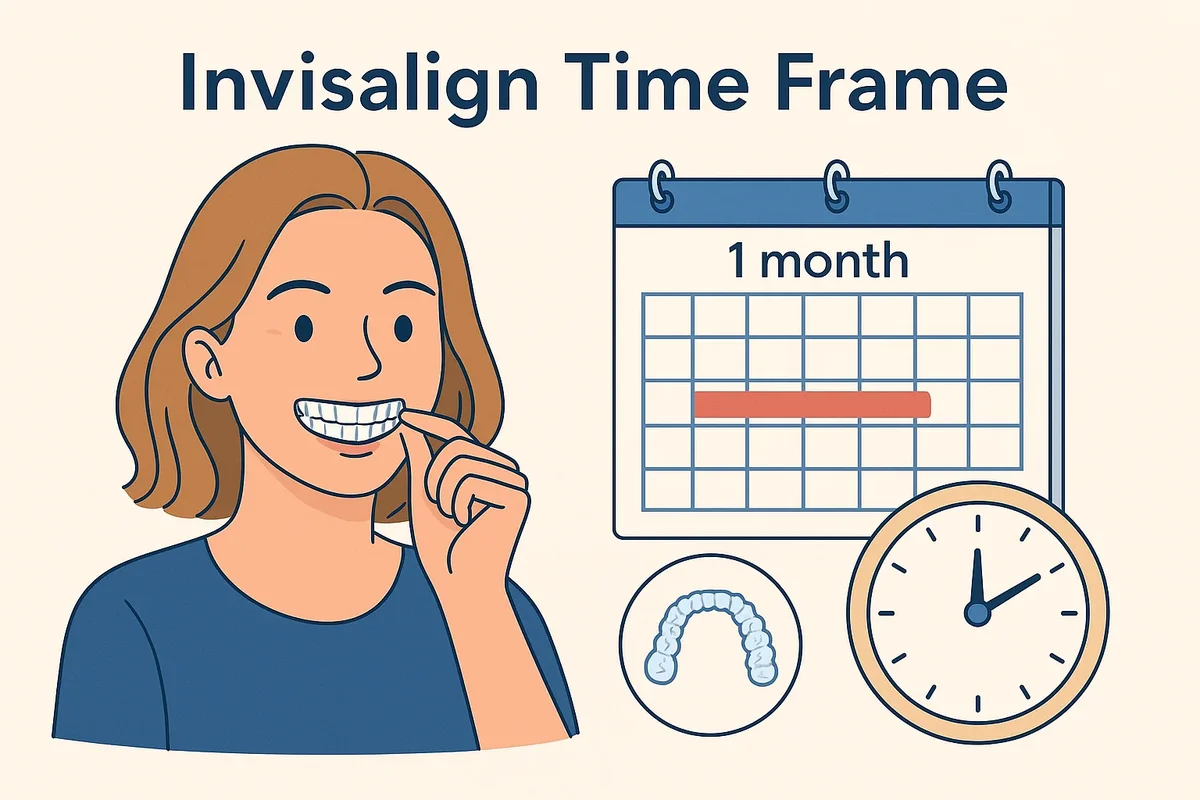
When to Contact Your Dentist About Invisalign Delays
While Invisalign is designed to deliver precise and predictable results, sometimes progress can slow down or appear to stall. Understanding when to contact your dentist or orthodontist about delays can make a significant difference in ensuring your Invisalign time frame stays on schedule. In this section, we’ll explore the signs of potential issues, the reasons delays occur, and the steps your dental provider can take to bring your treatment back on track. Being proactive and informed will help you maintain control over your orthodontic journey and protect your investment in a confident, healthy smile. 😁
1. Recognizing Signs of Invisalign Delays
One of the first steps to keeping your Invisalign time frame consistent is knowing how to spot signs of trouble early. Not all delays are obvious — sometimes progress slows down gradually. Here are some common warning signs that should prompt you to reach out to your dentist:
Visible Indicators of Delay
- Aligner Fit Issues: If your aligners feel unusually tight, don’t seat properly, or show visible gaps between the plastic and your teeth, movement may not be tracking as planned.
- Persistent Discomfort: Some discomfort is normal with new trays, but prolonged or severe pain may indicate that teeth are resisting movement, delaying your Invisalign time frame.
- Missed Progress: If your smile looks the same after several aligner changes, your treatment may have plateaued.
- Extended Wear Periods: If you’ve had to wear one aligner longer than expected, it may signal slower biological response or insufficient pressure.
Identifying these signs early allows your orthodontist to intervene before minor problems turn into major delays.
2. Common Causes of Invisalign Delays
Several factors can influence the pace of your Invisalign treatment. Understanding these helps you prevent unnecessary extensions to your Invisalign time frame.
1. Inconsistent Aligner Wear
Wearing your aligners fewer than 20 hours a day significantly reduces their effectiveness. Consistency is critical — skipping wear time even occasionally can cause teeth to shift back toward their original position.
2. Poor Aligner Fit or Warping
Heat exposure or improper cleaning methods (like washing aligners in hot water) can distort their shape. A warped aligner loses contact with teeth, reducing the pressure needed for movement and extending your Invisalign time frame.
3. Missed Appointments
Skipping follow-up visits means your dentist can’t catch small tracking errors early. Regular evaluations — typically every 6–8 weeks — help ensure you remain aligned with your treatment plan.
4. Biological Variations
Every mouth is unique. Some patients’ teeth move more slowly due to bone density, age, or gum health. Your provider can identify these natural variations and adjust your treatment accordingly.
3. When to Contact Your Dentist Immediately
Knowing when to reach out for professional help is crucial. The following situations warrant immediate contact with your provider to safeguard your Invisalign time frame and ensure optimal results:
- You’ve lost or damaged an aligner tray.
- You notice persistent gaps between aligner and teeth even after a week of wear.
- Your aligner causes pain beyond mild discomfort or leaves sharp edges.
- Your teeth have visibly shifted in the wrong direction.
- Your gums are swollen or bleeding more than usual.
These problems, if ignored, can compound and result in refinements that add months to your Invisalign time frame. Prompt professional attention ensures corrective actions can be taken early.
4. What Your Dentist Will Do to Correct Delays
Once your dentist identifies a delay, they may take several actions to bring your progress back on schedule. Each approach depends on the cause of the issue but always aims to protect the overall Invisalign time frame.
Rescanning and Refinement Aligners
Your orthodontist may perform a new digital scan to evaluate your current tooth position compared to your original treatment plan. If significant deviations exist, refinement aligners are created to “reset” your progress. These refinements can add a few weeks to your timeline, but they’re essential for long-term precision and success.
Attachment Adjustments
Attachments — small, tooth-colored bumps — enhance aligner grip. If they’re loose or misplaced, they might need replacement. A properly bonded attachment ensures aligners apply the correct pressure, helping you regain lost time within your Invisalign time frame.
Wear Schedule Modification
Your provider might recommend extending the wear time of a specific tray or accelerating aligner changes if your teeth are tracking well. These micro-adjustments fine-tune treatment efficiency and restore balance to your progress. 🦷
5. How to Prevent Future Invisalign Delays
Prevention is always better than correction. Follow these proactive tips to avoid setbacks and stay aligned with your dentist’s projected Invisalign time frame:
- Wear aligners 22 hours a day, removing them only for meals and hygiene.
- Clean aligners properly and avoid heat exposure.
- Attend all follow-up appointments as scheduled.
- Use chewies daily to ensure a tight, even fit.
- Monitor your progress visually or through the Invisalign app.
6. Role of Professional Clinics in Managing Delays
Advanced clinics like Redent Klinik Contact Page use digital scanning and AI-based monitoring systems to detect early signs of delay and ensure every patient remains within their target Invisalign time frame. These technologies allow for real-time feedback, so patients can make quick corrections from home without waiting for physical visits.
7. Expert Guidance and Trusted Standards
The American Dental Association emphasizes the importance of ongoing patient-dentist communication during clear aligner treatment. According to ADA guidelines, timely adjustments, remote progress tracking, and patient compliance are key to maintaining an accurate Invisalign time frame. The organization’s research confirms that patients who seek professional help early when issues arise experience better, faster, and more stable outcomes.
8. Emotional and Psychological Impact of Delays
Delays can be discouraging, but it’s important to remember that progress, even if slow, is still progress. Maintaining realistic expectations and communicating openly with your dentist helps reduce frustration. Viewing your Invisalign time frame as flexible rather than fixed can alleviate stress and improve long-term compliance. Consistency and patience will always yield the best results. 🌟
9. Conclusion: Take Action Early for Success
Staying alert to small changes and reaching out promptly when something feels off is the smartest way to protect your Invisalign time frame. Early intervention prevents extended refinements and ensures your smile transformation stays on track. Remember — Invisalign success is a partnership between you and your provider. With proactive communication and regular monitoring, you can overcome minor setbacks and achieve the beautiful, straight smile you’ve always wanted — right on schedule. 😃