
For many parents and teenagers, achieving a healthy, confident smile is an important goal. Orthodontic treatment has evolved significantly over the years, and one of the most popular options available today is invisalign under 18. Designed specifically for younger patients, invisalign under 18 offers a modern alternative to traditional metal braces while providing effective tooth alignment and bite correction. As more families explore orthodontic solutions, understanding how invisalign under 18 works can help determine whether it is the right choice for a teenager’s dental needs. 😊
Invisalign under 18 uses a series of custom-made clear aligners that gradually move teeth into their ideal positions. Unlike conventional braces that rely on metal brackets and wires, these transparent trays fit snugly over the teeth and are virtually invisible when worn. This makes invisalign under 18 particularly attractive for teenagers who want to improve their smile without drawing attention to their orthodontic treatment.
The process of invisalign under 18 begins with a comprehensive orthodontic evaluation. During this consultation, a dentist or orthodontist examines the patient’s teeth, jaw alignment, and overall oral health. Advanced digital scanning technology is often used to create a precise 3D model of the teeth. This digital model allows specialists to map out the entire treatment journey before the first aligner is even produced. One major advantage of invisalign under 18 is that patients can often preview their expected results before treatment starts.
Each set of aligners in an invisalign under 18 treatment plan is worn for approximately one to two weeks before being replaced by the next set. Every aligner applies controlled pressure to specific teeth, encouraging gradual movement. To achieve optimal results, patients should wear their aligners for around 20 to 22 hours per day. Because consistency is essential, compliance plays a significant role in the success of invisalign under 18.
One feature that makes invisalign under 18 unique is its built-in compliance indicators. These small blue dots on the aligners gradually fade with wear, helping parents and dental professionals monitor whether the aligners are being worn as recommended. This feature can be particularly helpful for younger teens who are still developing responsibility and daily habits.
Many orthodontic issues can be addressed using invisalign under 18. These include crowded teeth, gaps between teeth, overbites, underbites, crossbites, and certain cases of open bite. While severe orthodontic problems may still require traditional braces or alternative treatments, advances in clear aligner technology have expanded the range of cases suitable for invisalign under 18.
Comfort is another reason why many families choose invisalign under 18. Traditional braces can sometimes cause irritation due to metal brackets and wires rubbing against the cheeks and lips. In contrast, clear aligners are made from smooth plastic material that reduces the likelihood of soft tissue discomfort. Although mild pressure is normal when switching to a new aligner set, most patients find invisalign under 18 easier to adapt to compared to conventional orthodontic appliances.
One of the biggest advantages of invisalign under 18 is flexibility. Since the aligners are removable, teenagers can continue eating their favorite foods without restrictions. Sticky candies, popcorn, chewing gum, and hard snacks that are often discouraged during braces treatment can still be enjoyed after removing the aligners. However, patients should always brush their teeth before reinserting them to maintain oral hygiene and protect the effectiveness of invisalign under 18.
Oral hygiene is significantly easier with invisalign under 18. Traditional braces can make brushing and flossing more challenging because food particles often become trapped around brackets and wires. With removable aligners, patients can brush and floss normally, reducing the risk of plaque accumulation, gum inflammation, and tooth decay during orthodontic treatment.
Parents often wonder whether invisalign under 18 is safe for growing teenagers. The answer is generally yes when treatment is supervised by a qualified dental professional. In fact, invisalign under 18 was specifically developed with adolescent patients in mind. The system accommodates erupting permanent teeth and can be customized to address the unique orthodontic needs of teenagers.
Another important benefit of invisalign under 18 is confidence. Many teenagers feel self-conscious about wearing visible braces during school activities, social events, sports, or taking photographs. Because clear aligners are discreet, many patients experience greater self-esteem throughout their treatment journey. This psychological benefit can be just as valuable as the physical improvements achieved through invisalign under 18.
Regular follow-up appointments remain an essential part of invisalign under 18 treatment. During these visits, the orthodontist monitors progress, makes any necessary adjustments, and ensures that tooth movement is occurring according to plan. Compared to traditional braces, these appointments are often shorter and less frequent, which can be convenient for busy families.
When considering orthodontic treatment options, understanding the fundamentals of invisalign under 18 is crucial. This innovative approach combines advanced digital technology, comfort, aesthetics, and effective tooth movement into a single treatment solution. For many teenagers, invisalign under 18 provides an excellent opportunity to achieve a straighter smile while maintaining confidence and normal daily activities. Families interested in learning more about treatment options can contact professionals through the Redent Klinik Contact Page and review oral health resources from the American Dental Association for additional guidance.
Who Is a Good Candidate for Invisalign Under 18?
Choosing the right orthodontic treatment is one of the most important decisions parents and teenagers make when addressing dental alignment issues. While clear aligners have become increasingly popular, not every young patient is automatically an ideal candidate for invisalign under 18. Understanding who benefits most from invisalign under 18 can help families make informed decisions and achieve the best possible treatment outcomes.
In general, invisalign under 18 is designed for teenagers who have most or all of their permanent teeth. The treatment is specifically developed to accommodate growing mouths while providing effective correction for a wide range of orthodontic concerns. However, successful treatment depends on several factors, including age, dental development, oral health, and patient responsibility. 🦷
Age Requirements for Invisalign Under 18
One of the most common questions parents ask is whether their child is old enough for invisalign under 18. Unlike traditional braces, which can sometimes be placed while permanent teeth are still erupting, clear aligner therapy generally works best when most adult teeth have already emerged.
Many patients begin invisalign under 18 treatment between the ages of 12 and 17. At this stage, permanent teeth are usually established, allowing orthodontists to create predictable tooth movement plans. The exact age is less important than the patient’s dental maturity. Some younger teens may qualify for invisalign under 18, while others may need to wait until additional permanent teeth have erupted.
During an orthodontic evaluation, digital scans and X-rays help determine whether a patient is ready for invisalign under 18. These diagnostic tools allow specialists to evaluate jaw growth, tooth development, and overall orthodontic needs.
Orthodontic Conditions That Can Be Treated
A major advantage of invisalign under 18 is its ability to address various orthodontic problems. Thanks to advancements in aligner technology, many conditions that once required traditional braces can now be corrected using clear aligners.
Crowded Teeth
Crowding occurs when there is insufficient space in the jaw for teeth to align properly. Crowded teeth may overlap, rotate, or become difficult to clean. Many mild to moderate cases of crowding can be successfully treated with invisalign under 18.
Spacing and Gaps
Excessive spacing between teeth can affect both appearance and oral function. Invisalign under 18 can gradually close unwanted gaps while improving smile aesthetics and bite balance.
Overbite and Underbite
Certain bite irregularities, including overbite and underbite, may be corrected with invisalign under 18. The effectiveness depends on the severity of the condition and the patient’s stage of growth.
Crossbite and Open Bite
Crossbites and open bites can contribute to uneven tooth wear and jaw discomfort. Many patients with these conditions may benefit from invisalign under 18 when treatment is carefully planned by an experienced orthodontist.
Oral Health Requirements
Good oral health is essential before beginning invisalign under 18. Existing dental problems should typically be addressed before aligner therapy starts.
For example, untreated cavities, gum inflammation, or significant plaque accumulation may interfere with treatment success. Orthodontists often recommend completing restorative or preventive dental care before initiating invisalign under 18.
Healthy gums and strong supporting bone structures create the ideal foundation for tooth movement. Since aligners apply controlled pressure to reposition teeth, maintaining oral health throughout invisalign under 18 treatment is critical.
Responsibility and Patient Compliance
One of the most important factors determining candidacy for invisalign under 18 is patient responsibility. Unlike braces, aligners can be removed at any time. While this flexibility offers significant benefits, it also requires commitment.
Most orthodontists recommend wearing aligners for 20 to 22 hours per day. Patients who frequently forget to wear their aligners may experience treatment delays or less predictable results. Because of this, invisalign under 18 is often most successful among motivated teenagers who are willing to follow instructions carefully.
The compliance indicators included with many invisalign under 18 aligners help both parents and orthodontists monitor wear time. These indicators provide additional reassurance that treatment is progressing properly.
Who May Not Be an Ideal Candidate?
Although invisalign under 18 is highly effective for many teenagers, some situations may require alternative treatment methods.
Patients with severe jaw discrepancies, complex bite abnormalities, or extensive tooth rotations may achieve better outcomes with traditional braces or a combination of orthodontic approaches. Additionally, teenagers who struggle with consistency or frequently lose removable appliances may find fixed braces more suitable.
An experienced orthodontist will evaluate every aspect of a patient’s dental condition before recommending invisalign under 18. This individualized approach ensures that treatment recommendations align with the patient’s specific needs.
Benefits of Early Orthodontic Evaluation
Even if a child is not immediately ready for invisalign under 18, an early orthodontic consultation can provide valuable information. Early assessments allow dental professionals to monitor growth patterns and identify potential issues before they become more complicated.
By evaluating candidacy at the appropriate time, orthodontists can determine whether invisalign under 18 is the best solution or whether another treatment plan may deliver superior long-term results.
Ultimately, the ideal candidate for invisalign under 18 is a teenager with healthy teeth and gums, sufficient permanent tooth eruption, manageable orthodontic concerns, and the motivation to wear aligners consistently. When these factors are present, invisalign under 18 can provide an effective, comfortable, and discreet path toward a healthier and more confident smile. Families seeking professional guidance can schedule an evaluation through the Redent Klinik Contact Page and explore educational resources from the American Dental Association to learn more about adolescent orthodontic care.
Benefits of Choosing Invisalign Under 18 for Teenagers
When parents and teenagers begin exploring orthodontic treatment options, one question often arises: why choose invisalign under 18 instead of traditional braces? Modern orthodontics has introduced many advancements, but few have transformed adolescent treatment as significantly as clear aligner technology. Today, invisalign under 18 is one of the most requested orthodontic solutions among teenagers because it combines aesthetics, comfort, convenience, and effectiveness into a single treatment system.
Unlike conventional braces that use visible brackets and wires, invisalign under 18 offers a discreet approach to straightening teeth. For many teenagers, appearance plays a major role in self-confidence during school years, social activities, and extracurricular events. Because the aligners are nearly invisible, patients can improve their smiles without feeling self-conscious throughout treatment. 😊
Improved Confidence and Self-Esteem
One of the most significant benefits of invisalign under 18 is the confidence it provides. Adolescence is often a period when appearance becomes increasingly important. Many teenagers hesitate to smile, participate in photographs, or speak publicly because they feel embarrassed about their teeth.
With invisalign under 18, the aligners are transparent and difficult for others to notice. This allows patients to continue their daily lives with minimal concern about their orthodontic treatment being visible. Many teens report feeling more comfortable in social settings while undergoing invisalign under 18 treatment compared to wearing traditional braces.
More Natural Appearance
Because clear aligners blend with natural teeth, invisalign under 18 helps maintain a natural appearance throughout treatment. Students can attend school events, sports competitions, family gatherings, and special occasions without feeling that their orthodontic appliance dominates their smile.
Enhanced Comfort Compared to Braces
Comfort is another major advantage of invisalign under 18. Traditional braces contain brackets, metal wires, and other components that may irritate the cheeks, lips, and tongue. During adjustments, soreness can sometimes increase temporarily.
In contrast, invisalign under 18 aligners are manufactured from smooth medical-grade plastic. Their custom fit reduces friction against oral tissues and minimizes irritation. While patients may feel mild pressure when switching to a new aligner set, most describe the experience as more comfortable than traditional orthodontic treatment.
Fewer Orthodontic Emergencies
Broken brackets and loose wires occasionally require unexpected orthodontic appointments. Since invisalign under 18 does not involve these components, patients generally experience fewer emergency visits related to appliance damage.
Greater Flexibility During Daily Life
One reason many families choose invisalign under 18 is the freedom it provides. Unlike fixed braces, aligners can be removed temporarily when eating, brushing, flossing, or participating in certain activities.
This flexibility allows teenagers to maintain many aspects of their normal lifestyle without significant restrictions. As long as aligners are worn for the recommended 20 to 22 hours per day, patients can continue enjoying their routines while benefiting from invisalign under 18.
No Food Restrictions
Traditional braces often require patients to avoid sticky candies, hard snacks, chewing gum, popcorn, and similar foods that could damage brackets or wires. With invisalign under 18, aligners are removed before meals, meaning teenagers can continue enjoying their favorite foods without worrying about damaging orthodontic hardware.
This freedom is one of the most appreciated aspects of invisalign under 18, especially among active adolescents who value convenience and flexibility.
Better Oral Hygiene Throughout Treatment
Maintaining oral hygiene can become challenging when braces are attached to the teeth. Food particles often become trapped around brackets and wires, increasing the risk of plaque accumulation, gum inflammation, and cavities.
Because invisalign under 18 aligners are removable, patients can brush and floss normally. This makes daily oral hygiene significantly easier and helps protect overall dental health throughout treatment.
Reduced Risk of Plaque Build-Up
Good oral hygiene habits are easier to maintain with invisalign under 18. Since patients can remove aligners before cleaning their teeth, they can access every surface more effectively compared to cleaning around fixed orthodontic appliances.
This advantage may contribute to healthier gums and a cleaner smile during treatment.
Predictable and Advanced Treatment Planning
Modern digital technology is one of the strongest advantages of invisalign under 18. Before treatment begins, orthodontists create detailed digital scans of the patient’s teeth. These scans are used to develop a customized treatment plan that maps tooth movement from start to finish.
Many patients appreciate seeing a virtual preview of their expected results before beginning invisalign under 18. This visual representation helps improve motivation and provides a clearer understanding of the treatment process.
Customized for Growing Teenagers
Unlike standard adult aligner systems, invisalign under 18 was specifically developed with adolescents in mind. Features such as compliance indicators and accommodations for erupting teeth make the system particularly suitable for younger patients.
These specialized design elements help orthodontists monitor progress and ensure treatment remains effective throughout growth and development.
Supports Active Lifestyles
Many teenagers participate in sports, music programs, theater productions, and other extracurricular activities. Invisalign under 18 can be particularly beneficial for these individuals because there are no metal brackets that could cause injuries during physical activities.
Athletes often appreciate the smooth design of invisalign under 18, while musicians who play wind instruments may find aligners more comfortable than traditional braces. This adaptability makes treatment easier to integrate into busy teenage lifestyles.
Long-Term Smile and Health Benefits
The advantages of invisalign under 18 extend beyond cosmetic improvements. Properly aligned teeth can contribute to better oral hygiene, improved bite function, easier chewing, and reduced wear on certain tooth surfaces.
Correcting orthodontic issues early may also help prevent future complications and support long-term dental health. Whether addressing crowding, spacing, or bite irregularities, invisalign under 18 offers both aesthetic and functional benefits that can last for years.
Ultimately, the growing popularity of invisalign under 18 is driven by its unique combination of comfort, appearance, flexibility, and effectiveness. For many teenagers, it provides a modern orthodontic solution that fits seamlessly into everyday life while delivering the smile improvements they desire. Families interested in exploring treatment options can learn more through the Redent Klinik Contact Page and review professional oral health resources from the American Dental Association.
Potential Challenges and Limitations of Invisalign Under 18
Although invisalign under 18 offers numerous advantages for teenagers seeking orthodontic treatment, it is important for patients and parents to understand that every treatment option has potential challenges and limitations. Having realistic expectations allows families to make informed decisions and helps improve treatment success. While invisalign under 18 can effectively address many orthodontic concerns, its effectiveness often depends on patient compliance, case complexity, and overall oral health.
Understanding these limitations does not mean that invisalign under 18 is a poor choice. On the contrary, for many teenagers it remains an excellent solution. However, recognizing potential obstacles early can help families prepare for treatment and achieve better outcomes. 😊
Success Depends on Consistent Wear
One of the most significant challenges associated with invisalign under 18 is patient responsibility. Unlike traditional braces, which remain attached to the teeth at all times, aligners can be removed whenever desired. While this flexibility is often considered a major benefit, it can also become a disadvantage if patients fail to wear the aligners consistently.
Most orthodontists recommend wearing invisalign under 18 aligners for approximately 20 to 22 hours per day. Removing them too frequently or forgetting to wear them can slow tooth movement and negatively affect treatment progress.
Importance of Compliance
Teenagers who are highly motivated usually achieve excellent results with invisalign under 18. However, patients who regularly leave aligners out for extended periods may experience delayed treatment timelines or less predictable outcomes.
This is one reason orthodontists carefully evaluate a teenager’s maturity and commitment before recommending invisalign under 18 as a treatment option.
Aligners Can Be Lost or Damaged
Because aligners are removable, they can sometimes be misplaced, lost, or accidentally damaged. Teenagers often remove their aligners during meals, sports activities, social events, or school lunches.
If invisalign under 18 aligners are wrapped in napkins, placed loosely in pockets, or left unattended, they may be accidentally discarded or damaged. Replacing lost aligners may increase treatment costs and potentially delay progress.
Developing Good Habits
Successful invisalign under 18 patients often develop routines that help prevent loss. Using a dedicated aligner case whenever the trays are removed is strongly recommended. Consistent habits reduce the likelihood of treatment interruptions.
Not Ideal for Every Orthodontic Case
While advances in clear aligner technology continue to expand treatment capabilities, invisalign under 18 is not suitable for every orthodontic condition.
Many mild to moderate alignment issues respond very well to invisalign under 18. However, certain severe bite discrepancies, complex jaw relationships, or extensive tooth rotations may require alternative approaches. In some situations, traditional braces can provide more precise control over difficult tooth movements.
Complex Cases May Need Additional Treatment
Some patients who begin treatment with invisalign under 18 may require attachments, elastics, refinements, or other orthodontic techniques to achieve optimal results. These additions help expand the effectiveness of clear aligner therapy but may increase treatment complexity.
An experienced orthodontist will determine whether invisalign under 18 can fully address a teenager’s needs or whether another option would provide better long-term outcomes.
Requires Excellent Oral Hygiene Habits
Although oral hygiene is generally easier with invisalign under 18 than with traditional braces, patients must still maintain high standards of dental care.
Food particles trapped between the teeth and aligners can create an environment where bacteria thrive. If patients fail to brush before reinserting their aligners, plaque accumulation may increase.
Risk of Cavities and Gum Problems
Teenagers who neglect proper oral hygiene during invisalign under 18 treatment may be at greater risk for tooth decay, gum irritation, or bad breath. For this reason, orthodontists strongly encourage brushing and flossing after meals and before reinserting aligners.
Maintaining healthy oral hygiene habits is essential for achieving the best possible results with invisalign under 18.
Temporary Speech Adjustments
Some teenagers notice slight speech changes when they first begin wearing invisalign under 18. Certain sounds may feel unusual as the tongue adjusts to the presence of the aligners.
Fortunately, these speech differences are usually temporary. Most patients adapt within a few days or weeks as they become accustomed to speaking while wearing invisalign under 18.
Practice Helps Adaptation
Reading aloud, participating in conversations, and wearing aligners consistently often helps teenagers adjust more quickly. Most patients eventually speak normally without noticeable changes.
Discipline During Meals and Snacks
Another challenge associated with invisalign under 18 involves eating habits. Aligners must be removed before consuming most foods and beverages other than water.
Teenagers who frequently snack throughout the day may find themselves repeatedly removing and replacing their aligners. This can reduce overall wear time if not carefully managed.
Planning Daily Routines
Developing structured meal schedules often helps patients maximize the effectiveness of invisalign under 18. Limiting unnecessary aligner removal helps maintain consistent tooth movement and treatment progress.
Potential Need for Refinement Aligners
Even after completing the original treatment plan, some patients may require additional aligners known as refinements. These refinement stages help achieve final adjustments and improve precision.
Although refinements are common in orthodontics and not unique to invisalign under 18, families should understand that treatment duration may occasionally extend beyond initial estimates.
Balancing Benefits and Limitations
Despite these challenges, millions of patients worldwide have successfully completed treatment using clear aligners. The limitations of invisalign under 18 are often manageable when patients remain committed to following professional instructions.
Ultimately, the success of invisalign under 18 depends on selecting appropriate candidates, maintaining excellent oral hygiene, wearing aligners consistently, and attending regular orthodontic appointments. When these factors are present, many teenagers achieve outstanding smile transformations while enjoying the comfort and discretion that invisalign under 18 provides. Families interested in determining whether this treatment is appropriate for their child can contact specialists through the Redent Klinik Contact Page and review educational resources available from the American Dental Association.
Invisalign Under 18 vs Traditional Braces: Key Differences
When families begin researching orthodontic treatment options, one of the most common comparisons involves invisalign under 18 and traditional braces. Both methods are designed to straighten teeth, improve bite alignment, and enhance oral health. However, they differ significantly in appearance, comfort, maintenance requirements, lifestyle impact, and treatment experience. Understanding these differences can help parents and teenagers choose the option that best fits their needs and expectations.
For many adolescents, invisalign under 18 represents a modern approach to orthodontics, while traditional braces remain a highly effective and widely trusted treatment. Neither option is universally better for every patient. Instead, the ideal choice depends on individual orthodontic conditions, lifestyle habits, treatment goals, and personal preferences. 😊
Appearance and Aesthetics
One of the biggest reasons teenagers choose invisalign under 18 is its discreet appearance. The aligners are manufactured from transparent plastic and fit closely over the teeth. Because they are nearly invisible, many people may not even notice a patient is undergoing orthodontic treatment.
Traditional braces, on the other hand, use metal brackets attached directly to the teeth along with connecting wires. While modern braces have become smaller and more comfortable than previous generations, they remain highly visible.
Why Appearance Matters for Teenagers
Adolescence is often a period when confidence and self-image become increasingly important. Many patients prefer invisalign under 18 because they can straighten their teeth without significantly changing their appearance during treatment. This benefit can be especially valuable for school events, social activities, photographs, and extracurricular participation.
Comfort and Daily Experience
Comfort is another area where invisalign under 18 and traditional braces differ considerably. Clear aligners are made from smooth plastic materials that are custom-designed for each patient. Their edges are generally comfortable and less likely to irritate the cheeks or lips.
Traditional braces include brackets and wires that can occasionally rub against soft tissues inside the mouth. Patients may experience temporary soreness after adjustments or when wires are tightened.
Adjustment Periods
Patients using invisalign under 18 often feel gentle pressure when switching to a new aligner set. This sensation indicates that the aligners are actively moving the teeth. Although mild discomfort is normal, many teenagers find the experience more manageable than the adjustments associated with traditional braces.
Eating and Food Restrictions
One major advantage of invisalign under 18 is dietary freedom. Because aligners are removable, patients can continue eating their favorite foods after removing them.
Traditional braces often require dietary restrictions. Hard foods, sticky candies, chewing gum, popcorn, and certain crunchy snacks can damage brackets or wires. As a result, orthodontists frequently recommend avoiding these foods during braces treatment.
Convenience During Meals
With invisalign under 18, teenagers simply remove their aligners before eating and replace them after brushing their teeth. This flexibility allows patients to maintain a more normal eating experience throughout treatment.
However, it is important to remember that aligners should not be worn while consuming most foods or beverages other than water.
Oral Hygiene and Dental Care
Maintaining oral hygiene is generally easier with invisalign under 18. Since the aligners can be removed, patients can brush and floss exactly as they normally would.
Traditional braces often create additional cleaning challenges. Food particles may become trapped around brackets and wires, making brushing and flossing more time-consuming.
Risk of Plaque Accumulation
Patients who use invisalign under 18 correctly often find it easier to maintain healthy gums and clean teeth throughout treatment. Good oral hygiene habits remain essential regardless of the orthodontic method chosen, but removable aligners provide easier access to all tooth surfaces.
Treatment Effectiveness
Both invisalign under 18 and traditional braces can produce excellent orthodontic results when used appropriately. Advances in clear aligner technology have expanded the range of conditions that can be treated successfully.
Mild to moderate crowding, spacing, overbites, underbites, and crossbites are commonly treated using invisalign under 18. However, some severe orthodontic cases may still benefit more from traditional braces due to the level of control they provide.
Complex Orthodontic Cases
Traditional braces remain highly effective for managing significant tooth rotations, severe jaw discrepancies, and complicated bite corrections. An orthodontic consultation is necessary to determine whether invisalign under 18 is suitable for a specific case.
Patient Responsibility
A key difference between these treatment options involves patient compliance. Traditional braces remain attached to the teeth and work continuously regardless of patient behavior.
In contrast, invisalign under 18 requires active participation from the patient. Aligners must be worn approximately 20 to 22 hours each day to achieve the desired results.
Which Option Requires More Discipline?
Teenagers who are responsible and motivated often perform exceptionally well with invisalign under 18. However, patients who frequently remove aligners or forget to wear them may experience delays. In such cases, fixed braces may provide more predictable treatment progress.
Follow-Up Appointments
Many patients appreciate that invisalign under 18 often requires shorter and less frequent adjustment appointments. Orthodontists monitor progress and provide new aligner sets during routine visits.
Traditional braces generally require regular tightening and adjustment appointments throughout treatment.
Making the Right Choice
The decision between invisalign under 18 and traditional braces should always be based on professional evaluation and individual circumstances. Factors such as orthodontic complexity, lifestyle preferences, oral hygiene habits, and patient maturity all influence treatment suitability.
For many teenagers, invisalign under 18 offers an appealing combination of aesthetics, comfort, flexibility, and convenience. Traditional braces, however, remain a reliable and highly effective solution for a wide range of orthodontic challenges. By understanding the differences between these treatment options, families can make confident decisions that support both oral health and long-term smile improvement. Additional information and professional guidance are available through the Redent Klinik Contact Page and educational resources provided by the American Dental Association.
How Long Does Invisalign Under 18 Treatment Usually Take?
One of the most common questions parents and teenagers ask before starting orthodontic treatment is how long the process will take. The answer varies from patient to patient because every smile is unique. However, understanding the factors that influence treatment duration can help families set realistic expectations and stay committed throughout the journey. In many cases, invisalign under 18 offers treatment timelines that are comparable to traditional braces while providing the added benefits of comfort, flexibility, and aesthetics.
The overall duration of invisalign under 18 depends on the complexity of the orthodontic issue being treated, the patient’s compliance with aligner wear, the rate of tooth movement, and whether additional refinements are required. While some teenagers complete treatment relatively quickly, others may require a longer timeline to achieve optimal results. 🦷✨
Average Treatment Time for Invisalign Under 18
For many teenagers, invisalign under 18 treatment typically lasts between 12 and 24 months. Mild orthodontic cases involving small gaps or minor crowding may be completed in less than a year. More moderate or complex conditions often require a longer treatment period.
It is important to understand that treatment plans are highly individualized. During the initial consultation, orthodontists use digital scans and advanced treatment planning software to estimate the expected duration of invisalign under 18. While this estimate provides a useful guideline, actual treatment time may vary depending on how teeth respond to movement.
Mild Cases
Patients with minor spacing issues or slight crowding may complete invisalign under 18 treatment in approximately 6 to 12 months. Because fewer tooth movements are required, these cases often progress more quickly.
Moderate Cases
Many teenagers undergoing invisalign under 18 fall into this category. Moderate crowding, bite corrections, and alignment improvements frequently require 12 to 18 months of treatment.
Complex Cases
More complicated orthodontic conditions may extend invisalign under 18 treatment beyond 18 months. Severe crowding, significant bite discrepancies, or extensive tooth movements generally require additional aligners and closer monitoring.
How Aligner Changes Affect Treatment Speed
One factor that contributes to the efficiency of invisalign under 18 is the structured aligner sequence. Each aligner is designed to move teeth incrementally toward their final position.
Most patients switch to a new set of aligners every one to two weeks, depending on their orthodontist’s recommendations. These regular changes allow invisalign under 18 to produce gradual, controlled tooth movement while maintaining patient comfort.
Following the Prescribed Schedule
Changing aligners too early or too late can interfere with treatment progress. Orthodontists carefully determine when each aligner should be replaced to maximize the effectiveness of invisalign under 18.
Following the prescribed schedule helps ensure that tooth movement remains predictable and efficient throughout treatment.
The Importance of Wearing Aligners Consistently
Perhaps the most important factor affecting treatment duration is patient compliance. Unlike traditional braces, which work continuously because they are fixed to the teeth, invisalign under 18 relies on patient cooperation.
Most orthodontists recommend wearing aligners for 20 to 22 hours each day. Removing them too frequently can slow tooth movement and extend treatment time.
What Happens If Aligners Are Not Worn Enough?
If a teenager regularly forgets to wear their aligners, teeth may not move according to the treatment plan. This can result in delayed progress, additional appointments, and potentially more aligners.
Consistent wear is one of the best ways to ensure that invisalign under 18 remains on schedule and delivers the expected results.
Regular Monitoring and Progress Checks
Routine orthodontic appointments are essential during invisalign under 18 treatment. These visits allow the orthodontist to evaluate tooth movement, address concerns, and ensure that the aligners are fitting properly.
Although follow-up appointments are often less frequent than those required for traditional braces, they remain an important component of successful invisalign under 18 treatment.
Digital Treatment Tracking
Many orthodontic practices use advanced digital technology to monitor progress throughout invisalign under 18. Digital scans and treatment simulations help identify potential issues early and support more accurate treatment planning.
Refinement Aligners and Additional Adjustments
Even when treatment progresses smoothly, some patients may require refinement aligners after completing their initial series. Refinements are additional aligners designed to make small adjustments and perfect the final result.
Refinement stages are common in orthodontics and should not be viewed as treatment failures. In fact, they often contribute to the highly precise results achieved with invisalign under 18.
Do Refinements Extend Treatment?
Yes, refinements may add several weeks or months to the total treatment duration. However, these additional aligners often help achieve optimal tooth alignment and bite correction, making them a valuable part of the overall invisalign under 18 process.
Factors That Can Shorten or Lengthen Treatment
Several factors influence how quickly invisalign under 18 treatment progresses:
- Severity of orthodontic problems.
- Patient compliance with wear requirements.
- Frequency of aligner changes.
- Overall oral health.
- Need for attachments or elastics.
- Requirement for refinement aligners.
- Biological response of teeth and supporting tissues.
Because every patient responds differently, treatment timelines should always be viewed as estimates rather than guarantees.
Achieving the Best Results Efficiently
The most effective way to complete invisalign under 18 treatment on schedule is to follow professional instructions carefully. Wearing aligners consistently, maintaining excellent oral hygiene, attending follow-up appointments, and changing aligners as directed all contribute to successful outcomes.
For many teenagers, invisalign under 18 offers an efficient and predictable path toward a straighter smile. While treatment duration varies according to individual needs, most patients find that the combination of comfort, convenience, and aesthetic benefits makes the process worthwhile. Families interested in learning more about treatment timelines and personalized orthodontic plans can contact specialists through the Redent Klinik Contact Page and explore additional educational resources from the American Dental Association.
Daily Care, Cleaning, and Oral Hygiene Tips During Treatment
Successful orthodontic treatment depends on more than simply wearing aligners. Proper daily care and oral hygiene play a critical role in achieving the best possible results with invisalign under 18. Teenagers who develop healthy habits during treatment not only improve the effectiveness of their aligners but also protect their teeth and gums from potential problems such as cavities, plaque accumulation, and gum disease.
Because invisalign under 18 uses removable clear aligners rather than fixed brackets and wires, maintaining oral hygiene is generally easier compared to traditional braces. However, this convenience also creates additional responsibilities. Patients must consistently clean both their teeth and aligners to ensure successful treatment and long-term oral health. 🦷✨
Why Oral Hygiene Matters During Invisalign Under 18 Treatment
When aligners are worn, they fit closely around the teeth and create a controlled environment inside the mouth. If food particles or bacteria remain on the teeth when aligners are inserted, harmful microorganisms can become trapped against tooth surfaces for extended periods.
For this reason, maintaining excellent oral hygiene is especially important during invisalign under 18. Proper cleaning helps prevent tooth decay, gum inflammation, enamel staining, and unpleasant odors while supporting healthy tooth movement throughout treatment.
Protecting Long-Term Dental Health
The goal of invisalign under 18 is not only to straighten teeth but also to improve overall oral health. Clean teeth and healthy gums provide the ideal foundation for successful orthodontic treatment and long-lasting results.
Brushing After Every Meal
One of the most important habits for patients undergoing invisalign under 18 is brushing after eating. Because aligners should be removed during meals, food particles can remain on tooth surfaces afterward.
Before reinserting aligners, teenagers should brush thoroughly using fluoride toothpaste. This removes food debris, reduces bacterial buildup, and helps protect the enamel.
Proper Brushing Technique
Patients using invisalign under 18 should brush for at least two minutes, paying attention to all tooth surfaces, including areas near the gumline. A soft-bristled toothbrush is generally recommended to protect both the teeth and gums.
Electric toothbrushes can also be beneficial because they often provide more consistent plaque removal.
Flossing Every Day
While brushing removes plaque from most tooth surfaces, flossing is essential for cleaning between the teeth where toothbrush bristles cannot easily reach.
Teenagers receiving invisalign under 18 treatment should floss at least once daily. Since there are no brackets or wires obstructing access, flossing is typically much easier than it is with traditional braces.
Preventing Gum Problems
Consistent flossing during invisalign under 18 treatment helps reduce the risk of gum inflammation, bleeding gums, and periodontal issues. Healthy gums are essential because orthodontic tooth movement relies on healthy supporting tissues.
Cleaning the Aligners Properly
Just as teeth require regular cleaning, aligners must also be maintained properly. Throughout the day, saliva, bacteria, and plaque can accumulate on aligner surfaces.
Failing to clean invisalign under 18 aligners may lead to unpleasant odors, discoloration, and bacterial growth. Fortunately, cleaning aligners is simple when incorporated into a daily routine.
Recommended Cleaning Methods
Patients should gently rinse their invisalign under 18 aligners with lukewarm water whenever they remove them. A soft toothbrush can be used to clean the aligners carefully.
Specialized aligner cleaning crystals or cleaning solutions may also be recommended by orthodontists. Hot water should always be avoided because excessive heat can distort the plastic material and affect aligner fit.
Drinking Habits During Treatment
One frequently overlooked aspect of invisalign under 18 care involves beverage consumption. While aligners are being worn, water is generally the safest drink.
Colored beverages such as coffee, tea, sports drinks, energy drinks, and soda may stain aligners or increase the risk of tooth decay if consumed while aligners are in place.
Why Water Is Best
Water helps maintain hydration, supports oral health, and prevents unnecessary exposure of the aligners to staining agents. Many orthodontists recommend removing invisalign under 18 aligners before drinking anything other than water.
Storing Aligners Safely
Proper storage is another important aspect of caring for invisalign under 18. Whenever aligners are removed, they should be placed inside their protective case.
Leaving aligners exposed on tables, trays, or napkins increases the risk of contamination, accidental disposal, or damage.
Avoiding Lost Aligners
Lost aligners can delay invisalign under 18 treatment and may require replacement. Developing the habit of immediately placing aligners in their designated case helps prevent unnecessary interruptions.
Regular Dental Checkups During Treatment
In addition to orthodontic appointments, routine dental examinations remain important during invisalign under 18. General dental visits allow professionals to monitor oral health, identify potential issues early, and provide preventive care when necessary.
Professional cleanings can remove plaque and tartar that daily brushing and flossing may miss, helping maintain healthy teeth and gums throughout treatment.
Coordinating Dental and Orthodontic Care
Communication between the patient’s dentist and orthodontist helps ensure that invisalign under 18 treatment progresses smoothly while maintaining excellent oral health.
Creating a Successful Daily Routine
The most successful invisalign under 18 patients typically establish consistent routines that include brushing after meals, flossing daily, cleaning aligners properly, and wearing them for the recommended amount of time.
These habits not only improve treatment efficiency but also help teenagers develop lifelong oral health practices. By following proper care instructions and maintaining excellent hygiene, patients can maximize the benefits of invisalign under 18 while protecting their teeth and gums throughout the orthodontic journey. Families seeking personalized guidance regarding aligner care and oral hygiene can contact specialists through the Redent Klinik Contact Page and access additional oral health information from the American Dental Association.
Cost of Invisalign Under 18 and Factors That Affect Pricing
For many parents considering orthodontic treatment for their teenagers, cost is one of the most important factors in the decision-making process. While aesthetics, comfort, and treatment effectiveness are crucial, understanding the financial aspect of invisalign under 18 helps families plan appropriately and compare available options. The total cost of invisalign under 18 can vary significantly depending on several factors, including treatment complexity, geographic location, provider experience, and the length of treatment.
Although invisalign under 18 is often perceived as more expensive than traditional braces, the difference is not always substantial. In many cases, the cost of modern clear aligner therapy falls within a similar range to comprehensive orthodontic treatment using fixed braces. Understanding what influences pricing can help parents evaluate the value offered by invisalign under 18 and determine whether it aligns with their family’s needs and budget. 💰🦷
Average Cost of Invisalign Under 18
The cost of invisalign under 18 varies across different countries and dental practices. In the United States, comprehensive treatment commonly ranges between approximately $3,000 and $8,000. Cases involving minor tooth movement may fall below this range, while highly complex treatments may exceed it.
Patients should understand that invisalign under 18 pricing typically includes multiple components beyond the aligners themselves. Diagnostic imaging, treatment planning, progress evaluations, and orthodontic monitoring are often included within the overall treatment fee.
Typical Price Ranges
- Mild cases: $3,000–$4,500
- Moderate cases: $4,500–$6,500
- Complex cases: $6,500–$8,000+
These figures represent general estimates and may vary considerably depending on individual circumstances.
Treatment Complexity and Cost
One of the most important pricing factors affecting invisalign under 18 is the complexity of the orthodontic problem being corrected.
Simple alignment issues typically require fewer aligners and less treatment time. In contrast, severe crowding, bite irregularities, and significant spacing problems often require more aligners, more appointments, and longer treatment durations.
Why Complex Cases Cost More
Complex invisalign under 18 cases may require additional planning, attachments, elastics, refinement aligners, and more extensive monitoring. These factors contribute to increased treatment costs because additional clinical resources and professional expertise are involved.
Geographic Location Matters
The location of the dental practice can significantly influence the cost of invisalign under 18. Orthodontic fees often reflect local economic conditions, operating expenses, and regional demand.
Large metropolitan areas typically have higher treatment costs compared to smaller towns or rural regions. As a result, identical invisalign under 18 treatment plans may be priced differently depending on where care is provided.
International Treatment Considerations
Some families explore orthodontic treatment abroad where costs may be lower while maintaining high-quality care standards. When considering international treatment, it is important to evaluate provider qualifications, follow-up requirements, and long-term accessibility.
Orthodontist Experience and Expertise
The experience level of the provider can also affect the price of invisalign under 18. Orthodontists and dentists who have extensive experience treating adolescent patients with clear aligners may charge higher fees due to their expertise and track record.
While selecting a provider based solely on price may be tempting, experience often plays an important role in achieving predictable and successful outcomes with invisalign under 18.
Value Beyond the Initial Cost
Choosing an experienced provider may reduce the likelihood of complications, treatment delays, or unnecessary refinements. Many families consider this added expertise a valuable investment in the success of invisalign under 18.
Additional Costs That May Be Included
When comparing treatment quotes, parents should understand what is included in the proposed fee for invisalign under 18. Some practices offer comprehensive packages, while others charge separately for specific services.
Common Included Services
- Initial consultation and examination.
- Digital scans and diagnostic records.
- Custom aligner fabrication.
- Routine progress appointments.
- Compliance monitoring.
- Refinement aligners when necessary.
- Retainers after treatment completion.
Reviewing these details helps families compare treatment proposals more accurately.
Insurance Coverage and Payment Options
Many dental insurance plans offer orthodontic benefits that may help offset part of the cost of invisalign under 18. Coverage levels vary significantly between insurance providers and policies.
Some plans contribute a fixed orthodontic allowance, while others cover a percentage of treatment costs up to a predetermined maximum.
Flexible Financing Solutions
Many orthodontic practices provide payment plans that make invisalign under 18 more accessible for families. Monthly financing options can help distribute treatment costs over time, reducing the burden of a large upfront payment.
Cost Versus Long-Term Benefits
When evaluating the price of invisalign under 18, it is helpful to consider the long-term value of treatment. Properly aligned teeth can improve oral hygiene, reduce uneven tooth wear, support healthier gums, and enhance confidence.
These benefits often extend far beyond the active treatment period and may contribute to better oral health throughout adulthood.
Investment in Future Oral Health
Orthodontic treatment should not be viewed solely as a cosmetic expense. For many patients, invisalign under 18 helps address functional issues that can influence long-term dental wellness and quality of life.
Understanding the Overall Value of Invisalign Under 18
While the cost of invisalign under 18 varies according to numerous factors, many families find that the combination of comfort, appearance, convenience, and effective tooth movement justifies the investment. By understanding the elements that influence pricing—including case complexity, provider expertise, location, insurance coverage, and treatment duration—parents can make informed financial decisions.
Ultimately, the best way to determine the exact cost of invisalign under 18 is through a personalized orthodontic consultation. Families interested in receiving a professional assessment can contact specialists through the Redent Klinik Contact Page. Additional oral health and orthodontic information can also be found through the American Dental Association.
Frequently Asked Questions About Invisalign Under 18
Parents and teenagers often have many questions before starting orthodontic treatment. Because invisalign under 18 differs from traditional braces in several ways, understanding the most frequently asked questions can help families feel more confident about their decision. From treatment effectiveness and comfort to safety and maintenance, the answers below provide a comprehensive overview of what patients can expect from invisalign under 18.
Whether a teenager is considering clear aligners for aesthetic reasons or because of orthodontic concerns such as crowding, spacing, or bite problems, learning more about invisalign under 18 can make the treatment process easier and more predictable. 😊
Is Invisalign Under 18 Safe for Teenagers?
Yes, invisalign under 18 is generally considered safe when prescribed and monitored by a qualified dental professional. The system was specifically developed to address the orthodontic needs of adolescents and includes features that accommodate developing dentition.
The aligners used in invisalign under 18 are made from medical-grade thermoplastic materials that are designed for use within the oral environment. When treatment is properly supervised, clear aligners can effectively and safely move teeth into their desired positions.
Why Professional Monitoring Matters
Although invisalign under 18 is safe, professional oversight remains essential. Orthodontists monitor tooth movement, evaluate oral health, and make adjustments when necessary to ensure successful treatment outcomes.
Can Invisalign Under 18 Fix Severe Orthodontic Problems?
This is one of the most common questions families ask. While invisalign under 18 can successfully treat many orthodontic conditions, the suitability of clear aligners depends on the complexity of the case.
Mild to moderate crowding, spacing issues, overbites, underbites, and crossbites are frequently treated using invisalign under 18. However, some severe jaw discrepancies or highly complex orthodontic situations may still be better suited to traditional braces or other treatment approaches.
Individual Evaluation Is Essential
The only reliable way to determine whether invisalign under 18 can address a specific condition is through a professional orthodontic consultation and comprehensive diagnostic evaluation.
How Many Hours Per Day Must Aligners Be Worn?
Most orthodontists recommend wearing invisalign under 18 aligners for approximately 20 to 22 hours per day. This means aligners should only be removed during meals, brushing, flossing, and certain approved activities.
Consistent wear is one of the most important factors influencing the success of invisalign under 18. Failure to wear aligners for the recommended amount of time may delay treatment and reduce effectiveness.
What Happens If Aligners Are Forgotten?
Occasional short periods without aligners may not cause significant problems. However, repeatedly neglecting to wear invisalign under 18 aligners can result in poor fit, delayed progress, and the need for additional treatment.
Can Teenagers Eat Whatever They Want?
One major advantage of invisalign under 18 is the ability to remove aligners before eating. Unlike traditional braces, there are typically no food restrictions because aligners are not worn during meals.
Patients undergoing invisalign under 18 can generally enjoy foods such as popcorn, nuts, crunchy snacks, and chewing gum after removing their aligners. However, proper brushing before reinsertion remains essential.
Why Oral Hygiene Is Important After Meals
Food particles left on the teeth may become trapped beneath aligners. Therefore, brushing and flossing before replacing invisalign under 18 aligners helps protect against cavities and gum problems.
Does Invisalign Under 18 Hurt?
Most patients experience only mild discomfort during invisalign under 18 treatment. When switching to a new aligner set, temporary pressure is normal because the teeth are being guided into new positions.
This sensation is often described as mild tightness rather than pain. Many patients find invisalign under 18 more comfortable than traditional braces because there are no metal brackets or wires that can irritate soft tissues.
How Long Does Discomfort Last?
Any discomfort associated with invisalign under 18 typically subsides within a few days after starting a new aligner set. Most teenagers adapt quickly and continue normal activities without difficulty.
Can Invisalign Under 18 Affect Sports or Activities?
Many active teenagers appreciate the flexibility offered by invisalign under 18. Because aligners are smooth and removable, they generally integrate well with sports, music programs, and extracurricular activities.
For contact sports, patients may be advised to wear an appropriate mouthguard. Orthodontists can provide guidance regarding the safest approach for athletes undergoing invisalign under 18 treatment.
Benefits for Active Lifestyles
The absence of brackets and wires often makes invisalign under 18 a comfortable choice for teenagers involved in athletics, performing arts, and social events.
Will Retainers Be Needed After Treatment?
Yes. Like virtually all orthodontic treatments, invisalign under 18 is usually followed by a retention phase. Retainers help maintain the new tooth positions after active treatment has been completed.
Without retention, teeth may gradually shift over time. Wearing retainers as directed is an important part of preserving the results achieved through invisalign under 18.
Why Retention Matters
The supporting tissues surrounding the teeth require time to stabilize. Retainers help ensure that the improvements achieved with invisalign under 18 remain stable and long-lasting.
Final Thoughts on Invisalign Under 18
Understanding the answers to these frequently asked questions can help families approach treatment with greater confidence. From safety and comfort to effectiveness and maintenance, invisalign under 18 offers a modern orthodontic solution that appeals to many teenagers and parents.
While every patient’s situation is unique, professional evaluation remains the best way to determine whether invisalign under 18 is the right choice. Families interested in learning more about treatment options can schedule a consultation through the Redent Klinik Contact Page. Additional information regarding oral health and orthodontic care is also available from the American Dental Association.
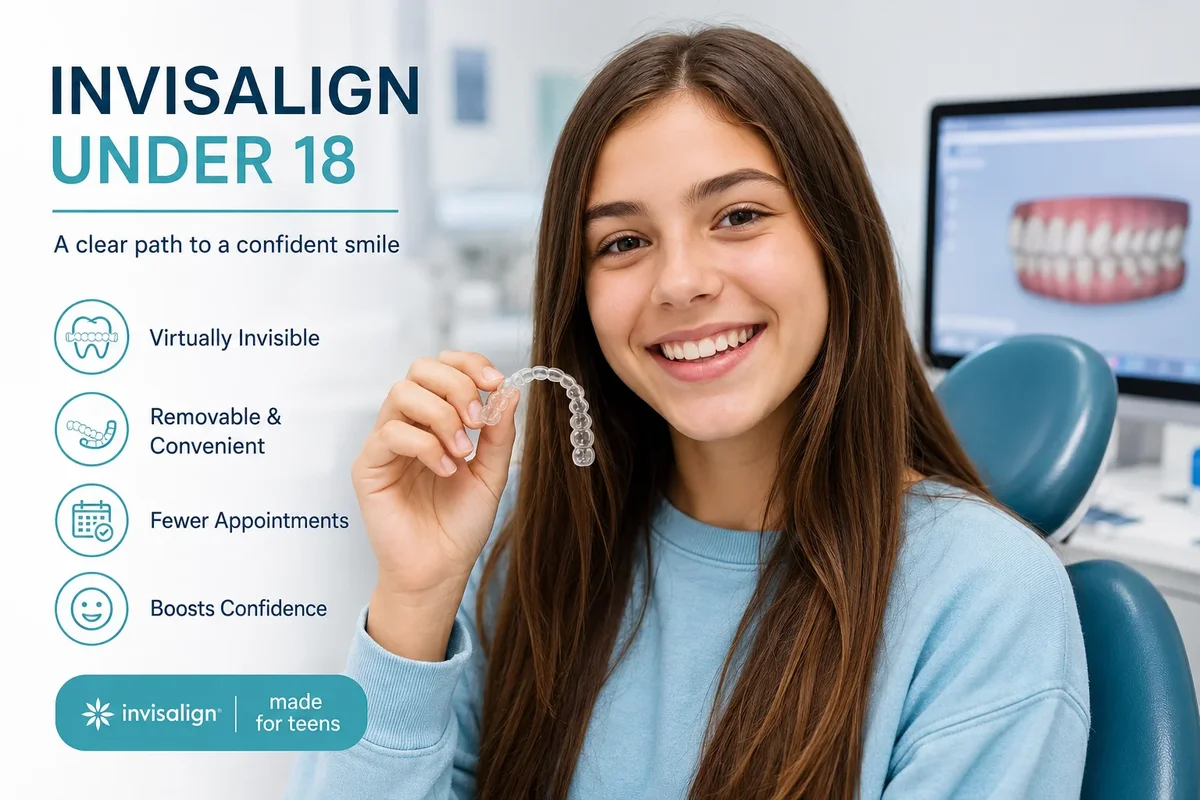
Final Thoughts: Is Invisalign Under 18 the Right Choice for Your Teen?
Deciding on orthodontic treatment is an important milestone for both teenagers and parents. With multiple treatment options available today, families often spend considerable time comparing effectiveness, comfort, appearance, cost, and long-term benefits before making a final decision. Throughout this guide, we have explored the many aspects of invisalign under 18, including how it works, who qualifies as a candidate, its advantages, limitations, treatment timelines, oral hygiene requirements, and financial considerations. Bringing all of these elements together can help determine whether invisalign under 18 is the most suitable solution for a teenager’s orthodontic needs.
Modern orthodontics has changed significantly over the last decade. Teenagers today have access to advanced technologies that allow them to improve their smiles in ways that were not previously possible. One of the most notable developments is invisalign under 18, which combines digital treatment planning with nearly invisible aligners to create a more flexible and aesthetically appealing treatment experience.
Why Many Families Choose Invisalign Under 18
One reason for the growing popularity of invisalign under 18 is its ability to fit seamlessly into a teenager’s daily routine. Adolescence is often a busy period filled with school responsibilities, sports, social events, music programs, and extracurricular activities. Many teenagers appreciate that invisalign under 18 allows them to continue participating in these activities without the appearance or restrictions commonly associated with traditional braces.
The clear aligners used in invisalign under 18 are designed to be discreet, comfortable, and removable. This combination of features appeals to many young patients who want orthodontic treatment without significantly altering their appearance.
A Balance Between Function and Appearance
Unlike some cosmetic dental solutions that focus only on aesthetics, invisalign under 18 addresses both functional and cosmetic concerns. Properly aligned teeth can improve bite relationships, support oral hygiene, and contribute to overall dental health while simultaneously enhancing smile appearance.
Understanding the Commitment Required
While the benefits of invisalign under 18 are substantial, treatment success depends heavily on patient commitment. Unlike fixed braces that remain attached to the teeth at all times, aligners can be removed. This flexibility is one of the greatest strengths of invisalign under 18, but it also requires responsibility.
Teenagers must be willing to wear their aligners consistently for approximately 20 to 22 hours each day. Patients who follow instructions carefully often achieve excellent outcomes. Those who frequently remove aligners or forget to wear them may experience slower progress.
The Role of Family Support
Parental involvement can play an important role in the success of invisalign under 18. Encouragement, reminders, and support can help younger teenagers develop consistent habits that contribute to successful treatment completion.
Long-Term Benefits Beyond Straight Teeth
Many people initially consider invisalign under 18 because they want straighter teeth. However, the benefits often extend far beyond appearance alone. Proper tooth alignment may contribute to easier oral hygiene, healthier gums, improved chewing efficiency, and reduced risk of uneven tooth wear.
When orthodontic problems are addressed during adolescence, patients may also avoid certain complications later in life. As a result, invisalign under 18 can be viewed as an investment in both immediate smile improvement and long-term oral health.
Building Confidence During Important Years
Confidence is another valuable benefit associated with invisalign under 18. Teenagers often become more comfortable smiling, speaking, and participating in social situations when they feel positive about their appearance. This increased confidence can have meaningful effects during important developmental years.
Questions to Discuss During a Consultation
Before beginning invisalign under 18, families should schedule a comprehensive orthodontic evaluation. During this appointment, several important questions can be discussed:
- Is the teenager a suitable candidate for invisalign under 18?
- How severe are the orthodontic issues?
- What treatment duration is expected?
- Will attachments, elastics, or refinements be required?
- What costs are included in the treatment fee?
- What retention plan will be recommended after treatment?
These discussions help ensure that expectations are realistic and that families fully understand the treatment process.
Making an Informed Decision
No orthodontic solution is perfect for every patient. Some teenagers may benefit most from invisalign under 18, while others may achieve better outcomes with traditional braces or alternative orthodontic approaches. The key is choosing a treatment plan that aligns with the patient’s specific dental needs, lifestyle, and level of responsibility.
An experienced orthodontist can evaluate all relevant factors and recommend the most appropriate treatment strategy. Personalized professional guidance remains the most reliable way to determine whether invisalign under 18 is the right option.
Professional Evaluation Is Essential
Online research can provide valuable information, but it cannot replace a comprehensive clinical examination. Every smile is unique, and successful orthodontic treatment requires individualized planning.
Conclusion
Ultimately, invisalign under 18 has become one of the most popular orthodontic solutions for teenagers because it combines effective tooth movement with comfort, flexibility, and aesthetic appeal. For motivated patients who are willing to wear aligners consistently and maintain good oral hygiene, invisalign under 18 can provide outstanding results while fitting comfortably into everyday life.
Whether the goal is correcting crowding, closing gaps, improving bite alignment, or enhancing confidence, invisalign under 18 offers a modern and effective path toward a healthier smile. Families interested in exploring treatment options further can schedule a professional consultation through the Redent Klinik Contact Page. Additional trusted information regarding orthodontics and oral health can also be found through the American Dental Association.
Disclosure: this page may contain affiliate links. We may earn a commission if you use them, at no extra cost to you.