
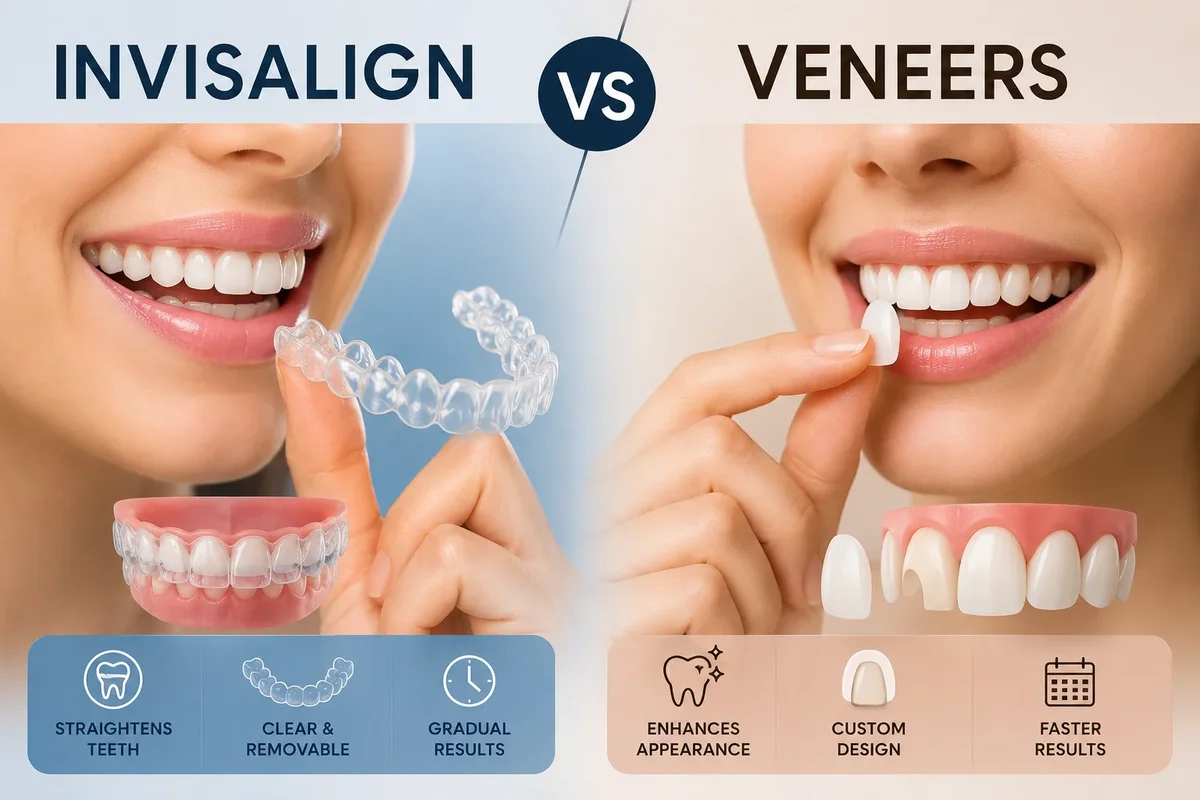
If you are comparing invisalign vs veneers, the short answer is that the right choice depends on what you want to improve. Invisalign is primarily designed to straighten teeth and correct bite alignment using a series of clear removable aligners, while veneers are thin porcelain or composite shells that improve the visible appearance of the front surface of teeth. Although both treatments can transform a smile, they solve different problems and should not be viewed as interchangeable solutions. Understanding the differences between invisalign vs veneers is the first step toward choosing a treatment that matches your goals, dental health, lifestyle, and budget.
Many people begin researching invisalign vs veneers because they want a straighter, brighter, and more attractive smile without immediately knowing which treatment fits their situation. Some people have healthy teeth that are slightly crooked, while others are mainly concerned about discoloration, chips, uneven edges, or worn enamel. In many cases, your decision will depend less on personal preference and more on the actual condition of your teeth. A comprehensive dental examination helps determine whether moving teeth, covering their surfaces, or combining both approaches will provide the most predictable and conservative outcome.
Understanding the Main Difference
The biggest distinction in the invisalign vs veneers discussion is that Invisalign changes tooth position, while veneers change tooth appearance. Invisalign gradually moves teeth into better alignment using custom-made clear aligners that are replaced every few weeks according to a personalized treatment plan. Veneers, on the other hand, do not move teeth. Instead, they improve the visible shape, size, color, and symmetry of selected teeth by bonding carefully crafted restorations to the front surfaces.
Because they serve different purposes, one treatment is not automatically better than the other. Someone with crowded teeth but healthy enamel may benefit more from Invisalign. Someone whose teeth are already reasonably straight but have discoloration or worn edges may find veneers more suitable. This is why comparing invisalign vs veneers requires understanding your individual dental condition instead of relying solely on photographs or online testimonials.
When Invisalign May Be More Appropriate
Invisalign is commonly recommended for patients who have mild to moderate alignment issues such as crowded teeth, small gaps, minor bite irregularities, or teeth that have shifted over time. Since Invisalign focuses on orthodontic movement rather than cosmetic covering, it preserves the natural tooth structure and usually requires little or no removal of healthy enamel.
During a consultation, your dentist or orthodontist evaluates your bite, jaw relationship, gum health, and tooth movement requirements. If correcting alignment can naturally improve your smile without altering the tooth surface, Invisalign may be the more conservative solution in the invisalign vs veneers comparison.
When Veneers May Be More Appropriate
Veneers are often considered when cosmetic improvements are the primary concern. Teeth that are permanently stained, chipped, uneven, slightly misshapen, worn, or irregularly sized may respond well to veneers. Modern porcelain veneers can create a natural appearance while improving overall smile harmony.
However, veneers do not correct significant crowding or bite problems. If teeth are noticeably misaligned, placing veneers without addressing alignment may not always provide the most conservative or functional result. For some patients, orthodontic treatment before veneers can produce a healthier long-term outcome.
Can Both Treatments Be Combined?
One of the most overlooked aspects of invisalign vs veneers is that the decision is not always either-or. Many comprehensive smile makeovers combine both treatments. Invisalign may first create healthier tooth alignment, allowing fewer veneers to be placed later with minimal tooth preparation. This conservative approach can preserve more natural enamel while improving both function and appearance.
Whether combining treatments makes sense depends on your goals, oral health, available treatment time, and clinical findings. A personalized treatment plan helps determine if staged treatment offers advantages over choosing a single procedure.
What About Cost?
Cost is another common reason people search for invisalign vs veneers. Rather than focusing on average online prices, it is more helpful to understand what influences total treatment costs. Invisalign fees vary depending on treatment complexity, treatment duration, and the number of aligners required. Veneer costs depend on the number of teeth being treated, the material selected, laboratory work, and overall treatment planning.
No responsible dental clinic can provide guaranteed pricing without examining your teeth first. A personalized consultation allows your dentist to determine which treatment is appropriate and explain the expected costs based on your specific needs rather than generalized estimates.
Why Professional Evaluation Matters
Online comparisons can provide useful background information, but they cannot replace a clinical examination. Before deciding between invisalign vs veneers, your dentist should evaluate tooth alignment, enamel thickness, gum condition, bite function, existing restorations, oral hygiene, and overall smile goals. These factors influence not only which treatment is suitable but also whether additional procedures may improve long-term success.
Reliable educational resources, including the American Dental Association, emphasize the importance of individualized dental care rather than one-size-fits-all cosmetic recommendations.
During a comprehensive consultation, your dentist may also use digital photographs, intraoral scans, and smile simulations to help visualize possible outcomes. Clinics such as Redent Klinik Contact Page often use personalized assessments to explain available treatment options without making unrealistic promises. The goal is to provide clear information so patients understand the benefits, limitations, expected treatment timeline, and maintenance requirements before making a decision.
What Does This Mean for Your Situation?
If your main concern is crooked teeth or bite alignment, Invisalign may deserve closer consideration. If your primary concern involves discoloration, worn enamel, chipped teeth, or cosmetic imperfections while alignment is already acceptable, veneers may better address your expectations. If both functional and cosmetic issues exist, your dentist may recommend combining treatments rather than choosing only one.
Every smile is unique, which is why the best answer to invisalign vs veneers depends on clinical findings rather than internet comparisons alone. Your age, oral health, treatment goals, lifestyle, maintenance preferences, and long-term expectations all influence the most appropriate recommendation.
Next Step
Before making a decision about invisalign vs veneers, schedule a professional dental consultation that includes a complete examination, digital imaging if appropriate, and a discussion of your cosmetic and functional goals. Ask your dentist whether orthodontic correction, cosmetic restoration, or a combination of both would preserve the most natural tooth structure while meeting your expectations. Understanding your individual diagnosis before committing to treatment is the most practical step toward achieving a healthy, confident smile.
Quick Answer: Invisalign vs Veneers at a Glance
When comparing invisalign vs veneers, the quickest and most accurate answer is that neither treatment is universally better. The right choice depends on your oral health, cosmetic concerns, bite, treatment goals, and expectations. Invisalign is designed to gradually reposition teeth, making it suitable for correcting mild to moderate alignment issues, spacing, and certain bite irregularities. Veneers, by contrast, improve the visible appearance of teeth by covering the front surfaces with thin porcelain or composite shells. They can enhance color, shape, size, and symmetry, but they do not physically move teeth into better alignment.
Many people searching for invisalign vs veneers hope for a simple answer, but the reality is more individualized. Someone with healthy teeth that are slightly crooked may benefit more from orthodontic treatment, while another person with well-aligned teeth but severe staining or worn enamel may achieve their goals more effectively with veneers. Understanding what each treatment can realistically accomplish helps prevent disappointment and supports better long-term decision-making.
What Does Invisalign Actually Correct?
One of the biggest misconceptions in the invisalign vs veneers comparison is that cosmetic improvement always requires covering the teeth. Invisalign works differently. Instead of masking imperfections, it gradually shifts teeth into improved positions using a series of clear removable aligners that are custom-made for each patient. Because it addresses alignment directly, Invisalign often improves both smile aesthetics and dental function.
Invisalign may be appropriate for individuals with:
- Mild to moderate crowding
- Small spaces between teeth
- Minor bite discrepancies
- Relapse after previous orthodontic treatment
- Patients seeking a removable orthodontic option
Although Invisalign can create noticeable cosmetic improvements, its primary goal is orthodontic correction rather than changing the color or shape of individual teeth. This distinction is important when evaluating invisalign vs veneers.
What Do Veneers Improve?
Veneers focus on enhancing the appearance of visible teeth rather than changing their position. Thin custom-made restorations are bonded to the front surfaces of selected teeth to improve aesthetics while maintaining a natural-looking smile. Depending on the treatment plan, veneers may address several cosmetic concerns simultaneously.
Common Reasons Patients Choose Veneers
- Permanent discoloration that whitening cannot sufficiently improve
- Small chips or fractures
- Uneven tooth shape
- Worn enamel
- Slightly irregular spacing
- Teeth that appear too short or uneven
However, veneers cannot correct significant crowding, major bite issues, or extensive orthodontic problems. In these situations, the discussion about invisalign vs veneers often shifts toward correcting alignment first before considering cosmetic restorations.
How Should You Decide?
Instead of asking which treatment is better overall, ask which treatment solves your specific problem. This simple change in thinking makes the invisalign vs veneers decision much easier.
If Your Main Concern Is Alignment
If your teeth overlap, twist, rotate, or create bite problems, moving them into healthier positions is often the more conservative approach. Straightening teeth may improve oral hygiene, reduce uneven wear, and create a more balanced smile without covering healthy enamel. For many patients, Invisalign provides cosmetic improvement by correcting the underlying cause rather than hiding it.
If Your Main Concern Is Appearance
If your teeth are already reasonably straight but you dislike their color, size, shape, or surface imperfections, veneers may provide a more direct cosmetic solution. In these cases, orthodontic movement alone would not address the issues causing dissatisfaction.
Can You Need Both?
One important point frequently overlooked in discussions about invisalign vs veneers is that these treatments are not mutually exclusive. Some patients benefit from Invisalign first to create ideal tooth positioning, followed by a limited number of veneers for final cosmetic refinement. This staged approach may allow more conservative veneer preparation because the teeth are already properly aligned.
Combining treatments may also improve smile symmetry while preserving more natural tooth structure. Whether this option is appropriate depends entirely on the findings of a comprehensive dental examination.
Time Commitment Matters
Another practical factor in the invisalign vs veneers decision is treatment duration. Invisalign requires consistent wear of aligners, regular monitoring appointments, and patient cooperation over several months. Veneer treatment generally involves fewer clinical visits, but careful planning, tooth preparation when indicated, laboratory fabrication, and long-term maintenance remain important parts of the process.
Choosing solely based on treatment speed may not provide the best long-term outcome. A shorter treatment is not necessarily the most appropriate one if it does not address the underlying concern.
Think Beyond Cosmetic Results
While aesthetics are often the primary motivation behind researching invisalign vs veneers, function should never be overlooked. Tooth alignment influences chewing efficiency, bite balance, oral hygiene, and the distribution of forces across the teeth. Cosmetic improvements are valuable, but maintaining healthy teeth and gums remains equally important.
Similarly, selecting veneers without evaluating bite function may not always produce the most suitable long-term solution. Every treatment decision should balance appearance, oral health, durability, and future maintenance.
Making an Informed Decision
The most reliable way to compare invisalign vs veneers is through a personalized consultation rather than relying on generalized online advice. Your dentist can evaluate your bite, gum health, enamel condition, existing restorations, and smile goals before discussing available treatment options. Digital scans, photographs, and treatment simulations may also help you understand the expected benefits and limitations of each approach.
Educational resources such as the American Dental Association encourage individualized treatment planning because no single cosmetic solution fits every patient. Clinics experienced in comprehensive smile planning, including Redent Klinik Contact Page, can explain whether orthodontic treatment, veneers, or a combination of both is more appropriate for your unique situation without making unrealistic promises about outcomes or costs.
What Should You Check Before Deciding?
Before choosing between invisalign vs veneers, ask your dentist to evaluate your tooth alignment, bite relationship, gum health, enamel thickness, existing dental restorations, cosmetic priorities, and long-term maintenance expectations. If you have significant crowding, bite discomfort, extensive tooth wear, gum disease, or uncertainty about which treatment addresses your concerns, request a comprehensive dental consultation before committing to any cosmetic procedure. An individualized evaluation provides the safest foundation for making an informed decision that supports both oral health and smile aesthetics.
Cost Comparison: What Affects the Total Investment?
One of the first questions people ask when researching invisalign vs veneers is which option costs less. While it is natural to compare prices, focusing only on the initial investment can lead to the wrong decision. The better question is which treatment addresses your dental needs most effectively and provides value over the long term. Invisalign and veneers are designed for different purposes, so the total investment depends on several clinical and personal factors rather than a single fixed price.
If your primary concern is crooked teeth, investing in veneers alone may not solve the underlying issue. Likewise, if your teeth are already well aligned but have discoloration, chips, or irregular shapes, orthodontic treatment alone may not deliver the cosmetic improvement you expect. This is why comparing invisalign vs veneers should involve understanding what each treatment includes, how complex your case is, and whether additional procedures may be recommended.
Why There Is No Standard Price
It is common to find price ranges online, but these figures should only be viewed as general references. Responsible dental professionals avoid providing guaranteed treatment costs before examining the patient’s oral condition. Every smile is unique, and the final treatment plan influences the overall investment.
When evaluating invisalign vs veneers, remember that two patients with similar cosmetic goals may require very different treatment approaches. One person may only need minor tooth movement, while another may require a longer orthodontic plan followed by cosmetic refinement. Because of these differences, personalized treatment planning is essential.
Factors That Influence Invisalign Costs
Invisalign treatment costs are primarily determined by the complexity of tooth movement rather than simply the number of aligners. Mild alignment corrections generally require fewer aligners and shorter treatment times than more complicated orthodontic cases.
Common Cost Factors for Invisalign
- Severity of crowding or spacing
- Bite correction requirements
- Estimated treatment duration
- Number of aligners required
- Frequency of monitoring appointments
- Need for refinement aligners during treatment
- Retention after treatment completion
When comparing invisalign vs veneers, it is also important to consider long-term maintenance. Most Invisalign patients will require retainers after treatment to help maintain tooth position. Retainer replacement over time should be included in long-term planning.
Factors That Influence Veneer Costs
Veneer treatment costs are affected by different variables because veneers restore the visible surfaces of teeth rather than moving them. Material selection, laboratory craftsmanship, and the number of teeth treated all influence the overall investment.
Common Cost Factors for Veneers
- Number of veneers being placed
- Porcelain versus composite material
- Laboratory fabrication quality
- Smile design complexity
- Required tooth preparation
- Existing dental restorations
- Need for preliminary treatments before veneer placement
Patients researching invisalign vs veneers often assume veneers always involve every visible tooth. In reality, treatment plans vary considerably. Some people only require a few veneers to improve specific cosmetic concerns, while others may need more extensive smile enhancement. The exact number can only be determined after clinical evaluation.
Should You Choose Based on Price Alone?
Choosing the less expensive option without considering the underlying dental condition may lead to additional treatment later. For example, placing veneers on significantly crowded teeth may not always be the most conservative approach if orthodontic correction would preserve more natural tooth structure. Similarly, completing orthodontic treatment without addressing severe discoloration or damaged enamel may leave cosmetic concerns unresolved.
The most cost-effective decision in the invisalign vs veneers comparison is usually the one that addresses the actual cause of your concern rather than simply offering the lowest initial fee.
Could Combining Treatments Be More Efficient?
In some situations, a combination of Invisalign and veneers creates the most balanced outcome. Straightening teeth first may reduce the number of veneers required later and allow more conservative preparation of healthy enamel. Although this staged approach may initially appear to involve a greater investment, it can provide improved function and aesthetics while preserving natural tooth structure.
Whether combining treatments is appropriate depends on factors such as alignment, bite, enamel condition, cosmetic goals, and overall oral health. A detailed consultation is necessary before deciding if this strategy is suitable.
Consider Long-Term Value Instead of Initial Cost
Another important aspect of invisalign vs veneers is long-term maintenance. Invisalign requires commitment during treatment, including wearing aligners as instructed and using retainers afterward. Veneers require excellent oral hygiene, regular dental examinations, and appropriate care to maintain their appearance over time. Both treatments represent ongoing investments in oral health rather than one-time purchases.
Looking only at the starting price may overlook future maintenance needs, follow-up appointments, or additional procedures that could become necessary depending on individual circumstances.
Questions to Ask During Your Consultation
Instead of asking only, “How much does it cost?” consider asking questions that provide a clearer understanding of your personalized treatment plan.
- Which treatment best addresses my specific concerns?
- Will additional procedures be recommended before treatment?
- How long is the expected treatment timeline?
- What maintenance should I expect afterward?
- Are there conservative alternatives that may achieve similar goals?
- Could combining treatments improve the overall outcome?
These discussions often provide more valuable guidance than comparing generalized online pricing. They also help patients understand how their treatment plan has been developed according to their individual oral health needs.
Personalized Financial Planning
Many dental clinics offer different payment approaches depending on the treatment plan, but financial arrangements vary by provider and location. Final costs should always be explained after a comprehensive examination and treatment planning appointment rather than promised in advance. Educational organizations such as the American Dental Association encourage patients to discuss both clinical recommendations and financial considerations before starting treatment.
If you are considering treatment, clinics experienced in comprehensive smile planning, such as those available through the Redent Klinik Contact Page, can explain available options, expected treatment stages, and individualized planning without guaranteeing pricing or recommending unnecessary procedures.
What Should You Check Before Making a Decision?
Before deciding between invisalign vs veneers, ask your dentist to evaluate the severity of alignment problems, the condition of your enamel, your bite, gum health, cosmetic priorities, expected maintenance, and whether one treatment—or a combination of both—would best meet your goals. If you have questions about treatment complexity, long-term maintenance, or personalized costs, request a comprehensive consultation before making a financial commitment. An individualized evaluation provides the most reliable basis for comparing treatment options and planning your investment with confidence.
Who Is the Better Candidate for Invisalign vs Veneers?
Deciding between invisalign vs veneers often becomes much easier once you understand who each treatment is designed for. Many patients begin their research believing that both procedures achieve the same result, but they actually address different dental concerns. Invisalign is primarily intended to improve tooth alignment and certain bite problems, while veneers focus on enhancing the visible appearance of teeth. Choosing the right option depends on your oral health, cosmetic priorities, lifestyle, and long-term expectations rather than simply selecting the treatment that appears more attractive online.
A comprehensive dental examination is the most reliable way to determine whether Invisalign, veneers, or a combination of both is appropriate. During this assessment, your dentist evaluates tooth position, gum health, enamel quality, bite function, existing restorations, and smile goals. These findings help create a treatment plan that balances aesthetics with long-term oral health. When comparing invisalign vs veneers, understanding candidacy is often more valuable than comparing before-and-after photographs or generalized internet advice.
Who May Be a Good Candidate for Invisalign?
Invisalign is generally suitable for individuals whose primary concern is the position of their teeth rather than their surface appearance. Because Invisalign gradually moves teeth into improved alignment using a sequence of clear aligners, it can improve both smile aesthetics and dental function without covering healthy tooth surfaces.
You May Be a Good Invisalign Candidate If You Have:
- Mild to moderate crowding
- Small gaps between teeth
- Minor bite irregularities
- Teeth that shifted after previous orthodontic treatment
- Healthy gums and supporting bone
- A commitment to wearing aligners as instructed
In the invisalign vs veneers comparison, Invisalign is often preferred when preserving natural tooth structure is a priority. Since the treatment focuses on moving teeth instead of covering them, healthy enamel usually remains largely unchanged. However, successful treatment requires patient cooperation, including wearing aligners consistently and attending scheduled follow-up appointments.
Who May Be a Good Candidate for Veneers?
Veneers are designed for patients whose main concerns involve the appearance of individual teeth rather than their alignment. Thin porcelain or composite shells can improve the shape, color, symmetry, and overall appearance of selected teeth while maintaining a natural-looking smile.
You May Be a Good Veneer Candidate If You Have:
- Permanent discoloration that whitening cannot adequately improve
- Small chips or cracks
- Uneven tooth size or shape
- Worn enamel
- Minor cosmetic imperfections
- Reasonably well-aligned teeth
During the invisalign vs veneers decision process, veneers are often selected when the underlying tooth position is acceptable but cosmetic improvements are desired. Because veneers focus on visible appearance, they may not be the ideal solution for significant crowding or bite discrepancies.
When Invisalign May Not Be Enough
Although Invisalign can create impressive improvements in alignment, it cannot directly change tooth color, repair fractures, close every type of cosmetic defect, or restore worn enamel. Patients expecting perfectly shaped or brighter teeth after orthodontic treatment alone may still require cosmetic procedures afterward.
This is why discussions about invisalign vs veneers sometimes lead to combination treatment. Straightening teeth first can create a healthier foundation before minor cosmetic enhancements are performed if they are still desired.
When Veneers May Not Be the Best First Step
Veneers can dramatically improve aesthetics, but they do not correct underlying orthodontic issues. Covering severely crowded or rotated teeth without addressing alignment may not always provide the most conservative or functional outcome. Depending on the severity of misalignment, your dentist may recommend orthodontic treatment before considering veneers.
Understanding these limitations helps patients make more informed choices during the invisalign vs veneers decision process rather than focusing only on cosmetic photographs.
How Age and Lifestyle Influence the Decision
Age alone rarely determines whether Invisalign or veneers are appropriate. Instead, overall oral health and patient commitment are more important considerations.
Lifestyle Factors Worth Discussing
- Ability to wear aligners consistently each day
- Oral hygiene habits
- Sports participation
- Teeth grinding or clenching
- Smoking or tobacco use
- Dietary habits involving staining beverages
These lifestyle considerations influence treatment planning because long-term success depends not only on the procedure itself but also on how well patients maintain their oral health afterward. The most suitable option in the invisalign vs veneers comparison is often the one that best fits daily habits and long-term maintenance expectations.
Can Existing Dental Work Affect Eligibility?
Existing crowns, bridges, fillings, implants, or previous cosmetic treatments may influence your treatment plan. While many patients with previous dental work remain suitable candidates for Invisalign or veneers, these restorations should be evaluated carefully during treatment planning.
Dentists consider how current restorations interact with tooth movement, cosmetic improvements, and bite function before recommending one approach over another. This individualized assessment is another reason why online comparisons cannot replace professional evaluation when considering invisalign vs veneers.
Could You Be a Candidate for Both?
Some of the best cosmetic outcomes occur when Invisalign and veneers are combined strategically. Orthodontic treatment can improve alignment, create balanced spacing, and optimize tooth position before a limited number of veneers are placed for cosmetic refinement. This approach may preserve more natural enamel while achieving excellent functional and aesthetic results.
Whether combination treatment is appropriate depends on clinical findings rather than patient preference alone. Not everyone requires both procedures, but for selected individuals, staged treatment offers advantages that neither option provides independently.
How Your Consultation Helps You Decide
During your consultation, your dentist should evaluate much more than appearance. Tooth alignment, gum condition, enamel thickness, bite relationships, jaw function, oral hygiene, smile proportions, and treatment expectations all contribute to selecting the most appropriate approach. Educational resources provided by the American Dental Association emphasize individualized diagnosis because every patient presents unique clinical needs.
Clinics experienced in comprehensive smile planning, including those available through the Redent Klinik Contact Page, typically explain both the advantages and limitations of each option before recommending treatment. Rather than encouraging a single cosmetic solution for every patient, they help individuals understand which approach aligns with their oral health and personal goals.
What Should You Check Before Choosing?
Before deciding between invisalign vs veneers, ask your dentist to evaluate your tooth alignment, bite function, enamel condition, gum health, existing restorations, cosmetic objectives, and long-term maintenance needs. If you experience significant crowding, bite discomfort, tooth wear, gum disease, or uncertainty about which treatment is appropriate, request a comprehensive dental consultation before beginning cosmetic treatment. A personalized evaluation helps ensure that the recommended approach supports both your smile appearance and your long-term oral health.
Treatment Process: What to Expect from Consultation to Results
Understanding the treatment journey is an important part of comparing invisalign vs veneers. While both options aim to improve your smile, the steps involved, the timeline, and the clinical objectives are very different. Knowing what happens from your first consultation through the completion of treatment can help you choose the option that best fits your expectations, schedule, and oral health needs. Rather than asking which treatment is faster, it is usually more helpful to ask which process addresses the underlying cause of your concern.
Every successful smile transformation begins with a comprehensive examination. Before recommending either Invisalign or veneers, your dentist should evaluate your teeth, gums, bite, jaw function, existing restorations, and overall oral health. This assessment ensures that the recommended treatment is based on clinical findings rather than cosmetic appearance alone. When comparing invisalign vs veneers, the consultation often determines whether orthodontic correction, cosmetic restoration, or a combination of both will produce the most appropriate long-term outcome.
The Initial Consultation
The consultation is one of the most important stages in the invisalign vs veneers decision process. During this visit, your dentist gathers detailed information about your smile goals, medical and dental history, oral hygiene habits, and any symptoms affecting your teeth or bite.
What Your Dentist May Evaluate
- Tooth alignment and spacing
- Bite relationship
- Gum health
- Enamel condition
- Existing crowns, fillings, or veneers
- Signs of grinding or clenching
- Overall smile balance and facial aesthetics
Digital photographs, intraoral scans, and radiographs may also be recommended when clinically appropriate. These records help your dentist explain the available treatment options and create a personalized treatment plan.
The Invisalign Treatment Process
If Invisalign is considered the most suitable option during the invisalign vs veneers evaluation, treatment usually begins with digital impressions or intraoral scans. These images are used to create a customized series of clear aligners that gradually move your teeth into their planned positions.
Typical Invisalign Treatment Stages
- Comprehensive examination and digital records.
- Creation of a customized digital treatment plan.
- Fabrication of clear aligners.
- Wearing each aligner for the recommended period.
- Regular progress appointments.
- Refinement aligners if additional adjustments are needed.
- Retention phase after active treatment.
Success depends heavily on patient cooperation. Aligners are removable, making oral hygiene and eating more convenient than with traditional braces, but they must be worn consistently according to professional instructions. This commitment is an important consideration in the invisalign vs veneers comparison.
The Veneer Treatment Process
If veneers are recommended instead, the treatment process focuses on improving the appearance of selected teeth. The exact sequence depends on the type of veneers being placed and the individual treatment plan.
Typical Veneer Treatment Stages
- Smile analysis and treatment planning.
- Shade selection and cosmetic design discussion.
- Minimal tooth preparation when indicated.
- Digital or conventional impressions.
- Laboratory fabrication of custom veneers.
- Trial evaluation and final bonding.
- Follow-up examination and maintenance guidance.
During the invisalign vs veneers decision process, it is important to understand that veneers improve appearance but do not reposition teeth. If alignment problems are significant, your dentist may recommend orthodontic treatment before veneer placement to achieve a healthier and more conservative result.
How Long Does Each Treatment Usually Take?
Treatment timelines vary according to individual clinical needs. Invisalign generally requires several months because teeth move gradually through controlled orthodontic forces. More complex cases may require additional refinement before treatment is completed.
Veneers often involve fewer appointments than orthodontic treatment, but laboratory fabrication, smile design, and careful planning remain essential steps. Choosing between invisalign vs veneers based solely on treatment duration may overlook important functional considerations that influence long-term success.
Will You Need Follow-Up Care?
Both treatments require ongoing maintenance after completion. Invisalign patients typically wear retainers to help maintain their new tooth positions. Regular dental examinations remain important to monitor oral health and ensure long-term stability.
Veneers also require routine professional care. Maintaining excellent oral hygiene, attending regular dental check-ups, and avoiding habits that place excessive stress on teeth contribute to the longevity of cosmetic restorations. Understanding these maintenance requirements is another essential part of comparing invisalign vs veneers.
Could Your Treatment Plan Change?
Treatment planning is sometimes adjusted after the initial examination. For example, gum disease, untreated decay, or bite issues may need to be addressed before cosmetic treatment begins. Some patients who initially request veneers later decide that Invisalign better addresses their concerns after reviewing digital simulations. Others discover that limited veneers following orthodontic treatment provide the most balanced outcome.
This flexibility demonstrates why the invisalign vs veneers decision should remain personalized rather than predetermined before professional evaluation.
Preparing for Your Consultation
Before your appointment, it is helpful to think about what you hope to improve. Bringing photographs of smiles you admire may assist communication, but your dentist will also explain what is realistic based on your existing tooth structure and oral health.
Helpful Questions to Ask
- Which treatment addresses my primary concern?
- Would orthodontic correction improve my long-term oral health?
- Can veneers be delayed until after alignment is corrected?
- How should I care for my smile after treatment?
- Are there conservative alternatives worth considering?
Asking these questions encourages shared decision-making and helps ensure that your expectations align with the proposed treatment plan.
Making a Confident Decision
Choosing between invisalign vs veneers is not simply a cosmetic decision. It involves evaluating function, oral health, aesthetics, maintenance, and long-term goals together. Educational guidance from the American Dental Association emphasizes individualized treatment planning because every patient presents unique clinical findings. Clinics experienced in comprehensive smile rehabilitation, such as those available through the Redent Klinik Contact Page, can explain each treatment stage, expected timelines, and available alternatives while tailoring recommendations to your specific needs.
What Should You Check Before Starting Treatment?
Before choosing between invisalign vs veneers, ask your dentist to review your tooth alignment, bite, gum health, enamel condition, cosmetic priorities, expected treatment timeline, and long-term maintenance requirements. If you have untreated decay, gum disease, jaw discomfort, significant crowding, or uncertainty about which procedure best meets your goals, request a comprehensive dental evaluation before beginning treatment. A personalized consultation provides the information needed to make an informed decision that supports both smile aesthetics and lasting oral health.
Benefits, Risks, and Long-Term Considerations
When comparing invisalign vs veneers, it is easy to focus on the cosmetic results shown in advertisements or before-and-after photographs. However, making a confident treatment decision requires looking beyond appearance. Every dental procedure has potential advantages, limitations, maintenance requirements, and long-term considerations. Understanding these factors allows you to choose a treatment that not only improves your smile but also supports your oral health and lifestyle for years to come.
The discussion about invisalign vs veneers should always include questions about durability, daily care, possible risks, and whether the treatment addresses the actual cause of your concern. A smile that looks attractive immediately after treatment is valuable, but long-term comfort, function, and oral health are equally important. Your dentist will evaluate these aspects during your consultation to recommend an approach that balances cosmetic improvement with conservative care.
Benefits of Invisalign
Invisalign offers several advantages for patients whose primary concern is tooth alignment. Rather than masking imperfections, the treatment gradually repositions teeth into healthier locations. This approach often improves both appearance and function while preserving natural tooth structure.
Potential Benefits of Invisalign
- Gradually improves tooth alignment.
- May enhance bite function in suitable cases.
- Clear aligners are discreet in everyday situations.
- Aligners are removable for eating and oral hygiene.
- Usually requires minimal or no removal of healthy enamel.
- Digital treatment planning allows visualization of tooth movement.
One reason many patients choose Invisalign during the invisalign vs veneers decision process is the opportunity to improve smile aesthetics while maintaining the natural surfaces of their teeth. When alignment is the primary concern, this conservative approach may provide significant long-term benefits.
Benefits of Veneers
Veneers provide cosmetic improvements that orthodontic treatment alone cannot achieve. They can enhance tooth color, symmetry, shape, and overall smile harmony, making them a valuable option for patients whose teeth are already reasonably aligned but have visible imperfections.
Potential Benefits of Veneers
- Improve tooth color that whitening cannot sufficiently change.
- Create a more balanced smile appearance.
- Correct minor shape and size irregularities.
- Restore chipped or worn front teeth.
- Provide highly individualized cosmetic design.
- May improve smile symmetry with relatively few restorations.
In the invisalign vs veneers comparison, veneers are often chosen because they can address multiple cosmetic concerns simultaneously. However, they should always be planned carefully to ensure they complement your bite and overall oral health.
Possible Risks of Invisalign
Like any orthodontic treatment, Invisalign requires patient commitment and ongoing monitoring. While many people complete treatment successfully, understanding potential challenges helps set realistic expectations.
Points to Consider
- Successful treatment depends on consistent aligner wear.
- Some cases require refinement aligners.
- Temporary discomfort may occur after changing aligners.
- Retainers are usually recommended after treatment.
- Poor oral hygiene may increase the risk of dental problems during treatment.
During discussions about invisalign vs veneers, dentists often emphasize that Invisalign is most successful when patients actively participate in their treatment by following professional instructions and attending scheduled reviews.
Possible Risks of Veneers
Veneers also have considerations that patients should understand before beginning treatment. While modern materials are designed to provide excellent aesthetics, veneers are not appropriate for every situation.
Points to Consider
- Some cases require limited tooth preparation.
- Excellent oral hygiene remains essential.
- Teeth grinding may increase stress on restorations.
- Existing bite problems may require evaluation before treatment.
- Future maintenance or replacement may become necessary over time.
Choosing veneers simply because they appear to offer a faster cosmetic solution may overlook functional concerns that orthodontic treatment could address first. This is one of the most important considerations in the invisalign vs veneers comparison.
Which Treatment Is More Conservative?
Many patients ask which option preserves more natural tooth structure. The answer depends on the clinical situation. Invisalign generally focuses on moving teeth rather than altering them, making it a conservative option for suitable alignment problems. Veneers, on the other hand, may involve minimal tooth preparation depending on the treatment plan and the condition of the teeth.
If preserving healthy enamel is a major priority, your dentist may recommend correcting alignment before considering cosmetic restorations. The most conservative solution in the invisalign vs veneers discussion is the one that achieves your goals while minimizing unnecessary intervention.
Long-Term Maintenance
Long-term care is an essential part of every smile enhancement plan. Regardless of whether you choose Invisalign or veneers, maintaining excellent oral hygiene and attending routine dental examinations remain important.
Maintenance After Invisalign
- Wear retainers as recommended.
- Attend periodic dental reviews.
- Maintain good brushing and flossing habits.
- Monitor bite stability over time.
Maintenance After Veneers
- Practice excellent oral hygiene.
- Avoid habits that place excessive force on teeth.
- Attend regular professional examinations.
- Follow personalized maintenance advice from your dentist.
Understanding these responsibilities helps patients make realistic decisions during the invisalign vs veneers planning process. Cosmetic treatment is most successful when combined with long-term preventive dental care.
Balancing Cosmetic Goals with Oral Health
A beautiful smile should never come at the expense of healthy teeth and gums. Your dentist’s goal is not only to improve appearance but also to support comfortable function and long-term oral stability. This is why treatment recommendations sometimes differ from what patients initially expect after researching invisalign vs veneers online.
Some individuals benefit from orthodontic treatment before cosmetic restorations. Others achieve their goals with veneers alone. In selected cases, combining both treatments creates the most balanced and conservative result. The appropriate choice depends on detailed clinical evaluation rather than generalized internet advice.
Making an Informed Long-Term Decision
Educational guidance from the American Dental Association highlights the importance of individualized treatment planning because every patient has unique oral health needs. Clinics experienced in comprehensive smile planning, such as those available through the Redent Klinik Contact Page, can explain the benefits, possible limitations, maintenance requirements, and available alternatives for both treatments before recommending a personalized approach.
What Should You Check Before Choosing?
Before making a final decision about invisalign vs veneers, ask your dentist to assess your tooth alignment, bite, gum health, enamel condition, existing restorations, cosmetic goals, daily habits, and long-term maintenance expectations. If you experience significant tooth wear, grinding, untreated gum disease, bite discomfort, or uncertainty about the most appropriate treatment, request a comprehensive dental evaluation before proceeding. A personalized assessment helps ensure that your chosen treatment supports both an attractive smile and lasting oral health.
Alternatives to Invisalign and Veneers You Should Consider
Although many patients compare invisalign vs veneers, these are not the only treatments available for improving a smile. Depending on your oral health, cosmetic concerns, and functional needs, another option—or even a combination of treatments—may provide a more suitable solution. The goal of modern dentistry is not to recommend the same procedure for every patient, but to identify the most conservative and effective treatment based on a thorough clinical evaluation.
Before deciding between invisalign vs veneers, it is worth understanding the alternatives that may achieve similar or even better results for your individual situation. Some treatments focus on preserving natural tooth structure, while others are designed to restore damaged teeth or improve appearance in different ways. Learning about these options helps you have a more productive discussion during your consultation and ensures your decision is based on clinical needs rather than popularity alone.
Professional Teeth Whitening
Some patients begin researching invisalign vs veneers because they want a brighter smile rather than straighter teeth. If discoloration is your only concern and your teeth are healthy and well aligned, professional whitening may be the simplest and most conservative option.
Professional Whitening May Be Appropriate If:
- Your teeth are naturally well aligned.
- Staining is the primary concern.
- You have healthy enamel.
- You are not seeking changes to tooth shape or position.
Whitening cannot correct crowding, chipped teeth, or worn enamel, but for carefully selected patients it may eliminate the need for more extensive cosmetic treatment.
Dental Bonding
Composite bonding is another option worth discussing before choosing between invisalign vs veneers. Bonding involves applying tooth-colored composite resin to improve small cosmetic imperfections such as chips, minor gaps, irregular edges, or localized discoloration.
Bonding May Be Suitable For:
- Small cosmetic defects.
- Minor chips.
- Slight spacing between teeth.
- Small shape corrections.
- Patients seeking a conservative cosmetic approach.
While bonding may not provide the same characteristics as porcelain veneers, it can be an effective solution for selected cases when only limited cosmetic enhancement is required.
Traditional Orthodontic Treatment
Invisalign is not the only orthodontic option available. Depending on the complexity of tooth movement, your dentist or orthodontist may recommend traditional braces instead. This possibility should be considered during the invisalign vs veneers discussion if significant bite correction or more extensive orthodontic treatment is required.
Traditional Braces May Be Recommended When:
- Complex tooth movement is necessary.
- Severe crowding is present.
- Significant bite correction is required.
- Greater orthodontic control is needed.
The choice between Invisalign and traditional braces depends on individual clinical findings rather than cosmetic preference alone.
Orthodontics Followed by Veneers
One of the most effective alternatives discussed during invisalign vs veneers consultations is combining treatments. Instead of selecting one procedure exclusively, orthodontic treatment may first improve tooth alignment, followed by a limited number of veneers to refine color, shape, or symmetry.
This staged approach often allows more conservative veneer preparation because the teeth are already positioned more favorably. For patients with both alignment and cosmetic concerns, combination treatment may produce a balanced result while preserving more natural tooth structure.
Dental Crowns
If teeth have extensive structural damage, veneers may not provide sufficient coverage. In these situations, your dentist may discuss dental crowns as an alternative. Crowns cover a larger portion of the tooth and may be appropriate when significant restoration is necessary.
Crowns are generally recommended based on structural requirements rather than cosmetic preference. Therefore, they occupy a different place in the invisalign vs veneers conversation and should only be considered after a comprehensive examination.
No Immediate Treatment
Sometimes the best decision is not to begin cosmetic treatment immediately. If active gum disease, untreated cavities, poor oral hygiene, or bite-related problems are present, your dentist may recommend addressing these issues first. Delaying cosmetic procedures until oral health has been stabilized often improves long-term outcomes.
Patients comparing invisalign vs veneers are sometimes surprised to learn that preventive care forms the foundation of every successful smile transformation. Healthy gums and teeth create a better environment for any future cosmetic procedure.
Factors That Influence Alternative Treatment Choices
Several clinical and personal factors influence whether an alternative to Invisalign or veneers may be appropriate.
Your Dentist May Consider:
- Severity of alignment problems.
- Condition of tooth enamel.
- Existing dental restorations.
- Bite function.
- Age and overall oral health.
- Long-term maintenance preferences.
- Cosmetic priorities.
- Expected treatment timeline.
Evaluating these factors ensures that treatment recommendations are individualized instead of following a one-size-fits-all approach. This personalized planning is one of the most important aspects of comparing invisalign vs veneers.
How to Decide Among Multiple Options
Having several possible treatments does not necessarily make the decision more difficult. Instead, it allows your dentist to recommend the option that best matches your specific goals while preserving healthy tooth structure whenever possible.
During your consultation, ask your dentist why one treatment is being recommended instead of another. Understanding the reasoning behind the recommendation often provides greater confidence than simply comparing cosmetic photographs or online opinions about invisalign vs veneers.
Why Personalized Treatment Planning Matters
Every smile presents different challenges. Two patients with similar cosmetic goals may receive entirely different recommendations because their enamel condition, bite, gum health, or alignment differs significantly. Educational resources from the American Dental Association encourage individualized diagnosis and treatment planning because no cosmetic procedure is universally appropriate for every patient.
Clinics experienced in comprehensive smile rehabilitation, such as those accessible through the Redent Klinik Contact Page, evaluate all suitable treatment options before recommending a personalized plan. This includes discussing conservative alternatives, potential combinations of procedures, expected maintenance, and realistic treatment objectives without guaranteeing cosmetic outcomes.
What Should You Check Before Choosing an Alternative?
Before deciding between invisalign vs veneers or selecting an alternative treatment, ask your dentist to evaluate your tooth alignment, enamel health, gum condition, bite relationship, existing restorations, cosmetic expectations, and long-term maintenance requirements. If you have untreated decay, gum disease, significant tooth wear, jaw discomfort, or uncertainty about the most appropriate option, request a comprehensive dental consultation before beginning cosmetic treatment. A personalized evaluation helps identify the treatment—or combination of treatments—that best supports both your smile goals and your long-term oral health.
Payment Plans and Financing Options for Invisalign vs Veneers
Financial planning is an important part of choosing between invisalign vs veneers. While treatment goals, oral health, and cosmetic expectations should always guide your decision first, understanding how payment plans and financing options work can help you prepare for treatment with greater confidence. Many patients delay improving their smiles because they assume the full cost must be paid upfront. In reality, payment arrangements vary between dental clinics, and discussing financial options during your consultation is a normal part of treatment planning.
When researching invisalign vs veneers, it is important to remember that financing should support the treatment that best addresses your dental needs—not influence you toward a procedure that may not be clinically appropriate. A personalized examination comes first, followed by a discussion of treatment stages, expected costs, and available payment solutions. This approach allows you to balance your oral health goals with your financial circumstances without compromising on appropriate care.
Why Financing Differs Between Patients
There is no universal financing model for cosmetic or orthodontic dentistry. Payment arrangements vary depending on the country, dental clinic, treatment complexity, and the number of procedures included in the treatment plan.
During the invisalign vs veneers consultation, your dentist will typically prepare an individualized treatment plan before discussing financial details. This ensures that payment options are based on your actual clinical needs rather than generalized estimates found online.
Factors That Influence the Total Financial Plan
Even when two patients receive the same type of treatment, their overall financial plans may differ because every case is unique. The complexity of treatment often influences both the clinical timeline and the associated costs.
Common Factors Include:
- Severity of tooth alignment problems.
- Number of teeth requiring cosmetic treatment.
- Treatment duration.
- Need for additional dental procedures.
- Material selection for restorations.
- Digital planning and laboratory work.
- Follow-up appointments and long-term maintenance.
These variables explain why responsible dental clinics do not provide guaranteed prices before completing a comprehensive examination. Comparing invisalign vs veneers requires evaluating both clinical and financial considerations together.
Typical Payment Plan Structures
While payment policies vary, many clinics offer structured payment arrangements that may make treatment more manageable. These options differ depending on local regulations and the provider’s financial policies.
Examples of Payment Approaches
- Single payment before treatment.
- Installment plans offered by the clinic.
- Third-party healthcare financing where available.
- Credit card installment programs, depending on local banking options.
- Stage-by-stage payments for longer treatment plans.
During discussions about invisalign vs veneers, ask whether payments are linked to treatment stages. Orthodontic treatment and cosmetic restorations sometimes follow different payment schedules because their clinical timelines are not identical.
Should Cost Determine Your Treatment Choice?
Cost is naturally an important consideration, but selecting treatment based only on the lowest initial expense may not produce the most appropriate long-term result. If veneers are chosen when orthodontic treatment is actually needed, or if orthodontic treatment is selected when cosmetic restorations are necessary, additional procedures may eventually be recommended.
The most practical approach to invisalign vs veneers is to first identify the treatment that best addresses your clinical needs and then explore payment options that make the recommended care more accessible.
Questions to Ask About Financing
Before beginning treatment, it is helpful to understand exactly what is included in your financial plan. Asking detailed questions can prevent misunderstandings later and help you compare treatment proposals more effectively.
Useful Questions Include:
- What services are included in the treatment estimate?
- Are follow-up appointments included?
- Will retainers or maintenance visits involve additional costs?
- Can treatment be completed in stages?
- Are installment plans available?
- What happens if treatment requires refinements?
These questions provide a more complete understanding of the financial commitment than comparing headline prices alone. They also help you evaluate the overall value of the recommended treatment rather than focusing only on the initial fee.
Could Insurance Contribute?
Insurance coverage varies significantly depending on your policy and location. Some dental plans may contribute toward orthodontic treatment or restorative procedures under specific conditions, while purely cosmetic procedures may not be covered. Because insurance policies differ, it is important to verify benefits directly with your insurer before making assumptions.
If you are comparing invisalign vs veneers, ask both your dental clinic and your insurance provider whether any portion of your treatment may qualify for reimbursement or partial coverage. Coverage decisions are determined by your individual policy rather than by the treatment category alone.
Planning for Long-Term Maintenance Costs
Financial planning should not end when active treatment is completed. Long-term maintenance is part of preserving your investment regardless of whether you choose Invisalign or veneers.
Maintenance May Include:
- Routine dental examinations.
- Professional cleanings.
- Replacement retainers after orthodontic treatment when necessary.
- Monitoring cosmetic restorations.
- Preventive dental care.
Considering these future responsibilities provides a more realistic comparison during the invisalign vs veneers decision process. Long-term oral health depends on consistent maintenance regardless of the initial procedure selected.
Financial Planning and Personalized Care
The most effective financial plan is one that supports appropriate clinical treatment rather than encouraging unnecessary procedures. Educational guidance from the American Dental Association emphasizes individualized treatment planning and informed decision-making. After your clinical examination, experienced providers such as those available through the Redent Klinik Contact Page can explain available payment arrangements, treatment stages, and expected maintenance requirements while tailoring recommendations to your specific oral health needs.
What Should You Check Before Committing Financially?
Before choosing between invisalign vs veneers, ask your dentist to explain the complete treatment plan, expected timeline, included services, follow-up care, maintenance requirements, and available payment options. If you are uncertain about insurance benefits, installment plans, or whether additional procedures may affect the final treatment plan, request clarification before beginning care. A personalized consultation allows you to make an informed financial decision while ensuring that your chosen treatment supports both your smile goals and your long-term oral health.
Frequently Asked Questions About Invisalign vs Veneers
Patients researching invisalign vs veneers often have many of the same questions before scheduling a consultation. While online articles can provide useful background information, the most reliable answers always depend on your individual oral health, bite, cosmetic goals, and dental examination. The purpose of this frequently asked questions section is to explain the most common concerns in clear language so you can better understand your options before speaking with a dental professional.
One of the most important things to remember when comparing invisalign vs veneers is that these treatments are designed for different purposes. Invisalign primarily changes tooth position, while veneers improve the visible appearance of teeth. Because they solve different problems, choosing between them requires understanding your specific needs rather than searching for a universally “better” treatment.
Can Invisalign Replace Veneers?
No. Invisalign cannot replace veneers in every situation because it does not change the color, shape, or surface appearance of teeth. Invisalign works by gradually moving teeth into improved positions. If your primary concern is tooth alignment, Invisalign may provide the improvement you are seeking. However, if your teeth are already straight but have chips, permanent discoloration, uneven edges, or worn enamel, veneers may be more appropriate.
When evaluating invisalign vs veneers, ask yourself whether you want to change the position of your teeth or improve their appearance. Your answer often provides the starting point for treatment planning.
Can Veneers Replace Invisalign?
Veneers may improve the appearance of slightly uneven teeth in carefully selected cases, but they do not correct orthodontic problems. If significant crowding, spacing, or bite irregularities are present, veneers alone may not provide the healthiest long-term solution. In these situations, orthodontic treatment may be recommended before cosmetic restorations are considered.
This distinction is one of the most important aspects of the invisalign vs veneers discussion because cosmetic improvements should always be supported by healthy function whenever possible.
Which Treatment Looks More Natural?
Both Invisalign and veneers can contribute to natural-looking results when treatment is carefully planned. Invisalign improves the appearance by moving your own natural teeth into better alignment. Veneers improve aesthetics through customized restorations designed to complement your facial features, smile proportions, and surrounding teeth.
Natural-looking outcomes depend less on choosing Invisalign or veneers and more on individualized treatment planning, careful diagnosis, and appropriate clinical execution.
Which Option Takes Less Time?
Treatment duration depends on the complexity of your case. Invisalign generally requires several months because teeth must move gradually under controlled forces. Veneers often involve fewer appointments, but laboratory fabrication, smile design, and careful planning remain essential steps.
When comparing invisalign vs veneers, choosing solely based on treatment speed may overlook important functional considerations. The treatment that takes less time is not necessarily the treatment that best addresses your dental condition.
Can I Have Invisalign Before Veneers?
Yes. In fact, many comprehensive smile makeover plans begin with orthodontic treatment. Straightening teeth first may improve smile symmetry, create more favorable spacing, and reduce the amount of cosmetic alteration required later. Once alignment has been optimized, veneers can be placed on selected teeth if additional cosmetic refinement is desired.
During discussions about invisalign vs veneers, combination treatment is often recommended for patients who have both alignment concerns and cosmetic imperfections. Whether this approach is appropriate depends on your clinical examination.
Will Either Treatment Damage My Teeth?
When properly planned and performed, both treatments aim to improve oral health and smile aesthetics while preserving natural tooth structure whenever possible. Invisalign generally focuses on tooth movement rather than altering enamel. Veneers may require limited tooth preparation depending on the individual treatment plan and the condition of the teeth.
The amount of preparation varies considerably between patients, making professional evaluation essential before reaching conclusions based on generalized online information about invisalign vs veneers.
Which Option Requires More Maintenance?
Both treatments require long-term care, although the type of maintenance differs.
After Invisalign
- Retainers are usually recommended to help maintain tooth position.
- Routine dental examinations remain important.
- Excellent oral hygiene supports long-term stability.
After Veneers
- Maintain consistent brushing and flossing.
- Attend regular professional examinations.
- Follow individualized advice regarding long-term care.
- Protect restorations from excessive force when appropriate.
The maintenance required after invisalign vs veneers differs, but both treatments depend on ongoing preventive care and regular dental visits.
How Do I Know Which Treatment Is Right for Me?
The most reliable answer comes from a comprehensive clinical examination. Your dentist evaluates several important factors before recommending treatment.
Your Evaluation May Include:
- Tooth alignment.
- Bite relationship.
- Gum health.
- Enamel thickness.
- Existing restorations.
- Smile goals.
- Long-term maintenance expectations.
This personalized assessment provides much more useful information than comparing generalized online recommendations. Every smile presents unique characteristics, making individualized diagnosis essential in the invisalign vs veneers decision process.
Should I Choose Based on Cosmetic Photos Online?
Before-and-after images can demonstrate what certain treatments may accomplish, but they cannot reveal whether the same approach is appropriate for your situation. Photographs do not show bite function, gum health, enamel condition, or other clinical factors that influence treatment recommendations.
Rather than selecting treatment based solely on cosmetic examples, discuss your expectations with your dentist and ask why a particular approach is recommended for your individual case.
Where Can I Learn More Before My Consultation?
Educational resources from the American Dental Association provide reliable information about oral health and dental treatments. If you are planning a comprehensive smile evaluation, clinics experienced in cosmetic and restorative dentistry, such as those accessible through the Redent Klinik Contact Page, can explain the differences between Invisalign, veneers, combination treatment, and conservative alternatives while developing a personalized treatment plan based on your examination findings.
What Should You Check Before Requesting Professional Advice?
Before making a decision about invisalign vs veneers, prepare a list of your cosmetic priorities, functional concerns, and long-term expectations. Ask your dentist to evaluate your tooth alignment, bite, gum health, enamel condition, previous dental work, and whether orthodontic treatment, veneers, or a combination of both would best support your goals. If you have crowding, discoloration, tooth wear, bite discomfort, or uncertainty about the most suitable option, request a comprehensive dental consultation before beginning treatment. A personalized evaluation provides the clearest path toward an informed and confident decision.
Choosing the Right Solution and Your Next Step Toward a Healthier Smile
After exploring every aspect of invisalign vs veneers, the most important takeaway is that there is no single treatment that is ideal for every patient. The right solution depends on your individual oral health, smile goals, functional needs, lifestyle, and long-term expectations. Throughout this guide, you have seen that Invisalign and veneers serve different purposes. Invisalign focuses on correcting tooth position and improving alignment, while veneers are designed to enhance the visible appearance of teeth by improving their color, shape, size, and symmetry.
Many people begin researching invisalign vs veneers hoping to find a simple answer, but dentistry is most successful when treatment is personalized rather than standardized. Instead of asking which procedure is better overall, the more useful question is which option best addresses the specific concerns identified during a professional examination. Taking this individualized approach increases the likelihood of achieving a smile that is attractive, functional, and easier to maintain over time.
Reviewing the Most Important Differences
Before making a final decision about invisalign vs veneers, it helps to summarize the primary differences between the two treatment options.
Invisalign Is Primarily Intended To:
- Correct mild to moderate tooth alignment problems.
- Improve spacing or crowding.
- Address selected bite irregularities.
- Preserve natural tooth structure whenever possible.
- Create cosmetic improvements through orthodontic movement.
Veneers Are Primarily Intended To:
- Improve tooth color.
- Enhance tooth shape and symmetry.
- Restore chipped or worn front teeth.
- Create a more uniform smile appearance.
- Address cosmetic concerns without changing tooth position.
Understanding these distinctions helps eliminate one of the most common misconceptions surrounding invisalign vs veneers. Since each treatment addresses different problems, comparing them should focus on your individual diagnosis rather than popularity or cosmetic trends.
How Your Personal Priorities Influence the Decision
Every patient values different aspects of treatment. Some people prioritize preserving natural tooth structure whenever possible, while others are primarily interested in improving smile aesthetics. Others may place greater importance on treatment duration, maintenance requirements, or long-term function.
During your consultation, your dentist should ask detailed questions about your expectations before recommending either Invisalign or veneers. This conversation allows treatment planning to reflect your personal priorities while remaining consistent with sound clinical principles.
Consider Asking Yourself:
- Is my biggest concern alignment or appearance?
- Do I have functional bite problems?
- Am I willing to complete orthodontic treatment if recommended?
- Would I prefer to preserve as much natural enamel as possible?
- Am I prepared for long-term maintenance after treatment?
Honest answers to these questions often clarify the invisalign vs veneers decision before any treatment begins.
When Combination Treatment May Offer the Best Outcome
One of the most valuable lessons from comparing invisalign vs veneers is that the decision is not always limited to one procedure. Some patients achieve the most balanced results through carefully staged treatment. Invisalign may first improve alignment, creating ideal tooth positioning and spacing. Veneers can then be used selectively to enhance color, shape, or symmetry if cosmetic concerns remain.
This combined approach often supports conservative dentistry by reducing unnecessary tooth preparation while addressing both functional and aesthetic goals. However, not every patient requires combination treatment. Your dentist will determine whether this strategy is appropriate after evaluating your oral health and treatment objectives.
The Importance of Realistic Expectations
Whether you choose Invisalign, veneers, or a combination of both, realistic expectations contribute significantly to treatment satisfaction. Cosmetic dentistry can improve many aspects of a smile, but every procedure has limitations. Understanding what each treatment can and cannot accomplish helps avoid unrealistic assumptions and encourages informed decision-making.
During discussions about invisalign vs veneers, your dentist should clearly explain the expected benefits, possible limitations, maintenance requirements, and estimated treatment timeline. A transparent conversation provides a stronger foundation for successful treatment than relying solely on online images or testimonials.
Building a Long-Term Oral Health Plan
Cosmetic treatment should never be viewed as the end of your dental care. Long-term success depends on maintaining healthy teeth and gums through consistent oral hygiene, routine dental examinations, and preventive care. Whether you complete orthodontic treatment or receive veneers, protecting your investment requires ongoing attention to your oral health.
Patients researching invisalign vs veneers sometimes focus entirely on appearance, but maintaining healthy supporting tissues is equally important. Regular examinations allow your dental team to monitor your smile, identify concerns early, and recommend preventive care when appropriate.
Your Consultation Is the Most Important Step
Although online information can help you understand the general differences between treatment options, it cannot replace a comprehensive clinical examination. Your dentist evaluates factors that cannot be assessed through photographs or self-diagnosis, including bite relationships, enamel thickness, gum condition, tooth wear, jaw function, and existing restorations.
Educational guidance from the American Dental Association consistently emphasizes individualized treatment planning because every patient presents unique oral health needs. Clinics experienced in comprehensive smile evaluation, such as those available through the Redent Klinik Contact Page, can explain the advantages, limitations, alternatives, expected maintenance, and treatment sequence for Invisalign, veneers, or combination therapy without making unrealistic promises regarding cosmetic outcomes or pricing.
Your Personalized Next Step
If you are still uncertain after comparing invisalign vs veneers, avoid choosing treatment based solely on online reviews, social media photographs, or generalized pricing information. Instead, arrange a professional consultation where your dentist can perform a complete examination, review digital images when appropriate, and discuss your goals in detail. This individualized assessment provides the evidence needed to develop a treatment plan that aligns with both your smile expectations and your long-term oral health.
What Should You Check Before Requesting Professional Advice?
Before making your final decision about invisalign vs veneers, ask your dentist to evaluate your tooth alignment, bite function, gum health, enamel quality, existing dental restorations, cosmetic priorities, treatment timeline, maintenance responsibilities, and whether one treatment or a combination of both is likely to achieve your goals. If you have crowding, tooth discoloration, worn enamel, chipped teeth, bite concerns, or uncertainty about the most suitable approach, request a comprehensive dental consultation before beginning treatment. A personalized evaluation is the most reliable way to choose a solution that supports both a confident smile and lasting oral health.
Disclosure: this page may contain affiliate links. We may earn a commission if you use them, at no extra cost to you.