
In recent years, the idea of invisalign without dentist supervision has gained attention among people looking for affordable and convenient ways to straighten their teeth. With the rise of direct-to-consumer aligner brands and online dental solutions, many individuals are wondering whether achieving a perfect smile without visiting a dental professional is actually possible. While the concept of invisalign without dentist sounds appealing, especially for those seeking lower costs or avoiding clinic visits, it is essential to understand what this approach truly involves and whether it is safe.
At its core, invisalign without dentist refers to the use of clear aligners without in-person evaluation, diagnosis, or ongoing monitoring by a licensed dentist or orthodontist. Instead, users typically rely on at-home impression kits or digital scans submitted online. Based on this data, aligners are manufactured and shipped directly to the user. While this process seems simple and efficient, it raises important concerns about accuracy, safety, and long-term oral health outcomes.
One of the biggest misconceptions about invisalign without dentist is that teeth straightening is purely cosmetic. In reality, orthodontic treatment is a complex medical procedure that involves not only the visible alignment of teeth but also the positioning of roots, bite balance, and jaw function. Without professional oversight, there is a risk that the treatment plan may overlook underlying issues such as gum disease, bone loss, or misaligned bites. These factors cannot be properly assessed through photos or impressions alone.
Another important factor to consider is the customization of treatment. With traditional Invisalign provided by a dentist, your treatment is tailored based on X-rays, 3D scans, and a full clinical examination. However, in invisalign without dentist systems, this level of diagnostic detail is often missing. As a result, the aligners may not apply the correct pressure needed to safely move teeth. This can lead to ineffective results or even damage, such as loose teeth, gum recession, or worsening misalignment.
Convenience is one of the main selling points of invisalign without dentist. Many users are attracted by the ability to manage their treatment from home, without scheduling appointments or spending time in a dental office. While this can be beneficial for minor cosmetic adjustments, it becomes risky when used for moderate to complex cases. Orthodontic movement requires continuous monitoring, and even small deviations can lead to complications if not corrected early.
It is also important to highlight that invisalign without dentist does not provide the same level of accountability or support as professional care. If something goes wrong during treatment, users may find it difficult to get timely assistance. In contrast, working with a qualified dental professional ensures that any issues are addressed quickly and effectively, reducing the risk of long-term damage.
For those considering invisalign without dentist, it is highly recommended to first consult with a dental expert. Even if you ultimately choose an at-home aligner system, having an initial evaluation can help identify whether you are a suitable candidate. You can also reach out to professionals through trusted clinics such as Redent Klinik Contact Page to get personalized guidance based on your dental condition.
According to the American Dental Association, orthodontic treatment should always involve proper diagnosis and supervision to ensure safe and effective results. Skipping professional involvement may compromise not only the outcome of your treatment but also your overall oral health.
In conclusion, while invisalign without dentist may seem like a modern and convenient solution, it comes with significant limitations and risks. Understanding these factors is crucial before making a decision. A beautiful smile is important, but achieving it safely should always be the top priority. 😊
Is Invisalign Without Dentist Really Possible?
The question of whether invisalign without dentist supervision is truly possible has become increasingly common as more people explore modern, convenient ways to improve their smile. With aggressive marketing from direct-to-consumer aligner companies, the concept of achieving straight teeth without ever stepping into a dental clinic sounds appealing. However, while invisalign without dentist may appear feasible on the surface, the reality is much more complex and requires careful consideration.
Understanding What Invisalign Treatment Actually Involves
To evaluate whether invisalign without dentist is realistic, it is essential to understand how Invisalign treatment works. Invisalign is not simply about wearing clear trays—it is a medically guided orthodontic process. A dentist or orthodontist evaluates your teeth, bite alignment, jaw structure, and gum health before creating a personalized treatment plan. This plan is based on detailed diagnostics, including digital scans and sometimes X-rays.
When people attempt invisalign without dentist, they are essentially skipping this critical diagnostic phase. Instead, they rely on at-home impression kits or smartphone scans. While these tools can capture basic tooth positioning, they cannot provide insight into underlying oral health conditions. As a result, the treatment plan generated may not be accurate or safe.
How Direct-to-Consumer Systems Make It Seem Possible
Companies offering invisalign without dentist solutions typically promote a simplified process. The steps often include ordering an impression kit, sending it back, and receiving aligners by mail. Some platforms also offer remote monitoring through apps or online check-ins. This creates the impression that professional supervision is unnecessary.
However, it is important to recognize that these systems are designed primarily for convenience, not for comprehensive dental care. While they may work for very minor cosmetic adjustments, they are not equipped to handle complex orthodontic issues. Therefore, while invisalign without dentist may technically be possible in limited cases, it is not universally safe or effective.
The Difference Between “Possible” and “Recommended”
There is a significant difference between something being possible and being recommended. Yes, invisalign without dentist is technically possible due to advancements in technology and remote services. But that does not mean it is advisable for most people. Orthodontic treatment involves biological processes that vary from person to person, and these cannot be fully predicted without professional evaluation.
For example, moving teeth too quickly or applying incorrect pressure can lead to root damage or gum issues. These risks are much higher when attempting invisalign without dentist because there is no in-person monitoring to detect early warning signs.
Limitations of Invisalign Without Dentist
One of the biggest limitations of invisalign without dentist is the lack of real-time adjustments. In traditional Invisalign treatment, dentists make refinements based on how your teeth respond over time. Without this supervision, users are forced to follow a fixed plan that may not adapt to their actual progress.
Additionally, invisalign without dentist does not typically include treatments such as attachments, interproximal reduction (IPR), or bite correction techniques. These are essential components in many orthodontic cases. Without them, the treatment may result in incomplete or unsatisfactory outcomes.
Health Risks You Should Not Ignore
Attempting invisalign without dentist can also pose risks to your oral health. Common issues include gum irritation, improper tooth movement, and even worsening of bite alignment. In severe cases, users may require corrective treatment afterward, which can be more complicated and costly than initial professional care.
Moreover, underlying conditions such as cavities or periodontal disease may go unnoticed in invisalign without dentist scenarios. These conditions can worsen during treatment if not properly managed, leading to long-term dental problems.
When Might Invisalign Without Dentist Work?
There are limited situations where invisalign without dentist might be considered relatively safe. These typically involve very minor cosmetic adjustments, such as slight spacing or minimal crowding. Even in these cases, it is strongly recommended to have at least an initial consultation with a dental professional to confirm suitability.
If you are unsure about your eligibility, consulting a clinic like Redent Klinik Contact Page can provide clarity and help you make an informed decision before proceeding with any treatment.
What Experts Say About Invisalign Without Dentist
Dental professionals widely agree that invisalign without dentist should be approached with caution. According to the American Dental Association, orthodontic treatments should always involve proper diagnosis and supervision to ensure patient safety and optimal results.
This professional consensus highlights an important point: while innovation has made dental care more accessible, it has not eliminated the need for expert guidance. Attempting invisalign without dentist may save time initially, but it can lead to complications that require professional intervention later.
Final Thoughts on Possibility vs Reality
In summary, invisalign without dentist is technically possible, but it is not a one-size-fits-all solution. The lack of professional evaluation, limited treatment capabilities, and potential health risks make it a less reliable option for most individuals. While convenience is attractive, it should not come at the expense of safety and effectiveness.
If your goal is to achieve a healthy, confident smile, prioritizing professional care remains the most dependable path. 😊
How Invisalign Without Dentist Systems Claim to Work
The growing popularity of remote orthodontic solutions has made invisalign without dentist an increasingly discussed topic. Many companies promote a simplified, direct-to-consumer approach that promises straight teeth without in-person dental visits. But how do these systems actually work, and what processes are involved behind the scenes? Understanding the mechanics of invisalign without dentist systems is essential before deciding whether this option is suitable for you.
The Step-by-Step Process of Invisalign Without Dentist
Most invisalign without dentist systems follow a similar workflow designed for convenience and accessibility. The process usually begins with ordering an at-home impression kit or visiting a scanning center for a digital 3D scan. This initial step replaces the traditional dental examination that would normally be conducted by a professional.
After completing the impressions, users send them back to the company. The data is then used to create a digital model of the teeth. Based on this model, a treatment plan is generated using software algorithms. This plan outlines how the teeth are expected to move over time. Once finalized, a series of aligners is manufactured and shipped directly to the user. This streamlined approach is the foundation of invisalign without dentist systems.
Remote Monitoring and Virtual Check-Ins
To compensate for the absence of in-person supervision, many invisalign without dentist providers offer remote monitoring. Users are typically required to upload photos of their teeth at regular intervals through an app or online portal. Some companies claim that licensed dental professionals review these images, although the level of involvement can vary significantly.
While this virtual approach may seem sufficient, it lacks the precision of physical examinations. Subtle changes in tooth movement, gum health, or bite alignment may not be visible in photos alone. This limitation is one of the key concerns associated with invisalign without dentist treatment.
Technology Behind Invisalign Without Dentist Systems
The effectiveness of invisalign without dentist relies heavily on digital technology. Advanced software is used to simulate tooth movement and design aligners accordingly. These simulations predict how teeth will shift over time, allowing companies to produce a full set of aligners in advance.
However, it is important to understand that these predictions are based on ideal conditions. In reality, teeth may not move exactly as planned due to biological variations. Without professional adjustments, users of invisalign without dentist systems must follow a fixed treatment plan that may not adapt to real-life progress.
Pre-Designed vs Adaptive Treatment Plans
Traditional Invisalign treatments involve continuous monitoring and adjustments. Dentists can modify the plan based on how the teeth respond. In contrast, invisalign without dentist systems typically provide a pre-designed set of aligners with limited flexibility. This means that if something does not go as expected, there may be no immediate solution.
This rigid structure can lead to inefficiencies or complications, especially in cases where teeth require more complex movements. As a result, the convenience of invisalign without dentist may come at the cost of adaptability.
What These Systems Promise vs Reality
Marketing for invisalign without dentist often emphasizes simplicity, affordability, and speed. Many companies claim that users can achieve a straighter smile in a matter of months without ever visiting a clinic. While these promises can be appealing, they do not always reflect the full picture.
In reality, orthodontic treatment is influenced by multiple factors, including bone density, gum health, and individual response to pressure. These variables cannot be fully accounted for in a remote system. Therefore, while invisalign without dentist may deliver results in some cases, it is not guaranteed to work for everyone.
Common Misunderstandings
One common misunderstanding is that invisalign without dentist is equivalent to professional Invisalign treatment. In truth, the two are fundamentally different. Professional Invisalign involves comprehensive care, including diagnostics, monitoring, and adjustments. In contrast, invisalign without dentist focuses primarily on convenience and accessibility.
Another misconception is that these systems are completely risk-free. While they may be safe for minor cosmetic corrections, they can pose risks when used without proper evaluation. Understanding these differences is crucial for making an informed decision.
Who Designs the Treatment Plans?
In many invisalign without dentist systems, treatment plans are created using a combination of software and remote dental review. Some companies claim that licensed professionals oversee the process, but the extent of their involvement can vary. In some cases, the review may be limited to approving or rejecting cases rather than actively managing treatment.
This limited oversight raises questions about accountability and quality control. Without direct interaction with a dentist, users may not receive personalized care tailored to their specific needs. This is another important consideration when evaluating invisalign without dentist options.
Support and Customer Service Experience
Customer support is another aspect of invisalign without dentist systems. Most companies offer online assistance through chat, email, or phone. While this can be helpful for general questions, it is not a substitute for professional dental care.
If complications arise during treatment, users may face delays in receiving guidance. In contrast, working with a dental clinic ensures immediate access to expert advice. For personalized support, you can consult professionals through Redent Klinik Contact Page to explore safer treatment options.
Professional Perspective on These Systems
According to the American Dental Association, orthodontic treatments should involve proper diagnosis and supervision. This recommendation highlights the limitations of invisalign without dentist systems and reinforces the importance of professional care.
Dental experts emphasize that while technology has improved accessibility, it cannot بالكامل replace clinical expertise. The human element—diagnosis, judgment, and hands-on care—remains essential for safe and effective treatment.
Final Insight on How These Systems Operate
In conclusion, invisalign without dentist systems operate through a combination of at-home impressions, digital planning, and remote monitoring. While this approach offers convenience, it also introduces limitations in accuracy, adaptability, and safety. Understanding how these systems work allows you to weigh the benefits against the potential risks.
Before choosing invisalign without dentist, it is crucial to consider whether convenience outweighs the need for professional guidance. A well-informed decision will always lead to better long-term results and a healthier smile. 😊
Hidden Risks of Using Invisalign Without Dentist
While the idea of invisalign without dentist may sound convenient and budget-friendly, there are several hidden risks that many users overlook. These risks are not always immediately visible, which makes them even more concerning. Orthodontic treatment is not just about straightening teeth—it involves complex biological processes that require careful planning and monitoring. When individuals attempt invisalign without dentist, they may unknowingly expose themselves to complications that could affect both their oral health and overall well-being.
Incorrect Tooth Movement and Alignment Issues
One of the most significant risks of invisalign without dentist is improper tooth movement. Teeth do not simply slide into place; they require controlled force applied in specific directions. Without professional supervision, aligners may apply uneven or excessive pressure. This can result in teeth moving incorrectly, leading to misalignment or an uneven bite.
In traditional orthodontic care, dentists continuously monitor progress and make necessary adjustments. However, with invisalign without dentist, there is no in-person evaluation to ensure that the treatment is progressing as planned. This lack of oversight increases the likelihood of undesirable outcomes.
Unpredictable Biological Response
Every individual’s body responds differently to orthodontic treatment. Factors such as bone density, age, and gum health influence how teeth move. Invisalign without dentist systems rely on generalized predictions rather than personalized clinical assessments. As a result, the actual movement of teeth may differ from the planned outcome, increasing the risk of complications.
Damage to Gums and Supporting Structures
Another hidden danger of invisalign without dentist is potential damage to the gums and supporting tissues. Aligners that do not fit properly can irritate the gums, causing inflammation, discomfort, and even gum recession. Over time, this can weaken the support structure of the teeth.
In severe cases, improper use of invisalign without dentist may lead to periodontal issues. These conditions require professional treatment and can significantly impact oral health if left untreated. Without regular dental check-ups, early signs of gum problems may go unnoticed.
Risk of Undiagnosed Dental Conditions
Before starting any orthodontic treatment, it is essential to identify underlying issues such as cavities, infections, or gum disease. Invisalign without dentist skips this critical step. As a result, existing problems may worsen during treatment, leading to pain, tooth decay, or even tooth loss.
This is why professional evaluation is strongly recommended. Clinics like Redent Klinik Contact Page can provide a thorough assessment to ensure that your teeth are healthy before beginning any alignment process.
Bite Problems and Functional Issues
Beyond cosmetic concerns, invisalign without dentist can negatively affect your bite. A properly aligned bite ensures that your teeth come together correctly when chewing or speaking. Without expert guidance, aligners may shift teeth in a way that disrupts this balance.
This can lead to functional problems such as difficulty chewing, jaw discomfort, or even temporomandibular joint (TMJ) issues. Correcting these problems often requires more complex and expensive treatment than the original alignment process.
Long-Term Consequences of Poor Bite Alignment
A misaligned bite can have long-term consequences beyond aesthetics. It can cause uneven wear on teeth, leading to fractures or sensitivity. Invisalign without dentist increases the risk of these issues because it does not include comprehensive bite analysis or correction strategies.
Lack of Professional Monitoring and Adjustments
One of the biggest disadvantages of invisalign without dentist is the absence of continuous monitoring. In traditional Invisalign treatment, dentists track progress and make adjustments as needed. This ensures that the treatment remains on course and addresses any unexpected changes.
With invisalign without dentist, users follow a fixed plan without real-time modifications. If something goes wrong, there may be no immediate solution. This lack of flexibility can result in incomplete or unsatisfactory results.
Delayed Detection of Problems
Without regular check-ups, issues such as misalignment, gum irritation, or improper fit may not be detected early. By the time these problems become noticeable, they may require corrective treatment. This is one of the hidden costs of choosing invisalign without dentist over professional care.
Financial Risks and Unexpected Costs
Many people choose invisalign without dentist to save money. However, this approach can sometimes lead to higher costs in the long run. If the treatment fails or causes complications, corrective procedures may be necessary. These procedures can be more expensive than initial professional treatment.
Additionally, some users may need to restart their treatment with a dentist, effectively paying twice. This undermines the perceived cost advantage of invisalign without dentist.
Expert Warnings and Recommendations
Dental professionals consistently warn against the risks associated with invisalign without dentist. According to the American Dental Association, orthodontic treatment should always involve proper diagnosis and supervision. This ensures that the treatment is safe, effective, and tailored to the patient’s needs.
Experts emphasize that while at-home aligner systems may seem convenient, they cannot replace the expertise and clinical judgment of a trained professional. The risks of invisalign without dentist highlight the importance of prioritizing oral health over convenience.
Final Thoughts on Hidden Risks
In summary, invisalign without dentist carries several hidden risks that can impact both the success of the treatment and your overall oral health. From incorrect tooth movement to gum damage and bite issues, the potential complications are significant. While the idea of a simple, at-home solution is appealing, it is essential to consider the long-term consequences.
Choosing professional care ensures that your treatment is guided by expertise, monitored for safety, and adjusted for optimal results. A healthy smile is not just about appearance—it is about function, stability, and long-term well-being. 😊
Why Professional Supervision Matters in Clear Aligners
The growing interest in invisalign without dentist solutions often leads people to underestimate the importance of professional supervision. While modern aligner technology has made teeth straightening more accessible, it has not eliminated the need for expert guidance. In fact, orthodontic treatment is a medical process that requires careful planning, monitoring, and adjustments. Choosing invisalign without dentist may seem convenient, but it removes a critical layer of safety and precision that only trained professionals can provide.
The Role of a Dentist in Invisalign Treatment
A dentist or orthodontist plays a vital role in ensuring the success of any aligner-based treatment. Before starting Invisalign, a professional conducts a comprehensive evaluation that includes examining the teeth, gums, jaw alignment, and overall oral health. This initial assessment is crucial because it identifies underlying issues that could interfere with treatment. When individuals opt for invisalign without dentist, this essential step is often skipped, increasing the risk of complications.
Beyond diagnosis, dentists design a customized treatment plan based on precise data such as digital scans and X-rays. These tools allow them to predict tooth movement accurately and apply controlled forces. In contrast, invisalign without dentist relies on limited data, which can compromise the effectiveness of the treatment.
Continuous Monitoring and Adjustments
One of the most important aspects of professional supervision is ongoing monitoring. Teeth do not always move exactly as planned, and adjustments are often necessary. Dentists track progress at regular intervals and modify the treatment plan if needed. This dynamic approach ensures that the aligners remain effective throughout the process.
With invisalign without dentist, users typically follow a fixed sequence of aligners without real-time adjustments. If the teeth do not respond as expected, there is no immediate correction. This lack of flexibility can lead to incomplete or unsatisfactory results.
Ensuring Safe Tooth Movement
Orthodontic treatment involves applying controlled pressure to move teeth gradually. If this pressure is not properly managed, it can cause damage to the teeth and surrounding structures. Professional supervision ensures that the force applied by aligners is appropriate for each stage of treatment.
In invisalign without dentist scenarios, the absence of expert oversight increases the risk of excessive or uneven pressure. This can lead to problems such as root resorption, gum recession, or tooth mobility. These complications may require additional treatment to correct, negating the perceived benefits of avoiding a dentist.
Protecting Gum and Bone Health
The health of the gums and underlying bone is critical for successful orthodontic treatment. Dentists assess these structures before and during treatment to ensure they can support tooth movement. Without this evaluation, invisalign without dentist may inadvertently worsen existing conditions.
For example, if a patient has undiagnosed gum disease, moving the teeth can accelerate bone loss and lead to instability. Professional supervision helps prevent such issues by addressing them early in the process.
Accurate Bite Alignment and Function
Achieving a straight smile is only part of the goal of orthodontic treatment. Proper bite alignment is equally important for functionality and long-term health. Dentists analyze how the upper and lower teeth interact and ensure that the final result supports efficient chewing and speaking.
When using invisalign without dentist, this comprehensive analysis is often missing. As a result, the treatment may focus solely on cosmetic alignment while ignoring functional aspects. This can lead to bite problems that affect daily activities and overall comfort.
Preventing Long-Term Complications
A poorly aligned bite can cause uneven wear on teeth, jaw pain, and even temporomandibular joint (TMJ) disorders. These issues may not be immediately noticeable but can develop over time. Professional supervision minimizes these risks by ensuring that both aesthetics and function are addressed.
Personalized Care and Support
Another advantage of professional supervision is personalized care. Every patient is unique, and their treatment should reflect their specific needs. Dentists provide tailored recommendations based on individual conditions, ensuring optimal results.
In contrast, invisalign without dentist systems often use standardized approaches that may not account for individual variations. This one-size-fits-all method can limit the effectiveness of the treatment and increase the likelihood of complications.
If you are considering aligner treatment, consulting a professional through Redent Klinik Contact Page can help you understand your options and receive personalized guidance.
Expert Recommendations and Industry Standards
Leading dental organizations emphasize the importance of professional supervision in orthodontic treatment. According to the American Dental Association, proper diagnosis and monitoring are essential for safe and effective outcomes. These guidelines highlight the limitations of invisalign without dentist and reinforce the value of expert care.
Dental professionals undergo extensive training to understand the complexities of tooth movement and oral health. Their expertise ensures that treatment is not only effective but also safe. Relying solely on remote systems cannot replicate this level of knowledge and experience.
Balancing Convenience and Safety
While invisalign without dentist offers convenience, it is important to balance this with safety. The ability to manage treatment from home may save time, but it also removes critical safeguards. Professional supervision provides peace of mind by ensuring that every aspect of the treatment is carefully managed.
Ultimately, the goal of orthodontic treatment is not just a straighter smile but a healthier one. Achieving this requires a combination of advanced technology and professional expertise.
Final Thoughts on Professional Supervision
In conclusion, professional supervision plays a crucial role in the success of clear aligner treatment. From accurate diagnosis to continuous monitoring and personalized care, dentists provide essential support at every stage. While invisalign without dentist may seem like an आसान alternative, it lacks the comprehensive approach needed for safe and effective results.
Choosing professional care ensures that your treatment is guided by expertise, reducing risks and maximizing outcomes. A confident smile is important, but it should always be achieved with health and safety in mind. 😊
Invisalign Without Dentist vs At-Home Aligners
The comparison between invisalign without dentist and at-home aligners is one of the most misunderstood topics in modern orthodontics. Many people assume these two concepts are identical, but there are important differences that can significantly impact treatment outcomes. Understanding how invisalign without dentist compares to at-home aligner systems helps you make a more informed decision about your dental health and smile goals.
What Is Invisalign Without Dentist?
Invisalign without dentist typically refers to using clear aligners inspired by Invisalign technology but without direct supervision from a dental professional. This approach often involves skipping in-person consultations, diagnostics, and follow-up visits. Instead, users rely on digital scans or impressions and receive pre-designed aligners.
While the concept of invisalign without dentist is built around convenience and cost savings, it removes critical elements of professional care. Invisalign, as a system, was originally designed to be used under the supervision of trained dentists or orthodontists. Removing that supervision changes how the treatment functions and its level of safety.
What Are At-Home Aligners?
At-home aligners are commercially available systems designed specifically for remote use. These products are often marketed as an alternative to traditional orthodontic treatment. While they may resemble invisalign without dentist, they are technically a separate category with their own protocols and limitations.
At-home aligner companies provide impression kits or digital scans, create a treatment plan, and ship aligners directly to the user. This process is similar to invisalign without dentist, but the branding and expectations are different. Invisalign itself is a medically supervised system, whereas at-home aligners are built for minimal professional involvement.
Key Difference in Design Philosophy
The fundamental difference lies in the design philosophy. Invisalign is intended to be part of a comprehensive treatment plan managed by a dentist. In contrast, at-home aligners are designed to function independently. This distinction is crucial when comparing them to invisalign without dentist, as the latter attempts to replicate a professional system without its core support structure.
Effectiveness and Treatment Capabilities
When it comes to effectiveness, invisalign without dentist and at-home aligners both have limitations compared to professionally supervised Invisalign treatment. However, there are subtle differences in what they can achieve.
At-home aligners are generally limited to minor cosmetic corrections, such as small gaps or slight crowding. Similarly, invisalign without dentist may only be suitable for simple cases. More complex issues, such as bite misalignment or significant tooth movement, require professional expertise.
Precision and Accuracy
Precision is a key factor in orthodontic success. Professional Invisalign treatment uses advanced diagnostics, including X-rays and 3D imaging, to create highly accurate plans. In contrast, both invisalign without dentist and at-home aligners rely on limited data, which can reduce accuracy.
This lack of precision increases the risk of incomplete treatment or unintended results. Teeth may not move as expected, leading to the need for corrective procedures later.
Safety Considerations
Safety is one of the most important aspects of this comparison. Invisalign without dentist removes the layer of protection provided by professional supervision. At-home aligners, while designed for independent use, also carry similar risks due to limited monitoring.
Both approaches can lead to issues such as gum irritation, improper tooth movement, or bite problems if not carefully managed. Without regular check-ups, these problems may go unnoticed until they become more serious.
Risk Management Differences
At-home aligner companies often include disclaimers about the limitations of their products. However, invisalign without dentist may create the false impression that it is equivalent to professional treatment. This misunderstanding can lead users to underestimate the risks involved.
Cost Comparison
One of the main reasons people consider invisalign without dentist or at-home aligners is cost. These options are generally more affordable than traditional Invisalign treatment. However, the initial savings may not reflect the total cost over time.
Typical Price Ranges
- At-home aligners: $1,200 – $2,500
- Invisalign without dentist (varies by provider): $1,500 – $3,000
- Professional Invisalign treatment: $3,000 – $7,000+
While invisalign without dentist may appear more affordable upfront, additional costs can arise if the treatment fails or requires correction. This can make it more expensive in the long run compared to professionally supervised care.
Support and Guidance
Support is another critical difference between these options. Professional Invisalign treatment includes direct access to a dentist who can provide guidance, answer questions, and address concerns. In contrast, invisalign without dentist and at-home aligners rely on remote support systems.
These systems may include online chat or email assistance, but they cannot replace the expertise of in-person care. If complications occur, users may need to seek professional help independently. For reliable guidance, you can consult experts through Redent Klinik Contact Page.
Expert Opinions and Recommendations
Dental professionals generally advise caution when considering invisalign without dentist or at-home aligners. According to the American Dental Association, orthodontic treatment should involve proper diagnosis and supervision to ensure safety and effectiveness.
This recommendation underscores the importance of professional involvement, even when using advanced aligner technology. While at-home solutions offer convenience, they cannot fully replicate the benefits of expert care.
Final Comparison and Takeaway
In summary, invisalign without dentist and at-home aligners share similarities in their approach to convenience and accessibility. However, they differ in design philosophy, expectations, and perceived equivalence to professional treatment. Both options have limitations in effectiveness, safety, and adaptability.
Choosing between these options requires careful consideration of your dental needs and priorities. While convenience and cost are important factors, they should not outweigh the importance of safety and long-term results. A well-informed decision will help you achieve a healthier, more confident smile. 😊
Who Might Consider Invisalign Without Dentist Options?
The idea of invisalign without dentist often appeals to a wide range of people, but it is not suitable for everyone. Understanding who might realistically consider this approach is essential before making a decision. While the convenience and affordability of invisalign without dentist can be attractive, it is important to evaluate whether your dental condition, expectations, and risk tolerance align with this type of treatment.
Individuals Seeking Minor Cosmetic Improvements
One of the most common groups interested in invisalign without dentist includes individuals who want to correct minor cosmetic issues. These may involve slight spacing between teeth, minimal crowding, or very small alignment imperfections that do not affect the bite.
In such cases, invisalign without dentist might seem like a reasonable option because the required tooth movement is limited. However, even minor corrections can involve complexities that are not visible without professional evaluation. Therefore, while this group may consider invisalign without dentist, it is still recommended to have an initial dental assessment before starting treatment.
Examples of Minor Cases
- Small gaps between front teeth
- Slight rotation of one or two teeth
- Minimal crowding without bite issues
Even for these cases, invisalign without dentist should be approached cautiously to avoid unexpected complications.
People Looking for Budget-Friendly Solutions
Cost is a major factor driving interest in invisalign without dentist. Many individuals who cannot afford traditional orthodontic treatment explore this option as a more affordable alternative. The lower upfront cost can make it appealing, especially for those without dental insurance.
However, it is important to consider the potential long-term financial implications. If invisalign without dentist leads to complications or incomplete results, corrective treatment may be required. This can increase the overall cost, sometimes exceeding the price of professional care.
Balancing Cost and Value
Choosing invisalign without dentist solely based on price can be risky. Value should also include safety, effectiveness, and long-term outcomes. Consulting with professionals through Redent Klinik Contact Page can help you compare options and make a cost-effective decision without compromising your oral health.
Individuals Prioritizing Convenience
Convenience is another key reason people consider invisalign without dentist. Busy professionals, students, or individuals with limited access to dental clinics may prefer a solution that allows them to manage treatment from home.
While invisalign without dentist offers flexibility, it also requires a high level of responsibility. Users must follow instructions carefully, wear aligners consistently, and monitor their own progress. Without professional supervision, any mistakes can go unnoticed, leading to suboptimal results.
Remote Lifestyle Considerations
People living in remote areas with limited access to dental services may also consider invisalign without dentist. In such cases, the availability of at-home solutions can be beneficial. However, even in these situations, periodic professional check-ups are highly recommended to ensure safety.
Those with Previous Orthodontic Experience
Individuals who have previously undergone orthodontic treatment may feel more confident trying invisalign without dentist. For example, someone who had braces in the past and only needs minor adjustments might consider this option.
However, prior experience does not eliminate the need for professional evaluation. Teeth can shift over time due to various factors, and the current condition may differ from the past. Relying solely on invisalign without dentist without updated diagnostics can lead to unexpected issues.
Maintenance vs Correction
It is important to distinguish between maintenance and correction. Minor relapse cases might be manageable with aligners, but significant changes require professional oversight. Invisalign without dentist may not provide the level of precision needed for effective correction.
Who Should Avoid Invisalign Without Dentist?
While some individuals may consider invisalign without dentist, there are groups who should avoid it entirely. These include people with moderate to severe misalignment, bite problems, gum disease, or other underlying dental conditions.
For these individuals, professional supervision is essential to ensure safe and effective treatment. Attempting invisalign without dentist in such cases can lead to serious complications, including worsening alignment and damage to oral structures.
High-Risk Cases
- Severe crowding or spacing
- Overbite, underbite, or crossbite issues
- Active gum disease or bone loss
- Untreated cavities or infections
These conditions require comprehensive evaluation and treatment planning that cannot be achieved through invisalign without dentist systems.
Expert Recommendations
Dental professionals emphasize that invisalign without dentist should only be considered in very limited situations. According to the American Dental Association, proper diagnosis and supervision are essential for orthodontic treatment. This guidance highlights the importance of professional involvement, even when using modern aligner technology.
Experts recommend that anyone considering invisalign without dentist should first undergo a comprehensive dental examination. This ensures that the treatment is appropriate and reduces the risk of complications.
Final Thoughts on Suitability
In summary, invisalign without dentist may be considered by individuals with minor cosmetic concerns, limited budgets, or a strong preference for convenience. However, it is not suitable for everyone, and the risks must be carefully evaluated.
The key to successful orthodontic treatment is not just achieving a straight smile but maintaining long-term oral health. While invisalign without dentist may offer a simplified approach, it lacks the comprehensive care provided by professionals. Making an informed decision will help you achieve the best possible outcome while protecting your dental health. 😊
Real Cost Breakdown of Invisalign Without Dentist
One of the main reasons people are drawn to invisalign without dentist is the perception that it is significantly more affordable than traditional orthodontic treatment. While this can be true in some cases, the real cost of invisalign without dentist is more complex than it initially appears. To make an informed decision, it is essential to understand not only the upfront pricing but also the hidden costs, potential risks, and long-term financial implications associated with this approach.
Initial Cost of Invisalign Without Dentist
The upfront price of invisalign without dentist typically ranges between $1,500 and $3,000, depending on the provider and the complexity of the case. This cost usually includes the impression kit or digital scan, the full set of aligners, and basic remote monitoring services.
Compared to traditional Invisalign treatment, which can cost anywhere from $3,000 to $7,000 or more, invisalign without dentist appears to be a budget-friendly option. This price difference is one of the primary factors driving its popularity.
What Is Included in the Price?
- At-home impression kit or digital scan
- Customized aligners delivered in stages
- Basic remote monitoring via app or portal
- Customer support services
While these inclusions make invisalign without dentist appealing, they also highlight what is missing—comprehensive professional care.
Hidden Costs You Should Consider
Although the initial price of invisalign without dentist may seem attractive, there are several hidden costs that can increase the overall expense. These costs are often overlooked during the decision-making process.
Corrective Treatments
If the treatment does not go as planned, users may require corrective procedures performed by a dentist or orthodontist. These procedures can cost anywhere from $1,000 to $5,000, depending on the severity of the issue. In some cases, patients may need to restart their treatment entirely with professional supervision.
Additional Aligners or Refinements
Many invisalign without dentist systems provide a fixed number of aligners. If additional adjustments are needed, users may have to pay extra for refinement aligners. These costs can range from $200 to $800 or more.
Dental Treatments Before or After
Since invisalign without dentist does not include a full dental evaluation, underlying issues such as cavities or gum disease may go untreated. Addressing these problems later can add unexpected costs, including fillings, cleanings, or periodontal treatments.
Comparison with Professional Invisalign Costs
When comparing invisalign without dentist to professional Invisalign treatment, it is important to consider what you are paying for. Professional treatment includes comprehensive diagnostics, personalized planning, regular monitoring, and adjustments.
Professional Invisalign Cost Breakdown
- Consultation and diagnostics (X-rays, scans): $200 – $500
- Aligners and treatment plan: $3,000 – $7,000+
- Follow-up visits and adjustments: Included
- Retainers after treatment: $200 – $600
While the upfront cost is higher, professional care reduces the likelihood of complications, making it a more predictable investment compared to invisalign without dentist.
Long-Term Financial Impact
The long-term cost of invisalign without dentist depends on the success of the treatment. If everything goes smoothly, it may remain a cost-effective option. However, if complications arise, the total expense can exceed that of professional treatment.
Cost of Ignoring Risks
Ignoring the risks associated with invisalign without dentist can lead to additional expenses such as:
- Orthodontic correction for misaligned teeth
- Treatment for gum recession or periodontal disease
- Repair of damaged teeth or bite issues
These costs highlight the importance of considering not just the initial price but the overall financial impact.
Is Invisalign Without Dentist Really Cheaper?
The answer to this question depends on individual circumstances. For very minor cosmetic adjustments, invisalign without dentist may offer a lower-cost solution. However, for more complex cases, the potential for additional expenses makes it less predictable.
It is also important to consider the value of professional supervision. While it may increase the initial cost, it provides peace of mind and reduces the risk of costly complications.
Financing and Payment Options
Many providers of invisalign without dentist offer payment plans to make treatment more accessible. These plans typically involve monthly installments ranging from $50 to $150, depending on the total cost.
Similarly, dental clinics offering professional Invisalign also provide financing options. Consulting with experts through Redent Klinik Contact Page can help you explore flexible payment solutions tailored to your needs.
Expert Perspective on Cost vs Value
According to the American Dental Association, orthodontic treatment should prioritize safety and effectiveness over cost alone. This perspective emphasizes that while invisalign without dentist may be more affordable upfront, it may not always deliver the best value in terms of long-term results.
Experts recommend evaluating both the financial and health implications before choosing a treatment option. A lower price does not necessarily mean better value if it compromises quality and safety.
Final Thoughts on Cost Breakdown
In conclusion, the cost of invisalign without dentist involves more than just the initial price tag. While it can be a more affordable option for certain cases, hidden costs and potential risks can increase the overall expense. Understanding these factors is essential for making a well-informed decision.
Investing in your smile is an important decision, and balancing cost with quality and safety will help you achieve the best possible outcome. 😊
Safer Alternatives to Invisalign Without Dentist
While the appeal of invisalign without dentist lies in its convenience and affordability, many patients ultimately look for safer and more reliable alternatives. The reality is that orthodontic treatment is a medical process, and cutting out professional supervision can introduce unnecessary risks. Fortunately, there are several safer options that provide both flexibility and professional guidance, allowing you to achieve a healthy and confident smile without compromising your oral health.
Professionally Supervised Invisalign Treatment
The most recommended alternative to invisalign without dentist is traditional Invisalign treatment under the supervision of a qualified dentist or orthodontist. This option combines advanced clear aligner technology with expert monitoring, ensuring both safety and effectiveness.
Unlike invisalign without dentist, professional Invisalign begins with a comprehensive examination that includes digital scans, X-rays, and a full oral health assessment. This ensures that your treatment plan is tailored to your specific needs. Throughout the process, your dentist monitors progress and makes adjustments as necessary, significantly reducing the risk of complications.
Why This Option Is Safer
- Accurate diagnosis and personalized treatment planning
- Regular monitoring and real-time adjustments
- Immediate intervention if issues arise
- Comprehensive bite correction and alignment
These advantages make professional Invisalign a far more predictable and secure option compared to invisalign without dentist.
Hybrid Orthodontic Models (Remote + In-Clinic Care)
Another effective alternative to invisalign without dentist is the hybrid orthodontic model. This approach combines the convenience of remote monitoring with periodic in-clinic visits. Patients can enjoy the flexibility of managing parts of their treatment from home while still benefiting from professional supervision.
In hybrid systems, dentists review progress through digital tools but also schedule occasional check-ups to ensure everything is on track. This balanced approach addresses many of the limitations associated with invisalign without dentist.
Best of Both Worlds
Hybrid treatment offers:
- Reduced number of clinic visits
- Professional oversight at key stages
- Greater flexibility compared to traditional treatment
- Lower risk compared to fully unsupervised systems
This makes it an ideal choice for individuals who value convenience but do not want to compromise on safety.
At-Home Aligners with Dental Oversight
Some at-home aligner companies now offer optional dental supervision as part of their service. This approach provides a safer alternative to invisalign without dentist by incorporating professional review into the process.
In these systems, licensed dentists evaluate your case before approving treatment and may monitor progress remotely. While not as comprehensive as in-person care, this added layer of supervision improves safety compared to fully independent invisalign without dentist solutions.
Limitations to Keep in Mind
Even with oversight, these systems may still lack the depth of in-clinic evaluations. Therefore, they are best suited for minor cases. Patients should remain cautious and seek professional advice if any concerns arise during treatment.
Clear Braces and Traditional Orthodontics
For individuals with moderate to complex alignment issues, traditional orthodontic methods remain one of the safest alternatives to invisalign without dentist. Options such as clear ceramic braces or modern metal braces provide precise control over tooth movement.
Although they may be less discreet than aligners, these treatments are highly effective and supervised by professionals. They can address a wide range of dental issues that invisalign without dentist cannot handle.
When Traditional Methods Are Better
- Severe crowding or spacing
- Complex bite issues (overbite, underbite, crossbite)
- Cases requiring significant tooth movement
In these situations, choosing invisalign without dentist could lead to ineffective results, making traditional orthodontics a safer choice.
Initial Consultation Before Any Treatment
Regardless of the option you choose, one of the safest steps is to start with a professional consultation. Even if you are considering invisalign without dentist, an initial evaluation can help determine whether you are a suitable candidate.
Consulting with experts through Redent Klinik Contact Page allows you to receive personalized recommendations based on your dental condition. This step can prevent costly mistakes and ensure that your chosen treatment is both safe and effective.
Expert Recommendations on Safer Alternatives
Dental professionals strongly advocate for supervised treatment options over invisalign without dentist. According to the American Dental Association, proper diagnosis and monitoring are essential components of orthodontic care. These guidelines emphasize that even with advanced technology, professional involvement remains critical.
Experts recommend prioritizing safety and long-term outcomes rather than focusing solely on convenience or cost. Safer alternatives provide a more reliable path to achieving a healthy smile.
Balancing Convenience, Cost, and Safety
While invisalign without dentist may seem like an easy solution, it often requires trade-offs in safety and effectiveness. Safer alternatives aim to strike a balance between convenience and professional care. By choosing a supervised or hybrid approach, patients can enjoy flexibility without exposing themselves to unnecessary risks.
It is important to remember that orthodontic treatment is an investment in your health. Making the right choice can save time, money, and potential complications in the future.
Final Thoughts on Safer Alternatives
In conclusion, there are several safer alternatives to invisalign without dentist that offer better outcomes and reduced risks. From professionally supervised Invisalign to hybrid models and traditional orthodontics, these options provide the guidance and expertise needed for successful treatment.
Choosing a safer alternative ensures that your journey to a perfect smile is not only effective but also secure. Prioritizing professional care will always lead to more predictable and satisfying results. 😊
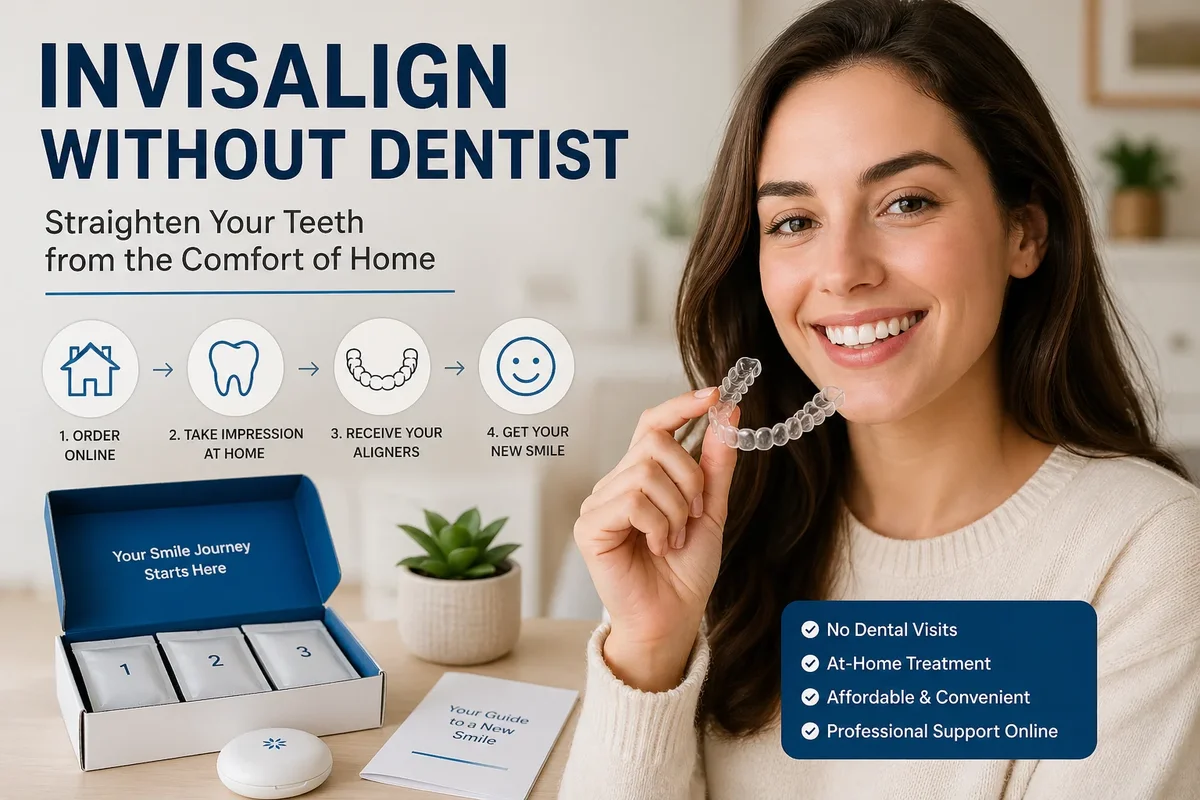
Expert Tips Before Trying Invisalign Without Dentist
Before deciding to try invisalign without dentist, it is crucial to understand that this choice carries both potential benefits and risks. While the convenience and affordability may seem attractive, orthodontic treatment is not a simple cosmetic process—it is a medical procedure that requires precision and careful monitoring. If you are considering invisalign without dentist, following expert advice can help you minimize risks and make a more informed decision.
Start with a Professional Dental Evaluation
One of the most important tips before attempting invisalign without dentist is to get a professional dental check-up. Even if you plan to proceed with an at-home system, an initial evaluation can identify underlying issues such as cavities, gum disease, or bite problems.
Skipping this step is one of the biggest mistakes people make when choosing invisalign without dentist. A dentist can determine whether your case is suitable for aligners and provide guidance on the safest approach. Without this evaluation, you may unknowingly begin treatment that could worsen your oral health.
What a Dentist Will Check
- Gum health and signs of periodontal disease
- Tooth decay or hidden cavities
- Bite alignment and jaw function
- Bone structure supporting the teeth
These factors cannot be accurately assessed through at-home impressions alone, making professional input essential before starting invisalign without dentist.
Understand Your Case Complexity
Not all dental cases are suitable for invisalign without dentist. Minor cosmetic adjustments may be manageable, but moderate to severe misalignment requires professional supervision. Understanding the complexity of your case is key to avoiding complications.
If your teeth require significant movement or bite correction, invisalign without dentist is unlikely to provide satisfactory results. In such cases, professional treatment is the safer and more effective option.
Signs Your Case May Be Too Complex
- Noticeable bite issues (overbite, underbite, crossbite)
- Severe crowding or large gaps
- Jaw discomfort or clicking sounds
- History of orthodontic relapse
If you experience any of these signs, it is strongly recommended to avoid invisalign without dentist and seek professional care instead.
Research the Provider Carefully
If you still plan to try invisalign without dentist, thorough research is essential. Not all providers offer the same level of quality, and choosing a reputable company can make a significant difference.
Look for providers that include some level of dental oversight, even if it is remote. Read reviews, check credentials, and ensure that the company follows recognized dental standards. This reduces the risks associated with invisalign without dentist.
Key Factors to Evaluate
- Transparency in treatment plans and pricing
- Availability of customer support
- Involvement of licensed dental professionals
- Clear policies for refinements or corrections
Taking the time to research can help you avoid unreliable providers and improve your experience with invisalign without dentist.
Follow Instructions Strictly
Success with invisalign without dentist depends heavily on user compliance. Unlike professional treatment, where dentists monitor progress, you are responsible for following the prescribed schedule and wearing aligners correctly.
Aligners must typically be worn for 20–22 hours per day to achieve effective results. Failing to follow these guidelines can delay progress or lead to incorrect tooth movement. This is one of the key challenges of invisalign without dentist.
Best Practices for Daily Use
- Wear aligners consistently as instructed
- Clean aligners regularly to maintain hygiene
- Avoid eating or drinking with aligners in place
- Switch aligners according to the schedule
Strict adherence to these practices is essential for minimizing risks when using invisalign without dentist.
Monitor Your Progress Closely
Since invisalign without dentist lacks in-person supervision, self-monitoring becomes critical. Regularly check your teeth and gums for any signs of discomfort, misalignment, or irritation.
If you notice unusual symptoms such as pain, swelling, or unexpected tooth movement, it is important to seek professional advice immediately. Ignoring these signs can lead to more serious complications.
Warning Signs to Watch For
- Persistent pain or discomfort
- Loose teeth or shifting bite
- Gum bleeding or swelling
- Aligners not fitting properly
Early detection of issues can prevent long-term damage when using invisalign without dentist.
Have a Backup Plan
Another important tip is to have a backup plan in case invisalign without dentist does not work as expected. This includes knowing where to seek professional help and being prepared for potential additional costs.
Consulting a clinic such as Redent Klinik Contact Page can provide you with a reliable option if you need expert intervention during or after your treatment.
Follow Expert Guidelines
Dental professionals strongly recommend caution when considering invisalign without dentist. According to the American Dental Association, orthodontic treatment should always involve proper diagnosis and supervision to ensure safety and effectiveness.
These guidelines highlight the importance of professional involvement, even when using modern aligner systems. Ignoring expert advice can increase the risk of complications and reduce the likelihood of successful outcomes.
Final Thoughts Before You Decide
In conclusion, trying invisalign without dentist requires careful planning, research, and responsibility. While it may offer convenience and cost savings, it also places the burden of monitoring and decision-making on the user.
By following these expert tips—starting with a professional evaluation, understanding your case, researching providers, and monitoring progress—you can reduce risks and improve your chances of success. However, it is important to remember that professional supervision remains the safest and most reliable way to achieve a healthy, well-aligned smile. 😊