
The idea of invisalign without doctor supervision has become increasingly popular in recent years. With the rise of direct-to-consumer orthodontic systems and social media trends promoting DIY aligners, many people are wondering whether it is possible — or even safe — to straighten their teeth using invisalign without doctor monitoring. At first glance, the concept sounds convenient: no frequent office visits, no in-person evaluations, and potentially lower upfront costs. But when it comes to moving teeth, convenience should never replace professional oversight. 🦷
When people search for invisalign without doctor guidance, they are often looking for faster treatment, reduced expenses, or privacy. However, tooth movement is a biological process that affects not just the visible enamel but also the roots, jawbone, gums, and bite alignment. Invisalign treatment was originally designed to be prescribed and monitored by licensed dental professionals who understand occlusion, bone density, periodontal health, and long-term stability. Attempting invisalign without doctor involvement removes the most important safety layer: clinical expertise.
To understand invisalign without doctor treatment properly, it is essential to clarify what it actually means. Invisalign is a trademarked clear aligner system that is normally provided by certified dentists or orthodontists. These professionals take digital scans, create a customized treatment plan, and monitor progress throughout the process. The idea of invisalign without doctor supervision usually refers to mail-order aligners or unsupervised clear aligner therapy, where patients skip comprehensive in-person exams. While this may appear similar to professional Invisalign, the level of diagnosis and monitoring can be drastically different.
One major concern with invisalign without doctor treatment is the absence of proper diagnostics. Before any orthodontic movement begins, a dentist typically performs X-rays, evaluates jaw relationships, checks for gum disease, identifies cavities, and ensures there are no underlying bone issues. Without these assessments, invisalign without doctor attempts can overlook serious problems such as impacted teeth, root resorption risks, or periodontal disease. Moving teeth in unhealthy conditions can worsen damage instead of improving alignment.
Another critical factor is bite correction. Invisalign without doctor plans may focus only on straightening visible front teeth rather than correcting how upper and lower teeth meet. Bite alignment (occlusion) plays a crucial role in chewing, speech, jaw comfort, and long-term dental stability. Improperly planned movement can lead to jaw pain, uneven wear, headaches, or temporomandibular joint (TMJ) disorders. Professional orthodontists adjust aligners throughout treatment to avoid these complications — something invisalign without doctor approaches may not provide.
There is also the issue of biological response. Every person’s bone remodels at a different rate. Teeth do not move like mechanical objects; they shift gradually as bone tissue breaks down and rebuilds. A dentist carefully monitors this process. Invisalign without doctor usage lacks personalized clinical adjustments if teeth do not respond as predicted. Without supervision, excessive force can damage roots, while insufficient force may result in incomplete correction.
Some individuals believe invisalign without doctor options are significantly cheaper. While certain direct aligner programs advertise lower starting prices, unexpected refinements, retreatment, or damage correction may increase overall costs. In some cases, patients eventually require full orthodontic treatment to fix complications caused by unsupervised movement. According to data referenced by the American Dental Association, orthodontic treatment requires proper professional evaluation to ensure patient safety and effectiveness.
It is also important to consider that Invisalign itself is a system designed for professional use. True Invisalign treatment includes attachments, interproximal reduction (IPR), and periodic clinical checks. Invisalign without doctor supervision often cannot incorporate these advanced techniques, which limits treatment capability. This means complex cases involving crowding, rotation, or bite correction may not be suitable for unsupervised aligners.
If you are considering invisalign without doctor supervision because of scheduling challenges or uncertainty, it is always safer to consult a dental professional first. A clinic can evaluate your teeth and determine whether clear aligners are appropriate for your case. If you want personalized advice, you can reach out through the Redent Klinik Contact Page to receive professional guidance tailored to your dental condition.
Ultimately, invisalign without doctor involvement may seem attractive for convenience or cost reasons, but orthodontic treatment is a medical procedure, not a cosmetic accessory. Your teeth, gums, jawbone, and overall oral health deserve expert supervision. Before making a decision, understanding the risks, biological realities, and long-term consequences of invisalign without doctor treatment is essential. In the following sections, we will explore safety concerns, legal considerations, and cost comparisons in greater depth so you can make a fully informed choice. 😊
Is Invisalign Without Doctor Safe for Your Teeth?
The safety of invisalign without doctor supervision is one of the most important questions patients ask before choosing at-home clear aligners. While the concept of invisalign without doctor monitoring may appear convenient and modern, orthodontic tooth movement is a medical procedure that affects bone structure, gum health, bite alignment, and long-term oral stability. Teeth are not cosmetic accessories that can be adjusted casually; they are living structures connected to ligaments and surrounded by bone. Any attempt at invisalign without doctor guidance must be evaluated from a clinical safety perspective. 🦷
Understanding How Tooth Movement Affects Oral Health
To determine whether invisalign without doctor treatment is safe, we must first understand how teeth move. Orthodontic aligners apply controlled pressure to teeth, triggering a biological process called bone remodeling. The bone surrounding the tooth root dissolves on one side and rebuilds on the other. This delicate balance requires precise force levels and careful timing. When invisalign without doctor supervision is used, there is no in-person monitoring to confirm that bone remodeling is occurring safely.
Excessive pressure can lead to root resorption, where the tooth root shortens permanently. Insufficient pressure can result in incomplete movement and relapse. Professional Invisalign treatment includes periodic evaluations to adjust aligners if teeth are not tracking properly. With invisalign without doctor systems, this level of personalized clinical correction may not exist.
Hidden Risks of Skipping Clinical Examinations
One major safety concern with invisalign without doctor treatment is the absence of comprehensive diagnostic exams. Before prescribing aligners, dentists typically perform:
- Panoramic X-rays
- Bite analysis (occlusion check)
- Gum health evaluation
- Cavity screening
- Jaw joint (TMJ) assessment
Without these steps, invisalign without doctor use may overlook serious problems such as impacted teeth, periodontal disease, bone loss, or undetected infections. Moving teeth in the presence of gum disease can accelerate tissue damage and lead to tooth mobility. In some cases, patients attempting invisalign without doctor solutions only discover underlying issues after complications arise.
Gum and Bone Health Considerations
Healthy gums and strong bone density are essential for safe orthodontic movement. If a patient has mild periodontal disease, invisalign without doctor aligners may shift teeth in an unstable environment. This increases the risk of gum recession, bone loss progression, and even tooth loss. Professional supervision ensures gum inflammation is controlled before and during treatment.
Bite Problems and Jaw Complications
Another overlooked danger of invisalign without doctor treatment is improper bite correction. Many at-home aligner systems focus on straightening front teeth rather than adjusting how upper and lower teeth fit together. A misaligned bite can cause uneven chewing forces, enamel wear, headaches, and temporomandibular joint (TMJ) pain.
When dentists supervise Invisalign, they monitor occlusion at each stage. They may use attachments, interproximal reduction (IPR), or elastic bands to guide movement safely. Invisalign without doctor approaches typically lack these advanced interventions, which can limit treatment effectiveness and increase long-term complications.
Regulatory and Professional Warnings
Organizations such as the American Dental Association emphasize that orthodontic treatment should be supervised by licensed professionals. Teeth movement affects overall oral health, and remote-only systems cannot always replace hands-on evaluations. Invisalign without doctor programs may not meet the same diagnostic standards required in a clinical setting.
While some companies provide remote check-ins via photos, images cannot replace X-rays or tactile examination. For example, early root damage or bone loss cannot be detected through photographs alone. This makes invisalign without doctor monitoring potentially risky in moderate to complex cases.
Who Might Face Greater Risk?
Not every patient faces equal danger when considering invisalign without doctor treatment. However, certain groups are at significantly higher risk:
- Individuals with previous orthodontic relapse
- Patients with gum disease history
- Those with bite misalignment (overbite, underbite, crossbite)
- Adults over 40 with reduced bone density
- Anyone experiencing jaw pain or clicking
For these individuals, invisalign without doctor use can worsen underlying structural problems. A professional evaluation ensures that aligners are appropriate and safe before starting treatment.
Emergency Situations Without Supervision
If aligners crack, fit improperly, or cause severe pain, patients using invisalign without doctor solutions may not have immediate in-person support. In clinical settings, dentists can adjust trays, reshape attachments, or pause treatment safely. Without that option, patients may continue wearing poorly fitting trays, increasing the risk of damage.
Is Invisalign Without Doctor Ever Safe?
In very mild cosmetic alignment cases, invisalign without doctor systems may appear to work without immediate complications. However, “appearing successful” is not the same as being biologically safe. Even minor movements affect roots and bone structures. Long-term stability requires careful planning and retention strategies.
The safest approach is always professional evaluation before beginning any orthodontic movement. If convenience is your main concern, many clinics now offer digital monitoring combined with in-person safety checks. This hybrid approach provides flexibility without sacrificing protection.
If you are unsure whether invisalign without doctor is suitable for your dental condition, seeking professional advice is essential. You can request a personalized consultation through the Redent Klinik Contact Page to receive expert guidance tailored to your needs. 😊
In summary, while invisalign without doctor supervision may seem attractive due to convenience and cost, orthodontic safety depends on accurate diagnosis, controlled force application, and continuous monitoring. Teeth movement is a medical process, not a cosmetic shortcut. Understanding the biological risks, bite implications, and long-term consequences ensures that you make an informed and safe decision for your smile.
Hidden Risks of Trying Invisalign Without Doctor
Choosing invisalign without doctor supervision may seem like a simple shortcut to a straighter smile, but the hidden risks are often underestimated. Many patients are attracted to invisalign without doctor options because they promise convenience, lower costs, and fewer clinic visits. However, what is not immediately visible are the biological, structural, and long-term oral health consequences that can arise when tooth movement is not professionally monitored. Orthodontic treatment is not just about aesthetics; it is about maintaining balance between teeth, gums, bone, and jaw joints. ⚠️
When patients attempt invisalign without doctor guidance, they remove the most critical safety component: professional diagnosis and continuous clinical evaluation. While aligners may look harmless, improper force distribution or inaccurate planning can create complications that are expensive and difficult to correct later.
Root Damage and Root Resorption
One of the most serious risks of invisalign without doctor treatment is root resorption. This condition occurs when excessive or poorly controlled orthodontic force causes the root of a tooth to shorten permanently. Since invisalign without doctor systems may not include periodic X-rays, early signs of root damage can go undetected.
In a professional setting, dentists monitor root health through radiographs and adjust treatment if excessive movement is observed. Without that supervision, invisalign without doctor users may continue wearing trays that are applying unsafe pressure. Over time, shortened roots can weaken tooth stability and increase the risk of tooth loss.
Why X-Rays Are Essential
X-rays reveal what is happening beneath the surface. Invisalign without doctor treatment often skips this crucial diagnostic step. Without imaging, it is impossible to detect impacted teeth, cysts, bone defects, or early root changes. This is one of the most overlooked hidden dangers.
Gum Recession and Periodontal Complications
Healthy gums are necessary for safe orthodontic movement. Invisalign without doctor use can worsen existing gum inflammation if underlying periodontal disease is not identified beforehand. When aligners apply pressure to teeth surrounded by weak gum tissue, recession may occur. This exposes sensitive root surfaces and increases the risk of decay.
Professional orthodontic supervision ensures that gum health is evaluated before treatment begins. If inflammation or bone loss is present, dentists treat it first. Invisalign without doctor systems may not provide that preventive care, allowing hidden gum disease to progress silently.
Improper Bite Alignment (Malocclusion)
Another hidden risk of invisalign without doctor treatment is bite imbalance. Many unsupervised aligner programs focus only on cosmetic straightening of front teeth. However, bite correction involves precise coordination between upper and lower arches. If this relationship is not properly managed, invisalign without doctor treatment can create:
- Uneven chewing forces
- Jaw discomfort or TMJ pain
- Chronic headaches
- Tooth wear or fractures
Professional Invisalign therapy often uses attachments, elastics, or enamel reshaping to guide bite correction. Invisalign without doctor programs typically lack these advanced adjustments, which limits treatment accuracy and increases long-term risk.
Unpredictable Tooth Movement
Teeth do not always move according to digital simulations. Bone density, age, genetics, and oral habits influence treatment response. Invisalign without doctor users may assume that the treatment plan will work perfectly, but in reality, many cases require mid-course corrections.
In clinical environments, dentists evaluate whether teeth are “tracking” correctly and modify aligners when necessary. Without this step, invisalign without doctor attempts may lead to incomplete alignment or unintended spacing. Patients sometimes discover that their teeth appear straighter but their bite feels uncomfortable or unstable.
Mid-Treatment Complications
If a tray cracks, does not fit properly, or causes sharp pain, professional Invisalign patients can visit their dentist for immediate adjustment. Invisalign without doctor users may not have quick access to in-person care. Continuing to wear ill-fitting trays can increase tissue irritation and movement errors.
Financial Consequences of Complications
Many individuals choose invisalign without doctor treatment because it appears more affordable. Average mail-order aligner systems may cost between $1,500 and $2,500, while supervised Invisalign treatment typically ranges from $3,000 to $7,000 depending on complexity. However, these numbers can be misleading.
If invisalign without doctor treatment causes complications such as bite misalignment or gum damage, corrective orthodontic care can exceed the cost of starting with professional supervision. Retreatment, restorative procedures, and periodontal therapy can significantly increase total expenses.
Psychological and Aesthetic Dissatisfaction
Another hidden issue with invisalign without doctor treatment is unmet expectations. Digital previews may show ideal results, but real-life biological response can differ. Patients sometimes complete invisalign without doctor programs only to realize that rotations, spacing, or bite issues remain unresolved.
This dissatisfaction can lead to frustration and loss of trust in orthodontic care. Professional oversight helps set realistic expectations and adjust plans based on progress.
Professional Guidance Is a Protective Layer
Organizations like the American Dental Association emphasize the importance of professional evaluation for orthodontic treatment. Teeth movement is a healthcare procedure, not merely a cosmetic product. Invisalign without doctor supervision removes essential safeguards designed to protect patients.
If you are considering aligner therapy but are concerned about time or cost, a safer solution is to consult a dental clinic for an evaluation. Many clinics now offer flexible monitoring schedules and digital tracking while maintaining clinical safety. You can request personalized advice through the Redent Klinik Contact Page to determine the best option for your smile.
In conclusion, invisalign without doctor treatment may appear convenient, but the hidden risks include root damage, gum recession, bite imbalance, unpredictable movement, and financial setbacks. Orthodontic care requires precision, supervision, and professional expertise. Before making a decision, understanding these risks ensures that your journey toward a straighter smile remains both safe and successful. 😊
Can You Legally Get Invisalign Without Doctor Supervision?
The question of legality is one of the most misunderstood aspects of invisalign without doctor treatment. Many people assume that if aligners are available online, then invisalign without doctor supervision must automatically be legal and safe. However, the legal framework surrounding orthodontic treatment is more complex. Teeth movement is classified as a medical or dental procedure in most countries, which means it is typically regulated by professional licensing laws. Understanding the legal implications of invisalign without doctor use is essential before starting any unsupervised treatment. ⚖️
Orthodontics Is Considered a Medical Procedure
In most jurisdictions, orthodontic treatment—including clear aligners—is considered part of dental practice. This means only licensed dentists or orthodontists are legally authorized to diagnose, plan, and supervise tooth movement. Invisalign without doctor supervision often operates in a gray area where companies provide aligners directly to consumers, sometimes with remote review by a dental professional who may never meet the patient in person.
The legal concern arises because diagnosis traditionally requires clinical examination, X-rays, and direct patient interaction. Invisalign without doctor systems that skip in-person exams may not fully meet traditional standards of care expected in regulated dental treatment.
Remote Monitoring vs. No Supervision
It is important to distinguish between remote supervision and true invisalign without doctor treatment. Some tele-dentistry platforms involve licensed dentists reviewing scans and progress photos. However, invisalign without doctor in its pure form implies little to no personalized clinical evaluation. The level of oversight significantly affects both legal responsibility and patient protection.
Regulatory Positions and Professional Guidelines
Professional organizations such as the American Dental Association have expressed concerns regarding unsupervised orthodontic treatment. They emphasize that proper examination, diagnosis, and ongoing monitoring are essential components of safe dental care. While invisalign without doctor systems may operate legally in some regions, professional associations often warn that bypassing in-person evaluations can compromise patient safety.
Legal standards vary by country and state. In some areas, dental boards require that impressions or digital scans be taken under the supervision of a licensed dentist. In others, direct-to-consumer models are permitted but still subject to consumer protection laws. This means invisalign without doctor services may be allowed but are not necessarily endorsed by dental authorities.
Who Is Responsible If Something Goes Wrong?
One of the most important legal questions about invisalign without doctor treatment is liability. If complications occur—such as root damage, gum recession, or bite misalignment—who is legally responsible? In traditional orthodontic care, the supervising dentist carries professional liability insurance and follows established standards of care.
With invisalign without doctor services, responsibility may become less clear. Some companies include disclaimers in their agreements limiting liability. Patients may find it more difficult to seek compensation if treatment causes harm. This uncertainty is a major legal and ethical concern associated with invisalign without doctor options.
Informed Consent and Patient Rights
In professional dental care, patients sign informed consent forms after receiving a detailed explanation of risks, benefits, and alternatives. Invisalign without doctor platforms may provide digital consent forms, but without direct consultation, patients may not fully understand potential complications. True informed consent requires comprehensive explanation—not just clicking “agree” online.
Insurance and Coverage Implications
Another legal and financial factor to consider is insurance coverage. Many dental insurance plans cover orthodontic treatment when it is prescribed and supervised by a licensed professional. Invisalign without doctor programs may not qualify for reimbursement under certain policies.
If a patient later requires corrective treatment due to complications from invisalign without doctor use, insurance companies may deny coverage if the original treatment was unsupervised. This can significantly increase long-term financial burden.
Are There Situations Where It Is Allowed?
Yes, invisalign without doctor systems are legally operating in many regions under telehealth or consumer product models. However, legality does not equal clinical appropriateness. Just because invisalign without doctor treatment can be purchased does not mean it is suitable for every dental case.
Minor cosmetic alignment issues might be addressed through limited remote monitoring, but moderate to complex cases involving bite correction, rotations, or jaw discrepancies require professional oversight. The safest path is always to obtain a professional evaluation before beginning any orthodontic movement.
Why Professional Evaluation Protects You Legally
When treatment is supervised by a licensed dentist, patients benefit from regulated standards, professional accountability, and malpractice coverage. Invisalign without doctor use removes many of these legal protections. If complications arise, patients may face longer dispute processes or limited recourse.
For those considering aligners but concerned about time or cost, consulting a dental clinic is a safer first step. You can seek personalized advice through the Redent Klinik Contact Page to determine whether clear aligners are appropriate for your situation.
In conclusion, invisalign without doctor treatment may be legally available in certain regions, but legal availability does not eliminate clinical risks or liability concerns. Orthodontic care is regulated for a reason: it involves biological processes that affect long-term oral health. Understanding the legal landscape helps you make an informed decision that protects not only your smile but also your rights as a patient. 😊
Cost Comparison: Invisalign Without Doctor vs Supervised Treatment
One of the main reasons people consider invisalign without doctor supervision is cost. At first glance, invisalign without doctor options appear significantly more affordable than traditional, dentist-supervised Invisalign treatment. Marketing campaigns often highlight lower upfront pricing, flexible payment plans, and the promise of “professional-level results” without in-office visits. However, when evaluating the true financial impact of invisalign without doctor treatment, it is essential to look beyond the advertised starting price. 💰
Orthodontic treatment is not simply a product purchase—it is a healthcare service that involves diagnosis, planning, monitoring, and long-term retention. Comparing invisalign without doctor programs to supervised Invisalign requires understanding what is included, what is excluded, and what hidden costs may arise over time.
Average Cost of Invisalign Without Doctor
Most invisalign without doctor systems, typically direct-to-consumer aligner companies, advertise prices ranging from $1,500 to $2,500. These prices often include:
- At-home impression kit or digital scan
- A full set of aligners
- Remote monitoring (photo-based)
- Basic retainers (sometimes optional)
Because invisalign without doctor treatment eliminates regular in-office visits, overhead costs are reduced. That is why the price appears lower. However, this lower cost usually reflects limited clinical oversight and fewer customization options.
What Is Not Included?
In many invisalign without doctor packages, the following are not included:
- Comprehensive X-rays
- Full periodontal evaluation
- Bite correction appliances
- In-person emergency adjustments
- Refinements beyond a certain limit
If complications arise, additional costs may be required. This is where invisalign without doctor can become more expensive than initially expected.
Average Cost of Dentist-Supervised Invisalign
Traditional Invisalign treatment supervised by a licensed dentist or orthodontist typically costs between $3,000 and $7,000, depending on case complexity, geographic location, and treatment duration. In moderate to complex cases, fees may exceed this range.
Unlike invisalign without doctor systems, supervised treatment usually includes:
- Comprehensive oral examination
- Panoramic and cephalometric X-rays
- Customized digital treatment planning
- Attachments and interproximal reduction (IPR)
- Periodic in-person monitoring
- Unlimited refinements (in many cases)
- Long-term retention guidance
Although the price is higher, patients are paying for medical supervision, professional liability coverage, and clinical expertise. Orthodontic movement is biologically complex, and supervised treatment reduces long-term risk.
Hidden Financial Risks of Invisalign Without Doctor
When evaluating invisalign without doctor costs, patients should consider potential secondary expenses. These may include:
- Retreatment if teeth do not align properly
- Correction of bite problems
- Periodontal treatment due to gum complications
- Restorative work if teeth shift improperly
If invisalign without doctor treatment fails to correct alignment adequately, patients may ultimately require full orthodontic treatment under professional supervision. This means paying twice: once for the unsupervised aligners and again for corrective therapy.
Insurance Coverage Differences
Many dental insurance plans partially cover orthodontic treatment when supervised by a licensed provider. Invisalign without doctor programs may not qualify for reimbursement under certain insurance policies. Patients should verify coverage before starting treatment.
Value vs Price: A Long-Term Perspective
It is important to distinguish between price and value. Invisalign without doctor treatment may offer a lower upfront investment, but value includes safety, stability, and long-term results. Teeth that shift improperly may relapse faster, requiring additional retention or retreatment.
Supervised Invisalign often includes detailed retention planning, ensuring that results are stable for years. Without structured follow-up, invisalign without doctor outcomes may be less predictable.
Financing and Payment Plans
Many dental clinics offer financing options that make supervised Invisalign more accessible. Monthly payment plans can reduce the financial gap between invisalign without doctor programs and professional treatment. Some clinics also provide consultation assessments to determine eligibility for clear aligners.
If cost is your primary concern, discussing options directly with a dental provider may reveal flexible solutions that maintain safety standards. You can explore personalized guidance through the Redent Klinik Contact Page.
Professional Guidance Protects Your Investment
Organizations such as the American Dental Association emphasize that orthodontic treatment is a healthcare service, not merely a consumer product. While invisalign without doctor systems may reduce upfront expenses, professional supervision reduces the risk of complications that could significantly increase total cost.
In conclusion, invisalign without doctor treatment may appear more affordable initially, with average costs between $1,500 and $2,500. However, supervised Invisalign typically ranges from $3,000 to $7,000 because it includes diagnostics, monitoring, and professional accountability. When factoring in potential retreatment, insurance limitations, and long-term stability, the true financial comparison becomes more complex. Carefully evaluating both short-term savings and long-term value ensures that your investment in your smile remains both safe and worthwhile. 😊
How Tooth Movement Actually Works (And Why Monitoring Matters)
To truly understand the risks and limitations of invisalign without doctor supervision, it is essential to understand how tooth movement actually works. Teeth do not simply slide into place like objects on a table. Orthodontic movement is a complex biological process involving bone remodeling, periodontal ligament response, controlled force application, and long-term stabilization. When patients attempt invisalign without doctor monitoring, they are engaging in a medical process that directly affects living tissues. 🦷
Every time an aligner applies pressure to a tooth, it triggers a cellular response in the surrounding bone. The periodontal ligament, which connects the tooth root to the jawbone, senses mechanical force. Bone begins to break down on the pressure side and rebuild on the tension side. This controlled breakdown and rebuilding process allows the tooth to move gradually. Without proper monitoring, invisalign without doctor systems may apply forces that are either too strong, too weak, or incorrectly directed.
The Biology Behind Orthodontic Tooth Movement
Orthodontic movement depends on three critical biological components:
- Healthy periodontal ligament
- Sufficient bone density
- Controlled force levels
If any of these components are compromised, tooth movement can become unpredictable. Invisalign without doctor treatment does not always include comprehensive evaluation of bone health or ligament condition. Without X-rays and clinical examination, patients may not realize that their bone support is insufficient for safe movement.
Bone Remodeling Is a Delicate Balance
Bone remodeling must occur at a safe and controlled pace. Excessive force can damage the ligament and cause root resorption. Insufficient force may result in stalled progress. Professional orthodontists monitor response and adjust treatment accordingly. Invisalign without doctor systems typically rely on pre-set aligner sequences without in-person evaluation of biological response.
Why Monitoring Matters During Treatment
In traditional Invisalign treatment, patients visit their dentist periodically to ensure teeth are “tracking” correctly. Tracking means that teeth are moving according to the digital plan. If a tooth fails to move as predicted, refinements are made. Invisalign without doctor supervision may not detect tracking issues early enough to prevent complications.
For example, if a tooth rotates incorrectly or does not seat properly into the aligner, pressure distribution changes. This can create uneven forces and unintended bite shifts. Professional monitoring identifies these issues quickly. Without supervision, invisalign without doctor users may continue progressing through trays despite improper alignment.
Attachments and Advanced Techniques
Professional Invisalign often uses composite attachments bonded to teeth to enhance grip and precision. Additionally, dentists may perform interproximal reduction (IPR) to create space safely. Invisalign without doctor programs typically do not offer these advanced techniques, limiting their ability to manage complex movements such as severe rotations or vertical adjustments.
The Importance of Bite (Occlusion) Control
Tooth movement is not only about straightening visible front teeth. Proper occlusion ensures that upper and lower teeth meet evenly during chewing. Invisalign without doctor systems may focus primarily on cosmetic alignment rather than functional bite correction.
Improper bite alignment can lead to:
- Jaw discomfort
- Uneven enamel wear
- Muscle tension and headaches
- Long-term instability
Professional orthodontic supervision ensures that occlusion is adjusted gradually and safely. Invisalign without doctor approaches may overlook subtle bite discrepancies that only become noticeable after treatment completion.
Age and Bone Density Factors
Age significantly influences orthodontic response. Younger patients typically have more adaptable bone structures, while adults may have denser bone requiring modified force application. Invisalign without doctor systems do not always personalize force levels based on bone density variations.
Patients over 40, for example, may have mild bone loss that requires careful force control. Without professional evaluation, invisalign without doctor treatment could move teeth in ways that increase instability.
Retention and Long-Term Stability
After active movement, teeth naturally attempt to return to their original positions. This phenomenon is known as relapse. Professional Invisalign treatment includes structured retention planning to maintain results. Invisalign without doctor systems may provide basic retainers, but long-term stability often depends on individualized follow-up care.
Monitoring does not end when the final aligner is removed. Dentists assess gum adaptation, bite stability, and overall oral health. Invisalign without doctor users may not receive ongoing evaluation, increasing the risk of relapse or unnoticed complications.
Professional Organizations Emphasize Supervision
Organizations like the American Dental Association emphasize that orthodontic treatment should be carefully diagnosed and supervised. Tooth movement involves biological changes that require professional oversight to ensure safety and effectiveness.
If you are considering aligner therapy but want to understand whether it is suitable for your case, professional evaluation is essential. You can request a personalized consultation through the Redent Klinik Contact Page to receive expert guidance tailored to your dental condition.
In summary, tooth movement is a biologically controlled medical process involving bone remodeling, ligament adaptation, and bite coordination. Invisalign without doctor supervision removes critical monitoring that ensures safe force application and predictable outcomes. While aligners may appear simple, the science behind orthodontics is complex. Understanding this complexity helps you appreciate why professional monitoring matters for achieving a healthy, stable, and lasting smile. 😊
Who Is Most at Risk When Choosing Invisalign Without Doctor?
While invisalign without doctor supervision may seem convenient and affordable, it is not equally risky for everyone. Some individuals face significantly higher dangers when attempting invisalign without doctor treatment due to their oral health condition, age, bite structure, or medical history. Understanding who is most vulnerable helps patients avoid complications that could permanently affect their teeth, gums, and jaw function. Orthodontic tooth movement is a biological process, and certain risk factors make invisalign without doctor approaches far less predictable and potentially harmful. ⚠️
Patients With Gum Disease or Bone Loss
One of the highest-risk groups considering invisalign without doctor treatment includes individuals with a history of gum disease (periodontitis) or bone loss. Healthy bone support is essential for safe orthodontic movement. When aligners apply pressure, bone must remodel gradually and evenly.
If someone has undiagnosed periodontal disease and chooses invisalign without doctor supervision, the aligners may shift teeth within weakened bone structures. This can accelerate bone deterioration and increase tooth mobility. Professional orthodontic treatment always begins with a periodontal evaluation to ensure stability. Invisalign without doctor systems may not include comprehensive gum assessments, making them particularly risky for patients with prior inflammation or bleeding gums.
Warning Signs to Watch For
- Frequent gum bleeding
- Gum recession
- Loose teeth
- Persistent bad breath
If any of these symptoms are present, invisalign without doctor treatment should not be started without professional evaluation.
Adults Over 40 With Reduced Bone Density
Age plays a critical role in orthodontic response. Adults over 40 often experience natural changes in bone density and gum elasticity. While many adults successfully complete supervised Invisalign treatment, invisalign without doctor programs may not adapt force levels based on age-related changes.
Because invisalign without doctor systems rely on standardized treatment protocols, they may not adjust pressure to accommodate slower bone remodeling. This increases the risk of root resorption or prolonged treatment time. Professional orthodontic monitoring ensures adjustments are made when teeth respond differently than expected.
Patients With Moderate to Severe Bite Problems
Individuals with overbite, underbite, crossbite, or open bite conditions are especially vulnerable when choosing invisalign without doctor treatment. Bite alignment (occlusion) affects chewing efficiency, jaw comfort, and long-term dental stability.
Invisalign without doctor programs often focus on front-tooth alignment rather than full bite correction. Without attachments, elastics, or enamel adjustments, complex cases may not be adequately managed. This can lead to:
- Jaw pain
- Uneven tooth wear
- Speech difficulties
- TMJ disorders
Supervised Invisalign treatment includes occlusal monitoring and bite refinement throughout therapy. Invisalign without doctor approaches typically lack this in-person functional assessment.
Patients With Previous Orthodontic Relapse
Individuals who previously had braces or aligners and experienced relapse are another high-risk group. Teeth that have shifted once may require careful stabilization and detailed retention planning. Invisalign without doctor treatment may not account for scar tissue, previous extractions, or root positioning.
Without professional supervision, invisalign without doctor attempts may partially correct alignment but fail to address the underlying cause of relapse. This can result in recurring movement even after treatment ends.
Retention Is Critical
Long-term retention planning is essential to maintain alignment. Professional orthodontic care includes customized retainers and follow-up evaluations. Invisalign without doctor systems may provide generic retainers without long-term monitoring.
People With Undiagnosed Dental Problems
Many patients do not realize they have cavities, cracked teeth, or hidden infections until they undergo a professional examination. Invisalign without doctor systems typically rely on impressions or digital scans without X-rays. This means underlying issues may go undetected.
Moving a tooth with an untreated infection or decay can worsen damage. Professional evaluation ensures teeth are healthy before orthodontic forces are applied. This safety step is often missing in invisalign without doctor programs.
Teenagers and Growing Patients
Adolescents still experiencing jaw growth require careful orthodontic planning. Invisalign without doctor treatment may not properly account for growth patterns, skeletal discrepancies, or eruption timing. Supervised orthodontic care considers facial development and long-term bite alignment.
Without professional monitoring, invisalign without doctor use in growing patients could interfere with natural jaw development.
Patients Seeking “Quick Cosmetic Fixes”
Some individuals pursue invisalign without doctor treatment purely for cosmetic improvement before events such as weddings or job interviews. While minor cosmetic alignment may seem harmless, rushing orthodontic movement increases biological risk. Teeth must move gradually to protect roots and bone.
Professional orthodontists carefully pace treatment to avoid complications. Invisalign without doctor systems may promise fast results, but speed should never compromise safety.
Why Professional Evaluation Is Essential
Organizations like the American Dental Association emphasize the importance of proper diagnosis and supervision in orthodontic care. Invisalign without doctor treatment removes the protective layer of clinical oversight that ensures safe force application and early complication detection.
If you fall into any of the higher-risk categories described above, professional consultation is strongly recommended. You can seek personalized guidance through the Redent Klinik Contact Page to determine whether aligners are appropriate for your dental health.
In summary, invisalign without doctor treatment is particularly risky for patients with gum disease, reduced bone density, bite problems, orthodontic relapse, undiagnosed dental issues, or ongoing jaw growth. While clear aligners can be effective when properly supervised, removing professional monitoring increases the likelihood of complications. Understanding your personal risk factors ensures that your decision is informed, responsible, and protective of your long-term oral health. 😊
Professional Alternatives to Invisalign Without Doctor
For individuals considering invisalign without doctor supervision due to cost, convenience, or privacy concerns, it is important to understand that there are safer professional alternatives available. While invisalign without doctor options may seem attractive at first glance, supervised orthodontic solutions now offer flexible, technology-driven approaches that maintain medical safety without sacrificing convenience. The goal is not simply to avoid invisalign without doctor risks, but to choose an option that balances affordability, accessibility, and professional oversight. 🦷
Modern dentistry has evolved significantly. Patients no longer need to choose between full traditional braces and invisalign without doctor programs. Today, many clinics provide hybrid monitoring models, digital follow-ups, and customized treatment plans that reduce office visits while preserving clinical control.
1. Dentist-Supervised Clear Aligner Therapy
The most direct alternative to invisalign without doctor treatment is clear aligner therapy prescribed and monitored by a licensed dentist or orthodontist. Unlike invisalign without doctor systems, supervised aligners begin with comprehensive diagnostics including X-rays, bite analysis, and gum health evaluation.
This approach ensures that:
- Underlying dental problems are identified before treatment
- Force levels are customized to your bone density
- Tracking is monitored at regular intervals
- Adjustments are made if teeth do not move as predicted
While invisalign without doctor may eliminate in-person visits, supervised clear aligner therapy often reduces the total number of appointments through digital progress tracking while maintaining safety standards.
Digital Monitoring With Clinical Oversight
Many clinics now use smartphone scanning apps that allow patients to submit progress images from home. Unlike invisalign without doctor platforms, these scans are reviewed by the same dentist who created the treatment plan. This combines convenience with accountability.
2. Limited Orthodontic Treatment for Minor Corrections
If your case involves mild cosmetic alignment, a dentist may recommend limited orthodontic treatment. This option focuses on small front-tooth corrections while still providing professional supervision. Patients who initially consider invisalign without doctor often fall into this category.
Because limited treatment addresses minor movement only, costs may be significantly lower than comprehensive Invisalign. This narrows the price gap between invisalign without doctor systems and supervised care.
3. In-Office Payment Plans and Financing
Cost is one of the main reasons patients look into invisalign without doctor solutions. However, many dental clinics offer monthly payment plans that make supervised Invisalign more accessible. Instead of paying $3,000 to $7,000 upfront, patients can spread payments over time.
This approach allows individuals to receive full clinical supervision while maintaining manageable financial commitments. Invisalign without doctor treatment may appear cheaper, but financing options often reduce the difference significantly.
4. Comprehensive Orthodontic Evaluation Before Any Decision
Even if someone is seriously considering invisalign without doctor treatment, the safest first step is a professional consultation. A dentist can determine whether your case is mild enough for aligners or requires more advanced correction.
During evaluation, professionals assess:
- Bite alignment (occlusion)
- Bone support levels
- Tooth root positioning
- Gum health condition
This assessment prevents starting invisalign without doctor treatment when hidden risks are present.
Preventing Complications Early
Professional evaluation reduces the likelihood of root resorption, gum recession, and bite imbalance. Invisalign without doctor systems may not detect early complications until they become serious.
5. Traditional Braces as a Structured Alternative
Although many adults prefer clear aligners, traditional braces remain one of the most predictable orthodontic treatments. For moderate to complex cases, braces may provide more controlled movement than invisalign without doctor options.
Braces allow orthodontists to make real-time mechanical adjustments. Invisalign without doctor systems rely on pre-set trays, which may not adapt if biological response differs from digital predictions.
6. Professional Guidance Reduces Long-Term Costs
Organizations such as the American Dental Association emphasize that orthodontic treatment should be supervised by qualified professionals. While invisalign without doctor systems may reduce initial expenses, corrective treatment following complications can increase long-term costs.
Professional supervision protects both your oral health and your financial investment.
7. Personalized Consultation for Safe Alignment
If you are unsure whether aligners are appropriate for your case, personalized consultation provides clarity. Instead of risking invisalign without doctor complications, you can seek expert advice tailored to your dental condition. For individualized recommendations, visit the Redent Klinik Contact Page.
In conclusion, invisalign without doctor treatment is not the only pathway to straighter teeth. Professional alternatives now offer flexible monitoring, financing options, and customized care that maintain safety while addressing convenience concerns. Orthodontic treatment is a medical process requiring expertise, precision, and oversight. Choosing supervised care ensures predictable results, long-term stability, and protection against avoidable complications. 😊
When to Contact a Dental Clinic Instead of Invisalign Without Doctor
While invisalign without doctor supervision may appear convenient, there are clear situations where contacting a licensed dental clinic is not just recommended — it is essential. Orthodontic treatment affects your bone structure, gum stability, and bite function. Attempting invisalign without doctor monitoring in the wrong circumstances can lead to long-term complications that are far more expensive and difficult to correct. Knowing when to step away from invisalign without doctor options and seek professional evaluation protects both your smile and your overall oral health. 🦷
1. If You Have Never Had a Full Dental Examination
If you have not had a recent comprehensive dental check-up, invisalign without doctor treatment should not be your first step. A full examination typically includes:
- Panoramic X-rays
- Bite analysis
- Gum health evaluation
- Cavity detection
- Assessment of bone density
Without these diagnostic tools, invisalign without doctor systems may move teeth that have underlying issues such as hidden decay, infections, or periodontal disease. Moving compromised teeth can worsen existing conditions. A dental clinic ensures your mouth is healthy before any orthodontic force is applied.
Why X-Rays Matter Before Tooth Movement
X-rays reveal root length, bone levels, and impacted teeth — information that cannot be seen from digital impressions alone. Invisalign without doctor approaches typically do not include in-depth radiographic analysis. If you have never had orthodontic X-rays, professional evaluation is crucial.
2. If You Experience Jaw Pain or Clicking
Jaw discomfort, popping sounds, or limited mouth opening are signs of possible temporomandibular joint (TMJ) dysfunction. Invisalign without doctor treatment does not usually involve detailed TMJ evaluation. Adjusting tooth position without understanding jaw alignment may aggravate joint stress.
When jaw symptoms are present, a dental clinic can assess occlusion and joint health before recommending clear aligners. Professional supervision ensures that orthodontic movement improves, rather than worsens, jaw function.
3. If You Have Moderate or Severe Bite Problems
Overbite, underbite, crossbite, and open bite conditions require careful correction. Invisalign without doctor programs often focus on cosmetic alignment rather than functional occlusion. If your teeth do not meet evenly when you bite down, professional orthodontic care is necessary.
Clinicians use attachments, elastics, and precise adjustments to guide bite correction. Invisalign without doctor systems typically lack these advanced modifications. Without clinical monitoring, bite imbalance may develop or worsen during treatment.
Signs Your Bite Needs Professional Attention
- Difficulty chewing evenly
- Uneven tooth wear
- Speech changes
- Chronic headaches
If any of these symptoms exist, invisalign without doctor is not a safe substitute for professional orthodontic care.
4. If You Notice Gum Recession or Bleeding
Healthy gums are the foundation of safe tooth movement. Invisalign without doctor supervision may not identify early-stage periodontal disease. If your gums bleed while brushing or appear to be receding, a dental clinic should evaluate you before starting aligner therapy.
Moving teeth in weakened gum tissue can accelerate bone loss. Professional monitoring ensures gum stability throughout treatment.
5. If Teeth Are Not Tracking Properly During Treatment
Some individuals begin invisalign without doctor programs and later notice that aligners do not fit properly. Teeth may fail to seat fully into trays, causing gaps or discomfort. This is known as tracking failure.
Without professional oversight, patients may continue switching trays even when teeth are not moving as predicted. This increases the risk of bite imbalance and root stress. A dental clinic can reassess the treatment plan and create refinements safely.
Do Not Ignore Persistent Pain
Mild soreness is normal during orthodontic treatment, but sharp or prolonged pain is not. Invisalign without doctor systems may not provide in-person support if severe discomfort occurs. Contacting a clinic immediately protects against long-term damage.
6. If You Want Long-Term Stability
Retention planning is critical after aligner treatment. Invisalign without doctor programs may provide standard retainers but often lack structured follow-up. Professional orthodontic care includes evaluation of gum adaptation, bite stability, and relapse risk.
Organizations like the American Dental Association emphasize the importance of professional diagnosis and monitoring in orthodontics. Teeth movement is a medical process, not just a cosmetic enhancement.
7. When in Doubt, Seek Professional Advice
If you are uncertain whether invisalign without doctor is appropriate for your case, consultation provides clarity. A dental professional can determine whether you are a candidate for aligners or require a more comprehensive approach. Even if you ultimately pursue clear aligners, starting with professional evaluation ensures safety.
You can request personalized assessment and guidance through the Redent Klinik Contact Page. A simple consultation may prevent costly complications associated with invisalign without doctor treatment.
In conclusion, invisalign without doctor supervision should never replace professional care when symptoms such as jaw pain, gum disease, bite problems, or tracking issues are present. Orthodontic treatment affects living tissues and requires accurate diagnosis and monitoring. Contacting a dental clinic at the right time ensures that your journey toward a straighter smile remains safe, predictable, and biologically sound. 😊
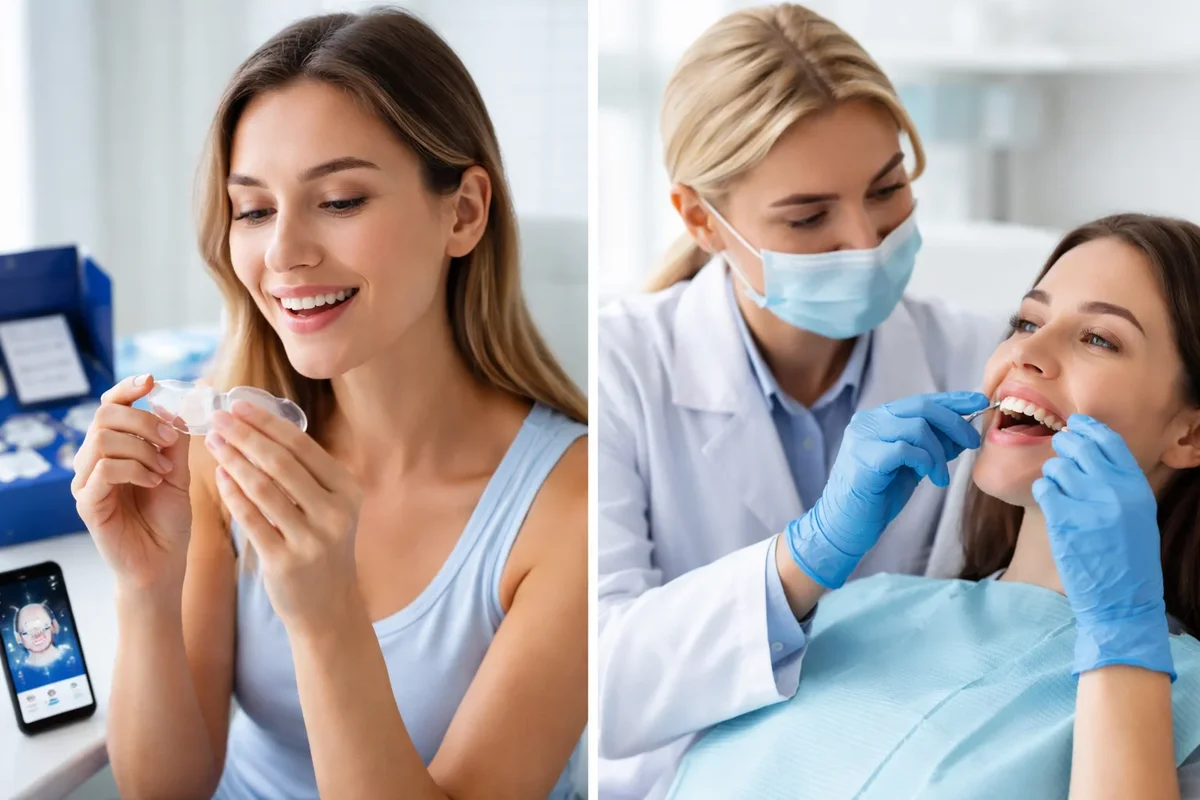
Final Verdict: Should You Ever Choose Invisalign Without Doctor?
After examining the biological, legal, financial, and functional aspects of orthodontic care, the final question remains: should anyone ever choose invisalign without doctor supervision? The honest answer is nuanced. While invisalign without doctor systems may appear convenient and cost-effective, orthodontic tooth movement is not a simple cosmetic adjustment. It is a medical process that directly affects bone structure, gum stability, root integrity, and bite alignment. Before deciding on invisalign without doctor treatment, patients must weigh short-term convenience against long-term oral health outcomes. 🦷
The Appeal of Invisalign Without Doctor
There is no denying why invisalign without doctor programs attract attention. They offer:
- Lower advertised starting prices
- Fewer in-person appointments
- Remote monitoring options
- Discreet, at-home convenience
For individuals with very mild cosmetic alignment concerns and excellent oral health, invisalign without doctor treatment may appear to provide satisfactory short-term improvement. However, appearance alone does not define orthodontic success. A straight smile must also function correctly and remain stable over time.
Convenience vs Clinical Control
The core difference between supervised treatment and invisalign without doctor approaches is clinical control. Dentists adjust force levels, monitor tracking, evaluate gum response, and correct bite discrepancies throughout treatment. Without this oversight, invisalign without doctor users assume greater responsibility for identifying complications themselves.
When Invisalign Without Doctor May Seem Acceptable
In rare cases involving extremely minor spacing or slight front-tooth crowding, invisalign without doctor treatment might produce visible cosmetic improvement without immediate complications. However, even in these situations, professional evaluation beforehand is strongly recommended. A dentist can confirm that no hidden issues—such as bone loss or root abnormalities—are present.
Choosing invisalign without doctor without prior examination introduces unnecessary risk. A consultation does not obligate you to full treatment, but it provides critical diagnostic information.
The Long-Term Perspective
Orthodontic results should last for years, not just months. Invisalign without doctor systems may not provide structured retention planning or long-term follow-up. Teeth naturally attempt to shift back toward their original positions. Without personalized retainer protocols and periodic evaluation, relapse is common.
Professional orthodontic care includes retention strategy adjustments, gum health monitoring, and bite evaluation after active treatment. Invisalign without doctor options often conclude once aligners are delivered, leaving patients to manage stability on their own.
Biological Risks Cannot Be Ignored
Teeth are supported by living tissues that respond uniquely to force. Excessive pressure can cause root shortening. Poorly controlled movement can lead to gum recession. Bite imbalance can trigger jaw discomfort. Invisalign without doctor treatment lacks the structured oversight needed to minimize these biological risks.
Professional Organizations Recommend Supervision
Organizations such as the American Dental Association emphasize that orthodontic treatment should be supervised by licensed professionals. Diagnosis, treatment planning, and monitoring are essential components of safe dental care. While invisalign without doctor systems may operate legally in certain regions, professional bodies consistently stress the importance of clinical evaluation.
Cost Savings vs Risk Exposure
Although invisalign without doctor treatment may cost between $1,500 and $2,500, supervised Invisalign typically ranges from $3,000 to $7,000 depending on complexity. The price difference reflects the inclusion of diagnostics, monitoring, refinements, and professional accountability.
If invisalign without doctor treatment results in complications, corrective care may exceed the cost of starting with supervised treatment. Therefore, what appears to be savings may ultimately become a greater expense.
A Safer Decision-Making Approach
If you are considering invisalign without doctor supervision, the safest approach is to first obtain a professional assessment. A dentist can determine whether your case is mild enough for aligners or whether bite correction and advanced adjustments are required.
You can request personalized guidance through the Redent Klinik Contact Page. A professional consultation provides clarity, reduces uncertainty, and protects your long-term oral health.
The Final Conclusion
Invisalign without doctor supervision may seem appealing for convenience and affordability, but orthodontic treatment is a healthcare procedure—not a simple cosmetic product. While very mild cases might achieve limited improvement, the absence of comprehensive diagnostics and monitoring increases the risk of root damage, gum problems, bite imbalance, and relapse.
Ultimately, your teeth and jaw function affect not only your smile but your ability to chew comfortably and maintain lifelong oral health. Choosing supervised care ensures controlled force application, professional accountability, and long-term stability. Invisalign without doctor options may promise simplicity, but professional evaluation remains the safest path toward a healthy, lasting, and confident smile. 😊