
When considering orthodontic treatment, one of the most common questions people ask is: is Invisalign worth it? With millions of patients worldwide choosing clear aligners instead of traditional braces, Invisalign has become one of the most recognized names in modern orthodontics. However, because the treatment often costs more than conventional braces, many people want to know whether the benefits justify the investment. Understanding the answer requires looking beyond the price tag and examining comfort, effectiveness, appearance, treatment time, and long-term oral health outcomes.
The question is Invisalign worth it does not have a one-size-fits-all answer. Every patient has unique dental concerns, treatment goals, and lifestyle preferences. For some individuals, Invisalign can provide an almost invisible way to achieve a straighter smile while maintaining confidence throughout treatment. For others, traditional braces may offer better value depending on the complexity of their orthodontic needs. Evaluating these factors carefully helps patients determine whether Invisalign is the right choice.
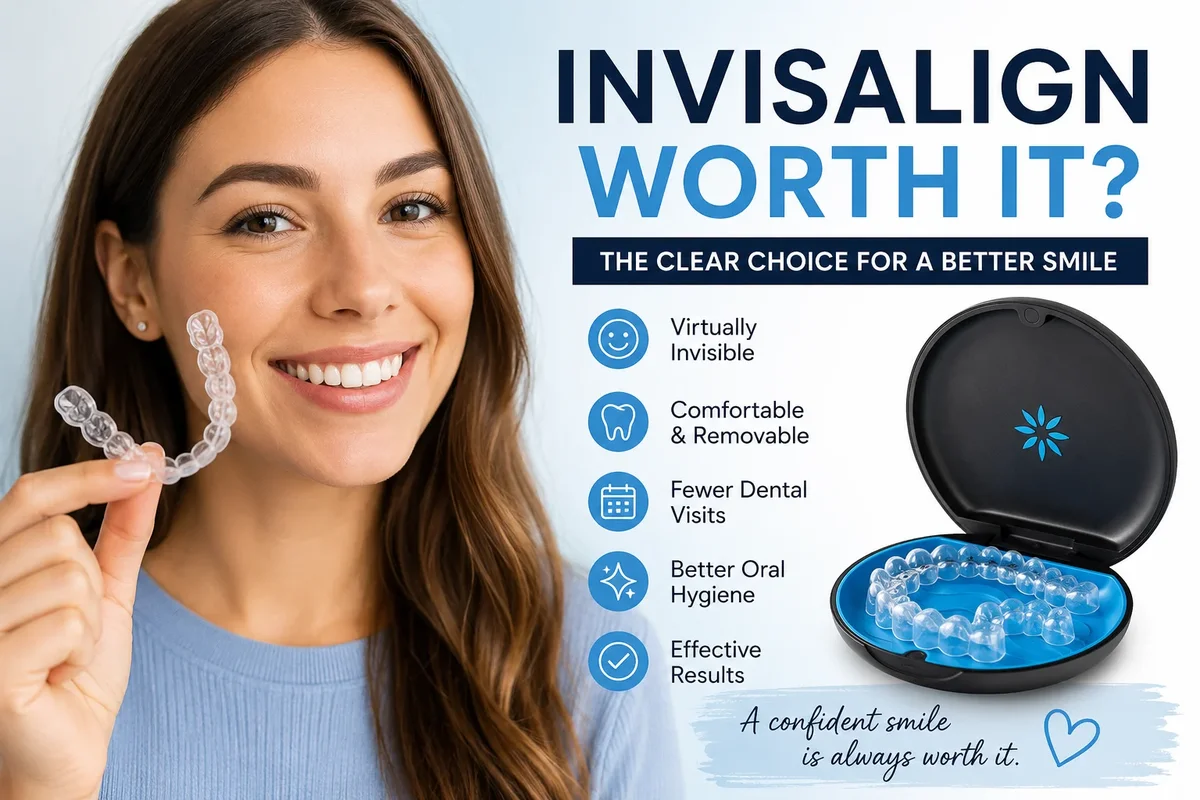
One reason many people ask is Invisalign worth it is because appearance matters. Traditional metal braces are highly visible and can sometimes affect self-confidence, especially for adults working in professional environments. Invisalign aligners are made from transparent medical-grade plastic, making them much less noticeable during everyday interactions. This discreet appearance is often one of the strongest reasons patients believe Invisalign is worth the additional cost.
Comfort is another major consideration. Unlike metal braces that use brackets and wires, Invisalign aligners are custom-designed to fit snugly over the teeth. Many patients experience less irritation to their cheeks and gums compared to traditional orthodontic appliances. When discussing is Invisalign worth it, comfort frequently becomes a deciding factor because treatment can last many months or even years.
Another important benefit involves convenience. Invisalign aligners are removable, allowing patients to eat, brush, and floss without significant restrictions. Traditional braces often require avoiding hard, sticky, or crunchy foods that may damage brackets and wires. Because aligners can be removed during meals, patients enjoy greater flexibility in their daily lives. This convenience contributes significantly to why many individuals conclude that is Invisalign worth it for their personal circumstances.
Effectiveness is equally important when evaluating whether is Invisalign worth it. Modern Invisalign technology has advanced considerably over the years. Today, Invisalign can successfully treat many orthodontic problems, including crowding, spacing issues, overbites, underbites, and crossbites. While extremely complex cases may still require traditional braces, clear aligner therapy can address a broad range of dental concerns when planned and monitored by an experienced dental professional.
Patients also appreciate the predictability of treatment. Invisalign uses advanced digital scanning and treatment-planning software to create a detailed roadmap of tooth movement. Many providers can show patients a simulation of their expected results before treatment even begins. This ability to visualize the final outcome often helps answer the question is Invisalign worth it with greater confidence because patients know what they are working toward.
Oral hygiene plays a major role in orthodontic success. Because aligners are removable, patients can maintain normal brushing and flossing habits. This reduces the risk of plaque buildup and makes it easier to keep teeth and gums healthy throughout treatment. For individuals concerned about dental health, this advantage often strengthens the argument that is Invisalign worth it compared to fixed orthodontic appliances.
Financial considerations cannot be ignored. Invisalign treatment costs vary depending on case complexity, geographic location, and provider experience. In many countries, treatment typically ranges from approximately $3,000 to $8,000. Although this investment may seem significant, many patients view it as a long-term improvement in both oral health and self-confidence. The answer to is Invisalign worth it often depends on how much value an individual places on these benefits.
Beyond aesthetics and convenience, straighter teeth can improve oral function. Properly aligned teeth are generally easier to clean and may reduce the risk of cavities, gum disease, and uneven tooth wear. Better alignment can also contribute to improved bite function and overall dental stability. These long-term advantages are often overlooked when discussing whether is Invisalign worth it, yet they may provide substantial value over time.
Many adults who delayed orthodontic treatment during childhood find Invisalign particularly appealing. The ability to improve their smile without the appearance of metal braces encourages them to finally address alignment issues. For these patients, the question is Invisalign worth it frequently becomes less about cost and more about achieving personal confidence and improved quality of life.
It is also worth noting that treatment success depends heavily on patient compliance. Invisalign aligners should typically be worn for 20 to 22 hours per day. Patients who consistently follow their treatment plan often achieve excellent results. Those who frequently remove aligners or fail to wear them as instructed may experience delays or less predictable outcomes. Therefore, whether is Invisalign worth it can depend partly on a patient’s commitment to the process.
Ultimately, deciding whether is Invisalign worth it requires balancing cost, convenience, aesthetics, comfort, and clinical effectiveness. For many patients, the combination of discreet appearance, removable aligners, advanced technology, and strong treatment outcomes makes Invisalign a highly attractive option. If you are considering orthodontic treatment and want professional guidance tailored to your specific needs, visit the Redent Klinik Contact Page to speak with an experienced dental team. You can also explore oral health resources from the American Dental Association to learn more about orthodontic care and maintaining a healthy smile.
What Does Invisalign Treatment Involve?
Before deciding whether invisalign worth it is the right question for your situation, it is important to understand exactly how Invisalign treatment works. Many people know that Invisalign uses clear aligners instead of metal braces, but the treatment process is much more sophisticated than simply wearing transparent trays. Invisalign combines digital technology, customized treatment planning, and carefully controlled tooth movement to create a straighter smile while minimizing the visibility of orthodontic treatment.
Understanding each stage of the process can help patients determine whether invisalign worth it aligns with their expectations, lifestyle, and long-term dental goals. From the initial consultation to the final retainer phase, every step plays an important role in achieving successful results.
The Initial Consultation and Smile Assessment
The Invisalign journey begins with a comprehensive dental examination. During this appointment, the dentist or orthodontist evaluates tooth alignment, bite issues, oral health, and treatment objectives. Digital scans, photographs, and X-rays may be taken to create a complete picture of the patient’s oral condition.
This consultation is one of the first moments when patients begin asking whether invisalign worth it. The dental professional will explain whether Invisalign is suitable for the specific case and discuss expected treatment outcomes. Mild crowding, spacing issues, overbites, underbites, and crossbites can often be successfully treated with clear aligners.
Advanced digital scanners have largely replaced traditional dental impressions. Instead of biting into messy impression materials, patients benefit from highly accurate 3D imaging that creates a virtual model of the teeth. This technology improves comfort and treatment precision.
Creating a Customized Treatment Plan
Once the examination is complete, specialized software generates a personalized treatment plan. Every tooth movement is carefully mapped from the current position to the desired final alignment. One reason many patients believe invisalign worth it is the ability to preview expected results before treatment even starts.
The software creates a series of aligners, each designed to move teeth incrementally. Every aligner applies gentle pressure to specific teeth according to the treatment plan. This gradual movement helps reduce discomfort while maintaining effective tooth repositioning.
Digital Smile Simulation Benefits
The digital simulation provides several advantages:
- Visualization of expected treatment results.
- More predictable tooth movement.
- Improved patient understanding.
- Enhanced treatment planning accuracy.
- Greater confidence before beginning treatment.
For many individuals researching whether invisalign worth it, the ability to see a projected outcome creates reassurance and motivation.
Wearing the Invisalign Aligners
After the aligners are manufactured, treatment officially begins. Patients receive multiple sets of custom-made aligners that must be worn according to the provider’s instructions. Most patients change to a new aligner every one to two weeks.
The success of Invisalign depends heavily on compliance. Aligners should generally be worn for 20 to 22 hours per day. They should only be removed for eating, drinking anything other than water, brushing, and flossing.
Many patients evaluating whether invisalign worth it appreciate the flexibility that removable aligners provide. Unlike traditional braces, there are no food restrictions because aligners can be taken out during meals.
Daily Invisalign Routine
A typical Invisalign routine includes:
- Wearing aligners throughout the day.
- Removing them before meals.
- Brushing teeth before reinserting aligners.
- Cleaning aligners regularly.
- Switching to new aligners as scheduled.
Following this routine consistently is essential for achieving planned treatment results.
How Teeth Move During Treatment
Tooth movement occurs through controlled pressure applied by each aligner. As the aligners fit tightly over the teeth, they encourage gradual movement into predetermined positions. Biological remodeling occurs within the supporting bone structures, allowing teeth to shift safely over time.
Some patients experience mild pressure when changing to a new aligner. This sensation is usually temporary and often indicates that the aligners are actively moving the teeth. Understanding this process helps answer the question of whether invisalign worth it because patients gain insight into the science behind the treatment.
Modern Invisalign systems may also use small tooth-colored attachments bonded to certain teeth. These attachments help guide more complex movements and improve aligner effectiveness while remaining relatively discreet.
Monitoring Progress Throughout Treatment
Regular check-up appointments allow the dentist to monitor progress and ensure treatment remains on schedule. These visits are often less frequent than traditional orthodontic appointments because there are no wires requiring adjustment.
During follow-up visits, the provider evaluates tooth movement, addresses any concerns, and provides additional aligners when needed. Many patients who initially wonder whether invisalign worth it appreciate the convenience of fewer office visits compared to traditional braces.
Digital monitoring tools are also becoming increasingly common. Some providers allow patients to submit progress photos remotely, making treatment even more convenient.
The Retention Phase After Invisalign
Completing active treatment does not mark the end of the orthodontic journey. After the teeth reach their final positions, retainers are typically required to maintain the results. Teeth naturally tend to shift over time, and retainers help prevent relapse.
This final stage is often overlooked when discussing whether invisalign worth it, but it is essential for protecting the investment made during treatment. Consistent retainer use helps preserve alignment and supports long-term oral health.
Patients who follow post-treatment recommendations generally enjoy lasting improvements in smile appearance, bite function, and dental stability.
Why Understanding the Process Matters
Many people focus only on the cosmetic benefits of clear aligners, but understanding the complete treatment process provides a more realistic perspective. When evaluating whether invisalign worth it, patients should consider not only the final results but also the commitment required throughout treatment.
Invisalign involves advanced technology, customized planning, removable aligners, ongoing monitoring, and long-term retention. For patients willing to follow instructions and wear aligners consistently, the treatment can deliver highly effective outcomes with significant aesthetic and functional benefits. Understanding every phase of treatment allows individuals to make informed decisions and determine whether invisalign worth it for their unique dental needs and lifestyle preferences.
Why Many Adults Choose Invisalign Over Braces
One of the most significant trends in modern dentistry is the growing number of adults seeking orthodontic treatment. Years ago, braces were often associated with teenagers, but today millions of adults are investing in straighter smiles and healthier teeth. As a result, many people researching orthodontic solutions eventually ask the same question: invisalign worth it? For adult patients, the answer often depends on lifestyle, professional responsibilities, comfort preferences, and aesthetic concerns.
Unlike traditional metal braces, Invisalign offers a discreet orthodontic solution that allows adults to improve their smiles without drawing significant attention to their treatment. This advantage alone has led many professionals, business owners, parents, and public-facing employees to strongly consider Invisalign as their preferred orthodontic option.
The Importance of Appearance in Adult Orthodontics
For many adults, appearance plays a major role when choosing an orthodontic treatment. While teenagers may be comfortable wearing traditional braces, adults often feel more self-conscious about visible brackets and wires. This is particularly true for professionals who regularly interact with clients, colleagues, or customers.
When evaluating whether invisalign worth it, many adults place significant value on the nearly invisible appearance of clear aligners. Invisalign aligners are manufactured using transparent medical-grade plastic that fits snugly over the teeth, making them much less noticeable during conversations, meetings, presentations, and social interactions.
This aesthetic advantage allows adults to continue their personal and professional lives with greater confidence throughout treatment.
Professional Benefits of a Discreet Treatment
- Minimal impact on workplace appearance.
- Greater confidence during presentations.
- Reduced self-consciousness in social settings.
- Professional image remains largely unchanged.
- Suitable for executives, healthcare workers, and public-facing roles.
For many adults, these factors contribute significantly to the conclusion that invisalign worth it despite potentially higher treatment costs.
Greater Comfort Compared to Traditional Braces
Comfort is another major reason adults often prefer Invisalign. Traditional braces rely on metal brackets and wires that can occasionally irritate the lips, cheeks, and gums. Some patients experience soreness following wire adjustments and may need orthodontic wax to reduce irritation.
Invisalign aligners eliminate many of these concerns. Because the aligners are smooth and custom-fitted, they generally cause less friction inside the mouth. While mild pressure is expected when switching to a new aligner, many patients report a more comfortable overall experience compared to conventional braces.
When asking whether invisalign worth it, comfort becomes especially important for adults with demanding schedules who want minimal disruption to daily activities.
The Freedom to Eat Favorite Foods
One common frustration associated with traditional braces involves dietary restrictions. Hard candies, popcorn, nuts, chewing gum, sticky snacks, and certain crunchy foods may damage brackets or wires. Patients often need to modify their eating habits throughout treatment.
Invisalign offers a different experience because the aligners are removable. Before eating, patients simply remove the trays and enjoy their meals without worrying about damaging orthodontic hardware.
This flexibility is frequently mentioned by adults who believe invisalign worth it. Being able to continue enjoying favorite foods without major restrictions can significantly improve treatment satisfaction.
Examples of Foods Adults Can Enjoy Normally
- Fresh fruits and vegetables.
- Steak and other meats.
- Crunchy snacks.
- Popcorn.
- Nuts and seeds.
- Chewy bread products.
As long as aligners are removed during meals and oral hygiene is maintained, patients can generally continue their normal diets.
Improved Oral Hygiene During Treatment
Maintaining oral hygiene can be challenging with traditional braces. Food particles may become trapped around brackets and wires, increasing the difficulty of brushing and flossing effectively.
Invisalign aligners can be removed during oral hygiene routines, allowing patients to brush and floss as they normally would. This convenience supports better plaque control and may reduce the risk of cavities or gum inflammation during orthodontic treatment.
Many adults researching whether invisalign worth it view this advantage as extremely valuable because long-term dental health remains a priority.
Fewer Lifestyle Interruptions
Adult patients often balance careers, family responsibilities, travel schedules, and social commitments. Orthodontic treatment that requires frequent maintenance appointments can become inconvenient.
Invisalign typically requires fewer adjustment visits compared to traditional braces. Patients often receive multiple sets of aligners in advance and attend periodic progress evaluations rather than frequent wire-tightening appointments.
This reduced disruption contributes to why many adults conclude that invisalign worth it fits better into busy lifestyles.
Situations Where Invisalign Fits Adult Lifestyles
- Business travel.
- Remote work environments.
- Frequent public speaking.
- Networking events.
- Social gatherings.
- Professional photography sessions.
The flexibility and convenience of removable aligners often make treatment easier to manage for working adults.
Predictable Technology and Modern Treatment Planning
Another reason adults choose Invisalign is the advanced technology behind the treatment. Digital scanning and treatment-planning software allow providers to create highly personalized orthodontic plans.
Many patients appreciate being able to see a projected simulation of their future smile before treatment begins. This visualization helps answer the question of whether invisalign worth it by providing a clearer understanding of expected results.
Modern Invisalign systems also continue evolving through improvements in aligner materials, attachment design, and treatment algorithms. These innovations have expanded the range of cases that can be successfully treated with clear aligners.
Confidence Throughout the Treatment Process
Perhaps one of the most overlooked reasons adults choose Invisalign is the psychological benefit of confidence. Many adults delay orthodontic treatment for years because they do not want visible braces. Invisalign removes much of that concern.
Feeling comfortable smiling during treatment can positively affect professional interactions, social relationships, and overall self-esteem. For some individuals, this confidence boost alone helps justify the investment.
When discussing whether invisalign worth it, emotional and social benefits should not be underestimated. A straighter smile can influence how individuals perceive themselves and how confidently they engage with others.
Why Adults Frequently Consider Invisalign Worth the Investment
Adults often evaluate orthodontic treatment differently than teenagers. Their decision typically involves balancing aesthetics, convenience, oral health, professional image, and long-term value. Invisalign addresses many of these priorities simultaneously.
From discreet appearance and removable aligners to improved comfort and simplified oral hygiene, Invisalign offers advantages that align closely with adult lifestyles. While treatment costs may sometimes exceed those of traditional braces, many patients feel the combination of convenience, confidence, and effectiveness supports the belief that invisalign worth it.
Ultimately, adults choose Invisalign because it allows them to pursue orthodontic improvement without significantly disrupting their daily lives. For individuals seeking a modern, flexible, and discreet path toward a healthier smile, the answer to whether invisalign worth it is often a confident yes.
Is Invisalign Worth It for Mild, Moderate, and Severe Cases?
One of the most important questions patients ask before starting orthodontic treatment is whether Invisalign can effectively address their specific dental concerns. While many people know Invisalign is popular for cosmetic improvements, they often wonder if it works equally well for different levels of tooth misalignment. This naturally leads to the question: invisalign worth it for mild, moderate, and severe orthodontic cases?
The answer depends largely on the complexity of the dental condition, the treatment goals, and the experience of the provider overseeing the treatment. Modern Invisalign technology has advanced significantly over the past decade, allowing clear aligners to treat a wider range of orthodontic problems than ever before. However, not every case is identical, and understanding what Invisalign can realistically achieve helps patients make informed decisions.
Understanding Orthodontic Case Severity
Orthodontic problems are generally categorized into three levels: mild, moderate, and severe. Each category involves different levels of tooth movement, bite correction, and treatment complexity.
When evaluating whether invisalign worth it, it is essential to understand where your dental condition falls within these categories. Some cases may require only minor adjustments, while others involve substantial bite correction and tooth repositioning.
Common Mild Orthodontic Issues
- Minor crowding.
- Small gaps between teeth.
- Slight tooth rotation.
- Minor relapse after previous orthodontic treatment.
- Small cosmetic alignment concerns.
These conditions are often among the easiest to treat using clear aligners.
Is Invisalign Worth It for Mild Cases?
For patients with mild orthodontic issues, the answer to invisalign worth it is frequently yes. Invisalign was originally developed to address relatively straightforward alignment concerns, and it remains highly effective in these situations.
Mild crowding or spacing often responds exceptionally well to aligner therapy. Because tooth movement requirements are relatively small, treatment can often be completed more quickly than in complex cases. Many patients achieve noticeable improvements within several months.
The aesthetic advantages of Invisalign become particularly appealing for individuals seeking cosmetic improvements without visible braces. Adults who simply want to refine their smile often find that Invisalign provides an excellent balance between effectiveness and convenience.
Advantages in Mild Cases
- Shorter treatment duration.
- Highly predictable outcomes.
- Minimal lifestyle disruption.
- Excellent cosmetic improvement.
- Fewer office visits.
For these patients, many orthodontists agree that invisalign worth it because the treatment can efficiently achieve desired results with minimal inconvenience.
How Effective Is Invisalign for Moderate Cases?
Moderate orthodontic cases involve more significant alignment issues and often require greater tooth movement. Examples may include moderate crowding, larger gaps, overbites, underbites, and crossbites.
Historically, traditional braces were often preferred for these situations. However, advancements in Invisalign technology have dramatically expanded treatment capabilities. Specialized attachments, optimized aligner materials, and sophisticated digital planning now allow Invisalign to address many moderate orthodontic concerns successfully.
When considering whether invisalign worth it for moderate cases, patients should understand that treatment may require more aligners and a longer treatment timeline compared to mild cases. Nevertheless, many patients still prefer Invisalign because of its comfort, removability, and discreet appearance.
Moderate Conditions Often Treated with Invisalign
- Moderate crowding.
- Noticeable spacing issues.
- Mild-to-moderate overbite.
- Mild-to-moderate underbite.
- Crossbite correction.
- Tooth rotation involving multiple teeth.
For properly selected patients, Invisalign can often achieve results comparable to traditional braces.
Can Invisalign Handle Severe Orthodontic Problems?
Severe orthodontic cases present greater challenges. These situations may involve significant crowding, major bite discrepancies, impacted teeth, skeletal jaw issues, or extensive tooth rotations.
When asking whether invisalign worth it for severe cases, the answer becomes more individualized. Some severe conditions can still be successfully treated with Invisalign, particularly when managed by highly experienced orthodontists using advanced treatment protocols.
However, there are situations where traditional braces may remain the more efficient or predictable option. Certain tooth movements are inherently more difficult with removable aligners, especially when large vertical corrections or complex jaw relationships are involved.
In some cases, Invisalign may be combined with additional orthodontic techniques to achieve optimal results.
Examples of Challenging Cases
- Severe overbite.
- Significant underbite.
- Major crowding.
- Complex bite discrepancies.
- Large tooth rotations.
- Skeletal jaw abnormalities.
Patients with these conditions require comprehensive evaluation before determining whether Invisalign is the most appropriate treatment choice.
The Role of Technology in Expanding Invisalign Capabilities
One reason more patients are asking whether invisalign worth it today compared to ten years ago is the significant improvement in aligner technology. Invisalign has evolved far beyond its original capabilities.
Modern treatment incorporates:
- SmartTrack aligner materials.
- Precision attachments.
- Digital treatment simulations.
- Artificial intelligence-assisted planning.
- Enhanced biomechanical control.
These innovations allow providers to manage increasingly complex orthodontic movements with greater predictability.
Patient Compliance Becomes More Important in Complex Cases
As case complexity increases, patient compliance becomes even more critical. Invisalign aligners only work effectively when worn consistently for the recommended 20 to 22 hours per day.
For mild cases, occasional lapses may have limited impact. However, in moderate and severe cases, inconsistent wear can significantly affect treatment progress and final outcomes.
This factor should be considered when evaluating whether invisalign worth it. Patients who struggle with discipline may achieve better results using fixed braces because those appliances remain in place continuously.
Comparing Invisalign Success Across Different Case Types
Clinical studies and real-world patient experiences demonstrate that Invisalign can successfully treat a wide spectrum of orthodontic issues. Success rates are generally highest in mild and moderate cases, but many severe cases can also achieve excellent outcomes when properly planned.
The key variable is not necessarily the severity itself but rather the appropriateness of the treatment plan and the patient’s commitment to wearing aligners as instructed.
For many individuals, the combination of aesthetics, comfort, convenience, and modern technology continues to support the belief that invisalign worth it regardless of whether their case is mild, moderate, or more advanced.
Final Thoughts on Case Complexity and Invisalign
Ultimately, whether invisalign worth it depends on your specific orthodontic needs. Mild cases often achieve excellent results quickly and efficiently. Moderate cases frequently benefit from Invisalign’s advanced capabilities while maintaining a discreet appearance. Severe cases may still qualify for Invisalign treatment, although careful evaluation is essential to determine suitability.
The best way to determine whether invisalign worth it for your situation is through a professional consultation. A qualified provider can assess the complexity of your case, explain available treatment options, and recommend the most effective approach for achieving a healthy, confident smile.
How Much Does Invisalign Cost in 2026?
One of the first questions people ask when researching clear aligner treatment is about cost. While appearance, comfort, and convenience are important factors, the financial investment often plays a major role in the decision-making process. This is why many prospective patients eventually ask: invisalign worth it when considering the overall cost of treatment in 2026?
The answer depends on several factors, including case complexity, treatment duration, geographic location, provider experience, and whether additional procedures are required. Although Invisalign is often more expensive than traditional braces in some regions, many patients feel the benefits justify the investment. Understanding the cost structure can help determine whether invisalign worth it for your personal situation.
Average Invisalign Costs in 2026
In 2026, Invisalign treatment costs continue to vary significantly across different countries and dental practices. However, certain price ranges are commonly reported.
Estimated Invisalign Price Ranges
| Treatment Complexity | Estimated Cost (USD) |
|---|---|
| Mild Cases | $3,000 – $4,500 |
| Moderate Cases | $4,500 – $6,500 |
| Complex Cases | $6,500 – $9,000+ |
These figures represent approximate averages and may vary depending on local market conditions. When evaluating whether invisalign worth it, patients should remember that treatment plans are highly individualized and pricing reflects the complexity of each case.
Why Invisalign Costs More Than Some Alternatives
Many patients notice that Invisalign sometimes carries a higher price tag than traditional braces. This difference often leads people to question whether invisalign worth it from a financial perspective.
Several factors contribute to Invisalign pricing:
- Advanced digital scanning technology.
- Customized aligner manufacturing.
- Sophisticated treatment planning software.
- Series of individually designed aligners.
- Ongoing monitoring and adjustments.
Unlike traditional braces that use standardized brackets and wires, Invisalign treatment requires extensive digital planning and the production of multiple custom aligners throughout treatment.
Technology Behind the Cost
Every Invisalign case begins with detailed digital modeling. Specialized software calculates tooth movement and designs a series of aligners that gradually reposition teeth. This personalized approach contributes significantly to treatment costs but also supports predictability and precision.
For many patients, the advanced technology helps justify the expense and strengthens the argument that invisalign worth it.
Factors That Influence Invisalign Pricing
No two Invisalign treatments are exactly alike. Several variables affect the final cost.
Case Complexity
The more extensive the tooth movement required, the more aligners will typically be needed. Severe crowding, bite correction, and complex orthodontic issues often require longer treatment plans, which can increase overall costs.
Treatment Duration
Longer treatment usually involves additional aligners and monitoring appointments. Cases lasting 18 to 24 months may cost more than treatments completed within six to twelve months.
Provider Experience
Highly experienced Invisalign providers may charge premium fees due to their expertise and track record. However, this experience can often improve treatment efficiency and outcomes.
Location
Dental treatment costs vary substantially between cities, countries, and regions. Practices located in major metropolitan areas often have higher operating expenses, which may influence treatment fees.
Understanding these variables helps patients make a more informed assessment of whether invisalign worth it for their budget and goals.
Does Dental Insurance Cover Invisalign?
Insurance coverage can significantly affect out-of-pocket expenses. Some dental insurance plans include orthodontic benefits that partially cover Invisalign treatment.
Coverage varies widely, but patients may receive:
- Partial orthodontic reimbursement.
- Fixed orthodontic allowances.
- Percentage-based treatment coverage.
- Lifetime orthodontic benefit limits.
Insurance benefits can substantially reduce overall treatment costs and may influence whether invisalign worth it financially.
Questions to Ask Your Insurance Provider
- Does my plan cover Invisalign?
- What percentage is reimbursed?
- Are there age restrictions?
- What is the lifetime orthodontic maximum?
- Are pre-authorizations required?
Obtaining these answers before treatment helps avoid unexpected expenses.
Flexible Financing Options
Many dental clinics understand that orthodontic treatment represents a significant investment. As a result, flexible payment plans are often available.
Common financing options include:
- Monthly installment plans.
- Third-party healthcare financing.
- Interest-free payment arrangements.
- Flexible spending accounts (FSA).
- Health savings accounts (HSA).
These solutions can make treatment more accessible and may help patients feel that invisalign worth it without requiring a large upfront payment.
Comparing Cost to Long-Term Value
Cost should never be evaluated in isolation. Patients should also consider the long-term benefits associated with improved dental alignment.
Properly aligned teeth may offer:
- Improved oral hygiene.
- Reduced risk of cavities.
- Lower likelihood of gum disease.
- Better bite function.
- Enhanced smile aesthetics.
- Increased self-confidence.
When these factors are considered, many individuals conclude that invisalign worth it extends beyond cosmetic improvement alone.
The Confidence Factor
Many adults report that the confidence gained from straighter teeth positively affects both personal and professional interactions. While confidence is difficult to quantify financially, it is often cited as one of the most valuable outcomes of orthodontic treatment.
Potential Hidden Costs to Consider
Patients should also be aware of possible additional expenses that may arise during treatment.
- Replacement aligners if lost.
- Retainers after treatment completion.
- Additional refinements.
- Supplementary dental procedures.
- Diagnostic imaging.
Although not every patient incurs these costs, understanding them helps create realistic financial expectations when deciding whether invisalign worth it.
Is Invisalign Worth the Price in 2026?
The ultimate answer to whether invisalign worth it depends on individual priorities. Patients who value aesthetics, convenience, comfort, advanced technology, and removable aligners often find the investment worthwhile. Those seeking the lowest possible treatment cost may prefer traditional orthodontic options.
However, many Invisalign patients report high satisfaction rates because the treatment allows them to improve their smiles without the visibility and lifestyle limitations associated with metal braces. For adults especially, this combination of effectiveness and discretion often justifies the financial commitment.
When evaluating whether invisalign worth it, it is best to consider both the immediate costs and the long-term benefits. A healthier bite, improved oral hygiene, enhanced confidence, and a more attractive smile can provide value that extends far beyond the treatment period itself. For many individuals in 2026, these advantages make Invisalign a worthwhile investment in both dental health and quality of life.
Benefits That Make Invisalign Worth It for Many Patients
When researching orthodontic treatment options, many people eventually arrive at the same important question: invisalign worth it? While cost often receives significant attention, the true value of Invisalign becomes clearer when examining the wide range of benefits it offers. From aesthetics and comfort to convenience and oral health advantages, Invisalign provides features that many patients consider highly valuable throughout their treatment journey.
Understanding these benefits can help prospective patients determine whether Invisalign aligns with their personal goals and expectations. For millions of people worldwide, the combination of modern technology, discreet appearance, and effective results contributes strongly to the belief that invisalign worth it compared to traditional orthodontic alternatives.
Virtually Invisible Appearance
One of the most recognized advantages of Invisalign is its discreet design. Traditional braces use visible metal brackets and wires that can significantly alter a person’s appearance during treatment. Invisalign aligners, by contrast, are made from transparent medical-grade plastic that fits closely over the teeth.
For adults and teenagers who feel self-conscious about orthodontic treatment, this benefit alone can heavily influence whether invisalign worth it. Many patients appreciate being able to straighten their teeth without attracting attention to their treatment.
Who Benefits Most from the Invisible Appearance?
- Business professionals.
- Teachers and educators.
- Sales representatives.
- Public speakers.
- College students.
- Individuals active on social media.
The confidence provided by a nearly invisible treatment option remains one of Invisalign’s strongest selling points.
Superior Comfort Compared to Metal Braces
Comfort is another major factor when evaluating whether invisalign worth it. Traditional braces contain brackets, wires, and other components that may irritate soft tissues inside the mouth. Patients frequently experience soreness following wire adjustments.
Invisalign aligners are custom-manufactured using smooth plastic materials. Because there are no sharp edges or protruding metal parts, many patients find Invisalign significantly more comfortable throughout treatment.
Although some pressure is normal when switching to a new aligner, the discomfort is generally mild and temporary. This improved comfort can make a substantial difference during treatments lasting several months or longer.
Removable Convenience
One of the most unique Invisalign advantages is removability. Unlike fixed braces, aligners can be removed whenever necessary for eating, drinking, brushing, and flossing.
This flexibility contributes significantly to why many patients believe invisalign worth it. The ability to temporarily remove aligners allows individuals to maintain much of their normal daily routine without major disruptions.
Benefits of Removable Aligners
- No food restrictions.
- Easier oral hygiene.
- Greater flexibility during special events.
- Convenient for professional meetings.
- Improved overall treatment experience.
Many patients view this convenience as one of Invisalign’s most valuable features.
Freedom to Eat Your Favorite Foods
Traditional braces often require dietary modifications to avoid damaging brackets and wires. Foods such as popcorn, nuts, hard candies, sticky snacks, and chewy foods may be discouraged.
With Invisalign, patients simply remove their aligners before meals and enjoy their preferred foods without concern about orthodontic hardware. This freedom is frequently cited by patients when discussing whether invisalign worth it.
Maintaining normal eating habits can significantly improve quality of life during treatment, especially for individuals who enjoy a diverse diet.
Improved Oral Hygiene
Oral hygiene becomes more challenging when fixed brackets and wires create additional surfaces where plaque and food particles can accumulate. Cleaning around braces often requires specialized tools and extra effort.
Because Invisalign aligners are removable, patients can brush and floss their teeth normally. This helps support healthier gums and may reduce the risk of plaque buildup, cavities, and gum inflammation.
For health-conscious individuals, this advantage often strengthens the belief that invisalign worth it not only cosmetically but also from an oral health perspective.
Oral Health Advantages During Treatment
- Easier plaque removal.
- More effective flossing.
- Reduced food accumulation.
- Improved gum health maintenance.
- Better overall oral hygiene compliance.
These factors contribute to a healthier treatment experience from start to finish.
Predictable Digital Treatment Planning
Invisalign incorporates sophisticated digital technology that enhances treatment precision. Modern software creates detailed treatment plans based on 3D scans of the patient’s teeth.
Many patients appreciate being able to preview projected treatment outcomes before beginning therapy. This visual representation provides reassurance and helps answer the question of whether invisalign worth it by offering a clearer picture of expected results.
Digital planning also allows providers to carefully monitor tooth movement and make adjustments when necessary, improving overall predictability.
Fewer Emergency Visits
Traditional braces occasionally require emergency appointments due to broken brackets, loose wires, or other mechanical issues. These situations can be inconvenient and sometimes uncomfortable.
Invisalign aligners eliminate many of these concerns because there are no brackets or wires that can break. As a result, patients often experience fewer unexpected visits to the dental office.
This convenience is another reason many individuals feel invisalign worth it, particularly those with busy schedules or limited availability.
Enhanced Self-Confidence Throughout Treatment
Confidence plays a major role in orthodontic satisfaction. Many adults postpone treatment for years because they dislike the appearance of traditional braces. Invisalign offers a solution that allows patients to improve their smiles discreetly.
The ability to smile, speak, and interact socially without visible orthodontic appliances often improves self-esteem during treatment. This emotional benefit is frequently overlooked when discussing whether invisalign worth it, yet it can have a meaningful impact on daily life.
Confidence-Related Benefits
- More comfortable social interactions.
- Improved workplace confidence.
- Greater willingness to smile.
- Reduced treatment-related self-consciousness.
- Positive psychological effects.
For many patients, these emotional advantages are just as important as the physical improvements achieved through treatment.
Long-Term Smile and Health Benefits
Straighter teeth are often easier to clean and maintain. Proper alignment may help reduce areas where plaque accumulates and can improve overall bite function. Over time, these benefits may contribute to better oral health and reduced risk of certain dental problems.
When evaluating whether invisalign worth it, patients should consider not only the treatment period but also the long-term advantages associated with improved alignment. A healthier bite, easier maintenance, and enhanced smile aesthetics can continue providing value long after treatment ends.
Why Many Patients Conclude Invisalign Is Worth It
The popularity of Invisalign continues growing because it addresses many common concerns associated with orthodontic treatment. Patients benefit from a discreet appearance, increased comfort, removable aligners, fewer dietary restrictions, simplified oral hygiene, and advanced digital planning.
While every patient’s situation is unique, these advantages explain why millions of individuals conclude that invisalign worth it. The combination of effectiveness, convenience, aesthetics, and lifestyle flexibility creates a treatment experience that aligns well with the needs of modern patients.
Ultimately, whether invisalign worth it depends on individual priorities. However, for those who value comfort, appearance, convenience, and long-term oral health, Invisalign offers a compelling set of benefits that continue to make it one of the most popular orthodontic solutions available today.
Potential Drawbacks and Limitations of Invisalign
While Invisalign offers numerous benefits, it is equally important for prospective patients to understand its limitations. Many people researching orthodontic treatment focus primarily on the advantages of clear aligners, but a balanced decision requires examining both strengths and weaknesses. This leads many patients to ask a more nuanced question: invisalign worth it even when potential drawbacks are considered?
The answer depends on individual expectations, lifestyle habits, orthodontic needs, and willingness to follow treatment requirements. Invisalign can be highly effective, but it is not necessarily the ideal solution for every patient. Understanding its limitations helps ensure realistic expectations and better treatment satisfaction.
Success Depends on Patient Compliance
Perhaps the most significant limitation of Invisalign is that treatment success relies heavily on patient cooperation. Unlike traditional braces that remain attached to the teeth 24 hours a day, Invisalign aligners are removable.
While this flexibility is one of the system’s greatest advantages, it also introduces responsibility. Patients are generally expected to wear their aligners for 20 to 22 hours per day. Failure to meet this requirement may slow treatment progress or reduce effectiveness.
When evaluating whether invisalign worth it, patients must honestly assess their ability to follow instructions consistently. Individuals who frequently remove aligners or forget to wear them may not achieve optimal results.
Common Compliance Challenges
- Forgetting to reinsert aligners after meals.
- Removing aligners too frequently.
- Inconsistent daily wear time.
- Skipping aligner changes.
- Misplacing aligners during travel.
Patients who prefer a treatment option requiring less personal responsibility may sometimes benefit more from traditional braces.
Not Every Orthodontic Case Is Ideal for Invisalign
Although Invisalign technology has advanced considerably, some orthodontic problems remain more challenging to treat with removable aligners.
Many patients asking whether invisalign worth it assume clear aligners can correct every dental issue. While Invisalign successfully treats a wide range of conditions, severe orthodontic cases may sometimes require alternative treatment approaches.
Examples of Complex Cases
- Severe jaw discrepancies.
- Major bite abnormalities.
- Impacted teeth.
- Extensive tooth rotation.
- Complex skeletal issues.
In certain situations, traditional braces or combined orthodontic approaches may provide more predictable outcomes.
Aligners Must Be Removed Before Eating
Many people appreciate Invisalign’s removable design, but this feature can occasionally become inconvenient. Every meal and snack requires removing the aligners beforehand.
Patients must also brush their teeth before reinserting the aligners whenever possible. This process may become challenging during busy workdays, travel, or social events.
For some individuals, these additional steps raise questions about whether invisalign worth it compared to braces, which remain in place continuously.
Daily Habits That May Require Adjustment
- Frequent snacking.
- Drinking sugary beverages.
- Business lunches.
- Travel schedules.
- Long social gatherings.
Patients who enjoy frequent eating or drinking throughout the day may need to modify their routines during treatment.
Temporary Speech Changes
Some Invisalign patients experience minor speech changes when first beginning treatment. Because the aligners cover the teeth, certain sounds may feel slightly different during the adjustment period.
Most individuals adapt within a few days or weeks, and speech typically returns to normal. However, patients whose professions involve extensive public speaking may initially notice these temporary changes.
When deciding whether invisalign worth it, understanding this short adaptation period helps establish realistic expectations.
Aligners Can Be Lost or Damaged
Unlike fixed braces, Invisalign aligners can be misplaced. Patients who remove their aligners during meals or travel may accidentally lose them if they are not stored properly.
Replacement aligners may involve additional costs and could potentially affect treatment timelines. This risk is one drawback that patients should consider when evaluating whether invisalign worth it.
Common Situations Where Aligners Are Lost
- Wrapped in napkins during meals.
- Left in restaurants.
- Forgotten in hotel rooms.
- Misplaced during travel.
- Accidentally discarded.
Using a protective aligner case consistently can significantly reduce this risk.
Discipline Is Required for Optimal Results
Traditional braces continuously move teeth regardless of patient behavior. Invisalign, however, depends heavily on personal discipline.
Patients must remember to:
- Wear aligners as directed.
- Change aligners on schedule.
- Clean aligners properly.
- Attend follow-up appointments.
- Maintain good oral hygiene.
For highly motivated individuals, these responsibilities are usually manageable. However, patients who struggle with consistency may question whether invisalign worth it for their lifestyle.
Cost May Be Higher Than Alternative Treatments
Financial considerations remain one of the most commonly discussed limitations. Invisalign treatment often costs more than traditional braces, particularly in complex cases.
While many patients feel the benefits justify the additional expense, others may find that alternative orthodontic treatments better match their budgets.
When assessing whether invisalign worth it, cost should be evaluated alongside convenience, aesthetics, comfort, and expected outcomes rather than considered in isolation.
Factors Contributing to Higher Costs
- Custom aligner manufacturing.
- Advanced digital treatment planning.
- Specialized software technology.
- Provider expertise.
- Multiple aligner sets.
These elements contribute to Invisalign’s premium pricing structure.
Oral Hygiene Remains Essential
Although Invisalign generally makes oral hygiene easier than braces, patients must still maintain excellent cleaning habits. Food particles trapped between teeth and aligners can increase the risk of plaque buildup if proper hygiene is neglected.
Aligners themselves also require regular cleaning. Failure to maintain cleanliness may result in staining, unpleasant odors, or bacterial accumulation.
This additional maintenance responsibility should be considered when deciding whether invisalign worth it.
Some Patients Expect Instant Results
Modern marketing sometimes creates unrealistic expectations regarding orthodontic treatment speed. Invisalign can produce impressive results, but meaningful tooth movement still requires time.
Patients seeking immediate transformations may become impatient during treatment. Understanding that Invisalign is a gradual process helps establish realistic expectations and improves overall satisfaction.
Those wondering whether invisalign worth it should recognize that successful orthodontics always requires patience, regardless of the treatment method used.
Balancing Benefits Against Limitations
No orthodontic treatment is completely without drawbacks. Invisalign offers outstanding advantages in appearance, comfort, flexibility, and convenience, but it also requires discipline, responsibility, and commitment.
For many patients, the benefits substantially outweigh the limitations. The removable design, discreet appearance, and advanced technology continue to make Invisalign one of the most popular orthodontic treatments available worldwide.
Ultimately, whether invisalign worth it depends on how well the treatment aligns with an individual’s lifestyle, orthodontic needs, and expectations. Patients who understand both the advantages and the limitations are best positioned to make informed decisions and achieve successful treatment outcomes. In many cases, the drawbacks are manageable, making the answer to whether invisalign worth it a positive one for motivated and committed patients seeking a modern orthodontic solution.
How Long Does Invisalign Take to Deliver Results?
One of the most common questions patients ask before beginning orthodontic treatment is how quickly they will see improvements in their smile. While appearance, comfort, and cost are important considerations, treatment duration often plays a major role in the decision-making process. This is why many people researching clear aligners eventually ask: invisalign worth it when considering the time commitment required?
The answer depends on several factors, including the complexity of the dental issue, patient compliance, age, treatment goals, and biological response to tooth movement. Invisalign can produce noticeable improvements relatively quickly in many cases, but achieving optimal results requires patience and consistency. Understanding realistic treatment timelines helps patients determine whether invisalign worth it for their specific needs.
Average Invisalign Treatment Timeline
Although every patient is unique, Invisalign treatment generally falls within a predictable range. Some minor cases may be completed within a few months, while more complex situations can require two years or longer.
Typical Invisalign Treatment Durations
| Case Complexity | Estimated Duration |
|---|---|
| Mild Cases | 3–6 Months |
| Moderate Cases | 6–18 Months |
| Complex Cases | 18–30 Months |
These estimates provide a general guideline, but actual treatment duration varies depending on individual circumstances. When considering whether invisalign worth it, patients should remember that achieving long-lasting orthodontic results takes time regardless of the treatment method used.
When Do Patients Start Seeing Results?
One advantage of Invisalign is that many patients begin noticing small improvements relatively early in treatment. While significant changes may take several months, subtle tooth movement often becomes visible within the first few weeks.
This early progress can be highly motivating. Patients who wonder whether invisalign worth it often feel encouraged when they observe gradual improvements soon after beginning treatment.
Common Timeline for Visible Changes
- Weeks 2–4: Initial tooth movement may become noticeable.
- Months 2–3: Alignment improvements often become easier to recognize.
- Months 4–6: Significant cosmetic changes may be visible.
- Months 6–12: Many moderate cases show major improvements.
- Final Months: Fine adjustments and bite correction are completed.
Although results appear gradually, consistent progress typically occurs throughout treatment.
Factors That Affect Treatment Duration
Several important factors influence how quickly Invisalign can achieve the desired outcome.
Case Complexity
The severity of the orthodontic problem remains one of the strongest predictors of treatment length. Small spacing issues require less movement than severe crowding or major bite corrections.
Patients evaluating whether invisalign worth it should understand that more extensive corrections naturally require additional time.
Patient Compliance
Aligners must generally be worn for 20 to 22 hours per day. Patients who consistently follow instructions tend to achieve results according to schedule.
Failure to wear aligners as directed can significantly delay progress. This is one reason compliance is frequently discussed when determining whether invisalign worth it.
Biological Response
Every person’s body responds differently to orthodontic treatment. Some individuals experience faster tooth movement, while others progress more gradually. Age, bone density, and overall oral health can all influence treatment speed.
Why Invisalign Sometimes Works Faster Than Braces
In certain situations, Invisalign may achieve results more quickly than traditional braces. This is particularly true for mild cosmetic alignment issues.
Advanced treatment-planning software allows providers to create highly efficient tooth movement sequences. Each aligner is specifically designed to move teeth incrementally toward their final position.
For patients considering whether invisalign worth it, this efficiency can be a meaningful advantage, especially when correcting relatively simple alignment concerns.
Reasons for Faster Progress in Some Cases
- Precise digital planning.
- Customized aligner design.
- Controlled tooth movement.
- Reduced need for manual adjustments.
- Improved treatment predictability.
However, not all cases finish faster than braces. Treatment duration always depends on the complexity of the required movements.
What Happens If You Don’t Wear Aligners Enough?
One of the most common causes of delayed Invisalign treatment is inadequate wear time. Because aligners are removable, some patients become inconsistent with their usage.
When aligners are not worn as recommended:
- Tooth movement slows.
- Aligners may stop fitting properly.
- Treatment refinements may increase.
- Additional aligners may be required.
- Overall treatment duration may lengthen.
Patients questioning whether invisalign worth it should understand that treatment success depends heavily on personal commitment.
The Role of Refinements in Treatment Length
Many Invisalign patients require refinement aligners after completing their initial series. Refinements are additional aligners used to perfect tooth positions and address any remaining discrepancies.
Refinements are common and should not be viewed as treatment failures. Instead, they allow providers to optimize final results.
However, refinements can add several weeks or months to treatment duration. This factor should be considered when evaluating whether invisalign worth it from a timeline perspective.
Why Refinements May Be Needed
- Individual variation in tooth movement.
- Minor tracking issues.
- Complex bite adjustments.
- Enhanced cosmetic detailing.
- Final alignment optimization.
Refinements often contribute to achieving the highest possible treatment quality.
Does Age Affect Invisalign Treatment Time?
Many adults wonder whether orthodontic treatment takes longer later in life. While age can influence biological response, Invisalign remains highly effective for adult patients.
Children and teenagers may occasionally experience slightly faster tooth movement due to ongoing growth and bone remodeling. However, adults routinely achieve excellent outcomes with Invisalign.
When considering whether invisalign worth it, age alone should rarely be viewed as a limiting factor.
Maintaining Results After Treatment
Completing active Invisalign treatment is only one part of the process. Once teeth reach their desired positions, retainers are typically required to preserve the results.
Without proper retention, teeth may gradually shift over time. This phase does not involve active tooth movement but remains essential for protecting the investment made during treatment.
Patients asking whether invisalign worth it should recognize that long-term success depends on both treatment completion and consistent retainer use.
Balancing Time Commitment and Results
Orthodontic treatment always requires patience, regardless of the method chosen. Invisalign offers a modern approach that often delivers visible improvements within months while maintaining comfort and discretion throughout the process.
For many patients, the combination of effective tooth movement, removable aligners, and predictable digital planning supports the conclusion that invisalign worth it despite the time commitment involved.
Ultimately, treatment duration varies according to individual circumstances, but most patients find that the months spent wearing aligners are a worthwhile investment in their future smile. When the benefits of improved confidence, better oral health, enhanced aesthetics, and long-term dental function are considered, many conclude that invisalign worth it not only because of the final outcome but also because of the relatively comfortable journey required to achieve it.
Is Invisalign Worth It? Final Verdict for Different Patient Types
After exploring the treatment process, costs, benefits, limitations, effectiveness, and expected timelines, many people still return to the same central question: invisalign worth it? The truth is that there is no universal answer that applies to every patient. Invisalign offers significant advantages, but its value depends on individual goals, lifestyle preferences, dental conditions, and expectations.
For some patients, Invisalign provides the ideal combination of aesthetics, comfort, convenience, and effectiveness. For others, traditional braces may offer a more practical solution. Understanding how Invisalign fits different patient profiles can help determine whether invisalign worth it for your specific situation.
For Working Professionals
Professionals are among the largest groups choosing Invisalign. Individuals who regularly interact with clients, attend meetings, participate in presentations, or work in public-facing roles often prefer a discreet orthodontic solution.
Because Invisalign aligners are nearly invisible, professionals can improve their smiles without the noticeable appearance of metal braces. This advantage frequently becomes one of the strongest reasons they conclude that invisalign worth it.
Why Professionals Often Choose Invisalign
- Discreet appearance.
- Professional confidence.
- Minimal impact on public image.
- Fewer emergency appointments.
- Convenient for business travel.
For individuals whose careers depend heavily on communication and appearance, Invisalign often provides substantial value beyond orthodontic correction alone.
For Adults Seeking Cosmetic Improvements
Many adults delayed orthodontic treatment during childhood or experienced minor shifting after previous treatment. These patients are often primarily concerned with improving smile aesthetics rather than correcting severe orthodontic issues.
For this group, the answer to invisalign worth it is frequently yes. Mild to moderate alignment concerns often respond exceptionally well to Invisalign, and treatment can often be completed relatively efficiently.
The combination of cosmetic enhancement and discreet treatment appeals strongly to adults seeking a modern orthodontic solution.
For Teenagers
Teenagers can also benefit significantly from Invisalign treatment. Modern Invisalign systems include compliance indicators and features specifically designed for younger patients.
However, treatment success depends heavily on responsibility. Teenagers must consistently wear aligners for the recommended number of hours each day.
When determining whether invisalign worth it for teenagers, parents should evaluate their child’s level of maturity and willingness to follow treatment instructions.
Potential Advantages for Teenagers
- Greater confidence at school.
- Comfort during sports activities.
- Fewer food restrictions.
- Easier oral hygiene.
- Less visible orthodontic treatment.
Responsible teenagers often achieve excellent outcomes with Invisalign.
For Patients with Mild Orthodontic Problems
Patients experiencing minor crowding, small gaps, or slight tooth rotations are often ideal Invisalign candidates. These cases generally require less extensive tooth movement and can often be treated efficiently.
For individuals with mild orthodontic concerns, many providers agree that invisalign worth it because the treatment offers substantial cosmetic improvement with minimal disruption to daily life.
In these situations, Invisalign’s convenience and aesthetics frequently outweigh its higher cost.
For Patients with Moderate Orthodontic Needs
Moderate crowding, spacing, overbites, underbites, and crossbites can often be successfully treated using modern Invisalign techniques.
Advancements in aligner technology have expanded treatment capabilities significantly. As a result, many patients with moderate orthodontic concerns now achieve outcomes comparable to those obtained with traditional braces.
For this patient group, whether invisalign worth it often depends on how much value they place on comfort, convenience, and appearance throughout treatment.
For Patients with Severe Cases
Complex orthodontic cases require careful evaluation. While Invisalign can successfully address many challenging situations, some severe conditions may still benefit more from traditional braces or combined treatment approaches.
Patients with major bite discrepancies, significant crowding, or skeletal jaw issues should consult experienced orthodontic providers to determine whether Invisalign is appropriate.
In these situations, the answer to invisalign worth it becomes highly individualized and depends on the specific characteristics of the case.
When Additional Evaluation Is Essential
- Severe overbite.
- Major underbite.
- Complex jaw discrepancies.
- Impacted teeth.
- Extensive tooth movement requirements.
A professional consultation remains the most reliable way to determine treatment suitability.
For Patients Focused on Comfort
Comfort is one of Invisalign’s strongest advantages. Many patients dislike the idea of metal brackets and wires irritating their cheeks and gums.
Because Invisalign uses smooth, custom-made aligners, many patients experience a more comfortable treatment process. Individuals who prioritize comfort often find that invisalign worth it even when the cost is somewhat higher than alternative options.
The ability to avoid many of the inconveniences associated with traditional braces can significantly improve treatment satisfaction.
For Patients Concerned About Cost
Cost-conscious patients often spend considerable time evaluating whether invisalign worth it. Invisalign frequently costs more than traditional braces due to advanced technology, customized manufacturing, and digital treatment planning.
For some individuals, the additional expense is fully justified by the treatment experience. Others may prefer a more economical orthodontic solution if aesthetics and convenience are lower priorities.
Financial decisions are highly personal, and the perceived value of Invisalign varies accordingly.
Questions Cost-Conscious Patients Should Ask
- What benefits matter most to me?
- How important is treatment appearance?
- Can I commit to wearing aligners consistently?
- What financing options are available?
- How much value do I place on convenience?
Answering these questions often clarifies whether Invisalign represents a worthwhile investment.
For Patients Seeking Long-Term Value
Orthodontic treatment should not be viewed solely as a cosmetic procedure. Straighter teeth can improve oral hygiene, support healthier gums, enhance bite function, and contribute to long-term dental stability.
When these benefits are considered alongside improved confidence and smile aesthetics, many patients conclude that invisalign worth it extends beyond short-term appearance improvements.
The value of a healthier smile can continue for decades after treatment is completed.
Final Answer: Is Invisalign Worth It?
After evaluating all major factors, the final answer is that invisalign worth it for many patients, particularly those who value discretion, comfort, flexibility, and modern treatment technology. Invisalign has transformed orthodontic care by offering an alternative that fits more seamlessly into contemporary lifestyles.
However, success depends on appropriate case selection and consistent patient compliance. The best candidates are individuals willing to wear aligners as directed and committed to completing the treatment process.
Ultimately, whether invisalign worth it depends on personal priorities. For professionals seeking a discreet solution, adults pursuing cosmetic improvements, and patients who appreciate convenience and comfort, Invisalign often delivers exceptional value. When balanced against its costs and responsibilities, many patients conclude that invisalign worth it because the long-term benefits of a healthier, more confident smile far outweigh the temporary investment of time and money.
Frequently Asked Questions About Invisalign
Even after learning about treatment procedures, costs, benefits, limitations, and expected timelines, many patients still have practical questions before deciding whether invisalign worth it. These frequently asked questions address some of the most common concerns people have when considering Invisalign treatment. Understanding the answers can help patients feel more confident and make informed decisions about their orthodontic journey.
Because Invisalign has become one of the most popular orthodontic solutions worldwide, there is a growing amount of information available online. However, not all information is accurate or applicable to every situation. The following questions provide evidence-based explanations that can help clarify whether invisalign worth it for your specific goals and expectations.
Does Invisalign Really Work?
One of the most common concerns among prospective patients is whether Invisalign is truly effective. The short answer is yes. Invisalign has successfully treated millions of patients worldwide and continues to evolve through technological improvements and advanced treatment planning.
Modern Invisalign systems can address many orthodontic issues, including:
- Crowded teeth.
- Spacing problems.
- Overbites.
- Underbites.
- Crossbites.
- Minor and moderate tooth rotations.
For appropriately selected patients, treatment outcomes can be comparable to traditional braces. This effectiveness is one of the primary reasons many individuals conclude that invisalign worth it.
Is Invisalign Painful?
Invisalign is generally considered less uncomfortable than traditional braces. Most patients experience mild pressure when starting a new aligner, but this sensation typically subsides within a few days.
Unlike braces, Invisalign does not involve metal brackets or wires that can irritate the cheeks and gums. While some temporary discomfort is normal during tooth movement, many patients report a more comfortable overall experience.
Comfort remains a major factor influencing whether invisalign worth it for many adults and teenagers.
Common Temporary Sensations
- Mild pressure on teeth.
- Slight tightness with new aligners.
- Temporary tenderness.
- Short adjustment periods.
These effects are generally expected and often indicate that the aligners are working properly.
Can Invisalign Fix Severe Orthodontic Problems?
Many people assume Invisalign is only suitable for minor cosmetic improvements. While that may have been true in the early years of clear aligner technology, modern Invisalign systems can now treat a much broader range of orthodontic conditions.
However, some severe cases still require traditional braces or combined treatment approaches. The complexity of the problem determines whether Invisalign is the most appropriate option.
This is why a professional consultation is essential before deciding whether invisalign worth it for a complex orthodontic situation.
How Many Hours Per Day Must Invisalign Be Worn?
Successful Invisalign treatment typically requires wearing aligners for 20 to 22 hours each day. Aligners should only be removed for:
- Eating meals.
- Drinking beverages other than water.
- Brushing teeth.
- Flossing.
- Cleaning the aligners.
Patients who consistently follow these recommendations generally achieve the best results. Compliance plays a major role in determining whether invisalign worth it because treatment effectiveness depends heavily on regular wear.
Will Invisalign Affect My Speech?
Some patients notice a slight lisp or speech adjustment period during the first few days of treatment. Because the aligners cover the teeth, the tongue may initially need time to adapt.
Fortunately, most individuals adjust quickly, and normal speech patterns typically return within a short period. For the majority of patients, this temporary change has minimal long-term impact.
When evaluating whether invisalign worth it, speech concerns are usually minor compared to the treatment’s overall benefits.
Tips for Faster Speech Adaptation
- Read aloud daily.
- Practice conversations.
- Wear aligners consistently.
- Stay patient during the adjustment phase.
Most patients find that speech improvements occur naturally with regular use.
How Often Are Dental Visits Required?
One advantage of Invisalign is that follow-up appointments are often less frequent than those required for traditional braces. Many patients visit their provider every six to ten weeks, depending on their treatment plan.
During these appointments, the provider evaluates progress and supplies additional aligners if necessary. Fewer adjustment visits contribute to why many busy adults believe invisalign worth it.
What Happens After Invisalign Treatment Ends?
Completing active treatment does not mean orthodontic care is finished. Retainers are generally required to maintain the new tooth positions.
Without retention, teeth can gradually shift back toward their original alignment. Retainers help preserve treatment results and protect the investment made during orthodontic care.
Patients considering whether invisalign worth it should understand that long-term success depends on following post-treatment recommendations.
Benefits of Retainer Use
- Maintains alignment.
- Protects treatment results.
- Reduces risk of relapse.
- Supports long-term smile stability.
Retainers are a critical component of successful orthodontic treatment.
Is Invisalign Better Than Traditional Braces?
This question does not have a universal answer because both treatment options have strengths and limitations. Invisalign excels in areas such as aesthetics, comfort, flexibility, and oral hygiene convenience.
Traditional braces may offer advantages in certain severe orthodontic cases and do not rely on patient compliance in the same way removable aligners do.
Whether invisalign worth it compared to braces depends on individual priorities, treatment needs, and lifestyle preferences.
How Do I Know If Invisalign Is Right for Me?
The best way to determine whether invisalign worth it is through a comprehensive consultation with an experienced dental professional. Every patient’s teeth, bite, oral health, and treatment goals are unique.
A consultation allows the provider to evaluate:
- Case complexity.
- Treatment suitability.
- Expected duration.
- Estimated costs.
- Potential outcomes.
Personalized recommendations provide the most reliable guidance for making an informed decision.
Final FAQ Summary
Most questions about Invisalign ultimately relate to effectiveness, comfort, cost, convenience, and long-term value. The answers consistently show why Invisalign remains one of the most popular orthodontic treatments available today.
For many patients, the combination of advanced technology, discreet appearance, removable aligners, improved oral hygiene, and strong treatment outcomes supports the conclusion that invisalign worth it. While every situation is unique, understanding these frequently asked questions can help clarify expectations and provide confidence when choosing the most appropriate orthodontic treatment path. Ultimately, patients who prioritize aesthetics, flexibility, and modern treatment solutions often find that invisalign worth it both during treatment and long after their new smile is achieved.