
Invisible aligners at home have rapidly become one of the most popular solutions for people who want a straighter smile without the hassle of traditional braces. If you are looking for a modern, discreet, and convenient orthodontic option, invisible aligners at home may be exactly what you need. This comprehensive guide explains everything you need to know, from how invisible aligners at home work to who they are best suited for, helping you make an informed decision about your dental health.
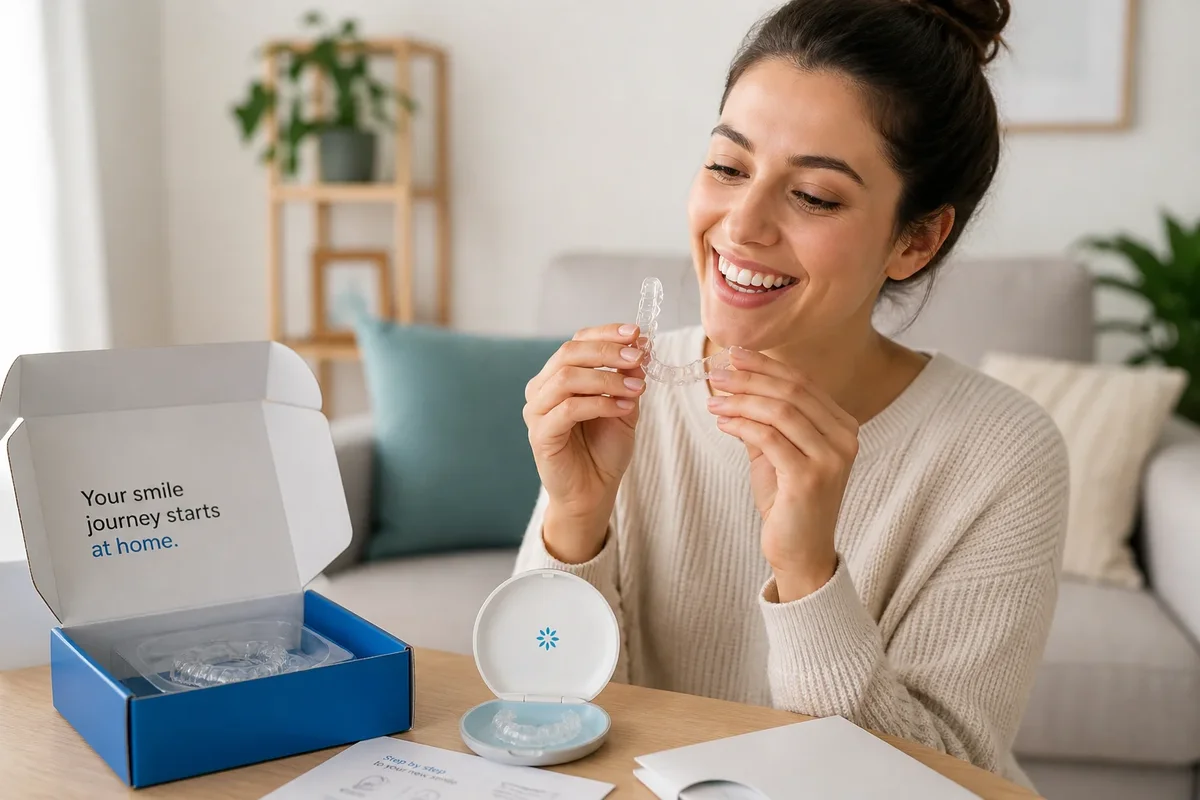
Invisible aligners at home are clear, removable trays designed to gradually shift your teeth into proper alignment. Unlike metal braces, these aligners are nearly invisible, making them ideal for adults and teens who want to improve their smile without drawing attention. The process typically begins with an impression kit or a digital scan of your teeth, which is then used to create a customized treatment plan. Based on this plan, a series of invisible aligners at home are produced, each slightly different to guide your teeth step by step into their ideal position.
One of the biggest advantages of invisible aligners at home is convenience. You can start your treatment without frequent visits to a dental clinic, making it a preferred option for people with busy lifestyles. Many providers offer remote monitoring, where dental professionals track your progress through photos or virtual check-ins. This means you can achieve professional-level results while managing your treatment from the comfort of your home. 😊
Another key benefit of invisible aligners at home is comfort. Traditional braces often cause irritation due to metal brackets and wires, but these aligners are made from smooth plastic, reducing the risk of cuts or discomfort. Additionally, invisible aligners at home are removable, allowing you to eat your favorite foods without restrictions and maintain your regular oral hygiene routine with ease. Brushing and flossing become much simpler compared to fixed orthodontic appliances.
Invisible aligners at home are particularly effective for mild to moderate dental issues such as crowding, spacing, and minor bite misalignment. However, it is important to understand that not all cases can be treated with invisible aligners at home. Severe orthodontic problems may still require in-office treatments supervised closely by a specialist. This is why consulting a dental professional is always recommended before starting any treatment.
When considering invisible aligners at home, safety and reliability should be your top priorities. Reputable providers work with licensed dentists or orthodontists who review your case and create a personalized plan. For more information about dental standards and patient safety, you can visit the American Dental Association, which provides trusted guidelines on orthodontic care.
It is also essential to stay in touch with a professional during your treatment. Even though invisible aligners at home are designed for convenience, monitoring your progress ensures optimal results and minimizes risks. If you ever experience discomfort, unexpected tooth movement, or have concerns, you should reach out to a dental expert. You can easily get professional guidance through the Redent Klinik Contact Page, where experienced specialists can assist you.
Consistency is the key to success when using invisible aligners at home. Most treatment plans require wearing the aligners for 20–22 hours per day. Removing them only for eating and cleaning is crucial to achieve the desired results within the expected timeframe. Skipping wear time can delay your progress and affect the final outcome.
In conclusion, invisible aligners at home offer a flexible, discreet, and effective way to improve your smile without the inconvenience of traditional braces. With proper usage, guidance from dental professionals, and commitment to the process, you can achieve a confident and healthy smile right from your home. If you are considering orthodontic treatment, invisible aligners at home may be the modern solution you have been searching for. 😁
What Are Invisible Aligners at Home and How Do They Work?
Invisible aligners at home are an innovative orthodontic solution designed to straighten teeth using a series of clear, removable trays that are custom-made for your smile. Unlike traditional braces, invisible aligners at home rely on advanced digital planning and gradual tooth movement to deliver results over time. This modern approach allows patients to improve their dental alignment without frequent clinic visits, making invisible aligners at home a highly convenient and appealing option for many individuals. 😊
Understanding the Basics of Invisible Aligners at Home
Invisible aligners at home function through a sequence of precisely engineered plastic trays that apply gentle pressure to your teeth. Each set of invisible aligners at home is worn for about one to two weeks before being replaced with the next set in the series. This gradual transition ensures that teeth shift safely and predictably into their desired positions.
The process usually starts with an at-home impression kit or a 3D scan, depending on the provider. These impressions are used to create a digital model of your teeth. Based on this model, dental professionals design a treatment plan that maps out every stage of movement. The result is a series of invisible aligners at home tailored specifically to your needs.
Custom Fit and Precision Technology
One of the key features of invisible aligners at home is their custom fit. Each aligner is created using high-precision technology, ensuring that it fits snugly over your teeth. This precision is critical because even minor inaccuracies can affect the outcome. The use of digital simulations allows patients to preview their expected results before even starting treatment with invisible aligners at home.
Step-by-Step Functionality of Invisible Aligners at Home
The effectiveness of invisible aligners at home lies in their structured and sequential approach. Each aligner in the series is slightly different from the previous one, guiding teeth into alignment step by step. When worn consistently for 20–22 hours a day, invisible aligners at home can produce noticeable improvements within a few months.
Here is a simplified breakdown of how invisible aligners at home work:
- Initial Assessment: You provide impressions or scans of your teeth.
- Treatment Planning: A dental professional designs a personalized plan.
- Aligner Production: A series of invisible aligners at home are manufactured.
- Progressive Use: You wear each aligner set as instructed.
- Monitoring: Progress is tracked remotely or through occasional check-ins.
Gradual Tooth Movement Explained
Invisible aligners at home work by applying controlled force to specific teeth. This force stimulates the bone around the teeth to remodel, allowing the teeth to move into new positions. Because the force is gentle and continuous, invisible aligners at home are generally more comfortable than traditional braces. However, slight pressure is normal and indicates that the treatment is working as intended.
Materials Used in Invisible Aligners at Home
The materials used in invisible aligners at home are typically medical-grade, BPA-free plastic. This ensures safety, durability, and comfort during daily wear. The transparency of the material makes invisible aligners at home nearly invisible, which is a major reason why many adults prefer this option.
Additionally, the smooth surface of invisible aligners at home reduces irritation to the gums and cheeks, unlike metal brackets and wires. This makes the treatment experience more pleasant overall, especially for individuals with sensitive oral tissues.
Remote Monitoring and Professional Oversight
Even though invisible aligners at home are designed for remote use, professional supervision is still an essential part of the process. Many providers offer digital monitoring systems where patients upload photos of their teeth regularly. Dental experts then review these updates to ensure that invisible aligners at home are working correctly.
If any issues arise, such as improper fit or unexpected tooth movement, adjustments can be made promptly. This combination of convenience and professional oversight makes invisible aligners at home a reliable option when used responsibly.
Why Compliance Matters
For invisible aligners at home to be effective, patient compliance is crucial. Wearing the aligners for the recommended duration each day ensures that the treatment stays on track. Failure to follow guidelines can lead to delays or suboptimal results. Therefore, commitment and consistency are key factors in achieving the best outcome with invisible aligners at home. 😁
In summary, invisible aligners at home represent a modern, technology-driven approach to orthodontic care. By combining custom design, gradual tooth movement, and remote monitoring, invisible aligners at home provide a flexible and effective solution for achieving a straighter smile. Understanding how invisible aligners at home work empowers you to use them correctly and maximize your results.
Benefits of Choosing Invisible Aligners at Home for Teeth Straightening
Invisible aligners at home have transformed the way people approach orthodontic treatment by offering a flexible, discreet, and user-friendly alternative to traditional braces. For many individuals, the idea of straightening teeth without visible metal brackets is incredibly appealing. However, the advantages of invisible aligners at home go far beyond aesthetics. In this section, we will explore the full range of benefits that make invisible aligners at home a preferred choice for modern dental care. 😁
Discreet Appearance and Confidence Boost
One of the most well-known benefits of invisible aligners at home is their nearly invisible design. Made from clear plastic, these aligners blend seamlessly with your natural teeth, allowing you to smile confidently throughout your treatment. Unlike metal braces, which can draw attention, invisible aligners at home are subtle and often go unnoticed by others.
This discreet appearance is especially important for adults and professionals who want to maintain a polished look in social and work environments. With invisible aligners at home, you can continue your daily interactions without feeling self-conscious about your orthodontic treatment.
Improved Self-Esteem During Treatment
Because invisible aligners at home are not visually intrusive, many users report increased self-confidence even before their treatment is complete. Knowing that your teeth are improving while maintaining a natural appearance can have a powerful psychological impact. 😊
Convenience and Flexibility
Another major advantage of invisible aligners at home is the convenience they offer. Traditional braces require frequent visits to the orthodontist for adjustments, but invisible aligners at home are designed to minimize in-person appointments. Most of the process can be managed remotely, making it ideal for busy individuals.
You can start your treatment with an impression kit delivered to your home and receive your aligners by mail. Progress is often monitored through online platforms, allowing dental professionals to track your results without requiring constant clinic visits. This level of flexibility makes invisible aligners at home an excellent option for those with demanding schedules.
Freedom to Travel and Maintain Routine
Invisible aligners at home allow you to continue your lifestyle without disruption. Whether you are traveling, working long hours, or managing family responsibilities, you can stay consistent with your treatment plan. This flexibility is one of the key reasons why invisible aligners at home are becoming increasingly popular worldwide.
Comfort Compared to Traditional Braces
Comfort is another significant benefit of invisible aligners at home. Traditional braces can cause irritation due to wires and brackets rubbing against the inside of the mouth. In contrast, invisible aligners at home are made from smooth plastic, reducing the likelihood of cuts or discomfort.
While you may feel slight pressure when switching to a new set of aligners, this sensation is usually mild and temporary. It is a sign that invisible aligners at home are actively working to shift your teeth into the correct position.
Reduced Emergency Visits
Because invisible aligners at home do not involve wires or brackets, there is less risk of breakage. This means fewer unexpected dental visits, saving both time and stress during your treatment journey.
Removability and Better Oral Hygiene
One of the standout features of invisible aligners at home is that they are removable. This allows you to take them out when eating, drinking (anything other than water), brushing, and flossing. Maintaining oral hygiene is much easier compared to traditional braces, where cleaning around brackets can be challenging.
With invisible aligners at home, you can brush and floss your teeth as usual, reducing the risk of plaque buildup, cavities, and gum disease during treatment. This is a major advantage for maintaining overall oral health.
No Food Restrictions
Unlike braces, which come with a list of restricted foods, invisible aligners at home allow you to enjoy your favorite meals without worry. Simply remove the aligners before eating and reinsert them afterward. This freedom adds to the overall comfort and satisfaction of using invisible aligners at home.
Predictable Results with Advanced Technology
Invisible aligners at home use digital planning and 3D modeling to map out your entire treatment process. This technology allows you to see a preview of your expected results before you even begin. Such predictability helps set realistic expectations and motivates you to stay committed to your plan.
Additionally, the step-by-step nature of invisible aligners at home ensures controlled and gradual tooth movement. Each aligner is designed to achieve a specific stage in the process, making the overall treatment efficient and organized.
Personalized Treatment Plans
Every set of invisible aligners at home is customized to fit your unique dental structure. This personalized approach ensures that your treatment addresses your specific alignment issues, leading to more effective outcomes.
Cost-Effectiveness and Accessibility
In many cases, invisible aligners at home can be more affordable than traditional orthodontic treatments. By reducing the need for frequent in-office visits, providers can offer competitive pricing. This makes invisible aligners at home accessible to a wider range of patients who may have previously considered orthodontic treatment out of reach.
Payment plans and financing options are often available, making it easier to manage the cost of invisible aligners at home over time. This financial flexibility further enhances their appeal.
Value for Long-Term Oral Health
Investing in invisible aligners at home is not just about aesthetics; it also contributes to better oral health. Properly aligned teeth are easier to clean and less prone to issues such as uneven wear, jaw strain, and gum disease. This makes invisible aligners at home a valuable long-term investment in your dental well-being.
In conclusion, invisible aligners at home offer a wide range of benefits, including discretion, convenience, comfort, and improved oral hygiene. By combining advanced technology with user-friendly design, invisible aligners at home provide an effective and modern solution for achieving a straighter, healthier smile. 😄
Who Is a Good Candidate for Invisible Aligners at Home?
Invisible aligners at home are an excellent orthodontic solution for many people, but they are not suitable for everyone. Understanding whether you are a good candidate for invisible aligners at home is essential before starting treatment. While these aligners offer convenience, discretion, and flexibility, the success of invisible aligners at home depends on the complexity of your dental condition, your commitment to the process, and your overall oral health. In this section, we will explore in detail who can benefit most from invisible aligners at home and who may need alternative treatments. 😊
Ideal Dental Conditions for Invisible Aligners at Home
Invisible aligners at home are typically designed to treat mild to moderate orthodontic issues. If your teeth require only slight adjustments, this treatment can be highly effective. Common cases where invisible aligners at home work well include:
- Mild crowding: When teeth slightly overlap or are not evenly spaced.
- Minor spacing issues: Small gaps between teeth that affect appearance.
- Slight bite problems: Including mild overbite, underbite, or crossbite.
For these types of conditions, invisible aligners at home can gradually shift teeth into better alignment without the need for in-office procedures. Because the movements are relatively simple, the remote monitoring approach used with invisible aligners at home is usually sufficient to achieve good results.
Why Mild Cases Respond Best
Invisible aligners at home rely on controlled, incremental movements. In mild cases, the teeth respond predictably to this gentle pressure. This makes invisible aligners at home a reliable option for patients seeking subtle yet noticeable improvements in their smile. 😁
Age and Lifestyle Considerations
Invisible aligners at home are popular among both adults and responsible teenagers. However, the ideal candidate is someone who can follow instructions carefully and maintain consistent wear. Since invisible aligners at home must be worn for 20–22 hours per day, discipline is a critical factor.
Adults often make excellent candidates for invisible aligners at home because they are motivated to improve their smile and can adhere to the treatment plan. Teens may also benefit, provided they understand the importance of wearing their aligners as instructed.
Busy Individuals Benefit the Most
If you have a demanding schedule, invisible aligners at home can be especially advantageous. The reduced need for clinic visits makes it easier to stay on track with treatment without disrupting your daily routine. This convenience is one of the main reasons why invisible aligners at home are increasingly preferred.
Commitment and Compliance Requirements
One of the most important factors in determining whether you are a good candidate for invisible aligners at home is your level of commitment. Unlike fixed braces, invisible aligners at home are removable, which means their effectiveness depends heavily on how consistently you wear them.
If you frequently forget to wear your aligners or remove them for extended periods, your treatment may be delayed or compromised. Therefore, individuals who are disciplined and motivated are the best candidates for invisible aligners at home.
Daily Routine and Responsibility
To succeed with invisible aligners at home, you must be willing to follow a structured routine. This includes wearing the aligners for the recommended hours, cleaning them regularly, and switching to new sets on schedule. Patients who can maintain this routine are more likely to achieve optimal results.
Oral Health Requirements
Good oral health is a prerequisite for starting invisible aligners at home. Before beginning treatment, your teeth and gums should be free from issues such as cavities, gum disease, or infections. Addressing these problems beforehand ensures that invisible aligners at home can work effectively without complications.
Healthy gums and strong teeth provide a stable foundation for movement. If there are underlying dental concerns, they must be treated first to avoid worsening the condition during the use of invisible aligners at home.
Importance of a Pre-Treatment Check
Even though invisible aligners at home are designed for remote use, it is highly recommended to have an initial dental evaluation. A professional can determine whether invisible aligners at home are suitable for your specific case and identify any issues that need attention beforehand.
Who Should Avoid Invisible Aligners at Home?
While invisible aligners at home are effective for many people, they may not be appropriate for individuals with complex orthodontic needs. Severe crowding, significant bite misalignment, or jaw-related issues often require in-office treatments supervised closely by an orthodontist.
Additionally, individuals who are unable to commit to consistent wear or proper maintenance may not achieve the desired results with invisible aligners at home. In such cases, alternative options like traditional braces may be more suitable.
Complex Cases Require Professional Supervision
Advanced orthodontic problems often involve movements that cannot be safely managed through remote treatment. For these situations, direct supervision by a specialist ensures better control and more predictable outcomes than invisible aligners at home alone.
Final Thoughts on Candidate Suitability
In summary, invisible aligners at home are best suited for individuals with mild to moderate alignment issues, good oral health, and a strong commitment to following the treatment plan. When used correctly, invisible aligners at home can deliver impressive results while offering unmatched convenience and comfort.
By understanding whether you are a suitable candidate, you can make an informed decision and set realistic expectations for your orthodontic journey. If you meet the criteria and are ready to commit, invisible aligners at home can be a highly effective way to achieve the smile you’ve always wanted. 😄
Step-by-Step Process of Using Invisible Aligners at Home
Invisible aligners at home follow a structured and carefully designed process that allows you to straighten your teeth efficiently without frequent clinic visits. Understanding each step in detail helps you stay committed and ensures that invisible aligners at home deliver the best possible results. From the initial impression to the final smile transformation, every stage plays a crucial role in your orthodontic journey. 😊
Step 1: Initial Assessment and Impression Kit
The process of invisible aligners at home begins with an initial assessment. Most providers send you an at-home impression kit, which allows you to create molds of your teeth. Some advanced providers may offer digital scanning options through partner clinics. These impressions are essential because they form the foundation of your treatment plan.
When taking impressions for invisible aligners at home, accuracy is critical. Carefully following the instructions ensures that the aligners will fit properly. Any errors at this stage can affect the overall success of invisible aligners at home, so patience and attention to detail are key.
Tips for Accurate Impressions
- Follow the provided guide step by step.
- Ensure the material fully captures all teeth surfaces.
- Take multiple impressions if required for precision.
Step 2: Personalized Treatment Planning
Once your impressions are received, dental professionals create a customized treatment plan for your invisible aligners at home. Using advanced 3D modeling technology, they map out how your teeth will move over time. This digital plan shows each stage of your transformation, giving you a clear idea of what to expect.
This step is one of the most important parts of invisible aligners at home because it ensures that every movement is carefully controlled. You may even receive a preview of your future smile, which can be highly motivating. 😁
Why Customization Matters
Each set of invisible aligners at home is designed specifically for your dental structure. This personalized approach increases the likelihood of achieving precise and predictable results.
Step 3: Receiving Your Aligners
After your treatment plan is finalized, your full set of invisible aligners at home is manufactured and shipped directly to you. Each aligner is labeled according to the stage of treatment, making it easy to follow the sequence.
When you receive your invisible aligners at home, you will also get detailed instructions on how to wear, clean, and switch them. Taking the time to understand these instructions is essential for success.
What to Expect Upon Delivery
- A complete series of aligners.
- Instructions for use and care.
- Guidelines for tracking progress.
Step 4: Daily Wear and Usage
The effectiveness of invisible aligners at home depends largely on consistent daily use. You should wear your aligners for 20–22 hours per day, removing them only for eating, drinking (except water), and oral hygiene.
Each set of invisible aligners at home is typically worn for one to two weeks before moving on to the next set. As you progress, you will notice gradual improvements in your teeth alignment. Slight pressure or tightness is normal and indicates that invisible aligners at home are working as intended.
Maintaining Consistency
Consistency is the key to achieving optimal results. Skipping wear time or delaying the switch to the next aligner can extend your treatment duration and reduce effectiveness.
Step 5: Cleaning and Maintenance
Proper hygiene is essential when using invisible aligners at home. Since the aligners are worn for most of the day, they must be kept clean to prevent bacteria buildup and unpleasant odors.
You should clean your invisible aligners at home daily using a soft toothbrush and lukewarm water. Avoid using hot water, as it can warp the plastic and affect the fit. Keeping your teeth clean is equally important, as trapped food particles can lead to dental issues.
Best Practices for Hygiene
- Brush your teeth before reinserting aligners.
- Rinse aligners every time you remove them.
- Use specialized cleaning solutions if recommended.
Step 6: Remote Monitoring and Progress Tracking
Even though invisible aligners at home are designed for remote use, professional monitoring is still part of the process. Many providers require you to upload photos of your teeth at regular intervals. This allows dental experts to evaluate your progress and ensure that invisible aligners at home are working correctly.
If adjustments are needed, your provider can guide you through the next steps without requiring an in-person visit. This combination of convenience and professional oversight makes invisible aligners at home both efficient and reliable.
Staying on Track
Following your provider’s instructions and attending virtual check-ins helps prevent complications and ensures that your treatment stays on schedule.
Step 7: Completing Treatment and Retainers
After completing all stages of invisible aligners at home, your teeth should be in their desired positions. However, maintaining these results is just as important as achieving them. Most providers recommend wearing retainers to keep your teeth from shifting back.
Retainers are usually worn at night and are customized just like invisible aligners at home. They help preserve your new smile and protect the investment you have made in your dental health.
Long-Term Maintenance
Wearing retainers consistently ensures that the results of invisible aligners at home remain stable over time. Neglecting this step can lead to relapse, undoing the progress you have achieved.
In conclusion, the step-by-step process of invisible aligners at home is designed to be simple, structured, and effective. By following each stage carefully—from impressions to retainers—you can achieve a straighter smile with minimal disruption to your daily life. Invisible aligners at home offer a modern approach to orthodontics, combining convenience with professional precision for outstanding results. 😄
Invisible Aligners at Home vs Traditional Braces: Key Differences
When deciding on orthodontic treatment, one of the most common comparisons people make is between invisible aligners at home and traditional braces. Both options aim to straighten teeth and improve oral health, but they differ significantly in terms of appearance, comfort, convenience, and treatment approach. Understanding these differences in detail will help you choose the best solution for your needs. 😊
Appearance and Aesthetics
One of the most obvious differences between invisible aligners at home and traditional braces is their appearance. Invisible aligners at home are made from clear plastic, making them nearly invisible when worn. This allows users to undergo orthodontic treatment without drawing attention to their teeth.
In contrast, traditional braces use metal brackets and wires that are clearly visible. While some modern braces offer ceramic or tooth-colored options, they are still more noticeable than invisible aligners at home. For individuals who prioritize aesthetics, invisible aligners at home are often the preferred choice.
Confidence in Social Situations
Because invisible aligners at home are discreet, many patients feel more confident during treatment. Whether in professional meetings or social gatherings, you can smile freely without worrying about the appearance of your orthodontic device. 😁
Comfort and Daily Experience
Comfort is another important factor when comparing invisible aligners at home with traditional braces. Aligners are made from smooth plastic, which minimizes irritation to the gums and cheeks. On the other hand, traditional braces can cause discomfort due to metal wires and brackets rubbing against the inside of the mouth.
While both treatments may cause some pressure as teeth shift, invisible aligners at home are generally considered more comfortable. The absence of sharp components makes a significant difference in daily wear.
Adjustments and Pain Levels
Traditional braces require periodic tightening, which can lead to temporary discomfort. Invisible aligners at home, however, use gradual adjustments with each new aligner, resulting in a more consistent and manageable experience.
Convenience and Lifestyle Flexibility
Invisible aligners at home offer unmatched convenience compared to traditional braces. Since they are designed for remote use, you can manage most of your treatment from home. This reduces the need for frequent dental visits, making invisible aligners at home ideal for busy individuals.
Traditional braces require regular in-office appointments for adjustments and maintenance. This can be time-consuming and less flexible for those with tight schedules.
Removability Advantage
One of the biggest benefits of invisible aligners at home is that they are removable. You can take them out when eating, drinking, brushing, or flossing. In contrast, traditional braces are fixed to your teeth, limiting your flexibility and requiring more effort to maintain oral hygiene.
Oral Hygiene and Maintenance
Maintaining oral hygiene is much easier with invisible aligners at home. Because you can remove them, you can brush and floss your teeth as usual. This reduces the risk of plaque buildup, cavities, and gum disease during treatment.
With traditional braces, cleaning around brackets and wires can be challenging. Food particles can easily get trapped, increasing the risk of dental issues if proper care is not taken. Therefore, invisible aligners at home provide a clear advantage in terms of hygiene.
No Food Restrictions
Invisible aligners at home allow you to enjoy all your favorite foods since you remove them before eating. Traditional braces, however, come with dietary restrictions to prevent damage to brackets and wires.
Treatment Effectiveness and Limitations
While invisible aligners at home are highly effective for mild to moderate alignment issues, traditional braces are more versatile. Braces can handle complex cases, including severe crowding, significant bite problems, and jaw alignment issues.
Invisible aligners at home rely on controlled, gradual movements, which may not be sufficient for more advanced orthodontic conditions. In such cases, a specialist-supervised treatment plan with braces may be necessary.
Precision and Control
Traditional braces offer greater control over tooth movement in complex situations. However, for suitable cases, invisible aligners at home can deliver excellent results with a more comfortable and convenient approach.
Cost and Accessibility
Cost is another factor to consider when choosing between invisible aligners at home and traditional braces. In many cases, invisible aligners at home can be more affordable due to fewer in-office visits. They also often come with flexible payment plans, making them accessible to a broader audience.
Traditional braces may involve higher costs depending on the complexity of the case and the duration of treatment. However, they remain a reliable option for individuals with more challenging dental issues.
Value for Investment
Both options provide long-term benefits for oral health and aesthetics. The right choice depends on your specific needs, budget, and treatment goals.
Monitoring and Professional Supervision
Invisible aligners at home typically involve remote monitoring, where dental professionals track your progress through photos or virtual check-ins. This allows for a balance between convenience and professional oversight.
Traditional braces require regular in-person visits, ensuring close supervision throughout the treatment process. While this may be less convenient, it provides direct control for complex cases.
When Supervision Matters Most
For advanced orthodontic issues, in-person supervision with braces may be more appropriate. However, for simpler cases, invisible aligners at home offer an efficient and modern alternative.
In conclusion, invisible aligners at home and traditional braces each have their own advantages and limitations. Invisible aligners at home excel in aesthetics, comfort, and convenience, while traditional braces provide greater control for complex cases. By understanding these key differences, you can choose the treatment option that best aligns with your needs and lifestyle. 😄
Costs and Payment Options for Invisible Aligners at Home
Understanding the financial aspect of invisible aligners at home is essential before starting treatment. While many people are attracted to the convenience and aesthetics of invisible aligners at home, cost plays a major role in the decision-making process. The good news is that invisible aligners at home are often more affordable than traditional orthodontic treatments, and there are multiple payment options available to make them accessible to a wide range of patients. 😊
Average Cost of Invisible Aligners at Home
The cost of invisible aligners at home can vary depending on several factors, including the complexity of your case, the provider you choose, and the length of your treatment. On average, invisible aligners at home typically range between $1,200 and $3,500. This is generally lower than traditional braces, which can cost anywhere from $3,000 to $7,000 or more.
Here is a simplified pricing overview for invisible aligners at home:
- Mild cases: $1,200 – $1,800
- Moderate cases: $1,800 – $2,800
- Advanced cases (limited eligibility): $2,800 – $3,500
These estimates make invisible aligners at home a cost-effective option for individuals seeking mild to moderate teeth straightening solutions.
Why Costs Are Lower Than Braces
Invisible aligners at home are typically more affordable because they require fewer in-office visits and less hands-on supervision. This streamlined process reduces overhead costs, allowing providers to offer more competitive pricing.
Factors That Influence the Cost
Not all invisible aligners at home treatments cost the same. Several factors can influence the final price, including:
- Severity of alignment issues: More complex cases require more aligners and longer treatment time.
- Length of treatment: Longer plans generally cost more.
- Provider reputation: Established brands may charge higher fees.
- Additional services: Retainers, refinements, or replacement aligners may add to the cost.
Understanding these variables helps you set realistic expectations when budgeting for invisible aligners at home.
Hidden Costs to Watch For
While invisible aligners at home are generally affordable, you should check if the quoted price includes all necessary components such as retainers, adjustments, or shipping. Being aware of these details prevents unexpected expenses later. 😄
Payment Plans and Financing Options
One of the biggest advantages of invisible aligners at home is the availability of flexible payment plans. Many providers understand that paying the full amount upfront may not be feasible for everyone, so they offer monthly installment options.
Typical financing options for invisible aligners at home include:
- Monthly payment plans: Payments as low as $50–$100 per month.
- Zero-interest financing: Some providers offer interest-free installment plans.
- Credit-based financing: Third-party financing companies may be available.
These options make invisible aligners at home more accessible and allow patients to start treatment without financial strain.
Choosing the Right Payment Plan
When selecting a payment plan for invisible aligners at home, consider your budget and long-term financial commitments. A well-structured plan ensures that you can complete your treatment without interruptions.
Insurance Coverage and Savings Opportunities
In some cases, dental insurance may partially cover the cost of invisible aligners at home. Orthodontic benefits vary by plan, but many policies offer coverage for teeth straightening treatments, including clear aligners.
Additionally, you can use Health Savings Accounts (HSA) or Flexible Spending Accounts (FSA) to pay for invisible aligners at home. These accounts allow you to use pre-tax income, effectively reducing the overall cost of treatment.
Maximizing Your Benefits
Before starting invisible aligners at home, check with your insurance provider to understand your coverage. Combining insurance, HSA/FSA funds, and payment plans can significantly reduce out-of-pocket expenses.
Cost vs Value: Is It Worth It?
While cost is an important factor, it is equally important to consider the value that invisible aligners at home provide. A straighter smile is not just about appearance—it also improves oral health by making teeth easier to clean and reducing the risk of dental issues.
Invisible aligners at home offer a balance of affordability, convenience, and effectiveness. For many patients, the ability to achieve noticeable results without disrupting their daily routine makes this treatment a worthwhile investment.
Long-Term Benefits
Properly aligned teeth can prevent problems such as uneven wear, jaw discomfort, and gum disease. By investing in invisible aligners at home, you are also investing in your long-term dental health and overall well-being.
Comparing Costs with Other Treatments
When compared to other orthodontic options, invisible aligners at home stand out for their affordability and convenience. While traditional braces and in-office aligners may offer more control for complex cases, they often come at a higher cost and require more frequent visits.
Invisible aligners at home provide a practical solution for individuals with mild to moderate alignment issues who want to save both time and money.
Making the Right Financial Decision
Choosing invisible aligners at home involves balancing your budget, treatment goals, and lifestyle preferences. By carefully evaluating all costs and payment options, you can make a confident and informed decision.
In conclusion, invisible aligners at home offer a cost-effective and flexible approach to teeth straightening. With a wide range of pricing options, financing plans, and potential insurance coverage, invisible aligners at home make it easier than ever to achieve a healthier, more confident smile without financial stress. 😁
Common Risks and Limitations of Invisible Aligners at Home
Invisible aligners at home offer many advantages, but like any dental treatment, they also come with certain risks and limitations. Understanding these potential challenges is essential before starting your journey with invisible aligners at home. While many patients achieve excellent results, being aware of possible drawbacks helps you set realistic expectations and avoid complications. 😊
Limited Effectiveness for Complex Cases
One of the main limitations of invisible aligners at home is their reduced effectiveness in treating complex orthodontic issues. While invisible aligners at home are highly suitable for mild to moderate alignment problems, they may not provide sufficient control for severe cases.
Conditions such as significant crowding, major bite misalignment, or jaw irregularities often require more advanced orthodontic techniques. In these situations, traditional braces or in-office aligners supervised by an orthodontist may be more appropriate than invisible aligners at home.
When Complexity Becomes a Problem
If your teeth require extensive movement or structural changes, invisible aligners at home may not achieve the desired results. Starting treatment without proper evaluation can lead to disappointment or incomplete correction. 😕
Lack of In-Person Supervision
Another important consideration with invisible aligners at home is the limited direct supervision by dental professionals. Although remote monitoring is typically included, it does not replace in-person evaluations.
Without regular chairside visits, certain issues may go unnoticed or take longer to identify. This can affect the overall success of invisible aligners at home if problems are not addressed promptly.
Importance of Professional Guidance
Even though invisible aligners at home are designed for convenience, maintaining communication with your provider is essential. Regular updates and photo submissions help ensure that your treatment stays on track.
Risk of Improper Fit
Invisible aligners at home rely heavily on accurate impressions or scans. If the initial mold is not precise, the aligners may not fit correctly. A poor fit can lead to ineffective tooth movement or discomfort during wear.
Unlike in-office treatments, where professionals take impressions directly, invisible aligners at home depend on the user to complete this step correctly. This increases the risk of errors if instructions are not followed carefully.
How to Minimize Fit Issues
- Follow all impression instructions carefully.
- Take multiple impressions if needed.
- Contact support if you are unsure about accuracy.
Compliance Challenges
One of the biggest risks associated with invisible aligners at home is non-compliance. Since the aligners are removable, it is up to the user to wear them consistently for 20–22 hours per day.
If you frequently forget to wear your aligners or remove them for extended periods, the treatment may not progress as planned. This can result in delays, additional costs, or unsatisfactory outcomes with invisible aligners at home.
Self-Discipline Is Essential
Invisible aligners at home require a high level of commitment. Patients who are not disciplined may struggle to achieve the desired results, making consistency a key factor in success. 😁
Potential Oral Health Issues
Improper use of invisible aligners at home can lead to oral health problems. For example, wearing aligners without maintaining proper hygiene can trap bacteria against your teeth, increasing the risk of cavities and gum disease.
Additionally, if aligners are not cleaned regularly, they may develop unpleasant odors or discoloration. This not only affects comfort but also reduces the overall effectiveness of invisible aligners at home.
Maintaining Hygiene
To avoid these issues, it is important to clean both your teeth and aligners regularly. Brushing, flossing, and rinsing aligners should be part of your daily routine.
Unexpected Tooth Movement
Although invisible aligners at home are designed using precise digital plans, there is still a possibility of unexpected tooth movement. Teeth may not always respond exactly as predicted, especially without in-person supervision.
This can lead to minor misalignments or the need for additional refinement aligners. While many providers offer adjustments, this can extend the treatment timeline for invisible aligners at home.
Monitoring Progress Closely
Regular progress tracking helps detect any deviations early. If you notice unusual changes, contacting your provider immediately can prevent further complications.
Speech and Comfort Adjustments
When you first start using invisible aligners at home, you may experience slight changes in speech or mild discomfort. These effects are usually temporary and improve as you get used to wearing the aligners.
However, some individuals may find the adjustment period challenging, especially if they are sensitive to changes in their oral environment.
Adapting to Aligners
Practicing speaking with aligners and wearing them consistently helps your mouth adapt more quickly. Most users adjust within a few days.
Long-Term Commitment and Retainers
Completing treatment with invisible aligners at home is only part of the process. Maintaining the results requires wearing retainers regularly. Failure to do so can cause teeth to shift back to their original positions.
This ongoing commitment is essential for preserving the benefits of invisible aligners at home. Neglecting this step can undo months of progress.
Preventing Relapse
Wearing retainers as instructed ensures that your new smile remains stable. This is a critical aspect of long-term success with invisible aligners at home. 😄
In conclusion, while invisible aligners at home offer convenience and effectiveness, they also come with certain risks and limitations. By understanding these challenges and taking proactive steps to address them, you can maximize the success of your treatment. Invisible aligners at home can deliver excellent results when used responsibly, with proper care, and with realistic expectations.
Tips to Get the Best Results with Invisible Aligners at Home
Achieving a straight and healthy smile with invisible aligners at home requires more than just wearing the trays. While invisible aligners at home are designed to be convenient and effective, your daily habits and consistency play a crucial role in determining the final outcome. By following proven strategies and expert tips, you can maximize the effectiveness of invisible aligners at home and ensure a smooth, successful treatment journey. 😊
Wear Your Aligners Consistently
The most important rule for success with invisible aligners at home is wearing them for the recommended 20–22 hours per day. Invisible aligners at home only work when they apply continuous pressure to your teeth. Removing them too often or for extended periods can delay progress and reduce effectiveness.
Consistency ensures that each stage of invisible aligners at home works as planned. Skipping wear time can cause your teeth to shift back, making it harder for the next aligner to fit properly.
Build a Daily Routine
To stay consistent, incorporate invisible aligners at home into your daily routine. Wear them while sleeping, working, or relaxing, and only remove them when absolutely necessary. Creating a habit makes it easier to stay on track. 😁
Switch Aligners on Schedule
Invisible aligners at home are designed as a series, with each set worn for a specific period. Switching aligners too early or too late can disrupt the treatment process. Following the schedule provided by your provider ensures that invisible aligners at home continue to move your teeth gradually and safely.
Each aligner plays a precise role in your treatment. Delaying the switch can slow progress, while switching too soon may lead to discomfort or improper movement.
Use Reminders for Timely Changes
Set calendar alerts or phone reminders to ensure you switch your invisible aligners at home on time. Staying organized helps maintain steady progress throughout your treatment.
Maintain Excellent Oral Hygiene
Good oral hygiene is essential when using invisible aligners at home. Since the aligners cover your teeth for most of the day, any bacteria or food particles left behind can cause dental issues.
Brushing and flossing after every meal is highly recommended before reinserting your invisible aligners at home. This prevents plaque buildup and keeps your mouth healthy during treatment.
Clean Your Aligners Properly
In addition to cleaning your teeth, you should also clean your invisible aligners at home daily. Use a soft toothbrush and lukewarm water to remove buildup. Avoid hot water, as it can damage the aligners and affect their fit.
Be Mindful of What You Eat and Drink
While invisible aligners at home allow flexibility, it is important to remove them before eating or drinking anything other than water. Consuming food or beverages while wearing invisible aligners at home can stain them or trap sugar against your teeth.
This can lead to discoloration, bad odors, and even cavities if not managed properly. Being mindful of your eating habits ensures that invisible aligners at home remain clean and effective.
Avoid Staining Substances
Drinks like coffee, tea, and red wine can stain invisible aligners at home. Always remove your aligners before consuming these beverages to maintain their clear appearance.
Monitor Your Progress Regularly
Tracking your progress is an important part of using invisible aligners at home. Many providers require periodic photo updates to assess how well your teeth are moving. Paying attention to these updates ensures that invisible aligners at home are working as expected.
If you notice any issues, such as discomfort or misalignment, addressing them early can prevent bigger problems later.
Stay in Contact with Your Provider
Even though invisible aligners at home are designed for remote use, maintaining communication with your dental provider is crucial. Regular check-ins help ensure that your treatment stays on track.
Handle Your Aligners with Care
Invisible aligners at home are durable but not indestructible. Improper handling can lead to cracks, warping, or loss. Always store your aligners in their protective case when not in use to avoid damage.
Replacing damaged aligners can delay your treatment and increase costs, so careful handling is essential.
Protect Your Investment
Treat your invisible aligners at home as a valuable tool for your dental health. Keeping them safe and clean ensures uninterrupted progress.
Stay Patient and Realistic
Invisible aligners at home work gradually, and results take time. It is important to stay patient and trust the process. While you may notice early improvements, achieving the final result requires consistent effort over several months.
Setting realistic expectations helps you stay motivated and committed to your treatment plan.
Celebrate Small Progress
Take note of small changes in your smile along the way. These milestones can boost your confidence and encourage you to continue using invisible aligners at home as instructed. 😊
Use Retainers After Treatment
Once you complete your treatment with invisible aligners at home, wearing retainers is essential to maintain your results. Teeth naturally tend to shift back over time, so retainers help preserve your new alignment.
Following your provider’s instructions for retainer use ensures long-term success after using invisible aligners at home.
Long-Term Smile Maintenance
Consistent retainer use protects the progress you have made. This final step is just as important as the treatment itself.
In conclusion, getting the best results with invisible aligners at home requires discipline, proper care, and attention to detail. By wearing them consistently, maintaining hygiene, following your schedule, and staying in touch with your provider, you can achieve a beautifully aligned smile. Invisible aligners at home offer a powerful and convenient solution—but your commitment is the key to unlocking their full potential. 😄
When to Contact a Professional About Invisible Aligners at Home
Invisible aligners at home are designed to provide a convenient and flexible orthodontic experience, but that does not mean professional guidance is unnecessary. Knowing when to seek expert help during your treatment is essential to ensure safety, effectiveness, and long-term success. While invisible aligners at home allow you to manage most of the process independently, certain situations require immediate attention from a dental professional. Understanding these scenarios can prevent complications and help you achieve the best possible results. 😊
Persistent Pain or Discomfort
It is normal to feel mild pressure when starting a new set of invisible aligners at home. This indicates that your teeth are shifting as planned. However, persistent or severe pain is not normal and should not be ignored.
If you experience ongoing discomfort that does not improve after a few days, it may indicate that your invisible aligners at home are not fitting correctly or that your teeth are not responding as expected. In such cases, contacting a professional is crucial to prevent further complications.
Signs That Pain Needs Attention
- Sharp or intense pain that interferes with daily activities
- Swelling or inflammation of the gums
- Difficulty wearing your invisible aligners at home for the recommended duration
Aligners Do Not Fit Properly
A proper fit is essential for invisible aligners at home to work effectively. If your aligners feel too loose, too tight, or do not fully sit on your teeth, it may indicate an issue with your treatment progression.
Poorly fitting invisible aligners at home can lead to ineffective tooth movement and may even cause discomfort. If you notice gaps between the aligner and your teeth or if the aligner does not stay in place, you should consult a professional immediately.
Common Fit Issues
Fit problems may arise due to inaccurate impressions, delayed aligner changes, or unexpected tooth movement. Addressing these issues early helps keep your invisible aligners at home treatment on track. 😁
Unexpected Tooth Movement
Invisible aligners at home are designed based on a precise digital plan, but teeth do not always move exactly as predicted. If you notice that your teeth are shifting in an unexpected way, it is important to seek professional advice.
Unusual movement can affect your bite and overall alignment. A dental expert can evaluate whether adjustments are needed or if additional aligners are required to correct the issue.
Monitoring Changes Carefully
Regularly observing your progress helps you detect irregularities early. Taking photos and comparing them with your treatment plan can help identify problems with invisible aligners at home.
Difficulty Following the Treatment Plan
Invisible aligners at home require discipline and consistency. If you find it challenging to follow the recommended schedule or wear your aligners for the required hours, you may need professional guidance.
A dental provider can offer practical solutions and tips to help you stay on track. Ignoring compliance issues can reduce the effectiveness of invisible aligners at home and prolong your treatment.
Getting Back on Track
If you have missed wear time or skipped aligners, consult your provider for instructions. They may adjust your plan to ensure continued progress.
Signs of Oral Health Problems
Maintaining oral health is critical when using invisible aligners at home. If you notice symptoms such as bleeding gums, persistent bad breath, or tooth sensitivity, it may indicate underlying issues that need attention.
Ignoring these symptoms can lead to more serious dental problems. A professional evaluation ensures that invisible aligners at home do not negatively impact your oral health.
Common Warning Signs
- Gum inflammation or bleeding
- Tooth pain unrelated to aligner pressure
- Visible plaque buildup or discoloration
Broken or Damaged Aligners
Invisible aligners at home are durable, but they can still become damaged if not handled properly. Cracks, warping, or breakage can compromise their effectiveness.
If your invisible aligners at home are damaged, do not continue using them without consulting a professional. Using broken aligners can lead to improper tooth movement and discomfort.
What to Do in Case of Damage
Contact your provider immediately for guidance. They may recommend using a previous aligner or moving to the next set temporarily until a replacement is provided.
End of Treatment Concerns
As you approach the end of your treatment with invisible aligners at home, you may have questions about your results. If your teeth are not aligned as expected or if you feel that further adjustments are needed, it is important to seek professional advice.
Additional refinement aligners or adjustments may be required to achieve optimal results. Consulting a professional ensures that your invisible aligners at home treatment is completed successfully.
Ensuring Optimal Results
A final evaluation helps confirm that your teeth are properly aligned and that your bite is balanced. This step is essential for long-term satisfaction.
When in Doubt, Ask for Help
One of the most important rules when using invisible aligners at home is not to ignore concerns. If something feels off or you are unsure about any aspect of your treatment, reaching out to a professional is always the safest choice.
For personalized support and expert advice, you can visit the Redent Klinik Contact Page. Their experienced team can guide you through any challenges you may face with invisible aligners at home.
Trusted Guidance Matters
Professional input ensures that invisible aligners at home remain safe and effective throughout your treatment. Timely intervention can prevent minor issues from becoming major problems. 😊
In conclusion, while invisible aligners at home offer flexibility and independence, knowing when to contact a professional is essential for success. By staying alert to warning signs and seeking help when needed, you can ensure a smooth and effective treatment journey. Invisible aligners at home can deliver excellent results—but expert guidance remains a key part of achieving your perfect smile. 😄