
If you’ve ever asked yourself “is Invisalign covered by HSA”, you’re not alone. Thousands of people exploring orthodontic treatments like Invisalign want to know whether they can use their Health Savings Account (HSA) to help pay for the cost. The answer is yes, in most cases Invisalign is covered by HSA, but understanding how it works, what the eligibility requirements are, and how to properly use your funds is crucial for avoiding unexpected issues or tax penalties. In this detailed guide, we’ll explain everything you need to know about HSA eligibility for Invisalign, including rules, limitations, and insider tips to make the most of your benefits. 😄
Before diving deeper, let’s clarify what an HSA actually is. A Health Savings Account (HSA) is a tax-advantaged savings account available to individuals with a high-deductible health plan (HDHP). The main purpose of this account is to allow you to save pre-tax dollars for qualified medical expenses — and yes, orthodontic treatments like Invisalign often fall under this category. The Internal Revenue Service (IRS) governs which expenses qualify, and as long as the procedure is deemed medically necessary, you can typically use HSA funds to cover it.
When it comes to orthodontic care, the key factor is whether the treatment is considered cosmetic or medical. For instance, if you’re using Invisalign purely to enhance your smile for aesthetic reasons, your HSA might not cover it. However, if your dentist or orthodontist confirms that Invisalign is medically necessary — for example, to correct bite alignment, jaw pain, or functional dental issues — it becomes a qualified medical expense under IRS guidelines. This distinction is what makes the question “is Invisalign covered by HSA” more complex than it might seem at first glance.
According to the American Dental Association, orthodontic treatments like Invisalign can significantly improve oral health by fixing malocclusion, preventing uneven tooth wear, and reducing the risk of periodontal disease. Because these benefits go beyond cosmetics, they often meet the “medical necessity” threshold for HSA reimbursement. This means that if your dentist provides proper documentation — such as a treatment plan or a letter of medical necessity — you can confidently use your HSA to cover Invisalign expenses without worrying about penalties.
Let’s explore how this works in practical terms. When you visit your orthodontist for an Invisalign consultation, you’ll likely receive a detailed breakdown of the treatment plan, including diagnostic scans, aligner fittings, and follow-up visits. These are all legitimate parts of your medical care. To pay with your HSA, you can either use your HSA debit card directly at the dental office or pay out of pocket and then submit a reimbursement claim. Make sure you keep copies of your invoices, treatment plans, and any supporting documents, as the IRS may request proof that the expense was medical and not cosmetic.
Another common concern is whether your Flexible Spending Account (FSA) or Health Reimbursement Arrangement (HRA) works the same way as an HSA. While they all help you save pre-tax money for healthcare costs, the rules differ slightly. FSAs are usually employer-managed and must be used within a specific year, whereas HSAs belong to you personally and can roll over indefinitely. This makes an HSA a particularly powerful tool for long-term dental and orthodontic care — especially for treatments like Invisalign that may span several months or years.
From a financial perspective, using your HSA for Invisalign is a smart strategy. Since the money you contribute to an HSA is tax-free, you’re essentially getting a discount on your orthodontic care. For example, if your Invisalign treatment costs around $4,500 and you’re in the 25% tax bracket, using your HSA funds could save you over $1,100 in taxes. That’s a significant reduction in cost while improving your oral health at the same time! 💰
However, remember that HSAs are meant for medically necessary treatments only. If you claim reimbursement for a purely cosmetic Invisalign procedure, the IRS could disallow the expense, leading to a 20% penalty plus taxes on the withdrawn amount. Therefore, always consult your dental professional and confirm the medical necessity of your treatment. Getting documentation in writing — like a signed letter from your dentist stating that Invisalign is required to correct a functional problem — is a good practice for compliance.
It’s also worth noting that Invisalign payments can often be spread out through financing plans. If your dental provider offers monthly installment options, you can coordinate your payments with your HSA contributions. For instance, you can deposit funds into your HSA each month and use them to pay your installments, ensuring tax benefits throughout the year. Many patients also contact their dental clinics directly for assistance. You can reach out through the Redent Klinik Contact Page to learn how such payment options might work in your case.
In summary, the answer to “is Invisalign covered by HSA” is generally yes — as long as the treatment serves a medically necessary purpose and you keep proper documentation. Using your HSA for Invisalign can save you a considerable amount of money and make your path to a straighter smile more affordable. Just make sure to work closely with your dental professional, retain all receipts, and understand the IRS requirements before spending your funds. By doing so, you’ll enjoy a healthier, more confident smile while staying compliant with healthcare spending regulations. 🪥
Up next, we’ll explore in more depth how your HSA works specifically for dental treatments and what steps to take before committing to Invisalign — so you can use your benefits wisely and maximize your savings.
Understanding How HSA Works for Dental Treatments
Before diving deeper into whether is Invisalign covered by HSA, it’s crucial to understand the foundation of how a Health Savings Account (HSA) operates in the context of dental care. HSAs were created to give people with high-deductible health plans a way to save money for qualified medical expenses while enjoying significant tax benefits. Since orthodontic and dental treatments can be expensive, knowing how to leverage your HSA properly can make a big difference in your long-term financial and oral health strategy. 🦷
What Is an HSA and Who Qualifies for It?
An HSA is a special type of savings account that allows individuals to set aside pre-tax dollars to pay for healthcare-related expenses. You can only open an HSA if you have a high-deductible health plan (HDHP), which means your insurance plan has higher deductibles but lower premiums. The funds you contribute are tax-deductible, grow tax-free, and can be withdrawn tax-free when used for eligible medical expenses. This triple tax advantage is what makes HSAs one of the most powerful tools in personal healthcare finance.
The eligibility requirements are straightforward. To qualify, you must be enrolled in an HDHP and not be covered by any other non-HDHP insurance. You also cannot be claimed as a dependent on someone else’s tax return. Once you open an HSA, it’s yours for life — even if you change employers or insurance plans. The money rolls over year after year, unlike Flexible Spending Accounts (FSAs), which often follow a “use it or lose it” rule. That flexibility allows you to accumulate funds for larger treatments such as Invisalign.
Dental Expenses That Qualify Under HSA Rules
The IRS provides clear guidance on what counts as a “qualified medical expense.” According to American Dental Association standards and IRS Publication 502, most medically necessary dental services qualify. This includes procedures like fillings, crowns, root canals, and orthodontic treatments that are needed to improve dental function. When the question arises — is Invisalign covered by HSA — the answer depends on whether your orthodontic treatment is classified as medical or cosmetic.
If Invisalign is prescribed to fix misalignment that causes pain, difficulty chewing, or bite issues, it’s considered medically necessary and thus eligible for HSA use. However, if you pursue Invisalign purely for cosmetic reasons — for instance, to slightly straighten your teeth for aesthetic improvement — it might not be covered. In this case, your HSA funds shouldn’t be used, as doing so may lead to IRS penalties.
Examples of HSA-Eligible Dental Treatments
- Preventive dental checkups and cleanings
- Fillings and tooth extractions
- Orthodontic braces and Invisalign (when medically necessary)
- Dentures and dental implants
- TMJ (Temporomandibular Joint) disorder treatments
Each of these treatments can potentially qualify under your HSA if performed for health-related reasons. The goal is to improve function or prevent disease, not merely enhance appearance. That’s why verifying with your dentist or orthodontist whether your Invisalign treatment falls into this category is critical.
Documentation: The Key to HSA Compliance
When using HSA funds for Invisalign, documentation is your best protection against audits or tax penalties. Always ask your dental provider for a detailed treatment plan or a letter of medical necessity. This document outlines the health-related reasons for your orthodontic care, confirming that the procedure is not solely cosmetic. The IRS may request such proof if they ever review your HSA transactions.
It’s also essential to retain receipts, invoices, and any correspondence related to your Invisalign payments. You can use your HSA debit card directly or pay upfront and request reimbursement later — both methods are valid as long as you maintain accurate records. Should the IRS inquire whether is Invisalign covered by HSA in your specific case, these records will demonstrate that your spending was legitimate.
How Much Can You Contribute to Your HSA Each Year?
The IRS sets annual contribution limits for HSAs. For 2025, individuals can contribute up to $4,300, and families up to $8,550. These contributions are 100% tax-deductible and can be used anytime in the future. The flexibility to build up savings over time is particularly beneficial for Invisalign, as treatments can cost anywhere between $3,000 and $7,000, depending on the complexity and location.
For example, if your orthodontist provides a cost estimate of $5,000 for Invisalign and you have $3,500 saved in your HSA, you can use that balance to cover a large portion of the treatment and pay the rest through a payment plan or additional contributions throughout the year. Since HSAs roll over indefinitely, this approach allows you to fund your treatment without financial strain.
Combining HSA with Insurance and Other Benefits
Many patients wonder if they can combine their dental insurance and HSA funds for Invisalign. The good news is yes, you can. Typically, your dental insurance may cover a percentage of orthodontic treatment costs (often 25–50%), while your HSA can cover the remainder. This combination allows you to minimize out-of-pocket expenses and maximize your tax advantages.
For instance, if your insurance covers $2,000 of a $5,000 Invisalign plan, you can pay the remaining $3,000 using your HSA funds. This synergy ensures your treatment remains affordable and compliant with IRS rules. Always verify the breakdown with your provider and insurer to ensure smooth coordination of benefits.
Important Tip for Invisalign Users 🪞
If you’re planning to begin Invisalign treatment soon, it’s wise to time your HSA contributions strategically. Many clinics, including those that partner with Redent Klinik Contact Page, offer flexible financing options. By aligning your payment plan with your HSA deposits, you can ensure tax savings throughout the duration of your treatment.
Common Pitfalls to Avoid When Using HSA for Invisalign
Even though the answer to is Invisalign covered by HSA is generally yes, there are a few mistakes patients often make. The most common one is assuming all orthodontic procedures automatically qualify. Remember, the key requirement is medical necessity. Submitting expenses without documentation could lead to penalties.
Another mistake is using HSA funds for associated cosmetic add-ons such as whitening trays or elective veneer treatments. These are not covered and can cause issues during audits. Always double-check with your dental professional and review IRS Publication 502 before using HSA money.
Why Understanding HSA Rules Matters
In short, understanding how HSA works for dental treatments gives you control over both your health and finances. HSAs not only help answer questions like “is Invisalign covered by HSA” but also empower you to make tax-efficient healthcare decisions. When used correctly, they transform expensive dental treatments into manageable, tax-free investments in your well-being.
In the next section, we’ll guide you step-by-step on how to use your HSA to pay for Invisalign — from confirming eligibility to submitting payments — ensuring you get the most out of your savings while staying IRS-compliant. 🪥
Step-by-Step: How to Use Your HSA for Invisalign Payments
Now that you understand how Health Savings Accounts work for dental treatments, it’s time to look at the practical side — how to actually use your HSA for Invisalign payments. The question “is Invisalign covered by HSA” often goes beyond eligibility; it’s about understanding the right process to ensure your payments are qualified, traceable, and compliant with IRS regulations. This section will walk you through each step clearly, so you can confidently use your HSA to finance your Invisalign treatment without running into any administrative or tax-related issues. 😄
Step 1: Confirm That Your Invisalign Treatment Qualifies
The first step in using your HSA for Invisalign is confirming that your treatment is considered a qualified medical expense. The IRS allows HSA funds to be used for orthodontic procedures that are medically necessary — meaning they are performed to correct dental or bite problems that impact your oral health. If your orthodontist determines that Invisalign is necessary to fix malocclusion, speech issues, or jaw discomfort, then the answer to is Invisalign covered by HSA is a clear yes.
Ask your orthodontist to provide a written Letter of Medical Necessity. This document will serve as evidence that your treatment serves a legitimate health purpose. It should include your diagnosis, treatment duration, and a brief explanation of why Invisalign is needed instead of other dental procedures. Keep this document safe — you may need it for future verification or tax purposes.
Pro Tip 💡
If you are unsure whether your specific dental issue qualifies, you can check IRS Publication 502 or ask your HSA administrator for clarification. Many providers will confirm eligibility before you start your treatment, giving you peace of mind.
Step 2: Determine the Total Cost and Payment Plan
Before you start treatment, get a full estimate from your dental provider. Invisalign costs typically range between $3,000 and $7,000, depending on your location and the complexity of your case. Some clinics offer financing plans that let you spread out payments over 12–24 months. Using your HSA funds gradually throughout these payments helps you maintain flexibility and ongoing tax advantages.
For example, if your orthodontist quotes you $4,800 for Invisalign, and you already have $2,500 saved in your HSA, you can start treatment immediately. Then, you can continue contributing up to the annual HSA limit and use those funds as your treatment progresses. The beauty of an HSA is that your contributions are tax-free, meaning you effectively save around 20–30% on your total cost, depending on your tax bracket. 🪙
Step 3: Pay Using Your HSA Card or Request Reimbursement
When paying for Invisalign, you have two options:
- Direct Payment: Use your HSA debit card at the dental clinic when paying for your Invisalign treatment. This method ensures an automatic record of the transaction tied directly to your HSA provider.
- Reimbursement: Pay out of pocket first, then submit your receipts to your HSA administrator for reimbursement. This option is ideal if your clinic doesn’t accept HSA cards directly.
In both cases, make sure the payment description clearly states “Invisalign orthodontic treatment” and keep all invoices, receipts, and medical documentation. The IRS requires clear evidence of qualified expenses if they ever audit your account. Proper documentation ensures that your spending on Invisalign remains compliant and penalty-free.
Common Mistake to Avoid 🚫
Never use HSA funds for non-medical cosmetic services during your Invisalign treatment — such as teeth whitening or elective veneers. Doing so could make your entire reimbursement invalid. Keep all your purchases strictly related to medically necessary orthodontic care.
Step 4: File and Store All Documentation
Keeping meticulous records is a cornerstone of using your HSA properly. The IRS does not require you to submit documentation every time you use your HSA, but you must have records available if requested. Store the following securely:
- Your treatment plan and cost estimate
- The Letter of Medical Necessity
- Invoices or receipts from your orthodontist
- Bank statements showing HSA payments or reimbursements
If the IRS ever questions your HSA withdrawals, you’ll be able to prove that the funds were used for a qualified medical expense. This protects you from additional taxes or penalties. Many clinics, including those affiliated with Redent Klinik Contact Page, provide itemized invoices that are HSA-compliant, making your documentation process easier.
Step 5: Track Your HSA Contributions and Limits
It’s essential to keep track of how much you contribute to your HSA each year. For 2025, the IRS allows individuals to contribute up to $4,300 and families up to $8,550. Contributions can be made through payroll deductions or direct deposits. Monitoring your limits prevents over-contributions, which can lead to tax penalties.
If your Invisalign treatment extends over multiple years, plan your contributions accordingly. For example, if your treatment lasts 18 months, you can spread out your HSA deposits across two calendar years. This allows you to take full advantage of both years’ contribution limits and save more on taxes.
Step 6: Coordinate with Your Dental Insurance
Many patients have both dental insurance and an HSA. While dental insurance may cover part of your orthodontic costs, your HSA can fill in the gaps. Suppose your dental plan covers $2,000 of your Invisalign treatment; you can use HSA funds to pay the remaining $3,000. The combined use of insurance and HSA ensures maximum savings and minimizes out-of-pocket expenses.
Always ask your insurance provider whether they reimburse orthodontic treatments in installments or a lump sum. Some providers pay a portion upfront and another portion after treatment completion. Aligning your HSA payments with this schedule helps streamline financial management and prevent reimbursement issues.
IRS Tip for Compliance 🧾
The IRS expects all HSA withdrawals to be for medical purposes. If you use funds for ineligible expenses, they become taxable income and are subject to an additional 20% penalty. Keeping your Invisalign documentation ensures you remain compliant while enjoying tax-free benefits.
Step 7: Monitor and Optimize Your Savings
Finally, make your HSA work harder for you. Many HSA providers allow you to invest unused funds into mutual funds or other instruments, helping your savings grow over time. This is especially useful if you’re planning for long-term dental treatments. The more you save, the more flexibility you have to cover orthodontic procedures like Invisalign.
In conclusion, the process of using your HSA for Invisalign involves proper planning, verification, and documentation. To revisit the main question — is Invisalign covered by HSA — the answer is yes, provided you meet the medical necessity requirement and follow IRS-approved procedures. By understanding each step, from confirming eligibility to managing reimbursements, you ensure a seamless, tax-efficient path toward achieving the confident, healthy smile you deserve. 🪥
Next, we’ll compare the costs of Invisalign with and without HSA benefits to help you understand how much you can truly save and why strategic planning matters when it comes to orthodontic care.
Comparing Invisalign Costs With and Without HSA Benefits
When exploring whether is Invisalign covered by HSA, one of the most important aspects to understand is the financial impact. Invisalign is a highly effective and comfortable orthodontic treatment, but it comes at a considerable cost. Using an HSA (Health Savings Account) to pay for Invisalign can make a huge difference in affordability — especially once you factor in the tax advantages. This section will give you a full breakdown of Invisalign costs with and without HSA benefits, helping you make an informed decision about how to plan your treatment and your spending. 💸
Average Invisalign Cost Breakdown
Invisalign treatment costs vary depending on several factors, including your location, the complexity of your dental alignment, and your provider’s pricing model. On average, Invisalign in the United States ranges between $3,000 and $7,000. Minor adjustments might cost less, while complex cases requiring longer treatment times may reach the higher end of that range. These prices generally include:
- Initial consultation and digital scanning
- Custom aligner trays for all stages of treatment
- Follow-up appointments
- Refinement aligners if necessary
- Final retainers after treatment completion
While this may seem like a large investment, remember that Invisalign is both a medical and long-term cosmetic solution. The treatment doesn’t just improve appearance — it also helps correct bite issues, jaw misalignment, and chewing discomfort. That’s why the question “is Invisalign covered by HSA” matters so much: using your HSA can offset these costs significantly, making your path to a straighter smile more affordable and tax-efficient.
Invisalign Cost Without HSA: The Full Out-of-Pocket Scenario
Let’s start with the scenario where you pay for Invisalign entirely out of pocket, without using HSA funds. Suppose your total treatment cost is $5,000. If you pay this from your regular income, that means you’re using after-tax dollars. Depending on your tax bracket, this could add 20–30% more to your actual cost. For example, if you’re in a 25% tax bracket, you’d need to earn $6,250 before taxes to pay $5,000 out of pocket — meaning you lose $1,250 in taxes alone.
That’s why using an HSA is such a smart move. By paying for Invisalign with tax-free dollars, you avoid those extra taxes entirely. The result? Significant savings without compromising your oral health care.
Realistic Cost Examples
Here’s a clear side-by-side example of how HSA benefits make Invisalign more affordable:
| Scenario | Invisalign Cost | Tax Bracket | Actual Cost (After Taxes) |
|---|---|---|---|
| Without HSA | $5,000 | 25% | $6,250 (paid with post-tax income) |
| With HSA | $5,000 | 25% | $5,000 (paid with pre-tax HSA funds) |
As you can see, using your HSA saves you $1,250 immediately — and that’s before considering other potential deductions or benefits. This is why so many patients research and ask “is Invisalign covered by HSA” before committing to treatment. It’s not just about eligibility; it’s about maximizing value.
How Tax Savings from HSA Enhance Affordability
When you use an HSA, every dollar you contribute reduces your taxable income. For example, if your annual income is $70,000 and you contribute $4,000 to your HSA, the IRS taxes you as if you earned $66,000. That’s a direct tax saving. When you later use those funds for Invisalign, you’re spending tax-free money — creating a dual benefit.
Let’s illustrate this with an example:
- Annual Income: $70,000
- HSA Contribution: $4,000
- Tax Rate: 25%
You save $1,000 in taxes simply by contributing that amount to your HSA. Then, when you use the $4,000 to pay for Invisalign, you’re using tax-free funds. That’s like getting an instant discount on your orthodontic care — without having to negotiate prices or compromise on quality.
Financing Invisalign with and without HSA
Many dental clinics offer financing plans for Invisalign, allowing patients to spread out payments. However, using financing without an HSA means you’re still paying interest on post-tax dollars. In contrast, when you combine an HSA with financing, you can make payments from pre-tax savings, reducing your long-term cost.
For instance, if you pay $300 per month over 18 months, and you use HSA funds for those payments, you could save $1,000 or more depending on your income level. This method also ensures that your HSA balance remains manageable — you can contribute monthly and pay simultaneously. Some clinics, like those you can reach via the Redent Klinik Contact Page, even help coordinate flexible payment schedules tailored to your HSA contributions.
Hidden Costs and How HSA Helps
Invisalign treatment sometimes comes with additional costs such as replacement aligners, aftercare retainers, or extended treatment for refinement. These extras can range from $200 to $800, depending on your provider. Fortunately, these expenses are also typically eligible under your HSA as long as they are part of the medically necessary treatment plan. So not only is the main Invisalign treatment covered, but the supporting care is as well.
What If You Don’t Have an HSA?
If you don’t currently have an HSA, you still have options. Consider opening one if you’re eligible under a high-deductible health plan. You can contribute funds anytime throughout the year, and they immediately become available for qualified expenses. For example, if you plan to start Invisalign in six months, begin making monthly HSA contributions now. By the time your treatment begins, you’ll have a healthy balance to apply toward your costs — reducing the need for credit or personal loans.
Long-Term Financial Benefits of Using HSA for Invisalign
Over time, the cumulative savings from using HSA funds can be substantial. Because HSA funds roll over year to year and can even grow through investments, you can prepare for future dental expenses while also earning tax-free growth. The more you plan ahead, the more you can save — and the easier it becomes to afford orthodontic treatments like Invisalign.
So, when someone asks is Invisalign covered by HSA, the answer isn’t just yes — it’s that using an HSA can save you hundreds or even thousands of dollars in taxes, interest, and long-term costs. It’s one of the most financially savvy ways to invest in your oral health while maintaining full compliance with IRS rules.
Conclusion: The Clear Advantage of HSA Use for Invisalign
Paying for Invisalign with your HSA is a win-win situation. You get the convenience and effectiveness of a premium orthodontic treatment while enjoying significant tax savings. Without HSA benefits, you pay in full with after-tax money, which increases your total cost. With HSA benefits, you spend tax-free funds, maintain excellent documentation, and stay financially efficient. In short, the financial advantage of an HSA can make Invisalign not just more accessible but also a smarter long-term health investment. 💰
In the next section, we’ll clear up some of the most common misconceptions about HSAs and orthodontic care — ensuring you know exactly how to use your benefits wisely without falling into costly mistakes or misunderstandings.
Common Misconceptions About HSA and Orthodontic Care
Even though many people are aware that orthodontic treatments can be paid for with HSA funds, there’s still plenty of confusion surrounding the topic. Questions like “is Invisalign covered by HSA” often spark debates online because the rules seem complicated, and misinformation spreads easily. This section aims to clear up the most common myths about using your Health Savings Account for Invisalign and other orthodontic procedures — ensuring you stay fully compliant while making the most of your savings. 🦷
Myth #1: Invisalign Is Always Considered Cosmetic
One of the most widespread misconceptions is that Invisalign is a purely cosmetic procedure and therefore ineligible for HSA use. This is not entirely true. The IRS allows HSA funds to be used for dental or orthodontic procedures that are medically necessary. That means if Invisalign is prescribed to correct bite issues, misalignment, or other functional problems, then the answer to is Invisalign covered by HSA is a definite yes.
However, the confusion arises because many people use Invisalign to simply improve the appearance of their smile, without addressing a medical issue. In such cases, the IRS classifies it as cosmetic, which makes it ineligible for HSA reimbursement. The distinction lies in medical necessity, and that’s where proper documentation from your dentist or orthodontist becomes essential.
How to Prove Medical Necessity
Your orthodontist can provide a Letter of Medical Necessity — a document stating that your treatment is needed to improve oral function, relieve pain, or correct bite problems. When you include this letter with your HSA documentation, you establish that your expense is qualified and not just cosmetic. This helps ensure you remain compliant with IRS regulations and avoid penalties during audits.
Myth #2: You Can’t Combine Dental Insurance with HSA
Another misconception is that you must choose between using dental insurance or your HSA for Invisalign. In reality, you can use both. Your dental insurance may cover a portion of your orthodontic costs, and you can pay the remaining balance using your HSA. For example, if your insurance covers $2,000 of your $5,000 Invisalign treatment, you can use your HSA to pay the remaining $3,000 tax-free. This approach maximizes both your insurance and HSA benefits, reducing your out-of-pocket expenses significantly.
To ensure smooth coordination, check your dental provider’s billing policy. Some providers may require you to pay first and get reimbursed later, while others accept HSA cards directly. For help understanding this process, you can always reach out through the Redent Klinik Contact Page for detailed guidance.
Myth #3: All Orthodontic Procedures Qualify Automatically
Not every orthodontic treatment qualifies for HSA payment. The IRS makes a clear distinction between medical and elective cosmetic procedures. Traditional braces or Invisalign may qualify if the treatment is medically necessary, but elective upgrades — such as ceramic braces, clear retainers for cosmetic improvement, or whitening trays — typically do not. Patients often misunderstand this rule, leading to denied claims or tax penalties.
Examples of Eligible vs. Ineligible Expenses
- Eligible: Invisalign to correct bite alignment or jaw dysfunction.
- Eligible: Traditional metal braces to address crowding or functional issues.
- Ineligible: Whitening or cosmetic veneer applications.
- Ineligible: Smile-enhancing aligners with no medical purpose.
Understanding these distinctions helps you avoid costly mistakes and ensures your HSA funds are used exactly as intended.
Myth #4: You Need Pre-Approval from the IRS or HSA Provider
Many people believe they need prior approval from the IRS or their HSA administrator before using HSA funds for Invisalign. This is false. You can use your HSA funds directly, as long as the expense qualifies under IRS guidelines. However, the burden of proof is on you — meaning that if the IRS questions your spending, you must provide documentation proving medical necessity.
Therefore, keeping records is crucial. Retain receipts, treatment plans, and your dentist’s note stating that Invisalign is required for medical reasons. If you ever get audited, these documents will validate your expenses and protect you from penalties. This is one of the reasons why understanding the nuances of is Invisalign covered by HSA is so important for patients.
Myth #5: You Can’t Use HSA Funds for Related Orthodontic Expenses
Another myth is that your HSA only covers the aligner trays themselves. In reality, most costs associated with your Invisalign treatment — including consultations, diagnostics (like X-rays and digital scans), and follow-up visits — can all be paid with your HSA funds. Even post-treatment retainers are often eligible if your orthodontist deems them necessary to maintain alignment.
For instance, if your Invisalign treatment costs $4,500 and your follow-up retainers cost an additional $400, you can use your HSA to cover both, provided they are part of the prescribed medical care. Just remember to retain itemized receipts for every transaction.
What About Over-the-Counter Aligners?
It’s worth noting that not all aligner systems qualify for HSA payments. Direct-to-consumer aligner kits purchased online are often marketed for cosmetic use, not medical correction. Because these lack professional oversight and documentation of medical necessity, the IRS typically disqualifies them as eligible expenses. If you’re unsure whether a specific treatment qualifies, consult your HSA provider or dentist before making a payment.
Myth #6: Using HSA for Invisalign Triggers Penalties
Some patients avoid using their HSA for Invisalign because they fear tax penalties. However, as long as the expense is legitimate and medically necessary, there’s no risk. The only time penalties apply is when HSA funds are used for ineligible cosmetic procedures. In that case, the IRS may reclassify your spending as taxable income and impose an additional 20% penalty. To prevent this, ensure your Invisalign treatment meets the necessary criteria and maintain proper documentation.
Myth #7: HSAs Have Expiration Dates
Flexible Spending Accounts (FSAs) and Health Savings Accounts (HSAs) are often confused with each other. While FSAs usually have a “use it or lose it” rule — meaning the funds must be spent within a certain year — HSAs do not expire. Any unused funds roll over indefinitely. This makes HSAs particularly valuable for long-term orthodontic care like Invisalign, which can take 12 to 24 months to complete. You can gradually contribute to your HSA and use the funds as your treatment progresses, giving you more financial flexibility.
Myth #8: HSAs Are Only for Medical Emergencies
HSAs aren’t limited to emergency or hospital-related expenses. They are designed for any qualified medical care — including preventive dental and orthodontic treatments. Because Invisalign can correct misalignment issues that lead to jaw pain or tooth wear, it qualifies as a proactive treatment that promotes oral health. That’s why the question is Invisalign covered by HSA is relevant for anyone seeking a preventive, long-term dental solution.
Myth #9: You Can’t Use HSA for Partial Invisalign Payments
Another common misconception is that you must pay for the entire Invisalign treatment using your HSA at once. This is false. You can make partial payments as your HSA balance grows. For example, if your Invisalign plan costs $5,000 and you have $2,500 in your HSA, you can pay that amount now and use future HSA contributions to cover the rest. This strategy is especially helpful when treatments span multiple calendar years and you want to maximize yearly HSA contribution limits.
Conclusion: Clearing the Confusion Once and for All
The key takeaway is that is Invisalign covered by HSA depends primarily on one factor — medical necessity. When prescribed for functional dental correction rather than aesthetic enhancement, Invisalign qualifies for HSA use, along with all associated appointments and aftercare. Understanding and debunking these misconceptions helps you use your HSA responsibly and efficiently, ensuring you get the treatment you need while enjoying the full range of tax benefits. 🪥
In the next section, we’ll explore what specific documents and information your dentist needs to provide for HSA approval — so you can ensure everything is properly recorded and compliant from day one.
What Your Dentist Needs to Provide for HSA Approval
Once you’ve confirmed that your orthodontic treatment qualifies, the next crucial step is documentation. Many patients ask not only “is Invisalign covered by HSA” but also what paperwork or verification their dentist must provide to ensure everything is compliant with IRS rules. The truth is, your dentist plays a major role in helping you use your Health Savings Account correctly. From providing medical necessity letters to issuing detailed invoices, your dental provider’s documentation can determine whether your HSA payment is accepted without issue. 🦷
The Role of Your Dentist in HSA Verification
When it comes to proving that your Invisalign treatment is medically necessary, your dentist or orthodontist is the one who provides the evidence. The IRS doesn’t pre-approve specific procedures; instead, it relies on proper documentation from licensed professionals. This means your dentist’s records are your primary defense if the IRS ever audits your HSA transactions. Without their written confirmation, it can be difficult to prove that your Invisalign treatment is not simply cosmetic.
For instance, if your dentist diagnoses a functional dental issue such as malocclusion, bite irregularities, jaw pain, or misalignment causing chewing difficulties, that immediately supports your claim. Once your provider confirms these medical reasons, your Invisalign treatment becomes eligible for HSA coverage. This is why is Invisalign covered by HSA is closely tied to your dentist’s professional documentation — it’s the foundation of your claim.
Essential Documents Your Dentist Should Provide
To ensure your Invisalign treatment qualifies under IRS guidelines, your dentist or orthodontist should provide the following key documents:
- Letter of Medical Necessity: This formal document states that your Invisalign treatment is required for medical reasons, not purely for aesthetics. It includes your diagnosis, treatment goals, and medical justification for Invisalign.
- Treatment Plan and Cost Estimate: A detailed outline of your Invisalign procedure, showing stages of treatment, total cost, and time frame. This ensures transparency and helps you plan your HSA withdrawals properly.
- Itemized Invoice: The receipt should list the components of your treatment, such as consultations, aligners, adjustments, and follow-up visits. Each item must clearly relate to your orthodontic care.
- Progress Records or Scans: Some clinics provide 3D scans, photos, or progress reports — all of which serve as proof that your Invisalign treatment is ongoing and medically supervised.
Having these documents ensures that your claim is airtight and compliant with IRS requirements. You can pay with your HSA debit card or submit these records later for reimbursement — both options are valid as long as you have complete documentation.
Why the Letter of Medical Necessity Is Crucial
This document is the most important piece of evidence supporting your HSA eligibility. It should come directly from your dentist or orthodontist, preferably on official letterhead, and must include:
- Your full name and diagnosis
- A statement that the Invisalign treatment is medically necessary
- The treatment duration and expected outcomes
- The provider’s credentials and signature
This letter doesn’t need to be submitted with your tax return but must be kept in your records in case the IRS requests verification. If an audit occurs, the IRS will check whether your HSA funds were used for a qualified medical purpose. A well-written Letter of Medical Necessity ensures your spending remains compliant and penalty-free.
Examples of Qualifying Medical Conditions
Your dentist may identify one or more conditions that justify Invisalign treatment. These include:
- Overbite or underbite affecting jaw function
- Crooked or overcrowded teeth causing discomfort
- Crossbite or open bite that interferes with chewing
- TMJ-related issues (jaw pain or headaches)
- Speech impediments caused by misalignment
Each of these conditions demonstrates a legitimate medical need, reinforcing your HSA eligibility. When your orthodontist documents these reasons clearly, it removes ambiguity from your claim. If your treatment is purely cosmetic, however, it will not qualify — even if performed by a licensed provider. That’s why clarity and precision in your dentist’s documentation are key to answering is Invisalign covered by HSA in your specific case.
How to Request Documentation from Your Dentist
It’s best to request these documents at the start of your treatment. Most dental offices are familiar with HSA requirements and can provide everything you need upon request. Simply explain that you plan to use your Health Savings Account for payment and ask for the necessary records for IRS compliance. You can say something like:
“I’m planning to use my HSA to pay for my Invisalign treatment. Could you please provide a Letter of Medical Necessity and an itemized invoice for tax documentation?”
Doing this upfront avoids delays and ensures that your paperwork matches the exact treatment billed. Some clinics even provide digital copies of all records, which can be stored easily for your HSA provider’s verification process.
Digital Documentation and HSA Platforms
Most modern HSA administrators, such as Fidelity, HealthEquity, or Optum Bank, offer digital upload options. You can scan and upload your dentist’s documents directly through their online portal. This ensures secure storage and quick approval. If your clinic emails your invoices or treatment plans, always save them in a dedicated HSA folder. Organized recordkeeping helps streamline future reimbursements and ensures full compliance.
Working with Your Dentist for Smooth Processing
Communication with your dental office is key. Before starting treatment, confirm the following:
- They accept HSA cards or can provide HSA-compliant invoices.
- They understand you’ll be submitting documentation to your HSA provider.
- They include medical justifications clearly in the treatment records.
Most reputable clinics — including those that collaborate with the Redent Klinik Contact Page — are accustomed to handling HSA-related inquiries and can assist in preparing accurate documentation for patients seeking orthodontic care reimbursement.
How Missing Documentation Affects Your HSA Eligibility
If you pay for Invisalign using HSA funds without adequate documentation, the IRS could classify your expense as ineligible. This means you would owe taxes on the withdrawn amount and an additional 20% penalty. Therefore, failing to collect and maintain your dentist’s paperwork can become a costly mistake. Remember: the IRS does not verify claims automatically but may audit them later, so it’s always better to be proactive and maintain proper records.
Quick Checklist for HSA Documentation ✅
- ✔ Letter of Medical Necessity signed by your dentist
- ✔ Itemized invoice listing Invisalign as an orthodontic treatment
- ✔ Proof of payment (HSA card receipt or bank statement)
- ✔ Treatment plan and cost estimate
Keeping this checklist complete ensures that your Invisalign payments meet every requirement set by the IRS. By following this process, you can confidently answer yes when someone asks is Invisalign covered by HSA — because your documentation supports every dollar you spend.
Conclusion: Proper Paperwork Equals Peace of Mind
In summary, your dentist’s documentation is the backbone of your HSA approval process. Without it, you risk noncompliance and potential penalties. With it, you gain financial peace of mind and full eligibility for tax-free orthodontic treatment. The key takeaway? Keep communication open with your provider, request all necessary forms upfront, and store them securely. This proactive approach ensures that your Invisalign payments are legitimate, efficient, and 100% compliant with IRS standards. 🪥
In the following section, we’ll explore what to do if your Invisalign treatment isn’t fully covered by your HSA — including affordable alternatives and payment strategies to help you stay on budget while maintaining your smile transformation journey.
Alternatives if Invisalign Isn’t Fully Covered by HSA
Even though the answer to “is Invisalign covered by HSA” is generally yes, there are some cases where full coverage might not be possible. Sometimes, your treatment might be classified as partially cosmetic, or your HSA balance may not be large enough to cover the entire cost. In such situations, it’s essential to understand what other financial strategies and payment alternatives are available. Fortunately, you have several smart, legitimate options to manage the cost while still achieving your dream smile. 😁
Why Invisalign Might Not Be Fully Covered
Before exploring alternatives, it’s important to understand why your Invisalign treatment might not be entirely eligible for HSA funding. The main reason is that your treatment must be deemed medically necessary to qualify under IRS rules. If your orthodontist cannot demonstrate that your Invisalign plan corrects a health-related issue — such as malocclusion, jaw discomfort, or speech problems — it might fall into the “cosmetic” category, which isn’t eligible for full reimbursement.
Additionally, your HSA balance may simply not be sufficient to cover the total treatment cost. Invisalign can cost between $3,000 and $7,000, depending on your needs, and if you haven’t accumulated enough savings in your HSA, you’ll need to combine other payment methods to bridge the gap. Understanding these possibilities helps you prepare financially and avoid stress when beginning your treatment plan.
Option 1: Combine HSA with FSA or HRA Funds
If your employer also offers a Flexible Spending Account (FSA) or Health Reimbursement Arrangement (HRA), you may be able to combine these with your HSA for orthodontic expenses. While you can’t contribute to both an HSA and a general FSA at the same time, there are exceptions for limited-purpose FSAs — accounts that cover only dental and vision expenses. These can be used alongside your HSA and are particularly useful when your HSA balance is low.
For example, if your Invisalign treatment costs $5,500, you could use $3,500 from your HSA and $2,000 from your dental-specific FSA. This dual strategy ensures that all payments remain tax-advantaged, helping you reduce out-of-pocket costs.
HRA Integration
Employers sometimes fund HRAs, allowing employees to reimburse medical expenses like Invisalign. If your workplace offers one, check whether orthodontic treatments qualify. While HRAs don’t let you contribute personally, they can serve as an additional funding source, especially if your HSA isn’t sufficient for full payment.
Option 2: Flexible Payment Plans from Dental Clinics
Most modern dental clinics understand that orthodontic treatments can be costly and offer interest-free or low-interest payment plans. This option allows you to start Invisalign treatment immediately while spreading payments across several months. Many patients find this to be a practical supplement when their HSA balance doesn’t fully cover costs.
For example, if your clinic charges $5,000 for Invisalign and you have $2,500 in your HSA, you can pay that amount upfront using your HSA card and finance the remaining $2,500 through a payment plan. This hybrid method combines tax-free spending with budget flexibility. Many reputable dental offices, including those affiliated with the Redent Klinik Contact Page, provide such arrangements to make advanced orthodontic care more accessible.
How to Choose a Payment Plan Wisely
- Ask whether there are any hidden fees or interest charges.
- Check if your monthly payments align with your expected HSA contributions.
- Ensure the plan allows you to make payments directly using HSA funds (if applicable).
Opting for a transparent plan ensures you maintain both financial control and IRS compliance throughout your Invisalign journey.
Option 3: Employer-Sponsored Orthodontic Benefits
Some employers offer additional orthodontic coverage separate from standard dental insurance. These benefits can sometimes reimburse part of the Invisalign cost directly, or they may include health stipends for dental procedures. If your employer provides such a benefit, combining it with your HSA can further reduce out-of-pocket expenses.
Check your employee benefits package carefully or speak with your HR department. If Invisalign qualifies as a medical expense under your plan, you can use both your HSA and employer funds together, optimizing your savings. This approach helps when you’re uncertain whether is Invisalign covered by HSA entirely or only in part.
Option 4: Use Dental Insurance for Partial Coverage
Although many insurance plans limit orthodontic coverage, some do include partial payment for Invisalign. Typically, dental insurance may cover up to 25–50% of orthodontic treatment, with a lifetime maximum benefit (for example, $1,500–$2,000 per patient). You can then use your HSA to cover the remainder. This combination ensures that you’re paying the least possible amount out of pocket.
How to Maximize Both Insurance and HSA
Coordinate with your insurance provider and orthodontist. Ask your provider for an itemized breakdown of which expenses are covered by insurance and which are not. Then, use your HSA to pay the remaining balance. Maintaining clear documentation helps if the IRS ever reviews your records. With this strategy, you maximize both your dental insurance and HSA benefits effectively.
Option 5: Medical Credit and Financing Programs
When other options are limited, consider medical financing programs such as CareCredit or LendingClub Health. These are designed specifically for healthcare expenses, including orthodontics. Although they don’t offer the tax advantages of an HSA, they can still make treatments affordable through structured payment plans. If you expect to replenish your HSA soon, you can even use a financing plan temporarily, then repay it with HSA funds once your balance grows.
Important Reminder ⚠️
Be cautious with high-interest credit options. Always read the fine print and ensure you won’t end up paying significantly more than the original treatment cost. Medical credit cards should be a last resort, not your first line of payment, when other HSA or insurance options exist.
Option 6: Tax Deductions for Out-of-Pocket Expenses
If none of the above solutions apply and you end up paying for Invisalign out of pocket, you may still be eligible for a medical expense deduction on your tax return. The IRS allows deductions for medical expenses that exceed 7.5% of your adjusted gross income. While this is less direct than HSA savings, it can still offset part of your cost. Keep all your invoices, as proper documentation is necessary to claim this deduction.
Option 7: Save Ahead Through Strategic HSA Contributions
If you’re planning Invisalign treatment but haven’t started yet, use the time to build your HSA balance strategically. For 2025, the contribution limit is $4,300 for individuals and $8,550 for families. By making consistent pre-tax contributions, you can accumulate enough funds to cover a significant portion of your treatment while minimizing taxable income. Timing your Invisalign payments around these contributions helps you stay financially efficient.
For instance, if your Invisalign treatment begins in February and you plan to finish paying by December, you can contribute to your HSA each month and apply those funds directly to your payment plan. This method ensures continuous tax savings while keeping your treatment on schedule.
Option 8: Seek Dental Schools or Training Clinics
Another overlooked option is getting treatment at dental schools or orthodontic training centers. Many of these institutions offer Invisalign or similar aligner treatments at discounted rates under professional supervision. While the process may take slightly longer, you could save 30–40% on total costs. If your HSA doesn’t fully cover Invisalign, this route helps stretch your funds further while still achieving excellent results.
Conclusion: Strategic Planning Makes Invisalign Affordable
In summary, even if your HSA doesn’t fully cover your Invisalign treatment, several alternatives can help you achieve your smile goals without financial strain. Combining dental insurance, employer benefits, FSAs, HRAs, or flexible payment plans ensures you get the most value possible. The central question — is Invisalign covered by HSA — doesn’t always have a one-size-fits-all answer, but with the right strategy and documentation, it’s entirely possible to make your treatment both affordable and IRS-compliant. 💰
In the next section, we’ll look at other dental treatments you can pay for using your HSA funds — helping you understand the full range of options beyond Invisalign that support your oral health and financial well-being.
Other Dental Procedures You Can Pay for With HSA Funds
While many people specifically wonder “is Invisalign covered by HSA”, the truth is that your Health Savings Account can be used for a wide variety of dental and orthodontic treatments beyond Invisalign. In fact, understanding the full scope of what qualifies as an eligible dental expense can help you plan smarter, maximize your HSA benefits, and save hundreds (or even thousands) of dollars annually. 🦷💰
Understanding HSA Eligibility for Dental Care
Before listing specific procedures, it’s important to grasp the general rule: any dental treatment that primarily serves to prevent, diagnose, or treat a medical condition is typically eligible for HSA reimbursement. Cosmetic treatments, however, are not. This distinction mirrors what determines the answer to is Invisalign covered by HSA — it all depends on medical necessity versus cosmetic enhancement.
The IRS defines qualified medical expenses under Section 213(d) of the Internal Revenue Code, which includes procedures that affect the structure or function of the body. So, if your dental work restores health, relieves pain, or improves oral function, it likely qualifies for HSA use.
Key Principle:
✅ If it helps you chew, speak, or maintain oral health — it’s usually HSA-eligible.
❌ If it’s purely for aesthetic improvement — it’s generally not eligible.
1. Preventive Dental Treatments
Preventive dental care is one of the most common and fully HSA-eligible categories. Regular visits to your dentist for checkups and cleanings are considered essential to maintaining oral health and preventing disease. These services are not only qualified but also recommended by the American Dental Association as part of comprehensive preventive care.
- Routine cleanings (prophylaxis)
- Oral exams and consultations
- Fluoride treatments for adults and children
- Dental X-rays and diagnostic imaging
- Sealants for cavity prevention
All these expenses can be paid directly using your HSA debit card. If your dentist offers a prepaid preventive care plan, that may also qualify as long as the plan covers only eligible services. Many people overlook this category when asking is Invisalign covered by HSA, but it’s equally important for maintaining oral health before, during, and after orthodontic treatment.
2. Restorative and Reconstructive Treatments
When teeth are damaged due to decay, trauma, or disease, restorative procedures aim to restore their function. These are typically eligible for HSA use since they directly impact oral health and body function. Common examples include:
- Dental fillings and composite restorations
- Crowns and bridges
- Root canal therapy (endodontic treatment)
- Extractions of decayed or impacted teeth
- Reconstructive dental surgery following injury
Tip for HSA Compliance:
Always ensure your dentist’s invoice specifies the medical purpose of the procedure. For example, instead of listing “crown replacement,” it should state “restorative crown for fractured molar.” Such small details help prove eligibility if the IRS requests clarification.
3. Orthodontic Treatments
Orthodontic care extends beyond Invisalign. Treatments designed to correct misalignment or jaw irregularities are generally eligible for HSA reimbursement, provided they’re medically necessary. Common examples include:
- Traditional metal braces
- Lingual braces (attached behind the teeth)
- Retainers and post-treatment maintenance devices
- Space maintainers for children
This is where the question is Invisalign covered by HSA fits in perfectly — it falls under the orthodontic category, provided your dentist confirms medical necessity. Likewise, if you switch from traditional braces to Invisalign mid-treatment, both can be partially funded by your HSA, as long as they serve a functional purpose.
4. Periodontal (Gum) Treatments
Gum health is critical to overall dental well-being, and treatments targeting gum disease are fully HSA-eligible. These procedures help treat infections and inflammation that could lead to more serious conditions if left untreated.
- Scaling and root planing (deep cleaning)
- Periodontal surgery or flap surgery
- Laser gum therapy
- Antibiotic treatments for gum infection
Since periodontal disease can cause tooth loss or systemic health issues, these treatments qualify as medical expenses. Maintaining gum health is essential even during Invisalign treatment because aligner trays require healthy gums to fit properly and avoid irritation.
5. Prosthodontic Procedures
Prosthodontic care involves replacing missing teeth to restore oral function. These procedures directly affect chewing and speech, so they’re eligible for HSA payment. Examples include:
- Full or partial dentures
- Dental implants (including the abutment and crown)
- Implant-supported bridges
Implants and HSA Rules
Although implants are expensive, they’re typically covered by HSA funds because they serve a medical, not cosmetic, purpose. However, optional cosmetic upgrades — such as porcelain veneers purely for aesthetic improvement — would not qualify. Always confirm with your provider whether your treatment is classified as functional restoration.
6. Oral Surgeries and Emergency Procedures
HSA funds can also be used for oral surgeries that address medical needs. These might include:
- Wisdom tooth removal
- Jaw alignment surgery (orthognathic surgery)
- Treatment for TMJ disorders
- Repair of fractures or injuries from accidents
Emergency dental procedures — like repairing a chipped tooth after a fall — also qualify as HSA-eligible expenses. These situations highlight how comprehensive your HSA can be in supporting dental health beyond routine checkups or orthodontic adjustments.
7. Pediatric Dental Care
For parents wondering whether children’s dental costs can be paid with HSA funds — yes, they can. Pediatric dental expenses are treated the same way as adult ones. Preventive care, fillings, and orthodontics for medical reasons are all eligible. For example, if your child needs braces to correct a bite issue, the treatment qualifies. This mirrors the same principles applied to adults asking is Invisalign covered by HSA.
8. Non-Eligible Dental Procedures to Avoid
To ensure compliance, it’s just as important to know what your HSA won’t cover. These non-qualified expenses include purely cosmetic or elective treatments such as:
- Teeth whitening or bleaching
- Veneers done for cosmetic reasons
- Cosmetic bonding not related to structural damage
- Luxury or elective dental spa services
If you use HSA funds for these treatments, the IRS will classify them as taxable distributions, and you’ll incur both taxes and a 20% penalty. When in doubt, consult your HSA administrator or dentist for clarification before paying.
9. Products and Supplies You Can Purchase with HSA
HSAs don’t just cover dental procedures — they also include a range of oral care products if they are medically necessary or dentist-recommended. Eligible items include:
- Prescription fluoride toothpaste
- Night guards for teeth grinding (bruxism)
- Water flossers and dental irrigators prescribed by your dentist
- Denture adhesives and cleaning solutions
- Retainer replacement devices
However, over-the-counter items like regular toothbrushes, toothpaste, or floss are not HSA-eligible unless prescribed for a specific medical condition. Always save receipts and keep documentation if your dentist recommends one of these products.
10. Combining Preventive and Corrective Dental Care
For many patients, the most effective use of an HSA comes from combining preventive and corrective care. For instance, you might use your HSA for both biannual cleanings and part of your Invisalign treatment. The key is documentation and intent — if your goal is maintaining or restoring oral health, the IRS considers it eligible. The broader your understanding of what your HSA covers, the easier it becomes to manage your dental expenses strategically and confidently.
Conclusion: Beyond Invisalign — Maximizing Your Dental HSA Benefits
Ultimately, asking is Invisalign covered by HSA opens the door to a broader understanding of how flexible your Health Savings Account truly is. It’s not just for orthodontics — it’s a powerful tool for funding nearly all medically necessary dental care. From cleanings and fillings to surgeries and implants, your HSA helps ensure you can maintain oral health without financial strain. By using it strategically, keeping proper documentation, and understanding what’s eligible versus cosmetic, you can make every dental dollar work harder for you. 🪥✨
Next, we’ll conclude this guide by analyzing the overall value of using your HSA for Invisalign and other dental treatments — weighing costs, benefits, and long-term oral health outcomes.
Final Verdict: Is Invisalign Covered by HSA and Is It Worth It?
After exploring every detail throughout this guide, it’s time to answer the big question once and for all — is Invisalign covered by HSA? The short answer is yes, but only under certain conditions. The long answer, however, involves understanding the nuances of IRS eligibility rules, the role of medical necessity, and the strategic advantages of using your Health Savings Account for orthodontic care. In this final section, we’ll break down everything you need to know to make an informed decision and ensure your investment in Invisalign is both financially and medically worthwhile. 🦷💡
Understanding the Final Answer: Yes, But With Conditions
Yes, Invisalign is covered by HSA — but the IRS requires that your treatment serve a legitimate medical purpose rather than purely cosmetic goals. If your dentist or orthodontist certifies that your Invisalign treatment corrects functional dental issues like malocclusion, crowding, or bite problems, you can safely use your HSA funds to pay for it. However, if the treatment is only to enhance your appearance without addressing an oral health concern, it will not qualify for HSA reimbursement.
This distinction is crucial because it determines whether your Invisalign expenses remain tax-free or become subject to penalties. The entire HSA system relies on medical necessity — and your dentist’s documentation serves as proof. Therefore, before starting treatment, always confirm with your provider that your condition meets IRS requirements. This ensures that when you ask is Invisalign covered by HSA, the answer for your case will confidently be “yes.”
The Financial Benefits of Using Your HSA for Invisalign
Using your HSA to pay for Invisalign offers several powerful financial advantages. First, it allows you to use pre-tax dollars for treatment, reducing your overall taxable income. This means you save anywhere between 20–30% on average, depending on your tax bracket. For example, if your Invisalign treatment costs $5,000, you could save up to $1,250 in taxes simply by using your HSA.
In addition, most HSA plans offer investment options for unused funds. This makes them not just a spending account, but also a long-term savings tool for future medical needs. By using your HSA strategically, you’re effectively turning your healthcare expenses into a tax-advantaged financial plan — something that many patients overlook when evaluating whether is Invisalign covered by HSA is worth it.
Example Calculation:
- Total Invisalign Cost: $5,000
- Tax Rate: 25%
- Tax Savings Using HSA: $1,250
- Effective Cost After Savings: $3,750
As shown, using HSA funds not only makes Invisalign more affordable but also maximizes your tax efficiency. These savings can be especially impactful if you’re planning additional dental or medical treatments later in the year.
The Value Beyond Financial Savings
While financial advantages are significant, the real value of using your HSA for Invisalign goes beyond money. Invisalign isn’t just about aesthetics — it’s a functional treatment that can prevent long-term oral and jaw issues. Misaligned teeth can cause uneven wear, chronic jaw pain, and even speech difficulties. Correcting these issues early with Invisalign can help you avoid costly dental procedures down the road.
So when considering is Invisalign covered by HSA, think of it not only as a question of coverage but also as an investment in preventive healthcare. The IRS recognizes this preventive aspect, which is why medically necessary orthodontic care qualifies for HSA use. Aligning your teeth properly now can reduce the likelihood of gum disease, tooth loss, and expensive restorative treatments in the future.
Key Documentation Checklist Before You Pay
To ensure smooth approval and reimbursement, make sure you gather all essential paperwork before paying for Invisalign through your HSA:
- 📝 Letter of Medical Necessity from your orthodontist
- 🧾 Itemized Invoice listing each aspect of your Invisalign treatment
- 💳 Proof of Payment showing HSA debit card or reimbursement transaction
- 📅 Treatment Plan that outlines expected duration and purpose
These documents act as your defense in case of an IRS audit. They also make your HSA administrator’s approval process faster and smoother. If you need help obtaining the correct paperwork, clinics like Redent Klinik Contact Page can guide you through the process to ensure compliance.
When Invisalign Isn’t Fully Covered
In some instances, your Invisalign treatment may only be partially covered by your HSA — for example, when parts of your treatment are deemed cosmetic. In such cases, you can still combine your HSA with other payment methods, like dental insurance or flexible payment plans. The key is to pay the eligible portion through your HSA and handle the remainder through other channels. Doing this helps you stay compliant with IRS rules while maximizing the tax-free benefit for qualified expenses.
Smart Payment Strategy:
Use your HSA for medical necessity-related portions (such as aligners and consultations) and pay cosmetic add-ons separately. This ensures transparency and keeps your IRS records clean in case of future review.
The Long-Term Impact of HSA-Funded Orthodontic Care
Over time, combining orthodontic care like Invisalign with HSA funding can significantly improve both your health and finances. Straight teeth are easier to clean, reducing your risk of gum disease and tooth decay. Moreover, well-aligned jaws help prevent chronic TMJ disorders and headaches caused by uneven bite pressure. From a financial perspective, every dollar you invest now through your HSA not only improves your smile but also reduces potential future medical costs — a double benefit that makes the answer to is Invisalign covered by HSA even more meaningful.
Potential Risks and How to Avoid Them
While using your HSA for Invisalign is beneficial, mistakes in documentation or misuse of funds can lead to penalties. The IRS can reclassify unqualified expenses as taxable income, leading to an additional 20% penalty. To avoid this, follow these guidelines:
- Always get written proof of medical necessity.
- Keep all receipts and invoices for at least three years.
- Consult your HSA provider before making payments if you’re unsure about eligibility.
By being proactive, you can confidently navigate the process without fear of penalties or disqualification.
Final Thoughts: The Verdict on Invisalign and HSA
After reviewing all factors, the verdict is clear: Yes, Invisalign is covered by HSA — as long as it’s medically necessary and properly documented. The combination of financial savings, preventive dental benefits, and flexible payment strategies makes this one of the smartest ways to invest in your oral health. For patients who prioritize both health and affordability, HSA funding provides an excellent path to achieving a straighter smile without unnecessary tax burdens.
In the end, the question is Invisalign covered by HSA isn’t just about eligibility; it’s about making an informed, long-term choice for your well-being. When you combine medical necessity, precise documentation, and strategic financial planning, Invisalign becomes more than an orthodontic treatment — it becomes a life-changing investment in your confidence, health, and future. 🌟
Next Steps: Schedule a Consultation
If you’re ready to start your journey, consult a licensed dental professional who can assess your specific case and provide the required documentation for HSA approval. Clinics like Redent Klinik Contact Page can help guide you through every stage — from eligibility confirmation to treatment planning and payment processing. With the right support, your HSA can transform the way you smile and the way you save. 💫
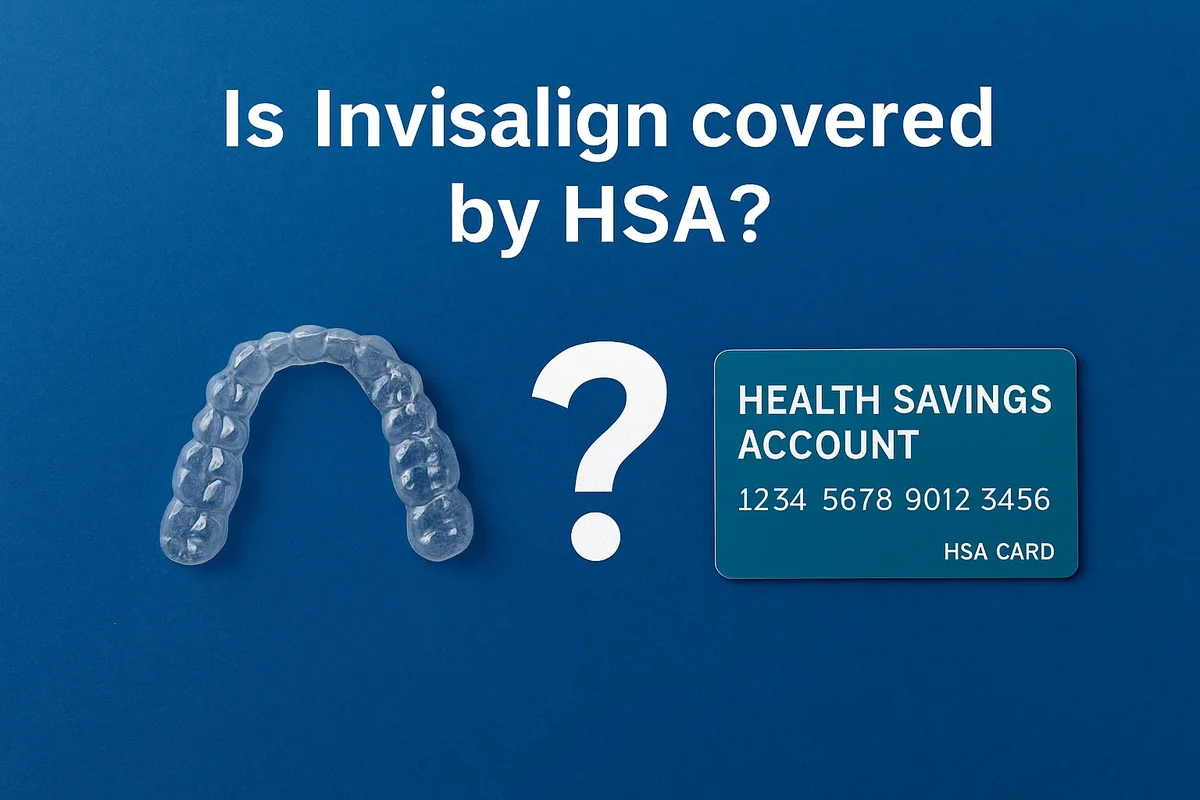
Maximizing Your HSA Benefits for Invisalign and Long-Term Dental Health
After understanding is Invisalign covered by HSA and how it works, the next logical step is learning how to maximize your Health Savings Account (HSA) for both immediate orthodontic needs and long-term oral wellness. HSAs are more than just a tax-saving tool — they are strategic financial vehicles that allow you to take control of your dental health while minimizing expenses over your lifetime. This final section explains how to use your HSA to its fullest potential, manage documentation, plan your contributions, and maintain a sustainable oral health budget. 🦷💸
Why Maximizing Your HSA Matters
For many patients, Invisalign is their first major HSA-qualified dental expense. While asking is Invisalign covered by HSA helps determine eligibility, few realize that using their HSA effectively can result in significant lifetime tax savings. Since HSA contributions are tax-deductible, withdrawals for qualified expenses are tax-free, and earnings grow tax-free, it’s one of the only triple tax-advantaged accounts available. Using this advantage strategically for dental and orthodontic care can reduce the true cost of treatment dramatically.
For example, if you contribute the maximum annual limit and use part of it for medically necessary orthodontics, your taxable income decreases while your treatment remains fully covered. Over several years, this method can save thousands of dollars in taxes and healthcare costs.
2025 HSA Contribution Limits (as set by the IRS)
- Individual Coverage: $4,300
- Family Coverage: $8,550
- Catch-Up Contributions (Age 55+): Additional $1,000
Maxing out your contributions ensures that when major expenses like Invisalign arise, you already have enough pre-tax funds available.
Strategic Planning for Invisalign Payments
Invisalign treatments typically last 12–24 months, making them ideal for long-term HSA planning. Instead of paying the full cost upfront, you can split payments across tax years. This allows you to contribute to your HSA gradually while enjoying the ongoing benefits of tax-free payments. For example, if your Invisalign costs $6,000, you can pay half this year and half next year using fresh contributions — keeping your taxable income lower in both periods.
Smart Payment Strategy:
✔ Pay for aligners and diagnostics this year.
✔ Schedule follow-up visits and retainer costs for next year.
✔ Continue to make HSA contributions monthly to maintain available funds.
✔ Keep documentation for each payment to ensure IRS compliance.
By planning your Invisalign payments strategically, you can avoid financial strain and maximize your tax savings each year while still enjoying comprehensive orthodontic care.
Building an HSA Dental Health Strategy Beyond Invisalign
While many patients focus on the single question — is Invisalign covered by HSA — the real value lies in integrating dental care into a long-term HSA strategy. Once your Invisalign treatment is complete, your HSA can continue to fund preventive and restorative procedures that maintain your smile’s health and alignment. This ensures you never have to pay out of pocket for essential dental care again.
- Use your HSA for routine cleanings, checkups, and X-rays twice a year.
- Save funds for post-Invisalign retainers or replacement trays.
- Invest part of your HSA balance for future dental implants, crowns, or orthodontic refinements.
- Cover related medical costs such as TMJ therapy or bite correction devices.
By treating your HSA as a lifetime dental fund rather than a one-time orthodontic budget, you create a sustainable system for ongoing oral wellness.
Coordinating HSA, Insurance, and Employer Benefits
To truly optimize your HSA usage, you should coordinate it with your other health benefits. If your employer offers dental insurance, HSA funds can be used to pay deductibles, copayments, or non-covered portions of your Invisalign treatment. This hybrid method reduces your out-of-pocket cost even more.
Additionally, some employers contribute directly to your HSA — an often-overlooked benefit. Check with your HR department to determine if such contributions apply to you. Combining employer funding with your own contributions ensures you reach the annual limit faster, providing more flexibility when deciding how to use your funds for orthodontic or dental care.
Example of Coordinated Funding:
- Employer HSA Contribution: $1,500
- Your Annual Contribution: $2,800
- Dental Insurance Benefit: $1,500
- Total Available for Invisalign: $5,800
With this combined strategy, your entire Invisalign treatment could be covered without dipping into personal savings. This kind of planning transforms the question is Invisalign covered by HSA into a holistic financial approach to oral care.
Investment Growth and Future Planning
One of the least utilized aspects of HSAs is the ability to invest unused funds. If you finish your Invisalign payments early or maintain a healthy balance, consider investing a portion of your HSA into low-cost mutual funds or ETFs. Over time, your HSA can grow tax-free, allowing you to use the funds for future medical or dental expenses during retirement. This makes it a powerful tool for both short-term dental care and long-term health security.
Let’s imagine you invest $5,000 from your HSA and it grows at an average annual rate of 7%. In ten years, it could become over $9,800 — funds you can still use tax-free for medical or dental treatments. When you think of it that way, is Invisalign covered by HSA becomes just one piece of a much larger financial wellness puzzle.
Maintaining Documentation for IRS Compliance
To maximize your benefits and protect yourself legally, always maintain detailed records of your HSA transactions. The IRS may request proof that your Invisalign and other dental expenses were medically necessary. Keep digital and printed copies of all receipts, invoices, and your dentist’s Letter of Medical Necessity.
Consider keeping a dedicated HSA folder (physical or cloud-based) with the following:
- Invoices and itemized statements for Invisalign treatments.
- Bank or card statements showing HSA transactions.
- Supporting documentation for related procedures, like X-rays or retainers.
By maintaining these records, you ensure compliance and peace of mind, even years after treatment completion.
Real-Life Example of HSA Optimization
Let’s look at an example of how a patient could fully leverage their HSA for Invisalign:
Case Study: Sarah, a 35-year-old professional, contributed $4,000 annually to her HSA. When she began Invisalign treatment costing $6,500, her dentist confirmed it was medically necessary to correct her crossbite. She used $4,000 from her HSA and financed the remaining $2,500 through a no-interest payment plan. Over the following year, Sarah contributed another $2,500 to her HSA, paying off the balance entirely. She saved about $1,500 in taxes and avoided interest costs — a perfect example of using both time and HSA benefits wisely.
This demonstrates how understanding is Invisalign covered by HSA allows patients to design personalized strategies that minimize costs while maintaining optimal oral health.
Long-Term Oral Health and Financial Stability
When used correctly, your HSA becomes more than a dental funding source — it’s an integral part of lifelong health planning. Every dollar you spend through your HSA works harder for you, reducing taxable income, covering medical necessities, and preparing for future healthcare costs. Aligning your orthodontic treatment like Invisalign with HSA advantages ensures that both your smile and finances stay strong for years to come.
Conclusion: Making the Most of Your HSA and Invisalign
In conclusion, is Invisalign covered by HSA? Yes — and when managed strategically, it can be one of the smartest investments you’ll ever make in both your dental and financial health. By planning your contributions, maintaining proper documentation, coordinating with insurance, and leveraging tax-free growth, you can transform your HSA into a lifelong dental safety net. Whether you’re correcting your smile today or saving for future treatments, your HSA ensures every dollar contributes to your confidence, health, and future prosperity. 🌟