
When people begin orthodontic treatment, one of the first questions they ask is: is invisalign quicker than braces? Modern dental patients often want a solution that is not only effective but also fast, comfortable, and discreet. Invisalign clear aligners have become extremely popular over the past decade, largely because they promise a nearly invisible way to straighten teeth. However, many patients still wonder whether is invisalign quicker than braces in terms of treatment duration and results.
Orthodontic treatment has traditionally relied on metal braces to gradually move teeth into proper alignment. Braces use brackets, wires, and periodic adjustments to shift teeth over time. Invisalign, on the other hand, uses a series of custom-made clear plastic aligners designed to gradually guide teeth into position. Because these aligners are replaced every one to two weeks, many patients believe that is invisalign quicker than braces must have a simple yes-or-no answer. In reality, the truth depends on several factors, including the complexity of the dental issue, patient compliance, and the orthodontist’s treatment plan.
To properly understand whether is invisalign quicker than braces, it is important to first examine how both treatments work. Traditional braces apply constant pressure to the teeth through archwires connected to brackets. This pressure slowly moves teeth through the bone over time. Invisalign aligners work similarly but use carefully designed trays that apply targeted pressure to specific teeth during each stage of treatment. Each aligner set moves teeth slightly closer to their ideal position, and the patient progresses through a series of trays until the final result is achieved.
Many orthodontists explain that asking is invisalign quicker than braces depends largely on the type of orthodontic problem being treated. For example, mild crowding, minor spacing issues, and small alignment corrections can sometimes be completed faster with Invisalign. In these situations, Invisalign’s digital treatment planning allows orthodontists to map out each tooth movement precisely. Patients can sometimes finish treatment in as little as 6 to 12 months when the case is relatively simple.
However, more complex orthodontic cases may change the answer to the question is invisalign quicker than braces. Severe bite issues, significant crowding, or large tooth rotations often require more controlled force than aligners can provide. In these cases, traditional braces may actually work more efficiently because they allow orthodontists to adjust wires and apply continuous pressure more precisely. Therefore, while Invisalign technology is highly advanced, braces may still be the faster solution for complicated dental corrections.
Another important element when considering is invisalign quicker than braces is patient behavior. Invisalign aligners must typically be worn between 20 and 22 hours per day to achieve optimal results. If a patient frequently removes the aligners or forgets to wear them for long periods, treatment may slow down significantly. Braces, by contrast, are fixed appliances that remain attached to the teeth at all times. Because they cannot be removed, braces ensure continuous tooth movement regardless of patient habits.
Dental technology has also played a major role in shaping how orthodontists answer the question is invisalign quicker than braces. Invisalign uses advanced 3D scanning and digital modeling to plan each stage of treatment. Orthodontists can simulate the entire process before treatment even begins, allowing patients to preview their future smile. This technology helps dentists create extremely efficient treatment plans that may reduce unnecessary adjustments and appointments.
According to information from the
American Dental Association, orthodontic treatment times vary widely depending on individual conditions, oral health, and treatment goals. Some patients may complete Invisalign treatment faster than braces, while others may require the reliability of traditional orthodontic appliances. Ultimately, the correct treatment choice depends on a thorough examination and professional guidance.
If you are personally wondering is invisalign quicker than braces, the best step is to consult an experienced dental professional. A specialist can evaluate your bite alignment, jaw structure, and overall oral health before recommending the most efficient treatment method. At clinics like Redent Klinik, patients often receive detailed orthodontic assessments that include digital scans and customized treatment planning. If you would like personalized advice about your orthodontic options, you can visit the
Redent Klinik Contact Page to speak with a professional team.
In summary, the question is invisalign quicker than braces does not have a universal answer. Invisalign can sometimes be faster for mild alignment issues and patients who follow their treatment plan strictly. However, traditional braces may still be the more efficient option for severe orthodontic problems or complex bite corrections. Understanding these differences is essential for choosing the right orthodontic treatment that balances speed, effectiveness, and long-term dental health.
As you continue exploring orthodontic options, remember that treatment success depends on both technology and patient commitment. Whether you choose Invisalign aligners or traditional braces, maintaining proper oral hygiene, attending regular dental checkups, and following your orthodontist’s instructions will ensure the best possible outcome for your smile. In the next sections, we will explore treatment duration, influencing factors, and real-world comparisons to further answer the important question: is invisalign quicker than braces.
Is Invisalign Quicker Than Braces? Understanding the Core Difference
When patients begin researching orthodontic options, a common question quickly appears: is invisalign quicker than braces? Both treatments are designed to straighten teeth, improve bite alignment, and enhance oral health. However, the way each system works is very different, which directly affects treatment duration. Understanding these differences is essential before deciding which orthodontic solution is right for you.
Orthodontic treatment today has evolved significantly thanks to digital technology and modern dental materials. While traditional braces have been used successfully for decades, Invisalign has introduced a newer method using clear aligners. Because of these innovations, many patients want to know whether is invisalign quicker than braces is true in practice or simply a marketing claim.
How Traditional Braces Move Teeth
Traditional braces use metal or ceramic brackets that are bonded to each tooth. These brackets are connected with an archwire that applies continuous pressure to gradually move teeth into alignment. Over time, orthodontists adjust the wire and replace elastic components to guide teeth toward their correct positions.
When evaluating whether is invisalign quicker than braces, it is important to understand that braces apply constant force. Because they are fixed to the teeth, they work 24 hours a day without interruption. This continuous pressure allows orthodontists to control complex tooth movements such as rotations, vertical adjustments, and bite corrections.
For severe orthodontic issues—such as significant crowding, jaw misalignment, or major bite problems—braces can be extremely effective. In these cases, asking is invisalign quicker than braces may lead to the conclusion that braces are sometimes the faster option because they allow orthodontists to apply stronger and more controlled forces.
How Invisalign Aligners Work
Invisalign uses a completely different approach. Instead of brackets and wires, Invisalign treatment involves a sequence of custom-made clear plastic aligners. Each aligner tray is designed using advanced digital planning software to move teeth slightly closer to their final position.
Patients typically wear each aligner for one to two weeks before switching to the next set. Each new aligner applies slightly different pressure, gradually guiding the teeth into alignment. Because the treatment is carefully mapped out using digital 3D modeling, orthodontists can predict the movement of each tooth with remarkable accuracy.
This advanced planning is one reason why patients often ask whether is invisalign quicker than braces. In many mild or moderate cases, the ability to pre-plan each stage of tooth movement can reduce unnecessary adjustments and shorten treatment time.
The Importance of Wear Time
One critical factor affecting the answer to is invisalign quicker than braces is patient compliance. Invisalign aligners must typically be worn for 20–22 hours per day. If patients remove their aligners frequently or forget to wear them for extended periods, the treatment timeline may increase significantly.
Unlike braces, which cannot be removed, Invisalign requires discipline. Patients must remember to wear their aligners consistently, remove them only for meals and oral hygiene, and follow the prescribed schedule. If these guidelines are not followed carefully, the answer to is invisalign quicker than braces may shift toward braces being more efficient.
Comparing Control and Precision
Another key element in the debate about is invisalign quicker than braces is how precisely each system can control tooth movement. Braces offer orthodontists complete control over tooth positioning because brackets are directly attached to each tooth and connected by a flexible archwire.
Invisalign aligners, while highly advanced, rely on removable trays. Although attachments and small tooth-colored buttons can improve control, certain movements—such as rotating severely misaligned teeth or adjusting vertical bite relationships—may still be easier with braces.
This is why orthodontists often evaluate the complexity of the case before answering whether is invisalign quicker than braces. For simple spacing issues, Invisalign may work quickly and efficiently. For complex corrections, braces may still provide the fastest and most predictable solution.
Digital Planning and Predictability
One of Invisalign’s greatest advantages is digital treatment planning. Orthodontists can use specialized software to create a complete 3D simulation of the treatment process before it begins. Patients can even preview how their smile will look after treatment.
This planning capability can sometimes help answer the question is invisalign quicker than braces. Because every aligner stage is pre-programmed, orthodontists can minimize unexpected delays. The treatment pathway becomes highly structured and predictable.
Professional organizations such as the
American Dental Association emphasize that orthodontic treatment timelines depend heavily on individualized planning. Some patients may complete Invisalign treatment faster, while others benefit more from traditional braces.
Professional Evaluation Is Essential
The only reliable way to determine whether is invisalign quicker than braces for your specific case is through a professional orthodontic evaluation. Dentists assess factors such as tooth alignment, jaw structure, gum health, and bite function before recommending a treatment plan.
Clinics that specialize in modern orthodontics often combine digital scanning, computer modeling, and clinical expertise to guide treatment decisions. If you are considering orthodontic treatment and want to understand whether is invisalign quicker than braces for your situation, scheduling a consultation is the best step forward.
You can reach experienced dental professionals through the
Redent Klinik Contact Page to receive a personalized evaluation and treatment recommendation.
Ultimately, the core difference between braces and Invisalign lies in how they move teeth and how much patient involvement is required. While both treatments can deliver excellent results, the speed of treatment depends on the complexity of the dental problem and how closely the patient follows the treatment plan. Understanding these fundamental differences helps answer the question that many orthodontic patients ask: is invisalign quicker than braces.
Average Treatment Time: Comparing Invisalign and Traditional Braces
One of the most important concerns patients have before starting orthodontic treatment is how long the process will take. Naturally, this leads to the frequently asked question: is invisalign quicker than braces? Treatment duration varies depending on several clinical factors, but understanding average timelines can help patients set realistic expectations before beginning orthodontic care.
Orthodontic treatment is not simply about straightening teeth quickly; it must also protect the health of the gums, jawbone, and surrounding structures. Teeth move gradually through bone in response to controlled pressure, and moving them too quickly can cause damage. Because of this biological limitation, the question is invisalign quicker than braces depends on how each treatment method applies pressure and manages tooth movement.
Typical Treatment Time for Traditional Braces
Traditional braces have been used in orthodontics for many decades and remain one of the most reliable treatment methods. In most cases, braces treatment lasts between 18 and 24 months. However, this timeline can vary depending on the severity of the dental issue being corrected.
When patients ask orthodontists whether is invisalign quicker than braces, professionals often explain that braces are highly effective for complex cases. Because braces apply constant pressure through wires and brackets, they can gradually correct severe crowding, bite misalignment, and rotated teeth.
For example, braces are often recommended for:
- Severe overcrowding
- Major bite problems (overbite, underbite, crossbite)
- Teeth that require large rotations
- Significant jaw alignment issues
In such situations, braces may actually provide faster results, meaning the answer to is invisalign quicker than braces may be no for complex orthodontic corrections.
Typical Invisalign Treatment Duration
Invisalign treatment typically lasts between 12 and 18 months for many patients. However, some mild cases can be completed in as little as 6 months. Because Invisalign treatment is carefully planned using digital scanning technology, each aligner stage moves teeth gradually toward their ideal position.
These aligners are replaced every one to two weeks, allowing teeth to shift incrementally throughout treatment. For mild spacing issues or moderate crowding, this system can work very efficiently. This is why many people researching orthodontic options ask the question is invisalign quicker than braces.
However, Invisalign’s success depends heavily on how consistently patients wear their aligners. Since the trays are removable, patients must wear them for about 20 to 22 hours per day. If aligners are not worn consistently, the treatment timeline may extend beyond the expected duration.
Compliance Can Affect Treatment Speed
Patient compliance is one of the most important factors influencing the answer to is invisalign quicker than braces. Because braces remain attached to the teeth permanently during treatment, they apply continuous pressure without relying on patient behavior.
Invisalign, on the other hand, requires discipline. If a patient frequently removes aligners or forgets to wear them overnight, tooth movement may slow down. This means that although Invisalign has the potential to be faster, it can also take longer if patients do not follow the treatment plan carefully.
How Orthodontists Estimate Treatment Duration
Orthodontists use several diagnostic tools to estimate how long treatment will take. Digital scans, X-rays, bite analysis, and jaw measurements are all used to determine the complexity of the case. These evaluations help professionals determine whether is invisalign quicker than braces for a specific patient.
Modern orthodontic planning software can simulate every stage of Invisalign treatment. Dentists can see exactly how each tooth will move and how long the process will take. This predictive technology allows for highly customized treatment plans that may shorten the timeline for certain patients.
Professional organizations like the
American Dental Association explain that orthodontic treatment time varies widely from person to person. While averages provide a useful reference point, individual biology, age, and oral health also influence how quickly teeth respond to orthodontic pressure.
Typical Timeline Comparison
To better understand whether is invisalign quicker than braces, it helps to compare average treatment timelines side by side:
- Mild alignment issues: Invisalign (6–12 months), Braces (12–18 months)
- Moderate orthodontic problems: Invisalign (12–18 months), Braces (18–24 months)
- Severe bite corrections: Invisalign (18–24 months or more), Braces (18–24 months)
As these estimates suggest, Invisalign may be faster for minor corrections, while braces remain extremely effective for complex orthodontic needs.
Choosing the Best Treatment Timeline
For patients wondering is invisalign quicker than braces, the most reliable answer comes from a professional orthodontic consultation. Every smile is unique, and treatment timelines depend on factors such as tooth structure, bone density, bite alignment, and patient habits.
Clinics that specialize in modern orthodontics often provide advanced diagnostic evaluations and digital simulations. These tools help determine the most efficient treatment option for each patient. If you would like to receive a personalized orthodontic assessment and learn whether is invisalign quicker than braces for your specific case, you can contact dental professionals through the
Redent Klinik Contact Page.
Ultimately, the answer to is invisalign quicker than braces depends on the complexity of the dental problem, the treatment method selected, and the patient’s commitment to following orthodontic instructions. While Invisalign may provide faster results in many mild cases, braces remain an essential and highly effective treatment option for more advanced orthodontic corrections.
Factors That Determine Whether Invisalign Is Quicker Than Braces
Many patients researching orthodontic treatments ask the same important question: is invisalign quicker than braces? While average treatment timelines provide useful guidance, the true answer depends on several key factors. Orthodontic treatment is highly personalized, meaning the speed of tooth movement varies from one patient to another. Understanding the factors that influence treatment time can help clarify whether is invisalign quicker than braces in your specific situation.
Modern orthodontics uses advanced diagnostics, digital planning, and individualized treatment strategies. Because every patient has different dental structures, bite conditions, and treatment goals, orthodontists must evaluate multiple variables before determining which method will work most efficiently. These factors ultimately determine whether is invisalign quicker than braces for a particular case.
Severity of the Orthodontic Problem
One of the most influential factors affecting whether is invisalign quicker than braces is the severity of the dental problem being corrected. Mild alignment issues are usually easier and faster to treat compared to complex orthodontic conditions.
For example, Invisalign can often work quickly for problems such as:
- Mild tooth crowding
- Small gaps between teeth
- Minor bite irregularities
- Slight tooth rotations
In these situations, the digital aligner system can gradually move teeth in a controlled and predictable manner. As a result, the answer to is invisalign quicker than braces may often be yes for simple orthodontic corrections.
However, severe orthodontic problems may require the additional control provided by traditional braces. Braces allow orthodontists to apply stronger and more precise forces through wires and brackets. When teeth require complex movements—such as large rotations or vertical adjustments—the answer to is invisalign quicker than braces may shift toward braces being more efficient.
Age and Biological Response
Another critical factor influencing whether is invisalign quicker than braces is the patient’s biological response to treatment. Orthodontic tooth movement occurs when pressure causes the surrounding bone to remodel. This process varies depending on age, bone density, and overall oral health.
Younger patients often experience faster tooth movement because their bones are still developing and more adaptable. In these cases, Invisalign treatment may proceed quickly when compliance is high. Therefore, some younger patients may find that is invisalign quicker than braces is true for them.
Adults, however, may experience slightly slower orthodontic movement due to denser bone structures. While Invisalign remains effective, orthodontists may sometimes recommend braces for more complex adult cases to maintain optimal control throughout the treatment process.
Jaw Alignment and Bite Correction
Orthodontic treatment does not only involve straightening visible teeth; it also focuses on correcting bite alignment. Bite issues such as overbite, underbite, crossbite, and open bite can significantly affect treatment duration.
When evaluating whether is invisalign quicker than braces, orthodontists carefully examine how the upper and lower teeth interact. Complex bite corrections often require strategic adjustments over time. In these cases, braces may offer more flexibility because orthodontists can adjust wires, elastics, and attachments throughout treatment.
While Invisalign can address many bite problems successfully, severe bite corrections may still favor traditional braces in terms of treatment efficiency.
Patient Compliance and Daily Habits
A major factor that directly affects the answer to is invisalign quicker than braces is patient compliance. Invisalign aligners must be worn consistently to produce the desired results. Orthodontists typically recommend wearing aligners between 20 and 22 hours per day.
If patients frequently remove their aligners or forget to wear them for long periods, treatment progress slows down. In such situations, Invisalign may take longer than expected, which can change the answer to is invisalign quicker than braces.
Braces, in contrast, are permanently attached to the teeth throughout treatment. Because they cannot be removed, they continue applying pressure continuously without depending on patient habits. This is one reason why braces sometimes provide more predictable timelines for patients who struggle with compliance.
Technology and Treatment Planning
Advancements in orthodontic technology have improved both Invisalign and braces treatment methods. Invisalign uses advanced 3D imaging and digital modeling to design a precise treatment pathway from the beginning.
This digital planning allows orthodontists to map out each tooth movement before treatment begins. The ability to simulate results and adjust aligner sequences can sometimes shorten treatment time. As a result, the answer to is invisalign quicker than braces may be yes when digital planning is combined with proper patient compliance.
Organizations such as the
American Dental Association emphasize that orthodontic treatment success depends on individualized planning and professional expertise. Advanced technologies now allow orthodontists to tailor treatment strategies more precisely than ever before.
Orthodontist Experience and Treatment Strategy
The skill and experience of the orthodontist also influence whether is invisalign quicker than braces. Experienced orthodontists understand how to select the most efficient treatment approach based on each patient’s needs.
Specialists often analyze digital scans, bite patterns, and facial structure before recommending Invisalign or braces. A well-designed treatment strategy can significantly reduce the overall timeline and improve final results.
If you are wondering whether is invisalign quicker than braces for your specific dental condition, consulting a qualified orthodontic professional is the most reliable way to receive accurate guidance.
You can schedule a professional orthodontic evaluation through the
Redent Klinik Contact Page to receive personalized advice based on your dental structure and treatment goals.
Ultimately, multiple factors determine whether is invisalign quicker than braces. The complexity of the orthodontic issue, patient age, compliance with treatment instructions, technological planning, and orthodontist expertise all play significant roles in determining the speed of treatment. By understanding these variables, patients can make informed decisions about the orthodontic option that best fits their needs and expectations.
Mild vs Severe Cases: When Invisalign Can Be Faster Than Braces
When patients begin orthodontic treatment, one of the most common questions they ask is is invisalign quicker than braces. While average treatment timelines provide useful guidance, the real answer depends heavily on the complexity of the dental case. Some orthodontic problems are relatively simple and can be corrected quickly, while others involve complex tooth movements and bite corrections that require more time and precise control. Understanding how mild and severe cases influence treatment speed helps clarify when the answer to is invisalign quicker than braces may be yes and when braces might actually work faster.
Orthodontic treatment is not simply about moving teeth quickly. The process must also protect the surrounding bone, gums, and jaw structure. Teeth move gradually as bone remodels around them, and this biological process sets natural limits on how fast treatment can occur. Because of these biological factors, orthodontists must carefully evaluate whether is invisalign quicker than braces based on the individual patient’s dental condition.
Mild Orthodontic Cases Where Invisalign May Be Faster
In many mild orthodontic cases, Invisalign can provide a faster and more convenient solution. These cases typically involve small corrections that do not require complex tooth movements or major bite adjustments. Because Invisalign treatment is digitally planned and each aligner is designed to move teeth slightly toward their final position, mild cases can often be completed efficiently.
Examples of mild orthodontic conditions include:
- Minor tooth crowding
- Small gaps between teeth
- Slightly rotated teeth
- Minor bite irregularities
For patients with these types of conditions, orthodontists often find that is invisalign quicker than braces may indeed be true. Many mild Invisalign cases can be completed within 6 to 12 months when patients follow treatment instructions carefully. The digital treatment planning system allows orthodontists to design precise tooth movements, which can streamline the process.
Additionally, Invisalign aligners are replaced every one to two weeks. Each new aligner introduces a slight adjustment in tooth position, gradually guiding the teeth toward their final alignment. Because these adjustments are planned in advance, treatment can progress efficiently in many simple cases. This is why patients frequently search online asking whether is invisalign quicker than braces.
The Role of Digital Treatment Simulation
One reason Invisalign can be faster for mild cases is the advanced digital simulation used during treatment planning. Orthodontists use specialized software to map out every stage of tooth movement before the patient even begins treatment. This allows dentists to predict outcomes and avoid unnecessary adjustments during the process.
This predictive planning can help reduce treatment delays, which is why the question is invisalign quicker than braces sometimes has a positive answer for patients with straightforward orthodontic needs.
Moderate Cases and Balanced Treatment Options
Moderate orthodontic cases fall somewhere between simple alignment problems and severe bite corrections. These cases may involve multiple teeth shifting positions, moderate crowding, or mild bite imbalances. In such situations, orthodontists carefully evaluate whether Invisalign or braces will provide the most efficient treatment.
Some moderate cases can still be treated effectively with Invisalign, especially when attachments are added to the teeth. These small tooth-colored attachments allow aligners to apply stronger pressure and guide teeth more precisely. When these attachments are used, Invisalign may still answer the question is invisalign quicker than braces positively for certain patients.
However, if multiple teeth require complex movements simultaneously, braces may sometimes provide more efficient control. Orthodontists can adjust wires and elastics during regular appointments, allowing them to respond to changes in tooth movement quickly.
Severe Orthodontic Cases Where Braces May Be Faster
In more severe orthodontic cases, braces often provide the most reliable and efficient solution. These situations may involve significant tooth rotations, large bite corrections, or complex jaw alignment issues. In these cases, the answer to is invisalign quicker than braces may actually be no.
Examples of severe orthodontic conditions include:
- Severe overcrowding of teeth
- Large overbite or underbite corrections
- Significant crossbite problems
- Teeth requiring vertical movement
Traditional braces allow orthodontists to apply continuous force through wires, elastics, and brackets. Because these appliances remain attached to the teeth throughout treatment, they provide constant pressure without relying on patient compliance. This level of control is particularly helpful when complex tooth movements are required.
For these reasons, orthodontists often explain that while Invisalign is highly advanced, severe cases may still benefit from braces. In such situations, the answer to is invisalign quicker than braces depends on the complexity of the dental correction.
Why Professional Evaluation Matters
Determining whether is invisalign quicker than braces for a specific patient requires a detailed orthodontic examination. Dentists evaluate multiple factors, including tooth alignment, jaw relationships, bone density, and overall oral health.
Professional organizations such as the
American Dental Association emphasize that orthodontic treatment must be tailored to each individual patient. There is no universal treatment timeline because every smile is unique.
Modern orthodontic clinics often use advanced digital scanning and treatment simulation tools to evaluate cases accurately. These technologies allow dentists to determine whether Invisalign or braces will deliver faster and more predictable results.
If you are wondering whether is invisalign quicker than braces for your particular dental condition, consulting a qualified dental professional is the best step forward. Orthodontists can evaluate your bite, alignment, and treatment goals before recommending the most efficient solution.
Patients interested in personalized orthodontic guidance can schedule a consultation through the
Redent Klinik Contact Page. A professional assessment ensures that treatment is not only effective but also optimized for the shortest possible timeline.
Ultimately, the answer to is invisalign quicker than braces depends on the severity of the orthodontic case. Invisalign can be faster for mild alignment issues, while braces often provide better control and efficiency for severe dental corrections. By understanding these differences, patients can make informed decisions about which orthodontic treatment will best meet their needs.
Patient Compliance: Why Wearing Aligners Correctly Affects Speed
One of the most decisive factors when answering the question is invisalign quicker than braces is patient compliance. Unlike traditional braces, which are fixed to the teeth and work continuously, Invisalign aligners are removable. This difference may seem small, but it has a major influence on how quickly orthodontic treatment progresses. In many situations, Invisalign has the potential to work faster, yet that speed depends almost entirely on whether the patient follows the recommended wear schedule. Because of this, orthodontists often explain that the answer to is invisalign quicker than braces depends heavily on patient discipline and daily habits.
Invisalign aligners must be worn for most of the day to apply consistent pressure to the teeth. Orthodontists typically recommend wearing aligners between 20 and 22 hours per day. Removing them too often interrupts the pressure that gradually moves teeth into their ideal positions. If the aligners are not worn consistently, tooth movement slows down, and the treatment timeline can increase significantly. Therefore, even if a patient begins treatment believing is invisalign quicker than braces, poor compliance can easily extend treatment beyond the expected timeframe.
Why Wear Time Matters in Invisalign Treatment
Tooth movement occurs when gentle pressure stimulates bone remodeling around the tooth roots. Invisalign aligners are designed to apply this pressure gradually with each new tray. When patients wear aligners consistently, the treatment progresses according to the digital treatment plan created by the orthodontist. However, if the aligners are removed frequently or worn for fewer hours than recommended, the teeth may not move as planned.
This is why orthodontists emphasize compliance when patients ask is invisalign quicker than braces. Invisalign treatment works efficiently only when the aligners remain in place for most of the day. Removing them too often can cause teeth to lag behind the planned movement schedule. When this happens, orthodontists may need to extend treatment or redesign the aligner sequence.
Braces, on the other hand, do not rely on patient compliance in the same way. Because brackets and wires remain attached to the teeth at all times, they apply continuous pressure. This constant force ensures steady tooth movement regardless of daily habits. For patients who struggle with wearing aligners consistently, the answer to is invisalign quicker than braces may shift toward braces being the faster option.
Common Situations That Slow Invisalign Treatment
Patients sometimes underestimate how easily Invisalign treatment can be delayed. Everyday habits may unintentionally reduce wear time and slow down tooth movement. Understanding these risks helps patients maintain consistent progress throughout treatment.
Examples of situations that may delay Invisalign treatment include:
- Removing aligners for extended meals or snacks
- Forgetting to wear aligners overnight
- Not switching aligners on the recommended schedule
- Losing aligners or damaging trays
- Skipping orthodontic appointments
When these situations occur frequently, the answer to is invisalign quicker than braces may change dramatically. Treatment that was originally expected to take 12 months may extend to 18 months or longer if aligners are not worn properly.
The Importance of Daily Discipline
Patients who follow Invisalign instructions carefully often achieve excellent results within the predicted timeline. Wearing aligners throughout the day, removing them only for meals and oral hygiene, and switching trays on schedule ensures the treatment remains on track.
For disciplined patients, the answer to is invisalign quicker than braces may often be yes. Because Invisalign aligners are digitally planned and designed for incremental tooth movement, consistent wear allows treatment to progress smoothly and efficiently.
Monitoring Compliance With Modern Technology
Modern orthodontic practices increasingly use digital monitoring tools to help patients stay on track. Some Invisalign systems now include small compliance indicators within the aligners that gradually change color based on wear time. These indicators help orthodontists determine whether patients are wearing aligners as instructed.
Additionally, mobile apps and remote monitoring platforms allow orthodontists to track treatment progress between appointments. Patients can upload photos of their teeth, allowing dentists to evaluate alignment changes and ensure treatment remains on schedule. These technological advancements help improve compliance and maintain efficiency, which directly affects whether is invisalign quicker than braces.
Organizations such as the
American Dental Association emphasize that orthodontic success relies not only on the treatment system but also on patient cooperation. Whether a patient uses braces or Invisalign, following professional instructions is essential for achieving the best results within the shortest possible timeframe.
How Dentists Help Patients Stay Consistent
Orthodontists play an important role in helping patients maintain good compliance habits. During consultations, dentists carefully explain how Invisalign works and why consistent wear is critical. Many clinics also provide detailed guidance on cleaning aligners, storing them safely, and maintaining proper oral hygiene during treatment.
If you are considering Invisalign and wondering is invisalign quicker than braces, discussing compliance expectations with a professional dentist is essential. Orthodontists can help determine whether Invisalign suits your lifestyle and whether you can realistically follow the wear schedule required for optimal results.
Patients interested in receiving professional orthodontic guidance can contact specialists through the
Redent Klinik Contact Page. A consultation allows dentists to evaluate your dental structure and recommend the treatment option that will provide the most efficient and predictable outcome.
Ultimately, the question is invisalign quicker than braces often comes down to patient responsibility. Invisalign aligners offer a flexible and discreet orthodontic solution, but their effectiveness depends on consistent daily use. When patients wear aligners as recommended, Invisalign can produce excellent results within the planned timeline. However, if compliance is poor, braces may ultimately deliver faster and more reliable treatment outcomes.
Technology Behind Invisalign That Can Accelerate Tooth Movement
Modern orthodontics has changed dramatically over the last two decades. One of the biggest reasons patients ask is invisalign quicker than braces is the advanced technology used in Invisalign treatment. Unlike traditional braces, which rely primarily on mechanical adjustments, Invisalign combines digital scanning, artificial intelligence planning, and precision manufacturing. These technologies allow orthodontists to design highly optimized treatment plans that can sometimes shorten the treatment timeline. Understanding the technology behind Invisalign helps explain why the question is invisalign quicker than braces often arises in modern orthodontic discussions.
Traditional braces remain highly effective, but their treatment adjustments typically occur during in-office appointments every four to six weeks. Invisalign, by contrast, relies heavily on digital planning and sequential aligners that gradually guide teeth toward their final position. Because each aligner is precisely engineered for a specific stage of movement, treatment may proceed efficiently when patients follow instructions carefully. For this reason, many patients researching orthodontic options frequently wonder whether is invisalign quicker than braces.
3D Digital Scanning and Treatment Simulation
One of the most powerful technologies behind Invisalign is advanced 3D digital scanning. Instead of traditional dental impressions made with molds, orthodontists now use intraoral scanners to create a detailed digital model of the patient’s teeth. This digital model allows orthodontists to analyze alignment problems with exceptional accuracy.
Using this digital model, specialized software can simulate the entire orthodontic process from start to finish. Every stage of tooth movement is mapped out before treatment even begins. This planning process helps dentists identify the most efficient pathway to straighten teeth, which is one reason people often ask is invisalign quicker than braces.
Because the entire treatment plan is designed digitally in advance, Invisalign treatment often requires fewer unexpected adjustments compared with traditional braces. This level of planning can sometimes reduce delays during treatment, which may shorten the overall timeline for many patients.
Predictable Tooth Movement
Digital simulation allows orthodontists to see exactly how teeth will move throughout the treatment process. Each aligner in the sequence moves teeth slightly closer to the final position. This incremental movement strategy allows the treatment to progress smoothly.
When patients follow their aligner schedule properly, the digital plan is executed step by step. This predictability is a major reason why many patients believe is invisalign quicker than braces for certain orthodontic cases.
Custom Aligner Manufacturing
Another technological advantage of Invisalign is the precision manufacturing of each aligner tray. Once the treatment plan is finalized, a series of custom aligners are produced using advanced medical-grade plastic materials. Each aligner is engineered to apply gentle pressure to specific teeth.
Patients typically change aligners every one or two weeks. With each new aligner, the teeth shift slightly toward the desired alignment. Because the aligners are produced as part of a complete treatment sequence, the entire orthodontic pathway is prepared in advance. This system allows treatment to progress steadily without waiting for manual adjustments, which helps explain why patients often ask is invisalign quicker than braces.
Traditional braces, while highly effective, rely more heavily on periodic adjustments during orthodontic appointments. Orthodontists must manually adjust wires or replace elastics to guide tooth movement. Invisalign’s pre-planned aligner system allows for continuous progress between visits.
SmartTrack Material and Controlled Pressure
Invisalign aligners use a specialized material known as SmartTrack. This material was designed specifically for orthodontic tooth movement. It provides a balance between flexibility and firmness, allowing the aligner to apply controlled pressure to teeth while maintaining comfort for the patient.
This controlled force helps move teeth efficiently while minimizing discomfort. When patients ask is invisalign quicker than braces, orthodontists often explain that consistent, gentle pressure is essential for safe and effective tooth movement. SmartTrack material helps maintain this pressure throughout the aligner’s wear period.
Because the aligner fits snugly around the teeth, it distributes pressure evenly across the dental arch. This precise force application can sometimes improve treatment efficiency compared with traditional wire adjustments.
Attachments That Improve Tooth Movement
To enhance control during Invisalign treatment, orthodontists sometimes place small tooth-colored attachments on certain teeth. These attachments act as anchor points that allow the aligners to grip the teeth more effectively.
Attachments help Invisalign perform more complex movements such as rotations, vertical adjustments, and root repositioning. With these enhancements, Invisalign has become capable of treating many orthodontic cases that previously required braces. As Invisalign technology continues to evolve, the answer to is invisalign quicker than braces may increasingly favor aligner treatment in many scenarios.
Artificial Intelligence and Treatment Optimization
Recent advancements in orthodontic software now incorporate artificial intelligence to improve treatment planning. AI systems analyze thousands of orthodontic cases to predict the most efficient movement patterns for teeth.
By analyzing large datasets of previous treatments, the software can recommend optimized aligner sequences that reduce unnecessary movements. This continuous improvement in digital planning helps orthodontists design more efficient treatment strategies. These technological advancements contribute to the ongoing discussion about whether is invisalign quicker than braces.
Professional organizations such as the
American Dental Association highlight how digital technology is transforming modern dentistry. Orthodontic treatments are becoming more precise, more personalized, and potentially more efficient thanks to innovations like digital scanning and computer-guided treatment planning.
Professional Guidance Still Matters
Although Invisalign technology is highly advanced, professional expertise remains essential for successful treatment. Orthodontists must carefully evaluate each patient’s dental structure, bite alignment, and treatment goals before recommending Invisalign or braces.
If you are wondering whether is invisalign quicker than braces for your specific dental condition, the best step is to schedule a consultation with an experienced dental professional. Personalized evaluation ensures that the chosen treatment method will deliver both effective and efficient results.
Patients interested in orthodontic consultations can reach specialists through the
Redent Klinik Contact Page. Professional assessment allows dentists to determine whether Invisalign technology can provide the fastest and most effective treatment for your smile.
Ultimately, Invisalign’s advanced technology—including digital scanning, treatment simulation, custom aligner manufacturing, and AI-guided planning—has significantly improved orthodontic efficiency. While traditional braces remain extremely reliable for complex cases, these technological innovations are a major reason why patients frequently ask the question: is invisalign quicker than braces.
Advantages and Limitations of Invisalign Compared With Braces
When patients begin researching orthodontic options, one of the most common questions they ask is is invisalign quicker than braces. While treatment speed is important, it is only one aspect of orthodontic care. Invisalign and traditional braces both have unique advantages and limitations that influence treatment effectiveness, comfort, and overall patient experience. Understanding these differences helps patients make informed decisions and better evaluate whether is invisalign quicker than braces in their particular situation.
Orthodontic treatments are designed to correct tooth alignment, improve bite function, and enhance long-term oral health. However, every orthodontic system works differently. Invisalign relies on removable clear aligners, while braces use fixed brackets and wires. Because of these structural differences, each treatment offers specific benefits and potential challenges. These factors often determine whether is invisalign quicker than braces for a particular orthodontic case.
Key Advantages of Invisalign
One reason Invisalign has become increasingly popular is the range of benefits it offers to patients seeking a discreet orthodontic solution. These advantages often lead people to wonder whether is invisalign quicker than braces, especially when they prioritize comfort and convenience.
- Nearly invisible aligners that are difficult to notice
- Removable trays that allow normal eating habits
- Easier brushing and flossing compared to braces
- Smooth plastic material that reduces irritation
- Digitally planned treatment process
Because Invisalign aligners are removable, patients can maintain their regular oral hygiene routines without the obstacles created by brackets and wires. This convenience makes Invisalign especially appealing to adults and professionals who prefer a subtle orthodontic solution. For mild orthodontic cases, these benefits may reinforce the idea that is invisalign quicker than braces when patients follow the treatment plan carefully.
Improved Comfort During Treatment
Another advantage of Invisalign is comfort. Traditional braces sometimes cause irritation to the cheeks and lips due to metal brackets and wires. Invisalign aligners, however, are made from smooth plastic that fits closely over the teeth. This reduces the likelihood of soft tissue irritation and allows patients to continue daily activities with minimal discomfort.
Comfort does not directly determine whether is invisalign quicker than braces, but it can influence patient compliance. Patients who feel comfortable wearing their aligners are more likely to follow the recommended wear schedule, which helps maintain treatment efficiency.
Advantages of Traditional Braces
While Invisalign offers many conveniences, traditional braces remain one of the most powerful orthodontic tools available. Braces have been used for decades and continue to deliver reliable results, especially in complex cases. Because braces apply continuous pressure to teeth, orthodontists can control tooth movement very precisely.
For certain orthodontic conditions, braces may actually answer the question is invisalign quicker than braces with a clear “no,” meaning braces can sometimes achieve results more efficiently. Braces are particularly effective for:
- Severe overcrowding
- Major bite corrections
- Significant tooth rotations
- Vertical tooth movement
Because braces are permanently attached to the teeth, they work continuously without relying on patient compliance. This constant pressure can be beneficial for complex orthodontic corrections where consistent force is required.
Limitations of Invisalign
Despite its many advantages, Invisalign also has limitations that influence whether is invisalign quicker than braces. The removable nature of aligners means that treatment success depends heavily on patient behavior. If aligners are not worn consistently for 20–22 hours per day, tooth movement may slow significantly.
Another limitation is that certain complex tooth movements are more challenging with aligners alone. While modern attachments and digital planning have improved Invisalign capabilities, some severe orthodontic cases still respond better to braces. In such cases, orthodontists may recommend braces as the primary treatment option.
Compliance Challenges
Patient compliance plays a major role in determining treatment success with Invisalign. Because aligners can be removed, patients may occasionally forget to wear them or remove them for extended periods. These interruptions can delay tooth movement and extend the treatment timeline.
For patients who struggle with maintaining consistent aligner wear, the question is invisalign quicker than braces may be answered differently. In those situations, braces may actually deliver faster results because they remain attached to the teeth at all times.
Limitations of Traditional Braces
Traditional braces also have several disadvantages that patients should consider. Although braces are highly effective, they can be more noticeable and sometimes less convenient than aligners. Patients must also adjust their diet to avoid foods that may damage brackets or wires.
Common challenges associated with braces include:
- Visible brackets and wires
- Difficulty cleaning around orthodontic appliances
- Dietary restrictions for sticky or hard foods
- Occasional irritation of soft tissues
These factors do not necessarily influence whether is invisalign quicker than braces, but they do affect the overall treatment experience for many patients.
Professional Evaluation Determines the Best Option
Determining whether is invisalign quicker than braces ultimately requires a professional orthodontic evaluation. Dentists examine the patient’s bite, tooth alignment, jaw structure, and treatment goals before recommending the most appropriate orthodontic system.
Professional organizations such as the
American Dental Association emphasize that orthodontic care must be tailored to each individual. What works best for one patient may not be ideal for another.
Patients interested in learning whether is invisalign quicker than braces for their specific dental condition can consult orthodontic professionals for personalized treatment recommendations. Clinics with modern diagnostic technology can analyze digital scans and simulate treatment outcomes before therapy begins.
If you would like to discuss your orthodontic options and receive personalized advice, you can contact dental professionals through the
Redent Klinik Contact Page. An expert consultation can help determine which treatment method will provide the best balance of efficiency, comfort, and long-term results.
Ultimately, both Invisalign and braces are highly effective orthodontic treatments. The decision between them depends on several factors, including treatment complexity, patient lifestyle, and compliance with orthodontic instructions. While Invisalign offers comfort and discretion, braces remain extremely reliable for complex corrections. Understanding these advantages and limitations helps patients better answer the important question: is invisalign quicker than braces.
Cost and Treatment Planning for Invisalign vs Braces
When patients research orthodontic treatment, the discussion often goes beyond alignment and speed. Cost and treatment planning play a major role in deciding which option to choose. Many people initially ask is invisalign quicker than braces, but soon afterward they also want to know how much each treatment costs and how dentists design the treatment plan. Understanding the financial considerations and planning process helps patients make a balanced decision about their orthodontic care. Although treatment duration is important, the answer to is invisalign quicker than braces must also be considered alongside cost, treatment complexity, and long-term results.
Orthodontic treatment is a long-term investment in oral health. Properly aligned teeth are easier to clean, reduce the risk of gum disease, and improve bite function. Both Invisalign and traditional braces can deliver excellent results, but their treatment planning methods and costs can differ depending on the patient’s needs. Because these differences affect treatment decisions, patients frequently revisit the question is invisalign quicker than braces while comparing orthodontic options.
Average Cost of Invisalign Treatment
Invisalign treatment costs can vary depending on the complexity of the case and the length of treatment. In general, Invisalign is often slightly more expensive than traditional braces due to the advanced digital planning and custom aligner manufacturing involved.
Typical Invisalign Price Range
- United States: $3,000 – $8,000
- United Kingdom: £2,500 – £5,500
- Europe: €3,000 – €6,000
- Turkey: €1,800 – €4,000 depending on complexity
These prices generally include digital scanning, treatment simulation, custom aligners, and follow-up appointments. The total cost depends on how many aligners are required and how complex the orthodontic correction is. When patients ask is invisalign quicker than braces, orthodontists often explain that Invisalign may require fewer appointments in some cases, which can also influence overall treatment convenience.
However, Invisalign treatment also requires patient compliance. If aligners are not worn consistently, additional aligners or treatment refinements may be necessary, which could increase the overall cost. This factor may indirectly affect whether is invisalign quicker than braces in practice.
Average Cost of Traditional Braces
Traditional braces have been used for decades and remain one of the most reliable orthodontic solutions. Because braces do not require custom aligner manufacturing, their cost is sometimes slightly lower than Invisalign treatment.
Typical Braces Price Range
- United States: $2,500 – $7,000
- United Kingdom: £2,000 – £4,500
- Europe: €2,500 – €5,000
- Turkey: €1,500 – €3,500
The final price depends on treatment duration, orthodontist expertise, and the type of braces used. Ceramic braces and lingual braces may cost more than traditional metal braces. While braces may sometimes be less expensive, patients still ask is invisalign quicker than braces because treatment time often influences overall satisfaction.
Braces also require regular orthodontic visits for adjustments, which may occur every four to six weeks. These appointments allow orthodontists to tighten wires and adjust tooth movement gradually.
How Orthodontists Plan Treatment
Treatment planning is one of the most important aspects of orthodontic care. Dentists analyze the patient’s dental structure, jaw alignment, and overall oral health before recommending Invisalign or braces. This evaluation helps determine whether is invisalign quicker than braces for the specific case.
Modern orthodontic treatment planning often includes:
- Digital 3D dental scanning
- X-ray analysis
- Bite alignment evaluation
- Jaw structure examination
- Simulation of tooth movement
With Invisalign treatment, digital software creates a complete simulation of the orthodontic process. Patients can see a visual preview of how their teeth will move over time. This advanced planning system helps orthodontists predict treatment duration more accurately. Because of this technology, many patients assume is invisalign quicker than braces, particularly when they see the digital treatment roadmap.
Braces treatment planning is also highly detailed, but adjustments are often made throughout the treatment process. Orthodontists may change wire tension, add elastics, or modify brackets as teeth move. This flexibility allows dentists to handle complex cases effectively.
Insurance and Payment Options
Many dental insurance plans partially cover orthodontic treatment. Coverage amounts vary depending on the insurance provider and patient age. Some plans provide orthodontic benefits for children but not adults, while others offer partial reimbursement for Invisalign and braces.
Common orthodontic payment options include:
- Dental insurance contributions
- Monthly payment plans
- Healthcare financing programs
- Clinic-specific installment plans
Patients should discuss financial options with their orthodontist during the consultation. While cost does not directly answer the question is invisalign quicker than braces, it plays an important role in selecting the most suitable treatment plan.
Balancing Cost, Speed, and Treatment Results
When deciding between Invisalign and braces, patients should consider more than just treatment speed. Comfort, lifestyle, oral hygiene, cost, and treatment complexity all influence the final decision. Some patients prioritize discreet treatment and convenience, while others prefer the reliability of traditional braces.
Dental organizations such as the
American Dental Association recommend consulting qualified orthodontic professionals before choosing a treatment method. A detailed examination allows dentists to determine the most effective and efficient treatment for each individual case.
If you are wondering is invisalign quicker than braces for your own dental situation, the best step is to consult an experienced dental clinic. Personalized orthodontic planning ensures that the chosen treatment option will deliver both effective results and a reasonable timeline.
Patients interested in professional guidance can reach orthodontic specialists through the
Redent Klinik Contact Page. A consultation allows dentists to evaluate your dental structure, discuss treatment costs, and recommend the most efficient orthodontic solution.
Ultimately, treatment planning and cost considerations are essential when evaluating orthodontic options. While Invisalign may sometimes offer faster treatment for mild cases, braces remain extremely effective for complex corrections. Understanding these factors helps patients make informed decisions while exploring the important question: is invisalign quicker than braces.
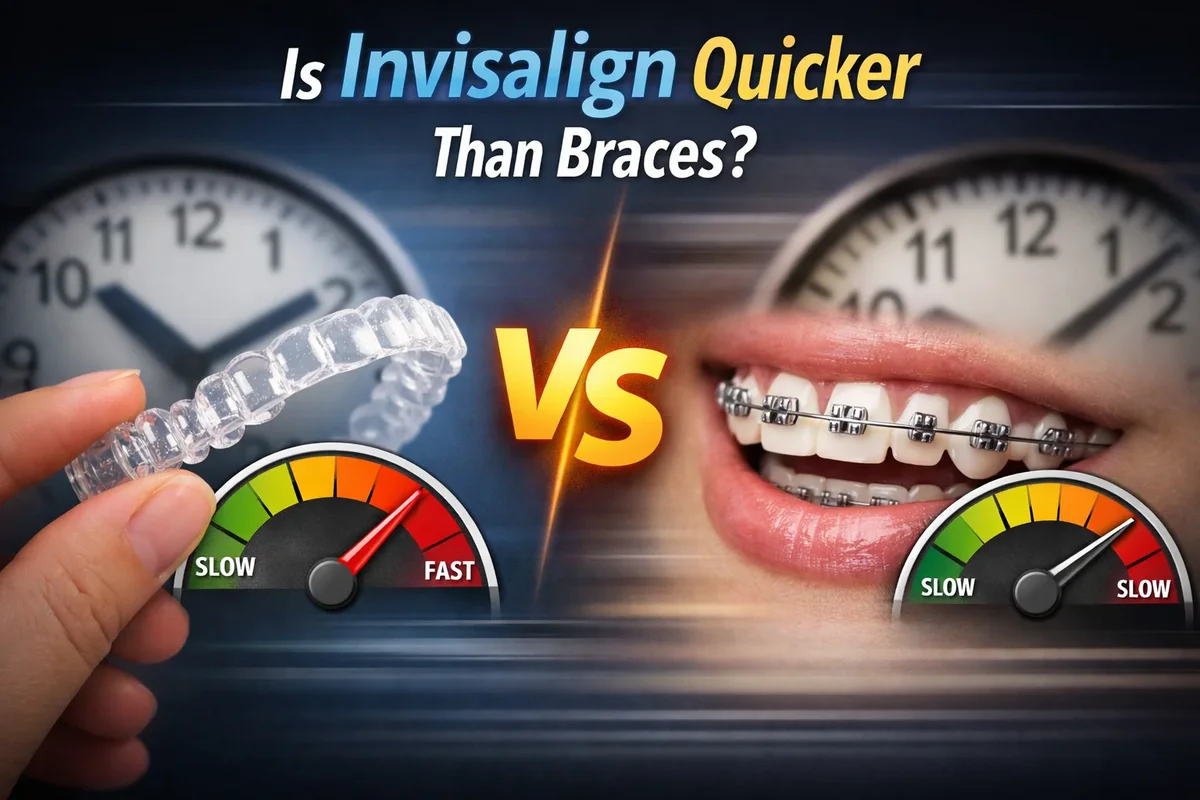
Choosing the Right Orthodontic Treatment With Your Dentist
After exploring treatment duration, technology, costs, and patient compliance, many patients still return to the central question: is invisalign quicker than braces? While the previous sections have explained many factors that influence orthodontic treatment speed, the most reliable way to answer this question for any individual is through a professional consultation. Orthodontic treatment is highly personalized, and only a qualified dentist or orthodontist can determine whether is invisalign quicker than braces for a specific dental condition.
Choosing the right orthodontic treatment involves evaluating more than just speed. Dentists consider tooth alignment, jaw structure, bite function, oral health, and the patient’s lifestyle. These factors influence the most effective and efficient treatment plan. Although patients often focus on whether is invisalign quicker than braces, orthodontists aim to balance treatment speed with long-term dental health and stability.
Initial Orthodontic Consultation
The first step in determining whether is invisalign quicker than braces is a comprehensive orthodontic consultation. During this appointment, the dentist evaluates the patient’s oral health and alignment issues. Modern dental clinics use advanced diagnostic tools that provide detailed insights into tooth positioning and jaw relationships.
Typical diagnostic procedures include:
- Digital 3D scans of the teeth
- Dental X-rays
- Bite and jaw analysis
- Assessment of gum and bone health
- Evaluation of tooth spacing and crowding
These examinations help dentists determine the complexity of the orthodontic case. Based on this information, they can assess whether Invisalign or braces will deliver faster and more predictable results. In some cases, the answer to is invisalign quicker than braces may be yes, while in others braces may remain the more efficient solution.
Digital Smile Simulation
One advantage of modern orthodontic consultations is digital smile simulation. Using specialized software, dentists can generate a visual preview of the treatment outcome. Patients can see how their teeth will gradually move throughout the treatment process.
This simulation helps dentists estimate the treatment timeline and evaluate whether is invisalign quicker than braces for the patient’s particular case. Seeing the expected results often helps patients feel more confident about starting orthodontic treatment.
Factors Dentists Consider When Recommending Treatment
Orthodontists carefully evaluate multiple factors before recommending Invisalign or braces. The decision is rarely based on speed alone. While many patients hope the answer to is invisalign quicker than braces will be yes, dentists must prioritize treatment effectiveness and long-term stability.
Important factors dentists consider include:
- Severity of tooth crowding
- Presence of bite problems (overbite, underbite, crossbite)
- Need for complex tooth rotations
- Jaw alignment issues
- Patient age and bone density
- Commitment to wearing aligners consistently
For mild alignment issues, Invisalign may provide an efficient solution. In these cases, the question is invisalign quicker than braces may often have a positive answer. However, for complex bite corrections or severe crowding, braces may still provide the most effective and reliable treatment.
Lifestyle and Personal Preferences
Lifestyle considerations also influence orthodontic treatment decisions. Invisalign aligners are removable and nearly invisible, which makes them popular among adults and professionals. Patients who prefer a discreet orthodontic solution often choose Invisalign because it allows them to maintain a natural appearance during treatment.
However, removable aligners require discipline. Patients must wear them consistently for 20–22 hours per day. If patients are unable to follow this schedule, braces may provide more predictable results. Therefore, when patients ask is invisalign quicker than braces, orthodontists also evaluate whether the patient’s daily routine supports aligner compliance.
Oral Hygiene and Maintenance
Another important factor in choosing orthodontic treatment is oral hygiene. Invisalign aligners can be removed during brushing and flossing, which makes it easier to maintain healthy teeth and gums. Braces, by contrast, require additional cleaning techniques to remove food particles around brackets and wires.
Although hygiene does not directly determine whether is invisalign quicker than braces, maintaining good oral health throughout treatment helps prevent complications that could delay progress.
Long-Term Results and Retention
Orthodontic treatment does not end when braces are removed or aligners are completed. Retention is essential to maintain the results achieved during treatment. After the active orthodontic phase, dentists typically recommend wearing a retainer to prevent teeth from shifting back to their original positions.
Both Invisalign and braces require retention after treatment. Retainers may be removable or fixed depending on the patient’s needs. Maintaining retention ensures the final smile remains stable for years to come.
Organizations such as the
American Dental Association emphasize the importance of professional orthodontic guidance throughout treatment and retention phases. Proper supervision ensures safe tooth movement and long-term oral health.
Getting Professional Advice
Ultimately, the only accurate way to determine whether is invisalign quicker than braces for your dental condition is through a professional orthodontic evaluation. Every patient has unique dental structures and treatment goals. A dentist can provide personalized guidance based on clinical examination and digital treatment planning.
If you are considering orthodontic treatment and would like to learn whether is invisalign quicker than braces for your case, consulting an experienced dental team is the best next step. Professional assessment ensures the selected treatment method will deliver both effective results and an efficient timeline.
Patients seeking personalized orthodontic consultation can contact specialists through the
Redent Klinik Contact Page. A professional evaluation will help determine the most suitable orthodontic approach for achieving a healthy, confident smile.
In conclusion, choosing between Invisalign and braces requires careful evaluation of treatment complexity, patient habits, lifestyle preferences, and professional recommendations. While many patients hope the answer to is invisalign quicker than braces will be yes, the most important goal is achieving safe, stable, and long-lasting orthodontic results.