
If you are asking is root canal worth it, the short answer is that it often is when the treatment can save a natural tooth that would otherwise be lost. A root canal is designed to remove infected or damaged tissue from inside the tooth, clean the canals, and seal them so the tooth can continue functioning. For many patients, preserving a natural tooth provides better long-term chewing ability, maintains the alignment of surrounding teeth, and may reduce the need for more complex restorative procedures later. However, is root canal worth it cannot be answered with the same response for everyone because the decision depends on the condition of the tooth, your oral health, your budget, your goals, and the recommendations of a qualified dentist.
Many people search is root canal worth it because they are experiencing tooth pain, sensitivity to hot or cold, swelling, or have been told they need treatment during a routine dental examination. It is understandable to feel uncertain. The internet contains a wide variety of opinions, and some of them are based on outdated information or personal experiences that may not apply to your situation. Modern root canal procedures are typically performed using advanced techniques, improved anesthesia, and digital imaging, making treatment more comfortable and predictable than many people expect. Even so, every clinical situation is unique, which is why a professional examination remains essential before deciding whether is root canal worth it applies to your specific case.
In practical terms, asking is root canal worth it usually means comparing two important goals: saving the natural tooth or removing it. Saving a tooth may help maintain your normal bite, preserve jaw function, and avoid movement of neighboring teeth. Extraction may sometimes be the better option if the tooth cannot be restored because of extensive damage, severe fractures, or insufficient remaining tooth structure. Since every tooth plays a role in chewing efficiency and overall oral health, preserving it is often considered whenever it is clinically appropriate. A dentist evaluates X-rays, the extent of infection, gum health, and the remaining strength of the tooth before recommending the most suitable treatment.
Another reason patients wonder is root canal worth it is concern about discomfort. While older stories have created a lasting reputation, modern dentistry focuses on patient comfort throughout treatment. Local anesthesia is used to numb the area, and many patients describe the experience as being similar to having a dental filling. After treatment, mild soreness can occur for a few days, but this often improves gradually with the guidance provided by your dentist. If pain becomes severe, swelling increases, or symptoms persist longer than expected, you should contact your dental professional for further evaluation rather than assuming it is a normal part of recovery.
Financial considerations are another important part of deciding is root canal worth it. Although root canal treatment may involve an initial investment, replacing a missing tooth after extraction can sometimes require additional procedures such as a dental implant, bridge, or removable prosthesis. The overall long-term cost varies greatly depending on individual circumstances, treatment planning, restorative needs, and regional pricing. Because of these variables, no responsible dental professional can promise an exact price without first examining your mouth and determining the most appropriate treatment plan.
Timing also matters. If infection is diagnosed early, treatment may be less complicated than waiting until the condition worsens. Delaying care could increase discomfort, allow infection to spread, or reduce the chances of preserving the tooth. Therefore, if you are repeatedly asking yourself is root canal worth it, it is often more beneficial to arrange a professional evaluation rather than postponing the decision until symptoms become more severe. A dentist can explain whether the tooth is still restorable, discuss available treatment options, and help you understand the expected benefits and limitations of each approach.
Some patients may not be suitable candidates for root canal treatment. Teeth with extensive structural damage, vertical root fractures, advanced periodontal disease, or inadequate remaining tooth structure may require different solutions. Conversely, many teeth that appear painful or heavily decayed can still be successfully preserved after proper endodontic treatment and restoration with a suitable filling or crown. This is why online advice alone cannot determine whether is root canal worth it in your own situation.
If you are considering treatment abroad or comparing different clinics, it is helpful to look beyond price alone. Ask whether digital imaging is used, whether the treatment plan includes restoration after the root canal if necessary, what follow-up care is available, and whether the dentist explains both the advantages and limitations of the recommended procedure. At Redent Klinik Contact Page, patients can request an individual consultation to discuss their symptoms, treatment possibilities, and personalized planning without assuming that every case requires the same solution.
It is also valuable to review evidence-based oral health information from recognized professional organizations. The American Dental Association provides educational resources about maintaining oral health, preserving natural teeth, and understanding common dental procedures. Reliable information combined with a clinical examination offers a stronger foundation for making informed decisions than relying solely on personal stories found online.
Practical next step: If you are wondering is root canal worth it, avoid making the decision based only on pain, fear, or online opinions. Arrange a comprehensive dental examination with X-rays, ask whether the tooth can realistically be preserved, discuss the expected benefits, possible risks, alternative treatments, and likely restoration needs, and then choose the option that best matches your oral health goals and long-term dental plan.
Is Root Canal Worth It? The Quick Answer and What Most Patients Should Know
For many people, the answer to is root canal worth it is yes when the treatment can successfully preserve a natural tooth that would otherwise be lost. However, there is no universal answer because every tooth, every patient, and every treatment plan is different. The value of root canal therapy depends on factors such as the severity of the infection, the amount of healthy tooth remaining, your overall oral health, your long-term goals, and the alternatives available. Understanding these factors can help you make a confident decision rather than relying on fear or outdated information.
When patients search is root canal worth it, they are usually trying to answer a practical question rather than a technical one. They want to know whether the procedure will relieve discomfort, help them keep their natural tooth, justify the financial investment, and provide lasting function. These are all reasonable concerns, and they should be discussed during a professional dental consultation instead of relying solely on online opinions.
Why Saving a Natural Tooth Is Often the Preferred Option
Dentists generally aim to preserve natural teeth whenever it is clinically appropriate. A healthy natural tooth contributes to efficient chewing, supports proper bite alignment, and helps distribute biting forces across the jaw. When asking is root canal worth it, it is important to remember that replacing a missing tooth can involve additional procedures such as implants, bridges, or removable dentures. While these options may be excellent solutions in appropriate situations, preserving your own tooth is frequently considered the first choice when it has a predictable chance of long-term success.
Keeping a natural tooth may also reduce the risk of neighboring teeth shifting into an empty space. Tooth movement can gradually affect your bite, oral hygiene routine, and even future restorative needs. Although every situation is unique, these long-term considerations often influence the discussion about whether is root canal worth it for an individual patient.
When Root Canal Treatment May Be Worth Considering
Several clinical situations commonly lead dentists to recommend root canal treatment. Deep decay reaching the dental pulp, infection inside the tooth, repeated restorative work that has irritated the nerve, or trauma causing internal damage are among the most common reasons. In these situations, asking is root canal worth it becomes less about avoiding treatment and more about determining whether the tooth remains restorable.
A comprehensive examination typically includes digital X-rays, an assessment of the surrounding gums, evaluation of the remaining tooth structure, and testing of symptoms. These findings help determine whether root canal therapy offers a reasonable opportunity to preserve the tooth.
Common Signs That Require Professional Evaluation
- Persistent toothache that does not improve.
- Lingering sensitivity to hot or cold.
- Pain while biting or chewing.
- Swelling around the affected tooth.
- A recurring gum pimple or drainage.
- Darkening or discoloration of a tooth after injury.
These symptoms do not automatically mean you need a root canal, but they should prompt a dental examination rather than self-diagnosis.
Situations Where Root Canal May Not Be the Best Choice
Although many patients discover that is root canal worth it has a positive answer, there are circumstances where another treatment may be more appropriate. Teeth with severe vertical fractures, extensive structural destruction, advanced periodontal disease, or inadequate remaining tooth structure may have a limited long-term prognosis even after treatment.
In these situations, your dentist may explain that extraction followed by an appropriate replacement option could provide a more predictable long-term result. This recommendation is based on preserving overall oral health rather than simply choosing one procedure over another.
Understanding the Cost Perspective
Another reason people ask is root canal worth it involves financial planning. Root canal treatment is an investment in preserving a tooth, but treatment costs vary considerably depending on the tooth involved, its anatomy, the complexity of the infection, whether retreatment is necessary, and whether a crown or other restoration is required afterward.
It is also important to compare immediate expenses with long-term treatment planning. Extracting a tooth may initially appear less expensive, but replacing that missing tooth later could involve additional appointments and restorative procedures. This does not mean one option is always less expensive than another, only that comparing complete treatment pathways often provides a clearer financial picture than focusing on the first procedure alone.
No responsible clinic should guarantee an exact fee before examining the tooth because treatment planning depends on your individual clinical findings.
Looking Beyond Short-Term Relief
Some patients focus only on eliminating pain, but the better question is how today’s decision will affect oral health years from now. When considering is root canal worth it, think about preserving chewing ability, protecting neighboring teeth, maintaining jaw function, and reducing the likelihood of more extensive restorative treatment if the tooth can reasonably be saved.
That does not mean root canal treatment is automatically the correct answer in every case. Instead, it means your decision should balance current symptoms with expected long-term outcomes after a professional evaluation.
Making a Well-Informed Decision
The best decisions are made after understanding both the benefits and limitations of every available treatment option. A dentist should explain why root canal therapy is being recommended, what alternatives exist, what the expected recovery involves, and whether additional restoration—such as a crown—may be necessary to strengthen the treated tooth.
If you are considering treatment at Redent Klinik Contact Page, an individualized consultation can help determine whether preserving your tooth is clinically appropriate based on your examination, diagnostic imaging, and long-term oral health goals. Educational information from the American Dental Association can also help you better understand common dental procedures before your appointment.
What You Should Check Before Deciding
Before deciding whether is root canal worth it, ask your dentist these practical questions:
- Can the tooth realistically be restored?
- How much healthy tooth structure remains?
- Will a crown likely be recommended afterward?
- What alternatives are available if the tooth cannot be saved?
- How could delaying treatment affect the prognosis?
- What follow-up care will be needed after treatment?
When to request professional advice: Schedule a dental consultation if you have persistent tooth pain, prolonged sensitivity, swelling, discomfort while chewing, or if another dentist has recommended root canal treatment and you would like to better understand whether is root canal worth it for your individual situation. A personalized examination is the safest way to determine the most appropriate treatment plan.
Is Root Canal Worth It Financially? Understanding the Real Cost Factors
One of the biggest reasons people ask is root canal worth it is because they are trying to balance oral health with their budget. It is natural to compare the cost of a root canal with alternatives such as tooth extraction, but making a decision based only on the first treatment fee can sometimes lead to a more expensive long-term outcome. The better approach is to consider the complete treatment pathway, including future restorative needs, the value of preserving a natural tooth, and the potential impact on your overall oral health.
For many patients, is root canal worth it becomes less about finding the cheapest option and more about choosing the treatment that offers the best balance between function, longevity, and future dental stability. A personalized treatment plan is essential because every tooth has different levels of damage, different anatomical complexity, and different restorative requirements after treatment.
Why Root Canal Costs Vary Between Patients
There is no single price that answers is root canal worth it. Treatment fees differ because each clinical situation is unique. The complexity of the procedure depends on many variables, and these variables influence both the time required and the type of care needed.
Factors That Commonly Affect Treatment Costs
- The location of the tooth being treated.
- The number and complexity of root canals.
- The severity of infection or inflammation.
- Whether previous root canal treatment requires retreatment.
- The need for additional diagnostic imaging.
- Whether a dental crown is recommended afterward.
- The condition of surrounding gums and supporting bone.
- The experience of the treating dentist or endodontic specialist.
- Regional differences in healthcare costs.
Because these factors differ from one patient to another, responsible dental clinics avoid guaranteeing treatment costs before completing a clinical examination. If you are asking is root canal worth it, requesting a personalized treatment estimate after diagnostic evaluation will provide much more useful information than relying on average prices found online.
Comparing Root Canal Treatment with Tooth Extraction
Many patients initially assume extraction is always the more affordable solution. While extraction may involve a lower initial procedure cost in some situations, it is important to consider what happens after the tooth has been removed. Leaving an empty space may affect chewing, encourage neighboring teeth to shift, and eventually require replacement if function or appearance becomes a concern.
When evaluating is root canal worth it, compare the complete treatment journey rather than only the first appointment. Tooth replacement after extraction may involve options such as dental implants, bridges, or removable prostheses, each with its own costs, maintenance requirements, and long-term considerations.
This comparison does not mean root canal treatment is always the better financial choice. If a tooth cannot be predictably restored because of severe fractures or extensive structural damage, extraction may ultimately provide the more practical solution. Your dentist should explain why one option is being recommended over another based on your individual clinical findings.
The Long-Term Value of Preserving a Natural Tooth
Another important aspect of is root canal worth it involves long-term value rather than immediate expense. Natural teeth help maintain efficient chewing, preserve bite alignment, and support normal oral function. Preserving your own tooth can sometimes reduce the need for additional restorative treatment later, although every patient’s circumstances differ.
A successfully treated tooth may continue functioning for many years when appropriate restoration, regular dental examinations, and good oral hygiene are maintained. However, outcomes vary depending on factors such as remaining tooth structure, bite forces, oral hygiene habits, smoking status, and overall dental health.
Understanding Additional Treatment Costs
Patients often ask whether the root canal procedure represents the entire cost of treatment. In many cases, additional restorative care may be recommended after the infection has been treated. This is particularly common for back teeth that experience heavy chewing forces.
Possible Additional Treatments
- Permanent filling replacement.
- Dental crown placement.
- Core build-up for structural support.
- Post placement in selected situations.
- Follow-up X-rays and clinical reviews.
These treatments are not automatically necessary for every patient, but understanding their potential role helps answer is root canal worth it from a realistic financial perspective. Your dentist will explain whether additional restoration is recommended after evaluating the strength of the remaining tooth.
Insurance and Financing Considerations
Dental insurance policies vary considerably between countries and providers. Some plans contribute toward root canal treatment, while others may have waiting periods, annual limits, exclusions, or percentage-based reimbursements. Before deciding whether is root canal worth it, review your insurance benefits carefully and ask your dental clinic for an estimated treatment plan that you can discuss with your insurance provider.
Some clinics also offer financing options or staged treatment planning where appropriate. Availability differs depending on local regulations and clinic policies, so it is worth asking about payment options during your consultation instead of assuming they are unavailable.
Making a Financially Balanced Decision
The most cost-effective treatment is not always the one with the lowest immediate price. Instead, consider which option is most likely to support your oral health over time while remaining realistic for your financial circumstances. Asking is root canal worth it should involve thinking about future maintenance, restoration needs, function, appearance, and quality of life rather than comparing a single treatment fee.
If you are exploring your options at Redent Klinik Contact Page, an individualized consultation can help you understand your available treatment choices, expected restorative needs, and the factors influencing your personalized treatment plan. Educational information from the American Dental Association may also help you prepare informed questions before your appointment.
What to Check Before You Decide
Before making a financial decision about treatment, ask your dentist:
- Is the tooth likely to be restorable?
- Will a crown probably be recommended after the root canal?
- What additional treatments might be necessary?
- What alternatives exist if the tooth cannot be preserved?
- How could delaying treatment affect future costs?
- Are insurance or financing options available for my situation?
When to request professional advice: If you are comparing treatment costs, have been advised to undergo root canal therapy, or are uncertain whether is root canal worth it from both a clinical and financial perspective, schedule a comprehensive dental examination before making your decision. A personalized assessment can clarify the condition of your tooth, explain realistic treatment options, and help you weigh both short-term expenses and long-term oral health considerations.
Who Should Choose Root Canal Treatment and When Is It the Right Option?
Many people ask is root canal worth it because they have already been told they may need treatment but are unsure whether it is truly the best choice. The answer depends less on age or symptoms alone and more on the condition of the affected tooth. Root canal treatment is generally recommended when the dental pulp—the soft tissue containing nerves and blood vessels inside the tooth—has become inflamed or infected, but the tooth itself still has enough healthy structure to be restored. Understanding whether you are a suitable candidate can help you make a more confident and informed decision.
Rather than asking only is root canal worth it, it is often more useful to ask, “Can my tooth be predictably saved?” This question focuses on long-term oral health instead of simply treating today’s discomfort. A thorough dental examination, supported by diagnostic imaging and clinical testing, is the only reliable way to determine whether preserving the tooth is a realistic goal.
Who Is Usually a Good Candidate for Root Canal Treatment?
Patients who have a restorable tooth with damage limited primarily to the pulp are often considered good candidates. In many situations, preserving the natural tooth helps maintain normal chewing function, supports surrounding teeth, and avoids the need for immediate replacement options.
If you are wondering is root canal worth it, you may be an appropriate candidate when your dentist determines that the tooth has a favorable long-term prognosis after treatment and restoration. The recommendation is based on multiple clinical findings rather than symptoms alone.
Common Situations That May Favor Root Canal Treatment
- Deep dental decay reaching the pulp.
- Persistent tooth pain related to pulp inflammation.
- Long-lasting sensitivity to heat or cold.
- Infection visible around the root on dental X-rays.
- Trauma causing internal damage while the tooth remains structurally repairable.
- A previously restored tooth developing pulp complications.
These situations do not automatically mean root canal treatment is necessary, but they often prompt further investigation to determine whether is root canal worth it for that particular tooth.
When Root Canal Treatment May Not Be the Best Choice
Although dentists often aim to preserve natural teeth, there are circumstances where another treatment may provide a more predictable outcome. Asking is root canal worth it also means recognizing situations where preserving the tooth may not be clinically advisable.
Examples Where Alternative Treatment May Be Considered
- Vertical root fractures extending below the gum line.
- Extensive structural destruction leaving insufficient healthy tooth.
- Advanced periodontal disease causing severe loss of supporting bone.
- Repeated failed treatments where the long-term prognosis is poor.
- Teeth that cannot be adequately restored after infection is removed.
In these situations, your dentist may discuss extraction and replacement options instead of root canal therapy. This recommendation is intended to improve long-term oral health rather than simply choosing a different procedure.
Age Alone Does Not Determine the Right Decision
Some patients believe younger individuals should always save their teeth while older adults should automatically choose extraction. In reality, age is only one small factor. Overall health, oral hygiene habits, chewing requirements, bone condition, and the remaining tooth structure are usually much more important when deciding is root canal worth it.
An older patient with excellent oral health may benefit greatly from preserving a natural tooth, while a younger patient with an extensively fractured tooth may require a different solution. Individual assessment is always more valuable than making assumptions based on age.
How Dentists Decide Whether the Tooth Can Be Saved
A professional evaluation combines several types of information before recommending treatment. Dentists do not rely solely on one symptom or one X-ray. Instead, they assess the complete clinical picture to determine whether is root canal worth it for your specific circumstances.
Clinical Factors Your Dentist Will Evaluate
- The amount of healthy tooth structure remaining.
- The location and size of the infection.
- The condition of surrounding gums.
- The health of the supporting jawbone.
- Existing restorations such as fillings or crowns.
- Your bite and chewing forces.
- Your oral hygiene habits.
- Your general medical and dental history.
Each of these findings contributes to the overall treatment recommendation. No online checklist can replace a personalized clinical examination.
Questions You Should Ask During Your Consultation
If you are still asking is root canal worth it, preparing thoughtful questions can help you better understand your options. A good consultation should leave you with a clear understanding of why one treatment is being recommended over another.
- Can my tooth realistically be preserved?
- How strong will the tooth be after treatment?
- Will I likely need a crown afterward?
- What happens if I postpone treatment?
- What are the realistic alternatives?
- What long-term maintenance will be required?
These questions encourage shared decision-making and help ensure your treatment plan aligns with both your oral health needs and personal priorities.
Considering Your Long-Term Oral Health
When evaluating is root canal worth it, think beyond today’s symptoms. A tooth that can be successfully preserved may continue contributing to chewing efficiency and bite stability for many years when properly restored and maintained. On the other hand, if the tooth has little chance of long-term success, selecting an alternative treatment may reduce the likelihood of repeated procedures in the future.
Because every patient has different goals, there is no single treatment that suits everyone. The best decision is one based on realistic expectations, accurate diagnosis, and open communication with your dental team.
If you are considering your treatment options, you can arrange a personalized consultation through the Redent Klinik Contact Page. A comprehensive examination allows your dentist to evaluate whether your tooth is suitable for preservation and explain the available treatment options based on your individual needs. You can also review educational resources from the American Dental Association to better understand common dental procedures and oral health recommendations.
What to Check Before Moving Forward
Before deciding whether is root canal worth it, confirm that you understand the condition of the tooth, the expected prognosis, the need for future restoration, possible alternatives, and the consequences of delaying treatment. These discussions are an important part of informed decision-making.
When to request professional advice: Schedule a dental consultation promptly if you experience persistent tooth pain, swelling, prolonged temperature sensitivity, discomfort while chewing, or if another dentist has recommended root canal therapy. A personalized examination is the most reliable way to determine whether is root canal worth it for your specific clinical situation and long-term oral health goals.
What Happens During a Root Canal Procedure and What Should You Expect?
For many patients, the biggest concern behind the question is root canal worth it is uncertainty about the treatment itself. Fear of the unknown often creates more anxiety than the actual procedure. Understanding each stage of root canal treatment can help you make an informed decision and set realistic expectations. Modern dentistry has significantly improved the way root canal therapy is performed, using advanced diagnostic imaging, local anesthesia, and precise instruments to make treatment more predictable and comfortable than many people expect.
If you are asking is root canal worth it, it is important to understand that the primary goal of treatment is to remove infected or damaged tissue from inside the tooth while preserving the outer tooth structure whenever possible. Saving a natural tooth may help maintain normal chewing function, support neighboring teeth, and reduce the need for more extensive restorative procedures in suitable cases.
Step 1: The Initial Examination and Diagnosis
Before any treatment begins, your dentist performs a comprehensive assessment. This stage is one of the most important parts of determining whether is root canal worth it because treatment should only proceed after confirming that the tooth is a suitable candidate for preservation.
Your dentist will typically review your symptoms, examine the tooth clinically, assess nearby gums, evaluate your bite, and obtain diagnostic images such as digital X-rays. Additional tests may be used to identify whether the dental pulp has become irreversibly inflamed or infected.
Information Your Dentist Will Evaluate
- The location of pain.
- Response to temperature testing.
- Sensitivity during biting.
- Presence of swelling or drainage.
- Extent of tooth decay.
- Remaining healthy tooth structure.
- Condition of surrounding bone.
- Existing fillings or crowns.
These findings help determine not only whether treatment is necessary but also whether is root canal worth it for your individual situation.
Step 2: Preparing the Tooth
Once treatment is recommended, local anesthesia is administered to numb the area. Most patients remain awake throughout the procedure and generally experience pressure rather than sharp pain. A protective rubber dam is commonly placed around the tooth to keep the treatment area clean and isolated from saliva.
This stage helps create an environment where the dentist can work safely and precisely. Patients often discover that the procedure feels less uncomfortable than they expected, which changes their perspective on is root canal worth it.
Step 3: Cleaning the Root Canal System
The next phase involves creating a small opening through the top of the tooth to access the root canal system. Using specialized instruments, the dentist carefully removes infected or damaged pulp tissue while shaping the canals for cleaning and sealing.
Cleaning is one of the most important parts of treatment because bacteria inside the canals contribute to infection. Modern irrigation solutions and precision instruments are used to reduce bacterial contamination as much as possible before the canals are sealed.
The complexity of this stage varies depending on the number of canals, their shape, and the anatomy of the tooth. Molars generally contain more canals than front teeth, which is one reason treatment complexity differs between patients.
Step 4: Filling and Sealing the Tooth
After the canals have been thoroughly cleaned and shaped, they are filled with a specialized material designed to seal the internal space. Sealing helps reduce the opportunity for bacteria to re-enter the root canal system.
Depending on your treatment plan, the tooth may receive either a temporary filling or a permanent restoration at this stage. Your dentist will explain the next steps before you leave the appointment so you understand how your treatment will continue.
Will You Need a Crown Afterwards?
Many patients asking is root canal worth it are surprised to learn that the procedure itself is only part of the overall treatment plan. Teeth that have undergone root canal therapy, particularly molars and premolars, may become more vulnerable to fracture because they have already lost substantial tooth structure from decay or previous restorations.
For this reason, a dental crown is often recommended to strengthen and protect the tooth after healing. However, not every treated tooth requires a crown. Front teeth with sufficient remaining structure may sometimes be restored using other methods depending on your clinical situation.
Factors Influencing the Need for a Crown
- The amount of healthy tooth remaining.
- The location of the tooth.
- Your chewing forces.
- The size of previous fillings.
- The overall strength of the tooth.
Your dentist will explain why a particular restoration is recommended after evaluating your tooth.
What Recovery Usually Looks Like
Recovery experiences differ among patients, but mild tenderness for several days is common after root canal treatment. Chewing directly on the treated tooth may be uncomfortable until the surrounding tissues settle, particularly if significant infection was present beforehand.
Following your dentist’s aftercare instructions, maintaining good oral hygiene, and attending recommended follow-up appointments all contribute to successful healing. Persistent swelling, increasing pain, fever, or difficulty opening the mouth should be reported promptly because these symptoms require professional evaluation.
Understanding the Benefits and Limitations
Asking is root canal worth it also means understanding that no dental procedure can guarantee identical outcomes for every patient. Success depends on accurate diagnosis, careful treatment, proper restoration, ongoing oral hygiene, and regular dental examinations. Even successfully treated teeth require continued care and monitoring over time.
If your dentist determines that the tooth cannot be predictably restored because of fractures or severe structural damage, another treatment may provide a more appropriate long-term solution. This decision is based on clinical findings rather than a preference for one procedure over another.
If you would like a personalized assessment, you can arrange a consultation through the Redent Klinik Contact Page. A thorough examination allows your dentist to explain the procedure, expected treatment stages, and whether root canal therapy is an appropriate option for your specific case. You can also review educational information provided by the American Dental Association to better understand common dental treatments.
What to Check Before Proceeding
Before deciding whether is root canal worth it, ask your dentist about the condition of the tooth, the expected number of appointments, whether a crown is likely to be recommended, the anticipated recovery process, and the alternatives if the tooth cannot be preserved. Understanding the complete treatment plan allows you to make a more informed decision.
When to request professional advice: Seek a dental consultation if you have persistent tooth pain, prolonged sensitivity, swelling, or have already been advised that you need root canal treatment. A professional examination can determine whether is root canal worth it in your situation and explain the most suitable treatment options based on your oral health, the condition of the affected tooth, and your long-term dental goals.
Risks, Benefits, Recovery, and Long-Term Success of Root Canal Treatment
When people ask is root canal worth it, they are often weighing the potential benefits against the possible risks. That is a sensible approach because every dental procedure has advantages, limitations, and situations where it may or may not be the ideal option. Understanding what you can realistically expect before, during, and after treatment allows you to make a more informed decision instead of relying on myths or isolated personal stories found online.
For many patients, is root canal worth it becomes easier to answer after learning that the primary objective is to eliminate infection while preserving the natural tooth whenever it is clinically appropriate. Saving a tooth can help maintain normal chewing function, preserve bite alignment, and reduce the need for tooth replacement. However, successful treatment depends on several factors, including the condition of the tooth, the quality of the restoration placed afterward, and your commitment to long-term oral care.
The Main Benefits of Root Canal Treatment
One of the strongest reasons dentists recommend root canal therapy is the opportunity to preserve a natural tooth. Although modern replacement options such as implants and bridges are valuable treatments when necessary, maintaining your own tooth is generally preferred whenever there is a predictable chance of long-term success.
If you are wondering is root canal worth it, consider the practical benefits that preserving a healthy natural tooth may provide.
Potential Advantages
- Preserves your natural tooth whenever possible.
- Helps maintain normal chewing efficiency.
- Supports proper bite alignment.
- May reduce the need for immediate tooth replacement.
- Removes infected pulp tissue that may be causing pain.
- Allows restoration with a filling or crown when appropriate.
- Contributes to maintaining overall oral function.
These benefits vary depending on your clinical situation, which is why a personalized examination remains essential before deciding whether is root canal worth it.
Understanding the Possible Risks
No dental procedure is entirely without risk. Understanding potential complications helps patients make balanced decisions and prepares them for realistic expectations. While many root canal treatments are completed successfully, outcomes differ from one individual to another.
Possible Risks That May Be Discussed
- Persistent infection requiring additional treatment.
- Complex root canal anatomy that makes cleaning more challenging.
- Fracture of a weakened tooth after treatment.
- Need for retreatment if bacteria re-enter the canals.
- Temporary soreness following the procedure.
- Restoration failure if the tooth is not adequately protected.
These possibilities do not mean complications will occur, but understanding them helps answer is root canal worth it with realistic expectations instead of assuming treatment is either perfect or unsuccessful.
What Recovery Usually Involves
Most patients return to normal daily activities shortly after treatment, although mild tenderness around the treated tooth is relatively common for a few days. This discomfort often relates to inflammation in the surrounding tissues rather than the cleaned root canal itself.
Your dentist may advise avoiding hard chewing on the treated tooth until the final restoration has been completed. Following these instructions can help protect the tooth while it heals.
Helpful Recovery Habits
- Maintain gentle but thorough oral hygiene.
- Avoid chewing very hard foods on the treated tooth if advised.
- Attend recommended follow-up appointments.
- Report increasing swelling or persistent pain promptly.
- Complete any prescribed medication exactly as instructed.
Recovery experiences differ between patients depending on the severity of infection, the complexity of treatment, and individual healing responses. This is another reason why is root canal worth it cannot be answered without considering your personal circumstances.
How Long Can a Root Canal-Treated Tooth Last?
Many patients asking is root canal worth it are really asking whether the treatment provides lasting value. A properly treated and appropriately restored tooth may continue functioning for many years. However, long-term success depends on several important factors rather than the root canal procedure alone.
Factors That Influence Long-Term Outcomes
- The amount of healthy tooth structure remaining.
- Placement of a suitable permanent restoration when recommended.
- Daily brushing and flossing habits.
- Regular professional dental examinations.
- Management of teeth grinding or heavy bite forces.
- Overall gum health.
Even after successful treatment, the tooth still requires routine care. A root canal removes infected tissue inside the tooth but does not make the tooth immune to decay or gum disease.
When Additional Treatment May Be Necessary
Occasionally, further treatment may be recommended after a root canal. Some teeth require crowns for protection, while others may need retreatment if symptoms return or if new infection develops. These situations are relatively uncommon but should be discussed during treatment planning.
If you are evaluating is root canal worth it, ask your dentist about the expected long-term maintenance for your particular tooth rather than assuming every patient will have the same experience.
Balancing Risks Against Benefits
The best way to answer is root canal worth it is by comparing the realistic advantages of preserving the tooth with the potential limitations of treatment. If the tooth has a good structural foundation and a favorable prognosis, root canal therapy often offers the opportunity to maintain normal function while avoiding extraction. If the tooth has severe fractures, advanced periodontal disease, or insufficient remaining structure, another treatment approach may provide a more predictable outcome.
Every recommendation should be based on clinical findings rather than assumptions or generalized advice. Open communication with your dentist allows you to understand why one option may be more appropriate than another.
If you would like an individualized evaluation, the Redent Klinik Contact Page provides an opportunity to arrange a consultation where your dentist can explain the expected benefits, possible risks, and suitable treatment options for your specific case. Educational materials from the American Dental Association may also help you understand general principles of root canal treatment before your appointment.
What to Review Before Making Your Decision
Before deciding whether is root canal worth it, ask your dentist about the long-term prognosis of the tooth, whether additional restoration such as a crown is recommended, the possibility of future retreatment, expected recovery time, and the alternatives available if preserving the tooth is unlikely to succeed. These discussions provide a balanced understanding of both the opportunities and the limitations of treatment.
When to request professional advice: Seek prompt dental evaluation if you experience persistent tooth pain, swelling, recurring infection, discomfort when chewing, or if you have already been advised to undergo root canal therapy but remain uncertain. A comprehensive examination is the most reliable way to determine whether is root canal worth it for your specific oral health condition, treatment goals, and long-term dental needs.
Are There Better Alternatives, or Is Root Canal Worth It Compared with Tooth Extraction?
One of the most important questions patients ask is not simply is root canal worth it, but whether another treatment might be a better solution. In most situations where a natural tooth can be predictably restored, dentists generally prefer preserving it rather than removing it. However, there are cases where extraction is the more appropriate choice because the tooth cannot be repaired or is unlikely to function well over the long term. Understanding both options allows you to make a decision based on clinical facts instead of assumptions.
If you are wondering is root canal worth it, remember that the decision is rarely about choosing the “best” procedure in general. Instead, it is about identifying the treatment that offers the greatest long-term benefit for your specific tooth, your oral health, and your personal goals. Every recommendation should begin with a thorough examination, diagnostic imaging, and an honest discussion of both the benefits and limitations of each option.
Why Dentists Usually Try to Save Natural Teeth
Whenever possible, preserving a natural tooth is considered an important goal in modern dentistry. Natural teeth contribute to efficient chewing, maintain the spacing between neighboring teeth, support normal bite function, and preserve the natural feeling of your own dentition. For these reasons, the answer to is root canal worth it is often positive when the tooth has a favorable long-term prognosis after treatment.
Choosing to save a tooth does not simply address today’s infection. It may also help reduce future restorative needs by maintaining the natural structure of your mouth. Nevertheless, saving a tooth is only advisable when the remaining tooth structure and surrounding tissues can support long-term function.
Potential Advantages of Preserving a Tooth
- Maintains natural chewing efficiency.
- Helps preserve normal bite alignment.
- Reduces the chance of neighboring teeth shifting.
- Keeps your natural tooth whenever clinically appropriate.
- May postpone or eliminate the need for tooth replacement.
- Supports overall oral function.
Although these benefits are significant, they only apply when the tooth can realistically be restored. This is why asking is root canal worth it always requires an individualized assessment.
When Tooth Extraction May Be the Better Option
Root canal treatment is not the correct solution for every patient. There are situations where removing the tooth provides a more predictable long-term outcome than attempting to preserve it. Your dentist may recommend extraction if the remaining tooth structure is insufficient to support restoration or if the overall prognosis is poor.
Common Reasons Extraction May Be Recommended
- Vertical root fractures extending below the gum line.
- Extensive destruction of the remaining tooth.
- Advanced periodontal disease causing severe bone loss.
- Repeated treatment failures with poor long-term outlook.
- Teeth that cannot be adequately restored even after infection is removed.
When these conditions are present, asking is root canal worth it may lead to the conclusion that another treatment offers greater long-term stability. This recommendation is based on preserving overall oral health rather than simply avoiding root canal therapy.
What Happens After Tooth Extraction?
Extraction solves the immediate problem of removing a severely damaged or infected tooth, but it also creates an empty space. Depending on the location of the tooth and your oral health goals, replacement may be recommended to restore chewing efficiency and maintain bite stability.
Possible replacement options include:
- Dental implants.
- Fixed dental bridges.
- Removable partial dentures.
- In selected cases, monitoring without immediate replacement.
Not every extracted tooth requires immediate replacement, but discussing the long-term consequences is an important part of deciding is root canal worth it. The complete treatment plan should be considered rather than focusing only on the first procedure.
Comparing Long-Term Value Instead of Immediate Cost
Patients often compare the initial fee of root canal treatment with the cost of extraction. However, the financial comparison is more meaningful when the entire treatment journey is considered. Extraction may have a lower initial cost in some situations, but replacing the missing tooth later can involve additional procedures, appointments, and maintenance.
On the other hand, root canal therapy may require a crown or other restoration after treatment, especially for back teeth exposed to significant chewing forces. Because every case is different, there is no universal financial answer to is root canal worth it. Your dentist should explain the expected treatment sequence and associated considerations before you decide.
Questions That Can Help You Decide
If you have been advised to choose between root canal treatment and extraction, asking the right questions can make your consultation much more productive.
Helpful Questions to Discuss with Your Dentist
- Can the tooth realistically be restored?
- What is the expected long-term prognosis?
- Will a crown probably be needed after treatment?
- What happens if I choose extraction instead?
- Will I likely need a replacement tooth?
- How will each option affect my chewing ability?
- Which option best supports my long-term oral health?
These questions move the conversation beyond simply asking is root canal worth it and instead focus on choosing the most appropriate treatment for your individual needs.
There Is No One-Size-Fits-All Answer
Some patients have teeth that are excellent candidates for root canal treatment and can continue functioning successfully after proper restoration. Others have teeth that are too severely damaged for predictable preservation. Neither outcome is automatically better; the right choice depends on careful diagnosis, realistic expectations, and clinical evidence.
It is also important to remember that delaying treatment may change your available options. A tooth that is restorable today may become more difficult to preserve if infection spreads or structural damage increases. If you are repeatedly asking is root canal worth it, arranging a timely professional evaluation is often the most practical next step.
If you would like an individualized assessment, you can request a consultation through the Redent Klinik Contact Page. Your dentist can evaluate whether preserving the tooth is clinically appropriate, explain the available alternatives, and help you compare the expected benefits and limitations of each treatment option. Additional educational resources about maintaining oral health and preserving natural teeth are available from the American Dental Association.
What You Should Check Before Making Your Decision
Before deciding whether is root canal worth it, confirm that you understand the condition of the tooth, the likelihood of successful restoration, whether additional procedures such as a crown may be recommended, what extraction would involve, and how each option may affect your long-term oral health. These discussions provide a balanced foundation for informed decision-making.
When to request professional advice: Arrange a dental consultation promptly if you have persistent tooth pain, swelling, recurrent infection, discomfort while chewing, or if you have been told to choose between root canal treatment and extraction. A comprehensive examination is the most reliable way to determine whether is root canal worth it for your specific situation or whether another treatment option offers a more suitable long-term outcome.
Paying for Treatment: Insurance, Financing, and Budget Considerations
For many patients, the question is root canal worth it is closely connected to affordability. Even when a dentist recommends saving a tooth, it is reasonable to ask how treatment fits within your budget and whether insurance or financing can help. Financial planning should never be separated from clinical decision-making because choosing the most appropriate treatment often means balancing long-term oral health with realistic financial circumstances. Understanding how treatment costs are structured and what payment options may be available can make the decision less stressful and more informed.
It is important to remember that is root canal worth it cannot be answered by comparing prices alone. Two patients with similar symptoms may receive different treatment plans because the condition of their teeth, the complexity of the procedure, and the restoration required afterward may differ significantly. For that reason, a personalized examination is always necessary before a dentist can explain expected treatment costs or recommend the most suitable option.
Why the Final Cost Can Vary
One of the most common misunderstandings is that every root canal procedure costs the same. In reality, treatment complexity varies considerably. Front teeth generally have fewer canals than molars, while heavily restored teeth or previously treated teeth may require additional time and expertise.
If you are asking is root canal worth it, understanding these variables helps explain why responsible dental professionals avoid guaranteeing treatment fees before completing a full clinical assessment.
Factors That Influence Overall Treatment Costs
- The location of the affected tooth.
- The number and shape of the root canals.
- The severity of infection.
- Whether retreatment is necessary.
- The need for digital imaging or additional diagnostics.
- Whether a permanent crown is recommended.
- The complexity of restoring the remaining tooth structure.
- Regional healthcare costs and clinical resources.
Because these variables differ from patient to patient, treatment planning should always be individualized rather than based on average online pricing.
Understanding Dental Insurance Coverage
Insurance benefits are often one of the first topics patients ask about when considering is root canal worth it. Coverage varies widely depending on your country, insurance provider, annual policy limits, waiting periods, deductibles, and the specific type of dental treatment included in your plan.
Some insurance policies contribute toward root canal therapy, while others may only cover part of the procedure or require specific clinical criteria to be met. In many cases, the final restoration—such as a crown—may have separate coverage conditions from the root canal itself.
Before beginning treatment, ask both your dental clinic and your insurance provider to explain:
- Which procedures are covered.
- Whether pre-authorization is required.
- What annual benefit limits apply.
- Which restorative treatments are included.
- What your estimated out-of-pocket responsibility may be.
Clarifying these details in advance allows you to answer is root canal worth it with a more complete understanding of your financial responsibilities.
Financing Options May Improve Flexibility
Not every patient is able to pay for treatment immediately, particularly when several procedures are recommended at the same time. Some dental clinics provide financing arrangements or staged treatment planning where permitted by local regulations and financial providers.
Availability differs between countries and clinics, so it is worthwhile asking about payment flexibility instead of assuming that only one payment option exists. Financing should be viewed as a way to support access to appropriate care rather than as the deciding factor in whether is root canal worth it.
Questions About Financing
- Are installment plans available?
- Can treatment be divided into stages?
- When are payments due?
- Are consultations included separately?
- Will future restorative treatment require additional appointments?
Understanding these practical details can help reduce financial uncertainty before treatment begins.
Looking Beyond the Immediate Expense
When evaluating is root canal worth it, many patients focus on today’s treatment cost without considering future oral health needs. Preserving a natural tooth may reduce the need for tooth replacement if the tooth has a favorable prognosis. Conversely, extraction may require additional restorative planning if maintaining chewing efficiency or appearance becomes important later.
This does not mean root canal treatment is always less expensive over time. Some teeth require crowns, ongoing monitoring, or additional restorative care. Likewise, some extracted teeth may not require immediate replacement depending on their location and your individual oral health goals. The key point is that the complete treatment pathway should be discussed before making a financial decision.
Budgeting for Long-Term Oral Health
Financial planning should include more than the initial procedure. Regular dental examinations, preventive care, oral hygiene, and early treatment of new dental problems all contribute to protecting your long-term investment in oral health.
Patients who ask is root canal worth it often benefit from viewing treatment as part of an ongoing preventive strategy rather than an isolated procedure. Maintaining restored teeth through routine professional care may help reduce the likelihood of more extensive treatment later.
Making a Balanced Financial Decision
The most economical treatment is not always the one with the lowest initial fee. Instead, consider which option offers the most appropriate balance between clinical success, long-term function, maintenance requirements, and affordability. A personalized treatment plan allows you to understand both the expected clinical outcome and the associated financial considerations before making your decision.
If you would like to discuss your individual treatment options, you can arrange a consultation through the Redent Klinik Contact Page. During your appointment, your dentist can explain the expected treatment sequence, possible restorative needs, and the factors that influence your personalized treatment estimate. You can also review general oral health information provided by the American Dental Association to better understand common dental procedures.
What You Should Check Before Proceeding
Before deciding whether is root canal worth it, ask your dentist for a personalized treatment plan, clarify whether additional procedures such as a crown are likely to be recommended, review your insurance benefits, discuss financing options if needed, and understand the expected long-term maintenance of the treated tooth. Having this information allows you to compare treatment options more confidently and realistically.
When to request professional advice: If treatment costs, insurance coverage, or financing concerns are preventing you from making a decision, schedule a consultation with your dental provider before delaying care. A professional assessment can clarify whether is root canal worth it in your particular situation, explain realistic treatment options, and help you plan your care according to both your oral health needs and your financial circumstances.
Frequently Asked Questions About Whether a Root Canal Is Worth It
Many people searching is root canal worth it are looking for straightforward answers to practical concerns rather than detailed medical explanations. Questions about pain, recovery, success, cost, alternatives, and long-term outcomes are among the most common topics discussed during dental consultations. This FAQ section brings together those questions to help you better understand what root canal treatment may involve and how to decide whether it is appropriate for your situation. While these answers provide general guidance, they cannot replace a personalized examination because every tooth and every patient is different.
If you continue asking is root canal worth it, use these answers as preparation for your consultation rather than as a substitute for professional diagnosis. A dentist will evaluate the condition of your tooth, explain the available options, and help you understand which treatment is most suitable based on clinical findings.
Is Root Canal Worth It If the Tooth No Longer Hurts?
Yes, it can be. Pain is only one possible sign of dental disease. In some cases, the nerve inside the tooth may no longer produce pain because it has become severely damaged. Even without discomfort, infection can still be present around the root. This is why is root canal worth it should never be answered based only on whether the tooth currently hurts.
A dental examination with appropriate imaging is necessary to determine whether treatment is recommended despite the absence of symptoms.
Is Root Canal Worth It Compared with Removing the Tooth?
Whenever a tooth can be predictably restored, preserving it is often considered preferable because natural teeth contribute to chewing efficiency, bite stability, and overall oral function. However, severely fractured teeth, advanced periodontal disease, or insufficient remaining tooth structure may make extraction the more appropriate choice.
The correct answer to is root canal worth it depends on whether the tooth has a realistic chance of long-term success after treatment.
How Long Does a Root Canal-Treated Tooth Usually Last?
Many successfully treated teeth continue functioning for many years when they receive appropriate restoration and ongoing dental care. Long-term outcomes depend on several factors, including oral hygiene, regular dental examinations, bite forces, remaining tooth structure, and whether a protective crown is recommended.
No dentist can guarantee a specific lifespan because every patient’s oral health circumstances are different. Nevertheless, preserving a natural tooth may provide lasting value when treatment is clinically appropriate.
Will I Need a Crown After Root Canal Treatment?
Not always, but many back teeth benefit from crown placement after root canal therapy because they experience greater chewing forces. Front teeth with sufficient remaining structure may sometimes be restored differently depending on their condition.
If you are asking is root canal worth it, be sure to ask your dentist whether additional restorative treatment is expected after the procedure, as this forms part of the complete treatment plan.
Questions About Restoration
- Will my tooth require a crown?
- How much healthy tooth structure remains?
- Will a temporary restoration be used first?
- When should the final restoration be completed?
Is Root Canal Treatment Painful?
Modern root canal procedures are typically performed using local anesthesia to numb the treatment area. While individual experiences vary, many patients describe the procedure as similar to receiving a routine dental filling rather than the painful experience they expected.
Some tenderness after treatment is normal for many patients, particularly if significant infection was present beforehand. Your dentist will explain appropriate aftercare and advise you when additional evaluation is necessary.
Can Root Canal Treatment Fail?
Although many treatments are successful, no dental procedure guarantees identical outcomes for every patient. Persistent infection, complex canal anatomy, new decay, fractures, or restoration problems may occasionally require additional treatment.
Understanding these possibilities helps answer is root canal worth it with realistic expectations instead of assuming either guaranteed success or inevitable failure.
Can I Delay Root Canal Treatment?
Some patients postpone treatment because symptoms improve temporarily or financial concerns arise. However, delaying recommended care may allow infection or structural damage to progress, potentially reducing the opportunity to preserve the tooth.
If treatment has been recommended, discuss the likely consequences of postponement with your dentist rather than relying on general advice found online.
How Can I Decide Whether Root Canal Treatment Is Right for Me?
The best decision combines clinical findings with your personal priorities. Ask your dentist to explain:
- Whether the tooth is restorable.
- The expected long-term prognosis.
- Possible alternatives.
- Expected recovery.
- Future restorative requirements.
- Likely maintenance after treatment.
These discussions provide much more useful information than trying to answer is root canal worth it based solely on internet searches.
Where Can I Learn More Before My Appointment?
Reliable educational resources are valuable, but they should complement rather than replace a clinical examination. General information from recognized professional organizations helps patients understand treatment principles before discussing their own situation with a dentist.
If you would like an individualized evaluation, you can arrange a consultation through the Redent Klinik Contact Page. Your dentist can explain whether preserving your tooth is clinically appropriate, discuss available treatment options, and answer questions specific to your oral health. You may also review educational materials from the American Dental Association for additional evidence-based information about dental care.
What Should You Check Before Making a Decision?
Before deciding whether is root canal worth it, make sure you understand the diagnosis, whether the tooth can realistically be preserved, the expected treatment sequence, possible restorative needs, recovery expectations, long-term maintenance, and available alternatives if preservation is not recommended. A well-informed decision is based on clinical evidence, realistic expectations, and open communication with your dental team.
When to request professional advice: Arrange a dental consultation if you have persistent tooth pain, swelling, prolonged sensitivity, discomfort while chewing, a damaged tooth after trauma, or if another dentist has recommended root canal treatment and you would like a detailed explanation of your options. A comprehensive examination is the most reliable way to determine whether is root canal worth it for your individual situation and long-term oral health goals.
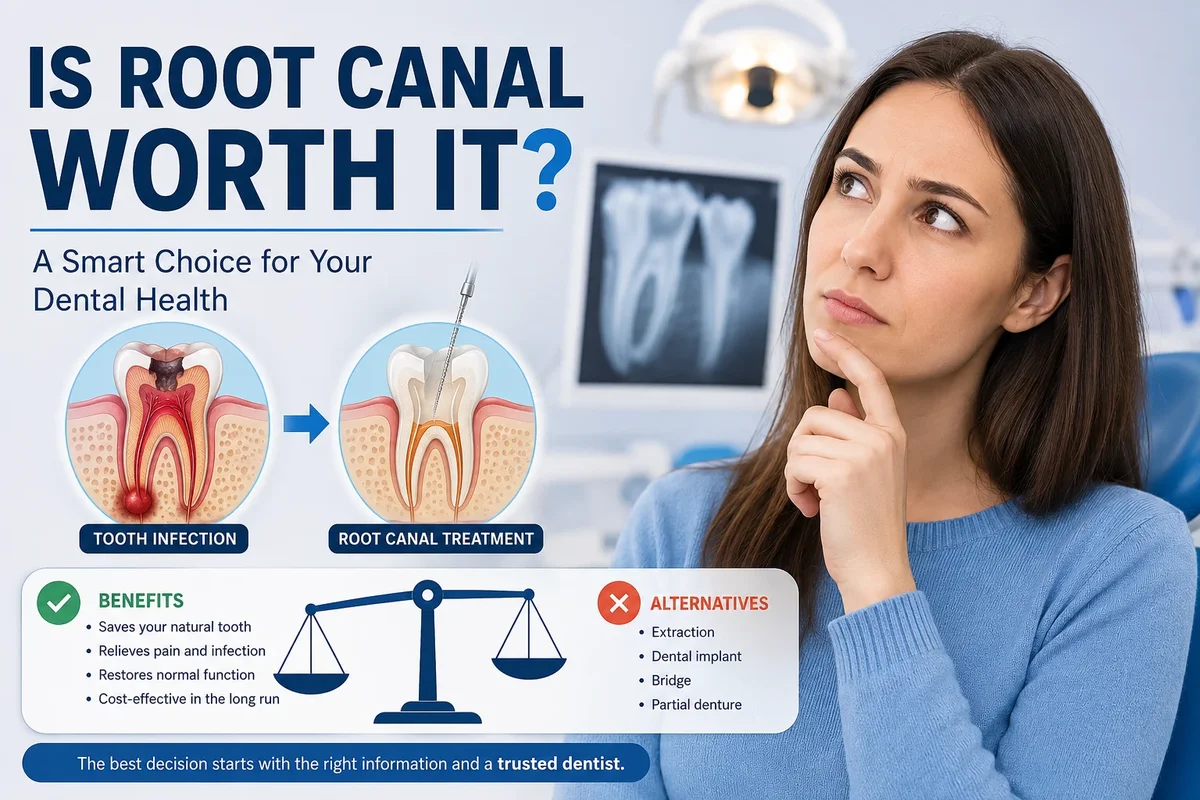
Your Next Step: How to Decide if a Root Canal Is Worth It for Your Situation
After exploring the causes of tooth infection, treatment options, costs, benefits, risks, and recovery, many patients return to the same essential question: is root canal worth it? The answer is rarely a simple yes or no because every clinical situation is different. The most appropriate decision depends on the condition of your tooth, the amount of healthy structure that remains, your overall oral health, your personal priorities, and the long-term prognosis determined during a professional examination. Rather than searching for a universal answer, focus on identifying the treatment that provides the best balance between preserving oral health and meeting your individual needs.
If you have been advised to undergo root canal therapy, asking is root canal worth it is completely reasonable. A well-informed patient should understand why treatment has been recommended, what alternatives exist, what the expected recovery involves, and how today’s decision may influence future dental health. Taking time to ask these questions helps you participate actively in your treatment planning instead of feeling pressured into making a decision.
Step 1: Understand the Condition of Your Tooth
The first step is understanding exactly what has happened to the affected tooth. Symptoms such as pain, swelling, prolonged sensitivity, or discomfort while chewing may indicate inflammation or infection, but symptoms alone cannot determine the most suitable treatment. Diagnostic imaging and a clinical examination provide much more reliable information.
If you are asking is root canal worth it, request a clear explanation of:
- The cause of the problem.
- Whether the pulp is infected or irreversibly damaged.
- How much healthy tooth structure remains.
- Whether the surrounding bone and gums are healthy.
- The expected prognosis if the tooth is preserved.
These details create the foundation for informed decision-making.
Step 2: Compare All Available Treatment Options
Root canal therapy is only one possible treatment. Depending on the condition of the tooth, your dentist may also discuss monitoring, restorative procedures, extraction, implants, bridges, or removable prosthetic options. Comparing every reasonable alternative allows you to answer is root canal worth it within the context of your own oral health rather than focusing on one procedure in isolation.
Questions to Compare Each Option
- Can the tooth realistically be saved?
- What is the expected long-term outlook?
- What future treatment may be required?
- How will each option affect chewing function?
- What maintenance will be necessary?
- How might delaying treatment influence the outcome?
These questions encourage balanced discussions and help you understand the advantages and limitations of each treatment pathway.
Step 3: Consider Long-Term Value Instead of Immediate Cost
Many patients initially focus on treatment fees when deciding is root canal worth it. While financial planning is important, comparing only the first procedure may not provide the complete picture. Preserving a natural tooth can sometimes reduce future restorative needs, while extraction may involve replacement planning depending on your oral health goals.
Likewise, root canal treatment may require a permanent crown or additional restoration after the procedure. The most useful financial comparison considers the complete treatment journey rather than only today’s appointment.
Because treatment complexity differs significantly between patients, no responsible clinic can promise guaranteed pricing before examining your tooth and developing an individualized treatment plan.
Step 4: Think About Your Personal Priorities
Every patient values different outcomes. Some prioritize preserving their natural teeth whenever possible, while others focus on shorter treatment times, long-term maintenance, or financial considerations. Asking is root canal worth it should include an honest evaluation of what matters most to you.
Personal Factors Worth Considering
- Your long-term oral health goals.
- Your expectations for function and comfort.
- Your willingness to attend follow-up appointments.
- Your oral hygiene routine.
- Your overall medical and dental history.
- Your financial planning.
Discussing these priorities openly with your dentist helps ensure that the recommended treatment aligns with your expectations as well as your clinical needs.
Step 5: Do Not Ignore Persistent Symptoms
One of the most common mistakes is postponing evaluation because discomfort temporarily improves. Tooth pain may become less noticeable even while infection continues to progress. If you repeatedly find yourself asking is root canal worth it, arranging an examination sooner rather than later may preserve more treatment options.
Delaying care can sometimes allow infection or structural damage to worsen, potentially reducing the likelihood that the tooth can be predictably restored. Early diagnosis generally provides more opportunities for conservative treatment planning.
Building Confidence Through Professional Guidance
Making an informed decision does not require guessing or relying on conflicting online opinions. A comprehensive consultation allows your dentist to explain the diagnosis, review diagnostic images with you, discuss realistic expectations, and answer questions specific to your oral health.
If you would like a personalized evaluation, you can arrange an appointment through the Redent Klinik Contact Page. During the consultation, your dentist can assess whether preserving the tooth is clinically appropriate, explain available treatment options, and develop an individualized plan based on your examination findings. For additional evidence-based educational information, you can also visit the American Dental Association, which provides resources about oral health and common dental procedures.
Final Checklist Before You Decide
Before making your final decision about is root canal worth it, review the following points with your dentist:
- Confirm the exact diagnosis.
- Understand whether the tooth can realistically be restored.
- Review the expected long-term prognosis.
- Ask whether a crown or additional restoration is likely to be recommended.
- Discuss the advantages and limitations of every treatment option.
- Understand expected recovery and follow-up care.
- Review estimated treatment planning based on your individual examination.
- Clarify how delaying treatment could influence the prognosis.
Answering these questions will help you move beyond simply asking is root canal worth it and instead make a confident, evidence-based decision that supports your long-term oral health.
When to request professional advice: Schedule a dental consultation promptly if you experience ongoing tooth pain, swelling, prolonged sensitivity, pain while chewing, visible tooth damage, or if you have already been advised to undergo root canal therapy but remain uncertain about your options. A personalized examination is the most reliable way to determine whether is root canal worth it for your specific clinical situation, explain realistic treatment alternatives, and guide you toward the most appropriate next step for your oral health.
Disclosure: this page may contain affiliate links. We may earn a commission if you use them, at no extra cost to you.