
If you are asking is wisdom tooth removal worth it, the short answer is that it depends on how your wisdom teeth are affecting your oral health today and how likely they are to cause problems in the future. For many people, removing problematic wisdom teeth can reduce the risk of pain, infection, damage to neighboring teeth, gum disease, and repeated dental emergencies. However, not everyone needs their wisdom teeth removed immediately. Some wisdom teeth remain healthy, fully erupted, easy to clean, and symptom-free for many years. That is why the best decision comes from combining your symptoms, dental examination, and X-ray findings rather than relying on age alone.
When people search is wisdom tooth removal worth it, they are often trying to decide whether surgery is necessary or whether they can safely wait. This is an understandable concern because wisdom tooth removal involves time, recovery, and financial considerations. In many situations, the procedure is recommended because the long-term benefits outweigh the temporary inconvenience. In other cases, careful monitoring with regular dental check-ups may be a reasonable option if the wisdom teeth remain healthy and are not creating risks.
The value of wisdom tooth removal depends on several practical questions. Are you experiencing repeated pain? Has food become trapped around the tooth? Are your gums swollen or bleeding? Has your dentist identified decay, infection, cyst formation, or pressure against neighboring teeth? If the answer to one or more of these questions is yes, then is wisdom tooth removal worth it often becomes easier to answer because treatment may help prevent more complicated dental problems later.
Another important consideration is whether the wisdom teeth can be cleaned properly. Even if they are not painful today, partially erupted wisdom teeth often create spaces where bacteria and food debris collect. This can increase the likelihood of gum inflammation, unpleasant breath, cavities, and infections known as pericoronitis. If these issues continue to return despite good oral hygiene, removing the affected tooth may provide a more predictable long-term solution than repeatedly treating the symptoms.
Age can also influence treatment planning, although it should never be the only deciding factor. Younger adults often recover more quickly after wisdom tooth surgery because the roots may not be fully developed and the surrounding bone is generally less dense. That does not automatically mean everyone should remove their wisdom teeth early. Instead, dentists evaluate whether the current condition and future risk justify treatment. For someone with healthy, fully functional wisdom teeth that are easy to maintain, regular observation may be appropriate. For another person with impacted teeth or repeated infections, delaying treatment could increase future complexity.
Many patients also wonder whether they should wait until pain develops. Pain is an important symptom, but it is not the only indicator that treatment may be beneficial. Some wisdom teeth quietly damage neighboring teeth or develop hidden decay without causing noticeable discomfort. Dental X-rays often reveal these concerns before they become obvious. This is one reason why regular examinations are valuable, even if your wisdom teeth feel normal.
If cost is one of your biggest concerns, remember that the total expense varies depending on factors such as the number of teeth involved, the complexity of the extraction, whether surgical removal is required, the type of anesthesia used, and your individual treatment plan. No responsible dental clinic can promise an exact price without an examination. Looking only at the immediate treatment cost may overlook the potential expense of untreated infections, emergency care, or restorative procedures if complications develop later.
It is also worth considering how wisdom tooth removal fits into your overall oral health goals. If you are preparing for orthodontic treatment, planning restorative dental work, or already managing gum disease, your dentist may evaluate whether the wisdom teeth could interfere with long-term treatment success. Every situation is unique, which is why personalized recommendations are more reliable than general advice found online.
For people who feel anxious about dental procedures, discussing sedation options and recovery expectations with a qualified dentist can make the decision less stressful. Understanding each step of the procedure, expected healing time, and ways to manage discomfort often helps patients feel more confident. Modern techniques focus on minimizing discomfort while supporting safe healing, although every surgical procedure carries some degree of risk that should be discussed before treatment.
If you are still asking is wisdom tooth removal worth it, the most useful next step is not to assume that surgery is either always necessary or never necessary. Instead, seek an individualized assessment that includes a clinical examination and appropriate imaging. Professional evaluation can determine whether your wisdom teeth are healthy enough for monitoring or whether early removal may help reduce future complications.
For readers who would like personalized guidance, scheduling a consultation allows your dentist to explain the condition of each wisdom tooth, review available treatment options, discuss possible benefits and risks, and answer questions about recovery and expected outcomes. If you are considering treatment abroad or would like an individualized assessment, you can also contact the team through the Redent Klinik Contact Page. General oral health recommendations and patient education resources are also available from the American Dental Association.
Practical next step: If your wisdom teeth have caused pain, swelling, repeated infections, difficulty cleaning, or your dentist has identified concerns on an X-ray, arrange a professional dental consultation rather than waiting for symptoms to become more severe. If your wisdom teeth are healthy and symptom-free, ask your dentist whether regular monitoring is appropriate and how often they should be evaluated during routine dental visits.
Is Wisdom Tooth Removal Worth It? A Quick Answer
The question is wisdom tooth removal worth it does not have the same answer for everyone. The decision depends on your current oral health, the position of your wisdom teeth, your symptoms, and the likelihood of future complications. For many patients, removing problematic wisdom teeth provides long-term benefits by reducing the risk of infection, pain, damage to nearby teeth, and repeated emergency dental visits. For others whose wisdom teeth are healthy, fully erupted, and easy to clean, regular monitoring may be a reasonable approach. The goal is not to remove wisdom teeth simply because they exist, but to determine whether keeping them is likely to benefit or harm your oral health over time.
When Is Wisdom Tooth Removal Worth It?
If you are wondering is wisdom tooth removal worth it, begin by looking at the condition of the teeth rather than focusing only on your age. Wisdom teeth that repeatedly become infected, remain trapped beneath the gums, or push against neighboring teeth often create ongoing problems that may worsen without treatment. In these situations, extraction is frequently recommended because it can prevent more extensive dental treatment in the future.
Common situations where removal may be beneficial include:
- Repeated pain or swelling around the wisdom tooth.
- Frequent gum infections or pericoronitis.
- Difficulty cleaning the area because of tooth position.
- Decay affecting the wisdom tooth or the adjacent molar.
- Evidence of damage seen on dental X-rays.
- Preparation for orthodontic or restorative dental treatment when the wisdom tooth may interfere.
Although these situations often support treatment, they do not automatically mean surgery is necessary. A complete clinical examination and imaging provide a much clearer picture than symptoms alone.
When Monitoring May Be Appropriate
Many people assume that every wisdom tooth eventually needs to be removed. In reality, some wisdom teeth remain healthy throughout adulthood. If the teeth have fully erupted, function normally, can be cleaned effectively, and show no signs of disease, your dentist may recommend observation instead of immediate surgery.
In these cases, is wisdom tooth removal worth it becomes a question of future risk rather than current symptoms. Your dentist may suggest periodic examinations and X-rays to ensure that hidden problems are not developing beneath the gums or around neighboring teeth.
Symptoms Should Never Be the Only Decision Factor
One common misconception is that pain is the only reason to remove wisdom teeth. However, some impacted wisdom teeth remain painless while gradually damaging surrounding structures. Hidden cavities, bone loss, gum disease, or pressure against adjacent molars may develop slowly without noticeable discomfort.
This is why dentists often rely on clinical findings together with panoramic X-rays or three-dimensional imaging. If imaging reveals that a wisdom tooth is likely to create future complications, discussing early treatment may help reduce the chance of more complex surgery later.
Balancing Benefits and Risks
Anyone asking is wisdom tooth removal worth it should consider both the potential benefits and the temporary disadvantages of treatment.
Possible benefits include:
- Lower risk of repeated infections.
- Reduced chance of damage to neighboring teeth.
- Improved ability to clean the back of the mouth.
- Less likelihood of emergency dental treatment caused by wisdom tooth problems.
- Better long-term management of oral health in selected patients.
Temporary disadvantages may include:
- Several days of swelling or discomfort.
- A recovery period that varies between individuals.
- Temporary dietary restrictions.
- The need to follow detailed post-operative care instructions.
- Potential surgical risks that should be discussed before treatment.
Every surgical procedure carries some level of risk. A qualified dental professional explains these risks, evaluates your individual situation, and recommends treatment only when the expected benefits appear to outweigh the potential disadvantages.
Financial Considerations
Cost is another reason people search is wisdom tooth removal worth it. The overall expense depends on many factors, including whether one or multiple teeth require removal, whether the teeth are impacted, the complexity of the surgery, anesthesia options, geographic location, and the treating clinic.
Rather than comparing treatment costs alone, consider the broader picture. Repeated infections, emergency appointments, restorative treatment for damaged neighboring teeth, and ongoing medication may also create financial costs over time. A comprehensive examination allows your dentist to explain the expected treatment plan and discuss available payment options where applicable.
Making the Right Decision for Your Situation
No online article can determine whether extraction is the correct choice for your specific case. Instead, use reliable information to prepare for a discussion with your dentist. Ask questions about the condition of each wisdom tooth, whether there is evidence of disease, the expected recovery process, possible alternatives, and what may happen if treatment is postponed.
If you are considering treatment at an experienced dental clinic, you may also arrange a personalized consultation through the Redent Klinik Contact Page. Educational resources regarding oral health and patient care are also available from the American Dental Association.
What Should You Check Next?
If you are still asking is wisdom tooth removal worth it, check whether you currently have pain, swelling, repeated infections, difficulty cleaning around the wisdom tooth, food trapping, or previous X-rays showing impacted teeth. Even if you have no symptoms, routine dental examinations remain valuable because some problems develop without causing immediate discomfort.
When to request professional advice: Schedule a dental consultation if you notice persistent pain, swelling, gum infections, unpleasant taste, difficulty opening your mouth, or if your dentist has previously recommended monitoring impacted wisdom teeth. A personalized examination and appropriate imaging provide the most reliable basis for deciding whether wisdom tooth removal is appropriate for your individual circumstances.
When Is Wisdom Tooth Removal Worth It for Your Oral Health?
One of the most common questions patients ask is is wisdom tooth removal worth it when their wisdom teeth are not causing constant pain. The answer depends on whether the teeth are healthy today and how likely they are to create problems in the future. Wisdom teeth vary greatly from one person to another. Some erupt normally and remain functional throughout life, while others become impacted, partially erupted, or difficult to clean. Understanding these differences helps you make a decision based on your own oral health rather than assumptions or general advice.
Instead of asking whether every wisdom tooth should be removed, a better question is whether keeping your specific wisdom tooth provides more benefits than risks. A professional dental examination, supported by X-rays, is the most reliable way to answer that question.
Signs That Wisdom Tooth Removal May Be Worth Considering
If you are wondering is wisdom tooth removal worth it, begin by evaluating whether your wisdom teeth are creating ongoing problems. Dentists generally recommend treatment when there is evidence that the tooth is affecting your oral health or has a high probability of doing so in the future.
Common reasons why removal may be considered include:
- Recurring pain in the back of the jaw.
- Swollen, inflamed, or bleeding gums around the wisdom tooth.
- Repeated infections such as pericoronitis.
- Food frequently becoming trapped around partially erupted teeth.
- Difficulty cleaning the area despite good oral hygiene.
- Tooth decay affecting either the wisdom tooth or the neighboring molar.
- Pressure against adjacent teeth visible on dental imaging.
- Development of cysts or other abnormalities associated with impacted teeth.
When one or more of these conditions are present, the discussion about is wisdom tooth removal worth it often shifts toward preventing larger dental problems rather than simply treating current symptoms.
When Keeping Wisdom Teeth May Be Reasonable
Not every wisdom tooth requires extraction. Some individuals have wisdom teeth that erupt completely, fit naturally into the dental arch, function during chewing, and can be cleaned as effectively as any other tooth.
In these situations, your dentist may recommend continued observation rather than immediate surgery. Monitoring usually involves routine dental examinations and periodic X-rays to ensure that hidden problems are not developing.
You may be a candidate for monitoring if your wisdom teeth:
- Are fully erupted.
- Do not cause pain or swelling.
- Show no evidence of decay.
- Can be cleaned properly with daily brushing and flossing.
- Do not damage neighboring teeth.
- Have healthy surrounding gums.
Even in these cases, asking is wisdom tooth removal worth it remains appropriate because oral conditions can change over time. Regular professional evaluations help identify new concerns before they become more serious.
How X-Rays Influence the Decision
Many wisdom tooth problems cannot be seen by simply looking in the mouth. Panoramic X-rays and, when necessary, three-dimensional imaging allow dentists to evaluate tooth position, root development, surrounding bone, nearby nerves, and the relationship between wisdom teeth and adjacent molars.
These images may reveal:
- Impacted wisdom teeth beneath the gums.
- Pressure against neighboring teeth.
- Hidden cavities.
- Bone loss.
- Cysts or other uncommon findings.
- Root anatomy that may influence treatment planning.
This information helps answer is wisdom tooth removal worth it based on objective clinical findings rather than guesswork. Imaging also allows your dentist to explain both the expected benefits and the complexity of treatment.
Age and Recovery Considerations
Although wisdom tooth removal can be performed successfully in adults of different ages, healing patterns often differ between younger and older patients. Younger individuals may experience somewhat easier recovery because bone is generally less dense and root development may still be incomplete. However, age alone should never determine whether extraction is recommended.
Older adults may also benefit from wisdom tooth removal when clear clinical reasons exist. The decision should always balance expected benefits, overall health, medical history, and individual treatment goals rather than relying on age as the primary factor.
How Your Lifestyle Can Affect the Decision
Your daily routine can also influence whether is wisdom tooth removal worth it. For example, individuals who frequently experience infections that interfere with work, education, or travel may choose treatment to reduce repeated interruptions. Others preparing for orthodontic treatment or complex restorative dentistry may discuss whether wisdom teeth could complicate future treatment planning.
Smoking, certain medical conditions, medications, and oral hygiene habits may also affect healing and long-term oral health. Your dentist will review these factors during your consultation to recommend the most appropriate approach.
Making a Personalized Decision
The most informed decision comes from considering multiple factors together rather than focusing on a single symptom. Ask your dentist questions such as:
- Is my wisdom tooth healthy today?
- What problems could develop if it remains in place?
- What are the benefits and possible risks of removal?
- How difficult is the expected procedure?
- What recovery should I realistically expect?
- Are there reasonable alternatives to surgery at this stage?
If you would like an individualized assessment, you can arrange a consultation through the Redent Klinik Contact Page. Reviewing educational information from the American Dental Association can also help you better understand wisdom tooth care and oral health recommendations before your appointment.
What Should You Check Next?
If you are still asking is wisdom tooth removal worth it, review whether your wisdom teeth have caused repeated pain, swelling, infections, difficulty cleaning, bad breath, food trapping, or whether previous dental X-rays have identified impacted teeth or damage to neighboring molars. These findings often provide valuable clues about whether monitoring or treatment may be the more appropriate option.
When to request professional advice: Schedule a dental consultation if your wisdom teeth are painful, partially erupted, difficult to clean, associated with repeated infections, or if imaging has shown potential complications. Even if you have no symptoms, routine dental examinations remain important because some wisdom tooth problems develop gradually without causing noticeable discomfort in the early stages.
Cost Factors: Is Wisdom Tooth Removal Worth It Financially?
For many patients, the question is wisdom tooth removal worth it is closely connected to cost. Even if a dentist recommends treatment, it is natural to wonder whether the financial investment makes sense compared with monitoring the tooth or delaying surgery. The answer depends on much more than the initial treatment fee. A well-informed decision considers the current condition of the wisdom tooth, the likelihood of future complications, recovery time, insurance coverage, and the possible costs of leaving an unhealthy tooth untreated.
It is important to remember that no dental clinic can responsibly provide an exact treatment price without first examining your mouth and reviewing appropriate dental imaging. Every patient has different clinical findings, and those findings directly influence treatment complexity and overall cost.
What Influences the Cost of Wisdom Tooth Removal?
If you are asking is wisdom tooth removal worth it, understanding what determines the cost can help you make a more realistic comparison between treatment options. Wisdom tooth removal is not a single standardized procedure. Some extractions are relatively straightforward, while others require a more advanced surgical approach.
Several factors may influence the overall treatment plan and its cost, including:
- The number of wisdom teeth requiring treatment.
- Whether the tooth is fully erupted or impacted.
- The position and angle of the wisdom tooth.
- The relationship between the tooth roots and nearby nerves.
- The complexity of the surgical procedure.
- The type of anesthesia or sedation selected.
- Your general oral health and any additional dental treatment needed.
- The location of the dental clinic and regional pricing differences.
Because these factors vary significantly from one patient to another, personalized treatment planning is essential before discussing expected costs.
Looking Beyond the Initial Treatment Fee
When deciding is wisdom tooth removal worth it, many people naturally compare today’s treatment cost with doing nothing. However, postponing treatment may also carry financial consequences if an unhealthy wisdom tooth creates repeated problems.
Possible future expenses may include:
- Emergency dental visits for severe pain or infection.
- Prescription medications for recurring infections.
- Treatment for cavities affecting neighboring teeth.
- Management of gum disease around partially erupted wisdom teeth.
- More complex surgical treatment if the condition worsens over time.
- Lost work or study time because of unexpected dental emergencies.
This does not mean that everyone should immediately choose surgery. Instead, it highlights why the financial discussion should include both immediate and long-term considerations rather than focusing only on the initial extraction fee.
Does Earlier Treatment Always Save Money?
Some patients believe that removing wisdom teeth as early as possible always reduces costs. While earlier treatment may be appropriate for certain clinical situations, this is not a universal rule. If healthy wisdom teeth are functioning normally and your dentist determines that regular monitoring is appropriate, immediate surgery may not provide additional value.
On the other hand, if dental examinations and imaging show that future complications are likely, addressing the issue before repeated infections or damage develop may help avoid more complicated treatment later. The decision should always be based on individual clinical findings rather than age alone.
Insurance and Financial Planning
Another important part of answering is wisdom tooth removal worth it involves understanding your insurance or payment options. Coverage varies widely depending on your country, insurance provider, and policy details. Some plans may contribute toward medically necessary extractions, while others may provide only partial reimbursement or none at all.
Before making a decision, consider asking your dental clinic:
- What parts of the procedure are included in the treatment estimate?
- Will additional imaging or sedation affect the overall cost?
- Does my insurance contribute toward this treatment?
- Are payment plans or financing options available?
- Will I receive a written treatment plan before proceeding?
Clear communication about financial expectations helps prevent misunderstandings and allows you to compare treatment options more confidently.
Balancing Cost with Long-Term Oral Health
Although finances are important, they should not be the only factor when deciding is wisdom tooth removal worth it. A lower immediate cost does not necessarily represent the best long-term value if the wisdom tooth is already damaging neighboring teeth or causing repeated infections.
Similarly, choosing surgery simply because it appears affordable may not be appropriate if your wisdom teeth are healthy and your dentist recommends continued observation instead. The best financial decision often aligns with the treatment plan that supports long-term oral health while avoiding unnecessary procedures.
During your consultation, your dentist should explain not only the expected costs but also the reasons behind the recommendation. Understanding the clinical benefits alongside the financial aspects allows you to make a balanced and informed choice.
How a Personalized Assessment Helps
No online guide can accurately predict whether treatment represents good value for your specific situation. Individual differences in anatomy, symptoms, oral health, and treatment complexity make personalized evaluation essential.
If you are considering wisdom tooth removal, discussing your options with an experienced dental team can provide greater clarity about expected treatment, recovery, and financial planning. If you would like a personalized assessment, you can arrange a consultation through the Redent Klinik Contact Page. You may also review educational resources from the American Dental Association to better understand wisdom tooth care and preventive oral health.
What Should You Check Before Deciding?
If you are still asking is wisdom tooth removal worth it, compare more than just the treatment fee. Consider whether your wisdom tooth is healthy today, whether repeated infections or decay are likely, how the tooth affects neighboring teeth, and whether delaying treatment could increase future complexity. Also review your insurance benefits, available payment options, and the details included in your treatment plan.
When to request professional advice: Seek a dental consultation if your wisdom teeth are associated with recurring discomfort, infections, cavities, or difficult cleaning, or if your previous X-rays have shown impacted teeth. A personalized examination allows your dentist to explain both the clinical reasons for treatment and the financial considerations, helping you decide whether wisdom tooth removal is appropriate for your individual circumstances.
What Happens During Wisdom Tooth Removal and Recovery?
Many people asking is wisdom tooth removal worth it are not only concerned about whether the procedure is necessary but also about what actually happens before, during, and after treatment. Understanding the process can reduce anxiety and help you decide whether the potential long-term benefits outweigh the temporary recovery period. While every patient’s experience is different, wisdom tooth removal generally follows a structured treatment plan that begins with careful assessment and continues through post-operative healing.
Knowing what to expect allows you to prepare both physically and mentally. It also helps you ask informed questions during your consultation so you can make a decision based on facts rather than uncertainty.
Before the Procedure
If you are wondering is wisdom tooth removal worth it, the first step is a comprehensive dental examination. Your dentist or oral surgeon evaluates your symptoms, reviews your medical history, examines your mouth, and studies dental imaging such as panoramic X-rays or, when appropriate, three-dimensional scans.
During this appointment, your dental team may evaluate:
- The position of each wisdom tooth.
- Whether the tooth is fully erupted or impacted.
- The relationship between the roots and nearby nerves.
- The condition of neighboring teeth.
- Signs of infection, decay, or gum disease.
- Your overall oral health and medical history.
This information helps determine whether removal is appropriate, whether a simple extraction or surgical procedure is expected, and how treatment should be planned for your individual situation.
What Happens During Wisdom Tooth Removal?
The exact procedure depends on the location and condition of the wisdom tooth. Some wisdom teeth have fully erupted and can be removed similarly to other teeth, while impacted teeth may require a more advanced surgical approach.
Although techniques differ, treatment generally follows several basic stages:
- Administration of local anesthesia and, when appropriate, discussion of sedation options.
- Careful access to the wisdom tooth if it is beneath the gum or bone.
- Removal of the tooth using techniques appropriate for its position.
- Cleaning of the treatment area.
- Placement of stitches if necessary.
- Review of post-operative instructions before returning home.
The procedure is planned to minimize unnecessary trauma while protecting surrounding tissues. Your dentist will explain which approach is appropriate after reviewing your clinical findings.
Will the Procedure Be Painful?
Fear of pain is one of the main reasons patients hesitate when asking is wisdom tooth removal worth it. During the procedure itself, local anesthesia is used to numb the treatment area. Depending on the complexity of the extraction and your individual needs, sedation options may also be discussed.
After treatment, it is normal to experience temporary discomfort, swelling, and mild jaw stiffness while healing progresses. These symptoms vary from person to person and usually improve gradually as the tissues recover. Your dental team will provide individualized instructions regarding pain management, oral hygiene, diet, and activity during recovery.
Recovery Timeline
Healing occurs in stages, and each patient recovers at a different pace. Factors such as age, general health, smoking habits, oral hygiene, and the complexity of the extraction can all influence recovery.
Many patients experience:
- Swelling during the first few days.
- Temporary difficulty opening the mouth fully.
- Mild bruising in some cases.
- Gradual improvement in comfort over the following days.
- Progressive healing of the gums over several weeks.
Your dentist will advise you about eating softer foods initially, maintaining gentle oral hygiene, avoiding activities that may interfere with healing, and attending follow-up appointments if necessary.
Tips That May Support Recovery
If you decide that is wisdom tooth removal worth it for your situation, preparing for recovery is just as important as preparing for the procedure itself. Following your dentist’s instructions carefully may help support comfortable healing and reduce the likelihood of avoidable complications.
General recommendations often include:
- Follow all post-operative instructions provided by your dental team.
- Take prescribed or recommended medications exactly as directed.
- Choose soft foods during the early recovery period.
- Stay well hydrated unless instructed otherwise.
- Avoid smoking or tobacco use during healing.
- Keep the treatment area clean according to professional instructions.
- Attend scheduled follow-up appointments if advised.
These recommendations may differ depending on your individual treatment plan, so personalized guidance always takes priority over general advice.
When Recovery May Require Additional Attention
Although most patients recover without significant problems, every surgical procedure carries potential risks. Contact your dental provider promptly if you experience symptoms that concern you or appear different from the recovery guidance you received.
Examples of situations that may require professional review include:
- Persistent or increasing swelling beyond expected recovery.
- Severe or worsening pain.
- Excessive bleeding that does not improve.
- Signs of infection such as fever or unusual discharge.
- Difficulty swallowing or breathing, which requires immediate medical attention.
Your dental team can determine whether these symptoms represent normal healing or whether additional evaluation is necessary.
Preparing for a Personalized Treatment Plan
No two wisdom tooth procedures are identical. Some patients require removal of one tooth, while others need several extracted during the same appointment. Recovery also differs depending on the position of the teeth and the complexity of treatment.
If you are still considering is wisdom tooth removal worth it, ask your dentist to explain your specific procedure, expected recovery, possible risks, and realistic healing expectations. Personalized information is always more valuable than relying solely on general online advice.
If you would like an individualized evaluation, you can arrange a consultation through the Redent Klinik Contact Page. Additional educational resources regarding oral surgery and preventive dental care are also available from the American Dental Association.
What Should You Check Before Scheduling Treatment?
If you are asking is wisdom tooth removal worth it, make sure you understand the expected procedure, the anticipated recovery period, available anesthesia options, your personal medical considerations, and the instructions you will need to follow after surgery. Having realistic expectations often makes the treatment experience less stressful and supports informed decision-making.
When to request professional advice: Arrange a dental consultation if your wisdom teeth are painful, impacted, repeatedly infected, difficult to clean, or if dental imaging has shown concerns that require further evaluation. Your dentist can explain exactly how the procedure would apply to your individual case and help you decide whether wisdom tooth removal is the most appropriate next step.
Risks, Benefits, and Possible Complications to Consider
One of the most important parts of deciding is wisdom tooth removal worth it is understanding both the potential advantages and the possible risks of treatment. Every dental procedure involves weighing expected benefits against potential complications, and wisdom tooth removal is no exception. Although many patients undergo the procedure successfully and recover without significant problems, treatment should always be based on an individual clinical evaluation rather than assumptions or fear.
A balanced understanding helps you make an informed decision with your dentist. Instead of asking whether wisdom tooth removal is completely risk-free, it is more helpful to ask whether the expected benefits outweigh the risks in your particular situation.
Potential Benefits of Wisdom Tooth Removal
If you are wondering is wisdom tooth removal worth it, the potential long-term benefits often relate to preventing future dental problems rather than simply relieving current discomfort. Wisdom teeth that are impacted, partially erupted, or difficult to clean can create conditions that increase the likelihood of infection, decay, and gum disease.
Possible benefits may include:
- Reduced risk of repeated gum infections.
- Lower chance of food trapping around partially erupted wisdom teeth.
- Improved access for daily brushing and flossing.
- Reduced likelihood of decay affecting neighboring molars.
- Better long-term management of oral hygiene.
- Prevention of certain complications associated with impacted wisdom teeth.
- Less chance of recurring pain related to problematic wisdom teeth.
These benefits vary depending on the condition of each wisdom tooth. A healthy wisdom tooth that functions normally may not provide the same reasons for removal as an impacted tooth causing repeated infections.
Possible Risks of Wisdom Tooth Removal
Just as there are benefits, anyone considering is wisdom tooth removal worth it should understand that wisdom tooth surgery also carries potential risks. Most complications are uncommon, and your dentist or oral surgeon will explain those that are relevant to your individual treatment plan before the procedure.
Possible risks may include:
- Temporary swelling and bruising.
- Post-operative discomfort.
- Bleeding during the early healing period.
- Infection at the extraction site.
- Delayed healing.
- Temporary jaw stiffness.
- Dry socket in certain cases.
- Rare nerve-related symptoms depending on tooth position.
The likelihood of these complications varies according to the position of the tooth, surgical complexity, medical history, smoking habits, oral hygiene, and adherence to post-operative instructions.
Understanding Dry Socket
Dry socket is one of the complications that patients often hear about when researching is wisdom tooth removal worth it. This condition occurs when the blood clot that normally protects the extraction site is lost too early or fails to develop properly.
Although dry socket does not occur after every extraction, following your dentist’s instructions regarding oral hygiene, smoking avoidance, and post-operative care may help reduce the risk. If severe pain develops several days after the procedure, contacting your dental provider promptly allows appropriate evaluation and management.
How Dentists Reduce Surgical Risks
Modern treatment planning focuses on minimizing unnecessary risk while preserving surrounding tissues. Before recommending extraction, your dentist carefully evaluates clinical findings, reviews medical history, and studies dental imaging to understand the anatomy of the wisdom teeth.
Planning may include assessment of:
- The position and angle of the wisdom tooth.
- The relationship between roots and nearby nerves.
- Bone surrounding the tooth.
- Signs of infection or decay.
- Your overall oral and general health.
This preparation helps determine the safest treatment approach for your individual circumstances and supports realistic expectations about recovery.
When Leaving Wisdom Teeth May Also Carry Risks
Answering is wisdom tooth removal worth it also requires considering the possible risks of delaying or avoiding treatment. While healthy wisdom teeth may simply require observation, problematic wisdom teeth can continue causing damage if left untreated.
Potential concerns associated with untreated wisdom teeth may include:
- Recurring infections.
- Progressive tooth decay.
- Damage to adjacent teeth.
- Persistent gum inflammation.
- Difficulty maintaining oral hygiene.
- Development of certain cysts or other abnormalities in selected cases.
This does not mean every wisdom tooth should be removed proactively. Instead, it highlights why the decision should compare the risks of treatment with the risks of continued observation.
Factors That Influence Your Individual Risk
Not every patient faces the same level of risk. Several personal factors can influence both the procedure itself and the healing process.
Your dentist may consider:
- Your age.
- General medical conditions.
- Current medications.
- Smoking or tobacco use.
- Previous dental history.
- Position of the wisdom teeth.
- Complexity of the planned extraction.
These factors help create an individualized treatment plan instead of relying on general recommendations that may not apply to your situation.
Making a Balanced Decision
If you continue asking is wisdom tooth removal worth it, remember that the decision should never be based solely on fear of surgery or concern about possible complications. Instead, compare the expected benefits of treatment with the risks of leaving the wisdom tooth untreated.
During your consultation, ask your dentist to explain:
- Why removal is or is not recommended.
- What benefits are expected in your specific case.
- What possible complications apply to your situation.
- How likely observation is to remain a safe option.
- What recovery you should realistically expect.
If you would like an individualized evaluation, you can schedule a consultation through the Redent Klinik Contact Page. Additional patient education regarding oral health and dental procedures is also available from the American Dental Association.
What Should You Check Before Making Your Decision?
If you are still considering is wisdom tooth removal worth it, review whether your wisdom teeth are causing repeated infections, pain, swelling, difficulty cleaning, food trapping, or damage visible on dental imaging. Also ask your dentist to explain your individual surgical risks, expected recovery, and the possible consequences of postponing treatment.
When to request professional advice: Seek a dental consultation if your wisdom teeth are symptomatic, impacted, associated with recurrent infections, or if previous examinations have identified concerns requiring monitoring or treatment. A personalized examination provides the most reliable basis for comparing the benefits and risks before making your final decision.
Are There Alternatives to Wisdom Tooth Removal?
When patients ask is wisdom tooth removal worth it, they are often also asking another important question: “Can I avoid surgery?” The answer depends entirely on the condition of the wisdom tooth and whether it is likely to remain healthy over time. In some situations, alternatives to extraction are reasonable and supported by regular professional monitoring. In others, delaying treatment may simply postpone a problem that continues to progress. Understanding the available alternatives helps you make a decision that balances your current comfort, future oral health, and personal preferences.
It is important to remember that an alternative does not necessarily mean avoiding treatment forever. Sometimes the alternative is careful observation until there is clear evidence that intervention is needed. In other cases, surgery remains the option most likely to reduce future complications.
When Monitoring Is a Suitable Alternative
If you are wondering is wisdom tooth removal worth it, one of the most common alternatives is regular monitoring. This approach may be appropriate when wisdom teeth are healthy, fully erupted, free of decay, and easy to clean.
Your dentist may recommend observation if:
- The wisdom tooth has fully erupted into a functional position.
- There is no pain or swelling.
- The surrounding gums are healthy.
- There is no evidence of infection.
- X-rays show no damage to neighboring teeth.
- You can maintain good oral hygiene around the wisdom tooth.
Monitoring does not mean ignoring the tooth. Instead, it involves regular dental examinations and periodic imaging to detect changes before they become serious.
Improving Oral Hygiene Around Wisdom Teeth
For some patients, improving oral hygiene may delay or reduce certain problems associated with wisdom teeth. If the tooth is accessible, careful brushing, flossing, and professional cleanings may help lower the risk of plaque accumulation and gum inflammation.
Good oral hygiene practices may include:
- Brushing carefully behind the last molar.
- Using floss or interdental cleaning devices where appropriate.
- Following professional recommendations for mouth rinses if advised.
- Attending routine dental examinations.
- Receiving professional cleanings when recommended.
However, improved oral hygiene cannot correct structural problems such as impacted wisdom teeth, unfavorable tooth positioning, or pressure against neighboring molars. In these situations, oral hygiene alone may not eliminate the underlying cause.
Can Medications Replace Surgery?
Some people asking is wisdom tooth removal worth it hope that antibiotics or pain medication can permanently solve the problem. While medications may temporarily relieve symptoms during an infection or reduce discomfort, they generally do not change the position of the wisdom tooth or eliminate the underlying reason the infection developed.
Repeated courses of medication without addressing the source of recurring problems may not provide a lasting solution. Your dentist can explain whether medication is appropriate for temporary symptom management or whether additional treatment should be considered.
When Delaying Removal May Be Reasonable
Not every recommendation for wisdom tooth removal requires immediate action. Depending on your clinical findings, your dentist may recommend observation with planned follow-up appointments rather than scheduling surgery right away.
Situations where temporary monitoring may be considered include:
- No current symptoms.
- Healthy surrounding gum tissue.
- No evidence of decay.
- No visible damage to adjacent teeth.
- Low estimated risk of future complications based on imaging.
Even during observation, regular evaluations remain important because the condition of wisdom teeth can change over time.
When Alternatives May Not Be Enough
There are also situations where alternatives are less likely to provide long-term success. If repeated infections continue despite good oral hygiene, or if imaging demonstrates damage to neighboring teeth, the discussion about is wisdom tooth removal worth it often changes. In these cases, continuing to delay treatment may allow the underlying condition to progress.
Your dentist may discuss extraction when:
- Infections continue to return.
- Food consistently becomes trapped beneath the gum tissue.
- Cleaning the area remains impossible because of tooth position.
- The wisdom tooth contributes to decay in adjacent teeth.
- Impaction creates ongoing pressure or damage.
- Other planned dental treatments may be affected.
The recommendation is based on reducing future risk rather than simply responding to temporary symptoms.
Questions to Ask Before Choosing an Alternative
If you are uncertain whether is wisdom tooth removal worth it, asking detailed questions during your consultation can help clarify your options. Consider discussing:
- What evidence supports monitoring instead of surgery?
- How often should follow-up examinations occur?
- What warning signs should prompt immediate review?
- How likely is the condition to worsen over time?
- Would delaying treatment make future surgery more complex?
Understanding both the benefits and limitations of observation allows you to participate actively in your treatment planning.
Personalized Decision-Making
There is no single answer that applies to every patient asking is wisdom tooth removal worth it. Some individuals successfully keep healthy wisdom teeth for many years with routine monitoring, while others benefit from removal because of repeated infections, impacted teeth, or increasing risk to surrounding structures.
If you would like an individualized assessment, you can arrange a consultation through the Redent Klinik Contact Page. You can also review evidence-based oral health information from the American Dental Association to better understand preventive dental care and wisdom tooth management.
What Should You Check Before Choosing an Alternative?
If you are still asking is wisdom tooth removal worth it, review whether your wisdom teeth remain easy to clean, whether infections continue to return, whether previous X-rays have shown impaction or damage, and whether your dentist believes monitoring is likely to remain a safe option. Alternatives are most effective when they are supported by regular professional evaluation rather than avoiding dental care altogether.
When to request professional advice: Schedule a dental consultation if you experience recurring pain, swelling, food trapping, gum infections, difficulty cleaning around the wisdom tooth, or if previous imaging has shown impacted teeth. Your dentist can explain whether continued observation is appropriate or whether wisdom tooth removal is likely to provide greater long-term benefits for your individual oral health.
Insurance, Financing, and Payment Considerations
For many people, the question is wisdom tooth removal worth it is influenced not only by oral health but also by financial planning. Even when a dentist recommends treatment, patients often want to understand how insurance works, whether financing is available, and how to prepare for the overall cost. These are practical concerns, and discussing them before treatment can make the decision easier. While financial factors are important, they should always be considered alongside the clinical reasons for or against wisdom tooth removal.
It is also important to remember that treatment costs and insurance benefits vary significantly between countries, providers, and individual insurance plans. Because of these differences, your dentist or clinic can only provide an accurate estimate after completing a professional examination and creating a personalized treatment plan.
Does Insurance Cover Wisdom Tooth Removal?
If you are asking is wisdom tooth removal worth it, one of the first questions to investigate is whether your dental or medical insurance contributes to treatment. Coverage depends on several factors, including your insurance policy, where you receive treatment, and whether the extraction is considered medically necessary.
Some insurance plans may provide benefits for:
- Clinically necessary wisdom tooth extractions.
- Surgical removal of impacted wisdom teeth.
- Certain diagnostic X-rays.
- Specific anesthesia options.
- Follow-up appointments in selected circumstances.
Other plans may provide only partial reimbursement or may exclude certain aspects of treatment altogether. Because policies differ widely, reviewing your individual benefits before scheduling treatment is always advisable.
Questions to Ask Your Insurance Provider
Before deciding is wisdom tooth removal worth it, contacting your insurance provider can help you understand your financial responsibilities. Preparing specific questions in advance often makes the conversation more productive.
You may wish to ask:
- Is wisdom tooth removal included under my current policy?
- Does coverage differ between simple and surgical extractions?
- Are consultation appointments covered?
- Is diagnostic imaging included?
- Are there annual benefit limits?
- Will I need pre-authorization before treatment?
- Which treatment providers are included within my insurance network?
Having this information allows you to compare treatment options more confidently and avoid unexpected financial surprises.
Understanding Out-of-Pocket Costs
Even when insurance contributes toward treatment, patients may still have personal expenses. These out-of-pocket costs vary depending on the complexity of the procedure and the details of the insurance plan.
Possible costs may include:
- Deductibles.
- Co-payments.
- Services not covered by insurance.
- Additional imaging if required.
- Optional sedation choices.
This is why an individualized treatment estimate is more valuable than relying on average online price ranges.
Can Financing Help?
For some patients, spreading treatment costs over time makes the decision easier. If financial flexibility is important while deciding is wisdom tooth removal worth it, ask your dental clinic whether financing or installment payment options are available.
Depending on local regulations and clinic policies, possible options may include:
- Installment payment plans.
- Third-party healthcare financing.
- Credit card payment options.
- Combination of insurance benefits and personal payment.
Availability differs between countries and clinics, so discussing payment arrangements before treatment allows you to plan more effectively.
Looking Beyond Immediate Costs
Many people compare only the immediate treatment fee when asking is wisdom tooth removal worth it. However, it is equally important to consider the possible long-term financial impact of untreated wisdom tooth problems.
Potential future expenses may arise from:
- Emergency dental appointments.
- Treatment for repeated infections.
- Restorative procedures for damaged neighboring teeth.
- Management of advanced gum disease.
- Additional surgical complexity if treatment is delayed.
This does not mean delayed treatment always leads to higher costs. Some healthy wisdom teeth remain stable for many years with regular monitoring. The key is determining which situation applies to your individual oral health.
Preparing for Your Consultation
Financial planning becomes much easier when you receive a personalized treatment plan from your dentist. During your consultation, ask for a detailed explanation of the recommended treatment, expected recovery, possible alternatives, and estimated costs based on your examination.
Useful questions include:
- Why is treatment recommended in my case?
- Is monitoring a reasonable alternative?
- Which services are included in the treatment estimate?
- Will additional procedures affect the final cost?
- What payment options are available?
These questions help you compare both the clinical and financial aspects of treatment before making your decision.
Making a Financially Informed Decision
If you continue asking is wisdom tooth removal worth it, remember that the best financial decision is not always the lowest immediate cost. Instead, consider the overall value of protecting your long-term oral health while avoiding unnecessary procedures. A personalized examination allows your dentist to explain whether monitoring or treatment is more appropriate for your specific condition.
If you would like an individualized consultation, you can contact the dental team through the Redent Klinik Contact Page. For additional patient education about oral health and dental care, you can also visit the American Dental Association.
What Should You Check Before Making Your Financial Decision?
If you are still considering is wisdom tooth removal worth it, review your insurance benefits, ask for a written treatment plan, understand what services are included in the estimate, and discuss available financing options if needed. At the same time, consider whether delaying treatment could affect your long-term oral health or lead to additional dental care in the future.
When to request professional advice: Arrange a consultation if you are uncertain about the necessity of treatment, your expected recovery, or the financial aspects of your personalized treatment plan. Your dentist can explain the clinical reasons for any recommendation while helping you understand insurance, payment options, and whether wisdom tooth removal is appropriate for your individual circumstances.
Frequently Asked Questions About Wisdom Tooth Removal
People searching is wisdom tooth removal worth it often have similar concerns, even though every patient’s situation is unique. Questions about pain, age, recovery, costs, alternatives, and long-term oral health are among the most common topics discussed during dental consultations. This FAQ section provides practical guidance to help you better understand the decision-making process before speaking with your dentist. While these answers offer general information, they should never replace an individualized clinical examination and professional advice.
Is Wisdom Tooth Removal Worth It If I Have No Pain?
This is one of the most frequently asked questions. The answer is that pain is only one factor considered during treatment planning. Some wisdom teeth remain painless while still increasing the risk of decay, gum disease, or damage to neighboring teeth. Others stay healthy for many years without causing any problems.
If you are asking is wisdom tooth removal worth it despite having no symptoms, your dentist will evaluate:
- The position of the wisdom tooth.
- Whether it is fully erupted or impacted.
- Your ability to clean the area effectively.
- Signs of disease on clinical examination.
- Findings visible on dental imaging.
Only after reviewing these factors can an informed recommendation be made.
Can I Keep My Wisdom Teeth Forever?
Yes, in some situations wisdom teeth can remain healthy throughout life. If they erupt properly, function normally, are easy to clean, and show no signs of disease, your dentist may recommend continued monitoring instead of extraction.
However, regular dental examinations remain important because conditions can change over time. A wisdom tooth that is healthy today may require closer attention in the future if new problems develop.
Is Wisdom Tooth Removal Worth It for Older Adults?
Age alone does not determine whether treatment is appropriate. Younger patients may sometimes recover more quickly, but older adults also benefit from wisdom tooth removal when there are clear clinical reasons for treatment.
The decision should be based on:
- Current oral health.
- Medical history.
- Position of the wisdom teeth.
- Risk of future complications.
- Overall treatment goals.
Rather than focusing only on age, your dentist will consider the complete clinical picture.
How Long Does Recovery Usually Take?
Recovery varies between individuals and depends on factors such as the complexity of the procedure, general health, smoking status, and how carefully post-operative instructions are followed.
Many patients experience gradual improvement during the days following treatment, while complete healing of the tissues continues over a longer period. Your dentist will provide personalized recovery guidance based on your procedure.
Is Wisdom Tooth Removal Worth It If I Am Nervous About Surgery?
Dental anxiety is common, and many people delay treatment because they feel uncertain about the procedure. If fear is your primary concern, discussing anesthesia options, sedation possibilities where appropriate, and the expected treatment process with your dentist can often reduce anxiety.
Understanding each stage of treatment allows you to prepare realistically instead of relying on stories from friends or information taken out of context online.
Can Wisdom Teeth Cause Problems Without Symptoms?
Yes. One reason patients continue asking is wisdom tooth removal worth it is that some wisdom teeth develop hidden problems before noticeable pain appears. Dental X-rays may reveal:
- Hidden cavities.
- Pressure against neighboring teeth.
- Bone changes.
- Impacted teeth.
- Early gum disease.
This is why routine dental examinations remain valuable even if your wisdom teeth feel normal.
What Questions Should I Ask My Dentist?
Preparing questions before your consultation helps you participate actively in your treatment planning. Useful questions include:
- Why are my wisdom teeth being monitored or recommended for removal?
- What are the benefits of treatment in my specific case?
- What are the possible risks?
- What happens if I postpone treatment?
- How difficult is the expected procedure?
- What recovery should I realistically expect?
- What financial considerations should I plan for?
These discussions help you make a decision based on personalized information rather than assumptions.
Is Wisdom Tooth Removal Worth It Compared with Waiting?
There is no universal answer. For healthy wisdom teeth that remain symptom-free and easy to clean, monitoring may be the most appropriate option. For impacted teeth associated with repeated infections, damage to neighboring teeth, or ongoing oral health concerns, removal may provide greater long-term benefits.
The important point is that observation should involve regular professional review rather than simply ignoring the wisdom teeth.
Where Can I Get Personalized Advice?
If you are still asking is wisdom tooth removal worth it, an individualized examination remains the most reliable next step. A dentist can evaluate your wisdom teeth clinically, review X-rays, explain available treatment options, and discuss the potential benefits and risks based on your specific situation.
If you would like a personalized consultation, you can contact the dental team through the Redent Klinik Contact Page. You can also explore additional educational resources provided by the American Dental Association to learn more about preventive oral healthcare and wisdom tooth management.
What Should You Check Before Your Appointment?
If you continue wondering is wisdom tooth removal worth it, review whether you have experienced repeated pain, swelling, food trapping, infections, bad breath, or difficulty cleaning around your wisdom teeth. Also consider whether previous dental X-rays have shown impacted teeth or changes affecting neighboring molars. Bringing this information to your consultation helps your dentist provide more personalized recommendations.
When to request professional advice: Arrange a dental examination if your wisdom teeth are painful, difficult to clean, repeatedly infected, or if previous imaging has identified concerns that require monitoring. Even if you have no symptoms, regular dental check-ups allow early detection of problems and help determine whether continued observation or wisdom tooth removal is the most appropriate option for your individual oral health.
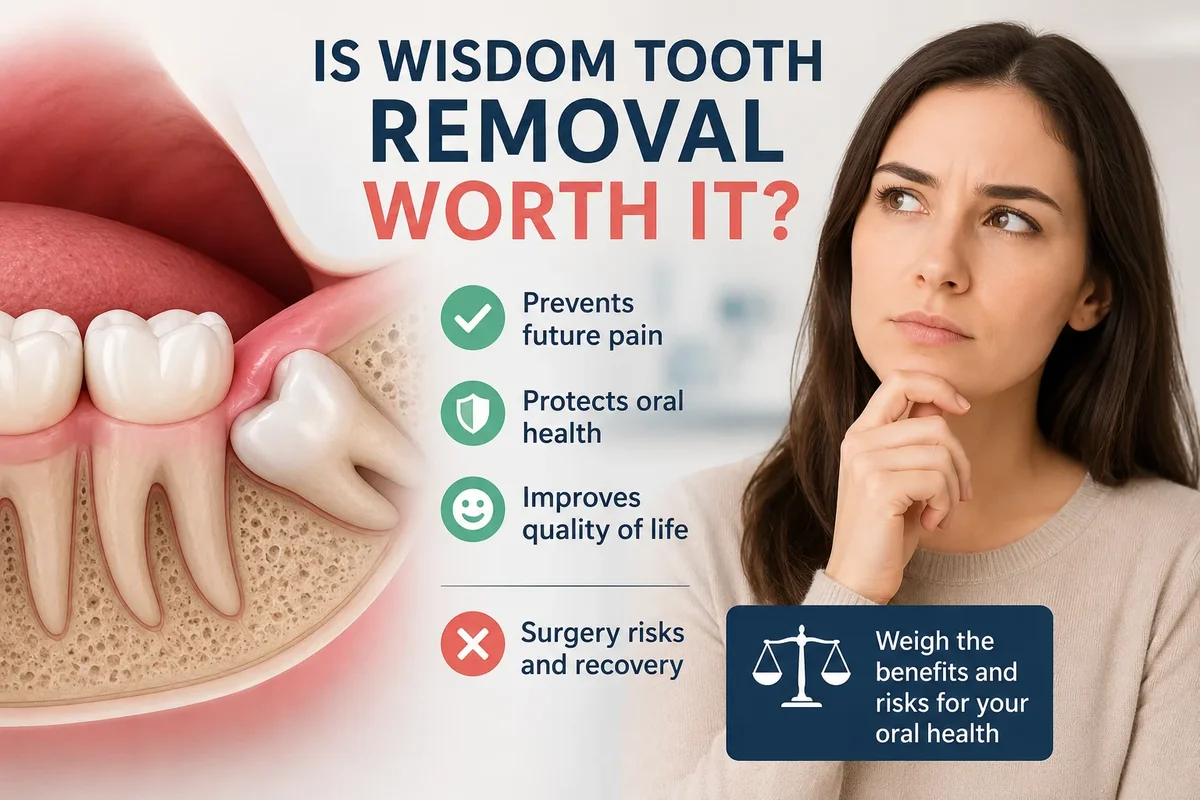
Final Decision: Is Wisdom Tooth Removal Worth It for You?
After reviewing the benefits, possible risks, treatment process, financial considerations, and alternatives, many patients still ask one final question: is wisdom tooth removal worth it for me personally? The answer is rarely a simple yes or no because every person’s oral health is different. The most appropriate decision depends on your symptoms, the position of your wisdom teeth, your overall dental health, and the likelihood of future complications. The goal is not to choose surgery because someone else needed it, nor to avoid treatment because another person kept their wisdom teeth successfully. Instead, the best decision is based on an individualized professional assessment supported by clinical examination and dental imaging.
If you remember only one point from this guide, let it be this: wisdom tooth removal should be recommended because it offers a meaningful benefit for your specific situation—not simply because wisdom teeth are present.
Review Your Current Oral Health
If you are still wondering is wisdom tooth removal worth it, begin by honestly evaluating your current oral health. Ask yourself whether your wisdom teeth have caused recurring discomfort or whether they have remained healthy and symptom-free.
Questions worth considering include:
- Have you experienced repeated pain around the wisdom tooth?
- Do your gums become swollen or infected?
- Does food frequently become trapped behind the last molar?
- Is brushing or flossing the area difficult?
- Have dental X-rays shown impacted teeth or damage to neighboring molars?
- Has your dentist recommended continued monitoring or treatment?
Your answers to these questions often provide a helpful starting point for discussing treatment options with your dentist.
Compare the Benefits and the Risks
Making an informed decision means comparing the expected benefits of treatment with the possible disadvantages. For some patients, removing problematic wisdom teeth may reduce the likelihood of repeated infections, decay, gum disease, or damage to nearby teeth. For others whose wisdom teeth are healthy and functional, careful observation may provide the greatest benefit while avoiding unnecessary surgery.
When deciding is wisdom tooth removal worth it, avoid focusing on only one aspect of treatment. Instead, consider:
- Your current symptoms.
- Future oral health risks.
- The complexity of the procedure.
- Expected recovery.
- Financial considerations.
- Your personal treatment goals.
Looking at all of these factors together creates a more balanced and realistic decision.
Remember That Every Case Is Different
Many online articles offer general recommendations, but they cannot evaluate your individual anatomy or clinical findings. Two patients of the same age may receive completely different recommendations because the position of their wisdom teeth, their oral hygiene, and their overall dental health are not identical.
This is why your dentist relies on:
- Clinical examination.
- Dental X-rays.
- Medical history.
- Current symptoms.
- Long-term oral health goals.
These factors allow a personalized recommendation instead of a one-size-fits-all approach.
Know When Observation Is Appropriate
For some individuals, the answer to is wisdom tooth removal worth it may be “not at this time.” Healthy wisdom teeth that are fully erupted, easy to clean, free of disease, and functioning normally may simply require regular monitoring.
Observation is most effective when combined with:
- Routine dental examinations.
- Professional cleanings.
- Periodic dental imaging when recommended.
- Consistent oral hygiene at home.
- Prompt reporting of any new symptoms.
Monitoring does not eliminate the possibility of future treatment, but it allows changes to be detected before they become more serious.
Know When Treatment May Be the Better Choice
For other patients, the evidence may strongly support extraction. If repeated infections continue to return, neighboring teeth are becoming damaged, or the wisdom tooth cannot be cleaned effectively because of its position, removal may help reduce future oral health problems.
When deciding is wisdom tooth removal worth it, treatment may be recommended if your dentist identifies:
- Impacted wisdom teeth.
- Recurring pericoronitis.
- Progressive decay.
- Damage to adjacent teeth.
- Persistent gum disease around the wisdom tooth.
- Other clinical findings that increase future risk.
The recommendation is always based on balancing expected benefits with the possible risks of surgery and the consequences of leaving the tooth untreated.
Preparing for Your Consultation
If you are approaching a dental consultation, preparing questions in advance helps ensure you receive information relevant to your own situation.
Consider asking:
- Why do you recommend removal or monitoring?
- What benefits do you expect in my case?
- What risks should I understand?
- How complex is my procedure likely to be?
- What recovery should I realistically expect?
- Are there reasonable alternatives at this stage?
- How often should my wisdom teeth be reviewed if I delay treatment?
Clear communication with your dental provider supports informed decision-making and helps you feel more confident about whichever option is selected.
Your Next Step
If you are still asking is wisdom tooth removal worth it, remember that the most reliable answer comes from a personalized examination rather than general online advice. Clinical evaluation allows your dentist to explain whether your wisdom teeth are healthy enough for continued monitoring or whether removal is likely to provide greater long-term benefits.
If you would like an individualized assessment, you can arrange a consultation through the Redent Klinik Contact Page. You may also explore patient education resources from the American Dental Association to learn more about wisdom tooth management and preventive oral healthcare.
What Should You Check Before Making Your Final Decision?
Before deciding whether is wisdom tooth removal worth it, review your current symptoms, oral hygiene, previous dental X-rays, history of infections, ability to clean around the wisdom teeth, and any recommendations provided during previous dental examinations. A thoughtful review of these factors often makes the next step much clearer.
When to request professional advice: Schedule a dental consultation if you have recurring pain, swelling, gum infections, food trapping, difficulty cleaning around the wisdom teeth, or if previous imaging has shown impacted teeth or damage to neighboring structures. A personalized examination allows your dentist to explain whether continued observation or wisdom tooth removal is the most appropriate choice for your individual oral health, helping you make a confident and informed decision.
Disclosure: this page may contain affiliate links. We may earn a commission if you use them, at no extra cost to you.