
Limited invisalign treatment is becoming one of the most popular orthodontic solutions for patients who want to improve their smile quickly and discreetly. Unlike traditional braces or full aligner systems, limited invisalign treatment focuses on correcting minor alignment issues such as small gaps, mild crowding, or slightly rotated teeth. This makes it an ideal choice for adults and teens who want visible results without committing to a long and complex orthodontic journey.
At its core, limited invisalign treatment uses a series of clear, custom-made aligners that gently shift teeth into their desired position. These aligners are nearly invisible, removable, and designed for comfort, which is why many patients prefer limited invisalign treatment over metal braces. The treatment is particularly suitable for individuals who have previously undergone orthodontic work but have experienced minor relapse over time.
One of the main reasons patients choose limited invisalign treatment is convenience. Because the corrections are minor, the number of aligners required is significantly lower compared to full Invisalign plans. This means fewer dental visits, shorter treatment duration, and less disruption to daily life. Patients can remove their aligners while eating, brushing, and flossing, which helps maintain better oral hygiene throughout the process. 😊
Another important aspect of limited invisalign treatment is customization. Each aligner is digitally designed using advanced 3D imaging technology to ensure precise tooth movement. Dentists create a personalized treatment plan that maps out each stage of the process, allowing patients to preview their expected results before starting. This level of predictability is one of the key advantages of limited invisalign treatment.
From a dental health perspective, limited invisalign treatment can also contribute to improved oral hygiene. Straighter teeth are easier to clean, reducing the risk of plaque buildup, gum disease, and cavities. According to the American Dental Association, maintaining proper alignment plays a crucial role in long-term oral health, making treatments like limited invisalign treatment not just cosmetic but also preventative.
It is important to understand that limited invisalign treatment is not suitable for everyone. Patients with severe bite issues, significant crowding, or complex orthodontic problems may require a more comprehensive solution. However, for those with mild concerns, limited invisalign treatment offers a fast and effective alternative that delivers noticeable improvements in a shorter timeframe.
Patients considering limited invisalign treatment should always consult with a qualified dental professional to determine eligibility. During the consultation, the dentist will evaluate the current condition of the teeth, discuss treatment goals, and recommend whether limited invisalign treatment is the best option. If you are ready to explore your options, you can visit the Redent Klinik Contact Page to schedule a consultation with experienced specialists.
In addition to aesthetics, limited invisalign treatment can significantly boost confidence. Many patients feel self-conscious about minor imperfections in their smile, and correcting these issues can have a positive impact on social interactions and overall self-esteem. Because the aligners are clear and discreet, most people will not even notice you are undergoing limited invisalign treatment, making it a preferred choice for professionals and individuals in social environments.
Another advantage of limited invisalign treatment is its adaptability to modern lifestyles. Unlike fixed braces, there are no dietary restrictions, and patients can continue enjoying their favorite foods. The aligners are also smooth and comfortable, reducing the likelihood of irritation commonly associated with traditional orthodontic appliances.
In summary, limited invisalign treatment is a highly effective solution for individuals seeking minor orthodontic corrections with maximum convenience and minimal visibility. It combines advanced technology, personalized care, and patient comfort into a streamlined process that fits seamlessly into everyday life. Whether you want to close small gaps, align slightly crooked teeth, or enhance your smile before a big event, limited invisalign treatment offers a practical and efficient pathway to achieving your goals.
What Is Limited Invisalign Treatment and Who Is It For?
Limited invisalign treatment is a specialized orthodontic solution designed for patients who need minor corrections rather than full-scale tooth realignment. Unlike comprehensive orthodontic plans, limited invisalign treatment focuses on subtle improvements such as closing small gaps, correcting mild crowding, or adjusting slightly rotated teeth. This makes limited invisalign treatment an efficient and targeted option for individuals who want a better smile without undergoing lengthy procedures.
Understanding the Concept of Limited Invisalign Treatment
At its foundation, limited invisalign treatment uses a series of clear aligners to gradually move teeth into a more desirable position. These aligners are custom-made using advanced 3D scanning technology, ensuring that each stage of limited invisalign treatment is precisely controlled. Patients wear each set of aligners for about one to two weeks before switching to the next set, allowing gradual and predictable tooth movement.
One of the key features of limited invisalign treatment is that it involves fewer aligners compared to full Invisalign systems. Typically, limited invisalign treatment may include between 10 to 20 aligners, depending on the complexity of the case. This reduced number directly contributes to a shorter treatment duration, which is one of the biggest attractions for patients seeking quick results. 😊
How It Differs from Traditional Orthodontics
Traditional braces involve brackets, wires, and frequent adjustments, often lasting one to two years. In contrast, limited invisalign treatment offers a much more convenient and discreet approach. The aligners are removable, nearly invisible, and comfortable, allowing patients to continue their daily routines without interruption. Limited invisalign treatment also minimizes the need for frequent dental visits, making it ideal for individuals with busy schedules.
Who Is the Ideal Candidate for Limited Invisalign Treatment?
Limited invisalign treatment is best suited for patients with mild orthodontic concerns. If you have slight misalignment or spacing issues, limited invisalign treatment can effectively address these problems. Common candidates include adults who had braces in the past but experienced minor shifting over time, as well as individuals preparing for important life events such as weddings or professional presentations.
Another group that benefits from limited invisalign treatment includes patients who want cosmetic improvements rather than functional corrections. For example, if your bite is generally healthy but you are unhappy with the appearance of your front teeth, limited invisalign treatment can provide noticeable enhancements without extensive procedures.
Conditions Commonly Treated
- Mild crowding of teeth
- Small gaps between teeth
- Slight rotations or tilting
- Minor relapse after previous orthodontic treatment
These conditions are ideal for limited invisalign treatment because they require only minimal tooth movement. Attempting to treat more complex issues with limited invisalign treatment may not yield optimal results, which is why professional evaluation is essential.
Who Should Avoid Limited Invisalign Treatment?
While limited invisalign treatment offers many advantages, it is not suitable for everyone. Patients with severe crowding, significant bite problems, or jaw alignment issues may require comprehensive orthodontic solutions. In such cases, full Invisalign or traditional braces may be recommended instead of limited invisalign treatment.
Additionally, patients who struggle with discipline in wearing aligners for the recommended 20–22 hours per day may not achieve the desired results. Limited invisalign treatment relies heavily on patient compliance, and inconsistent use can delay progress or compromise outcomes.
Why Consultation Is Crucial Before Starting
Before beginning limited invisalign treatment, a thorough consultation with a qualified dentist or orthodontist is essential. During this process, the dental professional will assess your oral health, take digital scans, and determine whether limited invisalign treatment is the right option for your needs. This ensures that the treatment plan is both safe and effective.
If you are considering improving your smile, it is highly recommended to reach out to professionals for personalized advice. You can easily book a consultation through the Redent Klinik Contact Page and get expert guidance tailored to your case.
Benefits of Choosing the Right Candidate Profile
Selecting the right candidates for limited invisalign treatment significantly increases the chances of success. When used appropriately, limited invisalign treatment can deliver impressive results in a relatively short time. Patients often notice improvements within weeks, making it a highly satisfying experience.
Moreover, aligning teeth through limited invisalign treatment can contribute to better oral hygiene. Straighter teeth are easier to clean, reducing the risk of gum disease and cavities. According to the American Dental Association, proper alignment is an important factor in maintaining long-term dental health, reinforcing the value of treatments like limited invisalign treatment.
In conclusion, limited invisalign treatment is a powerful solution for individuals seeking minor orthodontic improvements with maximum convenience. By understanding who it is for and ensuring proper evaluation, patients can achieve a straighter, healthier smile without unnecessary complexity.
How Limited Invisalign Treatment Works Step by Step
Understanding how limited invisalign treatment works can help patients feel more confident and prepared before starting their journey. Limited invisalign treatment follows a structured, technology-driven process designed to deliver precise and predictable results for minor orthodontic issues. From the first consultation to the final retainer, every stage of limited invisalign treatment is carefully planned to ensure efficiency, comfort, and visible improvements.
Initial Consultation and Assessment
The first step in limited invisalign treatment is a comprehensive consultation with a qualified dental professional. During this visit, the dentist evaluates your oral health, alignment issues, and overall suitability for limited invisalign treatment. Digital scans, X-rays, and photographs are taken to create a complete picture of your teeth.
This stage is critical because limited invisalign treatment is only effective for mild to moderate cases. The dentist will determine whether your concerns—such as small gaps, slight crowding, or minor relapse—can be addressed with limited invisalign treatment. If approved, the process moves forward to digital planning.
Why Digital Scanning Matters
Unlike traditional impressions, modern limited invisalign treatment uses 3D scanning technology. This ensures highly accurate measurements and allows patients to preview their expected results. Seeing a digital simulation of your future smile is one of the most exciting parts of limited invisalign treatment. 😊
Customized Treatment Planning
After the initial assessment, your dentist creates a personalized treatment plan. This plan outlines each stage of limited invisalign treatment, including how your teeth will move over time. Advanced software maps out every aligner step-by-step, ensuring precise tooth movement.
Because limited invisalign treatment focuses on minor corrections, the number of aligners is relatively low compared to full orthodontic systems. Typically, patients receive a series of 10–20 aligners, each designed to make small adjustments. This streamlined approach is what makes limited invisalign treatment faster and more convenient.
Previewing the Final Results
One major advantage of limited invisalign treatment is the ability to see the projected outcome before starting. This helps set realistic expectations and motivates patients to follow the treatment plan carefully.
Aligner Fabrication and Fitting
Once the treatment plan is finalized, custom aligners are fabricated specifically for your teeth. Each aligner in the limited invisalign treatment series is made from smooth, medical-grade plastic that fits snugly over your teeth.
At your fitting appointment, your dentist will ensure that the first set of aligners fits properly and provide instructions on how to wear and care for them. Patients are usually advised to wear their aligners for 20–22 hours per day to achieve optimal results from limited invisalign treatment.
Wearing Your Aligners Correctly
Consistency is key in limited invisalign treatment. Aligners should only be removed for eating, drinking (except water), brushing, and flossing. Failing to wear them as instructed can slow progress and affect the final outcome.
Progression Through Aligner Sets
Throughout limited invisalign treatment, patients switch to a new set of aligners approximately every one to two weeks. Each new aligner applies gentle pressure to gradually move teeth into their desired positions.
This gradual progression is what makes limited invisalign treatment comfortable compared to traditional braces. Most patients experience only mild pressure when switching aligners, which typically subsides within a few days.
Monitoring Progress
Regular check-ups are scheduled during limited invisalign treatment to ensure everything is progressing as planned. These visits are usually less frequent than with traditional braces, making limited invisalign treatment ideal for busy individuals.
If any adjustments are needed, your dentist can make minor modifications to keep the treatment on track.
Completion and Retention Phase
Once all aligners have been used, the active phase of limited invisalign treatment is complete. However, maintaining the results is just as important as achieving them. Patients are typically provided with retainers to keep their teeth in their new positions.
Retainers are usually worn at night and help prevent teeth from shifting back. This final stage ensures that the results of limited invisalign treatment are long-lasting and stable.
Long-Term Maintenance Tips
- Wear your retainer as instructed
- Maintain excellent oral hygiene
- Attend regular dental check-ups
- Avoid habits that may shift teeth
Why This Step-by-Step Process Works
The success of limited invisalign treatment lies in its structured and personalized approach. Each stage is carefully designed to ensure gradual, controlled movement of teeth. This minimizes discomfort and maximizes efficiency.
Additionally, the use of digital technology enhances accuracy and predictability. According to the American Dental Association, modern orthodontic techniques like limited invisalign treatment improve both patient experience and clinical outcomes.
If you are considering starting your journey, it is essential to consult with experienced professionals who can guide you through each step. You can schedule your consultation easily via the Redent Klinik Contact Page and receive personalized recommendations for your case.
In conclusion, limited invisalign treatment works through a clear, step-by-step system that combines advanced technology with patient commitment. From consultation to retention, each phase is designed to deliver efficient, comfortable, and aesthetically pleasing results, making limited invisalign treatment an excellent choice for minor orthodontic improvements.
Key Benefits of Choosing Limited Invisalign Treatment
Choosing limited invisalign treatment offers a wide range of advantages for patients who want to improve their smile efficiently and discreetly. One of the main reasons people prefer limited invisalign treatment is its ability to deliver noticeable results without the long commitment required by traditional orthodontic methods. Because limited invisalign treatment is specifically designed for minor corrections, it provides a focused and streamlined approach that aligns perfectly with modern lifestyles.
Fast and Efficient Results
One of the most attractive benefits of limited invisalign treatment is the shorter treatment time. While traditional braces or full aligner systems may take one to two years, limited invisalign treatment can often be completed in just a few months. This makes it ideal for patients who want quick improvements, especially before important life events such as weddings, job interviews, or social occasions. 😊
The reduced number of aligners used in limited invisalign treatment contributes directly to this speed. Because only minor tooth movements are required, the entire process is more efficient and less time-consuming.
Ideal for Busy Lifestyles
For individuals with demanding schedules, limited invisalign treatment minimizes the need for frequent dental visits. This convenience makes it easier to stay consistent with the treatment plan without disrupting daily routines.
Discreet and Nearly Invisible Appearance
Another major advantage of limited invisalign treatment is its aesthetic appeal. The clear aligners are virtually invisible, allowing patients to undergo orthodontic correction without drawing attention. This is particularly important for adults and professionals who prefer a subtle approach to improving their smile.
Unlike metal braces, limited invisalign treatment does not involve brackets or wires. This means there is no metallic appearance, making it a preferred choice for individuals concerned about their appearance during treatment.
Confidence Boost During Treatment
Because the aligners are discreet, patients often feel more confident throughout their limited invisalign treatment journey. They can smile, speak, and interact socially without feeling self-conscious.
Comfort and Convenience
Comfort is another key benefit of limited invisalign treatment. The aligners are made from smooth, medical-grade plastic, which reduces irritation to the gums and cheeks. Unlike traditional braces, there are no sharp edges or wires that can cause discomfort.
Additionally, limited invisalign treatment aligners are removable. This allows patients to eat their favorite foods without restrictions and maintain proper oral hygiene by brushing and flossing normally.
Better Oral Hygiene
Maintaining oral hygiene is significantly easier with limited invisalign treatment. Since the aligners can be removed, patients can clean their teeth thoroughly, reducing the risk of plaque buildup and gum disease.
Predictable and Customized Outcomes
Limited invisalign treatment uses advanced digital technology to create a personalized treatment plan. Each aligner is designed based on precise 3D imaging, ensuring controlled and predictable tooth movement.
Patients undergoing limited invisalign treatment can preview their expected results before starting, which provides reassurance and clarity. This level of customization ensures that each patient receives a solution tailored to their specific needs.
Technology-Driven Precision
The use of digital simulations in limited invisalign treatment allows dentists to plan every step in detail. This precision minimizes unexpected outcomes and enhances overall satisfaction.
Fewer Dental Appointments
Compared to traditional orthodontics, limited invisalign treatment requires fewer in-office visits. This is because the aligners are pre-designed and patients can switch them at home according to their schedule.
This convenience is especially beneficial for patients who travel frequently or have limited availability for dental appointments.
Cost-Effective Option
Another advantage of limited invisalign treatment is its affordability compared to full orthodontic treatments. Since fewer aligners and less time are involved, the overall cost is generally lower.
While prices may vary depending on the clinic and location, limited invisalign treatment is often considered a budget-friendly option for achieving a straighter smile without compromising quality.
Value for Money
Patients receive high-quality results with reduced costs, making limited invisalign treatment an excellent investment in both aesthetics and oral health.
Improved Oral Health Benefits
Beyond cosmetic improvements, limited invisalign treatment contributes to better oral health. Straighter teeth are easier to clean, which helps prevent cavities and gum disease. According to the American Dental Association, proper alignment is essential for maintaining long-term dental health.
By correcting minor alignment issues, limited invisalign treatment can reduce the risk of uneven wear on teeth and improve overall bite function.
Easy Access to Professional Support
Throughout limited invisalign treatment, patients receive ongoing support from their dental provider. Regular check-ups ensure that progress is on track and allow for adjustments if necessary.
If you are considering this option, you can easily connect with professionals through the Redent Klinik Contact Page to receive personalized guidance and start your journey with confidence.
Why Limited Invisalign Treatment Stands Out
In summary, limited invisalign treatment stands out because it combines speed, comfort, aesthetics, and affordability into one comprehensive solution. It is specifically designed for individuals who need minor corrections but still want professional, high-quality results.
With its advanced technology, patient-friendly design, and proven effectiveness, limited invisalign treatment continues to be a top choice for those seeking a modern approach to orthodontic care. Whether your goal is to enhance your smile or improve your oral health, limited invisalign treatment offers a practical and highly satisfying solution.
Limitations of Limited Invisalign Treatment You Should Know
While limited invisalign treatment offers many advantages, it is equally important to understand its limitations before making a decision. Limited invisalign treatment is specifically designed for mild orthodontic issues, which means it cannot address every dental concern. Being aware of what limited invisalign treatment can and cannot do helps patients set realistic expectations and avoid disappointment during the process.
Not Suitable for Complex Orthodontic Cases
The biggest limitation of limited invisalign treatment is its restricted scope. This treatment is intended for minor corrections such as small gaps, slight crowding, or minimal tooth rotation. Patients with more complex conditions—such as severe misalignment, significant bite problems, or jaw discrepancies—may not benefit fully from limited invisalign treatment.
In these cases, a comprehensive orthodontic plan, including full Invisalign or traditional braces, may be required. Attempting to treat complex issues with limited invisalign treatment can lead to incomplete results or the need for additional treatment later.
Examples of Cases That Require Full Treatment
- Severe overcrowding of teeth
- Large gaps or spacing issues
- Overbite, underbite, or crossbite problems
- Jaw alignment irregularities
These conditions typically go beyond the capabilities of limited invisalign treatment and require a more advanced approach.
Requires High Patient Compliance
Another important limitation of limited invisalign treatment is the need for strict patient compliance. Aligners must be worn for 20–22 hours per day to achieve the desired results. If patients fail to follow this guideline, the effectiveness of limited invisalign treatment may be compromised.
Unlike fixed braces, which work continuously, limited invisalign treatment relies on the patient’s discipline. Forgetting to wear aligners or removing them too often can slow down progress and even reverse improvements.
Common Compliance Challenges
- Removing aligners too frequently
- Forgetting to wear them overnight
- Not switching aligners on schedule
Maintaining consistency is crucial for the success of limited invisalign treatment. 😊
Limited Scope of Tooth Movement
Because limited invisalign treatment focuses on minor adjustments, it cannot achieve extensive tooth movement. This means that certain aesthetic or functional goals may not be fully attainable through limited invisalign treatment alone.
For example, if a patient desires a complete smile transformation or significant bite correction, limited invisalign treatment may not deliver the expected outcome. In such cases, a more comprehensive orthodontic solution should be considered.
Gradual vs Extensive Changes
Limited invisalign treatment is excellent for subtle improvements, but it is not designed for major structural changes. Understanding this distinction helps patients choose the right treatment option.
Potential Need for Refinements
In some cases, patients undergoing limited invisalign treatment may require additional refinement aligners after completing the initial set. These refinements help fine-tune the results and ensure optimal alignment.
While refinements are a normal part of orthodontic care, they can extend the overall duration of limited invisalign treatment. Patients should be prepared for this possibility when starting their journey.
Why Refinements Occur
- Teeth not moving exactly as planned
- Inconsistent aligner wear
- Biological variations in tooth movement
These factors can influence the outcome of limited invisalign treatment and may require additional adjustments.
Temporary Speech Changes
Some patients experience slight speech changes when they first begin limited invisalign treatment. The presence of aligners in the mouth can affect pronunciation, particularly for certain sounds.
However, this is usually temporary. Most patients adapt within a few days as they become accustomed to wearing the aligners. With consistent use, speech returns to normal during limited invisalign treatment.
Initial Discomfort or Pressure
Although limited invisalign treatment is generally more comfortable than traditional braces, patients may still experience mild discomfort when switching to a new aligner. This sensation is caused by the pressure applied to move the teeth.
The discomfort is usually short-lived and subsides within a few days. It is a normal part of the limited invisalign treatment process and indicates that the aligners are working effectively.
Cost vs Value Considerations
While limited invisalign treatment is often more affordable than full orthodontic treatments, it is not always the cheapest option available. Patients should consider the value it provides in terms of convenience, aesthetics, and efficiency.
In some cases, choosing a cheaper but less effective treatment may lead to unsatisfactory results, requiring additional procedures. Limited invisalign treatment offers a balance between cost and quality, making it a worthwhile investment for eligible patients.
Importance of Professional Evaluation
One of the most critical factors in overcoming the limitations of limited invisalign treatment is proper diagnosis. A qualified dentist or orthodontist can determine whether limited invisalign treatment is appropriate for your specific needs.
If you are unsure about your eligibility, it is highly recommended to consult professionals who can guide you through the decision-making process. You can easily schedule a consultation via the Redent Klinik Contact Page and receive expert advice tailored to your situation.
Additionally, trusted organizations like the American Dental Association emphasize the importance of professional guidance when choosing orthodontic treatments, including limited invisalign treatment.
Final Thoughts on Limitations
In conclusion, limited invisalign treatment is a highly effective solution for minor orthodontic issues, but it is not a one-size-fits-all option. Understanding its limitations allows patients to make informed decisions and achieve realistic expectations.
When used appropriately, limited invisalign treatment can deliver excellent results with minimal inconvenience. However, selecting the right candidates and maintaining proper compliance are essential for success. By working closely with a dental professional, patients can maximize the benefits of limited invisalign treatment while minimizing potential drawbacks.
Cost of Limited Invisalign Treatment in 2026
The cost of limited invisalign treatment in 2026 is one of the most important factors patients consider before starting their smile transformation. While limited invisalign treatment is generally more affordable than full orthodontic solutions, the final price can vary depending on several key factors such as location, clinic reputation, case complexity, and included services. Understanding the pricing structure of limited invisalign treatment helps patients make informed decisions and plan their budget effectively.
Average Price Range for Limited Invisalign Treatment
In 2026, the average cost of limited invisalign treatment typically falls between $1,500 and $4,000. This range reflects the reduced number of aligners and shorter treatment duration compared to comprehensive orthodontic plans. Because limited invisalign treatment focuses on minor corrections, it requires fewer materials and less clinical time, making it a more cost-effective option for eligible patients.
In some countries or premium clinics, limited invisalign treatment may cost slightly more due to advanced technology, experienced specialists, and additional services included in the package. However, even in higher-end clinics, limited invisalign treatment remains significantly more affordable than full Invisalign treatments, which can exceed $6,000–$8,000.
Estimated Price Breakdown
- Initial consultation and digital scans: $100 – $300
- Aligner production and treatment plan: $1,000 – $2,500
- Follow-up visits and monitoring: $200 – $700
- Retainers after limited invisalign treatment: $150 – $500
These components together determine the total cost of limited invisalign treatment. Some clinics offer bundled packages that include all these services, while others may charge separately.
Factors That Affect the Cost
Several variables influence the overall price of limited invisalign treatment. Understanding these factors can help you evaluate quotes from different clinics and choose the best option.
1. Complexity of the Case
Even within limited invisalign treatment, the degree of correction required can impact the cost. Cases with slightly more alignment adjustments may require additional aligners, increasing the price.
2. Clinic Location
The cost of limited invisalign treatment can vary significantly depending on geographic location. Clinics in major cities or high-demand areas often charge higher fees compared to smaller towns or regions with lower living costs.
3. Dentist’s Experience
Highly experienced orthodontists or Invisalign-certified providers may charge more for limited invisalign treatment. However, their expertise often results in more precise planning and better outcomes, making it a valuable investment.
4. Technology and Equipment
Clinics that use advanced 3D imaging and digital planning tools may have slightly higher prices for limited invisalign treatment. These technologies improve accuracy and predictability, enhancing the overall treatment experience.
Is Limited Invisalign Treatment Worth the Cost?
When evaluating the cost, it is important to consider the value provided by limited invisalign treatment. Unlike traditional braces, this treatment offers comfort, convenience, and aesthetic benefits. Patients can enjoy a nearly invisible solution that fits seamlessly into their daily lives.
Additionally, limited invisalign treatment can prevent future dental issues by improving alignment. Straighter teeth are easier to clean, reducing the risk of cavities and gum disease. According to the American Dental Association, proper alignment contributes to long-term oral health, making treatments like limited invisalign treatment a preventive investment.
Payment Options and Financing
Many dental clinics offer flexible payment plans to make limited invisalign treatment more accessible. These options allow patients to spread the cost over several months, reducing the financial burden.
Common Payment Methods
- Monthly installment plans
- Credit card payments
- Dental insurance contributions (if applicable)
- In-house financing programs
Before starting limited invisalign treatment, it is advisable to discuss all available payment options with your provider to find a plan that suits your budget.
Cost Comparison with Other Treatments
Compared to traditional braces and full Invisalign systems, limited invisalign treatment offers a more affordable alternative for minor corrections. While braces may cost between $3,000 and $7,000, and full Invisalign can exceed $6,000, limited invisalign treatment provides similar aesthetic benefits at a lower price point for eligible cases.
Why It’s More Affordable
The reduced number of aligners, shorter treatment duration, and fewer dental visits all contribute to the lower cost of limited invisalign treatment. This efficiency makes it an attractive option for patients seeking quick and effective results.
Hidden Costs to Consider
Although limited invisalign treatment is generally straightforward, patients should be aware of potential additional costs. These may include replacement aligners if lost, extra refinement sets, or additional retainers after treatment.
Clarifying these details with your dentist before starting limited invisalign treatment ensures there are no unexpected expenses.
How to Get an Accurate Price Estimate
The best way to determine the exact cost of limited invisalign treatment is through a professional consultation. Each patient’s needs are unique, and a personalized evaluation is necessary to provide an accurate quote.
If you are considering this option, you can easily schedule an appointment through the Redent Klinik Contact Page. متخصص specialists will assess your case and provide a tailored treatment plan with clear pricing details.
Final Thoughts on Cost
In conclusion, the cost of limited invisalign treatment in 2026 reflects its efficiency, convenience, and advanced technology. While prices vary, it remains one of the most cost-effective orthodontic solutions for minor alignment issues.
By understanding the factors that influence pricing and exploring available payment options, patients can confidently invest in limited invisalign treatment and achieve a healthier, more attractive smile without unnecessary financial stress. 😊
Before and After Results of Limited Invisalign Treatment
The before and after results of limited invisalign treatment are often the most motivating factor for patients considering this modern orthodontic solution. Limited invisalign treatment is specifically designed to deliver noticeable improvements in a relatively short period, making it an excellent option for individuals seeking subtle yet impactful changes. By focusing on minor alignment issues, limited invisalign treatment can dramatically enhance the appearance of your smile without the need for lengthy procedures.
What to Expect Before Limited Invisalign Treatment
Before starting limited invisalign treatment, patients typically present with mild dental concerns such as small gaps, slight crowding, or minor rotations. These imperfections may seem small, but they can significantly affect confidence and overall smile aesthetics. During the initial consultation, dentists use digital scans to capture the current state of your teeth and create a baseline for comparison.
One of the key advantages of limited invisalign treatment is the ability to visualize your future smile before the process even begins. Using advanced 3D simulation software, patients can see a projected “after” image, which helps set realistic expectations and builds excitement. 😊
Common Starting Conditions
- Slightly crooked front teeth
- Small gaps between teeth
- Minor relapse after previous orthodontic work
- Subtle bite irregularities
These are the types of issues that limited invisalign treatment is designed to correct efficiently.
Transformation During Limited Invisalign Treatment
As limited invisalign treatment progresses, patients begin to notice gradual improvements. Each aligner gently shifts the teeth closer to their ideal position. Unlike traditional braces, the changes occur subtly, often without others noticing. This gradual transformation is one of the reasons why limited invisalign treatment is so appealing.
Most patients start seeing visible changes within a few weeks. By the midpoint of limited invisalign treatment, alignment improvements become more apparent, especially in the front teeth. This steady progress keeps patients motivated and committed to wearing their aligners consistently.
Timeline of Visible Changes
- Week 1–2: Initial adjustment and slight pressure
- Week 3–6: Early alignment improvements become visible
- Week 6–10: Noticeable changes in spacing and positioning
- Final weeks: Fine-tuning and polishing of results
This predictable progression is a hallmark of limited invisalign treatment.
After Results: What You Gain
After completing limited invisalign treatment, patients can expect a straighter, more balanced smile. The improvements may be subtle in some cases, but they often have a significant impact on overall facial aesthetics and self-confidence.
One of the most rewarding aspects of limited invisalign treatment is how natural the results look. Because the treatment focuses on minor corrections, the final outcome enhances your existing smile rather than drastically altering it.
Key Benefits After Treatment
- Improved smile symmetry
- Better alignment of front teeth
- Enhanced facial aesthetics
- Increased self-confidence
These results make limited invisalign treatment a highly satisfying experience for many patients.
Before and After Comparisons
Side-by-side comparisons of before and after images highlight the effectiveness of limited invisalign treatment. Even small adjustments can create a more harmonious and attractive smile. Patients often report that friends and colleagues notice the improvement, even if they cannot pinpoint exactly what has changed.
This subtle yet powerful transformation is what sets limited invisalign treatment apart from more aggressive orthodontic approaches.
Impact on Oral Health
In addition to cosmetic benefits, limited invisalign treatment can also improve oral health. Straighter teeth are easier to clean, which reduces the risk of plaque buildup, cavities, and gum disease. According to the American Dental Association, proper alignment plays a crucial role in maintaining long-term dental health.
By addressing minor alignment issues, limited invisalign treatment helps create a healthier oral environment, making it both a cosmetic and functional investment.
Maintaining Results After Limited Invisalign Treatment
Once limited invisalign treatment is complete, maintaining the results is essential. Patients are typically provided with retainers to keep their teeth in their new positions. Wearing retainers as instructed prevents teeth from shifting back and ensures the longevity of limited invisalign treatment results.
Retention Tips
- Wear your retainer every night
- Keep retainers clean and safe
- Attend regular dental check-ups
- Avoid habits that may affect alignment
Following these steps helps preserve the success of limited invisalign treatment for years to come.
Realistic Expectations
While limited invisalign treatment delivers impressive results, it is important to maintain realistic expectations. The treatment is designed for minor corrections, so the changes may not be as dramatic as those achieved with full orthodontic systems. However, for the right candidates, limited invisalign treatment provides a perfect balance between efficiency and effectiveness.
Start Your Transformation
If you are considering improving your smile, now is the perfect time to explore limited invisalign treatment. A professional consultation will help determine if this solution is right for you. You can easily get started by visiting the Redent Klinik Contact Page and connecting with experienced specialists.
In conclusion, the before and after results of limited invisalign treatment demonstrate how small changes can make a big difference. With its ability to deliver fast, discreet, and natural-looking improvements, limited invisalign treatment remains one of the most effective solutions for minor orthodontic concerns in 2026. 😊
Limited Invisalign Treatment vs Full Invisalign: Main Differences
When considering orthodontic options, many patients find themselves comparing limited invisalign treatment with full Invisalign. While both systems use clear aligners and advanced technology, they are designed for different levels of dental correction. Understanding the differences between limited invisalign treatment and full Invisalign is essential for choosing the most suitable option based on your needs, expectations, and dental condition.
Scope of Treatment
The primary difference between limited invisalign treatment and full Invisalign lies in the scope of correction. Limited invisalign treatment is specifically designed for minor issues such as small gaps, slight crowding, or minimal relapse after previous orthodontic work. In contrast, full Invisalign is capable of addressing more complex cases, including severe misalignment, bite problems, and significant spacing issues.
This means that limited invisalign treatment is ideal for patients seeking cosmetic improvements, while full Invisalign is better suited for comprehensive orthodontic transformations.
Key Differences in Scope
- Limited invisalign treatment: Minor corrections
- Full Invisalign: Moderate to complex cases
Choosing between the two depends largely on the severity of your dental condition.
Number of Aligners Used
Another major distinction between limited invisalign treatment and full Invisalign is the number of aligners required. Limited invisalign treatment typically involves fewer aligners, often ranging from 10 to 20 sets. This streamlined approach allows for quicker results and less complexity.
On the other hand, full Invisalign may require 30 or more aligners, depending on the case. This extended series is necessary to achieve more significant tooth movement and bite correction.
Impact on Treatment Duration
Because limited invisalign treatment uses fewer aligners, the treatment duration is shorter. Patients often complete limited invisalign treatment within 3 to 6 months, while full Invisalign can take 12 to 24 months or longer.
Treatment Duration and Commitment
Time commitment is a crucial factor when comparing limited invisalign treatment with full Invisalign. Limited invisalign treatment is designed for efficiency, making it ideal for patients who want fast results without a long-term commitment.
Full Invisalign, however, requires a longer commitment due to the complexity of the cases it addresses. Patients must be prepared for a more extended treatment period and more frequent monitoring.
Who Benefits from Shorter Duration?
Patients with busy lifestyles, upcoming events, or a desire for quick improvements often prefer limited invisalign treatment due to its shorter timeline. 😊
Cost Differences
Cost is another important factor when deciding between limited invisalign treatment and full Invisalign. Limited invisalign treatment is generally more affordable because it involves fewer aligners and less clinical time.
In contrast, full Invisalign tends to be more expensive due to its comprehensive nature and longer treatment duration. While prices vary, limited invisalign treatment is often seen as a budget-friendly option for minor corrections.
Value Consideration
Although limited invisalign treatment is less expensive, it is important to choose the option that best addresses your needs. Investing in the correct treatment ensures optimal results and long-term satisfaction.
Complexity of Cases
Limited invisalign treatment is not designed for complex orthodontic problems. Patients with significant bite issues, jaw misalignment, or severe crowding will likely require full Invisalign or traditional braces.
Full Invisalign offers advanced capabilities, including attachments and precision cuts, which allow for more intricate tooth movements. Limited invisalign treatment, while effective, has a more focused application.
When to Choose Full Invisalign
- Severe crowding or spacing
- Overbite, underbite, or crossbite
- Jaw alignment issues
These cases typically go beyond the scope of limited invisalign treatment.
Aesthetic and Comfort Similarities
Despite their differences, both limited invisalign treatment and full Invisalign share key advantages. Both use clear, removable aligners that are nearly invisible and comfortable to wear. Patients can maintain their normal diet and oral hygiene routine with either option.
This means that regardless of which treatment you choose, you can enjoy the benefits of modern orthodontic technology.
Shared Benefits
- Discreet appearance
- Removable aligners
- Improved oral hygiene
- Comfortable fit
These features make both options appealing to patients seeking a convenient orthodontic solution.
Maintenance and Aftercare
After completing either limited invisalign treatment or full Invisalign, patients must wear retainers to maintain their results. This step is essential to prevent teeth from shifting back to their original positions.
The aftercare process is similar for both treatments, emphasizing the importance of long-term maintenance regardless of the chosen option.
Professional Guidance Is Essential
Choosing between limited invisalign treatment and full Invisalign should always involve professional consultation. A qualified dentist or orthodontist can evaluate your condition and recommend the most appropriate solution.
If you are unsure which option is right for you, you can schedule a consultation through the Redent Klinik Contact Page to receive expert advice tailored to your needs.
Additionally, organizations like the American Dental Association highlight the importance of personalized treatment planning in achieving successful orthodontic outcomes.
Final Comparison Summary
In summary, limited invisalign treatment and full Invisalign serve different purposes. Limited invisalign treatment is ideal for minor corrections, offering faster results and lower costs. Full Invisalign, on the other hand, provides a comprehensive solution for more complex cases.
By understanding these differences, patients can make informed decisions and choose the treatment that best aligns with their goals. Whether you opt for limited invisalign treatment or full Invisalign, both options provide effective pathways to achieving a healthier, more confident smile.
How Long Does Limited Invisalign Treatment Take?
One of the most common questions patients ask before starting is: how long does limited invisalign treatment take? The answer depends on several factors, but in general, limited invisalign treatment is significantly faster than traditional orthodontic options. Because limited invisalign treatment focuses only on minor corrections, it is designed to deliver efficient results within a shorter timeframe while maintaining high precision and comfort.
Average Duration of Limited Invisalign Treatment
For most patients, limited invisalign treatment typically takes between 3 to 6 months. This relatively short duration is one of the biggest advantages of limited invisalign treatment, especially for individuals who want noticeable improvements without a long-term commitment.
However, the exact timeline can vary depending on the complexity of the case and how consistently the aligners are worn. Some very minor cases may even be completed in as little as 8 to 10 weeks, while slightly more involved cases within the scope of limited invisalign treatment may take closer to 6 months.
Typical Timeline Overview
- Initial consultation and planning: 1–2 weeks
- Active aligner phase: 8–20 weeks
- Refinement phase (if needed): 2–6 weeks
- Retention phase: ongoing
This structured timeline shows how limited invisalign treatment progresses from planning to final results.
Factors That Influence Treatment Duration
Although limited invisalign treatment is designed to be quick, several factors can influence how long it actually takes. Understanding these variables helps set realistic expectations and ensures a smoother experience.
1. Severity of Alignment Issues
The more complex the minor issue, the longer limited invisalign treatment may take. For example, closing a small gap may be faster than correcting multiple slightly rotated teeth.
2. Patient Compliance
Consistency is crucial in limited invisalign treatment. Aligners must be worn for 20–22 hours per day to achieve optimal results. Patients who follow instructions strictly often complete their limited invisalign treatment faster than those who do not.
3. Biological Response
Each person’s body responds differently to tooth movement. Some patients may experience faster results, while others may require additional time during limited invisalign treatment.
4. Need for Refinements
In some cases, limited invisalign treatment may include a refinement phase. This involves additional aligners to fine-tune the results. While refinements improve the final outcome, they can slightly extend the overall duration.
Why Limited Invisalign Treatment Is Faster
The speed of limited invisalign treatment comes from its focused approach. Unlike full orthodontic plans, which address complex structural changes, limited invisalign treatment targets only minor adjustments. This reduces the number of aligners and simplifies the process.
Additionally, advanced digital planning ensures that each aligner is optimized for efficient movement. According to the American Dental Association, modern orthodontic technologies like limited invisalign treatment enhance both precision and treatment efficiency.
Efficiency Through Technology
Digital simulations and 3D planning allow dentists to map out the entire limited invisalign treatment process in advance. This eliminates unnecessary steps and ensures a streamlined timeline.
What Happens Week by Week?
Understanding the weekly progression of limited invisalign treatment can help patients stay motivated and track their progress.
Early Weeks (Week 1–3)
During the initial stage of limited invisalign treatment, patients may feel slight pressure as the aligners begin to move the teeth. This is a normal sign that the treatment is working.
Mid Treatment (Week 4–10)
At this stage, visible improvements become more noticeable. Teeth start aligning more evenly, and gaps or crowding begin to reduce significantly during limited invisalign treatment. 😊
Final Stage (Week 10–20)
The final phase focuses on fine-tuning the alignment. By the end of limited invisalign treatment, patients typically achieve their desired results and are ready to transition to retainers.
Can You Speed Up Limited Invisalign Treatment?
While the treatment plan is carefully designed, there are ways to ensure that limited invisalign treatment stays on track and progresses as quickly as possible.
Tips to Maintain Optimal Speed
- Wear aligners for the recommended 20–22 hours daily
- Switch aligners exactly as instructed
- Maintain good oral hygiene
- Attend scheduled check-ups
Following these guidelines helps maximize the efficiency of limited invisalign treatment and prevents unnecessary delays.
Importance of the Retention Phase
After completing limited invisalign treatment, the retention phase begins. Although this stage does not involve active tooth movement, it is essential for maintaining results. Patients are usually required to wear retainers at night to keep their teeth in their new positions.
Skipping this step can cause teeth to shift back, undoing the progress achieved during limited invisalign treatment.
Get a Personalized Timeline
While general timelines provide a helpful overview, the exact duration of limited invisalign treatment can only be determined through a professional consultation. Each case is unique, and a personalized plan ensures the best possible outcome.
If you are ready to start your journey, you can schedule an appointment through the Redent Klinik Contact Page. متخصص specialists will evaluate your needs and provide a customized treatment timeline.
Final Thoughts on Treatment Duration
In conclusion, limited invisalign treatment is one of the fastest orthodontic solutions available for minor dental corrections. With an average duration of just a few months, it offers a convenient and efficient path to a straighter smile.
By understanding the factors that influence timing and following your dentist’s recommendations, you can complete limited invisalign treatment successfully and enjoy long-lasting results. 😊
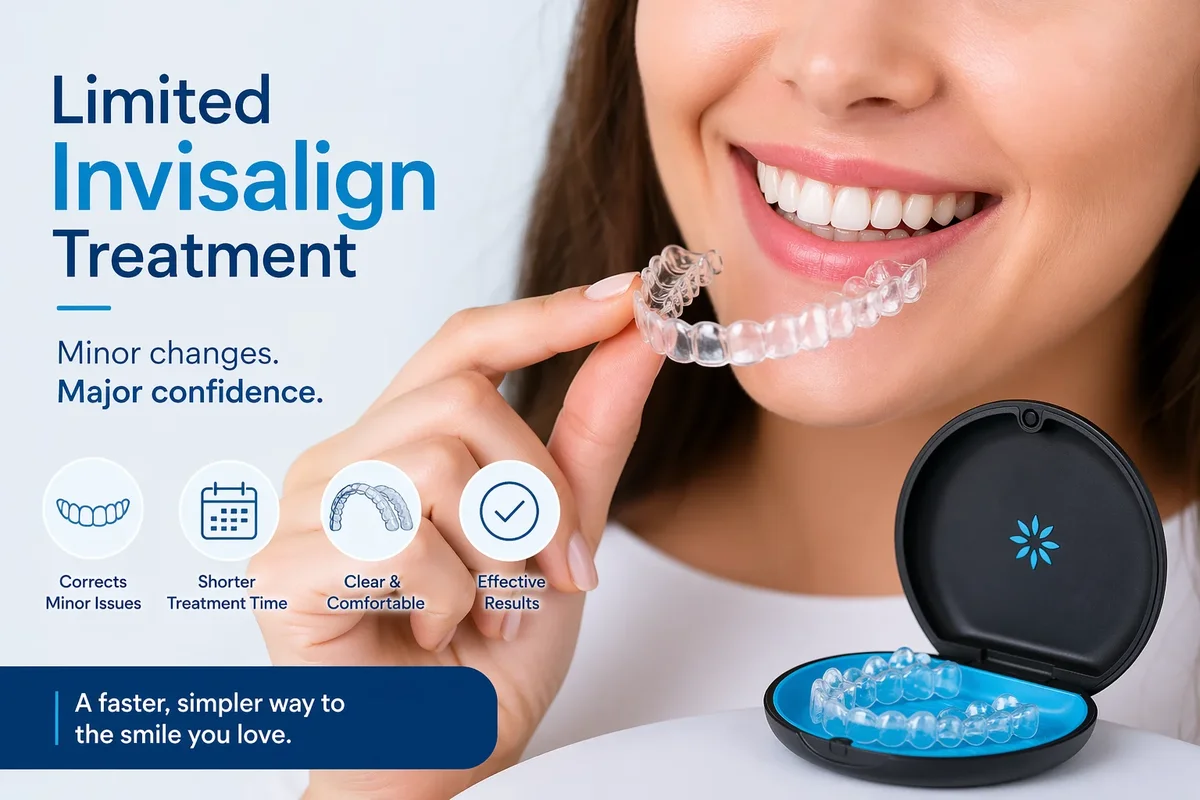
Tips to Get the Best Results from Limited Invisalign Treatment
Achieving the best possible outcome from limited invisalign treatment depends not only on the quality of the aligners but also on how well patients follow the recommended guidelines. While limited invisalign treatment is designed to be efficient and user-friendly, maximizing its benefits requires discipline, consistency, and proper care. By following expert advice and adopting good habits, patients can ensure that their limited invisalign treatment delivers optimal and long-lasting results.
Wear Your Aligners Consistently
The most important factor in the success of limited invisalign treatment is wearing the aligners for the recommended 20–22 hours per day. Since limited invisalign treatment relies on gradual pressure to move teeth, any interruption can slow down progress or affect the final outcome.
Removing aligners too often or forgetting to wear them overnight can delay results and may even require additional aligners. Consistency is key to ensuring that limited invisalign treatment stays on schedule and achieves the desired alignment.
Daily Wear Checklist
- Wear aligners throughout the day and night
- Remove only for eating and cleaning
- Track your daily wear time if needed
Following this routine helps maintain steady progress during limited invisalign treatment. 😊
Maintain Excellent Oral Hygiene
Good oral hygiene is essential during limited invisalign treatment. Because the aligners cover your teeth, any trapped food particles or bacteria can increase the risk of cavities and gum issues.
Brushing and flossing after every meal ensures that your teeth remain clean before placing the aligners back in. This not only protects your oral health but also keeps your aligners clear and odor-free.
Hygiene Best Practices
- Brush at least twice daily
- Floss once a day
- Clean aligners with lukewarm water and a soft brush
Maintaining these habits enhances the overall effectiveness of limited invisalign treatment.
Follow Your Aligner Schedule Strictly
Each set of aligners in limited invisalign treatment is designed to be worn for a specific period, usually one to two weeks. Switching aligners too early or too late can disrupt the treatment process.
Sticking to the prescribed schedule ensures that each stage of limited invisalign treatment progresses smoothly and as planned. If you are unsure about when to switch aligners, always consult your dentist.
Why Timing Matters
Proper timing allows teeth to adjust gradually, preventing discomfort and ensuring that limited invisalign treatment remains effective.
Avoid Foods and Drinks That Can Damage Aligners
Although limited invisalign treatment allows flexibility with eating, aligners should always be removed before consuming food or beverages other than water. Hot drinks can warp the plastic, while colored drinks can stain the aligners.
Taking care of your aligners ensures that they remain clear, hygienic, and effective throughout limited invisalign treatment.
What to Avoid
- Hot beverages while wearing aligners
- Colored drinks like coffee or soda
- Chewing gum with aligners in place
These precautions help maintain the quality of your limited invisalign treatment aligners.
Attend Regular Check-Ups
Even though limited invisalign treatment requires fewer dental visits than traditional braces, regular check-ups are still important. These appointments allow your dentist to monitor progress and make any necessary adjustments.
Skipping appointments can lead to unnoticed issues that may affect the outcome of limited invisalign treatment. Staying connected with your dental provider ensures everything stays on track.
Benefits of Check-Ups
- Progress evaluation
- Early detection of issues
- Professional guidance
If you need to schedule a visit, you can easily do so through the Redent Klinik Contact Page.
Use Retainers After Treatment
Completing limited invisalign treatment is only part of the journey. To maintain the results, wearing retainers is essential. Without retainers, teeth can gradually shift back to their original positions.
Retainers are usually worn at night and play a crucial role in preserving the success of limited invisalign treatment.
Retention Tips
- Wear retainers as instructed
- Keep them clean and safe
- Replace them when necessary
These steps ensure long-term stability after limited invisalign treatment.
Stay Motivated Throughout the Process
Although limited invisalign treatment is relatively short, staying motivated is important. Tracking your progress and comparing before-and-after photos can help you see the improvements and stay committed.
Many patients find that the visible changes during limited invisalign treatment encourage them to follow instructions more carefully, leading to better results.
Trust Professional Guidance
Following your dentist’s recommendations is essential for achieving the best outcome from limited invisalign treatment. Professionals use advanced planning and expertise to design your treatment, so adhering to their advice ensures optimal results.
Organizations like the American Dental Association emphasize the importance of professional supervision in orthodontic care, including limited invisalign treatment.
Final Thoughts on Maximizing Results
In conclusion, limited invisalign treatment offers excellent results when combined with proper care and patient commitment. By wearing aligners consistently, maintaining oral hygiene, and following professional advice, patients can achieve a straighter and healthier smile efficiently.
With the right approach, limited invisalign treatment becomes not just a cosmetic improvement but a long-term investment in oral health and confidence. 😊