
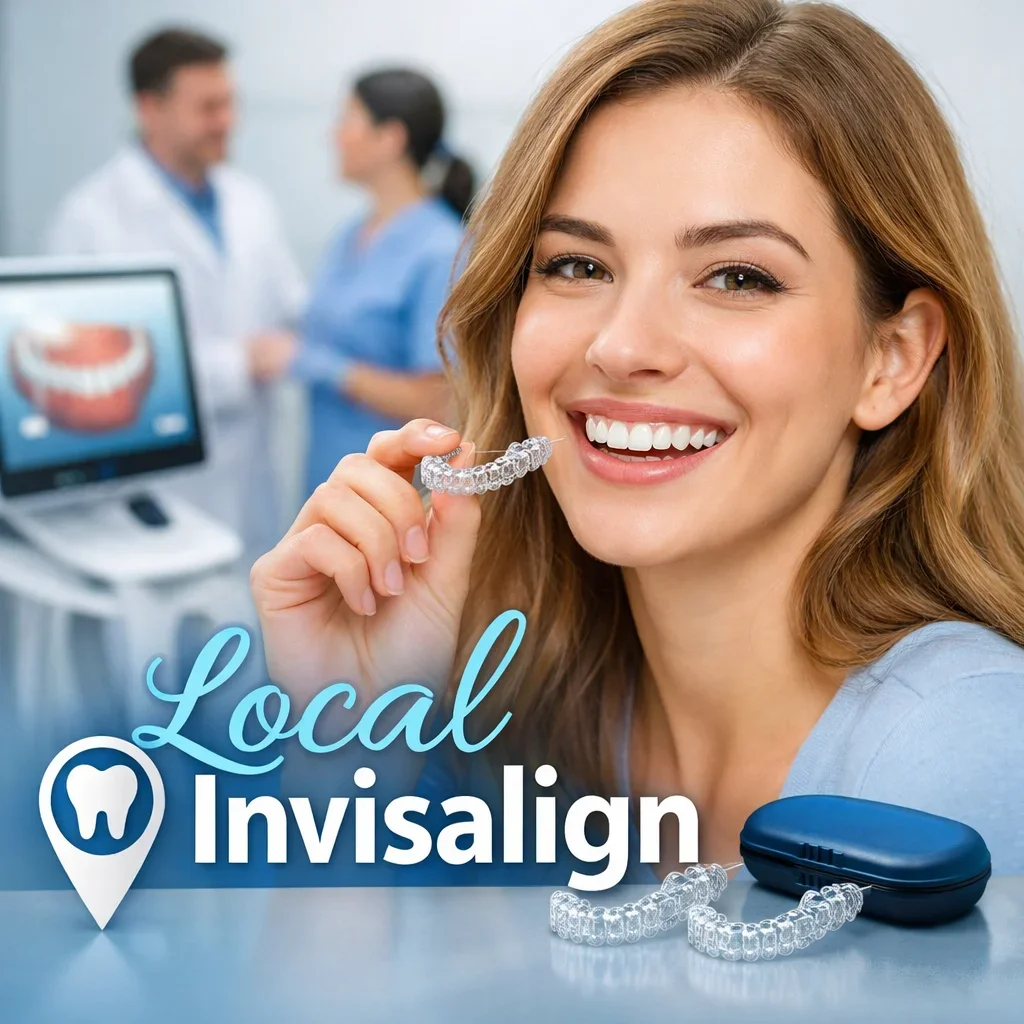
Choosing local invisalign treatment is one of the most popular and patient-friendly ways to achieve a straighter, healthier smile today 😁. Unlike traditional metal braces, local invisalign uses a series of nearly invisible, removable aligners that are custom-designed to gently shift your teeth into proper alignment. This modern orthodontic solution is especially appealing for adults and teens who want effective results without the aesthetic and lifestyle limitations of brackets and wires.
When patients search for local invisalign, their main intention is usually clear: they want high-quality orthodontic care close to home, delivered by certified dental professionals, with predictable results and ongoing support. Local treatment matters because Invisalign is not just about aligners—it is a guided medical process that requires accurate diagnosis, digital planning, and regular professional monitoring 🦷.
Local invisalign treatment begins with a detailed consultation at a nearby dental clinic. During this visit, your dentist evaluates your teeth, bite alignment, jaw structure, and overall oral health. Advanced 3D scanning technology is often used instead of traditional impressions, allowing your dentist to create a precise digital roadmap of your treatment from start to finish. This personalized plan shows how your teeth will move over time and what your final smile is expected to look like.
One of the biggest advantages of choosing local invisalign is accessibility. You can easily attend follow-up appointments, receive quick adjustments if needed, and get professional answers to your questions without long travel times. This local presence increases treatment success, as regular check-ups ensure aligners are working correctly and that your oral health remains stable throughout the process.
The aligners used in local invisalign treatment are made from smooth, BPA-free plastic that fits snugly over your teeth. Each set is worn for approximately one to two weeks before switching to the next set in the series. Over time, these aligners apply controlled pressure that gradually moves teeth into better alignment. Because they are removable, patients can eat, brush, and floss normally—something not possible with fixed braces 🍎.
Another important reason patients prefer local invisalign is comfort. Traditional braces often cause irritation to gums and cheeks, while Invisalign aligners are designed for a smooth and comfortable fit. While mild pressure is expected when starting a new aligner set, most patients report significantly less discomfort compared to conventional orthodontic methods.
From a health perspective, local invisalign does more than improve appearance. Straighter teeth are easier to clean, reducing the risk of plaque buildup, cavities, and gum disease. Proper alignment also helps distribute bite pressure evenly, which may prevent jaw pain, headaches, and abnormal tooth wear over time. According to the American Dental Association, orthodontic treatment plays a key role in maintaining long-term oral health, not just cosmetic improvement.
Patients often ask whether local invisalign is suitable for complex cases. Thanks to advancements in aligner technology, Invisalign can now treat a wide range of orthodontic issues, including crowding, spacing, overbites, underbites, and crossbites. Your local Invisalign provider will determine if clear aligner therapy is appropriate for your specific needs or if alternative treatments are recommended.
Trust is another major factor. Choosing local invisalign means working with a dental team that understands your medical history, lifestyle, and expectations. This relationship-based care leads to better communication, higher satisfaction, and more predictable outcomes. If you ever experience discomfort, lose an aligner, or have concerns about progress, your local provider is readily available to assist.
If you are considering local invisalign and want expert guidance tailored to your smile goals, professional consultation is the best next step. You can easily reach out through the Redent Klinik Contact Page to receive personalized information, appointment scheduling, and treatment planning 📞.
In summary, local invisalign offers a modern, discreet, and effective solution for achieving a confident smile while maintaining daily comfort and convenience. With professional supervision, advanced digital planning, and local accessibility, Invisalign clear aligners continue to be one of the most trusted orthodontic options available today ✨.
What Is Local Invisalign and How Does It Work?
Local invisalign is a modern orthodontic treatment that uses a series of clear, removable aligners to straighten teeth gradually under professional supervision at a nearby dental clinic 🦷. The term “local” highlights an important advantage: treatment is planned, monitored, and adjusted by a qualified dentist or orthodontist in your area, ensuring personalized care and consistent follow-up throughout the process.
At its core, local invisalign combines advanced digital technology with hands-on dental expertise. Instead of metal brackets and wires, patients receive custom-made transparent aligners designed to fit their teeth precisely. These aligners apply gentle, controlled pressure to move teeth step by step into healthier and more attractive positions.
How Local Invisalign Differs From Mail-Order Aligners
Many patients confuse local invisalign with at-home or mail-order clear aligners, but there is a critical difference. With local treatment, every stage is overseen by a licensed dental professional. This means your oral health, bite alignment, gum condition, and jaw function are carefully evaluated before and during treatment.
Mail-order systems often rely on self-taken impressions and lack clinical supervision, which can increase the risk of improper tooth movement. Local invisalign, on the other hand, prioritizes safety, precision, and long-term results by combining aligner technology with professional diagnosis and monitoring.
The Initial Consultation and Digital Planning
The local invisalign process begins with an in-depth consultation at your dental clinic. During this visit, your dentist examines your teeth, gums, and bite to confirm that Invisalign is a suitable option. Digital scans or 3D imaging are then used to create a highly accurate model of your mouth, eliminating the discomfort of traditional impressions 😊.
Using this digital data, your dentist designs a customized treatment plan that maps out every stage of tooth movement. This plan shows how your smile will transform over time, how many aligner sets are required, and approximately how long treatment will take. This level of planning is one of the strongest advantages of local invisalign.
Customized Aligners and Precision Fit
Each aligner in a local invisalign series is uniquely crafted to move specific teeth at each stage. Aligners are made from smooth, medical-grade plastic that fits comfortably over your teeth while remaining nearly invisible when worn. Most patients find them discreet enough for work, social events, and daily life without self-consciousness.
You typically wear each aligner set for 20 to 22 hours per day, removing them only for eating, drinking (except water), brushing, and flossing. Every one to two weeks, you switch to the next aligner, continuing the gradual movement toward your final smile.
How Tooth Movement Happens Safely
Local invisalign works by applying gentle, consistent pressure that encourages the bone around your teeth to remodel naturally. This biological process allows teeth to shift safely without damaging roots or surrounding tissues. Regular check-ups with your local provider ensure that movement stays on track and that your gums and teeth remain healthy throughout treatment.
According to the American Dental Association, professionally supervised orthodontic treatment helps reduce risks such as gum recession, bite problems, and uneven tooth wear. This is why professional involvement is a key part of local invisalign.
Monitoring Progress With a Local Provider
One of the most valuable aspects of local invisalign is ongoing monitoring. During follow-up visits, your dentist checks aligner fit, tracks tooth movement, and makes refinements if needed. In some cases, small attachments may be placed on teeth to assist with more complex movements, improving precision and outcomes.
Because your provider is local, any issues—such as discomfort, lost aligners, or questions about wear—can be addressed quickly and professionally. This responsiveness significantly improves treatment success and patient confidence 👍.
Why Local Invisalign Is a Reliable Long-Term Solution
Local invisalign is not just about straightening teeth; it is about improving overall oral health and function. Proper alignment makes teeth easier to clean, reduces plaque buildup, and supports healthier gums. A balanced bite also helps prevent jaw strain, headaches, and uneven tooth wear over time.
By choosing local invisalign, patients benefit from advanced orthodontic technology combined with trusted, nearby dental care. This combination ensures accurate planning, safe tooth movement, and long-lasting results that support both confidence and dental health ✨.
Benefits of Choosing Local Invisalign Treatment
Choosing local invisalign treatment offers a wide range of advantages that go far beyond straightening teeth. Patients today are not only looking for aesthetic improvements but also for comfort, safety, convenience, and long-term oral health benefits 🦷. Local Invisalign combines advanced clear aligner technology with personalized, nearby professional care, creating an orthodontic experience that fits seamlessly into modern life.
When Invisalign treatment is managed locally, patients gain direct access to dental experts who understand their needs, monitor progress closely, and adjust treatment when necessary. This hands-on approach is one of the key reasons why local invisalign consistently delivers higher satisfaction and more predictable outcomes.
Personalized Care and Professional Supervision
One of the most significant benefits of local invisalign is individualized treatment planning. Every smile is unique, and local providers design aligner plans based on detailed clinical examinations, digital scans, and bite analysis. This ensures that tooth movement is not only effective but also safe and biologically appropriate.
Professional supervision throughout treatment allows early detection of potential issues such as poor aligner fit, delayed movement, or gum sensitivity. With local invisalign, adjustments can be made quickly, preventing complications and keeping treatment on schedule 😊.
Comfort and Lifestyle Flexibility
Compared to traditional braces, local invisalign offers a significantly more comfortable experience. The aligners are made from smooth, flexible plastic that does not irritate cheeks or gums. There are no metal wires or brackets that require emergency visits due to breakage.
Another major advantage of local invisalign is lifestyle freedom. Because aligners are removable, patients can eat their favorite foods without restrictions and maintain excellent oral hygiene. Brushing and flossing remain simple, which helps reduce the risk of cavities and gum disease during treatment 🍽️.
Discreet Appearance for Confidence
The nearly invisible design of aligners is a top reason patients choose local invisalign. This discreet appearance is especially appealing for adults and professionals who want orthodontic treatment without drawing attention. Aligners blend naturally with your smile, allowing you to speak, work, and socialize with confidence.
Improved Oral Health Outcomes
Local invisalign is not just a cosmetic solution—it plays an important role in improving oral health. Properly aligned teeth are easier to clean, reducing plaque buildup and lowering the risk of gum disease. Straight teeth also help distribute bite forces evenly, minimizing excessive wear on certain teeth.
According to the American Dental Association, orthodontic treatment contributes to better long-term dental health by correcting misalignment that can lead to functional problems. With local invisalign, these benefits are achieved under professional guidance, ensuring optimal results.
Convenience of Local Appointments
Accessibility is a major advantage of local invisalign. Having a provider nearby makes it easy to attend regular check-ups, address concerns quickly, and receive in-person support whenever needed. This convenience reduces missed appointments and helps patients stay committed to wearing aligners as prescribed.
If an aligner is lost or damaged, local clinics can respond quickly, minimizing treatment delays. This level of responsiveness is simply not possible with remote or unsupervised aligner programs.
Predictable Results and Digital Accuracy
Local invisalign treatment is planned using advanced digital modeling that shows patients how their teeth will move over time. This predictability builds trust and motivation, as patients can visualize their expected results before treatment even begins ✨.
Because treatment is monitored locally, dentists can refine aligner plans if teeth are not moving exactly as expected. This adaptability ensures that results remain accurate and aligned with the original treatment goals.
Stronger Patient–Dentist Relationship
Another overlooked benefit of local invisalign is the ongoing relationship with your dental provider. Local clinics focus on long-term care, not just short-term alignment. Your dentist understands your dental history, monitors your overall oral health, and can integrate Invisalign treatment into a broader preventive care plan.
If you are considering starting local invisalign and want reliable guidance from experienced professionals, reaching out through the Redent Klinik Contact Page is an excellent first step 📞.
In summary, local invisalign offers a unique combination of comfort, convenience, professional oversight, and lasting health benefits. By choosing a local provider, patients gain not only a straighter smile but also confidence in a safe, well-supported orthodontic journey that fits their lifestyle and long-term dental goals.
Who Is an Ideal Candidate for Local Invisalign?
Local invisalign is designed to be a flexible and effective orthodontic solution for a wide range of patients, but it is especially important to understand who benefits most from this treatment 🦷. Many people assume Invisalign is only for minor cosmetic fixes, yet modern aligner technology—when supervised by a local dental professional—can successfully treat many common orthodontic concerns.
Identifying the ideal candidate for local invisalign involves evaluating dental alignment, oral health, lifestyle habits, and patient commitment. Because treatment is guided locally, dentists can accurately determine suitability and tailor the approach to each individual’s needs.
Adults Seeking Discreet Orthodontic Treatment
Adults are among the most common candidates for local invisalign. Many adults avoided braces in their teenage years or experienced shifting teeth later in life. Invisalign offers a subtle solution that fits professional and social lifestyles without the visibility of metal braces 😁.
For adults, local invisalign is particularly appealing because it allows for continued confidence at work, meetings, and public interactions. The aligners are nearly invisible, removable, and easy to integrate into daily routines, making them ideal for individuals who value aesthetics and flexibility.
Teenagers With Mild to Moderate Alignment Issues
Teenagers can also be excellent candidates for local invisalign, especially those with mild to moderate orthodontic concerns such as crowding, spacing, or bite irregularities. Invisalign Teen options often include features designed to support compliance, such as wear indicators.
With local supervision, dentists ensure teens are wearing aligners correctly and maintaining good oral hygiene. This professional oversight is critical, as growing mouths require careful monitoring to ensure healthy tooth movement.
Parental Supervision and Local Follow-Ups
One advantage of choosing local invisalign for teens is the ability for parents to attend appointments and stay informed about progress. Regular local check-ups allow dentists to assess development, adjust treatment plans, and guide families through each stage of orthodontic care.
Patients With Common Orthodontic Concerns
Local invisalign can effectively treat many orthodontic issues, including:
- Overcrowded teeth
- Gaps or spacing between teeth
- Overbite, underbite, or crossbite
- Minor relapse after previous orthodontic treatment
Thanks to advanced digital planning, local Invisalign providers can precisely control tooth movement, making aligners suitable for more cases than ever before. A thorough clinical evaluation ensures that Invisalign is the right choice for your specific condition.
Patients Committed to Wearing Aligners Consistently
One of the most important factors in determining candidacy for local invisalign is patient commitment. Aligners must be worn for 20–22 hours per day to achieve optimal results. Patients who are disciplined, motivated, and willing to follow professional instructions tend to experience the best outcomes.
Local providers play a key role in reinforcing compliance by monitoring wear patterns and providing guidance during follow-up visits 👍.
Patients With Healthy Gums and Teeth
Before starting local invisalign, patients should have good overall oral health. Active gum disease, untreated cavities, or severe bone loss may need to be addressed before aligner treatment begins. A local dentist ensures that your mouth is healthy enough to support safe tooth movement.
According to the American Dental Association, maintaining healthy gums and teeth is essential for successful orthodontic treatment. Local Invisalign providers prioritize this foundation to protect long-term oral health.
Who May Not Be an Ideal Candidate?
While local invisalign is highly versatile, it may not be suitable for every case. Severe jaw discrepancies, complex bite issues, or patients unwilling to wear aligners as directed may require alternative orthodontic solutions. A local consultation ensures honest recommendations based on medical necessity rather than convenience.
Why Local Evaluation Matters
The greatest advantage of local invisalign is accurate, in-person evaluation. Local dentists assess not just tooth position, but jaw function, bite balance, facial structure, and long-term stability. This comprehensive approach ensures that Invisalign treatment is both safe and effective ✨.
If you are unsure whether local invisalign is right for you, a professional consultation can provide clarity and personalized guidance. You can easily schedule an evaluation through the Redent Klinik Contact Page and take the first step toward a healthier, more confident smile.
In conclusion, the ideal candidate for local invisalign is someone seeking discreet orthodontic care, committed to wearing aligners consistently, and guided by a qualified local dental professional. With the right support and planning, Invisalign can deliver impressive, lasting results for a wide range of patients.
Local Invisalign vs Traditional Braces: Key Differences
When deciding between orthodontic options, many patients compare local invisalign with traditional metal braces to determine which solution best fits their needs 🦷. Both treatments aim to straighten teeth and improve bite alignment, but they differ significantly in comfort, appearance, lifestyle impact, and clinical experience. Understanding these differences helps patients make confident, informed decisions.
Choosing local invisalign means opting for a modern, discreet approach supervised by a nearby dental professional, while traditional braces rely on fixed metal components and more frequent in-office adjustments. Below, we explore how these two options compare across the most important factors.
Appearance and Discretion
One of the most noticeable differences between local invisalign and traditional braces is appearance. Invisalign aligners are clear and nearly invisible when worn, making them a preferred option for adults and teens who want a subtle orthodontic solution 😁.
Traditional braces, by contrast, use metal brackets and wires that are clearly visible. While modern braces may be smaller than in the past, they still draw attention. For patients concerned about aesthetics in professional or social settings, local invisalign offers a significant advantage.
Comfort and Daily Experience
Local invisalign aligners are made from smooth, medical-grade plastic designed to fit snugly over teeth without sharp edges. This reduces irritation to gums and cheeks, which is a common complaint with metal braces.
Traditional braces can cause discomfort from wires poking the mouth, brackets rubbing against soft tissue, and pressure adjustments during tightening appointments. While both treatments involve some pressure as teeth move, many patients report a more comfortable overall experience with local invisalign.
Eating and Oral Hygiene
Another major difference lies in daily habits. With local invisalign, aligners are removable, allowing patients to eat without restrictions and maintain normal brushing and flossing routines 🍎. This supports better oral hygiene throughout treatment.
Traditional braces require avoiding certain foods and demand extra care when cleaning around brackets and wires. Food particles can become trapped, increasing the risk of cavities and gum inflammation if hygiene is not meticulous.
Treatment Monitoring and Adjustments
Both orthodontic methods require professional oversight, but local invisalign relies heavily on digital planning and periodic local check-ups. Dentists monitor progress, evaluate aligner fit, and make refinements when necessary.
Traditional braces typically require more frequent in-office visits for wire tightening and bracket adjustments. While effective, these appointments can be time-consuming and sometimes uncomfortable.
Effectiveness and Case Suitability
Modern local invisalign systems can treat a wide range of orthodontic issues, including crowding, spacing, and many bite problems. Advanced digital planning allows precise control of tooth movement, often producing predictable and efficient results.
Traditional braces may still be recommended for very complex cases involving severe jaw discrepancies or extensive tooth rotation. A local dental evaluation ensures the most appropriate treatment is selected based on clinical needs rather than convenience.
Lifestyle Flexibility and Convenience
Local invisalign offers unmatched lifestyle flexibility. Patients can remove aligners for special occasions, sports, or important events without disrupting treatment—as long as wear-time guidelines are followed 👍.
Traditional braces are fixed and cannot be removed, which may interfere with certain activities or comfort preferences. For many patients, the flexibility of local invisalign significantly improves overall satisfaction.
Professional Guidance and Safety
Both treatments are safest and most effective when supervised by qualified dental professionals. Choosing local invisalign ensures that treatment planning, monitoring, and refinements are handled in person by a trusted provider who understands your dental history.
According to the American Dental Association, professional orthodontic supervision is essential for protecting gum health, root integrity, and long-term bite stability. This applies equally to Invisalign and traditional braces.
Long-Term Results and Retention
Regardless of the method chosen, long-term success depends on proper retention after treatment. Local invisalign providers typically design custom retainers and follow-up plans to help maintain results after aligner therapy ends.
Traditional braces also require retainers, but patients who complete Invisalign treatment often find the transition to retainers easier due to familiarity with removable appliances.
Making the Right Choice
The decision between local invisalign and traditional braces ultimately depends on personal preferences, lifestyle, and clinical requirements. Invisalign excels in discretion, comfort, and flexibility, while braces may be better suited for certain complex cases.
A local consultation is the best way to determine which option fits your needs. If you want expert guidance tailored to your smile goals, you can schedule an evaluation through the Redent Klinik Contact Page 📞.
In summary, local invisalign stands out as a modern, patient-friendly alternative to traditional braces, offering comfort, convenience, and aesthetic appeal without compromising effectiveness. With professional local supervision, both options can deliver excellent results—but Invisalign often provides a smoother and more flexible orthodontic journey ✨.
The Step-by-Step Local Invisalign Treatment Process
Understanding the full journey of local invisalign treatment helps patients feel confident, prepared, and motivated from day one 🦷. Unlike generic or remote aligner programs, local Invisalign follows a structured, medically supervised process that ensures accuracy, safety, and long-term success. Each step is carefully planned and guided by a local dental professional who monitors your progress in person.
The local invisalign process is not just about receiving aligners—it is a comprehensive orthodontic pathway that integrates diagnosis, digital planning, active treatment, and post-treatment retention. Below is a detailed, step-by-step breakdown of how the process works.
Step 1: Initial Local Consultation and Oral Assessment
The journey begins with an in-person consultation at a local dental clinic. During this visit, your dentist evaluates whether local invisalign is suitable for your case. This includes examining tooth alignment, bite function, gum health, jaw structure, and overall oral condition.
Any existing dental issues—such as cavities or gum inflammation—must be addressed before starting aligner treatment. This ensures that tooth movement occurs in a healthy and stable environment 😊.
Step 2: Digital Scanning and 3D Treatment Planning
Once you are approved for local invisalign, advanced digital scans are taken using intraoral scanners. These scans create a precise 3D model of your teeth, replacing traditional impressions that many patients find uncomfortable.
Your local provider then uses specialized Invisalign software to design a personalized treatment plan. This plan maps out how each tooth will move at every stage, estimates treatment duration, and predicts the final result. Patients often appreciate being able to preview their future smile before treatment begins ✨.
Precision Planning for Predictable Results
This digital planning phase is one of the strongest advantages of local invisalign. Because your dentist controls the treatment plan, they can fine-tune movements for optimal bite balance, symmetry, and stability—something unsupervised systems cannot safely achieve.
Step 3: Custom Aligner Fabrication
After the treatment plan is finalized, your custom aligners are manufactured using medical-grade, BPA-free plastic. Each aligner is designed to apply gentle, targeted pressure to specific teeth.
In a local invisalign treatment plan, patients typically receive multiple aligner sets at once, each to be worn sequentially for one to two weeks. Every new aligner represents a small, controlled step toward improved alignment.
Step 4: Wearing Aligners and Daily Responsibilities
Successful local invisalign treatment depends heavily on patient compliance. Aligners must be worn for 20–22 hours per day and removed only for eating, drinking (except water), brushing, and flossing.
Because aligners are removable, patients can maintain excellent oral hygiene and enjoy their normal diet 🍎. Your local provider will give detailed instructions on cleaning aligners, managing discomfort, and tracking wear schedules.
Step 5: Regular Local Check-Ups and Monitoring
Throughout treatment, patients attend periodic follow-up appointments at their local clinic. These visits allow your dentist to monitor progress, evaluate aligner fit, and ensure teeth are moving as planned.
One major benefit of local invisalign is the ability to make real-time adjustments. If a tooth is not responding as expected, your provider can modify the plan, add attachments, or refine aligners to maintain progress 👍.
Step 6: Mid-Course Refinements (If Needed)
Some local invisalign patients may require refinements—additional aligners designed to perfect alignment after the initial series. This is a normal and expected part of professional orthodontic care.
Because treatment is managed locally, refinements are based on direct clinical evaluation rather than assumptions. This ensures a more precise and satisfying final result.
Step 7: Completion and Final Results
Once all aligners have been worn and treatment goals are achieved, your dentist confirms that teeth are properly aligned and the bite is stable. At this stage, local invisalign treatment is considered complete 🎉.
Patients often notice improvements not only in appearance but also in comfort, chewing efficiency, and ease of cleaning.
Step 8: Retainers and Long-Term Maintenance
The final and most critical step of local invisalign is retention. Teeth naturally tend to shift back without support, so retainers are essential for preserving results.
Your local provider will design custom retainers and provide guidance on wear schedules. According to the American Dental Association, retention is key to maintaining orthodontic outcomes long-term.
Why the Local Process Matters
The structured, supervised nature of local invisalign ensures safer tooth movement, better bite function, and more stable results compared to unsupervised alternatives. Local care means accountability, accessibility, and professional responsibility at every step.
If you are ready to begin your local invisalign journey with expert guidance, you can easily schedule a consultation through the Redent Klinik Contact Page 📞.
In summary, the step-by-step local invisalign treatment process is a carefully managed orthodontic pathway that combines digital precision with hands-on professional care—delivering results that are not only beautiful, but also healthy and lasting.
How Long Does Local Invisalign Treatment Take?
One of the most common questions patients ask before starting orthodontic care is how long treatment will last. With local invisalign, treatment time is highly individualized, predictable, and often shorter than many people expect 🦷. Because Invisalign uses advanced digital planning and is supervised by a local dental professional, timelines are based on real clinical factors rather than generic estimates.
The duration of local invisalign treatment depends on several variables, including the complexity of tooth movement, patient compliance, and whether refinements are needed. Understanding these factors helps set realistic expectations and increases overall satisfaction with the process.
Average Treatment Timeline for Local Invisalign
On average, local invisalign treatment lasts between 6 and 18 months. Mild alignment issues, such as small gaps or minor crowding, may be corrected in as little as 4 to 6 months. More moderate cases typically fall within the 9 to 12 month range.
Complex cases involving bite correction or significant crowding may require a longer timeline. However, even in these situations, many patients find that local invisalign is comparable to—or faster than—traditional braces due to precise digital planning and consistent monitoring 😊.
Factors That Influence Treatment Duration
There is no one-size-fits-all timeline for local invisalign. Several key factors determine how long treatment will take:
- Severity of misalignment or bite issues
- Number of aligners required
- Patient compliance with wear-time guidelines
- Need for attachments or refinements
- Biological response of teeth and bone
Your local provider evaluates all of these factors during the initial consultation to provide a realistic and personalized timeline.
The Role of Patient Compliance
One of the most important factors affecting local invisalign treatment time is patient commitment. Aligners must be worn for 20–22 hours per day to achieve the planned tooth movement.
Patients who wear aligners consistently often finish treatment on time or even earlier than expected 👍. In contrast, inconsistent wear can slow progress, requiring additional aligners and extending the overall timeline.
Why Local Monitoring Helps Stay on Track
With local invisalign, regular in-person check-ups help ensure compliance and catch issues early. Your dentist can identify if aligners are not fitting correctly or if teeth are not moving as planned, allowing timely adjustments that prevent delays.
Digital Planning and Predictability
One of the biggest advantages of local invisalign is digital treatment planning. Before treatment even begins, your dentist uses 3D modeling software to map out every stage of tooth movement.
This technology allows patients to see an estimated timeline and expected results from the start. While minor adjustments may be needed, digital planning makes local invisalign one of the most predictable orthodontic options available ✨.
Do Refinements Extend Treatment Time?
Some patients worry that refinements will significantly lengthen local invisalign treatment. In reality, refinements are a normal part of professional orthodontic care and usually add only a few weeks or months.
Refinements allow your local provider to perfect alignment and ensure optimal bite function. Because refinements are based on direct clinical evaluation, they improve final results rather than representing a setback.
Comparing Invisalign Treatment Time to Braces
In many cases, local invisalign offers a shorter or similar treatment duration compared to traditional braces. The ability to plan movements digitally and make precise adjustments locally often results in efficient progress.
Additionally, fewer emergency visits and less downtime contribute to a smoother overall experience with local invisalign.
Long-Term Stability vs Speed
While treatment speed is important, long-term stability matters even more. Local invisalign prioritizes controlled, biologically safe tooth movement to protect roots, gums, and bone health.
According to the American Dental Association, orthodontic treatment should balance efficiency with safety to ensure lasting results. This is why professional supervision plays a critical role in treatment timing.
What Happens After Treatment Ends?
Once active local invisalign treatment is complete, the retention phase begins. Wearing retainers does not extend treatment time, but it is essential for maintaining results.
Your local provider will guide you on retainer wear schedules to prevent teeth from shifting back. This step protects the time and effort invested during aligner therapy.
Setting Realistic Expectations
The best way to understand how long local invisalign will take for you is through a personalized consultation. Local dentists base timelines on clinical evaluation, not estimates or averages.
If you want a clear, honest assessment of your expected local invisalign treatment duration, you can schedule a professional evaluation through the Redent Klinik Contact Page 📞.
In summary, local invisalign treatment time is flexible, predictable, and customized to each patient. With consistent wear, professional monitoring, and modern digital planning, many patients achieve excellent results within a timeframe that fits comfortably into their lives—without unnecessary delays.
Local Invisalign Costs, Financing, and Payment Options
Understanding the financial side of orthodontic care is essential before starting treatment, and local invisalign is no exception 🦷. Patients often want clear, transparent information about costs, what influences pricing, and how payment options can make treatment more accessible. The good news is that local Invisalign providers typically offer flexible solutions designed to fit different budgets and lifestyle needs.
The cost of local invisalign is not a fixed number, because each treatment plan is customized. Factors such as case complexity, treatment duration, and professional supervision all play a role in determining the final investment.
Average Cost of Local Invisalign Treatment
In many regions, the average cost of local invisalign generally ranges between $3,000 and $6,500. Mild cases requiring fewer aligners may be on the lower end of this range, while more complex treatments involving bite correction or refinements may fall toward the higher end.
These figures reflect professionally supervised treatment that includes digital planning, custom aligners, follow-up visits, and post-treatment retainers. While online aligner programs may appear cheaper, they often exclude critical clinical oversight and long-term support.
What Is Typically Included in the Cost?
Most local invisalign treatment packages include:
- Initial consultation and oral evaluation
- Digital scans and 3D treatment planning
- Custom Invisalign aligners
- Regular local check-ups and monitoring
- Mid-course refinements if needed
- Final retainers after treatment completion
Having these services bundled together provides clarity and helps patients understand the true value of local invisalign.
Factors That Influence Local Invisalign Pricing
Several variables affect how much local invisalign treatment costs:
- Severity of misalignment or bite issues
- Number of aligners required
- Length of treatment
- Need for attachments or refinements
- Experience and credentials of the local provider
Because treatment is managed locally, dentists can explain exactly why a certain plan costs what it does, ensuring transparency and trust 😊.
Insurance Coverage for Local Invisalign
Dental insurance coverage for local invisalign varies by provider and policy. Some plans cover orthodontic treatment partially, especially for younger patients, while others may offer a lifetime orthodontic benefit.
Local clinics often assist patients in checking insurance eligibility and submitting claims. This guidance can significantly reduce out-of-pocket expenses and simplify the process 👍.
Flexible Payment Plans and Financing Options
One major advantage of choosing local invisalign is access to flexible payment options. Many local dental clinics offer:
- Monthly installment plans
- Interest-free financing options
- Low initial down payments
- Customized payment schedules
These options make local invisalign more affordable by spreading the cost over time rather than requiring a large upfront payment.
Why Financing Makes Treatment More Accessible
Financing allows patients to begin local invisalign treatment sooner, improving oral health and confidence without long delays. Local providers typically work with reputable financing partners or offer in-house plans to accommodate different financial situations.
Comparing Value: Local Invisalign vs Cheaper Alternatives
While some remote aligner systems advertise lower prices, they often lack comprehensive clinical oversight. Local invisalign includes professional diagnosis, ongoing monitoring, and the ability to address complications promptly.
According to the American Dental Association, orthodontic treatment should always be supervised by a qualified dental professional to protect long-term oral health. When this is considered, local invisalign represents strong value rather than just a cost.
Long-Term Value and Return on Investment
Local invisalign is an investment in both appearance and oral health. Straighter teeth are easier to clean, reduce the risk of dental problems, and support a healthier bite. These benefits can lower future dental expenses related to decay, gum disease, and uneven tooth wear.
Additionally, many patients report increased confidence and improved quality of life after completing local invisalign treatment ✨.
Getting a Personalized Cost Estimate
The most accurate way to understand the cost of local invisalign is through a personalized consultation. Local dentists assess your specific needs and provide a detailed treatment and payment plan—without guesswork.
If you want clear pricing, insurance guidance, and financing details tailored to your situation, you can request an evaluation through the Redent Klinik Contact Page 📞.
In summary, local invisalign costs reflect comprehensive, professionally supervised care. With insurance support, flexible financing, and transparent planning, Invisalign becomes an accessible and worthwhile investment for patients seeking safe, effective, and long-lasting orthodontic results.
Finding the Best Local Invisalign Provider Near You
Choosing the right provider is one of the most important decisions you will make when starting local invisalign treatment 🦷. While Invisalign technology itself is highly advanced, the success of your treatment largely depends on the experience, expertise, and approach of the local dental professional guiding it. A skilled provider ensures accurate planning, safe tooth movement, and long-term stability of results.
When patients search for local invisalign, they are not just looking for aligners—they are looking for trusted care, clear communication, and professional accountability close to home. Understanding what to look for in a provider helps you avoid common mistakes and ensures a smooth treatment journey.
Why Choosing a Local Provider Matters
Local invisalign treatment offers a major advantage over remote or mail-order aligner systems: in-person care. A local provider can physically examine your teeth, gums, and bite, identifying issues that digital scans alone may miss.
Having a nearby dentist also means faster support if concerns arise. Whether you experience discomfort, lose an aligner, or have questions about progress, local access ensures timely solutions and peace of mind 😊.
Credentials and Invisalign Experience
When evaluating a local invisalign provider, credentials matter. Look for a licensed dentist or orthodontist who has completed Invisalign certification and has experience treating a wide range of cases.
Many providers have different levels of Invisalign experience based on the number of cases they complete annually. While labels are not everything, a provider with extensive hands-on Invisalign experience is often better equipped to handle refinements and complex movements.
Questions to Ask About Experience
- How many Invisalign cases have you treated?
- Do you handle refinements in-house?
- Will you personally monitor my progress?
Clear answers to these questions help you assess whether a provider is well-suited for your local invisalign needs.
Technology and Treatment Planning Approach
High-quality local invisalign providers use modern diagnostic tools such as digital scanners, 3D treatment planning software, and advanced imaging. These technologies allow precise planning and improve predictability.
Ask whether your provider offers digital smile previews and detailed explanations of your treatment plan. Transparency in planning builds trust and ensures you understand each phase of your Invisalign journey ✨.
Personalized Care vs One-Size-Fits-All Treatment
One key advantage of local invisalign is customization. Avoid providers who rely on generic aligner plans without thorough evaluation. Every patient’s bite, tooth structure, and movement response are different.
A strong provider tailors aligner sequences, attachment placement, and refinements based on your individual progress—not assumptions.
Reviews, Reputation, and Patient Feedback
Patient reviews can offer valuable insight into a local invisalign provider’s communication style, professionalism, and treatment outcomes. Look for consistent feedback regarding:
- Clear explanations and transparency
- Responsiveness to questions or concerns
- Comfort during treatment
- Satisfaction with final results
While no provider is perfect, patterns in reviews often reveal strengths or red flags 👍.
Consultation Experience and Communication
Your initial consultation is a strong indicator of what your local invisalign experience will be like. A quality provider takes time to listen, explains options clearly, and answers questions without pressure.
You should leave the consultation understanding:
- Your diagnosis and treatment goals
- Expected treatment duration
- Costs and payment options
- What is included in treatment
If you feel rushed or unclear, it may be worth seeking another opinion.
Ongoing Support and Long-Term Care
The best local invisalign providers focus on long-term results, not just short-term alignment. This includes proper retention planning, follow-up visits, and integration with overall dental care.
According to the American Dental Association, continuous professional monitoring is essential for maintaining orthodontic results and protecting oral health. A provider who emphasizes follow-up care demonstrates commitment to lasting outcomes.
Convenience and Accessibility
Location and scheduling flexibility also matter when choosing a local invisalign provider. Convenient appointment times, easy communication, and a supportive staff can significantly enhance your treatment experience.
Local accessibility reduces missed visits and helps ensure treatment stays on track without unnecessary delays.
Taking the Next Step With Confidence
Finding the right local invisalign provider means choosing expertise, transparency, and personalized care. A thorough consultation allows you to compare options and make an informed decision based on trust—not just price.
If you are ready to explore local invisalign with experienced professionals who prioritize patient care, you can schedule a consultation through the Redent Klinik Contact Page 📞.
In conclusion, the best local invisalign provider is one who combines clinical expertise, modern technology, clear communication, and long-term support. With the right local team, Invisalign becomes a safe, effective, and confidence-building journey toward a healthier smile.
Frequently Asked Questions About Local Invisalign
As interest in local invisalign continues to grow, patients naturally have many questions before starting treatment 🦷. Clear aligner therapy is a significant commitment, and understanding the details helps reduce uncertainty and build confidence. This section addresses the most frequently asked questions about local Invisalign, based on real patient concerns and clinical experience.
By choosing local invisalign, patients benefit from professional supervision, transparent communication, and reliable answers tailored to their individual needs. Below, we cover the most common topics patients want clarified before and during treatment.
Is Local Invisalign Really Effective?
Yes, local invisalign is highly effective when prescribed and monitored by a qualified dental professional. Modern Invisalign systems can correct crowding, spacing, and many bite issues using precise digital planning and controlled tooth movement.
The key factor is professional oversight. With local invisalign, dentists track progress, make refinements when needed, and ensure teeth are moving safely. This supervised approach leads to predictable, long-lasting results 😊.
Does Local Invisalign Hurt?
Most patients describe local invisalign as far more comfortable than traditional braces. While some pressure or mild soreness may occur when switching to a new aligner set, this sensation usually fades within a few days.
This pressure is a normal sign that the aligners are working. Because Invisalign uses gradual force rather than sudden adjustments, discomfort is typically minimal and manageable.
How to Manage Mild Discomfort
- Switch to new aligners before bedtime
- Stay consistent with wear time
- Use dentist-approved pain relief if needed
How Often Do I Need Appointments?
One advantage of local invisalign is fewer in-office visits compared to traditional braces. Most patients see their provider every 6–10 weeks for progress checks.
These appointments allow your dentist to confirm aligner fit, assess tooth movement, and address any concerns early 👍. Local access ensures that help is always nearby if unexpected issues arise.
What Happens If I Lose an Aligner?
Losing an aligner can feel stressful, but local invisalign providers are equipped to handle this situation quickly. Depending on your progress, your dentist may advise wearing the previous aligner, moving forward to the next one, or ordering a replacement.
Because your provider is local, you can receive guidance promptly, minimizing treatment delays.
Can I Eat and Drink Normally?
Yes—one of the biggest benefits of local invisalign is dietary freedom 🍎. Aligners are removed while eating and drinking anything other than water, allowing patients to enjoy their favorite foods without restrictions.
This also helps maintain good oral hygiene, as there are no brackets or wires to trap food particles.
Is Local Invisalign Safe?
Local invisalign is considered very safe when treatment is supervised by a licensed dentist or orthodontist. Professional evaluation ensures that gums, teeth, and bone are healthy enough to support tooth movement.
According to the American Dental Association, orthodontic treatment should always be guided by dental professionals to protect oral health and avoid complications.
Will I Need Attachments on My Teeth?
Some local invisalign cases require small, tooth-colored attachments to help guide specific movements. These attachments are discreet and temporary, and they significantly improve treatment precision.
Your local provider will explain whether attachments are necessary and how they support your treatment plan.
What Happens After Treatment Ends?
After completing local invisalign treatment, the retention phase begins. Retainers are essential to prevent teeth from shifting back to their original positions.
Your dentist will provide clear instructions on retainer wear, ensuring your new smile remains stable long-term ✨.
Is Local Invisalign Worth It?
For many patients, local invisalign is absolutely worth the investment. It combines discreet aesthetics, comfort, professional care, and long-term oral health benefits.
Unlike unsupervised alternatives, local Invisalign offers accountability, safety, and personalized care—factors that directly influence treatment success and satisfaction.
How Do I Get Started?
The first step toward local invisalign is a professional consultation. A local dentist can assess your needs, explain your options, and provide a personalized treatment plan.
If you are ready to explore your options with experienced professionals, you can schedule an evaluation through the Redent Klinik Contact Page 📞.
In conclusion, local invisalign is a safe, effective, and patient-friendly orthodontic solution supported by modern technology and professional care. By addressing common questions upfront, patients can move forward with confidence—knowing they are making an informed decision for their smile and long-term dental health.