
Locator abutments are one of the most widely used and trusted solutions in modern implant dentistry. 🦷 They serve as the critical connecting components between dental implants placed in the jawbone and the removable overdenture that sits on top. By providing a secure and stable attachment, locator abutments not only enhance chewing function but also improve comfort, aesthetics, and overall oral health. This comprehensive guide is designed to help both patients and dental professionals understand every essential aspect of locator abutments, from their design and function to their benefits, maintenance, and long-term outcomes.
The concept of dental implant abutments is not new, but locator abutments have revolutionized prosthetic dentistry because of their low profile, self-aligning design, and versatility. Patients who have struggled with loose dentures or discomfort often find locator abutments life-changing, as they restore confidence in eating, speaking, and smiling. For dentists, locator abutments offer a predictable, evidence-based, and patient-friendly solution that reduces complications and increases patient satisfaction. Their design has been refined over years of research and innovation, making them a standard of care in many dental clinics worldwide.
One of the most remarkable features of locator abutments is their dual retention mechanism. Unlike older attachment systems, these abutments use both inner and outer retention to ensure overdentures remain stable during function. This means fewer embarrassing moments of slipping dentures during meals or conversations. Patients can bite into a crunchy apple or enjoy a steak without worrying about prosthesis movement. At the same time, the attachments are easy to insert and remove, ensuring patients maintain independence and proper oral hygiene routines.
From a biomechanical perspective, locator abutments distribute chewing forces more evenly across the implants and jawbone. This reduces stress concentrations that could otherwise lead to bone loss or implant failure. The self-aligning design is another key advantage: even if patients do not position their denture perfectly, the locator abutments help guide the prosthesis into the correct place. For elderly patients or those with limited dexterity, this is a significant improvement compared to traditional systems.
Another essential factor to consider is the versatility of locator abutments. They are available in different heights, angulations, and retention levels, which allows dentists to customize treatment plans according to the patient’s unique anatomy. Whether a patient has minimal bone volume, uneven ridges, or implants placed at different angles, locator abutments can often accommodate these challenges. This adaptability makes them suitable for both full-arch overdentures and partial solutions.
When it comes to long-term oral health, locator abutments play a vital role. Properly fitted locator abutments help prevent the common issues associated with traditional dentures, such as sore spots, difficulty chewing, and bone resorption due to lack of stimulation. By stabilizing the prosthesis, locator abutments encourage patients to maintain a healthy and balanced diet, which indirectly supports overall health. Patients often report not only improved oral function but also a noticeable boost in self-esteem and quality of life.
For dentists, locator abutments simplify chairside adjustments and ongoing maintenance. Replacement of worn retention inserts is straightforward and cost-effective, meaning patients can maintain the functionality of their prosthesis without major interventions. Moreover, locator abutments are compatible with many implant systems, giving dental professionals flexibility when planning and executing treatment. This cross-compatibility reduces the learning curve for dentists and improves accessibility for patients seeking implant-supported solutions.
Beyond the clinical benefits, it is also important to understand the financial and psychological value of locator abutments. Patients often consider them an investment in their health, comfort, and confidence. Compared to constantly relining or replacing traditional dentures, locator abutments provide a stable long-term solution that reduces costs over time. While the initial expense may seem higher, the durability and improved quality of life make them a cost-effective choice in the long run. Interested patients can reach out via the
Redent Klinik Contact Page for detailed treatment planning and cost information tailored to their needs.
From an evidence-based perspective, locator abutments are well supported by clinical research and dental associations. Studies published in peer-reviewed journals confirm their reliability, high survival rates, and patient satisfaction levels. Organizations such as the
American Dental Association recognize dental implants and related prosthetic solutions as safe, predictable, and effective options for tooth replacement. This further reassures patients that locator abutments are not an experimental or risky choice but a mainstream, professional standard.
In summary, locator abutments represent a major advancement in restorative dentistry. They combine security, comfort, adaptability, and affordability into a single solution that benefits both patients and clinicians. Whether you are a patient exploring implant options or a dentist seeking predictable outcomes, understanding locator abutments is the first step toward achieving functional, aesthetic, and long-lasting results. 🌟
What Are Locator Abutments and How Do They Work?
Locator abutments are specialized dental components used in implant-supported overdentures. They function as the attachment system between the dental implant fixture embedded in the jawbone and the removable denture that patients wear. By providing a secure yet removable connection, locator abutments combine the stability of fixed restorations with the convenience of removable prosthetics. 🦷 Their popularity has grown worldwide because they dramatically improve chewing efficiency, speech clarity, and overall comfort for patients who struggle with loose or unstable dentures.
Basic Design and Structure of Locator Abutments
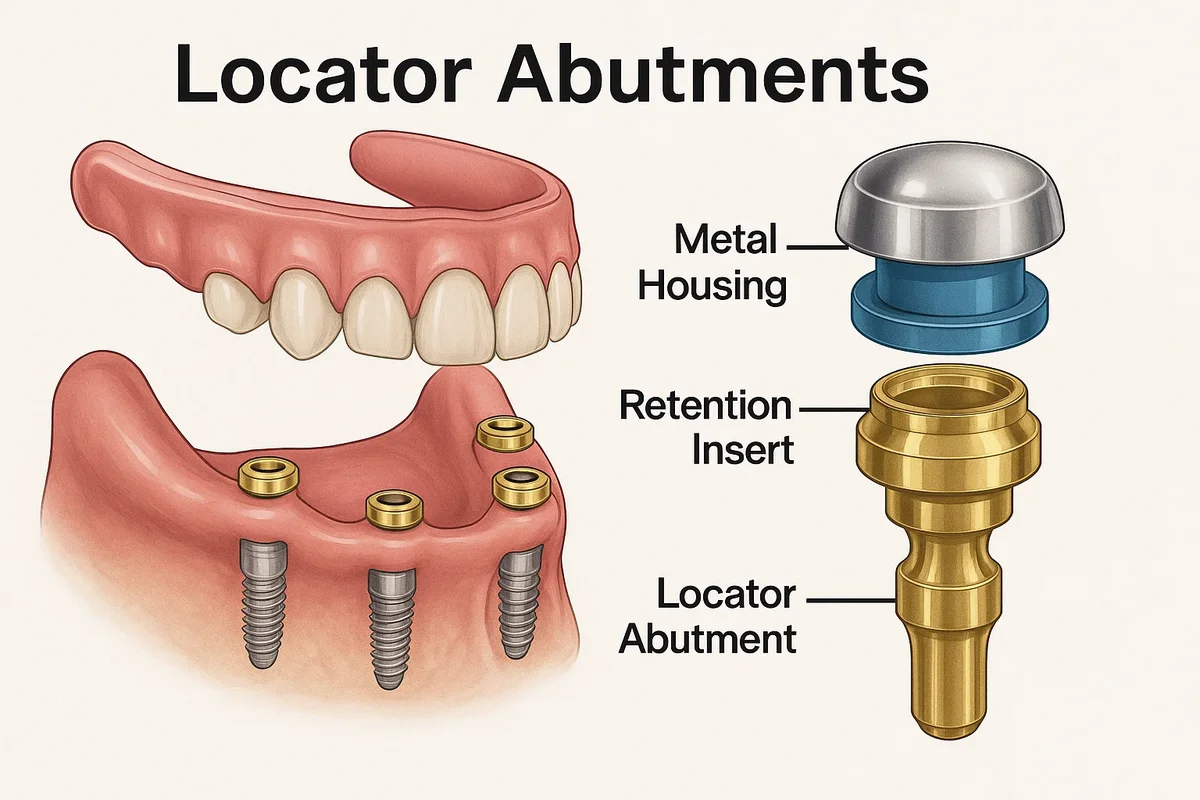
The unique design of locator abutments sets them apart from traditional implant attachments. They feature a low-profile shape, making them less bulky and more comfortable in the mouth. Each abutment has a male component (the abutment itself) that attaches to the dental implant and a female component (the nylon retention insert) housed inside the denture. When the denture is placed, the female component snaps onto the abutment, creating a dual retention system that is both secure and flexible.
This design allows patients to enjoy a snug fit without excessive pressure on the gum tissues. In addition, locator abutments come in various cuff heights, which means dentists can choose the right size to match the depth of the soft tissue around the implant. This customization reduces complications and increases patient satisfaction.
How Locator Abutments Provide Retention
Retention refers to how securely the denture stays in place during daily activities such as eating or speaking. Locator abutments achieve this through a dual retention mechanism: internal and external. The nylon insert inside the denture grips the abutment post, while the outside design of the abutment adds an extra layer of stability. This system allows patients to bite into harder foods and laugh freely without worrying about denture movement.
Self-Aligning Feature
One of the key innovations in locator abutments is their self-aligning capability. Patients do not have to place their dentures in a perfectly straight angle; instead, the locator abutment guides the denture into the correct position. For elderly patients or those with reduced dexterity, this feature significantly improves ease of use and independence. 👍
Compatibility With Different Implant Systems
Locator abutments are designed to be versatile. They are compatible with a wide range of implant brands and sizes, which makes them a flexible solution for dental clinics. Whether a patient has narrow, standard, or wide implants, locator abutments can usually be adapted. This compatibility reduces the need for complex procedures or implant replacements, saving both time and cost for patients.
Additionally, locator abutments can accommodate implants placed at different angles. Even if implants are not perfectly parallel, angled abutments can be used to correct the alignment, ensuring the denture still fits comfortably. This adaptability is especially valuable in cases with limited bone volume or anatomical challenges.
Clinical Benefits for Patients
Patients who receive locator abutments often report dramatic improvements in quality of life. Traditional dentures may slip, cause sore spots, or restrict food choices. With locator abutments, patients can enjoy a wider variety of foods, speak clearly, and smile confidently. Clinical studies have shown that patient satisfaction levels with locator abutments are consistently high, especially compared to ball attachments or bar-retained overdentures.
Improved Chewing Efficiency
Because locator abutments hold the denture firmly in place, patients can exert stronger biting forces. This leads to more efficient chewing and better digestion since food is broken down properly. Over time, patients with locator abutments tend to adopt healthier diets with more fruits, vegetables, and proteins compared to those who rely on unstable dentures.
Oral Health and Bone Preservation
Implants supporting locator abutments stimulate the jawbone, which helps slow down the natural process of bone resorption. Traditional dentures, on the other hand, often accelerate bone loss due to lack of stimulation. By using locator abutments, patients preserve bone density and maintain facial structure, reducing the sunken appearance that often accompanies long-term denture use.
Maintenance and Longevity
Another strength of locator abutments is their long-term manageability. The nylon inserts that provide retention can wear out over time, but they are inexpensive and easy to replace. Patients can usually have them changed chairside in a matter of minutes. This means the prosthesis remains functional for years without the need for frequent relines or replacements.
Proper care includes daily cleaning of both the denture and the abutments to prevent plaque buildup. Dentists typically recommend specialized brushes or cleaning aids. With consistent maintenance, locator abutments can last for many years, making them a cost-effective investment in oral health.
Why Dentists Recommend Locator Abutments
From a clinical perspective, locator abutments simplify treatment planning and follow-up care. They reduce complications, enhance patient compliance, and minimize adjustment time. For this reason, many dental professionals consider locator abutments the “gold standard” in overdenture attachments. Their reliability, versatility, and patient-friendly design make them a preferred choice in clinics worldwide.
In conclusion, locator abutments work by providing a secure, self-aligning, and versatile connection between implants and overdentures. They transform the patient experience by offering stability, comfort, and long-term oral health benefits. Understanding how locator abutments function helps both patients and dentists appreciate why these components have become an essential part of modern implant dentistry. 🌟
Advantages of Locator Abutments Over Traditional Attachments
When it comes to stabilizing implant-supported overdentures, patients and dentists alike seek the most reliable, comfortable, and cost-effective solution. Over the years, various attachment systems have been developed, including ball attachments, bar-retained systems, and magnets. However, locator abutments have emerged as the preferred choice in modern implant dentistry because they address the shortcomings of older systems. Their low profile, self-aligning capability, and versatile design provide advantages that go beyond simple retention. 🦷
Low-Profile Design for Maximum Comfort
One of the most recognized advantages of locator abutments is their low vertical height. Traditional ball attachments often require more vertical space, which can make dentures bulky and uncomfortable. Locator abutments, on the other hand, sit closer to the gum tissue, which allows for thinner, more natural-looking prostheses. This enhances both comfort and aesthetics for patients, particularly those with limited space between the upper and lower jaws.
Impact on Speech and Appearance
Because locator abutments reduce denture bulk, patients experience fewer issues with speech articulation. Words that involve tongue-to-palate contact, such as “s” and “t,” are easier to pronounce clearly. Aesthetically, patients benefit from a more natural smile without excessive denture flaring or visible metal components. This makes locator abutments especially valuable for younger patients or those who are highly conscious of appearance.
Superior Retention and Stability
Traditional attachments, like ball or bar systems, can provide adequate stability but often lack consistent retention over time. Locator abutments improve this significantly with their dual retention mechanism. The nylon insert grips the abutment internally while the external design adds secondary stability. Patients report fewer incidents of denture movement during meals or conversations, leading to higher satisfaction levels and reduced social anxiety. 😃
Customizable Retention Levels
Dentists can fine-tune the amount of retention by choosing inserts of different strengths. For example, a patient who struggles with hand dexterity may benefit from a softer retention insert, while another who desires maximum stability can opt for stronger inserts. This level of customization is rarely possible with traditional systems, giving locator abutments a clear advantage.
Ease of Maintenance and Longevity
Another advantage of locator abutments lies in their maintenance. Older attachment systems often require frequent adjustments or complicated repairs. Bar systems, for example, are prone to wear, require relining, and may trap food debris, leading to hygiene challenges. Locator abutments simplify this process: worn nylon inserts can be replaced chairside within minutes, and the abutment itself can last for many years with proper care.
Cost-Effectiveness Over Time
While the initial cost of locator abutments may be higher than some traditional attachments, they prove to be more economical in the long run. Patients save money on frequent relines, denture adhesives, and complex repairs. Moreover, because locator abutments extend the functional life of overdentures, patients enjoy long-term value for their investment.
Self-Aligning Functionality
Traditional systems require patients to place their dentures precisely in the correct position, which can be frustrating for those with arthritis, tremors, or visual impairments. Locator abutments solve this problem with their self-aligning feature. The tapered design guides the denture into place, reducing the risk of misalignment and wear. This ease of use empowers patients to manage their prostheses independently and confidently.
Versatility Across Clinical Scenarios
Unlike bar systems that require multiple implants and precise angulation, locator abutments are flexible. They can be used with as few as two implants to stabilize a lower overdenture, or they can be scaled up to support full-arch solutions. Additionally, angled locator abutments can compensate for implant placement discrepancies, making them suitable for challenging cases where bone availability is limited.
Universal Compatibility
Locator abutments are manufactured to fit a wide variety of implant brands and platforms. This cross-compatibility allows dentists to choose the most appropriate implants for the patient’s needs without worrying about attachment limitations. In contrast, bar systems often require a specific framework and laboratory work, increasing both cost and treatment time.
Improved Oral Health Outcomes
Traditional dentures can accelerate bone loss because they rest directly on the gums, applying uneven pressure. Even older attachment systems do not always distribute forces evenly. Locator abutments help mitigate this issue by spreading chewing forces more uniformly across implants and the jawbone. This promotes bone preservation, reduces sore spots, and supports healthier oral tissues.
Psychological and Lifestyle Benefits
The stability offered by locator abutments provides significant emotional relief for patients. No longer do they need to fear their dentures slipping while laughing, dining, or engaging socially. Many patients report an immediate improvement in confidence, self-esteem, and willingness to participate in activities they once avoided. These psychological benefits are often overlooked but are just as important as functional improvements.
In conclusion, the advantages of locator abutments over traditional attachments are extensive. They combine superior comfort, stability, and versatility with easier maintenance and better long-term cost-effectiveness. Whether for patients seeking a reliable denture solution or for dentists aiming for predictable results, locator abutments represent a modern, patient-centered standard of care in implant dentistry. 🌟
Step-by-Step Placement Procedure for Locator Abutments
The successful use of locator abutments depends not only on their design but also on the precision of their placement procedure. Both patients and dentists benefit from understanding how locator abutments are installed, as this knowledge helps set realistic expectations and highlights the importance of each clinical step. Unlike traditional attachments, locator abutments require careful evaluation, accurate implant placement, and meticulous adjustment to ensure long-term success. 🦷 Below is a detailed explanation of the step-by-step procedure used in modern dental practice.
Step 1: Comprehensive Patient Evaluation
Before locator abutments can be placed, the dentist must carry out a thorough clinical and radiographic evaluation. This includes assessing the patient’s bone quality and volume, reviewing medical history, and discussing expectations. Cone-beam computed tomography (CBCT) scans are often used to create a three-dimensional map of the jawbone, ensuring implants are positioned optimally. Patients with sufficient bone density and healthy gum tissue are ideal candidates for locator abutments. In some cases, bone grafting or soft tissue augmentation may be required before implant placement.
Determining Implant Sites
Implants that will support locator abutments are typically placed in the front portion of the jaw (interforaminal region in the mandible), where bone density is highest. Strategic placement ensures even distribution of chewing forces and maximizes long-term stability. The number of implants used depends on whether the patient requires a lower or upper overdenture; usually, two implants are sufficient for the lower jaw, while four or more may be required for the upper arch.
Step 2: Implant Placement Surgery
Once the treatment plan is finalized, the dentist surgically places dental implants into the jawbone. This procedure is performed under local anesthesia, sedation, or general anesthesia depending on patient needs. A small incision is made in the gum tissue, and precise osteotomies are drilled to accommodate the implants. Each implant fixture is carefully inserted, ensuring correct angulation and depth.
Healing and Osseointegration
After implant placement, a healing period of three to six months is usually required. During this time, osseointegration takes place—the process by which the bone fuses with the implant surface. Successful osseointegration is essential because locator abutments rely on implant stability to provide long-term retention and function. Temporary dentures may be adjusted or modified for use during the healing phase.
Step 3: Selection of Locator Abutments
Once osseointegration is confirmed, the dentist selects the appropriate locator abutments based on implant depth and soft tissue height. Locator abutments are available in multiple cuff heights, allowing for customized adaptation to each patient’s unique anatomy. The correct choice ensures the prosthesis sits comfortably without exerting excess pressure on the gum tissue.
Measuring Tissue Height
Special measuring tools are used to determine the soft tissue thickness around each implant. This measurement guides the dentist in selecting abutments of the proper height. Choosing an incorrect size could lead to instability, sore spots, or hygiene difficulties, so accuracy is critical at this stage.
Step 4: Placement of Locator Abutments
The selected locator abutments are inserted into the implant fixtures and tightened to the manufacturer’s recommended torque. This ensures a secure fit without risking damage to the implant. The abutments are then polished and cleaned to prepare them for attachment of the overdenture. Patients are often amazed at how small and discreet locator abutments appear once placed.
Step 5: Denture Attachment and Pickup Procedure
After the abutments are in place, the overdenture is modified to include housing for the nylon retention inserts. This is known as the pickup procedure. A dental resin is used to secure the housings inside the denture, ensuring perfect alignment with the locator abutments. Once the resin sets, the denture is polished, adjusted, and tested for retention. Patients are guided on how to insert and remove their new prosthesis with minimal effort.
Testing Retention Levels
Different nylon inserts provide varying levels of retention, typically color-coded for easy identification. The dentist may start with a medium-retention insert and adjust as needed based on the patient’s comfort and functional demands. This flexibility is one of the reasons locator abutments are superior to traditional systems.
Step 6: Patient Education and Aftercare
Once the denture is attached, patient education becomes a priority. Patients are shown how to insert, remove, and clean their dentures daily. Dentists emphasize the importance of cleaning around the locator abutments to prevent plaque buildup and inflammation. Special brushes and cleaning solutions may be recommended for optimal hygiene. Patients are also advised to return for regular checkups to ensure the abutments and inserts are functioning correctly.
Follow-Up Appointments
Follow-up visits allow the dentist to assess retention, make necessary adjustments, and replace worn inserts. Typically, inserts last six months to two years depending on usage. These quick and cost-effective adjustments ensure the prosthesis continues to perform at its best for many years.
Step 7: Long-Term Monitoring
Even after successful placement, long-term monitoring is essential. Patients with locator abutments should have their implants and prostheses checked at least once a year. Routine dental imaging and professional cleanings help maintain oral health and ensure the implants remain stable. With proper care, locator abutments can function effectively for a decade or longer.
In conclusion, the placement procedure for locator abutments involves multiple steps, from patient evaluation to long-term monitoring. Each stage is crucial for achieving stability, comfort, and durability. By following this structured approach, dentists ensure patients receive the full benefits of locator abutments: reliable retention, easy maintenance, and a dramatically improved quality of life. 🌟
Common Problems and How to Maintain Locator Abutments
While locator abutments are considered one of the most reliable and patient-friendly systems for implant-supported overdentures, they are not completely free from challenges. Like any dental solution, patients may encounter certain issues during daily use, ranging from minor wear and tear to hygiene-related complications. The good news is that most of these problems are manageable with proper care and regular dental visits. In this section, we will explore the most common problems associated with locator abutments and explain in detail how to maintain them effectively to maximize their lifespan. 🦷
Problem 1: Wear of Nylon Inserts
The nylon inserts inside the denture housing are responsible for providing retention. Over time, these inserts can wear down, leading to reduced stability and movement of the prosthesis. Patients may notice their dentures feel looser or click during chewing. This is a normal occurrence and does not mean the implants or locator abutments have failed.
Solution
Worn nylon inserts can be replaced chairside in just a few minutes. Dentists typically keep a range of retention inserts in stock, each color-coded for different levels of retention. Patients should schedule a quick visit when they notice changes in stability. Regular replacement every 6–18 months ensures optimal retention and prevents unnecessary discomfort.
Problem 2: Plaque and Food Accumulation
Because locator abutments are exposed above the gumline, they can collect plaque, food particles, and debris if not cleaned properly. Over time, this buildup can cause bad breath, gum inflammation, and peri-implant disease. Patients who neglect hygiene are at higher risk for infections that could compromise implant stability.
Maintenance Tip
Patients should clean locator abutments daily using a soft toothbrush, interdental brush, or a specialized cleaning tool designed for implants. Antimicrobial rinses can also help reduce bacterial buildup. Dental professionals often recommend removing dentures at night to allow the gums to rest and to prevent prolonged exposure to bacteria and pressure.
Problem 3: Loss of Retention Over Time
Even when inserts are replaced regularly, some patients may still experience reduced retention after years of use. This could result from wear on the abutment head itself or from changes in the overdenture housing. In rare cases, implants may slightly shift in the bone, affecting overall fit.
Solution
If locator abutments show significant wear, they can be replaced by a dentist without removing the implants. Modern locator abutments are manufactured in different sizes, allowing clinicians to easily switch them out. If the denture housing is worn, it can also be replaced or relined to restore function.
Problem 4: Gum Tissue Irritation
Some patients report sore spots or irritation around the gum tissue in contact with locator abutments. This can occur if the denture is not adjusted properly or if debris builds up around the abutments.
Prevention
Regular professional checkups are essential to adjust the fit of the denture and ensure even distribution of pressure. Patients should avoid ignoring discomfort, as prolonged irritation may lead to tissue overgrowth or infection around the implant. Early intervention ensures the health of both the gum tissue and the locator abutments.
Problem 5: Fractured or Damaged Dentures
Locator abutments provide a strong connection, but the constant attachment and removal of dentures can eventually stress the denture base. Small cracks or fractures may occur, especially if patients bite down on hard foods.
Repair Options
If a denture becomes damaged, dentists can repair or reinforce it in the dental lab. In some cases, a new denture may be recommended, particularly if the old one has been used for many years. Patients are encouraged to bring damaged dentures to their dentist immediately to prevent worsening of the issue.
Daily Maintenance Routine for Patients
To ensure long-lasting function, patients should follow a consistent maintenance routine:
- Remove dentures at night to reduce stress on gums and implants.
- Brush locator abutments gently with a soft toothbrush every day.
- Clean dentures thoroughly with non-abrasive cleaners (not toothpaste, which may scratch surfaces).
- Rinse after every meal to remove trapped food particles.
- Visit the dentist every 6–12 months for a professional checkup and maintenance.
Professional Maintenance and Follow-Up
Regular professional care is just as important as home care. Dentists use specialized instruments to clean around implants and locator abutments without scratching their surfaces. These visits are an opportunity to evaluate implant health, check for early signs of peri-implant disease, and replace worn inserts. Consistent follow-up ensures the longevity of both implants and overdentures.
Why Maintenance Matters
Neglecting proper care of locator abutments can lead to complications such as infection, loss of bone support, and reduced function of the prosthesis. On the other hand, patients who follow recommended maintenance protocols often enjoy many years of stable, comfortable, and functional overdentures. Studies consistently show that proactive maintenance increases patient satisfaction and significantly extends the lifespan of locator abutments.
In summary, while common problems with locator abutments may arise, most are minor and can be easily managed. With proper cleaning, regular insert replacement, and professional follow-ups, patients can prevent complications and enjoy long-term stability. Locator abutments remain one of the most reliable choices for implant-retained overdentures, provided they are cared for diligently. 🌟
Cost of Locator Abutments and Insurance Coverage Options
One of the most common questions patients have before starting treatment with locator abutments is: “How much will it cost?” 💰 While locator abutments are considered highly cost-effective in the long run, the initial expense can vary widely depending on multiple factors such as the number of implants, the dentist’s expertise, geographic location, and whether additional procedures like bone grafting are required. Understanding the cost breakdown and available insurance coverage options helps patients plan their treatment more effectively and avoid unexpected expenses.
Average Cost of Locator Abutments
The total cost of treatment involving locator abutments usually includes the surgical placement of implants, the abutments themselves, and the overdenture. On average, locator abutments for a lower jaw overdenture supported by two implants may range between $3,500 and $8,000 in the United States. For an upper jaw solution requiring four implants, costs may rise to $7,000 to $15,000. These prices include implant surgery, prosthetic components, and the fabrication of dentures.
Factors Influencing Cost
- Number of Implants: More implants increase stability but also add to the expense.
- Geographic Location: Clinics in metropolitan areas often charge higher fees compared to rural practices.
- Complexity of Case: Patients requiring bone grafts, sinus lifts, or gum treatments will face additional costs.
- Material Choices: Premium implant systems or customized locator abutments can slightly increase the price.
- Dentist’s Experience: Highly skilled implantologists may charge more, but often provide superior outcomes.
Breakdown of Expenses
To give patients a clear picture, here’s a typical breakdown of locator abutment treatment costs:
- Implant surgery (per implant): $1,200 – $2,500
- Locator abutments (per unit): $300 – $600
- Overdenture fabrication: $2,000 – $5,000
- Follow-up appointments and adjustments: $200 – $500
It’s important to note that while locator abutments themselves may not appear expensive individually, the overall treatment plan can be a significant investment because multiple steps and components are involved.
Long-Term Cost-Effectiveness
Although the initial investment in locator abutments may seem high, they are extremely cost-effective in the long run. Traditional dentures often require frequent relining, adhesives, and replacements due to poor fit. These recurring costs can add up over time. In contrast, locator abutments offer stability and durability, reducing the need for constant repairs. Patients also benefit from improved nutrition, oral health, and quality of life, which are priceless advantages beyond the monetary aspect.
Maintenance Costs
Patients should budget for maintenance expenses such as replacing nylon retention inserts every 6–18 months. These replacements are relatively affordable, usually ranging from $30 to $100 per insert. Compared to relining or replacing traditional dentures, this ongoing cost is minimal and ensures continued function and comfort.
Insurance Coverage Options
Insurance coverage for locator abutments varies greatly depending on the provider and the specific plan. Many dental insurance plans classify implants and locator abutments as elective or cosmetic treatments, meaning they may not be fully covered. However, certain policies provide partial reimbursement for implant-supported overdentures if deemed medically necessary.
Partial Coverage Examples
Some insurance plans may cover a portion of the cost of the dentures themselves while excluding implant surgery. For instance, a plan may pay up to $1,500 for prosthetic services but not contribute toward the implants or locator abutments. Patients should always request a pre-treatment estimate from their insurance provider to avoid surprises.
Medicare and Medicaid
Traditional Medicare does not cover dental implants or locator abutments. However, some Medicare Advantage (Part C) plans may include limited dental benefits that partially reduce costs. Medicaid coverage also varies by state; in most cases, it covers basic dentures but not implant-supported solutions. Patients should consult local Medicaid offices to explore potential options.
Financing and Payment Plans
Because insurance coverage is often limited, many clinics offer financing options to make locator abutments more accessible. These include third-party financing companies, in-house payment plans, or medical credit cards such as CareCredit. Spreading payments over 12–36 months can help patients afford treatment without compromising financial stability.
Health Savings Accounts (HSA) and Flexible Spending Accounts (FSA)
Patients with HSA or FSA benefits can often use these tax-advantaged accounts to cover expenses related to locator abutments. This reduces the financial burden while maximizing healthcare savings. Patients should verify eligible expenses with their provider before proceeding.
International Cost Considerations
In countries outside the United States, prices for locator abutments can differ substantially. For example, in Turkey, Mexico, or Eastern Europe, high-quality implant treatments with locator abutments may cost 40–60% less compared to U.S. fees. Many patients consider dental tourism for affordability, provided the clinic is reputable and follows international sterilization and implantology standards.
In conclusion, the cost of locator abutments depends on multiple factors, including case complexity, location, and insurance policies. While the upfront expense may seem significant, patients often find the investment worthwhile because of the long-term stability, comfort, and confidence locator abutments provide. By exploring insurance benefits, financing options, and international alternatives, patients can make informed decisions that align with their dental health goals and financial circumstances. 🌟
Comparing Locator Abutments with Ball Attachments
Patients exploring implant-supported overdenture options often hear about two popular attachment systems: locator abutments and ball attachments. Both are designed to secure removable dentures to implants, but they differ in design, performance, maintenance, and long-term outcomes. Understanding these differences helps patients and dentists make informed decisions about which system best suits their clinical and lifestyle needs. In this section, we will compare locator abutments with ball attachments in detail, highlighting their respective advantages and limitations. 🦷
Design Differences
The primary distinction between locator abutments and ball attachments lies in their design. Ball attachments use a spherical male component on the implant and a rubber or metal housing inside the denture. Locator abutments, however, employ a low-profile, dual retention mechanism that includes both internal and external engagement with nylon inserts. This dual retention feature provides locator abutments with a stronger and more reliable connection than traditional ball systems.
Profile Height
Ball attachments typically require more vertical space, making them less suitable for patients with limited jaw-to-denture clearance. In contrast, locator abutments are compact and low-profile, which improves patient comfort, denture aesthetics, and speech clarity. This makes them particularly advantageous for patients with reduced vertical space in their oral cavity.
Retention and Stability
One of the most significant benefits of locator abutments compared to ball attachments is their superior retention. Ball attachments provide acceptable stability, but they often loosen over time due to wear of the rubber O-ring. This results in dentures that wobble or slip during eating or speaking. Locator abutments, on the other hand, offer stronger and more consistent retention thanks to their dual engagement design. Patients generally report higher satisfaction and greater confidence in daily activities with locator abutments.
Customizable Retention Inserts
Locator abutments allow dentists to customize retention strength by using nylon inserts of different colors and retention levels. This adaptability gives patients a balance between stability and ease of use. Ball attachments lack this level of flexibility, making locator abutments the more versatile choice.
Ease of Use for Patients
Many elderly patients or those with dexterity challenges find ball attachments difficult to align because dentures must be positioned precisely. Locator abutments solve this issue with their self-aligning feature, guiding the denture into place even if the patient does not position it perfectly. This reduces frustration, increases independence, and minimizes wear on the components.
Maintenance and Longevity
Maintenance requirements differ between the two systems. Ball attachments often require frequent O-ring replacements, sometimes every 6–12 months, because they wear quickly under chewing forces. Locator abutments also need nylon insert replacements, but these typically last longer and are easier to replace chairside. Additionally, locator abutments are less likely to trap food particles compared to bar systems, promoting better oral hygiene.
Durability of Components
Over time, ball attachments may wear unevenly, leading to loss of retention and the need for abutment replacement. Locator abutments are made of durable materials that resist wear better, and when inserts become loose, simple replacements restore functionality. This makes locator abutments a more cost-effective choice over the long term.
Cost Comparison
Ball attachments may initially cost less than locator abutments, making them appealing for budget-conscious patients. However, when factoring in frequent maintenance, reduced comfort, and higher risk of complications, the long-term cost may be greater. Locator abutments, while slightly more expensive upfront, provide durability and satisfaction that often outweigh the initial price difference.
Insurance and Coverage
Both ball attachments and locator abutments may face limited coverage under dental insurance, as implants are often considered elective procedures. However, many insurers recognize the functional benefits of locator abutments and may provide partial reimbursement for overdenture components. Patients are encouraged to verify coverage with their providers before making a decision.
Clinical Performance and Research Evidence
Multiple clinical studies have compared locator abutments with ball attachments. Results consistently show that locator abutments outperform ball systems in terms of patient satisfaction, prosthesis stability, and longevity. Locator abutments also distribute chewing forces more evenly across implants, reducing stress on individual fixtures and lowering the risk of implant failure. For dentists, locator abutments offer predictable outcomes and fewer complications during follow-up care.
Patient Experiences
Patients who have used both systems often report that locator abutments feel more secure and natural. With ball attachments, common complaints include denture looseness, food entrapment, and difficulty inserting the prosthesis. Locator abutments largely eliminate these frustrations, allowing patients to enjoy improved oral function and social confidence.
In conclusion, while both systems provide a functional connection between dentures and implants, locator abutments clearly offer superior advantages. They provide stronger retention, easier maintenance, and greater comfort compared to ball attachments. For patients seeking long-term stability and dentists looking for predictable outcomes, locator abutments represent the modern gold standard in implant-retained overdenture care. 🌟
Patient Experiences and Success Rates with Locator Abutments
When evaluating the effectiveness of locator abutments, nothing speaks louder than real-world patient experiences combined with data from clinical studies. Patients who transition from traditional dentures to implant-supported overdentures with locator abutments frequently describe the change as life-transforming. They not only regain chewing ability and confidence in social interactions but also experience long-term improvements in oral health and psychological well-being. In this section, we will explore patient testimonials, clinical success rates, and the factors that contribute to the overall satisfaction of individuals who choose locator abutments. 🌟
First Impressions After Placement
Most patients notice an immediate difference once their overdentures are stabilized with locator abutments. Unlike conventional dentures that often slip or require adhesives, locator abutments provide a secure snap-on fit. Patients often describe this sensation as liberating because it eliminates the fear of dentures falling out during meals or conversations. Speech improves quickly, and many report that even words requiring precise tongue movements, such as “s” and “th,” become clearer.
Emotional and Social Benefits
Patients frequently highlight the psychological benefits of locator abutments. The newfound stability allows them to smile freely, dine in public without anxiety, and engage socially without embarrassment. These seemingly small improvements contribute significantly to overall quality of life, boosting self-esteem and reducing social isolation, particularly among older adults.
Chewing Efficiency and Nutrition
One of the most impactful outcomes of locator abutments is improved chewing efficiency. Clinical research shows that patients with implant-retained overdentures can exert higher bite forces compared to those using traditional dentures. This improvement allows patients to enjoy a wider variety of foods, including fruits, vegetables, and proteins that are often avoided with unstable dentures. Improved nutrition, in turn, supports better overall health, energy levels, and digestion.
Dietary Improvements
A patient who once struggled to eat crunchy apples or steak with traditional dentures can now enjoy these foods confidently. This dietary freedom reduces reliance on processed or soft foods and encourages healthier eating habits. For patients with systemic health conditions like diabetes, the ability to maintain a balanced diet significantly improves disease management and quality of life.
Clinical Success Rates
Locator abutments have been extensively studied in clinical trials and long-term studies. Research consistently demonstrates high survival rates for both the implants and the abutments themselves. Success rates for locator abutments commonly exceed 95% over five to ten years of follow-up, provided patients adhere to proper oral hygiene and regular dental visits. Compared to ball attachments, locator abutments show fewer complications and longer-lasting retention, making them a preferred choice for many dental professionals.
Longevity of Components
While nylon inserts need periodic replacement, the abutments and implants themselves typically remain stable for many years. With routine maintenance, patients often enjoy a decade or more of reliable function before major repairs or replacements are needed. This high level of durability contributes to patient satisfaction and makes locator abutments a cost-effective solution over time.
Patient Satisfaction Studies
Surveys and studies of patient-reported outcomes consistently show that individuals using locator abutments rate their prostheses higher in comfort, function, and appearance compared to those with traditional dentures. Many studies also reveal lower levels of psychological distress, as patients no longer fear embarrassing denture mishaps. Satisfaction is particularly high among elderly populations, who value the independence and confidence locator abutments provide.
Common Challenges and Patient Feedback
Although the majority of patients are highly satisfied, some challenges are reported. Common issues include initial soreness during adaptation, the need to replace nylon inserts, and occasional difficulty with cleaning around the abutments. However, most patients view these as minor inconveniences compared to the significant functional and psychological benefits. Dentists can minimize these concerns through thorough patient education and regular follow-up appointments.
Adaptation Period
New users of locator abutments may require a short adaptation period. During this time, they learn to insert and remove their overdentures and adjust to the increased retention. Most patients adapt within a few weeks, after which daily use becomes second nature. With proper guidance, this transition is smooth and rewarding.
Long-Term Patient Perspectives
Over the long term, patients overwhelmingly express gratitude for choosing locator abutments. Many state that they wish they had made the switch sooner, given the improvement in confidence, functionality, and overall well-being. Some report that locator abutments allowed them to re-engage in activities such as dining out, public speaking, or even singing—things they had previously avoided due to denture insecurity.
Comparisons to Other Systems from a Patient Viewpoint
Patients who have previously used ball attachments or bar-retained systems often report greater satisfaction after transitioning to locator abutments. They notice enhanced stability, fewer sore spots, and easier maintenance. These patient-driven insights reinforce clinical data, confirming that locator abutments strike the right balance between performance and convenience.
In summary, patient experiences and success rates strongly support the use of locator abutments in implant dentistry. With high survival rates, improved chewing ability, enhanced psychological well-being, and long-term satisfaction, locator abutments have established themselves as a gold standard for implant-retained overdentures. For patients seeking a combination of stability, comfort, and improved quality of life, locator abutments consistently deliver transformative results. 🌟
Best Practices for Dentists Using Locator Abutments
For dentists, achieving successful outcomes with implant-supported overdentures depends heavily on following best practices when working with locator abutments. Although these attachments are designed to be user-friendly and versatile, proper planning, placement, and maintenance protocols are essential for long-term success. This section outlines the key clinical strategies and recommendations that dental professionals should follow to ensure predictable results with locator abutments while maximizing patient satisfaction. 🦷
Comprehensive Treatment Planning
The foundation of success with locator abutments begins with detailed treatment planning. Dentists should conduct a thorough clinical and radiographic evaluation to assess bone density, ridge anatomy, and soft tissue conditions. Cone-beam computed tomography (CBCT) scans provide critical insights into implant positioning and angulation. This step ensures that locator abutments will be placed in optimal locations, providing even distribution of occlusal forces and reducing the risk of implant overload.
Patient Selection Criteria
Not every patient is an ideal candidate for locator abutments. Dentists must evaluate systemic health conditions, such as uncontrolled diabetes or osteoporosis, which may impair healing. Patients should also demonstrate good oral hygiene habits and a willingness to follow post-operative care instructions. Identifying suitable candidates minimizes complications and ensures the long-term functionality of locator abutments.
Optimal Implant Placement
Correct implant positioning is crucial to the performance of locator abutments. In the mandible, implants are commonly placed in the interforaminal region, where bone density is greatest. For maxillary overdentures, at least four implants are generally recommended to counteract weaker bone quality. Ensuring parallelism between implants helps improve prosthetic fit, though angled locator abutments are available when anatomical conditions prevent ideal placement.
Torque Control
One of the most important best practices is tightening locator abutments to the manufacturer’s recommended torque value, usually between 20–30 Ncm. Over-tightening may damage the implant or abutment, while insufficient torque can cause loosening. Using a calibrated torque wrench ensures accuracy and prevents mechanical failures.
Prosthetic Considerations
Dentists should carefully evaluate the prosthetic design when incorporating locator abutments. Overdentures must be fabricated to fit securely over the housings while allowing for easy removal by the patient. Adequate space must be created within the denture to accommodate housings and nylon inserts without weakening the base. Poor prosthetic design may lead to fractures, discomfort, or uneven force distribution.
Retention Insert Selection
Locator abutments offer multiple levels of retention, ranging from extra-light to extra-strong. Dentists should match the retention strength to the patient’s needs. For elderly patients with limited hand dexterity, lighter retention inserts may be more appropriate. Conversely, for active patients seeking maximum stability, stronger inserts are recommended. Customizing retention levels enhances comfort and satisfaction.
Maintenance Protocols
To ensure longevity, dentists must establish clear maintenance protocols for patients with locator abutments. Regular replacement of nylon inserts, usually every 6–18 months, is a routine part of care. Professional cleaning of the abutments during recall visits helps prevent plaque accumulation and peri-implant diseases. Dentists should also monitor tissue health and bone levels using periodic radiographs.
Patient Education
Educating patients is one of the most critical responsibilities of dentists. Patients should be instructed on how to insert and remove overdentures properly, as forcing them at the wrong angle can damage the abutments. Clear demonstrations on cleaning techniques, including the use of soft brushes and antimicrobial rinses, ensure patients can maintain locator abutments effectively at home.
Managing Complications
Despite best efforts, complications may occasionally occur with locator abutments. Common issues include worn nylon inserts, abutment loosening, or tissue inflammation. Dentists should address these promptly with appropriate interventions, such as replacing components, re-torquing abutments, or prescribing antimicrobial treatments. Early management prevents small problems from escalating into implant failures.
Long-Term Monitoring
Best practices also include scheduling regular follow-up visits every 6–12 months. These visits allow for assessment of retention strength, evaluation of soft tissue health, and replacement of worn components. Proactive monitoring significantly extends the lifespan of locator abutments and ensures ongoing patient satisfaction.
Continuing Education for Dentists
Given the evolving nature of implant dentistry, dentists should pursue continuing education on locator abutments and related attachment systems. Hands-on workshops, online courses, and professional conferences provide opportunities to stay updated on best practices, new materials, and technological advancements. Staying informed allows clinicians to provide patients with the latest evidence-based solutions.
In summary, best practices for dentists using locator abutments include thorough treatment planning, precise implant placement, careful prosthetic design, ongoing maintenance, and strong patient education. By adhering to these guidelines, dentists can achieve predictable results, reduce complications, and deliver exceptional outcomes for their patients. Locator abutments remain one of the most effective and reliable solutions in implant dentistry, and following best practices ensures they reach their full potential. 🌟
Future Innovations and Research in Locator Abutments
Although locator abutments are already considered the gold standard in implant-retained overdenture attachments, ongoing research and technological advances are expected to make them even more effective, durable, and user-friendly. Dentistry continues to evolve, and new innovations aim to improve patient comfort, simplify clinical procedures, and extend the longevity of implant-supported solutions. 🌟 In this section, we will explore current research directions, emerging materials, digital dentistry integration, and potential future trends in locator abutments.
Advances in Materials and Durability
One of the most promising areas of research for locator abutments lies in the development of stronger, more wear-resistant materials. Traditional locator abutments are manufactured from titanium, which offers excellent biocompatibility and durability. However, researchers are experimenting with titanium alloys, zirconia-coated abutments, and hybrid materials to reduce long-term wear and enhance resistance to plaque accumulation. These materials may extend the life of abutments and reduce the frequency of nylon insert replacement.
Improved Retention Inserts
Another focus of innovation is the nylon retention inserts that provide stability in locator abutments. Current inserts wear out over time and require regular replacement. Future designs may incorporate advanced polymers or nanomaterials with self-lubricating properties, making them more resistant to friction and wear. This would allow patients to enjoy longer-lasting retention without frequent maintenance visits.
Digital Dentistry and CAD/CAM Integration
The integration of digital dentistry into the use of locator abutments is transforming treatment planning and prosthetic design. Digital impressions and CAD/CAM milling allow for highly precise fitting of both implants and overdentures, ensuring optimal placement of locator abutments. This reduces chairside time, improves accuracy, and enhances patient comfort. In the future, fully digital workflows may become standard practice for locator abutments, enabling faster turnaround times and more predictable outcomes.
3D Printing Applications
With the rise of 3D printing, custom overdentures and abutment housings can be fabricated quickly and at lower cost. Researchers are exploring ways to integrate 3D-printed components with locator abutments for personalized solutions. This could allow dentists to design prostheses that perfectly match each patient’s anatomy, reducing adjustments and improving function.
Smart Implant Technology
The future may also see locator abutments integrated with smart implant technology. Researchers are experimenting with sensors that can be embedded within implants or abutments to monitor factors such as bite force, wear levels, and even early signs of peri-implant disease. This would allow for real-time monitoring and preventive care, ensuring the longevity of both implants and locator abutments.
Artificial Intelligence in Treatment Planning
Artificial intelligence (AI) is increasingly being applied in dentistry, and locator abutments are no exception. AI-powered software can analyze CBCT scans and patient records to recommend optimal implant placement, abutment height, and retention levels. This reduces human error and enhances treatment predictability, ultimately leading to improved outcomes.
Minimally Invasive Surgical Techniques
Future research is also focused on refining surgical protocols associated with locator abutments. Advances in guided surgery and flapless implant techniques reduce healing time, minimize discomfort, and shorten treatment duration. By integrating locator abutments into these minimally invasive procedures, dentists can provide patients with faster, safer, and more predictable restorations.
Long-Term Clinical Studies
While locator abutments already enjoy a strong evidence base, researchers continue to conduct long-term studies comparing them with alternative systems. These studies aim to assess not only mechanical performance but also patient-reported outcomes such as quality of life, confidence, and satisfaction. The results will guide future innovations and ensure locator abutments remain aligned with patient needs.
Global Accessibility
Another area of research is improving the affordability and accessibility of locator abutments worldwide. As demand for implant dentistry grows in developing regions, manufacturers are working on cost-effective versions of locator abutments without compromising quality. This will make implant-retained overdentures more widely available, improving oral health for patients globally.
Environmental and Sustainable Dentistry
Sustainability is an emerging concern across healthcare, and dentistry is no exception. Research is exploring how locator abutments and their components can be manufactured with reduced environmental impact. This includes using recyclable materials, reducing packaging waste, and optimizing production methods. Future innovations may bring locator abutments that are not only patient-friendly but also eco-friendly.
In conclusion, the future of locator abutments looks highly promising, with innovations in materials, digital workflows, smart technology, and sustainability shaping the next generation of implant-retained overdenture solutions. Ongoing research continues to refine their design and performance, ensuring that patients and dentists alike benefit from improved function, longer-lasting retention, and enhanced treatment experiences. For anyone considering or already using locator abutments, the future holds exciting developments that will further solidify their position as the gold standard in modern prosthetic dentistry. 🌟