
Running a modern dental clinic is no longer just about clinical excellence—it is equally about operational efficiency, financial accuracy, and regulatory compliance 😊. This is where medical billing software for dentists becomes a critical tool. Many dental practices leave significant revenue uncollected simply because medical billing is complex, time-consuming, and very different from standard dental insurance workflows. Understanding how the right software fits into your daily operations can directly impact profitability, patient satisfaction, and long-term growth.
Medical billing software for dentists is designed to manage insurance claims related to medically necessary dental procedures. These often include oral surgeries, extractions, sleep apnea appliances, TMJ treatments, biopsies, and trauma-related care. Unlike dental-only billing systems, medical billing requires accurate ICD-10 diagnosis codes, CPT procedure codes, detailed documentation, and strict compliance with medical insurance rules. Without specialized software, errors, denials, and delayed payments become almost inevitable.
One of the biggest reasons dentists turn to medical billing software for dentists is revenue leakage. Many procedures that qualify for medical insurance are mistakenly billed as dental-only or not billed at all. This leads to lost income and frustrated patients who could have received better coverage. A robust medical billing platform helps identify medically billable procedures, ensures correct coding, and submits clean claims the first time, significantly reducing rejection rates 👍.
Another key advantage of medical billing software for dentists is automation. Manual billing processes are prone to human error and can overwhelm front-desk staff. Modern systems automate claim creation, eligibility checks, documentation prompts, and follow-ups. This not only speeds up reimbursement but also frees your team to focus on patient care rather than paperwork. Over time, clinics often see measurable improvements in cash flow and reduced administrative stress.
Compliance is another critical factor. Medical billing must comply with HIPAA regulations and payer-specific rules. High-quality medical billing software for dentists includes built-in compliance safeguards, secure data encryption, and audit trails. These features help protect sensitive patient data and reduce legal risks. For clinics aiming to align with standards promoted by organizations like the [American Dental Association](chatgpt://generic-entity?number=0), having compliant systems is not optional—it is essential.
From a patient experience perspective, medical billing software for dentists also plays a vital role. Patients increasingly expect transparent billing, clear explanations of coverage, and minimal surprises. Software-driven billing produces accurate statements, clear breakdowns of medical versus dental coverage, and faster claim resolutions. This builds trust and improves patient retention, especially for complex or high-value procedures.
It is also important to understand that medical billing software for dentists is not just for large clinics. Small and mid-sized practices benefit just as much, if not more. With the right setup, even a solo practitioner can efficiently manage medical claims without hiring additional billing staff. Some clinics also combine these tools with outsourced billing teams, using the software as a centralized control system.
For clinics treating international patients or operating in competitive markets, optimizing revenue workflows becomes even more important. If your practice is exploring advanced operational improvements or wants professional guidance, you can always reach out through the Redent Klinik Contact Page for tailored support and consultation.
In summary, medical billing software for dentists is no longer a “nice-to-have” solution—it is a strategic necessity. It bridges the gap between clinical treatment and financial sustainability, reduces claim denials, ensures compliance, and enhances patient trust. Whether you refer to it as dental medical billing systems or integrated healthcare billing platforms, the goal remains the same: accurate billing, faster payments, and a healthier practice overall 💡.
How Medical Billing Software for Dentists Improves Revenue Cycle Management
Revenue cycle management (RCM) is the financial backbone of every successful dental practice 💰. From the moment a patient schedules an appointment to the final payment reconciliation, every step affects cash flow. Medical billing software for dentists plays a central role in optimizing this cycle, especially when medical insurance is involved. Unlike traditional dental billing, medical claims are more complex, heavily regulated, and far less forgiving of errors.
At its core, medical billing software for dentists streamlines the entire billing lifecycle. It reduces manual intervention, improves claim accuracy, shortens reimbursement timelines, and minimizes revenue leakage. For practices that regularly perform medically necessary dental procedures, this software can mean the difference between steady growth and chronic cash-flow issues.
Automated Eligibility Verification and Pre-Authorization
One of the earliest points where revenue can be lost is eligibility verification. Medical insurers have strict coverage rules, and submitting claims without proper verification often leads to denials. Medical billing software for dentists automates eligibility checks by connecting directly with insurance databases. This allows staff to confirm coverage, benefits, deductibles, and limitations before treatment even begins.
Many platforms also assist with pre-authorization workflows. By prompting staff to collect required documentation and submit authorizations early, medical billing software for dentists helps prevent post-treatment claim rejections. This proactive approach significantly improves first-pass acceptance rates and protects projected revenue.
Accurate Coding and Documentation Support
Correct coding is one of the most critical components of effective revenue cycle management. Medical billing requires the precise pairing of ICD-10 diagnosis codes with CPT procedure codes. Medical billing software for dentists guides users through this process by offering code validation, real-time error detection, and intelligent suggestions based on clinical notes.
Additionally, the software ensures documentation completeness. Missing narratives, insufficient clinical details, or mismatched codes are among the top reasons for denials. With built-in prompts and templates, medical billing software for dentists ensures that every claim includes the necessary supporting information, improving approval rates and speeding up reimbursement ⏱️.
Claim Scrubbing and First-Pass Acceptance
Claim scrubbing is a powerful feature that directly impacts revenue cycle performance. Before submission, medical billing software for dentists automatically reviews claims for common errors such as invalid codes, missing modifiers, or incorrect patient data. This pre-submission audit dramatically increases first-pass acceptance rates.
Higher first-pass acceptance means fewer denied claims, less rework, and faster payments. Over time, clinics using advanced medical billing systems often see measurable improvements in days in accounts receivable (A/R), which is a key indicator of financial health.
Faster Reimbursements and Denial Management
Speed matters when it comes to cash flow. Medical billing software for dentists accelerates reimbursements by submitting claims electronically, tracking payer responses, and flagging delays. Instead of manually following up with insurers, staff can rely on automated alerts and dashboards that show claim status in real time.
When denials do occur, medical billing software for dentists simplifies denial management. The system categorizes denial reasons, suggests corrective actions, and enables rapid resubmission. This structured approach prevents lost claims from slipping through the cracks and helps recover revenue that would otherwise be written off.
Financial Reporting and Revenue Insights
Effective revenue cycle management depends on visibility. Medical billing software for dentists provides detailed financial reports that highlight billing performance, payer trends, denial rates, and reimbursement timelines. These insights empower practice owners to make informed decisions about staffing, pricing strategies, and insurance participation.
By analyzing data generated through medical billing software for dentists, clinics can identify which procedures generate the most revenue, which insurers pay reliably, and where inefficiencies exist. This data-driven approach supports sustainable growth and long-term profitability 📊.
In summary, medical billing software for dentists transforms revenue cycle management from a reactive process into a proactive, optimized system. By improving accuracy, automation, and visibility at every stage of billing, it ensures that dental practices get paid faster, more consistently, and with far less administrative burden.
Key Features to Look for in Medical Billing Software for Dentists
Choosing the right medical billing software for dentists is a strategic decision that directly affects revenue, compliance, and daily workflow efficiency 🧠. Not all billing platforms are created equal, and many general-purpose systems fall short when applied to dental practices handling medical insurance claims. Understanding the core features you should expect helps ensure that your investment delivers real, measurable value.
High-performing medical billing software for dentists is built specifically to address the complexities of medical insurance, dental-medical crossover procedures, and strict documentation requirements. Below are the most critical features every dentist and practice manager should evaluate before making a decision.
Medical and Dental Code Compatibility
One of the most essential features of medical billing software for dentists is full compatibility with both medical and dental coding systems. Dental practices often need to work with ICD-10 diagnosis codes, CPT procedure codes, and occasionally CDT codes—all within the same claim workflow.
Advanced medical billing software for dentists supports accurate code mapping and ensures that diagnoses and procedures align correctly. This reduces coding errors, prevents mismatches, and significantly lowers the risk of claim denials. Without this capability, practices may unknowingly submit invalid claims that delay or completely block reimbursement.
Built-In Documentation and Clinical Narratives
Medical insurers require detailed clinical documentation to justify treatment necessity. Medical billing software for dentists should include built-in documentation tools, templates, and prompts that guide providers through proper record-keeping.
This feature ensures that clinical notes clearly explain why a procedure is medically necessary, which is crucial for approvals. By standardizing documentation, medical billing software for dentists not only improves claim success rates but also protects the practice during audits or insurance reviews 🛡️.
Attachment Management and Image Support
Many medical claims require supporting attachments such as radiographs, photos, or lab reports. High-quality medical billing software for dentists allows seamless attachment uploads and ensures that all required files are submitted together with the claim.
Missing or improperly attached documentation is a common cause of denials. With automated attachment checks, medical billing software for dentists minimizes these issues and ensures compliance with insurer requirements.
Claim Tracking and Real-Time Status Updates
Transparency is critical for efficient billing operations. Medical billing software for dentists should provide real-time claim tracking, allowing staff to see exactly where each claim stands—from submission to payment.
This feature eliminates guesswork and reduces time spent calling insurance companies. With clear dashboards and alerts, medical billing software for dentists helps teams prioritize follow-ups and resolve issues quickly, improving overall cash flow.
Denial Analysis and Resubmission Tools
Even with the best systems, denials can happen. The difference lies in how efficiently they are managed. Medical billing software for dentists should automatically categorize denials, identify root causes, and suggest corrective actions.
By learning from past denials, medical billing software for dentists helps practices reduce future errors and improve long-term billing performance. Fast resubmission tools ensure that denied claims are corrected and reprocessed without unnecessary delays.
HIPAA Compliance and Data Security
Patient data protection is non-negotiable. Any medical billing software for dentists must comply fully with HIPAA regulations and industry security standards. This includes encrypted data storage, secure user access controls, and detailed audit logs.
Strong security features not only protect patients but also safeguard the practice from legal and financial risks. Clinics that prioritize compliant medical billing software for dentists demonstrate professionalism and build long-term patient trust 🔒.
Reporting, Analytics, and Financial Insights
Data-driven decisions lead to better outcomes. Medical billing software for dentists should offer comprehensive reporting tools that provide insights into revenue trends, payer performance, denial rates, and turnaround times.
These analytics empower practice owners to optimize workflows, renegotiate insurance contracts, and identify profitable service lines. Over time, leveraging data from medical billing software for dentists supports sustainable growth and smarter financial planning.
In conclusion, the best medical billing software for dentists combines accuracy, automation, compliance, and insight into one cohesive system. By selecting software with these key features, dental practices position themselves for stronger financial performance, reduced administrative stress, and long-term success 🚀.
Medical vs Dental Billing: Why Dentists Need Specialized Software
One of the most misunderstood aspects of running a dental practice is the fundamental difference between medical billing and dental billing 🤔. While they may seem similar on the surface, they operate under entirely different rules, code sets, documentation standards, and payer expectations. This is precisely why medical billing software for dentists is not optional for practices that perform medically necessary dental procedures.
Many clinics attempt to use standard dental billing systems to handle medical claims. Unfortunately, this approach often leads to denied claims, delayed payments, compliance risks, and lost revenue. Understanding the distinction between these two billing worlds explains why specialized medical billing software for dentists is essential for accurate reimbursement and long-term financial stability.
Key Differences Between Medical and Dental Billing
Dental billing primarily relies on CDT (Current Dental Terminology) codes and focuses on routine oral care such as cleanings, fillings, and crowns. Medical billing, on the other hand, is built around ICD-10 diagnosis codes and CPT procedure codes. Medical insurers require a clear diagnosis-driven justification for every service billed.
Medical billing software for dentists bridges this gap by supporting medical coding logic that traditional dental systems simply cannot handle. Without this specialized software, dental practices struggle to correctly translate clinical treatments into medically acceptable claims.
Medical Necessity and Documentation Requirements
Medical insurers do not pay for procedures unless they are proven to be medically necessary. This means documentation must go far beyond standard dental chart notes. Medical billing software for dentists ensures that clinical narratives, diagnosis codes, and treatment rationales are properly aligned.
For example, a tooth extraction due to trauma or infection may qualify for medical coverage—but only if the documentation clearly explains the medical condition. Medical billing software for dentists prompts providers to include required details, reducing ambiguity and improving approval rates 📝.
Diagnosis-Driven Claim Structure
Unlike dental claims, medical claims are diagnosis-first. This means the insurer evaluates whether the diagnosis supports the procedure. Medical billing software for dentists enforces this structure by validating diagnosis-to-procedure relationships before claim submission.
This feature prevents one of the most common billing mistakes: submitting a procedure without a medically acceptable diagnosis. Practices using medical billing software for dentists avoid this pitfall and experience far fewer denials.
Insurance Payer Expectations and Rules
Medical insurance companies operate under stricter rules than dental insurers. They expect standardized claim formats, supporting documentation, and precise coding. Medical billing software for dentists is built to meet these expectations by generating claims that align with payer-specific requirements.
Attempting to manually adapt dental billing workflows to meet medical standards often leads to compliance issues. By contrast, medical billing software for dentists automatically applies correct claim structures, reducing administrative burden and legal risk.
Coordination of Benefits and Dual Coverage
Many patients have both medical and dental insurance. Determining which policy pays first—and how much—is complex. Medical billing software for dentists supports coordination of benefits by tracking primary and secondary coverage rules.
This ensures claims are routed correctly and payments are maximized. Without medical billing software for dentists, practices may bill the wrong payer, resulting in denials and frustrated patients 😟.
Why General Dental Software Falls Short
General dental billing systems are optimized for speed and simplicity, not complexity. They lack support for medical diagnosis coding, detailed documentation workflows, and advanced denial management. This limitation becomes obvious as soon as a practice begins billing medical insurance regularly.
Medical billing software for dentists is purpose-built to handle these challenges. It adapts dental workflows to medical standards rather than forcing staff to improvise or rely on external billing services.
Financial Impact of Using the Right Software
Practices that implement medical billing software for dentists often see a noticeable increase in collected revenue within months. Fewer denials, faster reimbursements, and improved claim accuracy directly translate into healthier cash flow.
More importantly, the software reduces staff burnout and billing errors, allowing teams to focus on patient care instead of insurance disputes. Over time, medical billing software for dentists becomes a competitive advantage rather than just an operational tool 🚀.
In conclusion, medical and dental billing are fundamentally different systems. Dentists who attempt to treat them the same risk losing revenue and credibility. By investing in medical billing software for dentists, practices ensure accurate billing, regulatory compliance, and a smoother financial experience for both providers and patients.
Common Billing Challenges Solved by Medical Billing Software for Dentists
Billing is one of the most challenging operational areas in any dental practice 😓, especially when medical insurance is involved. Even experienced teams struggle with complex coding rules, changing payer requirements, and constant follow-ups. This is exactly where medical billing software for dentists proves its value. It is designed to eliminate recurring billing problems that drain time, revenue, and staff morale.
Without medical billing software for dentists, many practices rely on manual processes, spreadsheets, or generic dental systems that are not built for medical claims. The result is often denied claims, delayed payments, compliance risks, and unhappy patients. Below are the most common billing challenges dentists face—and how specialized software solves them effectively.
High Claim Denial Rates
One of the biggest pain points in dental medical billing is claim denial. Medical insurers deny claims for reasons such as incorrect diagnosis codes, missing documentation, or improper claim formatting. Medical billing software for dentists dramatically reduces these issues by validating claims before submission.
Through automated claim scrubbing, the software checks for errors, mismatched codes, and incomplete data. By catching problems early, medical billing software for dentists increases first-pass approval rates and prevents unnecessary resubmissions 👍.
Incorrect or Incomplete Documentation
Medical insurance requires detailed clinical documentation to prove medical necessity. Many dental teams are not trained to document at this level, which leads to rejected claims. Medical billing software for dentists solves this by guiding providers through structured documentation workflows.
The system prompts users to include diagnoses, clinical narratives, and supporting details. This ensures that every claim submitted through medical billing software for dentists meets insurer documentation standards and withstands audits.
Missing Attachments and Supporting Evidence
Radiographs, photos, and reports are often required for medical claims. Forgetting to attach them is a common and costly mistake. Medical billing software for dentists includes attachment management tools that ensure all required files are included before submission.
This feature alone can save practices countless hours of back-and-forth with insurance companies and significantly improve reimbursement speed.
Slow Reimbursements and Cash Flow Delays
Delayed payments hurt cash flow and create financial uncertainty. When claims are submitted manually or tracked inconsistently, follow-ups often fall through the cracks. Medical billing software for dentists provides real-time claim tracking and automated alerts for pending or delayed claims.
With clear visibility into claim status, staff can take timely action. Practices using medical billing software for dentists often see shorter payment cycles and more predictable revenue streams 💸.
Staff Overload and Administrative Burnout
Billing tasks consume a significant amount of staff time, especially when dealing with medical insurance. Phone calls, appeals, and paperwork can overwhelm even well-staffed practices. Medical billing software for dentists reduces this burden through automation.
By automating eligibility checks, claim submissions, and follow-ups, medical billing software for dentists allows staff to focus on patient-facing tasks instead of administrative chaos. This leads to higher productivity and lower burnout rates.
Compliance and Regulatory Risks
Medical billing is heavily regulated, and mistakes can result in audits or penalties. HIPAA compliance, proper documentation, and accurate coding are non-negotiable. Medical billing software for dentists includes built-in compliance safeguards such as secure data storage, access controls, and audit trails.
These features protect both patients and practices. Clinics that rely on medical billing software for dentists significantly reduce their exposure to legal and regulatory risks 🔐.
Poor Financial Visibility and Reporting
Without clear reporting, it is difficult to understand where revenue is being lost. Medical billing software for dentists provides detailed financial dashboards that highlight denial trends, payer performance, and reimbursement timelines.
This data empowers practice owners to identify inefficiencies and make informed decisions. Over time, insights from medical billing software for dentists lead to better workflows, stronger payer relationships, and improved profitability.
In summary, medical billing software for dentists addresses the most common and costly billing challenges faced by modern dental practices. By reducing denials, improving documentation, accelerating payments, and supporting compliance, it transforms billing from a constant struggle into a streamlined, reliable system 🚀.
HIPAA Compliance and Security in Medical Billing Software for Dentists
Protecting patient information is a legal, ethical, and professional responsibility for every dental practice 🛡️. When handling medical insurance claims, the volume and sensitivity of data increase significantly. This is why medical billing software for dentists must be built with robust HIPAA compliance and security features from the ground up. Without these safeguards, practices expose themselves to data breaches, fines, reputational damage, and loss of patient trust.
Medical billing software for dentists manages protected health information (PHI) such as diagnoses, treatment notes, insurance details, and personal identifiers. Because this data flows between providers, insurers, and clearinghouses, security cannot be an afterthought. A compliant system ensures that every step—from data entry to claim submission and payment posting—meets strict regulatory standards.
Understanding HIPAA Requirements in Dental Medical Billing
HIPAA sets national standards for the protection of PHI. For dental practices, compliance means controlling who can access patient data, how that data is stored, and how it is transmitted. Medical billing software for dentists is designed to support these requirements by enforcing standardized security protocols.
Unlike basic dental systems, medical billing software for dentists must handle medical-grade documentation and insurer communications. This includes diagnosis codes, clinical narratives, and attachments that reveal sensitive health conditions. A compliant platform ensures this information is accessed only by authorized users and shared securely.
Data Encryption and Secure Storage
One of the most critical security features in medical billing software for dentists is encryption. Data should be encrypted both at rest and in transit. This means patient information is protected whether it is stored on a server or being transmitted to an insurance payer.
Secure storage protocols prevent unauthorized access even in the event of a system breach. Practices using medical billing software for dentists with strong encryption standards significantly reduce the risk of data theft and compliance violations 🔐.
Cloud-Based Security vs On-Premise Systems
Many modern medical billing software for dentists solutions are cloud-based. When implemented correctly, cloud systems often provide stronger security than on-premise servers. They offer automatic updates, real-time threat monitoring, and enterprise-level protection that small practices cannot easily replicate in-house.
That said, not all cloud platforms are equal. Dentists should ensure their medical billing software for dentists provider offers HIPAA-compliant hosting, documented security policies, and regular third-party audits.
User Access Controls and Role-Based Permissions
Not every staff member needs access to all patient data. Medical billing software for dentists enforces role-based access controls, allowing administrators to define exactly who can view, edit, or submit billing information.
This minimizes internal risks and ensures accountability. If a security issue arises, audit logs within medical billing software for dentists make it possible to trace access history and identify potential problems quickly.
Audit Trails and Activity Monitoring
HIPAA requires practices to maintain records of who accessed patient data and when. Medical billing software for dentists automatically generates audit trails that track user activity, claim edits, submissions, and data exports.
These logs are invaluable during compliance audits or internal reviews. By using medical billing software for dentists with built-in monitoring, practices demonstrate due diligence and regulatory awareness 📋.
Secure Claim Transmission and Payer Communication
Medical claims must be transmitted securely to insurance companies. Medical billing software for dentists uses secure electronic data interchange (EDI) protocols to ensure that claims are sent and received without exposure.
This secure transmission protects sensitive patient information while also ensuring data integrity. Claims sent through compliant medical billing software for dentists are less likely to be rejected due to formatting or security issues.
Reducing Legal and Financial Risk
HIPAA violations can result in substantial financial penalties and legal consequences. Beyond fines, a data breach can damage patient trust and harm a practice’s reputation. Medical billing software for dentists mitigates these risks by embedding compliance into daily workflows.
When staff rely on compliant systems rather than manual processes, the likelihood of accidental data exposure drops significantly. Over time, medical billing software for dentists becomes a protective layer that safeguards both patients and the practice itself.
In conclusion, HIPAA compliance and security are non-negotiable in today’s healthcare environment. By choosing medical billing software for dentists with strong encryption, access controls, audit trails, and secure transmission protocols, dental practices protect sensitive data, maintain regulatory compliance, and build lasting patient confidence 🚀.
Integration with Practice Management and EHR Systems
For a dental practice to operate efficiently, its technology systems must work together seamlessly 🔄. One of the most powerful advantages of medical billing software for dentists is its ability to integrate with practice management systems and electronic health records (EHR). Without proper integration, billing becomes fragmented, data must be entered multiple times, and errors increase dramatically.
Well-integrated medical billing software for dentists creates a unified digital ecosystem where clinical data, scheduling, treatment notes, and billing information flow smoothly between systems. This not only improves accuracy but also saves time, reduces staff workload, and enhances overall patient experience.
Why Integration Matters in Dental Medical Billing
Medical billing depends heavily on accurate clinical documentation. If clinical notes and billing systems are disconnected, staff must manually transfer information—a process that is both time-consuming and error-prone. Medical billing software for dentists eliminates this gap by pulling data directly from practice management and EHR platforms.
This integration ensures that diagnoses, procedures, and treatment dates are consistent across systems. As a result, claims submitted through medical billing software for dentists are more accurate and far less likely to be denied due to data mismatches.
Seamless Data Flow Between Clinical and Billing Teams
In many practices, clinical and administrative teams work in parallel but rely on shared data. Medical billing software for dentists acts as a bridge between these teams by synchronizing patient records, treatment plans, and insurance details.
When a provider completes a clinical note, the information is instantly available for billing. This real-time access allows medical billing software for dentists to generate claims faster and with greater precision, shortening the revenue cycle ⏱️.
Reducing Duplicate Data Entry
Duplicate data entry is one of the most common sources of billing errors. By integrating with practice management systems, medical billing software for dentists automatically populates patient demographics, insurance details, and treatment codes.
This reduces human error and ensures consistency across all records. Practices using integrated medical billing software for dentists often report fewer claim rejections and lower administrative costs.
Integration with Electronic Health Records (EHR)
EHR systems store detailed medical information that is essential for insurance claims. Medical billing software for dentists that integrates with EHR platforms can pull diagnoses, clinical narratives, and supporting documentation directly into billing workflows.
This integration ensures that claims meet medical necessity requirements and include all required details. Without it, staff may overlook critical documentation, leading to denials or audits. Integrated medical billing software for dentists minimizes these risks while improving compliance.
Improved Reporting and Analytics Through Integration
When systems operate in silos, reporting becomes fragmented. Integrated medical billing software for dentists consolidates data from clinical and financial systems into unified reports.
This allows practice owners to analyze treatment outcomes alongside revenue performance. By leveraging insights from integrated medical billing software for dentists, clinics can identify which services are both clinically effective and financially sustainable 📊.
Scalability and Long-Term Practice Growth
As a dental practice grows, so does its operational complexity. Adding providers, locations, or service lines becomes difficult without integrated systems. Medical billing software for dentists designed for integration scales alongside the practice.
Whether expanding to multiple locations or adding new specialties, integrated medical billing software for dentists ensures consistency, visibility, and control across the organization.
Better Patient Experience Through System Integration
Patients may not see your software, but they feel its impact. Integrated medical billing software for dentists supports accurate billing, faster claim resolution, and clearer financial communication.
When front-desk staff can instantly access up-to-date insurance and billing information, patient questions are answered quickly and confidently. This transparency builds trust and improves satisfaction 😊.
In conclusion, integration is not a luxury—it is a necessity. Medical billing software for dentists that integrates seamlessly with practice management and EHR systems creates a streamlined, accurate, and scalable workflow. By eliminating data silos and manual processes, it strengthens financial performance while supporting high-quality patient care 🚀.
Cost, Pricing Models, and ROI of Medical Billing Software for Dentists
Understanding the cost and return on investment (ROI) of medical billing software for dentists is essential before making a purchasing decision 💡. While many practices focus only on upfront pricing, the real value lies in how effectively the software increases collections, reduces denials, and saves staff time. When evaluated correctly, medical billing software for dentists is not an expense—it is a revenue optimization tool.
Costs vary widely depending on features, deployment model, and practice size. However, when weighed against the financial losses caused by denied claims, delayed reimbursements, and administrative overload, the ROI of medical billing software for dentists often becomes clear within the first few months of use.
Common Pricing Models for Medical Billing Software
Most medical billing software for dentists providers offer pricing under one of several standard models. Understanding these structures helps practices choose a solution that aligns with their workflow and budget.
Monthly Subscription (SaaS Model)
The most common pricing structure for medical billing software for dentists is a monthly subscription. Based on market averages, pricing typically ranges from $150 to $600 per provider per month, depending on features and claim volume.
This model is popular because it includes software updates, customer support, and security maintenance. For growing practices, subscription-based medical billing software for dentists offers predictable costs and scalability.
Percentage-Based Billing Fees
Some vendors charge a percentage of collected medical claims instead of a flat fee. This model is often used when software is bundled with billing services. Typical rates range from 4% to 9% of collected revenue.
While this option reduces upfront costs, it can become expensive as claim volume grows. Practices with high medical billing activity may find standalone medical billing software for dentists more cost-effective in the long run.
One-Time Licensing Fees
Less common today, some systems offer one-time licensing fees, often ranging from $2,000 to $8,000, plus ongoing maintenance costs. This model may appeal to practices that prefer on-premise systems.
However, many dentists now favor cloud-based medical billing software for dentists due to lower maintenance burden and automatic compliance updates.
Hidden Costs to Consider
When evaluating medical billing software for dentists, it is important to look beyond advertised pricing. Hidden costs may include onboarding fees, staff training, data migration, or premium support tiers.
Some systems also charge extra for advanced reporting, EHR integration, or claim scrubbing features. Clarifying these costs upfront ensures that your chosen medical billing software for dentists remains within budget.
Calculating ROI: Where the Real Value Comes From
The ROI of medical billing software for dentists is driven by multiple financial and operational improvements. The most immediate impact usually comes from reduced claim denials and faster reimbursements.
Practices often report 10–25% increases in collected revenue after implementing specialized medical billing systems. This improvement alone can quickly offset subscription costs 💰.
Staff Efficiency and Labor Cost Savings
Billing medical insurance manually consumes significant staff time. By automating eligibility checks, claim submission, and follow-ups, medical billing software for dentists reduces administrative workload.
Many practices find they can avoid hiring additional billing staff or reduce overtime costs. These labor savings contribute substantially to the ROI of medical billing software for dentists.
Reduced Compliance and Audit Risk
Compliance failures can be costly. HIPAA violations, improper billing, or documentation errors may result in fines or repayment demands. Medical billing software for dentists lowers these risks through built-in compliance checks and audit trails.
Avoiding even a single compliance issue can justify years of software costs, making risk reduction a major ROI factor.
Long-Term Financial Predictability
Consistent, accurate billing leads to predictable cash flow. With medical billing software for dentists, practices gain better visibility into revenue trends and payer performance.
This predictability supports smarter financial planning, investment decisions, and sustainable growth 📈.
In conclusion, while the upfront cost of medical billing software for dentists varies, the long-term financial benefits are substantial. When evaluated through the lens of increased revenue, efficiency gains, and reduced risk, the ROI consistently outweighs the investment—making it a strategic choice for modern dental practices 🚀.
How to Choose the Best Medical Billing Software for Dentists
Selecting the right medical billing software for dentists is one of the most important operational decisions a dental practice can make 🧭. The right choice improves revenue, compliance, and efficiency, while the wrong one can create bottlenecks, increase denials, and frustrate staff. Because every practice is different, the best solution is not always the most popular—it is the one that aligns with your clinical services, billing volume, and long-term goals.
To make an informed decision, dentists should evaluate medical billing software for dentists not only on features and price, but also on usability, support, scalability, and real-world performance. Below are the most important criteria to guide your selection process.
Assess Your Practice’s Medical Billing Needs
The first step in choosing medical billing software for dentists is understanding your own billing profile. Practices that occasionally submit medical claims have different needs than those that routinely bill for oral surgery, sleep apnea appliances, or trauma cases.
Evaluate how often you bill medical insurance, which procedures are most common, and whether you handle billing in-house or with external support. The best medical billing software for dentists should fit your workflow—not force you to redesign it.
Ease of Use and Staff Adoption
Even the most powerful system fails if staff do not use it correctly. Medical billing software for dentists should have an intuitive interface, clear workflows, and minimal learning curve.
Look for platforms that provide guided claim creation, clear dashboards, and simple navigation. When staff feel confident using medical billing software for dentists, errors decrease and productivity increases 😊.
Training and Onboarding Support
Quality onboarding is a major differentiator. The best medical billing software for dentists providers offer structured training, documentation, and live support during implementation.
Strong onboarding ensures that your team understands medical billing requirements and uses the software to its full potential from day one.
Customization and Flexibility
No two dental practices are identical. Medical billing software for dentists should allow customization of templates, workflows, and reporting to match your specific services and payer mix.
Flexible systems adapt to your practice rather than locking you into rigid processes. This adaptability becomes especially important as services expand or regulations change.
Integration Capabilities
As discussed earlier, integration is critical. Ensure the medical billing software for dentists you choose integrates smoothly with your existing practice management system and EHR.
Seamless integration reduces duplicate data entry, improves claim accuracy, and supports real-time collaboration between clinical and billing teams.
Compliance, Security, and Reliability
Compliance is non-negotiable. The best medical billing software for dentists meets HIPAA standards, includes secure data encryption, and provides audit trails.
In addition to security, reliability matters. Look for systems with strong uptime records, regular updates, and responsive technical support. Billing delays caused by system outages can quickly impact cash flow ⚠️.
Reporting and Performance Insights
High-quality medical billing software for dentists does more than submit claims—it provides insight. Detailed reports on denials, reimbursement times, and payer behavior help practices continuously improve performance.
These insights enable smarter decisions, from staffing adjustments to insurance participation strategies.
Vendor Reputation and Customer Support
The relationship with your software vendor is ongoing. Choose a provider with experience in dental medical billing, positive client feedback, and responsive support teams.
Reliable customer support ensures that issues with medical billing software for dentists are resolved quickly, minimizing disruption to operations.
Scalability and Future Growth
Your practice may not look the same in five years. The best medical billing software for dentists grows with you—supporting additional providers, locations, and claim volume without performance loss.
Scalable systems protect your investment and prevent the need for costly migrations later 🚀.
In conclusion, choosing the best medical billing software for dentists requires careful evaluation of needs, usability, integration, compliance, and vendor support. When selected thoughtfully, the right software becomes a long-term partner—supporting accurate billing, stronger revenue, and a more resilient dental practice.
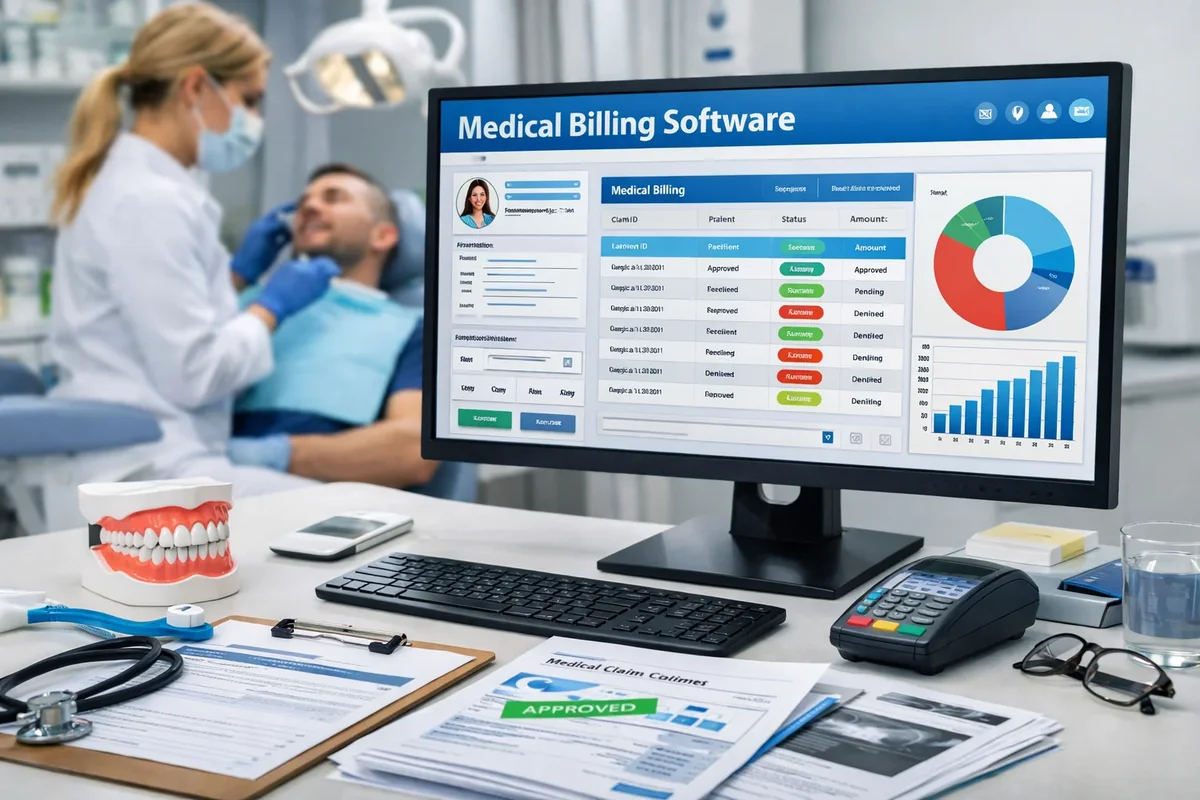
Implementation Best Practices and Future Trends in Medical Billing Software for Dentists
Successfully adopting medical billing software for dentists goes beyond choosing the right platform—it requires thoughtful implementation, staff alignment, and an eye on future trends 🚀. Practices that treat implementation as a strategic project, rather than a simple software install, consistently achieve better financial and operational outcomes. This section explains how to implement medical billing software for dentists effectively and how emerging trends are shaping the future of dental medical billing.
Planning a Smooth Implementation Process
A structured implementation plan is the foundation of success. Before launching medical billing software for dentists, practices should clearly define goals such as reducing denials, speeding up reimbursements, or improving compliance.
Data preparation is critical. Patient records, insurance details, and historical claims data must be accurate before migration. Clean data ensures that medical billing software for dentists functions correctly from day one and avoids costly disruptions.
Staff Training and Workflow Alignment
Even the most advanced medical billing software for dentists will underperform without proper staff training. Billing teams, front-desk staff, and providers should understand how their roles interact with the system.
Training should cover medical coding basics, documentation standards, and claim tracking workflows. When staff are confident using medical billing software for dentists, errors decline and efficiency rises 😊.
Creating Standard Operating Procedures (SOPs)
Documented workflows help maintain consistency. Practices should create SOPs that outline how medical billing software for dentists is used for eligibility checks, claim submission, follow-ups, and denial management.
These SOPs ensure continuity during staff changes and support long-term operational stability.
Monitoring Performance After Go-Live
Implementation does not end at launch. Practices should closely monitor performance metrics such as denial rates, days in accounts receivable, and reimbursement timelines.
Modern medical billing software for dentists provides dashboards and reports that make it easy to identify issues early. Continuous monitoring allows practices to fine-tune workflows and maximize ROI.
Adapting to Regulatory and Payer Changes
Healthcare regulations and insurance rules change frequently. One of the major advantages of cloud-based medical billing software for dentists is automatic updates that reflect new coding standards and payer requirements.
This adaptability protects practices from compliance risks and ensures ongoing accuracy without manual system overhauls.
Emerging Trends in Medical Billing Software
The future of medical billing software for dentists is increasingly driven by automation and intelligence. Artificial intelligence (AI) is being used to predict denials, suggest optimal codes, and flag documentation gaps before claims are submitted.
These advancements reduce manual effort and further improve first-pass acceptance rates 🤖.
Greater Integration and Interoperability
Future-ready medical billing software for dentists emphasizes deeper integration with EHRs, imaging systems, and patient communication platforms.
This interoperability creates a unified ecosystem where clinical care, billing, and patient engagement are fully aligned—improving both financial outcomes and patient satisfaction.
Patient-Centered Financial Transparency
Patients are becoming more involved in their healthcare finances. Newer medical billing software for dentists includes patient portals, real-time estimates, and clearer explanations of benefits.
This transparency reduces confusion, increases trust, and minimizes billing-related disputes.
Long-Term Strategic Value
When implemented correctly, medical billing software for dentists becomes a long-term strategic asset rather than just an operational tool. It supports scalability, data-driven decision-making, and financial resilience.
Practices that invest in strong implementation and stay aligned with emerging trends position themselves for sustained success in an increasingly complex healthcare environment 📈.
In conclusion, mastering implementation best practices and understanding future developments ensures that medical billing software for dentists delivers maximum value. With the right approach, it empowers dental practices to remain compliant, profitable, and patient-focused—both today and in the years ahead.