
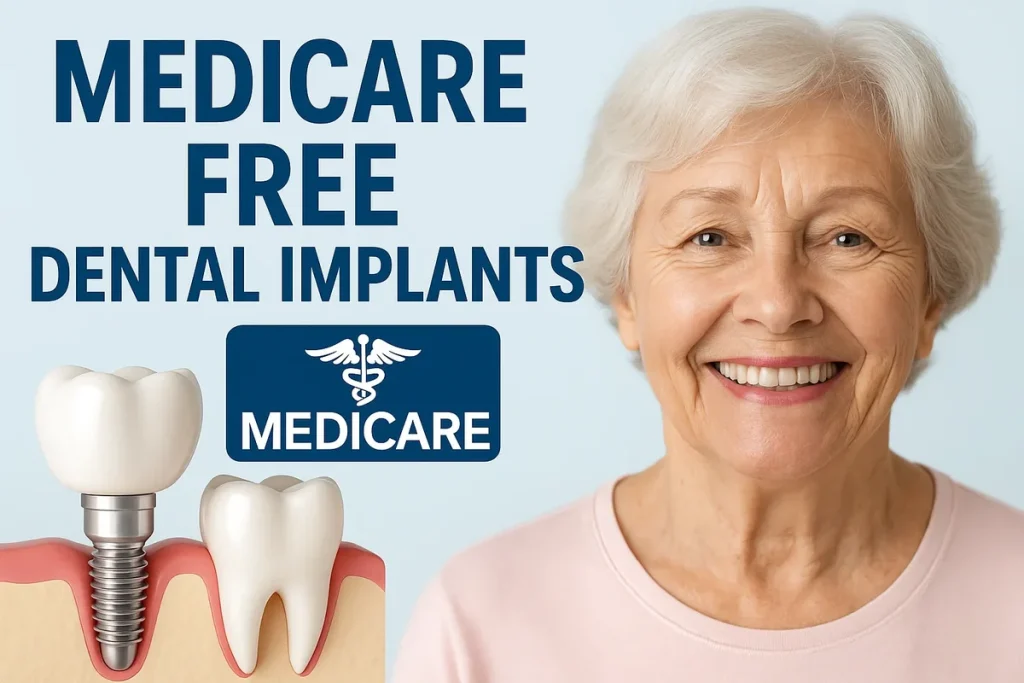
When people hear the phrase medicare free dental implants, they often wonder if such a benefit really exists and how it can impact their oral health and overall quality of life. Dental implants are widely considered the gold standard for tooth replacement, offering natural aesthetics, durability, and improved functionality compared to dentures or bridges. However, they are also one of the most expensive procedures in modern dentistry, with prices often ranging from $3,000 to $6,000 per implant. This makes the topic of Medicare coverage for implants extremely important for seniors and individuals living on fixed incomes.
To fully understand the concept of medicare free dental implants, we must first break down what Medicare currently covers, what gaps exist in dental coverage, and what options are available through different Medicare parts and supplemental plans. By exploring these details, patients can make informed choices and potentially reduce or even eliminate the out-of-pocket costs associated with dental implant surgery.
Why Dental Implants Matter for Seniors
Tooth loss is not just a cosmetic issue. Missing teeth can lead to bone loss in the jaw, difficulty chewing, changes in speech, and even a decline in overall nutrition. Seniors often struggle with traditional dentures because they may slip, cause gum irritation, or limit the types of foods that can be eaten. Dental implants, on the other hand, integrate with the jawbone and act like natural teeth, restoring confidence and oral function. This is why the demand for implants has risen dramatically among individuals over 60.
But here’s the challenge: standard Medicare (known as Original Medicare, Parts A and B) historically does not cover most routine dental services, including cleanings, fillings, dentures, or implants. That means patients must look for alternative solutions if they want medicare free dental implants or at least reduced-cost implant procedures.
What Medicare Actually Covers
Currently, Medicare Part A (hospital insurance) and Part B (medical insurance) only cover dental procedures when they are medically necessary in relation to another covered treatment. For example, if a patient needs jaw reconstruction surgery after an accident and dental implants are part of the reconstruction, Medicare might cover a portion. However, if the goal is simply to replace missing teeth due to decay or age, Medicare will usually not provide free implant coverage. This is why the phrase medicare free dental implants often creates confusion: coverage is not straightforward, and it depends on specific medical circumstances and the type of Medicare plan.
Why Medicare Advantage Plans Are Key
While Original Medicare rarely covers implants, some Medicare Advantage Plans (Part C) do offer partial or full coverage for dental services, including implants. These plans are provided by private insurance companies approved by Medicare, and they often bundle additional benefits such as vision, hearing, and dental coverage. Patients interested in medicare free dental implants should carefully review Advantage Plan options during open enrollment to see which insurers offer dental implant benefits in their area. For example, some plans may cover implant consultations, bone grafts, and even part of the surgical costs.
The Importance of Checking Eligibility
Not everyone will qualify for medicare free dental implants under Advantage Plans. Eligibility may depend on the state, the insurer, and specific health conditions. Low-income seniors may qualify for dual coverage through Medicare and Medicaid, which can open the door to more generous dental benefits. Additionally, certain clinical trials or dental schools partner with Medicare patients to provide implants at reduced or no cost, offering another pathway to affordable treatment.
Costs and Financial Relief
Since the cost of dental implants is one of the biggest barriers, understanding how Medicare might reduce this burden is crucial. Without coverage, patients may spend thousands of dollars on a single implant. With the right Medicare Advantage plan, however, this expense can be dramatically reduced or even eliminated. For example, in 2025, some Advantage Plans report offering implant coverage with only a small copay, making medicare free dental implants a real possibility for qualifying enrollees. Patients should always compare plan details and ask for a breakdown of costs before committing.
Additional Resources
Patients seeking more information can consult the American Dental Association for evidence-based guidelines on implant safety and effectiveness. Additionally, clinics such as Redent Klinik Contact Page provide patient consultations, where individuals can learn more about eligibility and costs associated with implants under Medicare-supported plans. Having professional guidance ensures patients are not misled by myths or exaggerated promises about free coverage.
Conclusion
In summary, while Original Medicare does not generally offer medicare free dental implants, there are pathways through Medicare Advantage, Medicaid, and specific clinical programs where implants can be covered fully or partially. For seniors struggling with tooth loss, exploring these options is not only about improving smiles but also about restoring health, confidence, and quality of life. By taking proactive steps and staying informed, patients can unlock affordable solutions and, in some cases, achieve truly free dental implant treatment under Medicare-backed programs. 🌟
Understanding Medicare Coverage for Dental Implants
When exploring the possibility of medicare free dental implants, it’s essential to first understand how Medicare is structured and what it does—and does not—cover. Many patients assume Medicare automatically includes dental benefits because it is a federal health insurance program designed for people aged 65 and older, as well as certain younger individuals with disabilities. However, the reality is far more nuanced. Medicare’s dental coverage is limited, and this directly impacts the accessibility of dental implants for seniors and those with medical needs.
How Original Medicare Works
Original Medicare is divided into two main parts: Part A (Hospital Insurance) and Part B (Medical Insurance). Part A generally covers inpatient hospital stays, skilled nursing facilities, hospice, and some home health care. Part B, on the other hand, covers outpatient care, preventive services, and some medical supplies. Unfortunately, neither Part A nor Part B provides routine dental coverage, which means preventive cleanings, fillings, dentures, and even advanced treatments like implants are excluded. This exclusion is the main reason patients search for alternative ways to obtain medicare free dental implants.
Exceptions to the Rule
While Original Medicare rarely pays for dental implants, there are narrow exceptions. If a patient needs a dental procedure as part of a broader medical treatment, Medicare may cover it. For example:
- If implants are required during jaw reconstruction after an accident or injury.
- If extractions or implants are performed to prepare the mouth for radiation treatment due to oral cancer.
- If implants are deemed medically necessary for reconstructive purposes related to a covered medical condition.
These cases are uncommon, but they illustrate that while the general rule excludes dental implants, specific medical circumstances may allow coverage under Medicare Part A or B. However, this still doesn’t equate to guaranteed medicare free dental implants for the majority of seniors.
The Role of Medicare Advantage Plans
Because Original Medicare leaves such a large gap, Medicare Advantage (Part C) plans fill an important role. These plans are provided by private insurers that contract with Medicare. Many Advantage plans include additional benefits like vision, hearing, and crucially—dental. Some even offer specific coverage for implants. Patients who enroll in such plans may find themselves eligible for reduced-cost or even medicare free dental implants, depending on their provider and plan details.
What to Look For in Advantage Plans
When comparing Medicare Advantage plans, it’s important to ask:
- Does the plan specifically list dental implants as a covered service?
- What percentage of the procedure is covered, and what is the patient’s copay?
- Are there annual maximums on dental coverage that could affect implant eligibility?
- Does the plan require patients to see in-network dentists or specialists?
By carefully analyzing these questions, seniors can identify which plans may provide true access to medicare free dental implants or significantly reduced costs.
Medicaid and Dual Eligibility
For low-income seniors, Medicaid may serve as an additional source of dental coverage. While Medicaid benefits vary from state to state, some programs include partial or full coverage for implants. When combined with Medicare, this is called “dual eligibility.” In these cases, a patient might find that between Medicare Advantage and Medicaid support, their out-of-pocket expense is minimal, creating a pathway toward receiving medicare free dental implants in practice.
Cost Comparison Without Medicare
Understanding the true value of coverage also requires a look at the financial side. Without any insurance, a single dental implant typically costs between $3,000 and $6,000, depending on the complexity of the case, need for bone grafting, and regional price variations. A full mouth restoration using implants can easily exceed $30,000. These numbers make it clear why so many seniors actively pursue plans or programs that may lead to medicare free dental implants—because the alternative is simply unaffordable for many retirees on fixed incomes.
Why Coverage Matters for Health and Quality of Life
Dental implants are more than a cosmetic upgrade. They play a critical role in maintaining bone health, improving chewing ability, supporting nutrition, and boosting self-confidence. Studies show that seniors with missing teeth are more likely to suffer from malnutrition, social withdrawal, and even depression. By securing access to affordable or free implants through Medicare-supported programs, patients can dramatically improve both physical and mental health outcomes. That’s why the discussion of medicare free dental implants is not only about cost—it’s about quality of life and longevity.
Clinical Programs and Trials
Another potential route for patients lies in university dental programs and clinical research studies. Dental schools often offer implant procedures at reduced rates, sometimes partnered with Medicare Advantage carriers. In rare cases, clinical trials may provide implants at little to no cost in exchange for patient participation. These opportunities are not widely advertised, so patients must actively research or ask their healthcare providers for guidance.
Conclusion: Navigating Medicare’s Complex Rules
In conclusion, understanding Medicare coverage for implants is the first step toward determining whether medicare free dental implants are a real option for you. While Original Medicare does not cover routine dental care or implants, exceptions exist in special medical situations. More importantly, Medicare Advantage plans and Medicaid can expand benefits, making implants more accessible. Patients should review their options during enrollment periods, speak with dental providers, and utilize resources like the American Dental Association for accurate guidance. By being proactive, seniors can navigate the complexities of Medicare and uncover real opportunities to secure dental implant treatment at little to no cost.
Who Qualifies for Medicare Free Dental Implants?
Eligibility for medicare free dental implants is one of the most common questions seniors and people with disabilities ask when planning their oral health care. Dental implants are life-changing, but because of their high costs, many patients rely on Medicare or related programs to make them affordable. While Original Medicare (Parts A and B) provides limited or no coverage for implants, Medicare Advantage plans, Medicaid, and special circumstances can make individuals eligible for reduced-cost or even free implants. Understanding these criteria is essential for anyone hoping to benefit from coverage.
General Medicare Eligibility
First, it’s important to remember that Medicare itself is only available to individuals who meet certain requirements. You qualify for Medicare if:
- You are 65 years or older and a U.S. citizen or permanent legal resident.
- You are under 65 but have a qualifying disability.
- You have been diagnosed with End-Stage Renal Disease (ESRD) or Amyotrophic Lateral Sclerosis (ALS).
Meeting these criteria is the first step. However, not all Medicare beneficiaries automatically qualify for medicare free dental implants. Coverage depends on the specific plan type and personal medical situation.
Eligibility Under Medicare Advantage Plans
Medicare Advantage (Part C) is where most opportunities for dental implant coverage exist. Unlike Original Medicare, many Advantage plans offer dental benefits. To qualify for implant coverage through these plans, patients must:
- Be enrolled in a Medicare Advantage plan that specifically includes dental implant benefits.
- Meet the plan’s requirements, such as using in-network dental providers.
- Stay within annual coverage limits (many plans have caps between $1,000–$3,000 per year).
Patients who select the right Advantage plan during open enrollment or when switching plans are far more likely to qualify for medicare free dental implants or at least significantly reduced costs. For example, some plans may cover implants in full if the procedure is deemed essential for chewing and nutrition, while others may only cover a portion.
Special Enrollment Periods
It’s important to note that patients can also change their Advantage plan during special enrollment periods if they qualify due to moving, losing other coverage, or qualifying for Medicaid. Taking advantage of these windows can make the difference between no coverage and full coverage for implants.
Eligibility Through Medicaid
For seniors who are low income, dual eligibility (Medicare + Medicaid) can open additional doors. Medicaid coverage varies by state, but some states do cover implants, particularly if they are considered medically necessary. If you qualify for Medicaid in addition to Medicare, you may be eligible for medicare free dental implants in practice, because the combination of benefits may eliminate out-of-pocket costs.
Medical Necessity and Special Cases
One of the most overlooked eligibility pathways is medical necessity. While routine dental implants are rarely covered, implants may be funded if:
- They are required after a traumatic injury, such as an accident damaging teeth and jawbone.
- They are necessary as part of oral cancer treatment, especially when radiation is involved.
- They support jaw reconstruction or other medically essential surgeries.
In these cases, Medicare Part A or Part B may cover the hospital stay or surgery costs, while supplemental insurance or Advantage plans may pick up dental-specific expenses. This layered approach can effectively result in medicare free dental implants for qualified patients.
Documentation Is Key
To qualify under medical necessity, patients need thorough documentation from their physicians and dental specialists. Medical records, imaging, and treatment plans must demonstrate that implants are required not just for appearance but for essential health needs.
Eligibility Through Clinical Trials and Dental Schools
Some patients may qualify for free or reduced-cost implants through programs outside of traditional insurance. Clinical trials sponsored by research organizations occasionally offer implants at no cost in exchange for participation. Similarly, dental schools often provide discounted implant procedures performed by supervised students. While not officially “Medicare,” these programs are valuable resources for those who cannot otherwise afford implants.
Factors That May Limit Eligibility
Even if you meet Medicare’s general requirements, some factors can limit your access to implant coverage:
- Geographic location: Some Advantage plans with dental implant benefits are only available in specific states or counties.
- Annual limits: Even if implants are covered, the yearly maximum benefit may not cover the full cost of multiple implants.
- Pre-existing conditions: Severe bone loss or other health issues may disqualify a patient from implant surgery itself, regardless of coverage.
These limitations make it crucial to review each plan carefully and to consult directly with both the insurance provider and dental professional before committing to treatment.
Conclusion: Who Really Qualifies?
Ultimately, qualifying for medicare free dental implants depends on a combination of factors: the type of Medicare plan chosen, state Medicaid rules, medical necessity, and available supplemental programs. Seniors enrolled in Medicare Advantage with robust dental coverage, low-income patients with dual eligibility, and those with documented medical needs have the highest chances of qualifying. For others, alternative pathways like dental schools and clinical trials may provide affordable solutions. By carefully evaluating eligibility, gathering documentation, and exploring every available option, patients can greatly increase their chances of receiving high-quality implant treatment with minimal or no out-of-pocket costs.
How to Apply for Dental Implant Coverage Under Medicare
Applying for medicare free dental implants is not as simple as filling out one form. Because Medicare’s coverage for dental implants is complex and often conditional, patients must carefully navigate the application process. This involves understanding eligibility, choosing the right Medicare plan, submitting proper documentation, and knowing how to appeal decisions if necessary. In this section, we’ll break down the process step by step so patients can maximize their chances of receiving dental implant coverage under Medicare.
Step 1: Review Your Medicare Options
The first step is to determine whether you are enrolled in Original Medicare or a Medicare Advantage plan. Original Medicare (Parts A and B) rarely covers implants unless they are medically necessary as part of another covered procedure. Medicare Advantage (Part C) plans, however, may provide expanded dental benefits. Patients seeking medicare free dental implants should review their current plan or consider switching to an Advantage plan that specifically lists implants as a covered benefit.
Checking Plan Details
Before applying, carefully read the Evidence of Coverage (EOC) document for your plan. This document explains what services are covered, any annual limits, and which providers you must use. Look for clear language about dental implants—sometimes listed under “prosthodontics” or “oral surgery.” If implants are not mentioned, call the plan’s customer service line and request written confirmation of what is included.
Step 2: Gather Medical and Dental Documentation
To strengthen your application for medicare free dental implants, you will need comprehensive documentation. Medicare or Advantage plan administrators want proof that implants are medically necessary or covered under your chosen plan. Documents you may need include:
- Dental records showing missing teeth, gum health, and bone density scans.
- X-rays or CT scans that demonstrate the need for implants.
- A letter from your dentist or oral surgeon explaining why implants are necessary for chewing, speech, or health reasons.
- Medical records if implants are part of a broader treatment plan (e.g., oral cancer reconstruction).
The more evidence you provide, the greater your chances of approval.
Step 3: Consult with In-Network Providers
Medicare Advantage plans usually require you to use dentists and oral surgeons within their network. Before submitting your application, confirm that your chosen provider is in-network. Out-of-network services may not be covered, or they may result in higher out-of-pocket costs. This step is critical if you want to access medicare free dental implants rather than only partial coverage.
Pre-Authorization Requirements
Some Advantage plans require pre-authorization before proceeding with implants. This means your dentist or oral surgeon must submit the treatment plan and justification to the insurer in advance. Without pre-authorization, you could be denied coverage—even if your plan technically includes implants. Always confirm pre-authorization requirements before scheduling surgery.
Step 4: Submit Your Application
Once you have chosen a plan, gathered documentation, and confirmed in-network providers, it’s time to apply. This process varies depending on your plan:
- Original Medicare: If your case falls under medical necessity (e.g., trauma or cancer treatment), submit documentation through your hospital or medical provider.
- Medicare Advantage: Submit claims and pre-authorization requests directly through your insurer’s portal or by fax/mail. Work with your dental provider’s office staff—they are usually familiar with the forms and requirements.
Be sure to keep copies of all paperwork, including submission confirmations. These will be useful if you need to appeal.
Step 5: Understand Potential Costs
Even if your plan covers implants, you may still face out-of-pocket expenses such as copays, deductibles, or costs that exceed annual maximums. However, with the right combination of benefits, it is possible to achieve medicare free dental implants—particularly if Medicaid or supplemental programs contribute. Before proceeding, request a detailed cost estimate from both your provider and your insurer.
Appeals and Denials
If your application is denied, don’t give up. You have the right to file an appeal. In many cases, denials are based on missing documentation or misinterpretation of medical necessity. Submitting additional evidence or a letter from your healthcare provider can sometimes overturn the decision. Appeals may take time, but they are worth pursuing if implants are essential to your health and well-being.
Step 6: Explore Alternative Application Pathways
If your Medicare plan does not cover implants, you can still apply for assistance through:
- Dental Schools: Many schools offer implants at reduced costs, and some coordinate with Medicare Advantage plans.
- Clinical Trials: Occasionally, research studies provide implants for free to qualified participants.
- Charitable Programs: Nonprofit organizations sometimes sponsor dental implant programs for seniors.
Though these aren’t strictly Medicare pathways, they can complement your coverage and provide affordable solutions.
Conclusion: Taking Control of the Application Process
Applying for medicare free dental implants requires preparation, persistence, and careful planning. By reviewing plan options, gathering thorough documentation, consulting in-network providers, and following through with applications and appeals, patients can maximize their chances of receiving implant coverage. While the process may seem daunting, the reward is a restored smile, improved oral health, and enhanced quality of life. Seniors and patients should not hesitate to seek professional help from insurance advisors or dental clinics like Redent Klinik Contact Page, where guidance is available every step of the way. With the right approach, accessing free or nearly free implants under Medicare is not just a dream—it’s a realistic possibility. 🌟
Average Costs vs. Medicare Free Dental Implants
One of the most important factors seniors consider when evaluating treatment options is cost. Dental implants are recognized as the most durable and natural-looking solution for missing teeth, but they also come with one of the highest price tags in modern dentistry. Without insurance, the expense can be overwhelming, which is why many patients turn to Medicare and search for opportunities to secure medicare free dental implants. Understanding how much implants typically cost, and how Medicare or supplemental programs can reduce or even eliminate that cost, is essential for making informed decisions.
Average Costs of Dental Implants in the U.S.
The price of dental implants varies widely depending on geographic location, the dentist’s expertise, and the complexity of the case. Here is a general breakdown of average U.S. costs per implant:
- Single tooth implant: $3,000 – $6,000
- Multiple implants (3–4 teeth): $9,000 – $15,000
- Full mouth implants (All-on-4 or All-on-6): $20,000 – $40,000 per arch
- Bone grafting (if needed): $500 – $3,000
- Tooth extractions (if required): $150 – $600 per tooth
These prices illustrate why so many retirees on fixed incomes cannot afford implants without assistance. In comparison, dentures and bridges may be less expensive upfront, but they often require replacement and do not preserve jawbone health. This makes the pursuit of medicare free dental implants a long-term financial and health strategy.
Why Implants Are Expensive
The cost of implants reflects not only the materials but also the expertise required. Implants are made of biocompatible titanium or zirconia, surgically inserted into the jawbone, and topped with custom crowns. The process involves multiple appointments, imaging, surgery, and lab work. When evaluating costs, patients should also consider the long lifespan of implants: with proper care, they can last decades or even a lifetime, unlike dentures which may need replacement every 5–10 years.
How Medicare Helps Offset Costs
Original Medicare (Parts A and B) rarely pays for implants unless they are medically necessary, which means most patients will face full costs without additional coverage. However, Medicare Advantage plans may cover implants partially or fully, depending on the policy. For seniors enrolled in such plans, the cost difference can be dramatic. In fact, in some cases, patients may access medicare free dental implants if their plan provides full coverage with little or no copay.
Examples of Cost Reductions
Here are examples of how Medicare Advantage can affect implant costs:
- A patient with no dental coverage pays $4,500 for a single implant.
- A patient with a Medicare Advantage plan that covers 50% of implants pays $2,250.
- A patient with a plan that covers implants up to an annual maximum of $3,000 may pay only $1,500.
- A patient with dual eligibility (Medicare + Medicaid) may pay $0 if Medicaid covers the balance, achieving medicare free dental implants.
Comparing Implants to Alternatives
When evaluating cost, patients often compare implants to dentures or bridges. While dentures can cost between $1,000–$3,000 per arch, and bridges between $2,000–$5,000, both alternatives often require replacement and do not prevent bone resorption. Over 20 years, dentures may end up costing more than implants due to repeated adjustments and replacements. This reinforces the value of securing implants through Medicare or other programs—even if they require more upfront effort to qualify for medicare free dental implants.
Geographic Variations in Cost
The cost of implants can vary depending on where you live. In metropolitan areas like New York or Los Angeles, a single implant may cost closer to $6,000 due to higher operating costs. In smaller towns or states with lower dental fees, the same procedure may cost around $3,000. Medicare Advantage plans also vary by state, meaning that access to medicare free dental implants can depend heavily on where you reside. Seniors should compare both plan options and local providers before committing.
International Comparison
In some cases, patients explore dental tourism as a cost-saving option. For example:
- Mexico: $1,500 – $2,500 per implant
- Turkey: $1,200 – $2,000 per implant
- Thailand: $1,800 – $2,500 per implant
While international options may be cheaper, they often do not qualify for Medicare reimbursement. However, some seniors still prefer this route if medicare free dental implants are not accessible domestically.
How to Calculate Your Out-of-Pocket Costs
Before undergoing treatment, patients should ask their dental provider and insurance company for an itemized estimate. This should include the surgeon’s fee, implant parts, crown placement, anesthesia, and additional procedures like bone grafts. Medicare Advantage plans may cover some or all of these steps. By carefully analyzing these details, seniors can avoid surprise bills and confirm whether they truly qualify for medicare free dental implants.
Conclusion: Balancing Costs with Coverage
Ultimately, the decision between paying out-of-pocket and pursuing medicare free dental implants depends on careful financial planning. Dental implants are a significant investment, but they offer unmatched health and quality-of-life benefits compared to alternatives. Medicare Advantage plans, Medicaid, and supplemental programs can dramatically reduce costs and, in some cases, eliminate them entirely. Seniors should weigh the long-term advantages of implants against the upfront price and explore every option to secure affordable or free care. By understanding cost structures, comparing alternatives, and leveraging Medicare, patients can achieve a restored smile without breaking the bank. 💡
Pros and Cons of Medicare-Supported Dental Implants
When considering medicare free dental implants, patients naturally weigh the advantages and disadvantages of pursuing treatment under Medicare-supported programs. Dental implants are widely known for their durability, function, and aesthetics, but the path to receiving them through Medicare involves both benefits and challenges. Understanding the pros and cons helps seniors and their families make informed decisions that align with financial, medical, and lifestyle needs.
Advantages of Medicare-Supported Dental Implants
The biggest advantage of Medicare-backed implant programs is cost savings. Since implants often cost thousands of dollars out-of-pocket, having access to medicare free dental implants or heavily subsidized options is life-changing for retirees living on fixed incomes. Below are the most notable benefits:
1. Significant Financial Relief
Implants are a major investment, but under the right Medicare Advantage plan or Medicaid program, patients may pay little to nothing for treatment. In some cases, coverage can include pre-surgical consultations, imaging, implant placement, and crowns. Eliminating or minimizing costs makes implants a realistic option for many who otherwise could not afford them.
2. Improved Oral Function and Health
Unlike dentures, which can slip or cause irritation, implants are surgically integrated into the jawbone, functioning like natural teeth. Medicare-supported implants allow seniors to chew properly, enjoy a wider variety of foods, and maintain better nutrition. For patients who secure medicare free dental implants, the benefits extend beyond aesthetics—they directly enhance long-term health and well-being.
3. Longevity and Durability
Dental implants can last decades when cared for properly. Compared to bridges or dentures, which often need replacement every 5–10 years, implants are a one-time investment. For seniors, this means fewer future dental visits and lower long-term costs, especially when implants are covered by Medicare or Medicaid.
4. Enhanced Self-Esteem and Social Confidence
Tooth loss often affects self-esteem, leading many seniors to avoid smiling, eating in public, or socializing. Implants restore natural-looking teeth, which significantly boosts confidence. When individuals gain access to medicare free dental implants, they enjoy not only improved oral health but also emotional and social benefits that greatly improve quality of life.
Disadvantages and Challenges of Medicare Coverage
Despite the advantages, there are also challenges associated with pursuing implants through Medicare. These limitations can make the process confusing and, at times, frustrating.
1. Limited Coverage Under Original Medicare
One of the biggest drawbacks is that Original Medicare (Parts A and B) generally does not cover routine dental implants. Only under rare medical circumstances—such as reconstruction after injury or oral cancer—will coverage apply. This means most patients must rely on Medicare Advantage or Medicaid for access to medicare free dental implants.
2. Annual Caps and Restrictions
Even when Medicare Advantage plans offer implant coverage, they often impose annual limits (e.g., $1,000–$3,000). Since a single implant can cost more than this, patients may still face significant out-of-pocket costs. Some Advantage plans also cover only part of the procedure, such as consultations or crowns, but not the surgical placement itself.
3. Limited Provider Networks
Many Medicare Advantage plans require patients to use in-network dental professionals. If your preferred dentist or implant specialist is not in the network, you may be forced to switch providers or pay higher costs. This restriction can make it difficult to find experienced implant surgeons willing to accept Medicare-supported plans.
4. Complicated Application Process
Applying for coverage often requires extensive documentation, pre-authorization, and sometimes multiple appeals. Seniors must be proactive, gather medical and dental records, and work closely with providers to justify the medical necessity of implants. For patients hoping to achieve medicare free dental implants, this process can be time-consuming and overwhelming.
Weighing Long-Term Value vs. Short-Term Hassles
While the challenges of applying and securing coverage are real, many patients find that the long-term benefits outweigh the short-term inconveniences. Dental implants provide better function, comfort, and health outcomes compared to alternatives. For those able to access medicare free dental implants through Advantage or Medicaid, the return on investment in terms of health and quality of life is undeniable.
Comparison to Alternatives
Dentures and bridges are less expensive upfront, but they often come with ongoing maintenance costs and discomfort. Over time, these expenses may exceed the cost of implants. Patients who secure implants with Medicare support benefit from a solution that is more stable, healthier for the jawbone, and better for long-term oral care.
Conclusion: Balancing Benefits and Drawbacks
In conclusion, medicare free dental implants present a compelling opportunity for seniors seeking long-term oral health solutions. The pros include financial savings, better function, improved nutrition, and enhanced confidence. The cons include limited coverage under Original Medicare, annual benefit caps, network restrictions, and administrative hurdles. However, with careful planning, documentation, and the right Medicare Advantage plan, many of these obstacles can be overcome. For seniors serious about preserving oral health and improving their quality of life, pursuing Medicare-supported implants is often well worth the effort.
Alternatives if Medicare Doesn’t Fully Cover Implants
While many patients hope to qualify for medicare free dental implants, the reality is that Medicare coverage for implants can be limited. Original Medicare provides almost no routine dental benefits, and even Medicare Advantage plans may include annual caps or partial coverage at best. For patients who cannot secure complete coverage, exploring alternatives is essential. Fortunately, there are multiple options available to reduce costs, restore dental function, and improve quality of life.
Traditional Dentures as an Alternative
Dentures are one of the most common solutions for tooth loss and are significantly more affordable than implants. A full set of dentures typically costs $1,000–$3,000 per arch, making them accessible to more patients. Although dentures do not prevent bone loss or feel as natural as implants, they provide a functional and cosmetic solution for those who cannot afford implants without medicare free dental implants programs.
Advantages of Dentures
- Affordable upfront cost compared to implants.
- Quick turnaround time for fabrication and placement.
- Covered more frequently by Medicare Advantage plans than implants.
Disadvantages of Dentures
- May slip or cause discomfort during eating and speaking.
- Require periodic relining or replacement every 5–10 years.
- Do not stop jawbone deterioration.
Dental Bridges as an Alternative
Dental bridges are another common replacement option. A bridge typically costs $2,000–$5,000 depending on the number of missing teeth. Medicare Advantage plans sometimes cover bridges even when they exclude implants. For seniors unable to qualify for medicare free dental implants, bridges can restore functionality while offering a fixed, non-removable solution.
Pros of Bridges
- Less invasive than implants; no surgery required.
- Faster treatment timeline.
- More natural appearance compared to dentures.
Cons of Bridges
- Requires grinding down adjacent healthy teeth for support.
- Does not prevent jawbone loss like implants.
- May need replacement every 10–15 years.
Payment Assistance Programs
If medicare free dental implants are not available, patients can also seek financial aid through other programs. Some nonprofits, dental charities, and state-level initiatives help low-income seniors afford implant treatments.
Charitable Organizations
- Dental Lifeline Network: Provides free or reduced-cost dental care to seniors and disabled individuals.
- Mission of Mercy: Offers free dental clinics, sometimes including surgical procedures like extractions or implant placements.
State Medicaid Programs
Although Medicaid dental benefits vary by state, some include partial or full implant coverage for medically necessary cases. Dual-eligible patients (Medicare + Medicaid) should check whether state benefits fill the gaps Medicare leaves behind.
Dental Schools and Training Clinics
Dental schools often provide implants and other restorative procedures at reduced rates because students perform the work under expert supervision. While the process may take longer, the savings can be significant—sometimes up to 50% compared to private practices. For seniors who cannot obtain medicare free dental implants, this option balances affordability with quality care.
Discount Dental Plans
Another alternative is enrolling in a dental discount plan. Unlike insurance, these plans charge an annual membership fee (often $150–$300) and provide reduced rates for dental services. Patients may save 20–50% on implant procedures, making them more affordable even without Medicare coverage.
Dental Tourism
For some patients, traveling abroad for dental implants is a viable solution. Countries like Turkey, Mexico, and Thailand are popular destinations where implant procedures can cost less than half of U.S. prices. While these savings are appealing, dental tourism has risks such as lack of follow-up care and difficulty ensuring consistent quality. Still, for those unable to access medicare free dental implants, it may be worth considering.
Clinical Trials and Research Studies
Occasionally, universities and research centers conduct clinical trials involving dental implants. Participants may receive implants at little or no cost in exchange for joining the study. Availability is limited, but it can be a valuable pathway for those who cannot secure traditional Medicare benefits.
Conclusion: Exploring Practical Alternatives
In summary, while medicare free dental implants are the ideal outcome, not all patients will qualify under Medicare or Advantage plans. Alternatives like dentures, bridges, charitable organizations, Medicaid, dental schools, and even international options provide practical solutions for restoring oral function and confidence. By weighing these alternatives against personal health needs, seniors can find a treatment pathway that balances cost, quality, and long-term health outcomes. Even without full Medicare coverage, affordable dental care options remain within reach for those who research and explore all available resources.
The Role of Medicare Advantage Plans in Dental Coverage
For most seniors, the best pathway to medicare free dental implants lies within Medicare Advantage (Part C) plans. Unlike Original Medicare, which excludes most dental services, Medicare Advantage plans are administered by private insurance companies approved by Medicare and often include additional benefits such as vision, hearing, and dental coverage. Because implants are among the most expensive dental procedures, choosing the right Advantage plan can make the difference between paying thousands of dollars out-of-pocket or accessing implants at little to no cost.
Understanding Medicare Advantage
Medicare Advantage plans replace Original Medicare (Parts A and B) while still offering all the standard hospital and medical coverage. The added value comes from supplemental benefits. Dental care is one of the most sought-after extras, as many seniors experience tooth loss and need restorative options. Some Advantage plans now include coverage for implants, giving patients access to medicare free dental implants under certain conditions.
Why Advantage Plans Are Different
- They bundle multiple health services into one plan.
- They often include preventive and restorative dental benefits.
- They may cover procedures excluded by Original Medicare, including implants.
This makes Advantage plans uniquely positioned to bridge the gap between the high cost of implants and the financial realities of seniors.
Types of Dental Coverage Under Advantage Plans
Not all Medicare Advantage plans are the same. Dental benefits vary widely depending on the insurer and geographic location. Understanding these variations is critical for patients hoping to secure medicare free dental implants or significant cost reductions.
Preventive Coverage
Most Advantage plans cover basic preventive services such as exams, X-rays, and cleanings. While this does not directly impact implant costs, it helps maintain oral health, which is a prerequisite for implant eligibility.
Restorative Coverage
Some plans extend coverage to restorative procedures, including crowns, bridges, and implants. Coverage may include partial payment for surgical placement or full coverage for specific clinical situations. For example, a plan may cover 50% of implant costs up to an annual maximum of $2,000–$3,000.
Comprehensive Coverage
In rare cases, high-tier Advantage plans may offer comprehensive implant coverage, meaning patients can receive medicare free dental implants if costs fall within plan limits. These plans are highly desirable but may come with higher monthly premiums.
How to Choose the Right Advantage Plan
Patients looking for dental implant coverage should carefully compare plans before enrolling. Key factors to review include:
- Coverage details: Does the plan explicitly include implants in its Evidence of Coverage?
- Annual maximums: What is the cap on dental benefits, and will it cover most of the implant cost?
- Network restrictions: Are preferred dental providers available in your area?
- Copays and coinsurance: What percentage of implant costs will you still be responsible for?
By analyzing these details, patients increase their chances of securing medicare free dental implants through a well-structured Advantage plan.
Enrollment and Timing
Another important aspect of Medicare Advantage is timing. Patients can only enroll or switch plans during certain periods:
- Initial Enrollment Period: When you first become eligible for Medicare.
- Open Enrollment Period (October 15 – December 7): The best time to switch to a plan that offers implant coverage.
- Medicare Advantage Open Enrollment (January 1 – March 31): An opportunity to change Advantage plans if your current plan does not include implants.
Choosing the right enrollment period ensures you do not miss the chance to select a plan offering medicare free dental implants.
Limitations of Advantage Plans
Although Advantage plans expand dental options, they come with limitations:
- Coverage may vary greatly by state and county.
- Annual limits often prevent full coverage of multiple implants.
- Pre-authorization requirements may delay treatment.
- Plans may require patients to use in-network providers only.
These restrictions mean patients must be strategic when selecting plans, especially if they hope to qualify for medicare free dental implants.
Combining Advantage Plans with Other Programs
For the best results, seniors may combine Medicare Advantage with Medicaid or supplemental programs. Dual-eligible patients can often eliminate remaining out-of-pocket costs, making implants effectively free. Dental schools, clinical trials, and charitable programs can also supplement Advantage benefits.
Conclusion: Medicare Advantage as a Gateway
In summary, Medicare Advantage plans play a central role in providing access to medicare free dental implants. While not all plans include implant coverage, many do, and some offer comprehensive benefits that significantly reduce or eliminate costs. By carefully comparing plans, enrolling at the right time, and leveraging additional resources, seniors can transform dental implants from an unaffordable dream into a realistic, life-changing treatment option. For anyone serious about restoring oral health, Medicare Advantage is the most practical gateway to affordable or free dental implant care.
Common Myths About Medicare Free Dental Implants
The search for medicare free dental implants has created a number of misconceptions among seniors, caregivers, and even healthcare providers. Because the rules surrounding Medicare coverage are complex and constantly changing, myths and misinformation spread quickly. Some patients believe implants are always covered, while others think they are never covered. To make the best decisions, it is crucial to separate fact from fiction. Below, we address the most common myths surrounding Medicare and dental implants.
Myth 1: Medicare Always Covers Dental Implants
One of the biggest misconceptions is that Medicare automatically covers implants for all beneficiaries. In reality, Original Medicare (Parts A and B) does not cover routine dental procedures, including implants. Coverage is only possible under very specific circumstances, such as when implants are medically necessary for reconstructive surgery after trauma or oral cancer. Believing that everyone qualifies for medicare free dental implants can lead to disappointment when patients discover that Original Medicare excludes them.
The Reality
To access implant coverage, patients typically need a Medicare Advantage plan that explicitly includes dental benefits. Without this, coverage under Original Medicare is extremely limited.
Myth 2: Medicare Never Covers Dental Implants
The opposite myth is also common: that Medicare never covers implants under any circumstances. While Original Medicare excludes them, Medicare Advantage plans may cover them fully or partially. In addition, dual-eligible patients (those with both Medicare and Medicaid) may qualify for significant cost reductions, sometimes achieving medicare free dental implants in practice. This myth discourages patients from researching Advantage or Medicaid benefits that could provide access to implants.
The Reality
Coverage is not universal, but it does exist. Patients willing to compare Advantage plans during enrollment periods can often find options that include dental implant benefits.
Myth 3: Only the Wealthy Can Afford Dental Implants
Because implants are expensive—often ranging from $3,000 to $6,000 per tooth—many believe they are exclusively for wealthy patients. However, this is not true when Medicare Advantage, Medicaid, or assistance programs are involved. Patients who qualify for medicare free dental implants may receive implants at no cost, proving that affordability is possible even for seniors on fixed incomes.
The Reality
With careful planning, enrollment in the right Medicare Advantage plan, or participation in charitable programs, implants are accessible to many seniors. Cost should not automatically deter patients from exploring coverage options.
Myth 4: Dental Implants Are Purely Cosmetic
Another widespread myth is that implants are a luxury procedure designed only to improve appearance. While implants do restore the look of natural teeth, they also play a critical role in oral health. They prevent jawbone deterioration, improve chewing ability, and support speech. For many seniors, implants are medically necessary, not just cosmetic. This distinction is important when applying for coverage under Medicare or Medicaid.
The Reality
Implants are a functional, long-term solution for tooth loss, and their health benefits are one of the strongest arguments for expanding Medicare coverage. Patients pursuing medicare free dental implants should highlight these functional benefits when submitting applications or appeals.
Myth 5: Medicare Advantage Plans All Offer the Same Benefits
Some patients assume that all Medicare Advantage plans include identical coverage, but this is far from true. Plans vary by state, insurer, and even county. Some cover only basic preventive care, while others provide partial or full implant coverage. Believing this myth may cause patients to enroll in a plan without verifying implant benefits.
The Reality
Each Advantage plan must be evaluated individually. Seniors should carefully review Evidence of Coverage documents and ask questions about annual maximums, pre-authorization requirements, and in-network providers. Only then can they identify a plan that may provide medicare free dental implants.
Myth 6: Once Denied, Coverage Cannot Be Reconsidered
Many patients give up after receiving a denial for implant coverage, assuming there is no path forward. This myth prevents seniors from pursuing appeals that could change the outcome. In fact, appeals are a normal part of the process, and denials are often overturned when additional documentation is submitted.
The Reality
Patients can and should appeal denials. Submitting X-rays, medical records, or letters from physicians and dentists can provide the necessary justification. Persistence is often the key to unlocking medicare free dental implants or at least partial coverage.
Myth 7: Alternatives Like Dentures Are Always Better Covered
While it is true that dentures are often more widely covered by Medicare Advantage than implants, this does not mean they are the best choice for every patient. Dentures may not fit well, cause irritation, and fail to preserve bone health. Believing this myth can prevent patients from pursuing implants that may actually be covered.
The Reality
Although dentures are cheaper upfront, implants offer better long-term health and quality-of-life benefits. Patients who secure medicare free dental implants enjoy a solution that is more functional and durable than dentures.
Conclusion: Separating Fact from Fiction
In summary, myths about Medicare coverage for implants often mislead patients, causing them to overlook real opportunities for coverage. While Original Medicare excludes most dental procedures, Medicare Advantage, Medicaid, and supplemental programs can provide access to medicare free dental implants. By understanding the facts, seniors can make informed choices, avoid frustration, and pursue the best available treatment options. Dispelling these myths empowers patients to advocate for themselves and take full advantage of every coverage pathway available.

Patient Experiences and Success Stories
Hearing real-life stories is one of the best ways to understand the true impact of medicare free dental implants. Beyond the statistics, these personal accounts demonstrate how access to implants through Medicare Advantage, Medicaid, or supplemental programs can transform lives. From improved health to restored self-confidence, success stories highlight both the challenges patients face and the victories they achieve when they finally secure the coverage they need.
Restoring Confidence in Everyday Life
Many seniors report that tooth loss left them embarrassed to smile, speak, or eat in public. One patient, Margaret, a 72-year-old retiree, explained that she avoided social gatherings for years because of poorly fitting dentures. After switching to a Medicare Advantage plan that included implant coverage, she received two implants with minimal out-of-pocket expense. Margaret now enjoys meals with friends and confidently smiles in photos, crediting her medicare free dental implants with giving her “a second chance at life.”
The Psychological Impact
Stories like Margaret’s reveal that implants are not just about dental function. They also address emotional health. Patients often describe a surge in self-esteem once they no longer worry about dentures slipping or gaps in their smile. This emotional improvement is as valuable as the physical benefits and underscores why coverage for implants is so important.
Improved Nutrition and Health Outcomes
Another powerful example is Thomas, a 68-year-old diabetic patient who struggled to maintain a proper diet because dentures limited what he could chew. His inability to eat crunchy vegetables and lean meats contributed to poor blood sugar control. When his Medicare Advantage plan approved implant surgery, Thomas regained the ability to eat nutritious foods. Within months, his doctor reported improved blood sugar levels and overall health. For Thomas, medicare free dental implants were more than a dental solution—they became a medical necessity that improved his chronic condition.
The Link Between Oral Health and General Health
These stories reinforce research showing that oral health directly affects overall health. Implants not only restore chewing function but also reduce risks of malnutrition, digestive problems, and even cardiovascular disease. Patients who share their success stories often highlight these unexpected health benefits.
Overcoming Financial Barriers
The high cost of implants often discourages patients from even exploring the option. Linda, a 70-year-old widow, initially believed implants were unaffordable. Her dentist quoted $5,000 for a single implant, which was out of reach on her limited income. However, after enrolling in a Medicare Advantage plan during open enrollment, Linda discovered her plan covered 70% of implant costs. With the help of a Medicaid supplement, she paid nothing. Linda describes her medicare free dental implants as “the best gift I could give myself.”
The Importance of Research and Persistence
Linda’s story shows that persistence pays off. Many patients assume implants are beyond their reach because of cost, but by researching plans, comparing benefits, and seeking supplemental support, they can access free or nearly free implants. Her story inspires others to keep pursuing options instead of giving up too early.
Experiences with Dental Schools and Clinical Trials
Some patients achieve success through unconventional routes. Robert, age 66, participated in a university dental school program that partnered with his Medicare Advantage plan. While he did not qualify for full coverage through Medicare alone, the dental school offered implants at a reduced rate, and his plan covered the remaining costs. Robert effectively received medicare free dental implants and praised the professionalism of the supervised dental students.
Breaking Myths About Quality
Patients like Robert often note that their implants were just as high-quality as those provided in private practices. Dental schools and clinical programs may take longer, but they still deliver excellent outcomes, especially when combined with Medicare benefits.
Stories of Dual-Eligible Patients
Dual eligibility (Medicare + Medicaid) can be life-changing. Sarah, a 74-year-old senior living on Social Security, had no way to pay for implants out of pocket. Because she qualified for both Medicare and Medicaid, her combined benefits eliminated costs entirely. Sarah now enjoys stable, natural-feeling teeth without worrying about bills. Her story illustrates how dual eligibility often provides the most direct path to medicare free dental implants.
Conclusion: The Power of Real-Life Outcomes
These patient experiences prove that medicare free dental implants are more than a theoretical benefit. With the right combination of Advantage plans, Medicaid support, or supplemental programs, patients have regained confidence, improved health, and restored joy in daily life. Success stories also show the importance of persistence, research, and advocacy. By learning from others who have successfully navigated the system, seniors can feel empowered to pursue their own dental implant journey. In the end, these real-life victories demonstrate the profound value of accessible dental implant coverage and the life-changing impact it brings to those in need. 🌟
Disclosure: this page may contain affiliate links. We may earn a commission if you use them, at no extra cost to you.