
When it comes to straightening your teeth and achieving a confident smile, the debate of metal braces versus ceramic braces is one of the most common questions patients ask. Both types of braces serve the same purpose — to correct dental alignment issues — yet they differ in design, appearance, comfort, cost, and maintenance. Understanding these distinctions can help you make a smarter, more personalized decision for your orthodontic journey. 🦷✨
Before we compare them in detail, it’s important to recognize that every patient’s dental needs are unique. Factors like bite complexity, lifestyle, aesthetic preference, and budget can influence which option works best. Whether you’re a teenager worried about how braces will look in school or an adult seeking a discreet orthodontic solution, knowing the key differences between metal braces versus ceramic braces will help you make an informed choice.
Why Braces Are Still the Gold Standard in Orthodontics
Despite the rise of clear aligners and invisible orthodontic systems, traditional braces continue to dominate because of their precision and effectiveness. Metal and ceramic braces both use brackets and wires to apply controlled pressure on teeth, gradually guiding them into the correct alignment. The main distinction lies in the material used: stainless steel for metal braces and tooth-colored or clear ceramic for ceramic braces. This variation affects not just aesthetics, but also how braces perform during your treatment.
Metal Braces: Tried, Tested, and Trusted
Metal braces are the oldest and most widely used orthodontic solution. They consist of durable stainless steel brackets attached to each tooth, connected by an archwire. Modern metal braces are smaller, more comfortable, and more efficient than older versions. Many orthodontists still recommend them for complex dental corrections due to their strength and control. If you’re looking for a reliable treatment option with proven results, metal braces often deliver the fastest and most predictable outcomes.
Another advantage of metal braces is their cost-effectiveness. They’re generally more affordable compared to ceramic braces. This makes them an excellent choice for younger patients or families managing multiple orthodontic treatments. Moreover, patients can customize their look with colored elastic ties — a fun feature that appeals especially to teens. 🎨
Ceramic Braces: The Aesthetic Alternative
Ceramic braces were designed to address the biggest drawback of metal braces — their visibility. Made from translucent or tooth-colored materials, ceramic brackets blend naturally with your teeth, offering a more subtle and refined look. This is why adults and professionals often prefer them. When viewed from a short distance, ceramic braces are barely noticeable, allowing patients to smile confidently even during treatment.
However, with that improved appearance comes a few trade-offs. Ceramic brackets are slightly more fragile and can stain if not cared for properly. They may also create more friction between the wire and bracket, potentially extending the treatment time compared to metal braces. Yet, many people find these minor disadvantages worth the enhanced aesthetics, especially if their orthodontic case is mild to moderate.
Comparing Metal Braces Versus Ceramic Braces: Functionality and Performance
The functionality of metal braces versus ceramic braces remains similar in concept, but small differences affect performance. Metal braces exert stronger, more consistent pressure, making them ideal for severe misalignments, rotations, or bite issues. Ceramic braces, while effective, are better suited for simpler cases. Additionally, metal braces tend to handle adjustments and orthodontic forces better, reducing the risk of bracket damage or wire breakage.
In terms of comfort, ceramic braces may feel smoother against the inner lips and cheeks, but metal braces are less prone to chipping or cracking. If you lead an active lifestyle or play contact sports, your orthodontist may lean toward recommending metal braces for safety and durability reasons.
Choosing Based on Your Lifestyle
Ultimately, your choice between metal braces versus ceramic braces depends on your daily habits, comfort preferences, and cosmetic expectations. If you work in a professional setting or often appear in social or media environments, ceramic braces might help you maintain a polished, confident look. On the other hand, if you prioritize speed, strength, and affordability, metal braces remain unbeatable in long-term value and efficiency.
During your consultation, your orthodontist will evaluate your bite, alignment needs, and oral health history to determine which option suits you best. They may also consider the enamel quality of your teeth, as ceramic brackets require careful handling during removal to prevent surface damage. Whichever type you choose, consistent oral hygiene and follow-up visits are key to ensuring a smooth and successful outcome.
Expert Consultation and Next Steps
Whether you’re leaning toward the classic durability of metal braces or the discreet charm of ceramic ones, the best way to decide is by consulting a dental professional. At Redent Klinik Contact Page, you can schedule an appointment to discuss your treatment options in detail. Their expert orthodontists provide personalized recommendations based on your smile goals, ensuring you get the most comfortable and effective treatment plan.
For more clinical information about orthodontic materials and safety standards, visit the official American Dental Association website for verified insights and professional guidelines. 🩺
In conclusion, understanding the full scope of metal braces versus ceramic braces empowers you to make a well-informed decision about your smile transformation. Both options have their strengths — metal braces offer durability and cost savings, while ceramic braces provide a discreet aesthetic experience. Whichever you choose, modern orthodontics ensures that your journey to a straighter, healthier smile will be smoother and more rewarding than ever before. 😁
1. Understanding the Basics: What Are Metal and Ceramic Braces?
Before choosing between metal braces versus ceramic braces, it’s important to understand what each type actually is, how they work, and why orthodontists recommend one over the other. Both serve the same goal — to correct misaligned teeth, fix bite problems, and create a balanced smile. However, they differ significantly in appearance, composition, durability, and patient experience. This section breaks down the essential characteristics of both braces in detail so that you can make a truly informed decision. 🦷
What Are Metal Braces?
Metal braces are the traditional and most common orthodontic system. They are made of high-grade stainless steel and consist of three main components: brackets, archwires, and ligatures (tiny rubber bands). The brackets are attached to each tooth with a special dental adhesive, while the archwire runs through them, applying gentle, continuous pressure that moves teeth into the correct position over time. The ligatures hold the wire in place and can be adjusted or replaced during follow-up appointments.
One reason why metal braces are still widely used is their unmatched durability. They can handle complex movements, such as rotations or vertical corrections, which other orthodontic methods may not manage effectively. They’re also less likely to break or crack. Over the years, modern technology has made metal braces smaller, lighter, and more comfortable — a far cry from the bulky designs of the past. 🧩
Advantages of Metal Braces
- Highly durable and suitable for all types of dental misalignments.
- Usually more affordable than other orthodontic options.
- Offer faster results for severe cases due to strong and consistent pressure.
- Can be customized with colored bands, which makes them fun for younger patients.
In short, if your orthodontic needs are complex and you prefer a reliable, time-tested method, metal braces may be the most efficient solution. Still, their metallic appearance can be a drawback for individuals who prioritize aesthetics during treatment.
What Are Ceramic Braces?
Ceramic braces function the same way as metal braces, but the key difference lies in their composition and visual appeal. They use brackets made from tooth-colored or clear ceramic materials, which blend seamlessly with your teeth. This makes them a popular choice among adults and professionals who want to straighten their teeth discreetly without drawing attention to their orthodontic treatment. ✨
The wire used in ceramic braces can also be clear or white-coated, further enhancing the invisible effect. Although these braces provide excellent aesthetic advantages, they are slightly more delicate than metal ones. Ceramic materials can chip or crack under excessive force, and they are more prone to friction, which can slightly slow down tooth movement. Nevertheless, their cosmetic benefits often outweigh these minor challenges for many patients.
Advantages of Ceramic Braces
- Blends with the natural color of teeth, making them less noticeable.
- Provides effective tooth alignment comparable to metal braces for mild to moderate cases.
- Ideal for adults or professionals who value subtlety during treatment.
- Can be paired with white or clear archwires for enhanced aesthetics.
Ceramic braces are an excellent choice for individuals seeking a balance between function and appearance. However, patients must be more cautious about staining foods and drinks such as coffee, tea, and red wine, as the ligatures can discolor over time if not properly maintained.
Core Similarities Between Metal and Ceramic Braces
Even though they look different, metal braces versus ceramic braces share several fundamental similarities. Both require consistent orthodontic adjustments every 4–6 weeks to maintain pressure and guide teeth gradually into place. They rely on brackets and wires to achieve controlled tooth movement, and both can correct crowding, gaps, crossbites, and overbites effectively.
Additionally, both types demand a commitment to oral hygiene. Brushing and flossing become crucial to prevent plaque buildup around brackets, which can cause discoloration or enamel damage. Orthodontists often recommend using interdental brushes or water flossers to clean around the braces more efficiently.
Material Composition and Technological Innovation
The biggest technical difference between metal braces versus ceramic braces lies in the materials used. Metal braces use surgical-grade stainless steel, while ceramic braces use polycrystalline or monocrystalline alumina. The latter is a translucent material that mimics the natural sheen of teeth. Both materials have advanced significantly over the years — modern ceramics are stronger and more resistant to fracture than earlier versions, and metal braces now feature smoother designs with rounded edges for better comfort.
Technology also plays a key role in enhancing patient experience. Self-ligating versions of both metal and ceramic braces, for example, eliminate the need for elastic ties and reduce friction, making treatment more efficient and comfortable. These innovations continue to blur the line between the traditional and aesthetic categories of braces. ⚙️
Durability, Flexibility, and Maintenance Requirements
When comparing metal braces versus ceramic braces in terms of maintenance, it’s clear that metal braces require less effort. They are more resistant to daily wear and tear, and there’s no risk of staining. Ceramic braces, while aesthetically pleasing, need extra care to maintain their clean appearance. Regular professional cleaning and avoiding pigment-rich foods can help maintain their look.
Metal braces tend to last the entire treatment period with minimal issues, while ceramic brackets may occasionally require replacement if chipped. Orthodontists also note that metal braces can withstand stronger tightening forces, which is particularly helpful for complex orthodontic cases.
Which Option Is Right for You?
Ultimately, your decision depends on your personal priorities. If your main goal is to achieve the fastest and most cost-effective results, metal braces are the superior choice. However, if you want a subtle treatment that doesn’t compromise your appearance during daily interactions, ceramic braces provide an ideal middle ground. Your orthodontist will evaluate your bite, dental structure, and preferences before recommending one option over the other.
For professional guidance, you can consult the experts through the Redent Klinik Contact Page to get personalized advice on which brace type suits your dental and lifestyle needs best. You can also review orthodontic safety and materials information on the American Dental Association website for reliable insights from trusted professionals.
In summary, understanding the fundamental differences and similarities between metal braces versus ceramic braces sets the foundation for a successful orthodontic decision. Whether you choose durability or discretion, both systems are proven to deliver beautiful, long-lasting smiles when managed under expert supervision. 😁
2. Aesthetic Differences: Visibility and Appearance Compared
When choosing between metal braces versus ceramic braces, one of the most significant factors influencing patients’ decisions is appearance. Aesthetic concerns play a crucial role, especially for adults and professionals who wish to straighten their teeth discreetly. While both types of braces perform the same mechanical function, their visual impact is strikingly different. Understanding these differences helps you choose an option that matches your lifestyle and confidence level during treatment. 😁
Why Aesthetics Matter in Orthodontic Treatment
Modern dentistry no longer focuses solely on functionality — it also emphasizes appearance and patient confidence. Many individuals hesitate to begin orthodontic treatment because of how traditional braces look. This is where the comparison between metal braces versus ceramic braces becomes crucial. The visibility of brackets and wires can influence your comfort in social settings, professional interactions, and even personal self-esteem. Today, orthodontic design innovations allow patients to choose systems that align with both their medical and cosmetic preferences.
Metal Braces: The Classic but Visible Choice
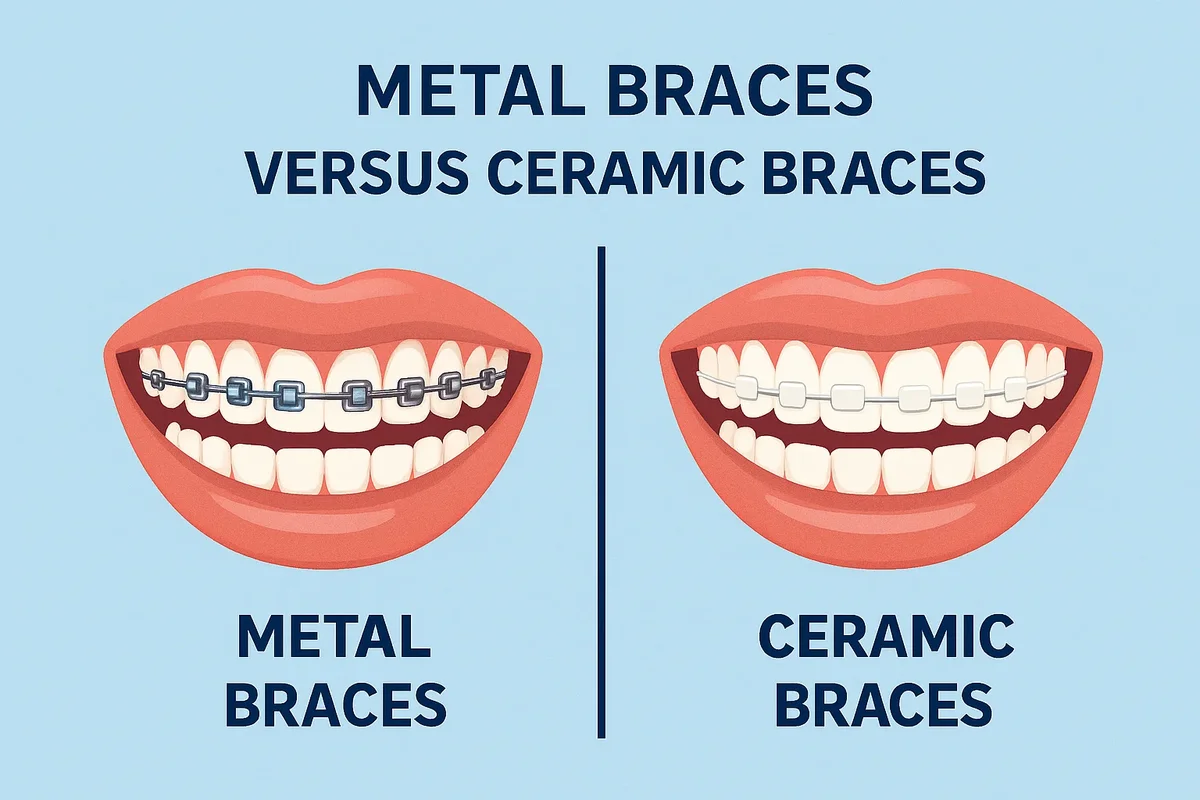
Metal braces are instantly recognizable because of their shiny silver appearance. They use stainless steel brackets and wires that reflect light, making them more noticeable when you talk or smile. While some people don’t mind this look — especially younger patients who enjoy customizing their braces with colorful rubber bands — others find it less appealing for professional or formal environments. 🌈
However, modern metal braces are not as bulky or intrusive as they once were. Newer designs use smaller brackets, low-profile shapes, and smoother finishes to improve comfort and reduce their visual impact. Still, their metallic appearance remains visible, which is often the deciding factor for those considering ceramic alternatives.
Advantages of Metal Braces in Terms of Appearance
- Offer opportunities for color customization (popular among teens).
- Smaller and less bulky than older metal braces.
- Shiny finish gives a clean, polished look to some patients who prefer the traditional style.
Despite these improvements, the visibility of metal braces remains a deterrent for individuals seeking a subtle, professional smile during orthodontic treatment. That’s why ceramic braces were developed — to offer a more discreet alternative.
Ceramic Braces: The Discreet and Natural Option
Ceramic braces are known for their ability to blend with the natural color of your teeth. The brackets are made from translucent or tooth-colored ceramic material that minimizes contrast against enamel, making them far less noticeable. In many cases, people standing at a normal conversational distance can barely see them. This makes ceramic braces the preferred option for adults, professionals, or anyone who frequently interacts with others face-to-face.
Orthodontists often pair ceramic brackets with clear or white-coated wires to enhance invisibility. The result is a near-invisible look that allows you to smile confidently even during treatment. However, one thing to note is that the elastic ties holding the wire can discolor if you consume stain-causing foods or beverages such as coffee, red wine, or curry. Regular cleaning and careful eating habits can minimize this issue.
Advantages of Ceramic Braces in Aesthetic Terms
- Translucent or tooth-colored brackets blend seamlessly with natural teeth.
- Ideal for adults and professionals seeking a discreet orthodontic treatment.
- Available with clear or white archwires for enhanced invisibility.
- Offer a more elegant and polished appearance during treatment. ✨
How Light and Color Affect Visibility
Interestingly, lighting conditions can also affect how visible metal braces versus ceramic braces appear. Under bright or artificial lighting, metal braces tend to reflect light and appear more noticeable, while ceramic braces remain matte and subtle. This difference can make ceramic braces appear almost invisible in photos and real-life situations, which is particularly beneficial for people who frequently appear in public or on camera.
Psychological and Social Considerations
The aesthetic difference between metal braces versus ceramic braces isn’t just visual — it’s also psychological. Patients with less visible braces often report higher self-esteem and a more positive attitude toward their orthodontic journey. They tend to smile more often and engage confidently in conversations, which can lead to better overall treatment satisfaction. On the other hand, some patients view traditional metal braces as a “badge of progress” and embrace their visibility as part of the transformation process. Both attitudes are valid, but the choice ultimately depends on how much visibility affects your comfort and confidence.
Durability vs. Aesthetics: A Trade-Off
While ceramic braces excel in aesthetics, they’re not as durable as metal braces. The ceramic material is more brittle and can chip under strong pressure. This is a key consideration for active individuals or those who may need stronger orthodontic forces. Meanwhile, metal braces are tougher but more visible. Balancing appearance with practicality is essential — and your orthodontist can help guide you based on your bite complexity, lifestyle, and treatment goals.
Maintenance Tips for Preserving Aesthetic Quality
To keep ceramic braces looking great throughout treatment, orthodontists recommend following these practices:
- Brush after every meal using a soft-bristled toothbrush and fluoride toothpaste.
- Avoid staining foods and drinks such as coffee, tea, tomato sauce, and soy sauce.
- Rinse with water after consuming any colored beverage.
- Schedule regular professional cleanings to remove plaque and discoloration.
Metal braces, on the other hand, are resistant to discoloration and easier to maintain visually. However, proper hygiene is equally important to prevent plaque buildup around brackets and wires, which can still affect the appearance of your smile.
Expert Insight and Professional Guidance
When you visit your orthodontist for a consultation, they will evaluate your aesthetic goals along with your dental structure to determine which brace type aligns best with your expectations. At Redent Klinik Contact Page, experienced specialists can guide you through options that balance beauty, functionality, and comfort. You can also consult the American Dental Association for evidence-based information about materials used in orthodontics and their long-term effects on oral health.
Conclusion: Choosing Confidence Over Compromise
Ultimately, the choice between metal braces versus ceramic braces often comes down to your comfort level with visibility and your desire for aesthetic subtlety. Metal braces are noticeable but durable and efficient, while ceramic braces offer elegance and discretion. Whichever you choose, both options are capable of delivering a beautiful, well-aligned smile. What matters most is finding a treatment that aligns with your lifestyle, confidence, and long-term dental goals. 🌟
3. Comfort Level: Which Braces Feel Better on Your Teeth?
Comfort is one of the most important factors to consider when deciding between metal braces versus ceramic braces. While both types work by applying consistent pressure to realign teeth, the sensation, texture, and overall experience can differ significantly. Understanding how each type feels, how your mouth adapts over time, and what factors influence comfort will help you make a more confident decision about your orthodontic treatment. 😌
How Orthodontic Braces Work: The Basis of Comfort
Both metal and ceramic braces use brackets, archwires, and ligatures (rubber ties) to move teeth gradually. This constant pressure can initially cause soreness or mild discomfort, especially right after tightening sessions. However, the material of the braces — whether stainless steel or ceramic — plays a big role in how they interact with your soft tissues like gums, cheeks, and lips.
When comparing metal braces versus ceramic braces, one major distinction lies in texture. Metal braces have smooth, polished surfaces but are still firmer and can occasionally irritate the inside of the mouth during the first few weeks. Ceramic braces, on the other hand, feature a slightly larger bracket size but are smoother to the touch, making them gentler on soft tissues. The difference might seem small, but for long-term comfort, it’s significant.
Initial Discomfort and Adaptation Period
Regardless of the type you choose, the first few days after installation are always the most uncomfortable. You may experience tenderness, minor swelling, or pressure on your teeth as they start shifting into new positions. Orthodontists often recommend using orthodontic wax to cover sharp edges, eating soft foods like yogurt or soup, and avoiding biting directly into hard foods such as apples or carrots during the adjustment period.
Studies and patient feedback suggest that while both braces cause similar initial discomfort, ceramic braces may feel slightly smoother against the cheeks. However, because ceramic brackets are larger, they can sometimes take up more space, leading to a “fuller” sensation in the mouth. It’s a subtle trade-off between smoothness and bulkiness.
Tips to Ease Early Discomfort
- Apply orthodontic wax on any area causing irritation.
- Rinse with warm saltwater to soothe gum soreness.
- Stick to soft foods like mashed potatoes, oatmeal, or smoothies for the first few days.
- Use over-the-counter pain relievers if recommended by your orthodontist.
Friction and Pressure Differences
Another comfort-related factor in the metal braces versus ceramic braces comparison is friction. Metal brackets typically produce less friction against the wire, allowing teeth to move more smoothly and efficiently. Ceramic braces, while more aesthetic, tend to generate slightly higher friction levels between the wire and bracket surface. This can lead to marginally slower tooth movement and occasionally more pressure during tightening sessions.
Fortunately, advancements in orthodontic technology have minimized these issues. Many modern ceramic braces now come with self-ligating brackets that reduce friction, making them as comfortable and efficient as their metal counterparts. This innovation not only shortens treatment duration but also enhances overall comfort by minimizing unnecessary pressure points.
Weight and Mouth Feel
Metal braces are generally lighter, which some patients find more comfortable, especially during the adaptation phase. Ceramic braces are slightly heavier due to their material density, but most people adjust quickly and stop noticing the difference after a week or two. Ultimately, comfort is subjective — what feels more natural for one patient might feel bulky to another.
Many orthodontists point out that after the initial adjustment period, patients barely notice the presence of either type of braces. The human mouth is remarkably adaptable, and minor differences in comfort usually become irrelevant once daily wear becomes routine.
Soft Tissue Irritation: A Key Differentiator
When discussing metal braces versus ceramic braces, one common concern is irritation of the lips and inner cheeks. Metal brackets, especially those with sharper corners, can occasionally cause small sores or ulcers, particularly for new users. Orthodontic wax helps tremendously in preventing these issues, but frequent adjustments might temporarily reintroduce discomfort.
Ceramic braces generally have smoother edges and are less likely to cause irritation. However, because they are larger, they may lightly brush against the soft tissues during speaking or chewing. Over time, the tissues toughen slightly, and discomfort fades. Still, patients who engage in contact sports or play wind instruments might find metal braces easier to manage due to their lower breakage risk and smaller bracket size.
Professional Tip 💡
If you experience persistent discomfort with either type of braces, your orthodontist can make small adjustments or smooth out the bracket edges. Never attempt to modify or reposition braces on your own — doing so can disrupt alignment progress or damage the brackets.
Speech and Eating Comfort
Speech adjustment is another comfort aspect worth noting. In the initial phase, some patients may develop a slight lisp due to tongue repositioning. Ceramic braces, being bulkier, may accentuate this temporarily, but adaptation usually occurs within days. As for eating, both types require caution with sticky, crunchy, or chewy foods. Metal braces tend to be more forgiving, while ceramic brackets can chip or crack under hard pressure.
Orthodontists recommend cutting food into smaller pieces and avoiding habits like chewing pens or biting nails to prevent damage and discomfort. Maintaining proper hygiene is also critical; leftover food particles can irritate gums and prolong soreness if not cleaned promptly.
Long-Term Comfort and Maintenance
In the long run, both metal and ceramic braces can feel equally comfortable when properly maintained. The main difference lies in durability. Metal braces rarely break, while ceramic ones, although comfortable to wear, can be more fragile and occasionally need replacement. Patients who grind their teeth (bruxism) may find metal braces a safer option to prevent breakage.
Expert Advice and Professional Consultation
Each person’s mouth structure and pain tolerance are unique, so personalized consultation is essential. At Redent Klinik Contact Page, orthodontic specialists provide customized assessments to determine which system offers the best comfort based on your dental anatomy and treatment goals. They may even suggest alternative solutions like self-ligating systems for maximum comfort. For authoritative guidelines on orthodontic safety and materials, refer to the American Dental Association website.
Conclusion: Balancing Comfort and Effectiveness
When it comes to metal braces versus ceramic braces, comfort is a multifaceted issue influenced by texture, friction, size, and individual sensitivity. Metal braces are lightweight, strong, and efficient, while ceramic braces are smoother and visually subtle but require slightly more care. Regardless of your choice, your mouth will adapt over time, and with good hygiene and professional adjustments, you’ll barely notice them. The key is to prioritize consistent care, regular check-ups, and open communication with your orthodontist for a comfortable and successful smile transformation. 🌟
4. Strength and Durability: Metal vs Ceramic Longevity
When evaluating metal braces versus ceramic braces, one of the most critical considerations is how strong and durable each option is throughout your orthodontic treatment. Since braces must endure constant pressure, chewing forces, and daily wear, durability plays a major role in both effectiveness and maintenance frequency. Understanding how each type performs under stress will help you choose a system that fits your lifestyle and treatment expectations. 🦷
Material Composition and Structural Integrity
The core difference between metal braces versus ceramic braces lies in their material composition. Metal braces are made of high-quality stainless steel or titanium alloys, engineered to withstand significant pressure and torque without breaking. They’re incredibly resilient, even under strong orthodontic forces, making them ideal for complex cases such as severe misalignments, rotations, and bite corrections.
Ceramic braces, on the other hand, are made from a polycrystalline or monocrystalline alumina material — both forms of advanced ceramics. These materials are aesthetically superior but not as tough as metal. While ceramic brackets resist corrosion and maintain their appearance over time, they are more brittle, meaning they can crack or chip under high pressure or sudden impact. This makes them less ideal for patients with intense bite forces or those who play contact sports.
Durability Ranking
- Metal braces: Extremely durable, resistant to bending or breaking, and can handle complex movements.
- Ceramic braces: Aesthetic but more fragile; effective for mild to moderate cases, but not recommended for extreme corrections.
How Long Each Type Lasts
Orthodontic treatment duration usually ranges from 12 to 36 months, depending on the case. Metal braces easily last the entire period without structural issues, even under high tension. Ceramic braces are designed to last just as long but may require extra care and occasional bracket replacements if damaged. Orthodontists generally avoid placing ceramic brackets on lower front teeth, where bite pressure is strongest, to prevent chipping.
Both types of braces are intended to be temporary fixtures, removed once alignment is complete. However, the fewer repairs needed, the smoother your treatment experience will be. Patients who opt for ceramic braces should be prepared for occasional maintenance visits to replace broken or loosened brackets, especially during the first few months of wear.
Resistance to Wear and Tear
In the debate over metal braces versus ceramic braces, wear resistance is a clear win for metal. Stainless steel brackets rarely wear down, even after multiple adjustments or wire changes. Ceramic braces, although strong, can wear faster if subjected to heavy forces or poor oral habits such as nail biting, chewing on pens, or eating hard foods like nuts or ice.
Orthodontists recommend avoiding any unnecessary pressure on ceramic braces to prolong their lifespan. Using protective mouthguards during sports and avoiding crunchy snacks helps maintain the integrity of ceramic brackets and prevents unexpected damage.
Friction and Force Efficiency
Durability also influences how efficiently braces move teeth. Metal braces, being smoother and stronger, create less friction between the wire and brackets. This allows for more consistent force application, meaning teeth can shift more predictably and often faster. Ceramic braces, however, can produce higher friction levels, leading to slightly slower tooth movement. To offset this, many modern ceramic systems now use self-ligating brackets that reduce wire friction and enhance movement efficiency.
Even with these advancements, patients with ceramic braces should understand that their orthodontic journey might take slightly longer — typically a few extra months compared to metal systems — due to the gentler forces used to avoid damaging the brackets.
Key Takeaway ⚙️
If your orthodontic case involves significant rotation or root movement, metal braces are the better choice for maintaining consistent pressure. For simpler alignments, ceramic braces perform adequately while offering the aesthetic advantage.
Breakage and Repair Frequency
Breakage frequency is another durability factor when comparing metal braces versus ceramic braces. Metal brackets very rarely break, even when exposed to strong chewing forces. Ceramic brackets, while resistant to normal pressure, are more likely to crack if subjected to sudden impacts or if patients bite down too hard on something solid. Moreover, ceramic brackets can detach from teeth more easily because they don’t bond to enamel as strongly as metal ones do.
When a ceramic bracket breaks, it doesn’t always cause pain, but it may slow progress because the tooth isn’t receiving the correct pressure until the bracket is replaced. Each repair visit can slightly extend the total treatment time, so patients with ceramic braces must be extra careful with daily habits.
Staining and Surface Durability
Metal braces have a natural shine and don’t stain or discolor over time. Their metallic surface resists corrosion, even in acidic conditions caused by certain foods or drinks. Ceramic braces, while non-reactive, may experience discoloration of the elastic ties that hold the wire in place. Although the brackets themselves don’t stain easily, poor oral hygiene can still cause ligatures to yellow, affecting the overall aesthetic.
Replacing the elastic bands during each orthodontic visit keeps ceramic braces looking clean and new. Patients who consume coffee, tea, or colored sauces should rinse their mouths immediately after eating to maintain a bright appearance throughout treatment.
Comparing Long-Term Reliability
Long-term reliability depends on both material strength and patient care. In most cases, metal braces provide unmatched dependability for the entire course of treatment. They’re less prone to breakage, require fewer emergency visits, and can handle heavier forces. Ceramic braces, though reliable for mild to moderate corrections, are best for patients who prioritize aesthetics and can commit to careful maintenance routines.
For high-performance stability, orthodontists may recommend a hybrid system — metal braces on lower teeth (for strength) and ceramic braces on upper teeth (for discretion). This approach combines the best of both worlds, optimizing both durability and aesthetics.
Expert Recommendations and Care Guidance
Your orthodontist will assess your bite pattern, enamel condition, and daily activities before recommending one type over the other. For personalized guidance, visit the Redent Klinik Contact Page to consult experienced professionals who specialize in modern orthodontic treatments. They can design a treatment plan that balances strength, efficiency, and appearance. For additional scientific information on orthodontic materials, visit the American Dental Association website for professional standards and research-backed data.
Conclusion: Choosing Strength Without Sacrificing Style
In summary, when comparing metal braces versus ceramic braces, metal braces win the durability race hands down. They’re strong, corrosion-resistant, and designed for longevity. Ceramic braces, while less robust, excel in aesthetics and comfort when properly maintained. The best choice depends on your orthodontic needs — if strength and reliability are your top priorities, metal braces are the best investment. But if appearance and discretion matter more to you, ceramic braces can deliver lasting results with proper care. No matter which path you choose, consistent dental hygiene and professional monitoring ensure your braces remain strong, effective, and beautiful throughout your smile journey. 😄
5. Cost Comparison: Are Ceramic Braces Worth the Extra Price?
One of the biggest factors influencing your choice between metal braces versus ceramic braces is the overall cost of treatment. While both achieve the same orthodontic outcome — a straighter, healthier smile — the price difference can be substantial. Understanding why ceramic braces tend to cost more, what affects the total expense, and whether that extra investment is worth it will help you make a financially smart and aesthetically satisfying decision. 💰
Average Cost Range: Metal vs. Ceramic Braces
The average cost of metal braces typically ranges from $3,000 to $7,000, depending on treatment complexity, duration, and geographic location. On the other hand, ceramic braces often range from $4,000 to $8,500. This means patients may pay anywhere from $1,000 to $2,000 more for ceramic options. The extra cost primarily reflects the higher price of materials, manufacturing, and the aesthetic advantage ceramic braces offer.
It’s also important to note that pricing varies widely based on your region, your orthodontist’s expertise, and whether you have dental insurance. In most cases, insurance plans cover a portion of orthodontic treatment regardless of material type — though they may only reimburse up to a standard metal brace cost. Any extra expense for ceramic braces often comes out of pocket.
Factors That Influence the Total Cost
Several elements affect the cost difference between metal braces versus ceramic braces:
- Material and Manufacturing: Ceramic materials are more expensive to produce and customize than stainless steel, especially when clear or tooth-colored coatings are applied to wires.
- Treatment Duration: Ceramic braces can require slightly longer treatment times, which may mean more visits and small additional fees.
- Maintenance and Repairs: Because ceramic brackets are more fragile, replacement costs can accumulate if breakages occur.
- Cosmetic Appeal: The nearly invisible design of ceramic braces is a luxury feature, often factored into the overall price.
- Orthodontist’s Experience: Specialized orthodontists who use high-quality materials or advanced self-ligating ceramic systems may charge premium rates for precision treatment.
Insurance Coverage and Financing Options
Many patients assume that insurance fully covers orthodontic treatment, but this is rarely the case. Most plans cover a percentage (usually 40–50%) or a fixed amount toward braces. Whether you choose metal or ceramic, the total reimbursement is typically capped at a specific dollar amount. That means if your plan covers $3,000, you’ll need to pay the remaining balance for either type of braces.
Fortunately, most orthodontic clinics — including Redent Klinik Contact Page — offer flexible payment plans or monthly installments to make treatment more affordable. Patients can divide the cost into manageable payments spread over several months or years, reducing financial strain. Some clinics even offer discounts for upfront payments or family treatment packages.
Pro Tip 💡
Always ask your orthodontist for a detailed breakdown of treatment costs, including consultation fees, X-rays, retainer costs after treatment, and emergency visit charges. Transparency helps avoid surprises later on.
Comparing Value Beyond Price
While cost is important, the value you get from each type of braces extends beyond price tags. When comparing metal braces versus ceramic braces, consider the overall benefits, not just immediate expenses. Metal braces are more durable and require fewer repairs, so they can save you money on maintenance in the long run. Ceramic braces, however, deliver a higher aesthetic value, which can boost confidence and self-image during treatment — something many adult patients find worth the extra cost.
If you’re in a professional environment or appear frequently in public, ceramic braces might offer a better return on investment due to their subtlety. Patients who prioritize speed and cost-effectiveness may find metal braces the best balance between price and performance.
Durability and Replacement Costs
Ceramic braces, although beautiful, may increase overall treatment costs if brackets break or stain frequently. Each replacement bracket can cost between $50 to $150, and if multiple replacements are needed, these small costs add up. Metal braces rarely need replacement, which contributes to their cost-efficiency. Additionally, ceramic braces might require special tools or techniques for removal, leading to slightly higher removal or follow-up fees.
Cost-Saving Tips
- Follow your orthodontist’s dietary recommendations to prevent breakage.
- Maintain excellent oral hygiene to avoid discoloration and damage.
- Attend all scheduled visits — skipping appointments can delay treatment and increase costs.
- Compare quotes from at least two orthodontic clinics before committing.
Global and Regional Cost Variations 🌍
The price gap between metal braces versus ceramic braces also depends on where you live. For example:
- United States: Metal braces average around $5,000, while ceramic options cost $6,500–$8,000.
- United Kingdom: Metal braces typically cost £2,000–£3,000, while ceramic braces range from £3,000–£4,500.
- Turkey (for dental tourism): Metal braces average $1,800–$2,500, while ceramic braces cost around $2,800–$3,500 — offering excellent value for international patients.
Many patients travel abroad for dental treatments because of significant cost savings. Turkey, for example, has become a popular destination for orthodontic care due to its advanced clinics, affordable pricing, and high-quality materials.
Are Ceramic Braces Worth It?
For many adults and image-conscious patients, the added expense of ceramic braces is justified by their visual appeal. The confidence gained from having nearly invisible braces during treatment can make a big difference in personal and professional life. For teenagers or patients with complex alignment cases, metal braces may offer better efficiency at a lower cost.
Ultimately, whether ceramic braces are “worth it” depends on your priorities — budget, aesthetics, and treatment goals. If you value discretion and comfort over cost, ceramic braces deliver a worthwhile experience. If you’re focused on strength, reliability, and affordability, metal braces remain the best option.
Expert Guidance and Trusted Sources
Before making a decision, schedule a consultation at Redent Klinik Contact Page to receive a tailored cost analysis and treatment recommendation. The clinic’s orthodontists evaluate your specific dental needs and financial preferences to design a plan that balances efficiency and affordability. You can also refer to the American Dental Association for reliable information about orthodontic costs and insurance policies.
Conclusion: Balancing Budget and Beauty
When comparing metal braces versus ceramic braces, price should be one consideration among many. Metal braces offer unbeatable durability and cost-efficiency, while ceramic braces provide discretion and elegance that appeal to adults seeking subtle treatment. The best choice depends on your lifestyle, dental condition, and financial comfort. Whichever you choose, investing in your smile is one of the most valuable decisions you’ll ever make — because confidence, health, and happiness are truly priceless. 😄
6. Treatment Time: Does Material Type Affect How Long You Wear Them?
When deciding between metal braces versus ceramic braces, one of the most important questions patients ask is, “Will one type work faster than the other?” The duration of orthodontic treatment depends on several factors — including case complexity, patient compliance, and bracket material. While both types effectively move teeth into alignment, their efficiency and speed can differ slightly due to material properties and friction levels. Understanding these distinctions can help you set realistic expectations for your orthodontic journey. ⏳
Average Treatment Duration: Metal vs. Ceramic
On average, treatment with metal braces takes between 18 to 24 months, depending on how complex the case is. Metal braces apply stronger and more consistent forces, making them slightly faster for correcting severe misalignments, rotations, or bite problems. Ceramic braces, on the other hand, typically require 20 to 30 months for similar results. The difference isn’t dramatic, but it can be noticeable for patients who want the shortest possible treatment time.
The reason for this slight delay in ceramic braces often comes down to material limitations. Ceramic brackets create more friction between the wire and bracket surface, which can slow down tooth movement. Additionally, orthodontists sometimes use gentler forces with ceramic braces to prevent bracket fractures — another factor that can extend treatment duration.
Typical Duration Summary:
- Metal braces: 18–24 months (faster results for complex cases)
- Ceramic braces: 20–30 months (ideal for moderate cases, slightly longer timeline)
Why Material Matters for Treatment Speed
The material used in braces directly influences how efficiently forces are transferred to teeth. In the comparison of metal braces versus ceramic braces, metal has a clear mechanical advantage. Stainless steel brackets are extremely strong and flexible, allowing for precise and consistent tension through the archwire. This means teeth respond more predictably and move faster toward their ideal alignment.
Ceramic brackets, while sturdy, are more brittle and have higher surface friction. The wire slides less smoothly, creating slight resistance to movement. Although the difference might only add a few months to treatment, patients who prioritize speed may prefer metal braces. However, modern advancements in orthodontic materials have significantly reduced this gap, with newer self-ligating ceramic systems performing much closer to metal ones in efficiency.
Orthodontic Complexity and Case Type
Treatment duration is also influenced by the nature of your orthodontic problem. For example, patients with simple crowding or spacing issues may see little to no difference between metal braces versus ceramic braces in terms of treatment time. However, those with complicated bite issues, jaw discrepancies, or severe misalignments usually achieve faster results with metal braces due to their superior strength and control.
Orthodontists can apply stronger forces with metal braces without worrying about breakage. This is particularly useful when teeth require significant rotation or root movement. Ceramic braces, being more delicate, often need softer adjustments, which lengthens treatment slightly. This doesn’t mean ceramic braces are less effective — they just require a gentler, more gradual approach.
Friction and Force Mechanics
Friction is a subtle but significant factor affecting treatment speed. The smoother the bracket surface, the faster the archwire can move through it, facilitating quicker tooth alignment. Metal braces are naturally smoother and generate less resistance. Ceramic brackets, even though they’re polished, still create higher friction against metal wires. To compensate, orthodontists may use coated or Teflon-lined wires that slide more easily, narrowing the performance gap.
Technological Improvements ⚙️
Modern self-ligating ceramic braces and hybrid systems now incorporate advanced designs that minimize friction and increase efficiency. These innovations make today’s ceramic braces nearly as fast as metal systems for most mild-to-moderate cases, providing a good compromise between speed and aesthetics.
Patient Compliance and Its Role
Even with material differences, one of the biggest factors that determine how long you wear braces is patient cooperation. Regardless of whether you choose metal braces versus ceramic braces, your commitment to following orthodontic instructions can shorten or extend your treatment time significantly.
Here are a few habits that influence results:
- Attending all scheduled adjustment appointments.
- Maintaining excellent oral hygiene to prevent gum inflammation and delays.
- Avoiding hard or sticky foods that can damage brackets or wires.
- Wearing elastics (rubber bands) exactly as prescribed.
Skipping appointments or breaking brackets — more common with ceramic braces due to fragility — can extend treatment time by several weeks or even months. Consistency and care are key to completing your orthodontic journey on schedule.
Discomfort and Adjustment Intervals
Orthodontists typically schedule adjustment visits every 4–6 weeks. Because metal braces versus ceramic braces have different friction levels, the force application intervals may vary slightly. Metal braces can often be adjusted with stronger pressure at each visit, potentially reducing the total number of adjustments needed. Ceramic braces might require smaller, more frequent adjustments to protect bracket integrity.
Some patients also report that ceramic braces feel slightly tighter during wire changes because of increased friction. While not painful, this can cause mild soreness for a day or two following adjustments.
Lifestyle Considerations That Impact Duration
Your diet, oral hygiene, and daily habits also affect treatment efficiency. Frequent consumption of sticky or crunchy foods can damage ceramic brackets, leading to replacements and delays. Smoking or poor cleaning habits can cause staining, requiring additional maintenance visits. Metal braces are more forgiving in these situations, which helps them stay on track timewise.
Additionally, orthodontists may recommend metal braces for athletes or musicians who need strong, reliable brackets that can withstand external pressure without damage.
Expert Advice: Balancing Speed and Aesthetics
At Redent Klinik Contact Page, orthodontic experts carefully evaluate your bite, jaw movement, and aesthetic priorities to determine whether metal or ceramic braces are best for your timeline and lifestyle. If your case is complex and speed is a priority, metal braces may be ideal. If aesthetics are equally important, ceramic braces can deliver excellent results with minimal extra time.
For additional information on orthodontic treatment efficiency and safety, visit the American Dental Association website. It provides evidence-based resources explaining how materials and force application affect treatment outcomes.
Conclusion: The Time Factor in Your Smile Journey
Ultimately, the treatment duration difference between metal braces versus ceramic braces is not dramatic — but it’s enough to consider based on your goals. Metal braces typically work a few months faster due to lower friction and higher durability, making them ideal for more challenging corrections. Ceramic braces take slightly longer but offer superior aesthetics and comfort. Whichever option you choose, consistent follow-ups, proper hygiene, and patience will ensure that your journey ends with a beautiful, perfectly aligned smile that lasts a lifetime. 😁
7. Maintenance and Stain Resistance: Keeping Your Braces Clean
When choosing between metal braces versus ceramic braces, maintenance is one of the most important considerations. Orthodontic treatment requires consistent cleaning and care, but ceramic braces, in particular, demand extra attention due to their susceptibility to staining. Both options can produce stunning results, yet their maintenance routines differ in frequency, difficulty, and long-term durability. Understanding these differences will help you maintain oral hygiene and ensure your braces look and perform their best throughout your treatment journey. 🪥
Daily Cleaning Routine for Braces
Regardless of material, braces create small crevices that can trap food particles and plaque. This buildup can lead to staining, bad breath, and gum inflammation if not cleaned properly. When comparing metal braces versus ceramic braces, the cleaning methods are similar, but ceramic systems require a little more vigilance to maintain their aesthetic appeal.
Orthodontists recommend brushing after every meal using a soft-bristled toothbrush and fluoride toothpaste. Patients should angle their brush at 45 degrees to clean around the brackets and wires thoroughly. In addition, using an interdental brush or a water flosser helps reach areas that regular brushing might miss, preventing discoloration or plaque buildup.
Essential Tools for Cleaning Braces:
- Soft or orthodontic toothbrush
- Fluoride toothpaste
- Interdental brushes or proxabrushes
- Water flosser (recommended for ease and efficiency)
- Alcohol-free mouthwash for additional freshness
Metal braces tend to be easier to clean because their dark metallic finish hides minor stains. Ceramic braces, being lighter in color, reveal discoloration much faster, especially around the ligatures (the small rubber bands holding the archwire).
Stain Resistance and Aesthetic Preservation
One of the biggest concerns patients have about ceramic braces is staining. While the ceramic brackets themselves are highly resistant to discoloration, the elastic ties used with them can absorb pigments from foods and drinks. Over time, these elastics can turn yellow or brownish, making the braces more noticeable — which defeats the purpose of choosing them for aesthetic reasons. ☕🍷
Foods and drinks that commonly cause staining include coffee, tea, cola, red wine, curry, tomato-based sauces, and soy sauce. Smoking can also lead to discoloration. The good news is that orthodontists replace elastic ties at every adjustment visit (usually every 4–6 weeks), helping restore the braces’ clean look. However, limiting consumption of staining foods and maintaining strict oral hygiene habits between visits can significantly reduce discoloration.
Tips for Preventing Stains on Ceramic Braces:
- Brush and rinse immediately after eating or drinking pigmented beverages.
- Use a straw when drinking coffee or tea to minimize direct contact with brackets.
- Quit smoking or limit tobacco use to prevent yellowing.
- Opt for clear aligner wax instead of colored elastics to maintain a cleaner look.
In contrast, metal braces do not show stains easily due to their reflective surface and metallic color. They are almost impervious to discoloration, making them a lower-maintenance option in this regard. The trade-off, however, is aesthetics — metal braces are more visible regardless of how clean they are.
Managing Plaque and Oral Hygiene Challenges
Both metal and ceramic braces increase plaque retention because of the brackets and wires. If plaque is not removed daily, it can lead to enamel decalcification (white spots), gum irritation, and even cavities. In comparing metal braces versus ceramic braces, studies show that patients with ceramic braces sometimes experience slightly higher plaque accumulation — not because the brackets are more prone to it, but because patients may clean them less vigorously out of fear of damaging the delicate brackets.
To combat this, orthodontists suggest incorporating mouth rinses containing fluoride and antibacterial properties. Additionally, scheduling regular professional cleanings during treatment helps keep both teeth and brackets healthy and spotless.
Professional Cleaning Frequency:
- Every 6 months for metal braces.
- Every 3–4 months for ceramic braces (recommended due to stain risk).
Repair and Maintenance Visits
Another key aspect of maintenance is the frequency of repairs. Metal braces are stronger and less likely to break, so they require fewer emergency appointments. Ceramic braces, although durable, are more brittle and may chip or fracture under excessive force. This means patients with ceramic braces might experience occasional bracket replacements during their treatment period. Each repair visit adds to overall treatment time and requires meticulous rebonding to maintain alignment precision.
It’s also important to note that removing ceramic braces at the end of treatment must be done carefully to avoid enamel damage. Experienced orthodontists, such as those at Redent Klinik Contact Page, use specialized techniques to ensure safe removal without harming tooth surfaces.
Dietary Considerations for Clean and Healthy Braces
Diet plays a huge role in maintaining braces, especially ceramic ones. Foods that are sticky, crunchy, or hard should be avoided to prevent wire displacement or bracket damage. Patients with ceramic braces are encouraged to limit colored foods and opt for a balanced diet rich in calcium and vitamin D for stronger enamel. Smoothies, soft fruits, steamed vegetables, and dairy products are excellent choices.
On the other hand, metal braces users have a bit more flexibility since the brackets are stronger and more resistant to cracking. Still, sugary snacks should be limited to prevent plaque buildup and potential tooth decay. Regardless of the material, rinsing with water after meals is one of the simplest ways to maintain oral cleanliness.
Comparing Maintenance Effort: Metal vs. Ceramic
Here’s a quick breakdown of maintenance differences between metal braces versus ceramic braces:
| Feature | Metal Braces | Ceramic Braces |
|---|---|---|
| Stain Resistance | High — no visible staining | Moderate — ligatures may discolor |
| Cleaning Difficulty | Moderate — standard cleaning tools work | High — requires frequent brushing and rinsing |
| Repair Frequency | Rare | Occasional (due to fragility) |
| Professional Cleaning Interval | Every 6 months | Every 3–4 months recommended |
Expert Guidance and Professional Support
At Redent Klinik Contact Page, orthodontic specialists educate patients on proper cleaning techniques tailored to their brace type. They offer hands-on demonstrations for using interdental tools and maintaining oral hygiene effectively. Additionally, for official information about dental materials and maintenance standards, you can refer to the American Dental Association, which provides valuable guidance on care practices and product safety for orthodontic patients.
Conclusion: Clean Braces, Beautiful Smile
In the end, the maintenance difference between metal braces versus ceramic braces largely depends on the patient’s commitment to care. Metal braces are low-maintenance and stain-resistant but less aesthetic. Ceramic braces look elegant and discreet but require more cleaning vigilance to stay pristine. Regardless of which you choose, consistent brushing, regular dental visits, and mindful eating habits will ensure your smile remains bright and healthy throughout your orthodontic journey. 🌟
8. Comfort and Aesthetics: How Each Type Feels and Looks
When comparing metal braces versus ceramic braces, two of the biggest concerns for patients are comfort and appearance. Orthodontic treatment can last from 1 to 3 years, so it’s natural to want braces that not only straighten your teeth effectively but also feel comfortable and look appealing during the process. Understanding the distinctions in how these two types of braces feel in your mouth, and how they affect your overall appearance, can make your orthodontic journey smoother and more satisfying. 😁
First Impressions: Appearance and Confidence
One of the clearest visual differences between metal braces versus ceramic braces lies in how visible they are. Metal braces are made from stainless steel and have a shiny, metallic appearance. They’re easy to spot when you smile or speak. While some patients — especially teens — embrace this as part of their personality (even adding colored bands for fun), adults often prefer something more discreet.
Ceramic braces, on the other hand, are designed with aesthetics in mind. The brackets are either clear or tooth-colored, blending naturally with the enamel. This makes them far less noticeable, especially in photos or professional settings. Many adult patients and image-conscious individuals choose ceramic braces because they allow them to maintain confidence in social and work environments.
Visual Appeal Comparison:
- Metal braces: Noticeable but durable; customizable with colored bands for personality.
- Ceramic braces: Discreet and elegant; blend seamlessly with natural teeth.
In professional settings such as business meetings, presentations, or social events, ceramic braces often feel more comfortable from a confidence perspective because they attract less attention. However, it’s important to note that ceramic braces are slightly larger in size than metal ones, which can make them feel a bit bulkier on the teeth.
Physical Comfort: Fit, Friction, and Sensitivity
The way braces feel in your mouth is influenced by several factors — bracket size, smoothness, wire type, and how the material interacts with your oral tissues. In the debate of metal braces versus ceramic braces, both have their own comfort profiles.
Metal braces are smaller, smoother, and more rounded. Because of their design and material, they tend to cause less friction against the inside of your lips and cheeks after the initial adjustment period. Ceramic braces are slightly larger and can have sharper edges, which may cause mild irritation during the first few weeks of use. Orthodontic wax can easily resolve this, but it’s an important comfort factor to consider.
Comfort Factors to Consider:
- Bracket size and smoothness
- Wire friction during tooth movement
- Soft tissue sensitivity (inner cheeks and lips)
- Overall adaptation period (usually 1–2 weeks)
Metal brackets are known for their low friction levels, which not only improves comfort but also accelerates tooth movement. Ceramic brackets tend to have slightly higher friction, leading to a tighter feeling during wire adjustments. However, modern self-ligating ceramic systems have greatly improved this issue, reducing friction and improving patient comfort dramatically.
Speech and Eating Experience
During the first few weeks of wearing braces, it’s common to experience minor speech adjustments or difficulty chewing certain foods. In comparing metal braces versus ceramic braces, both types affect speech in similar ways, but the size and smoothness of the brackets can make a difference.
Metal braces are smaller and smoother, allowing the tongue to adapt quickly. Ceramic braces, being slightly larger, might initially make pronunciation of certain sounds (like “s” or “t”) feel different. This typically improves after a week or two as your tongue adjusts.
When it comes to eating, both systems require avoiding hard, sticky, or crunchy foods to prevent damage. However, ceramic braces need even more care because of their brittleness. A cracked bracket can lead to temporary discomfort and may require an emergency appointment for repair. Metal braces are more forgiving in this aspect, which can make them easier to live with day to day.
Foods to Avoid for Comfort and Safety:
- Hard snacks like nuts, popcorn, or ice
- Sticky foods like caramel or chewing gum
- Crunchy fruits or vegetables unless cut into small pieces
- Colored beverages that can stain ceramic brackets (coffee, tea, wine)
Discomfort After Adjustments
All braces cause some discomfort during wire changes or adjustments. The difference between metal braces versus ceramic braces lies in the level and duration of that discomfort. Because metal brackets create less friction, the pressure applied during adjustments is more evenly distributed, often leading to milder soreness that subsides within 1–2 days. Ceramic brackets, with their higher friction, can make initial adjustments feel tighter or slightly more tender. Over-the-counter pain relievers and orthodontic wax can easily manage this temporary discomfort.
Aesthetic Durability Over Time
While ceramic braces are known for their visual appeal, they require consistent maintenance to retain their aesthetic edge. The brackets themselves don’t stain, but the elastic ties used to hold the wire can discolor over time due to food and drink pigments. This can slightly affect their appearance until the next orthodontic appointment, where elastics are replaced. Metal braces, however, maintain their appearance throughout treatment without discoloration concerns.
Pro Tip for Aesthetic Maintenance 🌟
Patients with ceramic braces should rinse after every meal and avoid dark-colored sauces and beverages. Using a straw for drinks like coffee or tea helps minimize staining around the ligatures.
Self-Confidence and Social Impact
For many adults and teens, aesthetics play a crucial role in treatment satisfaction. Ceramic braces allow patients to smile confidently without worrying about a “metal-mouth” appearance. This confidence boost often makes the experience more positive, even if treatment lasts slightly longer or requires more maintenance. On the other hand, metal braces can be customized with colored bands, which some younger patients find empowering and fun — turning orthodontic care into a form of self-expression.
Professional Insights and Recommendations
Orthodontists emphasize that comfort and aesthetics depend on personal preference and oral anatomy. Patients with sensitive inner cheeks or lips may find ceramic brackets slightly irritating at first but quickly adapt. Those prioritizing strength, lower friction, and simplicity often choose metal braces. For a personalized consultation and comfort evaluation, visit the Redent Klinik Contact Page, where orthodontic professionals can recommend the best option based on your bite, lifestyle, and comfort priorities.
For verified research on orthodontic materials and patient comfort data, refer to the American Dental Association, which provides clinical resources and studies on orthodontic systems and innovations.
Conclusion: Balancing Comfort and Appearance
When it comes to metal braces versus ceramic braces, the choice depends on what matters most to you — comfort, speed, or subtlety. Metal braces are smaller, smoother, and easier to maintain, offering maximum comfort and durability. Ceramic braces, however, shine in the aesthetics department, giving patients a confidence boost with their discreet, tooth-colored design. Both deliver excellent orthodontic results when properly maintained. Whether you value invisibility or simplicity, your braces should fit your personality, lifestyle, and smile goals — ensuring that your path to perfect teeth is as beautiful as the destination. 😄
9. Which One Should You Choose? Expert Recommendations for Every Patient
Choosing between metal braces versus ceramic braces can feel overwhelming, especially when both offer effective results for straightening your teeth. The right choice depends on multiple factors such as your lifestyle, orthodontic needs, treatment duration, and budget. While both options can deliver a perfect smile, understanding who benefits most from each type — and why — is essential for making a confident, informed decision. 🦷
Understanding Your Treatment Goals
The first step in deciding between metal braces versus ceramic braces is identifying your personal goals. Are you seeking speed and durability, or are aesthetics and discretion more important to you? Every patient’s situation is unique, and the best type of braces often depends on the balance between clinical efficiency and visual appeal.
- If your goal is fast, effective tooth movement: Metal braces are the clear winner. They’re strong, predictable, and can handle heavy force without damage.
- If your goal is a discreet, professional look: Ceramic braces blend with your natural teeth, making them almost invisible during treatment.
- If your goal is comfort and confidence: Ceramic braces are smoother in appearance but may require slightly more maintenance.
Before finalizing your choice, consider how each type fits into your daily life. Working professionals or those who frequently interact with others may prefer the subtlety of ceramic braces. Teenagers or patients with more complex orthodontic needs often find metal braces more practical and cost-effective.
Who Should Choose Metal Braces?
Metal braces remain the most popular choice worldwide because they deliver outstanding results for a wide range of orthodontic problems. They are especially recommended for patients who require significant movement of teeth or jaw alignment corrections.
Ideal Candidates for Metal Braces:
- Patients with severe overcrowding or large bite discrepancies
- Teenagers with growing jaws needing major adjustments
- Individuals who want the most durable and low-maintenance option
- Patients on a tighter budget looking for efficient and affordable care
Metal braces are also ideal for those who prefer reliability and don’t mind a more visible appearance. They are less likely to break, faster to adjust, and easier for orthodontists to manage in complex cases. Thanks to their smaller bracket size and modern designs, today’s metal braces are more comfortable and discreet than ever before.
Who Should Choose Ceramic Braces?
For patients who value aesthetics and comfort, ceramic braces are an excellent alternative. They function similarly to metal braces but use tooth-colored or clear brackets that blend seamlessly with your natural enamel. This makes them especially appealing for adults who want a professional look while undergoing orthodontic treatment.
Ideal Candidates for Ceramic Braces:
- Adults or professionals who want a subtle, aesthetic treatment
- Patients with mild to moderate misalignment
- Individuals committed to proper oral hygiene and careful eating habits
- Those who prefer comfort and appearance over speed
While ceramic braces cost more and may take slightly longer to complete treatment, many patients find the cosmetic advantage worth the extra investment. However, maintaining them requires diligence — regular cleaning, avoiding staining foods, and attending checkups on schedule to prevent damage or discoloration.
Balancing Cost and Performance
One of the most common concerns patients have about metal braces versus ceramic braces is cost. As discussed in earlier sections, metal braces generally range from $3,000 to $7,000, while ceramic braces can cost between $4,000 and $8,500. The difference reflects the higher material and manufacturing expenses for ceramic systems.
If you’re concerned about cost but still want an aesthetic option, some orthodontists offer a hybrid approach — ceramic braces on the upper (visible) teeth and metal braces on the lower (less visible) ones. This combination provides an aesthetic advantage while keeping costs manageable and maintaining mechanical efficiency.
Lifestyle and Personal Preferences
Your daily habits also play a key role in this decision. If you frequently drink coffee, tea, or red wine, ceramic braces might require extra maintenance to prevent staining. If you participate in contact sports, metal braces are stronger and more resistant to impact. Comfort-wise, both systems are effective, but patients with sensitive gums may prefer the smoother ceramic material for its gentle surface texture.
Quick Lifestyle Comparison:
| Aspect | Metal Braces | Ceramic Braces |
|---|---|---|
| Durability | Extremely strong; ideal for active individuals | Moderate; can chip or crack if mishandled |
| Visibility | Highly visible; noticeable when smiling | Tooth-colored or clear; blends with teeth |
| Maintenance | Minimal; resistant to stains | High; requires regular cleaning |
| Comfort | Smaller brackets, lower friction | Smoother edges but slightly larger brackets |
Expert Orthodontic Advice
Orthodontic specialists often emphasize that the success of treatment depends more on consistency than on material choice. Both metal braces versus ceramic braces can achieve the same outcome if patients follow instructions carefully, attend scheduled visits, and maintain excellent oral hygiene.
To receive a professional evaluation and personalized recommendation, it’s best to consult your orthodontist. Clinics like Redent Klinik Contact Page provide customized treatment plans tailored to your dental structure, aesthetic goals, and budget. During your consultation, your orthodontist will assess your bite pattern, enamel thickness, and treatment expectations to determine the ideal option for you.
Professional Resources and Research
For those seeking further scientific insight into orthodontic materials and clinical performance, the American Dental Association offers detailed research and guidelines. Their studies confirm that both metal and ceramic braces are safe, effective, and approved for long-term orthodontic use.
Final Recommendation: Making the Smart Choice
Ultimately, there’s no one-size-fits-all answer to the metal braces versus ceramic braces debate. If durability, efficiency, and cost-effectiveness are your top priorities, metal braces remain the best option. If you value aesthetics and want your treatment to be as invisible as possible, ceramic braces provide a beautiful, confidence-boosting alternative. Both will lead to the same end result — a healthy, straight, and radiant smile — as long as you commit to proper care and follow your orthodontist’s advice.
Conclusion: Your Smile, Your Decision 😄
Choosing between metal braces versus ceramic braces ultimately comes down to personal preference, lifestyle, and comfort. What matters most is starting your orthodontic journey with a trusted specialist who can guide you through every step. Whether you prioritize strength or subtlety, your perfect smile is within reach — and the confidence you’ll gain will last a lifetime.