
A nasal lift for dental implants is a specialized surgical procedure designed to create sufficient vertical bone height in the upper front jaw (anterior maxilla) when natural bone has been lost. This treatment allows patients who would otherwise not qualify for implants to safely receive stable, long-lasting restorations. If you have been told that you lack enough bone in the upper jaw, a nasal lift for dental implants may be the solution that makes implant treatment possible.
Bone loss in the upper jaw commonly occurs due to long-term tooth loss, periodontal disease, trauma, or natural aging. When teeth are missing for an extended period, the surrounding bone begins to shrink because it no longer receives stimulation from chewing forces. In the front upper jaw, this resorption can extend toward the floor of the nasal cavity. When this happens, placing implants without preparation may risk penetrating the nasal floor or compromising stability. A nasal lift for dental implants gently elevates the nasal floor membrane and creates space for bone grafting material, ensuring proper implant support.
Many patients are familiar with sinus lift surgery, but fewer understand that a nasal lift for dental implants serves a similar purpose in the anterior region. Instead of addressing the maxillary sinus in the back of the upper jaw, this procedure focuses on the nasal floor area. The goal is to safely increase bone height between the mouth and the nasal cavity so that dental implants can be placed securely.
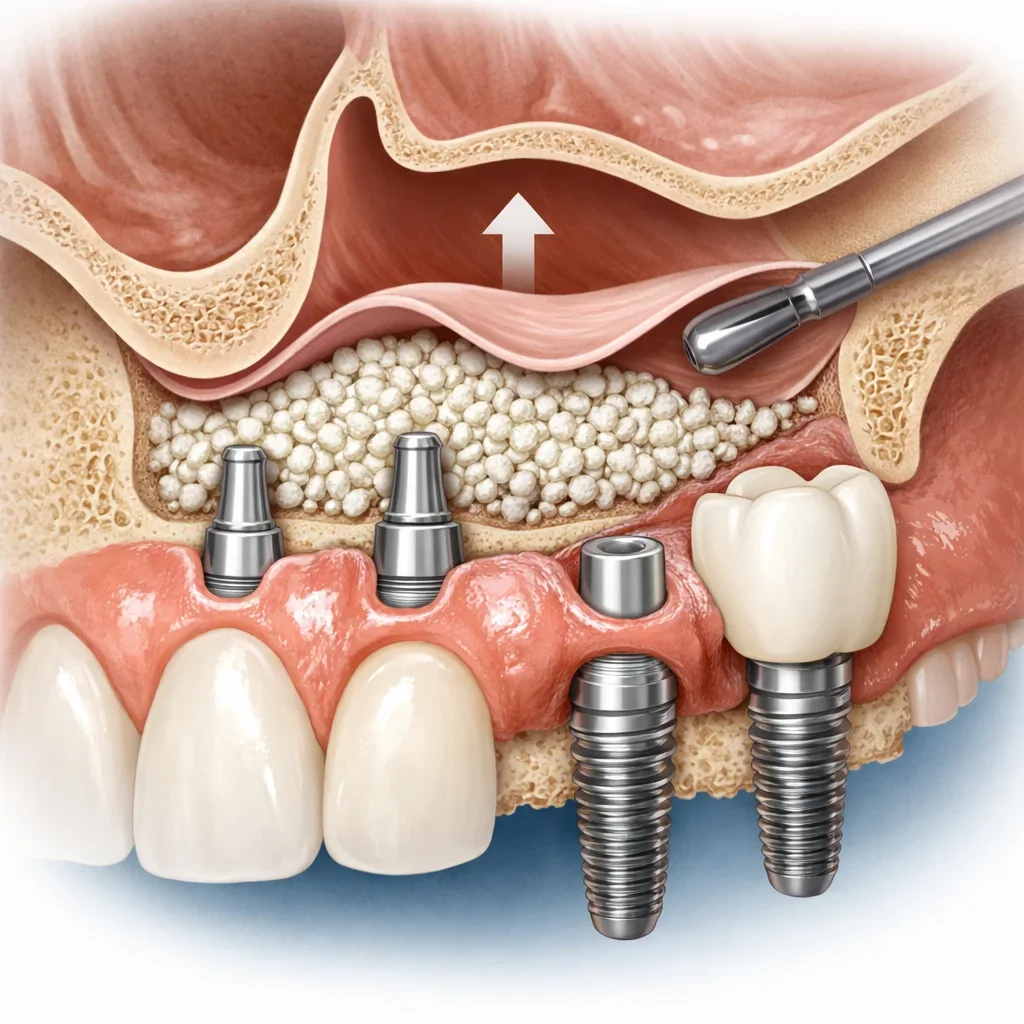
During a nasal lift for dental implants, the surgeon carefully accesses the bone in the upper front jaw through a small incision. The thin bone layer separating the mouth from the nasal cavity is gently elevated, and bone graft material is inserted beneath it. Over several months, this graft integrates with your natural bone, forming a stronger and thicker foundation. Once healing is complete—or in some cases immediately—implants can be placed with improved stability and long-term predictability.
One of the main reasons patients consider a nasal lift for dental implants is to avoid removable dentures or unstable prosthetics. Dental implants require a minimum amount of bone to anchor securely. Without adequate bone volume, implants may fail or never be placed at all. A nasal lift for dental implants restores that missing support, allowing for fixed teeth that look, feel, and function like natural ones.
From a clinical standpoint, the nasal lift for dental implants is categorized as a form of guided bone regeneration in the anterior maxilla. It is a minimally invasive procedure when performed by an experienced oral surgeon or implant specialist. According to professional standards referenced by the American Dental Association, proper case selection and imaging—such as 3D CBCT scans—are essential to ensure safety and precision.
Patients often ask whether a nasal lift for dental implants is painful. In reality, the procedure is typically performed under local anesthesia, sometimes combined with sedation for comfort. Most individuals report only mild swelling and manageable discomfort afterward. With appropriate aftercare, healing is smooth and predictable.
Another important question is timing. A nasal lift for dental implants can sometimes be performed simultaneously with implant placement if there is moderate bone deficiency. In more severe cases, the graft must heal for 4–6 months before implants are inserted. Your dentist will determine the best protocol based on imaging results and bone measurements.
The benefits of a nasal lift for dental implants extend beyond simply enabling implant placement. By restoring bone structure in the upper jaw, the procedure helps maintain facial contours and prevents further collapse of the anterior maxilla. This contributes to improved esthetics, especially in patients who have experienced visible bone shrinkage.
Modern techniques and biomaterials have significantly improved the success rates of a nasal lift for dental implants. High-quality bone graft substitutes, platelet-rich fibrin (PRF), and digital surgical planning all contribute to precise and safe outcomes. When performed correctly, the procedure has a high predictability rate and long-term implant survival comparable to implants placed in native bone.
If you have been told that you are not a candidate for implants due to insufficient bone in the upper front jaw, a nasal lift for dental implants may open the door to treatment. A thorough clinical examination and 3D imaging assessment are the first steps in determining suitability. For personalized consultation and detailed evaluation, you can visit the Redent Klinik Contact Page to connect with experienced implant specialists.
In summary, a nasal lift for dental implants is a targeted bone augmentation procedure that restores lost bone height beneath the nasal cavity, making dental implant placement possible in challenging cases. By strengthening the anterior maxilla, this technique ensures implant stability, enhances esthetics, and supports long-term oral health. For patients seeking a permanent and fixed tooth replacement solution, understanding the role of a nasal lift for dental implants is an essential first step toward confident, functional smiles. 😊
What Is a Nasal Lift for Dental Implants?
A nasal lift for dental implants is an advanced bone augmentation procedure performed in the upper front jaw when there is not enough vertical bone height to securely place dental implants. This technique focuses specifically on the area just beneath the nasal cavity, where bone resorption commonly occurs after tooth loss. When the bone becomes too thin or too short in this region, implants cannot be placed safely without first increasing the available bone volume. A nasal lift for dental implants provides that additional support.
To fully understand a nasal lift for dental implants, it is important to recognize the anatomical relationship between the upper jaw and the nasal cavity. The floor of the nose sits directly above the roots of the upper front teeth. When teeth are extracted and not replaced promptly, the surrounding bone begins to shrink. Over time, this bone loss may reduce the distance between the oral cavity and the nasal floor, leaving insufficient space for implant placement. A nasal lift for dental implants addresses this exact problem by gently elevating the nasal floor membrane and placing bone graft material underneath it.
Understanding the Anatomy of the Anterior Maxilla
The anterior maxilla is the front portion of the upper jaw, supporting the incisors and canine teeth. This area plays a critical role in both esthetics and function. Because the bone in this region is naturally thinner than in other parts of the jaw, it is especially vulnerable to resorption after tooth loss. When planning a nasal lift for dental implants, specialists use 3D imaging such as CBCT scans to measure the remaining bone height and thickness precisely.
In many cases, patients who require a nasal lift for dental implants may have only 3–5 mm of residual bone height, while stable implant placement typically requires more. The procedure carefully increases this dimension, allowing implants to be anchored safely without compromising the nasal cavity.
How the Nasal Floor Is Elevated
During a nasal lift for dental implants, the surgeon creates a small access window in the upper jaw bone. The thin membrane lining the nasal cavity is delicately lifted upward without perforation. Once elevated, bone graft material—either synthetic, autogenous (patient’s own bone), or xenograft—is placed into the newly created space. Over time, this graft integrates with the existing bone, forming a stronger and thicker foundation.
This controlled elevation is similar in principle to a sinus augmentation, but it is performed in the anterior region rather than the posterior upper jaw. For this reason, a nasal lift for dental implants is sometimes referred to as an anterior nasal floor elevation.
Why a Nasal Lift for Dental Implants Is Necessary
Dental implants rely on osseointegration—the biological process in which bone fuses directly with the titanium implant surface. Without adequate bone volume, osseointegration cannot occur predictably. A nasal lift for dental implants ensures that the implant has enough vertical support to achieve long-term stability.
Common reasons patients may need a nasal lift for dental implants include:
- Long-term tooth loss in the upper front region
- Advanced periodontal disease
- Trauma to the anterior maxilla
- Congenital bone deficiency
- Previous failed implants
In these situations, a nasal lift for dental implants transforms a non-restorable case into a viable implant candidate.
Is It the Same as a Sinus Lift?
Although both procedures increase bone height, a nasal lift for dental implants differs from a sinus lift in anatomical location. A sinus lift addresses the maxillary sinus in the back of the upper jaw, while a nasal lift for dental implants focuses on the nasal floor in the front. The techniques share similar principles of membrane elevation and graft placement, but they are applied in different regions.
Understanding this distinction is essential when evaluating treatment options. If your bone deficiency is located in the anterior region, only a nasal lift for dental implants will provide the targeted augmentation needed for implant stability.
Clinical Planning and Safety Measures
Modern implant dentistry emphasizes digital planning. Before performing a nasal lift for dental implants, clinicians conduct a comprehensive evaluation, including medical history review and radiographic analysis. Advanced imaging allows the surgeon to visualize the nasal cavity boundaries and determine the safest approach.
According to professional standards outlined by the American Dental Association, thorough diagnosis and individualized treatment planning are critical to minimizing risks in bone augmentation procedures. When performed by an experienced implant specialist, a nasal lift for dental implants has a high success rate and predictable outcomes.
Benefits Beyond Implant Placement
While the primary purpose of a nasal lift for dental implants is to enable implant placement, the procedure also contributes to improved facial support and esthetic balance. Bone resorption in the anterior maxilla can lead to lip collapse and changes in facial profile. By rebuilding this structure, a nasal lift for dental implants restores not only function but also facial harmony.
Patients often report increased confidence after completing treatment that includes a nasal lift for dental implants. Fixed implant-supported restorations feel natural, eliminate denture instability, and improve speech clarity. 😊
If you are unsure whether you require a nasal lift for dental implants, a consultation with a qualified implant clinic is the best first step. Detailed imaging and expert assessment will determine whether this targeted bone augmentation is necessary for your case.
In summary, a nasal lift for dental implants is a precise surgical technique designed to increase bone height beneath the nasal cavity in the upper front jaw. By elevating the nasal floor membrane and placing bone graft material, this procedure creates the structural support required for successful implant integration. For patients with anterior bone deficiency, a nasal lift for dental implants can make the difference between being told “no” to implants and enjoying a permanent, stable smile.
Why Bone Loss in the Upper Jaw Requires a Nasal Lift for Dental Implants
One of the most common reasons patients are told they are not immediate candidates for implants in the upper front jaw is progressive bone loss. In many of these cases, a nasal lift for dental implants becomes the key solution that makes fixed tooth replacement possible. Understanding why bone loss occurs and how it affects implant stability helps patients appreciate the importance of this specialized procedure.
The upper jaw, particularly the anterior maxilla, is anatomically delicate. After tooth extraction or long-term tooth absence, the surrounding bone begins to shrink in both width and height. This process, known as alveolar bone resorption, happens because the bone no longer receives stimulation from chewing forces. Without this stimulation, the body gradually reabsorbs the bone. When this vertical shrinkage approaches the nasal cavity floor, implant placement becomes risky without prior augmentation. This is precisely where a nasal lift for dental implants plays a critical role.
How Bone Resorption Progresses Over Time
Bone resorption does not happen overnight. In the first year after tooth loss, patients can lose up to 25% of bone volume in that area. Over several years, this reduction becomes even more significant. In the upper front jaw, bone loss often occurs in an upward direction toward the nasal cavity. When planning treatment, clinicians frequently discover only a few millimeters of remaining bone between the oral cavity and the nasal floor.
If implants are placed without addressing this deficiency, they may lack primary stability. A nasal lift for dental implants increases the available vertical bone height by gently elevating the nasal floor membrane and adding bone graft material. This creates a safer, stronger foundation for implant anchorage.
Impact on Facial Structure
Beyond implant feasibility, upper jaw bone loss also affects facial appearance. The anterior maxilla supports the upper lip and contributes to overall facial harmony. When this bone diminishes, patients may notice lip collapse, deeper smile lines, or a flattened profile. By rebuilding this structural support, a nasal lift for dental implants not only prepares the site for implants but also helps restore facial balance.
Why the Upper Front Jaw Is Unique
The anatomy of the upper jaw differs significantly from the lower jaw. The bone in the anterior maxilla is generally less dense and more porous. Additionally, the proximity of the nasal cavity adds complexity. Because the roots of the upper front teeth sit just beneath the nasal floor, severe resorption can leave insufficient separation between the mouth and the nasal space.
A nasal lift for dental implants specifically addresses this anatomical limitation. Unlike posterior bone grafting procedures that deal with the maxillary sinus, this technique focuses on the nasal floor area. It is sometimes referred to as anterior nasal floor elevation, highlighting its targeted approach.
Functional Consequences of Inadequate Bone Height
Dental implants require sufficient bone for successful osseointegration—the biological fusion between bone and implant surface. Without adequate vertical bone height, implants may fail to integrate properly or may not achieve the mechanical stability required for chewing forces.
By performing a nasal lift for dental implants, the clinician ensures that the implant has enough surrounding bone to withstand functional stress. This reduces the likelihood of implant mobility, infection, or long-term complications. The procedure transforms compromised bone conditions into predictable implant sites.
When Immediate Implants Are Not Possible
Some patients hope for same-day implant placement, but severe bone loss may prevent immediate treatment. In such cases, a staged approach involving a nasal lift for dental implants is recommended. The grafted bone typically heals over several months, creating a robust foundation before implants are inserted. Although this extends the timeline, it dramatically improves long-term success rates.
Medical and Periodontal Factors Contributing to Bone Loss
Several factors accelerate upper jaw bone loss, increasing the likelihood that a nasal lift for dental implants will be necessary:
- Advanced periodontal (gum) disease
- Untreated infections
- Smoking
- Osteoporosis
- Traumatic tooth extraction
- Delayed tooth replacement
Patients with these risk factors should seek evaluation early. The sooner bone deficiencies are identified, the more conservative the treatment may be. In many cases, a carefully planned nasal lift for dental implants restores bone volume effectively and safely.
Diagnostic Imaging and Treatment Planning
Modern implant dentistry relies heavily on 3D imaging technology. Cone Beam Computed Tomography (CBCT) scans allow clinicians to measure bone height precisely and visualize the relationship between the upper jaw and nasal cavity. This detailed assessment determines whether a nasal lift for dental implants is required.
Professional guidelines, including those referenced by the American Dental Association, emphasize accurate diagnosis and individualized planning in advanced implant procedures. By carefully evaluating bone dimensions, specialists minimize surgical risks and maximize implant longevity.
Psychological and Functional Benefits
Patients experiencing upper front tooth loss often report reduced self-confidence due to visible gaps. Removable dentures may provide temporary improvement but often lack stability and comfort. A nasal lift for dental implants makes fixed, natural-looking restorations possible in cases that would otherwise rely on removable appliances.
The ability to smile, speak, and eat confidently again has a significant emotional impact. For many individuals, undergoing a nasal lift for dental implants is not just a surgical decision—it is an investment in long-term quality of life. 😊
In summary, bone loss in the upper front jaw directly affects implant feasibility and facial structure. Because this region is located just beneath the nasal cavity, severe resorption requires specialized augmentation. A nasal lift for dental implants addresses vertical bone deficiency by elevating the nasal floor and adding graft material, creating the stability necessary for successful implant placement. Without this intervention, many patients would remain unsuitable for fixed implant solutions. With it, predictable, esthetic, and long-lasting results become achievable.
Step-by-Step Procedure of a Nasal Lift for Dental Implants
Understanding the surgical stages of a nasal lift for dental implants can help patients feel more confident and prepared before treatment. This advanced bone augmentation procedure is carefully planned and executed to increase vertical bone height in the upper front jaw, allowing for stable and long-lasting implant placement. Although the idea of surgery may sound intimidating, a nasal lift for dental implants is performed with precision, modern technology, and patient comfort as top priorities.
Pre-Surgical Evaluation and Digital Planning
The first step in a nasal lift for dental implants begins long before the actual surgery. A comprehensive consultation is essential. During this phase, your dentist or oral surgeon reviews your medical history, examines your oral condition, and evaluates bone volume using 3D Cone Beam Computed Tomography (CBCT). This imaging technology provides a detailed view of the upper jaw and nasal cavity, allowing precise measurement of bone height.
The CBCT scan helps determine whether a nasal lift for dental implants is necessary and whether implant placement can be performed simultaneously or must be delayed. Digital planning software is often used to map the exact implant position and calculate how much bone grafting material will be required. This careful preparation significantly increases the predictability of the nasal lift for dental implants.
Anesthesia and Patient Comfort
On the day of surgery, local anesthesia is administered to numb the treatment area completely. Many clinics also offer oral sedation or intravenous sedation for patients who experience dental anxiety. A nasal lift for dental implants is typically an outpatient procedure, meaning you can return home the same day.
Because the area is fully anesthetized, patients usually feel pressure but no pain during the nasal lift for dental implants. The procedure is performed under sterile conditions to minimize infection risk.
Surgical Access to the Upper Jaw
The surgeon begins the nasal lift for dental implants by making a small incision in the gum tissue of the upper front jaw. The gum is gently lifted to expose the underlying bone. Using specialized surgical instruments, a small window is created in the bone at the planned site.
This window allows access to the thin layer of bone separating the mouth from the nasal cavity. The precision of this step is critical, as it ensures the membrane lining the nasal cavity remains intact during the nasal lift for dental implants.
Elevation of the Nasal Floor Membrane
Once access is established, the surgeon carefully elevates the nasal floor membrane upward. This delicate step creates a new space between the nasal cavity and the jawbone. The goal of a nasal lift for dental implants is not to enter the nasal cavity but to gently lift the membrane without tearing it.
Specialized instruments designed for membrane elevation reduce the risk of perforation. Maintaining membrane integrity is essential for successful bone graft integration during a nasal lift for dental implants.
Bone Graft Placement
After the membrane has been safely elevated, bone graft material is inserted into the newly created space. The type of graft used during a nasal lift for dental implants may vary depending on the patient’s needs. Options include:
- Autogenous bone (harvested from the patient)
- Allograft (human donor bone)
- Xenograft (bovine-derived material)
- Synthetic bone substitutes
The graft material acts as a scaffold, encouraging natural bone regeneration over time. As healing progresses, the graft fuses with the existing bone, increasing vertical height and density. This integration process is critical to the long-term success of a nasal lift for dental implants.
Simultaneous vs. Delayed Implant Placement
In some cases, if enough primary stability can be achieved, implants may be placed during the same surgical session as the nasal lift for dental implants. This approach reduces overall treatment time. However, if bone deficiency is severe, the graft must heal for approximately 4–6 months before implant placement.
Your clinician determines the appropriate approach based on bone measurements and stability criteria. Both methods are safe when properly planned, and both rely on the success of the nasal lift for dental implants to create a secure foundation.
Closure and Healing Phase
After graft placement (and implant insertion if performed simultaneously), the gum tissue is repositioned and sutured. The sutures protect the surgical site and promote proper healing. Most sutures dissolve naturally within one to two weeks.
Post-operative instructions typically include avoiding nose blowing, heavy lifting, and excessive pressure in the upper jaw area for a few weeks. Because a nasal lift for dental implants involves the nasal floor, maintaining stable sinus and nasal pressure is important during healing.
Healing and Bone Regeneration
During the healing phase, new bone gradually forms around the graft particles. This process, called osseous integration, transforms the augmented area into a strong and stable implant site. Patients usually experience mild swelling and discomfort for a few days after a nasal lift for dental implants, which can be managed with prescribed medication.
Follow-up appointments allow the dentist to monitor healing progress. Once integration is complete, implants—if not already placed—are inserted into the newly strengthened bone.
Long-Term Predictability and Success
When performed by experienced implant specialists, a nasal lift for dental implants has high success rates comparable to other bone grafting procedures. Advanced surgical techniques, sterile protocols, and digital planning all contribute to predictable outcomes.
By following each step carefully—from digital planning to membrane elevation and graft integration—the nasal lift for dental implants ensures that patients with upper front bone loss can enjoy stable, long-lasting implant restorations. 😊
In summary, the nasal lift for dental implants is a structured, carefully controlled procedure involving diagnosis, anesthesia, surgical access, membrane elevation, graft placement, and healing. Each stage plays a crucial role in creating the bone support necessary for secure implant placement. Through meticulous planning and execution, this procedure transforms challenging anatomical conditions into successful implant opportunities.
Nasal Lift vs. Sinus Lift: Key Differences Explained
When patients are told they need additional bone before receiving implants, they often hear terms like sinus lift or nasal lift for dental implants and assume they are the same. Although both procedures aim to increase bone height in the upper jaw, they are anatomically and technically different. Understanding the distinction between a sinus lift and a nasal lift for dental implants is essential for making informed treatment decisions.
Both procedures fall under the category of bone augmentation or guided bone regeneration. However, the location of the bone deficiency determines which surgery is required. A nasal lift for dental implants is performed in the upper front jaw, directly beneath the nasal cavity. A sinus lift, on the other hand, is performed in the upper back jaw, beneath the maxillary sinus. While their goals are similar—creating sufficient bone for implant stability—their surgical approaches differ significantly.
Anatomical Location: Anterior vs. Posterior Maxilla
The most important difference between a sinus lift and a nasal lift for dental implants lies in anatomy. The upper jaw is divided into anterior (front) and posterior (back) regions. In the posterior region, large air-filled spaces called maxillary sinuses sit above the molars and premolars. When bone loss occurs there, a sinus lift is required.
In contrast, the anterior maxilla is located beneath the nasal cavity. When vertical bone resorption affects this area, a nasal lift for dental implants becomes necessary. The procedure carefully elevates the nasal floor membrane instead of the sinus membrane.
Why Location Matters
Implant placement requires precise measurement of available bone. If the deficiency is beneath the sinus, a sinus lift is appropriate. If the deficiency is beneath the nasal floor, only a nasal lift for dental implants will properly address the problem. Using the wrong technique would not solve the anatomical limitation.
Surgical Technique Differences
Although both procedures involve membrane elevation and bone grafting, the surgical access points and anatomical risks vary.
Sinus Lift Procedure
In a sinus lift, the surgeon creates a lateral window in the posterior maxilla, gently lifts the sinus membrane upward, and places bone graft material underneath. The goal is to increase bone height in the back of the upper jaw to support implants in the molar region.
Nasal Lift for Dental Implants Procedure
During a nasal lift for dental implants, the surgeon creates access in the anterior maxilla. The thin membrane lining the nasal cavity is elevated carefully, and graft material is inserted beneath it. The procedure is often referred to as anterior nasal floor elevation. Because the nasal cavity differs structurally from the sinus, surgical handling requires specific expertise.
Both procedures demand careful technique, but a nasal lift for dental implants requires special attention due to the thin bone separating the oral cavity and nasal space.
Indications for Each Procedure
Patients requiring implants in the front upper jaw—especially in the central incisor or canine area—are more likely to need a nasal lift for dental implants. This is common in cases of long-term tooth loss, trauma, or severe periodontal disease affecting the anterior region.
Conversely, patients missing molars in the upper jaw often experience sinus expansion (pneumatization). In these cases, a sinus lift is required rather than a nasal lift for dental implants.
Proper diagnosis using CBCT imaging ensures the correct procedure is selected. According to guidelines supported by the American Dental Association, accurate imaging and case planning significantly improve surgical safety and success rates.
Recovery and Healing Comparison
Recovery after both procedures is generally manageable, but slight differences exist.
After a Sinus Lift
Patients may experience sinus pressure or congestion. They are usually advised to avoid blowing their nose for several weeks.
After a Nasal Lift for Dental Implants
Because the procedure involves the nasal floor, patients must also avoid excessive nasal pressure. However, swelling is typically localized to the upper lip area rather than the cheek region, which is more common after a sinus lift.
Healing time for both procedures ranges between 4–6 months if implants are not placed simultaneously. In some cases, a nasal lift for dental implants can be combined with immediate implant placement when sufficient primary stability is achieved.
Success Rates and Predictability
Both sinus lift surgery and nasal lift for dental implants have high long-term success rates when performed by experienced clinicians. Modern grafting materials and digital planning technology have significantly improved outcomes.
The choice between procedures does not affect implant longevity when properly executed. What matters most is correct diagnosis and surgical precision. A nasal lift for dental implants, when indicated in anterior bone deficiency, provides stable support comparable to implants placed in natural bone.
Which Procedure Is Right for You?
The decision depends entirely on your specific anatomy and implant location. A detailed clinical examination and 3D imaging assessment determine whether you need a sinus lift or a nasal lift for dental implants.
If your bone loss is located in the upper front jaw, only a nasal lift for dental implants will restore adequate vertical support. If the deficiency is in the posterior region, a sinus lift is the appropriate solution.
In summary, while both procedures aim to increase bone height for successful implant placement, a nasal lift for dental implants targets the anterior maxilla beneath the nasal cavity, whereas a sinus lift addresses the posterior maxilla beneath the sinus. Understanding this distinction empowers patients to make informed decisions and ensures the most effective treatment plan for long-term implant success. 😊
Recovery Timeline After a Nasal Lift for Dental Implants
Understanding the healing process after a nasal lift for dental implants is essential for achieving optimal results. While the surgical phase is important, the recovery period plays an equally critical role in ensuring long-term implant stability and bone integration. Patients who follow post-operative instructions carefully typically experience smooth healing and predictable outcomes after a nasal lift for dental implants.
First 24–72 Hours: Immediate Post-Operative Phase
The initial days after a nasal lift for dental implants are focused on minimizing swelling, controlling discomfort, and protecting the surgical site. Mild to moderate swelling around the upper lip and nose area is common. Some patients may notice slight nasal stuffiness due to the proximity of the surgical site to the nasal floor.
Cold compresses applied externally during the first 24 hours can help reduce swelling. Prescribed medications, including antibiotics and anti-inflammatory drugs, are typically provided to prevent infection and manage discomfort. Because a nasal lift for dental implants involves elevation of the nasal floor membrane, patients are strongly advised not to blow their nose during this early stage.
Key Instructions During the First Days
- Avoid nose blowing for at least 10–14 days
- Sneeze with your mouth open to reduce pressure
- Avoid heavy lifting or strenuous exercise
- Follow prescribed medication schedule strictly
- Maintain soft food diet
These precautions are critical to protect the graft placed during the nasal lift for dental implants.
Week 1–2: Early Healing and Tissue Stabilization
Within the first two weeks, the gum tissue begins to heal around the surgical site. Sutures are usually removed after 7–10 days if non-resorbable stitches were used. Most patients report that discomfort significantly decreases after the first few days following a nasal lift for dental implants.
At this stage, swelling continues to subside, and normal daily activities can gradually resume. However, patients must still avoid pressure changes that could affect the elevated membrane. Proper oral hygiene is essential, but brushing should be gentle near the treated area.
What Is Normal During Early Healing?
It is normal to experience:
- Minor bruising around the upper lip
- Slight tenderness when touching the area
- Mild nasal congestion
These symptoms are temporary and part of the natural recovery process after a nasal lift for dental implants.
Month 1–3: Bone Regeneration Begins
After the initial soft tissue healing, the focus shifts to internal bone regeneration. The graft material placed during the nasal lift for dental implants begins integrating with the natural bone. This biological process, known as osseous regeneration, gradually strengthens the augmented area.
Patients typically do not feel discomfort during this phase, but regular follow-up visits are essential. Your clinician may use imaging to evaluate graft integration progress. Maintaining overall health—including proper nutrition and avoiding smoking—supports successful healing after a nasal lift for dental implants.
Month 4–6: Implant Placement (If Delayed)
If implants were not placed simultaneously with the nasal lift for dental implants, they are usually inserted after 4–6 months. By this time, the graft has matured into solid bone capable of supporting implant fixtures securely.
At this stage, implant placement is often simpler because the newly formed bone provides adequate vertical height and density. The success of the nasal lift for dental implants directly influences implant stability and long-term function.
Simultaneous Implant Cases
In some situations, implants are placed during the same surgical session as the nasal lift for dental implants. In these cases, healing involves both graft integration and implant osseointegration at the same time. The total healing duration remains similar, but fewer surgical appointments are required.
Long-Term Healing and Implant Integration
After implants are placed, a secondary healing period of 3–6 months allows the titanium implants to fuse with the newly regenerated bone. Once integration is confirmed, abutments and final crowns are attached.
The long-term stability of implants placed after a nasal lift for dental implants is comparable to implants placed in native bone. Studies show high survival rates when proper surgical technique and patient compliance are maintained.
Factors That Influence Recovery
Several factors can affect healing speed and success after a nasal lift for dental implants:
- Smoking habits
- Uncontrolled diabetes
- Poor oral hygiene
- Inadequate follow-up care
- Premature pressure on the surgical site
Adhering strictly to post-operative guidelines significantly improves the predictability of a nasal lift for dental implants.
When to Contact Your Dentist
Although complications are rare, patients should contact their provider if they experience:
- Persistent heavy bleeding
- Severe pain not relieved by medication
- Fever
- Unusual nasal discharge
Prompt attention ensures that minor issues do not interfere with the success of the nasal lift for dental implants.
In summary, recovery after a nasal lift for dental implants follows a structured timeline: initial swelling control, soft tissue healing, bone regeneration, and eventual implant integration. With careful adherence to professional guidance and regular follow-up visits, patients can expect predictable healing and long-term implant success. 😊 A well-managed recovery phase is the foundation for transforming anterior bone deficiency into a stable, functional, and esthetic implant-supported smile.
Risks, Complications, and Safety Considerations
Like any surgical procedure, a nasal lift for dental implants involves certain risks and potential complications. However, when performed by an experienced implant specialist using modern imaging and sterile techniques, this procedure is considered highly predictable and safe. Understanding possible risks does not mean expecting complications—it simply allows patients to make informed decisions and follow post-operative instructions carefully to protect the success of their nasal lift for dental implants.
Is a Nasal Lift for Dental Implants Safe?
In qualified hands, a nasal lift for dental implants has a high success rate. Advances in digital planning, CBCT imaging, and biomaterials have significantly reduced complications. The key to safety lies in proper diagnosis, accurate assessment of bone height, and careful elevation of the nasal floor membrane. When these principles are followed, the likelihood of serious problems after a nasal lift for dental implants is very low.
Professional organizations, including the American Dental Association, emphasize comprehensive evaluation and patient-specific planning for advanced bone grafting procedures. These standards directly improve safety outcomes for a nasal lift for dental implants.
Common Short-Term Side Effects
Most patients experience only mild, temporary side effects after a nasal lift for dental implants. These are considered normal parts of the healing process and usually resolve within a few days to weeks.
Swelling and Bruising
Swelling around the upper lip and nose area is common after a nasal lift for dental implants. Because the surgical site is close to the nasal cavity, mild puffiness beneath the nose may occur. Bruising may also appear but typically fades within 7–10 days.
Mild Nasal Congestion
Since the nasal floor is gently elevated during a nasal lift for dental implants, temporary nasal stuffiness can occur. Patients are instructed not to blow their nose to prevent pressure disruption at the surgical site.
Minor Bleeding
Slight oozing during the first 24 hours is normal after a nasal lift for dental implants. Persistent or heavy bleeding, however, should be reported to the dentist immediately.
Membrane Perforation Risk
One of the most discussed surgical risks during a nasal lift for dental implants is membrane perforation. The nasal floor membrane is thin and delicate. If it tears during elevation, graft stability may be affected.
Experienced surgeons use specialized instruments to minimize this risk. In many cases, small perforations can be repaired immediately without compromising the success of the nasal lift for dental implants. Proper surgical skill dramatically reduces the likelihood of this complication.
Infection Risk
Infection following a nasal lift for dental implants is rare but possible. Preventive antibiotics are typically prescribed to reduce this risk. Maintaining excellent oral hygiene and following aftercare instructions further lowers the chance of infection.
Signs of infection may include persistent swelling, fever, severe pain, or unusual discharge. Early intervention ensures that complications do not interfere with the outcome of the nasal lift for dental implants.
Graft Failure or Incomplete Integration
In rare cases, the bone graft placed during a nasal lift for dental implants may not integrate properly. Factors such as smoking, uncontrolled diabetes, poor oral hygiene, or premature pressure on the surgical area can compromise healing.
When graft failure occurs, additional treatment may be required. However, adherence to post-operative guidelines significantly improves the predictability of a nasal lift for dental implants.
Smoking and Healing
Smoking is one of the most significant risk factors affecting graft and implant success. Nicotine reduces blood supply to healing tissues, which can negatively impact integration after a nasal lift for dental implants. Patients are strongly encouraged to stop smoking before and after the procedure.
Sinus or Nasal Complications
Because the procedure is close to the nasal cavity, concerns about breathing or sinus issues are understandable. Fortunately, a properly performed nasal lift for dental implants does not interfere with nasal airflow. The membrane is lifted gently without penetrating the nasal cavity.
Temporary nasal sensitivity may occur, but long-term breathing complications are extremely rare when the nasal lift for dental implants is executed correctly.
Implant Failure After Augmentation
The ultimate goal of a nasal lift for dental implants is successful implant placement. While implant survival rates are high, failure can occur if osseointegration does not develop properly. This risk is comparable to implants placed without augmentation.
Proper case selection, digital planning, and careful monitoring reduce the risk of implant failure following a nasal lift for dental implants. Long-term studies show that implants placed in grafted anterior maxilla demonstrate survival rates similar to those placed in natural bone.
How Risks Are Minimized
Several measures significantly reduce complications during and after a nasal lift for dental implants:
- Detailed 3D imaging before surgery
- Experienced implant specialist
- Use of sterile surgical techniques
- High-quality graft materials
- Strict adherence to aftercare instructions
When these protocols are followed, the nasal lift for dental implants becomes a highly predictable and safe procedure.
Patient Responsibility in Safety
Patients play a vital role in ensuring the success of a nasal lift for dental implants. Following all instructions—especially avoiding nose blowing, maintaining oral hygiene, and attending follow-up visits—is essential. Good communication with the dental team ensures early identification of any unusual symptoms.
In summary, while a nasal lift for dental implants carries potential risks such as swelling, membrane perforation, infection, or graft failure, these complications are uncommon when performed by qualified professionals. With proper planning, careful technique, and responsible patient care, the nasal lift for dental implants remains a safe and effective solution for restoring bone height in the upper front jaw. 😊
Cost of Nasal Lift for Dental Implants in 2026
The cost of a nasal lift for dental implants in 2026 varies depending on several clinical and geographic factors. Because this procedure involves advanced surgical skill, digital planning, and bone graft materials, pricing reflects both expertise and technology. Patients considering a nasal lift for dental implants often want clear financial expectations before committing to treatment. Understanding what influences cost helps you plan confidently and avoid unexpected surprises.
Average Cost Range in 2026
In the United States, the average cost of a nasal lift for dental implants typically ranges between $1,500 and $3,500 per site. This price usually includes:
- Surgical procedure
- Local anesthesia
- Bone graft material
- Basic follow-up visits
However, advanced cases requiring additional graft volume, membrane repair, or sedation may increase the total cost of a nasal lift for dental implants.
Cost Comparison by Region
Prices may vary depending on location:
- United States: $1,500 – $3,500
- United Kingdom: £1,200 – £2,800
- Western Europe: €1,200 – €3,000
- Turkey: $600 – $1,200
In countries with strong dental tourism industries, a nasal lift for dental implants may be more affordable while still maintaining high clinical standards.
What Influences the Cost?
1. Bone Graft Material Type
The type of graft used during a nasal lift for dental implants significantly affects cost. Autogenous bone (harvested from the patient) may increase surgical complexity. Allograft, xenograft, or synthetic materials vary in price based on brand and quality.
2. Simultaneous Implant Placement
If implants are placed during the same session as the nasal lift for dental implants, overall treatment costs may increase. However, combining procedures can reduce total surgical visits, which may balance expenses long-term.
3. Imaging and Digital Planning
Advanced 3D CBCT scans and digital implant planning software are essential for safe execution of a nasal lift for dental implants. While these technologies improve precision and outcomes, they also contribute to overall cost.
4. Surgeon Expertise
Highly experienced implant surgeons may charge more for a nasal lift for dental implants. However, investing in expertise reduces complication risks and improves long-term implant success.
Does Insurance Cover a Nasal Lift for Dental Implants?
In many cases, dental insurance does not fully cover a nasal lift for dental implants because it is categorized as a preparatory surgical procedure for implant placement. However, partial coverage may be available if the procedure is deemed medically necessary due to trauma or pathology.
Patients should consult their insurance provider to determine eligibility. Some clinics also offer financing plans to make a nasal lift for dental implants more accessible.
Total Treatment Cost Including Implants
It is important to remember that a nasal lift for dental implants is only one component of full implant treatment. The total cost typically includes:
- Nasal lift procedure
- Dental implant placement ($1,500 – $3,000 per implant in the U.S.)
- Abutment and crown ($1,000 – $2,500)
As a result, the complete treatment involving a nasal lift for dental implants and final restoration can range between $4,000 and $8,000 per tooth in many U.S. clinics.
Is It Worth the Investment?
Although the cost of a nasal lift for dental implants may seem significant, the long-term value is substantial. Without adequate bone augmentation, implants may fail or not be placed at all. This procedure allows patients to transition from removable solutions to stable, fixed restorations.
When performed correctly, implants placed after a nasal lift for dental implants can last decades with proper maintenance. Compared to ongoing denture adjustments or replacements, the procedure often proves cost-effective over time.
Cost Transparency and Professional Standards
Reputable clinics provide detailed treatment plans outlining every component of the nasal lift for dental implants process. According to standards promoted by the American Dental Association, transparent communication regarding costs and treatment expectations is essential for patient trust.
Patients are encouraged to request a written breakdown of fees before proceeding. This ensures clarity regarding surgical, restorative, and follow-up expenses related to a nasal lift for dental implants.
Financing Options
Many dental centers offer financing solutions to make a nasal lift for dental implants more manageable. Options may include:
- Monthly payment plans
- Third-party healthcare financing
- Interest-free promotional periods
- International dental tourism packages
Exploring these options can significantly ease the financial burden of a nasal lift for dental implants.
In summary, the cost of a nasal lift for dental implants in 2026 depends on location, surgical complexity, graft materials, and whether implants are placed simultaneously. While the price may range from moderate to significant, the procedure provides the structural foundation necessary for long-term implant success. By restoring vertical bone height in the upper front jaw, a nasal lift for dental implants transforms patients who were once ineligible for implants into confident candidates for permanent, functional smiles. 😊
Long-Term Success Rates and Benefits for Patients
The long-term outlook after a nasal lift for dental implants is highly encouraging when the procedure is performed with proper planning and surgical precision. For patients who were previously told they lacked sufficient bone in the upper front jaw, this technique creates a predictable pathway toward stable, functional, and esthetic implant-supported teeth. Understanding the long-term success rates and patient benefits of a nasal lift for dental implants helps clarify why it is considered a transformative solution in modern implant dentistry.
Long-Term Success Rates of Nasal Lift for Dental Implants
Clinical studies evaluating anterior bone augmentation procedures show high survival rates for implants placed after graft integration. When a nasal lift for dental implants is performed correctly, implant survival rates typically exceed 90–95% over 10 years, comparable to implants placed in native bone. Success depends on several factors, including surgical technique, patient health, bone quality, and long-term maintenance.
Because a nasal lift for dental implants increases vertical bone height beneath the nasal floor, it allows implants to achieve proper primary stability. This stability is critical for osseointegration, the biological process where bone fuses to the titanium implant surface. Once osseointegration occurs, implants placed after a nasal lift for dental implants can function reliably for decades.
What Defines “Success”?
Success after a nasal lift for dental implants is measured by:
- Stable implant integration without mobility
- No chronic infection or inflammation
- Minimal bone loss around the implant over time
- Functional chewing ability
- Natural-looking esthetic results
When these criteria are met, the nasal lift for dental implants can be considered a long-term success.
Structural Benefits Beyond Implant Placement
One major advantage of a nasal lift for dental implants is the restoration of lost bone structure in the anterior maxilla. Bone loss in the upper front jaw not only affects implant eligibility but also impacts facial profile and lip support. By rebuilding this region, the nasal lift for dental implants improves both oral function and facial esthetics.
Patients often report enhanced lip support and a more youthful facial contour after completing treatment that includes a nasal lift for dental implants. This structural reinforcement prevents further collapse of the upper jaw and maintains harmony in the smile line.
Functional Improvements in Daily Life
Implants placed after a nasal lift for dental implants provide fixed, stable tooth replacement. Unlike removable dentures, implant-supported restorations do not shift or slip during eating or speaking. This stability significantly improves quality of life.
Improved Chewing Efficiency
With proper bone support created by a nasal lift for dental implants, implants can withstand normal chewing forces. Patients can comfortably enjoy a wide variety of foods without fear of movement or discomfort.
Enhanced Speech Clarity
Missing front teeth or unstable dentures often affect speech. By enabling stable implant placement, a nasal lift for dental implants restores clear pronunciation and natural phonetics.
Psychological and Emotional Benefits
The impact of tooth loss extends beyond physical limitations. Many patients experience reduced self-confidence due to visible gaps or removable prosthetics. A nasal lift for dental implants opens the door to fixed, natural-looking restorations that closely resemble natural teeth.
After completing implant treatment following a nasal lift for dental implants, patients frequently describe renewed confidence when smiling, speaking, and interacting socially. 😊 The psychological benefit is often as significant as the functional improvement.
Longevity of the Grafted Bone
Another important consideration is the stability of the graft itself. Once the bone graft placed during a nasal lift for dental implants has integrated, it becomes part of the patient’s natural bone structure. With proper oral hygiene and routine dental check-ups, this augmented bone remains stable long-term.
Research indicates that when implants are placed after successful integration, bone levels around the implant remain stable for many years. The nasal lift for dental implants therefore provides not only immediate implant feasibility but also durable structural reinforcement.
Maintenance After Nasal Lift for Dental Implants
Long-term success requires proper maintenance. Patients who undergo a nasal lift for dental implants should follow these guidelines:
- Brush and floss daily using implant-safe techniques
- Attend regular dental check-ups
- Avoid smoking
- Manage systemic health conditions such as diabetes
Professional cleanings and periodic radiographic monitoring ensure the continued health of implants placed after a nasal lift for dental implants.
Predictability with Modern Technology
Advances in digital planning and surgical precision have improved the predictability of a nasal lift for dental implants. CBCT imaging allows precise measurement of bone height and accurate membrane elevation. High-quality graft materials enhance bone regeneration. These innovations contribute directly to long-term implant stability.
According to guidelines supported by the American Dental Association, comprehensive diagnosis and individualized treatment planning are critical for sustained success in implant dentistry. A properly executed nasal lift for dental implants aligns with these professional standards.
Is the Outcome Permanent?
While no dental procedure can be described as absolutely permanent, implants placed after a nasal lift for dental implants can last 20 years or more with appropriate care. Many patients maintain their implant-supported restorations for decades without complications.
In summary, the long-term success rates of a nasal lift for dental implants are high when performed by experienced clinicians and followed by proper maintenance. Beyond enabling implant placement, the procedure restores structural integrity, enhances facial esthetics, improves function, and significantly boosts patient confidence. By rebuilding vertical bone height in the upper front jaw, a nasal lift for dental implants transforms anatomical limitations into lasting, predictable results that support both oral health and overall well-being.
Who Is a Good Candidate for Nasal Lift for Dental Implants?
Determining whether a patient is a suitable candidate for a nasal lift for dental implants requires careful clinical evaluation, detailed imaging, and a comprehensive understanding of the patient’s oral and general health. This advanced bone augmentation procedure is not necessary for every implant patient, but for those with insufficient bone height in the upper front jaw, a nasal lift for dental implants can be the key to successful and long-lasting implant placement.
Primary Indication: Insufficient Bone in the Upper Front Jaw
The most common reason a patient needs a nasal lift for dental implants is vertical bone deficiency in the anterior maxilla. After tooth loss—especially if replacement is delayed—the bone gradually shrinks. When the remaining bone height between the oral cavity and the nasal floor becomes too thin, implants cannot be placed safely without prior augmentation.
Patients who have less than adequate bone height (often under 6 mm, depending on the case) in the upper front region are often strong candidates for a nasal lift for dental implants. A CBCT scan allows precise measurement of bone volume and determines whether this procedure is necessary.
Common Causes of Anterior Bone Loss
- Long-term missing front teeth
- Advanced periodontal disease
- Traumatic tooth extraction
- Facial trauma
- Congenital bone deficiency
In these situations, a nasal lift for dental implants restores vertical bone height and transforms a previously unsuitable implant site into a stable foundation.
Patients Seeking Fixed Implant Solutions
Many individuals prefer fixed implant-supported crowns instead of removable dentures. However, inadequate bone often prevents direct implant placement. A nasal lift for dental implants is particularly beneficial for patients who want a permanent solution but have been told they lack sufficient bone.
By rebuilding the anterior maxilla, a nasal lift for dental implants makes it possible to anchor implants securely, improving both function and esthetics. Patients who value long-term stability and natural appearance are often ideal candidates.
General Health Requirements
While a nasal lift for dental implants is highly predictable, overall health plays a major role in candidacy. Suitable candidates should:
- Be in generally good health
- Have controlled systemic conditions (e.g., diabetes)
- Be non-smokers or willing to quit temporarily
- Maintain good oral hygiene
Smoking significantly reduces blood supply to healing tissues and may compromise graft integration after a nasal lift for dental implants. Patients who smoke heavily may be advised to stop before undergoing the procedure.
Age Considerations
There is no strict upper age limit for a nasal lift for dental implants. As long as the patient is medically fit for minor oral surgery, age alone does not disqualify them. Younger patients must have fully developed jawbones before undergoing implant-related procedures.
Patients with Previous Implant Failure
Individuals who previously experienced implant failure in the upper front jaw due to insufficient bone may benefit from a nasal lift for dental implants. In such cases, bone deficiency often contributed to instability. By augmenting the area properly, the nasal lift for dental implants improves the chances of successful re-implantation.
When a Nasal Lift for Dental Implants May Not Be Recommended
Although highly effective, a nasal lift for dental implants is not suitable for every patient. Contraindications may include:
- Uncontrolled diabetes
- Severe immune disorders
- Active oral infections
- Poor oral hygiene compliance
- Severe nasal pathology
Comprehensive evaluation ensures that only appropriate candidates undergo a nasal lift for dental implants, minimizing risks and improving outcomes.
The Importance of Digital Diagnosis
Advanced imaging, particularly CBCT scans, plays a central role in identifying candidates for a nasal lift for dental implants. These 3D images reveal precise bone dimensions and the relationship between the upper jaw and the nasal cavity.
According to standards supported by the American Dental Association, accurate imaging and patient-specific treatment planning are essential components of advanced implant procedures. These principles directly apply when evaluating candidacy for a nasal lift for dental implants.
Psychological Readiness and Expectations
Ideal candidates for a nasal lift for dental implants understand that treatment may involve multiple stages and healing periods. Patients who are committed to following post-operative instructions and attending follow-up appointments achieve the most predictable results.
Clear communication between the patient and clinician ensures realistic expectations regarding healing time, implant placement timeline, and final restoration outcomes after a nasal lift for dental implants.
Consultation and Personalized Assessment
Ultimately, candidacy for a nasal lift for dental implants is determined during a personalized consultation. The dentist evaluates bone volume, oral health, systemic health, and patient goals. If the anterior maxilla lacks sufficient height but is otherwise healthy, a nasal lift for dental implants is often the recommended solution.
In summary, a good candidate for a nasal lift for dental implants is someone with insufficient vertical bone in the upper front jaw who desires stable implant-supported restorations and is medically fit for minor oral surgery. Through detailed imaging, professional assessment, and careful planning, this procedure allows patients previously considered unsuitable for implants to achieve lasting, functional, and esthetic results. 😊