
Orthodontic care has changed dramatically over the last decade, and new braces technology is now making treatments faster, more comfortable, and more visually appealing than ever before. Patients who once avoided braces because of pain, bulky metal brackets, or long treatment times are now discovering advanced orthodontic solutions that fit modern lifestyles. Whether someone is a teenager looking for discreet treatment or an adult wanting a confident smile without noticeable wires, new braces technology offers innovative options designed for convenience and effectiveness. 😁
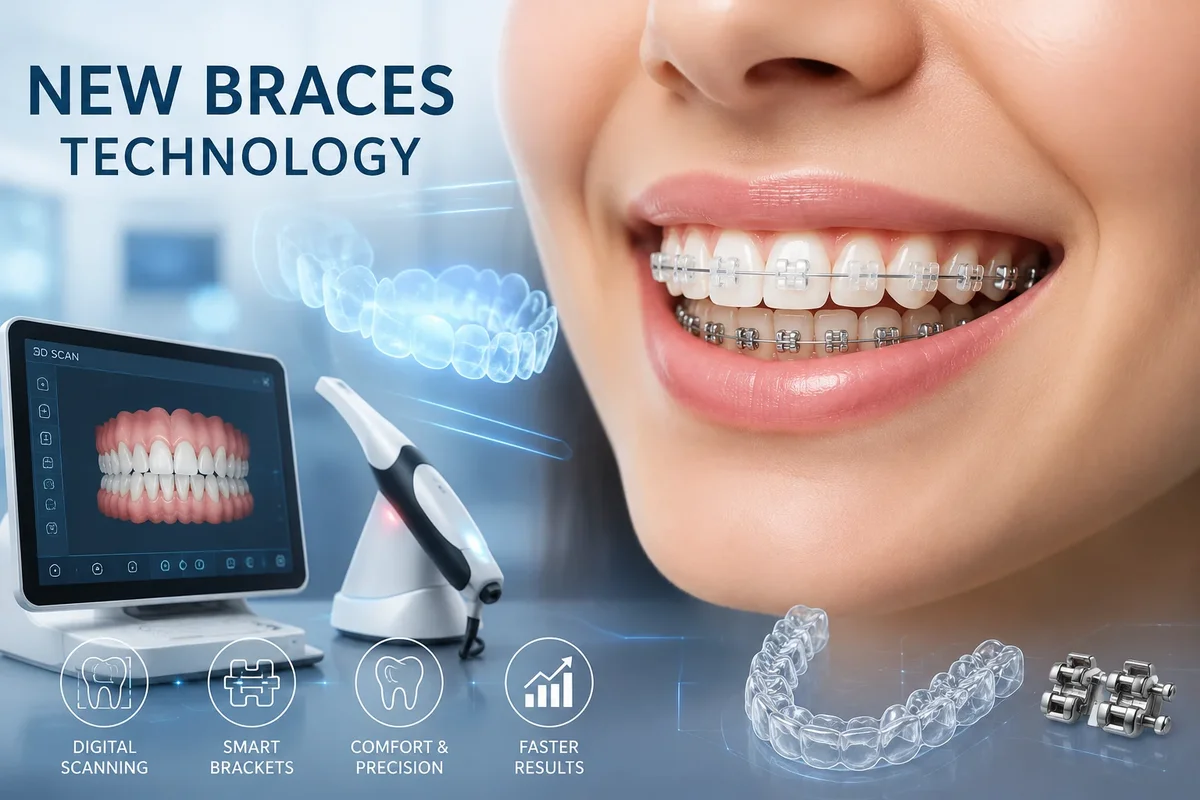
Today, orthodontists use digital scanning systems, AI-assisted treatment planning, self-ligating brackets, ceramic braces, and clear aligner systems to improve patient experiences. The biggest advantage of new braces technology is that treatment has become significantly more personalized. Instead of relying only on traditional molds and manual adjustments, dental professionals now use 3D imaging and computer-guided systems to design accurate tooth movement plans. This modern approach allows orthodontists to create better outcomes with fewer appointments and shorter recovery periods.
One of the most important developments in new braces technology is the rise of self-ligating braces. Traditional braces use elastic bands to hold wires in place, but self-ligating systems use special clips instead. These advanced systems reduce friction, improve tooth movement efficiency, and make cleaning easier for patients. Many people report less discomfort and fewer orthodontic visits compared to older methods. This improvement is especially beneficial for busy adults and students who prefer minimal interruption to their schedules.
Another major breakthrough in new braces technology involves clear aligner systems. These removable orthodontic trays are custom-designed using digital scans and advanced software. Clear aligners are nearly invisible, making them one of the most popular cosmetic orthodontic treatments worldwide. Patients can remove aligners while eating or brushing, which helps maintain oral hygiene during treatment. Although traditional braces remain essential for severe alignment problems, many mild to moderate cases can now be corrected using these modern orthodontic systems.
Digital scanning is also revolutionizing the orthodontic industry. In the past, patients often experienced discomfort from messy dental impressions. With new braces technology, orthodontists now use intraoral scanners to create precise 3D models of teeth within minutes. This process improves comfort and increases treatment accuracy. Digital records can also help monitor progress throughout treatment and allow adjustments to be made more efficiently.
Modern orthodontics is not only about aesthetics. New braces technology also improves oral health outcomes. Crooked teeth and bite problems can increase the risk of cavities, gum disease, jaw pain, and uneven tooth wear. By correcting alignment issues earlier and more effectively, advanced braces systems support long-term dental health. Patients often notice improvements in chewing, speaking, and confidence after completing orthodontic treatment.
Comfort is another reason why new braces technology has become so popular. Earlier generations of braces often caused irritation due to bulky brackets and tight wires. Today’s systems are designed with smoother materials and smaller components. Heat-activated wires, for example, respond to body temperature and apply gentler pressure to teeth. This technology helps reduce pain while still delivering effective tooth movement. Many orthodontic clinics now focus on creating a patient-friendly experience using these advanced methods.
Artificial intelligence and smart monitoring tools are becoming increasingly important in new braces technology. Some orthodontic systems now use smartphone apps and AI-powered software to track tooth movement remotely. Patients can upload photos of their teeth, allowing orthodontists to monitor treatment progress without requiring frequent in-office visits. This innovation saves time while improving communication between patients and dental professionals.
Another exciting aspect of new braces technology is customization. Modern orthodontic appliances are tailored to each patient’s facial structure, bite alignment, and smile goals. Customized braces and aligners improve treatment precision while enhancing overall comfort. Many clinics now use advanced treatment simulations so patients can preview their expected results before beginning orthodontic care.
Patients considering orthodontic treatment should always consult experienced dental professionals who understand the latest advancements in new braces technology. Choosing a qualified clinic ensures proper diagnosis, safe treatment planning, and long-term success. If you are interested in advanced orthodontic care, you can visit the Redent Klinik Contact Page to learn more about modern smile solutions and personalized treatment options.
It is also important to stay informed using trusted dental resources. Organizations such as the American Dental Association provide educational information about orthodontics, oral health, and dental innovations. Reliable information helps patients make confident decisions about their smile transformation journey.
In conclusion, new braces technology is changing the future of orthodontics by making treatments more comfortable, efficient, discreet, and personalized. From AI-assisted monitoring to digital scanning and clear aligners, these innovations allow patients to achieve healthier smiles with greater convenience. Modern orthodontic systems continue to evolve rapidly, offering better experiences and more predictable results for people of all ages. 🦷✨
How New Braces Technology Is Transforming Orthodontic Treatment
The world of orthodontics is evolving rapidly, and new braces technology is completely transforming the way patients experience teeth straightening treatments. In the past, traditional braces were often associated with discomfort, long treatment times, and highly visible metal brackets. Today, advanced orthodontic systems are providing faster, more comfortable, and more aesthetically pleasing solutions for patients of all ages. Thanks to new braces technology, people can now improve their smiles with highly customized treatment plans that focus on precision, convenience, and long-term oral health. 🦷✨
Modern orthodontic innovations are not only improving appearance but also increasing treatment accuracy. Orthodontists can now use digital imaging, artificial intelligence, and advanced materials to create personalized treatment plans that deliver more predictable results. Patients who once avoided braces because of embarrassment or fear are now more willing to begin orthodontic care because new braces technology has made the process significantly easier and more discreet.
Digital Scanning and 3D Imaging in New Braces Technology
One of the biggest improvements in new braces technology is the use of digital scanning systems. Traditional orthodontic impressions often involved uncomfortable trays filled with dental material that patients had to bite into for several minutes. Modern clinics now use intraoral scanners that create highly detailed 3D models of the teeth within seconds. This digital process improves comfort while also increasing treatment precision.
With digital imaging, orthodontists can identify alignment issues more accurately and create detailed movement plans for each tooth. Patients can even preview simulated treatment results before beginning orthodontic care. This feature helps people understand how new braces technology can improve their smiles over time. Digital orthodontics also reduces human error and speeds up appliance manufacturing processes.
Benefits of 3D Orthodontic Planning
- More accurate treatment planning
- Improved patient comfort during scanning
- Faster appliance production
- Better communication between orthodontist and patient
- Enhanced monitoring throughout treatment
These digital tools are becoming standard in advanced dental clinics worldwide because they improve efficiency and patient satisfaction.
Self-Ligating Systems and Modern Orthodontic Wires
Another major advancement in new braces technology is the introduction of self-ligating braces. Unlike traditional braces that require elastic bands to hold wires in place, self-ligating systems use specialized clips built directly into the brackets. This design reduces friction and allows teeth to move more naturally and efficiently.
Patients using self-ligating braces often experience shorter appointments and easier cleaning routines. The smoother bracket system also minimizes irritation inside the mouth. Combined with heat-activated wires, new braces technology can apply gentler pressure while maintaining effective tooth movement. These modern orthodontic systems are especially attractive for adults seeking more comfortable treatment experiences.
Heat-activated archwires are another important innovation. These advanced wires respond to body temperature and gradually return to their original shape. This process creates consistent force on teeth while reducing pain compared to traditional orthodontic wires. As a result, patients can experience less discomfort throughout their treatment journey.
Clear Aligners and Invisible Orthodontic Solutions
Clear aligners represent one of the most popular forms of new braces technology. These removable trays are custom-designed using advanced computer software and digital scans. Many adults and teenagers prefer aligners because they are nearly invisible and can be removed during meals or while brushing teeth.
Clear aligner treatment offers several lifestyle advantages. Patients can maintain better oral hygiene because they can brush and floss normally without navigating around wires and brackets. In many mild or moderate orthodontic cases, new braces technology using aligners can provide excellent results while maintaining a highly aesthetic appearance throughout treatment.
Advantages of Clear Aligners
- Discreet appearance
- Removable during meals
- Easier oral hygiene maintenance
- Fewer emergency appointments
- Comfortable smooth surfaces
Although aligners are not suitable for every severe orthodontic problem, they have become one of the fastest-growing orthodontic treatment options worldwide.
Artificial Intelligence and Remote Monitoring
Artificial intelligence is now playing a significant role in new braces technology. Some orthodontic systems use smartphone applications and AI-powered software to monitor treatment progress remotely. Patients can upload photos of their teeth, allowing orthodontists to track movement without requiring frequent office visits.
This innovation is especially useful for busy professionals, university students, and international patients. AI-assisted systems can detect problems early, helping orthodontists make timely adjustments when necessary. Remote monitoring also increases communication efficiency and improves the overall patient experience.
Modern orthodontic clinics increasingly combine AI software with digital records to improve treatment planning accuracy. These systems analyze bite alignment, tooth movement patterns, and facial structure to create highly personalized orthodontic solutions. As new braces technology continues to evolve, artificial intelligence is expected to play an even greater role in improving orthodontic care.
The Future of New Braces Technology
The future of new braces technology looks extremely promising. Researchers and orthodontic manufacturers continue developing smarter materials, faster treatment systems, and more personalized orthodontic appliances. Innovations such as 3D-printed braces, robotic wire bending, and advanced biomaterials may soon become standard features in modern orthodontic clinics.
Patients seeking advanced orthodontic care should choose experienced clinics that use modern digital systems and evidence-based treatment methods. Visiting the Redent Klinik Contact Page can help patients learn more about advanced orthodontic solutions and customized smile treatments.
For additional oral health information and orthodontic education, trusted organizations such as the American Dental Association provide valuable resources about modern dental care and treatment innovations.
In summary, new braces technology is revolutionizing orthodontics by combining digital precision, artificial intelligence, modern materials, and patient-centered care. These innovations are helping people achieve healthier, straighter smiles more comfortably and efficiently than ever before. 😁
Benefits of New Braces Technology for Teens and Adults
Modern orthodontics has improved significantly in recent years, and new braces technology now offers remarkable advantages for both teenagers and adults. In the past, many people delayed orthodontic treatment because they feared bulky metal braces, painful adjustments, or long treatment times. Today, advanced orthodontic systems are transforming the patient experience with faster, more comfortable, and more aesthetically pleasing solutions. Thanks to new braces technology, patients can achieve healthier and straighter smiles while maintaining confidence throughout the treatment process. 😁
Orthodontic treatment is no longer designed only for children and teenagers. Adults now represent a large percentage of orthodontic patients worldwide. Modern systems provide discreet treatment options that fit professional and social lifestyles. Whether someone wants to improve oral health, correct bite issues, or enhance smile appearance, new braces technology provides highly personalized treatment plans that address different orthodontic needs effectively.
Improved Comfort With New Braces Technology
One of the biggest benefits of new braces technology is improved patient comfort. Traditional braces often caused irritation because of large metal brackets and tight wires. Modern orthodontic systems use smaller brackets, smoother materials, and advanced wire technology that reduce friction and pressure on teeth.
Heat-activated wires are a major innovation in modern orthodontics. These wires respond to body temperature and apply gentle, continuous pressure instead of sudden force. Patients frequently report less soreness after adjustments compared to older braces systems. Self-ligating braces also reduce friction because they eliminate the need for elastic bands around brackets.
Why Modern Braces Feel More Comfortable
- Smoother bracket edges reduce irritation
- Gentler wire pressure minimizes pain
- Shorter adjustment appointments
- Fewer emergency orthodontic visits
- Reduced friction during tooth movement
Because of these improvements, many patients feel more confident starting orthodontic treatment with new braces technology.
Better Appearance During Orthodontic Treatment
Aesthetic improvements are another important advantage of new braces technology. Many teenagers and adults worry about how braces will affect their appearance at school, work, or social events. Modern orthodontics now includes ceramic braces, tooth-colored brackets, lingual braces, and clear aligners that are far less noticeable than traditional metal systems.
Clear aligners are among the most popular solutions in new braces technology. These transparent trays fit closely over the teeth and are nearly invisible during daily activities. Adults especially appreciate aligners because they allow orthodontic treatment without significantly changing their appearance.
Lingual braces are another discreet option. Unlike traditional braces placed on the front of teeth, lingual systems are attached behind the teeth, making them hidden from view. Although not suitable for every patient, they demonstrate how new braces technology continues focusing on both functionality and aesthetics.
Shorter Treatment Times and Faster Results
Many patients are surprised to learn that new braces technology can sometimes shorten orthodontic treatment duration. Advanced diagnostic tools, AI-assisted planning, and modern bracket systems allow orthodontists to move teeth more efficiently and accurately.
Digital scanning systems help orthodontists create highly precise treatment plans before treatment even begins. These technologies reduce errors and improve tooth movement predictability. In some cases, modern orthodontic systems can reduce total treatment time by several months compared to traditional braces.
Factors That Influence Faster Orthodontic Treatment
- Digital treatment planning
- Advanced self-ligating systems
- Heat-activated wires
- Improved patient compliance
- Remote AI monitoring systems
Although treatment times vary depending on individual orthodontic conditions, new braces technology helps optimize efficiency while maintaining high-quality results.
Enhanced Oral Health Benefits
Straighter teeth are not only important for appearance. New braces technology also supports better long-term oral health. Crooked or crowded teeth can make brushing and flossing difficult, increasing the risk of plaque buildup, gum disease, and cavities.
Modern orthodontic treatment improves bite alignment and creates easier-to-clean tooth surfaces. Properly aligned teeth can reduce jaw strain, improve chewing function, and minimize uneven tooth wear. Many patients experience better overall oral hygiene after completing treatment with new braces technology.
Orthodontic care may also improve speech issues and help patients avoid future dental complications. Correcting bite problems early can prevent more serious oral health conditions later in life.
Remote Monitoring and Smart Orthodontics
Another major advantage of new braces technology is the integration of artificial intelligence and remote monitoring systems. Some orthodontic clinics now allow patients to upload smartphone photos of their teeth so orthodontists can monitor progress without requiring frequent office visits.
This innovation is especially helpful for busy adults, university students, and international patients who cannot always attend regular appointments. AI-powered systems can detect issues early and help orthodontists make adjustments quickly when needed.
Remote monitoring also improves communication between patients and dental professionals. Modern orthodontic care is becoming more flexible and patient-friendly because new braces technology combines convenience with advanced clinical precision.
Confidence and Psychological Benefits
Many people underestimate the emotional benefits of orthodontic treatment. Crooked teeth and bite issues can negatively affect self-confidence, especially among teenagers and young adults. New braces technology helps patients feel more comfortable during treatment because modern systems are less visible and less disruptive to daily life.
As smiles gradually improve, many patients experience increased confidence in professional, academic, and social situations. A healthy smile can positively impact communication, self-esteem, and overall quality of life.
Patients interested in advanced orthodontic care can explore personalized treatment options through the Redent Klinik Contact Page. Consulting an experienced orthodontic provider helps ensure safe, effective, and customized treatment planning.
For additional oral health guidance and orthodontic education, the American Dental Association offers trusted information about modern dental care and orthodontic innovations.
In conclusion, new braces technology is making orthodontic treatment more comfortable, efficient, discreet, and accessible for patients of all ages. From clear aligners to AI-powered monitoring systems, modern orthodontics continues improving the way people achieve healthier and more confident smiles. 🦷✨
Types of New Braces Technology Available Today
Orthodontic care has advanced rapidly over the last several years, and new braces technology now includes a wide range of innovative treatment options designed for different dental needs and lifestyles. Patients today are no longer limited to bulky traditional metal braces. Modern orthodontics offers discreet, efficient, and highly customized solutions that improve comfort while delivering effective smile correction. Whether someone has mild crowding, severe bite issues, or cosmetic concerns, new braces technology provides treatment systems that can be tailored to individual goals and oral health conditions. 🦷✨
The growing popularity of advanced orthodontic systems is largely due to improvements in digital imaging, AI-assisted planning, modern dental materials, and patient-focused treatment approaches. Understanding the different types of new braces technology helps patients make informed decisions about their orthodontic journey.
Traditional Metal Braces With Modern Improvements
Although traditional braces have existed for decades, modern versions are significantly different from older systems. Today’s metal braces are smaller, smoother, and more comfortable than previous generations. Modern orthodontists now use advanced bracket designs and heat-activated wires to improve efficiency and reduce discomfort.
One reason traditional braces remain important in new braces technology is their effectiveness for complex orthodontic problems. Severe crowding, major bite misalignment, and difficult tooth movements can often be corrected more predictably using advanced metal braces.
Modern Features of Traditional Braces
- Smaller and less noticeable brackets
- Improved stainless steel materials
- Heat-sensitive orthodontic wires
- Reduced friction for smoother movement
- More efficient tooth alignment
Even though clear aligners are becoming increasingly popular, modern metal braces remain one of the most reliable forms of new braces technology for complex orthodontic cases.
Ceramic Braces and Tooth-Colored Systems
Ceramic braces are another important category within new braces technology. These braces work similarly to metal braces but use clear or tooth-colored brackets that blend more naturally with teeth. Many teenagers and adults prefer ceramic systems because they provide a more aesthetic appearance during treatment.
Ceramic braces are especially popular among working professionals who want effective orthodontic correction without highly visible metal brackets. Modern ceramic materials are stronger and more stain-resistant than earlier versions, making them a practical option for long-term treatment.
While ceramic braces can be slightly more fragile than metal braces, they remain highly effective for many orthodontic conditions. Orthodontists often recommend them for patients seeking a balance between cosmetic appearance and strong treatment performance.
Self-Ligating Braces and Advanced Orthodontic Systems
Self-ligating braces represent one of the most advanced forms of new braces technology. Unlike traditional braces that use elastic bands to hold wires in place, self-ligating systems feature built-in clips that secure the orthodontic wire directly to the bracket.
This design reduces friction between the wire and bracket, allowing teeth to move more freely and comfortably. Many patients using self-ligating systems report fewer adjustment appointments and less pressure during treatment.
Advantages of Self-Ligating Braces
- Reduced treatment discomfort
- Shorter orthodontic appointments
- Easier cleaning and oral hygiene
- Potentially shorter treatment duration
- Less friction during tooth movement
Self-ligating systems continue gaining popularity because new braces technology focuses increasingly on patient comfort and treatment efficiency.
Clear Aligners and Invisible Orthodontics
Clear aligners are among the fastest-growing categories in new braces technology. These transparent plastic trays are custom-designed using digital scans and computer-generated treatment plans. Patients wear a series of aligners that gradually shift teeth into proper positions over time.
One of the biggest benefits of clear aligners is their removable design. Patients can remove aligners while eating, brushing, and flossing, making oral hygiene much easier compared to traditional braces. Because the trays are nearly invisible, clear aligners are especially popular among adults and teenagers concerned about aesthetics.
Digital orthodontic planning allows orthodontists to predict tooth movement very accurately with aligner systems. However, not all orthodontic cases are suitable for aligners. Severe bite issues or complex tooth movements may still require fixed braces. Nevertheless, clear aligners remain one of the most recognizable examples of new braces technology.
Lingual Braces and Hidden Orthodontic Treatment
Lingual braces are another innovative solution in new braces technology. Unlike traditional braces attached to the front of teeth, lingual braces are placed on the back surfaces of teeth, making them virtually invisible from the outside.
These braces are customized specifically for each patient using advanced digital technology. Lingual systems are ideal for individuals who want fixed orthodontic treatment without visible brackets. Actors, public speakers, and professionals often choose this option because it offers complete aesthetic discretion.
Although lingual braces may require an adjustment period for speech and tongue comfort, modern digital customization has significantly improved patient experiences.
Smart Orthodontics and AI-Powered Monitoring
Artificial intelligence is becoming an important part of new braces technology. Some modern orthodontic systems now use AI-powered monitoring applications that allow patients to upload smartphone photos of their teeth. Orthodontists can remotely evaluate treatment progress and identify problems early.
Remote monitoring reduces unnecessary office visits and improves communication between patients and orthodontic providers. AI-assisted treatment planning also helps orthodontists create more precise tooth movement strategies based on facial structure and bite alignment.
How Smart Orthodontics Improves Treatment
- Remote progress monitoring
- Earlier problem detection
- Improved treatment precision
- Reduced in-office visits
- Enhanced patient convenience
As digital dentistry continues evolving, smart orthodontic systems will likely become even more advanced and widely available.
Choosing the Right New Braces Technology
Selecting the best type of new braces technology depends on several factors, including orthodontic complexity, cosmetic preferences, lifestyle, and budget. Consulting an experienced orthodontic provider is essential for determining the most appropriate treatment plan.
Patients interested in modern orthodontic solutions can explore personalized treatment options through the Redent Klinik Contact Page. Advanced clinics using digital orthodontics and modern treatment systems can help patients achieve healthier and more attractive smiles efficiently.
Trusted resources such as the American Dental Association also provide valuable information about orthodontic care, oral health, and treatment innovations.
In conclusion, new braces technology offers a wide range of advanced treatment options designed to improve comfort, aesthetics, and orthodontic precision. From self-ligating braces to clear aligners and AI-powered monitoring systems, modern orthodontics continues revolutionizing the way patients achieve straighter and healthier smiles. 😁
Smart Braces and AI-Powered Orthodontic Monitoring
The orthodontic industry is entering a new digital era, and new braces technology is now being powered by artificial intelligence, smart monitoring systems, and advanced digital tools. Traditional orthodontic treatment depended heavily on frequent in-office appointments and manual evaluations by orthodontists. Today, modern systems combine AI-powered software, smartphone applications, and digital imaging to improve treatment precision, efficiency, and patient convenience. These innovations are transforming orthodontic care into a smarter, more connected experience for both patients and dental professionals. 🤖🦷
Smart orthodontics represents one of the most exciting developments in new braces technology. Instead of relying only on periodic office visits, orthodontists can now remotely monitor tooth movement and treatment progress using digital systems. This allows for earlier problem detection, improved communication, and more personalized treatment adjustments throughout the orthodontic journey.
What Are Smart Braces?
Smart braces are advanced orthodontic systems that integrate digital monitoring technology with traditional or modern braces treatment. Some smart orthodontic systems use embedded sensors, AI software, or digital tracking applications to evaluate tooth movement in real time.
Although fully sensor-equipped braces are still developing in some markets, current new braces technology already allows orthodontists to track treatment progress remotely through smartphone applications and cloud-based systems. Patients can submit regular images or scans of their teeth, enabling orthodontists to monitor changes without requiring constant office visits.
This modern approach improves convenience for patients while helping orthodontists respond more quickly if treatment adjustments become necessary.
Key Features of Smart Braces Systems
- Remote treatment monitoring
- AI-assisted tooth movement analysis
- Digital progress tracking
- Improved communication with orthodontists
- More personalized orthodontic adjustments
These features demonstrate how new braces technology is becoming increasingly patient-centered and digitally advanced.
How Artificial Intelligence Improves Orthodontic Care
Artificial intelligence plays a major role in modern new braces technology. AI-powered software can analyze digital scans, photographs, bite alignment, and tooth movement patterns with incredible precision. Orthodontists use these systems to create highly accurate treatment plans tailored to each patient’s needs.
AI systems help identify potential treatment challenges before they become serious problems. For example, if a tooth is not moving according to the planned schedule, the system can alert the orthodontist early. This proactive monitoring allows treatment modifications to be made quickly, improving efficiency and reducing delays.
Another important advantage of AI-powered orthodontics is predictive treatment modeling. Modern software can simulate future tooth positions and estimate treatment duration more accurately than traditional methods. Patients using new braces technology often appreciate seeing visual treatment simulations before beginning orthodontic care.
Remote Monitoring and Virtual Orthodontic Visits
Remote monitoring is one of the most practical applications of new braces technology. Patients can now use smartphone applications to upload images of their teeth regularly. These images are analyzed using AI software, allowing orthodontists to review treatment progress remotely.
This innovation reduces the number of unnecessary office visits while still maintaining professional supervision. Busy professionals, university students, and international patients especially benefit from remote orthodontic care.
Advantages of Remote Orthodontic Monitoring
- Fewer in-office appointments
- Early detection of treatment issues
- Improved scheduling flexibility
- Faster communication with providers
- Greater convenience for patients
During remote evaluations, orthodontists can determine whether treatment is progressing correctly or whether adjustments are needed. Some systems even provide automated reminders that help patients follow treatment instructions more consistently.
As new braces technology continues improving, virtual orthodontic care is expected to become even more common in modern dental practices.
Digital Scanning and AI Treatment Planning
Modern orthodontics increasingly depends on digital scanning technology. Traditional dental impressions were often uncomfortable and less precise. Today, new braces technology uses intraoral scanners to create highly detailed 3D models of teeth in just minutes.
These digital scans are combined with AI-powered planning software to develop customized orthodontic treatment strategies. The software can analyze spacing problems, bite alignment, crowding severity, and facial structure to determine the most efficient tooth movement plan.
Digital treatment planning improves orthodontic precision significantly. Orthodontists can predict tooth movement more accurately and minimize treatment complications. Patients also benefit because they can view digital simulations of their future smiles before treatment begins.
AI and Clear Aligner Technology
Clear aligners are one of the most advanced examples of new braces technology, and artificial intelligence plays an important role in their success. AI systems help design each aligner stage based on highly precise digital measurements.
Every aligner tray is customized to move teeth gradually according to the treatment plan. AI-assisted systems analyze tooth movement patterns and adjust aligner sequencing for maximum efficiency. This technology allows orthodontists to create highly personalized treatment experiences.
Patients using aligners often appreciate the combination of aesthetics and advanced technology. Clear aligner systems powered by AI are helping orthodontic treatment become more discreet, convenient, and efficient.
Potential Challenges of Smart Orthodontics
Although new braces technology offers many benefits, there are still some challenges to consider. Remote monitoring systems depend heavily on patient compliance. Patients must upload accurate images regularly and follow orthodontic instructions carefully.
Technology cannot fully replace professional in-person evaluations. Complex orthodontic issues may still require direct clinical examination and manual adjustments by experienced orthodontists. Additionally, not every dental clinic currently offers advanced AI-powered orthodontic systems.
However, as technology becomes more affordable and accessible, smart orthodontics will likely continue expanding globally.
The Future of AI in New Braces Technology
The future of new braces technology is expected to include even more advanced AI systems, robotic orthodontic assistance, and real-time monitoring tools. Researchers are developing systems capable of automatically tracking tooth movement with even greater precision.
Some experts believe future orthodontic systems may include fully automated adjustment recommendations and highly advanced predictive modeling tools. These developments could further reduce treatment times and improve overall patient experiences.
Patients interested in advanced orthodontic care and smart treatment systems can learn more through the Redent Klinik Contact Page. Choosing a modern dental clinic that uses digital orthodontic technology can improve both comfort and treatment efficiency.
For additional orthodontic education and trusted oral health information, the American Dental Association provides valuable resources about modern dental care and orthodontic innovations.
In conclusion, new braces technology is revolutionizing orthodontics through artificial intelligence, digital scanning, and remote monitoring systems. Smart orthodontics is making treatment more personalized, efficient, and convenient while helping patients achieve healthier and more confident smiles with greater comfort than ever before. 😁
Clear Aligners vs Traditional Braces: Which Technology Wins?
Orthodontic treatment has evolved dramatically in recent years, and patients now have more choices than ever before. One of the biggest debates in modern orthodontics is whether clear aligners or traditional braces provide better results. Thanks to new braces technology, both treatment methods have improved significantly in comfort, aesthetics, and efficiency. However, each option offers different advantages depending on the patient’s dental condition, lifestyle, and treatment goals. Understanding the differences between these systems helps patients choose the most suitable orthodontic solution for achieving a healthier and more attractive smile. 😁
Traditional braces have been used successfully for decades to correct complex orthodontic problems. Meanwhile, clear aligners have become one of the most popular forms of new braces technology because they offer a discreet and removable alternative. Both systems can effectively straighten teeth, but they work differently and provide unique benefits.
How Traditional Braces Work
Traditional braces use metal or ceramic brackets attached directly to the teeth. Orthodontic wires connect the brackets and apply continuous pressure to gradually move teeth into proper alignment. Modern versions of braces are much smaller and more comfortable than older systems.
One reason traditional braces remain important in new braces technology is their ability to treat severe orthodontic problems. Complex bite issues, major crowding, significant tooth rotations, and jaw alignment problems often require the strong control that fixed braces provide.
Advantages of Traditional Braces
- Highly effective for severe orthodontic cases
- Constant pressure improves tooth movement control
- No risk of forgetting to wear appliances
- Suitable for complex bite correction
- Modern systems are smaller and more comfortable
Modern braces also include advanced features such as self-ligating brackets and heat-activated wires, both of which improve comfort and treatment efficiency. These improvements demonstrate how new braces technology continues modernizing traditional orthodontic systems.
How Clear Aligners Work
Clear aligners are removable transparent trays custom-designed to fit over the teeth. Patients wear a series of aligners that gradually shift teeth into proper positions over time. Each aligner is created using digital scans and computer-generated treatment plans.
Clear aligners represent one of the most recognizable examples of new braces technology. Their nearly invisible appearance makes them especially popular among adults and teenagers who want discreet orthodontic treatment.
Patients typically switch to a new aligner tray every one or two weeks as their teeth gradually move according to the treatment plan. Because the trays are removable, patients can eat normally and maintain easier oral hygiene compared to fixed braces.
Advantages of Clear Aligners
- Nearly invisible appearance
- Removable during meals
- Easier brushing and flossing
- Reduced irritation inside the mouth
- Fewer emergency orthodontic visits
Many patients choose clear aligners because new braces technology allows orthodontic treatment to fit more naturally into professional and social lifestyles.
Comparing Comfort and Daily Convenience
Comfort is one of the biggest reasons patients explore new braces technology. Clear aligners generally provide smoother surfaces and fewer sharp edges than traditional braces. Because there are no wires or brackets, aligners usually cause less irritation to cheeks and gums.
Traditional braces, however, have also improved significantly in comfort. Modern brackets are smaller, smoother, and less bulky than older systems. Heat-activated wires apply gentler pressure, reducing soreness after adjustments.
In terms of daily convenience, clear aligners offer greater flexibility because patients can remove them while eating or brushing teeth. However, successful aligner treatment depends heavily on patient discipline. Aligners must usually be worn 20–22 hours per day to achieve effective results.
Patients who struggle with compliance may achieve better outcomes using fixed braces because braces remain attached to teeth at all times. This demonstrates how the best option within new braces technology depends on individual habits and treatment needs.
Which Option Works Faster?
Treatment speed varies depending on the complexity of the orthodontic problem. In mild to moderate cases, clear aligners powered by new braces technology can sometimes produce results comparable to traditional braces.
However, for severe orthodontic problems involving large tooth movements or complicated bite correction, traditional braces often remain more efficient. Fixed brackets provide orthodontists with greater control over difficult tooth movements.
Factors That Affect Treatment Time
- Severity of tooth misalignment
- Patient compliance
- Orthodontic system used
- Bite complexity
- Consistency of follow-up care
Modern orthodontic planning systems using digital imaging and AI-assisted software help both aligners and braces achieve more predictable results. This is another major benefit of new braces technology.
Oral Hygiene and Maintenance
Oral hygiene is extremely important during orthodontic treatment. Clear aligners have a major advantage because patients can remove them before brushing and flossing. This reduces the risk of plaque buildup and gum inflammation.
Traditional braces require more careful cleaning around brackets and wires. Food particles can become trapped easily, increasing the importance of proper oral hygiene routines. However, modern orthodontic tools and cleaning devices have improved maintenance significantly.
Orthodontists often recommend special floss threaders, water flossers, and orthodontic toothbrushes for patients using fixed braces. These tools are now considered part of new braces technology because they help maintain oral health throughout treatment.
Cost Differences Between Aligners and Braces
The cost of orthodontic treatment depends on treatment complexity, clinic location, and technology used. In many countries, clear aligners are often slightly more expensive than traditional braces because of advanced digital planning and custom manufacturing.
Average Orthodontic Treatment Costs
- Traditional metal braces: $3,000–$7,000
- Ceramic braces: $4,000–$8,000
- Clear aligners: $4,000–$9,000
- Lingual braces: $8,000–$13,000
These prices can vary significantly depending on treatment complexity and geographic location. Some clinics also offer payment plans to make new braces technology more accessible for patients.
Which Technology Wins?
There is no single answer to whether clear aligners or traditional braces are better because each patient has unique orthodontic needs. Clear aligners provide excellent aesthetics and convenience, while traditional braces remain highly effective for severe orthodontic corrections.
The best approach is consulting an experienced orthodontic provider who understands the latest advancements in new braces technology. Clinics using digital scanning, AI-assisted planning, and modern orthodontic systems can create personalized treatment plans for each patient.
Patients interested in modern orthodontic solutions can learn more through the Redent Klinik Contact Page. Professional consultation helps determine the most effective and comfortable treatment option.
For additional orthodontic guidance and oral health education, the American Dental Association provides trusted resources about modern dental care and orthodontic innovations.
In conclusion, new braces technology has improved both clear aligners and traditional braces dramatically. Whether patients choose aligners or braces, modern orthodontics now offers more comfortable, precise, and aesthetically pleasing treatment options than ever before. 🦷✨
Latest Materials Used in New Braces Technology
The rapid evolution of orthodontics is not only driven by digital systems and artificial intelligence but also by major improvements in dental materials. Modern new braces technology depends heavily on advanced materials that improve comfort, durability, aesthetics, and treatment efficiency. In the past, orthodontic braces were often bulky, highly visible, and uncomfortable because of limited material options. Today, innovative orthodontic materials are transforming patient experiences and helping orthodontists achieve more precise results with less discomfort. 🦷✨
The development of modern orthodontic materials has made braces smaller, smoother, stronger, and more aesthetically appealing. From heat-activated wires to ceramic brackets and medical-grade polymers, new braces technology continues evolving to meet the growing expectations of patients seeking effective and comfortable smile correction.
Heat-Activated Nickel Titanium Wires
One of the most important breakthroughs in new braces technology is the use of nickel titanium archwires. These advanced wires are known for their flexibility, durability, and shape-memory properties. Unlike older stainless steel wires, nickel titanium wires can return to their original shape after bending, allowing them to apply gentle and continuous pressure to teeth.
Heat-activated wires respond to body temperature inside the mouth. As the wire warms, it gradually activates and applies controlled pressure that helps teeth move more comfortably. This technology reduces sudden force and minimizes pain during orthodontic adjustments.
Benefits of Heat-Activated Wires
- Reduced treatment discomfort
- More consistent tooth movement
- Improved flexibility
- Fewer wire adjustments
- Greater patient comfort
Because of these advantages, nickel titanium wires have become a standard component in modern new braces technology.
Ceramic Brackets and Tooth-Colored Materials
Ceramic brackets are another major innovation in new braces technology. Traditional metal braces were highly visible, causing many patients to feel self-conscious during treatment. Ceramic braces solve this problem by using tooth-colored or transparent brackets that blend naturally with the teeth.
Modern ceramic materials are significantly stronger and more stain-resistant than earlier versions. Advanced manufacturing techniques have improved bracket durability while maintaining aesthetic appeal. Adults and teenagers often choose ceramic systems because they provide a more discreet orthodontic appearance.
Although ceramic brackets may still be slightly more fragile than metal braces in some cases, they remain one of the most popular cosmetic orthodontic options in new braces technology.
Medical-Grade Polymers in Clear Aligners
Clear aligners are among the most recognizable forms of new braces technology, and their success depends heavily on advanced polymer materials. Aligners are made from transparent medical-grade thermoplastic materials designed to be both durable and flexible.
Modern aligner materials are carefully engineered to apply controlled pressure while remaining comfortable inside the mouth. These polymers are also highly transparent, allowing aligners to remain nearly invisible during daily activities.
Features of Modern Clear Aligner Materials
- Transparent and aesthetic appearance
- Flexible yet durable structure
- Smooth surfaces reduce irritation
- Custom precision manufacturing
- Biocompatible and safe for oral tissues
As new braces technology advances further, aligner materials continue improving in strength, stain resistance, and treatment precision.
Self-Ligating Bracket Materials
Self-ligating braces represent another major advancement in new braces technology. These braces use specialized clips built into the bracket instead of elastic bands. The materials used in self-ligating systems are designed to reduce friction between the wire and bracket.
Modern self-ligating brackets are often manufactured using advanced stainless steel alloys or ceramic materials that improve smoothness and durability. Reduced friction allows teeth to move more naturally and efficiently during treatment.
Many orthodontists prefer self-ligating systems because they can improve patient comfort and reduce appointment times. This technology demonstrates how material science continues shaping modern orthodontic care.
Shape-Memory Alloys in Orthodontics
Shape-memory alloys are one of the most fascinating developments in new braces technology. These special metal alloys can return to a predetermined shape after being deformed. Orthodontic wires using shape-memory technology provide continuous force over long periods without frequent adjustments.
This innovation helps reduce discomfort while improving treatment efficiency. Shape-memory materials also decrease the need for repeated wire replacements, making orthodontic treatment more convenient for patients.
Why Shape-Memory Materials Matter
- Continuous gentle force application
- Improved treatment consistency
- Reduced orthodontic adjustments
- Better patient comfort
- Enhanced orthodontic precision
Shape-memory technology continues playing an essential role in modern new braces technology.
Biocompatible Materials and Patient Safety
Patient safety is extremely important in orthodontics, and new braces technology increasingly focuses on biocompatible materials. Modern orthodontic materials are designed to minimize allergic reactions, irritation, and long-term oral tissue problems.
Many orthodontic manufacturers now use nickel-free alloys, advanced ceramics, and medical-grade plastics to improve compatibility with sensitive patients. These materials undergo strict safety testing to ensure they remain safe during long-term use inside the mouth.
Biocompatible materials also help improve oral hygiene because smoother surfaces reduce plaque accumulation and bacterial buildup. This contributes to healthier gums and lower cavity risk during orthodontic treatment.
3D Printing and Future Orthodontic Materials
3D printing is becoming increasingly important in new braces technology. Orthodontists can now create highly customized appliances using advanced printing materials and digital manufacturing systems. This technology improves treatment precision while reducing production time.
Researchers are currently developing next-generation orthodontic materials that may become even lighter, stronger, and more responsive to tooth movement. Future innovations may include smart materials capable of automatically adjusting force levels during treatment.
As digital dentistry expands, material science will continue driving major improvements in orthodontic care.
Choosing Clinics That Use Modern Orthodontic Materials
Patients considering orthodontic treatment should choose clinics that use advanced materials and evidence-based orthodontic systems. Modern new braces technology provides significant advantages in comfort, treatment speed, and aesthetics when supported by high-quality materials.
Patients interested in modern orthodontic care can explore treatment options through the Redent Klinik Contact Page. Consulting experienced orthodontic professionals helps ensure access to advanced treatment methods and high-quality orthodontic materials.
For additional oral health information and orthodontic guidance, the American Dental Association offers trusted educational resources about dental innovations and modern treatment systems.
In conclusion, new braces technology depends heavily on advanced orthodontic materials that improve comfort, durability, aesthetics, and treatment efficiency. From heat-activated wires to ceramic brackets and smart polymers, modern material science continues transforming orthodontic treatment for patients around the world. 😁
How Digital Scanning Improves New Braces Technology
Digital innovation is transforming orthodontics, and one of the most important advancements in new braces technology is digital scanning. Traditional orthodontic treatment often required uncomfortable dental impressions made with thick impression materials placed inside the mouth. Many patients disliked this process because it could trigger gag reflexes and create discomfort. Today, modern orthodontic clinics increasingly use digital intraoral scanners that create highly accurate 3D models of teeth within minutes. This innovation has dramatically improved patient comfort, treatment precision, and overall orthodontic efficiency. 🦷💻
Digital scanning systems are now considered a core part of new braces technology because they allow orthodontists to diagnose alignment issues more accurately and create highly personalized treatment plans. These systems also improve communication between patients and orthodontic providers while supporting modern AI-powered treatment planning tools.
What Is Digital Orthodontic Scanning?
Digital orthodontic scanning uses specialized intraoral cameras and advanced software to capture highly detailed images of the teeth and gums. Instead of using traditional molds, orthodontists move a handheld scanner around the patient’s mouth to create a real-time 3D digital model.
The scanning process is fast, painless, and highly precise. Once the scan is completed, the digital file can be analyzed immediately by orthodontic software systems. This technology has become an essential component of new braces technology because it improves every stage of orthodontic treatment, from diagnosis to appliance manufacturing.
Main Components of Digital Scanning Systems
- Intraoral scanning camera
- 3D imaging software
- Cloud-based digital storage
- AI-powered treatment analysis tools
- Digital treatment simulation systems
These integrated technologies help orthodontists create highly efficient and customized treatment experiences.
Improved Accuracy With New Braces Technology
One of the biggest advantages of digital scanning in new braces technology is increased precision. Traditional dental impressions could sometimes contain distortions, bubbles, or inaccuracies caused by patient movement or material issues. Digital scanning reduces these problems significantly.
Modern scanners capture extremely detailed images of tooth surfaces, bite alignment, and gum contours. Orthodontists can zoom into digital models and analyze even small alignment issues with greater clarity. This level of precision helps create more accurate treatment plans and better-fitting orthodontic appliances.
Improved accuracy also means that braces, aligners, retainers, and other orthodontic devices can be customized more effectively. This contributes to better treatment outcomes and greater patient satisfaction with new braces technology.
Better Patient Comfort and Experience
Comfort is one of the main reasons digital scanning has become so important in new braces technology. Many patients dislike traditional impression trays because they can feel bulky and uncomfortable inside the mouth. Some patients even experience gagging or anxiety during conventional impressions.
Digital scanning eliminates the need for messy impression materials. The scanning process is much faster and more comfortable, especially for children and patients with sensitive gag reflexes.
Why Patients Prefer Digital Scanning
- No messy impression materials
- Reduced gag reflex discomfort
- Faster scanning appointments
- More comfortable patient experience
- Immediate digital results
Because orthodontic treatment often requires multiple evaluations over time, digital scanning helps create a smoother and more positive experience throughout the entire treatment journey.
Digital Treatment Simulations and Smile Previews
Another major advantage of digital scanning in new braces technology is the ability to create treatment simulations. Modern orthodontic software can use digital scans to predict how teeth will move throughout treatment.
Patients can often view realistic previews of their expected results before treatment even begins. These digital simulations help patients better understand their orthodontic plan and set realistic expectations.
Orthodontists also benefit from treatment simulations because they can evaluate potential challenges early and make adjustments before treatment starts. This improves efficiency and increases treatment predictability.
How Digital Scanning Supports Clear Aligners
Clear aligners are one of the most advanced examples of new braces technology, and digital scanning plays a critical role in their production. Accurate digital scans are necessary for creating custom aligner trays that fit precisely over the teeth.
Once scans are completed, advanced software generates a series of aligners designed to move teeth gradually into their ideal positions. Every aligner stage is based on digital treatment planning.
Without digital scanning, modern aligner systems would not achieve the same level of precision and customization. This demonstrates how new braces technology depends heavily on advanced imaging systems.
AI Integration and Smart Orthodontics
Artificial intelligence is increasingly integrated into digital orthodontic systems. AI-powered software can analyze scans, detect alignment problems, and help orthodontists optimize treatment plans.
Some smart orthodontic platforms can even compare new scans with previous records to monitor treatment progress automatically. This allows orthodontists to identify tooth movement changes quickly and make necessary adjustments.
Benefits of AI-Powered Scan Analysis
- Improved treatment precision
- Early detection of orthodontic issues
- Enhanced monitoring of progress
- More personalized treatment planning
- Reduced risk of treatment delays
The combination of AI and digital scanning is helping new braces technology become more intelligent and patient-focused.
Faster Appliance Production and 3D Printing
Digital scanning also improves appliance manufacturing speed. Orthodontic laboratories can use digital files directly to create braces components, retainers, and aligners using advanced manufacturing systems and 3D printing technology.
This digital workflow reduces turnaround time and improves production consistency. Patients often receive their orthodontic appliances faster compared to traditional manufacturing methods.
As 3D printing technology continues improving, new braces technology is expected to become even more customized and efficient in the future.
Long-Term Benefits of Digital Orthodontics
Digital records created through scanning systems are easy to store and access. Orthodontists can compare scans over time to monitor long-term stability and treatment success.
Digital orthodontics also improves communication between dental specialists. Orthodontists, dentists, and oral surgeons can share digital files quickly, helping coordinate complex treatment plans more efficiently.
Patients interested in modern orthodontic care can explore advanced treatment options through the Redent Klinik Contact Page. Clinics using advanced digital systems often provide more precise and comfortable orthodontic experiences.
For additional orthodontic education and oral health information, the American Dental Association offers trusted guidance about modern dental technology and orthodontic care.
In conclusion, digital scanning has become one of the most important advancements in new braces technology. By improving accuracy, patient comfort, treatment planning, and appliance manufacturing, digital orthodontics is helping patients achieve healthier and more confident smiles with greater efficiency than ever before. 😁
Cost Comparison of New Braces Technology Around the World
The global orthodontic industry has expanded rapidly, and new braces technology is now available in many countries with varying price ranges and treatment standards. Patients today often compare orthodontic costs internationally because modern technology allows access to high-quality dental care in different regions of the world. While advanced orthodontic systems provide major benefits in comfort, aesthetics, and treatment precision, the total cost of treatment can vary significantly depending on the country, clinic reputation, orthodontic complexity, and technology used. Understanding these differences helps patients make informed decisions about orthodontic treatment and financial planning. 🌍🦷
Modern orthodontic care now includes clear aligners, self-ligating braces, ceramic systems, lingual braces, AI-assisted monitoring, and digital scanning technologies. Each of these innovations influences overall pricing because new braces technology often requires specialized equipment, advanced materials, and highly trained orthodontic professionals.
Why Orthodontic Costs Differ Between Countries
The price of new braces technology varies worldwide because of several economic and healthcare factors. Countries with higher living costs and stricter operational expenses generally charge more for orthodontic treatment. On the other hand, some countries offer highly competitive pricing while still maintaining international treatment standards.
Orthodontic pricing is also affected by clinic location, technology level, orthodontist experience, and treatment duration. Digital orthodontics, AI-assisted planning, and advanced aligner systems typically increase overall costs because they require specialized software and equipment.
Main Factors Affecting Orthodontic Prices
- Orthodontic treatment complexity
- Technology and materials used
- Country and local economic conditions
- Clinic reputation and specialist expertise
- Treatment duration and follow-up appointments
Patients exploring new braces technology should compare not only prices but also treatment quality, clinic certifications, and long-term patient support.
Average Cost of Traditional Braces Worldwide
Traditional braces remain one of the most commonly used forms of new braces technology, especially for severe orthodontic problems. Modern metal braces are more comfortable and efficient than older systems, but their pricing still varies greatly by country.
Estimated Traditional Braces Costs
- United States: $3,500–$8,000
- United Kingdom: £2,500–£6,500
- Germany: €3,000–€7,000
- Turkey: $1,500–$4,000
- Mexico: $1,800–$4,500
- Thailand: $2,000–$5,000
These prices may include consultation, adjustments, retainers, and follow-up appointments depending on the clinic. In countries with advanced dental tourism industries, patients often seek new braces technology at lower prices while still receiving modern orthodontic care.
Clear Aligner Costs and Digital Orthodontics
Clear aligners are one of the most advanced and aesthetically appealing examples of new braces technology. Because aligners require digital scanning, 3D treatment planning, and custom manufacturing, they are often more expensive than traditional braces.
The final cost depends on the number of aligners required and the complexity of the case. Patients with severe crowding or bite issues may need longer aligner treatment plans, increasing overall costs.
Estimated Clear Aligner Costs
- United States: $4,000–$9,000
- Canada: CAD 4,500–10,000
- United Kingdom: £3,500–£8,000
- Turkey: $2,000–$5,500
- Spain: €3,000–€7,000
- South Korea: $3,500–$7,500
Many patients choose clear aligners because new braces technology offers nearly invisible treatment combined with greater flexibility and comfort.
Lingual Braces and Premium Orthodontic Systems
Lingual braces are among the most expensive forms of new braces technology because they require highly customized design and specialized orthodontic expertise. These braces are attached behind the teeth, making them nearly invisible during treatment.
Because lingual systems are technically more difficult to place and adjust, orthodontists often require additional training to provide this treatment. As a result, lingual braces typically cost significantly more than traditional systems.
Estimated Lingual Braces Costs
- United States: $8,000–$13,000
- United Kingdom: £7,000–£12,000
- Germany: €6,000–€11,000
- Turkey: $4,000–$8,000
Although expensive, lingual systems remain attractive for patients seeking highly discreet orthodontic care through advanced new braces technology.
Why Dental Tourism Is Growing
Dental tourism has become increasingly popular because many patients travel internationally to access affordable new braces technology. Countries such as Turkey, Mexico, Thailand, and Hungary are well-known for offering modern dental care at competitive prices.
Many international clinics now use digital scanning systems, AI-assisted treatment planning, and advanced orthodontic materials comparable to those used in Western Europe and North America. Patients often combine orthodontic treatment with travel experiences while reducing overall treatment costs.
Benefits of International Orthodontic Treatment
- Lower treatment costs
- Access to modern orthodontic technology
- High-quality digital treatment systems
- Shorter appointment waiting times
- Customized treatment packages
However, patients considering international orthodontic treatment should carefully research clinic certifications, orthodontist qualifications, and follow-up care availability.
Technology and Long-Term Value
Although advanced orthodontic systems may initially appear expensive, new braces technology often provides long-term value through improved efficiency, comfort, and treatment precision. Modern systems can reduce treatment complications and improve oral health outcomes.
Digital orthodontics also improves treatment predictability, potentially reducing the need for additional corrective procedures later. Patients should evaluate orthodontic treatment as a long-term investment in both oral health and confidence.
Clinics using modern orthodontic systems may also provide remote monitoring, AI-assisted progress tracking, and customized treatment planning, improving overall patient experiences.
How to Choose the Right Orthodontic Clinic
Choosing the right provider is extremely important when investing in new braces technology. Patients should prioritize orthodontic expertise, digital technology availability, hygiene standards, and transparent pricing structures.
Consulting experienced clinics through the Redent Klinik Contact Page can help patients learn more about modern orthodontic options and personalized treatment planning.
For trusted oral health information and orthodontic guidance, the American Dental Association offers educational resources about orthodontic care and treatment innovations.
In conclusion, new braces technology is available worldwide with significant price differences depending on treatment type, technology level, and geographic location. By understanding global orthodontic costs and evaluating treatment quality carefully, patients can make informed decisions that support both their oral health and financial goals. 😁
Choosing the Right Dental Clinic for New Braces Technology
Selecting the right orthodontic clinic is one of the most important decisions patients make when considering new braces technology. Modern orthodontic treatment is no longer limited to simple metal braces. Today’s clinics may offer digital scanning, AI-powered treatment planning, clear aligners, self-ligating systems, ceramic braces, remote monitoring, and highly customized orthodontic solutions. However, not every clinic provides the same level of technology, expertise, or patient care. Choosing a qualified and experienced provider is essential for achieving safe, effective, and long-lasting orthodontic results. 🦷✨
Because orthodontic treatment often lasts several months or even years, patients should carefully evaluate clinics before beginning treatment. A modern clinic using advanced new braces technology can improve comfort, treatment efficiency, aesthetics, and overall patient satisfaction. Understanding what to look for helps patients make informed decisions that support both oral health and financial investment.
Why Experience Matters in Modern Orthodontics
Advanced technology alone is not enough to guarantee successful orthodontic treatment. Orthodontists must also have extensive training and experience using modern systems. A highly skilled orthodontist understands how to combine digital tools, imaging systems, and orthodontic materials to create personalized treatment plans.
Patients should always verify the qualifications and orthodontic background of the provider. Clinics specializing in new braces technology often invest heavily in continuing education and advanced digital systems to stay updated with the latest orthodontic innovations.
Questions Patients Should Ask Before Treatment
- Does the clinic specialize in orthodontics?
- What modern technologies are available?
- Does the clinic use digital scanning?
- Are AI-assisted systems used for planning?
- What orthodontic options are offered?
Asking these questions helps patients evaluate whether a clinic truly provides advanced new braces technology or only basic orthodontic services.
Importance of Digital Scanning and Imaging
Modern orthodontic clinics increasingly rely on digital scanning and 3D imaging systems. These technologies improve diagnostic accuracy and treatment planning significantly. Clinics using new braces technology often replace traditional impressions with intraoral scanners that create detailed 3D models of the teeth.
Digital imaging allows orthodontists to analyze bite alignment, spacing problems, and facial structure with greater precision. It also improves communication because patients can view digital simulations of their expected treatment results.
Clinics without digital scanning systems may still use outdated impression methods that are less comfortable and less accurate. Therefore, digital imaging capabilities are an important factor when choosing an orthodontic provider.
Evaluating Orthodontic Treatment Options
A high-quality orthodontic clinic should offer multiple forms of new braces technology to meet different patient needs. Every orthodontic case is unique, and treatment should be customized accordingly.
Modern Orthodontic Options to Look For
- Traditional metal braces
- Ceramic braces
- Self-ligating braces
- Clear aligners
- Lingual braces
- AI-powered monitoring systems
Clinics that provide several treatment options can recommend the most suitable solution based on orthodontic complexity, cosmetic preferences, lifestyle, and budget.
For example, patients with severe bite issues may benefit more from self-ligating braces, while patients prioritizing aesthetics may prefer clear aligners. Access to multiple forms of new braces technology allows for truly personalized orthodontic care.
Technology and Patient Comfort
Comfort is a major reason many patients seek modern orthodontic care. Clinics using advanced new braces technology often focus heavily on improving patient experiences through digital systems and modern materials.
Features such as heat-activated wires, smooth ceramic brackets, AI monitoring, and digital treatment planning can reduce discomfort significantly compared to older orthodontic methods. Some clinics also offer virtual follow-up systems that minimize unnecessary office visits.
Patients should ask whether the clinic provides modern comfort-focused systems and remote monitoring options. These technologies demonstrate the clinic’s commitment to patient-centered orthodontic care.
Importance of Hygiene and Safety Standards
Safety and hygiene are critical when choosing a provider for new braces technology. Modern orthodontic clinics should follow strict sterilization protocols and use high-quality materials approved for medical use.
Patients should evaluate the clinic environment carefully during consultations. Clean treatment rooms, organized equipment, and professional staff behavior are all positive signs of high clinical standards.
Signs of a Professional Orthodontic Clinic
- Modern digital equipment
- Clean and organized environment
- Transparent treatment explanations
- Qualified orthodontic specialists
- Detailed treatment planning
Clinics specializing in new braces technology should also explain treatment risks, expected outcomes, and maintenance requirements clearly before beginning orthodontic care.
Patient Reviews and Before-and-After Results
Patient reviews are valuable when evaluating orthodontic clinics. Positive experiences from previous patients can provide insight into treatment quality, communication, comfort, and long-term satisfaction.
Clinics using modern new braces technology often showcase before-and-after orthodontic cases demonstrating successful smile transformations. Reviewing these cases can help patients understand the clinic’s treatment capabilities.
However, patients should also look beyond marketing photos and focus on detailed reviews discussing communication, professionalism, appointment organization, and overall treatment experiences.
Transparent Pricing and Financial Planning
Orthodontic treatment is a long-term investment, so pricing transparency is extremely important. Reliable clinics using new braces technology should provide detailed treatment plans and clear cost explanations before treatment begins.
What Orthodontic Pricing May Include
- Initial consultation and diagnostics
- Digital scans and imaging
- Orthodontic appliances
- Adjustment appointments
- Retainers after treatment
- Remote monitoring services
Some clinics also offer payment plans or financing options that make advanced orthodontic care more accessible. Patients should carefully review all treatment details and financial agreements before starting treatment.
Communication and Personalized Care
Effective communication is one of the most overlooked aspects of successful orthodontic treatment. Clinics specializing in new braces technology should prioritize patient education and personalized support throughout the treatment process.
Patients should feel comfortable asking questions and discussing concerns during consultations. Orthodontists should explain treatment stages clearly and provide realistic expectations about treatment duration and results.
Clinics offering AI-powered monitoring systems and digital communication tools often provide more convenient patient experiences and faster responses to treatment questions.
Choosing a Trusted Orthodontic Provider
Patients interested in advanced orthodontic care can explore modern treatment options through the Redent Klinik Contact Page. Consulting experienced providers helps patients access advanced orthodontic systems designed for comfort, efficiency, and long-term oral health.
Trusted organizations such as the American Dental Association also provide educational resources about orthodontic care, oral health, and modern dental technologies.
In conclusion, choosing the right clinic for new braces technology is essential for achieving safe, comfortable, and effective orthodontic treatment. By evaluating technology, expertise, patient care, hygiene standards, and communication quality, patients can make confident decisions that lead to healthier and more beautiful smiles. 😁
Disclosure: this page may contain affiliate links. We may earn a commission if you use them, at no extra cost to you.