
If you are searching for a fast, reliable, and scientifically advanced tooth replacement option,
one visit dental implants offer one of the most impressive solutions in modern dentistry.
This treatment allows patients to walk into the clinic with missing or damaged teeth and leave the
same day with fully functioning, natural-looking replacements. 🦷✨
In recent years, one visit dental implants have become increasingly popular among individuals
who want immediate aesthetic improvement, reduced treatment time, and greater convenience without
sacrificing long-term durability. Compared with traditional multi-stage implant procedures that can
take months, same-day implants provide a transformative outcome in just one appointment by combining
advanced imaging, surgical planning, and precision placement technologies.
But how does this process truly work, and why do thousands of patients around the world prefer
one visit dental implants over conventional methods? This extensive guide explains everything
you need to know—from scientific principles to clinical benefits, healing expectations, safety, and
long-term results. Whether you are considering this treatment for functional improvement, cosmetic
enhancement, or overall health reasons, the following details will help you make an informed decision.
One of the biggest advantages of one visit dental implants is efficiency. Thanks to digital
diagnostics, intraoral scanners, and immediate-load protocols, the implant can be placed and topped
with a temporary crown in a single session. This means no long waiting periods, no removable dentures,
and no repeated visits for multiple surgical stages. Many patients appreciate the confidence boost of
regaining their smile and bite function instantly. 😊
For patients with tight schedules, dental anxiety, or urgent aesthetic requirements—such as weddings,
business meetings, or public events—this treatment is a game-changer. By offering immediate
functionality, one visit dental implants allow individuals to continue their daily routines
without major interruptions. Additionally, this approach is often supported by modern bone assessment
techniques that determine whether a patient qualifies for immediate loading, ensuring both safety and
predictable outcomes.
From a scientific perspective, one visit dental implants rely on biomechanical stability.
The implant must achieve sufficient initial anchorage in the jawbone—a factor known as primary
stability. Advanced imaging systems provide 3D insights that allow dentists to place the implant at
the ideal angle, depth, and location. This ensures that the implant can support a temporary crown
without compromising osseointegration, the process through which the implant fuses with the bone.
Patients also appreciate how minimally invasive same-day implant procedures can be. Modern surgical
protocols often require smaller incisions, reducing bleeding, swelling, and discomfort. This leads to
faster recovery times and a smoother overall experience. When performed by experienced implant
specialists, one visit dental implants have similar success rates to traditional implants,
making them a safe and reliable option.
Another significant benefit includes enhanced digital planning. Technologies such as CBCT scanning,
CAD/CAM systems, and virtual implant simulation allow dentists to pre-design the optimal placement.
This reduces unexpected complications and improves long-term implant success. In many clinics,
patients can even see a virtual preview of how their new smile will look—helping them feel confident
and informed before the procedure begins.
To ensure proper healing, patients receive detailed aftercare instructions, including oral hygiene
guidelines, dietary recommendations, and follow-up visit schedules. Although the crown placed on the
same day is temporary, it provides excellent aesthetics until the permanent crown is prepared. This
balance of immediate results and long-term planning makes one visit dental implants an ideal
solution for individuals seeking efficiency without compromising quality.
If you would like to speak directly with a specialist or schedule a consultation, you may reach the
clinic through the following link:
Redent Klinik Contact Page.
For additional scientific references on implant dentistry and oral health, you can explore resources
from the
American Dental Association.
How One Visit Dental Implants Work: Step-by-Step Overview
Understanding how one visit dental implants work is essential for anyone considering this advanced
treatment method. Modern dentistry has made it possible to complete what traditionally required several
months in a single appointment. This section provides a detailed, step-by-step explanation of the entire
process—from diagnostic evaluation to implant placement, temporary restoration, and post-operative
expectations. By the end, you will have a clear understanding of how same-day implant dentistry delivers
fast, functional, and aesthetic results. 🦷⚡
Initial Consultation and Diagnostic Imaging
The journey toward one visit dental implants begins with a thorough consultation. During this stage,
the dentist evaluates your oral health, medical history, and specific needs. A critical component of this
evaluation is the use of advanced imaging technologies. CBCT (Cone Beam Computed Tomography) scans and
intraoral digital scanners provide precise 3D images of the jawbone structure, nerve pathways, and tooth
alignment. This high-resolution data helps determine whether immediate implant placement is feasible,
allowing the dentist to plan the procedure with extreme accuracy.
Digital imaging also enhances patient confidence. You can view visual simulations that show how
one visit dental implants will fit into your mouth, how your smile will appear, and what the
estimated bone support looks like. These tools eliminate uncertainty and ensure that both the patient
and clinician share a clear vision of the expected outcome.
Creating a Customized Treatment Plan
Once the diagnostic data is collected, the dentist prepares a personalized treatment plan. This involves
selecting the appropriate implant type, crown design, and surgical approach. Immediate implant procedures
require a high degree of stability, so factors such as bone density, tissue health, and the location of
the missing tooth are carefully considered. The goal is to ensure that the temporary crown placed on the
same day can function properly while the implant undergoes osseointegration.
Modern software platforms allow dentists to virtually place the implant within the 3D model of your jaw.
This simulation identifies the ideal insertion angle, depth, and position. Such precision dramatically
improves the success rate of one visit dental implants and minimizes the risk of complications.
Patients with insufficient bone volume may still qualify, depending on the quality and strategic placement
of the implant.
Implant Placement and Immediate Loading
The core of the entire process is the actual placement of the implant. This minor surgical procedure is
typically performed under local anesthesia, although sedation options are available for anxious patients.
A small incision is made in the gum tissue, and a titanium implant is carefully inserted into the jawbone.
Thanks to digital planning, the dentist already knows the precise placement location, ensuring minimized
trauma and maximum stability.
What sets one visit dental implants apart from traditional methods is the concept of immediate
loading. Instead of waiting several months for healing before adding a crown, a temporary crown is attached
on the same day. This crown is customized to match the shape, size, and color of your natural teeth,
restoring your smile instantly. Patients can speak, smile, and perform light biting functions immediately,
greatly improving their confidence and daily comfort. 😄
The Role of Primary Stability
For immediate loading to succeed, the implant must achieve high primary stability—its initial mechanical
anchorage within the bone. Dentists measure bone density and select implants designed specifically for
same-day use. This ensures that the implant remains stable during the early healing phase. Achieving good
primary stability is one of the most critical factors in the success of one visit dental implants.
Temporary Crown Fabrication
Using CAD/CAM (Computer-Aided Design and Manufacturing) systems, the temporary crown is shaped with
meticulous precision. Digital impressions captured earlier enable the creation of a restoration that blends
seamlessly with your existing teeth. The temporary crown is strong enough to provide functionality but is
designed to avoid excessive pressure to protect the implant during healing.
Healing and Osseointegration
Although you leave the clinic with a new tooth on the same day, the internal healing process still
continues. Over the next 3–6 months, osseointegration occurs—the biological bonding of the titanium implant
to the surrounding bone. During this period, patients must follow specific guidelines regarding diet,
hygiene, and follow-up appointments. These recommendations support long-term success and ensure that
one visit dental implants remain strong for years to come.
Final Crown Placement
Once the implant is fully integrated, the temporary crown is replaced with a durable, custom-made permanent
crown. This final restoration offers maximum strength, long-term aesthetics, and a completely natural look.
Patients often feel that the finished implant looks even better than their original tooth.
To further research the science behind advanced implant dentistry, you may refer to trusted resources such
as the American Dental Association.
For clinic consultations or appointments related to the procedure, you can visit the
Redent Klinik Contact Page.
Candidates for One Visit Dental Implants: Who Qualifies?
Determining who qualifies for one visit dental implants is one of the most important steps in the
entire treatment journey. Although same-day implants offer speed, convenience, and immediate aesthetic
benefits, not every patient is an ideal candidate. The success of this technique relies heavily on bone
quality, gum health, medical stability, and the ability of the implant to achieve primary stability from
the moment it is placed. In this detailed guide, you will learn exactly what dentists evaluate, the
requirements for same-day implant eligibility, and the potential alternatives for patients who may need
additional preparation before receiving this treatment. 🦷💡
General Requirements for Same-Day Implant Eligibility
Most patients are excited about the promise of leaving the clinic with a new tooth on the same day, but
one visit dental implants require specific biological and structural conditions to work correctly.
To ensure immediate loading success, the implant must be stable from day one. This means that the bone
must securely hold the titanium implant without excessive movement. Just as importantly, the gums and
surrounding tissues should be healthy and free from active infection or inflammation.
Age is generally not a limiting factor. Both younger adults and seniors can qualify for same-day implants
as long as their oral health and bone conditions are suitable. That said, young patients whose jawbones
are still developing are typically not recommended for implant placement of any type—whether immediate or
traditional.
Bone Density and Jaw Structure Considerations
Adequate bone density is one of the most critical determinants for one visit dental implants.
Because immediate loading places a temporary crown on top of the implant right away, there must be enough
bone support to secure the implant firmly. Patients with naturally strong, dense bone typically qualify
more easily for same-day treatment. Those with reduced bone density may still be candidates but may
require modifications.
What Happens if Bone Density Is Low?
Patients with insufficient bone density are not automatically disqualified. Dentists can use specialized
implants designed for compromised bone. In some cases, angled implants or alternative placements can
provide the stability needed for immediate loading. However, for patients with severe bone loss,
additional procedures such as bone grafting or sinus lifts may be required before implants can be placed.
Even though grafting adds time to the overall treatment plan, it significantly improves long-term success
and ensures the stability needed for one visit dental implants or delayed-load implants later.
Gum and Soft Tissue Health
Healthy gums are essential for implant success. Candidates must not have untreated periodontal disease,
gingival infections, or chronic inflammation. Gum disease can weaken the tissues that support the implant
and may increase the risk of complications.
For patients with mild inflammation or early-stage gum disease, treatment such as scaling, root planing,
and improved oral hygiene may be all that is needed before proceeding with same-day implants. Individuals
with more advanced periodontal disease may require a more comprehensive periodontal treatment plan before
being reevaluated for implant candidacy.
Medical Factors Affecting Eligibility
Certain medical conditions can influence whether one visit dental implants are recommended. While
most systemic conditions do not automatically disqualify patients, the dentist must ensure safety and
predictability. Conditions that may require extra evaluation include:
- Diabetes (especially uncontrolled)
- Autoimmune disorders
- Osteoporosis
- Heart conditions requiring antibiotic prophylaxis
- Smoking habits
With proper medical management, many of these conditions can still be compatible with implant treatment.
Dentists may work in coordination with your physician to ensure the procedure is safe and appropriate.
The Impact of Smoking
Smoking remains one of the most significant risk factors for implant complications. It can slow healing,
increase inflammation, and reduce the success rate of osseointegration. Patients who smoke heavily may be
advised to quit or significantly reduce smoking before receiving one visit dental implants. Many
clinics offer support programs to help patients create healthier habits prior to treatment.
Candidates Requiring Tooth Extraction
A notable advantage of same-day implants is the ability to extract a damaged tooth and immediately place
the implant in the same socket. This is known as immediate implant placement. Candidates for this option
must have:
- Healthy surrounding bone
- No severe infection at the extraction site
- Stable soft tissues
When successful, this approach minimizes tissue loss, maintains the natural contour of the gums, and
enables same-day restoration with a temporary crown.
Who Is Not a Good Candidate?
Patients who may not qualify immediately include those with:
- Active periodontal infections
- Severely inadequate bone
- Uncontrolled medical conditions
- Severe bruxism (teeth grinding) that threatens primary stability
The important thing to remember is that “not right now” does not mean “never.” With proper pre-treatment
care—whether periodontal therapy, bone augmentation, or bite adjustment—many individuals can become
excellent candidates for one visit dental implants in the future.
Consultation and Clinical Assessment
A detailed consultation remains the only way to determine candidacy with 100% certainty. Dentists may use
CBCT scanning, digital impressions, periodontal evaluations, and functional bite assessments to design a
predictable and safe treatment plan.
If you believe you might be a suitable candidate, scheduling a professional evaluation is the best next
step. You may reach out through the
Redent Klinik Contact Page.
You can also explore implant guidelines from the
American Dental Association
for additional medical and scientific insight.
Benefits of Same-Day Implant Procedures for Busy Patients
The modern world demands speed, efficiency, and convenience—especially when it comes to healthcare.
For individuals balancing careers, family responsibilities, or frequent travel,
one visit dental implants offer a transformative solution that fits perfectly into a busy lifestyle.
Unlike traditional implants that may require several appointments across months, same-day implants allow
patients to walk out of the clinic with a functional and natural-looking tooth almost immediately.
This section explores all the major benefits, supported by detailed explanations, and clarifies why
same-day implant dentistry is becoming one of the most preferred treatments worldwide. 🚀🦷
Immediate Results and Instant Confidence Boost
One of the most appealing benefits of one visit dental implants is the ability to restore
your smile within hours. Traditional implant methods require long waiting periods while the bone heals
around the implant, leaving patients with gaps or temporary removable dentures. Same-day implants remove
this emotional burden by providing a customized, fixed temporary crown right after the implant is placed.
After just a single appointment, patients can smile, speak, and interact socially without feeling
self-conscious. The psychological impact of leaving the clinic with a restored tooth instead of a
visible gap cannot be overstated. For professionals, students, and individuals with active social lives,
the ability to continue daily routines confidently is a major advantage.
Time-Saving Treatment for Busy Schedules
For many patients, finding time for repeated dental appointments can be challenging.
One visit dental implants consolidate multiple steps—diagnosis, planning, implant placement, and
temporary crown installation—into a single visit. This convenience is especially valuable for:
- Frequent travelers
- Executives and office workers with packed calendars
- Parents managing children’s schedules
- Patients living far from the dental clinic
Reducing the treatment timeline from months to a single appointment means fewer work interruptions,
fewer travel requirements, and less overall life disruption. This is why many patients consider
same-day implants not just a dental upgrade, but a lifestyle upgrade.
Minimized Discomfort Through Modern Technology
Thanks to advanced imaging systems and digitally guided surgery,
one visit dental implants involve less discomfort and fewer invasive steps than older methods.
CBCT scans and digital impressions allow dentists to plan the implant placement with exceptional accuracy.
As a result, the surgery requires smaller incisions, less tissue manipulation, and shorter chair time.
Patients often report smoother recoveries, with reduced swelling and minimal post-operative sensitivity.
In many cases, over-the-counter pain relievers are sufficient for managing minor discomfort. The
minimally invasive nature of the procedure also lowers the risk of complications and accelerates healing.
Preservation of Gum and Bone Tissue
Same-day implants are especially beneficial for maintaining oral structures. When a tooth is missing,
bone resorption begins quickly. Immediate implant placement helps preserve bone density by stimulating
the jaw in the same way natural teeth do. This not only strengthens the foundation for
one visit dental implants but also maintains a more youthful and natural facial appearance.
Gum Contour Stability
Because the implant and temporary crown are placed right away, the gums are molded around the restoration.
This preserves natural gum contours and prevents the collapse that sometimes happens when gaps are left
untreated for long periods. From an aesthetic standpoint, this is a major advantage, contributing to a
more seamless final result.
Boosted Oral Function Immediately After Treatment
Unlike traditional implants that may require removable dentures during healing,
one visit dental implants provide immediate, fixed functionality. Patients can smile, speak, and
perform light biting tasks without needing to adjust to a temporary removable device. Although patients
are advised to avoid hard foods initially, they experience significant improvements in daily comfort and
function right away.
Reduced Overall Appointments and Costs Related to Time
While the surgical investment for same-day implants may be similar to traditional implants, the overall
cost related to time off work, travel expenses, and repeated consultations is significantly lower.
Eliminating multiple appointments makes the process more efficient and cost-effective for many patients.
Improved Aesthetic Results with Digital Smile Design
Advanced digital tools allow dentists to preview, design, and simulate the final restoration before
the implant is placed. This ensures that the temporary and permanent crowns match the patient’s facial
features, bite, and aesthetic goals.
For individuals who place high value on appearance—such as professionals in customer-facing roles—this
is a critical benefit. Same-day crowns are shaped to provide immediate cosmetic harmony, which contributes
greatly to patient satisfaction.
A Reliable and Scientifically Proven Method
Decades of clinical research support the safety and effectiveness of immediate implant placement. When
performed correctly, one visit dental implants boast success rates comparable to traditional
implants. They are engineered to integrate naturally with the jawbone and withstand normal bite forces
after the healing period.
To ensure long-term success, dentists may recommend periodic checkups, proper oral hygiene, and regular
professional cleaning. These standard care practices help maintain implant health for decades.
Access to Trusted Resources and Consultation
If you want to explore the clinical science behind same-day implants, you may review guidelines from the
American Dental Association.
For personalized assessment or appointment scheduling, you can reach out through the
Redent Klinik Contact Page.
Advanced Technologies Used in One Visit Implant Dentistry
The success and reliability of one visit dental implants depend heavily on the sophisticated
technologies used during diagnosis, planning, placement, and restoration. Modern implant dentistry has
evolved far beyond traditional methods, enabling dentists to complete procedures with extraordinary
precision, reduced healing time, and predictable long-term outcomes. In this section, we explore the
critical technologies that drive same-day implant treatments and explain why these advancements make
the procedure safer, faster, and more comfortable for patients. ⚙️🦷
CBCT (Cone Beam Computed Tomography) for 3D Imaging
CBCT scanning is one of the foundational technologies behind one visit dental implants.
This imaging method provides a detailed 3D view of the patient’s jawbone, sinus cavities, nerve pathways,
and surrounding anatomical structures. Unlike traditional 2D X-rays, CBCT scans offer an incredibly
high level of accuracy and depth, allowing dentists to view cross-sectional slices and map the mouth’s
topography precisely.
This level of detail is essential for immediate implant placement because it helps determine whether the
bone is dense enough to support the implant right away. It also guides the dentist in selecting the
ideal angle and position, minimizing the risk of complications and ensuring the implant’s stability.
Benefits of CBCT in Same-Day Implants
- Accurate bone density evaluation
- Precise implant placement planning
- Reduced risk of nerve or sinus interference
- Improved predictability of surgical outcomes
With CBCT-guided assessments, dentists can confidently determine whether a patient qualifies for
one visit dental implants and customize their treatment plan with scientific accuracy.
Digital Intraoral Scanners
Digital scanning has replaced traditional messy impressions, offering patients a more comfortable and
highly accurate experience. Intraoral scanners capture a detailed digital map of the mouth, which is
then used to design the temporary and permanent crowns placed during same-day implant procedures.
These scanners facilitate smoother workflow, faster crown fabrication, and a more precise fit that
enhances long-term implant success. Because they capture thousands of microscopic points, the restorations
created are extremely natural-looking and comfortable.
Advantages of Digital Scanning for Same-Day Implants
- Instant capture of accurate dental impressions
- No discomfort from impression materials
- High precision for crown design
- Reduced margin of error
The precision of digital impressions ensures that
one visit dental implants receive crowns that match perfectly with the patient’s bite and
surrounding teeth.
Computer-Guided Implant Surgery
One of the biggest technological breakthroughs supporting one visit dental implants is
computer-guided surgery. This technique uses digital simulations based on CBCT scans to pre-plan the
surgical procedure, including:
- Implant position
- Depth of insertion
- Angulation
- Stability zone identification
Digital planning software allows the dentist to virtually perform the surgery before touching the
patient’s mouth. This dramatically increases accuracy and reduces surgical time. With the help of
surgical guides, the implant can be placed with minimal incisions, reducing trauma and recovery time.
Why Computer-Guided Surgery Matters
- Improved precision
- Fewer complications
- Less invasive procedures
- Highly predictable outcomes
This technology significantly contributes to the high success rate associated with
one visit dental implants.
CAD/CAM Technology for Same-Day Crown Fabrication
CAD/CAM (Computer-Aided Design and Computer-Aided Manufacturing) systems allow dentists to design and
create temporary crowns immediately after implant placement. This ensures that patients benefit from
instant aesthetics and functionality.
The crown is shaped digitally to match the natural tooth’s contours and is milled on-site using a
high-precision machine. CAD/CAM ensures that the temporary crown fits perfectly, maintaining gum shape
and bite stability during healing.
Key CAD/CAM Advantages
- Creation of lifelike, custom-shaped crowns
- Fast results—often within 20–60 minutes
- Consistent quality of restorations
- Accurate color matching for aesthetics
These new-generation restorations play an essential role in the immediate function of
one visit dental implants.
High-Performance Titanium Implants and Surface Technologies
Modern implants used for same-day treatments are engineered with advanced surface coatings and
microscopic textures that enhance osseointegration. These surfaces speed up the bone bonding process
and allow for greater primary stability—critical for immediate loading.
Implants for immediate placement often feature:
- Hydrophilic coatings that attract bone cells
- Micro–roughened surfaces for improved anchorage
- High-strength titanium alloys for durability
These innovations ensure that one visit dental implants can be placed safely and support
temporary crowns without compromising long-term strength.
3D Smile Design Technology
Smile design software enables dentists to preview the patient’s future smile before placing the
implant. This improves communication, sets realistic expectations, and guides crown design to match
facial symmetry.
With this technology, patients can visualize how their new tooth will look, improving satisfaction and
treatment confidence.
Trusted Resources and Consultation Options
For those wanting to learn more about the science behind implant technology, the
American Dental Association offers valuable
resources.
If you’re considering treatment, schedule an evaluation using the
Redent Klinik Contact Page.
Healing, Aftercare, and Recovery Tips for One Visit Dental Implants
Healing after receiving one visit dental implants is a carefully structured process that
combines advanced surgical techniques with proper patient aftercare. While same-day implants provide
immediate function and aesthetics, the internal healing phase—particularly osseointegration—requires
time and attention. This comprehensive guide explains what patients can expect after treatment, how
to care for their implants effectively, and which habits support long-term success. With the right
care, same-day implants can integrate smoothly and provide decades of reliable performance. 🌿🦷
Understanding the Healing Process
The body undergoes several stages of healing after one visit dental implants are placed. Even
though the temporary crown provides an instant cosmetic solution, the deeper biological process takes
place inside the bone. Osseointegration—the fusion between the titanium implant and jawbone—typically
takes 3–6 months. During this time, the implant must remain stable while the surrounding tissues adapt
and strengthen.
Patients often experience minor discomfort, swelling, or tenderness in the first 48–72 hours. This is
completely normal and usually manageable with mild pain relievers. Most patients resume work and daily
activities within a day or two, especially because same-day implants involve minimally invasive
techniques that preserve gum and bone structure.
Immediate Post-Operative Care
The first 24 hours after receiving one visit dental implants are critical for preventing
complications and promoting optimal healing. Dentists typically provide personalized instructions,
but the following general guidelines apply to most patients:
- Avoid rinsing vigorously, as it may disrupt early blood clot formation.
- Use ice packs externally to reduce swelling.
- Limit talking and physical activity during the first day.
- Avoid smoking, as it delays healing and increases the risk of implant failure.
- Do not touch or press the implant area with your tongue or fingers.
Patients should also expect minor bleeding for the first few hours, which can be controlled with gentle
pressure using sterile gauze. Following these steps helps protect the fresh surgical site and ensures
the implant remains stable during the early stages of osseointegration.
Dietary Recommendations for Optimal Recovery
Because the temporary crown attached to one visit dental implants is designed for minimal
pressure, patients should follow a soft-food diet during the initial weeks. This prevents unnecessary
strain on the implant and supports internal healing. Recommended foods include:
- Soups and broths
- Soft fruits like bananas and avocados
- Mashed potatoes
- Scrambled eggs
- Smoothies and yogurt
Avoid biting directly on the implant side, especially with hard, crunchy, or sticky foods. As bone
integration progresses, the dentist will gradually clear the patient to resume a wider variety of foods.
Foods to Avoid During Healing
- Nuts and seeds
- Hard breads and crackers
- Chewing gum
- Ice chewing
- Taffy or sticky candies
These foods may disrupt the implant’s stability or interfere with proper bonding of the temporary crown.
Oral Hygiene Practices After Same-Day Implants
Maintaining excellent oral hygiene is essential for the longevity of one visit dental implants.
However, patients must clean gently around the surgical site during the first few days. Dentists usually
recommend:
- Soft-bristled toothbrushes
- Non-alcoholic mouth rinses
- Warm saltwater rinses starting 24 hours after surgery
Plaque accumulation around the implant area must be minimized to avoid inflammation or infection. After
the initial healing period, patients can resume normal brushing and flossing routines with slight
modifications recommended by their oral surgeon.
Special Implant Cleaning Tools
To improve hygiene and ensure the health of one visit dental implants, dentists may suggest:
- Interdental brushes
- Water flossers
- Low-abrasive toothpaste
- Antimicrobial mouthwash (if recommended)
These tools help clean around the implant without damaging the gum tissue or restoration.
Managing Swelling and Discomfort
Swelling is a natural response to surgical procedures, but it can be effectively managed. Ice
application within the first 24 hours helps reduce inflammation. Sleeping with the head slightly
elevated can also minimize swelling. Most patients find that discomfort decreases significantly after
the second day.
Over-the-counter medications, such as ibuprofen, are generally sufficient for managing any pain related
to one visit dental implants. However, patients should always follow the dentist’s recommendations
and avoid medications that may interfere with healing.
Follow-Up Visits and Long-Term Monitoring
Even though same-day implants allow patients to resume activities quickly, follow-up appointments are
essential. The dentist will monitor osseointegration, evaluate gum health, and ensure the temporary
crown is functioning well. These visits also provide opportunities to reinforce hygiene instructions and
address any concerns.
After 3–6 months, once the implant has fully integrated, the temporary crown is replaced with a strong,
custom-made permanent restoration. This marks the final stage of treatment and provides long-term
stability and aesthetics.
Potential Complications and When to Seek Help
Complications with one visit dental implants are rare, but patients should remain aware of
symptoms that require immediate attention, such as:
- Persistent swelling or severe pain after several days
- Fever or signs of infection
- Bleeding that does not stop
- Movement or loosening of the temporary crown
Early intervention can resolve most issues quickly, ensuring long-term implant health.
Trusted Resources and Dental Support
Patients seeking authoritative information on implant aftercare may consult the
American Dental Association.
For personalized advice or to schedule an aftercare checkup, visit the
Redent Klinik Contact Page.
Comparison: One Visit Dental Implants vs. Traditional Implants
Choosing the right implant method is an important decision for anyone seeking reliable tooth replacement.
Understanding the differences between one visit dental implants and traditional implant procedures
helps patients make informed choices based on their goals, schedules, and oral health conditions. While both
treatment types are effective, they differ significantly in terms of procedure time, healing, cost-related
factors, and overall patient experience. In this section, we present a detailed comparison of these two implant
options to help you evaluate which one may be the best fit for your needs. 🦷⚖️
Procedure Timeline: Speed vs. Staged Approach
The most significant difference involves the treatment timeline.
One visit dental implants are designed to provide immediate functionality and aesthetics. In a single
appointment, the implant is placed, and a temporary crown is attached. This rapid process is ideal for patients
with demanding schedules or those who prefer immediate results.
Traditional implants, however, follow a staged approach. The process includes the surgical placement of the
implant, followed by a healing period of several months before attaching the crown. This extended timeline is
often necessary for patients with insufficient bone density, infection history, or complex anatomical
conditions.
Which Option Is Faster?
- One visit implants: Immediate restoration in a single appointment
- Traditional implants: 3–6 months of healing before crown placement
For patients prioritizing speed, same-day implants are clearly the superior choice.
Healing and Osseointegration Differences
Although both procedures rely on osseointegration—the biological fusion of titanium with bone—the healing
experience differs significantly.
With one visit dental implants, the implant is stabilized immediately with a temporary crown. Patients
must follow a soft-food diet to protect the implant during early healing. The process of bone fusion occurs
naturally over the next few months, just as it does with traditional implants.
Traditional implants, on the other hand, leave the implant unloaded during the healing phase. This means
patients typically use removable temporary dentures or remain without a tooth until the bone fusion is
complete.
Impact on Daily Comfort
- One visit implants: Immediate cosmetic and functional restoration
- Traditional implants: No fixed tooth during early healing
Most patients prefer same-day implants because they avoid the discomfort of removable temporary dentures.
Technology and Surgical Techniques
Modern technologies heavily influence the success of both methods, but same-day implants benefit more from
digital integration.
One visit dental implants typically use CBCT imaging, digital impressions, and computer-guided
surgery. These innovations improve accuracy and reduce surgical trauma, making the one-visit approach more
predictable.
Traditional implants may also utilize advanced imaging, but they often rely more on manual techniques and
multiple visits for evaluation and adjustments.
Technology Comparison
- Same-day implants: Digital scanning, CAD/CAM crowns, virtual planning
- Traditional implants: Manual impressions, multi-stage adjustments
For patients seeking modern, streamlined treatment, the technological benefits of same-day implants are
especially appealing.
Cost Considerations
The clinical cost of both treatments may be similar, but time-related expenses differ significantly. Same-day
implants can reduce the number of appointments, saving patients both time and travel costs.
Traditional implants require several visits over the course of months—each involving consultation fees,
imaging, and follow-up. Although many patients feel this provides a sense of step-by-step reassurance, it
does increase the overall time investment.
Cost Factors to Consider
- Number of dental visits
- Time off work
- Temporary restorations
- Travel expenses
Patients with busy lifestyles often choose one visit dental implants to avoid repeating these
expenses.
Aesthetic Outcomes
Both implant types can achieve excellent aesthetics, but immediate implants offer a major advantage: instant
smile restoration.
With same-day implants, patients leave the clinic with a temporary crown shaped to match their natural teeth.
This crown supports gum contour preservation and prevents soft-tissue collapse.
Traditional implant patients may experience minor aesthetic challenges during the healing period, especially
if the missing tooth is visible when smiling.
Final Crown Quality
Permanent crowns for both methods are custom-made using CAD/CAM or lab-based techniques. The difference lies
in patient comfort during the healing period.
Bone and Gum Preservation
Immediate implants can reduce the risk of bone resorption by stimulating the jawbone right away. This effect
helps maintain bone volume and supports facial aesthetics.
Traditional methods may allow more time for bone shrinkage to occur after extraction, especially if implant
placement is delayed.
Success Rates and Long-Term Performance
Both treatment types have high success rates when performed correctly. However,
one visit dental implants require strong primary stability and good bone quality to ensure the
temporary crown does not interfere with healing.
Traditional implants are more flexible for patients with compromised bone conditions since the implant is
protected from pressure during healing.
Who Should Choose Which Approach?
One Visit Dental Implants Are Best For:
- Busy patients needing fast results
- People with good bone density
- Those seeking immediate aesthetics
- Patients without major oral infections
Traditional Implants Are Best For:
- Patients with significant bone loss
- Individuals who prefer a slower pace
- Cases requiring staged treatment
Regardless of your choice, professional consultation is essential. To schedule a personalized evaluation,
visit the Redent Klinik Contact Page.
For scientific resources, refer to the
American Dental Association.
Common Myths and Facts About One Visit Dental Implants
As one visit dental implants continue gaining popularity among patients seeking fast, effective,
and aesthetically pleasing tooth replacement solutions, numerous myths and misconceptions have begun
circulating online. While the internet provides helpful information, it also spreads outdated or
inaccurate claims. This detailed section separates facts from myths to help you make informed, confident
decisions about same-day implant dentistry. Understanding the truth behind these misconceptions ensures
you fully appreciate the safety, durability, and advantages of this innovative treatment. 🦷💡
Myth 1: Same-Day Implants Are Less Stable Than Traditional Implants
One of the most common myths suggests that one visit dental implants are less stable because the
crown is placed immediately. This misconception comes from outdated surgical techniques and early implant
designs. Modern implants used in same-day procedures are engineered with enhanced surface technology,
allowing exceptional primary stability.
The Truth
When placed correctly in patients with adequate bone density, same-day implants can be just as stable as
traditional implants. Advanced imaging systems such as CBCT scans allow dentists to identify the optimal
implant position, ensuring immediate stability and long-term integration. Research shows comparable
success rates between immediate-loading implants and delayed-loading implants when proper protocols are
followed.
Myth 2: One Visit Implants Are Only for Cosmetic Purposes
Some people believe that same-day implants serve primarily aesthetic needs, but this is far from true.
One visit dental implants restore full functionality and help preserve oral health in addition to
improving appearance.
The Truth
Same-day implants allow patients to chew lightly, speak normally, and maintain healthy jaw alignment
right after the procedure. They also help preserve bone structure by replacing the missing tooth root
immediately. This ensures that the jawbone remains stimulated, preventing bone resorption and supporting
overall oral health.
Myth 3: Same-Day Implants Hurt More Than Traditional Implants
Many patients assume that because the procedure seems comprehensive, it must be more painful. In reality,
the discomfort levels are similar—or even lower in many cases—compared to traditional implants.
The Truth
Dentists use minimally invasive techniques to place one visit dental implants. The combination of
digital planning, accurate incisions, and reduced surgical trauma helps ensure faster healing and less
post-procedure discomfort. Most patients report minimal pain that can be managed with mild pain
relievers. Recovery is typically smooth and quick.
Myth 4: Same-Day Implants Are Not as Durable
Another misconception is that immediate-loading implants are temporary or weaker than traditional
implants. Some people worry that the speed of the procedure compromises durability.
The Truth
The temporary crown placed on the same day is designed for light function, but the implant itself is
highly durable. Once osseointegration is complete, one visit dental implants can last decades—just
like traditional implants. The permanent crown attached later is crafted from highly resilient materials
such as zirconia or porcelain fused to metal, offering long-term strength.
Myth 5: Only Young and Healthy Patients Qualify
Some patients assume they must be young or exceptionally healthy to receive same-day implants. While
health is certainly evaluated during the consultation, age alone does not disqualify anyone.
The Truth
Adults of all ages—ranging from early 20s to seniors in their 70s and 80s—can be eligible for
one visit dental implants. What matters most is bone density, gum health, and medical stability.
Even patients with controlled chronic conditions (such as diabetes or osteoporosis) may qualify with
proper evaluation.
Myth 6: Same-Day Implants Look Fake
There is a misconception that temporary same-day crowns look artificial or mismatched compared to natural
teeth. This belief stems from older temporary restoration techniques.
The Truth
Modern CAD/CAM technology allows temporary crowns to be digitally designed and customized for each
patient. Same-day crowns are shaped and colored to match the surrounding teeth, offering excellent
aesthetic harmony. While temporary crowns are lighter and less force-resistant than permanent ones,
they are visually appealing and blend beautifully with natural teeth.
Myth 7: The Procedure Takes the Whole Day
Some individuals hear “one visit” and assume the procedure lasts several hours from morning to night.
The Truth
Most appointments for one visit dental implants take only a few hours. This includes imaging,
digital impressions, implant placement, and temporary crown fabrication. Patients can return home or
resume light activities the same day.
Myth 8: Same-Day Implants Are Too New to Be Trustworthy
Although same-day implants feel modern and innovative, the concept of immediate loading has existed for
decades.
The Truth
Immediate-load implant techniques are supported by extensive scientific research and clinical trials.
Dental technology has refined the process further, creating highly predictable and safe outcomes. Today,
one visit dental implants are a mainstream and reliable procedure used by thousands of clinics
worldwide.
Myth 9: They Are More Expensive Than Traditional Implants
Some patients fear that same-day implants are significantly more costly.
The Truth
While the surgical cost is comparable, one visit dental implants often reduce overall expenses by
minimizing multiple appointments, travel time, and temporary restorations. Many patients find the
one-visit approach more cost-effective when considering the full treatment cycle.
Get Reliable Information and Professional Guidance
For trusted clinical insights, visit the
American Dental Association.
If you need clarification about your own suitability for same-day implants, contact a specialist through
the Redent Klinik Contact Page.
Long-Term Success Rates and Maintenance Recommendations
Understanding the long-term performance of one visit dental implants is essential for patients
seeking a durable, functional, and aesthetically stable tooth replacement solution. Although same-day
implants provide instant results, their true value is measured through years of successful function,
healthy bone preservation, and optimal gum stability. This comprehensive section explains the long-term
success rates of immediate-loading implants, factors that influence their longevity, and the maintenance
habits that ensure your implant continues performing at its best for decades. 🌟🦷
Long-Term Success Rates of Same-Day Dental Implants
Clinical research over the last 20 years shows that one visit dental implants achieve success
rates comparable to traditional delayed-loading implants. When placed in the right conditions—especially
with good bone density and primary stability—success rates range between 94% and 98%. These numbers
reflect long-term follow-ups extending 10–15 years or more, proving that immediate-loading implants are
not just a cosmetic convenience but a scientifically validated treatment option.
The success of same-day implants primarily depends on careful planning, advanced technology, and proper
patient selection. Dentists rely on CBCT imaging, digital impressions, guided surgery, and modern titanium
implant designs to ensure precise placement and optimal bone integration from the very beginning.
What Determines Implant Longevity?
- Bone density and quality at the implant site
- Correct surgical placement and angulation
- Stable primary fixation at the time of surgery
- Healthy gums and soft tissues
- Regular oral hygiene and professional cleanings
When these conditions are met, one visit dental implants can remain functional for a lifetime.
Osseointegration and Bone Stability
Osseointegration is the biological bonding process by which the implant fuses with the jawbone.
Although the temporary crown is placed immediately, the internal healing process still spans several
months. Modern implant surfaces—designed with micro-textures and hydrophilic coatings—accelerate bone
integration and create a stronger long-term foundation.
Patients who maintain excellent oral hygiene and avoid harmful habits such as smoking typically achieve
better osseointegration results. Strong bone support is directly linked to the long-term success of
one visit dental implants.
Maintaining Healthy Gums Around the Implant
Healthy gums are essential for long-term implant success. Peri-implant tissues protect the bone and
prevent infections. Unlike natural teeth, implants do not have periodontal ligaments, making gum health
even more critical.
Gum Care Recommendations
- Brush twice daily with a soft-bristled brush
- Clean around the implant using interdental brushes
- Use water flossers for deeper cleaning
- Rinse with non-alcoholic antimicrobial mouthwash if recommended
Preventing inflammation around the implant greatly reduces the risk of peri-implantitis—a major threat
to both traditional and one visit dental implants.
Smoking and Implant Lifespan
Smoking is one of the leading risk factors for implant complications. Nicotine restricts blood flow,
slows healing, and increases the likelihood of infection. Studies consistently show lower long-term
success rates for smokers compared to non-smokers.
Patients who smoke heavily are encouraged to quit or significantly reduce smoking before and after
receiving one visit dental implants. Many clinics offer cessation support to help patients improve
their long-term dental health.
Nighttime Teeth Grinding (Bruxism) and Implant Health
Unmanaged bruxism can apply excessive pressure to the implant, especially during the healing phase.
Although same-day implants are designed to withstand normal biting forces, chronic grinding can disrupt
osseointegration or damage the crown.
Bruxism Protection Tips
- Use a custom night guard if recommended
- Reduce caffeine intake in the evening
- Practice jaw relaxation exercises
Taking steps to control grinding habits helps protect the long-term integrity of
one visit dental implants.
Regular Dental Checkups and Professional Maintenance
Even though implants are incredibly durable, they require ongoing professional monitoring. Dentists
typically recommend checkups every 6 months to evaluate gum health, check for plaque buildup, examine
bite function, and ensure the implant remains securely integrated.
During professional cleanings, hygienists use special instruments designed for implants to remove plaque
without scratching the titanium surface. These visits are essential for preventing gum inflammation and
maintaining long-term stability.
Dietary Considerations for Long-Term Success
Once the implant has fully integrated and the permanent crown is placed, patients can enjoy a normal diet.
However, long-term success still benefits from mindful eating habits.
- Avoid regularly chewing ice or extremely hard foods
- Limit sugary snacks to reduce gum irritation risk
- Eat calcium-rich foods to support bone health
Healthy dietary choices contribute to the longevity of one visit dental implants by supporting both
bone density and soft tissue health.
Expected Lifespan of Same-Day Dental Implants
With proper care, same-day implants can last 20 years or more—and many last a lifetime. The titanium
implant itself is not prone to decay, and the high-quality permanent crown is designed to withstand
years of chewing forces. The main factors influencing longevity are hygiene, gum health, and regular
clinical evaluations.
When patients adhere to professional recommendations, one visit dental implants become a long-term
investment in oral health, function, and appearance.
Access to Expert Guidance and Clinical Resources
For authoritative information on implants and long-term oral health, visit the
American Dental Association.
To schedule a personalized evaluation or follow-up, you can reach your implant specialist at the
Redent Klinik Contact Page.
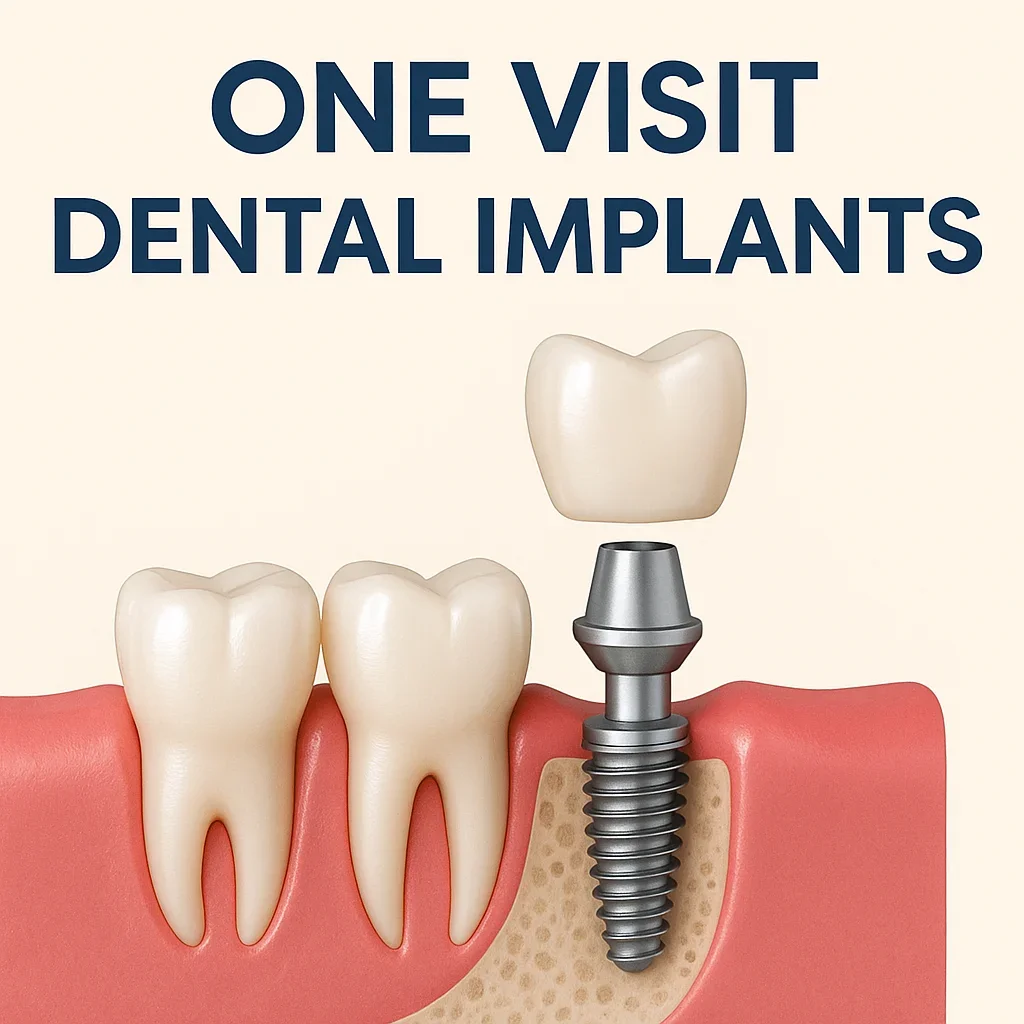
How to Choose the Best Clinic for One Visit Dental Implants
Selecting the right dental clinic for one visit dental implants is one of the most important decisions
you can make during your treatment journey. Same-day implants require advanced technology, exceptional surgical
skills, and comprehensive clinical experience. Not all dental centers offer this complex service, and those that
do may differ significantly in expertise, equipment, patient care, and long-term success rates. This detailed
guide will help you evaluate clinics based on essential criteria, ensuring that you receive safe, effective, and
high-quality treatment. 🌟🏥
The Importance of Clinical Expertise and Credentials
One of the first factors to examine is the qualifications of the implant dentist. Since
one visit dental implants involve immediate loading, precise angulation, and advanced assessment, the
dentist must be experienced in implantology and same-day restorative techniques. Look for indicators such as:
- Specialized training in implant dentistry
- Membership in dental implant organizations
- Proven experience with immediate-loading implants
- Case studies or before-and-after portfolios
Dentists with expertise in digital implant planning, CBCT interpretation, and CAD/CAM protocols are better
equipped to handle the complexities of same-day procedures. Their ability to anticipate challenges and adapt
treatment to your unique anatomy will significantly influence the final outcome.
Technology and Equipment: A Critical Factor
Clinics offering one visit dental implants must use advanced dental technologies that support accurate
planning and efficient same-day crown fabrication. These technologies include:
- CBCT scanners for 3D bone analysis
- Intraoral digital scanners
- CAD/CAM milling machines
- Computer-guided surgical systems
A clinic equipped with modern digital tools can deliver safer procedures, more predictable results, and
significantly faster treatment times. These technologies enable minimally invasive surgery, superior implant
placement accuracy, and aesthetically pleasing same-day restorations.
Why Technology Matters
Advanced equipment enhances:
- Diagnostic precision
- Implant stability
- Crown fit and aesthetics
- Surgical safety
Clinics relying on outdated tools may not be able to provide the level of accuracy required for
one visit dental implants.
Clinic Reputation and Patient Reviews
Reputation plays a crucial role in choosing the right provider. Patient reviews, testimonials, and
independently verified ratings give you a real-world glimpse into treatment quality, communication style, and
overall patient satisfaction.
When evaluating reviews, look specifically for comments about:
- Comfort during treatment
- Same-day crown aesthetics
- Post-operative care quality
- Long-term implant performance
Patients who received one visit dental implants will often describe how smoothly the process went and
how well the dentist managed expectations. Consistent positive feedback is a strong indicator that the clinic
prioritizes patient safety and high-quality outcomes.
Before-and-After Cases and Clinical Results
Reviewing real patient cases is one of the best ways to evaluate a clinic’s skills. Reputable clinics proudly
share before-and-after photos, videos, and detailed case descriptions. These examples show how effectively the
clinic has treated various implant scenarios—including single-tooth replacements, full-arch immediate implants,
and complex cases requiring bone assessment.
Pay attention to:
- Gum contour around the temporary crown
- Color and shape matching
- Alignment and bite integration
- Healing progress and stability over time
Well-documented cases demonstrate the clinic’s competence with one visit dental implants and help you
visualize potential outcomes for your own treatment.
Hygiene, Safety Standards, and Sterilization Protocols
A high-quality clinic must meet strict hygiene and sterilization standards. The safety of
one visit dental implants depends on maintaining a sterile environment during all stages of the
procedure—from scanning to surgery to crown placement.
During your consultation, observe the overall cleanliness of the clinic and ask about:
- Sterilization processes
- Use of disposable surgical drapes and tools
- Air purification systems
- Compliance with international health standards
Clinics that prioritize infection control minimize risks and improve surgical outcomes.
Communication, Aftercare, and Patient Support
Excellent communication is essential when undergoing same-day implant treatment. The clinic should clearly
explain the procedure, potential risks, healing expectations, and aftercare instructions. Strong patient
support ensures that any concerns are addressed promptly.
Look for clinics that offer:
- Thorough pre-treatment evaluations
- Detailed aftercare guidance
- Follow-up visits to monitor healing
- Emergency support if needed
Clinics that support patients during both the surgery and healing phases typically achieve better long-term
results with one visit dental implants.
Cost Transparency and Treatment Plans
Before committing to treatment, ensure the clinic provides a clear, itemized cost estimate. This should
include the implant, temporary crown, permanent restoration, imaging, and follow-up visits.
Transparent pricing helps you understand what you are paying for and prevents unexpected expenses.
High-quality clinics are confident in their work and offer straightforward financial details.
Availability of Comprehensive Services
Not all clinics provide full-service implant care. Some centers must outsource certain steps—like crown
fabrication or advanced imaging—to external labs or clinics.
For the best results, choose a clinic that performs all steps of one visit dental implants in-house.
This ensures faster treatment, better quality control, and improved communication among the clinical team.
Access to Trusted Information and Appointments
If you want to review clinical guidelines and standards in implant dentistry, refer to the
American Dental Association.
To schedule a personalized consultation or meet with a specialist, contact the clinic using the
Redent Klinik Contact Page.