
When it comes to restoring your smile, the options for dental implants available today are more advanced and versatile than ever before. Whether you’ve lost one tooth, several teeth, or need a full-mouth restoration, modern implant dentistry offers solutions that look, feel, and function just like your natural teeth. This comprehensive guide explains everything you need to know about the different options for dental implants, how they work, and which might be best suited for your individual dental needs. 🪥
Dental implants are artificial tooth roots made of biocompatible materials such as titanium or zirconia. They are surgically inserted into the jawbone to provide a strong foundation for crowns, bridges, or dentures. Over time, the implant fuses with your bone through a process called osseointegration, ensuring long-lasting stability and comfort. Because of this natural integration, implants are considered the gold standard in tooth replacement. Unlike traditional dentures, they do not slip, click, or require adhesives, offering an unmatched level of confidence and comfort.
Choosing among the various options for dental implants depends on several factors — including your bone density, oral health, number of missing teeth, and budget. For instance, if you’ve lost a single tooth, a single-tooth implant might be your best choice. If you’re missing multiple teeth, implant-supported bridges or dentures could provide a more cost-effective and efficient solution. Similarly, individuals who have significant bone loss might consider mini dental implants or undergo a bone graft before implant placement. Each option has unique advantages, making it essential to consult with an experienced implant dentist to determine the ideal solution for your specific case.
Modern dentistry has made remarkable progress, allowing for techniques such as All-on-4 and All-on-6 implants that replace an entire arch of teeth with just a few strategically placed implants. These innovative systems are transforming smiles worldwide, offering fast results and improved chewing power. Meanwhile, materials like zirconia have introduced metal-free alternatives that are both aesthetically pleasing and biocompatible. Each of these options for dental implants is designed to cater to different needs, whether aesthetic, functional, or budget-related, giving patients the freedom to choose what fits them best.
In terms of durability, dental implants can last 20 years or more with proper care — often a lifetime investment. Routine dental visits, good oral hygiene, and avoiding habits such as smoking can extend their lifespan significantly. Many patients find that dental implants improve their quality of life by restoring not just the appearance of their smile, but also their ability to eat comfortably and speak confidently. 🍎
According to the American Dental Association, implant dentistry continues to evolve with better materials and minimally invasive surgical techniques. This means faster healing, more predictable outcomes, and reduced discomfort. However, not all patients are immediately ready for implants. Sometimes, procedures like bone grafting or sinus lifts are required to strengthen the jawbone and ensure long-term implant success.
If you’re considering any of the options for dental implants, it’s important to schedule a consultation with a trusted professional. During the evaluation, your dentist will perform digital X-rays, 3D imaging, and assess your oral health to recommend the most suitable treatment plan. Whether you’re interested in full-mouth reconstruction or a single-tooth replacement, customized care ensures optimal results and lasting satisfaction. For expert guidance and personalized consultation, you can reach out through the Redent Klinik Contact Page.
Another key advantage of exploring the different options for dental implants is the opportunity to tailor your treatment to your aesthetic and functional goals. You might prefer a natural-looking zirconia crown for front teeth or a more cost-effective titanium base for molars. Additionally, advanced computer-guided surgeries make implant placement faster and more accurate than ever before. These modern approaches have made dental implants accessible to millions of patients worldwide, providing a life-changing alternative to traditional tooth replacement methods.
Ultimately, the best way to decide between the many options for dental implants is to understand your goals, expectations, and oral anatomy. While the process may seem complex, your implant specialist will walk you through every step, ensuring your comfort and satisfaction. From consultation to recovery, the journey toward a confident smile is well worth the investment. So whether you’re replacing one tooth or an entire set, the right implant solution can give you back the natural look, feel, and function you deserve. 🌟
In the sections that follow, we’ll dive deeper into each specific type of implant — from single-tooth implants to All-on-6 systems — so you can make an informed decision about your dental future. By the end of this guide, you’ll have a clear understanding of all your options for dental implants and how to choose the one that perfectly matches your lifestyle, goals, and budget.
What Are Dental Implant Options and How Do They Work?
Understanding the different options for dental implants begins with learning how these innovative restorations actually function. Dental implants are designed to replace missing teeth permanently by replicating both the visible crown and the unseen root structure. Unlike removable dentures or conventional bridges, implants fuse directly with the jawbone, creating a foundation that mimics the natural tooth in strength, durability, and appearance. This process not only restores chewing ability but also prevents bone loss, preserving the integrity of your facial structure. 🦷
The Basic Structure of Dental Implants
Each dental implant typically consists of three main components: the implant post, the abutment, and the dental crown. The implant post acts as an artificial root, made from biocompatible materials like titanium or zirconia, which integrates into the bone. The abutment connects the post to the visible part of the implant, while the crown serves as the replacement tooth, custom-designed to match the color, shape, and size of your surrounding teeth. Understanding these parts helps patients appreciate why options for dental implants can be customized for any dental condition — from a single missing tooth to a full arch restoration.
How Dental Implants Work in the Mouth
The success of dental implants depends on a biological process called osseointegration. After placement, the implant post fuses with the surrounding jawbone over several weeks or months. This fusion creates a stable anchor that supports biting, chewing, and speaking naturally. Once integrated, the implant acts like a natural tooth root, offering unmatched stability. It’s this unique mechanism that distinguishes implant-based restorations from other options for dental implants such as bridges or removable dentures.
The Step-by-Step Process of Dental Implant Placement
The journey toward a restored smile begins with a detailed evaluation. During this stage, your dentist or oral surgeon will use 3D scans and digital imaging to assess bone density, gum health, and alignment. This ensures that your selected options for dental implants align perfectly with your oral anatomy. The placement itself is typically performed under local anesthesia or sedation for comfort. The implant post is carefully inserted into the jawbone, and after a healing period — usually between three and six months — the abutment and crown are added. The result: a fully functional, natural-looking tooth that can last decades with proper care. 😁
Different Categories of Dental Implant Options
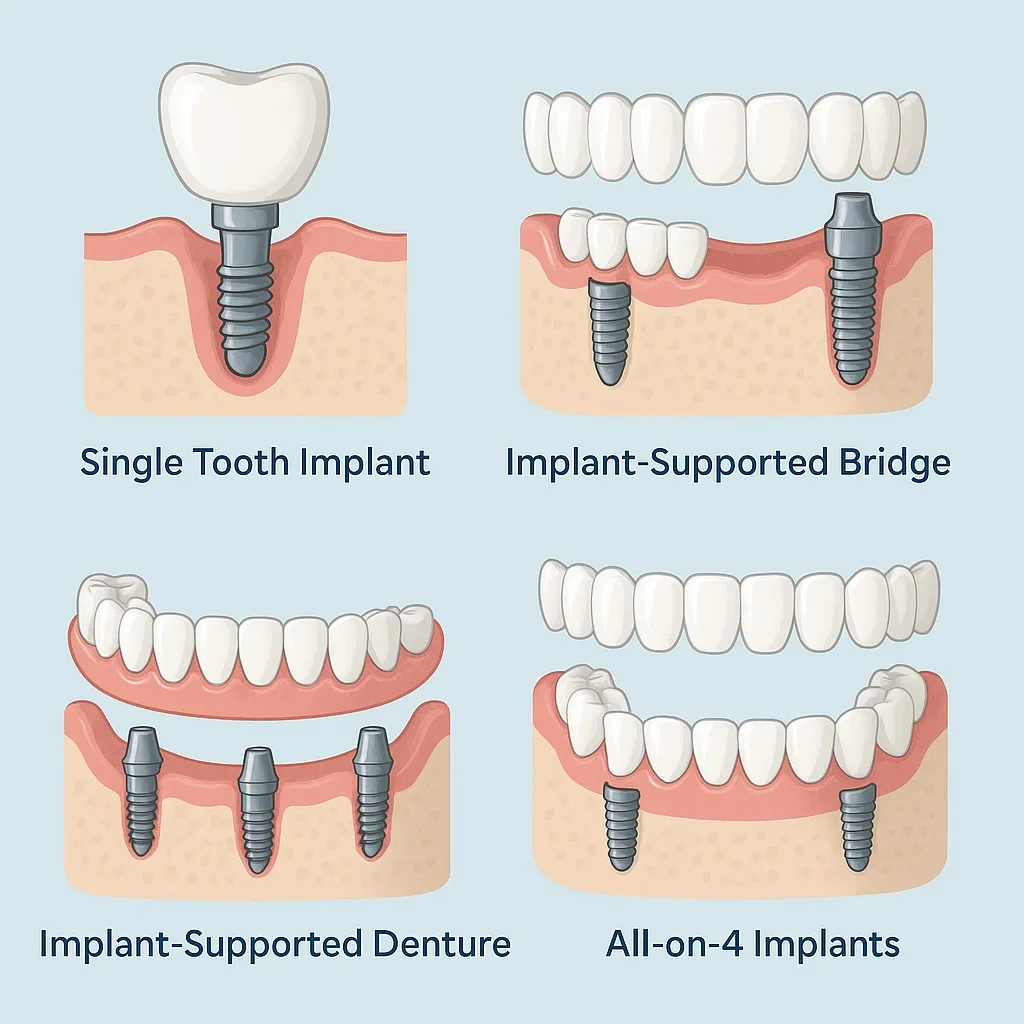
The available options for dental implants can be grouped into several categories depending on the number of teeth being replaced and the patient’s oral condition:
- Single-Tooth Implants: Ideal for replacing one missing tooth with a single implant and crown.
- Multiple Implants: Used when several teeth are missing, supporting bridges or partial dentures.
- All-on-4 or All-on-6 Systems: Designed to restore an entire arch of teeth using just four or six strategically placed implants.
- Mini Dental Implants: Smaller in diameter and suitable for patients with reduced bone mass.
- Implant-Supported Dentures: Offer greater stability and comfort compared to conventional removable dentures.
These various options for dental implants cater to different patient needs. Someone missing a single tooth may opt for a single implant, while another person seeking full-mouth reconstruction may choose an All-on-4 treatment. The flexibility and customization available make dental implants one of the most sought-after procedures in modern restorative dentistry.
Advantages of Dental Implant Technology
Implants go beyond aesthetics — they offer tangible health benefits. One of the most important is the prevention of jawbone resorption, a condition that occurs when bone tissue deteriorates after tooth loss. By stimulating the bone, implants maintain jaw strength and facial structure. Furthermore, the different options for dental implants allow patients to eat all kinds of food, from crunchy apples to steak, without discomfort or fear of movement. Because implants don’t rely on adjacent teeth for support, they also help preserve the natural enamel of neighboring teeth, enhancing long-term oral health.
Longevity and Success Rates
According to the American Dental Association, dental implants boast a success rate exceeding 95% when placed by qualified professionals and maintained properly. The durability of these systems largely depends on the patient’s oral hygiene, lifestyle habits, and adherence to regular dental checkups. Brushing twice a day, flossing daily, and avoiding smoking or excessive alcohol can prolong the lifespan of your implants dramatically. Most patients find that investing in any of the options for dental implants provides lifelong satisfaction and stability compared to temporary restorative alternatives.
Who Is a Good Candidate for Dental Implants?
While most adults qualify for implant procedures, certain factors influence candidacy. Patients must have healthy gums, adequate bone density, and be free from uncontrolled chronic diseases such as diabetes or autoimmune disorders. For those with insufficient bone, preparatory treatments like bone grafting or sinus lifts may be recommended to create a stable base for the implant. Consulting a professional implantologist at trusted clinics like Redent Klinik Contact Page ensures you get the most accurate assessment and tailored guidance regarding the best options for dental implants suited to your case.
Summary: Why Dental Implants Stand Out
Among all restorative treatments, dental implants represent the closest solution to regaining natural teeth. Their biocompatibility, comfort, and longevity make them a superior choice. By offering multiple options for dental implants, modern dentistry ensures that every patient — regardless of age or oral condition — can benefit from a strong, confident, and permanent smile. 🌟 Whether you need a single implant or a full-arch replacement, the right option can completely transform your dental health and overall well-being.
Single-Tooth Dental Implants: The Most Common Solution
Among the many options for dental implants, single-tooth implants remain one of the most popular and effective methods for replacing an individual missing tooth. They are the gold standard for restoring both aesthetics and function without affecting adjacent teeth. When a single tooth is lost due to decay, trauma, or gum disease, replacing it with an implant-supported crown ensures that your smile looks and feels completely natural. This section explores in depth how single-tooth dental implants work, their benefits, and why they are a cornerstone of modern restorative dentistry. 🦷
Understanding the Structure of a Single-Tooth Implant
Each single-tooth implant consists of three essential parts: the implant post, the abutment, and the dental crown. The post — typically made of titanium or zirconia — acts as a replacement root and is surgically embedded into the jawbone. Once the implant integrates with the bone through osseointegration, an abutment is attached on top, serving as the connector between the post and the crown. Finally, the crown, which is custom-made to match the surrounding teeth in color and shape, is secured to the abutment. This detailed structure ensures stability, durability, and a natural appearance — one of the reasons why single-tooth replacements are considered one of the most reliable options for dental implants.
The Procedure: Step-by-Step Guide
Getting a single-tooth dental implant typically involves multiple stages but is highly predictable and safe:
- Initial Consultation: The dentist performs a comprehensive oral exam, including digital X-rays or a 3D CBCT scan, to assess bone quality and gum health.
- Implant Placement: Under local anesthesia, the titanium post is carefully inserted into the jawbone. This minor surgical procedure usually takes about one hour.
- Healing Phase: Over the next 3–6 months, the implant fuses naturally with the bone tissue, providing a stable foundation.
- Abutment and Crown Placement: Once healed, the abutment and crown are attached, completing the restoration process.
This process, though gradual, ensures longevity and a natural bite function. Patients who choose this route among the options for dental implants often find the results transformative — restoring confidence, comfort, and oral health.
Materials Used in Single-Tooth Implants
The materials used play a critical role in the success and longevity of single-tooth implants. Titanium remains the most commonly used due to its strength, biocompatibility, and ability to integrate seamlessly with bone. However, zirconia implants have gained popularity for patients seeking metal-free solutions. They are white in color, highly aesthetic, and resist plaque buildup, making them an excellent choice for front-tooth replacements. Each material has its own benefits, and consulting with your dentist helps you choose the best material among the options for dental implants available today.
Advantages of Single-Tooth Dental Implants
There are numerous advantages to choosing single-tooth implants over traditional bridges or removable dentures:
- Preservation of Adjacent Teeth: Unlike dental bridges, implants don’t require grinding down neighboring teeth for support.
- Jawbone Protection: The implant stimulates the bone, preventing resorption and maintaining facial structure.
- Natural Aesthetics: Each implant is individually crafted to match your natural teeth in shape, color, and brightness.
- Longevity: With proper care, single-tooth implants can last a lifetime.
- Comfort and Stability: Implants are anchored securely in the bone, eliminating movement or discomfort common with dentures.
These benefits demonstrate why single-tooth implants are often the first recommendation among all options for dental implants for patients missing a single tooth. They offer both cosmetic and functional improvements that last decades, significantly enhancing quality of life. 🌟
Healing and Aftercare
After the implant procedure, proper aftercare is crucial. Mild swelling or sensitivity may occur in the first few days but usually subsides quickly. Dentists often recommend soft foods for the first week, followed by a gradual return to a normal diet. Brushing and flossing should continue as usual but with gentle care around the surgical site. Regular checkups ensure that the integration process is progressing smoothly. The high success rate of single-tooth implants — typically around 95% according to the American Dental Association — makes them one of the most trusted options for dental implants worldwide.
Candidacy for a Single-Tooth Implant
Not everyone is immediately eligible for this procedure. Ideal candidates have sufficient bone density and healthy gums to support the implant. Those who smoke heavily or have untreated periodontal disease may require additional treatment before implant placement. In some cases, bone grafting may be performed to strengthen the implant site. A professional consultation, such as one available at Redent Klinik Contact Page, can help determine suitability and customize a treatment plan among the many options for dental implants available.
Costs and Longevity Comparison
Although the upfront cost of a single-tooth implant may be higher than other methods, the long-term benefits often make it more economical. Unlike bridges, which may need replacement every 10–15 years, an implant can last a lifetime with proper care. When factoring in maintenance, comfort, and aesthetic longevity, single-tooth implants are among the most cost-effective options for dental implants available today.
Conclusion: The Smart Choice for Lasting Results
Single-tooth dental implants stand as a testament to the advancements of modern dentistry. They combine cutting-edge technology, aesthetic appeal, and durability to create the most natural and permanent tooth replacement solution. For patients seeking the most reliable, functional, and attractive outcome, single-tooth implants remain one of the best options for dental implants in the world. With professional care and proper oral hygiene, this solution offers not just a restored tooth but a renewed sense of confidence and joy in smiling. 😄
Multiple Teeth Implants: Restoring More Than One Smile
When several teeth are missing, the options for dental implants expand to include solutions specifically designed to restore multiple gaps efficiently. Whether teeth are lost in a row or in different parts of the mouth, modern implantology provides tailored treatment plans that replace multiple missing teeth with a natural look, perfect bite alignment, and long-term stability. Multiple teeth implants are more than just a cosmetic fix — they are a functional reconstruction that helps patients regain the ability to chew, speak, and smile confidently. 😁
Understanding Multiple Teeth Implant Systems
Multiple dental implants work by strategically placing two or more implant posts in the jawbone, which then support a bridge or a group of artificial teeth. Instead of placing one implant per missing tooth, dentists can use fewer implants to anchor several crowns — making this solution cost-effective and minimally invasive. Among all options for dental implants, this approach strikes the perfect balance between efficiency, durability, and natural aesthetics.
For example, if three adjacent teeth are missing, two implants can be used to support a three-unit bridge. This method reduces surgery time and overall cost while maintaining excellent strength and bone preservation. Unlike traditional bridges, no healthy teeth need to be ground down, preserving your natural tooth structure.
How the Process Works
The procedure for multiple teeth implants follows similar steps to a single-tooth implant but on a larger scale:
- Initial Evaluation: A comprehensive examination and 3D imaging help assess bone volume and gum health.
- Treatment Planning: The dentist maps out where each implant will be placed to optimize support and aesthetics.
- Implant Placement: Titanium or zirconia posts are surgically placed into the jawbone.
- Healing Period: The implants fuse with the bone through osseointegration, typically over several months.
- Bridge or Crown Attachment: Custom-designed restorations are secured to the implants, completing your new smile.
Patients considering these advanced options for dental implants can expect precision, comfort, and long-lasting functionality. The treatment is often done in stages to ensure perfect alignment and maximum bone integration.
Types of Multiple Teeth Implants
Depending on your oral condition and preferences, dentists may recommend one of the following options for dental implants to replace multiple missing teeth:
- Implant-Supported Bridge: Ideal for replacing three or more teeth in a row, supported by two or more implants.
- Partial Implant-Supported Denture: Designed for patients missing several teeth in different areas, offering a removable or fixed option.
- All-on-4 or All-on-6 Systems: Used for patients missing an entire upper or lower arch, requiring only four or six implants to hold a full bridge.
Each of these options for dental implants provides strength, functionality, and aesthetics that closely mimic natural teeth. The right choice depends on the number of missing teeth, bone structure, and budget considerations.
Materials and Technology Used
Just like single implants, multiple implants can be made from titanium or zirconia. Titanium remains the industry standard because it bonds naturally with bone and has exceptional longevity. Zirconia, on the other hand, is a metal-free, highly aesthetic material preferred by patients looking for a holistic or hypoallergenic solution. Computer-guided surgery and digital 3D scanning ensure each implant is placed with pinpoint accuracy, making these modern options for dental implants safer and more predictable than ever before.
Benefits of Replacing Multiple Teeth with Implants
The advantages of using multiple dental implants go beyond appearance. Patients often experience improved chewing function, speech clarity, and facial support. Let’s explore the key benefits:
- Enhanced Comfort: Unlike traditional dentures, implants are fixed in place and feel just like natural teeth.
- Bone Preservation: Implants stimulate bone growth, preventing facial sagging and bone loss.
- Long-Term Stability: With proper care, implants can last a lifetime, reducing the need for frequent replacements.
- Improved Oral Hygiene: Unlike bridges, implants allow easier cleaning between teeth and along the gumline.
- Better Confidence: A secure, stable smile helps restore self-esteem and natural expression. 🌟
Healing and Aftercare Tips
The healing phase after multiple implants varies by individual. Most patients can return to normal activities within a few days, though osseointegration continues over several months. During this time, maintaining oral hygiene is critical. Brush gently with a soft-bristled toothbrush, rinse with salt water, and avoid sticky or hard foods initially. Regular follow-ups with your dentist ensure smooth recovery and long-term success. For professional advice on aftercare or choosing between different options for dental implants, patients can visit the Redent Klinik Contact Page.
Comparing to Other Treatment Options
When compared to removable dentures or bridges, multiple implants stand out in every category — durability, aesthetics, comfort, and health benefits. Dentures can slip or cause sore spots, while bridges often compromise adjacent teeth. Implants, however, integrate fully with the jawbone, creating a permanent foundation that feels and functions like real teeth. According to the American Dental Association, implant-based restorations have a higher success rate and longer lifespan than traditional prosthetics, making them one of the best long-term options for dental implants.
Cost and Long-Term Investment
Although the initial cost of multiple implants may seem high, they are a one-time investment in oral health and aesthetics. Over the years, the durability and low maintenance needs of implants make them more economical compared to dentures that require frequent relining or replacement. Additionally, by preserving bone and preventing shifting teeth, multiple implants help maintain a balanced, youthful facial structure — a priceless benefit among the various options for dental implants.
Conclusion: The Power of a Complete Smile
Multiple teeth implants offer a life-changing solution for patients suffering from extensive tooth loss. They restore both functionality and beauty, allowing you to eat, speak, and smile without hesitation. Thanks to advanced technology and biocompatible materials, these implants provide results that last a lifetime. When considering the best options for dental implants, multiple implant systems are the ultimate choice for anyone seeking a complete, natural-looking, and confident smile. 🦷✨
All-on-4 and All-on-6 Implants: Full Mouth Restoration Explained
Among the most transformative options for dental implants, the All-on-4 and All-on-6 implant systems have revolutionized how patients regain a complete, confident smile after losing most or all of their teeth. These full-arch restoration methods allow an entire set of upper or lower teeth to be securely anchored using only four or six dental implants, making them efficient, stable, and cost-effective. Designed for maximum support and aesthetics, they are ideal for patients seeking permanent alternatives to removable dentures. 🦷✨
Understanding the All-on-4 and All-on-6 Concepts
The All-on-4 dental implant system uses four precisely placed implants to support a full arch of prosthetic teeth. Two implants are positioned vertically in the front, while the remaining two are placed at an angle in the back to maximize bone contact and stability. The All-on-6 system operates similarly but uses six implants, providing additional support for patients with higher bite forces or weaker bone density. Both systems are considered advanced options for dental implants that deliver full-mouth restoration without requiring an implant for every missing tooth.
These treatments are especially beneficial for patients who have suffered extensive bone loss or have previously used dentures. With the strategic placement of implants, even those with limited jawbone can often avoid bone grafting, reducing cost and healing time.
How the Procedure Works
The process begins with a thorough consultation and diagnostic imaging. Using 3D scans and digital impressions, your dentist or oral surgeon maps the precise locations for each implant. During the procedure, the implants are inserted into the jawbone, and a temporary fixed bridge is attached on the same day — often referred to as “teeth in a day.” After several months of healing and osseointegration, a permanent bridge made from durable materials such as zirconia or acrylic hybrid resin is fixed in place. This innovative approach makes the All-on-4 and All-on-6 systems two of the most efficient options for dental implants available today.
Advantages of Full-Arch Implant Systems
The benefits of All-on-4 and All-on-6 implants extend far beyond aesthetics. They combine medical precision, engineering innovation, and natural design to restore both form and function. Key benefits include:
- Immediate Results: Patients often leave the clinic with a new set of fixed teeth the same day.
- Stability and Comfort: Unlike traditional dentures, these implants never shift or cause sore spots.
- Bone Preservation: The implants stimulate bone tissue, preventing jawbone loss and facial collapse.
- Natural Feel: The fixed prosthesis allows natural chewing and speaking comfort.
- Long-Term Durability: With proper care, these restorations can last 20 years or more.
Because of these advantages, the All-on-4 and All-on-6 systems have become some of the most requested options for dental implants in modern restorative dentistry. 🌟
All-on-4 vs. All-on-6: Which Is Better?
Choosing between All-on-4 and All-on-6 depends on the patient’s jawbone density, oral health, and bite strength. The All-on-4 technique is often ideal for patients with limited bone structure or those seeking a faster recovery, as it requires fewer implants. The All-on-6 approach provides additional stability, distributing chewing forces more evenly across the jawbone. This is particularly advantageous for patients with a wider arch or higher bite pressure. A professional consultation — such as one available through the Redent Klinik Contact Page — ensures accurate evaluation and recommendation among these options for dental implants.
Technological Innovations in Full-Arch Implants
Digital dentistry has played a major role in advancing these implant solutions. Technologies like CBCT (Cone Beam Computed Tomography), intraoral scanning, and computer-guided surgery make the process more precise and comfortable. Virtual planning tools allow the dentist to visualize the bone structure in 3D, ensuring implants are placed in the most optimal positions. Additionally, 3D-printed surgical guides help execute the plan flawlessly during surgery. These innovations have made All-on-4 and All-on-6 implants two of the safest and most predictable options for dental implants worldwide.
Healing and Aftercare Guidelines
After surgery, most patients experience minimal discomfort and can resume normal activities within a few days. The healing phase, which allows osseointegration to complete, generally lasts 3–6 months. During this time, maintaining excellent oral hygiene and avoiding hard or sticky foods is crucial. Your dentist will schedule follow-up visits to monitor bone healing and adjust the temporary bridge if needed. Once the final prosthesis is attached, proper care involves regular brushing, flossing under the bridge, and routine professional cleanings. According to the American Dental Association, patients who maintain consistent oral hygiene experience implant success rates of over 95%, making these full-arch systems among the most reliable options for dental implants.
Cost and Long-Term Value
Although All-on-4 and All-on-6 implants may have higher initial costs compared to removable dentures, their longevity and stability make them a smart long-term investment. Traditional dentures require periodic relining or replacement, while implants offer permanent results with minimal maintenance. Moreover, they prevent bone loss and preserve facial aesthetics, reducing future dental expenses. The combination of comfort, confidence, and durability places these systems among the most cost-effective options for dental implants in the long run.
Ideal Candidates for All-on-4 and All-on-6 Implants
These treatments are perfect for individuals who have lost most or all teeth, wear loose dentures, or seek a permanent full-mouth solution. Candidates should have adequate bone density, healthy gums, and realistic expectations. Even if bone loss has occurred, advanced surgical methods like angled placement and graft-free techniques can make these options for dental implants accessible to many patients who were previously ineligible for traditional implants.
Conclusion: A New Smile in One Day
The All-on-4 and All-on-6 implant systems are breakthroughs in modern implantology, giving patients the opportunity to enjoy a fixed, natural-looking smile within a single day. With precision-guided technology, high-quality materials, and expert craftsmanship, these treatments provide unmatched results in aesthetics, functionality, and confidence. If you are searching for permanent, stable, and life-changing options for dental implants, the All-on-4 or All-on-6 procedure may be your path to a renewed smile and improved quality of life. 🪥
Mini Dental Implants: Affordable and Less Invasive Alternatives
When exploring different options for dental implants, one of the most innovative and budget-friendly solutions available today is the mini dental implant (MDI). These implants are smaller in diameter than traditional implants, typically ranging from 1.8 mm to 3.3 mm, and are designed for patients who may lack sufficient bone density or prefer a less invasive treatment. Despite their reduced size, mini dental implants deliver impressive stability, functionality, and aesthetic results — making them a powerful option for restoring confidence and oral function. 🦷
What Are Mini Dental Implants?
Mini dental implants work on the same principle as conventional implants but are smaller and simpler to place. They consist of a single-piece titanium screw with a ball-shaped head that connects directly to the replacement tooth or denture. Because of their compact design, mini implants can often be placed without the need for extensive surgery or bone grafting, reducing healing time and discomfort. Among all the options for dental implants, they stand out for their minimal invasiveness and quick recovery process.
Ideal Candidates for Mini Dental Implants
Mini dental implants are suitable for patients who have:
- Insufficient bone mass for standard implants.
- Loose or unstable dentures requiring extra support.
- Medical conditions that make traditional implant surgery risky.
- A desire for faster, more affordable treatment.
They are especially beneficial for elderly patients or those who have experienced bone resorption due to long-term tooth loss. For many, mini implants offer the ability to enjoy a stable and comfortable bite without undergoing complex surgical procedures. These benefits make them one of the most accessible options for dental implants in modern dentistry.
How the Mini Dental Implant Procedure Works
The placement of mini implants is straightforward and minimally invasive, often performed under local anesthesia in a single visit:
- Consultation and Imaging: The dentist performs digital scans or X-rays to assess bone structure and determine ideal implant placement.
- Implant Placement: Small pilot holes are created in the jawbone, and the titanium implants are gently screwed into position.
- Attachment of Prosthetic: A custom crown, bridge, or denture snaps securely onto the implants, providing immediate functionality.
Because no incisions or sutures are typically required, patients can often resume normal activities within 24 to 48 hours. This simplicity distinguishes mini implants from other options for dental implants that require more extensive healing and multiple appointments. 😁
Benefits of Mini Dental Implants
The advantages of mini dental implants are numerous, making them an increasingly popular choice for both patients and dental professionals:
- Minimally Invasive: No major surgery or sutures are needed, reducing discomfort and recovery time.
- Immediate Function: In many cases, teeth or dentures can be attached on the same day.
- Bone Preservation: The implants help stimulate bone tissue, slowing down further resorption.
- Affordability: Mini implants generally cost 30–60% less than standard implants, making them one of the most cost-effective options for dental implants.
- Improved Comfort: They eliminate the slipping or clicking common with traditional dentures.
Patients often report a dramatic improvement in quality of life after receiving mini implants. The enhanced stability allows for better chewing efficiency, clearer speech, and renewed confidence when smiling. 🌟
Comparing Mini Implants to Traditional Dental Implants
While mini implants share many advantages with their full-sized counterparts, there are notable differences to consider when evaluating options for dental implants:
| Feature | Mini Implants | Traditional Implants |
|---|---|---|
| Diameter | 1.8 – 3.3 mm | 3.5 – 6 mm |
| Surgery Type | Minimally invasive, often flapless | Requires full surgical procedure |
| Healing Time | Days to weeks | 3 – 6 months |
| Bone Graft Needed | Rarely | Sometimes required |
| Cost | Lower | Higher |
As seen in this comparison, mini implants offer a simpler, more affordable route for many patients — but they may not be suitable for all cases. For example, patients with strong bite forces or extensive missing teeth may still benefit more from larger, conventional implants. Consulting with an experienced specialist is key to selecting the right choice among the available options for dental implants.
Longevity and Maintenance
Mini dental implants can last many years with proper care. Maintaining excellent oral hygiene is crucial — brushing twice daily, flossing, and scheduling regular dental checkups help ensure the implants remain healthy and stable. Patients should also avoid habits like smoking or excessive teeth grinding, which can shorten the lifespan of the implants. According to the American Dental Association, implants in general have a success rate of over 90%, and mini implants are no exception when properly maintained.
When to Choose Mini Implants
Mini dental implants are ideal when patients prioritize a quick, cost-effective, and minimally invasive solution. They are particularly effective for stabilizing lower dentures, replacing small teeth (like incisors), or filling narrow gaps where traditional implants cannot fit. However, they may not be recommended for patients needing large molar replacements due to higher chewing pressures. For expert evaluation and personalized care, scheduling a consultation through the Redent Klinik Contact Page ensures that you select the most suitable options for dental implants for your unique needs.
Potential Drawbacks
While mini implants provide excellent results, they do have limitations. Their smaller size means less surface area for bone integration, which may affect durability under heavy stress. In some cases, they are better suited as temporary solutions or as supportive fixtures for dentures rather than full replacements for large teeth. Nonetheless, advances in material strength and placement technology continue to enhance their success rates.
Conclusion: Small Implants, Big Benefits
Mini dental implants prove that smaller doesn’t mean weaker. Their convenience, affordability, and quick recovery make them a powerful choice for patients seeking reliable and lasting tooth replacement. As one of the most flexible options for dental implants, they open the door for many individuals who previously couldn’t undergo traditional implant surgery. With the right dental care and expert supervision, mini implants can deliver long-lasting comfort, function, and a radiant smile for years to come. 😄
Zirconia vs. Titanium Implants: Which Material Is Best?
When evaluating the many options for dental implants, one of the most important decisions patients face is choosing the right implant material. The two leading contenders — titanium and zirconia — both have distinct advantages and characteristics. Each offers a different approach to biocompatibility, strength, and aesthetics, making the choice between them highly dependent on personal goals and dental conditions. In this section, we will break down the differences in detail so you can make an informed, confident decision about which type of implant suits you best. 🦷
Understanding Titanium Dental Implants
Titanium implants have been the gold standard in implant dentistry for over 50 years. This metal is lightweight, highly durable, and integrates naturally with the bone through a process known as osseointegration. Because of their long track record of success, titanium implants remain one of the most trusted options for dental implants worldwide. Their design typically includes a two-piece system — a screw-like implant post and an abutment — allowing flexibility for angled placement and restorative customization.
Advantages of Titanium Implants
- Proven Longevity: Titanium implants can last 25 years or longer with proper care.
- Excellent Bone Fusion: Titanium’s natural ability to bond with bone ensures long-term stability and strength.
- Durability Under Stress: They are highly resistant to chewing forces and ideal for molar replacements.
- Cost-Effective: Titanium implants are often more affordable than zirconia, making them one of the most practical options for dental implants.
Despite being metallic, titanium’s surface is typically treated to promote bone growth and prevent corrosion. It has an exceptional safety record, with rare allergic reactions. However, some patients seeking a completely metal-free solution might prefer an alternative like zirconia.
Introducing Zirconia Dental Implants
Zirconia implants represent a newer generation of metal-free dental restorations. Made from zirconium dioxide, a strong ceramic material, these implants are designed to match the natural color of teeth and gums, providing superior aesthetics — especially for front-tooth replacements. Zirconia is also biocompatible, hypoallergenic, and corrosion-resistant, which makes it one of the most advanced options for dental implants available today.
Advantages of Zirconia Implants
- Natural Aesthetics: The white color of zirconia blends seamlessly with natural teeth and gums.
- Biocompatibility: Perfect for patients sensitive or allergic to metals.
- Low Bacterial Adhesion: Zirconia surfaces resist plaque accumulation better than titanium.
- One-Piece Design: Reduces the risk of micro-gaps and bacterial infiltration around the gumline.
Because zirconia implants are one-piece, they eliminate the need for an abutment screw, reducing the number of components and potential weak points. This design also simplifies the healing process and minimizes the risk of gum irritation. 🌿
Comparing Zirconia and Titanium: Key Differences
To help you decide between these two major options for dental implants, the following comparison outlines their primary distinctions:
| Feature | Titanium Implants | Zirconia Implants |
|---|---|---|
| Material Type | Metal Alloy (Titanium) | Ceramic (Zirconium Dioxide) |
| Color | Metallic Gray | Tooth-Colored White |
| Design | Two-Piece (Implant + Abutment) | Typically One-Piece |
| Durability | Extremely High (Long-Term Proven) | High (Still Evolving) |
| Allergy Risk | Very Low | None (Completely Metal-Free) |
| Aesthetics | Can Show Through Gums in Thin Tissue | Excellent, Natural Appearance |
While titanium remains the standard due to its mechanical strength and versatility, zirconia implants are rapidly gaining popularity among patients seeking holistic or metal-free dental care. Both materials are reliable, and the choice often depends on the patient’s individual needs, budget, and aesthetic preferences.
Longevity and Performance Comparison
Research shows that titanium implants have an average success rate above 95%, according to the American Dental Association. Zirconia implants, although newer, have demonstrated comparable short- and mid-term success rates of 90–95%. Titanium is more forgiving under heavy chewing pressure, while zirconia offers superior aesthetics and lower plaque retention. Both materials represent excellent options for dental implants when placed by skilled professionals.
When to Choose Each Type
The decision between zirconia and titanium implants should be guided by your unique oral health condition and personal preferences:
- Choose Titanium if you require full-arch restoration, need implants in high-bite areas, or prefer long-term proven results.
- Choose Zirconia if you prioritize aesthetics, are sensitive to metals, or prefer a holistic and biocompatible approach.
Patients with gum recession or thin tissue in the front teeth region may prefer zirconia for its color-matching capability. Meanwhile, those seeking multi-unit restorations — such as All-on-4 or All-on-6 systems — typically benefit from the strength and modular flexibility of titanium. Consultation with a professional implantologist at Redent Klinik Contact Page ensures the best recommendation among these options for dental implants.
Technological Developments in Implant Materials
Modern implant research continues to refine both materials. Titanium surfaces are now treated with nano-coatings and laser texturing to enhance osseointegration and bone regeneration. Zirconia implants, meanwhile, are being reinforced with yttria-stabilized ceramics for greater fracture resistance. These innovations ensure that both materials remain at the forefront of the most reliable options for dental implants today.
Conclusion: Finding the Perfect Balance
Both zirconia and titanium implants represent outstanding breakthroughs in dental restoration. Titanium leads in strength and long-term performance, while zirconia excels in aesthetics and biocompatibility. The best choice depends on your clinical needs, lifestyle, and expectations for appearance. Whether you prefer the tried-and-true durability of titanium or the modern elegance of zirconia, both materials offer dependable, safe, and long-lasting options for dental implants that can restore your smile and confidence for decades to come. 😄
Zirconia vs. Titanium Implants: Which Material Is Best?
When evaluating various options for dental implants, one crucial decision is selecting the right material — titanium or zirconia. These two leading materials differ in composition, aesthetics, and biological behavior, but both offer exceptional long-term outcomes when placed correctly. Understanding their advantages and limitations helps patients choose the best implant solution based on their oral health needs, budget, and personal preferences. 🦷
What Are Titanium Dental Implants?
Titanium implants have been used successfully in dentistry for more than five decades. Titanium is a biocompatible metal known for its strength, durability, and excellent ability to fuse with human bone through a process called osseointegration. Because of these properties, titanium remains one of the most reliable options for dental implants used worldwide. The typical titanium system consists of two parts — the implant post and the abutment — allowing flexible treatment for different anatomical and aesthetic requirements.
Main Benefits of Titanium Implants
- Proven Track Record: Titanium implants boast a success rate exceeding 95%, according to the American Dental Association.
- Exceptional Durability: Capable of withstanding high bite forces, they are ideal for molar restorations.
- Strong Osseointegration: Titanium naturally integrates with bone tissue, ensuring lasting stability.
- Cost-Effective Choice: Among all options for dental implants, titanium is generally more affordable and widely available.
Another key advantage is titanium’s flexibility. Two-piece designs allow angled placement and easy repair if complications occur. However, because titanium is metallic gray, it may show slightly under thin gums, which is why some patients prefer ceramic alternatives like zirconia for highly visible areas.
Understanding Zirconia Dental Implants
Zirconia implants are the most advanced non-metal alternative available today. Made from zirconium dioxide, a strong white ceramic material, they offer an aesthetic, hypoallergenic, and corrosion-resistant solution for patients seeking metal-free options for dental implants. Zirconia’s one-piece structure eliminates micro-gaps between components, reducing bacterial buildup around the gumline and promoting healthier soft tissue response.
Advantages of Zirconia Implants
- Superior Aesthetics: The tooth-colored material blends naturally with surrounding teeth and gums.
- Biocompatibility: Ideal for patients with metal sensitivities or allergies.
- Resistance to Plaque: Zirconia’s smooth surface resists bacterial adhesion better than titanium.
- Corrosion-Free and Hypoallergenic: No risk of metal ions or galvanic reactions.
Because zirconia implants are metal-free, they appeal strongly to holistic patients and those seeking completely aesthetic, tissue-friendly restorations. They have become one of the fastest-growing options for dental implants in cosmetic dentistry. 🌿
Detailed Comparison Between Titanium and Zirconia
The following comparison summarizes the practical differences between the two most common implant materials used in modern restorative dentistry:
| Feature | Titanium Implants | Zirconia Implants |
|---|---|---|
| Material | Metal Alloy (Titanium) | Ceramic (Zirconium Dioxide) |
| Color | Gray Metallic | White, Tooth-Colored |
| Design | Two-Piece (Implant + Abutment) | Usually One-Piece |
| Bone Integration | Excellent and Well-Studied | Very Good (Newer Technology) |
| Flexibility for Angulation | High | Limited |
| Allergy Risk | Extremely Rare | None |
| Aesthetic Result | Good (May Show Through Thin Gums) | Excellent (Natural Appearance) |
Longevity and Clinical Success
Titanium implants have a documented lifespan of more than 25 years, while zirconia implants — being newer — show promising results for 10–15 years and continue to improve with technological advancements. Studies demonstrate that both materials maintain bone stability and gum health, confirming that they are equally viable options for dental implants when chosen for the right patient profile.
Which Material Should You Choose?
The decision between zirconia and titanium depends on factors such as oral health, bite force, and aesthetic expectations. Titanium remains preferred for full-mouth restorations or posterior teeth because of its mechanical strength. Zirconia, on the other hand, excels in anterior regions where appearance matters most. Patients seeking holistic or allergy-free treatments tend to favor zirconia.
- Choose Titanium: If you want proven long-term reliability and strength under heavy chewing.
- Choose Zirconia: If you prioritize natural aesthetics, metal-free treatment, and gum harmony.
Scheduling a professional consultation through the Redent Klinik Contact Page allows an implantologist to perform 3D imaging, evaluate bone density, and recommend the best match among your options for dental implants.
Ongoing Innovations in Implant Materials
Modern implantology continues to enhance both materials. Titanium implants now feature nano-textured and laser-modified surfaces to accelerate osseointegration, while zirconia implants are reinforced with yttria for added strength and flexibility. These improvements make both materials safer, more aesthetic, and longer-lasting, offering patients world-class options for dental implants regardless of their individual requirements.
Conclusion: Balancing Strength and Beauty
Both titanium and zirconia implants deliver reliable and lasting results, each excelling in different categories. Titanium remains unmatched for strength and longevity, whereas zirconia shines in aesthetics and biocompatibility. The best solution depends on your oral structure, health goals, and visual expectations. With expert guidance, patients can achieve optimal comfort, performance, and appearance by choosing the right material among the leading options for dental implants. 😄
How to Choose the Right Option for Dental Implants
Selecting the best choice among the many options for dental implants can be a life-changing decision that impacts both your oral health and overall quality of life. With modern advancements in implantology, patients now have access to multiple treatment types, materials, and techniques — each tailored to different needs and budgets. However, determining which implant system suits you best requires understanding several critical factors: bone quality, aesthetic goals, budget, lifestyle, and long-term maintenance. This section provides an in-depth guide to making an informed decision with confidence. 🦷
Step 1: Evaluate Your Oral Health Condition
The foundation for choosing the right implant option starts with a comprehensive dental examination. A professional implant assessment includes X-rays, CBCT (Cone Beam Computed Tomography), and gum evaluations. These diagnostics reveal bone density, jaw structure, and gum thickness — all of which determine the suitable options for dental implants for your case.
- Healthy Bone: Patients with sufficient bone can typically receive standard titanium or zirconia implants.
- Low Bone Density: Mini dental implants or bone grafting procedures might be necessary before full-size implants.
- Full-Arch Tooth Loss: Systems like All-on-4 or All-on-6 implants are ideal for restoring an entire arch efficiently.
Your oral surgeon or implant specialist will use these findings to recommend whether you need single-tooth, multiple, or full-mouth implants. This diagnostic phase ensures that your choice among the available options for dental implants aligns perfectly with your dental anatomy.
Importance of Bone Quality
Bone volume and density are critical to implant success. Strong bone offers better stability and quicker osseointegration. For patients with bone loss, treatments such as sinus lifts or bone grafting can restore sufficient structure to support implants. Discussing these possibilities early helps determine if advanced options for dental implants like mini or angled implants are necessary.
Step 2: Consider Your Aesthetic and Functional Goals
Each implant type offers unique benefits depending on your desired outcome. If aesthetics are your top priority, zirconia implants may be ideal because of their natural tooth-like color. If your focus is functionality and durability, titanium implants offer unmatched strength. For those missing many teeth, implant-supported bridges or All-on-4 systems provide a permanent, natural-looking solution. Understanding your expectations helps narrow down the most suitable options for dental implants that balance appearance and performance. 😁
Functional vs. Cosmetic Priorities
Patients often face a trade-off between aesthetics and structural resilience:
- Front Teeth (Cosmetic Zone): Zirconia or ceramic implants blend better with natural teeth.
- Back Teeth (Functional Zone): Titanium implants offer superior bite strength and longevity.
- Full-Mouth Restorations: All-on-4 or All-on-6 systems combine strength with natural appearance.
The right option balances both aspects — ensuring that the implants function perfectly while complementing your smile.
Step 3: Understand Budget and Long-Term Value
One of the most practical aspects when evaluating options for dental implants is understanding the cost-to-benefit ratio. While implant treatments require a higher initial investment than bridges or dentures, they last significantly longer and prevent further oral complications like bone loss or gum recession. Patients should also consider that implants rarely need replacement if properly maintained, making them more economical in the long run.
Typical Price Range (Global Estimates)
Costs can vary based on procedure complexity, materials used, and the number of implants required:
- Single-Tooth Implant: $1,000 – $3,000 per tooth
- All-on-4 Full Arch System: $10,000 – $25,000
- Mini Dental Implants: $500 – $1,500 per implant
While these figures vary regionally, investing in high-quality implants ensures long-term satisfaction. For individualized treatment plans and cost consultations, contact Redent Klinik Contact Page for expert assistance in choosing the most cost-effective options for dental implants.
Step 4: Check the Material and Technology Used
Material choice affects not only aesthetics but also biocompatibility and longevity. Titanium remains the most widely used due to its proven record of strength and integration with bone. Zirconia is ideal for patients with metal sensitivities or those seeking holistic, all-ceramic restorations. Additionally, modern technologies such as computer-guided surgery and 3D planning increase accuracy and comfort — ensuring predictable outcomes across all options for dental implants.
Role of Digital Dentistry
Computer-aided implant planning allows dentists to simulate the placement virtually, minimizing surgical risks. Guided surgery ensures precision, less pain, and faster recovery. CBCT imaging and intraoral scanning also help in designing crowns and bridges that fit perfectly and align naturally with existing teeth. These innovations make today’s implant procedures safer and more successful than ever before. 🌟
Step 5: Choose a Skilled and Experienced Implantologist
Even the best options for dental implants can fail without proper surgical skill. Therefore, choosing a qualified implantologist or oral surgeon is just as important as selecting the implant type. Look for professionals with proven experience, advanced technology, and a strong portfolio of successful implant cases. Verify certifications, read patient reviews, and schedule a consultation to discuss treatment goals, materials, and post-care options.
Questions to Ask Your Dentist
- Which implant system do you recommend for my condition, and why?
- Do I need preparatory treatments like bone grafting or sinus lifting?
- What materials will be used for the implant and crown?
- How long will healing take, and what follow-up care do you provide?
Open communication ensures you’re comfortable with the process and confident in the final choice among your options for dental implants.
Step 6: Evaluate Aftercare and Maintenance Requirements
Proper maintenance is essential to protect your investment. All implants require good oral hygiene — brushing twice daily, flossing, and visiting your dentist for professional cleanings. Avoid smoking and excessive alcohol consumption, as these can hinder healing and reduce implant lifespan. According to the American Dental Association, implants have a success rate of 95% or higher when maintained properly, making them one of the most reliable long-term dental solutions available.
Maintenance Tips
- Use non-abrasive toothpaste to avoid scratching the crown surface.
- Floss around the implant daily to remove plaque buildup.
- Schedule professional checkups at least twice a year.
- Report any discomfort or mobility immediately to your dentist.
Conclusion: Making an Informed, Confident Choice
Choosing the right implant is not just about replacing a missing tooth — it’s about restoring comfort, confidence, and long-term oral health. From single-tooth implants to full-arch restorations, there are diverse options for dental implants designed for every need and lifestyle. The best approach combines proper diagnosis, advanced technology, and expert care. By working closely with your dental professional, you can find a customized solution that gives you a strong, beautiful, and lasting smile for years to come. 😄
Long-Term Care and Maintenance for Dental Implants
Once you have chosen from the various options for dental implants and completed the placement procedure, proper care becomes the cornerstone of ensuring long-term success. Dental implants are designed to last for decades, and with diligent maintenance, many patients enjoy them for a lifetime. However, neglecting hygiene or skipping dental visits can lead to complications such as gum inflammation, bone loss, or peri-implantitis. This section provides a comprehensive, step-by-step guide on how to protect your investment and maintain your smile’s health and function for years to come. 🦷
Understanding Implant Longevity
Dental implants are one of the most durable and predictable tooth replacement methods available today. According to the American Dental Association, modern implants have a success rate exceeding 95%. Still, longevity depends heavily on daily care and lifestyle choices. Patients who follow their dentist’s recommendations typically see their implants lasting 20–30 years or longer. In contrast, neglecting hygiene routines or developing chronic gum disease can compromise even the best options for dental implants.
Factors Affecting Implant Lifespan
- Oral Hygiene Habits: Consistent brushing, flossing, and rinsing prevent plaque buildup around implants.
- Diet and Nutrition: Balanced diets rich in calcium and vitamin D promote bone stability and implant health.
- Lifestyle Choices: Smoking, alcohol abuse, and poor sleep patterns can all hinder osseointegration.
- Professional Care: Regular dental visits help detect and address early signs of inflammation or damage.
Ultimately, implant care is a lifelong partnership between the patient and their dental professional. The most successful options for dental implants combine precise placement with patient discipline in maintenance. 🌟
Daily Oral Care Routine for Implants
Proper oral hygiene is the single most important step to keep implants healthy. Just like natural teeth, implants require cleaning above and below the gumline to prevent infection and plaque accumulation.
Step-by-Step Implant Care Routine
- Brush Twice Daily: Use a soft-bristled toothbrush and non-abrasive toothpaste. Electric brushes can improve plaque removal around implant crowns.
- Floss Once Daily: Specialized implant floss or water flossers are ideal for cleaning between the prosthetic crowns and gumline.
- Rinse with Antimicrobial Mouthwash: This helps control bacteria and maintain gum health.
- Regular Checkups: Visit your dentist at least twice a year for cleaning and evaluation of your implant structure.
These daily practices are crucial for preserving all types of options for dental implants, including single-tooth, multiple-tooth, and full-arch restorations.
Recognizing and Preventing Common Complications
Even though implants have a high success rate, complications can arise if aftercare is overlooked. The most common issue is peri-implantitis, an infection that affects the tissues surrounding the implant. Early signs include swelling, redness, bleeding, or a persistent bad taste in the mouth.
How to Prevent Peri-Implantitis
- Maintain strict oral hygiene to prevent bacterial growth.
- Quit smoking, as it reduces blood flow and delays healing.
- Use interdental brushes to clean difficult-to-reach areas.
- Visit your dentist promptly if you experience tenderness or looseness around the implant.
Preventive care ensures that the chosen options for dental implants remain stable, functional, and free of infection for the long term.
Dietary Habits That Support Implant Health
Your nutrition plays a major role in how your body heals and maintains implant integrity. A diet high in vitamins, minerals, and proteins strengthens gum tissue and bone structure. Meanwhile, avoiding overly hard or sticky foods protects the implant crown from mechanical stress. 🍎
Recommended Foods
- Calcium-rich foods: Milk, cheese, yogurt, and leafy greens strengthen jawbone density.
- Vitamin D sources: Salmon, eggs, and sunlight exposure promote better bone healing.
- Soft proteins: Chicken, tofu, and lentils reduce chewing strain on new implants.
- Water intake: Staying hydrated helps maintain saliva flow, which neutralizes harmful acids.
Foods to Limit or Avoid
- Sticky candies and caramel that can pull on crowns.
- Hard nuts or ice cubes that can crack ceramic surfaces.
- Sugary drinks and sodas that encourage bacterial growth.
Maintaining a healthy diet supports faster healing and prevents potential complications across all options for dental implants.
Regular Professional Maintenance
Even with excellent at-home care, professional maintenance remains critical for implant longevity. During routine visits, your dentist will perform:
- Implant Cleaning: Specialized instruments remove plaque without scratching the implant surface.
- X-ray Examination: Monitors bone level and ensures no hidden inflammation or bone resorption.
- Crown and Abutment Check: Verifies that all connections remain tight and undamaged.
These evaluations allow early detection of problems, protecting your investment in the chosen options for dental implants.
Post-Treatment Follow-Up Schedule
- 1–2 weeks after surgery: healing check.
- 3 months: osseointegration evaluation.
- 6 months: prosthetic fitting and bite alignment check.
- Every 6 months thereafter: hygiene review and maintenance cleaning.
Following this schedule ensures continued success and comfort throughout your lifetime of implant use.
Lifestyle Adjustments for Implant Success
Your daily habits directly influence the health of your implants. Limiting alcohol, quitting smoking, and managing conditions such as diabetes all enhance implant survival. Additionally, wearing a mouthguard during sports or while sleeping (if you grind your teeth) can prevent mechanical damage to the crowns. Simple adjustments like these dramatically improve the durability of all options for dental implants.
Psychological and Confidence Benefits
Beyond physical health, maintaining implants has emotional advantages. Patients report feeling more confident, smiling more frequently, and enjoying better social interactions. Because implants function and appear like natural teeth, they eliminate the self-consciousness often associated with dentures or missing teeth. This emotional well-being further motivates patients to care for their new smiles diligently. 😄
Conclusion: Protecting Your Smile for Life
Long-term care is the final and most vital stage of implant success. Whether you’ve chosen single-tooth, All-on-4, or mini implants, every type among the available options for dental implants requires consistent hygiene, mindful lifestyle habits, and regular professional evaluations. By following the outlined maintenance routine and collaborating closely with your dental team, you can ensure your implants stay healthy, stable, and beautiful for decades. The reward — a confident, radiant, and fully functional smile — is well worth the effort. 🌟