
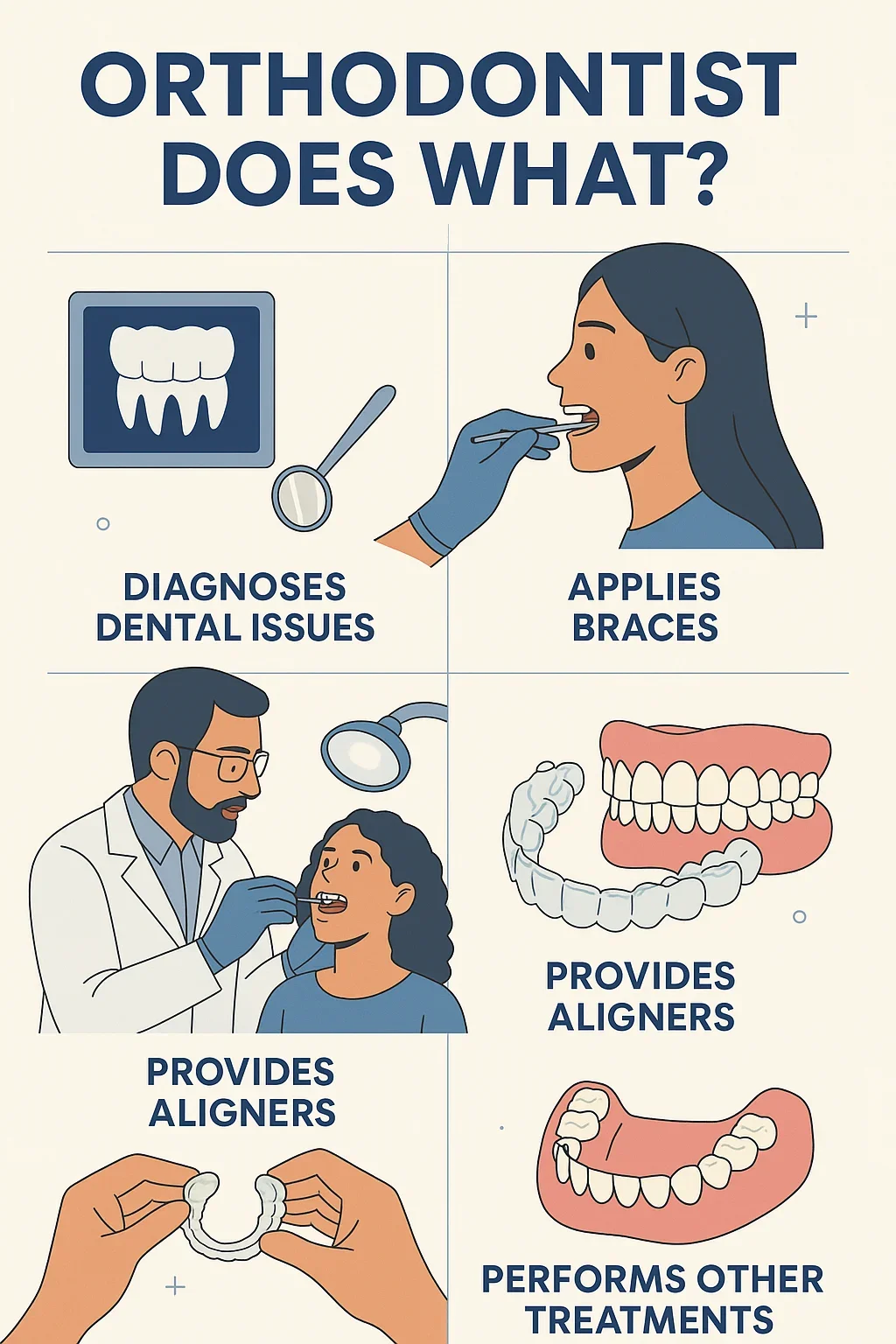
Many people wonder, “orthodontist does what?” when they hear the term for the first time. An orthodontist is a dental specialist who focuses on diagnosing, preventing, and correcting irregularities in the teeth and jaw. Whether it’s crooked teeth, misaligned bites, or gaps that affect confidence, orthodontists play a crucial role in creating healthy, beautiful smiles 😁. Understanding what an orthodontist does helps you make informed decisions about your oral health and long-term wellbeing.
When you visit an orthodontist, their primary goal is to align your teeth and jaws properly. This alignment is not just cosmetic—it directly impacts your ability to chew, speak, and maintain good oral hygiene. Properly aligned teeth are easier to clean and less prone to decay or gum disease. So, when people ask “orthodontist does what exactly?” the answer involves far more than simply straightening teeth. They enhance both functionality and appearance through advanced orthodontic methods like braces, aligners, and retainers.
In modern dentistry, orthodontists use cutting-edge technologies such as 3D imaging, digital impressions, and AI-driven planning tools to design customized treatment plans. These advancements ensure faster, more comfortable, and highly predictable results for every patient. A visit to an orthodontist typically begins with a comprehensive consultation where digital X-rays, photos, and impressions are taken to evaluate your dental and facial structure. Based on this assessment, the orthodontist identifies problems like overbite, underbite, crossbite, or crowding, then recommends a personalized plan to correct them effectively.
Unlike general dentists who handle a wide range of oral issues, orthodontists undergo additional years of specialized education focusing solely on the movement and positioning of teeth and jaws. They understand how each tooth’s position affects overall harmony in the mouth. This expertise ensures that after treatment, your bite not only looks great but functions optimally as well. Therefore, when thinking about “orthodontist does what,” it’s important to realize their impact goes beyond aesthetics—they’re also improving the mechanical efficiency of your mouth.
Common procedures performed by orthodontists include applying braces, installing clear aligners like Invisalign, and fitting retainers after treatment to maintain results. Braces, for instance, apply gentle pressure on teeth over time, guiding them into the right positions. Clear aligners serve the same purpose but are removable and nearly invisible, making them popular among adults seeking discreet orthodontic care. Orthodontists also treat complex jaw alignment issues that may require surgical collaboration to achieve balance between the upper and lower jaws. In every case, the objective remains the same—to create a smile that is both attractive and functionally sound.
Another vital part of what an orthodontist does involves monitoring facial growth and development in children and teens. Early intervention can prevent severe dental problems later in life. For example, interceptive orthodontics identifies issues like crowding or bite misalignment before permanent teeth erupt fully. Addressing these problems early ensures smoother, shorter, and often more affordable treatment in adulthood. For adults, orthodontic treatment can help correct long-standing bite issues that may have caused jaw pain, uneven wear on teeth, or even headaches.
When explaining “orthodontist does what”, it’s also essential to highlight their role in improving self-esteem. A straight, well-aligned smile has been linked to greater confidence and better social interactions. Patients frequently report positive changes not only in their appearance but also in their posture, speech clarity, and overall facial symmetry. These emotional and psychological benefits are just as valuable as the physical improvements gained from orthodontic treatment.
Orthodontists often work closely with other dental specialists to ensure holistic care. For instance, they may collaborate with periodontists for gum health or with oral surgeons in complex jaw cases. Their teamwork ensures that the patient receives a comprehensive solution rather than a temporary fix. The American Dental Association also emphasizes that orthodontic care should always be managed by certified specialists to ensure long-term oral health success. Choosing a qualified orthodontist means your treatment will be safe, effective, and aligned with professional standards.
If you’re considering improving your smile or correcting a bite problem, it’s best to consult an expert. You can easily reach out through the Redent Klinik Contact Page to schedule an appointment or ask questions about available treatment options. The specialists will guide you step-by-step, from your initial consultation to your final retainer fitting, ensuring your journey to a perfect smile is comfortable and well-informed.
In summary, when we answer the question “orthodontist does what?”, we see it encompasses diagnosing and treating dental misalignments, improving jaw balance, enhancing oral health, and boosting self-confidence. They blend science, technology, and artistry to transform smiles and improve lives. Whether through traditional braces or clear aligners, their ultimate mission is to help every patient achieve a healthier, more confident, and perfectly aligned smile that lasts a lifetime ✨.
Key Differences Between a Dentist and an Orthodontist
Many people often ask, “orthodontist does what differently than a dentist?” Understanding this distinction is essential before seeking treatment for your teeth or jaw. While both professionals care for your oral health, their focus, training, and treatment methods differ significantly. Every smile transformation involves teamwork, but orthodontists specialize in one key area—alignment and bite correction. Let’s dive deeper into how their roles contrast and complement each other 🦷.
Educational Path: Specialized Training Beyond Dentistry
The journey of becoming a dentist and orthodontist begins the same way—both complete a dental degree. However, after dental school, orthodontists undergo an additional two to three years of intensive specialty training. During this period, they focus exclusively on understanding how teeth move and how the jaw develops. So, when we ask “orthodontist does what?” from an educational perspective, the answer lies in this advanced training, which equips them to handle complex misalignments that general dentists typically refer out.
This specialized education allows orthodontists to use biomechanics, growth patterns, and facial aesthetics to plan treatments precisely. They learn how to predict the movement of each tooth, ensuring that the final results look natural and function perfectly. A general dentist, on the other hand, concentrates on broader aspects like cavities, gum health, root canals, crowns, and preventive care. Both roles are vital, but their expertise areas serve different patient needs.
Scope of Practice: Treatment Focus and Techniques
When comparing the scope of practice, the difference becomes clearer. Dentists are your first line of defense against decay and gum disease. They perform fillings, cleanings, extractions, and general checkups to maintain oral hygiene. An orthodontist, however, focuses on correcting misalignments and irregularities in teeth and jaws. In simple terms, if your teeth are healthy but crooked, or if your bite feels off, that’s when an orthodontist steps in.
Among the most common treatments an orthodontist provides are metal braces, ceramic braces, and clear aligners such as Invisalign. Each of these options gradually moves the teeth into their ideal positions. Orthodontists also design retainers to help maintain the results once treatment ends. So, when people wonder “orthodontist does what” in daily practice, the answer is simple yet powerful—they create harmony between appearance and function using precise, science-backed techniques.
Preventive and Corrective Care: The Dual Role
While many associate orthodontists with braces, their work extends far beyond that. They perform preventive care by detecting issues early—sometimes in children as young as six or seven years old. This stage, known as interceptive orthodontics, helps guide jaw growth and prevent severe future misalignments. On the corrective side, orthodontists handle complex bite problems, overlapping teeth, and jaw discrepancies in adults and teens. These conditions can affect chewing, speech, and even breathing patterns if left untreated.
Dentists may notice the signs of these issues during routine checkups but typically refer patients to orthodontists for advanced evaluation and correction. This collaborative approach ensures comprehensive oral care. The general dentist keeps your teeth healthy, while the orthodontist ensures they’re in the right place for long-term function and aesthetics.
Tools, Technology, and Diagnostic Methods
One of the most fascinating parts of understanding “orthodontist does what” lies in the technology they use. Orthodontists rely heavily on diagnostic tools such as 3D imaging, cephalometric X-rays, and digital scans to create precise treatment plans. These technologies map tooth positions and jaw movements with incredible accuracy, ensuring safe and effective outcomes. Dentists also use X-rays but primarily to identify cavities, infections, or structural issues. The orthodontist’s equipment, however, focuses on spatial relationships and how teeth interact within the mouth structure.
Modern orthodontic clinics also use AI-assisted software to simulate treatment progress and predict the final results before braces or aligners are applied. This innovation allows patients to visualize their new smiles even before treatment begins, making the process more engaging and motivating 😊. In contrast, general dentistry is more restorative in nature—filling cavities, repairing damage, and preventing decay—whereas orthodontics is both preventive and transformative.
Cosmetic vs. Functional Goals
Although both fields improve oral aesthetics, their core goals differ. Dentists enhance the appearance of teeth by whitening, bonding, or reshaping. Orthodontists, however, correct the underlying structural issues that cause misalignment. By aligning teeth and jaws, they ensure better function, easier cleaning, and more natural smiles. So, when considering the question “orthodontist does what compared to a dentist?”, it’s fair to say orthodontists fix the foundation while dentists polish the surface.
Another significant benefit of orthodontic correction is its long-term impact on health. Proper alignment reduces the risk of temporomandibular joint (TMJ) disorders, uneven tooth wear, and gum recession. A straight smile isn’t just attractive—it’s a sign of balanced oral mechanics. In contrast, dentists protect your teeth from decay and disease, ensuring that the foundation for orthodontic success remains strong.
Collaborative Care for Comprehensive Health
Both professionals often work hand in hand for complete dental wellness. A patient might visit a dentist first for cleaning or filling, then be referred to an orthodontist for alignment correction. Once treatment is complete, the dentist resumes regular maintenance and monitoring. This cooperation ensures you receive the most comprehensive dental care possible. For example, if your dentist recommends seeing a specialist, you can contact Redent Klinik Contact Page to book a consultation with an experienced orthodontist.
Summary: Why the Difference Matters
In summary, when exploring “orthodontist does what” and how they differ from dentists, the key takeaway is specialization. Dentists handle general oral care and disease prevention, while orthodontists focus solely on perfecting alignment and bite function. Both are essential for a healthy, confident smile. Understanding these distinctions empowers patients to seek the right professional for their needs, ensuring effective, lasting results. Whether through braces, aligners, or preventive orthodontics, the collaboration between dentists and orthodontists shapes the foundation of lifelong dental health. To ensure your treatment follows the highest professional standards, refer to trusted resources like the American Dental Association for verified information and guidelines 🩺.
Common Dental Problems an Orthodontist Treats
Many people associate orthodontics solely with braces, but when you look deeper into “orthodontist does what” in a clinical context, the scope is much broader. Orthodontists treat a variety of dental and skeletal problems that affect not only the alignment of teeth but also overall oral function and facial aesthetics. Their specialized expertise allows them to correct issues that general dentists may not have the tools or training to handle. These include crooked teeth, jaw misalignment, bite disorders, and developmental irregularities that can impact chewing, speech, and self-confidence.
Malocclusion: The Core of Orthodontic Problems
The term “malocclusion” refers to improper alignment of teeth and jaws, and it is the most common condition treated by orthodontists. When people ask “orthodontist does what?”, malocclusion correction is often at the top of the list. A properly aligned bite ensures even pressure distribution during chewing, reducing the risk of jaw strain and tooth wear. Malocclusion can manifest in several ways—overbite, underbite, crossbite, and open bite. Each type affects the jaw differently and requires a unique treatment approach.
Overbite and Underbite: When the Jaws Don’t Match
An overbite occurs when the upper front teeth excessively overlap the lower teeth, often giving a “buck-tooth” appearance. Conversely, an underbite happens when the lower jaw extends too far forward, causing the lower teeth to sit in front of the upper ones. These conditions not only impact appearance but also chewing efficiency and speech clarity. Orthodontists correct them using braces, elastics, or in severe cases, jaw surgery (orthognathic surgery). The correction process may take months or years, depending on the complexity, but the results lead to significant improvement in both function and aesthetics.
Crossbite and Open Bite: Hidden Functional Issues
A crossbite occurs when some upper teeth sit inside the lower teeth, which can lead to uneven wear and jaw discomfort. Meanwhile, an open bite refers to a space between upper and lower teeth when the mouth is closed, often caused by habits like thumb-sucking or prolonged pacifier use in childhood. When explaining “orthodontist does what”, these bite corrections highlight how orthodontics goes beyond cosmetic adjustments—it’s about restoring proper oral harmony and preventing long-term damage to teeth and gums.
Crowded and Spaced Teeth: Aesthetic and Functional Concerns
Crowding and spacing are among the most visible orthodontic issues. Crowded teeth overlap and twist because there’s not enough space in the jaw, making them harder to clean and more prone to plaque buildup, cavities, and gum disease. Orthodontists often use braces or aligners to gradually shift the teeth into their correct positions. In contrast, spacing occurs when there are gaps between teeth, often due to missing teeth, small tooth size, or an oversized jaw. Though many think these are purely cosmetic problems, they can also affect bite alignment and speech. The answer to “orthodontist does what for spacing issues?” involves using aligners, braces, or sometimes dental bonding in collaboration with cosmetic dentists.
Jaw Misalignment and Facial Symmetry Issues
Orthodontists don’t just straighten teeth—they also correct jaw discrepancies. When jaws are misaligned, it can lead to chronic pain, difficulty chewing, and asymmetrical facial appearance. Advanced treatments like palatal expanders, functional appliances, or even corrective jaw surgery may be used to balance facial proportions. These interventions help the upper and lower jaws grow harmoniously, especially in younger patients whose bones are still developing. Therefore, part of what defines “orthodontist does what” is their ability to influence skeletal growth for both health and aesthetics.
Temporomandibular Joint (TMJ) Disorders
Another issue frequently addressed in orthodontics is temporomandibular joint (TMJ) dysfunction. Misaligned bites can place excessive pressure on this joint, causing pain, headaches, and clicking sounds when opening or closing the mouth. Orthodontic treatments that correct alignment can significantly reduce or eliminate TMJ-related discomfort. This is a prime example of how orthodontics improves not just your smile but also your overall quality of life.
Impacted Teeth and Eruption Problems
Sometimes, teeth fail to erupt properly through the gums, becoming trapped or “impacted.” This most commonly affects wisdom teeth and canines. When untreated, impacted teeth may push neighboring teeth out of alignment or cause cysts. Orthodontists work in collaboration with oral surgeons to guide these teeth into position using brackets, elastics, or minor surgical procedures. For children and teens, early detection of eruption issues is one of the key aspects of what an orthodontist does, as timely intervention can prevent more invasive procedures later.
Posture and Breathing-Related Orthodontic Issues
Modern research has shown that orthodontic problems can sometimes influence posture and breathing patterns. A narrow palate or misaligned jaw may restrict airflow, contributing to mouth breathing or even mild sleep apnea. Through palatal expansion and bite correction, orthodontists can improve airway volume and breathing efficiency. This dimension adds another layer to understanding “orthodontist does what”: they contribute to overall systemic health, not just dental alignment. By optimizing facial structure, they indirectly support better oxygenation, posture, and even athletic performance in some cases 🏃♂️.
Holistic Benefits of Treating Dental Irregularities
Correcting these orthodontic problems has a ripple effect on the entire body. A balanced bite alleviates tension in the neck and shoulders, reduces headaches, and improves digestion by enabling proper chewing. Furthermore, aligned teeth are easier to maintain, reducing long-term dental costs and preventing periodontal issues. Orthodontic care thus serves as both a functional and preventive form of healthcare.
Patients seeking detailed evaluation or early orthodontic intervention can contact their local specialists through the Redent Klinik Contact Page. The clinic’s experts can identify hidden dental problems and craft a personalized treatment plan suited to each case. For professional guidelines and global standards, you can refer to the American Dental Association, which outlines evidence-based orthodontic practices recognized worldwide.
In conclusion, when we explore the question “orthodontist does what?”, the answer covers an extensive range of dental problems—from crowding and spacing to bite and jaw alignment issues. Orthodontists restore balance, function, and confidence to every smile. Their expertise ensures not only aesthetic beauty but also lifelong oral health, proving that orthodontic treatment is one of the most transformative investments you can make in yourself ✨.
Step-by-Step Process: What Happens During Your First Orthodontic Visit
For many patients, visiting an orthodontist for the first time can feel both exciting and overwhelming. You might wonder exactly what will happen, what the specialist will look for, and how soon treatment can begin. Understanding the entire process helps eliminate uncertainty and builds confidence. When you ask “orthodontist does what during the first visit?”, the answer involves much more than just a simple checkup — it’s a detailed, personalized assessment that sets the foundation for your future smile transformation.
Initial Consultation: The Foundation of Your Treatment Plan
Your first orthodontic appointment typically starts with an in-depth consultation. During this stage, the orthodontist gathers all necessary information about your oral and facial structure. They will review your dental and medical history, listen carefully to your concerns, and discuss your smile goals. Whether you’re dealing with crowding, spacing, or bite issues, this conversation helps the specialist understand your expectations and tailor the approach accordingly. When people ask “orthodontist does what in the consultation phase?”, it’s essentially about creating a complete diagnostic and treatment roadmap designed specifically for your needs.
Examination and Diagnostic Records
Next comes the physical and digital examination. The orthodontist performs a detailed evaluation of your teeth, gums, and jaw alignment. This often includes taking photographs, panoramic X-rays, and digital impressions or 3D scans of your mouth. These diagnostic records allow the orthodontist to analyze tooth positioning, bite relationships, and facial symmetry with extreme precision. The advanced technology ensures that every treatment step is data-driven and customized for the best possible results.
It’s during this stage that patients often get their first insight into how orthodontic treatment will work. The digital simulations may show how your teeth will look after treatment, giving you a clear vision of the outcome. This is one of the most motivating parts of the process 😁. By understanding each step, patients feel more confident and involved in their journey — a key reason why many find orthodontic care rewarding and exciting.
Treatment Discussion: Exploring Your Options
After the examination, the orthodontist reviews all findings and explains your treatment options in detail. Depending on your specific case, you may be offered traditional metal braces, ceramic braces, lingual braces, or clear aligners like Invisalign. The orthodontist will discuss the pros and cons of each, expected duration, and approximate cost. They’ll also address your questions regarding aesthetics, comfort, and maintenance. So, when we consider “orthodontist does what” in this step, it’s about helping patients make informed, confident decisions through education and transparency.
Customized Treatment Planning
Once you select your preferred treatment type, the orthodontist crafts a detailed plan outlining how your teeth will move over time. Using computer-assisted design software, they can predict the exact trajectory of each tooth’s movement. This ensures that your results are not only beautiful but also functional and stable. For example, if your bite needs correction, elastics or specialized appliances may be included in the plan. This precision-based approach distinguishes orthodontic treatment from generic cosmetic procedures — it’s science-backed and goal-oriented.
Financial Consultation and Scheduling
Before beginning any procedure, the clinic team discusses financial details, insurance coverage, and payment options. Many orthodontic offices offer flexible installment plans, making treatment accessible to more patients. Once everything is agreed upon, your follow-up appointment is scheduled for appliance placement. If you’re unsure about your local options, you can reach out through the Redent Klinik Contact Page to arrange a personalized consultation with experienced specialists.
Appliance Placement: The First Real Step Toward Change
When treatment officially begins, the orthodontist applies your braces or provides your first set of aligners. For braces, this involves bonding brackets to each tooth and connecting them with an archwire, which gradually exerts gentle pressure to move the teeth. For aligners, you’ll receive a series of transparent trays designed to shift your teeth incrementally. The orthodontist will teach you how to clean and maintain these appliances properly to ensure optimal results. This stage marks the true beginning of your orthodontic journey and is often accompanied by excitement and anticipation 🎉.
Understanding Discomfort and Adaptation
It’s normal to feel mild soreness or tightness after the initial fitting. This is a sign that your teeth are beginning to move into better positions. The orthodontist will provide tips to manage discomfort, such as using orthodontic wax or taking mild pain relief if needed. During this adaptation period, patients should maintain soft diets and practice gentle brushing and flossing techniques. Understanding how to care for your mouth early on is vital for long-term success.
Follow-Up Appointments and Progress Tracking
Regular checkups are an integral part of orthodontic care. Depending on the treatment type, visits are scheduled every 4–8 weeks. During these sessions, the orthodontist adjusts wires, replaces aligners, or modifies appliances to maintain steady progress. Monitoring ensures that your teeth move as planned and that no unexpected complications occur. Patients frequently ask “orthodontist does what during follow-ups?” — and the answer lies in fine-tuning every small detail to achieve precision alignment and comfort.
Modern clinics use digital software to compare your current progress with projected outcomes, helping both the doctor and patient stay motivated. These progress reviews also allow for early detection of issues such as bracket detachment, slow movement, or gum inflammation, ensuring timely intervention.
Aftercare Instructions and Long-Term Planning
At the end of the first visit, you’ll receive personalized instructions about maintaining oral hygiene during treatment. This may include brushing techniques, floss threader use, and dietary restrictions. Clear aligner patients are advised on wear time (usually 20–22 hours daily) and proper storage. These guidelines are crucial for preventing stains, cavities, and gum issues while undergoing orthodontic correction.
Patients are also encouraged to stay consistent and report any issues immediately. Orthodontic success relies on partnership between doctor and patient — both must commit to the process. This is why clinics like Redent Klinik emphasize education and support at every stage. For further professional guidance, the American Dental Association offers reliable information about maintaining dental health during orthodontic care.
Summary: What to Expect and Why It Matters
In summary, when answering the question “orthodontist does what during your first visit?”, the answer encompasses comprehensive evaluation, personalized planning, and hands-on guidance. From digital diagnostics to treatment customization, every step is designed to ensure comfort, clarity, and success. This first meeting sets the tone for a transformative experience that leads to improved confidence, functionality, and oral health. By fully understanding the process, you’ll enter treatment with confidence — knowing that every adjustment, every scan, and every appointment brings you one step closer to the smile of your dreams ✨.
Popular Orthodontic Treatments Explained (Braces, Aligners & More)
When patients wonder “orthodontist does what” in practical terms, the answer often lies in the types of treatments they perform. Orthodontic care has evolved far beyond the traditional metal braces of the past. Today’s specialists use advanced materials, digital imaging, and personalized treatment plans to provide efficient, comfortable, and aesthetic solutions. Whether you need braces, aligners, or specialized devices, every option is designed to create the perfect harmony between your teeth, jaws, and smile 😁.
Traditional Metal Braces: The Classic and Reliable Choice
Metal braces remain the most recognized orthodontic treatment worldwide. They consist of small brackets bonded to the teeth and connected by an archwire. The wire applies gentle pressure that gradually moves the teeth into proper alignment. Despite being the oldest method, modern braces are smaller, lighter, and more efficient than ever before. They also allow orthodontists to achieve precise control over tooth movement, which makes them ideal for complex cases like severe crowding or jaw misalignment.
When you ask “orthodontist does what with braces?”, the answer includes regular adjustments to tighten or replace the wire, ensuring consistent progress. Patients typically visit every 4–6 weeks for minor corrections. Today’s braces can even feature colored bands for a fun, customized look — particularly popular among younger patients. While some people may prefer more discreet options, metal braces remain a gold standard in orthodontic reliability.
Advantages of Metal Braces
- Highly effective for complex misalignments and bite issues.
- Durable and resistant to most forms of damage.
- More affordable compared to newer technologies.
- Offer predictable, long-lasting results when maintained properly.
Ceramic Braces: Aesthetic and Subtle Correction
For patients who prefer a more discreet look, ceramic braces provide a perfect balance between effectiveness and appearance. These braces use tooth-colored or clear brackets that blend seamlessly with natural enamel. Functionally, they work just like metal braces, applying continuous pressure to reposition the teeth over time. The key difference is cosmetic — making them ideal for adults or professionals who want to maintain a natural-looking smile throughout treatment.
However, ceramic braces require extra care since their brackets are more fragile and can stain without proper hygiene. The orthodontist provides special cleaning instructions and may recommend avoiding highly pigmented foods and drinks like coffee, red wine, and turmeric-based meals. Understanding how “orthodontist does what” with these braces helps patients appreciate the delicate balance between aesthetics and effectiveness.
Lingual Braces: Hidden but Powerful Treatment
Lingual braces represent one of the most advanced orthodontic techniques available today. These braces are attached to the back (lingual) surfaces of the teeth, making them virtually invisible from the front. Despite their hidden placement, they perform the same corrective function as traditional braces. They are custom-made for each patient using digital impressions, which ensures a precise and comfortable fit.
When patients ask “orthodontist does what differently with lingual braces?”, the answer lies in their placement technique and customization. Each bracket is uniquely contoured to match the inside shape of your teeth. Because of their complexity, lingual braces are usually reserved for adults who prioritize invisibility while correcting alignment. Though slightly more expensive, they deliver exceptional aesthetic results without compromising effectiveness.
Pros and Considerations
- Completely invisible during normal speech or smiling.
- Custom-tailored to each patient’s mouth.
- Effective for moderate to severe misalignments.
- May require a short adaptation period for tongue comfort and speech clarity.
Clear Aligners (Invisalign and Others): The Modern Orthodontic Revolution
Clear aligners, such as Invisalign, have revolutionized orthodontic care by offering a nearly invisible and removable alternative to braces. These aligners consist of transparent, medical-grade plastic trays that gently move teeth into alignment through a series of progressive stages. Each set is worn for about two weeks before being replaced with the next, gradually guiding your teeth toward their ideal positions.
When you think about “orthodontist does what with aligners?”, it involves using advanced 3D software to map out your entire treatment journey. The orthodontist monitors your progress through periodic checkups, ensuring that each tooth is shifting according to plan. Because aligners are removable, you can eat, brush, and floss normally — making them one of the most convenient treatment options available today.
Key Benefits of Clear Aligners
- Virtually invisible — ideal for image-conscious adults and teens.
- Removable for eating, cleaning, and special occasions.
- Less irritation since there are no metal brackets or wires.
- Predictable outcomes through computer-guided treatment planning.
However, aligners require strong patient discipline. To be effective, they must be worn for 20–22 hours daily. Forgetting to wear them can prolong treatment time. That’s why compliance is key — and your orthodontist will track this through follow-up visits. For help in getting started, you can schedule a consultation via the Redent Klinik Contact Page to discuss whether aligners suit your lifestyle and dental goals.
Retainers: Maintaining Results After Treatment
Once the active phase of treatment ends, retainers play a crucial role in preserving results. Teeth naturally tend to shift over time, so retainers prevent relapse by keeping them in their new, aligned positions. Orthodontists often provide either removable retainers (like Hawley or Essix types) or fixed retainers bonded behind the teeth. Understanding this final step is critical when exploring “orthodontist does what to maintain outcomes?” — because retention ensures your investment in a perfect smile lasts a lifetime.
Types of Retainers
- Removable Retainers: Easy to clean and wear, often used at night.
- Fixed Retainers: Bonded behind the teeth for permanent stability.
Additional Orthodontic Appliances
Beyond braces and aligners, orthodontists use various devices to support treatment. These include palatal expanders (to widen the upper jaw), elastics (to adjust bite relationships), and headgear (for severe jaw discrepancies). Each appliance plays a specific role in guiding facial and dental development. So, when evaluating “orthodontist does what with appliances?”, it’s all about achieving balance, function, and aesthetics simultaneously.
Summary: Choosing the Right Orthodontic Treatment
In conclusion, when you explore “orthodontist does what” across different treatment methods, the variety is impressive. From traditional braces to invisible aligners, each approach is carefully tailored to your dental condition, comfort, and personal preferences. The ultimate goal remains the same — to achieve a healthy, confident, and lasting smile. If you’re ready to start your journey, consult certified professionals following international standards set by the American Dental Association. The right treatment plan, guided by expert hands, will help you enjoy the life-changing benefits of orthodontics ✨.
How Orthodontic Care Improves Oral Health and Confidence 😁
When people ask “orthodontist does what” beyond just straightening teeth, the answer often surprises them. Orthodontic care is not merely about aesthetics — it’s a comprehensive process that enhances oral health, boosts self-esteem, and contributes to overall well-being. A properly aligned bite leads to easier cleaning, better digestion, and fewer oral health complications. Additionally, the emotional impact of a confident smile can transform how individuals perceive themselves and interact socially. Let’s explore how orthodontic treatment brings these benefits together in a balanced and lasting way.
Functional Health Benefits: Beyond Straight Teeth
Proper alignment is essential for more than just appearance. When your teeth and jaws are in the right position, the body’s natural mechanics work harmoniously. Orthodontists correct misalignments to ensure that chewing, speaking, and breathing all function efficiently. When we discuss “orthodontist does what” in functional terms, it involves improving not just the way your smile looks, but also how your entire oral system performs.
Better Chewing and Digestion
When teeth are misaligned, chewing efficiency decreases. This means food isn’t properly broken down before reaching the stomach, potentially leading to digestive issues. Orthodontic treatment restores bite balance, allowing each tooth to play its proper role in cutting, grinding, and crushing food. The result is smoother digestion and improved nutrient absorption. This often-overlooked benefit is one of the strongest health arguments for orthodontic correction.
Enhanced Speech Clarity
Misaligned teeth or improper jaw positioning can cause speech impediments such as lisping or difficulty pronouncing certain sounds. Once the teeth are realigned, tongue placement improves, and speech becomes clearer. When analyzing “orthodontist does what” for communication, it’s clear that the role extends into functional therapy as well as dental adjustment. Correct alignment promotes smoother verbal articulation and confidence in social and professional interactions.
Oral Hygiene: Easier Cleaning and Cavity Prevention
Crooked or crowded teeth create hard-to-reach spaces where plaque and food particles accumulate. Over time, these areas become breeding grounds for bacteria that cause cavities, gum disease, and bad breath. Orthodontic treatment aligns the teeth, closing gaps and straightening overlaps, making it significantly easier to brush and floss effectively. This means fewer dental issues in the future and a reduced need for fillings or gum treatments.
By improving access to all tooth surfaces, orthodontic care acts as a preventive measure. When evaluating “orthodontist does what for hygiene improvement?”, it’s safe to say they play a major role in long-term disease prevention. In fact, patients who undergo orthodontic correction often report fewer dental cleanings and lower incidence of plaque buildup.
Prevention of Gum and Bone Problems
When teeth are misaligned, they put uneven pressure on gums and bone structures. This strain can eventually lead to gum recession, bone loss, or even tooth mobility. Orthodontic adjustments distribute biting forces evenly, protecting the supporting tissues. As a result, the gums remain healthy, and bone density is preserved. This stability is a crucial part of comprehensive dental health and another clear example of how “orthodontist does what” extends beyond surface-level improvements.
Facial Balance and Aesthetic Enhancement
Orthodontic care doesn’t just transform smiles — it enhances overall facial harmony. A balanced bite aligns the jaws, improving the proportions of the lips, chin, and cheeks. For example, correcting an overbite may reduce a protrusive lip appearance, while fixing an underbite can enhance the jawline. These subtle yet powerful changes create a natural, youthful look that boosts confidence. In essence, orthodontists are not only oral specialists but also contributors to facial aesthetics and harmony.
The Psychology of a Confident Smile
There’s no denying the emotional impact of a beautiful smile. Studies consistently show that people who feel confident about their teeth are more likely to smile, engage in conversations, and perform better in social and professional settings. A straighter smile often leads to greater self-assurance and lower anxiety in public interactions. Therefore, when reflecting on “orthodontist does what for confidence?”, it’s clear that they help individuals rediscover joy and self-expression through improved self-image 😊.
Long-Term Stability and Life Quality Improvements
Proper alignment not only enhances daily comfort but also supports long-term oral stability. Teeth that fit together correctly experience less wear and tear, preventing premature enamel erosion. Moreover, aligned bites reduce jaw tension, minimizing the risk of temporomandibular joint (TMJ) disorders, headaches, and neck strain. These improvements contribute to better posture and reduced muscle fatigue around the mouth and jaw.
From a quality-of-life perspective, orthodontic treatment simplifies daily routines. Patients enjoy easier eating, better sleep (especially when airway issues are corrected), and reduced risk of chronic pain conditions. These functional and lifestyle enhancements explain why orthodontics is often regarded as both a medical and aesthetic investment in one’s future.
Confidence, Career, and Social Impact
Modern research shows that a healthy, aligned smile plays a significant role in personal success. People with straight teeth are often perceived as more trustworthy, competent, and approachable. Whether in job interviews, client meetings, or social gatherings, a confident smile can make a lasting impression. When evaluating “orthodontist does what” in this broader social context, their role becomes transformative — helping patients unlock opportunities that might have felt out of reach before.
Post-Treatment Support and Maintenance
To maintain these long-term benefits, orthodontists guide patients through the retention phase. Retainers ensure that teeth stay in their new positions and prevent relapse. During follow-ups, orthodontists check that the bite remains balanced and the smile retains its shape. This continued relationship underscores that orthodontic care is a lifelong partnership between specialist and patient.
If you’re considering orthodontic treatment for health or confidence reasons, professional guidance is crucial. You can schedule an appointment through the Redent Klinik Contact Page for a personalized consultation. For scientific insights into orthodontic health standards, refer to the American Dental Association, which provides authoritative resources on best practices in oral care.
Summary: Health and Confidence Hand in Hand
In summary, when we discuss “orthodontist does what”, it’s not just about achieving straight teeth — it’s about improving every aspect of oral and emotional health. From better digestion and speech to easier cleaning and greater confidence, orthodontic treatment creates lasting transformations that go far beyond cosmetics. It’s an investment in your total wellness, proving that a healthy smile truly is the foundation of a happier, more confident life ✨.
How to Know If You Need an Orthodontist: Signs & Symptoms
Many people wonder when it’s time to visit a specialist, often asking “orthodontist does what and how do I know if I need one?” The truth is that orthodontic problems are not always visible to the naked eye. While some issues like crooked teeth are easy to spot, others—such as jaw misalignment or subtle bite irregularities—can quietly affect your oral health over time. Recognizing the signs early allows you to seek treatment before these problems lead to more serious complications like gum disease, TMJ pain, or even speech difficulties.
Visible Signs You May Need Orthodontic Care
There are several outward signs that suggest it’s time to schedule an orthodontic consultation. When you think about “orthodontist does what”, remember that their main goal is to identify and correct abnormalities in tooth and jaw alignment. Here are some of the most common visual indicators:
- Crooked or overlapping teeth: Misaligned teeth are not just an aesthetic issue—they can trap food and plaque, leading to decay and gum irritation.
- Gaps between teeth: If spacing between teeth is too wide, it may affect speech, biting function, and appearance.
- Protruding teeth: Teeth that stick out too far may be prone to chipping or injury.
- Asymmetrical smile: Uneven jaw growth or missing teeth can make the smile appear lopsided.
If you notice one or more of these conditions, an orthodontic assessment is advisable. Orthodontists use advanced tools like panoramic X-rays and digital scanners to evaluate the full structure of your mouth, ensuring no underlying issue goes unnoticed.
Bite Problems: A Deeper Look at Functional Symptoms
Not all orthodontic issues are visible. Sometimes, the first sign is how your teeth feel when you bite or chew. Bite problems—collectively known as “malocclusions”—can lead to long-term discomfort and tooth wear. Understanding “orthodontist does what” for these cases helps patients appreciate how crucial bite correction is for both comfort and oral health.
Overbite and Underbite
An overbite occurs when the upper teeth extend significantly over the lower ones, while an underbite is the opposite—when the lower teeth protrude past the upper set. Both conditions can make chewing difficult and strain the jaw muscles. Orthodontists use braces, aligners, or elastics to gradually reposition the teeth and restore balance to the bite.
Crossbite and Open Bite
In a crossbite, the upper teeth sit inside the lower teeth, which can cause uneven enamel wear. An open bite, where the upper and lower teeth don’t meet properly, often results from habits like thumb-sucking or prolonged pacifier use. These functional issues are among the most common reasons patients seek orthodontic care. So when you ask “orthodontist does what for bite correction?”, the answer involves customized appliances that reposition both the teeth and jaw for optimal alignment.
Pain, Discomfort, and Jaw Tension
Persistent jaw pain or tension is another red flag. Many patients don’t realize their headaches, earaches, or neck pain may stem from bite misalignment. The temporomandibular joint (TMJ) is responsible for smooth jaw movement, and when teeth don’t fit together properly, it can cause inflammation and discomfort. Orthodontists address this by realigning the bite to relieve pressure on the joint. This highlights how “orthodontist does what” encompasses not just dental aesthetics, but also muscular and skeletal harmony.
Speech and Breathing Difficulties
Improper alignment can affect how air flows through the mouth and nasal passages, influencing both breathing and speech. For example, open bites or narrow palates can cause lisping or whistling sounds while talking. Orthodontic expansion devices and alignment therapy can correct these issues and improve pronunciation clarity. Children who breathe through their mouths or snore heavily may also benefit from early orthodontic evaluation to rule out airway restrictions.
Early Intervention in Children
For children, early orthodontic care—known as interceptive treatment—can prevent severe problems later in life. Parents might ask, “orthodontist does what for kids at an early age?” The answer lies in guiding jaw growth and tooth eruption. Orthodontists can detect developmental issues before adult teeth come in fully, using devices like expanders to create space and ensure healthy growth. The ideal age for a first orthodontic visit is around seven, according to the American Dental Association, though adults can benefit from care at any age.
Psychological and Social Indicators
Feeling self-conscious about your smile is another sign you might need orthodontic help. Many adults and teens hesitate to smile or laugh freely because of crooked or gapped teeth. Orthodontic correction not only improves oral health but also boosts confidence, self-esteem, and mental well-being. In this sense, “orthodontist does what” emotionally is just as important as the physical transformation—it helps people reclaim their self-assurance and enjoy social interactions without hesitation 😊.
When to Seek a Professional Evaluation
If you’ve noticed any of the following, it’s time to consult a professional:
- Difficulty chewing or biting into food evenly
- Grinding or clenching your teeth (especially at night)
- Chronic mouth breathing
- Frequent jaw or neck pain
- Teeth that shift position over time
- Gaps that appear or worsen as you age
Scheduling an evaluation allows the orthodontist to identify problems early and recommend a personalized treatment plan. You can easily reach out through the Redent Klinik Contact Page to book a consultation and get expert advice on the right approach for your case.
Summary: Recognizing the Right Time for Orthodontic Care
In summary, when people ask “orthodontist does what and how can I tell if I need one?”, the answer includes much more than straightening teeth. Orthodontists diagnose and correct bite irregularities, relieve jaw tension, improve speech and breathing, and enhance facial balance. Ignoring early signs may lead to worsening problems that require more extensive treatment later. By addressing these symptoms early, you can preserve both your oral health and confidence. Whether you’re an adult seeking functional correction or a parent evaluating your child’s dental growth, orthodontic care is a proactive step toward lifelong oral wellness ✨.
Myths and Facts About Orthodontists You Should Know
When people search for “orthodontist does what”, they often encounter misinformation or outdated beliefs about what orthodontic care really involves. Over the years, myths about pain, cost, age restrictions, and treatment duration have caused many individuals to postpone or avoid seeking professional help. The truth is, modern orthodontics is safer, faster, and more comfortable than ever before. By separating fact from fiction, you can make informed decisions about improving your smile and maintaining lifelong oral health. Let’s explore the most common myths — and the real facts that debunk them.
Myth 1: Orthodontic Treatment Is Only for Children
One of the biggest misconceptions is that orthodontics is limited to kids and teenagers. In reality, adults now make up a significant portion of orthodontic patients. So, when we consider “orthodontist does what” for adults, the answer is simple — the same as for children, but with advanced, discreet treatment options. With innovations such as clear aligners, ceramic braces, and lingual systems, adults can achieve excellent results without disrupting their professional or personal lives.
Age is not a barrier to alignment. Teeth can move at any stage of life as long as the gums and bone structures are healthy. Orthodontists create individualized plans for each patient, ensuring comfort and effectiveness regardless of age. In fact, correcting bite issues in adulthood can also help prevent jaw discomfort and tooth wear caused by long-term misalignment.
Myth 2: Braces Are Always Painful
Another widespread myth is that orthodontic treatments are painful. While there may be mild pressure or tenderness when appliances are first applied or adjusted, today’s techniques are designed for maximum comfort. Modern materials like heat-activated wires and smaller brackets move teeth gently and gradually. If you’ve ever wondered “orthodontist does what to manage discomfort?”, the answer lies in precise, controlled tooth movement that minimizes irritation while delivering optimal results.
Fact: Adjustments Are Mild and Manageable
Most patients describe orthodontic discomfort as mild tightness rather than pain. Orthodontists also provide guidance on diet adjustments (such as eating soft foods) and recommend simple relief measures like orthodontic wax or over-the-counter pain relievers. These improvements make orthodontic care far more comfortable than it was decades ago, proving that modern treatment doesn’t have to be intimidating.
Myth 3: Orthodontic Treatment Takes Many Years
While complex cases may require longer treatment, most modern orthodontic plans last between 12 and 24 months. With the help of advanced imaging, digital planning, and high-precision materials, orthodontists can accelerate tooth movement safely. Therefore, when we ask “orthodontist does what to shorten treatment time?”, the answer includes personalized progress tracking, high-efficiency aligners, and accelerated technologies that stimulate bone remodeling for faster results.
Patients who follow their orthodontist’s instructions—attending scheduled appointments and maintaining oral hygiene—often complete treatment sooner than expected. Adherence plays a key role, particularly for clear aligner users who must wear trays for 20–22 hours daily for optimal effectiveness.
Myth 4: Braces Are the Only Way to Straighten Teeth
In the past, braces were the go-to solution for all orthodontic corrections. Today, aligners, self-ligating brackets, retainers, and other specialized appliances offer alternatives. When evaluating “orthodontist does what” to create customized treatment plans, it’s clear that orthodontists consider each patient’s lifestyle, bite pattern, and cosmetic preferences before recommending a solution.
Fact: Customization Is Key
No two smiles are the same. Orthodontists use 3D imaging to design treatments specific to your anatomy and goals. Aligners may be ideal for mild to moderate crowding, while braces remain superior for complex cases. In both cases, results are achieved with precision and comfort. The era of “one-size-fits-all” orthodontics is long gone.
Myth 5: Orthodontics Is Purely Cosmetic
Many believe orthodontics is only about achieving a perfect smile, but it’s much more than that. Proper alignment improves oral function, speech, and even digestion. A misaligned bite can cause jaw pain, gum disease, and excessive tooth wear. Therefore, when answering “orthodontist does what”, we must emphasize their medical expertise in restoring balance and harmony between teeth and jaws — a benefit that goes far beyond aesthetics.
Orthodontic treatment also prevents long-term dental problems. By aligning teeth properly, patients reduce the risk of cavities and periodontal issues. This preventive aspect makes orthodontics a key component of comprehensive dental care, not merely a cosmetic upgrade.
Myth 6: You Don’t Need an Orthodontist; a Dentist Can Do the Same
While general dentists play an essential role in maintaining oral health, orthodontists undergo additional years of specialized education focused on tooth and jaw movement. So, if you’re wondering “orthodontist does what differently than a dentist?”, the answer lies in their advanced understanding of biomechanics and facial development. Dentists may refer patients to orthodontists for complex bite issues, ensuring the best possible care.
Just as you wouldn’t see a general doctor for heart surgery, orthodontic alignment requires a specialist’s skill. Orthodontists use precise diagnostic tools and advanced techniques to deliver long-term, safe, and functional results that general dentistry alone cannot achieve.
Myth 7: Orthodontic Treatment Is Too Expensive
Cost concerns often deter people from seeking treatment, but the reality is that orthodontic care is more affordable today thanks to flexible payment options and technological efficiency. Most clinics, including Redent Klinik Contact Page, offer installment plans or customized financial solutions. When considering “orthodontist does what for affordability?”, the answer includes cost transparency, flexible scheduling, and options suited for different budgets.
Furthermore, the long-term value of treatment far outweighs the initial investment. Correcting bite and alignment issues can prevent future expenses related to restorative dentistry or jaw pain treatment. Thus, orthodontics is not just a cosmetic investment but a preventive healthcare decision that saves time and money in the long run.
Myth 8: Results Won’t Last Forever
Some patients fear that their teeth will shift back after treatment. The fact is, orthodontists provide retainers to maintain alignment and offer guidance for lifelong results. So, “orthodontist does what” to ensure permanence? They emphasize post-treatment follow-ups and retention protocols that stabilize the teeth’s new positions. Consistent use of retainers and regular checkups help preserve your new smile for decades.
Summary: Trust Science, Not Myths
In summary, understanding “orthodontist does what” requires separating myth from fact. Orthodontists do far more than make smiles beautiful—they improve health, function, and confidence using advanced, evidence-based methods. Whether it’s clear aligners, braces, or jaw correction, every treatment is a precise blend of science and artistry. For trustworthy advice and personalized care, consult certified professionals or refer to the American Dental Association for verified information. By debunking myths and embracing the truth, patients can approach orthodontic care with clarity, confidence, and excitement for their smile transformation ✨.
Tips to Find the Right Orthodontist for Your Needs
Choosing the right specialist can make all the difference in your smile transformation. When you search “orthodontist does what”, you’re not just asking about treatments — you’re also seeking someone skilled, trustworthy, and aligned with your goals. Orthodontic treatment requires time, precision, and communication, so selecting a qualified professional is essential for achieving both functional and aesthetic success. This guide explains how to evaluate orthodontists step by step, what questions to ask, and which red flags to avoid before committing to treatment.
Research Qualifications and Experience
The first and most important step in finding the right orthodontist is verifying credentials. Orthodontists are not just general dentists — they complete two to three additional years of specialized education focused on tooth and jaw alignment. When asking “orthodontist does what” at a professional level, remember that their expertise lies in advanced facial biomechanics and orthodontic diagnosis. Always check if the practitioner is certified by a recognized dental board or professional association such as the American Dental Association.
Experience also matters. Orthodontists with several years of practice are often better equipped to handle complex cases like severe crowding, overbites, or skeletal discrepancies. However, newer orthodontists may use the latest digital tools and technologies, which can make treatment more efficient and comfortable. Ideally, look for a balance — someone who combines experience with innovation.
Specializations and Continuing Education
The field of orthodontics evolves quickly. A good orthodontist keeps up with modern techniques such as 3D scanning, AI-based planning, and accelerated tooth movement systems. When considering “orthodontist does what differently today?”, continuing education is the answer — it ensures that the professional remains updated with the safest and most effective approaches available.
Evaluate Communication and Personal Approach
Orthodontic treatment can take months or even years, so your relationship with the specialist is long-term. The right orthodontist should listen carefully, answer questions clearly, and make you feel comfortable during consultations. During your first visit, pay attention to how well they explain the process and whether they customize their approach to your needs. Understanding your lifestyle, work schedule, and aesthetic preferences should all be part of their care philosophy.
Transparency and Honesty in Recommendations
Some clinics may push expensive or unnecessary treatments. A qualified orthodontist, on the other hand, provides transparent explanations about all available options — including pros, cons, and expected results. If you’re uncertain, always feel free to ask for a second opinion. Remember, part of what defines “orthodontist does what” is their ethical responsibility to prioritize patient well-being above profit. A trustworthy orthodontist will focus on function, comfort, and long-term results rather than quick cosmetic fixes.
Assess Technology and Treatment Options
Technology plays a major role in modern orthodontic care. Before choosing a clinic, explore what kind of diagnostic and treatment systems they use. For example, 3D imaging, digital impressions, and computer-assisted design allow orthodontists to plan precise tooth movement. This ensures greater accuracy and faster results. Clinics using outdated tools may not deliver the same level of efficiency or comfort.
When asking “orthodontist does what with advanced technology?”, it’s worth knowing they use cutting-edge methods to reduce discomfort and shorten treatment time. Tools like intraoral scanners eliminate messy molds, while digital tracking helps monitor progress in real time. Clinics offering multiple treatment options — such as clear aligners, ceramic braces, and lingual systems — show flexibility and commitment to meeting diverse patient needs.
Consider Clinic Atmosphere and Support Staff
The clinic environment significantly impacts your experience. A professional, clean, and welcoming atmosphere reflects the orthodontist’s attention to detail and respect for patients. Equally important is the friendliness and expertise of the support team. From scheduling to follow-ups, staff should make every interaction smooth and reassuring. When patients ask “orthodontist does what to ensure comfort?”, the answer extends beyond procedures — it includes creating a patient-centered, stress-free environment where communication and care come first.
Hygiene and Safety Standards
Make sure the clinic adheres to strict sterilization and safety protocols. Modern orthodontic practices follow rigorous hygiene standards to prevent infections and cross-contamination. These precautions are a vital, though often overlooked, part of what defines quality care. A responsible orthodontist values patient safety as much as treatment outcomes.
Read Reviews and Seek Recommendations
Patient reviews and testimonials can reveal a lot about an orthodontist’s professionalism and results. Check online platforms, clinic websites, or ask your dentist and friends for referrals. Look for consistency — repeated positive comments about friendliness, punctuality, and results are strong indicators of reliability. However, approach reviews critically; one or two negative experiences don’t necessarily reflect the clinic’s overall quality. Instead, focus on overall trends in feedback.
For international patients or those seeking top-tier care abroad, reputable clinics like Redent Klinik Contact Page offer specialized orthodontic services with multilingual support. Reaching out to such centers ensures that you receive both professional expertise and a patient-oriented experience.
Discuss Costs and Payment Flexibility
Affordability is an essential factor in long-term treatment plans. Orthodontic care can be a significant investment, but many clinics provide flexible financing options to ease the process. When you explore “orthodontist does what for financial planning?”, transparency is key. A reputable professional will present detailed cost breakdowns, explain what is included (consultations, retainers, follow-ups), and outline any additional expenses upfront.
Insurance and Payment Plans
Many orthodontic offices collaborate with insurance providers or offer in-house installment systems. Be sure to ask about available discounts for full payments or family treatment packages. The best orthodontists understand that accessibility is part of patient care and will make every effort to accommodate your budget without compromising quality.
Schedule a Consultation and Trust Your Instincts
Once you’ve done your research, the next step is scheduling an initial consultation. During this visit, observe how the orthodontist interacts with you and how well they explain the process. Do they take the time to answer questions and show genuine interest in your concerns? These subtle cues often reveal whether the specialist is the right fit for you. When considering “orthodontist does what” during consultations, look for a blend of professionalism, empathy, and technical skill.
Summary: Choosing Wisely for a Lifetime Smile
In summary, finding the right orthodontist is about more than convenience — it’s about trust, expertise, and communication. When evaluating “orthodontist does what” in the broader sense, remember they do far more than move teeth. They guide you through a transformative journey that improves both your oral health and confidence. By researching credentials, assessing technology, comparing treatment options, and trusting your instincts, you can select a specialist who will deliver lasting results. Taking this careful, informed approach ensures that your smile transformation is in the best possible hands ✨.
Life After Orthodontic Treatment: Retainers, Care, and Lasting Results
After completing treatment, many patients celebrate their new, beautifully aligned smile—but this stage marks the beginning of another crucial phase. When people ask “orthodontist does what after treatment?”, they often don’t realize how much attention and guidance is still needed to maintain long-term results. Orthodontic treatment doesn’t end when braces or aligners come off; it transitions into a retention phase designed to stabilize your new smile, protect alignment, and preserve oral health for years to come.
Understanding the Retention Phase
The retention phase is the final but essential part of every orthodontic journey. During this stage, the teeth are held in their new positions using retainers. Without them, teeth naturally attempt to shift back toward their previous alignment—a process known as relapse. Therefore, when we discuss “orthodontist does what to prevent relapse?”, the answer is that orthodontists carefully monitor the retention process with tailored devices and regular checkups to ensure your teeth remain perfectly aligned.
Types of Retainers: Fixed and Removable
Orthodontists typically recommend one of two main types of retainers based on your specific needs:
- Fixed Retainers: These are thin wires bonded behind the teeth, usually on the lower front row. They remain permanently in place, preventing unwanted movement. Fixed retainers are ideal for patients with a history of crowding or significant tooth rotation.
- Removable Retainers: Common types include Hawley (acrylic and metal) and clear plastic retainers. These are worn daily—especially at night—and are easy to clean and replace. Orthodontists often start with full-time wear before transitioning to nighttime-only use.
Each design has its pros and cons. Fixed retainers offer constant support but require careful hygiene, while removable retainers provide flexibility but rely on patient discipline. Your orthodontist will determine the most suitable option depending on your bite stability and lifestyle.
Post-Treatment Care: Maintaining Oral Health
Once braces or aligners are removed, your teeth and gums need extra care. Even though alignment is complete, oral tissues continue to adapt for several months. This is why “orthodontist does what after braces” includes providing customized oral care instructions. Patients are advised to maintain excellent hygiene habits, as any negligence can undo months (or years) of progress.
Daily Hygiene Practices
Proper brushing and flossing techniques are essential during this period. Use a soft-bristled toothbrush and fluoride toothpaste to remove plaque from around retainers or bonded wires. Flossing may require the use of floss threaders or water flossers to reach difficult areas. Orthodontists also recommend professional cleanings every six months to keep teeth and gums healthy. If you’re unsure about the best care routine, consult your specialist directly or visit Redent Klinik Contact Page to schedule a post-treatment review.
Diet and Lifestyle Adjustments
While you no longer have braces, certain habits can still impact your teeth’s stability. Chewing on hard foods like ice or nuts, biting nails, or grinding your teeth at night can cause shifting or retainer damage. When evaluating “orthodontist does what to help prevent damage?”, it’s clear that ongoing guidance plays a major role. Orthodontists provide dietary advice and may suggest night guards for patients who grind their teeth to protect both retainers and enamel.
Foods to Avoid (and Embrace)
After treatment, you can enjoy most foods freely, but moderation is key. Sticky candies, crunchy chips, and hard snacks should be limited, especially if you wear a fixed retainer. Instead, focus on a diet rich in calcium, vitamin D, and phosphorus—nutrients that strengthen teeth and bones. Maintaining a balanced diet supports long-term oral health and helps your orthodontic results last a lifetime.
Regular Follow-Up Visits
After your active treatment phase, orthodontists usually schedule periodic checkups to evaluate retainer fit and ensure teeth remain stable. These visits may be less frequent—every 6 to 12 months—but they’re just as important. During these appointments, the orthodontist examines your bite, checks for signs of relapse, and ensures your retainers remain effective. Skipping these sessions can increase the risk of gradual shifting that may eventually require retreatment.
If you ever feel that your teeth are shifting, contact your orthodontist immediately. Catching movement early allows for simple corrections, preventing major realignment procedures later on. This ongoing care reflects how “orthodontist does what” extends beyond braces—they provide lifelong partnership and preventive maintenance for your smile’s health.
Dealing with Retainer Problems
Retainers can wear out, crack, or become loose over time. Orthodontists advise checking them regularly for damage. If your removable retainer feels tight or doesn’t fit properly, that could mean slight tooth movement has begun. Similarly, if a fixed retainer breaks or detaches from a tooth, it should be repaired immediately. Never attempt DIY fixes, as improper handling can damage enamel or worsen misalignment. Instead, book an appointment as soon as possible to address the issue professionally.
Cleaning and Storage Tips
Always store removable retainers in a protective case when not in use, and clean them daily with a mild solution—never hot water, which can warp the material. Using specialized cleaning tablets or gentle brushing keeps retainers clear and odor-free. Cleanliness directly affects retainer longevity, so follow your orthodontist’s recommendations carefully.
Emotional and Social Impact After Treatment
The end of orthodontic treatment often brings a powerful emotional boost. Patients who once felt self-conscious about their smiles now feel confident and radiant. When people reflect on “orthodontist does what for emotional well-being?”, the answer is profound: they restore confidence through function, aesthetics, and self-image. This renewed sense of assurance influences both personal and professional interactions, allowing individuals to express themselves freely and proudly 😊.
Orthodontists understand that treatment success isn’t only about straight teeth—it’s about empowering patients to smile without hesitation. That’s why post-treatment care focuses not just on retention, but also on nurturing confidence that lasts a lifetime.
Long-Term Benefits of Consistent Care
By following post-treatment guidelines, patients can maintain their results for decades. Regular wear of retainers, professional cleanings, and responsible habits all contribute to lasting stability. The answer to “orthodontist does what to ensure long-term success?” lies in proactive monitoring, education, and partnership. Orthodontists equip patients with the tools and knowledge to preserve their investment in oral health.
It’s also wise to periodically refresh your retainers every few years, as materials can degrade over time. Orthodontists may recommend new impressions or digital scans to create perfectly fitting replacements, ensuring continued precision and comfort.
Summary: The Journey Continues
In summary, the question “orthodontist does what after treatment?” reveals that their role doesn’t stop when the braces come off. They guide patients through retention, hygiene, and lifestyle management to ensure lasting success. Retainers stabilize results, checkups confirm progress, and patient dedication seals the transformation. Orthodontists remain lifelong partners in maintaining both the function and beauty of your smile. To schedule a retention check or learn more about post-treatment care, visit the Redent Klinik Contact Page for expert support and advice. With proper care, your new smile will continue to shine bright for a lifetime ✨.