
If you’ve been researching other options for dental implants, you’re not alone. Many people want to restore their smile but may not qualify for implants due to bone density, budget, medical conditions, or personal preferences. This comprehensive guide is designed to help you understand every alternative clearly and confidently. By the end of this section, you’ll know exactly why these alternatives exist, when they are recommended, how they compare, and which might be the best path for your unique smile. 🦷✨
Millions of patients around the world explore alternative tooth replacement solutions because dental implants, while extremely effective, are not always the ideal choice for everyone. Some individuals experience anxiety about surgery, some want faster results, others may require treatments that fit their long-term oral health goals more appropriately. This is where other options for dental implants begin to play an essential role — providing customized, flexible, and often less invasive solutions for replacing missing teeth.
Before making a decision, it’s crucial to understand that every smile is different. Factors such as jawbone quality, gum health, overall medical history, and even personal lifestyle can affect whether dental implants are suitable. In cases where implants are not recommended, several well-established and scientifically supported methods are used to restore aesthetics, function, and confidence. These include dental bridges, removable dentures, mini implants, full-arch prosthetics, same-day solutions, and other restorative techniques backed by modern dentistry and global standards like those recommended by the American Dental Association.
Patients typically begin this journey with a consultation, where a dentist evaluates X-rays, bite alignment, and soft-tissue health. This initial step allows the dentist to determine why you may need other options for dental implants. For example, bone loss due to long-term tooth absence can make traditional implants challenging. In other cases, chronic conditions like diabetes or certain medications may require a more conservative approach. Understanding the “why” behind the recommendation empowers you to make informed decisions that support long-term oral health and durability. 💡
It’s also true that many people underestimate how far alternative treatments have advanced. Today’s non-implant solutions are more natural-looking, durable, and comfortable than ever before. Thanks to advancements in materials like zirconia, flexible polymers, and high-strength ceramics, modern alternatives can often achieve results extremely close to implants in both function and appearance. These innovations ensure that exploring other options for dental implants doesn’t mean compromising quality — in fact, for some individuals, these alternatives offer better alignment with their lifestyle or medical needs.
One reason alternatives are popular is the desire for a quicker, less invasive path to tooth replacement. While implants can require several months of healing, some other solutions allow patients to restore their smile within days or even the same day. Time-sensitive individuals, public-facing professionals, or those unable to undergo multiple surgeries often find these approaches ideal. Others prefer non-surgical alternatives because of comfort levels or medical advice. Regardless of the motivation, today’s dentistry offers multiple scientifically validated options for patients seeking reliable and aesthetically pleasing replacements.
Furthermore, cost considerations also play a role in the decision-making process. While implant dentistry is a long-term investment, it may not always be feasible for every patient. This is where bridges and dentures — many of which now come in advanced, ultra-natural forms — offer a more accessible solution. Instead of delaying treatment, choosing other options for dental implants can help maintain oral health, prevent shifting teeth, preserve facial structure, and support confident speech and chewing.
As you continue through this guide, you’ll discover a range of effective alternatives, each tailored to different clinical needs. From minimally invasive mini implants to modern removable prosthetics and bone-friendly restorative systems, each option comes with its own advantages and ideal candidates. We’ll break them down in simple language so you can evaluate each one clearly and choose the most suitable solution for your long-term oral health. If at any point you would like to consult a clinic directly, you may also reach out through the Redent Klinik Contact Page.
In summary, exploring other options for dental implants is a smart and proactive step toward restoring your smile. With modern technologies and diverse alternatives available, there truly is a solution for every patient. Whether you’re searching for minimally invasive alternatives, removable options, same-day solutions, or full-arch systems, today’s dentistry offers a wide spectrum of choices designed to blend function, comfort, and aesthetics seamlessly. Let’s now move forward and examine the first major alternative in detail.
Understanding Why Patients Seek Other Options for Dental Implants
Many individuals begin researching other options for dental implants because they want a reliable, comfortable, and aesthetically pleasing tooth replacement method that aligns with their health, budget, and long-term expectations. While dental implants are considered one of the most advanced solutions in modern dentistry, they are not always the perfect match for every patient. For this reason, millions of people each year seek alternatives that better suit their unique clinical and personal situations. In this section, we’ll explore these motivations in depth, helping you understand whether implant alternatives are right for you. 🦷💡
Medical Considerations That Lead Patients Toward Alternatives
One of the main reasons people explore other options for dental implants is that not everyone is medically eligible for implant surgery. The procedure requires healthy bone, stable gum tissue, and overall wellness to ensure proper integration. Certain medical conditions — such as uncontrolled diabetes, autoimmune disorders, blood clotting problems, or a history of radiation in the jaw area — can make implant placement risky or less predictable.
Another common barrier is severe jawbone loss. When a tooth has been missing for a long time, the bone gradually shrinks. Since implants need strong bone for support, significant deterioration means the patient would require bone grafting before implant placement. This can increase costs, healing times, and complexity. Many patients prefer non-surgical tooth replacement options instead of undergoing multiple additional procedures. This is why exploring other options for dental implants becomes not just a preference but a necessity.
Financial Factors and Budget-Friendly Alternatives
Dental implants are an investment in long-term oral health, but costs can be an obstacle for many people. Between the implant post, abutment, crown, potential bone grafting, and clinical visits, the total price can exceed what some patients are willing or able to spend. This is when more affordable alternatives like bridges or dentures offer a practical solution.
These cost-friendly restorative methods provide functional and aesthetic improvements without requiring surgical procedures. They also allow patients to address tooth loss sooner, preventing future complications like tooth shifting, bite imbalance, and gum issues. By choosing other options for dental implants, patients can restore their smile without long-term financial strain.
Fear of Surgery and Recovery Time
Not everyone feels comfortable with surgery, and for these individuals, the idea of implant placement — which involves drilling into the jawbone — can be stressful. Dental anxiety is more common than many people think, and it often prevents patients from even considering implants.
In contrast, alternatives like dentures, bridges, or mini implants require little to no surgical involvement. They also offer shorter recovery times, which is appealing for individuals with busy schedules or those who need immediate function. Many patients find comfort in exploring other options for dental implants that do not involve lengthy healing processes or invasive techniques.
Lifestyle, Habits, and Personal Preferences
Lifestyle is another factor in choosing tooth replacement options. Some patients prefer removable solutions because they are easy to clean. Others want fixed restorations but do not want to commit to implant surgery. For athletes, people with bruxism (teeth grinding), or individuals who travel frequently, removable alternatives may offer greater flexibility and convenience.
In some cases, patients simply prefer a faster aesthetic result. Implants may take months to complete, whereas alternatives like dentures or temporary bridges can restore the smile in a matter of days. These lifestyle-driven choices make other options for dental implants an appealing consideration.
Bone Health and Structural Limitations
Healthy bone is essential for implant success. However, age-related bone thinning, periodontal disease, or long-standing tooth loss can lead to insufficient bone density. While bone grafting is a solution, not everyone is a candidate or comfortable with additional surgical steps.
Why Bone Loss Complicates Implant Placement
When bone shrinks, the jaw loses its ability to anchor implants securely. This increases the risk of implant failure, instability, and complications. Alternatives such as dentures, fixed bridges, or mini implants can bypass these limitations entirely. This is one of the strongest motivators for researching other options for dental implants instead of undergoing aggressive reconstruction.
The Desire for Faster, Same-Day Solutions
Patients with demanding work or social schedules often look for restorative solutions that provide immediate cosmetic and functional benefits. Traditional implants involve multiple stages — extraction, healing, implant placement, osseointegration, and crown placement — a process that can take several months. In contrast, alternatives like immediate dentures or temporary bridges offer fast turnaround and a restored smile without lengthy waiting periods.
For those who prioritize convenience and cosmetic improvement, these time-efficient solutions make other options for dental implants highly attractive.
Choosing the Right Path Based on Your Unique Needs
Understanding why patients seek alternatives helps clarify which options may be best for your specific situation. Whether your priority is budget, comfort, surgical avoidance, speed, or medical necessity, modern dentistry provides several scientifically proven solutions. No matter the reason, exploring other options for dental implants is a proactive step toward better oral health.
If you would like to discuss personalized recommendations or get clinical guidance based on your current oral condition, feel free to contact the clinic through the Redent Klinik Contact Page. For professional clinical standards and guidelines, you can also review resources from the American Dental Association.
Benefits and Limitations of Traditional Dental Bridges
When exploring other options for dental implants, one of the most widely recommended and time-tested solutions is the traditional dental bridge. Bridges have been used for decades to replace missing teeth in a way that is functional, aesthetically pleasing, and relatively non-invasive. For patients who cannot undergo implant surgery, do not have sufficient jawbone density, or prefer a faster and more affordable option, dental bridges offer a dependable alternative. In this section, we’ll take a deep dive into how bridges work, their advantages, possible drawbacks, and when they are considered the ideal choice. 🦷✨
How Traditional Dental Bridges Work
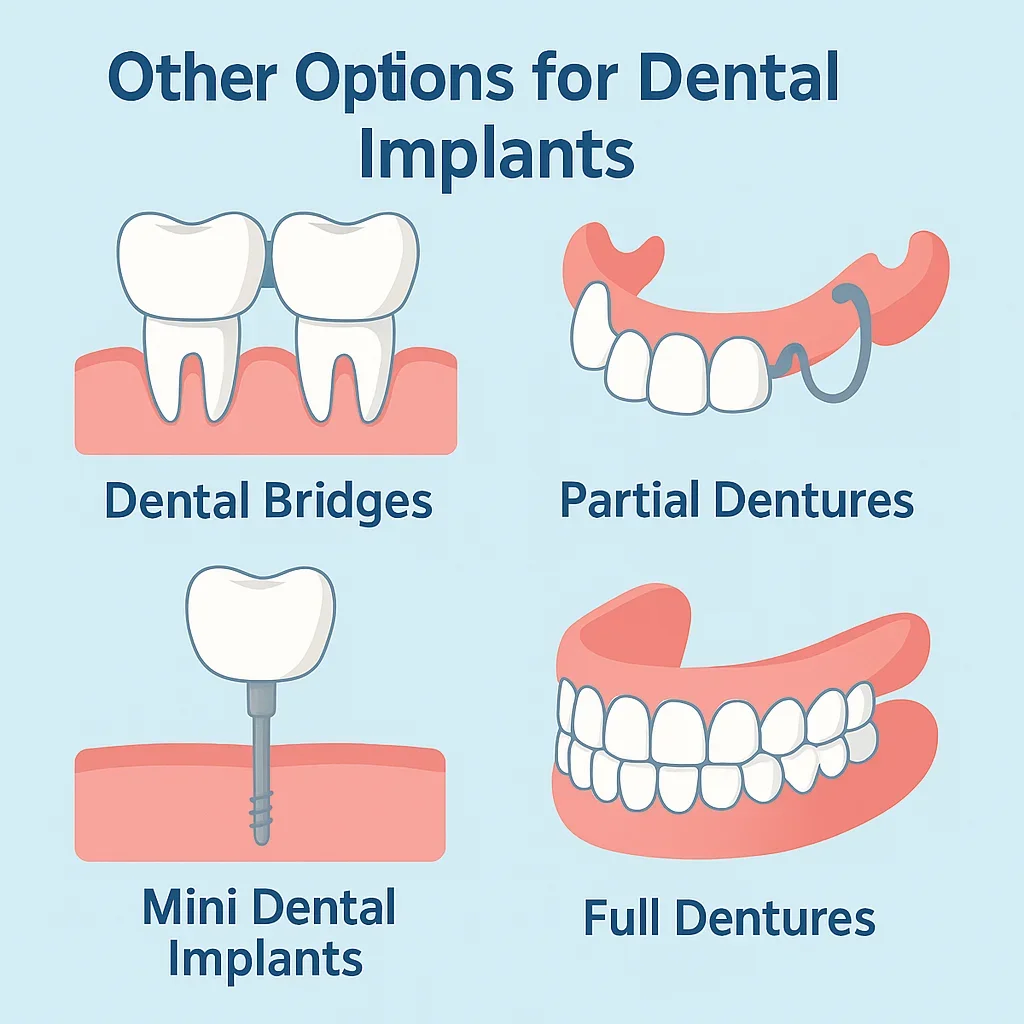
A traditional dental bridge consists of three main components: two supporting crowns placed on healthy teeth (called abutment teeth) and an artificial tooth (pontic) that fills the gap. Unlike implants, which rely on the jawbone, bridges rely on adjacent teeth for support. This makes them suitable for individuals seeking other options for dental implants when bone loss or medical restrictions prevent surgical placement.
The procedure typically involves reshaping the neighboring teeth, taking impressions, and fabricating a custom bridge that matches the patient’s natural bite, color, and shape. Once cemented into place, the bridge restores chewing function, language clarity, and facial structure — all without requiring surgery. This makes bridges a common choice among patients looking for non-surgical alternatives to implants.
Benefits of Traditional Dental Bridges
1. Faster Treatment Timeline
One of the strongest advantages of dental bridges is the speed of treatment. Most patients can complete the entire process within two to three dental visits. This is significantly faster than the months-long healing and integration period required for implants. For individuals wanting immediate restoration, this advantage makes bridges an appealing choice among other options for dental implants.
2. No Surgical Procedures Required
Patients who prefer to avoid surgical procedures — whether due to health concerns, anxiety, or medical conditions — often turn to bridges. Since the treatment involves only tooth reshaping and bonding, it is far less invasive. This non-surgical nature makes bridges ideal for many people researching other options for dental implants.
3. Cost-Effective Solution
Traditional bridges can be more budget-friendly compared to the combined costs of implants, abutments, crowns, and possible bone grafts. While prices vary depending on the material and location, bridges generally remain one of the most accessible tooth replacement options. Many individuals seeking practical and affordable other options for dental implants find bridges to be the ideal balance between cost and function.
4. Aesthetic and Functional Improvement
Today’s bridges are crafted with high-quality ceramic or zirconia materials, allowing them to blend seamlessly with natural teeth. Functionally, they restore bite force, prevent neighboring teeth from drifting, and support facial aesthetics by maintaining jaw alignment. These benefits make bridges a dependable alternative for patients who want natural-looking results without implant therapy.
Limitations of Traditional Dental Bridges
1. Impact on Adjacent Teeth
While effective, bridges require the adjacent teeth to be reshaped to support crowns. This may not be ideal if those teeth are otherwise healthy. Over time, these abutment teeth may experience stress or increased sensitivity. Patients evaluating other options for dental implants often weigh this factor carefully before deciding.
2. Lifespan and Maintenance
Dental bridges generally last between 7–15 years, depending on oral hygiene and material quality. However, they may require replacement sooner if decay affects the supporting teeth. Regular flossing under the pontic and good dental hygiene are essential for prolonging the life of a bridge.
3. Bone Loss Continues Under the Missing Tooth
Unlike implants, bridges do not stimulate the jawbone. This means the bone beneath the missing tooth may continue to deteriorate slowly over time. While this does not typically affect the bridge’s stability, it is an important consideration for patients comparing bridges with other options for dental implants.
Ideal Candidates for Traditional Dental Bridges
Bridges are especially suitable for individuals who:
- Cannot undergo implant surgery due to medical conditions.
- Have insufficient jawbone for implant placement.
- Want a fast solution without lengthy recovery.
- Need a budget-friendly option.
- Prefer a fixed restoration rather than removable dentures.
If stability, aesthetics, and speed are your priorities, bridges can be one of the best other options for dental implants. They provide predictable results and long-term function with proper care. However, it’s still essential to undergo a clinical evaluation to ensure neighboring teeth are strong enough to support the structure.
For further professional advice or to book an evaluation, you may visit the Redent Klinik Contact Page. You can also refer to standards and professional dental guidelines through the American Dental Association, which offers valuable insights into restorative dentistry and treatment safety.
Understanding the benefits and limitations of traditional dental bridges is a critical step toward making an informed decision. As you continue exploring other options for dental implants, bridges remain one of the most balanced, practical, and accessible solutions available today.
How Dentures Have Evolved as Alternatives to Dental Implants
For many people exploring other options for dental implants, dentures remain one of the most accessible, customizable, and widely used solutions in restorative dentistry. Modern dentures have evolved dramatically compared to the bulky, uncomfortable models of the past. Today’s dentures are lighter, more natural-looking, more stable, and crafted with advanced materials that enhance comfort and durability. Whether a patient needs a full-arch replacement or a partial restoration, the latest denture technologies offer alternatives that fit different lifestyles, medical conditions, and budget levels. In this section, we’ll explore how dentures have transformed and how they now serve as one of the strongest implant alternatives available. 🦷💬
The Evolution of Dentures Through Modern Dentistry
Traditional dentures were often associated with slipping, clicking, and discomfort. Fortunately, advancements in digital scanning, high-precision molding, and new materials have completely reshaped the denture experience. Many patients who once feared removable prosthetics now find them to be among the best other options for dental implants due to their improved fit and aesthetics.
From Acrylic to Advanced Polymers
Early dentures were made from simple acrylics that wore down quickly and sometimes irritated the gums. Today, denture bases and teeth can be constructed from flexible polymers, high-strength ceramics, and nano-reinforced resins. These advanced materials mimic natural tooth translucency while offering impressive durability. As a result, dentures no longer look artificial or overly glossy — instead, they integrate seamlessly with the patient’s natural smile.
Digital Denture Technology
One of the biggest breakthroughs in recent years is digital denture fabrication. With 3D scanning and milling technologies, dentists can create restorations with micrometer-level accuracy. The result is a comfortable, precise fit that reduces adjustments and enhances long-term stability. This innovation has pushed dentures into the spotlight as one of the most efficient other options for dental implants, especially for patients who want predictable outcomes without surgery.
Types of Modern Dentures and Their Benefits
Dentures are no longer a one-size-fits-all solution. Patients can choose from multiple types depending on their dental condition, the number of missing teeth, and personal goals.
1. Full Dentures
Full dentures replace an entire arch of missing teeth. They are ideal for patients who have lost most or all teeth due to gum disease, trauma, or extensive decay. Today’s full dentures feature enhanced suction mechanics, softer borders, and lightweight bases that feel more natural during daily use.
2. Partial Dentures
Partial dentures remain popular for patients missing a few teeth. They are supported by metal or flexible clasps that attach to natural teeth, creating stability without surgery. For patients researching other options for dental implants, partials offer a reliable and budget-friendly way to maintain bite structure and prevent shifting.
3. Flexible Dentures
Flexible dentures, made from biocompatible materials like nylon resins, provide added comfort for patients with sensitive gums. They are lightweight, bendable, and resistant to cracking — making them a popular choice for active individuals seeking implant-free solutions.
4. Immediate Dentures
These are dentures placed immediately after tooth extraction. They serve as a temporary or transitional restoration, allowing patients to avoid going without teeth during the healing phase. For those unable to commit to dental implants right away, immediate dentures become one of the most convenient other options for dental implants.
Advantages of Modern Dentures
Advances in technology have made dentures far more comfortable and functional than ever.
Non-Surgical and Accessible
Dentures offer a fully non-surgical approach to replacing missing teeth. Patients who cannot undergo implant surgery due to medical conditions, low bone volume, or personal preference often find dentures to be the ideal alternative.
Affordable and Predictable
Compared to implants, dentures have a lower upfront cost and faster treatment timeline. This makes them one of the most economical other options for dental implants while still providing significant improvements in chewing, appearance, and speech.
Improved Aesthetics and Function
Today’s dentures are designed with layered ceramics, natural shading, and gum-toned bases that blend seamlessly with the patient’s oral anatomy. Functionally, they provide strong biting capability and stability when designed properly.
Limitations of Dentures
Despite their improvements, dentures also come with limitations that patients must consider.
Potential for Movement
Even with better suction and design, removable dentures may shift slightly during eating or speaking. Adhesives can help, but patients with active lifestyles may prefer more fixed solutions.
Ongoing Maintenance
Dentures require daily cleaning, occasional relining, and periodic replacement due to wear or gum changes. Bone loss continues beneath the denture, which may affect long-term fit.
Who Should Consider Modern Dentures?
Dentures are a strong option for individuals who:
- Prefer a non-surgical restoration method.
- Need an affordable alternative to implants.
- Have multiple missing teeth or require full arch replacement.
- Want a fast smile restoration with predictable results.
For patients interested in personal treatment options or clinical evaluations, you may connect directly through the Redent Klinik Contact Page. For professional guidelines and scientific standards related to oral prosthetics, you may also refer to the American Dental Association.
In summary, modern dentures represent one of the most proven and customizable other options for dental implants. Their evolution in comfort, aesthetics, materials, and precision makes them not only highly functional but also a strong long-term solution for many patients worldwide.
Mini Dental Implants as a Conservative Replacement Solution
Among the most popular other options for dental implants are mini dental implants — a minimally invasive, cost-effective, and structurally efficient alternative designed for patients who may not qualify for traditional implants. Mini implants have gained attention in recent years due to their reduced size, faster placement, and ability to stabilize dentures or replace missing teeth without extensive surgical procedures. For individuals with limited bone density, medical restrictions, or financial considerations, mini implants provide a powerful middle-ground solution that bridges the gap between conventional implants and removable prosthetics. In this comprehensive section, we will explore how mini implants work, their benefits, their limitations, and whether they may be the right alternative for your situation. 🦷✨
What Are Mini Dental Implants and How Do They Differ?
Mini dental implants (MDIs) are much smaller than traditional implants — typically measuring 1.8 to 3.0 mm in diameter compared to the standard 3.5 to 5 mm. Their slim structure allows dentists to place them in areas where bone density is too thin for regular implants. This characteristic alone makes them one of the most viable other options for dental implants for patients who cannot undergo grafting or complex surgeries.
Unlike standard implants, which are made of two pieces (a titanium screw and an abutment), mini implants are usually one solid piece with a small ball-shaped top that attaches directly to denture hardware or a crown. This simplified design supports faster healing, lower surgical risk, and more predictable outcomes for medically sensitive individuals.
Key Structural Advantages of Mini Implants
- Smaller diameter for placement in narrow bone areas.
- Typically require no incisions or sutures.
- Stabilize dentures instantly for same-day results.
- Lower cost than traditional implants.
- Reduced treatment time and fewer appointments.
These features contribute significantly to why mini implants remain one of the most promising other options for dental implants for people looking for practical, low-risk solutions.
The Placement Process: Faster and Less Invasive
Mini implant placement is a relatively quick procedure — often completed in one visit. While traditional implants require several months of healing and osseointegration, MDIs can support a denture or crown almost immediately in many cases.
Step-by-Step Mini Implant Procedure
- Diagnostic Evaluation: Digital X-rays and scans assess bone height and density.
- Minimal Drilling: A pilot opening is created using a precise instrument.
- Implant Placement: The mini implant is screwed gently into position.
- Attachment: The denture or crown snaps onto the implant’s ball-shaped head.
- Immediate Use: Many patients leave the office able to chew and speak comfortably.
This streamlined process allows individuals who seek other options for dental implants to enjoy fast restoration without lengthy healing timelines or additional surgical steps.
Benefits of Mini Dental Implants
1. Ideal for Patients with Low Bone Density
Mini implants are especially well-suited for individuals with insufficient bone for standard implant placement. While traditional implants often require bone grafting, MDIs can be placed directly into thinner bone. This simplifies treatment and makes them a leading choice among other options for dental implants for patients who want to avoid complex surgical procedures.
2. Faster Recovery and Immediate Function
Most patients experience little to no downtime. Since the procedure is minimally invasive, inflammation and discomfort are significantly reduced. Many individuals resume normal eating the same day, which makes mini implants appealing to those with busy schedules.
3. Lower Treatment Cost
Mini implants are generally more affordable than conventional implants. They have fewer components, require less chair time, and do not usually involve grafting. This cost-effectiveness is a major reason patients explore other options for dental implants rather than postponing or avoiding treatment.
4. Excellent for Denture Stabilization
Loose dentures can cause difficulty with chewing, speaking, and overall comfort. Mini implants can anchor dentures securely, preventing movement and restoring confidence. This is one of the most transformative benefits for elderly patients or those who have long struggled with ill-fitting dentures.
Limitations of Mini Dental Implants
Although mini implants offer many advantages, they are not suitable for all patients. It’s essential to understand these limitations before choosing them over other alternatives.
1. Not Ideal for Heavy Bite Pressures
Because of their smaller diameter, mini implants may not withstand the same force as traditional implants. Patients who grind their teeth or have strong bite forces may require additional support or reinforcement.
2. Limited Use in Full-Size Crowns
Mini implants are excellent for stabilizing dentures and supporting smaller crowns, but they may not always support full-size restorations as reliably as standard implants. This is an important factor for patients comparing mini implants with other options for dental implants for full-mouth rehabilitation.
3. Shorter Lifespan in Some Cases
While many mini implants last for years, their lifespan can sometimes be shorter compared to regular implants due to reduced bone contact and structural size.
Who Is the Best Candidate for Mini Dental Implants?
Mini implants are especially beneficial for:
- Patients with minimal bone structure.
- Individuals who cannot undergo bone graft surgery.
- Denture wearers needing stable support.
- Patients seeking affordable, immediate restoration.
- People who want simpler other options for dental implants without long recovery.
For personalized assessment, you can visit the Redent Klinik Contact Page to discuss suitability and treatment planning. You may also consult guidelines via the American Dental Association for more information on implantology and restorative protocols.
In conclusion, mini dental implants stand out as one of the most versatile and minimally invasive other options for dental implants, offering fast, stable, and cost-effective tooth restoration for a wide range of patients.
All-on-4 and All-on-6 Systems as Full-Arch Alternatives
For many patients exploring other options for dental implants, the All-on-4 and All-on-6 systems represent two of the most transformative full-arch restoration techniques in modern dentistry. These solutions are designed for individuals who have lost most or all of their teeth, or who struggle with failing dental structures and require a stable, long-term replacement. Compared to traditional implant methods, All-on-4 and All-on-6 provide faster treatment, fewer surgical interventions, and highly aesthetic outcomes. In this comprehensive guide, we’ll examine how these systems work, who they benefit most, and why they have become leading full-mouth alternatives worldwide. 🦷🌍
Understanding the All-on-4 and All-on-6 Concepts
Both systems aim to replace an entire arch of teeth (upper, lower, or both) using a fixed prosthesis supported by either four implants (All-on-4) or six implants (All-on-6). These techniques are particularly beneficial for patients searching for other options for dental implants who may not want removable dentures or who lack sufficient bone for multiple traditional implants.
All-on-4: Strategic Angled Implant Placement
The All-on-4 method involves placing two implants vertically in the front of the jaw and two implants angled toward the back. This angulation provides enhanced stability even in cases of bone loss. It eliminates the need for bone grafting in most patients — a major reason many individuals prefer this option when evaluating other options for dental implants.
All-on-6: Additional Support for Long-Term Durability
The All-on-6 system follows the same principles but uses two extra implants for enhanced support, especially beneficial for individuals with higher bite pressure or more extensive bone deterioration. Many clinicians view All-on-6 as an upgrade in terms of strength and load distribution.
The Step-by-Step Treatment Process
All-on-4 and All-on-6 treatments are designed to deliver fast results with minimal discomfort, making them particularly appealing for people seeking simpler other options for dental implants.
1. Comprehensive Consultation and Digital Imaging
Digital X-rays, intraoral scans, and sometimes 3D CBCT imaging help the dentist analyze bone structure and plan optimal implant placement. This high-tech evaluation ensures the prosthesis fits naturally and securely.
2. Implant Placement Procedure
During the surgery, small titanium screws are inserted into the jawbone. Angled posterior implants help maximize bone contact, even in areas with deterioration. Patients often experience minimal discomfort thanks to modern anesthesia options.
3. Immediate Temporary Prosthesis
One of the biggest advantages of these systems is that patients usually receive a full temporary set of teeth the same day. This immediate function is one of the top reasons individuals choose All-on-4 or All-on-6 when comparing other options for dental implants.
4. Healing and Final Prosthesis Placement
Over the next few months, the implants integrate with the bone. Once healing is complete, a custom-designed final prosthesis is installed, delivering strong bite function and natural aesthetics.
Advantages of All-on-4 and All-on-6 Systems
1. Fast Treatment and Immediate Function
Patients walk out of the clinic with a new smile on the same day. Unlike traditional implants, which require months before teeth can be placed, this system offers near-instant results, making it one of the most convenient other options for dental implants available.
2. Avoids Bone Grafting in Most Cases
Thanks to angled implant placement, the All-on-4 technique typically avoids the need for bone grafting, even in patients with significant bone loss. This reduces cost, treatment time, and surgical complexity.
3. High Stability and Durability
Whether using four or six implants, the system distributes bite force evenly across the prosthesis. This improves long-term stability and minimizes stress on individual implants.
4. Aesthetic, Natural-Looking Results
The final teeth are crafted using high-quality materials like zirconia or hybrid acrylic, offering a natural smile with excellent durability. Many patients report renewed self-confidence and improved oral function.
Limitations and Considerations
While highly effective, these systems are not ideal for every patient seeking other options for dental implants.
1. Requires Sufficient Bone in the Front Jaw
Although bone grafting is avoided in most cases, patients must still have adequate bone density in the anterior region of the jaw for successful implant placement.
2. Higher Cost Compared to Dentures
While more affordable than replacing every missing tooth with individual implants, All-on-4 and All-on-6 systems are still more expensive than removable dentures. However, many consider the investment worthwhile due to comfort, permanence, and function.
3. Long-Term Maintenance Required
Regular hygiene visits, daily cleaning, and occasional adjustments are necessary to prolong the lifespan of the prosthesis and protect the implants.
Ideal Candidates for All-on-4 and All-on-6
These full-arch systems are excellent for individuals who:
- Have multiple missing teeth or total tooth loss.
- Want a fixed, non-removable alternative to dentures.
- Prefer quicker results over multi-stage implant surgeries.
- Have moderate bone loss but want to avoid grafting.
- Are researching reliable full-mouth other options for dental implants.
If you’re considering this treatment, you can contact the clinic directly through the
Redent Klinik Contact Page. For professional dental guidelines and full-arch implant standards, you may also consult the
American Dental Association.
In summary, All-on-4 and All-on-6 systems provide some of the most advanced and predictable other options for dental implants for patients seeking full-arch restoration. Their combination of speed, stability, aesthetics, and long-term performance makes them one of the most trusted choices in modern restorative dentistry.
Zirconia Bridges vs. Titanium Implants: Choosing the Right Path
When evaluating other options for dental implants, one of the most important comparisons patients make is between zirconia bridges and titanium-based implant systems. Both options are used in advanced restorative dentistry, yet they differ greatly in design, material composition, long-term performance, aesthetics, and clinical requirements. For patients who may not be suitable candidates for traditional implants or who are seeking alternatives that combine strength with aesthetics, zirconia bridges stand out as a compelling solution. In this section, we’ll explore the differences between zirconia and titanium, dive into their advantages and limitations, and explain how to determine which treatment pathway aligns best with your oral health needs. 🦷✨
Understanding Zirconia Bridges and Their Growing Popularity
Zirconia bridges are fixed restorations crafted from zirconium dioxide—a ceramic material known for exceptional strength, translucency, and biocompatibility. As many patients search for other options for dental implants, zirconia bridges emerge as a top choice due to their ability to replace several missing teeth without requiring individual implants for each space.
Unlike porcelain-fused-to-metal (PFM) restorations, zirconia bridges are metal-free, making them ideal for individuals with metal sensitivities or those seeking a more aesthetic, natural-looking restoration. They provide a seamless blend with natural teeth, offering both durability and beauty.
Key Features of Zirconia Bridges
- High resistance to chipping and fracture
- Stain-resistant, even with daily consumption of coffee or wine
- Excellent translucency mimicking natural enamel
- Biocompatible and hypoallergenic for sensitive patients
- Can restore multiple adjacent teeth with a single structure
These qualities make zirconia bridges especially appealing for individuals who want durable and aesthetic other options for dental implants without undergoing multiple surgical placements.
Understanding Titanium Implants and Their Traditional Role
Titanium dental implants have long been the gold standard in implant dentistry. Titanium’s biocompatibility and ability to fuse with bone (osseointegration) contribute to its long-term success as a root replacement system. However, titanium implants are not always ideal for every patient.
Some individuals have limited bone density, medical complications, or simply prefer to avoid surgery. Others want a fully ceramic restoration for aesthetic or health reasons. These considerations push patients to explore other options for dental implants that still deliver stability and longevity—such as zirconia-based solutions.
Key Features of Titanium Implants
- High success rate due to strong osseointegration
- Durable under heavy bite pressure
- Versatile for single, multiple, or full-mouth restorations
- Wide availability and decades of clinical research
Despite these strengths, titanium implants typically require surgery, sufficient bone height, and healing periods that may not suit every patient’s goals.
Zirconia vs. Titanium: A Detailed Material Comparison
1. Aesthetics
Zirconia bridges significantly outperform titanium in aesthetics because they are tooth-colored and fully ceramic. Titanium implants may have metal visibility risks if gums recede. For patients who rank aesthetics highly while considering other options for dental implants, zirconia is often the preferred choice.
2. Biocompatibility and Sensitivities
While titanium is generally biocompatible, a small percentage of patients report metal sensitivities or concerns about long-term exposure. Zirconia is metal-free and hypoallergenic, making it ideal for individuals with allergies or autoimmune conditions.
3. Bone Requirements
Titanium implants require sufficient bone for stability. When bone is lacking, grafting is often needed. Zirconia bridges, on the other hand, can rely on existing teeth or strategically placed implants, making them appealing other options for dental implants when bone volume is limited.
4. Durability and Strength
Titanium implants remain unmatched in strength for root-level support. However, zirconia bridges provide exceptional durability for multi-tooth restorations—and do so without the risk of corrosion or dark metal exposure.
5. Treatment Complexity
Titanium implants often require multi-stage procedures, while zirconia bridges can be completed more quickly, depending on the case. This faster timeline attracts patients who want simpler other options for dental implants without prolonged surgical recovery.
When Zirconia Bridges Are the Better Choice
Zirconia bridges are ideal for patients who:
- Want a metal-free restoration
- Prefer a faster solution without multi-stage surgery
- Have insufficient bone for multiple implant placements
- Desire a highly aesthetic restoration for visible areas
- Are seeking durable other options for dental implants that balance strength and beauty
When Titanium Implants May Be the Better Fit
Titanium implants are recommended for individuals who:
- Have strong bone density and healthy gums
- Prefer permanent single-tooth replacements anchored by the jawbone
- Have bruxism or heavy bite pressure
- Want long-term root-level stability
Professional Guidance and Final Considerations
Choosing between zirconia bridges and titanium implants is a highly personalized decision. Factors like bone structure, aesthetic goals, budget, medical history, and long-term expectations must be evaluated carefully. For accurate guidance and a complete oral assessment, you may contact the clinic via the
Redent Klinik Contact Page.
You may also consult professional dentistry guidelines through the
American Dental Association for deeper clinical insight.
In conclusion, zirconia bridges stand strong as one of the most aesthetic, durable, and biocompatible other options for dental implants, while titanium implants remain the gold standard for root-level replacements. Understanding their differences empowers you to choose the restoration path that best aligns with your oral health and lifestyle.
Bone Grafting Alternatives for Patients With Low Bone Density
A significant number of patients explore other options for dental implants because they are told they lack sufficient bone density for traditional implant placement. While bone grafting is a widely used and effective method for rebuilding the jawbone, not every patient is willing or able to undergo the additional surgery, cost, or healing period associated with grafting. Fortunately, modern dentistry offers several bone grafting alternatives that allow patients to replace missing teeth without extensive surgical reconstruction. In this comprehensive section, we’ll explore these alternatives in detail — helping you understand which solutions may work best for your smile, your health, and your long-term expectations. 🦷✨
Why Bone Density Matters in Tooth Replacement
The success of traditional dental implants depends heavily on the availability of strong, healthy jawbone. Implants must fuse with the bone through osseointegration, which requires sufficient height, width, and density. However, due to long-term tooth loss, gum disease, trauma, or natural aging, many individuals experience bone shrinkage. This creates challenges for implant placement and often leads them to look for other options for dental implants.
Understanding the relationship between bone health and tooth replacement helps patients make informed choices. In some cases, the bone can be strengthened; in others, alternatives that bypass bone requirements altogether may offer a more efficient solution.
Alternative Solutions That Avoid Bone Grafting
Today’s dental innovations have made it possible for patients with bone loss to achieve strong, stable, and aesthetic restorations without complex grafting procedures. Below are the most promising alternatives.
1. Mini Dental Implants (MDIs)
Mini implants are smaller-diameter versions of traditional implants that require significantly less bone height for placement. They can be inserted directly into narrow bone spaces and provide immediate stability. This makes MDIs one of the most accessible other options for dental implants for patients with moderate to severe bone loss who want to avoid sinus lifts or ridge augmentation.
2. All-on-4 and All-on-6 Full-Arch Systems
These systems use angled posterior implants strategically placed in areas where the bone is naturally denser. The technique allows full-arch restorations without needing bone grafts in most cases. As a result, All-on-4 or All-on-6 becomes a reliable option for patients searching for other options for dental implants that offer full-mouth rehabilitation without complex bone reconstruction.
3. Zygomatic Implants
Zygomatic implants are longer implants anchored not in the jawbone, but in the zygomatic (cheek) bone. This method bypasses severe maxillary bone loss entirely. It is recommended for patients with extreme bone resorption who still want a fixed, implant-supported solution.
4. Subperiosteal Implants
Unlike traditional implants, subperiosteal implants rest on top of the jawbone but under the gum tissue, eliminating the need for bone grafting. A custom metal framework holds the replacement teeth securely. This approach is especially beneficial for patients with insufficient bone height who are still seeking viable other options for dental implants.
5. Removable Prosthetics and Advanced Dentures
Modern removable dentures — especially flexible or precision-fit types — can provide comfortable, aesthetic tooth replacement without any bone requirements. Many patients choose them as interim or long-term solutions when grafting or surgery is not feasible.
Regenerative and Minimally Invasive Techniques
Not all bone graft alternatives rely solely on prosthetics or implants. Some cutting-edge biological approaches help stimulate natural regeneration.
1. Platelet-Rich Fibrin (PRF)
PRF uses the patient’s own blood to produce a growth-factor-rich membrane that enhances healing and stimulates bone regeneration. This minimally invasive technique is often used to support mini implants or improve gum tissue health for patients exploring other options for dental implants.
2. Guided Tissue Regeneration (GTR)
GTR employs biocompatible membranes to prevent soft tissue from invading bone-deficient areas, creating space for new bone growth. It is less invasive than full grafting and can sometimes restore enough bone for alternative implant methods.
3. Bone Expansion and Ridge Splitting
These surgical techniques widen thin jawbone without requiring full grafts. They are useful when a patient has enough bone height but insufficient bone width.
Benefits of Choosing Bone Grafting Alternatives
Choosing alternatives to bone grafting can offer several advantages:
- Reduced surgical time and fewer procedures
- Faster healing and less postoperative discomfort
- Lower costs compared to full grafting and implant placement
- Immediate function in certain alternatives (e.g., All-on-4 or mini implants)
- No need for complex sinus lifts or ridge augmentation surgeries
These benefits are especially valuable for patients researching other options for dental implants due to medical conditions, age restrictions, time limitations, or personal preference.
Who Is a Candidate for Bone Graft Alternatives?
Ideal candidates include individuals who:
- Have moderate to severe jawbone loss
- Want to avoid complicated grafting surgeries
- Need faster treatment timelines
- Seek functional, stable solutions without major reconstruction
- Are exploring reliable other options for dental implants based on health or budget
Consultation and Professional Guidance
Because bone health varies significantly between patients, professional evaluation is essential. To determine whether you qualify for these options, you may visit the Redent Klinik Contact Page.
Clinical guidelines from the American Dental Association can also provide valuable insight into minimally invasive restorative solutions.
In conclusion, patients with limited bone structure are no longer restricted to graft-heavy treatments. Today’s advanced alternatives make it easier than ever to explore other options for dental implants that fit your anatomy, comfort level, and long-term oral health goals.
Same-Day Teeth Solutions for Faster Smile Restoration
For many patients searching for other options for dental implants, the thought of waiting months for a fully restored smile can feel overwhelming. Traditional implant procedures often involve multiple stages, healing periods, and temporary restorations before the final teeth can be placed. Same-day teeth solutions — also known as “immediate load implants” or “teeth-in-a-day” — have revolutionized this process. These modern techniques allow patients to walk into a clinic with missing or failing teeth and leave the very same day with a secure, natural-looking smile. 🦷⚡ This section will explore how same-day solutions work, who is an ideal candidate, and why they have become one of the most sought-after other options for dental implants in contemporary dentistry.
What Are Same-Day Teeth Solutions?
Same-day teeth solutions refer to implant techniques that allow placement of both the implant posts and a functional temporary prosthesis on the same day. Instead of waiting several months for bone integration, patients receive a temporary bridge or denture immediately after surgery. This approach minimizes discomfort, restores chewing function, and offers instant aesthetic improvement. These benefits are major reasons people turn to other options for dental implants that prioritize convenience and efficiency.
Immediate Load vs. Traditional Implants
Traditional implants require 3–6 months of healing before a restoration can be attached. During this time, the implant stabilizes within the bone. In contrast, immediate load systems provide:
- Instant placement of temporary teeth
- Immediate function for speaking and light chewing
- Minimal disruption to daily life
Because of these advantages, same-day solutions are praised as one of the most time-efficient other options for dental implants.
How Same-Day Teeth Procedures Work
Although faster, same-day procedures still require careful planning and precision. Here is the typical process:
1. Comprehensive Assessment & Digital Imaging
High-resolution scans and 3D imaging help evaluate bone density, implant angles, and prosthetic design. The treatment must be carefully mapped to avoid complications and ensure sufficient stability for immediate function.
2. Implant Placement
The dentist strategically inserts the implants into dense areas of the jawbone to ensure quick stabilization. In many cases, fewer implants are required compared to traditional methods, making this option ideal for individuals exploring other options for dental implants that involve less surgery.
3. Attachment of Temporary Teeth
A custom-designed temporary prosthesis is placed immediately. This restoration is durable enough for daily use while the implants integrate with the bone, which typically takes several months.
4. Final Prosthesis Placement
Once healing is complete, a permanent restoration—often made of zirconia or ceramic—is placed, providing a natural-looking, long-lasting smile.
Types of Same-Day Solutions
Same-day treatments come in several forms depending on the patient’s needs and level of tooth loss.
1. Single-Tooth Immediate Implants
These are ideal for front teeth, where aesthetics are urgent. They allow patients to leave the clinic without gaps in their smile.
2. Multiple-Tooth Immediate Bridges
For patients missing several teeth, same-day implant-supported bridges restore function and appearance rapidly.
3. Full-Arch Same-Day Systems
Techniques such as All-on-4 or All-on-6 allow full-arch restorations supported by only a few implants. They are among the most popular other options for dental implants for individuals requiring complete upper or lower replacement.
Benefits of Same-Day Teeth Solutions
There are many reasons why same-day procedures have become a leading alternative:
- Immediate results — patients regain a confident smile right away
- Shorter treatment timelines — no waiting months for final teeth
- Improved comfort — temporary prosthesis protects the surgical area
- Minimized appointments — ideal for busy schedules
- High success rate with proper planning and implant stability
These advantages make same-day solutions appealing for individuals exploring other options for dental implants who want rapid and effective outcomes.
Limitations and Considerations
While same-day teeth offer many benefits, some factors must be considered before choosing this treatment.
1. Bone Density Requirements
Immediate implants require sufficient bone for initial stability. Patients with severe bone loss may need alternatives such as mini implants or full-arch angled implants.
2. Temporary Diet Modifications
Although temporary teeth are functional, they are not designed for heavy chewing. Soft foods are recommended until the permanent prosthesis is placed.
3. Not Ideal for All Medical Conditions
Certain systemic conditions may affect healing or implant stability. A thorough medical review is essential.
Who Is an Ideal Candidate?
Same-day implant systems are best suited for individuals who:
- Have sufficient bone density
- Have healthy gums
- Need quick aesthetic restoration
- Want practical other options for dental implants that minimize surgery
- Are replacing failing crowns, bridges, or dentures
Getting Professional Guidance
Every smile is unique, and implant suitability varies. To determine whether same-day solutions are right for you, you can contact the clinic directly through the
Redent Klinik Contact Page.
For broader dental standards and scientific guidance, refer to the
American Dental Association.
In summary, same-day teeth procedures stand out as one of the most transformative other options for dental implants. They offer speed, convenience, and excellent long-term outcomes, making them ideal for patients who want a faster path to a natural-looking smile without compromising durability.
How to Choose the Best Alternative Based on Your Oral Health
Choosing the best alternative to traditional implants can feel overwhelming, especially when there are many other options for dental implants that offer different advantages. From mini implants and zirconia bridges to All-on-4 systems and same-day teeth, each solution serves a specific purpose. Making the right choice depends on your oral health condition, medical history, bone density, gum health, financial considerations, and long-term expectations. In this comprehensive section, you’ll find a detailed breakdown of how to evaluate your options and select the most suitable treatment for your unique situation. By understanding each factor in depth, you can confidently choose a restoration pathway that leads to long-term success, functionality, and a natural-looking smile. 🦷🌟
Understanding Your Oral Health Foundation
Before choosing among the many other options for dental implants, it’s essential to understand the current condition of your teeth, bone, and gums. These three elements form the foundation for any type of dental restoration. Without proper assessment, even the best implant alternative may fail or require additional procedures.
1. Bone Density and Volume
Bone density determines whether traditional implants are possible or whether alternatives like mini implants, subperiosteal implants, or All-on-4 systems are more appropriate. If your bone has experienced resorption due to long-term tooth loss or gum disease, solutions that bypass grafting may be ideal. These graft-free systems are often the strongest other options for dental implants for patients with limited bone structure.
2. Gum Health and Tissue Condition
Healthy gums are vital for long-term stability. If you have gum disease (periodontitis), your dentist may recommend treating the infection before exploring implant alternatives. Some solutions, such as zirconia bridges or removable prosthetics, can accommodate patients with gum recession more comfortably.
3. Adjacent Teeth Stability
If the teeth around the missing area are healthy, restorative options like zirconia or porcelain bridges become strong contenders. However, if adjacent teeth are weak or decayed, implant-supported alternatives may provide more reliable long-term results.
Evaluating Your Lifestyle and Daily Habits
Choosing among other options for dental implants also requires understanding your lifestyle, chewing habits, diet, and daily oral care routine. Some solutions are more durable for heavy chewing, while others prioritize aesthetics or comfort.
1. Chewing Strength and Bite Pressure
Patients with strong bite forces or habits such as bruxism (teeth grinding) typically require durable solutions. Titanium-supported systems or zirconia bridges work well for these individuals. For lighter chewing needs, flexible partial dentures or mini implants may be sufficient.
2. Aesthetic Expectations
If achieving the most natural appearance is your top priority, zirconia is often recommended because of its enamel-like translucency. Techniques like same-day teeth also provide immediate aesthetic improvements for patients exploring other options for dental implants.
3. Comfort and Adaptability
Some patients prefer fixed restorations for maximum comfort, while others are comfortable with removable prosthetics. Understanding your adaptability and maintenance preferences will help determine the most suitable treatment.
Assessing Your Budget and Treatment Goals
Every alternative varies in cost based on materials used, complexity, and the number of implants required. Understanding your long-term goals helps match your budget with high-quality solutions.
1. Cost-Efficient Alternatives
Removable dentures, flexible partials, and mini implants are more affordable other options for dental implants. They offer functionality without requiring extensive surgical procedures.
2. Long-Term Investment Options
If durability and long-term value are priorities, zirconia bridges, titanium-based implants, and All-on-4 systems offer excellent stability and enhanced lifespan. These treatments may require higher upfront costs but deliver greater long-term reliability.
Considering Your Medical History
Systemic health conditions can impact the body’s ability to heal and integrate implants. Patients with diabetes, autoimmune disorders, or blood clotting issues should review their conditions with a dentist before selecting from the available other options for dental implants.
1. Healing Capacity
Patients with slow healing or chronic inflammation may benefit from minimally invasive or graft-free solutions like same-day implants or zygomatic systems.
2. Medication Interactions
Certain medications, such as bisphosphonates, affect bone metabolism. These factors must be evaluated before choosing implant alternatives.
Choosing the Best Option Through Professional Evaluation
A thorough evaluation from a dental professional ensures you choose the safest and most effective solution. During the consultation, your dentist will:
- Perform a complete examination of teeth and gums
- Conduct 3D imaging to measure bone quality
- Review medical history and medications
- Discuss lifestyle habits and expectations
- Recommend suitable other options for dental implants based on findings
Customizing Your Treatment Plan
The best implant alternative is the one tailored precisely to your needs. A good treatment plan should include:
- Clear explanation of all available alternatives
- Timeline for healing and final restoration
- Material options (zirconia, titanium, ceramics)
- Expected lifespan and maintenance requirements
- Costs and payment options
Custom planning allows you to compare and contrast various other options for dental implants based on your goals, comfort level, and clinical suitability.
Professional Support and Final Guidance
Your dental team plays a crucial role in helping you make an informed decision. For personalized assessment and treatment recommendations, you can reach out through the
Redent Klinik Contact Page.
To review professional dental guidelines and evidence-based implant standards, refer to the
American Dental Association.
In summary, choosing the best among the many other options for dental implants requires evaluating your oral health foundation, lifestyle habits, bone density, aesthetic priorities, and long-term goals. With proper guidance and a customized approach, you can achieve a natural-looking, functional smile that supports lifelong oral wellness.