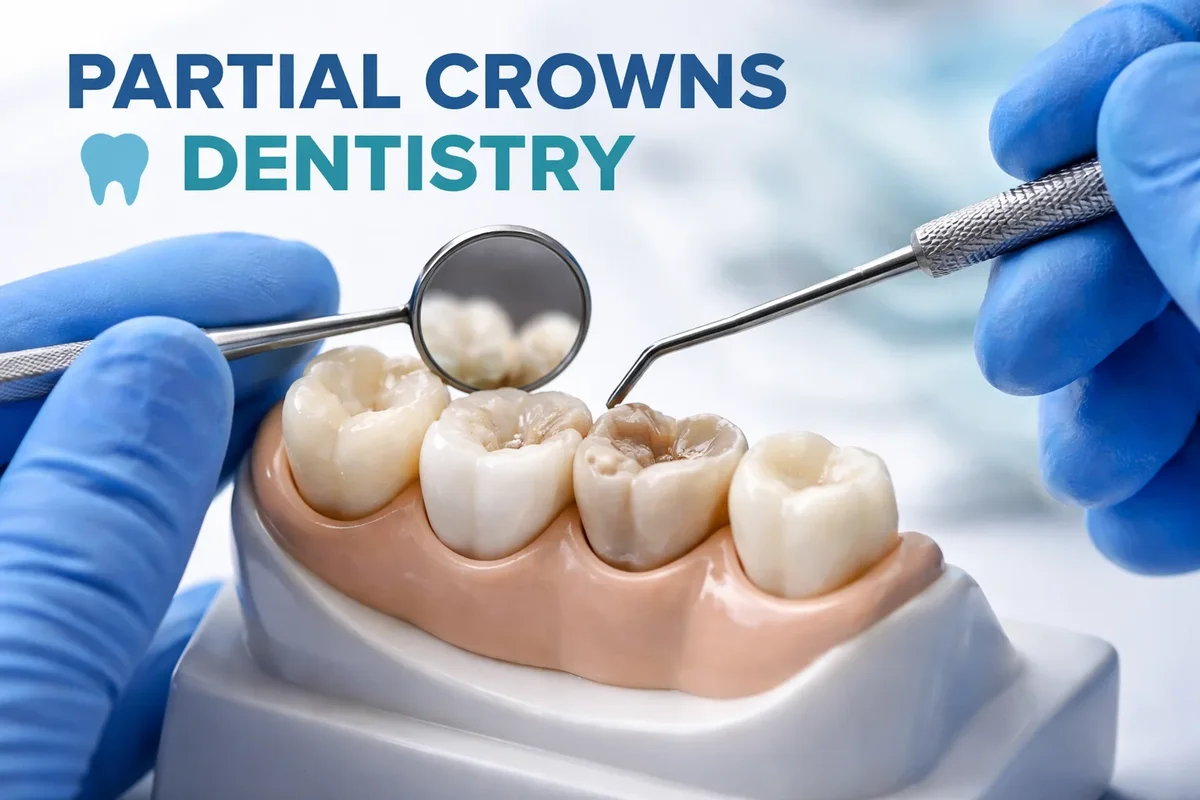
Partial Crowns Dentistry: A Complete Guide to Conservative Tooth Restoration

partial crowns dentistry

Partial crowns dentistry is one of the most advanced and conservative approaches in modern restorative dental care. Instead of removing large portions of a damaged tooth, this technique focuses on preserving as much healthy tooth structure as possible while restoring strength, function, and aesthetics. If you are researching solutions for a cracked, decayed, or weakened tooth but want to avoid a full crown, partial crowns dentistry may be exactly what you are looking for. 😊

In simple terms, partial crowns dentistry involves placing a custom-made restoration that covers only the damaged part of the tooth rather than encasing the entire structure. These restorations are often referred to as inlays, onlays, or three-quarter crowns. Unlike traditional full crowns that require significant reshaping of the natural tooth, partial crowns dentistry is designed to be minimally invasive while still delivering long-term durability.

Many patients search for information about partial crowns dentistry because they want a treatment that protects their natural enamel. Preserving enamel is extremely important because it maintains tooth strength and reduces sensitivity. By choosing partial crowns dentistry, dentists can reinforce compromised teeth without unnecessarily removing healthy areas. This conservative philosophy aligns with modern dental standards promoted by organizations such as the American Dental Association, which supports minimally invasive treatment whenever possible.

So how does partial crowns dentistry actually work? The process begins with a thorough examination. Your dentist evaluates the extent of decay or fracture using digital X-rays and clinical inspection. If the damage does not extend to the entire tooth structure, partial crowns dentistry becomes a strong candidate for treatment. The dentist removes only the decayed or weakened portion, carefully shaping the area to accommodate the custom restoration.

Next, impressions or digital scans are taken. These ensure that the restoration created for partial crowns dentistry fits precisely with your bite. Precision is crucial because even minor misalignment can cause discomfort or uneven wear. Advanced CAD/CAM technology is often used in partial crowns dentistry, allowing restorations to be milled from ceramic blocks with exceptional accuracy. In some clinics, the procedure can even be completed in a single visit.

One of the most appealing aspects of partial crowns dentistry is its balance between strength and aesthetics. Modern materials such as porcelain and high-strength ceramic mimic the natural translucency of enamel. This means that partial crowns dentistry does not just repair a tooth—it restores its natural appearance. Patients often report that the treated tooth looks indistinguishable from their surrounding teeth. ✨

Functionally, partial crowns dentistry provides reinforcement where it is needed most. When a tooth has a large filling that compromises its structure, biting pressure can lead to fractures. Partial crowns dentistry distributes chewing forces evenly, preventing further cracks. This makes it an excellent solution for molars and premolars that endure heavy chewing forces.

Another major advantage of partial crowns dentistry is longevity. With proper oral hygiene and regular dental checkups, these restorations can last 10 to 15 years or even longer. Because partial crowns dentistry preserves more natural structure than a full crown, the underlying tooth often remains healthier over time. This contributes to a more stable long-term prognosis.

Patients also appreciate that partial crowns dentistry often involves less postoperative sensitivity compared to traditional crowns. Since more enamel is preserved, the nerve inside the tooth remains better insulated. This reduces the likelihood of discomfort after the procedure.

If you are unsure whether partial crowns dentistry is right for you, consultation is key. Every tooth condition is unique. A skilled dentist will evaluate whether the damage is suitable for this conservative technique or whether a full crown is necessary. If you would like a professional assessment, you can visit the Redent Klinik Contact Page to schedule an appointment and receive personalized guidance.

Ultimately, partial crowns dentistry represents a shift toward smarter, more biologically respectful dental treatment. Instead of aggressively reshaping teeth, it strengthens them while preserving what nature created. For patients seeking durability, aesthetics, and long-term oral health, partial crowns dentistry offers a highly effective solution. By combining advanced materials, digital precision, and conservative philosophy, partial crowns dentistry stands out as a cornerstone of modern restorative care. 🦷

What Is Partial Crowns Dentistry and How Does It Work?

Partial crowns dentistry is a specialized branch of restorative dental treatment that focuses on repairing damaged teeth while preserving as much natural tooth structure as possible. Unlike traditional full crowns that completely cover the tooth, partial crowns dentistry restores only the compromised portion. This conservative method strengthens the tooth, improves function, and maintains natural aesthetics without unnecessary removal of healthy enamel. 🦷

Patients often encounter the term partial crowns dentistry when searching for alternatives to large fillings or full-coverage crowns. The concept is simple yet highly effective: instead of aggressively reshaping the entire tooth, the dentist targets only the damaged areas. By doing so, partial crowns dentistry supports long-term oral health and maintains structural integrity.

The Core Principle Behind Partial Crowns Dentistry

The foundation of partial crowns dentistry lies in minimally invasive treatment. Modern dentistry prioritizes biological preservation. Healthy enamel is one of the strongest substances in the human body, and once removed, it cannot regenerate. Therefore, partial crowns dentistry aims to keep intact enamel wherever possible.

When decay, cracks, or old failing fillings weaken a tooth, partial crowns dentistry offers reinforcement without sacrificing strength. Instead of grinding down the entire tooth as in traditional crowns, the dentist removes only the compromised area. This precision-based approach ensures the remaining structure remains stable and functional.

Conservative Tooth Preparation

During partial crowns dentistry, the preparation process is carefully controlled. The dentist eliminates decayed or fractured portions and shapes the cavity so that the restoration can fit securely. Because partial crowns dentistry is less invasive, patients typically experience less sensitivity after treatment compared to full crowns.

How Partial Crowns Dentistry Differs from Fillings and Full Crowns

Many patients wonder whether partial crowns dentistry is similar to a filling. While both repair damaged areas, fillings are usually made of composite resin and are suitable for small cavities. Partial crowns dentistry, on the other hand, is recommended when the damage is too extensive for a simple filling but not severe enough to require a full crown.

Compared to full crowns, partial crowns dentistry preserves more natural structure. Full crowns require reshaping the entire outer surface of the tooth, which can reduce overall strength if not clinically necessary. Partial crowns dentistry instead reinforces only the weakened sections, providing a balanced solution.

When Is Partial Crowns Dentistry Recommended?

Partial crowns dentistry is typically advised in cases such as:

  • Large cavities that weaken tooth walls
  • Fractured cusps or cracked molars
  • Replacement of old, failing amalgam fillings
  • Moderate structural damage without root involvement

In these situations, partial crowns dentistry provides structural support while avoiding overtreatment.

Step-by-Step Overview of the Procedure

Understanding how partial crowns dentistry works helps patients feel more confident about treatment. The process generally involves the following stages:

1. Diagnosis and Assessment

The dentist performs a clinical examination and may take digital X-rays. This ensures that partial crowns dentistry is appropriate and that no deep infection is present.

2. Tooth Preparation

The damaged portion of the tooth is carefully removed. In partial crowns dentistry, preparation is conservative, preserving surrounding enamel.

3. Digital Scanning or Impressions

Modern partial crowns dentistry often uses digital scanning technology to capture a 3D image of the tooth. This enhances precision and improves fit.

4. Fabrication of the Restoration

The custom restoration is crafted from ceramic, porcelain, or composite materials. Many clinics use CAD/CAM systems to produce restorations for partial crowns dentistry in a single visit.

5. Bonding and Final Placement

The restoration is bonded securely using strong dental adhesive. Proper bonding is critical in partial crowns dentistry because it ensures durability and prevents leakage.

Why Precision Matters in Partial Crowns Dentistry

The success of partial crowns dentistry depends heavily on precision. Even slight inaccuracies in fit can affect bite alignment. A properly designed restoration distributes chewing forces evenly, reducing the risk of fractures.

Modern materials used in partial crowns dentistry are engineered to mimic natural enamel in both appearance and strength. Ceramic-based restorations provide excellent durability while maintaining a lifelike translucency. ✨

Long-Term Benefits of Partial Crowns Dentistry

Patients choosing partial crowns dentistry often enjoy long-lasting results. With proper oral hygiene and routine checkups, restorations can last 10–15 years or longer. Because partial crowns dentistry preserves more natural structure, the underlying tooth often remains healthier over time.

Additionally, partial crowns dentistry supports improved comfort. Since more enamel is retained, the tooth’s nerve remains better insulated, reducing postoperative sensitivity.

In summary, partial crowns dentistry is a conservative, precise, and highly effective method for restoring damaged teeth. By combining advanced technology, strong materials, and minimally invasive techniques, partial crowns dentistry offers a balanced solution between fillings and full crowns. For patients seeking durability, aesthetics, and long-term oral health, partial crowns dentistry stands out as a modern and intelligent restorative option. 😊

Types of Partial Crowns Used in Modern Dentistry

Partial crowns dentistry includes several highly specialized restoration types designed to repair damaged teeth without fully covering them. The goal of partial crowns dentistry is always the same: preserve healthy tooth structure while restoring strength, function, and aesthetics. However, the exact design of the restoration depends on the extent and location of the damage. Understanding the different types used in partial crowns dentistry helps patients make informed decisions about their treatment options. 🦷

Modern partial crowns dentistry has evolved significantly thanks to digital technology, advanced ceramics, and adhesive bonding techniques. Today, dentists can choose between inlays, onlays, and three-quarter crowns depending on the clinical situation. Each of these plays a unique role in partial crowns dentistry and offers specific advantages.

Inlays: Conservative Internal Restorations

Inlays are one of the most common solutions in partial crowns dentistry. They are used when the damage is confined within the cusps (the raised chewing surfaces) of the tooth. Unlike a standard filling, an inlay is custom-made in a laboratory or fabricated digitally using CAD/CAM technology.

When Are Inlays Recommended?

In partial crowns dentistry, inlays are ideal for:

  • Moderate decay within the center of the tooth
  • Replacement of large failing fillings
  • Strengthening weakened internal structures

Because partial crowns dentistry focuses on precision, inlays are designed to fit perfectly into the prepared cavity. They are bonded securely, reinforcing the tooth from within. Compared to composite fillings, inlays used in partial crowns dentistry are more durable and resistant to wear.

Onlays: Covering One or More Cusps

Onlays are sometimes referred to as “partial crowns” themselves. In partial crowns dentistry, onlays are used when the damage extends to one or more cusps but does not require a full crown. This type of restoration covers the affected chewing surfaces while preserving the remaining healthy tooth structure.

Why Onlays Are Popular in Partial Crowns Dentistry

Onlays offer several advantages:

  • They protect cracked or weakened cusps
  • They distribute chewing forces evenly
  • They require less removal of enamel than full crowns

In partial crowns dentistry, onlays are often made from porcelain or high-strength ceramic. These materials mimic natural enamel and provide excellent longevity. Many patients prefer onlays because they maintain the natural appearance of the tooth while providing structural reinforcement. ✨

Three-Quarter Crowns: Expanded Coverage Without Full Encapsulation

Three-quarter crowns represent a more extensive option within partial crowns dentistry. As the name suggests, they cover approximately three-quarters of the tooth but leave one surface untouched. This design preserves as much natural enamel as possible while still offering substantial protection.

Clinical Situations for Three-Quarter Crowns

In partial crowns dentistry, three-quarter crowns are recommended when:

  • The tooth has multiple damaged surfaces
  • Structural reinforcement is needed without full coverage
  • Aesthetic preservation of the front surface is important

Because partial crowns dentistry emphasizes conservative treatment, three-quarter crowns are chosen when a full crown would remove unnecessary healthy structure. They provide strength while maintaining biological integrity.

Materials Used Across All Types

Regardless of the type, partial crowns dentistry commonly uses materials such as:

Porcelain and Ceramic

These materials are highly aesthetic and blend naturally with surrounding teeth. In partial crowns dentistry, ceramic restorations are popular for visible areas.

Composite Resin

Though less durable than ceramic, composite may sometimes be used in partial crowns dentistry for smaller restorations.

Gold Alloy

In some cases, gold remains a reliable option in partial crowns dentistry due to its exceptional durability and biocompatibility, especially for back molars.

How Dentists Choose the Right Type

The choice among inlays, onlays, or three-quarter crowns in partial crowns dentistry depends on multiple factors. These include the size of the cavity, the strength of the remaining tooth walls, bite alignment, and aesthetic concerns. Digital imaging and 3D scanning allow dentists to assess these factors accurately.

One of the greatest advantages of partial crowns dentistry is customization. Every restoration is individually designed to match the patient’s tooth anatomy. This ensures proper bite alignment and long-term comfort.

Longevity and Durability Differences

All forms of partial crowns dentistry are designed for durability, but longevity varies based on material choice and oral hygiene. Ceramic and porcelain restorations can last 10–15 years or more with proper care. Gold restorations used in partial crowns dentistry may last even longer due to their strength and resistance to wear.

Regular dental checkups are essential to maintain the success of partial crowns dentistry. Proper brushing, flossing, and avoiding excessive force (such as teeth grinding) help extend the lifespan of the restoration.

Why Understanding the Types Matters

Knowing the different options within partial crowns dentistry empowers patients to ask informed questions. Each type serves a specific purpose, and selecting the right one ensures both structural stability and aesthetic satisfaction. By preserving natural enamel while restoring function, partial crowns dentistry continues to represent a gold standard in conservative restorative care. 😊

Ultimately, the variety of options available in partial crowns dentistry allows dentists to tailor treatment precisely to each individual’s needs. Whether through inlays, onlays, or three-quarter crowns, partial crowns dentistry offers a flexible, minimally invasive approach to maintaining long-term oral health.

When Do You Need Partial Crowns Dentistry?

Partial crowns dentistry is recommended when a tooth is damaged beyond what a simple filling can repair but does not require the extensive reduction involved in a full crown. Understanding when partial crowns dentistry becomes necessary helps patients make confident, informed decisions about their oral health. This conservative treatment option is designed to restore strength, function, and aesthetics while preserving as much healthy enamel as possible. 😊

In many cases, patients are unaware that partial crowns dentistry may be the ideal middle-ground solution. They often assume the only options are fillings or full crowns. However, partial crowns dentistry is specifically designed for moderate structural damage, where reinforcement is needed but full encapsulation is unnecessary.

Large Cavities That Weaken the Tooth Structure

One of the most common reasons for partial crowns dentistry is the presence of a large cavity. When decay affects a significant portion of the tooth, a traditional filling may not provide enough strength. Over time, chewing forces can cause the remaining tooth walls to crack or fracture.

Why Fillings May Not Be Enough

Composite fillings work well for small to medium cavities, but when the damage is extensive, the tooth becomes structurally compromised. In such situations, partial crowns dentistry provides reinforcement by covering and protecting the weakened areas while preserving healthy sections of enamel.

By choosing partial crowns dentistry in these cases, dentists can prevent future fractures and extend the lifespan of the natural tooth.

Cracked or Fractured Cusps

Teeth, especially molars, endure heavy chewing pressure daily. Over time, this pressure can lead to cracks in the cusps (the raised chewing surfaces). When a cusp fractures, the tooth may become painful or sensitive.

How Partial Crowns Dentistry Protects Cracked Teeth

Partial crowns dentistry is highly effective for repairing cracked cusps. An onlay or similar restoration is bonded over the damaged area, redistributing biting forces evenly. This reduces stress on the tooth and prevents further splitting.

In these situations, partial crowns dentistry acts as a protective shield, preserving the remaining healthy structure while restoring full functionality. 🦷

Replacement of Large or Failing Fillings

Old amalgam or composite fillings may weaken over time. They can shrink, leak, or cause micro-fractures in surrounding enamel. When a large filling fails, simply replacing it may not be sufficient.

Upgrading to a Stronger Restoration

Partial crowns dentistry provides a more durable alternative. Instead of repeatedly replacing large fillings, dentists can reinforce the tooth with a custom-made ceramic or porcelain restoration. This strengthens the overall structure and improves longevity.

In many cases, partial crowns dentistry significantly reduces the likelihood of future repair compared to traditional filling replacements.

Moderate Structural Damage Without Root Involvement

Not all damaged teeth require root canal therapy or full crowns. If the pulp (the inner nerve tissue) remains healthy and the damage is limited to outer layers, partial crowns dentistry is often ideal.

Preserving Tooth Vitality

Because partial crowns dentistry preserves more enamel and dentin, it helps maintain the natural vitality of the tooth. This conservative approach minimizes trauma and reduces the risk of postoperative sensitivity.

When the root is intact and infection-free, partial crowns dentistry provides strength without aggressive reshaping.

Cosmetic and Functional Concerns

In some cases, partial crowns dentistry is chosen not only for structural repair but also for aesthetic improvement. A tooth with visible cracks, discoloration from old fillings, or uneven surfaces may benefit from a custom ceramic restoration.

Improving Appearance with Minimal Invasion

Modern partial crowns dentistry uses highly aesthetic materials that mimic natural enamel translucency. This means patients can restore both beauty and function without full coverage. ✨

Because partial crowns dentistry requires less reduction than traditional crowns, it supports a more natural-looking result.

Teeth Under High Chewing Stress

Patients who grind their teeth (bruxism) or have strong bite forces are at increased risk of fractures. In these cases, partial crowns dentistry can provide reinforcement before catastrophic damage occurs.

Preventive Reinforcement

Rather than waiting for a tooth to break completely, dentists may recommend partial crowns dentistry as a preventive measure. Strengthening vulnerable teeth early can avoid the need for more extensive procedures later.

When Partial Crowns Dentistry May Not Be Suitable

Although partial crowns dentistry is versatile, it is not appropriate in every situation. If decay extends below the gumline or the tooth is severely weakened on all surfaces, a full crown may be necessary. Additionally, if infection has reached the pulp, root canal therapy may be required before restoration.

A thorough examination ensures that partial crowns dentistry is the correct choice for each patient’s specific condition.

The Importance of Early Diagnosis

Early detection of damage significantly increases the success rate of partial crowns dentistry. Regular dental checkups allow dentists to identify cracks or decay before they worsen.

By acting promptly, patients can often avoid more invasive procedures. Partial crowns dentistry works best when the damage is moderate rather than advanced.

In summary, partial crowns dentistry becomes necessary when a tooth requires more support than a filling can provide but does not need full crown coverage. Whether addressing large cavities, cracked cusps, failing restorations, or moderate structural damage, partial crowns dentistry offers a conservative yet durable solution. By preserving natural enamel and reinforcing vulnerable areas, partial crowns dentistry ensures long-term oral health, improved function, and enhanced aesthetics. 😊

Benefits of Partial Crowns Dentistry Over Full Crowns

Partial crowns dentistry offers a modern, conservative alternative to traditional full crowns, delivering strength and aesthetics while preserving more natural tooth structure. For many patients, understanding the advantages of partial crowns dentistry helps clarify why dentists increasingly recommend this approach when clinically appropriate. By focusing on minimal intervention and maximum preservation, partial crowns dentistry aligns with contemporary restorative principles that prioritize long-term oral health. 😊

Preservation of Natural Tooth Structure

One of the most significant benefits of partial crowns dentistry is the preservation of healthy enamel. Full crowns require circumferential reduction of the tooth, meaning the entire outer surface must be reshaped. In contrast, partial crowns dentistry targets only the damaged or weakened areas. This conservative preparation protects the remaining enamel and dentin, maintaining the natural strength of the tooth.

Why Enamel Preservation Matters

Enamel is the hardest substance in the human body, and once removed, it cannot regenerate. By preserving more enamel, partial crowns dentistry reduces the risk of long-term complications such as tooth sensitivity and structural weakness. Patients who choose partial crowns dentistry often experience improved comfort compared to those who undergo full crown placement.

Enhanced Structural Integrity

Although full crowns provide complete coverage, they are not always necessary for moderate damage. Partial crowns dentistry reinforces specific areas of weakness, distributing biting forces more evenly. This targeted reinforcement strengthens the tooth without excessive removal of healthy structure.

Balanced Force Distribution

When designed correctly, restorations used in partial crowns dentistry help prevent fractures by stabilizing compromised cusps. By reinforcing only the affected areas, partial crowns dentistry maintains the natural biomechanics of the tooth while enhancing durability.

Reduced Risk of Postoperative Sensitivity

Another key advantage of partial crowns dentistry is a lower likelihood of postoperative discomfort. Because less tooth structure is removed, the inner pulp tissue remains better insulated. This often translates to reduced sensitivity after treatment.

Minimally Invasive Preparation

The conservative preparation involved in partial crowns dentistry minimizes trauma to the tooth. Patients frequently report that recovery feels smoother compared to traditional crown procedures. This makes partial crowns dentistry an attractive option for individuals concerned about discomfort. 🦷

Superior Aesthetic Outcomes

Modern materials used in partial crowns dentistry, such as high-strength ceramics and porcelain, closely replicate natural tooth translucency. Since partial crowns dentistry preserves more natural enamel, the final appearance often looks seamless and highly aesthetic.

Natural-Looking Restorations

Unlike metal-based crowns that may cause visible margins near the gumline, partial crowns dentistry typically uses tooth-colored materials. These blend harmoniously with surrounding teeth, enhancing smile aesthetics without full coverage.

Long-Term Durability

Partial crowns dentistry is not only conservative but also durable. With proper oral hygiene and regular checkups, restorations can last 10 to 15 years or longer. Because partial crowns dentistry preserves structural integrity, the underlying tooth often remains stronger over time compared to extensively reduced teeth.

Modern Adhesive Technology

Advanced bonding techniques play a critical role in partial crowns dentistry. Adhesive cements create a strong seal between the restoration and the tooth, reducing the risk of leakage and secondary decay. This contributes to long-term success.

Lower Biological Impact

Partial crowns dentistry is considered biologically respectful because it removes less tissue and maintains tooth vitality whenever possible. Preserving pulp health reduces the likelihood of needing future root canal treatment.

Maintaining Tooth Vitality

When a tooth remains vital, it continues to receive nourishment from surrounding tissues. Partial crowns dentistry supports this vitality by avoiding aggressive reshaping. As a result, the tooth retains its natural resilience.

Cost Efficiency in the Long Run

While costs vary by region, partial crowns dentistry can be financially advantageous in the long term. In the United States, average prices for ceramic onlays or inlays typically range between $650 and $1,500 per tooth, depending on material and complexity. Full crowns often range from $1,000 to $2,500 per tooth.

Although initial costs may be comparable, partial crowns dentistry may reduce the likelihood of future extensive procedures by preserving more natural structure. This proactive approach can prevent higher costs associated with root canal therapy or tooth replacement.

Faster and More Comfortable Appointments

Many clinics now use digital scanning and CAD/CAM systems to complete partial crowns dentistry in a single visit. This reduces the need for temporary crowns and multiple appointments. Patients benefit from efficiency and convenience.

Single-Visit Solutions

With same-day technology, partial crowns dentistry allows restorations to be designed, milled, and bonded within hours. This streamlined workflow enhances patient comfort and satisfaction. ✨

When Full Crowns Are Still Necessary

While partial crowns dentistry offers numerous advantages, it is not suitable for every case. If a tooth is severely weakened on all surfaces or has undergone root canal treatment with significant structural loss, a full crown may be more appropriate. A thorough clinical evaluation ensures the correct treatment choice.

In summary, partial crowns dentistry provides a balanced solution between fillings and full crowns. By preserving enamel, maintaining vitality, enhancing aesthetics, and delivering durable reinforcement, partial crowns dentistry stands out as a conservative yet highly effective restorative option. For patients seeking long-term oral health with minimal biological impact, partial crowns dentistry represents a modern standard of care that prioritizes both function and beauty. 😊

The Step-by-Step Procedure for Partial Crowns Dentistry

Partial crowns dentistry follows a carefully structured clinical process designed to restore damaged teeth while preserving as much natural structure as possible. Understanding each stage of partial crowns dentistry helps patients feel confident and prepared before treatment. From diagnosis to final bonding, every step is focused on precision, durability, and long-term oral health. 😊

Initial Consultation and Examination

The first stage of partial crowns dentistry begins with a comprehensive dental examination. The dentist evaluates the affected tooth using visual inspection, bite analysis, and digital X-rays. This assessment determines whether partial crowns dentistry is the most appropriate treatment or if another restorative solution is required.

Diagnostic Imaging and Assessment

Digital radiographs allow the dentist to check for deep decay, cracks, or pulp involvement. If the tooth root is healthy and the damage is limited to specific surfaces, partial crowns dentistry becomes a highly suitable option. Early diagnosis increases the success rate of partial crowns dentistry and prevents more invasive procedures later.

Tooth Preparation: Conservative and Precise

One of the defining characteristics of partial crowns dentistry is conservative tooth preparation. Unlike full crowns that require reshaping the entire tooth, partial crowns dentistry focuses only on removing damaged or weakened areas.

Removal of Decay or Old Restorations

The dentist carefully eliminates decayed tissue or replaces failing fillings. During partial crowns dentistry, preserving healthy enamel is a priority. Specialized dental instruments ensure that only compromised areas are removed.

Shaping for Optimal Fit

After cleaning the area, the dentist reshapes the prepared cavity to create a stable foundation for the restoration. Proper contouring is essential in partial crowns dentistry because it ensures a precise fit and optimal bonding strength.

Digital Scanning or Impressions

Once preparation is complete, the next step in partial crowns dentistry involves capturing the exact dimensions of the tooth. Modern clinics often use intraoral scanners to create a 3D digital model.

Advantages of Digital Technology

Digital scanning improves accuracy and comfort compared to traditional impression materials. The high-resolution model allows dental laboratories or in-office milling systems to design restorations specifically for partial crowns dentistry. Precision at this stage directly affects the longevity of the final result.

Fabrication of the Restoration

The restoration used in partial crowns dentistry is typically made from ceramic, porcelain, or composite materials. These materials are chosen for their strength and natural appearance.

Laboratory-Made Restorations

In traditional workflows, the digital file or impression is sent to a dental laboratory. Skilled technicians craft the custom inlay, onlay, or three-quarter crown. During this period, a temporary restoration may be placed to protect the tooth.

Same-Day CAD/CAM Systems

Many clinics now offer same-day partial crowns dentistry using CAD/CAM technology. In these cases, the restoration is milled from a ceramic block in-office. This reduces waiting time and eliminates the need for temporary restorations. ✨

Trial Fitting and Adjustment

Before permanent bonding, the dentist tests the restoration to ensure proper fit, bite alignment, and aesthetics. Adjustments are made if necessary. Precision at this stage ensures that partial crowns dentistry provides long-term comfort and functionality.

Checking Bite Alignment

Proper occlusion (bite alignment) is critical in partial crowns dentistry. If the restoration is too high or uneven, it can cause discomfort or premature wear. Careful adjustments guarantee balanced force distribution.

Bonding and Final Placement

The final and most crucial stage of partial crowns dentistry is bonding the restoration to the prepared tooth. Strong adhesive cement is applied to create a secure seal.

Adhesive Technology in Partial Crowns Dentistry

Advanced bonding systems are essential to the success of partial crowns dentistry. They ensure that the restoration integrates seamlessly with the tooth structure. Proper bonding prevents leakage, reduces the risk of secondary decay, and enhances durability.

Polishing and Finishing

After bonding, the dentist polishes the restoration to achieve a smooth, natural finish. The final result in partial crowns dentistry should feel comfortable and look indistinguishable from surrounding teeth. 🦷

Post-Procedure Care and Follow-Up

Following partial crowns dentistry, patients may experience mild sensitivity for a short period. This usually resolves quickly as the tooth adapts. Dentists typically schedule follow-up appointments to monitor healing and ensure proper function.

Long-Term Maintenance

Maintaining results from partial crowns dentistry requires regular brushing, flossing, and routine dental visits. With proper care, restorations can last 10 to 15 years or longer.

Why Precision Matters Throughout the Process

Every step of partial crowns dentistry contributes to the overall success of the treatment. From diagnosis to bonding, attention to detail ensures that the restoration not only strengthens the tooth but also maintains natural aesthetics and comfort.

By combining conservative preparation, advanced digital technology, and strong adhesive bonding, partial crowns dentistry provides a reliable and modern solution for moderate tooth damage. Patients benefit from durability, beauty, and preservation of natural structure — all achieved through a carefully executed, step-by-step clinical process. 😊

Materials Used in Partial Crowns Dentistry

Partial crowns dentistry relies heavily on advanced restorative materials that provide durability, biocompatibility, and natural aesthetics. The choice of material plays a critical role in the success and longevity of partial crowns dentistry. Modern dental science offers several high-performance options, each carefully selected based on the location of the tooth, bite forces, aesthetic expectations, and patient preferences. Understanding the materials used in partial crowns dentistry helps patients appreciate how technology and biology work together to create strong, beautiful restorations. 🦷

Ceramic and Porcelain: The Gold Standard for Aesthetics

Ceramic-based materials are among the most commonly used options in partial crowns dentistry. These materials closely mimic the translucency and color of natural enamel, making them ideal for visible teeth.

Advantages of Ceramic in Partial Crowns Dentistry

  • Excellent aesthetic integration
  • High resistance to staining
  • Strong bonding capability
  • Biocompatibility with gum tissues

In partial crowns dentistry, ceramic inlays and onlays are particularly popular for premolars and molars that require both strength and natural appearance. Modern lithium disilicate ceramics, for example, offer exceptional durability while maintaining lifelike translucency. ✨

Zirconia: Strength and Durability Combined

Zirconia is another advanced material widely used in partial crowns dentistry. Known for its remarkable strength, zirconia is especially suitable for back teeth that endure heavy chewing forces.

When Is Zirconia Recommended?

Partial crowns dentistry may incorporate zirconia restorations when:

  • The patient has strong bite pressure
  • There is a history of bruxism (teeth grinding)
  • Maximum fracture resistance is required

Although zirconia is slightly less translucent than traditional porcelain, newer generations have significantly improved aesthetics. In many cases, partial crowns dentistry uses layered zirconia to balance strength and natural appearance.

Composite Resin: A Conservative Alternative

Composite resin materials may sometimes be used in partial crowns dentistry for smaller restorations or temporary solutions. While not as durable as ceramic or zirconia, composite offers certain advantages.

Benefits of Composite in Partial Crowns Dentistry

  • Lower cost compared to ceramics
  • Faster fabrication
  • Easier intraoral repair if damaged

However, composite materials generally have shorter lifespans compared to ceramic options in partial crowns dentistry. They may be more prone to wear and staining over time.

Gold Alloy: Traditional but Reliable

Although less common today for aesthetic reasons, gold alloys remain one of the most durable materials used in partial crowns dentistry. Gold has exceptional longevity and is highly biocompatible.

Why Some Dentists Still Choose Gold

Gold restorations used in partial crowns dentistry provide:

  • Outstanding strength
  • Minimal wear on opposing teeth
  • Long lifespan (often 20+ years)

Because gold is not tooth-colored, it is typically reserved for molars where aesthetics are less critical. Still, in partial crowns dentistry, gold remains a trusted option for durability-focused cases.

Glass Ceramics and Hybrid Materials

Recent innovations in partial crowns dentistry include hybrid materials that combine ceramic and resin components. These materials offer improved flexibility and shock absorption.

Advantages of Hybrid Restorative Materials

Hybrid materials used in partial crowns dentistry provide:

  • Reduced brittleness compared to pure ceramic
  • Improved resistance to chipping
  • Enhanced comfort under heavy bite pressure

These materials are particularly beneficial in patients with moderate bruxism or those seeking a balance between flexibility and strength.

Factors Influencing Material Selection

The choice of material in partial crowns dentistry depends on several clinical factors:

Tooth Location

Front teeth often require highly aesthetic materials, while back teeth prioritize strength.

Bite Force

Patients with strong occlusion may benefit from zirconia or reinforced ceramics in partial crowns dentistry.

Aesthetic Expectations

For patients concerned about smile appearance, porcelain-based restorations in partial crowns dentistry offer the most natural look.

Budget Considerations

Material costs vary. Ceramic and zirconia restorations typically range from $700 to $1,500 per tooth in the United States, while gold restorations may exceed $1,200 to $2,000 depending on market prices and complexity.

Longevity and Maintenance of Different Materials

Longevity in partial crowns dentistry depends on both material choice and oral hygiene. Ceramic and zirconia restorations generally last 10–15 years or longer with proper care. Gold restorations may last two decades or more. Composite materials may require replacement sooner.

Maintenance Tips

  • Brush twice daily with fluoride toothpaste
  • Floss around restored teeth carefully
  • Avoid biting extremely hard objects
  • Attend regular dental checkups

Following these guidelines ensures that restorations placed through partial crowns dentistry remain functional and aesthetic for many years.

Biocompatibility and Safety

All materials used in partial crowns dentistry are carefully tested for safety and compatibility with oral tissues. Modern ceramics and zirconia are highly biocompatible and unlikely to cause allergic reactions. Gold alloys have a long history of safe use in dentistry.

Ultimately, the success of partial crowns dentistry depends not only on technique but also on selecting the right material for each patient’s needs. By combining advanced materials, precise fabrication, and conservative preparation, partial crowns dentistry delivers restorations that are strong, natural-looking, and long-lasting. 😊

Cost of Partial Crowns Dentistry: What to Expect

Partial crowns dentistry is not only a clinically effective restorative solution, but it is also an investment in long-term oral health. One of the most common concerns patients have when considering partial crowns dentistry is the cost. Understanding what influences pricing, how fees vary by region, and what insurance may cover can help you plan confidently and avoid unexpected surprises. 😊

The cost of partial crowns dentistry depends on several factors, including the type of material used, the complexity of the case, geographic location, and whether advanced digital technology is involved. While partial crowns dentistry may seem similar in price to full crowns in some cases, it often offers better long-term value because it preserves more natural tooth structure and may reduce future complications.

Average Cost of Partial Crowns Dentistry in the United States

In the United States, the average cost of partial crowns dentistry typically ranges between:

  • $650 to $1,200 per tooth for ceramic or porcelain inlays
  • $800 to $1,500 per tooth for ceramic or porcelain onlays
  • $1,000 to $2,000 per tooth for gold restorations

These figures can vary depending on the region and the dental clinic’s expertise. Major metropolitan areas often have slightly higher fees. However, the cost of partial crowns dentistry should always be considered alongside quality, materials, and technology used.

International Cost Comparison

For patients seeking treatment abroad, partial crowns dentistry may be more affordable in certain countries. For example:

  • In Europe: €400 to €900 per tooth depending on the country
  • In Turkey: $250 to $600 per tooth in reputable clinics
  • In the UK: £600 to £1,200 per tooth privately

Even when traveling, it is essential to choose a qualified clinic experienced in partial crowns dentistry to ensure long-term success.

Factors That Influence the Cost

The price of partial crowns dentistry is not fixed. Several variables contribute to the final fee.

1. Material Selection

As discussed earlier, partial crowns dentistry can use ceramic, zirconia, composite, or gold. High-strength ceramics and zirconia tend to cost more due to their durability and advanced manufacturing processes.

2. Technology Used

Clinics that use CAD/CAM systems for same-day partial crowns dentistry may charge slightly higher fees due to the advanced equipment involved. However, these systems offer greater precision and convenience.

3. Case Complexity

If the tooth requires additional preparation, such as removal of a large old filling or minor structural reinforcement, the overall cost of partial crowns dentistry may increase.

4. Dentist’s Experience

An experienced restorative dentist specializing in partial crowns dentistry may charge more for their expertise, but this often translates to improved outcomes and longevity.

Does Dental Insurance Cover Partial Crowns Dentistry?

Many dental insurance plans consider partial crowns dentistry a restorative procedure. Coverage typically ranges from 50% to 80% after deductibles, depending on your policy.

Insurance Coverage Considerations

  • Annual maximum benefit limits may apply
  • Waiting periods could be required for new policies
  • Some plans classify partial crowns dentistry similarly to full crowns

It is always recommended to verify coverage details directly with your insurance provider before proceeding with partial crowns dentistry.

Is Partial Crowns Dentistry Worth the Cost?

When evaluating value, it is important to consider longevity and tooth preservation. Partial crowns dentistry preserves more natural enamel than full crowns, which may reduce the likelihood of needing root canal treatment or extraction in the future.

Long-Term Financial Perspective

Although the upfront cost of partial crowns dentistry may seem significant, preserving natural tooth structure can prevent expensive procedures later, such as implants (which can cost $3,000 to $5,000 per tooth in the U.S.). In this context, partial crowns dentistry may represent a cost-effective preventive strategy.

Payment Options and Financing

Many dental clinics offer flexible payment plans for partial crowns dentistry. These may include:

  • Monthly installment plans
  • Healthcare credit financing programs
  • Discounts for upfront payments

Discussing financing options during consultation makes partial crowns dentistry more accessible and manageable.

Cost vs. Full Crowns

Full crowns in the United States typically range from $1,000 to $2,500 per tooth. In comparison, partial crowns dentistry often falls within a similar or slightly lower range but offers the advantage of preserving more healthy tooth structure.

Conservative Investment

Because partial crowns dentistry avoids aggressive reduction of the entire tooth, it supports long-term biological health. This conservative philosophy often justifies the cost difference for many patients. 🦷

How to Get an Accurate Estimate

The only way to receive an exact quote for partial crowns dentistry is through a personalized dental evaluation. During consultation, the dentist will assess your specific case and provide a detailed treatment plan with transparent pricing.

Ultimately, partial crowns dentistry is not merely an expense—it is an investment in durability, aesthetics, and long-term oral health. By understanding the factors that influence cost, insurance coverage options, and long-term benefits, patients can make informed decisions with confidence. When performed correctly, partial crowns dentistry delivers lasting value by preserving natural structure and preventing future complications. 😊

Aftercare and Longevity of Partial Crowns Dentistry

Partial crowns dentistry is designed to provide long-lasting strength and aesthetic restoration, but its durability depends greatly on proper aftercare and maintenance. While partial crowns dentistry uses advanced materials and bonding techniques, patient habits and regular dental follow-ups play a major role in ensuring long-term success. Understanding how to care for your restoration helps protect your investment and maintain optimal oral health for many years. 😊

What to Expect Immediately After Partial Crowns Dentistry

Following partial crowns dentistry, it is normal to experience mild sensitivity, especially to hot or cold foods. This sensitivity usually resolves within a few days as the tooth adjusts to the restoration. Because partial crowns dentistry preserves more natural enamel compared to full crowns, postoperative discomfort is typically minimal.

Immediate Post-Treatment Guidelines

  • Avoid eating until numbness fully wears off
  • Stick to soft foods for the first 24 hours if recommended
  • Avoid extremely hard or sticky foods initially

These simple precautions help protect the bonding integrity of partial crowns dentistry during the initial healing phase.

Daily Oral Hygiene for Long-Term Success

Maintaining excellent oral hygiene is critical after partial crowns dentistry. Even though the restoration itself cannot decay, the natural tooth structure surrounding it remains vulnerable to plaque and bacteria.

Brushing Techniques

Brush at least twice daily with fluoride toothpaste. Pay special attention to the margins where the restoration meets the natural tooth. In partial crowns dentistry, maintaining a clean margin reduces the risk of secondary decay.

Flossing and Interdental Cleaning

Floss daily to remove plaque between teeth. Partial crowns dentistry restorations are bonded securely, but proper flossing ensures bacteria do not accumulate along the edges.

Professional Dental Checkups

Routine dental visits are essential after partial crowns dentistry. Dentists can monitor the integrity of the restoration and detect early signs of wear or marginal leakage.

Recommended Follow-Up Schedule

  • Checkups every 6 months
  • Professional cleanings to prevent plaque buildup
  • Bite evaluation if discomfort develops

Regular monitoring helps extend the lifespan of partial crowns dentistry and prevents minor issues from becoming major problems.

Longevity of Partial Crowns Dentistry

One of the key advantages of partial crowns dentistry is its impressive lifespan. With proper care, ceramic and zirconia restorations typically last between 10 and 15 years, and sometimes even longer. Gold restorations used in partial crowns dentistry may exceed 20 years due to their durability.

Factors Affecting Longevity

The durability of partial crowns dentistry depends on:

  • Material selection
  • Bite force and chewing habits
  • Presence of teeth grinding (bruxism)
  • Oral hygiene consistency

Patients who follow preventive care guidelines significantly increase the success rate of partial crowns dentistry.

Managing Teeth Grinding and Bite Pressure

Bruxism can shorten the lifespan of any restoration. For patients who grind their teeth, partial crowns dentistry may require additional protection.

Night Guards and Protective Devices

Dentists often recommend custom night guards to protect restorations placed through partial crowns dentistry. These devices reduce excessive pressure and prevent fractures.

Dietary Considerations

While partial crowns dentistry materials are strong, avoiding extremely hard objects such as ice, hard candies, or nutshells is wise. Excessive force can chip ceramic restorations.

Smart Eating Habits

Moderation is key. Partial crowns dentistry allows you to eat comfortably, but mindful habits support long-term durability. 🦷

Signs That Require Dental Attention

Although partial crowns dentistry is highly reliable, certain symptoms should prompt a dental visit:

  • Persistent pain or sensitivity
  • A feeling that the restoration is loose
  • Visible cracks or chips
  • Gum inflammation around the treated tooth

Early intervention ensures that minor issues do not compromise the success of partial crowns dentistry.

How Partial Crowns Dentistry Supports Long-Term Oral Health

Because partial crowns dentistry preserves more natural structure than full crowns, it often supports healthier long-term outcomes. The tooth retains greater strength and vitality, reducing the likelihood of root canal treatment or extraction.

Biological Advantage

The conservative philosophy behind partial crowns dentistry helps maintain natural tooth resilience. This approach aligns with modern restorative principles that emphasize minimal intervention.

When Replacement May Be Necessary

Even with excellent care, restorations may eventually wear out. If partial crowns dentistry restorations show signs of aging after many years, replacement can be performed without excessive additional preparation.

Ultimately, the longevity of partial crowns dentistry depends on a partnership between patient and dentist. With consistent hygiene, regular professional evaluations, and protective measures when necessary, partial crowns dentistry can provide durable, aesthetic, and functional results for well over a decade. By prioritizing maintenance and preventive care, patients ensure that their investment in partial crowns dentistry continues to deliver long-term oral health benefits. 😊

partial crowns dentistry

Risks, Complications, and When to Contact Your Dentist

Partial crowns dentistry is widely considered a safe and highly effective restorative procedure, especially when performed by an experienced clinician using modern materials and techniques. However, like any dental treatment, partial crowns dentistry carries potential risks and complications that patients should understand. Being informed helps you recognize early warning signs, reduce risk factors, and ensure long-term success. 😊

Although complications are uncommon, awareness is essential. Most issues related to partial crowns dentistry are minor and manageable when addressed promptly. Early communication with your dentist is the key to preventing small concerns from developing into major problems.

Common but Temporary Side Effects

After partial crowns dentistry, some patients may experience mild sensitivity or discomfort. This typically resolves within a few days as the tooth adapts to the restoration.

Post-Treatment Sensitivity

Because partial crowns dentistry preserves much of the natural enamel, sensitivity is usually less intense than with full crowns. However, temporary reactions to hot, cold, or pressure may occur. This sensitivity often improves as the bonding settles and the tooth stabilizes.

Mild Gum Irritation

The gum tissue around the treated tooth may feel slightly irritated immediately after partial crowns dentistry. This usually subsides within a few days with proper oral hygiene and gentle brushing.

Potential Long-Term Complications

Although rare, certain complications may arise if partial crowns dentistry is not properly maintained or if unforeseen issues develop.

Marginal Leakage

Marginal leakage occurs when bacteria penetrate the tiny gap between the restoration and the tooth. In partial crowns dentistry, strong adhesive bonding significantly reduces this risk, but inadequate hygiene or wear over time can contribute to leakage.

Secondary Decay

Even though the restoration itself cannot decay, the natural tooth structure around it can. Poor oral hygiene may allow plaque buildup near the margins of partial crowns dentistry, increasing the risk of new cavities.

Fracture or Chipping

Ceramic materials used in partial crowns dentistry are strong but not indestructible. Excessive biting force, grinding, or trauma can lead to cracks or chips. Patients with bruxism should use protective night guards to safeguard their restorations. 🦷

Bite Misalignment Issues

If the restoration placed during partial crowns dentistry is slightly higher than the surrounding teeth, it may create discomfort when chewing.

Symptoms of Bite Problems

  • Persistent pressure or pain when biting
  • Jaw discomfort
  • Headaches caused by uneven bite force

Fortunately, bite adjustments are simple and can usually be corrected quickly during a follow-up visit after partial crowns dentistry.

Allergic Reactions or Material Sensitivity

Modern materials used in partial crowns dentistry are highly biocompatible. Allergic reactions are extremely rare, especially with ceramic and zirconia. Gold alloys may occasionally cause sensitivity in individuals with specific metal allergies, but this is uncommon.

Discussing Medical History

Before undergoing partial crowns dentistry, it is important to inform your dentist of any known allergies. Proper planning ensures safe material selection.

Signs You Should Contact Your Dentist Immediately

While most outcomes of partial crowns dentistry are successful, certain symptoms require prompt attention.

Persistent or Severe Pain

If pain continues beyond a few days or intensifies, it may indicate underlying pulp inflammation or infection. Early evaluation ensures proper intervention.

Loose or Dislodged Restoration

Although rare, bonding failure may cause the restoration to feel loose. If this happens after partial crowns dentistry, avoid chewing on that side and contact your dentist immediately.

Visible Cracks or Damage

If you notice chipping or cracking in the restoration, schedule a visit. Addressing minor damage early prevents further complications.

Preventing Complications in Partial Crowns Dentistry

The best way to minimize risks in partial crowns dentistry is through prevention. This includes maintaining excellent oral hygiene, attending regular dental checkups, and following your dentist’s aftercare instructions.

Protective Measures

  • Wear a night guard if you grind your teeth
  • Avoid chewing extremely hard objects
  • Brush and floss daily to protect restoration margins
  • Attend routine cleanings every six months

These preventive strategies significantly reduce complications associated with partial crowns dentistry.

Long-Term Outlook and Prognosis

When properly placed and maintained, partial crowns dentistry has an excellent long-term success rate. Most restorations last well over a decade with minimal issues. The conservative nature of partial crowns dentistry helps maintain tooth vitality and structural strength, reducing the likelihood of major interventions in the future.

Why Early Intervention Matters

Should complications arise, early diagnosis makes treatment simpler and less costly. Routine follow-ups ensure that partial crowns dentistry continues to function properly without discomfort.

In conclusion, while partial crowns dentistry is a safe and predictable procedure, being aware of potential risks empowers patients to act quickly if concerns develop. With proper hygiene, protective habits, and professional monitoring, partial crowns dentistry provides durable, aesthetic, and biologically respectful results. By recognizing warning signs early and maintaining open communication with your dentist, you ensure that partial crowns dentistry remains a reliable solution for preserving your natural smile. 😊

Disclosure: this page may contain affiliate links. We may earn a commission if you use them, at no extra cost to you.