
1. What Are Partial Dental Implants and How Do They Work?
🦷 Partial dental implants are a revolutionary solution for individuals who are missing a few teeth but still have healthy natural teeth remaining. Unlike traditional full-mouth implants or removable dentures, partial dental implants are designed to replace one or more missing teeth without affecting the adjacent natural teeth. They provide a permanent, stable, and aesthetically pleasing option that blends seamlessly into your existing smile.
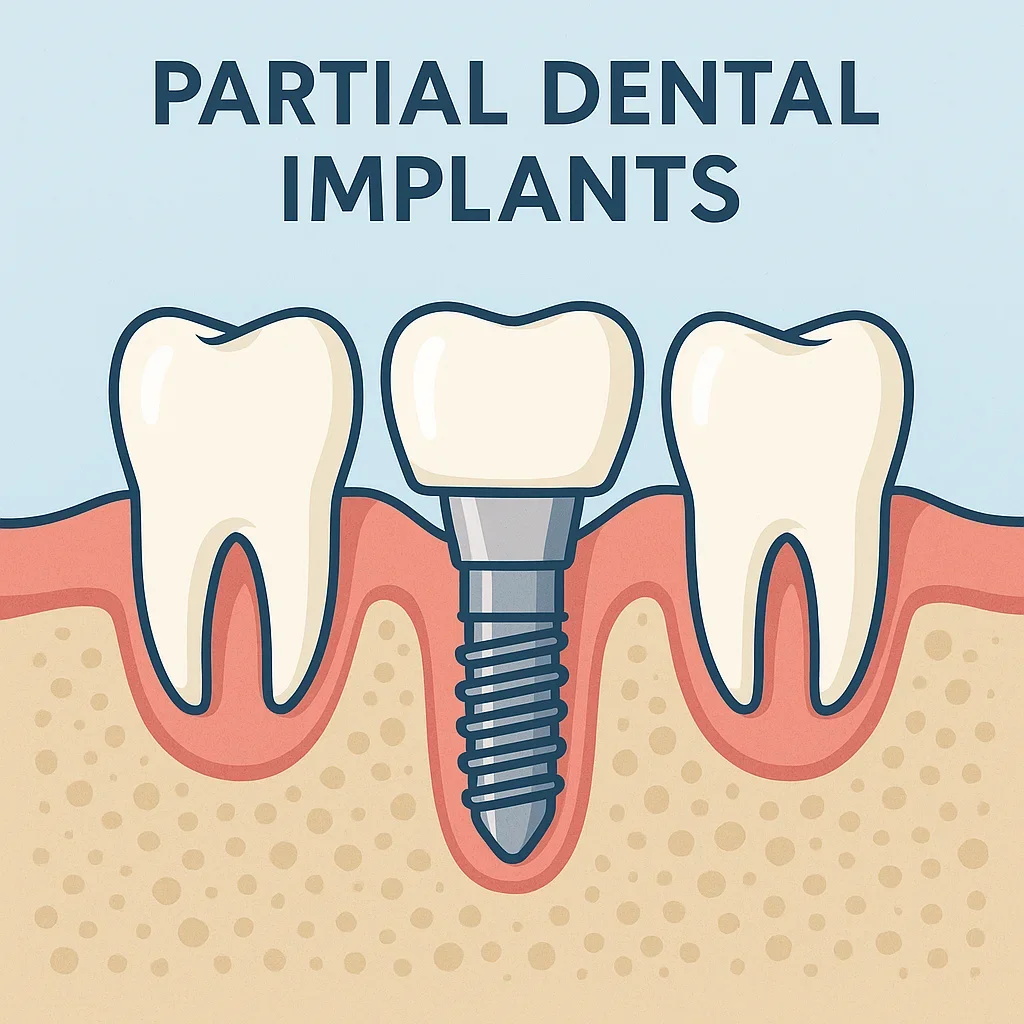
In essence, a partial dental implant consists of three main components: the titanium implant post, the abutment, and the prosthetic tooth (crown or bridge). The titanium post is surgically embedded into your jawbone, acting as an artificial root. Over time, it fuses with the bone through a process called osseointegration. This provides a solid foundation for the dental crown or bridge that sits atop the implant.
How Do Partial Dental Implants Differ from Full Implants?
The key difference lies in the scope of restoration. While full implants are used to restore entire arches of missing teeth, partial dental implants are ideal for patients with gaps between healthy teeth. They preserve as much of the natural tooth structure as possible, making them a conservative and effective treatment choice. 🔍
Patients often choose partial dental implants over removable partial dentures because of the stability and natural feel they offer. Removable dentures can slip, cause discomfort, and require frequent adjustments. In contrast, implants are fixed in place and function just like real teeth.
The Implantation Process
The journey begins with a detailed dental consultation and diagnostic imaging. A treatment plan is tailored based on the patient’s jawbone density, gum health, and overall oral hygiene. If the conditions are favorable, the titanium post is placed into the jawbone under local anesthesia. Healing typically takes a few months, during which the implant integrates with the bone. 🦷 Once healing is complete, the custom crown is attached, and the result is a fully functional and beautiful tooth replacement.
During this process, your dental team will provide guidance on caring for your implant site, managing discomfort, and promoting optimal healing. Temporary crowns or bridges may be placed to fill the gap until your final prosthesis is ready.
Who Typically Needs Partial Dental Implants?
Anyone with one or a few missing teeth, good oral hygiene, and sufficient bone density may be a good candidate for partial dental implants. It’s a perfect option for adults who want a lasting solution without the inconvenience of removable options. These implants are especially beneficial for patients who have lost teeth due to injury, decay, or periodontal disease but still maintain healthy neighboring teeth.
It’s essential to consult with a professional clinic to evaluate your candidacy. You can Redent Klinik Contact Page to schedule a personalized consultation and get expert advice on whether partial implants are right for you.
Trusted by Experts
The American Dental Association supports dental implant treatments as a safe and effective option for tooth replacement. As long as patients follow recommended care guidelines and attend regular dental check-ups, partial dental implants can last decades or even a lifetime.
In conclusion, partial dental implants are an excellent, long-term solution that provides both function and aesthetics. Whether you’re dealing with a single gap or multiple missing teeth, these implants can restore your confidence and oral health. 💪
1. What Are Partial Dental Implants and How Do They Work?
🦷 Partial dental implants are a revolutionary solution for individuals who are missing a few teeth but still have healthy natural teeth remaining. Unlike traditional full-mouth implants or removable dentures, partial dental implants are designed to replace one or more missing teeth without affecting the adjacent natural teeth. They provide a permanent, stable, and aesthetically pleasing option that blends seamlessly into your existing smile.
In essence, a partial dental implant consists of three main components: the titanium implant post, the abutment, and the prosthetic tooth (crown or bridge). The titanium post is surgically embedded into your jawbone, acting as an artificial root. Over time, it fuses with the bone through a process called osseointegration. This provides a solid foundation for the dental crown or bridge that sits atop the implant.
How Do Partial Dental Implants Differ from Full Implants?
The key difference lies in the scope of restoration. While full implants are used to restore entire arches of missing teeth, partial dental implants are ideal for patients with gaps between healthy teeth. They preserve as much of the natural tooth structure as possible, making them a conservative and effective treatment choice. 🔍
Patients often choose partial dental implants over removable partial dentures because of the stability and natural feel they offer. Removable dentures can slip, cause discomfort, and require frequent adjustments. In contrast, implants are fixed in place and function just like real teeth.
The Implantation Process
The journey begins with a detailed dental consultation and diagnostic imaging. A treatment plan is tailored based on the patient’s jawbone density, gum health, and overall oral hygiene. If the conditions are favorable, the titanium post is placed into the jawbone under local anesthesia. Healing typically takes a few months, during which the implant integrates with the bone. 🦷 Once healing is complete, the custom crown is attached, and the result is a fully functional and beautiful tooth replacement.
During this process, your dental team will provide guidance on caring for your implant site, managing discomfort, and promoting optimal healing. Temporary crowns or bridges may be placed to fill the gap until your final prosthesis is ready.
Who Typically Needs Partial Dental Implants?
Anyone with one or a few missing teeth, good oral hygiene, and sufficient bone density may be a good candidate for partial dental implants. It’s a perfect option for adults who want a lasting solution without the inconvenience of removable options. These implants are especially beneficial for patients who have lost teeth due to injury, decay, or periodontal disease but still maintain healthy neighboring teeth.
It’s essential to consult with a professional clinic to evaluate your candidacy. You can Redent Klinik Contact Page to schedule a personalized consultation and get expert advice on whether partial implants are right for you.
Trusted by Experts
The American Dental Association supports dental implant treatments as a safe and effective option for tooth replacement. As long as patients follow recommended care guidelines and attend regular dental check-ups, partial dental implants can last decades or even a lifetime.
In conclusion, partial dental implants are an excellent, long-term solution that provides both function and aesthetics. Whether you’re dealing with a single gap or multiple missing teeth, these implants can restore your confidence and oral health. 💪
2. Benefits of Choosing Partial Dental Implants Over Dentures
When it comes to replacing missing teeth, patients often find themselves choosing between partial dental implants and traditional removable dentures. While both options aim to restore dental function and aesthetics, partial dental implants offer several distinct advantages that make them the preferred choice for many individuals seeking long-term oral health solutions. 😁
1. Unmatched Stability and Comfort
Unlike dentures that sit on the gums and rely on adhesives or suction to stay in place, partial dental implants are anchored directly into the jawbone. This means they don’t shift, slip, or cause discomfort during talking or eating. Patients often describe implants as feeling just like natural teeth, providing a seamless and stable experience that improves their quality of life.
Loose dentures can cause sore spots, blisters, and even speech issues. In contrast, partial dental implants eliminate these common problems by offering a fixed and secure structure that doesn’t move around in the mouth.
2. Preservation of Jawbone and Facial Structure
One of the most significant long-term benefits of partial dental implants is their ability to prevent bone loss. When teeth are missing, the jawbone begins to deteriorate due to lack of stimulation. Dentures sit on top of the gums and do nothing to stop this process. On the other hand, implants stimulate the jawbone just like real tooth roots, maintaining bone density and helping preserve the shape of the face over time.
This benefit is especially important for maintaining a youthful facial appearance. Patients who opt for partial dental implants often avoid the sunken look that sometimes results from prolonged denture use. 💀➡️😊
3. No Need to Alter Healthy Teeth
In the case of traditional bridges, the adjacent healthy teeth must be filed down to anchor the prosthesis. This irreversible alteration can weaken those teeth over time. With partial dental implants, there’s no need to affect neighboring teeth. The implant stands independently, preserving the integrity of your remaining natural teeth.
4. Superior Aesthetics and Confidence Boost
Partial dental implants are custom-designed to match the color, shape, and size of your natural teeth. This provides a highly aesthetic result that enhances your smile and boosts your self-confidence. Whether you’re laughing, eating, or speaking in public, you’ll feel assured that your smile looks as natural as possible. 🌟
Dentures can appear bulky or artificial, and their constant movement may make some patients self-conscious. Implants eliminate this concern, giving you peace of mind in every interaction.
5. Long-Term Investment with Minimal Maintenance
While partial dental implants may have a higher upfront cost than dentures, they pay off over time. Dentures typically need replacement every 5–7 years, and ongoing relining or adjustments are often necessary. Implants, when properly maintained, can last 20+ years or even a lifetime with no need for frequent repairs.
Maintenance is also simpler. Instead of soaking or removing them nightly, you simply brush and floss as you would with your natural teeth. 🪥 Routine check-ups and cleanings ensure they remain in excellent condition.
6. Enhanced Chewing Ability and Nutrition
With partial dental implants, patients can enjoy a full range of foods — even those that are crunchy, tough, or chewy. Dentures can make it difficult to bite into apples, chew steak, or eat corn on the cob. This often leads to nutritional deficiencies. Implants restore full chewing function, supporting better overall health and diet variety.
7. Boost in Oral Health
Because partial dental implants do not rely on neighboring teeth or gum pressure, they contribute positively to oral hygiene. There’s no need to remove them to clean beneath or worry about trapped food particles as with dentures. Regular brushing and flossing help maintain a healthy environment around the implant site.
Ready to Make the Switch?
If you’re considering a more stable, aesthetic, and long-lasting tooth replacement solution, partial dental implants might be the right choice. Book your consultation through the Redent Klinik Contact Page today to learn more about the benefits and see if you’re a candidate.
Endorsed by Professionals
Organizations such as the American Dental Association recognize dental implants as a safe, effective, and recommended treatment for missing teeth. The evidence is clear — when compared side-by-side, partial dental implants outperform dentures in virtually every category.
3. Are You a Good Candidate for Partial Dental Implants?
Choosing the right tooth replacement solution starts with knowing whether you’re a suitable candidate. Fortunately, partial dental implants are a highly adaptable option for many individuals with one or more missing teeth. If you’re wondering whether this treatment is right for you, several criteria can help determine your eligibility. Let’s explore the characteristics of an ideal implant patient. 🧑⚕️🦷
1. You Have One or More Missing Teeth
The most basic requirement for partial dental implants is having one or a few missing teeth, particularly when the surrounding teeth are still healthy. These implants are designed to fill those gaps, preventing adjacent teeth from shifting and preserving your bite alignment.
Unlike full-mouth solutions, partial dental implants target specific areas, offering a localized approach. Whether you’ve lost a tooth due to trauma, decay, or gum disease, this treatment can provide the stability and function you need.
2. Healthy Gums and Adequate Bone Structure
Successful implantation requires a solid foundation. Candidates must have healthy gums and enough jawbone density to support the titanium post. If your bone has deteriorated, your dentist may recommend a bone graft before placing the implant.
The process of osseointegration — where the implant fuses with the bone — is essential for long-term success. Without a stable jawbone, the implant could fail. Therefore, your oral surgeon may perform a 3D scan or X-ray to assess bone health before proceeding with partial dental implants.
3. Commitment to Oral Hygiene
Maintaining excellent oral hygiene is critical both before and after implant placement. If you’re dedicated to regular brushing, flossing, and professional cleanings, you’ll greatly increase the lifespan of your partial dental implants. 🪥
Neglecting oral hygiene can lead to gum infections like peri-implantitis, which may compromise the implant’s stability. A clean and healthy mouth promotes healing and supports long-term success.
4. Non-Smokers or Those Willing to Quit
Smoking can significantly hinder the healing process and increase the risk of implant failure. The chemicals in tobacco reduce blood flow to the gums and slow down bone regeneration. Dentists often advise patients to quit smoking before undergoing treatment with partial dental implants.
If you’re a smoker but committed to quitting, now is a great time to do so. Not only will you enhance your chances of implant success, but you’ll also improve your overall health.
5. Overall Health Considerations
Chronic conditions such as diabetes, osteoporosis, or immune disorders can impact healing and bone integration. However, well-managed conditions may not disqualify you from receiving partial dental implants. Your dental specialist will evaluate your medical history to ensure that the procedure can be safely performed.
Always disclose all medications and health issues during your consultation. Some medications, particularly bisphosphonates, can affect bone healing and require special consideration.
6. Age Isn’t a Barrier
While children and teens whose jaws are still developing are not candidates, adults of nearly any age can benefit from partial dental implants. Seniors in good general health are increasingly opting for implants over dentures due to their durability and function. 👵👴
If you’re healthy enough for minor oral surgery, you’re likely a candidate regardless of age.
7. You Seek a Long-Term Solution
Implants are a long-term investment in your oral health. If you’re looking for a solution that won’t need to be replaced every few years, partial dental implants offer exceptional longevity. With proper care, they can last decades — much longer than traditional bridges or dentures.
Still Not Sure?
The best way to determine your candidacy is by consulting with a qualified dental implant specialist. Use the Redent Klinik Contact Page to book a personalized evaluation. The dental team will examine your oral health, take necessary images, and design a plan tailored just for you.
Industry Backing
According to the American Dental Association, individualized assessments and comprehensive exams are key to determining implant suitability. By partnering with an experienced team, you’re ensuring the highest chance of success with your partial dental implants.
In summary, if you’re missing a few teeth, have good oral and general health, and are looking for a stable and permanent replacement, you’re likely a great candidate for partial dental implants. Your new smile may be closer than you think! 😊
4. Step-by-Step Procedure: From Consultation to Recovery
Getting partial dental implants is a transformative journey that involves careful planning, precision surgery, and personalized aftercare. Whether you’re replacing a single missing tooth or multiple teeth, the process is designed to restore both function and aesthetics with long-term stability. 🦷 Let’s walk through the full step-by-step procedure so you know exactly what to expect.
Step 1: Initial Consultation and Assessment
Your journey begins with a comprehensive dental consultation. During this appointment, your dentist will evaluate your oral health, review your medical history, and discuss your goals. Advanced imaging tools like panoramic X-rays and 3D CT scans are used to assess bone density, determine implant placement, and rule out any underlying issues.
Patients who choose partial dental implants often do so to replace missing teeth caused by trauma, decay, or gum disease. The initial consultation also helps determine whether a bone graft is needed before implant placement.
Step 2: Treatment Planning
Once you’re deemed a good candidate, your dental team creates a customized treatment plan. This includes the number of implants needed, the type of prosthetic restoration (crown, bridge, or partial denture), and a timeline for each phase of the procedure.
At this stage, you’ll receive information about cost estimates, insurance coverage, and available financing options. For personalized planning, consider contacting the Redent Klinik Contact Page.
Step 3: Tooth Extraction (if necessary)
If you still have damaged or failing teeth in the area, they may need to be extracted prior to implant placement. This is a minor procedure, often done under local anesthesia. In many cases, extractions and implant placement can occur during the same appointment if conditions allow.
Step 4: Bone Grafting (if required)
For patients lacking sufficient bone volume, bone grafting may be necessary to create a stable foundation for the implant. This process involves adding bone material (from a donor source or synthetic graft) to the jawbone. Healing can take several weeks to months depending on the extent of the grafting.
Bone health plays a critical role in the long-term success of partial dental implants, as the implant post must fuse securely with the jaw through osseointegration.
Step 5: Implant Placement Surgery
The titanium implant post is surgically inserted into the jawbone under local anesthesia or conscious sedation. The procedure is typically quick and minimally invasive, especially when guided by 3D digital planning tools. 🛠️
The implant site is then closed with sutures, and a protective healing cap may be placed over the implant. Over the next 3–6 months, the implant integrates with the bone, becoming a permanent anchor for the restoration.
Step 6: Healing and Osseointegration
This phase is crucial. During osseointegration, your bone tissue grows around the implant, securing it firmly in place. While healing times vary, most patients experience minimal discomfort that can be managed with over-the-counter pain relievers.
Your dentist may provide a temporary crown or bridge so you don’t have to live with a visible gap during this stage. Proper care during healing ensures the longevity of your partial dental implants.
Step 7: Abutment Placement
Once healing is complete, a small connector called an abutment is attached to the implant post. This serves as the foundation for your final crown or bridge. The abutment is placed in a minor procedure that usually takes about 20–30 minutes.
Step 8: Final Prosthetic Placement
Your custom-made prosthetic — usually a crown or bridge — is then securely attached to the abutment. It is designed to match your natural teeth in color, size, and shape, providing a seamless and attractive result.
With partial dental implants, your smile will not only look better but function better too. You can chew, speak, and laugh with confidence. 😄
Step 9: Post-Procedure Care and Follow-Up
After placement, your dentist will provide aftercare instructions and schedule follow-up visits to monitor healing and functionality. It’s important to maintain excellent oral hygiene and attend regular cleanings to prevent complications like peri-implantitis.
Routine care, including brushing twice daily, flossing, and avoiding tobacco, ensures the long-term success of your partial dental implants.
Backed by Trusted Institutions
The American Dental Association supports the multi-step approach to implantology and emphasizes proper treatment planning and patient education. Working with an experienced implant specialist ensures each phase of the procedure is executed with precision.
From consultation to final placement, the process of getting partial dental implants is a well-structured and highly rewarding experience. It’s not just about replacing teeth — it’s about restoring your confidence and quality of life. 💪
5. Costs of Partial Dental Implants in the U.S. and Abroad
One of the most common questions patients ask is: 💸 “How much do partial dental implants cost?” The answer varies significantly based on geography, materials, the complexity of the procedure, and whether you receive care in the U.S. or travel abroad for treatment. This section breaks down the cost of partial dental implants and helps you understand what factors impact pricing.
Average Cost in the United States
In the U.S., partial dental implants are a premium dental procedure that offers long-term results. Here’s a general breakdown of costs per implant site:
- Initial Consultation & Imaging: $100–$300
- Implant Placement (per unit): $1,500–$3,000
- Abutment & Crown: $1,000–$2,500
- Total per Tooth: $2,500–$5,500
Note: These prices can increase if additional procedures are needed, such as bone grafting or sinus lifts. If you’re replacing multiple teeth with partial dental implants, some clinics offer bundled pricing or discounts.
Insurance and Financing
Many dental insurance plans in the U.S. classify implants as elective, meaning they are not always covered. However, some policies offer partial reimbursement for portions of the procedure, such as the crown or consultation.
If your insurance doesn’t cover implants, most clinics provide payment plans or third-party financing options like CareCredit to make partial dental implants more accessible.
Cost Comparison: U.S. vs. Abroad
Dental tourism has become a popular option for patients seeking quality care at lower prices. Countries like Turkey, Mexico, Thailand, and Hungary are well-known for their advanced dental facilities and experienced implant specialists. 🌍
Here’s a general comparison:
| Country | Avg. Cost per Implant | Abutment + Crown | Total Estimated Cost |
|---|---|---|---|
| USA | $2,000–$3,000 | $1,000–$2,500 | $3,500–$5,500 |
| Mexico | $800–$1,200 | $600–$1,000 | $1,400–$2,200 |
| Turkey | $700–$1,000 | $500–$900 | $1,200–$1,900 |
| Hungary | $900–$1,300 | $600–$1,000 | $1,500–$2,300 |
Traveling abroad for partial dental implants can result in up to 60% savings, even after accounting for airfare and accommodation. However, it’s vital to choose accredited clinics and review their patient testimonials and certifications. ✈️
Hidden Costs to Consider
In addition to the core procedure, there may be other expenses such as:
- Bone grafting (if needed): $300–$1,500
- Temporary crown: $200–$500
- Follow-up visits and maintenance
- Medications post-surgery
These costs can add up, but they are crucial for a successful outcome with partial dental implants.
Long-Term Value
While partial dental implants are more expensive upfront than dentures or bridges, they offer significant long-term value. Implants don’t need to be replaced every few years and they help preserve jawbone structure, reducing future dental costs. In many cases, patients consider them a lifetime investment. 💎
How to Get an Accurate Quote
To get a clear and personalized estimate, it’s best to consult with an experienced implant provider. Clinics like Redent Klinik offer cost breakdowns based on your unique dental needs, ensuring no surprise fees.
Industry Guidance
The American Dental Association encourages patients to ask for detailed treatment plans, written estimates, and documentation when considering partial dental implants. Transparency is essential in making informed choices.
In conclusion, the cost of partial dental implants varies based on location, complexity, and provider — but with proper planning and research, they can be a cost-effective and life-changing solution for restoring your smile. 😊
6. Comparing Partial Dental Implants vs. Full Implants
When exploring tooth replacement options, it’s essential to understand the differences between partial dental implants and full dental implants. Both offer long-term stability and aesthetics, but they are designed for different patient needs. 🧐 Let’s compare the two options side-by-side to help you decide which solution suits your situation best.
What Are Partial Dental Implants?
Partial dental implants are used to replace one or more missing teeth in a specific area of the mouth. They’re ideal for patients who still have healthy natural teeth and want to preserve them. Rather than replacing an entire arch, partial dental implants target specific gaps, offering a conservative yet permanent solution. 🦷
Each implant consists of a titanium post, an abutment, and a custom crown or bridge that blends with your existing teeth. These implants maintain jawbone density and restore full chewing function.
What Are Full Dental Implants?
Full dental implants, often part of an “All-on-4” or “All-on-6” system, are designed to replace an entire arch of missing teeth. They’re typically recommended for patients who have lost most or all of their teeth in either the upper or lower jaw. This system uses four to six implant posts to support a full arch of prosthetic teeth.
Full dental implants provide a fixed, non-removable solution that looks and functions like a complete set of natural teeth. However, the process is more complex and may require more extensive preparation and healing.
Side-by-Side Comparison
| Feature | Partial Dental Implants | Full Dental Implants |
|---|---|---|
| Number of Teeth Replaced | 1–5 teeth (specific areas) | All teeth in an arch |
| Eligibility | Patients with some natural teeth remaining | Patients with total tooth loss in jaw |
| Cost | Lower (per site) | Higher (but per arch) |
| Function | Restores function in specific gaps | Full restoration of entire arch |
| Procedure Complexity | Simple to moderate | Moderate to complex |
| Maintenance | Regular brushing and flossing | Same, with more cleaning area |
Which One Should You Choose?
If you have lost just a few teeth and want to retain your existing healthy ones, partial dental implants are likely the better fit. They offer stability, aesthetics, and bone preservation without the need for full-mouth restoration.
On the other hand, if you’re dealing with complete tooth loss and desire a full, permanent solution, full dental implants can restore function, improve speech, and enhance your smile. 😁
Recovery and Healing
With partial dental implants, recovery tends to be quicker and less invasive, especially when only one or two implants are placed. Full dental implants often require more surgical time and longer healing periods due to the number of implants involved.
In both cases, osseointegration (bone fusion) is a key part of the healing process. Good oral hygiene and follow-up care are essential to ensure the success of both types of implants.
Longevity and Durability
Whether partial or full, dental implants are built to last. With proper care, they can last 20 years or more. The materials used in both types — usually titanium and ceramic — are biocompatible and highly durable.
That said, partial dental implants may require fewer maintenance appointments simply because there are fewer units involved.
Get Expert Guidance
The best way to determine which option is right for you is to consult with a qualified implant specialist. Visit the Redent Klinik Contact Page to schedule a personalized evaluation and receive a treatment plan tailored to your needs.
ADA Recommendations
The American Dental Association supports both partial and full implant systems and encourages patients to choose based on their oral health status, lifestyle, and budget.
In conclusion, partial dental implants and full dental implants both offer reliable and lasting results. The right choice depends on the extent of tooth loss, overall health, and personal goals. Whichever path you choose, both options will help you reclaim your smile and confidence. 💪
7. Long-Term Care and Maintenance Tips 🪥
Investing in partial dental implants means committing to a long-term solution for your oral health. But like natural teeth, implants require regular care and maintenance to ensure their longevity and performance. The good news? Keeping your implants healthy is straightforward with the right routine and habits. 🧼 Let’s explore how to care for your partial dental implants for years — or even a lifetime — of confident smiles.
1. Daily Brushing and Flossing
Just because partial dental implants aren’t susceptible to cavities doesn’t mean you can skip brushing. Plaque and bacteria can accumulate around the gumline, leading to inflammation or peri-implantitis — a condition similar to gum disease.
- 🪥 Use a soft-bristled toothbrush to clean around the implant crown.
- 🧵 Floss daily using unwaxed dental floss, a water flosser, or interdental brushes.
- 🧼 Use non-abrasive toothpaste to avoid scratching the crown surface.
Brushing twice a day and flossing once daily helps keep your mouth fresh and protects the surrounding gum tissue and bone structure supporting your partial dental implants.
2. Use Antibacterial Mouthwash
Rinsing with an antibacterial, alcohol-free mouthwash reduces harmful bacteria and keeps your gums healthy. This is especially helpful after meals or when you’re on the go and can’t brush immediately.
Some implant dentists may also recommend prescription-strength rinses in the initial healing period or if there are signs of inflammation around your partial dental implants.
3. Schedule Regular Dental Checkups
Routine dental visits — typically every six months — are essential. Your dentist will check the stability of the implants, examine the surrounding tissues, and perform a professional cleaning to remove hardened plaque (tartar).
Professional cleanings also allow your dental team to detect early signs of complications like gum recession or bone loss that could affect your partial dental implants. Early intervention keeps your implants in top condition. ✅
4. Avoid Harmful Habits
Certain behaviors can shorten the lifespan of your partial dental implants. Avoid:
- ❌ Smoking – which hinders gum healing and increases implant failure risk.
- ❌ Chewing on ice, pens, or hard candy – which can crack the implant crown.
- ❌ Teeth grinding (bruxism) – which puts excess pressure on the implant.
If you grind your teeth at night, your dentist may recommend a custom night guard to protect your implants and remaining natural teeth. 🛡️
5. Maintain a Healthy Diet
Nutrition impacts oral health. A balanced diet rich in vitamins, minerals, and hydration supports gum health and bone density around your partial dental implants.
Include foods high in calcium (like leafy greens and dairy), vitamin D (such as eggs and fish), and antioxidants (like berries and green tea). Limit sugar and acidic foods that can harm your gums and enamel.
6. Monitor Your Gums and Report Changes
Keep an eye out for signs of implant trouble, such as redness, swelling, bleeding while brushing, or a loosening feeling. These may indicate inflammation or infection and should be reported to your dentist immediately.
With early detection, most minor issues can be resolved without compromising your partial dental implants.
7. Stay Hydrated and Chew Wisely
Water helps rinse away bacteria and food particles, so drink plenty of it daily. When chewing, distribute pressure evenly across your mouth. Avoid using your implants to open packaging or bite hard objects — they’re strong, but not indestructible.
8. Long-Term Outlook
With proper care, partial dental implants boast success rates of over 95% and can last 20+ years. Unlike dentures that require frequent adjustments, implants are designed for minimal maintenance and optimal performance.
Need Professional Support?
If you’re unsure about your current maintenance routine or need help developing an implant-specific care plan, reach out via the Redent Klinik Contact Page. Their specialists can guide you with personalized advice tailored to your oral health needs.
ADA Backed Guidelines
The American Dental Association emphasizes the importance of regular oral hygiene, professional evaluations, and responsible lifestyle habits in maintaining implant success. By following these guidelines, you’ll ensure your partial dental implants remain healthy and functional for the long haul. 🕒
In short, a little daily care goes a long way in protecting your investment. With good habits and professional oversight, your partial dental implants will continue to support a radiant, confident smile for decades to come. 😁
8. Common Myths About Partial Dental Implants Debunked
Despite their growing popularity, partial dental implants are still surrounded by several misconceptions that may discourage patients from exploring this life-changing solution. In this section, we’ll tackle the most common myths and separate fact from fiction, helping you make a confident, informed decision about your oral health. 🧐
Myth #1: Implants Are Only for People Missing All Their Teeth
This is one of the most common misunderstandings. In reality, partial dental implants are specifically designed for individuals missing just one or a few teeth. They are ideal for people with mostly healthy natural teeth who want to fill gaps without relying on dentures or bridges. 💡
Whether you’ve lost a tooth due to injury, decay, or gum disease, partial dental implants can restore function and appearance without needing full-mouth reconstruction.
Myth #2: Partial Dental Implants Are Painful
Many people assume that implant surgery is extremely painful, but that’s far from the truth. The procedure is usually performed under local anesthesia, and most patients report minimal discomfort. In fact, the recovery from partial dental implants is often smoother than that of a tooth extraction.
Mild swelling or soreness may occur for a few days, but this can be managed with over-the-counter pain relievers. Most patients return to normal activities within 24–48 hours.
Myth #3: They Look Fake
Another myth is that partial dental implants don’t look natural. In reality, implant crowns are custom-made to match the color, size, and shape of your surrounding teeth. Most people won’t even realize you have an implant. 🦷✨
When done by a skilled dental professional, your partial implants will blend seamlessly with your natural smile.
Myth #4: They Require Complex Maintenance
Some believe that implants need special care routines or extra tools. Fortunately, maintaining partial dental implants is simple. All you need is a regular toothbrush, floss, and a good oral hygiene routine.
There’s no need to remove them at night like dentures, and they don’t require soaking or adhesives. Just brush, floss, and schedule routine dental checkups as you would with your natural teeth. 🪥
Myth #5: They’re Too Expensive for Most People
While partial dental implants may have a higher initial cost compared to dentures, they are a long-term investment. Dentures need frequent replacements, relining, and can lead to bone loss — all of which add hidden costs over time.
Many dental clinics offer flexible payment plans and financing to make implants more accessible. You can also check with your insurance provider to see if partial coverage is available.
Myth #6: Implants Can Fall Out
Unlike removable dentures, partial dental implants are surgically placed into the jawbone. Once healed through osseointegration, they become a permanent part of your mouth. The chances of an implant “falling out” are extremely rare when placed and maintained correctly.
Implant failures typically result from poor oral hygiene, smoking, or systemic health issues — all of which can be managed with professional guidance.
Myth #7: Older Adults Can’t Get Implants
Age is not a limiting factor for partial dental implants. Many seniors in their 60s, 70s, and even 80s have successfully received implants and enjoy excellent results. As long as you are in good overall health and have adequate bone density, you can be a candidate for implants regardless of your age. 👵👴
Myth #8: Implants Aren’t Worth the Hassle
The process of getting partial dental implants involves multiple steps, but each is necessary for long-term success. From consultation to final crown placement, every stage is designed to ensure optimal functionality and aesthetics.
With proper care, implants can last decades — making them far more convenient in the long run compared to removable solutions.
Get the Facts From Trusted Professionals
If you’re unsure whether implants are right for you, reach out to experienced providers. The team at Redent Klinik can evaluate your case and provide honest, professional recommendations.
Evidence from Reputable Sources
The American Dental Association supports dental implants as a safe, effective, and reliable method of tooth replacement — debunking many of the myths still circulating online.
Don’t let misinformation stop you from improving your smile. With proper knowledge and a trusted dental provider, partial dental implants can be one of the best decisions you’ll make for your oral health. 🧠✔️
9. Finding the Best Clinic for Partial Dental Implants Near You
Choosing the right dental clinic for your partial dental implants is just as important as the procedure itself. The skill and experience of the dental team play a major role in the success, aesthetics, and longevity of your implants. In this section, we’ll explore what to look for when selecting the best clinic near you, including the right credentials, technology, patient reviews, and personalized care. 🏥
1. Prioritize Experience and Implant Expertise
Not all dentists are trained in implantology. Look for clinics that have a dedicated dental implant specialist or oral surgeon with proven experience in placing partial dental implants. Ask about the number of procedures they’ve performed and their success rates.
Experienced providers are better equipped to handle complex cases, bone grafts, or custom crown fittings, ensuring that your treatment is tailored precisely to your anatomy and needs.
2. Check for Modern Technology
Top clinics use state-of-the-art tools such as digital X-rays, CBCT 3D imaging, and computer-guided implant placement. These technologies increase precision, reduce surgical risks, and enhance outcomes for partial dental implants.
If a clinic offers a full digital workflow — from diagnosis to prosthetic design — it’s a good sign they’re committed to excellence and efficiency. 🖥️
3. Read Verified Patient Reviews
Online reviews and testimonials offer real insight into patient satisfaction. Look for consistent feedback about implant success, care quality, follow-up support, and staff professionalism. Pay attention to reviews specifically mentioning partial dental implants.
Websites like Google Reviews, RealSelf, or Healthgrades can be valuable resources. You can also ask the clinic for before-and-after photos or to speak with past patients.
4. Assess Personalized Consultation Services
The best clinics don’t offer one-size-fits-all treatment. They take time to understand your oral health status, goals, and budget. During your consultation, they should:
- Perform a detailed exam and imaging
- Explain each step of the partial dental implants process
- Provide a written treatment plan with timeline and costs
- Discuss available sedation or comfort options
Transparency is key. Avoid clinics that rush or skip over important details. 🗂️
5. Consider the Full-Service Factor
Does the clinic handle the entire procedure — from surgery to final restoration — in-house? Full-service clinics simplify the process and reduce errors caused by third-party labs or external referrals.
Having one team oversee your partial dental implants ensures consistent communication and quality control throughout your treatment journey.
6. Look for International Certifications (If Abroad)
If you’re considering dental tourism, ensure the clinic has international accreditations or ISO certifications. Countries like Turkey offer world-class treatment at affordable prices, but you must choose a reputable provider.
Redent Klinik Contact Page is a great example of a trusted implant provider offering advanced techniques, personalized plans, and high patient satisfaction rates.
7. Ask About Aftercare Support
Aftercare is critical for the longevity of partial dental implants. Your clinic should offer follow-up appointments, cleaning schedules, and emergency support if complications arise.
Good clinics educate you on implant hygiene, provide written care guides, and make it easy to schedule checkups. 🩺
8. Compare Cost and Value
Implants are an investment — so focus on value, not just price. Some clinics offer lower prices but use outdated methods or materials. Quality care may cost more upfront but saves you from future complications.
Ask for itemized quotes that cover the implant, abutment, crown, imaging, anesthesia, and any additional treatments. This helps avoid hidden fees or surprise charges.
9. Endorsement from Professional Bodies
The American Dental Association encourages patients to verify credentials and select board-certified professionals for implant procedures. Clinics with memberships in respected dental organizations signal high standards of care and ethics.
Final Thoughts
Finding the right clinic for partial dental implants can make the difference between a frustrating experience and a life-changing one. Take your time, do your research, and don’t hesitate to ask questions. Your smile deserves the very best care. 🌟
For trusted guidance and internationally recognized care, visit the Redent Klinik Contact Page to begin your implant journey today.