
Finding the right payment plan for teeth implants can make all the difference between postponing your dental care and achieving the confident smile you deserve. Dental implants are one of the most effective long-term solutions for missing teeth, offering both functional and aesthetic benefits. However, the cost can often feel overwhelming. That’s why understanding your payment options — from flexible installment plans to interest-free financing — is essential. This guide will help you explore every possible route to make your implant treatment more affordable and stress-free. 😁
Let’s start with the basics. A payment plan for teeth implants is an arrangement between the dental clinic and the patient, allowing the total treatment cost to be divided into manageable monthly payments. Instead of paying thousands of dollars upfront, patients can spread the expense over several months or even years. This not only helps with budgeting but also enables access to high-quality dental care without financial strain. Clinics like Redent Klinik Contact Page provide flexible solutions for both local and international patients, ensuring everyone can find a plan suited to their financial situation.
Dental implant procedures typically include multiple stages — consultation, imaging, implant placement, healing, and prosthetic attachment. Each phase comes with its own costs, which can range from $1,000 to $5,000 per implant, depending on complexity and location. That’s where the concept of a payment plan for teeth implants becomes invaluable. Instead of facing a single lump-sum bill, you can choose installment structures designed to fit your monthly income and treatment schedule.
Many dental clinics collaborate with third-party financing companies such as CareCredit or offer in-house installment programs. These payment systems often include 0% interest options for a specific period or low-interest plans over extended durations. Imagine being able to pay just $100–$200 per month instead of a $3,000 upfront cost. That’s a significant relief for many patients, especially those undergoing multiple implants or full-mouth restoration.
Beyond financial flexibility, a customized payment plan for teeth implants also supports better oral health outcomes. Patients are less likely to delay necessary treatments, reducing the risk of bone loss or misalignment caused by missing teeth. This proactive approach not only improves your smile but can also help maintain overall dental health in the long term. In other words, affordability directly contributes to better health results. 🌟
It’s also important to note that different clinics may offer various structures of payment plans. Some divide the total treatment cost evenly, while others tie payment milestones to specific phases of the procedure — for example, 30% before surgery, 40% after implant placement, and the remaining 30% once the crown is fitted. Understanding these breakdowns helps patients make informed decisions about what fits their budget best. Additionally, some clinics allow early repayment without penalties, making it easier for patients who want to complete their payments ahead of schedule.
For those considering treatment abroad, especially in popular dental tourism destinations like Turkey 🇹🇷, the benefits are even greater. Clinics such as Redent Klinik provide cost-effective implant treatments combined with flexible financing options for international patients. Many foreigners choose Turkey because implant costs can be up to 70% lower than in the US or UK, even when factoring in travel expenses. And with the added advantage of a structured payment plan for teeth implants, it becomes an unbeatable solution for patients worldwide.
While affordability is key, transparency also matters. Always ask your clinic for a detailed breakdown of costs, including the implant type (titanium or zirconia), the number of implants, and any additional procedures like bone grafting. Some plans may include hidden administrative fees, while others may offer discounts for paying a portion upfront. It’s wise to read the fine print and ensure you understand the interest rate, duration, and total repayment amount before signing any agreement.
Another valuable tip is to verify whether your plan complies with dental standards set by professional associations such as the American Dental Association. Accredited clinics usually maintain transparent payment structures and follow ethical financing practices. They prioritize patient satisfaction and trust, ensuring that financial terms are as clear as the clinical outcomes promised.
In summary, finding the right payment plan for teeth implants can transform what seems like a major investment into a manageable step-by-step process. With flexible monthly options, transparent pricing, and international affordability, your dream smile is closer than ever. Whether you choose in-house financing or partner programs, the key is to balance your oral health goals with financial comfort. Take time to compare plans, read the terms carefully, and discuss all options with your dental provider — because every smile deserves both care and convenience. 💎
Why a Payment Plan for Teeth Implants Makes Dental Care Accessible
Many people postpone dental implant treatment because of cost concerns, but a payment plan for teeth implants makes it possible to receive top-quality care without financial stress. The rising popularity of dental implants reflects their life-changing benefits — from restoring natural chewing ability to improving confidence and facial harmony. Yet, their price tag can seem intimidating at first glance. With flexible financing options, however, patients can begin treatment immediately and pay gradually in a way that suits their income and lifestyle. 🌟
Dental Implants: A Smart Investment in Your Oral Health
Before discussing affordability, it’s important to understand the true value of dental implants. They are designed to replace missing teeth permanently, using titanium or zirconia posts surgically placed into the jawbone. These posts act as artificial roots, supporting crowns, bridges, or dentures that look and function like natural teeth. While the initial cost may appear high, implants offer unmatched durability — often lasting a lifetime with proper care. Unlike removable dentures, implants prevent bone loss and facial collapse, maintaining a youthful appearance for decades.
However, the initial cost for dental implants can range from $1,000 to $5,000 per tooth in many Western countries. For patients needing multiple implants, this can easily exceed $10,000. That’s where a payment plan for teeth implants becomes invaluable. By dividing the total expense into smaller monthly payments, dental clinics allow patients to proceed with treatment without exhausting their savings. This means access to modern dentistry is no longer a privilege — it’s a realistic goal for anyone prioritizing their oral health. 🦷
How Payment Plans Eliminate Financial Barriers
The most powerful benefit of a payment plan for teeth implants is financial accessibility. Traditional dental payments often require upfront costs that discourage patients from seeking treatment. Flexible payment plans, on the other hand, work like personalized financing tools. They allow you to pay in manageable portions — often over 6, 12, or even 24 months — making implants affordable for nearly any budget. Many clinics even offer 0% interest plans for a limited time, ensuring you only pay for the actual cost of the procedure without extra financial burden.
Imagine being able to start your implant journey with just a small down payment, followed by monthly installments as low as $100–$200. This structure transforms an overwhelming one-time expense into an achievable step-by-step process. Moreover, it encourages patients to take immediate action rather than delay, reducing long-term oral health risks associated with tooth loss.
Flexible Financing: Empowering Patients Worldwide
Globally, dental tourism destinations such as Turkey 🇹🇷, Hungary, and Mexico have adopted accessible financing systems to cater to international patients. Clinics like Redent Klinik Contact Page offer comprehensive payment plans for teeth implants that accommodate both domestic and overseas visitors. Patients can secure an affordable monthly rate before traveling, ensuring peace of mind and transparency in pricing. This model has transformed Turkey into one of the most sought-after destinations for affordable, high-quality dental implant treatment.
Example Cost Comparison and Savings
Here’s an example breakdown of potential costs based on international averages:
- United States: $3,000 – $5,000 per implant
- United Kingdom: £2,000 – £3,500 per implant
- Turkey: $600 – $1,000 per implant
By choosing a structured payment plan for teeth implants in Turkey, patients can enjoy the same global-quality standards at a fraction of the price. And because financing is available, even international clients can manage payments over time instead of paying the full amount before the procedure.
Emotional and Psychological Benefits of Affordability
Beyond the numbers, affordability also has emotional value. People who can finally afford implants often report improved self-esteem and overall happiness. They can smile, eat, and speak confidently again — simple pleasures that many take for granted. Flexible financial planning provides not only physical restoration but also psychological relief. Patients no longer feel trapped by the limitations of missing teeth or poor-fitting dentures. This empowerment directly ties to emotional well-being and quality of life.
Ensuring Transparency in Your Payment Agreement
When choosing a payment plan for teeth implants, transparency is essential. Patients should always request a written agreement outlining the total cost, installment schedule, and any interest or administrative fees. Reputable clinics are upfront about costs and explain each step clearly. For example, the American Dental Association encourages ethical pricing and patient education to prevent hidden charges or misinformation. Always ensure that your dentist provides a detailed financial plan before proceeding.
Long-Term Value vs. Short-Term Expense
It’s easy to focus on the upfront cost of implants, but think of them as a long-term investment rather than an expense. Unlike dentures or bridges that may need replacement every few years, implants can last decades. Over time, their value far outweighs the cost. By using a flexible payment plan for teeth implants, patients invest in a permanent, natural-looking smile while spreading payments comfortably over time. This makes financial sense and guarantees both health and aesthetic benefits.
In conclusion, a payment plan for teeth implants bridges the gap between financial limitation and high-quality oral healthcare. It opens the door to treatment for countless patients who otherwise might continue suffering from missing teeth. Whether you’re seeking treatment locally or abroad, the key lies in finding a trusted clinic with transparent, flexible financing options that prioritize your comfort and confidence. Affordable dental implants are no longer a dream — they’re a well-planned reality. 💳
Understanding the True Cost of Dental Implants 💰
When considering dental implants, one of the first questions patients ask is: “How much does it really cost?” The answer depends on several factors — including materials, dentist expertise, and any additional procedures. But here’s the good news: a well-structured payment plan for teeth implants makes it possible to manage these costs easily and effectively. Before diving into specific pricing, it’s essential to understand what contributes to the total cost of an implant procedure and how strategic financing can make it more affordable.
Breaking Down the Components of Implant Costs
The price of a single dental implant isn’t just for the visible tooth replacement. It covers multiple components, each critical to long-term success. These include:
- Consultation and Diagnostic Imaging: Before any surgery, patients undergo a detailed examination, often involving X-rays or 3D CBCT scans. These help the dentist plan the implant placement accurately.
- Implant Fixture: This is the titanium or zirconia screw inserted into the jawbone, acting as the root of the artificial tooth.
- Abutment and Crown: The connector (abutment) and the visible crown complete the restoration, crafted to match your natural teeth.
- Surgical Procedure: This includes anesthesia, sterilization, and the labor cost for the dental team performing the surgery.
- Follow-Up Appointments: Post-surgery care and adjustments are crucial to ensure successful healing and stability.
Each of these elements carries its own cost, often totaling between $3,000 and $5,000 per tooth in the United States. In comparison, patients in countries like Turkey 🇹🇷 can receive the same procedure for $600–$1,000 per tooth, including consultations and prosthetic placement. With a payment plan for teeth implants, patients can divide these costs into manageable monthly installments, often without interest for short-term plans.
Factors That Influence Dental Implant Costs
Understanding cost variables helps patients make informed decisions. Key factors include:
- Material Quality: Premium-grade titanium or zirconia implants cost more but last longer and integrate better with the bone.
- Implant Brand: Trusted global brands like Straumann, Nobel Biocare, and Astra Tech ensure quality and long-term durability, often reflected in price.
- Bone Density and Grafting: If bone loss has occurred, additional procedures like grafting or sinus lifting may be necessary, increasing total cost.
- Number of Implants: A single tooth replacement is cheaper than full-mouth restoration, which may require 6–8 implants per arch.
- Clinic Location: Urban centers or Western countries typically have higher labor and facility costs than international dental tourism destinations.
Realistic Price Ranges (Based on Global Averages)
| Region | Average Cost Per Implant | Payment Plan Availability |
|---|---|---|
| United States | $3,000 – $5,000 | Yes (12–36 months) |
| United Kingdom | £2,000 – £3,500 | Yes (6–24 months) |
| Turkey | $600 – $1,000 | Yes (Flexible International Plans) |
| Germany | €2,500 – €4,000 | Yes (0% Interest for 12 months) |
From this comparison, it’s evident that the cost difference can be dramatic. The presence of a payment plan for teeth implants further enhances affordability, particularly for international patients who wish to receive world-class care without the financial burden associated with Western pricing.
How Payment Plans Simplify Cost Management
Many patients delay treatment due to cost anxiety. But flexible financial options eliminate this obstacle. A payment plan for teeth implants allows you to divide the total cost into predictable monthly payments — often as low as $100–$200 per month. Some dental clinics even collaborate with third-party financing companies offering 0% interest for up to 12 months. Longer plans may carry minimal interest, but they still provide a far more manageable path to treatment than paying upfront.
Additionally, clinics such as Redent Klinik Contact Page design customized financing programs for both local and international clients. Patients can choose between short-term installment options or extended payment schedules based on their budget. These personalized solutions make premium dental care accessible to a wider audience than ever before.
Long-Term Value and ROI (Return on Investment)
When evaluating costs, think of implants as an investment rather than an expense. Unlike dentures that require regular adjustments and replacements, implants are designed to last decades — potentially a lifetime. Over time, the return on investment is enormous. You avoid recurrent spending on adhesives, refittings, and discomfort caused by traditional prosthetics. More importantly, implants prevent jawbone deterioration, protecting your facial structure and overall oral health.
Hidden Savings Through Preventive Benefits
Another way a payment plan for teeth implants pays off is by minimizing long-term dental costs. Missing teeth lead to bone loss, shifting teeth, and even gum disease, all of which require costly treatments later. By addressing the issue now with implants, you’re preventing future complications — effectively saving thousands of dollars down the road. A flexible financing plan enables you to act sooner rather than later, preserving both your smile and your budget. 😁
Transparency and Ethical Pricing
It’s vital to work with clinics that are transparent about all costs and fees. Reputable practices clearly outline total pricing, interest rates, and payment timelines in writing. According to the American Dental Association, dental professionals must maintain honesty and clarity in all financial dealings. Patients should avoid clinics that push high-interest financing without full disclosure or that lack certification and reputation.
Ultimately, understanding the full cost of dental implants empowers you to make smarter decisions. With a well-structured payment plan for teeth implants, anyone can access high-quality, long-lasting treatment without compromising financial security. By analyzing total costs, available financing, and expected value, patients can enjoy a radiant, worry-free smile that truly lasts a lifetime. 💎
Types of Payment Plans for Teeth Implants You Should Know
Finding the right payment plan for teeth implants means understanding the different types available. Every patient’s financial situation is unique, and dental clinics have adapted by offering various options to ensure everyone can access top-quality implant care. Whether you prefer interest-free financing, extended installments, or third-party medical credit, there’s a plan designed for your needs. Let’s explore these options in depth so you can make an informed and confident decision. 🦷
1. In-House Payment Plans
An in-house payment plan for teeth implants is one of the most straightforward financing options. This plan is offered directly by the dental clinic without involving external banks or credit companies. Patients typically make an initial down payment—usually between 20% and 30% of the total cost—and then cover the remaining balance through monthly installments.
In-house plans are ideal for individuals who want to avoid credit checks or lengthy approval processes. Clinics like Redent Klinik Contact Page provide customized in-house payment options, allowing patients to choose how long they want to pay—ranging from 6 months to 24 months. This approach keeps dental care affordable and accessible while maintaining full transparency on costs and timelines.
Advantages of In-House Financing
- No third-party involvement or hidden administrative fees.
- Quick approval and personalized terms.
- Patients can start treatment immediately after the first payment.
With an in-house payment plan for teeth implants, you stay in direct contact with your dental provider, ensuring clear communication and trust throughout your treatment journey.
2. Third-Party Financing Programs
Some dental clinics collaborate with trusted financing companies that specialize in healthcare credit. These programs, like CareCredit, Proceed Finance, or LendingClub Patient Solutions, allow you to spread your implant payments over time, typically 6–60 months, depending on the amount borrowed and your credit history.
Patients often qualify for 0% interest for the first 12 months, after which a small interest rate applies. The approval process is fast, and payments can be made automatically through your bank account. Many clinics recommend third-party plans because they allow dental offices to focus on treatment rather than managing payments directly.
When to Choose Third-Party Financing
- If you need extended repayment beyond 24 months.
- If you want to keep your dental and financial transactions separate.
- If you qualify for promotional interest-free offers.
In such cases, a payment plan for teeth implants through a medical credit company provides structure and flexibility while maintaining predictable monthly payments.
3. Insurance-Linked Payment Plans
While most dental insurance policies cover only a portion of implant treatment, combining coverage with a structured payment plan can significantly reduce costs. Patients can pay their share of the treatment balance in installments after insurance has covered the rest. Some clinics coordinate directly with insurers to simplify billing and automatically calculate the patient’s remaining balance.
This hybrid approach is perfect for patients whose insurance covers diagnostic and preparatory procedures but not the full implant. With this setup, the payment plan for teeth implants only applies to the uncovered portion, making it easier to manage.
4. Low-Interest and Zero-Interest Financing Options
Many dental offices and financial institutions now offer special low-interest or zero-interest payment plans. These are especially beneficial for short-term repayment (6–12 months). If you can commit to paying off your balance within the promotional period, you effectively pay no extra fees for financing. Longer-term plans (24–48 months) often have minimal interest rates, usually between 3% and 8%—much lower than traditional credit cards.
For example, a patient might opt for a 12-month 0% interest payment plan for teeth implants worth $3,000, paying $250 per month with no additional charges. This makes budgeting simple and predictable, helping patients avoid unexpected debt accumulation. 💳
5. Pay-as-You-Go or Stage-Based Payment Plans
Implant treatments are typically performed in stages — consultation, implant placement, healing, and crown fitting. Some clinics offer a stage-based payment plan for teeth implants, allowing patients to pay for each stage separately. For instance:
- Consultation and Imaging: Pay an initial $100–$200 fee.
- Implant Placement: 40% of total cost due after surgery.
- Abutment & Crown Placement: Remaining 60% upon completion.
This approach offers flexibility and ensures you pay only for completed work, reducing financial pressure during treatment. It’s especially appealing to patients undergoing multiple implants or complex restorations that span several months.
6. Government or Employer-Supported Dental Plans
In some countries, employers or government programs assist in financing dental treatments through reimbursement or co-payment structures. For example, in the UK and parts of Europe, certain public health programs provide partial coverage for medically necessary implants. Combining these benefits with a payment plan for teeth implants can drastically lower out-of-pocket expenses.
Even in regions without direct subsidies, some employers include dental benefits under health packages, allowing employees to finance procedures using pre-tax income — a strategy that effectively reduces overall treatment cost.
Tip for Patients
Always verify if your employer’s health benefits or flexible spending accounts (FSAs) can be applied toward implants. Using pre-tax funds for your payment plan for teeth implants can save you up to 30% depending on your income bracket.
7. International and Dental Tourism Packages
For patients seeking high-quality care at a lower price, dental tourism has become increasingly popular. Countries like Turkey 🇹🇷, Hungary, and Thailand offer all-inclusive implant packages that include accommodation, airport transfers, and flexible payment options. Clinics like Redent Klinik often provide financing tailored to international patients, allowing them to pay in installments after returning home.
This combination of affordable pricing and structured financing has revolutionized the way global patients view implant treatment. A customized payment plan for teeth implants not only ensures access to world-class dental care but also empowers patients to restore their smiles without financial hardship.
In summary, there’s no single best payment plan—only the best one for your needs. Whether you prefer in-house simplicity, long-term external financing, or staged payments, a payment plan for teeth implants offers flexibility, transparency, and peace of mind. The key is to assess your budget, compare terms, and choose a clinic that aligns with your expectations and financial comfort. With the right plan in place, achieving a perfect, confident smile has never been more attainable. 😄
Monthly Installment Options and How They Work
Choosing a payment plan for teeth implants with monthly installments can transform an expensive treatment into an affordable, stress-free process. Instead of paying thousands upfront, patients can divide the total cost into predictable monthly payments. This structure makes premium dental implant care accessible to more people, enabling them to improve oral health and confidence without financial strain. Let’s explore how monthly installment plans work, their advantages, and the key details to consider before committing. 💰
How Monthly Installment Plans Are Structured
A typical payment plan for teeth implants divides the treatment cost into equal monthly payments over a fixed period, usually ranging from 6 to 60 months. The plan’s duration, down payment, and interest rate depend on the clinic’s policy or third-party financing company involved. Patients may choose shorter plans for faster completion or longer terms for lower monthly payments. For example, a $3,000 treatment can be split into $250 per month for 12 months or $125 per month for 24 months, depending on financial preference.
The clinic may require an initial deposit—often 10–30%—before starting the treatment. The remaining balance is then paid through automatic bank withdrawals or scheduled transfers. Transparency is crucial here; reputable clinics provide clear contracts outlining total payment, interest rates (if any), and repayment terms.
In-House vs. External Monthly Installments
There are two main types of monthly installment structures available through a payment plan for teeth implants:
- In-House Installments: Managed directly by the dental clinic. The advantage is flexibility—patients can negotiate duration and payment size without credit checks. Clinics like Redent Klinik Contact Page excel at providing tailored plans that adapt to each patient’s income and treatment timeline.
- Third-Party Financing: In this setup, an external healthcare financing company like CareCredit, Proceed Finance, or LendingClub manages payments. These plans often include 0% interest for the first 12 months and longer terms up to 60 months at low interest rates (around 5–8%).
Comparison of Payment Models
| Feature | In-House Plan | Third-Party Plan |
|---|---|---|
| Interest Rate | Usually 0% | 0–8% (depending on duration) |
| Approval Process | Immediate (no credit check) | Requires credit verification |
| Flexibility | Highly customizable | Standardized terms |
| Best For | Patients with limited credit or local access | Patients wanting longer repayment |
Interest-Free vs. Low-Interest Monthly Payments
Some dental clinics offer interest-free monthly installments for patients who pay within a short period—typically 6 to 12 months. This option allows patients to spread payments evenly without paying extra fees. However, if the balance isn’t fully paid by the promotional deadline, a small interest rate may apply afterward.
Alternatively, low-interest plans (3–6%) provide greater flexibility for those needing 24–60 months to pay. Although slightly more expensive, these plans make implant treatment accessible to a broader group of patients. When choosing between them, consider how quickly you can realistically complete the payments without affecting your financial stability.
Understanding Down Payments and Eligibility
Down payments act as a commitment to begin treatment. They reassure the clinic and reduce overall financing costs. Depending on the clinic, a down payment can range from 10% to 40% of the total treatment fee. In most cases, patients with good financial records may qualify for lower upfront amounts or even deferred initial payments. However, those with limited credit histories might need to contribute a higher deposit to secure the payment plan for teeth implants.
Automatic Payment Systems and Security
Modern clinics use secure digital payment platforms to automate monthly transactions. This ensures convenience and reliability, reducing the risk of missed payments. Patients typically receive digital invoices or reminders via email or SMS. It’s wise to confirm that the clinic or financing company complies with privacy standards and uses encrypted systems to safeguard personal data.
Tip for Safe Financial Management
Always double-check your account statements during the installment period. Transparent records help you track progress and verify that your payment plan for teeth implants is being applied correctly. Reputable institutions also allow early payments without penalties, helping you clear your balance sooner if desired. 📅
Examples of Monthly Installment Scenarios
Here are realistic examples showing how monthly payment plans can differ based on region and duration:
- Example 1 – United States: $3,500 total cost, 12-month plan, 0% interest = $292 per month.
- Example 2 – United Kingdom: £2,400 total cost, 24-month plan, 4% interest = ~£105 per month.
- Example 3 – Turkey 🇹🇷: $900 total cost, 9-month plan, 0% interest = $100 per month.
These examples show how clinics globally adjust their financing terms to meet diverse financial needs. For international patients, especially those traveling to Turkey for affordable dental tourism, such arrangements make treatment both high-quality and budget-friendly.
Advantages of Monthly Installments
Opting for a monthly installment-based payment plan for teeth implants offers multiple advantages:
- Improved cash flow by avoiding a large upfront payment.
- Immediate access to treatment without waiting to save.
- Predictable and stress-free budgeting.
- Opportunity to select high-end implant materials without cost barriers.
Ensuring Compliance and Ethical Standards
Always ensure your payment agreement aligns with dental industry ethics. The American Dental Association recommends that dental practitioners maintain transparency, inform patients about all costs, and clearly communicate interest rates or penalties. Never sign a financial contract without fully reviewing its terms and confirming there are no hidden fees.
In conclusion, monthly installment options are the backbone of any practical payment plan for teeth implants. They give patients the freedom to restore their oral health without compromising their financial stability. With proper planning, transparent agreements, and a trustworthy dental provider, achieving a confident, healthy smile becomes both realistic and affordable. 🌟
Insurance Coverage vs. Private Payment Plans: What’s Better?
When considering dental implant treatment, one of the most common questions patients ask is whether insurance or a payment plan for teeth implants is the smarter financial choice. Dental implants are a life-changing solution for missing teeth, but they can be costly without a well-structured payment strategy. Understanding how insurance coverage interacts with private financing options will help you make the most cost-effective and stress-free decision for your oral health. 🦷
The Role of Dental Insurance in Implant Treatment
In many countries, dental insurance covers only a limited portion of implant procedures—often excluding the implant post itself. Most policies treat implants as a “cosmetic” rather than a “medical necessity” procedure, meaning coverage may extend only to diagnostic exams, extractions, or prosthetic crowns. Even when partial benefits are available, insurance rarely covers the full implant package. This is why so many patients turn to a payment plan for teeth implants to fill the financial gap.
For instance, a standard insurance plan in the U.S. may reimburse around $1,000–$1,500 per year, leaving a significant balance for the patient to pay. Considering that one implant can cost $3,000 or more, additional financing becomes essential. Moreover, insurance companies often enforce annual caps, deductibles, and waiting periods that restrict when and how much you can claim. Therefore, while insurance provides helpful support, it’s rarely sufficient to cover complex implant treatments entirely.
Example of Limited Insurance Coverage
- Implant fixture: Often not covered or only partially reimbursed.
- Crown or abutment: May be covered as part of restorative treatment.
- X-rays, exams, or consultations: Typically covered under general dental benefits.
- Bone grafts or sinus lifts: Usually excluded from coverage unless medically justified.
Because of these limitations, a well-planned payment plan for teeth implants becomes a practical way to close the gap between what your insurance covers and your total treatment cost.
Private Payment Plans: Greater Flexibility and Control
Private or in-house financing options, on the other hand, are offered directly by dental clinics or through third-party healthcare lenders. Unlike insurance, which dictates strict coverage rules, private payment plans provide total flexibility. Patients can tailor installment lengths, interest rates, and down payments to their own budget.
For example, clinics such as Redent Klinik Contact Page design flexible plans that allow patients to pay monthly over 6–36 months. Some plans even offer 0% interest for short-term agreements, ensuring the patient pays only the actual treatment cost. This system gives patients full control over payment pace and structure—something traditional insurance rarely offers.
Benefits of Private Payment Plans
- No waiting period or eligibility limitations.
- Immediate access to treatment without pre-approval from an insurer.
- Transparent pricing and fixed monthly payments.
- Available to both local and international patients, regardless of insurance status.
For patients without dental coverage, a private payment plan for teeth implants can make treatment affordable, predictable, and accessible—all while avoiding the bureaucratic delays often associated with insurance claims.
Combining Insurance and Payment Plans for Maximum Benefit
One of the smartest financial strategies is combining partial insurance coverage with a structured financing plan. Suppose your insurance covers the crown and examination stages but not the implant fixture or bone graft. In that case, the remaining balance can be placed on a payment plan for teeth implants. This hybrid model ensures that your total out-of-pocket expense is spread out and easier to manage.
Example:
- Total implant cost: $3,500
- Insurance reimbursement: $1,000
- Remaining balance: $2,500
- 12-month 0% interest plan = $208 per month
This structure allows patients to benefit from both insurance savings and flexible financing simultaneously, resulting in the lowest possible monthly burden while still receiving premium-quality care. 💳
International Considerations: Dental Tourism and Insurance Limitations
For patients seeking treatment abroad—particularly in countries like Turkey 🇹🇷—insurance coverage often doesn’t apply. However, clinics catering to international clients provide alternative solutions. Many offer in-house or partner financing systems that enable payment in installments before or after travel. With global dental tourism booming, having a reliable payment plan for teeth implants ensures that patients can access high-quality, affordable care without worrying about cross-border insurance restrictions.
Why Turkey Is a Top Destination for Implant Financing
- Treatment costs up to 70% lower than Western Europe or the U.S.
- Clinics offering multilingual support and international payment systems.
- Flexible installment structures with 0% short-term financing.
These advantages make Turkey a preferred choice for patients seeking both affordability and professional expertise in implantology.
Evaluating Long-Term Financial Impact
It’s essential to look beyond immediate costs when deciding between insurance and private payment options. Insurance may save you a few hundred dollars initially, but its limits could delay treatment or restrict your choices of materials or specialists. A payment plan for teeth implants provides full freedom in choosing implant brands, treatment timelines, and dental professionals without compromising quality. Over time, this control leads to better oral health outcomes and higher overall satisfaction.
Transparency and Ethical Financing Practices
Always review your clinic’s financial agreement before signing. Ethical clinics provide full cost breakdowns and clear terms, ensuring no hidden fees or surprise charges. According to the American Dental Association, transparent communication between patient and dentist is fundamental for building trust in long-term treatment plans. If you’re unsure about the fine print, ask your dentist to explain every term of the payment plan for teeth implants in plain language.
In conclusion, while dental insurance provides limited relief, private and hybrid payment options offer true freedom and predictability. A customized payment plan for teeth implants allows you to start treatment immediately, maintain high-quality standards, and manage expenses without financial stress. By combining flexibility, transparency, and control, it delivers a smarter path toward a confident, lasting smile. 🌟
Low-Interest and 0% Financing Plans for Dental Implants
One of the most appealing aspects of a well-designed payment plan for teeth implants is the ability to choose between low-interest and 0% financing options. These plans are ideal for patients who want premium dental care without the burden of high-interest debt. By spreading out payments in manageable installments, you can restore your smile and protect your budget simultaneously. Let’s explore how these financing plans work, their advantages, eligibility criteria, and what to watch out for before signing up. 💳
What Are 0% Financing Plans?
A 0% financing plan is a type of payment plan for teeth implants that allows patients to pay the total treatment cost over time without any added interest. Essentially, you pay the exact cost of your dental implants in monthly installments—no extra fees, no hidden charges. These offers are typically available for short-term durations, such as 6, 12, or sometimes 18 months.
For example, if your dental implant procedure costs $3,000, you could pay $250 per month for 12 months with zero additional interest. This structure is perfect for individuals who want to manage payments comfortably while avoiding unnecessary financing costs. Clinics offering such plans often collaborate with trusted financial providers or manage them directly in-house for greater flexibility.
How Low-Interest Financing Works
Low-interest financing plans come into play when patients need longer repayment periods—24 to 60 months. While they include a small interest rate (typically between 3% and 8%), the payments are more affordable month-to-month. This option is especially beneficial for patients undergoing multiple implant placements or full-mouth restorations where the total cost can exceed $8,000–$10,000.
In this case, a payment plan for teeth implants at 5% interest over 48 months might result in monthly payments of around $230–$250, making it easier to manage than paying upfront. The key advantage of these low-interest plans is that they keep dental care accessible for every income level without forcing patients to compromise on quality or timing.
Comparison Between 0% and Low-Interest Options
| Feature | 0% Interest Plan | Low-Interest Plan |
|---|---|---|
| Typical Duration | 6–18 months | 24–60 months |
| Interest Rate | 0% | 3%–8% |
| Ideal For | Short-term affordability | Long-term budget flexibility |
| Down Payment | Usually 10%–20% | Optional or flexible |
By comparing both options, patients can select the structure that best fits their financial circumstances. Some even start with a 0% interest plan and later convert to a longer low-interest arrangement if extra time is needed.
Eligibility Requirements for Financing
Applying for a payment plan for teeth implants—whether 0% or low-interest—usually involves a simple process. Eligibility depends on the patient’s financial stability, credit history, and sometimes, proof of income. Clinics that offer in-house plans are generally more flexible and may not require credit checks, while third-party financing companies often assess your credit score to determine eligibility.
To increase approval chances, patients should ensure their financial documents are up-to-date and accurate. It’s also recommended to ask about joint applications, where a family member can co-sign to improve qualification odds.
Quick Checklist Before Applying
- Review your credit score (if applicable).
- Prepare proof of income or employment.
- Ask about early payment discounts or incentives.
- Read the terms carefully—especially about missed payment penalties.
Advantages of Choosing 0% and Low-Interest Options
The greatest benefit of these plans is financial predictability. Patients know exactly how much they’ll pay each month, with no surprise charges. Moreover, these financing programs make high-end dental materials and technology available to a wider audience. Rather than settling for cheaper, less durable alternatives, patients can access top-quality titanium or zirconia implants using a structured payment plan for teeth implants that fits their budget.
Additional advantages include:
- Immediate Treatment Access: Start your implant journey without delay.
- No Credit Card Debt: Financing is separate from standard consumer credit.
- Improved Cash Flow: Maintain your monthly savings while paying in small increments.
- Customizable Terms: Adjust duration, down payment, and total limits according to need.
International Availability of Low-Interest Implant Financing
Dental tourism destinations, such as Turkey 🇹🇷, are now incorporating 0% and low-interest payment systems into their service packages. Clinics like Redent Klinik Contact Page collaborate with international payment gateways, allowing foreign patients to pay securely through online installments. This innovation has made advanced implantology treatments accessible globally, offering Western-level quality at affordable prices.
Patients from the UK, Europe, and the U.S. increasingly choose Turkey not only for lower overall costs but also for the ease of flexible payment arrangements. Even after returning home, patients can continue their monthly payments online through secure systems supported by global financial partners. 🌍
Ensuring Transparency in Financing Terms
Transparency is essential in any financial agreement. Always ensure that the total cost—including interest (if any)—is disclosed before signing. Reputable clinics should provide written documentation detailing installment amounts, payment dates, and cancellation policies. According to the American Dental Association, dental professionals have an ethical responsibility to explain every financial condition clearly. If a clinic hesitates to provide this information in writing, consider it a red flag.
Common Mistakes to Avoid
- Failing to confirm whether 0% interest expires after a certain period.
- Overlooking hidden processing or administrative fees.
- Assuming all clinics offer the same financing flexibility.
Example Scenarios for Patients
Let’s look at a few examples to understand how a payment plan for teeth implants can help different patient types:
- Case 1 – Single Implant: Cost: $1,000 | Plan: 10-month 0% financing = $100/month.
- Case 2 – Two Implants: Cost: $2,500 | Plan: 24-month low-interest financing = $110/month at 5% interest.
- Case 3 – Full Mouth Restoration: Cost: $8,000 | Plan: 48-month financing = $185/month at 6% interest.
These examples demonstrate how financing transforms large expenses into manageable steps without compromising on quality or materials.
In conclusion, both low-interest and 0% financing plans provide an excellent opportunity for patients to receive premium dental care while maintaining financial balance. A transparent, customized payment plan for teeth implants allows you to enjoy the life-changing benefits of implants—comfort, confidence, and oral health—without overwhelming your finances. By carefully selecting the right plan and working with a trusted clinic, you can achieve a beautiful, lasting smile on your terms. 😁
How to Qualify for a Dental Implant Payment Plan
Securing a payment plan for teeth implants is one of the most practical ways to make dental treatment affordable, but not everyone knows the qualification process or requirements. Whether you’re seeking an in-house installment plan or third-party financing, understanding eligibility factors and preparation steps will increase your chances of approval. This section explains how to qualify, what documents are required, and how to choose the plan that best fits your financial situation. 🦷
Understanding Basic Qualification Requirements
Most dental clinics and financing institutions evaluate three main factors when offering a payment plan for teeth implants: creditworthiness, income stability, and treatment scope. While each clinic has its own policies, these common criteria ensure patients can meet their financial commitments while accessing premium dental care.
- Credit Score: A good credit score (typically 600 or higher) increases approval odds for third-party financing. Clinics offering in-house plans are usually more flexible and may not require a credit check at all.
- Proof of Income: This verifies your ability to make consistent monthly payments. Pay stubs, tax records, or bank statements are commonly accepted.
- Down Payment Capability: Some plans ask for an upfront payment—usually 10–30%—before the implant procedure begins.
Tip:
If your credit score is low, consider choosing a clinic like Redent Klinik Contact Page, which specializes in flexible in-house options that don’t rely on credit checks. They focus on your overall financial situation and treatment needs rather than strict credit history. 🌟
Documents You May Need to Apply
To streamline your approval process, gather the following documents before applying for a payment plan for teeth implants:
- Valid government-issued ID (passport, driver’s license, or national ID)
- Proof of residence (utility bill or lease agreement)
- Proof of income (recent pay slips, employer verification, or tax documents)
- Credit report (if required by external financing institutions)
Having these documents ready can speed up your approval process, often enabling same-day or next-day confirmation so treatment can begin immediately.
Types of Eligibility Based on Plan Category
Different financing models have different requirements. Here’s what you can expect from the most common payment plan for teeth implants categories:
1. In-House Payment Plans
These plans are managed directly by the dental clinic. Approval is simple and based primarily on your relationship with the clinic and proof of steady income. In-house plans are best suited for patients with no or limited credit history, offering high flexibility with minimal paperwork.
2. Third-Party Financing
External healthcare lenders like CareCredit, Proceed Finance, or LendingClub have formal application processes that require a credit check. They may offer promotional 0% interest periods or extended terms up to 60 months. Patients with higher credit scores enjoy better interest rates and longer durations.
3. Employer or Insurance-Linked Financing
Some employers provide dental financing through payroll deductions or partnerships with financial institutions. Similarly, insurance companies may offer premium payment plans for implants, where the insurer covers part of the cost upfront and the patient pays the remainder through monthly installments.
Improving Your Eligibility
If you’re concerned about qualifying for a payment plan for teeth implants, several strategies can help improve your chances:
- Co-Sign with a Family Member: Adding a co-signer with a stronger credit history can help you qualify for better terms.
- Increase Your Down Payment: Offering a larger upfront payment lowers the lender’s risk and can result in a lower interest rate.
- Choose Shorter Terms: Opting for 6–12 month plans instead of 36–48 months can simplify approval, especially for 0% interest offers.
- Provide Consistent Financial Records: Organize bank statements and income proof to demonstrate stability and reliability.
Case Example:
Maria, a teacher earning $3,500 per month, applied for a $3,000 implant procedure. She provided recent payslips and a 20% down payment, qualifying instantly for a 12-month, 0% interest payment plan for teeth implants. Her monthly payment was only $200, making the treatment affordable and stress-free.
International Patient Qualification
Patients traveling abroad for dental tourism often wonder if they qualify for financing. Many clinics in countries like Turkey 🇹🇷 and Hungary now offer remote approval systems for international clients. Patients can submit digital documents before arrival, ensuring pre-approval for their payment plan for teeth implants. After treatment, payments continue through secure online transfers or credit card billing agreements.
This innovation helps international patients benefit from high-quality, affordable care while managing payments conveniently from their home countries. Clinics like Redent Klinik are pioneers in this approach, blending affordability, transparency, and ease of access for global patients.
Ethical Standards and Transparency in Qualification
Reputable clinics follow ethical financing practices consistent with the American Dental Association guidelines. They ensure patients understand all financial terms before signing, including interest rates, penalties for missed payments, and total repayment amounts. Transparency builds trust and prevents future disputes, ensuring both parties are aligned from the start.
Warning Signs of Unethical Offers
- Unclear or hidden administrative fees.
- Pressure to sign contracts without full explanation.
- No written documentation of financial terms.
Final Thoughts on Qualification
Qualifying for a payment plan for teeth implants is easier than many expect, especially with proper preparation. Whether you’re applying for in-house financing, third-party credit, or international installment plans, the process can be straightforward with the right documentation and communication. By demonstrating income stability and choosing a trusted dental provider, you can confidently begin your implant treatment without worrying about financial strain.
In essence, the goal of any payment plan for teeth implants is to make essential dental care accessible to everyone. With flexible terms, ethical transparency, and global options, these financing models ensure that restoring your smile is no longer a luxury—it’s an achievable reality. 😁
Tips to Choose the Best Payment Plan for Your Budget
Selecting the right payment plan for teeth implants is a crucial decision that directly affects your financial comfort and long-term satisfaction with your dental treatment. Since dental implants can be a significant investment, the best plan is one that balances affordability, flexibility, and transparency. In this section, we’ll break down actionable steps to help you identify which plan fits your personal financial situation—without compromising the quality of care you receive. 💰
Start with a Clear Cost Estimate
Before deciding on any payment plan for teeth implants, request a comprehensive written quote from your dental clinic. This should include the total cost of implants, materials, lab fees, consultations, and potential additional treatments such as bone grafting or sinus lifts. Avoid vague verbal estimates; a transparent cost sheet helps you calculate realistic monthly installments and compare offers among different clinics.
For example, clinics like Redent Klinik Contact Page provide itemized estimates upfront. Knowing your exact total helps you determine whether a 6-month or 24-month payment plan would fit better into your monthly budget. Without this step, even a well-intentioned plan can create unexpected financial pressure later on.
Evaluate Your Monthly Financial Capacity
Understanding how much you can comfortably allocate each month is key. Financial experts recommend that healthcare-related payments not exceed 10–15% of your monthly income. If your net income is $3,000, your dental installment should ideally stay under $300–$450. The best payment plan for teeth implants aligns with this guideline, allowing you to pay consistently without disrupting daily living expenses.
To visualize this balance, create a quick budget table that compares options:
| Plan Duration | Monthly Payment | Total Interest | Recommendation |
|---|---|---|---|
| 6 months | $500 | 0% | Best for short-term affordability |
| 12 months | $250 | 0–3% | Balanced option for moderate budgets |
| 24 months | $130 | 3–6% | Best for extended comfort |
Compare Interest Rates and Fees
While some clinics promote “interest-free” offers, it’s important to confirm whether the 0% period lasts for the entire term or only part of it. Always ask about hidden administrative or setup fees. A trustworthy payment plan for teeth implants will clearly disclose all financial details in writing, so you know the total cost before signing anything.
Even low-interest plans (3–5%) can add up over longer durations. For example, a $4,000 treatment at 5% interest over 36 months costs roughly $4,315 total—still affordable, but something to factor into your budget. The key is transparency; if a clinic avoids discussing final numbers, it’s a red flag.
Assess Down Payment Options
Some clinics require an initial payment before treatment begins. A down payment of 10–30% can lower your monthly installments and may qualify you for better interest rates. If you can afford a larger upfront payment, you’ll reduce the overall financial burden. Conversely, if you prefer minimal upfront costs, look for a clinic offering flexible entry-level terms. A good payment plan for teeth implants should adapt to both approaches without penalizing patients.
Example:
- Total cost: $3,000
- 20% down payment = $600
- Balance: $2,400 split into 12 monthly payments = $200/month
This setup helps you begin treatment immediately while maintaining predictable monthly costs—ideal for patients balancing multiple financial commitments.
Consider Long-Term Value, Not Just Price
When comparing plans, remember that the cheapest isn’t always the best. Focus on the overall value—clinic reputation, implant brand, surgeon experience, and follow-up care. A high-quality clinic with slightly higher payments often delivers better results and fewer long-term complications. A payment plan for teeth implants should enable you to access reliable care, not corner you into low-quality solutions for the sake of saving short-term money.
Moreover, check if your clinic provides warranty coverage on implants. Some include 5–10 year guarantees within their financing package, which increases long-term value significantly. Paying a bit more monthly for guaranteed peace of mind is often the smarter financial choice.
Look for Early Payment or Loyalty Benefits
Many clinics reward patients who pay off their balances early. Ask whether your payment plan for teeth implants allows early repayment without penalties. This flexibility can help you save on interest if your financial situation improves later. Some clinics even offer loyalty discounts or reduced rates for additional procedures, such as whitening or veneer treatments, if you’re an existing financing client.
Tip:
Negotiate for a “no-penalty” clause during your contract signing. Ethical dental providers will honor early payoff agreements in writing, allowing you full control over your payment schedule. 📝
Verify Clinic Credibility and Transparency
Always work with reputable dental providers who are transparent about financial agreements. According to the American Dental Association, clinics should present clear terms regarding costs, timelines, and interest policies before proceeding. Avoid providers that pressure you to sign or claim “limited-time offers” that require immediate payment without documentation.
Read online reviews, request references, and verify credentials to ensure that your chosen provider upholds professional and ethical standards. A responsible clinic will make your comfort and understanding the priority, not just the sale.
Balance Emotional and Financial Readiness
Choosing dental implants is both a medical and emotional decision. While affordability is important, comfort, trust, and peace of mind should also guide your choice. A well-designed payment plan for teeth implants allows you to move forward confidently, knowing that your finances are stable and your treatment is in capable hands.
Final Thoughts
Finding the ideal payment plan for teeth implants involves more than comparing numbers—it’s about achieving balance. The best plan fits your monthly budget, aligns with your long-term goals, and comes from a clinic you trust. By following these steps—requesting transparent pricing, analyzing financial comfort, comparing terms, and ensuring ethical standards—you can make a smart, confident decision. Your new smile shouldn’t come with financial stress; it should come with assurance, flexibility, and lasting satisfaction. 😁
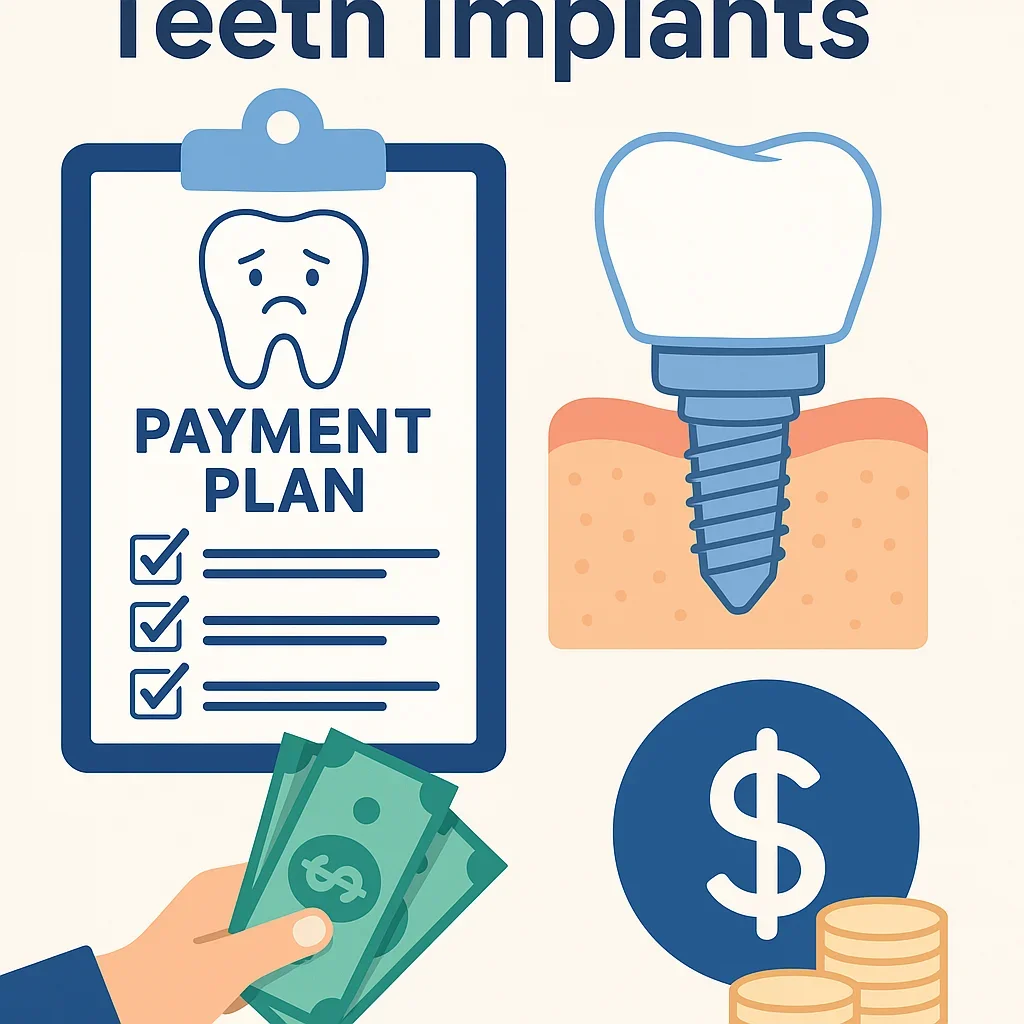
Common Mistakes to Avoid When Choosing a Dental Payment Plan
Selecting a payment plan for teeth implants can make advanced dental treatments affordable, but many patients unintentionally make costly mistakes that lead to financial stress or misunderstandings later. Choosing the wrong plan—or failing to review its terms—can result in hidden fees, missed opportunities for discounts, and even treatment delays. This section breaks down the most common pitfalls patients face and how to avoid them, ensuring your dental implant journey remains smooth, transparent, and financially secure. 🦷
1. Ignoring the Full Cost Breakdown
One of the biggest mistakes patients make is not asking for a complete, itemized quote before signing up for a payment plan for teeth implants. Dental implant procedures often include several stages—consultation, imaging, surgery, abutment placement, and crown fitting—each with its own cost. Some clinics may only quote the base implant price while excluding anesthesia, lab fees, or follow-up visits.
Always request a written estimate that covers every phase of treatment. Clinics like Redent Klinik Contact Page provide transparent breakdowns to help patients understand the total amount due, ensuring there are no unpleasant surprises halfway through treatment. Without full cost visibility, even the most “affordable” plan can quickly become unmanageable.
2. Overlooking Hidden Fees or Interest Accumulation
Not all financing programs are created equal. Some clinics or lenders advertise “low monthly payments” but add administrative fees, insurance surcharges, or high deferred-interest rates after the initial period. If you fail to read the fine print, a 0% interest payment plan for teeth implants could suddenly turn into a high-cost obligation after a few missed payments or delays.
Example of Hidden Cost Pitfalls
- 0% interest for 12 months—but retroactive interest charged if the balance isn’t fully paid by month 13.
- Upfront “processing fees” of $100–$300 added to the first installment.
- Late payment penalties of 5–10% per missed month.
Before signing, confirm whether the 0% period lasts the entire term, what happens if you miss a payment, and whether any penalties apply for early repayment. Ethical clinics will provide written clarity for all such terms, as recommended by the American Dental Association.
3. Choosing the Longest Plan Without Calculating Total Cost
Patients often assume that longer plans are better because they reduce monthly payments. However, the total interest on a 48-month plan can increase your total cost by hundreds or even thousands of dollars compared to a 12-month or 24-month term. When evaluating a payment plan for teeth implants, balance monthly affordability with overall financial efficiency.
Illustrative Comparison
| Plan Duration | Monthly Payment | Total Interest | Total Cost |
|---|---|---|---|
| 12 months (0%) | $250 | $0 | $3,000 |
| 36 months (5%) | $95 | $420 | $3,420 |
| 48 months (7%) | $75 | $600 | $3,600 |
While the lower monthly payment looks attractive, the total amount paid increases significantly over time. The key is to find a balance between short-term comfort and long-term savings.
4. Not Checking for Early Payment or Prepayment Penalties
Some financing contracts penalize patients who wish to pay off their balance early. This is counterintuitive since early payments reduce lender risk. Always ask if your payment plan for teeth implants allows early payoff without additional fees. Reputable dental clinics and financial providers should encourage flexibility rather than restrict it.
Tip:
If your financial situation improves mid-plan, paying off the balance early can save you hundreds in interest. Make sure your contract supports this benefit without penalty. ✅
5. Neglecting Credit Impact and Loan Terms
For patients using third-party lenders like CareCredit or Proceed Finance, each financing application may involve a credit check that can slightly affect your credit score. Repeated applications within a short period could lower your rating. When comparing options for a payment plan for teeth implants, limit applications to only 1–2 reputable providers to maintain credit health.
Additionally, confirm whether the financing is “revolving” (like a credit card) or “installment-based.” Installment loans have fixed monthly payments and end after a set term—ideal for dental implants—while revolving credit lines may carry variable interest rates and indefinite terms.
6. Forgetting to Verify Clinic Credentials
Choosing the right financing means nothing if the clinic itself lacks proper certification or experience. Unfortunately, some unlicensed clinics lure patients with attractive payment offers but compromise on implant quality or post-surgical care. Always verify that your chosen provider is accredited and follows international dental standards. Clinics affiliated with the American Dental Association or recognized European dental associations ensure both financial and clinical transparency.
When in doubt, request proof of implant brand, warranty coverage, and dentist qualifications before finalizing your payment plan for teeth implants. Reputable clinics will gladly provide this information.
7. Overcommitting Beyond Financial Comfort
It’s easy to get excited about restoring your smile and overestimate your financial ability. Committing to high monthly payments might strain your budget later. Experts recommend reviewing your income stability and other ongoing expenses (housing, food, insurance) before finalizing any agreement. A sustainable plan should feel comfortable, not stressful.
In some cases, clinics offer customized hybrid solutions—starting with smaller installments that gradually increase as you complete treatment. Discuss these possibilities with your dentist to tailor a payment plan for teeth implants that adapts to your needs.
8. Failing to Communicate with the Clinic
Communication is vital in maintaining any financing relationship. If you encounter financial hardship or anticipate missing a payment, contact your clinic immediately. Many clinics are willing to reschedule or adjust your payment plan for teeth implants temporarily. Ignoring the situation can lead to penalties or loss of financing privileges.
Final Thoughts: Smart Planning Ensures Success
A payment plan for teeth implants is designed to make life-changing dental treatments accessible to everyone. However, to truly benefit, patients must approach financing with awareness and responsibility. By avoiding common mistakes—such as overlooking fees, choosing unnecessarily long terms, or ignoring transparency—you’ll protect both your finances and peace of mind.
Always remember that a well-chosen plan is more than a financial tool; it’s a bridge to renewed confidence, comfort, and lifelong oral health. Choose carefully, ask questions fearlessly, and work with a clinic that values honesty as much as your smile. 😁