
A well-designed pediatric dentist website is one of the most powerful tools a dental clinic can use to connect with parents and build trust before the first appointment ever takes place. Today, parents search online for reliable healthcare providers, and the first impression they receive usually comes from a clinic’s website. Because of this, a professional pediatric dentist website must be informative, welcoming, easy to navigate, and optimized for search engines. When designed correctly, it not only attracts new patients but also reassures parents that their children will receive safe, compassionate dental care. 😊
The purpose of a pediatric dentist website goes far beyond simply listing clinic services. Parents often visit a dental website with specific concerns about their child’s oral health. They may be searching for information about tooth eruption, cavity prevention, orthodontic evaluations, or how to prepare a child for their first dental visit. A successful pediatric dentist website answers these questions clearly while also presenting the clinic as trustworthy, experienced, and child-friendly.
Parents usually feel anxious when choosing a dentist for their child. A professional pediatric dentist website helps reduce this anxiety by explaining procedures, introducing the dental team, and showing that the clinic understands children’s emotional needs. Images of welcoming treatment rooms, playful décor, and smiling young patients help reinforce the message that visiting the dentist can be a positive experience. This emotional connection is extremely important because pediatric dentistry relies heavily on trust and comfort.
Another essential purpose of a pediatric dentist website is education. Parents often search online for reliable information about children’s oral health. Topics such as fluoride safety, thumb-sucking habits, early orthodontic evaluation, and proper brushing techniques are frequently researched by families. By providing clear educational content, a pediatric dentist website becomes a helpful resource rather than just a marketing page. This educational approach improves credibility and encourages families to return whenever they have questions about dental health.
Professional credibility is another key component. Parents want reassurance that their child’s dentist follows recognized professional standards. For example, linking to trusted organizations like the
American Dental Association helps demonstrate that the clinic respects professional guidelines and stays updated with modern dental practices. Including certifications, continuing education details, and pediatric specialization information on the pediatric dentist website further strengthens trust.
A modern pediatric dentist website also plays a major role in improving accessibility. Parents are busy, and they often search for healthcare services during evenings or weekends. With a well-structured website, families can easily check clinic hours, locate the office, and request appointments at any time. Many clinics include online forms that allow parents to schedule consultations quickly. For example, parents who wish to ask questions directly or book an appointment can easily reach the clinic through the
Redent Klinik Contact Page. Features like this make a pediatric dentist website far more convenient than traditional phone-only appointment systems.
Search engine visibility is another reason why clinics invest in a professional pediatric dentist website. When parents search phrases like “dentist for kids near me” or “child dental care,” search engines display clinics that provide helpful, optimized content. A well-structured pediatric dentist website includes informative articles, clear service pages, and frequently asked questions that align with what parents are searching for online. This strategy improves rankings on Google and allows the clinic to reach more families who need pediatric dental care.
User experience is equally important. The design of a pediatric dentist website should reflect the welcoming environment of the clinic itself. Soft colors, playful graphics, and clear navigation menus create a friendly atmosphere that resonates with parents and children alike. However, design should never compromise functionality. A good pediatric dentist website loads quickly, works smoothly on mobile devices, and allows users to find important information within seconds.
Transparency is another factor parents value highly. Many families want to understand the costs associated with dental care before scheduling a visit. While exact pricing varies depending on treatment and location, a pediatric dentist website can provide general estimates or explain insurance coverage options. For example, preventive pediatric dental visits in many regions may range from approximately $80 to $200 depending on examinations, cleaning, and fluoride treatments. Providing transparent information like this on a pediatric dentist website helps families plan ahead and reduces uncertainty.
Another important aspect is communication. A high-quality pediatric dentist website should clearly explain how parents can contact the clinic, ask questions, or prepare their child for a visit. Some clinics include video guides that explain dental procedures in child-friendly language. Others publish blog posts with helpful tips for parents. These resources make the pediatric dentist website not only informative but also supportive for families navigating children’s oral health.
Ultimately, the goal of a pediatric dentist website is to combine education, accessibility, and trust into a single digital platform. When parents land on the site, they should quickly understand who the dentist is, what services are offered, and why the clinic is the right choice for their child. A thoughtfully designed pediatric dentist website achieves this by presenting accurate information, professional credibility, and a welcoming tone that reflects the clinic’s commitment to caring for children.
As digital healthcare continues to evolve, the importance of a strong pediatric dentist website will only grow. Clinics that invest in clear content, search engine optimization, and a user-friendly experience will stand out in an increasingly competitive online environment. Most importantly, they will help families feel confident and comfortable when choosing dental care for their children.
Why Every Pediatric Dentist Website Needs a Child-Friendly Design
A well-structured pediatric dentist website must do more than simply present information about dental services. It should create a welcoming digital environment that reflects the friendly atmosphere parents expect from a children’s dental clinic. When families visit a pediatric dentist website, they are often searching for reassurance, safety, and professionalism. A child-friendly design helps achieve these goals by combining appealing visuals, easy navigation, and educational content tailored specifically for parents and children. 😊
Unlike general healthcare websites, a pediatric dentist website must balance professionalism with warmth. Children are naturally sensitive to unfamiliar environments, and parents want to ensure their child will feel comfortable during dental visits. A thoughtfully designed pediatric dentist website communicates this sense of comfort even before the first appointment takes place. Soft colors, playful graphics, smiling patient images, and friendly language help parents visualize a positive dental experience for their child.
Creating a Positive First Impression for Families
The first few seconds on a pediatric dentist website are extremely important. Studies in web usability show that visitors decide within seconds whether they trust a website. If the design appears outdated, cluttered, or difficult to navigate, parents may immediately leave and search for another clinic. A professional pediatric dentist website therefore focuses on clarity, visual balance, and user-friendly structure.
Parents often search online while managing busy schedules. They want quick access to essential information such as services, appointment availability, clinic location, and emergency care options. A high-quality pediatric dentist website places these elements prominently on the homepage so visitors can easily find what they need. Clear menus, organized sections, and intuitive navigation make the browsing experience smooth and stress-free.
Including clear contact pathways also improves user trust. For example, parents who wish to ask questions or schedule consultations should easily find a reliable contact option such as the Redent Klinik Contact Page. Integrating accessible contact tools into a pediatric dentist website helps convert curious visitors into real patients.
Visual Elements That Appeal to Children and Parents
Design aesthetics play a powerful role in shaping how visitors perceive a pediatric dentist website. Bright yet calming colors, playful illustrations, and friendly character graphics create a welcoming atmosphere. These visual elements signal that the clinic understands children’s needs and specializes in gentle dental care. A carefully designed pediatric dentist website should reflect the same warmth parents would expect when walking into the clinic.
Photography is particularly effective when used authentically. Real images of pediatric dentists interacting with children help parents feel confident about the clinic’s approach. A modern pediatric dentist website may include photos of treatment rooms designed for children, educational displays, or child-friendly waiting areas. These visual cues reassure parents that the clinic environment is comfortable and supportive.
Interactive Features That Reduce Dental Anxiety
Many children feel nervous about dental visits. A thoughtful pediatric dentist website can help reduce this anxiety by introducing the clinic environment through interactive features. Some clinics include animated guides explaining dental tools, virtual office tours, or short educational videos that explain what happens during a dental visit. These features make the pediatric dentist website not only informative but also engaging for young patients.
Educational games or brushing tutorials are another valuable addition. By presenting dental care in a fun and accessible way, the pediatric dentist website becomes a helpful learning platform rather than just an informational page. Parents appreciate these resources because they help children build positive associations with dental health.
Building Trust Through Professional Information
Trust is essential in pediatric healthcare. A credible pediatric dentist website clearly communicates the qualifications, experience, and philosophy of the dental team. Parents want to know that their child will be treated by specialists trained in pediatric dentistry. Including biographies, certifications, and professional memberships helps strengthen credibility.
Referencing recognized authorities in dental healthcare also reinforces reliability. For example, linking to the American Dental Association demonstrates that the clinic aligns with established dental guidelines. A trustworthy pediatric dentist website should always emphasize evidence-based care and adherence to professional standards.
Educational Content Designed for Parents
A strong pediatric dentist website provides more than basic clinic information. Parents frequently search for answers about children’s dental health, and educational content helps meet this demand. Articles about cavity prevention, fluoride safety, orthodontic development, and oral hygiene routines are particularly valuable.
By publishing helpful resources, a pediatric dentist website positions the clinic as a trusted source of knowledge. Parents who find clear and reliable information are more likely to return to the website when they have future questions about dental care.
Educational content also improves search engine visibility. Search engines prioritize helpful, relevant information that addresses user questions. A content-rich pediatric dentist website therefore performs better in search rankings, making it easier for parents to discover the clinic online.
Accessibility and Mobile-Friendly Design
Today, most parents access healthcare websites through smartphones. A responsive pediatric dentist website must therefore be optimized for mobile devices. Pages should load quickly, text should be easy to read on smaller screens, and navigation menus should remain simple and intuitive.
Accessibility also means ensuring that every parent can easily understand the content. Clear language, logical page structure, and well-organized information make a pediatric dentist website easier to use. Some websites even include accessibility features such as adjustable font sizes or screen reader compatibility.
Ultimately, a child-friendly design transforms a pediatric dentist website into a supportive digital experience for families. By combining welcoming visuals, trustworthy information, educational resources, and user-friendly navigation, clinics can create a pediatric dentist website that not only attracts visitors but also reassures parents that their children will receive compassionate, professional dental care.
Essential Features Every Pediatric Dentist Website Should Include
A successful pediatric dentist website is more than just a digital brochure for a dental clinic. It is a comprehensive platform that informs parents, reassures children, and encourages families to schedule appointments with confidence. When parents search online for dental care for their children, they expect a pediatric dentist website to provide clear information, professional credibility, and a user-friendly experience. If key features are missing, visitors may leave quickly and choose another clinic instead.
Therefore, building an effective pediatric dentist website requires careful planning and thoughtful design. The website must combine educational content, practical tools, and visual elements that reflect a child-friendly dental environment. Below are the most important features that every modern pediatric dentist website should include in order to serve families effectively and improve search engine visibility.
Clear Service Pages for Pediatric Dental Treatments
Parents often visit a pediatric dentist website to learn about specific dental treatments for their children. Because of this, the website should include detailed service pages explaining common pediatric procedures. Examples include dental cleanings, fluoride treatments, cavity fillings, orthodontic evaluations, dental sealants, and emergency pediatric dental care.
Each service page within the pediatric dentist website should explain the purpose of the treatment, how it works, and why it is beneficial for children. When parents clearly understand a procedure, they are more likely to feel comfortable scheduling an appointment.
For example, a preventive visit section might explain that routine checkups help detect cavities early and protect children’s developing teeth. A well-structured pediatric dentist website will also include visual diagrams or illustrations that help parents and children understand dental procedures easily.
Transparent Treatment Information
Transparency is essential when families are choosing a dentist. A professional pediatric dentist website should clearly describe treatment steps, expected outcomes, and safety considerations. Parents appreciate honest explanations that help them prepare their children for dental visits.
Providing approximate cost ranges can also help families plan ahead. For example:
Typical Pediatric Dental Treatment Costs (Approximate)
-----------------------------------------------------
Routine Exam & Cleaning:        $80 – $150
Fluoride Treatment:             $20 – $50
Dental Sealants per Tooth:      $30 – $60
Simple Pediatric Filling:       $120 – $250
Emergency Pediatric Visit:      $150 – $300
While actual prices may vary depending on location and insurance coverage, including general estimates on a pediatric dentist website helps parents understand what to expect financially.
Educational Resources for Parents and Children
Education is one of the most valuable components of a high-quality pediatric dentist website. Parents frequently search for reliable information about children’s oral health, and providing educational resources helps position the clinic as a trusted authority.
Helpful topics may include:
- How to brush a child’s teeth properly
- When children should first visit the dentist
- Tips for preventing cavities
- Managing thumb sucking habits
- Understanding early orthodontic development
When these topics are clearly explained on the pediatric dentist website, parents gain confidence in the clinic’s expertise. It also improves search engine visibility because educational content answers common search queries related to children’s dental care.
Professional organizations such as the
American Dental Association
provide evidence-based dental recommendations that clinics can reference to strengthen credibility. A well-informed pediatric dentist website ensures parents receive accurate and trustworthy guidance.
Online Appointment Scheduling
Convenience plays a major role in modern healthcare. Parents appreciate the ability to book appointments quickly without making phone calls during busy schedules. For this reason, an online scheduling system is a vital feature of a modern pediatric dentist website.
With integrated appointment tools, parents can select available time slots, submit patient details, and request consultations directly through the website. This streamlined process saves time for both families and clinic staff.
Some websites also include direct inquiry forms that allow parents to ask questions before booking. Clinics can guide visitors toward scheduling by providing simple navigation links such as the
Redent Klinik Contact Page. Including this type of accessible contact option strengthens the functionality of the pediatric dentist website.
Automated Reminders and Patient Forms
Advanced pediatric dentist website systems may include automated appointment reminders via email or text message. These reminders reduce missed appointments and help parents stay organized.
Another helpful feature is downloadable or digital patient forms. Parents can complete medical history forms online before arriving at the clinic. This saves time during the visit and helps the dental team prepare for the appointment in advance.
Trust Signals That Reassure Parents
Parents must feel confident that their child will receive safe, compassionate care. A trustworthy pediatric dentist website includes several elements that reinforce credibility and professionalism.
- Professional dentist biographies and qualifications
- Memberships in dental associations
- Patient testimonials and reviews
- Before-and-after treatment photos
- Clinic certifications and awards
These trust signals help visitors feel comfortable choosing the clinic. When parents see positive feedback from other families, the pediatric dentist website becomes a powerful reputation-building tool.
Mobile-Friendly and Fast Website Performance
Most parents browse healthcare websites using smartphones. Therefore, a modern pediatric dentist website must be optimized for mobile devices. Pages should load quickly, images should adjust automatically to different screen sizes, and navigation should remain simple.
A responsive pediatric dentist website ensures that parents can easily find information whether they are browsing from a phone, tablet, or computer. Fast loading speeds are also important because search engines prioritize websites that deliver smooth user experiences.
Ultimately, a well-designed pediatric dentist website combines educational resources, clear service explanations, appointment scheduling tools, and trust-building features. When these elements work together, the website becomes a powerful platform that attracts new patients, supports families with valuable information, and helps children receive the dental care they need in a comfortable and welcoming environment.
SEO Strategies to Make Your Pediatric Dentist Website Rank on Google
Creating a visually appealing pediatric dentist website is only the first step. To attract new families and increase patient inquiries, the website must also rank well on search engines such as Google. Search engine optimization (SEO) ensures that your pediatric dentist website appears when parents search for pediatric dental care online. With millions of healthcare searches happening every day, implementing effective SEO strategies can significantly improve visibility, traffic, and appointment requests.
A properly optimized pediatric dentist website combines high-quality content, technical performance, and strong user experience. Search engines evaluate hundreds of ranking factors, but the most important ones include relevant content, page speed, mobile usability, and trustworthy backlinks. When these elements work together, your pediatric dentist website becomes easier for both search engines and users to understand.
Keyword Optimization for a Pediatric Dentist Website
Keyword optimization is the foundation of SEO. Parents often search using phrases such as “kids dentist near me,” “children dental clinic,” or “pediatric dental services.” By incorporating the keyword pediatric dentist website naturally throughout your pages, you help search engines understand the purpose of your content.
A successful pediatric dentist website includes the keyword strategically in key locations:
- Page titles and SEO meta descriptions
- Main H1 heading and subheadings
- Image alt text descriptions
- Introductory and concluding paragraphs
- Internal links between service pages
However, keyword placement should always feel natural. Overusing the phrase excessively may harm readability and reduce SEO performance. Instead, a balanced approach ensures that the pediatric dentist website remains informative and user-friendly while still satisfying search engine algorithms.
Using LSI Keywords and Related Terms
In addition to the main keyword, search engines look for semantically related terms to better understand the topic. A well-optimized pediatric dentist website may also include related phrases such as:
- children’s dental clinic website
- kids dental care information
- pediatric dental services
- child oral health resources
Including these related keywords strengthens the topical authority of the pediatric dentist website. Search engines interpret this as a sign that the website provides comprehensive information about pediatric dental care.
Creating High-Quality Educational Content
Content quality is one of the most influential ranking factors. Search engines prioritize helpful, detailed information that answers real user questions. A successful pediatric dentist website should include educational blog posts, service explanations, and frequently asked questions that address parents’ concerns.
Examples of valuable content topics include:
- When should a child first visit the dentist?
- How to prevent cavities in children
- What to expect during a pediatric dental exam
- Tips for helping children overcome dental anxiety
When parents find reliable answers on your pediatric dentist website, they are more likely to trust the clinic and return for future information. Over time, this consistent engagement signals to search engines that the website is a valuable resource.
Professional credibility can also be strengthened by referencing authoritative organizations. For example, many clinics provide educational references from the
American Dental Association, which helps reinforce the reliability of information on the pediatric dentist website.
Technical SEO and Website Performance
Technical performance plays a major role in SEO rankings. A fast, secure, and mobile-friendly pediatric dentist website provides a better user experience and improves search engine visibility. Search engines measure performance using factors such as page load speed, mobile responsiveness, and website security.
Key technical improvements for a pediatric dentist website include:
- Optimizing images for faster loading
- Using secure HTTPS connections
- Improving Core Web Vitals performance
- Creating structured data for search engines
- Ensuring mobile responsiveness
When these technical elements are properly optimized, the pediatric dentist website becomes easier for search engines to crawl and index. Faster websites also improve user satisfaction, which indirectly boosts search rankings.
Local SEO for Pediatric Dental Clinics
Most pediatric dental clinics serve local communities. Therefore, local SEO is extremely important for a pediatric dentist website. Local optimization ensures that parents searching for nearby dentists can easily find the clinic.
A strong local SEO strategy includes:
- Optimizing Google Business Profile listings
- Adding location-based keywords
- Including maps and clinic address information
- Encouraging patient reviews
A properly optimized pediatric dentist website will also display clear contact information and directions to the clinic. Parents who wish to schedule a consultation can easily reach out through pages such as the
Redent Klinik Contact Page. Accessible contact options improve both user experience and conversion rates.
Patient Reviews and Reputation Signals
Search engines also consider reputation signals when ranking healthcare websites. Positive patient reviews and testimonials demonstrate that the clinic provides quality care. Including authentic testimonials on a pediatric dentist website helps build trust with both search engines and potential patients.
Encouraging satisfied parents to share their experiences online can strengthen the reputation of the pediatric dentist website. Reviews often mention friendly staff, gentle treatment approaches, and child-friendly environments—factors that parents value highly when choosing a pediatric dentist.
Internal Linking and Website Structure
A well-organized website structure improves both SEO and usability. Internal linking allows visitors to navigate easily between different sections of the pediatric dentist website. For example, service pages can link to educational blog posts, while appointment pages can link to treatment explanations.
Internal links help search engines understand the relationship between pages. When properly structured, the pediatric dentist website becomes easier to crawl and index. This improves the chances of ranking higher for relevant search queries.
Ultimately, SEO success depends on providing valuable information while maintaining excellent technical performance. A carefully optimized pediatric dentist website attracts parents searching for reliable dental care, builds trust through helpful content, and increases the likelihood that families will choose the clinic for their child’s oral health needs. By combining keyword optimization, educational resources, strong technical performance, and local SEO strategies, any pediatric dentist website can achieve strong visibility on Google and reach more families in need of pediatric dental care.
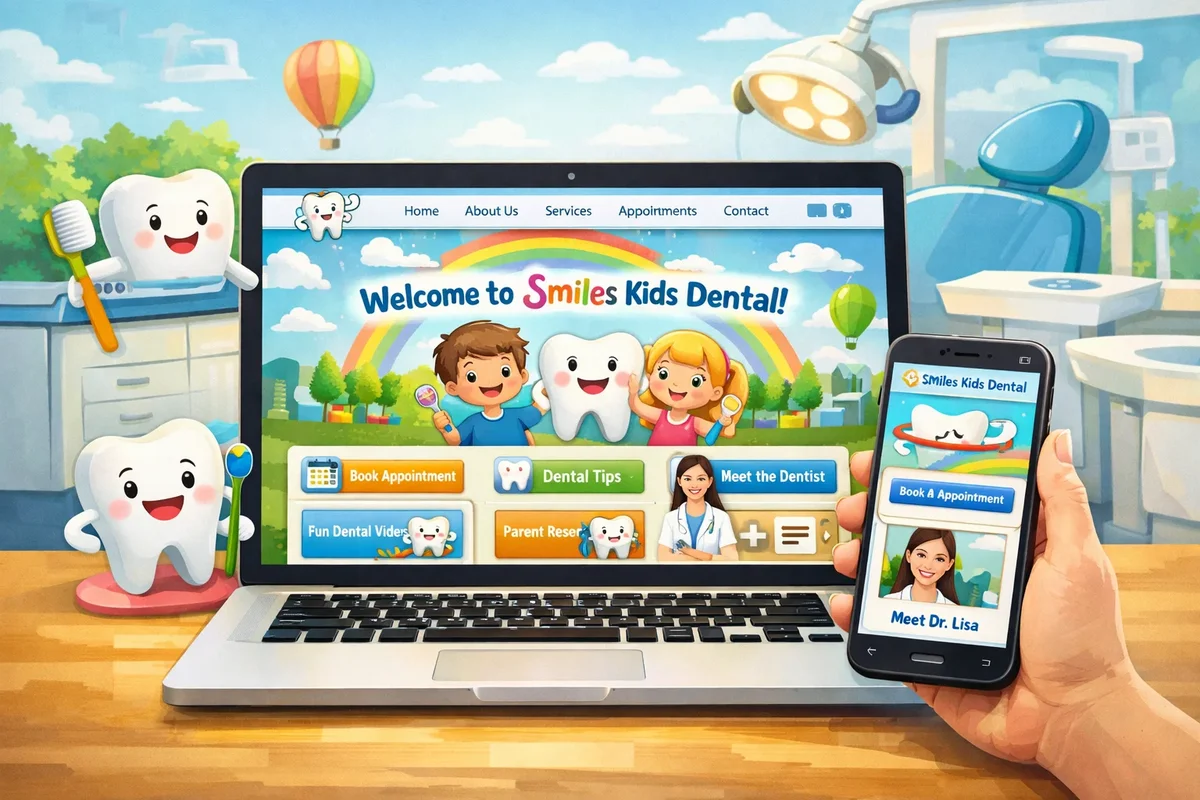
How a Pediatric Dentist Website Builds Trust with Parents
Trust is one of the most important factors when parents choose healthcare providers for their children. A well-designed pediatric dentist website plays a crucial role in establishing this trust long before the first dental appointment takes place. Parents often research extensively before selecting a dentist, and the information they find online strongly influences their decision. When a pediatric dentist website clearly communicates professionalism, transparency, and compassion, it reassures parents that their child will receive safe and high-quality dental care. 😊
Because dental visits can be stressful for children, parents want to feel confident that the dental clinic understands pediatric needs. A professional pediatric dentist website helps achieve this by presenting clear information about the clinic’s approach, qualifications, and treatment philosophy. By answering common concerns and explaining procedures in a supportive way, the pediatric dentist website becomes a trusted digital guide for families seeking reliable pediatric dental care.
Introducing the Pediatric Dental Team
One of the most effective ways a pediatric dentist website builds trust is by introducing the dental team. Parents want to know who will be caring for their children, and detailed staff profiles help create familiarity before the visit. A strong pediatric dentist website typically includes professional photos, educational backgrounds, certifications, and personal introductions from dentists and staff members.
When parents see that a dentist has specialized training in pediatric dentistry, they feel more confident in the clinic’s expertise. The pediatric dentist website can also highlight years of experience, continuing education programs, and memberships in professional organizations. These credentials reinforce the idea that the clinic prioritizes safe and evidence-based dental care.
Professional Credentials and Certifications
Transparency about qualifications strengthens credibility. A trustworthy pediatric dentist website often includes references to recognized dental organizations and professional standards. For example, linking to resources from the
American Dental Association helps demonstrate that the clinic follows widely accepted dental care guidelines.
Parents feel more comfortable choosing a dentist when they know the clinic adheres to established healthcare standards. Displaying certifications and affiliations on the pediatric dentist website reassures visitors that the clinic values professionalism and patient safety.
Sharing Real Patient Experiences
Testimonials from other parents are another powerful trust-building feature of a pediatric dentist website. Reading about positive experiences from families who have already visited the clinic helps new parents feel more confident about scheduling appointments.
Many parents worry about how their children will react to dental visits. When testimonials mention friendly staff, gentle treatment, and a comfortable environment, these concerns are reduced. A credible pediatric dentist website may include written reviews, video testimonials, or ratings that highlight patient satisfaction.
Authentic patient stories make the pediatric dentist website feel genuine and relatable. Instead of relying solely on marketing language, the website allows real families to share their experiences, which strengthens trust and credibility.
Educational Content That Reassures Parents
Parents often search online for answers to questions about their children’s oral health. A helpful pediatric dentist website provides educational content that explains dental topics clearly and accurately. By offering guidance about dental hygiene, cavity prevention, and orthodontic development, the pediatric dentist website becomes a reliable source of knowledge.
For example, many parents wonder when their child should first visit the dentist or how to handle thumb sucking habits. When the pediatric dentist website includes clear answers to these questions, parents feel supported and informed. Educational resources show that the clinic genuinely cares about improving children’s oral health, not just providing treatments.
Helpful educational sections might include:
- Guides for children’s brushing and flossing routines
- Information about baby teeth development
- Tips for preventing cavities and tooth decay
- Advice for reducing dental anxiety in children
Providing valuable educational resources strengthens the authority of the pediatric dentist website and helps parents feel more confident in the clinic’s expertise.
Transparency About Treatments and Costs
Parents appreciate honesty when it comes to dental treatments and pricing. A transparent pediatric dentist website explains common procedures and provides approximate cost ranges so families can plan ahead.
Approximate Pediatric Dental Treatment Costs
---------------------------------------------
Routine Checkup & Cleaning:   $80 – $150
Fluoride Treatment:           $20 – $50
Dental Sealants:              $30 – $60 per tooth
Pediatric Filling:            $120 – $250
Emergency Dental Visit:       $150 – $300
While actual costs vary depending on the clinic and insurance coverage, presenting general estimates on a pediatric dentist website helps families prepare financially. This transparency reduces uncertainty and improves trust.
Clear Communication Channels
Trust also depends on how easily parents can contact the dental clinic. A reliable pediatric dentist website should provide clear contact options such as phone numbers, email addresses, and online appointment forms.
Parents who wish to schedule a visit or ask questions should easily find support through accessible resources like the
Redent Klinik Contact Page. Including clear contact pathways makes the pediatric dentist website more functional and encourages parents to take the next step toward scheduling a dental appointment.
Visual Proof of a Child-Friendly Environment
Images and videos are powerful trust-building tools. Parents want reassurance that the clinic environment is welcoming and comfortable for children. A professional pediatric dentist website often includes photos of treatment rooms, waiting areas, and interactions between dentists and young patients.
These visual elements help parents imagine how their child will experience the clinic. When the pediatric dentist website displays smiling patients, colorful treatment spaces, and caring dental professionals, families feel more confident about choosing that clinic.
Ultimately, a well-structured pediatric dentist website acts as a digital introduction to the clinic’s values and expertise. By presenting professional credentials, authentic testimonials, helpful educational content, transparent treatment information, and accessible communication options, the pediatric dentist website builds strong trust with parents. This trust is essential for encouraging families to schedule appointments and begin a long-term relationship focused on protecting their children’s oral health.
Best Content Ideas for a High-Performing Pediatric Dentist Website
Content is the heart of any successful pediatric dentist website. While design and technical SEO are important, the information you provide ultimately determines whether parents trust your clinic and choose to schedule an appointment. A high-performing pediatric dentist website should answer real questions, provide useful educational resources, and guide families toward making informed decisions about their children’s oral health.
Parents frequently search online for advice related to children’s dental care. When a pediatric dentist website publishes clear, accurate, and engaging content, it becomes a trusted source of guidance. Over time, this consistent value improves search engine visibility and strengthens the clinic’s reputation. Below are several powerful content ideas that can transform a pediatric dentist website into a valuable resource for families.
Educational Articles About Children’s Oral Health
Educational blog articles are one of the most effective content strategies for a pediatric dentist website. Parents want trustworthy information about their children’s dental development, preventive care, and treatment options. By publishing detailed articles on these topics, the pediatric dentist website becomes a helpful learning platform.
Examples of educational article topics include:
- When should a child visit the dentist for the first time?
- How to prevent cavities in toddlers and young children
- Best brushing techniques for kids
- Understanding baby teeth development
- How diet affects children’s dental health
Each article on a pediatric dentist website should explain concepts in clear language so parents can easily understand them. When the information is helpful and easy to read, visitors are more likely to share the content and return to the website in the future.
Preventive Care Guides for Parents
Preventive dental care is one of the most common concerns parents have. A comprehensive pediatric dentist website should include guides that help families protect their children’s teeth from an early age. These guides may explain how to build good brushing habits, reduce sugar consumption, and schedule routine dental checkups.
Preventive care guides also help reduce dental anxiety. When parents know what to expect during dental visits, they feel more confident about bringing their children to the clinic. A well-written preventive guide on a pediatric dentist website can therefore encourage families to prioritize early dental care.
Frequently Asked Questions Sections
FAQ sections are extremely valuable for improving both user experience and SEO. A well-structured FAQ page on a pediatric dentist website answers common questions parents may have before scheduling an appointment.
Typical questions addressed on a pediatric dentist website include:
- How often should children see a dentist?
- Are dental X-rays safe for kids?
- What should parents do if a child has a toothache?
- Is fluoride safe for children?
Answering these questions directly helps parents feel more informed and reassured. Additionally, search engines often display FAQ answers in featured snippets, which can improve the visibility of the pediatric dentist website in search results.
Visual Content That Educates and Engages
Visual content plays a major role in making a pediatric dentist website engaging and easy to understand. Many parents and children learn more effectively through visual explanations than through text alone. Including images, diagrams, and videos can greatly enhance the educational value of the pediatric dentist website.
Examples of helpful visual content include:
- Animated brushing tutorials for children
- Videos explaining pediatric dental procedures
- Infographics about cavity prevention
- Virtual tours of the dental clinic
Visual content also helps children feel less anxious about dental visits. When young patients can see friendly treatment rooms and smiling dental staff on the pediatric dentist website, they are more likely to feel comfortable about upcoming appointments.
Interactive Learning Resources
Interactive tools can make a pediatric dentist website even more engaging. Some websites include brushing timers, educational games, or quizzes that teach children about dental hygiene in a fun way.
These features turn the pediatric dentist website into a digital learning environment rather than a simple informational page. Parents appreciate tools that help their children develop positive oral hygiene habits early in life.
Patient Stories and Success Cases
Real patient experiences are powerful content for building trust. Many parents want to hear about other families’ experiences before choosing a dental clinic. Including patient stories on a pediatric dentist website helps demonstrate the clinic’s compassionate approach to pediatric care.
Stories might describe how a nervous child became comfortable during treatment or how early preventive care helped avoid serious dental problems. These stories make the pediatric dentist website feel authentic and relatable for new visitors.
Testimonials can also highlight the clinic’s child-friendly atmosphere, supportive staff, and gentle treatment techniques. When parents see positive feedback from other families, the pediatric dentist website becomes a powerful trust-building platform.
Authoritative References and Professional Guidance
Trustworthy information is essential for healthcare websites. A credible pediatric dentist website should reference respected professional organizations when discussing dental care guidelines. For example, the
American Dental Association provides valuable recommendations on oral hygiene, cavity prevention, and pediatric dental health.
Referencing such sources strengthens the authority of the pediatric dentist website and reassures parents that the information they are reading is accurate and evidence-based.
Encouraging Parent Engagement and Contact
Effective content should guide parents toward taking the next step—contacting the clinic or scheduling an appointment. A strategic pediatric dentist website includes clear calls to action throughout the content.
For example, after reading educational articles or treatment explanations, parents should easily find a contact option such as the
Redent Klinik Contact Page. This ensures that the pediatric dentist website not only informs visitors but also converts them into patients.
Ultimately, the best content for a pediatric dentist website focuses on education, reassurance, and engagement. By publishing helpful articles, answering common questions, providing visual learning tools, sharing patient experiences, and referencing professional guidelines, the pediatric dentist website becomes a valuable resource that supports families and strengthens the clinic’s reputation. When parents find meaningful content that addresses their concerns, they are far more likely to trust the clinic and choose it for their child’s dental care.
Mobile Optimization for a Modern Pediatric Dentist Website
In today’s digital world, mobile browsing has become the primary way people access healthcare information online. Parents often search for dental services, appointment availability, and oral health advice directly from their smartphones. Because of this behavior, every pediatric dentist website must be optimized for mobile devices to provide a seamless user experience. If a pediatric dentist website loads slowly, displays poorly on small screens, or has difficult navigation, visitors may quickly leave and search for another clinic.
Mobile optimization ensures that a pediatric dentist website functions properly across smartphones, tablets, and other portable devices. This includes responsive layouts, readable text, fast loading speeds, and simple navigation. When parents can easily browse information, schedule appointments, and contact the clinic from their phones, the pediatric dentist website becomes a powerful patient acquisition tool. 😊
Why Mobile-Friendly Design Is Essential
Search engines such as Google prioritize mobile-friendly websites in search rankings. This means that a poorly optimized pediatric dentist website may appear lower in search results compared to competitors with better mobile performance. Since most parents search for healthcare services using their phones, mobile optimization directly impacts how many families discover the clinic online.
A mobile-friendly pediatric dentist website automatically adjusts layout elements based on screen size. Images scale correctly, text remains readable without zooming, and buttons are large enough to tap easily. These adjustments ensure that parents can navigate the pediatric dentist website comfortably regardless of their device.
Responsive Web Design
Responsive design is the foundation of mobile optimization. A responsive pediatric dentist website uses flexible layouts that adapt automatically to different screen resolutions. Instead of creating separate desktop and mobile websites, responsive design ensures that the same pediatric dentist website functions perfectly across all devices.
This approach offers several advantages. It simplifies website management, improves user experience, and ensures that search engines can easily index all pages. When the pediatric dentist website uses responsive design, families can browse dental services, educational content, and appointment forms without encountering technical issues.
Improving Mobile Page Speed
Page speed is another critical factor for mobile optimization. Parents searching for dental information expect websites to load quickly. If a pediatric dentist website takes more than a few seconds to load, many visitors will abandon the page before viewing the content.
To improve loading speed, developers often optimize images, reduce unnecessary scripts, and enable browser caching. These technical improvements ensure that the pediatric dentist website loads efficiently even on slower mobile networks.
Fast loading speeds not only improve user satisfaction but also strengthen search engine rankings. Google evaluates website performance using metrics such as Core Web Vitals. When the pediatric dentist website meets these performance standards, it becomes more competitive in search results.
Optimizing Images for Mobile Devices
Images are essential for creating a welcoming and engaging pediatric dentist website, but large image files can slow down loading times. Optimizing images ensures that they maintain visual quality while loading quickly on mobile devices.
A well-optimized pediatric dentist website uses modern image formats such as WebP and compresses images without losing clarity. This allows the website to display friendly clinic photos, smiling young patients, and educational graphics without sacrificing performance.
Mobile-Friendly Navigation
Navigation design is especially important for mobile users. A cluttered menu can make it difficult for parents to find the information they need. A well-structured pediatric dentist website simplifies navigation using collapsible menus, clear icons, and organized sections.
Parents visiting a pediatric dentist website often want quick access to essential information such as services, clinic location, appointment booking, and emergency dental care. By placing these elements prominently within the navigation menu, the pediatric dentist website improves usability and encourages visitors to explore further.
Contact options should also be easy to access. For example, parents who want to schedule a consultation should quickly find resources like the Redent Klinik Contact Page. Easy communication options ensure that the pediatric dentist website converts visitors into actual patients.
Touch-Friendly User Interface
Unlike desktop browsing, mobile navigation relies on touch interactions. Buttons, forms, and links must therefore be large enough for easy tapping. A thoughtfully designed pediatric dentist website uses spacious layouts and clearly labeled buttons to improve accessibility.
Touch-friendly interfaces also reduce user frustration. Parents browsing a pediatric dentist website should be able to complete actions such as booking appointments or reading educational articles without accidentally clicking the wrong links.
Mobile Content Readability
Text readability is another essential aspect of mobile optimization. A pediatric dentist website should use clear fonts, appropriate spacing, and concise paragraphs to ensure that content remains easy to read on smaller screens.
Parents often read articles or treatment explanations directly from their smartphones. If the pediatric dentist website presents information in a structured and readable format, visitors are more likely to stay on the page and engage with the content.
Structured Content for Better Engagement
Using headings, bullet points, and short paragraphs improves readability on mobile devices. A structured pediatric dentist website allows parents to quickly scan content and locate the information they need. This is particularly helpful for busy families searching for quick answers about dental care.
Including authoritative references also strengthens credibility. For example, linking to trusted organizations such as the American Dental Association helps reinforce the reliability of the information presented on the pediatric dentist website.
Enhancing Patient Engagement Through Mobile Tools
Modern healthcare websites often include mobile-friendly tools that enhance patient engagement. A sophisticated pediatric dentist website may include features such as online appointment scheduling, live chat support, and digital patient forms.
These tools allow parents to interact with the clinic directly from their smartphones. When families can easily request appointments or ask questions, the pediatric dentist website becomes a convenient communication platform rather than just an informational resource.
Ultimately, mobile optimization is no longer optional—it is essential for every successful pediatric dentist website. By implementing responsive design, improving loading speed, simplifying navigation, and enhancing readability, clinics can create a pediatric dentist website that meets the expectations of modern families. When parents can quickly access helpful information and schedule appointments from their mobile devices, the website becomes a powerful tool for supporting children’s oral health and growing the dental practice.
Online Appointment Systems for a Pediatric Dentist Website
An efficient appointment system is one of the most important features of a modern pediatric dentist website. Parents today expect healthcare services to be accessible, convenient, and easy to manage online. Many families search for pediatric dental care during busy schedules, often outside of normal clinic hours. Because of this, a well-designed pediatric dentist website should include a reliable online appointment system that allows parents to schedule visits quickly and efficiently.
When a pediatric dentist website includes online booking functionality, it significantly improves the overall user experience. Parents can view available appointment times, choose the most convenient slot, and submit basic patient information without needing to call the clinic. This convenience encourages more families to schedule appointments and reduces administrative workload for the dental office.
Why Online Scheduling Matters for Parents
Parents often manage multiple responsibilities, including work, school schedules, and family commitments. Calling a clinic during business hours may not always be convenient. An online scheduling system on a pediatric dentist website solves this problem by providing 24/7 access to appointment booking.
With this feature, parents visiting a pediatric dentist website can immediately check availability and reserve a time that works for their family. This instant access eliminates the frustration of waiting for phone confirmations and allows parents to plan dental visits more easily.
Online booking also benefits clinics by reducing missed opportunities. If a parent visits the pediatric dentist website late at night or early in the morning, they can still schedule an appointment without delay. This increases the likelihood that website visitors will convert into actual patients.
Convenience and Accessibility
A well-designed appointment interface ensures that the pediatric dentist website remains accessible to all users. The booking process should be simple, intuitive, and mobile-friendly so parents can schedule appointments from smartphones, tablets, or computers.
Most online booking systems on a pediatric dentist website include the following features:
- Real-time appointment availability
- Automatic confirmation emails
- Digital patient registration forms
- Appointment reminders via SMS or email
These tools streamline the patient scheduling process and improve the efficiency of the dental clinic. When parents can complete these tasks directly through the pediatric dentist website, the entire dental care experience becomes more convenient.
Integrating Appointment Forms and Contact Options
In addition to automated booking systems, every pediatric dentist website should include simple appointment request forms. Some parents may prefer to request a consultation instead of selecting a time immediately. Offering both options ensures flexibility for families with different preferences.
A contact page is also an essential component of the scheduling process. For example, parents who want to ask questions or discuss treatment options can easily reach the clinic through resources like the Redent Klinik Contact Page. Integrating clear contact pathways ensures that the pediatric dentist website supports communication between parents and dental professionals.
Providing multiple contact methods—such as phone numbers, email forms, and appointment requests—improves the usability of the pediatric dentist website. Parents can choose whichever communication method feels most convenient.
Reducing Missed Appointments with Automated Reminders
Missed appointments can disrupt clinic schedules and reduce operational efficiency. A modern pediatric dentist website can help prevent this problem by integrating automated reminder systems. When parents schedule appointments online, they can receive reminders via text message or email before the visit.
These reminders help parents stay organized and reduce the likelihood of forgotten appointments. A well-integrated reminder system within the pediatric dentist website benefits both families and dental staff by improving attendance and maintaining an efficient schedule.
Pre-Visit Preparation Tools
Another useful feature for a pediatric dentist website is the inclusion of pre-visit preparation resources. Parents often appreciate guidance on how to prepare their children for dental appointments. By offering downloadable forms, educational videos, or preparation checklists, the pediatric dentist website helps families feel more comfortable before arriving at the clinic.
These preparation tools may include:
- Digital medical history forms
- Instructions for first dental visits
- Tips for reducing children’s dental anxiety
- Guidelines for emergency pediatric dental care
Providing these resources on the pediatric dentist website ensures that parents arrive prepared and informed. It also reduces paperwork at the clinic, making appointments more efficient.
Security and Privacy in Online Appointment Systems
Healthcare websites must prioritize patient privacy and data security. A secure pediatric dentist website should protect personal information submitted through appointment forms or online booking systems. Using encrypted connections (HTTPS) and secure data handling practices ensures that patient details remain confidential.
Parents are more likely to trust a pediatric dentist website that clearly communicates its commitment to privacy protection. Displaying security certifications or privacy policies can reassure visitors that their information is handled responsibly.
Professional organizations such as the American Dental Association emphasize the importance of ethical standards and patient privacy in dental care. Aligning with these standards further strengthens the credibility of the pediatric dentist website.
Improving Patient Engagement Through Digital Scheduling
Online appointment systems do more than simplify scheduling—they also enhance patient engagement. When families interact with a pediatric dentist website through booking tools, forms, and educational resources, they become more connected to the clinic’s services.
A well-designed scheduling experience encourages parents to explore additional information on the pediatric dentist website, such as preventive dental care tips, treatment explanations, and patient testimonials. This engagement strengthens trust and increases the likelihood that families will return for future dental visits.
Ultimately, integrating an online appointment system transforms a pediatric dentist website from a static informational page into an interactive healthcare platform. By offering convenient scheduling, automated reminders, secure patient forms, and accessible contact options, the pediatric dentist website becomes an essential tool for connecting families with professional pediatric dental care. This digital convenience helps clinics grow their patient base while ensuring that children receive timely and compassionate dental treatment.
How Security and Privacy Affect a Pediatric Dentist Website
Security and privacy are essential components of every modern pediatric dentist website. Because healthcare websites often collect sensitive information from parents and patients, protecting that data must be a top priority. Parents visiting a pediatric dentist website expect their personal details, medical history forms, and appointment information to be handled securely and responsibly. If a website appears unsafe or unreliable, families may hesitate to submit forms or schedule appointments.
For this reason, building a secure pediatric dentist website involves more than just visual design or search engine optimization. It requires technical safeguards, privacy policies, encrypted connections, and transparent communication about how patient information is stored and protected. When parents feel confident that a pediatric dentist website protects their family’s data, they are far more likely to trust the clinic and proceed with scheduling appointments.
The Importance of Data Protection in Healthcare Websites
Healthcare providers must follow strict standards when handling patient information. A professional pediatric dentist website should always prioritize the confidentiality and integrity of personal data submitted through forms, appointment systems, and patient portals.
Parents visiting a pediatric dentist website may provide sensitive information such as their child’s name, medical history, insurance details, and contact information. Without strong security measures, this information could potentially be exposed to unauthorized access. Ensuring robust protection measures helps maintain patient trust and protects the reputation of the clinic.
A secure pediatric dentist website demonstrates that the clinic respects ethical healthcare standards and prioritizes patient safety not only in dental treatment but also in digital communication.
HTTPS Encryption and Secure Connections
One of the most fundamental security features of a pediatric dentist website is HTTPS encryption. Websites that use HTTPS encrypt data exchanged between the visitor’s browser and the website server. This encryption prevents unauthorized parties from intercepting sensitive information submitted through the pediatric dentist website.
Parents can recognize secure websites by the small padlock icon displayed in their browser address bar. A trustworthy pediatric dentist website should always use HTTPS to ensure secure communication, especially when collecting personal data through contact forms or appointment requests.
Protecting Online Appointment and Contact Forms
Many families interact with a pediatric dentist website through appointment scheduling systems or contact forms. These tools allow parents to request consultations, ask questions, and provide information about their child’s dental health. However, they also require careful security management.
To protect patient information, the pediatric dentist website should implement secure form processing systems that encrypt submitted data and store it safely. Limiting access to authorized clinic staff also helps prevent unauthorized viewing of patient details.
Parents who wish to schedule visits or ask questions should feel comfortable submitting information through the pediatric dentist website. Providing easy and secure access points, such as the Redent Klinik Contact Page, helps create a smooth communication experience while maintaining strong data protection standards.
Spam Protection and Form Validation
Spam submissions can pose both security and operational challenges. A well-designed pediatric dentist website should include spam protection tools such as CAPTCHA verification or automated filtering systems. These safeguards prevent malicious bots from submitting fake requests through the website.
Form validation is another useful security feature. It ensures that information entered by users follows proper formatting and reduces the risk of harmful data being submitted. By implementing these protections, the pediatric dentist website maintains data integrity while improving the quality of inquiries received by the clinic.
Transparent Privacy Policies
Transparency is essential for building trust. A responsible pediatric dentist website should clearly explain how personal information is collected, stored, and used. This information is typically presented in a dedicated privacy policy page.
Parents want reassurance that their child’s personal data will not be shared or misused. A detailed privacy policy on the pediatric dentist website demonstrates that the clinic respects patient confidentiality and follows ethical data management practices.
Privacy policies should explain several key points:
- What information is collected from website visitors
- How patient data is stored and protected
- Whether information is shared with third parties
- How parents can request data removal or updates
Providing clear answers to these questions helps ensure that the pediatric dentist website remains transparent and trustworthy.
Compliance with Healthcare Regulations
Depending on the region, healthcare websites may need to comply with strict regulatory requirements related to patient privacy. A compliant pediatric dentist website ensures that its digital systems follow appropriate legal standards for protecting health information.
These regulations often require clinics to implement secure data storage practices, limit access to patient information, and provide transparency regarding data usage. Maintaining compliance demonstrates that the pediatric dentist website operates responsibly within healthcare guidelines.
Authoritative organizations such as the American Dental Association provide guidance on ethical dental practices and patient privacy. Referencing such organizations can strengthen the credibility of the pediatric dentist website and reassure parents that the clinic follows professional standards.
Regular Security Updates and Monitoring
Security is not a one-time task. A responsible pediatric dentist website requires ongoing monitoring and maintenance to ensure that its systems remain protected. Regular software updates, plugin patches, and vulnerability scans help prevent cyber threats.
Website administrators should periodically review security settings, update content management systems, and remove outdated software components. These steps ensure that the pediatric dentist website remains protected against emerging digital threats.
Building Parent Confidence Through Security
Ultimately, strong security and privacy practices strengthen the relationship between families and dental clinics. When parents trust a pediatric dentist website, they feel comfortable sharing information, asking questions, and scheduling appointments online.
A secure pediatric dentist website demonstrates professionalism, ethical responsibility, and respect for patient privacy. By implementing encryption, secure appointment systems, spam protection, transparent privacy policies, and regulatory compliance, clinics create a safe digital environment for families seeking pediatric dental care.
In the modern healthcare landscape, digital trust is just as important as clinical expertise. A well-protected pediatric dentist website ensures that parents can confidently interact with the clinic online, knowing their family’s information is secure while they receive reliable guidance for their children’s oral health.
Future Trends in Pediatric Dentist Website Design
Technology and patient expectations continue to evolve rapidly, and these changes are shaping the future of every pediatric dentist website. Parents today expect digital healthcare experiences that are fast, informative, interactive, and personalized. As a result, the modern pediatric dentist website is no longer just a static information page. Instead, it is becoming a dynamic platform that integrates communication tools, educational resources, and advanced digital features designed to improve patient engagement.
Understanding upcoming trends allows dental clinics to stay competitive and provide better experiences for families. When a pediatric dentist website adapts to new technologies and user expectations, it becomes easier for parents to access information, schedule visits, and learn about children’s oral health. Below are several important trends that are shaping the future of the pediatric dentist website.
Artificial Intelligence and Smart Chat Support
Artificial intelligence is becoming increasingly common in healthcare websites. In the near future, many clinics will integrate AI-powered chat systems into their pediatric dentist website. These smart assistants can answer common questions instantly, guide parents through treatment information, and help schedule appointments.
For example, a parent visiting a pediatric dentist website late at night may want to know whether a child’s toothache requires urgent care. Instead of waiting until morning, they can interact with an AI chatbot that provides helpful guidance and directs them to appropriate resources. This immediate support improves user satisfaction and strengthens engagement with the pediatric dentist website.
Personalized Patient Experiences
AI technology also enables personalized experiences on a pediatric dentist website. Websites can adapt content based on visitor behavior, showing relevant articles or appointment reminders depending on the user’s previous interactions. For example, if a parent frequently reads articles about cavity prevention, the pediatric dentist website may suggest additional resources related to children’s dental hygiene.
This personalized approach helps parents quickly find information that matches their needs, making the pediatric dentist website more useful and engaging.
Virtual Tours and Interactive Clinic Experiences
Another emerging trend is the use of virtual tours and interactive visual experiences. Many children feel nervous before visiting a dentist, and a virtual tour can help reduce anxiety by allowing families to explore the clinic environment in advance. A modern pediatric dentist website may include interactive walkthroughs of treatment rooms, waiting areas, and pediatric dental equipment.
Parents and children can navigate these tours directly through the pediatric dentist website, helping them become familiar with the clinic before arriving. This feature is particularly helpful for young patients who may feel more comfortable when they know what to expect.
Video Education and Animated Learning
Video content is also becoming a major part of the pediatric dentist website. Animated educational videos can teach children how to brush their teeth, explain dental procedures, or demonstrate healthy habits in a fun and engaging way.
Parents appreciate visual explanations because they simplify complex topics. When a pediatric dentist website includes video tutorials and animated learning tools, it becomes both educational and entertaining for families.
Integration with Digital Health Platforms
Healthcare systems are increasingly connected through digital platforms. In the future, many clinics will integrate their pediatric dentist website with electronic health record systems and patient portals. These integrations allow parents to manage appointments, view treatment history, and receive personalized dental care recommendations online.
Such systems transform the pediatric dentist website into a full-service digital healthcare portal rather than a simple informational site. Parents can securely communicate with dental professionals, upload documents, and access treatment updates directly through the website.
Secure patient communication also strengthens trust in the pediatric dentist website. Families appreciate having a convenient digital platform where they can manage their child’s dental care.
Voice Search Optimization
Voice search is rapidly becoming more common as parents use smartphones and smart home devices to find healthcare information. Many families now search using voice assistants such as “Find a pediatric dentist near me.” Because of this trend, optimizing a pediatric dentist website for voice search will become increasingly important.
Voice search optimization involves writing content that answers conversational questions clearly. A well-optimized pediatric dentist website may include FAQ sections that address common voice queries related to children’s dental care.
This approach helps search engines recognize the website as a reliable resource when users ask spoken questions about pediatric dental services.
Local Voice Search and Mobile Integration
Many voice searches are location-based. Parents often ask their devices to find nearby dental clinics. A well-optimized pediatric dentist website should include accurate location information, clinic hours, and contact details to ensure it appears in local voice search results.
Mobile compatibility also plays a major role in voice search success. Since most voice queries are made on smartphones, the pediatric dentist website must load quickly and display correctly on mobile devices.
Enhanced Security and Privacy Technologies
As healthcare data becomes more digital, security technologies will continue to evolve. A future-ready pediatric dentist website will include advanced encryption systems, secure patient portals, and improved identity verification tools.
Parents want assurance that their family’s personal information is safe when interacting with the pediatric dentist website. Clinics that prioritize digital security will build stronger trust with families and demonstrate their commitment to responsible healthcare practices.
Authoritative organizations such as the American Dental Association emphasize the importance of ethical standards and patient protection in modern dentistry. Aligning with these standards strengthens the credibility of any pediatric dentist website.
Future Communication Tools for Families
Communication technologies will continue to transform the way families interact with dental clinics. Future versions of the pediatric dentist website may include live video consultations, digital treatment explanations, and interactive appointment reminders.
For example, parents might schedule consultations directly through the pediatric dentist website and speak with dental professionals via secure video calls. This option can be especially helpful for discussing treatment plans or evaluating urgent dental concerns.
Parents who wish to ask questions or arrange visits can already access helpful communication tools through resources like the Redent Klinik Contact Page. Expanding these digital communication options will make the pediatric dentist website even more valuable in the future.
Ultimately, the future of the pediatric dentist website will focus on creating more interactive, secure, and personalized experiences for families. By adopting new technologies such as AI assistants, virtual tours, digital health integrations, and voice search optimization, clinics can ensure that their pediatric dentist website remains modern and competitive. As digital healthcare continues to grow, these innovations will help pediatric dental clinics connect with families more effectively and support better oral health outcomes for children.