
If you are searching for a porcelain veneers comparison, you are probably trying to answer one important question: Which type of porcelain veneer is the best choice for my smile? The short answer is that there is no single veneer that is perfect for everyone. A proper porcelain veneers comparison depends on your natural teeth, bite, cosmetic goals, oral health, lifestyle, and budget. While porcelain veneers are widely known for their natural appearance and long-lasting results, different materials, preparation techniques, and treatment plans may produce different outcomes. Understanding these differences helps you make an informed decision instead of choosing based only on price or online reviews.
A practical porcelain veneers comparison should always begin with your own expectations. Some people want to correct discoloration that cannot be improved with whitening, while others hope to close small gaps, improve tooth shape, repair worn enamel, or create a more symmetrical smile. Because every smile is unique, the most suitable veneer option is determined through a comprehensive dental examination rather than a standard recommendation. In many situations, conservative treatment may achieve the desired appearance with minimal alteration to the natural tooth structure.
One of the biggest misunderstandings about a porcelain veneers comparison is that all porcelain veneers are identical. In reality, modern dentistry offers several ceramic materials and preparation techniques. Some veneers require only minimal enamel removal, while others involve more tooth preparation to achieve the planned aesthetic result. Likewise, certain ceramic materials are designed to maximize translucency for highly natural-looking front teeth, whereas others prioritize strength for patients with higher biting forces or specific restorative needs.
Another important point in any porcelain veneers comparison is durability. High-quality porcelain veneers can remain functional and aesthetically pleasing for many years when supported by excellent oral hygiene, regular professional check-ups, and appropriate daily habits. However, longevity is influenced by multiple factors, including bite alignment, teeth grinding, dietary habits, existing restorations, and overall oral health. For this reason, no ethical dentist can promise an exact lifespan or guarantee identical results for every patient.
A complete porcelain veneers comparison should also include appearance. One reason porcelain remains a popular cosmetic material is its ability to reflect light similarly to natural enamel. This optical characteristic often creates a more lifelike smile than some alternative restorative materials. Even so, the final appearance depends not only on the ceramic itself but also on treatment planning, tooth preparation, shade selection, dental laboratory craftsmanship, and the experience of the treating dentist.
Many patients wonder whether porcelain veneers are always the best cosmetic solution. The answer is not necessarily. During a professional porcelain veneers comparison, your dentist may determine that orthodontic treatment, composite bonding, professional whitening, crowns, or another conservative treatment would better address your clinical situation. Choosing the most suitable treatment means considering long-term oral health alongside cosmetic improvement rather than focusing solely on appearance.
Cost is another common reason people search for a porcelain veneers comparison. Although porcelain veneers often represent a significant investment, the final treatment cost varies according to factors such as the number of veneers required, diagnostic procedures, digital smile design, the ceramic material selected, laboratory techniques, additional restorative work, and the complexity of the individual treatment plan. For this reason, online price estimates should be viewed only as general references rather than personalized quotations. A clinical examination remains the most reliable way to receive an accurate treatment recommendation and cost estimate.
Patients considering treatment abroad frequently perform a detailed porcelain veneers comparison between clinics in different countries. While pricing may differ internationally, quality should never be judged by cost alone. Important considerations include the dentist’s qualifications, diagnostic process, treatment planning, communication, follow-up care, sterilization standards, laboratory quality, and patient education. Taking time to compare these factors may help you make a more confident and informed decision.
It is equally important to understand that porcelain veneers are not appropriate for every individual. Significant tooth decay, untreated gum disease, severe teeth grinding, unstable bite problems, or insufficient enamel may require other dental treatments before veneers can be considered. A careful clinical assessment helps identify these issues early and allows your dentist to recommend the safest treatment sequence.
Reliable information should always support your porcelain veneers comparison. Educational resources from organizations such as the American Dental Association can help patients understand cosmetic dentistry, preventive care, and the importance of maintaining long-term oral health. However, educational information cannot replace a personalized examination because every patient’s dental condition differs.
If you are exploring treatment options internationally, an individualized consultation can help clarify whether porcelain veneers are the right solution for your smile goals. Clinics such as Redent Klinik may provide personalized assessments, digital smile planning, and discussions about suitable treatment alternatives based on your clinical findings rather than generalized recommendations. If you would like to learn more or arrange a consultation, you can visit the Redent Klinik Contact Page for further information.
Next step: Before making a decision based solely on photographs or advertised prices, schedule a comprehensive dental evaluation. Bring your questions about aesthetics, durability, maintenance, treatment alternatives, expected timelines, and overall suitability. A professional examination is the best way to complete a meaningful porcelain veneers comparison and determine which treatment option best fits your oral health needs and cosmetic goals.
Porcelain Veneers Comparison: Quick Answer and Key Differences
A porcelain veneers comparison is one of the most valuable steps before committing to cosmetic dental treatment because it helps you understand that veneers are not a single, one-size-fits-all solution. The quick answer is simple: the best porcelain veneer is the one that matches your oral health, smile goals, bite, lifestyle, and long-term expectations. Some patients benefit from ultra-thin veneers that preserve more natural enamel, while others require stronger ceramic restorations to achieve durability and aesthetic balance. Rather than asking which veneer is universally “best,” it is more helpful to ask which option is most appropriate for your individual situation.
Many people begin a porcelain veneers comparison after seeing dramatic smile transformations online. Although before-and-after photographs can be inspiring, they do not explain the patient’s starting condition, treatment planning, or why a particular veneer material was selected. A personalized evaluation is always more informative than comparing photographs alone because factors such as tooth position, enamel thickness, gum health, and bite alignment significantly influence the final recommendation.
Why a Porcelain Veneers Comparison Matters
A detailed porcelain veneers comparison helps you avoid choosing treatment based only on price or marketing claims. Modern cosmetic dentistry offers several porcelain materials and preparation techniques, each with advantages and limitations. Some veneers focus on maximum translucency for highly natural aesthetics, while others prioritize strength for patients who place greater biting forces on their teeth.
Without a structured porcelain veneers comparison, patients may overlook important considerations such as maintenance requirements, possible future replacements, compatibility with existing dental work, or whether another cosmetic treatment would better achieve their goals. Taking time to compare options often leads to better long-term satisfaction because expectations become more realistic before treatment begins.
Main Factors to Compare
Appearance
One of the biggest reasons patients perform a porcelain veneers comparison is to achieve a natural-looking smile. High-quality porcelain reflects light in a way that closely resembles natural enamel, but aesthetic success also depends on shade selection, veneer thickness, laboratory craftsmanship, facial proportions, and smile design. Even the highest-quality ceramic cannot compensate for poor treatment planning.
Durability
Durability is another essential part of any porcelain veneers comparison. While porcelain is known for excellent wear resistance, longevity depends on much more than the ceramic itself. Daily oral hygiene, regular dental examinations, nighttime grinding habits, bite balance, and overall oral health all contribute to how well veneers perform over time. A dentist evaluates these factors before recommending treatment rather than assuming every patient has identical needs.
Tooth Preparation
Some porcelain veneer systems require only minimal enamel reduction, whereas others involve greater preparation to achieve the planned shape and alignment. During a porcelain veneers comparison, your dentist explains why one preparation method may be more suitable than another. Preserving healthy enamel is generally preferred whenever it can still produce predictable aesthetic and functional results.
Maintenance
Patients sometimes assume veneers require little maintenance after placement. In reality, a responsible porcelain veneers comparison includes discussion of long-term care. Veneers still require brushing, flossing, routine professional cleanings, and regular examinations. Habits such as opening packages with the teeth or chewing hard objects may increase the risk of damage regardless of the veneer material selected.
Who Benefits Most from Porcelain Veneers?
A porcelain veneers comparison is especially useful for patients who wish to improve tooth color, shape, minor spacing, chipped enamel, or mild cosmetic irregularities. However, veneers are not always the first recommendation. Significant orthodontic problems, active gum disease, untreated tooth decay, or severe tooth wear may require other treatment before cosmetic veneers become appropriate.
For example, if tooth alignment is the primary concern, orthodontic treatment may preserve more natural tooth structure than veneers alone. Likewise, if discoloration responds well to professional whitening, veneers may not be necessary. A careful comparison considers both cosmetic improvements and preservation of healthy dental tissues.
Comparing Porcelain Veneers with Your Expectations
An effective porcelain veneers comparison should also compare treatment options against your personal priorities. Ask yourself whether your main goal is:
- A brighter smile.
- Correction of uneven tooth shape.
- Closing small gaps.
- Repairing chipped teeth.
- Creating a complete smile makeover.
- Maintaining as much natural enamel as possible.
Your answers help your dentist determine whether porcelain veneers are the most suitable option or whether another treatment may better balance aesthetics, function, and long-term oral health.
Should Cost Be the Main Decision Factor?
Many patients begin a porcelain veneers comparison by comparing prices between clinics. While budget is understandably important, treatment decisions should not rely on cost alone. Final fees vary depending on the number of veneers required, diagnostic records, digital smile planning, laboratory techniques, ceramic materials, additional dental treatment, and the complexity of the clinical case. A lower advertised price does not necessarily reflect the complete treatment process or long-term value.
Instead of asking which clinic offers the cheapest veneers, it is often more useful to ask how treatment planning is performed, what materials are used, whether digital smile design is available, and how follow-up care is managed after placement.
Making an Informed Decision
Ultimately, the purpose of a porcelain veneers comparison is not to identify a universally superior product but to determine which treatment approach best fits your unique circumstances. Reliable cosmetic dentistry combines aesthetic planning with functional evaluation so that improvements look natural while supporting long-term oral health.
If you are considering treatment, prepare a list of questions before your consultation. Ask about the expected treatment sequence, alternative options, maintenance requirements, possible limitations, and whether your current oral health supports porcelain veneers. Bringing previous dental records or radiographs, if available, may also help your dentist provide a more personalized assessment.
What to check before moving forward: Ensure your teeth and gums are healthy, discuss all available cosmetic alternatives, ask how much natural enamel may need to be prepared, understand the maintenance involved, and request professional advice if you experience tooth sensitivity, gum problems, bite concerns, or significant cosmetic changes that may affect the choice of veneer treatment.
Porcelain Veneers Comparison Cost Factors: What Affects the Final Price?
When people search for a porcelain veneers comparison, one of the first questions they usually ask is, “How much will it cost?” The most accurate answer is that there is no universal price because every smile requires an individualized treatment plan. A meaningful porcelain veneers comparison should never focus only on the number listed on a clinic’s website. Instead, it should examine everything included in the treatment process, from diagnosis and planning to materials, laboratory work, follow-up care, and long-term value. Understanding these cost factors allows you to compare treatment options more fairly and choose the solution that best matches your needs.
It is also important to remember that cosmetic dentistry is highly personalized. Two patients receiving the same number of veneers may require very different procedures before the veneers are placed. For example, one patient may need only minimal preparation, while another requires treatment for gum health, replacement of old restorations, or bite adjustments. A proper porcelain veneers comparison therefore evaluates the complete clinical picture instead of assuming every case is identical.
Why Prices Can Vary Significantly
One reason patients become confused during a porcelain veneers comparison is that advertised prices often represent only a starting point. Some clinics include digital smile design, temporary veneers, follow-up appointments, and diagnostic imaging within their treatment package, while others charge separately for these services. Because of these differences, comparing only the initial quoted price may not accurately reflect the overall investment.
Rather than searching for the lowest figure, it is generally more helpful to understand exactly what is included in the proposed treatment plan. A transparent consultation should explain every stage of care so that you know what to expect before treatment begins.
Main Factors That Influence Cost
Number of Veneers Needed
The total number of veneers is one of the largest factors in any porcelain veneers comparison. Some patients achieve their desired smile improvement with two or four veneers, while others choose eight, ten, or even more to create a balanced appearance across the visible smile. The ideal number depends on your smile width, facial proportions, existing tooth color, and cosmetic objectives rather than a fixed recommendation.
Type of Porcelain Material
Different ceramic materials may involve different manufacturing techniques and clinical indications. During a professional porcelain veneers comparison, your dentist explains why one material may be better suited to your situation than another. Certain ceramics emphasize natural translucency, while others are selected because they provide greater strength under specific functional conditions.
The most appropriate material is determined through examination rather than price alone. Selecting a ceramic simply because it appears less expensive may not provide the most suitable long-term result for your individual case.
Diagnostic Planning
A comprehensive porcelain veneers comparison includes the planning phase, which is often one of the most valuable parts of treatment. Modern clinics may use digital photography, intraoral scanning, smile analysis, diagnostic wax-ups, or digital smile design to evaluate aesthetics before any tooth preparation begins. These planning tools improve communication between the dentist, laboratory, and patient while helping visualize the expected outcome.
Although advanced planning may influence treatment costs, it also supports more individualized decision-making and may reduce misunderstandings regarding aesthetic expectations.
Dental Laboratory Quality
The dental laboratory plays a major role in every porcelain veneers comparison. Highly trained ceramic technicians carefully design each veneer to complement facial symmetry, tooth proportions, and natural light reflection. Laboratory experience, technology, and craftsmanship all contribute to the final appearance and precision of the restoration.
Patients sometimes overlook laboratory quality when comparing treatment plans, yet it is one of the key elements affecting both aesthetics and fit.
Complexity of the Case
Not every smile presents the same level of complexity. A straightforward cosmetic improvement differs significantly from a patient who has worn teeth, uneven gums, previous crowns, bite irregularities, or multiple existing restorations. A realistic porcelain veneers comparison therefore considers the amount of planning and additional treatment required before veneers can safely be placed.
Should You Compare Clinics in Different Countries?
International patients frequently perform a porcelain veneers comparison between clinics in different regions. While treatment fees may vary, cost should never be the only deciding factor. Consider whether the clinic provides comprehensive examinations, explains alternative treatment options, uses modern diagnostic technology, communicates clearly throughout the process, and offers appropriate follow-up recommendations.
If you are exploring treatment abroad, it may also be helpful to ask about appointment scheduling, estimated treatment timelines, language support, laboratory partnerships, and what happens if adjustments are required after returning home.
Balancing Cost and Long-Term Value
A thoughtful porcelain veneers comparison looks beyond immediate expenses and considers long-term value. Choosing treatment based only on the lowest available quote may overlook important aspects such as material selection, conservative tooth preparation, individualized smile design, and ongoing maintenance guidance.
Higher treatment costs do not automatically indicate higher quality, just as lower costs do not necessarily indicate lower quality. The goal is to understand what you are receiving, why specific recommendations have been made, and whether the proposed treatment matches your clinical needs.
Questions Worth Asking During a Consultation
Before making your decision, consider asking questions such as:
- What procedures are included in the treatment estimate?
- Which porcelain material is recommended for my smile and why?
- Will digital smile planning be performed?
- Are temporary veneers necessary?
- How many appointments are typically required?
- What maintenance will be needed after treatment?
- Are there suitable alternatives if porcelain veneers are not the best choice?
These questions help create a more complete porcelain veneers comparison and allow you to understand the reasoning behind each recommendation rather than focusing solely on price.
Making a Confident Financial Decision
Ultimately, the purpose of a porcelain veneers comparison is to balance aesthetics, oral health, durability, and financial planning. Cosmetic dentistry should be approached as an individualized healthcare decision rather than a simple purchase. An experienced dentist evaluates whether veneers are appropriate, explains realistic expectations, and discusses alternative treatments whenever they may better preserve natural tooth structure.
Clinics such as Redent Klinik Contact Page may provide personalized consultations that review your smile goals, clinical findings, treatment options, and estimated costs based on examination rather than assumptions. Educational resources from the American Dental Association can also help patients understand the importance of maintaining healthy teeth and gums before pursuing cosmetic treatment.
What to check before making your decision: Confirm exactly what is included in the proposed treatment plan, ask whether additional procedures may affect the overall cost, compare the quality of planning instead of only the advertised price, discuss possible alternatives if veneers are not ideal for your case, and request professional advice whenever you are unsure whether porcelain veneers are the most appropriate investment for your long-term oral health.
How Long Does a Porcelain Veneers Comparison Stay Relevant Over Time?
A porcelain veneers comparison is valuable not only when you are choosing a cosmetic treatment but also when you want to understand how your investment may perform over the years. Many people focus on appearance or initial cost, yet longevity, maintenance, repair options, and future dental needs can have just as much influence on satisfaction. A detailed porcelain veneers comparison helps you evaluate whether veneers fit your long-term goals rather than simply solving a short-term cosmetic concern.
Every smile is unique. The lifespan of veneers depends on factors such as oral hygiene, bite forces, enamel preservation, lifestyle habits, and the quality of treatment planning. Instead of asking only how many years veneers last, it is more useful to perform a comprehensive porcelain veneers comparison that considers durability alongside maintenance requirements, future replacement possibilities, and alternative cosmetic options.
Average Longevity in a Porcelain Veneers Comparison
One of the first topics people examine during a porcelain veneers comparison is expected longevity. Modern porcelain veneers are designed from durable ceramic materials that resist staining and maintain their appearance for many years when properly cared for. However, longevity is never identical for every patient because daily habits influence long-term performance.
Patients who maintain regular dental checkups, brush twice daily, floss consistently, and avoid unnecessary pressure on their veneers often experience longer-lasting restorations. On the other hand, frequent teeth grinding, nail biting, chewing ice, or opening packages with the teeth may shorten the lifespan regardless of the material selected during the porcelain veneers comparison.
Factors That Influence Long-Term Results
Oral Hygiene Habits
A proper porcelain veneers comparison should always include daily maintenance expectations. Veneers themselves cannot develop cavities, but the natural teeth supporting them still require excellent oral hygiene. Plaque accumulation around veneer margins may contribute to gum irritation or decay on untreated tooth surfaces.
Bite Alignment
Bite balance is another important consideration during a porcelain veneers comparison. Excessive bite pressure placed on certain teeth may increase the risk of veneer chipping or edge wear. Your dentist may evaluate your bite before recommending veneers and suggest orthodontic treatment first if significant alignment issues exist.
Night Grinding (Bruxism)
Individuals who clench or grind their teeth during sleep should discuss protective options during their porcelain veneers comparison. A custom night guard may reduce excessive forces placed on ceramic restorations and help preserve both veneers and natural teeth.
Maintenance Requirements Compared with Other Treatments
A balanced porcelain veneers comparison should not focus only on installation but also on ongoing care. Veneers generally require maintenance habits similar to natural teeth. Brushing with non-abrasive toothpaste, flossing carefully, and attending routine dental examinations remain essential.
Compared with composite bonding, porcelain typically resists staining more effectively and usually maintains surface gloss longer. Compared with dental crowns, veneers preserve more natural tooth structure in many suitable cases. These differences become meaningful when performing a complete porcelain veneers comparison based on both immediate and future expectations.
Can Veneers Be Repaired or Replaced?
During a porcelain veneers comparison, many patients ask whether damaged veneers can simply be repaired. The answer depends on the type and extent of damage. Minor polishing may address small surface imperfections, while larger fractures may require replacement of the individual veneer.
Replacement planning is another reason why a detailed porcelain veneers comparison matters. Since veneers are customized to match surrounding teeth, future replacement should consider color consistency, gum health, and any changes that have occurred since the original treatment.
Cost Versus Long-Term Value
A thoughtful porcelain veneers comparison looks beyond the initial treatment fee. While porcelain veneers often involve a higher upfront investment than some cosmetic alternatives, many patients value their stain resistance, realistic appearance, and durability when evaluating long-term value.
Rather than choosing the lowest advertised price, compare what is included in treatment planning, diagnostic imaging, smile design, laboratory quality, follow-up appointments, and aftercare recommendations. These elements often influence overall satisfaction more than the initial fee alone.
When Another Treatment May Be More Suitable
An honest porcelain veneers comparison should acknowledge that veneers are not the ideal solution for everyone. Patients with extensive tooth damage, active gum disease, untreated decay, or severe bite problems may require different treatment approaches before cosmetic veneers become appropriate.
Alternatives that may be discussed include orthodontic treatment for alignment issues, professional whitening for discoloration, composite bonding for minor cosmetic corrections, or dental crowns when greater structural support is necessary. Comparing these options helps patients make decisions based on clinical needs rather than trends.
Questions Worth Asking Before Making a Decision
- How much natural enamel will need to be preserved?
- What maintenance routine will be recommended?
- How will veneers affect my bite?
- What are the realistic expectations for longevity?
- How would future replacements be managed if necessary?
- Are there conservative alternatives suitable for my smile?
Making an Informed Choice
A complete porcelain veneers comparison should balance aesthetics, durability, maintenance, oral health, and long-term planning. The best option is not always the most expensive or the most popular, but the one that aligns with your dental condition, cosmetic expectations, and future oral health goals. Clinics that provide detailed examinations, digital smile planning, and personalized consultations can often help patients understand which option fits their individual circumstances.
Before proceeding, ask your dentist to evaluate enamel condition, gum health, bite alignment, existing restorations, and long-term maintenance needs. Request professional advice if you experience teeth grinding, significant tooth wear, gum disease, extensive restorations, or uncertainty about whether veneers or another cosmetic treatment would better support your long-term oral health.
Who Is a Good Candidate According to a Porcelain Veneers Comparison?
A thorough porcelain veneers comparison should always begin with one important question: are porcelain veneers the right treatment for your specific dental condition? While veneers are widely recognized for improving the appearance of teeth, they are not designed to solve every cosmetic or functional concern. A well-informed porcelain veneers comparison focuses on suitability rather than popularity, helping patients understand whether veneers match their oral health, lifestyle, and long-term expectations.
Many people are attracted to porcelain veneers because they can improve tooth color, shape, size, and minor alignment issues. However, selecting veneers without considering factors such as enamel quality, bite stability, gum health, or existing restorations may lead to disappointment. Instead of making a decision based solely on before-and-after photos, use a comprehensive porcelain veneers comparison to evaluate whether the treatment is appropriate for your individual situation.
Ideal Candidates in a Porcelain Veneers Comparison
One of the main goals of a porcelain veneers comparison is identifying patients who are likely to benefit from this cosmetic procedure. Generally, suitable candidates have healthy teeth and gums but wish to improve the appearance of their smile.
People with Tooth Discoloration
Deep stains that do not respond well to professional whitening are among the most common reasons people explore a porcelain veneers comparison. Certain intrinsic stains caused by medication, trauma, or developmental changes may be difficult to lighten with bleaching alone. Veneers may provide an aesthetic alternative when whitening produces limited improvement.
Minor Cosmetic Imperfections
A balanced porcelain veneers comparison often includes patients who have chipped edges, uneven tooth shapes, small gaps, or worn enamel. These concerns may sometimes be corrected with veneers while preserving much of the natural tooth structure.
Healthy Gum Tissue
Healthy gums play an important role in every porcelain veneers comparison. Since veneers are placed near the gumline, untreated periodontal disease may affect both aesthetics and long-term stability. A dentist may recommend treating gum disease before considering cosmetic procedures.
When Porcelain Veneers May Not Be the Best Choice
A responsible porcelain veneers comparison should also explain situations where another treatment may be more suitable. Veneers are cosmetic restorations, meaning they work best when the underlying tooth is healthy and structurally sound.
Severe Tooth Damage
Teeth with extensive decay, large fillings, or major fractures may require more structural support than veneers can provide. During a porcelain veneers comparison, your dentist may recommend crowns or other restorative treatments if tooth strength has been significantly compromised.
Active Teeth Grinding
Bruxism is another important factor discussed in a porcelain veneers comparison. Constant grinding or clenching places additional pressure on ceramic restorations. While veneers may still be considered in selected cases, protective measures such as a custom night guard are often discussed as part of long-term planning.
Significant Bite Problems
Severe crowding, crossbite, or major orthodontic issues may limit the effectiveness of veneers alone. A comprehensive porcelain veneers comparison frequently includes orthodontic options when correcting tooth position would improve both function and cosmetic outcomes.
Lifestyle Considerations Before Choosing Veneers
Every porcelain veneers comparison should include daily habits that may influence long-term results. Although porcelain is durable, it is not indestructible. People who regularly chew ice, bite fingernails, use their teeth as tools, or frequently consume highly abrasive foods should discuss these habits with their dentist.
Smokers may also wish to consider overall oral health during a porcelain veneers comparison. While porcelain itself resists staining better than natural enamel or composite materials, smoking may still contribute to gum discoloration and affect the appearance of surrounding teeth.
Comparing Veneers with Other Cosmetic Treatments
A complete porcelain veneers comparison should examine alternatives rather than assuming veneers are always the preferred solution.
Professional Teeth Whitening
If tooth shape is already attractive and discoloration is the primary concern, whitening may be sufficient. Whitening is generally more conservative because it preserves all natural enamel, making it an important option within any porcelain veneers comparison.
Composite Bonding
Composite bonding may correct small chips or minor gaps with less enamel preparation in selected cases. However, bonding typically requires more maintenance over time than porcelain. Comparing these characteristics forms an essential part of an accurate porcelain veneers comparison.
Orthodontic Treatment
If tooth alignment is the primary concern, clear aligners or braces may improve both appearance and function without altering healthy tooth structure. A careful porcelain veneers comparison should evaluate whether orthodontic treatment should come before cosmetic restorations.
Questions to Ask During Your Consultation
- Am I a suitable candidate based on my enamel and gum health?
- Would another cosmetic treatment achieve similar results with less preparation?
- How will my bite affect the longevity of veneers?
- What maintenance routine should I expect?
- Will existing fillings or crowns influence treatment planning?
- How can future dental work affect my veneers?
Making the Right Decision
The purpose of a porcelain veneers comparison is not simply to compare cosmetic outcomes but to determine whether veneers match your overall dental health and long-term goals. Patients who understand both the advantages and limitations are generally better prepared to make informed decisions. A personalized consultation, detailed examination, and discussion of alternative treatments can provide more meaningful guidance than advertisements or online photographs alone.
Before deciding on treatment, ask your dentist to evaluate enamel thickness, gum condition, bite alignment, existing restorations, and oral habits such as grinding or clenching. Request professional advice if you have active gum disease, extensive tooth damage, persistent jaw discomfort, significant alignment concerns, or uncertainty about whether porcelain veneers or another cosmetic treatment would better suit your needs.
How to Choose the Right Clinic Using a Porcelain Veneers Comparison
A comprehensive porcelain veneers comparison should not end after evaluating materials or treatment options. Choosing the right dental clinic is equally important because the quality of planning, preparation, communication, and follow-up care can influence both the appearance and longevity of your veneers. While many clinics advertise attractive smile transformations, patients benefit most from comparing the entire treatment experience rather than selecting a provider based only on promotional photographs or the lowest advertised price.
A reliable porcelain veneers comparison includes the clinic’s diagnostic process, the qualifications of the dental team, digital planning technology, laboratory standards, hygiene protocols, and post-treatment support. Looking at these factors together provides a more balanced picture than focusing on one feature alone. Every patient has unique oral health needs, so the best clinic is the one that creates an individualized treatment plan instead of offering the same solution for everyone.
Why the Clinic Matters in a Porcelain Veneers Comparison
Even when two clinics use similar porcelain materials, the final results may differ because treatment planning and clinical experience play a significant role. During a porcelain veneers comparison, consider how thoroughly each clinic evaluates your teeth before recommending veneers. A careful assessment of enamel condition, bite alignment, gum health, and facial proportions often contributes to more predictable cosmetic outcomes.
Clinics that dedicate time to understanding your expectations are often better positioned to recommend whether porcelain veneers are truly appropriate or whether another treatment would better suit your goals. A balanced porcelain veneers comparison values honest recommendations over aggressive sales approaches.
Evaluate the Consultation Process
Comprehensive Examination
One of the first indicators of quality in a porcelain veneers comparison is the initial consultation. A detailed examination typically includes reviewing your medical and dental history, evaluating gum health, examining tooth structure, assessing your bite, and discussing cosmetic expectations. Clinics that skip these steps may overlook factors affecting long-term success.
Digital Smile Design
Many modern clinics incorporate digital photography, intraoral scanning, or digital smile design into the consultation. During a porcelain veneers comparison, ask whether these technologies are available. Digital planning can help visualize potential outcomes while supporting more precise communication between the dentist, laboratory, and patient.
Treatment Alternatives
A trustworthy clinic should include alternative treatment options during the porcelain veneers comparison. Whitening, orthodontic treatment, composite bonding, or crowns may sometimes provide a more suitable solution depending on your dental condition. A willingness to discuss alternatives often reflects a patient-centered approach.
Assess the Experience of the Dental Team
Every porcelain veneers comparison should include the experience and continuing education of the treating dentist. Cosmetic dentistry combines technical skill with artistic judgment. Understanding facial symmetry, smile proportions, and bite function contributes to treatment planning beyond simply placing veneers.
Instead of focusing only on the number of years a clinic has operated, consider asking how frequently the dental team performs veneer treatments, how they approach complex cosmetic cases, and whether they collaborate with experienced dental laboratories.
Laboratory Quality and Materials
Custom Fabrication
An important aspect of every porcelain veneers comparison is learning where the veneers are manufactured. High-quality dental laboratories typically customize each veneer according to tooth shape, color, translucency, and smile design rather than using standardized solutions.
Material Selection
Different ceramic materials may offer varying aesthetic and mechanical characteristics. During your porcelain veneers comparison, ask why a specific material has been recommended for your individual case instead of assuming one option is universally superior.
Understanding Costs Without Choosing Solely by Price
Cost naturally becomes part of any porcelain veneers comparison, but comparing only treatment fees rarely provides enough information. Some treatment plans include digital planning, temporary restorations, follow-up appointments, adjustments, or extended consultations, while others may not. Understanding exactly what is included allows for a more meaningful comparison.
Rather than searching for the cheapest provider, consider the overall value of treatment planning, communication, laboratory quality, and aftercare. These elements may influence long-term satisfaction more than the initial cost alone.
Review Before-and-After Cases Carefully
Photographs can be helpful during a porcelain veneers comparison, but they should be interpreted carefully. Instead of looking only at dramatic smile transformations, pay attention to whether the results appear natural, symmetrical, and appropriate for different facial features. Consistency across multiple cases may provide more useful insight than a single impressive example.
Aftercare and Long-Term Support
A complete porcelain veneers comparison also considers what happens after treatment. Routine follow-up appointments, maintenance advice, polishing recommendations, and guidance regarding oral hygiene all contribute to preserving the appearance of veneers over time.
Patients should feel comfortable contacting their dental team with questions after treatment. Clear communication and structured follow-up can help identify concerns early and support long-term oral health.
Questions Worth Asking Before Choosing a Clinic
- How is treatment planned before veneers are recommended?
- Will digital smile design or intraoral scanning be used?
- What alternatives were considered for my case?
- Which dental laboratory fabricates the veneers?
- What follow-up care is included after placement?
- How are adjustments or future replacements managed if needed?
Making a Confident Decision
A thoughtful porcelain veneers comparison extends beyond appearance and cost to include planning quality, professional experience, communication, laboratory craftsmanship, and long-term support. Patients who compare these factors together are often better equipped to select a clinic that aligns with their expectations and oral health needs. Whether you are considering treatment locally or abroad, taking time to evaluate the complete patient journey can help you make a well-informed decision.
Before committing to treatment, ask the clinic to explain the diagnostic process, proposed treatment plan, material selection, maintenance recommendations, and available alternatives. Request professional advice if you have existing dental restorations, gum disease, bite problems, teeth grinding, or questions about whether porcelain veneers are the most suitable option for your smile.
Common Mistakes to Avoid in a Porcelain Veneers Comparison
A well-prepared porcelain veneers comparison can help you make a confident and informed decision, but many patients unintentionally focus on the wrong factors. Cosmetic dentistry involves more than choosing the brightest smile or the lowest treatment price. The right decision depends on your oral health, aesthetic goals, long-term maintenance expectations, and the experience of the dental team. By understanding the most common mistakes people make during a porcelain veneers comparison, you can evaluate your options more objectively and reduce the risk of disappointment later.
Online advertisements, social media transformations, and promotional offers often simplify a treatment that actually requires careful planning. An accurate porcelain veneers comparison should balance appearance, durability, preparation, maintenance, and future dental needs rather than concentrating on a single advantage. Taking time to compare every important factor usually leads to a better long-term outcome than making a quick decision based on marketing alone.
Mistake 1: Choosing Based Only on Price
One of the most common errors during a porcelain veneers comparison is assuming that the lowest quoted fee automatically provides the best value. While cost is naturally an important consideration, treatment planning, laboratory quality, consultation time, diagnostic technology, and follow-up care also contribute significantly to the overall experience.
A lower price may or may not include digital smile design, temporary veneers, post-treatment reviews, or customized laboratory work. Likewise, a higher price does not automatically indicate better quality. A balanced porcelain veneers comparison evaluates everything included in the treatment plan instead of comparing fees alone.
Mistake 2: Ignoring Oral Health Before Cosmetic Goals
Another frequent mistake in a porcelain veneers comparison is focusing entirely on cosmetic improvements without first evaluating oral health. Veneers are designed for healthy teeth and gums. If untreated cavities, gum disease, or significant bite problems exist, these conditions usually require attention before cosmetic treatment begins.
Addressing underlying dental concerns first may improve both the appearance and longevity of veneers. A responsible porcelain veneers comparison always places oral health ahead of aesthetics because healthy supporting structures contribute to long-term stability.
Mistake 3: Expecting Veneers to Solve Every Dental Problem
Alignment Issues
During a porcelain veneers comparison, some patients expect veneers to replace orthodontic treatment entirely. While veneers may improve the appearance of minor spacing or slight irregularities, significant crowding or bite problems may still require orthodontic correction.
Structural Damage
Teeth with extensive decay or major fractures may benefit more from crowns or restorative treatment than veneers. A realistic porcelain veneers comparison includes these possibilities instead of assuming one solution fits every situation.
Mistake 4: Overlooking Long-Term Maintenance
Every porcelain veneers comparison should include ongoing maintenance requirements. Although porcelain is resistant to staining and designed for durability, veneers still require daily brushing, flossing, professional cleanings, and routine dental examinations.
Patients who ignore maintenance recommendations may experience problems involving surrounding gum tissue or natural tooth structure. Understanding long-term responsibilities is just as important as comparing cosmetic results during a porcelain veneers comparison.
Mistake 5: Comparing Only Before-and-After Photos
Before-and-after photographs are helpful, but relying exclusively on them is another common mistake during a porcelain veneers comparison. Images often highlight successful cosmetic outcomes without explaining the patient’s starting condition, treatment planning process, or maintenance routine.
Instead of judging a clinic only by photographs, ask about consultation procedures, diagnostic methods, laboratory collaboration, follow-up care, and the reasoning behind treatment recommendations. These factors provide a more complete basis for comparison.
Mistake 6: Not Asking About Alternative Treatments
An honest porcelain veneers comparison should always include alternative cosmetic options. Depending on your goals, professional whitening, composite bonding, orthodontic treatment, or dental crowns may offer more suitable solutions with different advantages and limitations.
Clinics that explain both the benefits and limitations of every option often help patients make decisions that better match their oral health and long-term expectations.
Mistake 7: Ignoring Lifestyle Factors
Teeth Grinding
A complete porcelain veneers comparison should include questions about teeth grinding or clenching. Excessive bite forces may increase stress on ceramic restorations, making protective strategies such as a custom night guard worth discussing.
Daily Habits
Habits such as chewing ice, biting fingernails, opening packages with the teeth, or frequently consuming hard foods should also be considered. These behaviors may influence the long-term performance of veneers regardless of material quality.
Mistake 8: Rushing the Decision
Cosmetic dentistry is an investment in both appearance and oral health. Rushing through a porcelain veneers comparison without asking questions or reviewing treatment details may result in unrealistic expectations. Taking time to compare consultation quality, treatment planning, materials, maintenance, and alternatives usually leads to a more confident decision.
Questions to Include in Every Porcelain Veneers Comparison
- Am I a suitable candidate based on my oral health?
- What alternatives should I consider before choosing veneers?
- How much enamel preparation is expected?
- What maintenance routine will I need to follow?
- How will my bite influence long-term results?
- What follow-up appointments are included?
- How are repairs or replacements handled if needed?
Making a More Informed Decision
The purpose of a thorough porcelain veneers comparison is to evaluate much more than cosmetic appearance. Comparing treatment planning, oral health requirements, maintenance expectations, alternative procedures, laboratory quality, and professional experience helps patients make decisions based on evidence rather than advertising. Every smile is unique, and treatment should reflect your individual goals and dental condition instead of following general trends.
Before proceeding with treatment, ask your dentist to assess your enamel, gum health, bite alignment, existing restorations, and daily habits. Request professional advice if you grind your teeth, have untreated gum disease, significant tooth damage, major alignment issues, or uncertainty about whether porcelain veneers are the most appropriate solution for your smile.
Frequently Asked Questions About Porcelain Veneers Comparison
A detailed porcelain veneers comparison often raises practical questions beyond appearance alone. Patients want to know how veneers compare with other cosmetic treatments, how much preparation is required, whether the results look natural, and what maintenance is involved. While every individual has unique dental needs, understanding the most common questions can help you evaluate your options more confidently. Rather than relying on advertising or social media, use a comprehensive porcelain veneers comparison to understand the advantages, limitations, and considerations that may influence your long-term satisfaction.
The purpose of this porcelain veneers comparison section is not to recommend one treatment for everyone but to provide balanced information that supports informed decision-making. Your dentist will consider your oral health, bite, enamel quality, cosmetic goals, and lifestyle before suggesting the most appropriate approach.
Are Porcelain Veneers Better Than Composite Bonding?
A common topic in every porcelain veneers comparison is the difference between porcelain veneers and composite bonding. Porcelain veneers are generally recognized for their excellent stain resistance, color stability, and lifelike appearance. Composite bonding, however, usually requires less tooth preparation and may be completed in fewer appointments.
The better option depends on your individual goals. If you prioritize durability and long-term aesthetics, porcelain may be appropriate in many situations. If your cosmetic concern is minor or you prefer a more conservative procedure, bonding may also deserve consideration during your porcelain veneers comparison.
Will My Teeth Need to Be Shaved?
Many patients worry about tooth preparation during a porcelain veneers comparison. The amount of enamel adjustment varies depending on the condition of the teeth, the planned veneer thickness, and the desired cosmetic outcome. In some situations, only minimal preparation is required, while other cases may require slightly more enamel reduction.
Because every smile is different, your dentist should explain why a specific preparation approach is recommended instead of applying the same technique to every patient.
How Natural Do Porcelain Veneers Look?
Shape and Proportion
One of the strongest reasons patients perform a porcelain veneers comparison is to evaluate aesthetic results. Well-designed veneers aim to complement facial proportions rather than create an artificial appearance. Factors such as tooth width, length, smile line, and facial symmetry contribute to natural-looking outcomes.
Color Matching
During a professional porcelain veneers comparison, dentists carefully evaluate shade selection to ensure harmony with neighboring teeth and overall facial appearance. Modern ceramics can reproduce natural translucency and light reflection when appropriately selected and fabricated.
Do Porcelain Veneers Stain?
Another frequent question in a porcelain veneers comparison concerns staining. Porcelain is generally more resistant to discoloration than natural enamel or composite resin. Coffee, tea, red wine, and similar beverages are less likely to stain polished porcelain surfaces compared with some other restorative materials.
However, maintaining good oral hygiene remains important because surrounding natural teeth and gum tissues can still change in appearance over time.
Can Veneers Be Replaced in the Future?
A responsible porcelain veneers comparison should include discussions about future maintenance and replacement. Veneers are designed for long-term use but may eventually require replacement because of normal wear, accidental damage, or changes in surrounding teeth and gums.
Understanding future treatment planning helps patients evaluate veneers as a long-term cosmetic solution rather than a one-time procedure.
How Should I Compare Different Clinics?
A meaningful porcelain veneers comparison involves more than comparing prices between clinics. Consider the dentist’s experience, diagnostic process, digital planning technology, laboratory quality, follow-up care, communication style, and willingness to discuss treatment alternatives.
Choosing a clinic that explains every stage of treatment and answers your questions thoroughly often provides greater confidence than selecting a provider based only on promotional offers.
Are There Alternatives to Porcelain Veneers?
Yes. Every comprehensive porcelain veneers comparison should include alternatives such as professional teeth whitening, composite bonding, orthodontic treatment, or dental crowns. The most suitable option depends on whether your primary concern involves discoloration, alignment, structural damage, spacing, or overall smile design.
Comparing these treatments with porcelain veneers allows patients to understand both the benefits and the limitations of each approach before making a final decision.
How Can I Prepare for My Consultation?
Before attending your appointment, consider writing down your cosmetic goals, previous dental treatments, oral health concerns, and questions regarding maintenance or longevity. Bringing photographs of smiles you like may also help communicate your expectations, although treatment should always be customized to your own facial features and dental anatomy.
Preparing these topics in advance makes your porcelain veneers comparison more productive and allows your dentist to provide recommendations based on your individual circumstances rather than general assumptions.
Key Questions to Ask During a Porcelain Veneers Comparison
- Am I a suitable candidate for porcelain veneers?
- Would whitening, bonding, or orthodontics achieve similar results?
- How much enamel preparation is expected?
- Which ceramic material is recommended for my case?
- How should I care for my veneers long term?
- What follow-up appointments are included?
- How would future repairs or replacements be managed?
Final Thoughts
A complete porcelain veneers comparison should answer more than cosmetic questions. It should help you understand suitability, treatment planning, maintenance, longevity, alternatives, and the importance of selecting an experienced dental team. Patients who compare these factors carefully are often better prepared to choose a treatment that matches both their aesthetic goals and long-term oral health needs.
Before making a decision, ask your dentist to evaluate your enamel thickness, gum condition, bite alignment, existing restorations, and cosmetic expectations. Request professional advice if you have untreated dental disease, teeth grinding, significant bite problems, or uncertainty about whether porcelain veneers are the most appropriate solution for your smile.
Final Decision Guide: Making the Best Choice with a Porcelain Veneers Comparison
Completing a porcelain veneers comparison involves much more than choosing the treatment with the most attractive before-and-after photographs. The best decision depends on balancing your cosmetic goals with your oral health, lifestyle, budget, maintenance expectations, and long-term dental needs. By the time you reach the final stage of a porcelain veneers comparison, you should have a clear understanding of the available options, their advantages, their limitations, and the factors that influence long-term satisfaction.
Cosmetic dentistry is highly personalized. A treatment that produces excellent results for one patient may not necessarily be the ideal solution for another. That is why a structured porcelain veneers comparison should always prioritize clinical suitability over trends or promotional offers. Rather than asking which treatment is universally “best,” ask which treatment best matches your own dental condition and expectations.
Step 1: Define Your Primary Goal
Every successful porcelain veneers comparison begins with understanding what you want to improve. Some patients primarily want whiter teeth, while others hope to correct uneven edges, close small gaps, reshape worn teeth, or achieve a more balanced smile. Identifying your main objective helps determine whether porcelain veneers are appropriate or whether another cosmetic procedure may better address your concerns.
If discoloration is your only concern, professional whitening may deserve consideration. If alignment is the primary issue, orthodontic treatment could be discussed before veneers. A balanced porcelain veneers comparison evaluates these possibilities rather than assuming one treatment fits every patient.
Step 2: Evaluate Your Oral Health
Healthy Teeth and Gums
A comprehensive porcelain veneers comparison should include a detailed oral examination. Healthy gums and stable teeth provide a better foundation for cosmetic treatment. Existing decay, gum disease, or untreated infections usually require attention before veneers are considered.
Bite Function
Bite stability is another important factor in a porcelain veneers comparison. Excessive bite pressure, severe crowding, or jaw-related concerns may influence treatment recommendations. Evaluating bite function helps determine whether additional treatment would improve long-term outcomes.
Step 3: Compare Long-Term Value Instead of Initial Cost
Cost naturally influences every porcelain veneers comparison, but focusing only on the initial treatment fee can be misleading. Long-term value includes consultation quality, digital planning, laboratory craftsmanship, maintenance guidance, and ongoing follow-up care.
Understanding exactly what is included in each treatment proposal allows for a more meaningful comparison. A detailed treatment plan often provides greater confidence than selecting a clinic solely because it advertises the lowest price.
Step 4: Compare Alternative Treatments
A responsible porcelain veneers comparison always considers alternatives before making a final decision. Depending on your clinical needs, your dentist may also discuss:
- Professional teeth whitening for discoloration.
- Composite bonding for minor chips or gaps.
- Orthodontic treatment for alignment concerns.
- Dental crowns for teeth requiring additional structural support.
Comparing these treatments alongside porcelain veneers helps ensure that your decision is based on your individual needs rather than cosmetic trends.
Step 5: Consider Daily Maintenance
Every porcelain veneers comparison should include realistic maintenance expectations. Veneers require consistent oral hygiene, regular dental examinations, and healthy daily habits. While porcelain is resistant to staining, surrounding natural teeth and gums still require ongoing care.
Patients who understand maintenance requirements before treatment are generally better prepared to preserve their results over time.
Step 6: Choose a Clinic Carefully
Consultation Quality
An effective porcelain veneers comparison includes evaluating the consultation experience. A dentist who performs a comprehensive examination, discusses alternatives, answers questions thoroughly, and explains every stage of treatment often provides a stronger foundation for informed decision-making.
Technology and Laboratory Standards
Digital smile design, intraoral scanning, and collaboration with experienced dental laboratories may contribute to treatment precision. During your porcelain veneers comparison, ask how these technologies are incorporated into planning and fabrication.
Signs That You Are Ready to Proceed
After completing a porcelain veneers comparison, you may feel more confident if:
- You clearly understand the benefits and limitations of veneers.
- Your dentist has evaluated your oral health comprehensively.
- Alternative treatments have been discussed.
- You know the expected maintenance requirements.
- You feel comfortable asking questions and understand the proposed treatment plan.
When You May Want More Information First
You may wish to delay your decision if important questions remain unanswered. For example, uncertainty about enamel preparation, bite function, maintenance expectations, or available alternatives suggests that another consultation may be beneficial. A careful porcelain veneers comparison should leave you feeling informed rather than pressured.
Final Recommendations
A thoughtful porcelain veneers comparison combines cosmetic expectations with clinical evaluation, long-term planning, maintenance, and personalized treatment recommendations. The most successful decisions are rarely based on a single factor such as cost or appearance. Instead, they result from understanding how veneers fit your oral health, lifestyle, and future dental care.
If you are considering treatment at a clinic with experience in cosmetic dentistry, ask for a detailed consultation that includes digital planning, an explanation of available materials, and a discussion of realistic expectations. Clinics such as Redent Klinik emphasize individualized treatment planning so patients can compare their options based on clinical findings rather than marketing alone.
Before making your final decision, ask your dentist to assess your enamel thickness, gum health, bite alignment, existing restorations, oral hygiene habits, and long-term maintenance needs. Request professional advice if you have teeth grinding, untreated gum disease, significant tooth wear, complex bite issues, or questions about whether porcelain veneers or another cosmetic treatment would better support your long-term oral health and aesthetic goals.
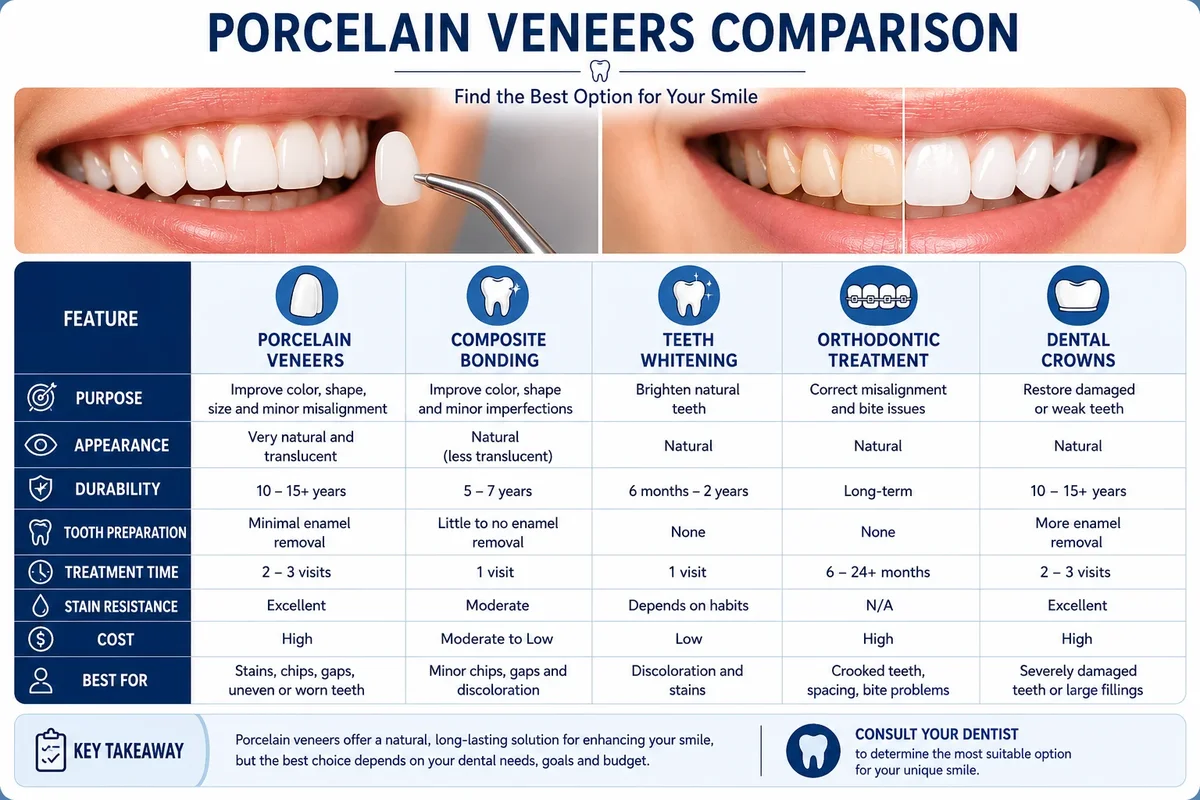
Porcelain Veneers Comparison Checklist Before You Make Your Final Decision
A complete porcelain veneers comparison should leave you with more than a basic understanding of cosmetic dentistry. It should provide a practical framework for deciding whether porcelain veneers align with your oral health, aesthetic expectations, lifestyle, and long-term goals. Before scheduling treatment, it is worth reviewing every important factor one final time instead of making a decision based solely on photographs, social media recommendations, or promotional pricing.
Every smile is different, which means there is no universal solution for everyone. An effective porcelain veneers comparison encourages patients to consider clinical suitability, maintenance requirements, expected longevity, and available alternatives before committing to treatment. The checklist below summarizes the most important considerations discussed throughout this guide and can help you have a more productive conversation with your dentist.
Step 1: Confirm That Veneers Match Your Goals
The first step in any porcelain veneers comparison is identifying exactly what you hope to improve. Veneers are commonly chosen to enhance tooth color, shape, symmetry, minor spacing, or small cosmetic imperfections. However, if your primary concern involves severe crowding, significant bite problems, or extensive tooth damage, another treatment may provide a more appropriate solution.
Ask yourself whether your goal is purely cosmetic or whether you also have functional concerns that should be evaluated. This distinction often influences which treatment option is recommended after a professional examination.
Step 2: Review Your Oral Health Status
Healthy Teeth
An accurate porcelain veneers comparison begins with healthy supporting teeth. Existing cavities, large fractures, or unstable restorations may require treatment before cosmetic procedures are considered.
Healthy Gums
Gum health is equally important. Inflamed or untreated periodontal tissues can affect both the appearance and longevity of veneers. During your porcelain veneers comparison, ask whether any preventive or periodontal care should be completed before cosmetic treatment begins.
Step 3: Understand Tooth Preparation
Every porcelain veneers comparison should include a discussion about enamel preparation. Depending on your teeth and the planned cosmetic outcome, the amount of preparation may vary. Your dentist should explain why a specific approach is appropriate for your individual case rather than applying the same technique to every patient.
Understanding this step allows you to make an informed decision and helps establish realistic expectations regarding treatment planning.
Step 4: Compare Long-Term Maintenance
A responsible porcelain veneers comparison includes maintenance expectations as well as cosmetic results. Daily brushing, flossing, routine dental examinations, and professional cleanings remain essential after veneer placement. Patients who maintain excellent oral hygiene generally support the long-term appearance of both their veneers and natural teeth.
Discuss any habits such as teeth grinding, nail biting, chewing ice, or using teeth as tools, as these behaviors may influence long-term outcomes regardless of veneer quality.
Step 5: Compare Alternative Treatments
Before making your final decision, every porcelain veneers comparison should include alternative treatment options. Depending on your dental condition, your dentist may recommend:
- Professional teeth whitening for discoloration.
- Composite bonding for minor chips or gaps.
- Clear aligners or orthodontics for alignment concerns.
- Dental crowns for teeth requiring greater structural support.
Understanding why veneers have been recommended over these alternatives provides greater confidence in your treatment plan.
Step 6: Evaluate the Dental Clinic
Experience and Communication
A meaningful porcelain veneers comparison also involves comparing clinics. Consider whether the dental team explains treatment clearly, discusses realistic expectations, answers questions thoroughly, and provides personalized recommendations rather than standardized cosmetic packages.
Technology and Planning
Digital smile design, intraoral scanning, and detailed photographic documentation may improve treatment planning. During your porcelain veneers comparison, ask how these technologies are used and whether they contribute to communication between the dentist, laboratory, and patient.
Step 7: Review Costs Objectively
Cost is an important part of every porcelain veneers comparison, but it should not be the only deciding factor. Compare what each treatment plan includes, such as consultations, diagnostic records, temporary restorations, follow-up appointments, maintenance advice, and laboratory services.
Looking beyond the initial treatment fee often provides a more realistic understanding of overall value and helps avoid unexpected questions later.
Questions to Bring to Your Consultation
- Am I an appropriate candidate for porcelain veneers?
- Would another cosmetic treatment better achieve my goals?
- How much enamel preparation is expected?
- Which ceramic material is recommended and why?
- How should I maintain my veneers over time?
- What follow-up appointments are included?
- How would future repairs or replacements be managed if necessary?
- How will my bite and oral habits affect long-term performance?
Key Takeaways from This Porcelain Veneers Comparison
A successful porcelain veneers comparison is based on informed decision-making rather than assumptions. The ideal treatment should complement your oral health, cosmetic expectations, and future dental needs while preserving as much healthy tooth structure as possible. Comparing consultation quality, diagnostic planning, maintenance requirements, alternative treatments, and long-term care often provides a more reliable basis for choosing veneers than focusing on cosmetic appearance alone.
If you are comparing providers, clinics with an individualized approach—such as Redent Klinik—may emphasize detailed examinations, personalized smile planning, and patient education before recommending treatment. This type of consultation can help you understand whether porcelain veneers represent the most suitable option for your specific circumstances instead of following a one-size-fits-all treatment plan.
Before proceeding, ask your dentist to evaluate your enamel thickness, gum health, bite relationship, existing restorations, oral hygiene habits, and long-term maintenance expectations. Request professional advice if you have active gum disease, untreated decay, teeth grinding, significant tooth wear, complex bite issues, or uncertainty about whether porcelain veneers or another cosmetic treatment is the most appropriate choice for your smile.
Disclosure: this page may contain affiliate links. We may earn a commission if you use them, at no extra cost to you.