
If you are comparing porcelain veneers vs dental crowns, the short answer is that neither treatment is universally better. The right option depends on the current condition of your tooth, your cosmetic goals, the amount of healthy tooth structure that remains, your bite, and your long-term oral health. While both treatments can improve the appearance of your smile, they are designed for different situations. Understanding the differences between porcelain veneers vs dental crowns can help you make a more informed decision before committing to treatment.
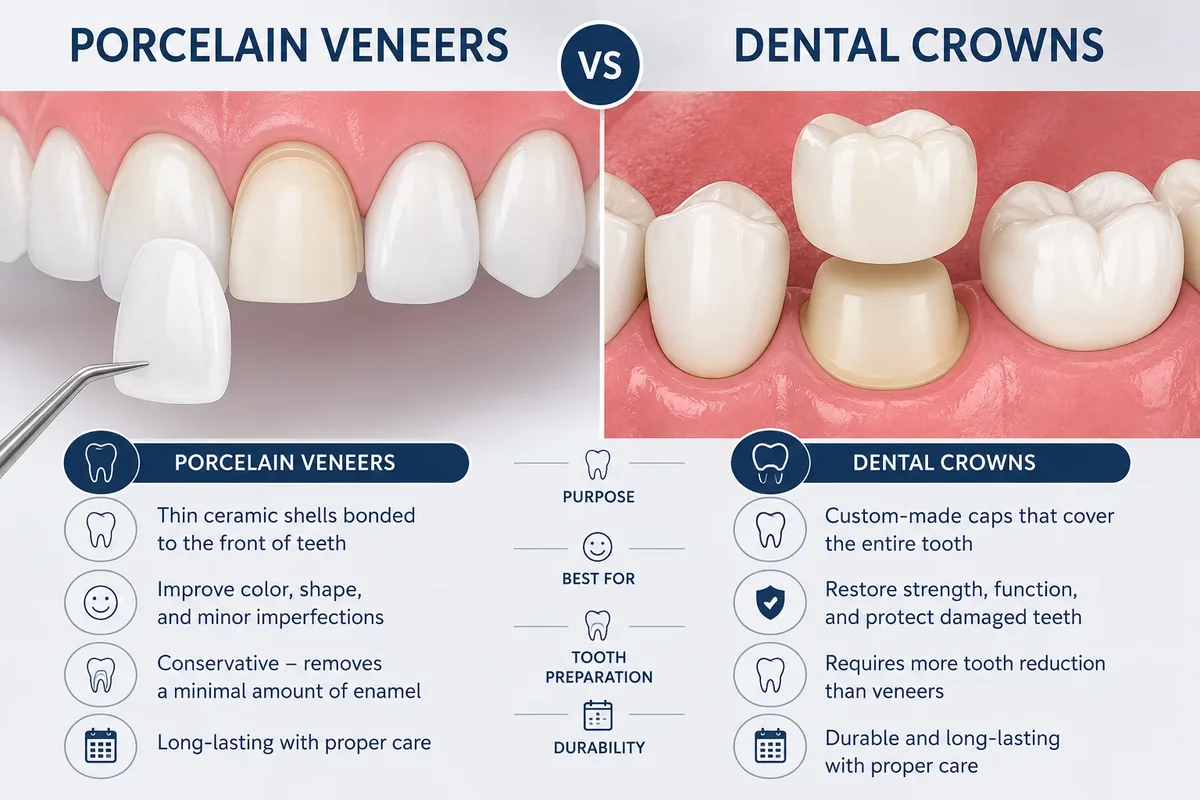
In many cases, porcelain veneers are recommended for teeth that are generally healthy but have cosmetic concerns such as discoloration, minor chips, small gaps, or slightly uneven shapes. Veneers cover only the front surface of the tooth, allowing more natural tooth structure to remain untouched. Dental crowns, on the other hand, surround the entire visible portion of the tooth and are typically recommended when a tooth has significant damage, extensive decay, a large filling, cracks, or has undergone root canal treatment. Because crowns provide additional structural support, they are often chosen when preserving tooth strength is just as important as improving appearance.
When evaluating porcelain veneers vs dental crowns, it helps to think beyond appearance alone. A smile makeover should also support long-term function, comfortable chewing, and healthy surrounding tissues. Someone with healthy enamel and minor cosmetic imperfections may benefit from veneers, while someone whose tooth has become weakened may achieve a more predictable long-term outcome with a crown. This is why dentists usually recommend treatment only after a detailed examination, digital imaging, and bite assessment.
Many patients begin researching porcelain veneers vs dental crowns because they want a brighter, more symmetrical smile. Although both treatments can improve aesthetics, they require different levels of tooth preparation. Veneers generally involve removing a thin layer of enamel from the front of the tooth, whereas crowns usually require reshaping more of the tooth so the restoration fits securely around it. Modern materials and conservative techniques allow dentists to preserve as much healthy tooth structure as possible, but the amount removed still depends on the clinical situation.
Another important consideration when comparing porcelain veneers vs dental crowns is durability. Both restorations are made from strong dental materials designed to withstand everyday chewing forces, but their longevity depends on oral hygiene, bite habits, grinding, diet, and regular dental maintenance. Patients who clench or grind their teeth may require a custom night guard regardless of which treatment they choose. Good home care and routine dental checkups often contribute significantly to the lifespan of either restoration.
The decision between porcelain veneers vs dental crowns should also take your future dental health into account. If a tooth already has extensive decay or a very large filling, placing a veneer may not provide enough support. Likewise, preparing a healthy tooth for a full crown simply for cosmetic reasons may not always be the most conservative approach. A personalized evaluation allows your dentist to recommend a treatment that balances aesthetics, preservation of healthy tooth structure, and long-term stability.
Cost is another factor many patients consider when researching porcelain veneers vs dental crowns. While treatment costs vary depending on the material used, the complexity of the case, laboratory work, geographic location, and the number of teeth involved, the final investment cannot be accurately determined without a professional examination. Instead of focusing solely on the initial fee, it is often helpful to consider the expected longevity of the restoration, the health of the tooth being treated, and whether additional procedures may be required before treatment begins.
Patients sometimes wonder whether they can simply choose whichever option looks more attractive. In reality, the clinical condition of the tooth often determines which treatment is appropriate. A severely fractured tooth usually requires a crown regardless of cosmetic preferences, while a healthy tooth with only minor aesthetic concerns may be an excellent candidate for veneers. This individualized approach helps avoid unnecessary treatment and supports better long-term outcomes.
Before making a decision about porcelain veneers vs dental crowns, it is also useful to discuss your lifestyle. Frequent consumption of staining foods or drinks, participation in contact sports, nighttime grinding, and previous dental restorations can all influence treatment planning. A comprehensive consultation allows these factors to be evaluated together rather than considering appearance alone.
Reliable oral health information can also help you understand restorative treatment options before your appointment. Educational resources provided by the American Dental Association explain many common dental procedures and reinforce the importance of individualized treatment planning based on clinical findings.
If you are considering improving your smile, comparing porcelain veneers vs dental crowns should be the beginning of your decision—not the final step. Every smile is unique, and what works well for one patient may not be the best choice for another. An experienced dentist will evaluate your enamel, existing restorations, bite, gum health, and aesthetic goals before recommending a treatment plan that fits your specific needs.
At Redent Klinik, treatment planning focuses on preserving healthy tooth structure whenever appropriate while selecting restorations that support both appearance and function. During a consultation, your dentist can explain the advantages and limitations of each option, answer your questions, and discuss realistic expectations based on your individual oral health rather than a one-size-fits-all approach.
As a practical next step, consider scheduling a comprehensive dental examination if you are still unsure about porcelain veneers vs dental crowns. Bringing photographs of smiles you like, discussing your cosmetic priorities, and asking about the expected preparation, maintenance, and long-term care of each option can help you make a confident, informed decision. If you would like a personalized assessment, you can arrange a consultation through the Redent Klinik Contact Page, where your treatment options can be discussed based on your individual dental condition and goals.
Quick Answer: Porcelain Veneers vs Dental Crowns at a Glance
If you are searching for a simple explanation of porcelain veneers vs dental crowns, the most practical answer is that veneers are generally intended to improve the appearance of healthy teeth, while dental crowns are designed to restore both the appearance and strength of teeth that have been significantly damaged or weakened. Although this distinction seems straightforward, the best treatment always depends on your individual oral health, cosmetic expectations, bite, and the condition of each tooth. A professional examination remains the most reliable way to determine whether porcelain veneers or dental crowns are more appropriate for your situation.
Many people researching porcelain veneers vs dental crowns assume the decision is based only on aesthetics. In reality, dentists evaluate several clinical factors before recommending either option. The amount of healthy enamel, previous fillings, cracks, tooth position, gum health, and bite alignment all influence the final treatment plan. A restoration that looks attractive should also function comfortably and support long-term oral health.
When Porcelain Veneers May Be the Better Choice
In many cosmetic cases, porcelain veneers vs dental crowns becomes an easy decision because the natural tooth is already structurally healthy. Veneers are commonly considered when patients want to improve smile aesthetics without extensively covering the entire tooth.
Porcelain veneers may be appropriate for patients who have:
- Persistent tooth discoloration that does not respond to whitening.
- Small chips or minor fractures affecting appearance.
- Slightly uneven or worn tooth edges.
- Small gaps between teeth.
- Mild shape or size irregularities.
- Healthy enamel capable of supporting a bonded veneer.
One advantage frequently discussed during porcelain veneers vs dental crowns consultations is that veneers usually preserve more natural tooth structure than crowns. Since veneers primarily cover the front surface of the tooth, they often require less preparation when compared with full-coverage restorations. However, the amount of preparation varies depending on each patient’s anatomy and treatment goals.
When Dental Crowns May Be the Better Choice
Comparing porcelain veneers vs dental crowns becomes very different when a tooth has suffered extensive structural damage. In these situations, restoring strength may become more important than cosmetic enhancement alone.
Dental crowns are commonly recommended when a tooth has:
- Large existing fillings.
- Extensive decay.
- Noticeable structural weakness.
- Deep cracks or fractures.
- Undergone root canal treatment.
- Significant wear from grinding or heavy biting forces.
Unlike veneers, crowns surround the visible portion of the tooth, providing additional protection and helping distribute chewing forces more evenly. While more tooth preparation is generally required, this approach can improve the long-term stability of compromised teeth when clinically indicated.
Comparing the Main Differences
Purpose
The primary distinction in porcelain veneers vs dental crowns lies in treatment objectives. Veneers primarily improve cosmetic appearance, while crowns restore both appearance and structural integrity. Understanding this difference helps patients focus on what their tooth actually requires rather than simply choosing the restoration that appears more attractive online.
Tooth Preparation
Another important consideration during porcelain veneers vs dental crowns discussions is how much of the natural tooth must be reshaped. Veneers generally require more conservative preparation, while crowns usually involve reducing more tooth structure so the restoration fits securely around the tooth. Modern dentistry aims to preserve healthy tissue whenever possible regardless of which treatment is selected.
Appearance
Both restorations can provide highly natural-looking results when fabricated using modern ceramic materials. Patients comparing porcelain veneers vs dental crowns often discover that advances in dental ceramics allow both treatments to closely match neighboring teeth in color, translucency, and surface texture.
Longevity
Neither veneers nor crowns have a universal lifespan because durability depends on many variables. Daily oral hygiene, professional maintenance, grinding habits, diet, bite forces, and overall oral health all influence long-term performance. During consultations about porcelain veneers vs dental crowns, dentists typically explain maintenance requirements alongside treatment recommendations.
Cost Should Never Be the Only Deciding Factor
Patients frequently begin researching porcelain veneers vs dental crowns because they want to compare treatment costs. While financial planning is important, choosing solely based on initial price may not lead to the most suitable outcome. The final cost depends on numerous variables, including the number of teeth treated, restorative material, laboratory techniques, additional procedures, and the complexity of the individual case.
Rather than asking which option is cheaper, it is often more useful to ask which treatment best addresses your clinical needs while preserving healthy tooth structure whenever possible. A restoration that supports long-term function may represent better value than selecting an option based only on short-term cost.
Questions Worth Asking During Your Consultation
If you remain uncertain about porcelain veneers vs dental crowns, preparing questions before your appointment can make the consultation more productive. Examples include:
- How healthy is the remaining tooth structure?
- Can a veneer safely restore this tooth?
- Would a crown provide better structural support?
- How much tooth preparation is expected?
- Will my bite affect restoration longevity?
- Are there conservative alternatives available?
- How should I care for the restoration after treatment?
Having these discussions helps align treatment recommendations with both your cosmetic expectations and your long-term oral health goals.
Making the Right Decision for Your Smile
The comparison between porcelain veneers vs dental crowns should not be viewed as a competition where one treatment is universally superior. Instead, think of them as two different restorative solutions designed for different clinical situations. Healthy teeth with mainly cosmetic concerns often require a different approach than teeth weakened by decay, fractures, or extensive restorations.
Reliable educational information from the American Dental Association can also help patients understand restorative dentistry before making treatment decisions. Combining trusted educational resources with a comprehensive clinical examination provides a stronger foundation for choosing the most appropriate treatment.
If you would like an individualized evaluation, you can arrange a consultation through the Redent Klinik Contact Page. During your appointment, your dentist can evaluate your teeth, explain the advantages and limitations of each option, and recommend a treatment plan based on your specific dental condition rather than general comparisons.
Before making your decision, check the health of the affected tooth, ask whether sufficient healthy enamel remains, discuss your bite and long-term expectations, and request professional advice whenever a tooth has extensive decay, previous root canal treatment, large fillings, fractures, persistent pain, or uncertainty about which restoration is most appropriate.
Cost Differences and What Influences the Final Treatment Plan
One of the first questions patients ask when comparing porcelain veneers vs dental crowns is, “Which treatment costs less?” While this is a reasonable concern, the more useful question is, “Which treatment provides the most appropriate solution for my tooth?” The answer depends on several clinical and practical factors rather than a single price. Understanding how dentists evaluate porcelain veneers vs dental crowns can help you make a decision based on long-term value instead of focusing only on the initial financial investment.
Unlike products with fixed retail prices, restorative dental treatments are highly individualized. Two patients may both need cosmetic improvement, yet receive very different treatment recommendations because their teeth, bite, oral health, and restorative needs differ. This is why it is impossible to provide guaranteed pricing without a professional examination and treatment plan.
Why the Cost of Porcelain Veneers vs Dental Crowns Can Vary
When researching porcelain veneers vs dental crowns, you will likely notice that prices vary significantly between clinics, regions, and countries. This variation is normal because every treatment plan is customized to the patient’s oral condition and aesthetic objectives.
Several factors influence the final cost, including:
- The number of teeth requiring treatment.
- The condition of each tooth.
- The type of ceramic or restorative material selected.
- The complexity of tooth preparation.
- Digital smile design or additional planning procedures.
- Dental laboratory techniques and customization.
- Whether additional treatments are required beforehand.
- The dentist’s clinical experience and available technology.
- The geographic location of the dental clinic.
Because every smile is unique, two patients comparing porcelain veneers vs dental crowns may receive completely different treatment plans even when they have similar cosmetic concerns.
Cost Should Reflect Clinical Needs Rather Than Cosmetic Preferences
A common misconception when evaluating porcelain veneers vs dental crowns is that patients can simply choose whichever restoration appears less expensive. In reality, treatment suitability often determines which option is appropriate.
For example, if a tooth has extensive decay or a large existing filling, placing a veneer simply because it appears less expensive may not provide sufficient structural support. Likewise, preparing a healthy tooth for a full crown solely for cosmetic enhancement may remove more healthy tooth structure than necessary.
Choosing treatment based on clinical findings rather than price alone often supports better long-term outcomes and may reduce the likelihood of additional restorative procedures later.
Additional Procedures May Influence Overall Investment
Another important consideration when comparing porcelain veneers vs dental crowns is whether additional dental care is needed before the final restoration can be placed.
Examples of procedures that may become part of the overall treatment plan include:
- Treatment of tooth decay.
- Replacement of failing restorations.
- Gum therapy if periodontal disease is present.
- Root canal treatment when indicated.
- Bite adjustment or occlusal evaluation.
- Professional cleaning before restorative care.
These procedures are not automatically required for every patient. They depend entirely on the current health of the teeth and surrounding tissues. During a consultation about porcelain veneers vs dental crowns, your dentist will explain whether any preliminary treatment is recommended before cosmetic or restorative work begins.
Understanding Long-Term Value Instead of Initial Price
Maintenance Costs
Patients often compare only the placement cost of porcelain veneers vs dental crowns, but long-term maintenance also deserves consideration. Regular dental examinations, professional cleanings, excellent oral hygiene, and protective appliances such as night guards for patients who grind their teeth all contribute to preserving restorations.
Ignoring these maintenance needs may shorten the lifespan of either treatment regardless of the initial investment.
Durability Depends on Daily Habits
Neither veneers nor crowns have an identical lifespan for every patient. Factors that influence durability include:
- Bruxism or nighttime grinding.
- Heavy biting habits.
- Chewing ice or very hard objects.
- Poor oral hygiene.
- Irregular dental checkups.
- Underlying gum disease.
When discussing porcelain veneers vs dental crowns, dentists often emphasize that patient habits can be just as important as the restoration itself.
Insurance and Financial Planning
Coverage for porcelain veneers vs dental crowns varies depending on the insurance provider, policy terms, and the clinical reason for treatment. Cosmetic procedures may not be covered under some plans, whereas restorations performed primarily to restore tooth function may qualify for partial benefits in certain situations. Patients should review their policy details directly with their insurance provider because coverage rules differ widely.
Some dental clinics also offer payment plans or financing solutions that may help spread treatment costs over time. Availability depends on the clinic, country, and financial service provider. During your consultation, it is reasonable to ask what payment options are available and whether staged treatment could be appropriate for your situation.
How Dentists Decide Which Option Offers Better Value
During a comprehensive examination, dentists rarely ask only which restoration looks better. Instead, they evaluate multiple factors before recommending porcelain veneers vs dental crowns, including:
- Remaining healthy tooth structure.
- Enamel thickness.
- Existing restorations.
- Risk of future fractures.
- Bite forces.
- Smile design objectives.
- Long-term maintenance expectations.
- Overall oral health.
This comprehensive approach helps ensure that treatment recommendations are based on function as well as aesthetics.
Making a Well-Informed Financial Decision
Rather than asking only, “Which option costs less?” patients comparing porcelain veneers vs dental crowns often benefit from asking broader questions, such as:
- Which treatment best preserves my healthy tooth?
- Will this restoration support long-term function?
- Are additional procedures necessary before treatment?
- What maintenance will be required after placement?
- How will my bite affect the restoration?
- What payment options are available?
Educational information from the American Dental Association can also help patients better understand restorative dentistry before committing to treatment. Combining independent educational resources with a comprehensive clinical examination allows for more informed decision-making.
If you would like an individualized estimate based on your oral health rather than general averages, you can schedule a consultation through the Redent Klinik Contact Page. At Redent Klinik, treatment planning focuses on your specific dental condition, helping you understand not only the potential costs but also why one treatment may be more appropriate than another.
Before making your final decision, check whether the tooth has sufficient healthy structure, ask if additional procedures may influence the overall treatment plan, review available payment or financing options, and request professional advice whenever you are unsure whether porcelain veneers or dental crowns are the more suitable long-term solution for your individual needs.
Who Is a Better Candidate for Porcelain Veneers or Dental Crowns?
Choosing between porcelain veneers vs dental crowns is rarely a matter of personal preference alone. The most suitable treatment depends on the condition of your teeth, the amount of healthy enamel that remains, your bite, your oral hygiene habits, and your long-term goals. While both restorations can improve the appearance of a smile, they serve different purposes. Understanding who is an ideal candidate for each option can help you avoid unnecessary treatment and make a more informed decision with your dentist.
Many patients begin comparing porcelain veneers vs dental crowns because they want a brighter or more attractive smile. However, cosmetic improvement should always be balanced with preserving healthy tooth structure and ensuring the restoration will function properly for years to come. During a consultation, your dentist will evaluate much more than the visible appearance of your teeth before recommending one treatment over the other.
Ideal Candidates for Porcelain Veneers
When discussing porcelain veneers vs dental crowns, veneers are generally considered for patients whose teeth are structurally healthy but have cosmetic imperfections. Since veneers cover only the front surface of the tooth, they rely on sufficient healthy enamel for secure bonding.
Patients With Cosmetic Concerns
You may be a suitable candidate for porcelain veneers if your primary concerns include:
- Teeth that remain discolored after professional whitening.
- Small chips affecting appearance.
- Minor gaps between teeth.
- Slightly uneven tooth lengths.
- Irregular tooth shapes.
- Mild surface wear.
In these situations, comparing porcelain veneers vs dental crowns often leads toward veneers because they can improve aesthetics while preserving more natural tooth structure.
Patients With Healthy Enamel
Healthy enamel is one of the most important requirements for successful veneer treatment. Since veneers bond directly to enamel, adequate enamel thickness contributes to long-term stability. If substantial enamel has already been lost due to decay, fractures, or previous restorations, a crown may provide a more predictable solution.
Ideal Candidates for Dental Crowns
The discussion surrounding porcelain veneers vs dental crowns changes significantly when the tooth requires structural reinforcement rather than cosmetic enhancement alone.
Teeth With Extensive Damage
Dental crowns are commonly recommended when a tooth has:
- Large existing fillings.
- Deep cracks.
- Extensive decay.
- Major structural weakness.
- Significant tooth wear.
- A previous root canal treatment.
In these cases, the tooth may require full coverage to protect the remaining structure during normal chewing. Comparing porcelain veneers vs dental crowns under these circumstances usually favors crowns because preserving function becomes the primary objective.
Patients With Heavy Bite Forces
Patients who clench or grind their teeth may place greater stress on restorations. Although both veneers and crowns can be affected by excessive forces, dentists carefully evaluate bite patterns before recommending either treatment. In some situations, a custom night guard may be advised regardless of which restoration is selected.
Factors Your Dentist Will Evaluate
Choosing between porcelain veneers vs dental crowns involves a detailed assessment rather than a quick visual examination. Your dentist may evaluate:
- Remaining healthy tooth structure.
- Enamel quality.
- Existing restorations.
- Tooth vitality.
- Bite alignment.
- Gum health.
- Bone support.
- Smile symmetry.
- Long-term treatment goals.
Each of these factors helps determine which restoration is likely to provide the most stable and conservative result.
Age Is Less Important Than Tooth Condition
Some patients assume that younger individuals should always receive veneers while older patients should receive crowns. In reality, age alone does not determine the appropriate treatment. During evaluations of porcelain veneers vs dental crowns, dentists focus on the condition of the tooth rather than the patient’s age.
A younger patient with severe tooth damage may require a crown, while an older patient with healthy teeth and cosmetic concerns may be an excellent candidate for veneers. Individual clinical findings remain the deciding factor.
Lifestyle Habits That May Affect Your Choice
Grinding and Clenching
Nighttime grinding increases stress on all restorations. Patients discussing porcelain veneers vs dental crowns should always inform their dentist if they have been told they grind their teeth or frequently wake with jaw discomfort.
Diet
Frequently chewing ice, hard candies, or other extremely hard foods can increase the risk of damaging dental restorations. Regardless of whether veneers or crowns are selected, adopting protective habits contributes to longer restoration life.
Oral Hygiene
Excellent daily brushing, flossing, and regular professional cleanings remain essential. Neither porcelain veneers nor crowns eliminate the possibility of gum disease or decay affecting surrounding tooth structure. Good oral hygiene remains one of the strongest predictors of long-term success.
When Patients May Need Additional Treatment First
Before placing either restoration, dentists sometimes recommend treating existing oral health problems. During consultations comparing porcelain veneers vs dental crowns, preliminary care may include:
- Treatment of active tooth decay.
- Management of gum disease.
- Replacement of failing fillings.
- Root canal therapy when indicated.
- Professional cleaning.
- Occlusal or bite evaluation.
Addressing these issues first creates a healthier foundation for long-term restorative treatment.
How to Decide Which Option Fits Your Goals
The most effective way to approach porcelain veneers vs dental crowns is to think about both your immediate cosmetic goals and your long-term dental health. Ask yourself:
- Is my primary concern appearance or structural damage?
- Has this tooth been heavily restored before?
- Do I grind my teeth?
- How important is preserving natural tooth structure?
- Am I prepared to maintain the restoration with regular dental care?
These questions can help guide discussions with your dentist and make treatment planning more personalized.
Educational resources from the American Dental Association provide additional information about restorative dentistry and the importance of individualized treatment planning. Reviewing trusted information before your consultation can help you ask more informed questions.
If you are uncertain whether porcelain veneers vs dental crowns is the better solution for your smile, arranging a professional consultation is often the next logical step. At Redent Klinik, treatment recommendations are based on a detailed clinical examination, digital assessment when appropriate, and your personal treatment goals rather than a one-size-fits-all approach. You can request an appointment through the Redent Klinik Contact Page to discuss your options with a dental professional.
Before deciding on treatment, check whether the affected tooth is structurally healthy, ask about the condition of your enamel and bite, discuss any history of grinding or previous dental work, and request professional advice whenever you are unsure whether porcelain veneers or dental crowns are the most appropriate option for your long-term oral health.
Step-by-Step Treatment Process: What to Expect from Start to Finish
Understanding the treatment process is an important part of comparing porcelain veneers vs dental crowns. While both restorations are designed to improve the appearance of your smile, the clinical steps involved can differ depending on the condition of your teeth, the complexity of the case, and the treatment goals established during your consultation. Knowing what typically happens before, during, and after treatment helps you prepare for each stage and make a more confident decision.
One of the biggest misconceptions about porcelain veneers vs dental crowns is that they are identical procedures with different final restorations. In reality, both treatments follow similar overall stages—consultation, preparation, fabrication, placement, and follow-up—but the amount of tooth preparation and the purpose of each restoration often differ. Your dentist will customize every step according to your individual oral health rather than following a standard protocol for every patient.
Step 1: Comprehensive Consultation and Examination
Every successful comparison of porcelain veneers vs dental crowns begins with a thorough dental examination. During this appointment, your dentist gathers information that cannot be determined simply by looking at photographs or describing symptoms online.
Clinical Evaluation
Your dentist may assess:
- The overall health of your teeth and gums.
- The amount of remaining healthy enamel.
- Existing fillings or restorations.
- Tooth alignment and bite.
- Signs of grinding or clenching.
- Cracks, decay, or structural weakness.
- Your smile goals and cosmetic expectations.
This evaluation allows your dentist to determine whether porcelain veneers vs dental crowns is the more appropriate treatment based on function as well as appearance.
Step 2: Treatment Planning
After the examination, your dentist develops an individualized treatment plan. Patients comparing porcelain veneers vs dental crowns often appreciate seeing digital photographs, radiographs when indicated, or digital smile simulations that illustrate the proposed outcome.
During this discussion, topics commonly include:
- Expected treatment objectives.
- The number of teeth requiring restoration.
- Whether additional procedures are necessary.
- Material selection.
- Estimated treatment timeline.
- Maintenance requirements after placement.
This planning stage ensures that treatment decisions are based on your clinical needs rather than cosmetic preferences alone.
Step 3: Tooth Preparation
Preparation for Veneers
When porcelain veneers vs dental crowns leads to choosing veneers, the dentist generally removes a thin amount of enamel from the front surface of the tooth. The exact amount depends on tooth position, alignment, and the desired final appearance. Conservative preparation aims to preserve as much healthy enamel as possible while creating space for the ceramic veneer.
Preparation for Crowns
If a crown is recommended during the porcelain veneers vs dental crowns evaluation, more of the tooth is usually reshaped because the restoration covers the entire visible portion of the tooth. This design allows the crown to provide additional structural support when clinically indicated.
The amount of preparation varies according to the existing condition of the tooth and the restorative material selected.
Step 4: Digital Impressions or Conventional Impressions
After tooth preparation, accurate records of your teeth are required so the final restoration can be fabricated.
Depending on the clinic’s technology, impressions may be obtained using:
- Digital intraoral scanners.
- Traditional impression materials.
- Digital bite registration.
- Smile photographs for shade matching.
Regardless of whether you are receiving veneers or crowns, accurate impressions are essential for achieving proper fit, comfort, and appearance.
Step 5: Temporary Restorations
In many cases involving porcelain veneers vs dental crowns, temporary restorations are placed while the permanent ceramic restorations are being fabricated by the dental laboratory.
Temporary restorations help:
- Protect prepared teeth.
- Reduce sensitivity.
- Maintain appearance.
- Support comfortable chewing.
- Preserve tooth position.
Your dentist will explain how to care for temporary restorations and which foods should be avoided until the final restorations are placed.
Step 6: Laboratory Fabrication
Whether choosing porcelain veneers vs dental crowns, the permanent restoration is carefully fabricated using information collected during your preparation appointment.
Dental technicians work to create restorations that match:
- Tooth color.
- Surface texture.
- Natural translucency.
- Smile symmetry.
- Bite relationship.
The fabrication process varies depending on laboratory techniques and restorative materials selected for your treatment plan.
Step 7: Final Placement
Once the restoration is ready, your dentist checks several important details before permanently bonding or cementing it.
Evaluation Before Placement
Before completing treatment, your dentist typically evaluates:
- Overall appearance.
- Shade compatibility.
- Marginal fit.
- Bite balance.
- Patient comfort.
- Functional movement.
Only after confirming these factors does the final placement proceed. During discussions about porcelain veneers vs dental crowns, patients are often encouraged to provide feedback regarding appearance before treatment is finalized.
Step 8: Follow-Up and Long-Term Maintenance
The treatment process does not end after placement. Regardless of whether you selected veneers or crowns during your porcelain veneers vs dental crowns consultation, long-term success depends heavily on ongoing maintenance.
Your dentist may recommend:
- Regular dental examinations.
- Professional cleanings.
- Daily brushing with fluoride toothpaste.
- Daily flossing or interdental cleaning.
- A custom night guard if grinding is present.
- Avoiding habits such as chewing ice or opening packages with your teeth.
These simple habits help protect both natural teeth and restorations while supporting long-term oral health.
How Long Does the Entire Process Take?
One of the most common questions about porcelain veneers vs dental crowns concerns treatment time. The exact timeline depends on the complexity of the case, whether additional procedures are required beforehand, laboratory turnaround times, and the number of teeth being treated. Some straightforward cases require fewer appointments, while more comprehensive smile rehabilitation may involve multiple visits over several weeks.
Reliable educational information from the American Dental Association can help patients better understand restorative procedures and the importance of individualized treatment planning before beginning care.
If you would like a personalized explanation of each treatment stage, you can arrange a consultation through the Redent Klinik Contact Page. At Redent Klinik, every treatment plan is based on a detailed clinical evaluation, allowing patients to understand each step before treatment begins and to make informed decisions that reflect both functional and aesthetic goals.
Before starting treatment, check whether any decay or gum problems should be treated first, ask how many appointments are expected, discuss temporary restorations and aftercare instructions, and request professional advice if you have concerns about preparation, healing, bite comfort, or long-term maintenance after choosing between porcelain veneers and dental crowns.
Benefits, Limitations, and Potential Risks of Each Option
When deciding between porcelain veneers vs dental crowns, understanding the advantages and limitations of each treatment is just as important as comparing appearance or cost. Both restorations can improve the look of your smile and restore confidence, but they are designed for different clinical situations. A treatment that provides excellent results for one patient may not be appropriate for another. By carefully weighing the benefits, possible drawbacks, and potential risks of porcelain veneers vs dental crowns, you can make a more informed decision together with your dentist.
It is also important to remember that no dental restoration is completely free from limitations. Modern materials are durable and highly aesthetic, but long-term success depends on factors such as oral hygiene, bite forces, lifestyle habits, and the health of the supporting teeth and gums. Rather than asking which restoration is “better,” it is more helpful to ask which one best matches your individual dental condition.
Benefits of Porcelain Veneers
For patients whose teeth are structurally healthy, porcelain veneers vs dental crowns often favors veneers because they can provide significant cosmetic improvements while preserving more natural tooth structure.
Conservative Tooth Preparation
One of the primary advantages of veneers is that they generally require less tooth reduction than full crowns. Since veneers cover only the front surface of the tooth, dentists are often able to preserve more healthy enamel when the clinical situation allows.
Natural Appearance
Modern porcelain materials closely imitate natural enamel by reflecting light in a similar way. Patients comparing porcelain veneers vs dental crowns frequently choose veneers for smile enhancement because they can create a highly natural appearance when carefully designed.
Color Stability
Porcelain is resistant to many common stains from coffee, tea, and other foods compared with natural enamel. Although excellent oral hygiene remains essential, veneers generally maintain their appearance well over time with appropriate care.
Limitations of Porcelain Veneers
Despite their cosmetic advantages, porcelain veneers vs dental crowns should not be viewed as interchangeable treatments.
Limited Structural Support
Veneers are primarily intended for cosmetic improvement rather than rebuilding extensively damaged teeth. If a tooth has severe decay, large fillings, or significant fractures, veneers may not provide sufficient reinforcement.
Dependence on Healthy Enamel
Successful veneer bonding requires adequate healthy enamel. Patients with substantial enamel loss may not be ideal candidates, making crowns or other restorative options more appropriate.
Possible Need for Replacement Over Time
Like all dental restorations, veneers may eventually require replacement due to normal wear, accidental damage, or changes in surrounding teeth. Their longevity varies from patient to patient and depends heavily on maintenance and daily habits.
Benefits of Dental Crowns
When evaluating porcelain veneers vs dental crowns, crowns become particularly valuable when structural protection is needed in addition to cosmetic improvement.
Comprehensive Tooth Protection
Because crowns surround the entire visible portion of the tooth, they provide support for weakened teeth that have experienced extensive decay, fractures, or previous restorative treatment.
Restoration After Major Dental Treatment
Crowns are frequently recommended after root canal therapy or when large fillings leave insufficient healthy tooth structure. In these situations, comparing porcelain veneers vs dental crowns often leads toward crowns because restoring function becomes the primary objective.
Versatility
Dental crowns can be used in many restorative situations, including rebuilding damaged teeth, supporting bridges, and restoring dental implants when appropriate. Their versatility makes them an important component of comprehensive restorative dentistry.
Limitations of Dental Crowns
Greater Tooth Preparation
One consideration during porcelain veneers vs dental crowns discussions is that crowns usually require more tooth reshaping than veneers. Although dentists preserve as much healthy structure as possible, sufficient space must be created for the crown to fit properly.
Not Always Necessary for Healthy Teeth
If a tooth is healthy and only minor cosmetic improvements are desired, placing a full crown may not always represent the most conservative approach. The treatment recommendation should always match the actual condition of the tooth rather than patient preference alone.
Potential Risks Shared by Both Treatments
Whether you choose veneers or crowns after comparing porcelain veneers vs dental crowns, certain risks and complications may apply to either restoration. Understanding these possibilities allows you to prepare for long-term maintenance and realistic expectations.
- Temporary tooth sensitivity following preparation.
- Chipping or fracture from excessive biting forces.
- Damage caused by grinding or clenching.
- Wear over many years of normal function.
- Marginal problems if oral hygiene is poor.
- Need for repair or replacement in the future.
These risks do not occur in every patient, and many restorations function successfully for many years. Nevertheless, awareness of potential complications helps patients make balanced treatment decisions.
How Lifestyle Can Influence Success
Grinding and Clenching
Patients comparing porcelain veneers vs dental crowns should always discuss nighttime grinding with their dentist. Bruxism can place excessive stress on restorations regardless of the material selected. In some cases, wearing a custom night guard may help reduce mechanical stress.
Dietary Habits
Chewing ice, biting fingernails, opening packages with teeth, or regularly eating very hard foods may increase the likelihood of damaging restorations. Protecting both natural teeth and restorations requires mindful daily habits.
Oral Hygiene
Neither veneers nor crowns eliminate the need for routine brushing, flossing, and professional cleanings. Maintaining healthy gums and surrounding tooth structure remains essential for long-term restorative success.
Balancing Cosmetic Goals With Functional Needs
One of the most valuable lessons when evaluating porcelain veneers vs dental crowns is recognizing that beautiful results should also support healthy function. Cosmetic improvements are important, but they should never compromise tooth strength or long-term stability.
Your dentist balances several considerations simultaneously, including:
- Smile appearance.
- Remaining tooth structure.
- Bite mechanics.
- Future maintenance.
- Overall oral health.
- Expected functional demands.
This comprehensive evaluation helps ensure that treatment recommendations support both aesthetics and durability.
Making a Balanced Decision
Educational resources provided by the American Dental Association can help patients understand restorative procedures before beginning treatment. Combining trusted educational information with a thorough clinical examination allows you to better understand the strengths and limitations of each option.
If you are still uncertain about porcelain veneers vs dental crowns, arranging a personalized consultation is often the most effective next step. At Redent Klinik, treatment planning focuses on preserving healthy tooth structure whenever possible while selecting restorations that provide both functional support and natural aesthetics. You can request an appointment through the Redent Klinik Contact Page to discuss which restoration best matches your individual dental condition.
Before making your final decision, check the overall strength of the affected tooth, ask about the expected benefits and limitations of each restoration, discuss any habits such as grinding or clenching that may influence longevity, and request professional advice whenever you have concerns about durability, appearance, maintenance, or whether porcelain veneers or dental crowns are more appropriate for your long-term oral health.
Alternatives to Porcelain Veneers and Dental Crowns You Should Consider
While many patients compare porcelain veneers vs dental crowns, these are not the only restorative or cosmetic treatments available. Depending on the health of your teeth, your aesthetic goals, and your budget, your dentist may recommend a more conservative or entirely different approach. Understanding the available alternatives helps ensure that you are choosing the treatment that best matches your current dental condition rather than selecting between veneers and crowns by default.
One of the most important principles of modern dentistry is preserving healthy tooth structure whenever possible. During consultations about porcelain veneers vs dental crowns, dentists often evaluate whether a less invasive treatment could successfully address the patient’s concerns before recommending more extensive restorative procedures. This individualized approach supports long-term oral health while avoiding unnecessary treatment.
Professional Teeth Whitening
Many people begin researching porcelain veneers vs dental crowns because they are unhappy with the color of their teeth. However, if discoloration is the only concern and the teeth are otherwise healthy, professional whitening may be the simplest solution.
When Whitening May Be Appropriate
- General staining from food and beverages.
- Age-related discoloration.
- Healthy teeth without major restorations.
- No significant cracks or structural damage.
Whitening cannot change the shape of teeth or repair fractures, but for appropriate candidates it may improve smile appearance without altering natural tooth structure.
Dental Bonding
Dental bonding is another conservative alternative that may be discussed when comparing porcelain veneers vs dental crowns. Composite resin can be applied directly to the tooth to improve minor cosmetic imperfections.
Situations Where Bonding May Help
- Small chips.
- Minor gaps.
- Slight shape irregularities.
- Limited cosmetic corrections.
Bonding generally requires minimal preparation and can often be completed efficiently. However, composite materials may stain or wear differently than porcelain over time, making them more suitable for selected cases rather than every patient.
Inlays and Onlays
For teeth that have moderate structural damage but do not require complete coverage, inlays or onlays may represent an alternative to porcelain veneers vs dental crowns.
Why Inlays and Onlays Are Sometimes Recommended
These restorations replace damaged portions of the tooth while preserving healthy areas that do not require removal. Dentists may recommend them when:
- A filling is no longer sufficient.
- The remaining tooth is still relatively strong.
- Full crown coverage may not yet be necessary.
Whether an inlay or onlay is appropriate depends entirely on the amount and location of the damaged tooth structure.
Orthodontic Treatment
Some patients comparing porcelain veneers vs dental crowns are primarily concerned about crooked or uneven teeth rather than damage to the teeth themselves. In these situations, orthodontic treatment may address the underlying alignment problem without covering the teeth with restorations.
Situations Where Orthodontics May Be Beneficial
- Mild to moderate crowding.
- Spacing between teeth.
- Bite correction.
- Improving tooth position before cosmetic treatment.
After orthodontic treatment, some patients discover they no longer need veneers or crowns, while others choose limited cosmetic enhancements to complete their smile.
Direct Composite Veneers
Another option occasionally discussed alongside porcelain veneers vs dental crowns is direct composite veneers. Unlike laboratory-fabricated porcelain veneers, composite veneers are shaped directly on the tooth using tooth-colored resin.
Potential advantages include:
- Conservative tooth preparation.
- Single-visit treatment in some cases.
- Lower initial cost in certain situations.
- Ability to repair some chips more easily.
However, composite restorations may have different wear characteristics and stain resistance compared with porcelain, making material selection an important part of treatment planning.
Monitoring Rather Than Immediate Treatment
Not every patient comparing porcelain veneers vs dental crowns requires immediate intervention. If the tooth is healthy and the concern is minor, your dentist may recommend monitoring the situation during routine examinations.
This approach may be appropriate when:
- The cosmetic concern is minimal.
- No structural damage is present.
- The tooth remains healthy and functional.
- Regular follow-up can detect future changes.
Monitoring allows treatment to be delayed until it becomes clinically necessary rather than performing irreversible procedures prematurely.
Replacing Existing Restorations
Sometimes patients researching porcelain veneers vs dental crowns already have old fillings, previous crowns, or aging veneers. In these situations, replacing an existing restoration may be more appropriate than starting an entirely new cosmetic treatment plan.
Your dentist will evaluate:
- The condition of existing restorations.
- Marginal integrity.
- Signs of leakage or decay.
- Changes in bite.
- Overall tooth strength.
This assessment helps determine whether repair, replacement, or a different restorative approach is indicated.
How Dentists Decide Among Multiple Options
The discussion about porcelain veneers vs dental crowns often expands into several possible treatments because modern restorative dentistry offers multiple solutions for similar problems. During treatment planning, dentists consider:
- The health of the tooth.
- The amount of remaining enamel.
- Functional demands.
- Cosmetic expectations.
- Future maintenance requirements.
- Long-term preservation of natural tooth structure.
Rather than recommending the most extensive procedure, many dentists aim to provide the least invasive treatment capable of achieving stable, long-term results.
Questions to Discuss Before Choosing a Treatment
If you are still evaluating porcelain veneers vs dental crowns, asking detailed questions during your consultation can help clarify whether another option may better suit your needs.
- Can my cosmetic concerns be corrected conservatively?
- Would whitening or bonding achieve my goals?
- Is orthodontic treatment worth considering first?
- Would an inlay or onlay preserve more healthy tooth structure?
- Is immediate treatment necessary?
- How will today’s decision affect future dental care?
Reliable educational resources from the American Dental Association provide valuable information about restorative and cosmetic dentistry. Reviewing trusted information before your appointment can help you better understand the available treatment options.
If you would like personalized guidance, you can arrange a consultation through the Redent Klinik Contact Page. At Redent Klinik, treatment recommendations are tailored to your clinical findings and personal goals, helping ensure that veneers, crowns, or another conservative alternative is selected only when appropriate.
Before choosing between porcelain veneers, dental crowns, or another treatment, check whether your concerns are cosmetic, structural, or functional, ask if a less invasive option could achieve your goals, discuss the advantages and limitations of every available alternative, and request professional advice whenever you are uncertain which treatment best preserves your long-term oral health.
Payment, Insurance, and Financing Considerations Before Treatment
For many patients comparing porcelain veneers vs dental crowns, financial planning is an important part of the decision-making process. Even if one treatment appears clinically appropriate, understanding potential insurance coverage, payment methods, financing opportunities, and long-term value can make it easier to move forward with confidence. While treatment quality and oral health should remain the primary priorities, having a clear understanding of the financial aspects helps patients prepare realistically and avoid unexpected surprises.
One of the most important points to remember when researching porcelain veneers vs dental crowns is that there is no universal treatment fee. Every patient’s dental condition is different, and the final treatment plan can vary depending on the number of teeth involved, restorative materials, additional procedures, laboratory work, and the complexity of the case. Because of these variables, dentists typically provide personalized estimates only after a comprehensive examination.
Why Final Treatment Costs Vary
Patients often search online hoping to find a single price comparison for porcelain veneers vs dental crowns. While general estimates may be available from various sources, they should never replace an individualized consultation.
Several factors commonly influence the total treatment investment:
- The number of teeth being restored.
- The current condition of each tooth.
- The type of ceramic or restorative material selected.
- The complexity of tooth preparation.
- Digital planning or smile design requirements.
- Dental laboratory customization.
- The need for preliminary dental treatment.
- The geographic location of the dental clinic.
For this reason, two patients researching porcelain veneers vs dental crowns may receive very different treatment estimates even if they have similar cosmetic concerns.
Insurance Coverage May Depend on Clinical Necessity
Insurance is another important topic when evaluating porcelain veneers vs dental crowns. Coverage policies vary significantly between insurance providers, employer-sponsored plans, and private dental insurance contracts.
Cosmetic Versus Restorative Treatment
In some situations, porcelain veneers are considered cosmetic because they are placed primarily to improve appearance. Cosmetic procedures may not be covered under certain insurance policies. However, coverage rules differ widely and should always be confirmed directly with the insurance provider.
Dental crowns, on the other hand, may sometimes qualify for partial insurance benefits when they are recommended to restore a damaged or weakened tooth. Eligibility depends on the specific policy, the clinical reason for treatment, deductibles, annual benefit limits, and any exclusions contained within the insurance contract.
Before committing to treatment, it is helpful to ask your dental clinic whether they can assist with treatment documentation or insurance estimates when applicable.
Questions to Ask Your Insurance Provider
If insurance is an important factor in your decision regarding porcelain veneers vs dental crowns, consider asking your provider the following questions:
- Is this procedure considered cosmetic or restorative under my policy?
- Are crowns covered when medically necessary?
- What percentage of treatment may be reimbursed?
- What annual benefit limits apply?
- Are waiting periods required?
- Will preauthorization be necessary?
- Which materials are eligible for reimbursement?
Obtaining these answers before treatment begins can help you better understand your expected financial responsibility.
Financing Options May Improve Accessibility
Patients comparing porcelain veneers vs dental crowns sometimes postpone treatment because they assume payment must always be made in full at one time. Depending on the dental clinic and local financial services, financing arrangements may be available to spread treatment costs over multiple payments.
Possible Payment Solutions
Available options differ between countries and clinics but may include:
- Installment payment plans.
- Healthcare financing providers.
- Credit card payment options.
- Bank financing where available.
- Staged treatment plans completed over time.
Availability depends on the clinic’s policies and the financial institutions involved. Patients should discuss these possibilities directly during the consultation rather than assuming financing is or is not available.
Thinking Beyond the Initial Cost
While treatment price is naturally important, comparing porcelain veneers vs dental crowns based only on the initial investment may not provide the complete picture. Long-term value is influenced by several additional considerations.
Maintenance Requirements
Regardless of which restoration you choose, maintaining excellent oral hygiene remains essential. Daily brushing, flossing, routine professional cleanings, and regular examinations help protect both the restoration and the surrounding natural tooth structure.
Protecting Your Investment
Patients who grind or clench their teeth may benefit from wearing a custom night guard if recommended by their dentist. Avoiding habits such as chewing ice, biting hard objects, or using teeth as tools can also reduce unnecessary stress on restorations.
These preventive measures contribute to preserving both veneers and crowns over the long term.
Planning for Future Dental Care
Another factor when evaluating porcelain veneers vs dental crowns is considering how today’s treatment may influence future dental needs. Restorations occasionally require maintenance, repair, or replacement after years of normal function. While no restoration lasts indefinitely for every patient, regular professional care often helps identify small issues before they become larger problems.
During treatment planning, your dentist may explain expected maintenance schedules and recommend periodic evaluations to monitor both the restoration and the health of the supporting teeth and gums.
Questions Worth Discussing During Your Consultation
Financial discussions are an appropriate part of treatment planning. Consider asking your dentist:
- What factors influence my personalized treatment estimate?
- Will I require additional procedures before restoration?
- What payment options are available?
- Can treatment be completed in stages if appropriate?
- How should I maintain my restoration after placement?
- How often should follow-up appointments be scheduled?
These questions encourage transparent communication and help you make a well-informed decision about both treatment and financial planning.
Choosing Value Over Price Alone
Ultimately, deciding between porcelain veneers vs dental crowns should involve balancing financial considerations with long-term oral health. Selecting a treatment simply because it appears less expensive may not provide the most appropriate outcome if the tooth requires additional structural support. Conversely, choosing a more extensive procedure than necessary may not always represent the most conservative approach.
Educational resources provided by the American Dental Association can help patients better understand restorative dentistry and the importance of individualized treatment planning. Reviewing trusted information before your consultation may also help you prepare meaningful questions.
If you would like a personalized treatment estimate based on your own oral health rather than general online comparisons, you can arrange an appointment through the Redent Klinik Contact Page. At Redent Klinik, every treatment recommendation is supported by a detailed clinical examination, allowing patients to understand both the clinical and financial aspects of their care before making a decision.
Before starting treatment, check your insurance benefits, ask whether the recommended procedure is considered cosmetic or restorative under your policy, discuss available financing or staged payment options if needed, and request professional advice whenever you are uncertain how the financial aspects of porcelain veneers or dental crowns apply to your individual treatment plan.
Frequently Asked Questions About Porcelain Veneers vs Dental Crowns
Patients often have similar questions when comparing porcelain veneers vs dental crowns. While every smile is unique, understanding the answers to the most common concerns can make it easier to discuss treatment options with your dentist. The questions below address practical issues such as durability, comfort, appearance, maintenance, costs, and long-term planning. Rather than replacing a professional consultation, these answers are intended to help you understand what topics are worth discussing before making a final treatment decision.
Are Porcelain Veneers or Dental Crowns Better?
There is no universal answer to whether porcelain veneers vs dental crowns is the better option. Veneers are typically chosen for healthy teeth that need cosmetic enhancement, while crowns are generally recommended when teeth require additional structural support because of decay, fractures, large fillings, or previous root canal treatment. The healthier the remaining tooth structure, the more conservative treatment may be possible. Your dentist evaluates the condition of each tooth before recommending either option.
Which Option Looks More Natural?
Modern ceramic materials allow both veneers and crowns to closely resemble natural teeth. When discussing porcelain veneers vs dental crowns, appearance depends less on the restoration itself and more on proper treatment planning, shade selection, laboratory craftsmanship, and placement technique. Both options can achieve highly aesthetic results when appropriately indicated.
Do Veneers Require Less Tooth Preparation Than Crowns?
In many cases, yes. During consultations about porcelain veneers vs dental crowns, veneers generally involve more conservative preparation because they cover only the front surface of the tooth. Crowns usually require additional reshaping since they cover the entire visible portion of the tooth. However, the exact amount of preparation varies according to the condition of the tooth and the treatment objectives.
Can Either Treatment Be Used on Every Tooth?
No. One of the most important lessons when comparing porcelain veneers vs dental crowns is that not every tooth is a candidate for both treatments. Teeth with extensive structural damage may require crowns for protection, while healthy teeth with mainly cosmetic concerns may be better suited for veneers. Clinical evaluation determines which restoration is appropriate rather than patient preference alone.
How Long Do Veneers and Crowns Last?
Patients frequently ask about longevity when researching porcelain veneers vs dental crowns. There is no fixed lifespan because durability depends on many factors, including oral hygiene, bite forces, grinding habits, regular dental care, dietary habits, and overall oral health. With appropriate maintenance, both restorations may function successfully for many years, but they may eventually require repair or replacement depending on individual circumstances.
Can I Whiten Veneers or Crowns?
No. Whitening treatments affect natural tooth enamel but generally do not change the color of porcelain restorations. If you are considering tooth whitening before cosmetic treatment, discuss this during your consultation regarding porcelain veneers vs dental crowns. Whitening natural teeth before selecting the final shade of veneers or crowns may help achieve a more uniform appearance.
Will Treatment Hurt?
Many patients worry about discomfort during porcelain veneers vs dental crowns procedures. Modern dentistry typically uses local anesthesia to improve comfort during tooth preparation. Some temporary sensitivity after treatment is possible, but experiences vary between individuals and depend on the amount of preparation required and the condition of the treated tooth. Your dentist can explain what to expect based on your specific treatment plan.
Do I Need Temporary Restorations?
In many situations, yes. Temporary restorations may be placed while the final ceramic restoration is being fabricated. During discussions about porcelain veneers vs dental crowns, temporary restorations help protect prepared teeth, maintain appearance, reduce sensitivity, and preserve proper tooth position until the definitive restoration is ready.
Can Veneers or Crowns Be Repaired?
The possibility of repair depends on the type and extent of the damage. Small defects may sometimes be managed conservatively, while larger fractures or extensive damage may require replacement. Patients comparing porcelain veneers vs dental crowns should understand that treatment recommendations depend on the specific clinical situation rather than a single standard approach.
How Do I Care for My Restoration?
Regardless of whether you choose veneers or crowns, good oral hygiene remains essential. Dentists generally recommend:
- Brushing twice daily with fluoride toothpaste.
- Cleaning between the teeth every day using floss or interdental brushes.
- Attending regular dental examinations.
- Scheduling professional cleanings.
- Avoiding using teeth as tools.
- Discussing a custom night guard if you grind your teeth.
These habits help protect both natural teeth and restorations over time.
Can I Eat Normally After Treatment?
After final placement and once your dentist confirms the restoration is functioning properly, most patients gradually return to their normal diet. However, repeatedly chewing extremely hard foods or objects may place unnecessary stress on restorations. During consultations regarding porcelain veneers vs dental crowns, your dentist will provide individualized dietary recommendations based on your treatment.
Should Cost Determine My Decision?
Cost is naturally important, but it should not be the only deciding factor when evaluating porcelain veneers vs dental crowns. The most appropriate treatment depends on preserving healthy tooth structure, restoring function when necessary, and supporting long-term oral health. Personalized treatment planning often provides greater long-term value than selecting a restoration based solely on initial price.
How Can I Prepare for My Consultation?
Before your appointment, consider writing down your goals and questions. Helpful discussion topics include:
- Which treatment best matches my dental condition?
- How much healthy tooth structure remains?
- Will additional procedures be required?
- How should I care for my restoration?
- What are the realistic benefits and limitations?
- How will my bite influence treatment planning?
Preparing these questions encourages productive communication and helps ensure your treatment plan reflects both your functional and cosmetic priorities.
Where Can I Find Reliable Information?
Patients researching porcelain veneers vs dental crowns should rely on trusted professional sources rather than social media opinions or generalized online comparisons. Educational materials available through the American Dental Association provide evidence-based information about restorative dental procedures and oral health.
If you would like personalized guidance based on your own teeth rather than general online advice, you can arrange a consultation through the Redent Klinik Contact Page. At Redent Klinik, each recommendation is based on a comprehensive examination, allowing your dentist to explain the benefits, limitations, and suitability of every available treatment option according to your individual needs.
Before making your final decision, check the current condition of your teeth and gums, prepare a list of questions about durability, maintenance, appearance, and long-term care, and request professional advice whenever you are uncertain whether porcelain veneers or dental crowns are the most appropriate solution for your specific oral health goals.
Choosing the Right Solution and Your Next Step Toward a Healthier Smile
After reviewing the key differences between porcelain veneers vs dental crowns, many patients realize that there is no single treatment that is best for everyone. The right choice depends on the health of your teeth, the amount of remaining tooth structure, your cosmetic goals, your bite, your oral hygiene habits, and your long-term expectations. Instead of asking which treatment is superior in general, the more useful question is which option is most appropriate for your specific clinical situation.
Throughout this guide, one theme has remained consistent: successful treatment planning combines aesthetics with function. Whether you ultimately choose porcelain veneers or dental crowns, the objective is not simply to improve the appearance of your smile but also to preserve healthy teeth, support comfortable chewing, and promote long-term oral health. This balanced approach allows you to make decisions based on clinical evidence rather than trends or online opinions.
Review Your Primary Treatment Goal
The first step in deciding between porcelain veneers vs dental crowns is identifying what you hope to achieve. Different treatment goals often lead to different recommendations.
If Your Main Goal Is Cosmetic Improvement
If your teeth are generally healthy and your concerns relate primarily to color, shape, minor chips, or small gaps, porcelain veneers may be discussed as a conservative cosmetic solution. Because veneers typically preserve more natural tooth structure, they may be appropriate when the underlying tooth remains strong and healthy.
If Your Tooth Needs Structural Protection
When a tooth has extensive decay, significant fractures, large fillings, severe wear, or has undergone root canal treatment, dental crowns are often recommended because they provide additional coverage and reinforcement. During evaluations of porcelain veneers vs dental crowns, restoring structural integrity frequently becomes the priority in these situations.
Consider Your Long-Term Oral Health
One of the most important aspects of comparing porcelain veneers vs dental crowns is thinking beyond the immediate cosmetic result. Every dental restoration represents a long-term commitment to maintenance and routine professional care.
Ask yourself the following questions:
- Am I committed to maintaining excellent oral hygiene?
- Do I attend regular dental examinations?
- Do I grind or clench my teeth?
- Am I willing to follow long-term maintenance recommendations?
- Do I understand that restorations may eventually require maintenance or replacement?
Honest answers to these questions can help guide treatment planning and improve long-term satisfaction.
Understand That Every Smile Is Different
One reason online comparisons of porcelain veneers vs dental crowns can sometimes be confusing is that no two patients have identical dental conditions. Two individuals may both have discolored front teeth, yet one may have healthy enamel while the other has large fillings, cracks, or weakened tooth structure.
Because treatment recommendations are based on clinical findings rather than appearance alone, your personalized treatment plan may differ from someone else’s experience even if your smiles look similar in photographs.
Do Not Base Your Decision on Cost Alone
Financial considerations are naturally important, but they should not be the sole deciding factor when evaluating porcelain veneers vs dental crowns. Choosing a restoration that does not adequately address your clinical needs could result in additional treatment later.
Instead, consider:
- The health of the tooth.
- The amount of remaining natural structure.
- Expected function.
- Long-term maintenance.
- Future restorative needs.
- Your personal treatment priorities.
Balancing these factors often provides greater long-term value than focusing only on the initial treatment cost.
Prepare for Your Consultation
A successful consultation about porcelain veneers vs dental crowns involves more than simply asking which option your dentist prefers. Preparing thoughtful questions in advance allows you to participate actively in treatment planning.
Helpful Questions to Ask
- Which treatment best protects my natural tooth?
- How much healthy enamel remains?
- What are the advantages and limitations of each option in my case?
- Will I need additional procedures before treatment?
- How should I maintain my restoration?
- How will my bite influence long-term success?
- What follow-up appointments are recommended?
These discussions help ensure that your treatment plan reflects your individual oral health rather than generalized information found online.
Maintain Realistic Expectations
Another important consideration when comparing porcelain veneers vs dental crowns is understanding that every treatment has limitations. Although modern restorative dentistry can achieve highly aesthetic and functional results, no procedure can guarantee identical outcomes for every patient.
Factors such as healing, bite forces, oral hygiene, smoking, grinding habits, and overall dental health all influence long-term success. Maintaining realistic expectations helps patients appreciate both the benefits and the responsibilities that accompany restorative treatment.
The Importance of Ongoing Dental Care
Choosing between porcelain veneers vs dental crowns is only the beginning of maintaining a healthy smile. Long-term success depends on consistent preventive care.
Recommended habits generally include:
- Brushing twice daily using fluoride toothpaste.
- Cleaning between the teeth every day.
- Attending regular professional dental examinations.
- Scheduling routine professional cleanings.
- Avoiding harmful habits such as chewing ice or opening objects with your teeth.
- Using a protective night guard if recommended for grinding.
These habits support both the restoration and the surrounding natural teeth.
Working With an Experienced Dental Team
Because choosing between porcelain veneers vs dental crowns requires careful clinical judgment, working with a dental team that performs a comprehensive evaluation is essential. A complete assessment includes examining tooth structure, gum health, bite function, smile design, and your personal goals before any treatment recommendation is made.
Educational resources from the American Dental Association can also help you understand restorative dentistry before your consultation. Reviewing evidence-based information alongside professional advice provides a stronger foundation for making informed decisions.
If you are considering improving your smile and would like recommendations based on your own oral health rather than general comparisons, you can arrange a consultation through the Redent Klinik Contact Page. At Redent Klinik, every treatment plan is developed after a detailed clinical evaluation, allowing you to understand the advantages, limitations, expected maintenance, and suitability of each option before beginning treatment.
Final Thoughts
The discussion surrounding porcelain veneers vs dental crowns ultimately comes down to matching the right restoration with the right tooth. Healthy teeth with mainly cosmetic concerns often benefit from a different approach than teeth requiring structural reinforcement. By considering your oral health, treatment objectives, maintenance responsibilities, and professional recommendations together, you can make a decision that supports both your smile and your long-term dental well-being.
Before moving forward with treatment, check the current health of your teeth and gums, discuss your cosmetic and functional goals with your dentist, ask about the advantages and limitations of every available option, review long-term maintenance expectations, and request professional advice whenever you are uncertain whether porcelain veneers or dental crowns are the most appropriate solution for your individual needs.
Disclosure: this page may contain affiliate links. We may earn a commission if you use them, at no extra cost to you.