
🦷 Modern orthodontic technology has transformed the way people correct bite problems and straighten teeth, and precision wings invisalign is one of the most advanced systems available today. Many patients who want a more comfortable and discreet alternative to traditional braces are now choosing precision wings invisalign because it combines clear aligner technology with functional bite correction. Unlike metal braces that rely on visible brackets and wires, precision wings invisalign uses specially designed clear trays with integrated wings that help guide jaw positioning while also aligning the teeth gradually and effectively.
The main goal of precision wings invisalign is not only cosmetic improvement but also functional correction. Patients with overbite issues, jaw alignment problems, or bite irregularities can benefit from this advanced orthodontic treatment. The system is commonly recommended for teenagers whose jaws are still developing, but adults may also qualify depending on their dental condition. Because precision wings invisalign aligners are transparent, patients can smile confidently throughout treatment without the noticeable appearance of traditional orthodontic appliances.
One reason why precision wings invisalign has become increasingly popular is the comfort level it offers. Traditional braces often cause irritation due to brackets and metal wires rubbing against the cheeks and gums. In contrast, precision wings invisalign aligners are smooth and custom-made for the patient’s teeth, making them easier to wear during daily life. Patients can also remove the aligners when eating, brushing, and flossing, which helps maintain oral hygiene more effectively during orthodontic treatment.
✨ Another major advantage of precision wings invisalign is the advanced digital planning involved in the treatment process. Dentists and orthodontists use 3D imaging technology to create a personalized treatment plan before the aligners are even manufactured. This allows patients to preview how their smile and bite may improve over time. The digital workflow behind precision wings invisalign helps create highly accurate tooth movements and jaw guidance, increasing predictability and patient satisfaction.
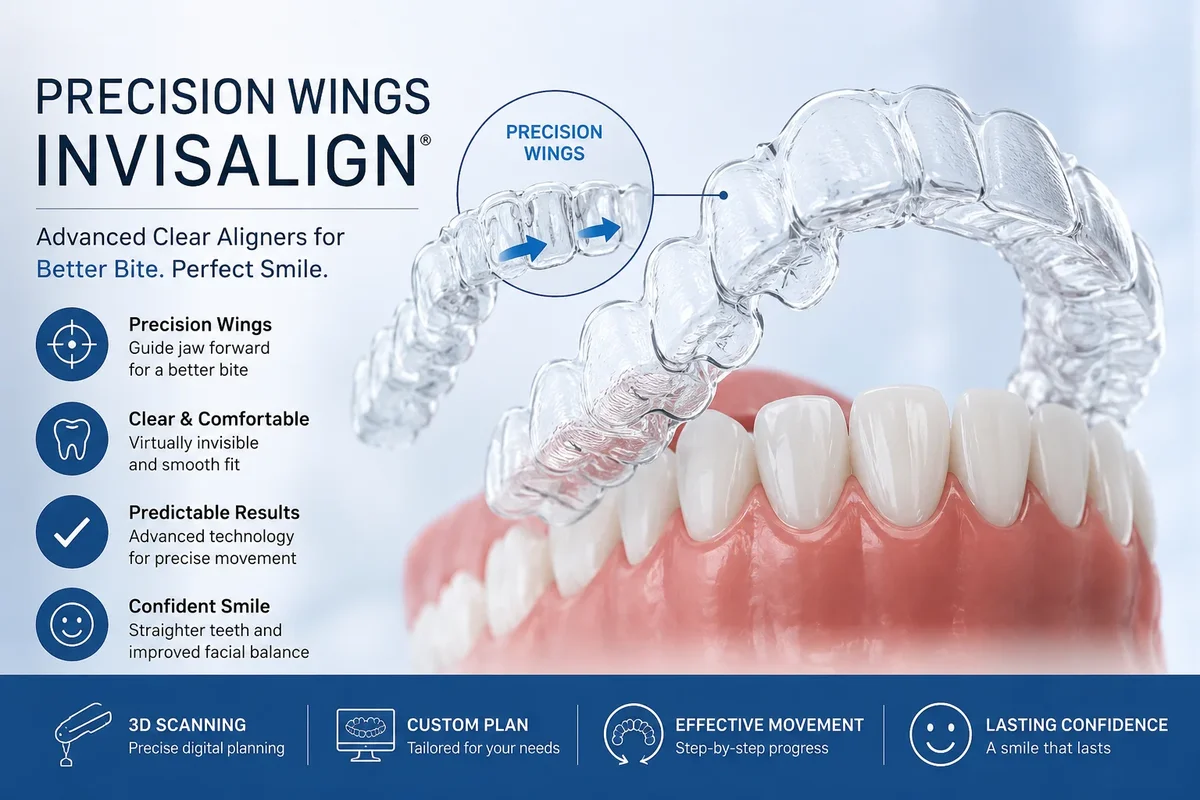
Patients considering precision wings invisalign often ask how the “precision wings” component actually works. The small wings integrated into the aligners are designed to interact with each other when the mouth closes. These wings gently reposition the lower jaw forward to help improve bite alignment. This feature makes precision wings invisalign particularly useful for correcting Class II malocclusion, commonly known as an overbite. Instead of relying solely on elastics or bulky external appliances, the aligners themselves support bite correction in a more discreet way.
In many cases, precision wings invisalign treatment can improve not only aesthetics but also oral function. Patients with bite issues may experience uneven tooth wear, speech concerns, jaw tension, or chewing difficulties. By improving the bite relationship, precision wings invisalign can contribute to better long-term dental health. Proper alignment may also help reduce pressure on certain teeth and improve overall comfort while eating and speaking.
😁 Many patients also appreciate the flexibility that comes with precision wings invisalign. Because the aligners are removable, individuals can continue enjoying their favorite foods without the restrictions commonly associated with braces. Sticky candies, popcorn, nuts, and hard foods that might damage metal braces are generally less of a concern because patients remove the aligners before meals. However, successful precision wings invisalign treatment still requires discipline. Most dentists recommend wearing the aligners for 20–22 hours per day to achieve optimal results.
The treatment timeline for precision wings invisalign varies depending on the severity of the orthodontic problem. Some mild cases may take under a year, while more complex bite corrections may require 18–24 months or longer. Patients typically switch to a new set of aligners every one or two weeks as the teeth gradually move into better positions. Regular dental visits are important throughout the precision wings invisalign process to monitor progress and make adjustments if necessary.
💰 Cost is another common question regarding precision wings invisalign. Prices vary based on case complexity, clinic location, treatment duration, and the experience of the provider. In the United States, treatment may range between approximately $3,500 and $8,500. International clinics may offer more affordable pricing while maintaining high-quality standards. Patients interested in personalized consultation and treatment planning can contact the Redent Klinik Contact Page for more information about orthodontic solutions and smile correction options.
It is also important for patients to choose a qualified provider when considering precision wings invisalign. Orthodontic expertise plays a major role in treatment success. Experienced dentists carefully analyze jaw structure, tooth movement, facial balance, and oral health before recommending this system. Patients should also verify that their provider follows recognized professional guidelines such as those promoted by the American Dental Association.
🪥 Maintaining oral hygiene during precision wings invisalign treatment is essential. Because the aligners fit snugly over the teeth, food particles and bacteria can become trapped if proper cleaning routines are ignored. Patients should brush and floss thoroughly before reinserting the aligners. Cleaning the trays daily also helps prevent odor buildup and discoloration. Fortunately, the removable nature of precision wings invisalign makes oral hygiene routines easier compared to traditional braces.
Another benefit of precision wings invisalign is the reduced visibility during social and professional interactions. Many adults avoid orthodontic treatment because they feel self-conscious about metal braces. Clear aligners provide a more discreet option that fits modern lifestyles. Whether attending business meetings, school activities, or social events, patients using precision wings invisalign often feel more confident during treatment.
📈 Orthodontic innovations continue to improve patient experiences, and precision wings invisalign represents a major step forward in clear aligner therapy. By combining aesthetic advantages with bite correction technology, the system offers a comprehensive solution for many orthodontic concerns. Patients seeking straighter teeth, improved jaw alignment, and enhanced comfort may find that precision wings invisalign provides an effective and modern alternative to conventional braces.
Overall, precision wings invisalign is ideal for patients who want discreet orthodontic treatment without sacrificing effectiveness. The combination of transparent aligners, digital planning, functional bite correction, and removable convenience makes this treatment increasingly attractive for both teenagers and adults. As clear aligner systems continue evolving, precision wings invisalign remains one of the most innovative choices available in modern dentistry and orthodontics.
How Precision Wings Invisalign Works for Bite Correction
🦷 One of the most important reasons patients choose precision wings invisalign is its ability to improve both tooth alignment and bite correction simultaneously. Traditional clear aligners mainly focused on straightening teeth, but modern orthodontic systems now include advanced functional technologies. Precision wings invisalign was specifically designed to help patients with overbite problems, jaw positioning concerns, and bite irregularities while maintaining the comfort and appearance advantages of clear aligners.
Many patients do not realize that bite alignment is just as important as having straight teeth. A poor bite can affect chewing, speech, jaw comfort, facial harmony, and long-term dental health. This is why orthodontists increasingly recommend precision wings invisalign for suitable patients who need functional correction in addition to cosmetic improvement. The integrated wing system inside the aligners helps guide the lower jaw into a healthier position over time while gradually moving the teeth into proper alignment.
What Are Precision Wings in Invisalign?
The defining feature of precision wings invisalign is the small wing-shaped extensions built directly into specific aligners. These wings are usually placed near the premolar area and are carefully engineered to interact when the patient closes their mouth. Unlike traditional orthodontic elastics or bulky functional appliances, the wings are integrated seamlessly into the aligner design.
When patients bite down, the upper and lower wings gently engage with each other. This interaction encourages the lower jaw to shift slightly forward into a more balanced position. Over time, this repeated positioning helps correct Class II malocclusion, commonly known as an overbite. Because the movement occurs gradually and continuously, precision wings invisalign can create a more comfortable orthodontic experience compared to older treatment methods.
✨ The technology behind precision wings invisalign combines aesthetics with functionality. Patients receive the benefits of nearly invisible aligners while also addressing more complex bite concerns that previously required metal braces or external appliances.
Why Bite Correction Is Important
Many people seek orthodontic treatment because they want straighter teeth, but bite correction is equally critical. A misaligned bite can lead to several oral health problems over time. Patients with overbites or jaw discrepancies may experience:
- Uneven tooth wear
- Jaw pain or temporomandibular joint discomfort
- Difficulty chewing certain foods
- Speech issues
- Increased risk of tooth fractures
- Facial imbalance
- Muscle strain in the jaw area
By improving jaw positioning, precision wings invisalign can help reduce these long-term complications. Orthodontists carefully evaluate facial structure, jaw growth, and bite relationships before recommending treatment. In many cases, early correction with precision wings invisalign can improve oral health outcomes and reduce the need for more invasive procedures later.
How the Treatment Process Works
Digital Scanning and Treatment Planning
The first step in precision wings invisalign treatment is a comprehensive orthodontic evaluation. Instead of messy traditional impressions, most clinics now use digital intraoral scanners to capture highly accurate 3D images of the teeth and bite. These scans allow the dentist or orthodontist to create a fully customized treatment plan.
Advanced software predicts how the teeth and jaws will move throughout treatment. Patients can often preview their expected smile transformation before starting. This digital planning system is one of the reasons why precision wings invisalign has become so popular among modern orthodontic patients.
Custom Aligner Fabrication
Once the treatment plan is finalized, a series of custom aligners is manufactured. Each aligner applies controlled pressure to specific teeth while also supporting jaw repositioning through the precision wing structures. Patients typically wear each set for one to two weeks before switching to the next aligner in the sequence.
The aligners are made from smooth, transparent plastic material, making precision wings invisalign far less noticeable than traditional braces. Many teenagers and adults appreciate this discreet appearance during treatment.
Daily Wear Requirements
Successful precision wings invisalign treatment depends heavily on patient compliance. Orthodontists generally recommend wearing the aligners for 20–22 hours per day. The aligners should only be removed for eating, drinking anything other than water, brushing, and flossing.
Because the wings work through repeated jaw positioning, consistent wear is essential for effective bite correction. Patients who do not wear their aligners long enough may experience delayed progress or less predictable results.
Who Can Benefit from Precision Wings Invisalign?
😁 Precision wings invisalign is commonly recommended for patients with moderate overbite issues and developing jaw discrepancies. Teenagers are often ideal candidates because their jaws are still growing, making functional correction more effective. However, adults may also qualify depending on the severity of their condition.
Orthodontists may recommend precision wings invisalign for:
- Class II malocclusion
- Mild to moderate overbites
- Crowded teeth
- Spacing issues
- Functional bite problems
- Patients seeking discreet orthodontic treatment
Not every patient is a candidate for precision wings invisalign. Severe skeletal discrepancies or highly complex orthodontic problems may still require traditional braces or orthognathic surgery. A professional evaluation is necessary to determine the best treatment option.
Advantages Compared to Traditional Braces
One of the biggest advantages of precision wings invisalign is comfort. Traditional braces can irritate the lips, cheeks, and gums because of brackets and wires. Clear aligners are smoother and generally more comfortable for daily wear.
Another major benefit is improved oral hygiene. Patients can remove the aligners when brushing and flossing, reducing plaque accumulation and lowering the risk of cavities during treatment. This makes precision wings invisalign especially attractive for patients concerned about maintaining healthy teeth and gums.
🪥 Additionally, food restrictions are minimal with precision wings invisalign. Unlike braces, which can be damaged by sticky or hard foods, aligners are removed during meals. Patients can continue enjoying their favorite foods without major dietary limitations.
Monitoring Progress During Treatment
Throughout the precision wings invisalign process, patients attend periodic appointments to monitor progress and receive new aligners. Orthodontists assess tooth movement, jaw positioning, and bite improvement during these visits. Some cases may require small refinements or additional aligners to achieve optimal results.
The average treatment duration for precision wings invisalign depends on case complexity. Mild corrections may take under a year, while more advanced bite corrections could require 18–24 months or longer. Consistency and proper aligner wear play a major role in treatment success.
📈 Modern orthodontics continues evolving rapidly, and precision wings invisalign represents one of the most innovative solutions for combining aesthetics with functional bite correction. Patients seeking straighter teeth, healthier jaw alignment, and a discreet treatment experience often find that precision wings invisalign provides an effective alternative to conventional braces while supporting both cosmetic and functional dental goals.
Benefits of Precision Wings Invisalign for Teens and Adults
🦷 Orthodontic treatment has evolved significantly over the years, and precision wings invisalign is now considered one of the most advanced options for correcting both tooth alignment and bite issues. Patients today are not only looking for straighter teeth but also for treatments that are comfortable, discreet, and compatible with modern lifestyles. This is exactly why precision wings invisalign has become increasingly popular among both teenagers and adults seeking effective orthodontic care without the appearance and inconvenience of traditional braces.
The unique design of precision wings invisalign combines clear aligner technology with functional bite correction. This dual-purpose system allows orthodontists to improve overbite conditions while also straightening teeth gradually. Many patients appreciate that they can receive comprehensive orthodontic treatment while maintaining confidence in social, academic, and professional environments.
Why Teens Benefit from Precision Wings Invisalign
Teenagers are among the most common candidates for precision wings invisalign because their jaws are still developing. During adolescence, orthodontists can guide jaw growth more effectively, making bite correction treatments highly successful. The precision wing structures help encourage healthier jaw positioning while the aligners gradually shift teeth into proper alignment.
One major advantage of precision wings invisalign for teens is appearance. Many teenagers feel self-conscious about wearing metal braces at school, during sports activities, or in social settings. Clear aligners provide a nearly invisible treatment option that allows teens to smile confidently throughout the orthodontic process.
😁 Another important benefit is comfort. Traditional braces often cause irritation from metal brackets and wires. In contrast, precision wings invisalign aligners are smooth and custom-made for each patient. This reduces discomfort and minimizes the risk of cuts or irritation inside the mouth.
Improved Confidence During Adolescence
Teenage years are closely connected to self-esteem and social confidence. Many young patients worry about how orthodontic appliances will affect their appearance. Because precision wings invisalign aligners are transparent, they are far less noticeable than braces. This discreet design can help teens feel more comfortable during school presentations, photographs, sports events, and social interactions.
Orthodontists also appreciate that precision wings invisalign allows teenagers to continue their daily routines with minimal disruption. Patients can remove the aligners when eating or brushing, making the treatment process easier to manage.
Better Oral Hygiene for Teen Patients
🪥 Maintaining oral hygiene with braces can be difficult for many teenagers. Food particles often become trapped around brackets and wires, increasing the risk of plaque buildup and cavities. Since precision wings invisalign aligners are removable, teens can brush and floss more effectively during treatment.
This removable design supports healthier gums and cleaner teeth throughout the orthodontic process. Orthodontists often recommend precision wings invisalign for responsible teenagers who can commit to wearing the aligners consistently for the recommended 20–22 hours per day.
Benefits of Precision Wings Invisalign for Adults
Adults are also increasingly choosing precision wings invisalign because it offers a discreet alternative to traditional braces. Many adults postponed orthodontic treatment during childhood and now want to improve their smile and bite without visible metal appliances. The nearly invisible appearance of precision wings invisalign makes it ideal for professional and social environments.
Unlike younger patients, adults often prioritize convenience and aesthetics. Professionals attending meetings, interviews, or public events frequently prefer precision wings invisalign because the aligners are difficult to notice during conversations. This discreet treatment option allows adults to improve their smiles without drawing unwanted attention.
Professional and Social Advantages
✨ Many adults feel uncomfortable wearing traditional braces in workplace settings. Clear aligners offer a more subtle orthodontic solution that fits modern lifestyles. Patients using precision wings invisalign can continue attending social events, business meetings, and professional activities with confidence.
The removable nature of precision wings invisalign also makes daily routines more flexible. Adults can remove the aligners temporarily for important occasions, meals, or presentations, although consistent wear remains essential for treatment success.
Comfort and Convenience for Busy Lifestyles
Adults often have demanding schedules that include work, family responsibilities, and travel. Precision wings invisalign is designed to fit conveniently into busy lifestyles. Because there are no wires requiring emergency adjustments, patients may experience fewer urgent orthodontic visits compared to traditional braces.
The aligners are custom-fitted for comfort and are generally less irritating than metal appliances. Many adults find precision wings invisalign easier to adapt to during everyday activities such as speaking, eating, and exercising.
Functional Benefits Beyond Cosmetic Improvement
Although many patients initially seek orthodontic treatment for cosmetic reasons, precision wings invisalign also offers important functional benefits. Correcting bite issues can improve chewing efficiency, speech clarity, and jaw comfort. Patients with overbites may experience uneven tooth wear, muscle tension, or temporomandibular joint discomfort over time.
By improving jaw alignment, precision wings invisalign can help reduce stress on teeth and supporting structures. Better bite positioning may also contribute to improved long-term oral health and overall comfort.
Reduced Risk of Dental Problems
Properly aligned teeth are generally easier to clean and maintain. Crooked or crowded teeth may trap plaque and food particles, increasing the likelihood of cavities and gum disease. Since precision wings invisalign gradually improves tooth positioning, patients often experience easier oral hygiene maintenance after treatment.
📈 Improved alignment may also reduce abnormal tooth wear caused by uneven biting forces. Orthodontists frequently explain that precision wings invisalign is not only about aesthetics but also about preserving oral function and supporting long-term dental health.
Lifestyle Flexibility Compared to Braces
One of the most appreciated benefits of precision wings invisalign is lifestyle flexibility. Traditional braces often come with dietary restrictions because certain foods can damage brackets and wires. Sticky candies, popcorn, nuts, and hard foods are commonly discouraged.
With precision wings invisalign, patients simply remove the aligners before meals. This allows them to continue enjoying their favorite foods without major restrictions. However, patients must remember to clean their teeth before reinserting the aligners to maintain proper oral hygiene.
🏃 Athletes and physically active individuals may also prefer precision wings invisalign because clear aligners reduce the risk of mouth injuries sometimes associated with braces during contact sports.
Psychological and Emotional Advantages
Orthodontic treatment can significantly affect self-confidence and emotional well-being. Patients who feel embarrassed about crooked teeth or bite issues often become more confident as their smile improves. The discreet nature of precision wings invisalign allows patients to experience these benefits without feeling overly self-conscious during treatment.
Teenagers may feel more socially comfortable at school, while adults may experience increased confidence in personal and professional situations. This emotional advantage is one reason why many patients actively request precision wings invisalign instead of traditional braces.
🌟 Overall, precision wings invisalign provides a modern orthodontic solution that combines aesthetics, comfort, functionality, and convenience. Whether for teenagers needing jaw guidance during development or adults seeking discreet bite correction, precision wings invisalign offers numerous advantages that support both oral health and confidence. Its ability to straighten teeth while correcting bite problems makes it one of the most comprehensive clear aligner systems available in modern dentistry today.
Precision Wings Invisalign vs Traditional Braces
🦷 Choosing between precision wings invisalign and traditional braces is one of the most important decisions patients make during orthodontic treatment planning. Both treatment methods are designed to improve tooth alignment and bite function, but they work in very different ways. Modern patients often want orthodontic solutions that not only provide effective results but also fit comfortably into their daily lifestyles. This is one of the main reasons why precision wings invisalign has become increasingly popular among teenagers and adults looking for a discreet and comfortable alternative to metal braces.
Traditional braces have been used successfully for decades and remain highly effective for complex orthodontic cases. However, advancements in clear aligner technology now allow systems like precision wings invisalign to treat many bite and alignment problems that previously required braces alone. Understanding the differences between these two treatment options can help patients choose the solution that best fits their oral health needs, cosmetic goals, and lifestyle preferences.
Appearance and Aesthetic Differences
One of the biggest advantages of precision wings invisalign is its nearly invisible appearance. The aligners are made from transparent medical-grade plastic that fits closely over the teeth. Most people can barely notice the aligners during conversations, photographs, or social interactions.
In contrast, traditional braces use visible metal brackets and wires attached directly to the teeth. While ceramic braces may appear less noticeable than metal braces, they are still generally more visible than precision wings invisalign. Many teenagers and adults choose clear aligners specifically because they want orthodontic treatment without the appearance of metal appliances.
😁 Patients working in professional environments often prefer precision wings invisalign because it allows them to maintain confidence during meetings, presentations, and public interactions. The discreet appearance is especially appealing to adults who delayed orthodontic treatment earlier in life.
Comfort During Orthodontic Treatment
Comfort with Precision Wings Invisalign
Comfort is another major reason patients consider precision wings invisalign. Traditional braces contain brackets, wires, and sometimes elastics that can irritate the cheeks, lips, and gums. Patients may experience soreness after wire adjustments or when brackets rub against soft tissues.
The aligners used in precision wings invisalign are custom-designed with smooth edges that reduce irritation. Since there are no protruding metal components, patients often report greater comfort throughout treatment. Although some mild pressure is expected when switching to a new aligner, this discomfort is generally temporary and manageable.
Speech Adaptation and Daily Activities
Some patients initially notice slight speech changes when starting precision wings invisalign, especially because of the precision wing structures inside certain aligners. However, most individuals adapt quickly within a few days. Traditional braces may also temporarily affect speech, particularly after adjustments.
✨ Because precision wings invisalign aligners are removable, patients can take them out briefly for important presentations, social events, or meals. This flexibility is something traditional braces cannot provide.
Effectiveness for Bite Correction
Traditional braces are extremely effective for severe orthodontic problems and have long been considered the standard treatment for complex bite issues. Braces apply continuous force through wires and brackets, allowing orthodontists to control tooth movement very precisely.
However, modern precision wings invisalign technology has significantly improved the ability of clear aligners to address bite correction. The precision wing components are specifically designed to guide jaw positioning while simultaneously aligning teeth. This makes precision wings invisalign especially effective for treating moderate overbite conditions and certain functional bite problems.
Orthodontists often evaluate factors such as jaw structure, skeletal relationships, crowding severity, and patient compliance before recommending either braces or precision wings invisalign. In many moderate cases, clear aligners can now achieve results similar to traditional braces while offering improved comfort and aesthetics.
Oral Hygiene and Cleaning
Challenges with Traditional Braces
🪥 Maintaining oral hygiene with traditional braces can be difficult. Food particles frequently become trapped around brackets and wires, increasing the risk of plaque accumulation, cavities, and gum inflammation. Patients often need special cleaning tools such as interdental brushes and floss threaders.
Because braces remain fixed on the teeth throughout treatment, cleaning requires additional time and effort. Some patients struggle to maintain proper oral hygiene during long orthodontic treatments.
Advantages of Removable Aligners
One major advantage of precision wings invisalign is that the aligners are removable. Patients can brush and floss normally after removing the trays, making oral hygiene easier and more effective. This convenience reduces the likelihood of plaque buildup and helps maintain healthier gums during treatment.
Patients using precision wings invisalign should still clean the aligners daily to prevent odor, bacteria accumulation, and discoloration. Proper hygiene habits remain essential for successful treatment outcomes.
Food Restrictions and Lifestyle Flexibility
🍎 Traditional braces often come with significant dietary restrictions. Hard foods, sticky candies, popcorn, chewing gum, and crunchy snacks can damage brackets or wires. Patients must avoid many foods throughout treatment to prevent orthodontic emergencies.
With precision wings invisalign, patients remove the aligners before eating. This means there are far fewer food restrictions compared to braces. Individuals can continue enjoying most of their favorite meals as long as they clean their teeth before reinserting the aligners.
This flexibility makes precision wings invisalign especially attractive for adults, athletes, students, and socially active individuals who want minimal disruption to their daily routines.
Treatment Monitoring and Appointments
Traditional braces require periodic wire adjustments and bracket monitoring by the orthodontist. These appointments may occasionally involve tightening or replacing wires, which can cause temporary soreness afterward.
In contrast, precision wings invisalign treatment often involves fewer emergency visits because there are no brackets or wires that can break unexpectedly. Patients receive multiple sets of aligners and switch to new trays according to their treatment schedule.
📈 Orthodontists still monitor progress regularly during precision wings invisalign treatment to ensure proper tooth movement and bite correction. Some cases may require refinements or additional aligners for optimal results.
Treatment Discipline and Compliance
One important difference between braces and precision wings invisalign is patient responsibility. Traditional braces are fixed appliances, meaning they work continuously without requiring removal or reinsertion by the patient.
Because precision wings invisalign aligners are removable, treatment success depends heavily on compliance. Patients must wear the aligners for approximately 20–22 hours daily. Failing to wear them consistently may slow progress or compromise final results.
For motivated patients who can follow instructions properly, precision wings invisalign can provide excellent outcomes while offering superior comfort and aesthetics.
Which Option Is Better?
🌟 There is no universal answer regarding whether traditional braces or precision wings invisalign is better. The ideal treatment depends on each patient’s orthodontic needs, lifestyle, age, oral health condition, and treatment goals.
Patients with severe skeletal discrepancies or highly complex tooth movements may still require braces for optimal correction. However, many teenagers and adults with mild to moderate bite issues can achieve outstanding results with precision wings invisalign.
Ultimately, consulting with an experienced orthodontist is the best way to determine which treatment option is most appropriate. Modern orthodontic advancements have made precision wings invisalign one of the most attractive alternatives to traditional braces by combining aesthetics, comfort, removable convenience, and effective bite correction into a single advanced treatment system.
Who Is a Good Candidate for Precision Wings Invisalign?
🦷 Choosing the right orthodontic treatment begins with determining whether a patient is a suitable candidate for the procedure. While precision wings invisalign is an advanced and highly effective orthodontic system, it is not automatically ideal for every individual. Orthodontists carefully evaluate factors such as age, bite structure, jaw alignment, oral health, and patient compliance before recommending precision wings invisalign. Understanding who benefits most from this treatment helps patients make informed decisions and achieve better long-term results.
One of the major strengths of precision wings invisalign is its ability to combine clear aligner therapy with functional bite correction. This means the system is not only designed to straighten teeth but also to improve jaw positioning and bite relationships. Patients with mild to moderate overbite conditions are often excellent candidates for precision wings invisalign, especially if they want a discreet alternative to traditional braces.
Patients with Overbite Problems
The most common candidates for precision wings invisalign are patients with Class II malocclusion, also known as an overbite. In this condition, the upper teeth and jaw extend significantly forward compared to the lower jaw. This can affect both appearance and oral function.
Overbites may contribute to:
- Uneven tooth wear
- Jaw discomfort
- Speech difficulties
- Chewing problems
- Facial imbalance
- Temporomandibular joint stress
✨ The integrated precision wing structures inside precision wings invisalign aligners help encourage healthier lower jaw positioning during treatment. This makes the system especially valuable for patients who need both cosmetic improvement and functional correction.
Orthodontists generally determine the severity of the overbite during a consultation using digital scans, X-rays, and bite analysis. Mild to moderate overbite cases are often highly suitable for precision wings invisalign.
Teenagers as Ideal Candidates
Why Jaw Development Matters
Teenagers are among the best candidates for precision wings invisalign because their jaws are still growing and developing. During adolescence, orthodontists can guide jaw growth more effectively, allowing bite correction to occur more naturally.
Because the precision wing components gently reposition the lower jaw over time, younger patients often experience highly successful outcomes. The adaptability of developing jaw structures makes precision wings invisalign especially effective during teenage years.
😁 Another important factor is aesthetics. Many teenagers feel uncomfortable wearing visible metal braces at school or during social activities. Since precision wings invisalign aligners are transparent, they provide a more discreet orthodontic option that can help boost confidence throughout treatment.
Responsible Teen Compliance
Although teenagers are strong candidates for precision wings invisalign, successful treatment requires discipline. Patients must wear the aligners approximately 20–22 hours daily. Teenagers who are responsible and motivated usually achieve the best outcomes.
Orthodontists may not recommend precision wings invisalign for patients who frequently lose removable appliances or fail to follow instructions consistently. Compliance remains one of the most important factors in treatment success.
Adults Seeking Discreet Orthodontics
👨💼 Adults who postponed orthodontic treatment earlier in life are increasingly choosing precision wings invisalign. Many adults want straighter teeth and better bite alignment but prefer to avoid the appearance of traditional braces.
The nearly invisible design of precision wings invisalign makes it highly attractive for professionals, public speakers, and socially active individuals. Adults often appreciate the flexibility and convenience of removable aligners while still receiving advanced orthodontic correction.
Adults may benefit from precision wings invisalign if they have:
- Mild to moderate overbites
- Crowded teeth
- Spacing issues
- Minor jaw alignment concerns
- Previous orthodontic relapse
- A desire for discreet treatment
However, orthodontists carefully evaluate adult patients because jaw growth is complete. Severe skeletal discrepancies in adults may require alternative treatments such as braces or orthognathic surgery instead of precision wings invisalign.
Patients with Good Oral Health
Healthy Teeth and Gums
🪥 Good oral health is another important requirement for precision wings invisalign. Before starting orthodontic treatment, patients should have healthy gums and teeth free from untreated decay or severe periodontal disease.
Because aligners fit tightly over the teeth, untreated dental problems may worsen during treatment if not addressed beforehand. Orthodontists usually recommend resolving cavities, gum inflammation, or infections before beginning precision wings invisalign.
Patients should also commit to maintaining strong oral hygiene throughout treatment. Since the aligners are removable, brushing and flossing are easier compared to traditional braces, but proper cleaning habits remain essential.
Commitment to Aligner Maintenance
Patients considering precision wings invisalign must also be willing to clean the aligners regularly. Poor aligner hygiene may lead to bacterial buildup, discoloration, or unpleasant odors. Responsible patients who maintain consistent cleaning routines generally experience better treatment outcomes.
Patients Seeking Comfortable Treatment
Comfort is one of the biggest reasons patients request precision wings invisalign. Traditional braces often cause irritation from brackets and wires rubbing against the cheeks and lips. In contrast, clear aligners are smoother and custom-designed for each patient.
Individuals who are sensitive to traditional orthodontic appliances often find precision wings invisalign easier to tolerate. Although some mild pressure occurs when changing aligners, most patients consider the treatment more comfortable overall.
🏃 Athletes may also prefer precision wings invisalign because removable aligners reduce the risk of mouth injuries sometimes associated with metal braces during sports activities.
Who May Not Be a Good Candidate?
Although precision wings invisalign is highly advanced, it is not suitable for every orthodontic situation. Some patients may require more complex treatment approaches depending on the severity of their condition.
Patients who may not qualify ideally for precision wings invisalign include:
- Individuals with severe skeletal jaw discrepancies
- Patients requiring extensive tooth rotation
- Cases involving severe bite asymmetry
- Patients with poor oral hygiene habits
- Individuals unlikely to wear aligners consistently
- Patients with advanced gum disease
In these situations, orthodontists may recommend traditional braces or other corrective treatments instead of precision wings invisalign.
The Importance of Professional Evaluation
📈 Every orthodontic case is unique, which is why professional evaluation is essential before starting precision wings invisalign. Orthodontists analyze jaw structure, tooth alignment, facial proportions, oral health, and treatment goals before creating a personalized plan.
Digital imaging technology allows providers to predict tooth movement and bite correction outcomes with impressive accuracy. Patients can often preview their expected results before treatment even begins.
🌟 Overall, precision wings invisalign is an excellent option for teenagers and adults seeking discreet orthodontic treatment combined with bite correction. Patients with mild to moderate overbite issues, healthy oral conditions, and strong treatment compliance are often ideal candidates. By combining aesthetics, functionality, and comfort, precision wings invisalign has become one of the most innovative orthodontic solutions available in modern dentistry today.
Treatment Timeline and Daily Wear Expectations
🦷 Understanding the treatment timeline and daily wear routine is extremely important for patients considering precision wings invisalign. Many people are attracted to clear aligner therapy because of its comfort, aesthetics, and flexibility, but successful treatment depends heavily on consistency and patience. Orthodontic correction takes time because teeth, supporting bone, and jaw structures must move gradually and safely. With precision wings invisalign, patients receive a carefully planned treatment process that combines tooth alignment with functional bite correction.
The total duration of precision wings invisalign treatment varies depending on the complexity of the orthodontic problem. Some patients with mild alignment issues may complete treatment within several months, while more advanced bite correction cases can take over two years. Orthodontists create personalized treatment plans based on digital scans, jaw structure analysis, tooth positioning, and overall oral health.
Because precision wings invisalign aligners are removable, patient compliance plays a major role in determining how quickly and effectively treatment progresses. Wearing the aligners correctly every day is one of the most important factors influencing final results.
The First Consultation and Treatment Planning Phase
Comprehensive Orthodontic Evaluation
The treatment process for precision wings invisalign begins with a detailed orthodontic examination. During the consultation, the dentist or orthodontist evaluates:
- Tooth alignment
- Bite relationship
- Jaw positioning
- Facial structure
- Gum health
- Overall oral condition
Modern clinics usually use digital intraoral scanners instead of traditional impressions. These scanners create highly accurate 3D images of the teeth and jaws, allowing orthodontists to plan precision wings invisalign treatment with exceptional precision.
✨ Digital treatment planning software can simulate how the teeth and bite are expected to improve over time. Many patients appreciate being able to preview their future smile before beginning treatment.
Customized Aligner Production
Once the treatment plan is finalized, a customized series of aligners is manufactured specifically for the patient. Each aligner is designed to move the teeth slightly closer to their ideal positions while the precision wings gradually guide jaw correction.
The precision wing structures are one of the most advanced components of precision wings invisalign. These small integrated features work together when the patient bites down, encouraging healthier jaw alignment throughout treatment.
Average Treatment Timeline
Mild Orthodontic Cases
Patients with minor crowding, spacing, or mild bite irregularities may complete precision wings invisalign treatment within 6–12 months. These cases generally require fewer aligners and less jaw correction.
Because mild cases involve simpler tooth movements, patients often notice visible improvements relatively early in treatment. However, even shorter precision wings invisalign cases require strict aligner compliance to maintain predictable results.
Moderate to Complex Cases
Patients with moderate overbites or more complicated orthodontic conditions may need 12–24 months or longer of precision wings invisalign treatment. Bite correction typically requires more time because both tooth movement and jaw positioning must be addressed gradually.
😁 Orthodontists monitor treatment carefully during these longer cases to ensure the precision wings continue functioning correctly. Some patients may require refinement aligners near the end of treatment to perfect the final bite and tooth alignment.
Daily Wear Expectations
Recommended Wear Time
One of the most important rules for successful precision wings invisalign treatment is consistent daily wear. Orthodontists generally recommend wearing the aligners for approximately 20–22 hours per day.
The aligners should only be removed for:
- Eating meals
- Drinking beverages other than water
- Brushing teeth
- Flossing
- Cleaning the aligners
Because the precision wing system depends on repeated jaw positioning throughout the day, insufficient wear time can significantly slow treatment progress. Patients who frequently remove their aligners or forget to wear them may experience delays or less predictable results with precision wings invisalign.
Adjusting to Wearing Aligners
During the first few days of precision wings invisalign treatment, some patients notice mild pressure or tightness. This sensation is normal and indicates that the aligners are gradually moving the teeth. Mild speech changes may also occur initially because of the precision wing structures, but most patients adapt quickly.
✨ Many patients report that precision wings invisalign becomes part of their normal daily routine after the first week. Because the aligners are smooth and custom-fitted, they are generally more comfortable than traditional braces.
Changing Aligners Throughout Treatment
Patients using precision wings invisalign usually switch to a new set of aligners every one to two weeks, depending on the orthodontist’s instructions. Each new aligner continues the gradual movement process established by the digital treatment plan.
It is important to follow the aligner schedule exactly as instructed. Changing aligners too early or too late can interfere with treatment progression. Orthodontists may also provide chewies or additional accessories to help ensure proper aligner seating during precision wings invisalign treatment.
Routine Orthodontic Appointments
Monitoring Progress
📈 Even though precision wings invisalign generally requires fewer emergency visits than traditional braces, routine monitoring appointments remain essential. Patients usually visit the orthodontist every 6–10 weeks to evaluate progress and receive additional aligners.
During these appointments, the provider checks:
- Tooth movement progress
- Jaw positioning changes
- Aligner fit
- Oral hygiene
- Bite correction improvement
Orthodontists may make small adjustments to the treatment plan if necessary. Some cases require refinement aligners near the end of treatment to optimize results.
Importance of Communication
Patients should inform their orthodontist immediately if they lose aligners, notice fitting problems, or experience unusual discomfort during precision wings invisalign treatment. Early communication helps prevent delays and supports smoother treatment progression.
Daily Cleaning and Maintenance Expectations
🪥 Patients must maintain excellent oral hygiene throughout precision wings invisalign treatment. Teeth should always be brushed and flossed before reinserting the aligners to avoid trapping bacteria and food particles against the teeth.
The aligners themselves should also be cleaned daily using lukewarm water and approved cleaning products. Hot water should be avoided because it may warp the aligner material.
Good hygiene habits help prevent:
- Bad breath
- Tooth decay
- Gum inflammation
- Aligner discoloration
- Bacterial buildup
Retention After Treatment
🌟 Completing active precision wings invisalign treatment is only part of the orthodontic journey. After the teeth and bite reach their corrected positions, patients usually receive retainers to help maintain the results.
Without proper retention, teeth naturally tend to shift over time. Orthodontists provide customized retention instructions based on each patient’s case. Retainers are essential for preserving the long-term success of precision wings invisalign.
Overall, patients who fully understand the treatment timeline and daily wear expectations are more likely to achieve excellent outcomes with precision wings invisalign. Consistent aligner use, proper hygiene, routine appointments, and patient commitment all contribute to successful orthodontic correction. By combining advanced bite correction technology with removable clear aligners, precision wings invisalign offers a modern and highly effective orthodontic experience for both teenagers and adults.
Precision Wings Invisalign Cost and Payment Factors
🦷 One of the most common questions patients ask before starting orthodontic treatment is how much precision wings invisalign costs. While clear aligner therapy is known for its comfort and discreet appearance, patients also want to understand the financial side of treatment before making a decision. The total cost of precision wings invisalign can vary significantly depending on several important factors, including case complexity, treatment duration, geographic location, provider experience, and additional orthodontic requirements.
Unlike standard clear aligners designed only for mild cosmetic correction, precision wings invisalign includes advanced bite correction technology. The integrated precision wing structures allow orthodontists to address jaw positioning and overbite problems in addition to straightening teeth. Because the treatment combines functional orthodontics with advanced digital aligner systems, the cost of precision wings invisalign is often higher than simpler cosmetic aligner treatments.
Average Cost of Precision Wings Invisalign
The average price of precision wings invisalign depends on the country, clinic, and complexity of the orthodontic problem. In the United States, treatment commonly ranges between:
- $3,500–$5,000 for mild cases
- $5,000–$7,000 for moderate bite correction
- $7,000–$8,500 or more for complex orthodontic cases
🌍 International dental clinics may offer more affordable treatment options while still maintaining high-quality orthodontic care. In countries with lower treatment costs, patients may sometimes receive precision wings invisalign treatment for significantly reduced prices compared to North America or Western Europe.
However, patients should not choose a provider based only on price. Orthodontic expertise, clinic technology, treatment planning quality, and provider experience all play major roles in successful precision wings invisalign outcomes.
Main Factors That Affect Cost
Case Complexity
The complexity of the orthodontic problem is one of the biggest factors influencing the cost of precision wings invisalign. Mild crowding or small bite adjustments generally require fewer aligners and shorter treatment times, resulting in lower overall costs.
More advanced cases involving:
- Moderate to severe overbites
- Jaw discrepancies
- Significant crowding
- Multiple tooth rotations
- Longer treatment duration
typically require more extensive orthodontic planning and additional aligners, increasing the total treatment cost.
✨ Because precision wings invisalign includes both cosmetic and functional correction, the treatment process is often more sophisticated than standard aligner systems.
Treatment Duration
Longer treatment plans usually cost more because they involve additional aligners, monitoring appointments, and refinement stages. Patients requiring 18–24 months of precision wings invisalign treatment generally pay more than patients completing treatment within several months.
Orthodontists carefully evaluate the expected treatment timeline during the consultation process. Some patients may also require refinement aligners at the end of treatment to perfect the final bite and tooth positioning.
Orthodontist Experience and Clinic Technology
Provider Expertise
👨⚕️ The experience level of the orthodontist can strongly influence the price of precision wings invisalign. Highly experienced orthodontists with advanced training in clear aligner therapy often charge higher fees because of their expertise and treatment success rates.
Patients should remember that orthodontic treatment directly affects long-term oral function and facial balance. Choosing an experienced provider may improve treatment predictability and reduce the likelihood of complications.
Many patients prefer orthodontists who specialize in:
- Clear aligner systems
- Bite correction
- Functional orthodontics
- Digital orthodontic planning
- Complex Invisalign cases
Advanced Technology
Modern clinics using advanced digital scanners, 3D imaging systems, and computerized treatment simulation software may also charge slightly higher fees for precision wings invisalign. These technologies improve treatment precision and patient comfort while reducing the need for traditional impressions.
📈 Digital treatment planning allows orthodontists to simulate jaw correction and tooth movement with impressive accuracy. Many patients appreciate being able to preview their future smile before beginning precision wings invisalign treatment.
Additional Costs Patients Should Consider
Diagnostic Records
Before starting precision wings invisalign, patients often require diagnostic imaging and orthodontic records. These may include:
- Digital scans
- X-rays
- Photographs
- Bite analysis
- 3D treatment simulations
Some clinics include these services in the treatment fee, while others charge separately.
Retainers After Treatment
🪥 Retainers are essential after completing precision wings invisalign treatment. Teeth naturally tend to shift over time, so retainers help preserve the final orthodontic results.
Patients should ask whether retainers are included in the treatment package. In some clinics, retainers are charged separately and may add several hundred dollars to the total cost.
Refinement Aligners
Some patients require additional refinement aligners after the initial treatment phase. These aligners help perfect the final bite and tooth positioning. Certain clinics include refinements within the original precision wings invisalign package, while others may charge additional fees.
Insurance Coverage and Financing Options
Dental Insurance Coverage
💰 Some dental insurance plans partially cover orthodontic treatment, including precision wings invisalign. Coverage amounts vary widely depending on the insurance provider and policy terms.
Patients should verify:
- Orthodontic coverage limits
- Age restrictions
- Lifetime orthodontic maximums
- Eligibility for clear aligner therapy
In many cases, insurance covers only a portion of the total treatment cost, leaving patients responsible for the remaining balance.
Monthly Payment Plans
Many orthodontic clinics offer financing plans to make precision wings invisalign more affordable. Instead of paying the full amount upfront, patients may spread payments over several months or years.
Flexible payment plans often include:
- Monthly installments
- Interest-free financing options
- Low down payments
- Third-party financing programs
✨ These financing options make precision wings invisalign accessible to a wider range of patients seeking advanced orthodontic care.
Why Cheaper Treatment Is Not Always Better
Some patients search for the lowest possible price when considering precision wings invisalign, but extremely cheap treatment options may involve risks. Orthodontic treatment requires professional diagnosis, careful monitoring, and accurate bite correction planning.
Inexperienced providers or low-cost clinics may lack:
- Advanced orthodontic expertise
- Modern digital technology
- Comprehensive monitoring systems
- Experience with complex bite correction
Choosing a qualified orthodontist often improves both treatment safety and long-term results.
Long-Term Value of Precision Wings Invisalign
🌟 Although the cost of precision wings invisalign may initially seem significant, many patients view it as a long-term investment in both oral health and confidence. Correcting bite problems can help reduce uneven tooth wear, improve chewing efficiency, support jaw comfort, and enhance facial aesthetics.
The discreet appearance, removable convenience, and advanced bite correction capabilities of precision wings invisalign also provide lifestyle advantages that many patients consider worthwhile. Compared to traditional braces, clear aligners offer greater flexibility while still delivering highly effective orthodontic correction.
Ultimately, the total cost of precision wings invisalign depends on the patient’s unique orthodontic needs and treatment goals. Patients should prioritize professional expertise, treatment quality, and long-term oral health outcomes when evaluating orthodontic options. By combining aesthetics, comfort, and functional correction, precision wings invisalign remains one of the most advanced orthodontic investments available in modern dentistry today.
Eating, Cleaning, and Oral Care During Treatment
🦷 Proper eating habits, aligner cleaning, and oral hygiene routines are extremely important during precision wings invisalign treatment. While clear aligners offer more flexibility than traditional braces, patients still need to follow specific care instructions to achieve successful orthodontic results. Maintaining excellent oral hygiene not only protects the teeth and gums but also helps ensure that precision wings invisalign aligners remain clean, transparent, and effective throughout the treatment process.
One of the biggest advantages of precision wings invisalign is that the aligners are removable. Unlike traditional braces, which remain attached to the teeth permanently during treatment, clear aligners can be taken out for meals and cleaning. This provides greater comfort and convenience, but it also means patients must develop responsible daily routines to avoid treatment delays or oral health complications.
Eating with Precision Wings Invisalign
Removing Aligners Before Meals
🍎 Patients using precision wings invisalign should always remove their aligners before eating or drinking anything other than water. Eating while wearing aligners can damage the plastic material, stain the trays, and trap food particles against the teeth.
Hard foods may crack or distort the aligners, while hot beverages can warp the material and affect the fit. Sticky foods may also damage the aligners or create hygiene problems. This is why orthodontists strongly recommend removing precision wings invisalign aligners before every meal or snack.
One major lifestyle advantage of precision wings invisalign is that patients can continue enjoying most foods without the restrictions commonly associated with traditional braces. Since the aligners are removed during meals, patients generally do not need to avoid:
- Popcorn
- Nuts
- Crunchy vegetables
- Chewing gum
- Sticky foods
- Hard snacks
😁 This flexibility makes precision wings invisalign especially attractive for teenagers and adults who want orthodontic treatment without major dietary limitations.
Drinking Beverages Safely
Water is the safest beverage to consume while wearing precision wings invisalign. Colored beverages such as coffee, tea, soda, sports drinks, and wine can stain the aligners and may increase bacterial buildup if trapped beneath the trays.
Hot beverages are particularly risky because heat may deform the aligners and reduce their effectiveness. Orthodontists generally recommend removing precision wings invisalign aligners before drinking anything except cool water.
✨ Patients should also avoid sugary beverages while wearing aligners because trapped sugars may increase the risk of tooth decay and enamel damage during treatment.
Cleaning Precision Wings Invisalign Aligners
Daily Cleaning Routine
🪥 Cleaning precision wings invisalign aligners every day is essential for maintaining oral hygiene and keeping the trays transparent. Without proper cleaning, aligners may develop odors, discoloration, and bacterial buildup.
Patients should clean their aligners:
- Every morning
- Before bedtime
- After meals if necessary
- Whenever visible buildup appears
Most orthodontists recommend gently brushing the aligners using a soft toothbrush and lukewarm water. Mild clear soap or approved aligner cleaning products may also be used. Harsh toothpaste should generally be avoided because abrasive ingredients can scratch the aligners and reduce transparency.
Cleaning Products to Avoid
Certain products may damage precision wings invisalign aligners and should be avoided. Patients should not use:
- Hot water
- Bleach
- Strong household cleaners
- Abrasive toothpaste
- Colored mouthwashes
🔥 Hot water is particularly dangerous because it can warp the aligners and alter the fit. Since precision wings invisalign relies on highly precise tooth movement, even small distortions may interfere with treatment progress.
Brushing and Flossing During Treatment
Importance of Brushing After Meals
Patients should always brush their teeth before reinserting precision wings invisalign aligners after eating. Food particles and bacteria trapped beneath the aligners can increase the risk of:
- Cavities
- Bad breath
- Gum inflammation
- Plaque accumulation
- Tooth discoloration
✨ Since the aligners fit tightly against the teeth, maintaining clean teeth becomes especially important during precision wings invisalign treatment. Orthodontists often recommend carrying a travel toothbrush and toothpaste when away from home.
Flossing for Gum Health
Flossing is another essential part of oral care during precision wings invisalign treatment. Food debris and plaque frequently collect between the teeth, and failing to floss regularly may contribute to gum irritation or periodontal problems.
Unlike traditional braces, which can make flossing difficult, removable aligners allow patients to floss normally. This is one of the major oral hygiene advantages of precision wings invisalign compared to fixed orthodontic appliances.
Managing Oral Hygiene Challenges
Preventing Bad Breath
😷 Poor aligner hygiene may cause unpleasant breath odors during precision wings invisalign treatment. Bacteria trapped between the teeth and aligners can contribute to bad breath if patients neglect proper cleaning routines.
To reduce odor risk, patients should:
- Brush after meals
- Floss daily
- Clean aligners regularly
- Stay hydrated
- Avoid sugary drinks while wearing aligners
Dry mouth may also contribute to odor problems, so drinking enough water throughout the day is important during precision wings invisalign treatment.
Avoiding Stains and Discoloration
Colored foods and beverages may stain both teeth and aligners if oral hygiene is neglected. Coffee, tea, curry, wine, and tobacco products are common causes of discoloration.
Because precision wings invisalign aligners are transparent, stains can become highly visible. Patients who want to maintain a clean and aesthetic appearance should practice consistent oral hygiene and avoid smoking during treatment.
Travel and Daily Routine Tips
✈️ Patients using precision wings invisalign often appreciate the flexibility of removable aligners while traveling. However, maintaining proper oral care routines away from home remains important.
Helpful travel items may include:
- Travel toothbrush
- Floss
- Aligner storage case
- Cleaning crystals or tablets
- Mouth rinse
- Extra aligners if instructed by the orthodontist
Patients should never wrap precision wings invisalign aligners in napkins during meals because they can easily be thrown away accidentally.
Protecting Long-Term Oral Health
📈 One of the long-term advantages of precision wings invisalign is that the removable system encourages better oral hygiene habits compared to traditional braces. Patients who maintain excellent cleaning routines during treatment often experience healthier gums and cleaner teeth afterward.
Orthodontists emphasize that successful precision wings invisalign treatment depends not only on wearing the aligners consistently but also on protecting overall oral health throughout the process.
The Importance of Patient Discipline
🌟 Ultimately, eating habits, aligner cleaning, and oral hygiene routines all play major roles in the success of precision wings invisalign. Patients who follow professional instructions carefully are more likely to achieve predictable orthodontic results while maintaining healthy teeth and gums.
The removable convenience of precision wings invisalign offers significant lifestyle advantages, but it also requires responsibility and consistency. Proper cleaning, smart eating habits, daily brushing, regular flossing, and routine aligner maintenance all contribute to a healthier and more successful orthodontic experience. By combining advanced orthodontic technology with strong oral hygiene practices, patients can maximize the benefits of precision wings invisalign while protecting their long-term dental health.
Common Problems and Tips for Better Invisalign Results
🦷 Although precision wings invisalign is one of the most advanced orthodontic systems available today, patients may still experience certain challenges during treatment. Understanding these common issues and learning how to manage them properly can significantly improve treatment success and patient comfort. Like all orthodontic procedures, precision wings invisalign requires consistency, patience, and proper daily habits to deliver optimal results.
Most patients successfully complete precision wings invisalign treatment without major complications, but minor problems may occur throughout the process. Fortunately, many of these issues can be prevented or minimized through proper aligner care, strong oral hygiene, and regular communication with the orthodontist.
Initial Discomfort and Pressure
Why Mild Pain Happens
One of the most common experiences during precision wings invisalign treatment is mild discomfort or pressure when switching to a new set of aligners. This sensation occurs because the aligners apply controlled force to gradually move the teeth and guide jaw positioning.
The pressure usually feels strongest during the first few days after inserting new aligners. Patients often describe the feeling as tightness rather than severe pain. This is considered a normal part of precision wings invisalign treatment and typically improves quickly as the teeth adapt.
😁 The precision wing structures may also create slight jaw pressure at first because they encourage forward jaw positioning during biting. Most patients adjust comfortably within several days.
Tips to Reduce Discomfort
Patients can manage mild soreness during precision wings invisalign treatment by:
- Wearing new aligners before bedtime
- Using cold water to soothe irritation
- Eating soft foods temporarily
- Using orthodontist-approved pain relief if necessary
- Keeping aligners in place consistently
Removing aligners too frequently may actually increase discomfort because the teeth repeatedly restart the adjustment process.
Speech Changes During Treatment
Temporary Speech Adaptation
Some patients notice slight speech changes when starting precision wings invisalign, especially because of the precision wing structures inside certain aligners. Words containing “s” or “sh” sounds may initially feel different to pronounce.
✨ This speech adaptation phase is usually temporary. Most patients become comfortable speaking with precision wings invisalign within several days to one week.
How to Adapt Faster
Patients can improve speech adaptation during precision wings invisalign treatment by:
- Practicing reading aloud
- Speaking slowly during the adjustment period
- Wearing aligners consistently
- Avoiding unnecessary aligner removal
The tongue and facial muscles generally adjust naturally over time.
Lost or Damaged Aligners
Common Causes of Lost Aligners
😬 Because precision wings invisalign aligners are removable, some patients accidentally lose or damage them. Common causes include:
- Wrapping aligners in napkins during meals
- Leaving aligners exposed in public places
- Pets chewing aligners
- Using hot water for cleaning
- Improper storage
Lost aligners may interrupt treatment progress if not addressed quickly.
What Patients Should Do
If a precision wings invisalign aligner becomes lost or damaged, patients should contact their orthodontist immediately. Depending on the situation, the provider may recommend:
- Using the previous aligner temporarily
- Moving to the next aligner early
- Ordering replacement aligners
Patients should always store precision wings invisalign aligners in a protective case when not wearing them to reduce the risk of damage or loss.
Poor Aligner Fit
Why Aligners May Not Fit Properly
Sometimes patients notice that their precision wings invisalign aligners do not fit tightly against the teeth. Small gaps between the aligner and teeth may indicate tracking issues.
Common causes include:
- Insufficient daily wear time
- Changing aligners too early
- Incorrect aligner insertion
- Missed orthodontic appointments
- Unexpected tooth movement variations
📈 Proper aligner tracking is essential for successful precision wings invisalign treatment because the system relies on gradual and highly controlled tooth movement.
Using Chewies and Proper Seating
Orthodontists often recommend aligner chewies to improve fit. These small soft cylinders help patients seat the aligners fully against the teeth.
Using chewies for several minutes daily may improve:
- Aligner fit
- Tooth tracking
- Treatment efficiency
- Jaw positioning consistency
Patients should also ensure their precision wings invisalign aligners are inserted properly after meals and cleaning.
Oral Hygiene Problems
Bad Breath and Bacterial Buildup
🪥 Poor oral hygiene is another common problem during precision wings invisalign treatment. Because aligners fit tightly around the teeth, bacteria and food particles can become trapped if patients fail to clean properly.
This may lead to:
- Bad breath
- Plaque buildup
- Tooth decay
- Gum inflammation
- Aligner discoloration
Patients should brush and floss thoroughly before reinserting precision wings invisalign aligners after meals.
Cleaning Aligners Correctly
Patients should clean precision wings invisalign aligners daily using lukewarm water and approved cleaning products. Hot water should always be avoided because it can deform the aligners.
✨ Maintaining clean aligners not only supports oral health but also preserves the transparent appearance that makes precision wings invisalign aesthetically appealing.
Difficulty Wearing Aligners Long Enough
The Importance of Compliance
One of the biggest reasons for delayed precision wings invisalign results is insufficient wear time. Orthodontists generally recommend wearing aligners 20–22 hours per day.
Patients who frequently remove their aligners may experience:
- Slower tooth movement
- Poor aligner tracking
- Longer treatment duration
- Reduced bite correction effectiveness
Because the precision wings work through repeated jaw positioning, consistent wear is especially important during precision wings invisalign treatment.
Building Better Habits
⏰ Patients can improve compliance by:
- Using smartphone reminders
- Keeping aligners in place during daily routines
- Limiting unnecessary removal
- Tracking wear time with aligner apps
- Planning meals carefully
Strong daily habits significantly improve the success rate of precision wings invisalign.
Jaw Fatigue and Adjustment Issues
Some patients initially experience jaw fatigue while adapting to the precision wing structures. Since precision wings invisalign encourages forward jaw positioning, the muscles and joints may require time to adjust.
Mild jaw tiredness is usually temporary and improves as treatment progresses. Patients should inform their orthodontist if discomfort becomes severe or persistent.
Importance of Orthodontic Follow-Up
📅 Regular orthodontic appointments remain essential throughout precision wings invisalign treatment. Monitoring visits allow providers to evaluate:
- Tooth movement progress
- Jaw positioning changes
- Aligner fit
- Bite correction
- Oral hygiene
Early detection of problems helps prevent treatment delays and supports better long-term results.
Long-Term Success Tips
🌟 Patients who achieve the best outcomes with precision wings invisalign usually follow several important habits consistently:
- Wearing aligners as instructed
- Maintaining excellent oral hygiene
- Attending routine orthodontic visits
- Cleaning aligners daily
- Using retainers after treatment
- Communicating with the orthodontist about concerns
Although small challenges may occur during treatment, most common problems associated with precision wings invisalign can be managed successfully with proper care and professional guidance. By combining advanced orthodontic technology with patient discipline and strong oral hygiene habits, precision wings invisalign offers highly effective bite correction and smile improvement for both teenagers and adults seeking modern orthodontic treatment.
Choosing the Right Dental Clinic for Precision Wings Invisalign
🦷 Selecting the right dental clinic is one of the most important decisions patients make before starting precision wings invisalign treatment. Even though modern orthodontic technology has advanced significantly, successful results still depend heavily on the experience, planning ability, and clinical expertise of the orthodontist or dentist providing the treatment. Patients who choose a qualified clinic for precision wings invisalign are more likely to achieve healthier bite correction, better tooth alignment, and a smoother overall treatment experience.
Many patients initially focus only on treatment cost or aligner appearance, but orthodontic treatment involves much more than simply receiving clear trays. Since precision wings invisalign combines cosmetic tooth alignment with functional bite correction, proper diagnosis and treatment planning are essential. A skilled provider understands how jaw positioning, facial balance, tooth movement, and oral health all work together during orthodontic correction.
Why Clinic Selection Matters
Orthodontic treatment affects both appearance and long-term oral function. Poorly planned precision wings invisalign treatment may result in:
- Incomplete bite correction
- Jaw discomfort
- Uneven tooth wear
- Longer treatment duration
- Relapse after treatment
- Unsatisfactory cosmetic results
✨ Choosing an experienced orthodontic clinic greatly improves the chances of successful precision wings invisalign treatment. Experienced providers can identify potential complications early and create customized solutions based on each patient’s unique bite structure and facial anatomy.
Look for Orthodontic Experience
Specialized Invisalign Knowledge
Not all dental clinics have the same level of experience with precision wings invisalign. Since this system includes advanced bite correction technology, patients should look for orthodontists or dentists who regularly treat functional orthodontic cases.
Experienced providers often have advanced training in:
- Clear aligner therapy
- Functional bite correction
- Jaw alignment management
- Digital orthodontic planning
- Complex Invisalign treatments
😁 Patients should feel comfortable asking clinics about their experience level with precision wings invisalign. Reviewing before-and-after cases or treatment examples may also help patients evaluate a clinic’s expertise.
Orthodontist vs General Dentist
Both orthodontists and trained dentists may provide precision wings invisalign treatment. However, orthodontists specialize specifically in tooth movement, bite correction, and jaw alignment.
Patients with moderate or complex overbite conditions may benefit from choosing an orthodontic specialist with extensive experience in functional orthodontics and clear aligner systems.
Technology Used by the Clinic
Digital Scanning Systems
📈 Modern clinics offering precision wings invisalign usually use advanced digital scanning technology instead of traditional dental impressions. Digital scanners create highly accurate 3D images of the teeth and jaws, improving treatment precision and patient comfort.
Digital technology allows providers to:
- Create accurate aligner designs
- Simulate tooth movement
- Predict bite correction progress
- Improve treatment planning accuracy
- Reduce impression discomfort
Clinics using advanced technology often provide a more efficient and predictable precision wings invisalign experience.
3D Treatment Simulation
Many high-quality clinics also offer computerized treatment simulations that allow patients to preview expected smile changes before beginning precision wings invisalign treatment.
✨ This visualization process helps patients better understand the treatment timeline, expected bite correction, and final cosmetic goals.
Importance of Personalized Treatment Planning
No two orthodontic cases are exactly alike. A quality clinic should create a customized precision wings invisalign treatment plan based on:
- Jaw structure
- Facial proportions
- Tooth alignment
- Bite relationship
- Age
- Oral health condition
- Patient goals
Some clinics may rely on generalized treatment approaches instead of individualized planning. Personalized orthodontic analysis is essential because precision wings invisalign involves both cosmetic and functional correction.
Patients should avoid clinics that promise unrealistically fast results without performing comprehensive evaluations.
Evaluating Clinic Reputation
Patient Reviews and Testimonials
🌟 Reading patient reviews can provide valuable insight into a clinic’s quality of care, professionalism, communication style, and treatment success rates. Patients considering precision wings invisalign should look for reviews discussing:
- Comfort during treatment
- Provider communication
- Bite correction results
- Treatment organization
- Appointment scheduling
- Clinic cleanliness
Consistent positive reviews often indicate a reliable orthodontic provider.
Before-and-After Cases
Many experienced clinics display before-and-after orthodontic cases. Reviewing examples of previous precision wings invisalign patients may help individuals understand the clinic’s treatment quality and experience level.
Patients should pay attention not only to cosmetic improvement but also to bite correction and facial balance in completed cases.
Communication and Patient Support
Clear Explanations and Transparency
🗣️ A high-quality clinic should explain every aspect of precision wings invisalign treatment clearly and honestly. Patients should fully understand:
- Treatment goals
- Estimated timeline
- Expected discomfort
- Daily wear requirements
- Cost structure
- Potential limitations
Orthodontists should also answer patient questions openly and provide realistic expectations instead of making exaggerated promises.
Ongoing Monitoring and Accessibility
Regular monitoring appointments are essential during precision wings invisalign treatment. Clinics should provide structured follow-up schedules to evaluate tooth movement and jaw correction progress.
Patients should also feel confident that the clinic is accessible if problems occur, such as:
- Lost aligners
- Poor aligner fit
- Jaw discomfort
- Tracking issues
- Emergency questions
✨ Strong patient support often leads to smoother treatment experiences and better overall satisfaction.
Cost Transparency and Payment Options
💰 Cost is naturally an important consideration when selecting a clinic for precision wings invisalign. However, patients should focus on treatment quality and provider expertise rather than choosing solely based on the lowest price.
A trustworthy clinic should clearly explain:
- Total treatment fees
- Included services
- Retainer costs
- Refinement aligner policies
- Financing options
- Insurance coverage details
Some clinics offer monthly payment plans that make precision wings invisalign more affordable for patients seeking advanced orthodontic care.
International Dental Clinics and Dental Tourism
🌍 Many patients explore international clinics for precision wings invisalign because treatment costs may be lower in certain countries. While dental tourism can reduce expenses, patients should carefully research clinic credentials, provider qualifications, hygiene standards, and patient reviews before traveling abroad.
Patients considering international orthodontic treatment should ensure the clinic follows recognized professional standards such as those recommended by the American Dental Association.
Individuals seeking personalized consultations and orthodontic guidance may also explore options through the Redent Klinik Contact Page to learn more about modern smile correction solutions.
The Importance of Long-Term Follow-Up
📅 Successful precision wings invisalign treatment does not end when the final aligner is removed. Long-term retention and follow-up care are essential for maintaining stable orthodontic results.
Quality clinics continue supporting patients after active treatment by providing:
- Retainer planning
- Post-treatment evaluations
- Long-term bite monitoring
- Maintenance recommendations
Ongoing professional support helps reduce the risk of orthodontic relapse and preserves the long-term benefits of precision wings invisalign.
Making the Right Decision
🌟 Ultimately, choosing the right clinic for precision wings invisalign requires careful research, professional evaluation, and attention to treatment quality rather than price alone. Patients should prioritize provider experience, advanced technology, personalized treatment planning, strong communication, and long-term follow-up support.
Because precision wings invisalign combines advanced clear aligner therapy with functional bite correction, selecting a skilled orthodontic provider can significantly influence treatment success. A trusted clinic not only improves smile aesthetics but also supports healthier jaw function, stronger oral health, and greater long-term confidence through properly planned orthodontic care.