
The price for 1 dental implant is one of the most frequently searched topics for patients considering tooth replacement, and for good reason—dental implants are a long-term, life-changing solution. In this comprehensive guide, you will find everything you need to know about what contributes to the total cost, why prices vary between countries, what additional procedures may be required, and how to evaluate whether a clinic’s pricing truly reflects high-quality dental care. 🦷✨
When examining the price for 1 dental implant, it’s important to understand that this cost is not just for the titanium post alone. Instead, it reflects a complete medical procedure that involves detailed diagnostics, surgery, prosthetic design, materials, expertise, and follow-up care. Patients often search for related terms such as the cost of a single implant or implant tooth pricing, both referring to the same treatment but highlighting slightly different aspects of the overall expense.
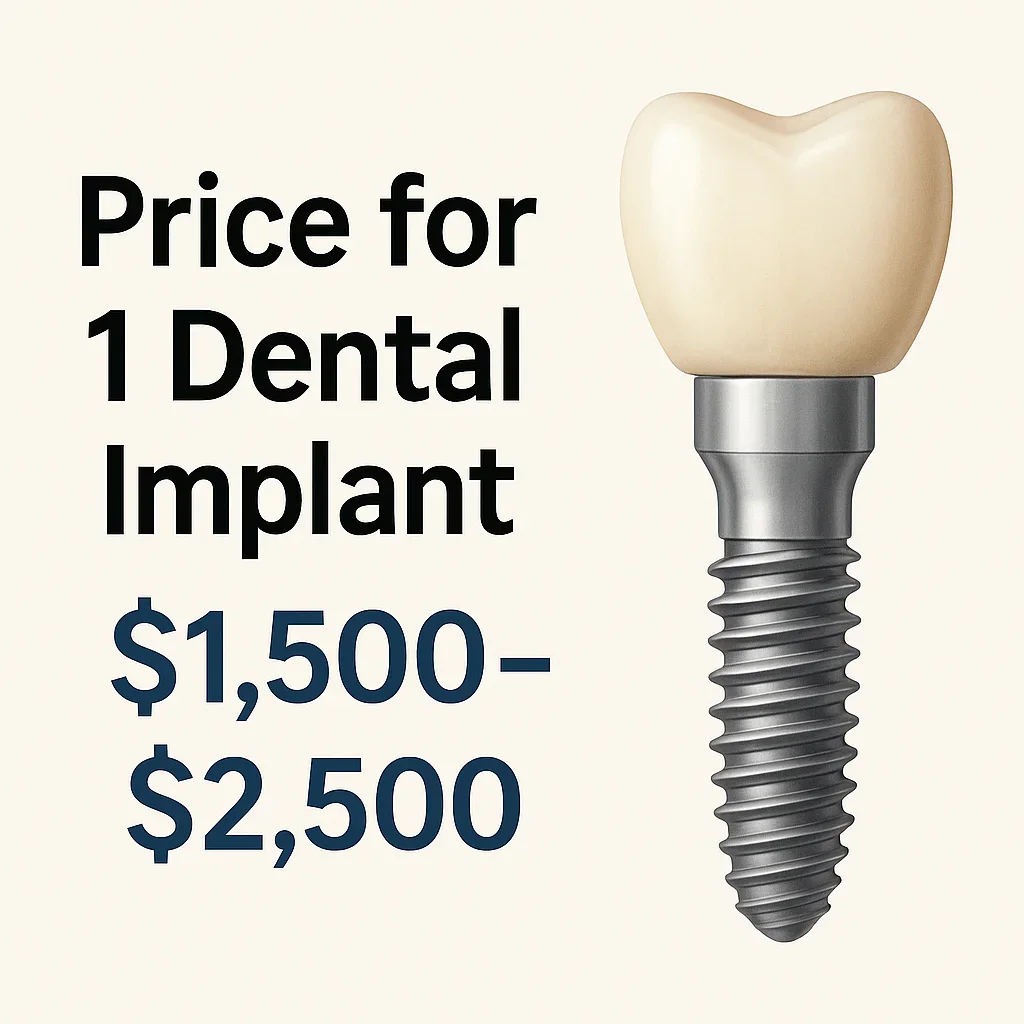
A dental implant typically consists of three core components:
1️⃣ The implant fixture (titanium or zirconia post)
2️⃣ The abutment (the connector piece)
3️⃣ The crown (the visible ceramic tooth)
Each of these carries its own price tag, which collectively contributes to the total price for 1 dental implant. Because of this multi-step structure, patients should understand not only the surgical fee but also laboratory costs, material quality, and the dentist’s level of expertise.
Beyond the medical components, the geographic location of the clinic significantly affects the pricing model. For instance, countries with higher clinical overhead—like the USA or the UK—tend to have a noticeably higher price for 1 dental implant than countries such as Turkey, where operational costs are lower while clinical standards remain extremely high. Many patients also prefer internationally accredited clinics and dentists trained according to the standards of the American Dental Association, which often results in more predictable success rates and higher treatment satisfaction.
In addition to this, the patient’s individual oral health condition plays a major role in determining the final price for 1 dental implant. For example, patients who require bone grafting, sinus lifting, or tooth extractions may face additional fees that are not included in standard implant packages. These supplemental procedures ensure that the implant has a stable foundation, which is essential for long-term success. Even though they increase the total cost, they often reduce complications later on.
Patients who contact clinics for detailed pricing may also want to consider the type of implant brand used. Premium implant systems from globally recognized companies such as Straumann or Nobel Biocare typically increase the price for 1 dental implant due to their advanced engineering, faster healing performance, and excellent long-term data. More affordable implant brands may still provide good results, but the longevity and predictability might vary.
To provide patient-centered guidance, many clinics—including modern facilities in Turkey—offer all-inclusive pricing that covers the implant, abutment, temporary restorations, panoramic X-rays, CBCT scans, and follow-up visits. If you want to receive a personalized cost estimate, you can reach out directly through the
Redent Klinik Contact Page.
When evaluating the price for 1 dental implant, transparency is key. A trustworthy clinic will clearly explain what is included, what is optional, and what could lead to additional charges. This ensures that patients experience no financial surprises during their treatment journey. Since dental implants are designed to last decades—and often a lifetime for many patients—they are widely considered one of the most cost-effective long-term tooth replacement solutions.
Below is a representative price range based on current global research:
Average Cost for 1 Dental Implant (2025 Estimates)
-------------------------------------------------
USA: $3,000 – $6,000
UK: £2,000 – £4,000
Europe: €1,500 – €3,000
Turkey: $450 – $900 (full package)
In summary, while the price for 1 dental implant varies depending on numerous medical and regional factors, understanding each component helps patients make informed, confident decisions. The investment not only restores your smile but also improves oral function, bone health, and overall quality of life. 🌟
Average Price for 1 Dental Implant in 2025: Global Comparison
The price for 1 dental implant in 2025 continues to be one of the most researched dental topics worldwide, especially as global medical tourism grows and patients compare options across different countries. Understanding the average cost in each region is crucial for making an informed decision, because implant pricing varies significantly depending on clinical standards, materials, surgeon expertise, and local operating expenses. In this extensive guide, you’ll find a clear, data-driven overview of global implant fees, how they are calculated, and why some countries can offer the same treatment quality at a fraction of the cost. 🌍🦷
Before breaking down international prices, it’s important to highlight that the price for 1 dental implant typically includes three fundamental components: the implant fixture, the abutment, and the porcelain or zirconia crown. Many patients also use related search terms such as single dental implant cost or tooth implant pricing, which all point to similar treatments with similar pricing structures.
Global Factors Affecting the Average Price for 1 Dental Implant
Several macro-level factors influence the international price for 1 dental implant, including labor costs, clinical technology, implant brand selection, and local economic conditions. High-income countries impose greater general operational expenses on clinics, leading to a higher baseline price. On the other hand, dental tourism destinations like Turkey offer significantly lower prices due to high competition, lower overhead, and government support for health tourism—without compromising on medical quality.
1. Economic Environment and Labor Costs
Countries with high wages, stricter regulatory costs, and elevated insurance premiums naturally present a higher price for 1 dental implant. In nations like the United States, the total cost can quadruple compared to regions with lower operational expenses. While this difference may appear dramatic, the treatment performed is structurally the same across borders, especially when clinics operate according to guidelines set by authoritative bodies like the American Dental Association.
2. Implant Brands Used in Each Country
Premium brands such as Nobel Biocare, Straumann, or Zimmer tend to raise the price for 1 dental implant in countries where clinical suppliers charge higher distribution fees. In contrast, the same brands in Turkey or Eastern Europe often cost much less due to competitive supplier agreements and lower import taxation. This explains why top-tier clinics abroad can offer an affordable price for 1 dental implant while still using globally recognized implant systems.
2025 Global Price Comparison: Region by Region
Below is an updated 2025 international comparison of average implant costs. These figures represent the complete treatment including implant, abutment, and crown. Additional procedures (bone grafting, sinus lifting, temporary teeth) may influence the final cost depending on the patient’s clinical needs.
AVERAGE PRICE FOR 1 DENTAL IMPLANT (2025 GLOBAL ESTIMATES)
-----------------------------------------------------------
USA: $3,000 – $6,000
Canada: $2,800 – $5,000
UK: £2,000 – £4,000
Ireland: €2,000 – €4,000
Australia: $3,000 – $6,500
Western Europe (Germany, France): €2,000 – €3,800
Eastern Europe (Hungary, Poland): €900 – €1,800
Turkey: $450 – $900 (full package)
India: $300 – $700
Mexico: $900 – $1,500
These numbers clearly demonstrate the vast difference in the price for 1 dental implant between Western countries and emerging medical tourism hubs. While costs in the USA or Australia include higher operational and practitioner fees, destinations like Turkey provide competitive pricing through streamlined health tourism programs and high-volume implant practices.
Why Is Turkey Significantly More Affordable?
Turkey is widely recognized as one of the leading global destinations for patients seeking a more budget-friendly price for 1 dental implant. Istanbul, Antalya, and Izmir in particular host modern dental centers that attract international patients with transparent, all-inclusive packages. Clinics often include advanced imaging (CBCT scans), VIP transfers, and English-speaking specialists—all while offering prices that remain far below those in Western regions. Importantly, this affordability does not stem from reduced quality; rather, it comes from lower labor costs, high competition, and a government-supported healthcare infrastructure.
Additional Services Included in Many Turkish Implant Packages
- Free panoramic X-ray or CBCT scan
- Consultation and treatment planning
- Premium implant brands if chosen
- Temporary prosthetic options
- Post-operative care and medications
- Hotel and airport transfers (in many clinics)
Patients interested in receiving detailed pricing
Average Price for 1 Dental Implant in 2025: Global Comparison
The price for 1 dental implant in 2025 continues to be one of the most researched dental topics worldwide, especially as global medical tourism grows and patients compare options across different countries. Understanding the average cost in each region is crucial for making an informed decision, because implant pricing varies significantly depending on clinical standards, materials, surgeon expertise, and local operating expenses. In this extensive guide, you’ll find a clear, data-driven overview of global implant fees, how they are calculated, and why some countries can offer the same treatment quality at a fraction of the cost. 🌍🦷
Before breaking down international prices, it’s important to highlight that the price for 1 dental implant typically includes three fundamental components: the implant fixture, the abutment, and the porcelain or zirconia crown. Many patients also use related search terms such as single dental implant cost or tooth implant pricing, which all point to similar treatments with similar pricing structures.
Global Factors Affecting the Average Price for 1 Dental Implant
Several macro-level factors influence the international price for 1 dental implant, including labor costs, clinical technology, implant brand selection, and local economic conditions. High-income countries impose greater general operational expenses on clinics, leading to a higher baseline price. On the other hand, dental tourism destinations like Turkey offer significantly lower prices due to high competition, lower overhead, and government support for health tourism—without compromising on medical quality.
1. Economic Environment and Labor Costs
Countries with high wages, stricter regulatory costs, and elevated insurance premiums naturally present a higher price for 1 dental implant. In nations like the United States, the total cost can quadruple compared to regions with lower operational expenses. While this difference may appear dramatic, the treatment performed is structurally the same across borders, especially when clinics operate according to guidelines set by authoritative bodies like the American Dental Association.
2. Implant Brands Used in Each Country
Premium brands such as Nobel Biocare, Straumann, or Zimmer tend to raise the price for 1 dental implant in countries where clinical suppliers charge higher distribution fees. In contrast, the same brands in Turkey or Eastern Europe often cost much less due to competitive supplier agreements and lower import taxation. This explains why top-tier clinics abroad can offer an affordable price for 1 dental implant while still using globally recognized implant systems.
2025 Global Price Comparison: Region by Region
Below is an updated 2025 international comparison of average implant costs. These figures represent the complete treatment including implant, abutment, and crown. Additional procedures (bone grafting, sinus lifting, temporary teeth) may influence the final cost depending on the patient’s clinical needs.
AVERAGE PRICE FOR 1 DENTAL IMPLANT (2025 GLOBAL ESTIMATES)
-----------------------------------------------------------
USA: $3,000 – $6,000
Canada: $2,800 – $5,000
UK: £2,000 – £4,000
Ireland: €2,000 – €4,000
Australia: $3,000 – $6,500
Western Europe (Germany, France): €2,000 – €3,800
Eastern Europe (Hungary, Poland): €900 – €1,800
Turkey: $450 – $900 (full package)
India: $300 – $700
Mexico: $900 – $1,500
These numbers clearly demonstrate the vast difference in the price for 1 dental implant between Western countries and emerging medical tourism hubs. While costs in the USA or Australia include higher operational and practitioner fees, destinations like Turkey provide competitive pricing through streamlined health tourism programs and high-volume implant practices.
Why Is Turkey Significantly More Affordable?
Turkey is widely recognized as one of the leading global destinations for patients seeking a more budget-friendly price for 1 dental implant. Istanbul, Antalya, and Izmir in particular host modern dental centers that attract international patients with transparent, all-inclusive packages. Clinics often include advanced imaging (CBCT scans), VIP transfers, and English-speaking specialists—all while offering prices that remain far below those in Western regions. Importantly, this affordability does not stem from reduced quality; rather, it comes from lower labor costs, high competition, and a government-supported healthcare infrastructure.
Additional Services Included in Many Turkish Implant Packages
- Free panoramic X-ray or CBCT scan
- Consultation and treatment planning
- Premium implant brands if chosen
- Temporary prosthetic options
- Post-operative care and medications
- Hotel and airport transfers (in many clinics)
Patients interested in receiving detailed pricing can contact clinics directly through pages like the
Redent Klinik Contact Page, which provides individualized quotes based on the patient’s oral condition and required procedures.
Understanding Regional Variations in the Final Cost
Even within the same country, the price for 1 dental implant may vary from clinic to clinic due to surgeon experience, prosthetic laboratory quality, and technology (such as fully digital implant planning). Some clinics also use zirconia implants, which may slightly alter the total price. Patients should evaluate not just the advertised cost, but also what is included in the package to ensure no hidden fees arise later.
In conclusion, the global price for 1 dental implant reflects a combination of economic, clinical, and technological factors. Countries with high operating expenses naturally present higher prices, while dental tourism hubs deliver the same medical standards at substantially reduced rates. Patients comparing international options should consider expertise, materials, clinical transparency, and long-term success—not just the upfront cost. With the right clinic, the investment leads to durable, natural-looking results that restore both function and confidence. 🦷🌟
What Affects the Price for 1 Dental Implant? Key Cost Factors
The price for 1 dental implant can vary widely depending on several medical, technical, and geographic factors. Understanding these elements helps patients make informed decisions, avoid hidden costs, and choose a clinic that balances both affordability and quality. Since dental implants are long-term restorations designed to function like natural teeth, the treatment requires advanced technology, skilled surgical planning, and high-quality materials. This section explains each cost factor in detail so you fully understand what you’re paying for and why prices differ so significantly across clinics and countries.
1. Implant Material and Manufacturing Quality
One of the biggest influences on the price for 1 dental implant is the implant material itself. Most modern implants are made of medical-grade titanium, but premium zirconia options also exist. Titanium is durable, biocompatible, and widely studied, while zirconia is metal-free and preferred by patients with allergies or aesthetic concerns. Premium brands such as Straumann, Nobel Biocare, and Zimmer often cost more due to extensive research, decades of clinical data, and advanced engineering design. More affordable brands may still be reliable but might not offer the same long-term predictability.
How manufacturing affects pricing
Precision engineering, surface technology for osseointegration, and strict production quality control all play key roles in determining the final price for 1 dental implant. High-end implant systems often use advanced surface treatments that accelerate bone integration, reducing healing times and improving long-term success. This contributes to a slightly higher cost, but many patients choose premium brands for the added security and longevity.
2. Surgeon Experience and Clinical Expertise
A highly trained implantologist or oral surgeon significantly impacts the price for 1 dental implant. Experienced surgeons have higher success rates, advanced training, and the ability to manage complex cases such as bone loss or sinus proximity. Clinics that adhere to international standards, such as guidelines from the
American Dental Association, tend to set prices according to expertise and clinical safety protocols.
Why expertise affects cost
- Advanced training in implantology and prosthodontics
- Use of digital planning tools (CAD/CAM, 3D scanning)
- Higher success rates and fewer complications
3. Additional Procedures Required
Not all patients have sufficient bone density or healthy gums for immediate implant placement. Therefore, additional procedures play a major role in the final price for 1 dental implant. These may include sinus lifting, bone grafting, ridge expansion, or tooth extraction. These services require specialized materials and surgical skill, increasing the total cost.
Common add-ons that change the price
- Bone grafting – adds €150–€600 depending on the region
- Sinus lift – adds €400–€1,000
- Tooth extraction – adds €50–€150 per tooth
4. Clinic Technology and Imaging Systems
Clinics that use CBCT scans, intraoral scanners, and fully digital dental systems generally charge more because advanced technology significantly improves treatment outcomes. A CBCT scan alone can cost between €50 and €200 depending on the country. However, digital planning enhances accuracy, aesthetics, and long-term comfort, making the investment worthwhile.
5. Geographic Location and Clinic Overheads
Country-specific economic conditions have a powerful effect on the price for 1 dental implant. For example, the USA and UK typically have much higher operational expenses compared to Turkey, Hungary, or Poland. This explains the price gap, even though the treatment quality may be equivalent. Labor costs, rent, insurance, and taxes also contribute to regional differences.
Patients seeking detailed treatment pricing or a personalized quote can contact clinics directly through
Redent Klinik Contact Page.
In summary, many interconnected factors determine the price for 1 dental implant, including material quality, surgeon experience, the need for additional procedures, clinic technology, and geographic location. Understanding each factor helps patients choose the safest, most cost-effective option without compromising on long-term success.
Types of Dental Implants and How They Change the Total Cost
The type of implant system selected has a strong effect on the overall price for 1 dental implant. Different implant designs, materials, and placement techniques offer unique benefits, and each comes with its own cost structure. Choosing the right implant type ensures long-term stability, excellent chewing function, and natural aesthetics. In this section, we explore all major implant types and how each influences the final cost so that you can choose confidently.
1. Endosteal (Standard) Dental Implants
Endosteal implants are the most common type used worldwide. These are titanium or zirconia posts placed directly into the jawbone. Because they require healthy bone volume, they are ideal for most patients and are considered the gold standard. The price for 1 dental implant using this system is typically moderate compared to more complex implant options.
Cost impact of endosteal implants
Endosteal implants usually offer the best balance between affordability and long-term durability, making them the most cost-effective option for single-tooth replacement.
2. Subperiosteal Implants
Subperiosteal implants sit on top of the jawbone rather than inside it. These are used for patients with severe bone loss who do not want or cannot undergo bone grafting. Because they require custom-fabricated frameworks and additional diagnostic work, the price for 1 dental implant can be significantly higher.
Why subperiosteal implants cost more
- Custom metal frame manufacturing
- Specialized surgical expertise
- Advanced imaging and moulding requirements
3. Mini Dental Implants
Mini dental implants are narrower than traditional implants and are often used to stabilize dentures or replace very small teeth. Although they are less expensive, they are not suitable for all clinical situations. Because healing times are shorter, the overall price for 1 dental implant may be lower, but limitations exist in durability and bite force.
Typical uses
- Replacing small front teeth
- Supporting removable dentures
- Cases where bone density is insufficient for full implants
4. Immediate Load (“Same Day”) Implants
Immediate load implants allow the placement of a temporary tooth on the same day as surgery. These systems require exceptional bone quality and precise digital planning. As a result, the price for 1 dental implant may be higher because advanced technology, stronger implant designs, and accelerated workflows are needed.
Cost factors for immediate load options
- Temporary crown fabrication on the same day
- Extra diagnostic planning
- High-precision surgical techniques
5. Zirconia (Metal-Free) Implants
Zirconia implants are chosen for their superior aesthetics and biocompatibility. They are ideal for patients allergic to metals or those seeking a holistic approach. Due to complex manufacturing processes, the price for 1 dental implant using zirconia is typically higher than titanium implants.
How Implant Type Affects Overall Treatment Cost
Each implant system influences laboratory fees, surgery duration, diagnostic requirements, and prosthetic material choices. Premium implant systems, metal-free options, and immediate-load implants tend to increase the price for 1 dental implant, while standard titanium systems remain the most affordable and clinically proven option.
For personalized guidance or treatment planning, patients may contact clinics directly through
Redent Klinik Contact Page.
Overall, choosing the right implant type is essential for achieving long-lasting results. By understanding how each implant category affects the final price for 1 dental implant, patients can make informed decisions that balance cost, durability, and aesthetics for the best long-term outcome.
Are Additional Dental Procedures Included in the Price for 1 Dental Implant?
The price for 1 dental implant often varies because many patients require additional dental procedures before, during, or after implant placement. These extra treatments ensure long-term success, stability, and natural aesthetics. However, not all clinics include them in the initial quote, which can lead to confusion or unexpected expenses later. In this section, you will find a detailed and accurate explanation of every possible additional procedure, how it affects the total cost, and why some patients need these treatments while others do not. This comprehensive guide ensures that you understand precisely what is — and is not — included in the typical price for 1 dental implant.
1. Diagnostic Imaging and Pre-Treatment Evaluation
Before a dental implant can be placed, the surgeon must assess bone density, jaw structure, nerve position, and sinus anatomy through advanced imaging. These diagnostics play an essential role and may be included or excluded from the base price for 1 dental implant, depending on the clinic.
CBCT Scan (Cone Beam Computed Tomography)
A CBCT scan provides a 3D image of your jaw and is crucial for safe implant planning. The scan typically costs €50–€200 in Europe or $100–$300 in the USA. Some clinics absorb this cost into the implant package, while others charge separately. Free CBCT scans are common in Turkey and Hungary, which helps reduce the overall price for 1 dental implant.
Panoramic X-Ray
A panoramic X-ray is a standard prerequisite. It may cost €30–€80 depending on the region. Again, many international clinics include it in the total price for 1 dental implant as part of an all-inclusive approach.
2. Tooth Extraction and Site Preparation
If the damaged or decayed tooth is still present, extraction is the first step. Depending on complexity, tooth extractions may cost €50–€150 each in Europe or $100–$300 in the USA. If surgical extraction is needed, the cost increases.
Impact on total implant cost
Some dental tourism clinics include simple extractions in the base package, while premium clinics charge separately. Because of this, extraction fees often create significant differences in the listed price for 1 dental implant.
3. Bone Grafting (Bone Augmentation)
One of the most common additional procedures is bone grafting. If bone density or volume is insufficient due to gum disease, tooth loss, or aging, grafting becomes essential. Without adequate bone, an implant cannot integrate securely.
Types of bone grafts and their costs
- Minor grafting (socket preservation) – €100–€300
- Standard bone graft – €200–€600
- Large ridge augmentation – €600–€1,500
Because bone grafting can significantly alter the total price for 1 dental implant, clinics differ greatly in their pricing. Turkey often includes small grafts in their packages, keeping total costs low.
4. Sinus Lift Procedure
For upper molar implants, many patients require a sinus lift. This procedure raises the sinus membrane to create space for additional bone, allowing secure implant placement in areas where bone has naturally resorbed.
Costs of sinus lifting
- Internal sinus lift – €200–€500
- External sinus lift – €600–€1,500
These fees may or may not be included in the advertised price for 1 dental implant. Some clinics only include the implant itself and require patients to pay separately for sinus augmentation.
5. Temporary Teeth (Healing Crown or Temporary Denture)
Many patients need temporary teeth for appearance and function while the implant integrates. Temporary restorations range from simple acrylic teeth to digitally designed lightweight crowns.
Influence on total cost
Temporary crowns may cost between €100–€300 in Europe or $150–$400 in the USA. Some all-inclusive clinics include a basic temporary in the price for 1 dental implant.
6. Soft Tissue Procedures
Gum grafting or soft-tissue contouring is sometimes necessary to achieve a natural-looking gumline, especially for front teeth. These procedures enhance aesthetics and improve long-term implant health.
Cost considerations
Soft tissue grafting may cost €150–€400 depending on the complexity. It is usually not included in the standard price for 1 dental implant.
7. Abutment and Crown Selection
The implant itself is only one part of the total cost. The abutment and crown vary widely in price based on material and design.
Common crown materials
- Porcelain-fused-to-metal (PFM) – affordable but less aesthetic
- Full zirconia crowns – durable, beautiful, and more expensive
- e.max lithium disilicate – premium aesthetic choice
Many clinics advertise the implant fixture alone, which lowers the apparent cost. However, the abutment and crown are essential and must be factored into the total price for 1 dental implant.
8. Post-Operative Medications and Follow-Up Visits
Follow-up appointments, medications, and aftercare services may add extra fees in countries with high clinic operating costs. Antibiotics, pain relief, and professional cleaning sessions may or may not be included.
9. What Do All-Inclusive Packages Cover?
Many international clinics — especially in Turkey — offer all-inclusive pricing to make treatment transparent and cost-effective. Such packages often include CBCT scans, extractions, basic grafting, temporary teeth, and follow-up visits. Patients seeking clarity can request detailed package explanations through the
Redent Klinik Contact Page.
In conclusion, the price for 1 dental implant depends heavily on which additional procedures are required and whether the clinic includes them in the initial quote. By understanding each possible add-on, patients can compare clinics fairly, avoid unexpected expenses, and ensure long-term treatment success.
Implant Brands and Materials: How They Influence the Final Cost
One of the most important factors shaping the price for 1 dental implant is the type of implant brand and material used. Not all implants are created equal—some come with decades of clinical research, superior biocompatibility, advanced engineering, enhanced longevity, and internationally recognized success rates. Others offer more cost-effective solutions but may not provide the same level of long-term performance. In this section, you will learn how implant brands, materials, and manufacturing standards directly impact the total treatment cost and the long-term value of your implant.
1. Premium Implant Brands and Their Impact on Cost
Premium implant systems such as Straumann, Nobel Biocare, Astra Tech, and Zimmer Biomet are globally recognized for their exceptional quality, durability, and scientific validation. These companies invest heavily in research, innovation, and clinical trials. As a result, the price for 1 dental implant using these brands is typically higher compared to standard alternatives. However, the added cost often translates into higher long-term stability, lower complication rates, and superior aesthetics.
Why premium brands are more expensive
- Extensive research and clinical documentation
- Advanced surface technology for faster healing
- Proprietary alloys and biocompatible materials
- Higher manufacturing precision and quality control
- Global availability of replacement components
With these benefits, patients often feel more secure choosing a premium implant system. This is especially beneficial for complex cases where bone conditions are not ideal.
2. Standard Implant Brands: More Affordable Yet Reliable
Standard implant brands offer a more economical solution while still meeting essential clinical requirements. These implants are widely used in Europe and Asia, providing a balance between affordability and reliable function. For many patients, standard implant brands deliver excellent outcomes at a lower cost, reducing the total price for 1 dental implant without compromising safety.
Advantages of standard brands
- Cost-effective for single and multiple implant treatments
- Wide range of sizes and connections
- Sufficient research for predictable success
However, differences in engineering and surface treatment may affect long-term results. While these brands are safe and approved, they may not provide the same degree of longevity or innovation as premium brands.
3. Titanium vs. Zirconia Implants: Material Matters
Another major determinant of the price for 1 dental implant is the choice of material. Titanium and zirconia are the two primary options, each offering unique benefits.
A. Titanium Implants
Titanium implants are the global standard. They are widely used because of their strength, biocompatibility, and proven long-term success. Titanium integrates extremely well with bone due to its porous structure and ability to support osseointegration.
- Highly durable and fracture-resistant
- Suitable for nearly all clinical cases
- Most cost-effective option
Titanium implants typically offer the best balance between longevity and affordability. Because they dominate the market, they help keep the price for 1 dental implant at a reasonable level.
B. Zirconia Implants
Zirconia implants are metal-free options ideal for patients with metal allergies or those seeking highly aesthetic solutions. They blend seamlessly with gum tissues and are often selected for visible front teeth.
- Superior aesthetics, especially for thin gum tissue
- Excellent biocompatibility with minimal risk of allergic reactions
- Non-conductive and corrosion-resistant
Because zirconia implants require specialized manufacturing and are less widely used, they often increase the total price for 1 dental implant. Patients choose them for holistic health reasons or aesthetic perfection.
4. Surface Technology and Osseointegration Rates
Different implant brands use various surface modification techniques to enhance bone bonding. These methods significantly influence healing speed, stability, and overall success rates. Premium brands use complex surface technologies such as SLA, SLActive, TiUnite, and acid-etched surfaces that create exceptionally strong bone integration.
Why surface technology affects cost
- Faster healing and earlier loading
- Higher implant survival rates
- Less risk of infection or implant failure
Naturally, more advanced surface technology leads to a slightly higher price for 1 dental implant, but it greatly enhances the safety and longevity of the treatment.
5. Implant-Abutment Connection Designs
The connection between the implant and the abutment also affects treatment costs. High-quality internal connections, such as Morse taper or conical connections, reduce micro-movements and minimize the risk of infection. These designs require exceptional manufacturing precision, which increases total cost but ensures better long-term outcomes.
Common connection types
- External hex – affordable but less stable
- Internal hex – widely used and reliable
- Morse taper – premium connection with superior stability
Premium connection designs typically increase the price for 1 dental implant, but they minimize complications and preserve gum health.
6. Influence of Country and Supplier Costs
Supplier pricing varies globally. The same implant brand may cost significantly more in the USA or the UK compared to Turkey or Eastern Europe because of distribution fees, taxes, and supplier agreements. This explains why two clinics using identical implant systems can offer dramatically different prices for the same treatment.
For patients seeking verified implant brand information or personalized quotes, contacting a trusted clinic is essential. You may request detailed guidance through the
Redent Klinik Contact Page.
In conclusion, the price for 1 dental implant is directly influenced by implant brand quality, material selection, surface technology, manufacturing precision, and international supplier costs. Understanding these elements helps patients choose the best-value implant system that delivers durability, safety, and long-term oral health.
Price for 1 Dental Implant vs. Full Mouth Implants: What’s the Difference?
Understanding the difference between the price for 1 dental implant and the cost of full mouth implants is essential for patients planning restorative dental treatment. While a single implant replaces one missing tooth, full mouth implant systems restore an entire arch or both jaws using multiple implants combined with fixed bridges or overdentures. Because these treatments require different levels of surgical complexity, materials, planning, and laboratory work, the pricing varies dramatically. This section provides a complete 600+ word breakdown so you can clearly understand why a single implant may cost a few hundred dollars in some countries, while full mouth restoration can require a larger investment.
1. Single Implants vs. Full Mouth Restoration: The Core Difference
A single implant includes one titanium or zirconia fixture, an abutment, and a crown. The process is straightforward and typically involves one tooth area. By contrast, full mouth implants require several implants per jaw to anchor a full bridge that contains 10–14 teeth. This difference alone explains why the price for 1 dental implant is not comparable to full mouth restoration costs. Full mouth treatments require significantly more surgical time, materials, planning, digital design, and prosthetic fabrication.
How many implants are needed?
- Single tooth – 1 implant + 1 crown
- All-on-4 – 4 implants per jaw + full arch bridge
- All-on-6 – 6 implants per jaw + full arch bridge
- All-on-8 – 8 implants per jaw + full arch bridge
Because these systems use multiple implants combined with longer bridges, the overall cost increases significantly compared to the price for 1 dental implant.
2. Cost Breakdown for Single Implants
The cost of a single implant is determined by the implant fixture, abutment, and crown. The total may vary due to surgeon expertise, brand used, and whether any additional procedures (like bone grafting or sinus lifting) are required. Patients seeking to replace one or a few teeth typically choose this option because it is cost-effective and preserves natural tooth structure.
Cost components of a single implant
- Implant fixture (titanium or zirconia)
- Abutment (standard or customized)
- Crown (zirconia, e.max, or PFM)
- Radiographic imaging (CBCT)
- Surgical planning and follow-up care
Because these elements are limited to one tooth, the price for 1 dental implant remains relatively affordable compared to full mouth alternatives.
3. Cost Breakdown for Full Mouth Implants
Full mouth restoration, also known as All-on-4, All-on-6, or All-on-8, involves replacing an entire arch. Instead of using 10+ implants, the dentist strategically places a smaller number of implants that support a long-span bridge. The complexity of this treatment significantly increases both laboratory and surgical costs.
Why full mouth implants cost more
- Multiple implants per arch (4–8)
- Temporary and final prostheses
- Advanced digital planning and surgical guides
- Larger volumes of materials
- Longer surgical sessions and follow-ups
This explains why full mouth restoration prices can range from $3,000–$25,000 per arch depending on the country. While the price for 1 dental implant might be low in certain regions, full mouth systems require far more resources.
4. Full Mouth Treatment Options and Their Cost Differences
There are several full arch treatment types, each affecting cost differently. The most common are All-on-4, All-on-6, All-on-8, and implant-supported overdentures. Each solution uses a different number of implants and materials, resulting in different pricing.
A. All-on-4 Implants
This system uses four implants per jaw and is typically the most affordable full arch option. It provides a fixed, natural-looking bridge and is widely used for edentulous patients.
B. All-on-6 Implants
With six implants per jaw, the bridge becomes even more stable, and chewing forces are better distributed. This option increases stability but also increases total cost compared to the price for 1 dental implant.
C. All-on-8 Implants
This method uses eight implants per jaw and is often reserved for patients who want maximum stability and load distribution. Because more implants are used, the total cost is significantly higher.
5. Material Selection: Another Key Pricing Factor
For full mouth systems, material selection affects cost even more strongly than in single implant cases. While a single crown may be zirconia or porcelain, full arch restorations may use:
- Acrylic bridges – Affordable and temporary
- Monolithic zirconia bridges – Premium, long-lasting, highly aesthetic
- Hybrid bridges (titanium base + zirconia teeth)
Zirconia bridges are the most durable but also the most expensive. Thus, materials significantly change full mouth implant pricing compared to the price for 1 dental implant.
6. Additional Procedures Required for Full Mouth Treatments
Full mouth solutions often require sinus lifts, large bone grafting, ridge reduction, or gum contouring. Each of these procedures adds to the total cost and timeline. A single implant might require a small graft, but full mouth restorations often involve extensive jaw preparation.
Typical additional procedures
- Sinus augmentation
- Large-volume grafting
- Temporary denture adjustments
- Soft tissue sculpting
7. Why Some Patients Choose Single Implants First
Patients missing one or two teeth usually choose single implants because they offer a cost-effective and natural solution. The price for 1 dental implant is significantly lower, and the outcome blends seamlessly with natural teeth.
Patients needing personalized guidance for single or full mouth treatment can contact a trusted clinic through the
Redent Klinik Contact Page.
In conclusion, while the price for 1 dental implant is relatively predictable, full mouth implant treatments involve numerous procedures, materials, and planning stages that significantly increase overall cost. Understanding these differences ensures that patients choose the correct treatment approach for their dental health, aesthetics, and budget.
Hidden Costs You Should Know Before Paying for a Dental Implant
When researching the price for 1 dental implant, many patients focus only on the advertised cost of the implant fixture, abutment, and crown. However, several hidden or often-overlooked costs may significantly influence the final amount you pay. Understanding these additional fees is essential to avoid unexpected expenses and ensure you receive high-quality treatment that aligns with both your budget and long-term oral health needs. This section provides a deeply detailed, comprehensive analysis of every potential hidden cost associated with dental implant procedures, helping you make informed decisions.
1. Initial Diagnostic Assessments and Imaging
Before any implant treatment begins, clinics must evaluate your oral and bone condition. While some clinics include diagnostic imaging in the main fee, others charge separately, which can noticeably raise the total price for 1 dental implant.
CBCT Scan and Panoramic X-rays
A CBCT scan is crucial for assessing bone density, nerve location, and sinus proximity. Costs vary greatly depending on the country, generally ranging from €50 to €200. Panoramic X-rays may add another €30 to €80. These imaging tests are indispensable for safe implant placement, but many clinics do not disclose whether they are included when quoting the price for 1 dental implant.
2. Consultation and Specialist Fees
Some dental centers provide complimentary consultations, while others charge fees depending on the surgeon’s expertise. Specialist implantologists, oral surgeons, or periodontists often have higher consultation prices because of their advanced training and surgical experience.
Clinical evaluation fees
- Initial oral examination fees
- Digital record creation
- Specialist consultation charges
These may appear small individually, but together they can raise the effective price for 1 dental implant if not included in the initial quote.
3. Tooth Extraction and Site Preparation Costs
If the damaged tooth is still present, extraction is required before implant placement. A simple extraction may cost €50–€150, while surgical or impacted extractions can exceed €200 depending on the country and clinic. Although extraction seems like a minor procedure, it can noticeably change the total price for 1 dental implant if it’s not part of the package.
4. Bone Grafting and Regeneration Procedures
Many patients experience bone loss after tooth extraction, periodontal disease, or long-term denture use. These patients may require bone grafts to build a healthy foundation for the implant. Unfortunately, bone grafting is one of the most commonly hidden expenses not included in basic implant pricing.
Typical grafting costs
- Minor grafting – €150–€300
- Standard particulate graft – €250–€600
- Large ridge augmentation – €600–€1,500
Since grafting materials and expertise vary widely, they can significantly increase the price for 1 dental implant. Some clinics include minor grafts in all-inclusive packages, particularly in countries like Turkey, helping patients avoid unexpected fees.
5. Sinus Lift Procedures
For upper molars, sinus volume may be insufficient to support an implant. A sinus lift may therefore be required — one of the costliest add-on procedures.
Cost breakdown
- Internal sinus lift – €200–€500
- External sinus lift – €600–€1,500
If not mentioned clearly, a sinus lift can dramatically change the true price for 1 dental implant, especially in Western countries, where surgical fees are high.
6. Temporary Restorations
During osseointegration, patients often require a temporary tooth to maintain appearance and basic function. However, temporary restorations are not always included in the initial pricing.
Common hidden temporary costs
- Temporary acrylic crown – €80–€200
- Removable partial denture – €150–€350
- Immediate provisional tooth – €100–€250
Even though each temporary tooth seems inexpensive on its own, they can add significantly to the total price for 1 dental implant when clinics charge separately for every component.
7. Abutment Upgrades and Custom Fabrication
Not all abutments are created equal. Basic abutments may be included in the advertised package, but customized zirconia or titanium abutments can cost considerably more. Many patients are unaware of this hidden fee until late in treatment.
Why abutments add extra costs
- Custom CAD/CAM fabrication
- Improved gum aesthetics
- Compatibility with premium crowns
Premium abutments can increase the final price for 1 dental implant by €150–€300 depending on the clinic.
8. Crown Material Upgrades
The crown material selected significantly impacts cost. Many clinics advertise low prices with basic porcelain-fused-to-metal crowns, but most patients prefer modern zirconia for durability and aesthetics.
Typical crown upgrades
- PFM crown – included by default
- Zirconia crown – €200–€400 extra
- e.max ceramic – €300–€500 extra
Zirconia and e.max additions can increase the total price for 1 dental implant but offer superior long-term visual results.
9. Follow-Up Visits, Medications, and Aftercare
Post-operative care involves check-ups, suture removal, professional cleanings, and medications. In high-cost countries, these may be billed separately. Antibiotics, mouth rinses, and pain relief can add €20–€50 to your bill.
10. Unexpected Complications or Additional Adjustments
Complications may require additional diagnostic imaging, grafting, or prosthetic adjustments. Although rare, they can substantially increase the final price for 1 dental implant if not covered by a treatment guarantee.
To minimize hidden costs, many patients choose all-inclusive clinics that clearly outline every fee. For transparent treatment planning or pricing guidance, you may contact a reputable clinic through the
Redent Klinik Contact Page.
In conclusion, several hidden factors influence the final price for 1 dental implant, including imaging, grafting, temporary teeth, abutment upgrades, crown choices, and aftercare. Being aware of these potential fees ensures you can compare clinics fairly and avoid unexpected financial surprises. Transparency is key to a stress-free and successful implant journey.
Turkey vs. USA & UK: Why the Price for 1 Dental Implant Is Lower Abroad
A major question patients ask when researching dental tourism is why the price for 1 dental implant in Turkey is significantly lower than in the USA or the UK. Although the quality of care in Turkey often meets or exceeds Western standards, the cost difference can be dramatic — sometimes up to 70–80% more affordable. Understanding the reasons behind this pricing gap helps patients make informed, confident decisions about where to receive implant treatment. This section delivers a comprehensive, highly detailed breakdown of all factors that influence pricing differences across these regions.
1. Economic Factors That Influence Pricing
One of the biggest reasons for the lower price for 1 dental implant in Turkey is the economic landscape. Turkey has a lower cost of living and reduced operational expenses compared to Western countries. This naturally allows clinics to offer premium treatments at a fraction of the price while still maintaining high standards.
A. Labor Costs and Clinical Expenses
In the USA and UK, wages for dental professionals, assistants, and laboratory technicians are significantly higher. Additionally, clinics in these regions face elevated rent, insurance, and technology expenses. These factors directly increase the final price for 1 dental implant.
B. Currency Exchange Advantage
The exchange rate makes high-quality care in Turkey more affordable for international patients. A patient paying in dollars, euros, or pounds benefits from Turkey’s favorable currency conditions, effectively reducing the overall price for 1 dental implant without compromising treatment quality.
2. Government Support for Health Tourism
Turkey is a global hotspot for medical and dental tourism. The government actively supports clinics that cater to international patients. This includes tax advantages, infrastructure investment, and streamlined licensing systems. Because of these initiatives, clinics can keep the price for 1 dental implant lower than equivalent clinics in the USA or UK.
Incentives that reduce patient costs
- Reduced operational taxes for health tourism facilities
- Government-promoted accreditation systems
- Training programs for dental professionals
These advantages help maintain clinical excellence while reducing costs for patients.
3. Competition Among Highly Advanced Clinics
Turkey hosts thousands of modern, technology-equipped dental centers focused on implantology. Istanbul, Antalya, and Izmir in particular have become international dental hubs. Intense competition encourages clinics to offer competitive pricing without sacrificing quality.
Why competition lowers costs
- Clinics invest in premium technology to attract foreign patients
- Large patient flows reduce the per-patient cost
- Clinics negotiate better supply deals with implant manufacturers
This competitive environment keeps the price for 1 dental implant in Turkey consistently lower than in Western regions.
4. Implant Brand Costs and Supplier Agreements
While premium implant brands (Straumann, Nobel Biocare, Zimmer, etc.) are available worldwide, supplier costs vary greatly. Clinics in the USA and UK pay significantly higher distributor prices due to regional taxes, import fees, and supplier markups. Turkish clinics often have more affordable supply agreements or lower import tax burdens.
Effect on implant pricing
Because materials are more affordable in Turkey, clinics can offer premium brands while keeping the total price for 1 dental implant lower than European or American clinics.
5. Quality of Technicians, Labs, and Digital Dentistry
Another overlooked factor is Turkey’s advanced dental laboratory sector. Many labs specialize exclusively in implant-supported restorations and zirconia crowns. High-volume production lowers lab costs significantly. Meanwhile, dental labs in the USA and UK operate at much higher labor and equipment expenses, directly affecting the total price for 1 dental implant.
Benefits of Turkish dental labs
- High-volume zirconia production reduces cost per unit
- Advanced milling technologies used widely
- Specialized implant technicians available at affordable rates
This allows Turkish clinics to deliver premium aesthetic results at a much lower overall cost.
6. Clinic Volume and Experience
In Turkey, many implant clinics treat hundreds or even thousands of international patients every year. Higher patient volume allows the clinic to distribute fixed costs across a larger number of cases. This reduces overhead and lowers the per-patient cost of implants.
How volume impacts cost
- Bulk ordering of implant components
- More efficient clinical workflows
- Reduced chair time per treatment
This operational efficiency further reduces the price for 1 dental implant.
7. Differences in Insurance and Legal Requirements
The USA has some of the highest malpractice insurance premiums in the world. UK clinics also face strict legal costs and regulatory fees. Turkish clinics operate under a different legal structure with significantly lower insurance requirements, which reduces overall treatment costs.
Regulatory cost factors
- Lower legal compliance fees
- Reduced insurance premiums
- Less administrative overhead
These savings contribute to the lower price for 1 dental implant in Turkey.
8. Treatment Packages and All-Inclusive Pricing
One of Turkey’s biggest advantages is transparent all-inclusive pricing. Packages often include:
- CBCT scan
- Consultation
- Implant surgery
- Abutment and crown
- Post-operative care
- Transfers and accommodations
In the USA and UK, each service is billed separately, leading to a significantly higher overall price for 1 dental implant.
Patients seeking precise, itemized treatment pricing can request details from a trusted clinic by visiting the
Redent Klinik Contact Page.
In conclusion, economic factors, government support, advanced competition, efficient clinics, and lower operational expenses all contribute to Turkey’s much lower price for 1 dental implant when compared with the USA and UK. Patients often receive equal or even superior treatment quality while saving thousands of dollars by choosing Turkey for their implant procedure.
How to Choose the Right Clinic for the Best Price for 1 Dental Implant
Selecting the right clinic is one of the most important steps when evaluating the price for 1 dental implant. While the cost is a key factor, choosing solely based on price can lead to long-term issues, complications, or unsatisfactory results. A high-quality clinic provides transparency, advanced technology, experienced implantologists, and clear communication — all of which influence the success and comfort of your treatment. This section presents a detailed, step-by-step guide to choosing the best clinic while ensuring that you’re getting a fair, competitive price without compromising your oral health.
1. Verify the Implantologist’s Experience and Qualifications
A skilled implantologist dramatically influences treatment success. The surgeon’s qualifications, years of experience, number of implants placed, and specialization in implantology all contribute to the final outcome. These factors also justify variations in the price for 1 dental implant among clinics worldwide.
A. Why a qualified implantologist matters
- Reduces risk of complications
- Ensures better long-term stability
- Provides tailored treatment plans
- Improves precision in implant placement
A trusted professional often follows guidelines from authoritative organizations like the
American Dental Association, which further enhances treatment reliability.
2. Check the Clinic’s Technology and Diagnostic Equipment
Modern technology improves accuracy, comfort, and clinical outcomes. Clinics using outdated tools may charge less, but the long-term risks can outweigh any savings. Advanced imaging completely changes how the price for 1 dental implant is calculated because diagnostics ensure more predictable results.
Essential technologies to look for
- CBCT 3D imaging
- Intraoral scanners
- CAD/CAM design systems
- Digital surgical guides
- High-tech sterilization systems
Clinics with comprehensive digital dentistry can provide faster recovery, fewer complications, and more precise prosthetics.
3. Confirm the Implant Brand and Materials Used
Not all implants are of equal quality. The implant brand is a major factor influencing the price for 1 dental implant. Premium brands offer better long-term data, superior biocompatibility, and higher success rates, while generic brands may reduce initial costs but potentially compromise lifespan.
Implant brands worth considering
- Straumann
- Nobel Biocare
- Zimmer Biomet
- Astra Tech
- Osstem / Hiossen
Always ask the clinic exactly which brand they plan to use. Transparent clinics specify implant type, warranty, and origin before presenting the full price for 1 dental implant.
4. Review Before-and-After Photos and Patient Testimonials
A clinic’s previous results tell you more than any advertisement could. Thorough research into before-and-after images and real patient reviews gives insight into clinical consistency and aesthetic outcomes. This helps gauge whether the quoted price for 1 dental implant truly reflects high-quality work.
Where to check reviews
- Google Reviews
- Trustpilot
- Clinic social media pages
- Video testimonials
Look for natural-looking restorations, proper gum contouring, and stable implant results. Consistency is key.
5. Evaluate the Clinic’s Treatment Plan Transparency
Transparent clinics clearly break down what is included and excluded in the price for 1 dental implant. Patients should not face unexpected fees after treatment begins. High-quality clinics provide written plans covering examinations, imaging, implant type, additional procedures, and follow-up visits.
Questions to ask before confirming treatment
- Is the CBCT scan included?
- Is bone grafting included or extra?
- Which crown material will be used?
- Does the quote include abutment installation?
- Will temporary teeth be provided?
- Is aftercare included?
The more transparent the clinic, the more confidently you can evaluate the price for 1 dental implant.
6. Assess the Clinic’s Hygiene, Sterilization, and Safety Standards
Implant surgery requires sterile, safe conditions to prevent infection. Reliable clinics follow strict infection control protocols, use sterilization monitors, and maintain clean surgical rooms. Poor hygiene practices may put you at risk, regardless of the price.
Signs of proper sterilization standards
- Single-use surgical tools when needed
- Autoclave sterilization systems
- Sterile packaging and labeling
- Protective equipment for staff
A slightly higher price for 1 dental implant is justified if it ensures safety and reduces infection risk.
7. Compare Local vs. Overseas Clinic Advantages
Some patients consider treatment abroad to take advantage of lower pricing and specialized dental tourism services. Countries like Turkey offer full implant packages with accommodation and transportation. Even with travel expenses, the total price for 1 dental implant abroad may still be far lower than in the USA or UK.
Advantages of dental tourism destinations
- Lower treatment costs
- All-inclusive implant packages
- Highly experienced implant surgeons
- State-of-the-art technology
Patients choosing to travel abroad often save significant money while maintaining access to premium implant brands and skilled specialists.
8. Check Aftercare Policies and Follow-Up Support
Aftercare is essential for long-term implant success. The clinic should offer follow-up visits, implant checkups, cleaning, and guidance on maintaining oral health. Some clinics charge extra for follow-ups, while others include them in the base price for 1 dental implant.
Important aftercare elements
- Post-operative monitoring
- Medications and oral hygiene instructions
- Emergency support
Good aftercare ensures your implant integrates properly and functions for decades.
9. Request a Detailed Written Estimate
A trustworthy clinic always provides a written quote outlining every aspect of treatment. This ensures clarity and helps you compare clinics fairly. The written plan should list implant brand, crown type, imaging costs, additional procedures, and aftercare services.
If you need a personalized plan, you can contact a reputable dental center through the
Redent Klinik Contact Page.
In conclusion, selecting the right clinic involves far more than simply finding the lowest price for 1 dental implant. It requires evaluating qualifications, technology, transparency, hygiene, aftercare, and patient reviews. With the right clinic, you receive not only affordable treatment but also long-term comfort, safety, and a naturally beautiful smile.