
A re cement crown procedure is one of the most common and misunderstood dental treatments. Many patients panic when a crown suddenly comes off, assuming it means expensive or painful dental work is ahead. In reality, re cementing a crown is often a straightforward, conservative solution that restores both function and appearance when handled correctly 😊. Understanding what a re cement crown involves, when it is appropriate, and when it is not, helps you make informed decisions and protect your oral health.
A dental crown is designed to sit securely over a prepared tooth, acting like a protective helmet. However, crowns can loosen or fall off due to normal wear, biting forces, decay, or issues with the dental cement. When this happens and the crown itself is still intact, dentists may recommend a re cement crown treatment instead of replacing the crown entirely. This approach saves time, preserves tooth structure, and is typically more affordable for patients.
The primary goal of a re cement crown procedure is to restore the original crown to its correct position while ensuring a stable, long-lasting bond. This is only possible if certain conditions are met. The crown must fit properly, the underlying tooth must be healthy enough to support it, and there should be no advanced decay or fractures. When these criteria are satisfied, a re cement crown can be just as effective as the original placement.
From a patient’s perspective, a re cement crown is often appealing because it is minimally invasive. In most cases, there is no drilling involved, no injections are required, and discomfort is minimal or nonexistent. The dentist carefully cleans both the inside of the crown and the tooth surface, removes old cement residue, checks the bite alignment, and applies fresh dental cement to secure the crown back in place. The entire process can often be completed in a single visit.
It is important to understand that not every fallen crown can be re cemented. If decay has developed under the crown, if the tooth structure has weakened, or if the crown no longer fits correctly, re cementing may fail. In such cases, attempting a re cement crown without addressing the underlying issue can lead to repeated loosening, pain, or even tooth loss. This is why a proper dental examination is essential before proceeding.
Search intent for “re cement crown” usually comes from patients asking practical questions: Is it safe? How long will it last? Can I wait? The answer depends on timing and professional care. A crown that has fallen off should ideally be addressed as soon as possible. Leaving the tooth exposed can increase sensitivity, allow bacteria to enter, and cause the tooth to shift slightly. These changes may make a future re cement crown procedure more difficult or even impossible.
Many people wonder whether they can temporarily fix a fallen crown at home. While pharmacies sell temporary dental cement kits, these are not a long-term solution. A DIY fix may help protect the tooth for a short period, but it does not replace professional evaluation. Only a dentist can determine whether a re cement crown is clinically appropriate and apply the correct type of cement for long-term success.
Dentists choose different dental cements based on the specific case. Modern materials provide strong adhesion, resistance to saliva, and durability under chewing forces. When a re cement crown is done with the right technique and materials, it can last many years. However, longevity also depends on oral hygiene, bite forces, and habits such as teeth grinding or chewing hard objects.
Another key aspect of understanding a re cement crown is knowing that it preserves your original restoration. Crowns are custom-made to match your bite and smile. Reusing a well-fitting crown avoids unnecessary replacement and maintains the original aesthetics. This makes re cementing not only a functional choice but also a cosmetic one ✨.
In summary, a re cement crown is a reliable, conservative dental treatment when performed under the right conditions. It restores comfort, protects the underlying tooth, and allows you to return to normal eating and speaking quickly. By seeking timely professional care and understanding the process, patients can feel confident that re cementing a crown is often a safe and effective solution rather than a temporary fix.
Common Reasons a Dental Crown Falls Off
Understanding why a crown comes loose is essential before deciding whether a re cement crown procedure is the right solution. Crowns are designed to be durable and long-lasting, but they are not indestructible. Over time, a combination of mechanical stress, biological changes, and material wear can weaken the bond between the crown and the tooth. Identifying the root cause helps prevent repeat failures and ensures that a re cement crown will be successful and long-lasting 😊.
Dental Cement Breakdown Over Time
One of the most common reasons a crown falls off is the gradual breakdown of dental cement. Cement acts as the adhesive that holds the crown firmly in place, but it is constantly exposed to saliva, temperature changes, and chewing forces. Over the years, this exposure can cause the cement to wash out or weaken. When the bond fails but the crown and tooth remain intact, a re cement crown is often a practical and effective solution.
Older crowns are especially prone to cement failure because earlier dental materials were not as advanced as modern bonding agents. If the crown fits well and there is no decay underneath, dentists frequently recommend a re cement crown rather than a full replacement.
Tooth Decay Under the Crown
Decay beneath a crown is another major reason crowns come loose. Even though a crown covers the tooth, bacteria can still enter at the margins if oral hygiene is inadequate or if the crown seal weakens. As decay progresses, it changes the shape of the tooth, preventing the crown from fitting securely.
In these cases, a re cement crown may still be possible, but only after the decay is treated. If too much tooth structure is lost, the dentist may recommend rebuilding the tooth or replacing the crown entirely. Attempting to re cement a crown without addressing decay can lead to pain, infection, and repeated crown failure.
Excessive Biting or Chewing Forces
Crowns are designed to withstand normal chewing, but excessive forces can cause them to loosen. Habits such as teeth grinding (bruxism), clenching, chewing ice, or biting hard foods put extra stress on crowns. Over time, this constant pressure can break the cement seal.
Patients who grind their teeth often experience repeated crown issues. Even if a re cement crown is performed correctly, failure may recur unless the underlying habit is managed. Dentists often recommend a night guard to protect both natural teeth and restorations.
Misaligned Bite (Occlusal Issues)
If a crown does not align properly with the opposing teeth, it may absorb more force than intended. This uneven pressure can gradually dislodge the crown. Bite misalignment is not always obvious to patients, but dentists carefully evaluate it before performing a re cement crown to reduce the risk of future loosening.
Crown Design or Fit Problems
A poorly fitting crown is more likely to fall off. This can happen if the crown was not fabricated accurately or if the tooth shape has changed since the crown was first placed. Even a small gap between the crown and tooth can compromise retention.
When fit issues are minor, a re cement crown may still be successful with modern bonding techniques. However, if the crown no longer matches the tooth anatomy, replacement is often the safer option.
Temporary Crowns and Weak Bonding
Temporary crowns are designed to be easily removable and use weaker cement. It is normal for temporary crowns to come off before the final crown is placed. In these situations, a re cement crown is usually quick and simple, serving as a short-term fix until permanent restoration is ready.
Patients sometimes confuse temporary and permanent crowns, assuming all crown failures indicate a serious problem. Dentists clarify whether a re cement crown is a temporary measure or a long-term solution depending on the type of crown involved.
Trauma or Accidental Impact
Sudden trauma, such as a fall or biting down unexpectedly on something hard, can dislodge a crown instantly. In these cases, the crown may come off cleanly without damaging the tooth. When this happens, a re cement crown is often ideal, provided the tooth and crown remain intact.
Prompt dental care is important after trauma. Waiting too long can allow the tooth to shift or become sensitive, reducing the chances of a successful re cement crown.
In summary, crowns fall off for a variety of reasons ranging from cement wear and decay to bite issues and trauma. A thorough dental examination is essential to determine whether a re cement crown will be durable or whether additional treatment is needed. By understanding these causes, patients can take preventive steps and feel more confident about their treatment decisions 🦷.
Signs You Need to Re Cement a Crown Immediately
Recognizing the early warning signs that indicate you may need a re cement crown is critical for protecting your tooth and avoiding more complex dental treatments. Many patients ignore subtle symptoms, assuming the crown issue is minor or temporary. However, delaying care can allow bacteria to enter, increase sensitivity, and reduce the chances that a re cement crown will be successful. Knowing what to watch for helps you act quickly and confidently 🦷.
A Crown That Feels Loose or Wobbly
One of the clearest signs that you need a re cement crown is when the crown feels loose. Even slight movement when chewing or touching the crown with your tongue indicates that the cement bond has weakened. A loose crown may still look normal from the outside, but internally, the seal is compromised.
At this stage, a re cement crown is often straightforward and highly successful. Ignoring looseness, however, can allow the crown to fall off completely or cause damage to the underlying tooth structure.
The Crown Has Completely Fallen Off
A crown that has fully detached is an obvious sign that professional attention is needed. Many patients panic when this happens, but if the crown is intact and the tooth underneath is not damaged, a re cement crown may be the ideal solution.
It is important to keep the crown clean and store it safely until you see a dentist. Avoid trying to permanently glue it back yourself, as improper placement can interfere with a successful re cement crown later on.
Sudden Tooth Sensitivity
Increased sensitivity to hot, cold, or sweet foods can signal that a crown has loosened. When the cement seal breaks, the underlying tooth becomes exposed to temperature changes and bacteria. This sensitivity often appears before the crown fully detaches.
If addressed early, a re cement crown can restore the protective barrier and relieve sensitivity quickly. Waiting too long may allow decay to develop, reducing the chances of a simple re cement crown procedure.
Sensitivity When Biting or Chewing
Pain or discomfort when chewing can indicate that the crown is no longer seated properly. Uneven pressure on the tooth may cause inflammation or micro-movement of the crown. Dentists carefully evaluate bite alignment before performing a re cement crown to ensure long-term comfort.
Food Getting Stuck Around the Crown
If you notice food frequently getting trapped around the edges of a crown, it may be a sign that the crown has shifted or loosened. This gap allows bacteria to accumulate and increases the risk of decay under the crown.
A timely re cement crown can reseal the margins and prevent further complications. Persistent food trapping should never be ignored, even if there is no pain yet.
Changes in Bite or Alignment
A crown that no longer feels like it fits correctly when you bite down may indicate movement or partial detachment. Even a small change in bite alignment can put stress on the crown and surrounding teeth.
Dentists assess occlusion carefully before performing a re cement crown. Correcting bite issues at this stage improves the longevity of the re cemented crown and reduces the risk of repeat failure.
Bad Taste or Odor Near the Crown
An unpleasant taste or persistent odor near a crown may indicate bacterial leakage under the restoration. This often occurs when the cement seal has failed. While not always painful, it is a warning sign that should prompt immediate dental evaluation.
In some cases, a re cement crown can resolve the issue if decay is minimal and the tooth remains healthy. If left untreated, however, infection may develop, requiring more extensive treatment.
Visible Gaps or Dark Lines at the Crown Margin
Dark lines or visible gaps at the edge of a crown can signal cement loss or decay. These visual changes are often subtle but significant. Patients who regularly inspect their crowns can catch problems early.
When detected early, a re cement crown may restore the seal and preserve the original crown. Advanced gaps or decay, however, may require crown replacement.
In conclusion, the need for a re cement crown is often signaled by clear but sometimes subtle symptoms. Looseness, sensitivity, bite changes, and hygiene issues around the crown should never be ignored. Prompt professional care increases the likelihood that re cementing will be effective, comfortable, and long-lasting. Acting early not only protects your crown but also preserves the health of the underlying tooth and surrounding tissues 😊.
The Re Cement Crown Procedure Step by Step
Understanding exactly how a re cement crown procedure is performed helps reduce anxiety and sets realistic expectations for patients. Many people imagine complex or painful dental work, but in most cases, re cementing a crown is a precise, controlled, and minimally invasive process. When done correctly, it restores function, comfort, and aesthetics in a single appointment 🦷.
Initial Dental Examination and Assessment
Every successful re cement crown begins with a thorough dental examination. The dentist carefully inspects both the crown and the underlying tooth. This step is critical because not every crown can or should be re cemented. The dentist checks for cracks in the crown, decay on the tooth, gum inflammation, and changes in tooth structure.
X-rays are often taken to ensure there is no hidden decay or infection beneath the crown. If the tooth is healthy and the crown is intact, a re cement crown is usually considered a safe and effective option. Skipping this evaluation increases the risk of failure and repeat crown loss.
Cleaning the Crown and Tooth Surface
Once the dentist confirms that a re cement crown is appropriate, the next step is thorough cleaning. Old cement residue must be completely removed from both the inside of the crown and the tooth surface. Any remaining cement can prevent proper seating and weaken the new bond.
The dentist uses specialized instruments to clean the crown without damaging its inner surface. The tooth is also gently cleaned and dried. This meticulous preparation is one of the most important factors in the long-term success of a re cement crown.
Why Proper Cleaning Matters
Even microscopic debris can interfere with adhesion. A poorly cleaned surface may cause the crown to feel tight at first but loosen again within weeks or months. Proper cleaning ensures the dental cement can bond evenly and securely, maximizing the lifespan of the re cement crown.
Checking the Fit and Bite Alignment
Before applying new cement, the dentist places the crown on the tooth without adhesive to test the fit. This dry fitting confirms that the crown seats fully and aligns correctly with surrounding teeth. Bite alignment is carefully evaluated to ensure the crown does not receive excessive pressure.
If the crown does not fit perfectly, adjustments may be required. In some cases, minor reshaping allows the dentist to proceed with a re cement crown. If the fit is poor, replacement may be recommended instead.
Selecting the Appropriate Dental Cement
Choosing the right cement is a critical step in the re cement crown procedure. Dentists select cement based on factors such as crown material, tooth condition, bite forces, and moisture control. Modern dental cements provide strong adhesion, durability, and resistance to saliva.
Using the wrong cement can lead to premature failure. This is why professional re cement crown treatment is far superior to over-the-counter temporary solutions.
Applying Cement and Seating the Crown
Once preparation is complete, the dentist applies fresh dental cement inside the crown and carefully places it onto the tooth. Firm but controlled pressure ensures the crown seats fully. Excess cement is removed from around the edges to prevent gum irritation and plaque buildup.
At this stage, precision is essential. A well-executed re cement crown should feel natural, stable, and comfortable almost immediately.
Final Bite Check and Setting Time
After the crown is seated, the dentist performs a final bite check. Patients are asked to bite down on special paper to identify high spots or uneven contact. Minor adjustments may be made to ensure balanced chewing forces.
Depending on the cement used, setting time may vary. Some cements harden quickly, while others require a short waiting period. Your dentist will provide instructions on when it is safe to eat after the re cement crown procedure.
Post-Procedure Instructions and Monitoring
After a re cement crown, patients receive guidance on aftercare. This may include avoiding sticky or hard foods for a short period and maintaining excellent oral hygiene. Dentists may also schedule a follow-up visit to ensure the crown remains stable.
Patients with habits such as teeth grinding may be advised to use a night guard to protect the re cemented crown. Proper care significantly extends the lifespan of a re cement crown and reduces the risk of recurrence.
In summary, the re cement crown procedure follows a structured, step-by-step process designed to ensure safety, comfort, and durability. From careful evaluation to precise cementation, each step plays a vital role in long-term success. When performed by an experienced dentist, re cementing a crown is a reliable solution that restores confidence and oral function efficiently 😊.
Is Re Cementing a Crown Painful or Risky?
One of the most common concerns patients have before treatment is whether a re cement crown procedure is painful or carries significant risks. The good news is that re cementing a crown is generally considered a low-discomfort, low-risk dental procedure when performed under the right conditions. Understanding what sensations to expect, what risks exist, and how dentists minimize them can help patients feel calm and confident going into treatment 😊.
Does Re Cementing a Crown Hurt?
In most cases, a re cement crown is not painful. Because the procedure usually does not involve drilling or removal of tooth structure, anesthesia is often unnecessary. Patients may feel mild pressure while the dentist seats the crown, but sharp pain is uncommon.
If the tooth under the crown is healthy and free of decay or infection, discomfort is minimal to nonexistent. Many patients are surprised by how quick and comfortable the re cement crown process feels compared to other dental treatments.
When Mild Sensitivity May Occur
Some patients experience slight sensitivity during or after a re cement crown, especially if the tooth has been exposed for a period of time. This sensitivity is usually temporary and resolves once the crown is securely back in place. Dentists may recommend desensitizing toothpaste or avoiding extreme temperatures for a short period.
Situations Where Discomfort Can Increase
While a re cement crown is typically comfortable, there are situations where mild discomfort may be present. If the tooth underneath is irritated, inflamed, or has early decay, patients may feel sensitivity during cleaning or seating of the crown.
In such cases, dentists address the issue before proceeding. Treating inflammation or decay first ensures that the re cement crown is both comfortable and long-lasting. Ignoring these factors increases the risk of pain and future complications.
Are There Risks Associated With Re Cementing a Crown?
Like any dental procedure, a re cement crown does carry some risks, but they are generally minimal when proper evaluation is performed. The most common risk is crown re-loosening if the underlying cause of failure is not corrected.
For example, if bite misalignment or teeth grinding is not addressed, even a well-performed re cement crown may fail again. This is why dentists carefully assess bite forces and habits before proceeding.
Risk of Hidden Decay or Infection
One potential risk is undetected decay beneath the crown. If decay is present and not treated, re cementing the crown can trap bacteria inside, leading to pain or infection. Dentists reduce this risk by taking X-rays and performing thorough examinations before a re cement crown.
If decay is found, it must be treated first. In some cases, this may mean rebuilding the tooth or replacing the crown rather than re cementing it.
Gum Irritation and Soft Tissue Concerns
Temporary gum irritation can occur after a re cement crown, especially if excess cement contacts the gum tissue. Skilled dentists carefully remove excess cement to minimize irritation and inflammation.
Maintaining good oral hygiene after the procedure further reduces gum-related risks and promotes healing.
Is Re Cementing a Crown Safe Long Term?
When done correctly and for the right reasons, a re cement crown is considered a safe and effective long-term solution. Many re cemented crowns last for years without issues, especially when combined with proper oral care and regular dental checkups.
The key to safety lies in accurate diagnosis. Dentists must confirm that the crown fits well, the tooth is structurally sound, and there are no underlying problems that would compromise the result.
How Dentists Minimize Pain and Risk
Dentists use modern materials, precise techniques, and careful evaluation to reduce both pain and risk during a re cement crown. Advances in dental cement technology have significantly improved retention and comfort compared to older methods.
Additionally, patient education plays a major role. By explaining aftercare instructions and warning signs, dentists empower patients to protect their re cemented crown and seek help early if issues arise.
In conclusion, a re cement crown is generally a comfortable and low-risk procedure when performed by an experienced dental professional. Most patients experience little to no pain, and complications are rare when proper diagnostic steps are followed. Understanding the process and addressing underlying issues ensures that re cementing a crown is not only safe but also highly effective for restoring oral function and peace of mind 😌.
Temporary vs Permanent Crown Re Cementation
When a crown comes loose, one of the most important distinctions dentists make is whether the situation requires a temporary fix or a permanent solution. Understanding the difference between temporary and permanent re cement crown approaches helps patients set the right expectations and avoid complications. While both methods involve reattaching a crown, they serve very different purposes and timelines 🦷.
What Is Temporary Crown Re Cementation?
Temporary re cementation is designed as a short-term solution. It is commonly used when the dentist needs more time to evaluate the tooth, when a permanent crown is still being fabricated, or when conditions are not yet ideal for a long-lasting bond. In a temporary re cement crown, weaker dental cement is intentionally used so the crown can be removed easily later if needed.
Temporary re cement crown procedures are often performed in situations such as:
- Waiting for a new permanent crown to be made
- Monitoring tooth sensitivity or inflammation
- Protecting a tooth after trauma
- Stabilizing a crown while further treatment is planned
Although temporary re cement crown solutions can feel secure at first, they are not meant to withstand long-term chewing forces. Patients are usually advised to avoid sticky or hard foods and to return promptly for definitive treatment.
Limitations of Temporary Re Cement Crowns
The main limitation of a temporary re cement crown is durability. Temporary cement dissolves more easily in saliva and can loosen within days or weeks. While this is intentional, it means patients must be cautious and understand that the crown may come off again.
Temporary re cementation should never be viewed as a permanent fix. Prolonged reliance on temporary cement increases the risk of decay, gum irritation, and crown misalignment.
What Is Permanent Crown Re Cementation?
Permanent re cementation is intended as a long-term solution when both the crown and the tooth are in good condition. In a permanent re cement crown, dentists use high-strength dental cements designed to provide strong adhesion and resistance to moisture and chewing forces.
This approach is appropriate when:
- The crown fits accurately
- The underlying tooth is healthy
- No advanced decay or fractures are present
- Bite alignment is stable
When these criteria are met, a permanent re cement crown can restore function and comfort for many years, often performing just as well as the original placement.
Key Differences Between Temporary and Permanent Re Cement Crown
While both methods involve reattaching a crown, their goals and outcomes differ significantly. A temporary re cement crown focuses on protection and flexibility, while a permanent re cement crown prioritizes longevity and stability.
- Cement strength: Temporary cement is weaker; permanent cement is highly durable
- Longevity: Temporary is short-term; permanent is long-term
- Removal: Temporary crowns are easier to remove
- Function: Permanent re cement crowns allow normal chewing
Why Dentists Sometimes Choose Temporary First
In some cases, dentists intentionally start with a temporary re cement crown even if permanent re cementation may be possible later. This cautious approach allows time to monitor symptoms, confirm bite comfort, or ensure that no hidden issues exist beneath the crown.
For example, if a patient experiences sensitivity after crown loss, a temporary re cement crown may be placed while the tooth settles. Once symptoms resolve, permanent cementation can proceed with greater confidence.
Patient Responsibility During Temporary Re Cementation
Patients play an important role in the success of a temporary re cement crown. Following dietary restrictions, maintaining excellent oral hygiene, and attending follow-up appointments are essential. Ignoring these guidelines increases the risk of crown loss or tooth damage.
Which Option Is Right for You?
The choice between temporary and permanent re cement crown treatment depends entirely on clinical findings. Dentists base this decision on tooth health, crown condition, bite forces, and long-term prognosis. Attempting to decide without professional evaluation can lead to poor outcomes.
Patients should never assume that a crown can be permanently re cemented without examination. Likewise, they should not be discouraged if a temporary approach is recommended first. In many cases, it is a strategic step toward a more successful permanent re cement crown.
In summary, temporary and permanent re cement crown treatments serve distinct but equally important roles in dental care. Temporary re cementation protects and stabilizes, while permanent re cementation restores full function and durability. Understanding the difference empowers patients to follow treatment plans confidently and achieve the best possible long-term results 😊.
How Long Does a Re Cement Crown Last?
One of the most searched and important questions patients ask is how long a re cement crown will actually last. The honest answer is that longevity depends on multiple clinical and personal factors. When the crown fits well, the tooth underneath is healthy, and the procedure is done correctly, a re cement crown can last for many years—sometimes nearly as long as the original placement 🦷.
Average Lifespan of a Re Cemented Crown
On average, a properly performed re cement crown can last anywhere from 3 to 10 years. In some cases, patients keep the same re cemented crown even longer without issues. The wide range exists because longevity is not determined by cement alone but by the overall condition of the tooth, crown, bite, and oral hygiene.
It is important to understand that re cementing a crown does not automatically mean it will fail sooner than a newly placed crown. When clinical conditions are ideal, a re cement crown can perform just as reliably as before.
Key Factors That Affect Longevity
Several factors directly influence how long a re cement crown will stay secure and functional. Dentists evaluate these factors carefully before recommending re cementation.
Health of the Underlying Tooth
The most critical factor is the condition of the tooth beneath the crown. If the tooth has sufficient structure, no active decay, and healthy supporting bone, the re cement crown has a strong foundation. Teeth weakened by decay or fractures significantly reduce the lifespan of a re cemented crown.
Quality of Crown Fit
A crown that fits precisely will always last longer than one with marginal gaps. Poor fit allows bacteria and saliva to penetrate, weakening the cement over time. Dentists check the fit carefully before proceeding with a re cement crown, as even high-quality cement cannot compensate for a poorly fitting restoration.
Type of Dental Cement Used
Modern dental cements are far superior to those used decades ago. High-strength resin and glass ionomer cements improve adhesion and moisture resistance. The choice of cement plays a major role in how long a re cement crown lasts, especially in areas exposed to heavy chewing forces.
Bite Forces and Daily Habits
Excessive bite forces can shorten the lifespan of a re cement crown. Patients who grind or clench their teeth place constant stress on crowns, increasing the likelihood of loosening. Even perfectly cemented crowns may fail prematurely if these habits are not managed.
Dentists often recommend night guards for patients with bruxism to protect both natural teeth and re cemented crowns. Avoiding habits like chewing ice, hard candy, or pens also extends crown longevity.
Oral Hygiene and Maintenance
Good oral hygiene is essential for maintaining a re cement crown. Plaque buildup around the crown margins can lead to gum disease and decay beneath the crown, undermining the cement bond. Daily brushing, flossing, and routine dental checkups significantly increase the lifespan of a re cemented crown.
Patients sometimes assume crowns do not require the same care as natural teeth, which is a misconception. A re cement crown protects the tooth, but the tooth itself remains vulnerable to decay if hygiene is poor.
Temporary vs Permanent Re Cementation Longevity
The lifespan of a re cement crown also depends on whether temporary or permanent cement was used. Temporary re cementation is not designed to last long and may fail within weeks or months. Permanent re cementation, when clinically appropriate, offers far greater durability.
Patients should always clarify whether their re cement crown is intended as a short-term or long-term solution. Misunderstanding this distinction often leads to unrealistic expectations.
Warning Signs That a Re Cement Crown Is Failing
Even a long-lasting re cement crown may eventually show signs of wear or failure. Early detection allows timely intervention and prevents complications.
- Looseness or movement
- Increased sensitivity
- Food trapping at the margins
- Changes in bite alignment
If these symptoms appear, prompt dental evaluation may allow re cementation again or minor adjustments instead of full crown replacement.
Can a Crown Be Re Cemented More Than Once?
In some cases, a re cement crown can be performed more than once, but this depends on tooth condition and crown integrity. Each re cementation slightly increases risk, especially if tooth structure continues to change.
Dentists evaluate whether repeated re cementing is safe or whether replacement offers better long-term stability.
In conclusion, the lifespan of a re cement crown varies but is often surprisingly long when conditions are right. Proper diagnosis, high-quality materials, good oral hygiene, and healthy habits all play essential roles. With the right care and professional oversight, a re cemented crown can remain secure, comfortable, and functional for many years, giving patients confidence and peace of mind 😊.
Costs of Re Cement Crown Treatment Worldwide
The cost of a re cement crown is one of the first things patients want to understand before booking a dental appointment. While re cementing a crown is generally far more affordable than replacing it, prices can vary significantly depending on location, clinical complexity, and the materials used. Knowing what influences cost helps patients plan realistically and avoid unnecessary expenses 💰.
What Determines the Cost of a Re Cement Crown?
There is no single global price for a re cement crown. Dentists calculate costs based on several important factors. Understanding these elements explains why prices differ from one clinic or country to another.
Condition of the Tooth and Crown
If the tooth underneath the crown is healthy and the crown fits well, the re cement crown procedure is usually simple and affordable. However, if additional cleaning, decay removal, or tooth buildup is required, the cost increases. Complex cases require more chair time, diagnostic imaging, and materials.
Type of Dental Cement Used
Modern high-strength dental cements cost more than temporary materials but offer better longevity. A permanent re cement crown typically uses advanced bonding agents designed for long-term durability, which can slightly increase treatment cost compared to temporary re cementation.
Dental Clinic and Geographic Location
Dental costs vary widely by country and even by city. Clinics in major metropolitan areas or countries with higher healthcare costs tend to charge more for a re cement crown than clinics in regions known for dental tourism.
Average Re Cement Crown Costs by Region
Below is a general overview of typical re cement crown costs worldwide. These figures are approximate and may vary depending on the clinic, dentist experience, and individual case complexity.
- United States: $100 – $300
- United Kingdom: £80 – £200
- Western Europe: €90 – €250
- Turkey: €40 – €100
- Eastern Europe: €50 – €120
- Asia (select countries): $30 – $100
In many cases, the cost of a re cement crown is a fraction of the price of a new crown, which can range from several hundred to over a thousand dollars depending on materials and location.
Why Re Cementing Is More Cost-Effective Than Replacement
Replacing a crown involves removing the old restoration, preparing the tooth again, taking impressions, fabricating a new crown, and multiple dental visits. In contrast, a re cement crown typically requires one appointment and minimal materials.
When clinically appropriate, re cementing preserves the original crown and avoids unnecessary laboratory fees. This makes it one of the most cost-effective restorative dental procedures available.
Insurance Coverage and Re Cement Crown Costs
Dental insurance coverage for a re cement crown varies by provider and policy. Some insurance plans partially cover re cementation as a restorative procedure, while others consider it maintenance and offer limited or no coverage.
Patients are encouraged to check with their insurance provider before treatment. Even without coverage, many patients find re cement crown costs manageable compared to crown replacement.
Dental Tourism and Cost Savings
Dental tourism has become a popular option for patients seeking affordable re cement crown treatment without compromising quality. Countries such as Turkey offer modern clinics, experienced dentists, and significantly lower costs due to reduced operational expenses.
Patients considering treatment abroad should choose reputable clinics and ensure that dentists use high-quality materials and follow international standards. Many clinics provide clear treatment plans and transparent pricing, making cost comparison easier.
Hidden Costs to Consider
While the procedure itself may be affordable, patients should also consider travel, accommodation, and follow-up care when planning treatment abroad. A thorough cost comparison ensures that a re cement crown remains truly cost-effective.
When a Higher Cost May Be Justified
Paying slightly more for a re cement crown can be worthwhile when it includes comprehensive diagnostics, high-quality materials, and experienced care. A poorly executed re cementation may fail quickly, leading to additional costs and inconvenience.
Choosing a clinic based solely on the lowest price can increase the risk of repeated crown failure. Long-term value, not just upfront cost, should guide decision-making.
Is Re Cement Crown Worth the Cost?
For most patients, a re cement crown offers excellent value. It restores function, comfort, and aesthetics at a relatively low cost compared to replacement. When performed correctly, it can extend the life of an existing crown for years.
In conclusion, the cost of a re cement crown varies worldwide but remains one of the most affordable restorative dental treatments. By understanding pricing factors and choosing qualified dental professionals, patients can achieve reliable results without unnecessary expense 😊.
Aftercare Tips to Protect Your Re Cemented Crown
Proper aftercare plays a crucial role in how successful and long-lasting a re cement crown will be. While the procedure itself is typically quick and effective, what happens afterward can determine whether the crown stays secure for years or loosens again prematurely. Many crown failures are not caused by the procedure, but by avoidable habits and poor maintenance after re cementation. With the right care, you can significantly extend the life of your re cement crown 😊.
The First 24–48 Hours After Re Cement Crown
The period immediately following a re cement crown is especially important. Even though modern dental cements set quickly, they continue to strengthen over time. Dentists usually recommend being cautious during the first day or two to allow the bond to fully stabilize.
Eating and Drinking Guidelines
After a re cement crown, avoid hard, sticky, or chewy foods for at least 24 hours. Foods like gum, caramel, nuts, and hard bread can place unnecessary stress on the crown before the cement reaches maximum strength. Softer foods help protect the crown during this critical period.
It is also wise to avoid extremely hot or cold foods immediately after a re cement crown, especially if the tooth was sensitive before treatment.
Maintaining Excellent Oral Hygiene
Good oral hygiene is essential for the long-term success of a re cement crown. Although the crown itself cannot decay, the tooth underneath and the surrounding gum tissue are still vulnerable to bacteria and plaque buildup.
Brush at least twice daily using a soft-bristled toothbrush and fluoride toothpaste. Pay close attention to the gumline around the crown, where plaque tends to accumulate. Gentle but thorough brushing helps prevent decay and gum disease that could compromise the re cement crown.
Flossing Around a Re Cemented Crown
Flossing is often overlooked after crown treatment, but it is critical. Slide floss gently along the sides of the crown and pull it out sideways rather than snapping it upward. This technique reduces the risk of dislodging the crown while still cleaning effectively.
Avoiding Harmful Habits
Certain habits dramatically shorten the lifespan of a re cement crown. Avoid chewing ice, biting pens, opening packages with your teeth, or cracking nuts. These actions create excessive force that can weaken the cement bond over time.
If you grind or clench your teeth, this habit poses a serious risk to any crown, including a re cement crown. Dentists often recommend a custom night guard to protect your teeth and restorations while you sleep.
Monitoring Bite Comfort and Changes
After a re cement crown, your bite should feel natural and balanced. If you notice discomfort, pressure, or uneven contact when chewing, contact your dentist promptly. Minor bite adjustments can prevent long-term stress on the crown and surrounding teeth.
Ignoring bite issues is one of the most common reasons re cemented crowns fail prematurely. Early correction protects both the crown and the tooth underneath.
Recognizing Early Warning Signs
Even with excellent care, it is important to stay alert for signs that a re cement crown may be loosening or developing problems. Early detection often allows simple intervention instead of full crown replacement.
- Any sensation of looseness or movement
- Increased sensitivity to temperature
- Food frequently getting stuck around the crown
- Changes in taste or odor near the crown
If you notice any of these signs, seek professional evaluation as soon as possible. Acting early greatly improves outcomes.
Regular Dental Checkups and Professional Care
Routine dental visits are essential for maintaining a re cement crown. During checkups, dentists examine crown stability, gum health, and bite alignment. X-rays may be taken periodically to detect hidden decay beneath the crown.
Professional cleanings also help remove plaque and tartar from areas that are difficult to reach at home. This preventive care protects the tooth supporting the re cement crown and extends its lifespan.
Long-Term Lifestyle Considerations
Your overall lifestyle influences how long a re cement crown lasts. A balanced diet low in sugar reduces the risk of decay. Staying hydrated supports saliva production, which helps neutralize acids and protect teeth.
Smoking and excessive alcohol consumption can negatively affect gum health and increase the risk of complications around crowns. Reducing these habits supports better long-term outcomes.
When to Seek Immediate Dental Help
If a re cement crown falls off again, do not attempt a permanent fix at home. Store the crown safely, avoid chewing on that side, and contact your dentist promptly. Timely care increases the likelihood that the crown can be re cemented again or properly replaced.
In summary, protecting a re cement crown requires a combination of careful habits, excellent oral hygiene, and regular professional care. By following these aftercare tips, patients can significantly extend the life of their re cemented crown and avoid unnecessary dental procedures. A little attention each day goes a long way toward preserving comfort, function, and confidence 😄.
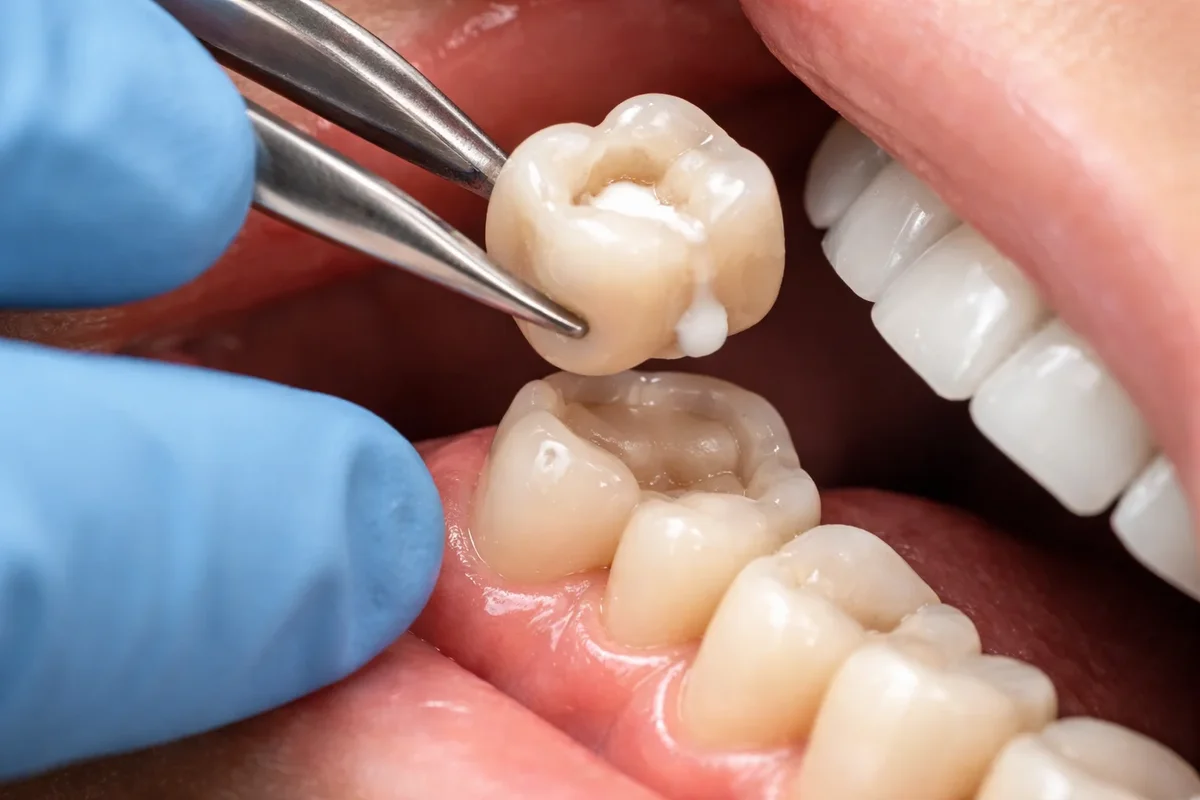
What Does Re Cement Crown Mean in Modern Dentistry?
In modern dentistry, the term re cement crown refers to the clinical process of securely reattaching an existing dental crown that has become loose or fallen off. Rather than replacing the crown entirely, dentists evaluate whether the original restoration can be safely reused. If the crown and the supporting tooth are still in good condition, re cementing offers a conservative, efficient, and patient-friendly solution 🦷.
A re cement crown is not a temporary shortcut or a compromise in quality when done correctly. On the contrary, it is a well-established dental procedure supported by advances in diagnostic tools, dental materials, and adhesive technology. Modern dentistry prioritizes preserving healthy tooth structure whenever possible, and re cementing a crown aligns perfectly with this philosophy.
The Clinical Definition of Re Cement Crown
Clinically, a re cement crown means removing residual cement, evaluating crown fit, confirming tooth health, and bonding the crown back onto the tooth using fresh dental cement. The goal is to restore the original function, protection, and appearance of the tooth without unnecessary removal of additional enamel or dentin.
Dentists do not automatically recommend re cementation in every case. A proper diagnosis ensures that the procedure is predictable and safe. This is why modern dentistry emphasizes evidence-based decision-making rather than one-size-fits-all solutions.
Why Re Cement Crown Is Considered Conservative Treatment
Conservative dentistry focuses on preserving as much natural tooth structure as possible. A re cement crown fits this approach because it avoids re-preparing the tooth, which can weaken it over time. Each time a crown is replaced, additional tooth structure is often removed. Re cementing, when appropriate, helps extend the life of the tooth itself.
This philosophy is strongly supported by professional organizations such as the
American Dental Association, which emphasizes minimally invasive and preventive dental care whenever possible.
Preserving the Original Crown
Dental crowns are custom-made restorations designed specifically for an individual tooth. When a crown fits well and remains structurally sound, discarding it unnecessarily is inefficient. A re cement crown allows patients to keep their original crown, preserving aesthetics, bite harmony, and overall dental balance.
How Modern Materials Improved Re Cement Crown Success
In the past, re cementing a crown was less predictable due to weaker dental cements and limited diagnostic tools. Today, modern adhesive explain why a re cement crown is far more reliable than it once was. High-performance cements offer strong bonding, moisture resistance, and long-term stability even under heavy chewing forces.
Digital imaging and high-resolution X-rays also allow dentists to detect hidden decay or structural issues before proceeding. This reduces failure rates and increases patient confidence in re cement crown treatments.
Re Cement Crown vs Crown Replacement
A common misunderstanding among patients is that a loose crown automatically means replacement. In reality, a re cement crown is often the preferred first option when conditions allow. Replacement is only necessary when the crown is damaged, the tooth is compromised, or the fit is no longer acceptable.
By choosing re cementation when appropriate, dentists save patients time, preserve tooth structure, and reduce overall treatment costs.
When Re Cement Crown Is Not Recommended
Although effective, a re cement crown is not always the right solution. Modern dentistry clearly defines situations where re cementation would be unsafe or unreliable.
- Advanced decay under the crown
- Fractured or severely weakened tooth structure
- Distorted or damaged crown
- Significant bite misalignment
In these cases, replacement or additional restorative treatment offers better long-term outcomes.
Patient Education and Informed Decision-Making
Modern dentistry places strong emphasis on patient education. Dentists explain the benefits, limitations, and expectations of a re cement crown so patients can make informed decisions. Understanding why re cementation is recommended builds trust and improves treatment satisfaction.
Patients who experience a loose or fallen crown are encouraged to seek professional evaluation promptly. Early assessment increases the likelihood that a re cement crown will be successful and avoids unnecessary complications.
Accessing Professional Re Cement Crown Care
If you are experiencing crown issues or want expert evaluation, professional consultation is essential. Clinics that prioritize conservative, modern dental approaches offer tailored treatment plans based on individual needs. For personalized guidance and professional care, you can reach out through the
Redent Klinik Contact Page.
In conclusion, a re cement crown in modern dentistry represents a smart, conservative, and evidence-based approach to crown failure. Supported by advanced materials and diagnostic precision, re cementation preserves tooth structure, saves time, and restores function effectively. When performed under the right conditions, it is not a compromise—but a clinically sound solution that reflects the best practices of contemporary dental care 😊.